Cover Design
The DECchip 21064, the first implementation of Digital's Alpha AXP computer architecture, is the world's fastest single-chip microprocessor. Represented on our cover by tbe AXP logo, the DECchip takes its place among symbols of other devices from computing history, incltuting the vacuum tube, a punch card, sketches of Babbage's Analytical Engine, a wheel from the Pascaline, and an abacus.
The cover was designed by Deborah Falck of Digital's Corporate Human Factors Group with the help of Kaza Design.
Kathleen M. Stetson, Associate Editor Circulation
Catherine M. Phillips, Administrator Sherry L. Gonzalez
Production
Terri Autieri, Production Editor AnneS. Karzeff, Typographer Peter R. Woodbury, Illustrator Advisory Board
Samuel H. Fuller, Chairman Richard W Beane
Donald z. Harbert Richard]. Hollingsworth
Alan G. Nemeth Jeffrey H. Rudy Stan Smits
Michael C. Thurk Gayn B. Winters
The Digital Technical journal is published quarterly by Digital Equipment Corporation, 146 Main Street ML01-3/B68, Maynard, Massachusetts 01754-2571. Subscriptions to the joumal are $40.00 for four issues and must be prepaid in U.S. funds. University and col
lege professors and Ph.D. students in the electrical engineering and computer science f ields receive complimentary subscriptions upon request. Orders, inquiries, and address changes should be sent to the Digital Technicatjoumal at the published-by addre�s. Inquiries can also be sent electronically to [email protected]. Single copies and back issues are available for $16.00 each f rom Digital Press of Digital Equipment Corporation,
I Burlington Woods Drive, Burlington, MA 01830-4597.
Digital employee� may send subscription orders on the ENET to ROVAX::JOURNAL or by interoffice mail ro mailstop ML01-3/B68. Orders should include badge number, sire location code, and address. All employees must advise of changes of address. Comments on rhe content of any paper are welcomed and may be sent to the editor at the published-by or network address.
Copyright © 1993 Digital Equipment Corporation. Copying without fee is permitted provided that such copies are made for use in educational institutions by faculty members and are not distributed for commercial advantage. Abstracting with credit of Digital Equipment Corporation's authorship is permitted. All rights reserved. The information in thejouma/ is subject to change without notice and should not be construed as a commitment by Digital Equipment Corporation. Digital Equipment Corporation assumes no responsibility for any errors that may appear in the journal. ISSN 0898-901X
Documentation Number EY.J886E-DP
The following are trademarks of Digital Equipment Corporation: ACMS, ALL·IN·l, Alpha AXP, the AXP logo, AXP, DEC, DEC 3000 AXP, DEC 4000 AXP, DEC 6000 AXP, DEC 7000 AXP, DEC 10000 AXP, DEC DBMS for Open VMS, DEC Fortran, DEC OSF/ I A.-'(P, DEC Pascal, DEC RALLY, DEC Rdb for Open VMS, DECchip 21064, DECnet, DECnet for Open VMS A.,'<P, DEC net for OpenVMS VAX , DECnet/OSI, DECnet-VAX, DECstation, DECstation 5000, DECwindows, DECWORLD, Digital, the Digital logo, DNA, OpenVMS, OpenVMS AXP, Open VMS RMS, Open V MS VAX, PDP-II, Q-bus, ThinWire, TURBOchannel, lJLTRlX, VAX, VAX-11/780, VAX 4000, VA.,'( 6000, VAX 7000, VAX 8700, VA.,'< 8800, VAX 10000, VAX Fortran, VA.,'( Pascal, VMS, and VMScluster.
CRAY-1 is a registered trademark of Cray Research, Inc. HP is a registered trademark of Hewlett-Packard Company.
IBM is a registered trademark of International Business Machines, Inc. LSI Logic is a trademark of LSI Logic Corporation
Macintosh is a registered trademark of Apple Computer, Inc. MIPS is a trademark of MIPS Computer Systems, Inc. Motorola is a registered trademark of Motorola, Inc.
OSF/1 is a registered trademark of Open Software Foundation, Inc. PAL is a registered trademark of Advanced Micro Devices, Inc.
SPEC, SPECfp, SPECint, and SPECmark are registered trademarks of the Standard Performance Evaluation Cooperative.
I Contents
17
Foreword Robert M. Supnik19 Alpha AXP Architecture Richard L. Sites
Alpha AXP Architecture and Systems
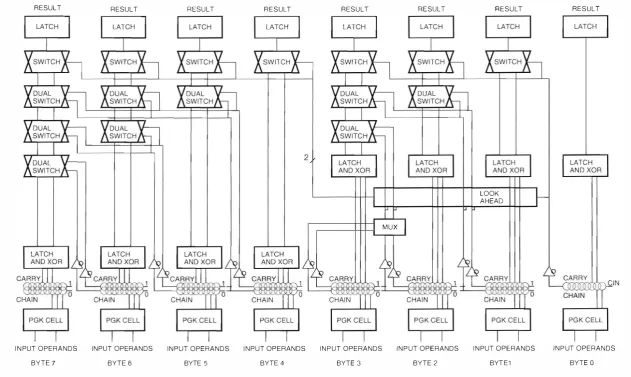
35 A 200-MHz 64-bit Dual-issue CMOS Microprocessor Daniel W Dobberpuhl. RichardT. Witek, Randy Allmon. Robert Anglin, David Bertucci, Sharon Britton, Linda Chao, Robert A. Conrad, Daniel E. Dever, Bruce (;ieseke, Soh a M.N. Hassoun , Gregory W Hoeppner, Kathryn Kuchler, Maureen Ladd, Burton M. Leary, Liam Madden, Edward J. McLellan, Derrick R. Meyer, James Montanaro, Donald A. Priore, Vidya Rajagopalan, Sridhar Samudrala,
and Sribalan Sanrhanam
51 The Alpha Demonstration Unit: A High-peJ·:formance Multiprocessor for Software and Chip Development
Charles P Thacker, David G. Conroy, and Lawrence C. Stewart
66 The Design of the DEC 3000 AXP Systems, Two High-performance Workstations Todd A. Dutton, Daniel Eiref, Hugh R. Kurth, James.). Reisert, and Robin L. Stewart
82 Design and Performance of t he DEC 4000 AXP Departmental Server Computing Systems
Barry A. Maskas. Stephen F. Shirron, and Nicholas A. Warchol
100 Technical Description of the DEC 7000 and DEC 10000 AXP Family Brian R. Allison <'lncl Catharine van lngen
111 Porting Open VMS from VAX to Alpha AXP
Nancy I' Kronenberg , Thomas R. Benson, Wayne M. Cardoza, RavindranJagannathan, and Benjamin .f. Thomas Ill
121 The GEM Optimizing Compiler System
David S. HI ickstein, Peter W Craig, Caro.line S. Davidson, R. Neil Faiman, Jr., Kent D. (; lossop. Richard H. (;rove, Steven
0.
H.obbs, and William H. Noyce137
Binary TranslationRichard L. Sites, Anton Chernoff. Matthew B. Kirk, Maurice P Marks. and Scott G. Robinson
15:1
Porting Digital's Database Management Products to the Alpha AXP PlatformJeffrey A. Coffler. Zia Mohamed. :md Peter M. Spiro
L65 DECnetfor OpenVMS AXP: A Case History James V. Colombo, Pamela). Rickard, and Paul Benoit 181 Using Simulation to Develop and Port Soflt.vare
George A. Darcy lll, Honald F. Brender, Stephen J Morris. and Michael V lies
Alpha AXP Program Management
I
Editor,s Introduction
Jane
C.Blake
Editor
This special issue of the
Digital
Teclmicaljournal presents the compu ter architecture that Digital believes wil l become the universal platform for comp uting over the next 25 years. A significant milestone in the company's h isto ry. the Alpha AXP arch itecture arises out of Digital's extensive engi neering experience and puts into place a cohesive, flex ible framework for high-performance 64-bit RlSC computing. This issue contains papers re pre sentative of the scope of the p rogram across D igital's Engineering organizati on, including hard \vare system s , an operating s�·stem , compi lers, binary translators, network ami database software, and sim ulators.The results of the engineering efforts d iscussed in tl1ese papers reflect three primary goals for the Alpha AXP architecture: high performance, longevity, and easy m igration from the .12-bit VAX V.\1S co mputer line. Dick Sites, one of the chief Alpl1a AX!' architects, has written a definitive paper that exp lains how key architectural decisions were made relative to the goals. He reviews the simi lari ties and d ifferences between the A.,'\P architecture and other RJSC: architectures, ami then presents details of the design, including data and instruction f(>rmats. In his conclusion. he projects evolutionary changes in the architecture and the resul ting per formance i ncreases of a thousandfold over the next 2'; years.
The first i mplementation of the Alpha AXP archi tecture is the DECchip 21064 microprocessor, which can execute up to 400 m i l l ion operat ions per second. Dan Dobberpuhl and members of the Alpha chip team offer an overview of the CMOS pro cess tec hnol ogy, the chip microarcllitecture, and the external interface. They then detail the circ u it imp lementation ami explain t he design cho i ces directed toward meeting architectural performance
2
requ irements and to al low appl ication flexibi lity. The res u l t of their design efforts is a microproces sor that operates at speeds up to 200 MHz-the fastest com mercial l y available chip in the i ndustry. Early implementations of t his chip became part of a prototype system, the Alpha Demonstration Unit. As Chuck Thacker, Dave Conroy, and Larry Stewart explain in their paper, the p rototy pe served the overa l l Alpha AXP program by giving software clevel opers early access (ten mon ths) to AXP-compl iant hardware. Because of the arc h itectural emphasis on multiple processors, prototype designers fo cused on del ivering a robust multiprocessing system. The au thors discuss the sign i ficance of the choice of a backplane i nterco n nect for a mu ltiprocessor, com pare ditferent approaches to cache coherence, ancl describe the system modu les and packaging.
With constraints differen t from those of the pro totype, the hardware product projects are repre sented here by three different implementations: desktop, departmental, and data center systems. In the desktop area, the DEC 3000 A.,'\P family of work stations are balanced u niprocessor systems. Todd Dutton, Dan Eiref, Hugh Kurth, Jim Reisert, and Robin Stewan review the decision to replace the trad itional common system bus with a crossbar system interconnect constru cted of r\SIC:s. This new interconnect allowed the designers to meet the goals of low memory latency, high mem ory hand width, and minimal Cl'lJ-1/0 memory contention i n a cost-competitive man ner.
The DEC 4000 AXP system is a departmental server that imp lements the
lEEE
Futurebus+ stan dard. Barry Maskas, Stephen Shirron, and Nick Warchol present the reasoning behind the system architecture and technology decisions that resu lted i n the achievement of op timized u niprocessor per formance, dual-processor sym metric multiprocess ing, ami balanced 1/0 throughput. Details of the subsystems that make up this expandable modular system are also provided .requi rements of the h igh-perform ance system interconnect. Users who wish to m igrate from the VAX system to Alpha AXP need o n ly swap module boards.
Migration to Alpha AXP from other architectures, in particu lar from VAX VMS, is one of the major goals set by the Alpha architects. E x isting software operating systems, languages, programs-must be adapted to r u n effectively on 64-bir RISC systems. A parer by N ancy Kronenberg, Tom Benson, Wayne Cardoza, Rav i nd ra n .Jagannathan, ami Ben Thomas addresses the chal lenges of porting the OpenVMS operati ng system-original ly developed specifi cal l y for 32-bit VAX systems-to A l.pha AXP systems. To deal with the huge amount of code, the p roject team developed a compi ler that treats VA)( assembly l anguage (VAX
;\>IACR0-32)
as a source language to be compiled . The authors also d iscuss the major archi tectural differences in the kernel, perf()rmance, and some future d i rections for the system .The GEM com p i ler system i s the technology Digital is using to bu ild state-of-the-art com piler rroducts. GEM is described here by Davi d B l ickstei n , Peter Craig, Carol ine Davidson, Nei l Fa iman, Kent G lossop, Rich Grove, Steve Hobbs, and Bi l l Noyce. A significant achievement in the deve lopment of this compiler is that a si ngle opti m izer is used fo r a l l languages and platforms. Developers of compilers will fi nd i n-depth i nforma tion in the auth ors' d iscussions of optim ization techniques, code generation, compiler engineer i ng, and future enha ncements.
Bi nary transl ation is another means of m ov i ng complex software appl i cati ons from one archi tec ture and operating system to another archi tecture and operat ing syste m . Two bi nary translato rs are the subject of a paper by D ick Sites, Amon Chernoff, Matthew Kirk, Mau rice Marks, and Scott Robi nso n . T h e au thors discuss the alternatives to rranslawrs,
performance issues, and the development of the translators, VEST and mx, ancl the compl ementary run-t ime environments. VEST translates OpenVMS VA.-X i m ages to OpenV,viS AXP images. and mx trans lates ULTRI X/MIPS im ages to DEC OSF/1 A.-XP i mages.
An easy migration path to Alpha
AXP
fo r two database management systems used in large com mercial applications is the subject of a paper by Jeff Coffler, Zia Mohamed, and Peter Spiro. The authors define the issues in volved in porting the complex VAX DBMS and Rdb/VMS prod ucts to the AXP p l a t form . Ad d i ng to the chal lenge bu t bal anced by its advantages was the decision to have a common source, or single code, base. The authors reviewI
this design approach and prov ide details of the individual port ing efforts.The process of porting DECnet -VA"'\ to the
OpenVIviS A.-XP operat i ng system is described by J i m Colombo, Pam Rickard, a nd Pau l Benoit. They dis cuss the DECnet features suppo rted i n the operat ing system , the software techniques used, and the importance of rhe decision to build common code for the VAX and Alpha A.-XP systems. The authors share detai Is of the port and lessons learn eel that can be applied to future porting efforts.
Complemen tary to the previously mentioned prototype hardware system are fo ur software simu lato rs that enabled engineers to develop software fo r Alpha A.-X P concurrently with hardware develop ment. Described by George Darcy, Ron Bren der, Steve Morris, and Mike l les, the Mannequ i n simu lator was used by the OpenVMS group to boot the entire operating system and debug u t i l i ties; the ISP simulator was used by the DEC OSF/ 1 group with similar success. A major section of the paper focuses on the A lpha User-mode Debugging Envi ron ment in which user-mode code bei ng devel oped for Alpha AXP platforms can be compi led and executed as Alpha AXP code.
The c losing paper is an unusual one for the journal because it addresses engineering manage
ment, not strictly technical issues. Peter Conkl in offe rs i nsights into the reasons for the success of one of the largest engineering progra ms under taken in the i ndust ry. He defi nes the enrol lment management model used fo r the Alpha A.-XP p ro gram and explains key concepts, i ncluding the program office and project "cusps."
The edi tors are very gratefu l fo r the help of Bob Supnik, Vice President and Corpo rate Consu ltant. in p l ann ing this speci a l issue and fo r writing its Foreword.
I
Biographies
4
Brian R. Allison Brian Al l ison is a senior consultant engineer fo r D igital's mid-range VA X/Aipha AXP systems group ami is the system architect responsible for the coord ination of the VAX and DEC 7000 and 10000 system definition and design. Prior to this work , he served as system arch itect fo r the VAX oOOO product. Brian holds a BSE.E. and a B.S.C.S from Worcester Polytech nic I nstitute (197 7)
Randy Allmon After receiving a
B.S
degree in el ectrical engineering from the Un iversity of C i nci nnati, Randy Al lmon joined D igital in 19Hl. As a circu i t designer i n the Sem iconductor Engineering Group, h e h as contributed t o the development of numerous high-performance CMOS processors. Currently, Randy is responsible fo r the tech n ical design and management of a next-genera tion processor based on the Alpha AXP arch i tecture. He is the coauthor of fou r high-performance processor papers given a t ISSCC and has one patent pend i ng.Robert Anglin Robert Angl i n received S.l3. and S.M. degrees in e lectrical engi neering in 1989 from the Massachusetts Institute of Techn o logy. In the same year, he j oined Digital's Sem iconductor E nginee ring Group, \Vhere he has worked on the design of high-performance m i croprocessors. Robert is a mem ber of Sigma Xi. He is currently pursui ng an 1'<l.B.A. degree at Harvard University.
Paul Benoit Pa ul Benoit is a principal software engineer in the Networks and Communications Group. H e is the project/techn ica l leader for the DECner for Open VMS AXP project; the team received an Alpha Achievement Award for early completion of project commitments. Previous to this, Paul led the DECnet -VAX Phase IV effort He holds an MSS.E. (1991 ) from Bosto n University and a B.SC:.S. (198o) from the Univers ity of Lowe l l. Pau l is a member of ACM and IEF.E
Computer Society.
David Bertucci David Bertucci received a BS E. E. degree in 1982 from Wayne State U niversity and an MSE.E. degree in 1988 from M ichigan State University. He joined Digital's Semiconductor Engineering Group in 1989 and worked o n advanced CMOS microprocessor design. Currently, he i s employed at Sun Microsystems, Inc.
DavidS. Blickstein Principal software engineer David Bl ickstei n has worked on optimizations for the GE;vl compiler system since the project began in 198 5. During that time, he designed various optimization techniques, including induc tion variables, loop unro l l i ng, code motions, common subexpressions, base binding, and binary shadowing. Prior to this, David worked on Digital's PDP-11 and VAX AI'!. implementations and led the VAX-1 1 PL/1 project. He received a B A (1980) in mathematics from Rutgers College, Rutgers University, and holds one patent on side effects analysis and another on induction variable ana lysis.
Ronald F. Brender Ron Brender is a senior consultant software engineer, contributing to the GEM compiler back-end p roject in the Software Development Technologies Group. He has worked on compilers and program m i ng language definition for Alpha AXP, VAX, PDP- 1 1 , and PDP·IO systems, includ ing Ada, FORTRAN and BLISS. A member of various standards committees since the mid·1970s, Ron is now responsible for VAX and Alpha AXP cal l i ng standards. He j oined Digital i n 1970, after receiving a Ph. D. i n computer and communica tion sciences at the University of M ichigan.
Sharon Britton Sharon Britton received a BS.E.E. degree from Boston University in 198 3 and an MS.E.E. degree from the Massachusetts Institute of Technology in 1990. She joined Digital in 1983 to work on the design and devel opment of 80186-based controllers for read-only and write-once optical d isk clrives. Sharon's graduate research involved the development of an in tegrated content addressable memory system with error detection capabi I ity Currently a member of the Semiconductor Engineering Group, she is i nvolved in the design and i mplementation of h igh-performance CMOS microprocessors.
Wayne M. Cardoza Wayne Cardoza is a senior consultant engineer in the OpenVMS AXP Group. Since joining D igital in 1979, he has worked in various
areas of the Open VMS kerneL Wayne was also one of the architects of l'IUSM , an earlier Digital RJSC architecture; he holds several patents tor this work. More recently, Wayne participated in the design of the Alpha AXP architecture and was
a member of the initial design team for the OpenVMS port. Before coming to D igital, Wayne was employed by Bel l Laboratories. Wayne received a BS.E.E. from Southeastern Massachusetts University and an MS.E.E. from ,'vliT
Linda Chao Linda Chao received a llSE. E. degree from the Massachusetts Institute of Technology in 1987. Since joining Digital in the Semiconductor Engineering Group/Advanced Development in 1987, Linda has been engaged in the design of microprocessors based on the VAX ancl Alpha AXP architectu res. She is currently pursuing master's degrees in electrical engineering ancl manage ment through the MIT Leaders for Manu factur i ng Program.
Anton Chernoff Anton Chernoff is a member of the technical staff at Digital Equipment Corporation, working in the Alpha A XP M igration Tools Group. He joined D igital in 1991, but also worked at Digital between 1973 a nd 1981 as proj ect leader and developer of the IU-11 and RSTS/E operating systems. Anton spent
1982 through 1991 at Liant Software Corporation as a senior consulting engineer in compiler and debugger development.
Jeffrey A. Coffler A principal software engineer in the Database Systems Engineering Group. Jeff Coff ler led the effort to port DBMS to the Alpha AXP plat form. Prior to this, Jeff \vorked on the DB.VIS and Rdb backup/restore facility ami on new DR.'v1S features and maintenance. He is currently working on the project to port Rdb for OpenVMS to operating systems such as Windows NT a ncl OSF/1. He has also contribu ted to the RSTS/E operating system, WPS-PLUS porting, and workflow management p rojects. Jeff joined D igital in 1984 and holds a BSCS (1983) from Cal ih>rnia State University at Northridge.
James V. Colombo Project/technical leader James Colombo is currently responsible for the next release of DECnet/OSI for OrenVMS for the VAX a ncl Alpha AXP computing environments. Prior to this, he led the port of DECnet-VAX Phase IV to the OpenVMS AX!' operating system; the team received a n Alpha Achievement Award for early completion of the project. Jim also !eel the DECnet for OS/2 V 1.0 and various PATHWORKS product efforts. Before coming to Digital in 1983, Jim worked at Prime Computer, Inc. and Computer Devices, Inc. He holds a BSCS from Boston University and is a member ofJEEE.
Robert A. Conrad Robert Conrad received J HS degree in e lectrical and com puter engineering from the University of C i nci nnati in 1 984 and an M.S. degree in electrical and computer engineering from the Unive rsity of Massachusetts i n 1 992. I n 1 981 he joined Digita l 's Semiconductor E ngineering Group, \vhere he worked as a co-op student in the Architectural ly Focused Logic Group. Since 1 984 Rob has been engaged in the research and devel.opment of VLSI m icro processors, includi ng the .\1icroVA X CPU, a 50-:viHz RlSC CPU, and most recently the DEC:chip 2 1064 microprocessor.
David G. Conroy Dave Conroy received a BA.Sc. degree in electrica l engi neering from the University of Waterloo, Canada, in 1 977 After wo rking briefly in industrial automation , Dave moved to the United States in 1 980. He cofounded the Mark Wil liams Company and b u i l t a successfu l copy of the UNIX operating system. In 1 983 he j oined D igital to work on the DECt a l k speech synthesis system and related products. In 1 987 he became a member of Digital's Sem iconductor Engineering Group, where and has been i nvolved with system level aspects of RlSC microprocessors.
Peter W. Craig Peter Craig is a p ri ncipa l software engineer in the Software Development Technologies G roup. He is currently responsible for the design and i mplementation of a dependence analyzer for use in future compiler prod ucts. Peter was a project leader tor the VAX Code Generator used in the VA)( C and VAX PI./I compi lers, and prior to this, he developed CPlJ p erformance simu lation software in the VAX Architecture Group. He received a R.S.E.E. (m agna cum l aude , 1982) from the Un iversity of Connecticut and jo i ned Digital in 1 983.
George A. Darcy III As a senior sofnvare engineer in the Alpha Migration Tools G roup, George Darcy has worked on the Man nequ i n Alpha i\Xl' simulator, the VEST binary translato r, and the Translated I mage Environment (TIE) run-time l i brary. In his ten years at Digit a l , he has also developed a virtual disk d river for the Open V MS V'i.O Si'vlP operating system, sofrware behavioral models of a h igh end VA X processor, and various simu lation and CAD software tools. George received a fi.S.CE. (cum laude, 1 984) from Boston Un ive rsity, where he was an Engineering Merit Scholar and a member of Ta u Beta Pi .
Caroline S. Davidson Since joining Digital in 1981 , Carol i ne Davidson has co ntribu ted to several software projects, primarily related to code generatio n . Currently a pri ncip al software engineer, s h e is wo rking on t h e GE:VI co mpi ler generator project and is responsible for the areas of I ifeti mes, storage al locat ion, and en try-exit calls. Caro l ine is also a project leader for the I n tel code generation effort. Her prior work i nvolved the VAX FORTRAN for lHTRIX, VAX Code Generator, and FORTRAN IV software products. Caroli n e has a H.S.C:.S. from the State University of New Yo rk at Stony Brook.
I
8
Daniel E. Dever Dan Dever received a B S E . E. degree in 1988 from the Universi t y of Cincinnati. He joined D igital 's Semiconductor Engi neering Group i n 1988, where he worked on the design ancl logic ve rification of
CMOS VAX
microprocessors. Si nce 1990 he has been involved i n the design
of
RISC
architec tu re microprocessors, including the floating-point u n i t of the DECchip 2 10()4 microprocessor. Dan is c urrently involved in the design of integer arithmetic logic fo r the next-generation processor based on the AlphaAXP
archi tecture.Daniel W. Dobberpuhl Dan Dobberpu hl received a B.S. E . E. degree from the Un iversity of Il l inois in 1967 Subsequent to positions with the Department of Defense and General Electric Company, he joi ned Digital 's Sem iconducto r Engineering Group i n 1 976. Since that time , b e has been active i n the design of four generations of microprocessors, including t he fi rst single-chip PDP-1 1 and the first single-ch ip VAX . Most recently, Dan was the project l eader for the first
VL'il im plementation of Digi ta l 's new 64-bit Alpha
AXP computing arch itect ure. He is coauthor of the text, The Des(!{n and A nalvsisof Vl.SI Circu its.
Todd A. Dutton A principal hardware engineer, Todd Dutton was responsible for the overa l l design integration and timing verification of the OEC 3000 A X I' Model 500. Prior to this, he led a team i n developi ng vector processor hardware in the Advanced
VAX
Development G roup. To dd join ed D igita l in 1987. Pre vious ly, he was employed at Numerix Corporation and at Signal Processing Systems, Inc. Todd has a liS. degree in compu ter science from the Massachusetts Institute of Technology and was elected to Tau Beta Pi. He holds a patent on vec tor processor technology and has published two papers on vector p rocessors.Daniel Eiref Dan Eiref j oined Digital i n 1987 after receiv ing
BS
and :.1s.degrees in electrical engineering from Columbia Un iversity. At Colu mbia l1e was elected to Tau Beta Pi and was awarded rhe Steven Abbey Ou tsta nding Stu d ent athle te Award. He is c u rren t ly attendi ng Harvard Busi ness School. A principal hardware engineer, Dan was responsible for the design of the memory and clock syste ms of the
DEC
3000 AXP Model ')00. He also designed the workstati o n 'sSLICE
and ADDR ASIC:s. Prior to this project , he worked as an ECl hardware designer in the AdvancedVA X
Devel opment Group.Bruce Gieseke Bruce Gieseke received a H . S. degree i n electrical engineering from the University of C i ncin nati in 1984, a nd an .'vi .S. degree in electrical engi neering from North Carolina State Un iversity in 198'). I n 1986 he joined Digital's
Semiconductor Engineeri ng Group, where he has been engaged in the i mple mentation and circuit design of RISC microprocessors.
Kent D. Glossop Ken t Glossop is a principal engineer in the Software Development Technologies Group. Since 1987 he has worked on the GEM com piler system, focusing o n code generation and instruction-level transformations. Prior to this, Kent was the project leader for a release of the VA X PUI compiler and contri buted to version I of the VA X Performance and Coverage Ana lyzer. Ken t joined D igital in 1983 after receiving a H . S. in computer science from the University of Michigan. He is a member of IEEE.
Richard B. Grove Senior consultant software engineer Rich Grove j oined Digital in 1971 and is currently in the Software Development Technologies
Group. He has led the G EM compiler project since the effort began in 1985. con
tributing to the code generation phases. Prior to this work, Rich was the project leader for the PDP-1 1 and VAX FORTRAN compi lers, \vorked on VA X Ada V 1 , and
was a member of the ANSI X3.J3 FORTRAN Committee. He is presently a member of the design team for Alpha AX!' call ing standards and architecture. Rich has B.S.
and M . S. degrees in mathematics from Carnegie-Mellon University.
Soha M.N. Hassoun Soha Hassou n received a B.S E.£. degree from South Dakota State University in 1986, and a n S.M . E.E. degree from the Massachusetts I nstitute of Technology in 19H8. From August 1988 to August 1991 she was employed at D igital as a custom design engineer i n the Semiconductor Engineering Group. She contributed to the uesign of the floating-point unit of tbe DECchip 21064 processor. Soha was the recipient of a D igital Minority and Women 's Scholarship in 1991 anc.l is pursuing a Ph . D. degree at the University of \'\fashingto n , Seattle. Computer Systems Engineering Department.
Steven 0. Hobbs A member of the Software Development Technol<igies Group, Steven Hobbs is working on the GE.'vl compiler project. ln prior contribu tions at Digital, he was the project leader for VAX Pascal. the lead designer for the global optim i zer in VA X FORTRA N , and a member of the Alpha A X P architecture design team. Steve received his A . B . ( 1969) in mathematics at Dartmouth College and while there, helped develop the origin a l BASIC t ime-sharing system. He has an M . A . ( 1972) in m athematics from the University of Michigan a nd has done additional graduate work in computer science at Carnegie-Mel lon University.
1 0
Gregory W. Hoeppner <�regory Hoeppner graduated with distinction from Purdue University i n 1979. His research topic was ion-implanted optical wave gu ides. In 19HO he worked at General Telephone and Electron ics Research Laboratory, where he performed basic properties research on GaAs for fabrica tion of submicrometer FETs. From 19Hl to 1992 he held a number of positions at D igital Equi pment Corporation's Hmlson, MA site, includ ing co-implementation leader of Digitars DECchip 21064. He is currently employed as a senior engineer at IB.vl , Advanced Workstation Division .
Michael V. Iles Michael l ies is a senior technology consu ltant at the l K Alpha A.,'\V M igration Centre. Since joining D igital in 197'5, Mike has worked in various field positions, in Advanced VA X development as a microcoder, and t<Jr VMS engi neering as a software engineer. He worked on tl1e migration of OpenV.VJS VAX to
the Alpha AXI' platform. designing and implementing a user-mode simu lation environment that became AUD. Mike has a B.sc. in electrical engineeri ng (hon ors, 1973) from C ity University, London, ancl holds a patent for digital speech synthesis techniques. He has several parents pendi ng for Al iD.
Ravindran jagannathan Ravindran .Jagannathan is a principal software engi neer in the Open VMS Performance Group currently i nvestigating OpenV\<JS r\X I' multiprocessing performance. Since 1986, he has worked o n performance anal ysis and characterization, and algorithm design i n the areas of OpenV\'IS ser vices, S:VIP, VAXcl uster systems, ami host-hasecl volume shadowing. Ravindran received a R.E. (honors, 19H3) from the University of :YJadras, India, and M S degrees (l9H6) i n operations research and statistics ancl i n computer and sys tems engineering from Rensselaer Polytechnic Institute.
Matthew B. Kirk Matthew Kirk is a senior software engineer in the sH;/AD A)(!' Migration Tools Gro u p , where he works on binary translator development. testing, and support. He joi ned D igital i n 1986 and has a lso designed and devel o ped automated architectu ral test software for pipel i ned VAX hardware and the
CJ computer i nterconnect. Matthew bolus a B.S. in computer science ( 1986) from the University of Mnssachusetts.
Kathryn Kuchler Kathryn Kuchler received a
B.S.
degree in electrica.l engi neering from Corne l l University i n 1990. Upon graduation. she joined D igita l 's Semicon ductor E ngineering Group, where she worked on the first implementa tion of a ruse m icroprocessor based on the Alpha AXP architecture.Hugh R. Kurth Hugh Kurth j o i ned Digital in 1986 after receiving a B.S. degree in electrical engineering, computer engi neer i ng, and mathematics from Carnegie-Mellon Un iversity. At Carnegie-Me l lon, he was elected to Eta Kappa Nu and was awarded the David Tu ma Undergraduate Laboratory Project Award . A senior hardware engi neer, Hugh designed the TCDS ASIC and SCSI subsystem fo r the DEC 3000 AXP Model 500. Prior to this work, he designee! floating-point hardware for two projects in the Advanced VAX Development Group.
Maureen Ladd Maureen Ladcl received a B.S. degree in computer engineering from the University of I l linois in 1986. She then jo in ed the Semiconductor Engineering Group w it h i n Digital and worked on a 32-bit !USC microp rocessor. Mau reen received an M.S. E. degree in electrical engineering from the U niversity of M ichigan in 1990 through D igital's Graduate Engineering Education Program . Upon her return to D igital, she worked on the implementation of the first micro processor based on the Alpha AXP architecture.
Burton M. Leary M i ke Leary is currently a consu l t i ng engineer in the Semiconductor Engineering Group/Advanced Development Memory Group. He designed the i nstruction and data caches for t he DECchip 21064 CPU and is cur ren t ly working on the design of advanced mem ory products. Mike joi ned Digital
in 1980 after receiving a tl.SE. E. degree from the University of Massachusetts.
Liam Madden Liam Madden joined Digital in 1984 and has since designed both CISC and ruse microprocessors and contributed i n the area of CMOS process development. He is currently a consu l tant engineer in D igital 's CPU Advanced Development Group and his interests i nclude circuit design and CMOS tech nology deve lopment. Prior to j o i n i ng D igita l, Liam designed industrial. micro contro l lers for Mahon and McPh i l l ips, I reland, and worked fo r Harris Semiconductor. He received a B S. degree from U n iversity Col lege Dublin in 1979 and an M.E. degree from Cornel l University in 1990.
I
1 2
Maurice P. Marks Maurice Marks i s a senior engineering manager i n the Sem iconductor Engineering Advanced Develop ment Group . He cu rrently man ages the AXP Migration Tools Group and contributed to the design and imple mentation of rhe translators. In Mau rice's twenty years w ith D i gital, h e has led com piler, operating system, hardware and software tools, C AD , system, and chip projects. He holds !3.Sc. and B. E. degrees from the Un iversity of New South Wales and has publ i s hed papers on transaction p rocessing, software portabil ity, and CAD technology. Maurice is a m em ber of the Australian Computer Soc iety.
Barry A. Maskas Barry Maskas is the project leader responsible for architec ture, semiconductor technology, and development of the DEC 4000 A X P system buses, processors, and memories. He is a consulti ng engineer with the Entry Systems Busi ness Group . I n previous work, he was responsible for the architec ture and development of custom VLSI peripheral chips for VA X 4000 and M icro VAX systems. Prior to that work, he was a codesigner of the M icro VAX I I CPU and mem ory modules. He joined Digital in 1979, after receiving a B.S E.E. from Pennsylvania State Un iversity. H e holds three patents and has eleven p atent applications.
Edward J. McLellan Ed McLel lan is a principal engineer in the Semi conductor E ngineering G roup. He has contributed to the design of several pro cessor chips. Ed joi ned Digital i n 1980 after recei v i ng a B.S. degree i n computer and systems engineering from Rensselaer Polytechnic Institute, where he was elected to Eta Kappa N u . He holds three p atents in compllter design and has one application pending.
Derrick R. Meyer Dirk Meye r joi ned D igital's Semicond uctor Engineering Group in 1986. He w::1s i niti::Jlly i nvolved i n the design of the cache and memory systems for a chilled CMOS VA X p rocessor. He has since been involved in the development of microprocessors based on the Al pha AXP arch itecture. Prior to joi ni ng Digital, he was employed at I ntel Corporation, where he was i nvolved i n t h e design o f various CMOS m icrocontrollers, i ncluding the 80C51 a n d 80C l96
Dirk received a R.S. degree i n comp uter engineering from the Un iversity of I l linois in 198:1.
Zia Mohamed Zia Moha med has bee n a member of the Database Systems Group since joining D igital in 1989. He works in the area of query optimization for the DEC Rdb for OpenVMS products; h is contributions i nvolve cost-based optimization of database queries and algorithms for execution of optim ized query plans. He has developed dynamic OR optimi zation techn iques, refinement of cost-model, and algorithms for better access plans for views. Zia holds a B. S. degree in e lectrical engineering from Bangalore University, India, and an M.S.
james Montanaro James Montanaro received B. S.E.E. and M.S.E.E. degrees from the Massac husetts Institute of Technology in 1980. He joined Digital Equipment Corporation in 1982. He was a circuit designer on the floating-point chip for the LSI 11/74 and a M icro VAX peripheral chip. He led the physical imple mentation of the uPR ISM CPU, a 70-MHz prototype RISC CPU completed in 1988. james also led the phys ical implementation of the first CPU chip based on the Alpha AXP architecture and then contributed as a circuit designer for the DECchip 21064 CPU. He is currently with Apple Computer, Inc.
Stephen J. Morris Stephen Morris is a consultant software engineer in the Sem iconductor Engineering Advanced Development Group . In addition to writ ing the Alpha ISP simulator, he wrote the OpenVMS and OSF PALcode for the Alpha AXP program. In previous work, Stephen designed the control sections of the instruction prefetch and translation look-aside bu ffer for an experimental D igital RISe chip. He also worked on the Micro VAX chip team, doing console and debug work, and in the RSTS/E operating system group. Stephen joined Digital after receiving a B.A. in biology from the University of Rochester in 1977
William B. Noyce Senior consu l tant software engineer William Noyce is a member of the Software Development Tech nol ogies Group. He has developed several GEM compiler optimiza tions, including those that elim inate branches. In prior positions at D igital, Bill implemented support for new disks and proces sors on the RSTS/E project, led the development of VAX DBMS Vl and VAX Rdb/VMS V l , and designed and implemented automatic paral lel processing for VAX FORTRAN!HPO. Bi l l received a B.A (1976) i n mathematics from Dart mouth Col lege, where he implemented enhancements to the time-sharing system.
Donald A. Priore After receiving an S.M. degree in electrical engineering and compu ter science from the Massachusetts Institute of Technology, Donald Priore joi ned Digital i n 1984. Initially, he worked on device characterization, yield enhancement, and yield model ing of NMOS and CMOS processes in manu facturing. Subsequently, he joined a CMOS design group, work i ng first with low-temperature CMOS technology and later with conventional CMOS in high performance microprocessor design. His interests include signal, clock, and power integrity in the on-chip environment.
Vidya Rajagopalan Vidya Rajagopalan received a B.E. degree in electronics engi neering from Visvesvaraya Regional Co l lege of Engineering, Nagpur, I ndia, in 1986, and an M .S. degree in electrical engineering from the Un iversi ty of Maryland in 1989. She was with Norsk Data India Ltd. from I986 to 1987 as a systems design engi neer. I n 1989 she joined D igital's Semiconductor Engineer ing Group and was a member of the design team of the DECchip 21064 RISC microprocessor. Vidya is currently involved in the design of h igh-performance microprocessors.
I
James). Reisert A senior hardware engineer, .Jim Reisen designed the TC ASIC fo r the DEC :)000 A XI' Model 500. Prior to this project work, he designed instruc tion parsers/d ecoders for two VAX i m plemenutions. J i m holds a patent for his design of a method for replayi ng instructions after a microtrap. Before joi ning Digital in 1986, he received an S.B. i n electrical engi neering from the Massa chusetts Institute of Technology. He is currently in charge of timing verification for another AXP workst"ation.
Pamela J. Rickard Principal software engineer Pam Rickard is a member of the team port ing DECnet/OSI for Open VMS to the Alpha AXP platform. As the i ni tial member of the DECnet for Open V.\1S AXP porting team, Pam took responsi bil ity for creating an effective team, ported NETDRIVER and other ''-'lACR0-:)2 code. and debugged major portions of the ported p roduct. Since joining D igital in 1978, she has contribu ted to PATHWORKS for OS/2 and led the console, microcode, and system test activities of the VAX-1 1/785 project. Pam received a R.S. ( 1970) in mathematics and comp u ter science from the Un iversity of Denver.
Scott G. Robinson Scott Robinson is a software engineering manager in the A XI' Migration Tools Grou p. He contribu ted to the design and i mplementation of the binary translators, particularly the VAX translated i mage env i ron ment. Scott has also developed i mplementations of DECnet and CAD/Cr\.Vl systems to design VAX processors. Prior to joi ning Digital in 1978. Scot t worked on a variety of D igital hardware a ncl software implementations. He holds a BS in electrical engi neering from the University of Arizona ai}(I is a member of l[TE.
Sridhar Samudrala Sridhar Samuclra la is a consulting hanlware engineer in the Semiconductor Engineering Group, where he is currently working on a new C:l'll chip. He joined Digital in 1977. Since that time. he has worked o n the design and verification of
I'DP-1 1/2.3
chips, VAX 8200 m icrocode deve lopment, and on the architecture and design of floating-point chips. He holds two patents and has three patent applications pending, a l l on floating-point design. Sridhar received an M.Sc . (Tech) degree from Andhra University, Ind ia, and an :Vl .S. E. E. degreefrom
the University of Wisconsin.Stephen F. Shirron Stephen Shirron is a consu lting software engineer i n the Entry Systems Business Grou p and is responsible for OpenVMS support of new systems. He contribu ted to many areas of the
DEC
4000, i ncluding PALcode, con sole, and OpenV.VIS support. Stephen joi ned Digi tJl in 1981 after completing HS and M.S degrees (summa cum laude) at Cathol ic University. In previous work, he developed an interpreter for VAX/Smalltal k-80 and wrote the firmware for the RQDX3 disk control ler. Stephen has two patent appl ications and has written a chapter i nSmalltalk-80: Bits
of His tor)!, Wrn"ds ofAduice.
Richard L. Sites D ick Sites is a senior consu ltant engineer in the Semicon ductor Engineering Grou p. where he is working on binary translators and the Alpha AXP architecture. He joi ned Digital in 1980 and bas contributed to various VA X implementations. Previously, he was employed by JB:vl, Hewlett-Packard , and Burroughs, and taught at the University of Californ ia. Dick received a
B.S.
in mathematics from .VIIT a nd a Ph. D. in computer science from Stanford Un iversity. He also studied computer architecture at the University of North Carol ina. He holds a number of patents on computer hardware and software.Peter M. Spiro Peter Spiro, a consu lting software engineer, is presently the technical director for the Rd b and DBMS software products. Peter's current focus is database performance for Alpha AXI' systems and very large database issues. Peter joined D igital in 1985, after receiving M S. degrees in forest science and computer science from the Un iversity of Wisconsin-Madison. He has four patents related to database journal i ng and recove ry, and he has authored two papers for earlier issues of the
Dip,ital Teclmicaljournal.
Lawrence C. Stewart Larry Stewart received an
S.l.l.
in electrical engineering from ,v!!T in 1976, foJlowed by ,\1 \ ( 1977) anu Ph. D. ( 1981 ) degrees from Stanford University, both in electrical engineering. His Ph.D. thesis work was on data com pression of speech waveforms using trellis coding. Upo n grad uation, he joi ned the Computer Science Lab at the X< :rox Palo A l to Research Center. In 1984 he joined D igital's Systems Research Center to work on the Firefly multiprocessor workstation. In 1989 he moved to Digital's Cambridge Research Lab, where he is currently involved with projects relating to mul timedia and AXP products.Robin L. Stewart Robin Stewart joined Digital in 1986 after receiv i ng a liS in electrical engi neering from the U niversity of Vermont. She is in the process of obtaining an M. B.A degree from Boston College. A senior technology (hardware) engineer, Robin had responsibil i ty h>r the in tegrated circuit technology in the
DEC
3000 AX.P Model '500 workstation. Prior to this project work, she \Vas a com ponent engineer in D igital's Semiconductor Busi ness Organization.I
l6
Charles P. Thacker Chuck Thacker has been with Digi ta l's Systems Research Center si nce 19H:) Before joining Digital, lle was a senior research fel low at the Xerox Palo Alto Research Center. His research interests include computer archi tecture , computer n etworking, a nd compu ter-aided design . He holds several patents i n the area of computer organization and is coi nventor of the Ethernet loca l area network. !n 1984, Chuck was the rec ipient
(
with B. Lampson and R . Taylor) o f the i\C :M Software System Awa rd . H e n:ceived a n A . H . degree in physics from the University of Cal i fornia in 1967. He is a memberof ACVI anci iEEE.
Benjamin ]. Thomas III Benjamin Thomas joined the OpenV:'I·!S AXP project in 1989 as project leader for
l/0
subsvstem design and port i ng. In this role. he has a lso contributed to thel/0
architecture of c urrent ami fu ture AXP syste ms. Ben j o i ned Digital i n 1982 ami has worked i n the VMS group since 1984. In prior work, he was the director of software engineering at a m icrocomputer fir m . Benis a consul ting engineer and has a H.S. ( 197H) in p hysics from the Un iversity of New Hampsh ire and a n J'vi .S C.S. (1990) from Worcester Polytechni
c
Institute.Catharine van Ingen A cons u lting software engineer, Catha r i ne van lngcn was co- system archi tect for the VAX and DEC:
7000
prod ucts. Catha rine is cur re ntly on leave from Digital and is worki ng on engi neering document manage ment in large heterogeneous systems. Before joining Digital i n 1987. she worked on data acqu isition systems for t wo large physics detectors at the Fer mi National Accelerator Laboratory and Stanford Linear Accelerator Center. She holds sev eral degrees i n civil engineering, i nc l u d i ng a B.S. ami an iVIS from the Un iversity of Ca l i t(>rnia and a Ph.D. from the Cal ifornia Institute ofTech nol ogy.Nicholas A. Warchol Ni ck Warchol, a consu l t i ng engineer in the Entry
Systems Business (;roup. is t l1e rroject leader responsible for
1/0
arch i tectureand
I/O
mod ule development for the DEC 4000 AX I' systems. In previous work,he contributed to the development of VAX
4000 s
ystems. He was also a (lesigner of the,\ll icroVAX 3300
and 3400 processor modu les :111 d the RQDX3 disk con trol ler. Nick joined Digital in 1977 after receivi ng a B.S. E. E. (cum l a u de) from theNew Jersey In stitute of Technology. In
19H4
he received a n :VI.S.E . E. from Worce ster Polytechnic Institute. He has h>ur patent appl ications.Richard
T.
Witek Rich Witek joined Digital in 1977 to work on DECnetnetwork architecture during Phase II. l n 1982 he joi ned Digital's Semico nd uctor Engin eering (�roup w here he worked on C :r\D development, MicroVAX VLSf
ch ips, and a variety of internal!USC projects. Rich was a codesigner of the A lpha
.\XP architectu re and the princip a l m i croarchitect of the DECchip 2 1 064 CPU chip. He received a H A degree in computer science from Aurora College. Rich is
I
Foreword
Robert M. Supnik Corporate Consultant, Vice President Technical Director; Engineering
It a l l started with eight people in a conference room.·:·
The time was the summer of 1988. D igital Equi pment Corpora tion had just closed the best fiscal year in its history, with record revenues and profits. Digital's VA..'< systems were the most widely usee! timesharing systems in the industry ancl were the "blue-ribbon standard " for mid-range comput ing. Digital was the second-largest workstation ven dor. The company had just introduced the VAX 6000 system, its first expandable mul t iprocessor, was developing a true VAX mainframe, and had decided on a rapid thrust into ruse workstations to capital ize on that growing market. What coul d possibly go wrong'
Nonetheless, senior managers and engineers saw trouble ahead. Workstations had displaced VA.."\ VMS from its original technical market. Networks of per sonal computers were replacing timesharing. Application investment was moving to standard, h igh-volume computers. Microprocessors had sur p assed the performance of trad itional mid-range computers and were closing in on mainframes. And advances i n !USC technology threatened to aggra vate all of these trends. Accordingl y, the Executive Com mittee asked Engineering to develop a long term strategy for keeping Digital's systems compet itive. Engineering convened a task force to study the problem.
The task force looked at a wide range of potential solutions, from the application of advanced pipe lining techniques in Vt\.,'\ systems to the deployment of a new architecture. A basic constraint was that
the proposed sol ution hac! to provide strong com patibility with current pro ducts. After several months of study, the team concluded that only a new RISC architecture coul d meet t he stated objec tive of long-term com petitiveness, and that only the existing V M S and UNIX environments cou.lcl meet the stated constraint of strong compatibili ty. Thus, the chal lenge posed by the task force was to design the most competitive RISC systems that wou ld run the current software environments.
Key groups in Engineering responded to this chal lenge. A cross -fu nctional team from hardware and software defined the basic architecture. Advanced development teams began work on the k notty engineering problems: in the semiconduc tor group, the specification and design of a fast microprocessor, and the automatic translation of executable binary images; in t he operating systems groups, on the porting of ULTRIX and of VMS (which was not portable!); and in the compiler group, on superscalar code generation. ln the fall of 1989, Alpha became an officially sanctioned advanced development program t In the s u m mer of 1990, it transitioned to product development.
From the original core in semiconductors, oper ating systems, and compilers, work expanded throughout Engineering. The server and work station hardware groups specified and started designing a family of systems, from clesktop to data center. The networks group began porting OECnet, TCP/I P , X 25, LA'"l', and the many other network i ng products. The layered software group inven toried the existing portfo l io of products and prioritized the order and importance of del ivery. The research group pitched in by Jesigning an experimental multiprocessor as a software devel opment testbecl .
In parallel with the engineering work, market ing, sa les, and service teams worked closely with business partners and customers to shape the deliv erables and messages to meet external require ments. These teams briefe d key customers and partners early i n the development process and
he Corona flore a l is conference room in the LTN I bcility i n Littleton, Mass. LT N l was cl10s e::n because i t was the geographic epicenter of the arc of Digital engineering fac i l ities on ,vbssa chusct ts Route 49'>, tile Corona l3oreal is because it was the only conference room with windows.
'After going rhrough more than one name change. The original study ream was called the ""lliSCy VAX "L•sk Force.·· Tile advanced development work was l aht:led ·· [VAX."" When the prog•·am was approved, tile Executive Com m i nce demanded :1 neu tral code name. hence ""Alpha.'"
incorporated their advice i nto the development progra m. Ongo i ng panner and customer advisory boards provided regu lar feedback o n a l l aspects of the program ami helped shape two critical extensi ons of the original concept: the open l i cens ing of Alpha technology. and the port i ng of Wi nd ows NT.
Ta ken together. the scope of the E ngineeri ng effon, the need fo r Marketi ng. Fiel d , and Service i nvo lve ment, ami the h igh degree of customer and business partner participation, posed unique m a n agement chal lenges. Rather than organize a large scale h ierarchica l project. the company chose to
manage AJpha as a d istributed progra m . A sm:t l l program team used enro l l ment ma nagement prac tices and strict operational discip l ine to coord inate and i nspect activities across the company. This net worked approach to ma nagement gave the program both flexibil ity ami resiliency i n the face of rapid l y changing busi ness a n d o rgan ization a l conditions.
l H
The ·wo rk o f Engineering, Manufactur i n g , Mar keti ng, Sales, a nd Service came together in Novem ber 1992 with the annou ncement of the Alpha
AX!'
Richard L. Sites
I
Alpha AXP Architecture
The Alpba AXP
64
-bit computer arc!Jitecture is designed for higiJ pe!formance and fongevi(V Because of the focus on multiple instruction issue, the architecture does not containfacilities such as branch delay slots, byte writes, and precise arithmetic exceptions. Because of the focus on multiple processors, the architecture does con tain a careful shared-memo1y model, atomic-update primitive instructions, and relaxed read/write ordering. Tbe first implementation of tbe AlphaAXP
architec ture is tbe world's fastest single-chip microprocessor: The DECchip21064
runs multi ple opemting systems and runs natiue-compiled programs that u·ere translated from the E4 X and MIPS architectures.Thus i n all these cases the Romans did what a l l wise pri nces ought to d o ; namely, n o t o n l y to look to a l l present troubles, but also to those in the future, against which t hey prov ided with the utmost prudence.
-Niccolo iVbch iavdli,
T/Je Prince
Historical Context
The Alpha AXP architecture grew out of a small task force chartered i n 1988 to explore ways to preserve the VA X VMS customer base through the 1990s. This group eventua l ly came to the conclu sion that a new reduced instruction set computer (RJSC) architec ture woul d be needed before the turn of the cen tury, primarily because 32 -bit architectures wi l l run out of address bits. Once we made the decision to pursue a new arch i tecture, we shaped it to do much more than j ust preserve the
VMS
customer base.This paper d iscusses the architecture from a nu mber of points of view. I t begins by making the distinction between arch itecture and i m p le menta tion. The paper then states the overri d i ng archi tectu ral goals a nd d iscusses a number of key architectura l decisions that were derived d irectly from these goals. The key decisions distinguish the Alpha AXP arch itecture from other architectures. The rem a i n i ng sections of the paper d iscuss the architecture in more deta il, from data and i nstruc tion form ats through the detai led i nstruction set. The paper conclu des with a d iscussion of the designed-i n fu ture growth of the architecture. An Append ix ex plai ns some of the key technical terms used i n this paper. These terms are highlighted with an asterisk i n the text.
Digital Teclmical journal Vol. 1 i\1(). 4 Special f,·we I'J'J.!
Architecture Distinct
from Implementations
From the beginning of the Alpha AX!' des ign, we disti nguished the architecture from the i m plemen tations, fol lowing the distinction made by the 113ivl
System/360 arch itects:
Comp u ter arch itecture is defined as the attribu tes and behav ior of a computer as seen by a machine language progra mmer. This defin ition includes the instruction set, instruction formats. operation codes, addressing modes, and all registers and memory locations that may be directly manipu lated by a machine- l anguage programmer.
Implementation is defined as the actu:il hardware structure, logic design. and data-path orga nization of a particular embodiment of the architecture . 1 Tbus, the architecture i s a docu ment that describes the behavior of a l l possible implementa tions; an i mplementation is typica l ly a single com p u ter chip. 2 The archi tecture and software written to the architecture are i ntended to last several decades, while individual implementations w i l l have much shorter l ifetimes. The architecture m ust therefore carefu l ly describe the behavior that a m ach ine- l a nguage programmer sees, but must not describe the means by which a particu l ar i mple mentation achieves that behavior.
A similar approach has been used with much success in specify i ng the PDP-1 1 ancl VAX fa m i l ies of compu ters. An al ternate approach is to design and build a fast RISe" ch ip, then wait to see if i t is suc cessful in the marketplace. If so, successive imple mentations are often forced to reproduce accidents of the i n i t ia l design, or to i ntrodu ce s l igbt software i ncompatib i l ities. This approach works, but with varyi ng success.
Architectural Goals
When we started the detailed design of the Alpha AXP architecture, we had a short list of goa ls:
1. H igh performance
2. Longevity
3. C1 pabil ity to run both VMS and UNIX operating systems
4. Easy migration from VAX and ,\·liPS arch i tectures
These goals d irectly influenced our key decisions in designing the archi tecture.
In considering performance and l ongevi ty, we set a 1')- to 2'5 -year design horizon and tried to avoid any design elements that we thought could become .limitations d u ring th is L i me. In current arch itec tures, a primary limitation is the 32-bit memory
address. Thus we adopted a fu ii 64-bit archi tecture, with a minimal n u mber of 32 -bit operations for backwarcl compatibility.
We a lso considered how implementation pe rfor mance shou ld scale over 2') yea rs. D u ring the past 25 years, compu ters have become about
I
,000times faster. Therefore we focused our design deci sions on a l l owing Alpha AXP system i mplementa tions to become 1 ,000 times faster over the com i ng 25 years. In our projections of hnure performance, we reasoned that raw clock rates wou l cl improve by a factor of 10 over that time, and that other design d i mensions wo uld have to prov ide two more fac tors of 10.
If the clock cannot be made faster, then more work must be done per clock tick. We therefore designed the Alpha AXP arch itecture to encourage mu I tiple i nstruction issue'' i m p lementations that wi ll eventua l ly sustain about ten new instructions starting every clock cycle. T h is aggressive tech nique of start i ng m u l tiple i nstructions distin gu ishes the Alpha A X I' architecture from many other I{ISC: architectures.
The re maining factor of 10 wil l come from mu lti ple processors. A single system will cont a i n per haps ten processors and share memory. We therefore designed a m u l tiprocessor memory model and matching instructions from the begin n i ng . This early accom modation for mu ltiple pro cessors a lso di stingu ishes the Alpha AXP arch i tectu rc from many other RlSC architecm res, which try ro add the proper primitives la ter.
To run the OpenVMS AXP and the OEC OSF/ 1
AXP-and now the Microsoft Windows NT-operat ing systems, we adopted an idea from a previous
20
Digital RISC: design cal led I'IUSM .' We placed the u nderpinnings fo r interrupt del ivery and return, except ions. co ntext switching, memory ma nage ment, and erro r h an d l ing in a set of privi leged software subrou t i nes cal led l'ALcode. These sub rou ti nes have control led entry poinrs, run with interrupts turned off, and have access to rea l h ard ware (i mp lement ation) registers. By includ ing dif ferent sets of PA!.code fo r different op erating syste ms. neither the harclware nor the operating system is b urdened with a bad interface match, and the archi tecture i tsel f is not biased toward a partic u l a r compu ting style.
To run exis t i ng VAX and M I PS binary images, we ado pted the idea of binary translation,' as described in a compan ion paper. ' '1' The com bination of
PA!.code and binary translation gave us the l uxury of designing a new architecture. Other than the fun damental i nteger and floa ting-point data types, there are no sp ecific VAX or Mil'S features carried directly i nto the Alpha AXI' instructio n-set a rchi tec t ure for compatibi lity reasons.
Key Design Decisions
This secrion presents the design decisions that dis tinguish the Alpha AXP arch i tecture from others.
RISC
The Al pha AXP architect ure is a trad itional R I SC load/store architecture. Al l data is moved between registers and mem ory without computation, and a l l com puration is done between val ues i n registers. Lit tle-endian byte add ressing and both VAX and IEEE floati ng-point operations''' arc carried over from the VAX and ,'vllPS architectures.-\Ve assu med that most i mplementations wou ld pip el ine instructions, i .e . , they would starr execution o f a second, t h i rd , etc. instruction before the execut ion of a first i nsLTuc tion completes. We assu med that the i m plementa tion latency of many operat ions wou ld be important. Latency is the nu mber of cycles a pro gram mu st wait to use the result of a p reced i ng i nstruction. We assu med that the vast majority of memory operands wo u ld be a l igned . A n al igned operand of size 2**N bytes'' has an addre , with
N
l ow-order zeros. Other memory oper:111ds are termed u n a l igned.Full 64-bit Design
The Alpha AX!' arch i tect ure uses a l i n ear''' 64-bir vir tual address space. Registers, add resses, in tegers, floa ting-point nu mbers, and character stri ngs are
a l l operated on as fu l l 64-bit quantities. There are no segmented addresses.''
Register File
In choosing the register file uesign, we consic.le recl both a single combined register file and sp l i t integer and floati ng-point register fi les. We chose a spl it register file to support aggressive mul tiple issu e. A combined file is somewhat more flexi ble, espe cia l ly for programs that are heav i ly skewed toward integer-only or floati ng-po int- only compu tation. A combined file also makes it easier to pass a mixture of in teger and floating-point subroutine parameters in registers. However, spl i t fi les al low gracefu l two chip imp lementations and smal ler integer-only im plementations. They also need fewer read/write ports per fi le to sustain a given amou nt of m u l tiple instruction issue.
We also considered whether each file should con tain 32 or 64 registers. We chose
32,
l argely becauseI. Thi rty- two registers in each fi le are eno ugh to support at least eight-way mu ltiple issue . 2 . Two valuable instruction bits are better useu to
make a 16-bit displacement fielcl in memory format i nstructions.
More registers might seem better, bu t excess reg isters consu me chip area and access time, save/restore speed ac ross subroutines and context switches, and i nstruction bits that might be put to better use. Compi lers can del iver substantial per fo rmance ga ins w hen given .'12 registers in stead of
16, but there is no clear ev id ence of similar gains with 64 registers. Demand for registers is l i kely to increase s lowly in the fu ture, bu t a number of im plementation techniques, such as short l atency pipelines and register renaming , shou ld satisfy this demand.
Multiple Instruction Issue
Our design sought to e l i m in ate any mecha n ism that wou ld h inder aggressive m u ltiple instruction issue implementations. The refore we tried to avoid a ll special or h idden processor resources 8 Thus, the Alpha AXP architecture has no cond ition codes, no globa l exception enables, no m u ltiplier-qu otient or string registers, no branch uelay slots, no sup pressed instructions or sk ips, no precise arithmetic exceptions, anc.l no single-byte wri tes to memory. Al l of these featu res, found in some !USC arc h itec tu res, have the effect of hinde ring mu l tiple i nstruc tion issue, or hi nderi ng pipe l i n ing of multiple
Digital Tech11icnl jourunl llr>l. 4 No. 4 Special Issue / 'J 'Jl
Alpha
AX.P Architecturei nstances of the same in struction. For example, a ded icated string register makes it hard to have three unrelated string operations in the pipel ine at once. To i l l ustrate the performance loss associated with speci a l or h idden processor resources, con sider a dual-issue implementation with a four-cycle deep pipeline. At the begi nning of each cycle, up to six prior instructions are part ia l ly executed and two more are about to be issued . Six prior instruc tions can have six pending writes to result regis ters, plus six sets of side effects on special or hidclen processor resources. The next two instruc tions can specify a total of four operant! registers, two more resu lt registers, and two more sets of side effects on sp ecial or hidden resources. The decision to issue 0, I , or 2 of the next i nstructions i nvol ves 36 simple comparisons of pairs of register numbers and 12 complex comparisons of sets of side effects. The nu mber of such comparisons increases as a
function of the issue width, the pip eline depth, and the number of special or b idden processor resources. The comp lexity of these comparisons can l i mit the c lock rate . The register-nu mber com parisons are unavoidable, therefore we tried to l i m it special o r h iuden p rocessor resources.
Branch Delay Slots The Alpha AXP archi tecture has no branch delay s lots. The branch delay slots founcl in some !USC architectures require exactly one fol low ing instruction to be executed after a cond ition al branch. ln 19 88 this was, perhaps, a goocl idea for overl apping branch l a tency i n a sin gle-issue ch ip with a one-cycle instruction cache. In
1995, however, it wil l not scale wel l to a fou r-way issue chip with a two-cycle i nstruction cache. Instead of one instruction, up to eight instructions wou lcl be needed in the cle lay s lot. Branch delay slots also introduce a restart problem if the i nstruc tion in the delay slot fau l ts: one restart program counter is needed fo r the delay slot and another one for the actual branch target.
Suppressed Instructions The A lpha AXP a rchi tec ture has no suppressed instructions, wl1ereby the execution of one instruction co nditionally sup presses a fol lowing one. Supp ressed (or skipped) i nstructions are found in other HISC architectu res. The suppression bit(s) represent nonrepl icatecl hid den state, so m u ltiple in struction issue is diffi cu l t fo r more than one potentia l suppressor. If an interrupt is taken between a suppressor and sup pressee, or i f the su ppressee takes a restartable exception (e .g. , page fa u l t), the correct version of