Munich Personal RePEc Archive
EU Structural Support: Its
Macroeconomic and Distributional
Effects and Social Environment
Gács, János and Benáček, Vladimír
International Institute for Applied Systems Analysis
August 2001
Online at
https://mpra.ub.uni-muenchen.de/60419/
International Institute for Applied Systems Analysis Schlossplatz 1
A-2361 Laxenburg, Austria
Tel: +43 2236 807 342 Fax: +43 2236 71313 E-mail: [email protected] Web: www.iiasa.ac.at
Interim Reports on work of the International Institute for Applied Systems Analysis receive only
Interim Report
IR-01-032/August
EU Structural Support: Its Macroeconomic and Distributional Effects
and Social Environment
János Gács ([email protected])
Vladimír %HQiþHN[email protected])
Approved by
Arne Jernelöv ([email protected]) Director
Contents
1. Latest Developments in the Process of Accession – Updates from
Applicant Countries... 1
1.1 Poland ...1
1.2 Estonia ...2
1.3 Latvia ...4
Discussion of First Three Country Presentations...5
1.4 Bulgaria ...7
1.5 Romania...7
1.6 Czech Republic ...8
Discussion of Previous Three Country Presentations ...9
1.7 Hungary...10
1.8 Slovakia...12
1.9 Lithuania ...13
Discussion of Previous Three Country Presentations ...14
2. The Role of Regionalism in the System of EU Transfers – Necessity to Create Institutions and Channels for Transfers, or Establishing and Pursuing New Regional Policies ... 19
2.1 EU-Induced Changes in a State-Centrist Regime: Lessons from the First Program Period of Finland ...19
2.2 Experiences from the Swedish Accession – Strengthening Regional Institutions and Internationalization ...22
2.3 Structural Policies, EU Transfers and Regionalization in Eastern Europe..24
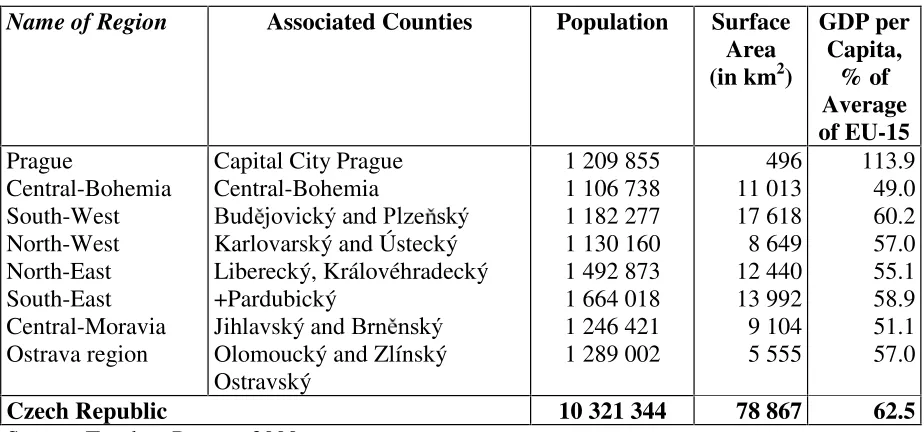
2.4 Building the Institutional Framework of EU Structural Funds in the Czech
Republic within the Context of Decentralization of Public Administration ...30
2.5 Adapting to EU Transfers: the Case of Lithuania...32
Discussion of Previous Two Presentations ...35
3. The Sequence of EU Programs: Planning, Monitoring and Evaluation . 36 3.1 Structural Funds Programming – A Retrospective Assessment ...36
3.2 Structural Funds in Poland – Challenges and Options...39
3.3 Management of Pre-Accession Instruments and Preparations for the Structural Funds...41
Discussion of Previous Three Presentations...42
4. The Rationale, Importance and Effectiveness of Principles of EU Programs: Subsidiarity, Additionality, Concentration and Co-financing .. 44
4.1 Some Reflections on Costs and Benefits of EU Programs: The Austrian Experience since 1995 ...44
4.2 The Poor, the Unemployed and the Naughty – Some Good, Some Bad and Some New Ideas on Allocating Structural Funds Among the EU Members ...46
Discussion of Previous Two Presentations ...48
5. Macroeconomic Effects of EU Financed Programs: Demand Side Effects, Supply Side Effects and Problems of Absorption ... 49
5.1 Macroeconomic effects of EU Financed Programs...49
5.2 EU Transfers for Poland: Problems with their Absorption ...52
Discussion of Previous Two Presentations ...53
6. The Long-Term Effects of EU Transfers: National Catching Up and/or Regional Convergence... 56
6.1 Empirical Evidence of Regional Convergence and the Role of Structural Funds in the EU ...56
6.2 The Trade-off between National Development and Regional Disparities ...58
7 Options of Program Selection: Supporting Losers or Winners,
Enhancing or Correcting the Market Mechanism ... 67
7.1 Supporting Losers or Winners in the Latvian Context...67
Discussion of Previous Presentation ...69
8 Special Institutional and Policy Tasks in Sectors: Agriculture and Transport and Infrastructure ... 71
8.1 Experience of Preparation of the SAPARD Operational Program for Poland ...71
8.2 Transport Infrastructure in EU Enlargement and Integration ...72
Discussion of Previous Two Presentations ...76
9 Final Discussion ... 78
Appendix I: Workshop Program ... 80
Abstract
This is a report about the fourth workshop from the seminar series of IIASA’s Economic Transition and Integration Project entitled “The Process of EU Accession: Preparation by Learning and Exchange”. The workshop was held in Prague on 9-11 November, 2000.
Foreword
In 1996, the Economic Transition and Integration Project (ETI) at IIASA initiated a seminar series on the accession of the Central and East European countries (CEECs) to the European Union (EU). The title of this series is “The Process of EU Accession: Preparation by Learning and Exchange.”
This initiative was a logical one, since in recent years ETI has been active in research and policy advice on the international economic relations of transition economies. Moreover, several recent ETI research projects, such as the one on “Output Decline in Eastern Europe,” “Impediments to Exports in Small Transition Economies,” and “Catching Up and EU Accession” have had strong implications for the CEECs’ integration into the EU.
EU enlargement is a complex process whose importance for the countries concerned can hardly be overestimated. This probably justifies the large number of ongoing academic research projects on the topic. A distinctive feature of ETI’s seminar series is that it is intended to promote an exchange of views and understanding among the transition countries aspiring to EU membership. IIASA, with its diverse composition of members from both parts of Europe (among other countries), including older and newer members of the EU, as well as the Central and East European (CEE) candidates for EU membership, is an ideal research institution for realizing this goal.
The organization of the seminar series is supported by an advisory committee with changing composition, in which the most stable and active members have been András Inotai (Director, Institute of World Economics, Hungarian Academy of Sciences, formerly also Coordinator of the Strategic Task Force for European Integration, Hungary) and Danuta Hübner (Executive Secretary, UN Economic Commission for Europe, formerly Head of the Chancellery of the President of the Republic of Poland).
The first meeting in the series was concerned with the “Strength and Advantages of Eastern Europe: EU’s Net Gains from Accession,” and was held in Laxenburg, Austria, in December 1996. That workshop was intended to help make the CEE applicant countries aware of their strengths and weaknesses in the context of EU membership and build up their self-confidence before negotiations started. The meeting had an interdisciplinary character; in addition to issues of purely economic importance, problems related to the environment, foreign policy, and national security were discussed. A summary of the workshop can be found on the World Wide Web at
http://www.iiasa.ac.at/Publications/Documents/IR-97-019.pdf.
capital and labor, research and technology, environment, administration, and culture. A crucial issue discussed was whether an increased focus on the EU region, as manifested in the adoption of the common external tariff and common health and environmental standards, distribution of structural and cohesion funds, and provision of agricultural transfers, will enhance only the applicant countries’ relations to EU member-states, or there will also be effects for their interaction with the rest of the world. The seminar in Budapest was characterized by substantive presentations, lively debates, and participation not only from the Visegrád countries, Slovenia and EU members-states, but also from the Baltic states, Bulgaria, and Croatia. A summary of the workshop can be found on the World Wide Web in an Interim Report at
http://www.iiasa.ac.at/Publications/Documents/IR-98-020.pdf.
A third seminar was held in Laxenburg on December 5-7, 1998, on “The Time Pattern of Costs and Benefits of EU Accession.” This workshop analyzed the emergence of various costs and benefits in a timeline characterized by the following milestones: the start of the transition, the signing of the Europe Agreements, the start of accession negotiations, accession to the EU, and accession to the euro-zone. The discussion focused primarily on the CEEC side and went beyond the strictly economic factors. Separate session dealt with the lessons from former accessions, the implications of the need to comply with EU’s environmental standards, the special issues of agriculture, future adoption of the euro and the results of the relevant computable general equilibrium model calculations. A summary of the workshop can be found on the World Wide Web in an Interim Report at:
http://www.iiasa.ac.at/Publications/Documents/IR-99-015.pdf.
The fourth seminar was held in Prague on 9-11 November, 2000 on “EU Structural Support: Its Macroeconomic and Distributional Effects and Social Environment”. This report summarizes that seminar.
The underlying idea of the seminar was as follows. While reforms in the candidate countries have increasingly been geared towards EU accession, the short-term sacrifices of the present period are rationalized by the promise of future long-term benefits of the EU accession. On the list of these advantages one invariably finds the blessing of various kinds of EU transfers before, but particularly after EU membership. Transfers from the union are perceived as assisting the new members in their adjustment to the challenges of the single market, providing relaxation of the foreign exchange constraint of growth, contributing to the broadening of physical and social infrastructures, alleviating regional and national disparities and thereby assisting the real convergence process.
The workshop intended to enlighten specific features of the EU transfers, particularly as they appear for the less developed and new members of the European Union.
The mix of participants at the seminar at Prague turned out beneficial both for distributing useful information (including results of scholarly research) and for discussing critical issues of the EU support system. Researchers and government experts gathered from nine candidate countries (all but Slovenia), several EU member countries (among them from those that joined the latest to the union, i.e. Austria, Finland and Sweden), and the European Commission. A relatively large number of government officials were present from various candidate countries, who at the closing session strongly endorsed the usefulness of such seminars, in general, and of this meeting in Prague, in particular.
Accidentally, the IIASA meeting in Prague turned out to be also a special event, because it coincided with the confirmation of the return of the Czech Republic to IIASA as a full member starting January 2001.
The Institute of International Relations affiliated with the Czech Ministry of Foreign Affairs provided a nice, familiar and efficient venue for the meeting for which IIASA is indebted to that institute. The efforts of Karel Zeman and the Association for the Study of International Relations, Prague, as well as Petra Polaskova of the Institute of International Relations were invaluable for the initiation and organization of the meeting for which we are grateful.
This report is structured as follows. The first section summarizes the most recent developments in the accession process in the individual candidate countries. The second is devoted to the establishment of regional institutions as an alleged prerequisite for managing the structural support funds of the EU. The next section deals with the organization of planning, monitoring and evaluation of EU financed programs as experienced and perceived in the current members states and the candidate countries. The fourth section is devoted to the essence and realization of the principles of EU programs, while the fifth analyzes the macroeconomic effects of past and future such programs. Section 6 deals with the impact of EU funds on national and regional convergence, while section 7 deals with the issue of program selection. Finally, section 8 is devoted to the special problems of the two heavy weight sectors in EU programs: agriculture, as well as transport and infrastructure.
About the Authors
János Gács is Leader of the Economic Transition and Integration Project at the International Institute for Applied Systems Analysis, Tel: (+43-2236) 807-326, Fax: (+43-2236) 71313 ([email protected]).
EU Structural Support: Its Macroeconomic and Distributional
Effects and Social Environment
János Gács ([email protected]
9ODGLPtU%HQiþHN[email protected])
1. Latest Developments in the Process of Accession – Updates
from Applicant Countries
1.1 Poland1
The European Commission’s latest Regular Reports were released the day before this meeting, so the presenter naturally reflected her first impressions. Since Poland, Hungary and the Czech Republic received relatively high grades, this implies that most of the implementation of the short- and medium term priorities of the national program for Poland have been assessed positively. There seem to be some inconsistencies in the document as to the expected date of accession: at one place the document mentions that the most advanced countries could join as early as 2003, but at other parts of the report it is indicated that negotiations about the most difficult chapters will start in the first half of 2002 only. Since negotiation on chapters such as agriculture will take substantial time, and after concluding the negotiations the ratification of the terms of accession in the current member states would take at least 18 months, the second information would imply a date of accession in 2004 or 2005, at the best.
At the time of the workshop 11 out of the 29 chapters under negotiation were provisionally closed, however, it is clear that these 11 chapters were the easy ones. The difficult issues for Poland (but also for many other candidates) are agriculture, the free movement of labor, the free flow of capital (more precisely, sale of land), and the environment. The importance of the chapter of agriculture for Poland is clear if we take into account the size of the country, the share of employment in agriculture, as well as the efficiency lag in agriculture behind advanced countries.
The Polish government declared that by the end of 2002 the country would be ready for accession: Polish law will be adjusted to the requirements of EU, except for those areas where Poland will receive transitional periods. Simultaneously with the adoption of laws also the enforcement of these should develop, as it became also an important element of the assessment of the applicant countries. Poland has been asking for a long time for a clear calendar of the negotiations, including the possible closing
date of these. The reason for this has been that Poland wants "to be prepared just in time, not just in case". This is important in order to minimize the costs incurring after some obligations have been assumed, and thus make the adjustment easier.
Another important issue is the question where does Poland stand in terms of the implementation of the association process? In the European Agreement between the EU and Poland the association process consists of two phases, each being five years long. The first such period started February 1994 and already elapsed. Unfortunately, Poland could not move yet to the second stage, due to Poland’s own fault: not all domestic laws covered by the European Agreement are yet in conformity with the European law. Here particularly the laws should be mentioned where "national treatment" has not been yet guaranteed to all EU nationals and companies. An example is gambling: according to the Polish law capital invested into gambling in Poland can be only of Polish origin. Since revenues from gambling are high, the Polish Parliament hesitates to give up the revenues collected by the Polish budget or those ones at least being used within Poland. Unlike Poland, Hungary, for instance, already moved to the second stage of the association process.
The reason of improved assessment of Poland by the Commission could be attributed to two developments. First, in the middle of 2000, in the Polish Parliament’s lower chamber a special Extraordinary Commission on European Law was established, and it speeded up implementing, preparing and adapting new laws. Second, early 2000 the government realized the danger that the next report would be too negative, and therefore made every effort to avoid this, including speeding up the adjustment of the legal system.
The fields that are still weak in preparing the institutions for EU membership are public administration and the judicial system: for instance, processes at court require very long time to go through. As for the public perception of the EU accession, it is an optimistic sign that following a sharp deterioration several months ago, public opinion on accession is again improving.
The current macroeconomic developments in Poland are in general favorable, but there are some clear challenges for the future, such as the relatively high current account deficit (amounting to about 7% of the GDP), increasing inflation rate, and increasing unemployment.
1.2 Estonia2
The presenter listed some favorable and less favorable facts about Estonia’s macroeconomic development in 2000. As for output, following a 1.1% decline in GDP in 1999, the growth picked up in 2000 to a forecasted rate of 4.1% (eventually reaching 6.4%). A spectacular expansion of exports (around 32-34%) occurred in the presence of a relatively low inflation (4.5%-5%). Since the government and the parliament decided earlier to have a balanced budget, the deficit of 4.7-5.0% in terms of GDP in 1999 was unusually high, but it was related to the election year. In 2000, however, again, due to not very positive developments in tax revenues, prospects for a balanced budget looked
dim. In the past years Estonia used to have current account deficits beyond 10% of the GDP, so the expected 6.5-6.8% deficit for 2000 seems moderate. However, its growing tendency starting from 1999 was a cause for concern, because as income was growing in the economy, imports picked up, leading to increasing deficits in foreign trade.
Transition is not yet over in Estonia as the critical parts of economic reform also show it. Here one should mention the particularly low targeted level of taxes. Currently, government expenditures are at 36% of GDP, but the government’s target is to reduce this to 33%. Accordingly, the accomplishment of the reform of public administration is of crucial importance. A special government committee deals with this issue. The person nominated to lead this committee served earlier as a chairman of the Privatization Board, which is an indication how important the public administrative reform is considered now in Estonia. This reform is only at its beginning. Discussions about principles are very heated, particularly about the relationship between central and local administrations and the tax bases of the two levels.
Another crucial issue of debate is the new Estonian income tax system that had been introduced on 1 January 2000. The novelty of the new system is that corporate incomes, which are reinvested, are not taxable. Estonia’s tax system is uniform across physical persons and companies: both personal income and corporate income are taxed by a flat rate of 26%, and from the latter reinvested revenues are exempt from taxes. In 2000 it was a critical question how, following the changes, tax incomes would develop; but, thanks to the pickup of growth, the tax base is growing faster than forecasted and the target of 1% budget deficit seems achievable.
The next critical issue is infrastructure, particularly the objective of improving transport infrastructure, developing energy networks, and creating conditions for the development of information and communication technology. As for the transport infrastructure, one should mention its important position. According to some estimations, close to 20% of Estonia’s GDP is produced by transit trade. The underlying transport infrastructure in Estonia, like in some other East European countries, is in a rather bad shape and in need of substantial investments.
As for energy networks, Estonia is relying on oil-shale based power engineering: about 55% of primary energy and 98% of electricity use in the country is obtained from oil-shale. Two critical issues have to be tackled. First, the electricity network of Estonia, like those of the other Baltic states, are linked to the North-Eastern part of Russia. In order to establish an access to the Nordic countries, substantial investments from the EU are needed. Second, there are environmental problems due to this type of energy base (high emission of CO2 and sulphur); thus the North-East part of Estonia (where oil-shale
mining and energy engineering are organized) has become heavily polluted, and the mitigation of this pollution calls for investments.
At the accession negotiations, Estonia managed to close 14 chapters - the easiest ones. Estonia asked for transitional periods in the framework of several chapters.
list of other issues. In transport, Estonia asks for transitional period for levying taxes on heavy trucks.
As for taxation, discussions are currently focusing on various issues, including a transitional period until the end of 2006, for excluding VAT on electricity power generated by wind and hydro-power. Also transitional period is requested for harmonizing excise duties on tobacco and mineral oils, the former due to the quite large black market of tobacco. Another request is to postpone the fulfillment of the minimal level of fuel stock to 90 days, which Estonia would like to fulfill in 2010 only. The discussion is about the possibility that Estonia could account also its oil-shale reserve as part of the fuel stock.
As for environmental transitional periods, there is a long list of requests (as mentioned with regard to energy), a characteristic one is the requests to fulfill the directive on drinking water in 2013 only, because it implies substantial investments.
As for external relations, there are no special Estonian requests, except for two issues related to free trade agreements. Estonia has such an agreement with the other two Baltic states, on the one hand, and with Ukraine, on the other. The possibility to maintain the Baltic free trade agreement in the future depends very much on the EU’s attitude to the Baltic states in general, but the agreement with Ukraine seems to be transitional, because according to the current opinion of the EU, this agreement should be abolished in case of Estonia’s accession to the union.
1.3 Latvia3
Latvia is one of the poorest of the applicant countries: together with Bulgaria and Rumania it stands at the bottom of the list of the candidate countries with per capita levels of GDP 20% of the EU average at purchasing power parity. Visitors of Riga should be reminded that central Riga is far from being representative of the country.
In 2000, the most important development in the accession process was that Latvia was allowed to start negotiations starting at the beginning of the year. Many Latvians, including the presenter, saw no justification for the earlier discrimination between the candidates. However, fortunately, the EU recognized and corrected the mistake. It is important that the Commission stated that the date of the accession would not hinge on the fact which country started the negotiations first. Latvia is eager to catch up with the negotiations and just like Poland (as mentioned by the Polish presenter) Latvia is committed to be ready for accession by 1 January 2003.
Negotiations started with eight chapters in February and March, out of which five were provisionally closed by May. One of the three not closed chapters was on the EU’s external economic relations, where the sticking point was the Baltic Free Trade Agreement. According to the information going around this subject, Estonia declared that if the three states join the union in different times, they would scrap the agreement without asking for any transition period. Originally, Lithuania and Latvia wanted to ask for transitory periods, but later Lithuania pulled out, so for Latvia there is no partner for
asking transitory period in this free trade agreement. Accordingly, this chapter will also be closed soon.
In October 2000 negotiations started on another set of eight chapters. There do not seem to be any heavy problems with them. The Commission criticizes certain aspects of the Latvian land regulations; in the economic and monetary union chapter the Commission does not like that the Latvian government forces some of its financial institutions to accept some of its own securities. The Commission wants more independence for the central bank of Latvia. This is a curious objection since the constitution of the Bank of Latvia was set up essentially on the constitution of the Bundesbank, one of the most independent central banks in the world. In fact, the Commission does not like that the minister of finance sits on the board of the central bank, so he/she can exert some influence; therefore that should be scrapped as well. In 2001 twelve chapters are hoped to be negotiated, including some of the more contentious ones, such as agriculture. Agriculture is not as problematic as in Poland (due to its smaller dimension), but it is a problem, particularly getting its shape consistent with what is required to be in the EU. But implied restructuring will be very costly, approximately one billion euros, or 15% of Latvian GDP. Obviously this would spread over several years.
Investments needed to fulfill the environmental requirement also amount to a very high amount: 23% of the GDP, of which the Latvians are expected to pay 8% of the GDP. However, this is a longer term process.
Discussion of First Three Country Presentations
A question was addressed to the Polish presenter about the reasons for the favorable turn in public perception of the EU accession in Poland and about the regional pattern of public support. The presenter answered that the government’s new information strategy may have played a decisive role: more meetings were organized to discuss special reports on accession, more television debates were conducted about problems of joining the union. In addition, also in the recent presidential election, responding to the opinions of some of the presidential candidates, the voters had to make up their mind about the future of Poland and their attitude to accession. As a workshop participant added, it was favorable that the Polish government’s campaign targeted various groups of the population in a differentiated way: separate promotion programs were prepared for peasants, for media people, for teachers, etc. The regional distribution of public support has not been studied in detail yet; the general impression is, however, that Warsaw is leading, followed by the Western part of the country.
government; the Ministry of Foreign Affairs reforms its administration in the ’tiger jump’ way, computerizing almost everything. In this respect the closeness of the Scandinavian countries is a benefit, since they are leaders, at least in the EU, in improving administrative efficiency through computerization. While these are prospective attempts, the presenter agreed that, with accession approaching, the administrative burden will increase, and according to the latest information, several Estonian ministries had to face such problems, especially in those very complicated areas as energy, and in other technical issues. This shows that the policy of cutting administrative capacities has a high risk. According to his assessment, if the government managed to keep its administrative expenditures at its current level, that would be a big achievement.
The Latvian presenter added that high administrative expenditures are criticized also in the case of Latvia. There is a Soviet legacy here. Although the law “in books” looks already very well, in many cases it looks even better than in more advanced western societies, the problem is the failure of implementation, and this originates in the society. In some sense, implementation was not a problem in the Soviet system. Now there are no mechanisms of the implementation. In addition, the origin of the legal system of Central and East European transition countries is in the continental or German judicial systems, as opposed to the common law style of the Anglo-Saxon countries. In the latter, if in the common law system the public administration is not doing what it should do, the citizen can sue the administration by taking it to court. In fact, ministers in the UK have been taken to court for failing in their expected conduct. But such mechanisms are missing in transition countries, such as Latvia. For instance, some years ago a progressive law on higher education was passed in Latvia, but then nothing happened on this front. What was the solution? The parliament passed a new law about the implementation of this earlier law.
To a question whether the European Commission can monitor the performance of the enterprises in the transition countries to evaluate whether they can withstand the competitive pressures emerging after membership, the Latvian presenter answered a strong no. He was not sure whether even the national governments really wanted such monitoring. Moreover, in case even if they themselves could do it, its is a question whether they would want to initiate such an investigation.
He also mentioned that the administrative culture has horrendous problems of language and expression. Critical opinions are verbally presented, but never put on paper, because there is a widespread perception that too original opinions and/or ideas can be easily turned against those that express them. This might as well be a hindrance of monitoring, because a part of the monitoring process should inevitably be summarizing the results of fact-finding in written documents.
In a question a Czech participant from the audience asked whether in the Baltic states, just like in the Czech Republic, the pattern of regions formed due to the need of the coming EU membership is artificial, compared to the original historical regional structure.
general level, if the European Union says that they would like the Latvian government to do X, the government would do X, or at least, will pass a law that X should be done.
The Estonian presenter added that Estonia has also 16 regions and there are discussions about merging them to a smaller number (six or nine, or another number). This is, however, only a formal question: the basic issue is the tax base of the new regions and the distribution of functions.
The Lithuanian participant added that in his country there are 10 intermediate units of government at NUTS III level. In its program, the recently elected government proposes to establish 5 self-government units.
1.4 Bulgaria4
The presenter concentrated on two topics: recent progress in the negotiation process between the EU and Bulgaria, and the specificities of the Bulgarian economic development that are relevant for the integration. The first round of negotiations took place in December 1999, and during the next year Bulgaria presented altogether 19 position papers and closed 4 chapters (these were SME, R&D, education, and common security policy). New institutions were created (e.g. the Council on European Integration and the Directorate at the Council of Ministers). In fact, the speed of implementing the acquis in the Bulgarian legislation was highly appreciated by the Commission. However, its enforcement was lagging seriously behind. Another serious problem emphasized by the Commission concerns the policies fighting against the existing corruption.
In 1997, Bulgaria experienced hyperinflation, banking crisis and exchange rate instability. The stabilization policies in the next two years were very severe. The output in the Bulgarian industrial sector declined by more than a quarter during 1997-99; the present dominance of production depending on low-skill labor is taken more as a barrier to than a ground for improving the industrial structure with increasing specialization. The currency board arrangement is judged as too restrictive, resulting in an extremely low level of loans that hamper further expansion. Mass privatization schemes applied in Bulgaria were also unsuccessful, hitting adversely the restructuring of enterprises, what resulted in a low level of FDI up to 1997. The interest of foreign investors revived only after the financial discipline was reinstalled and the impact of FDI on the economy is currently judged as positive.
1.5 Romania5
The Progress Report of the EU from November 2000 put Romania to the last position among the accession countries. It is true that Romania suffered of financial and social problems throughout the last 10 years. Even the growth during 1994-96 was later judged as artificial. It was assumed that it had been caused more by changes in the statistical methodology, than by real events. The permanent instability of the local
political system is supposed to be the main factor behind the economic failures and its elimination will be the key to a future progress in Romania. The aim at gaining political stability was initiated in 1999 and the provisional economic results for 2000 signal that Romania may finally break even. At least it was for the first time since 1990 that Romania was able to stand by its macroeconomic commitments agreed with IMF.
The main problems seem to rest on the microeconomic side. Structural reforms in the industrial sector have been opposed by local trade unions, and the fragmented agriculture with hidden unemployment remains a sector that is not prone to a sustained progress. That is naturally a liability for progressing in EU accession negotiations. In 2000, in the accession negotiations only 6 chapters were opened. Additional 11 chapters are prepared for 2001 and the concluding date of most of the negotiations is expected in 2004, with discussions about derogations in the most problematic issues pending until 2006. The ratification of accession is thus envisaged for 2007.
1.6 Czech Republic6
The annual evaluation of the European Commission for 1998 and 1999 were quite critical about the progress made in the Czech Republic towards accession. That led to a real change in the approach of the government to these issues what was also reflected in a more favorable report for 2000. The most intensive positive changes occurred in the “hard core” of harmonization of the acquis. Significant progress was also reported in the “soft core” of harmonization - in alignments at the level of informal parts of legal codes, values, state administration, judicial reform and economic restructuring. The legislative changes received a high priority both in the government and the parliament, and their intensity was unprecedented since 1993. It is therefore a credible plan that in 2002 the Czech Republic will be fully in line with the EU acquis and the remaining requirements of core harmonization will be fulfilled in 2003 – the year that the government set as a target for the EU entry.
Critical comments can be raised, however, to the real progress in such areas like the public administration, education, science, and the performance of the judiciary system. Civil services remain unreformed and the bureaucratic treatment of entrepreneurial activities at the level of small and medium sized enterprises, in fact, worsened. The progress in the pension and the social security systems was very slow and its critical decisions were postponed. Corruption and crime became a very serious issue pending solution.
Economic growth was boosted by two major factors: the activities of foreign investment enterprises and the growth in the aggregate demand from the EU. The restructuring of enterprises is a long way from its completion, especially in large domestic firms subject to mass privatization schemes. The size of their debts goes beyond the means of the state budget. The local public perception of EU membership and the political debates on benefits and costs of the Czech accession show mixed results. The lack of commitment of some political parties to accession is apparent, and the population has not been addressed with visions evoking their interest in the
European issues. Notwithstanding that, the majority of Czechs remain pro-European, and the economic exchanges with the EU show the fastest growth and stability from all the economic indicators.
Discussion of Previous Three Country Presentations
A participant from the audience was of the opinion that the state of the Romanian and Bulgarian agriculture seems to be a crucial economic and social problem. He asked what ways there are foreseen for its solution in the near future?
The Bulgarian presenter replied that the agriculture in Bulgaria was pressed by two main shortcomings: administrative barriers in developing the market for land, and the lack of financial funding available to farmers. As agriculture does not contribute to the growth of GDP and the market for land is underdeveloped, the banks are not willing to provide credits. At this stage the provision of funds from SAPARD resources seems to be the most plausible way for financing the development in this sector.
The Romanian presenter was of the opinion that the Romanian agriculture faces primarily a structural problem of employment, since officially 35% of inhabitants were employed in that sector. The expected growth in the service and the industrial sectors would change this picture dramatically. The other problem is how to promote the concentration of land ownership. Programs are being prepared offering financial instruments, and new laws would open space to agricultural entrepreneurship. However, in some respects the liberal principles proposed by the government are in conflict with the functioning of CAP – a matter that must be negotiated with the Commission. The negotiations were not easy (the Romanian National Rural Development Plan was rejected twice by the Commission), but the quest for mutual understanding is continuing.
A workshop participant argued that the experience with FDI in Hungary and the Czech Republic showed that transformation could be speeded up significantly if the country were able to attract foreign investors. Can we foresee a similar break-through in Bulgaria and Romania?
Both the Bulgarian and Romanian presenters agreed that even though both Bulgaria and Romania have been relatively successful in attracting FDI in the last four years and both the society and the governments of these countries accepted the existence of favorable effects of FDI on domestic economies, institutional and administrative impediments (e.g. on the side of judiciary and institutions) were so resilient to changes that the position of foreign investors was not satisfactory. The changes in the institutional and behavioral approaches to foreign investments are progressing but relatively slowly.
real absorption of foreign experiences on the lower levels in the hierarchy of administration.
There was a question raised from the public that free movement of labor could become a threat to the national development if it would imply human capital outflows. Could the presenters explain how their countries dealt with that problem?
The answer of the three presenter was as follows: Derogations in the free movement of labor, due to fears of brain drain, have not been considered a serious problem in more developed accession countries (e.g. in the Czech Republic). In Bulgaria, however, there was an emigration of more than 400,000 young people just after the start of transition, what posed a threat. The destination countries were not in Europe, but mainly in Canada and the US. Actually the Bulgarian population is rather immobile and permanent emigration is small. Bulgaria is therefore not afraid of the brain drain if the barriers to EU labor market would be liberalized. Romania is in a similar situation, as far as the EU is concerned. The relative decrease in attractiveness of the American labor market in the future is, however, less clear to envisage.
1.7 Hungary7
What is the current position of Hungary in the preparation for the EU accession and what is the legacy it brings with itself? It is a general view that Hungary is among those countries that are best prepared for the EU enlargement, even though we should admit that no country among the applicants is fully prepared. There are differences in the level of preparation both among countries and within each of the countries. In Hungary we can distinguish four levels of “maturity” in EU membership preparation. The first is economics, the second is the legal adjustments, the third is the quality of public administration and the fourth is the social adjustments of the process. Regarding the economic issues, Hungary can be already considered the member of the EU. 76% of exports are going to the EU, which is the third highest intra-EU share if we consider the 15 EU countries. Only Portugal and the Netherlands have a higher share. If you look at the structure of Hungarian trade, it is consistent with the EU standards of modern trading. Two thirds of exports are so called technology intensive goods. If compared with other candidate countries, this share is 48% in the Czech Republic, 44% in Slovenia and 30% in Poland.
Hungary is also the only accession country that has a balance of trade surplus with the EU. All this is based on the privatization pattern of the country and on the leading role played by foreign direct investment. The latest World Investment Report of the UN of October 2000 indicated that Hungary belongs among the most nationalized economies worldwide, together with Singapore and Ireland. The trans-nationalization index, which is a composite index, quotes that Hungary’s standing is three times higher than the standing of the second most globalized accession country. Therefore an enormous structural differentiation has taken place in Hungary in the last 11 years – such that concerns the ownership, intra-industry trade, technology transfers, financial contacts, etc.
As far as legal harmonization is concerned, the most important point is the enforcement of the acquis. It is a two-way process: one is proceeding from the Parliament to the bottom and the other one depends on the social and institutional acceptance at the roots of the society. In Hungary all these speeded-up due to the early intensive presence of FDI, what is often omitted in the analysis of impacts of FDI. Except for technology, management, capital, know-how and trade, FDI has brought to Hungary also the modern legal system.
The major shortcomings of Hungary can be discovered in some parts of the public administration, similarly like in many other countries. As to the social acceptance of the EU membership, public opinion polls reveal that 68% of the population would like Hungary to become a full member, while the opposition to membership is 8% only. A surprising finding is that the share of the positive votes has been rising, notwithstanding the existence of conflicts of interest that became apparent at the later stages of negotiations.
If we look at the process of EU entry negotiations, all chapters have been opened, although some of them have been opened formally only. Among those more questionable we should mention agriculture, regional policies, free movement of labor, justice and home affairs and also the contribution to the EU budget. Thirteen out of 29 chapters were concluded. The Hungarian official attitude to negotiations is that the negotiations can be finished, provided there is the political will, by the end of 2001. The European Commission thinks that the negotiations can be prolonged until the mid of 2002 mainly due to elections in Germany and France, and to some extent also in Hungary. We can therefore expect that the process of ratification can start in the second half of 2002, which means that the year of accession can be in 2003. In case the process will be unexpectedly delayed and the accession will be in 2004, we do not consider it a catastrophe. What matters is that the EU will stand by the basic rules for accession which have been reconfirmed several times in the past. First, that each country is admitted according to its merits, what implies that no country has the right to take any other country as a hostage. Second, that the process of enlargement is open for all remaining applicants. This is of the most fundamental interest especially for Hungary because of its extensive borders with non-EU members at the expected time of EU membership. Hungary is therefore interested in an uninterrupted strengthening of cooperation in the region.
populism, nationalism, internal conflict and cause international instability in the whole region.
1.8 Slovakia8
Slovakia has not yet proceeded so far in the integration process as Hungary did, nevertheless, one must say straight from the start that the situation in Slovakia, especially if compared with that of a couple of years ago, is in a much better shape and further progress is in the offing. Slovakia is a young country, having established its independence in 1993. The internal political strife brought many of the forward-looking expectations to a halt. In 1997 the European Commission had a relatively negative opinion about the Slovak accession, mainly because of the nationalist, populist and non-transparent policies of the government that was not offering a clear pro-Western orientation. Though the country was not excluded from the EU’s enlargement, it was neither invited for further negotiations after the Luxembourg summit in December 1997. The changes to a more international orientation of the country came in autumn 1998 when a coalition of a wide spectrum of political parties was required to change the local balance of power.
In December 1999 Slovakia was invited to negotiations about the EU accession, to what the new government responded with an intensive preparation for the enlargement. In the following three aspects of the standing of Slovakia in the current negotiations with the European Commission are to be analyzed: legislation, political stability and economic policies.
The negotiations dealing with the switchover to the acquis have been dynamic and smooth. In March 2000 Slovakia officially submitted its position documents to 8 chapters. It is expected that at the beginning of 2001 16 chapters will be negotiated, of which 6 should be concluded.
According to the presenter’s personal opinion the political stability in Slovakia has not yet reached a sufficient level. Though the government of Mr. Dzurinda looks highly professional, the coalition on which it is based has been subject to cyclical crises. On top of it, the potential government alternative does not offer much continuity. Some observers even expect a subsequent reversal of the present strategic policies.
The past macroeconomic situation in Slovakia is an interesting case to observe. The reservations against the policies of the government of Mr. 0HþLDUQRWZLWKVWDQGLQJ
we could observe a long period of relatively high growth. The growth was fuelled mainly by investment. Unfortunately that is the end of the positive news. We must also add that this investment was backed by government guarantees and by credits granted by state banks what created large macroeconomic imbalances. For example, the external deficit became more than 10% of GDP, if measured on the current account. The second large imbalance – the loose fiscal policy – was indirectly associated with the current account. The annual budget deficit was running on over 5% of GDP.
The process of transition was also marked by the absence of structural reforms. This weakness was particularly apparent as the Slovak real exchange rate was
appreciating and the exports were losing on competitiveness. Until October 1998 the real exchange rate gained by approximately 25-30%, if measured by relative unit labor cost increases. The new government has put a break on the previous developments by introducing restrictive policies that remind us to a large extent of the recommendations outlined by the Washington Consensus. In assessing their outcome we cannot come up with a simple answer. On one side, the macroeconomic imbalances were to a large extent eliminated. On the other side, the growth of the economy significantly decreased and the unemployment rate became one of the highest in Europe. We can call it a tradeoff of the new Slovak reality. Taken from the point of view of the electorate the former figures of 6% versus the present 1.5% of growth may be calling for a political change, what the populists do not miss to use as an argument.
On the other hand we should mention that the export performance has improved in the last two years and the current account deficit decreased to 5% of GDP. Nevertheless, the stock of FDI at the end of 1999 was a mere USD 2 billion what reveals indirectly that the economic and political instability in Slovakia were adversely correlated with international linkages. The reserves of the National Bank have been USD 3 billion only, which provides little support to the credibility of local monetary stability. The fiscal stability improved significantly and the process of restructuring has been guided by a large wave of privatization in the banking sector. As an outcome of recent prudent policies, the restructuring of enterprises gained on intensity, what is the best signal for the future development. Taking the assessment in general terms, Slovakia has progressed significantly in its convergence to the EU in the last two years. Nevertheless, its lagging in the progress of economic restructuring and the EU accession behind such countries like Hungary and Poland remains still apparent.
1.9 Lithuania9
The major accession milestone of Lithuania happened in 1995 when the country placed its application to the European Commission. The National Programme for the Adoption of Acquis was launched in 1998 and the negotiations with EU started in 2000. The Lithuanian government schedules the process of preparations so that it should be ready for the accession by 2004. The negotiations with the Commission have been already completed in six chapters. By the end of 2001 all position papers are planned to be ready. The most problematic chapters are expected to concern such fields as energy, agriculture and environment. The public support of EU membership, according to recent public opinion polls, is the lowest among all candidate countries. It is less than 50%, and 33% of the population are undecided. The large part of discord has been caused by the negotiations with the Commission about the viability of the Lithuanian nuclear power program. The issue has escalated recently by the Parliamentary elections when the issue of nuclear energy became a part of local politics.
The co-ordination of the EU accession program is in the hands of the prime minister that chairs the Governmental European Integration Commission. In parallel to that, the Ministry of Foreign Affairs is in charge of negotiations with the EU and it also acts as a national aid coordinator. In addition to these bodies there is a European Affairs
Committee at the Lithuanian Parliament which is responsible for the passing of new or transposed legislation compatible with the acquis. In its last progress report the European Commission has given a very positive assessment of the Lithuanian preparation, stressing especially the advances in economic transformation. For the first time it recognized that the local market economy operated reliably. Public interventions and protectionism were reduced, and the macroeconomic stabilization program was successful. Privatization has been completed with the exception of one savings bank and sectors of energy, gas and railways.
There are still problems pending adjustment, particularly concerning the high current account deficit, high unemployment and low private investments. The Commission noticed a gap existing between the transposition of laws and their actual enforcement. Widespread problems with the judiciary system deserve a special attention and a question of reforms in the state administration was opened in order to improve its efficiency. It dealt with changes in the schemes of remuneration, training and co-ordination. What concerns the other sectors, agriculture, fishery, exports and regional policy stood out among those where more efforts would be needed in order to meet the obligations of the membership.
Discussion of Previous Three Country Presentations
A participant from Poland asserted the Hungarian experience with multinational corporations. Poland has received in the last three years a massive inflow of FDI and this trend is expected to continue. There has been reported a growing pressure of multinationals on the EU member countries’ governments to speed-up the integration process in Central and Eastern Europe because of the strategic concerns that multinationals have there. It seems that the role of foreign investors in post-transition economies will be more substantial and we should not expect their present response to be limited to a short-run perspective only.
András Inotai responded to questions by stressing that in no case we should accept a policy that some country is taken hostage or punished for shortcomings caused by some other accession country. Of-course, the horizon of something like 12 months between the signing of the Treaty by various countries can lead to an outcome that their actual entry to the EU will happen at the same time. However, waiting for a longer period, let us say 3 through 5 years, cannot be explained as a process of approval procedures. That would create a dramatic deterioration of the international situation in Europe.
Another problem is the general policy of enlargement. The Helsinki decisions of the European Commission, that any country can start negotiations, was very forward-looking and generous. On the other hand, it caused a decline of public support among the EU incumbents, for example, in Germany. There are voices of populists claiming that in the near future the EU can have 25 members what may halt the European integration. We therefore need a clear schedule of procedures and a set of rules for enlargement without labeling which country should belong to which group.
each among the post-Communist countries shared two common values: political democracy and market economy. Though we started from a common baseline, the actual individual developments became very differentiated. Now we are subject to a common effort of homogenization through the accession criteria, especially the acquis. The same rules and requirements are laid on all applicants. However, it is a question if the absorption capacity of the acquis is the same throughout all these countries. Once it comes to the hardcore of negotiations, there will have to be introduced a process of differentiation responding to specific domestic conditions and different demands for national derogations. A higher flexibility in accession policy should become a part of the European Commission’s current negotiation strategy.
As far as the transnational corporations are concerned, they represent most probably the strongest lobby in favor of enlargement. Their impact on decision-making is often stronger than that of the best-prepared governments. But they are not uniform: we should distinguish between three different lobbies they represent. The first lobby is interested in investment in the region because it improves their global market position. It represents the lobbying for a quick membership. The second lobby is interested in trade. But the free trade was already created under the association agreement and its benefits have been utilized. Therefore these companies are not necessarily interested in a quick EU enlargement. Those who are exporters to accession countries are interested in the sustainability of the current trade deficits – a condition that is not so crucially linked with enlargement. The third lobby is represented by those companies, which can lose if the CEECs enter the EU as full members. It is because of the harder social, environmental and safety standards, or because of a loss of their present monopoly position. We should be aware of these pressures and our governments should learn how to play with these lobbies.
Responding to a question about the main strategic decisions behind Hungary’s success Inotai emphasized that we can see various factors that call for a reserved attitude towards a sustained successful development of Hungary. The present favorable situation is in the first place a result of economic policies undertaken in recent years. First, there are those very policies that have been highly criticized by some economists and politicians: it is the so-called "Bokros package" and the austerity program. Then we should consider the specific microeconomic conditions and the international orientation created before 1989. As a third element we should consider the policies taken after 1989. They need not have been an outcome of a specific Hungarian strategy but they were shaped under an international pressure, be it privatization or FDI policy. For example, it was so because the country was highly indebted and there was no other way how to get rid of its burden. What we see today is therefore the spillover effect of decisions taken long time ago. It is evident that the sustainability of such multidimensional and gradual processes is not easy to achieve.
A German participant commented on the issue of the German public support of the Eastern enlargement. First it would be good to stress that it was not spread proportionally around all Germany. The support in the Eastern part of Germany has been declining faster than in the other parts of the country. His personal impression is that German authorities have been so intensively associated with the Polish accession that it is hardly imaginable that Germany would give a consent to the first round of enlargements if Poland is not included.
In response to a question about the backwardness and lack of competitive potential of the Baltic countries Vitalis Nakrosis pointed out that according to the latest Lithuanian statistics the GDP per capita accounts to 32% of the EU average. If we consider also the informal sector, we can raise this figure up to 40%. What matters for increasing the local competitiveness is the growth and the quality of production. We should take into account that an important share of Lithuanian GDP is produced in two key enterprises: the nuclear power plant and the oil refinery. Both are expected to remain internationally competitive. Their role across industries is so important that the competitiveness of many other enterprises depends to a large extent just on these two. Also the expected high intensity of the EU transfers to Lithuania is a factor that will positively influence the local competitiveness.
One participant mentioned that the Lithuanian accession negotiations seem to pivot around the nuclear power: its efficiency on the one hand, but also its risks to safety on the other. It would be interesting to know, however, what precautions were taken that this program does not lead to a risk of an accession failure.
One of the Czech participants commented on Inotai’s call for a more differentiated approach to the accession and raised the question of Maastricht criteria. These should be unanimously and uniformly satisfied once the countries are considered candidates for the entry into the European Monetary System (EMS) and for the adoption of the Exchange Rate Mechanism (ERM). Here the present macroeconomic outcomes are still heterogeneous among accession countries and a more differentiated approach to their evaluation by the European Commission would reflect the fact that there are other priorities, specific for the particular situation in individual accession countries, than the criteria applied on more advanced countries in their preparation for the adoption of euro. The answer to the problem of trade-off between growth and external balance is still pending solution and many governments are pressed to stabilize their economies by austerity measures without knowing where is the optimal point of reversing the policies in order to get the economy back on a growth path.
A participant of the audience addressed Inotai asking for his opinion about the number of expected waves of enlargement and how the potential hierarchy of membership could look, once there could be in the EU 25 or even more member countries. That raises the issue of homogeneity of the member countries, as far as the intensity of their integration is concerned.
crucial areas, such as agriculture and public administration, are lagging behind the EU more than the industrial sector does. Their failure occurring simultaneously in more countries can put the process of further integration and enlargement at stake. Maybe it would be a prudent strategy if the EU would be enlarged first, as a test case, by one among the candidate countries only. The selection can be made among the best-prepared candidates. A more extensive enlargement would follow only after sufficient experiences with adjustments at such working conditions are acquired.
A workshop participant raised the issue that there are numerous studies about the benefits of accession. The cost side, however, is often neglected. Were there elaborated in the various countries analyses of the drawbacks that the enlargement may cause? The adverse impacts can hit a group of population, industries or firms. What is the balance between those who gain and those who lose, and what measures have been taken so far in order to alleviate the situation of the losers?
András Inotai in his final response remarked that the issue of European integration is a part of wider issues – one of them is security. The security of Europe is indivisible and currently there are no forces that would have an explicit interest in the opposite. However, uncertainty can be generated by neglect. For example, if some fundamental decisions are not taken at the right time.
As to the importance of macroeconomic indicators, András Inotai admitted that he has been always critical to those approaches for which the macroeconomic figures were the main playfield of decision-making. These figures are reliable and predictable for the mature market economies, for example such as Canada or the Netherlands. But how can we rely on these statistics once the fundamentals of the transformation are not in place? For example, a 3% rate of unemployment can be the result of a highly successful transformation, as well as a consequence of a fact that transformation did not even start and the same can be said about such indicators as the growth heated by expansionary government spending, inflation checked by administered prices, etc. Sooner or later the truth is revealed with a consequence that a lot of effort and human confidence have been wasted in the meantime.
We should support a policy in favor of creating a 10-15 years strategy of the EU enlargement, with clear schedules and rules, but with no firm dates of accessions. The speaker set a hypothesis that we could expect that in the next 10-15 years there will be three accession rounds. One before 2005, the second one 3 to 4 years later and the last one at the beginning of the next decade. The adoption of such schedule would be a clear message, not only to the accession candidates or the general public, but also to strategic investors.
strengthen the existence of diversity of European countries. In fact, it is the diversity that can be considered the comparative advantage of Europe and a principle that should guide its development.
We should realistically expect that the enlargement will proceed in groups and not by single countries. The first group will be taken as a test, anyhow. These countries should be therefore very much aware of their responsibility in order to keep the process open and avoid a backlash precluding further enlargements. As a pessimistic scenario, we can envisage an enlargement where all parties, both incumbents and new entrants, would have a feeling of being worse off. That would create a political deadlock in Europe that would be very difficult to overcome.
What concerns the costs of enlargement, they as the benefits, are not spread evenly in time. A lot of costs has been expended up to this moment and there will have to be more of them during the next preparatory stages, while there were much less benefits to come in the short run. We have got to understand that there are also the costs of transformation that must be considered a part of the process. However, they would have to be spent notwithstanding the accession. Similarly, there are many costs of integration within the EU 15 and only a small part of them can be attributed to the Eastern enlargement. There are also the costs of global challenges and we should consider to what extent the risks of enlargement could add to them or whether the benefits of enlargement can moderate their burden.
Vitalis Nakrosis turned in his response to the question on the Lithuanian nuclear power plant. According to the recent EU safety standards the Chernobyl-type of reactors are hazardous and should be closed down. However, the Lithuanian nuclear plant consists of three units and only Unit-1 should be closed. Its dismantling, the upgrade of Unit-2 and the building of Unit-3 will require billions of euros in investments. Negotiations are being held how the international community (including the EU) and international capital will finance such a development.
Július Horváth replied to a question concerning the Slovak privatization program addressing the privatization of the banks. Subject to the changes in time and in governments during 1992-98, the attitudes to privatization in Slovakia have also changed dramatically. The former policy of creating “domestic capitalist class” and the ways how its members were selected, was abandoned and the new government of wide coalition adopted a strategy that became more recognized internationally. Nevertheless, the whole change is still in a preliminary stage that commenced with the privatization of banks. Though consolidating the classified loans is in progress, the solution will take much longer time and its costs will be also large.
2.
The Role of Regionalism in the System of EU Transfers –
Necessity to Create Institutions and Channels for Transfers, or
Establishing and Pursuing New Regional Policies
2.1 EU-Induced Changes in a State-Centrist Regime: Lessons from the First Program Period of Finland 10
The presenter started distinguishing two concepts of regional policies used in the Nordic domestic debates: small and large regional policies. Small regional policies (or regional policies in the narrow sense) refer to measures earmarked for upgrading designated areas (such as investment grants, tax relief). Large regional policies (or regional policies in the broad sense) refer to the regional development implications of the operation of the welfare state. For example, there can be some sectoral policies (for instance in education or health service), which are implemented according to common criteria, and that imply income transfers from the richer regions to the less prosperous ones. It is worth mentioning that the latter income flows have been, as a rule, much larger than those related to the narrow domestic policies, or those related to the EU’s structural funds operations.
Turning to the tradition of regional policies in Finland, one must refer to the first specific regional legislation in the middle of the 1960s. Since then many changes happened. Program-based domestic regional policies were initiated in the 1980s, i.e. many years before the EU membership. In fact, the history of regional development policies is much longer, since they played a major role in the construction and internal integration of the nation state. This is a relevant point here because the nation building policies since the early years of independence strengthened the unitary state, which has been characterized by a strong central administration and strong local administration, but without much influence in the intermediate level. There are around 450 municipalities in the country, which are not only areas of local democracy, but also bear main responsibility for the provision of welfare state services.
When Finland applied for the EU membership in 1992, it underwent a very serious economic crisis, including a 10% decline in output. In fact, with some exaggerations, at that time Finland could well have been regarded as one of the transition countries. The resulting "crisis consciousness" has probably contributed to the subsequent profound changes both in the political system and the economic base. As regards regional policies and structural funds operations, it is an indisputable fact that the learning curve has been swift and steep. Nevertheless, a closer look shows that the state-centrist tradition deriving from the legacy of state building policies and the welfare state has been relatively resistant to change.
Finnish reforms in the institutions and the practice of regional development policies can be taken for an example how a national policy regime could be adapted to the European policy framework. However, it is important to state that the European requirements, as a rule, are not straightforward in the sense that it would be necessary to
squeeze the national regime into any strictly designed “European model”. Finland's example also showed that national governments have a final say in the arrangements, and the adaptation to EU norms shows a wide variety. For instance, one of the main principles of EU regional policies is partnership, which has been interpreted in widely different ways, and in different countries has led to different arrangements.
In the following the presenter described what institutional and procedural reforms were actually made. In Finland, for some 15 years, the responsibility for internal regional policies lies with the Ministry of Interior. While the preparation of legislation, promotion of regional policy in different policy areas, coordination of regional policy administration, including overseeing municipalities, are among the responsibilities of this ministry, the actual regional policy measures are implemented by sectoral ministries, especially the Ministry of Trade and Industry. This division of labor has not undergone any dramatic upheaval since the EU membership, despite that a number of reforms have been made for the purposes the EU membership, or in the name of such purposes.
While programme-based policies were initiated at the end of 1980s, regional policy measures were not organized in terms of programs until 1994 (one year before the membership). Both the internal conditions (e.g. the economic crisis) and the external ones (e.g. the anticipated EU membership) conditioned these to be changed into programs. In addition, the reform was also supported by the developments in the theoretical and conceptual bases of regional policies. The theory of endogenous growth was one of the most important among them. Finland was no latecomer in this field.
The direct impact of the EU membership was most obvious in the institutional reforms, primarily in the intermediary level. It was in those levels that Finland had been very weak for about a century. As part of the pragmatically oriented swift preparations for the membership, a partial solution for the distribution of responsibilities was found in 1993. 19 regional councils, which are bottom-up organizations of representatives elected by the municipalities, were established, and they were made responsible for regional development and planning. Simultaneously, the state-led top-down provincial governments lost their coordinating role in the regional planning and their number was reduced from 11 to 5 a couple of years later. Two strands of spatial polices in Finland -land use planning and spatial development - were also brought to the intermediate domain of the regional councils.
These changes took place before membership, and interestingly, the regional councils were not granted a leading role in the implementation of the structural fund programs from 1995. In fact, due to the fast preparations and a political decision, Finland started implementing structural fund operations much earlier than for instance Sweden. It was even before the referendum on the EU membership took place. Since the councils were not involved in the structural funds operation, a dual system of governance emerged in the intermediate level in the mid-1990s.