Munich Personal RePEc Archive
Efficient Order and Resource
Coordination in Mass Customization
Blecker, Thorsten and Graf, Guenter
University of Klagenfurt
2004
Online at
https://mpra.ub.uni-muenchen.de/5288/
EFFICIENT ORDER AND RESOURCE COORDINATION IN MASS CUSTOMIZATION
Dr. Thorsten Blecker, Assistant Professor, University of Klagenfurt, Austria, [email protected]
Mag. Günter Graf, Research Assistant, University of Klagenfurt, Austria, [email protected]
ABSTRACT
Mass customization manufacturing systems require a high level of adaptability and flexibility in production – especially in production planning and control. In particular, the Coordination of orders and resources is critical, because of the high volatility and the make to order principle. Multi-agent systems theoretically provide the required features to handle that complexity, but a lack of informational integration and organizational incompatibilities lead to low applicability. The application of Internet Technology provides the necessary interoperability and organizational alignment to support an overall application of multi-agent systems in mass customization.
KEYWORDS
Mass Customization, Internet Technologies, Multi Agent Systems, Production Planning and Control
1. INTRODUCTION
Mass Customization aims at the production of individualized products nearly at mass production efficiency [1]. Fast creation of new variants, as well as transparency for the customer is the main requirement for a mass customizing enterprise. Conventional software architectures are insufficient, if operations are closely interlocked. The goals of local actors have to be syn-chronized with superordinated objectives. Furthermore, concurrently fast reactions on random unpredictable events are necessary for successful acting [2]. Currently we have to realize two technological developments in industrial information systems: The increasing diffusion of Internet Technologies on the shop floor, e.g. in networking dislocated assembly lines, and an accelerated evolution of Multi-Agent Systems (MAS), e.g. in production planning and control. On the one hand, these trends are very important to strengthen competitive advantages of industrial firms in general. Both, formal and empirical studies approved the significant productivity increase of manufacturing processes by using intraorganizational applications based on modern information and communication technologies [3]. On the other hand, Internet Technologies support the evolution and realization of new production systems, based on a direct Internet Protocol (IP) supported networking of machines on the shop floor. Moreover, MAS in industrial processes increase the potential benefits of Internet-technologies on the shop floor.
2 complexity can be managed and reduced by MAS, as shown by Timm et al.[5]. The combination of the benefits of MAS and the extensive application of Internet Technology lead to an enabling of mass customization. We combine those merits to a concept for an efficient resource and order coordination in mass customization.
2. MULTI-AGENT SYSTEMS IN INTERNET BASED PRODUCTION
ENVIRONMENTS
2.1 Internet Technologies in Operation Systems
The term Internet Technologies describes a family of technologies suitable for exchanging structured data by means of package-oriented transmissions on heterogeneous platforms, in par-ticular protocols, programming languages, hardware, and software. Yet, the enterprise internal application of these technologies focuses on Intranets for office information systems. In future, a main industrial application area for Internet Technologies is Field Area Networks (FAN). This means the interconnection as well as networking of automation infrastructure and machine controls on the shop floor. Nevertheless, fieldbuses as a traditional, but competing network technology are still dominating in production processes, e.g. the ProfiBus concept of Siemens. In future, Internet based FAN will complement or even replace fieldbuses and other automation networking techniques. Industrial Ethernet is based on the relevant international standards (e.g. IEEE 802.3). It is adjusted to the specific environmental conditions, for example regarding to electromagnetic compatibility, shaking, moisture, and chemical resistance. In some sectors Ethernet and Industrial Ethernet are already the de factor standards, e.g. in the automotive indus-try, process industry and in plant engineering. Consequently, a comprehensive application of Internet based FAN enables the expansion of existing Intranets in office automation to all production processes, especially manufacturing. Enabling technologies, such as Web Services, Active Technologies, and Industrial Frameworks (based on .NET or Sun ONE) will support intelligent manufacturing technologies and a homogeneous network from office to manufacturing. These platforms have an enormous potential to reduce (transaction) costs within the production system. However, to use this potential there we have to deal with a high complexity, which comes from the high amount of possible interfaces and the heterogeneous semantics within the information systems. MAS may be used to search, update and synchronize data among different and heterogeneous information systems. Therefore, due to the evolution of the direct, IP sup-ported networking on machinery level, we expect an increase of distributed services in production processes based on MAS. This leads to a convergence of the traditional production systems and the Internet Technologies. The unification of technologies with different features to a ho-mogeneous service bundle and forms the infrastructure for future production processes. [6]
2.2 An Actors Perspective on Internet based Production Environments and their Consequences on Multi-Agent Systems
Technologies for their interconnection on the shop floor, as well as by converging various tech-nologies. Actors information technological mechanical
human artificial organizational monolithic composed diff e re n ti at io n re g a rd in g th e ac tor s ’ c o m pl ex it y di ff er e nt iat ion re g a rd in g t h e ac to rs ’ e le m e nts
Agent System Mass Customization Company
Actors adopting the behavioral role as agents
Software units that are not actors
Actors
information technological mechanical
human artificial organizational monolithic composed monolithic composed diff e re n ti at io n re g a rd in g th e ac tor s ’ c o m pl ex it y di ff er e nt iat ion re g a rd in g t h e ac to rs ’ e le m e nts
Agent System Mass Customization Company
Actors adopting the behavioral role as agents
[image:4.595.170.436.141.316.2]Software units that are not actors
Figure 1: Actors in Production System [7]
According to figure 1 we differentiate three types of actors in the operation system. The first type consists of human actors, e.g. planners and workers. Because of the increasing integration of modern information and communication technologies into automation systems and their growing local „intelligence”, artificial actors build up the second type of actors in production systems. For example, facilities with embedded computational intelligence may act autonomously in a production process. As with human actors, they perform different tasks and interact with other actors in the production system under physical and cognitive limitations. The third type of actors consists of composed units. We call this type organizational actors, because they consist of a varying number of human and/or artificial actors following organizational principles, e.g. autonomous or virtual teams on the shop floor, and act as a whole.
The actors in our model can be also viewed as agents. [8] An actor is called agent hen it acts on behalf of another actor. Thus, agents are still having the same attributes and abilities as before. Computer science approaches model agents by the actor formalism. Therefore, a multi agent system consists of a number of interdependent actors that are acting on behalf of other actors. They all have a specific role of an agent. We understand agents as a specific role of an actor in the production environment. Additionally, only information technological actors may be agents in MAS. However, artificial or human actors cooperate with actors that can be considered as agents in the MAS, but cannot be a part of an MAS.
Actors exist for a longer period in the operation system. Therefore, some agents are not actors in the manufacturing system. For example, an agent that is created to represent a single order may exist only a very short period. That is why we differentiate between software actors that may be some information systems such as product data management systems and software agents.
3. CONSEQUENCES FOR RESSOURCE AND ORDER COORDINATION IN
MASS CUSTOMIZATION
4 technologies [10]. This fit applies for the modularized units in the production environment, as well as for the multidirectional communication/coordination channels. The use of Internet-based production environments supports this fit because Internet technologies are inherently modular and therefore the resulting information systems, in this case the production planning and control system. The actors approach allows implementing the production planning and control system as a multi-agent system, because the production system structure supports natively the necessary separation of domains for the design of software agents.
Mass customizers produce their customized variants by starting some tasks or the assembling of pre-manufactured modules directly after customers order. This requires flexible and adaptive production processes and facilities. Contrariwise, mass customizers needs to have also structures that provide efficient processes similar to a mass producer. Selling is directly dependent on market demand, but a part of the facilities has to run and produce steadily to be profitable. To have the necessary parts and modules for customization available, a mass customizer could e.g. enlarge inventories, which is not desirable. Alternatively, mass customizers have to optimize their organization especially including planning and control concepts, to meet the requirements of the customization. Producing the desired variants requires flexible machinery as well as competent employees. The problem is to find e.g. an acceptable machine load and to determine completion dates. The high number of variants requires a more detailed scheduling and routing of the customer orders in the production system. Most approaches try to allocate the necessary tasks and resources after splitting up part and tasks lists. This approach is hardly applicable in mass customization. The conditions’ precedents for optimal production planning and control are first of all functioning information processes within the operation subsystem [11]. Mass Customization is especially because of the huge number of variants and orders consciousness for the information processes. Therefore, efficient production planning and control requires a concept that allows handling the high number of orders, which have a high grade of uncertainty and rarely the same attributes. Conventional production planning and control concepts are not designed to cope with such a situation; they are either designed for a large number of similar orders (mass production) or for a small number of different orders (job shop production).
Nonetheless, mass customizers have still to cope with the problem of huge amounts of orders. These are now executed in a decentralized, modularized, and agent-based environment. In mass customization, a direct interface to the configurator is appreciated. Ideally, every order customer interface (e.g. configurator) is directly submitted to the production planning and control system, where it is scheduled immediately. This is a complex task because many orders are different and therefore require different procedures. Therefore, a production planning and control concept in mass customization should try to hold the customer order as a (abstract) unit and to route it through the necessary production steps and to exchange them between the agents. This abstract unit represents the planning and control efforts that are normally performed by the production planning and control. Therefore, the order unit has to know about the due dates and other im-portant parameters. In our approach, we can interpret this unit as an actor that acts on behalf of the consumer. This leads the customer to become a „prosumer”[12], which means the consumer takes over actions that in mass production are executed internally. The consumer creates an order and causes the creation of an software agent representing the order (unit). Due to acting on behalf of the consumer, this agent takes over the role of an agent in the information system.
represented as autonomous software agents and machines and resources as resource agents. We concentrated on a higher, managerial level. Through this approach a close connection to the configurator occurs. This leads to a seamless integration from the order entry to the field level. Through the ideal transaction conditions in the production environment the application of software agents enlarges the responsiveness and the planning accuracy. The complexity due to the high amount of orders and variants is reduced by the distribution of decision competences to the smaller production units. They have full information about customer orders and are able to operate autonomously to fulfill their tasks.
Order Agent n Human 1..n Mech-anical 1…n Organi-zational 1…n Coordi-nation Handling Coordin-ation inventory Coordi-nation Trans-port So ftw a re Ac to rs So ftw a re A gents Ph y s ic a l Ac to rs Configuration Operations Order Agent 2 “prosumers”
Coordination of Orders
Production System in Mass Customization
configurator
Coordination of Resources
Order Agent
1
• Interactive configuration • Order Agent exists
over the whole business process Order Agent n Human 1..n Mech-anical 1…n Organi-zational 1…n Coordi-nation Handling Coordin-ation inventory Coordi-nation Trans-port So ftw a re Ac to rs So ftw a re A gents Ph y s ic a l Ac to rs Configuration Operations Order Agent 2 “prosumers”
Coordination of Orders
Production System in Mass Customization
configurator
Coordination of Resources
Order Agent
1
• Interactive configuration • Order Agent exists
[image:6.595.125.485.214.431.2]over the whole business process
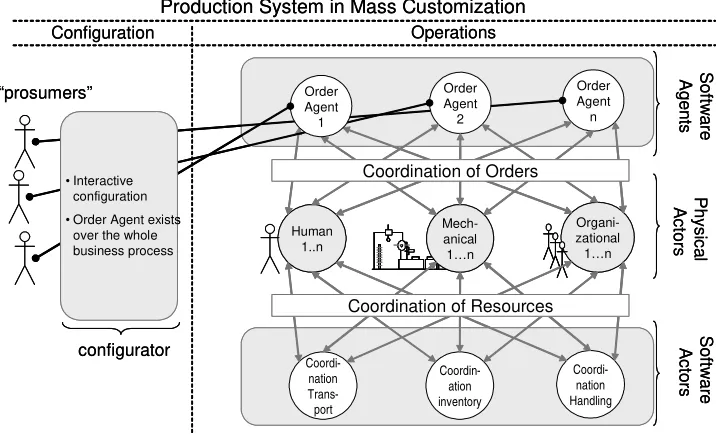
Figure 2: Production Planning and Control in Mass Customization Manufacturing
Figure 2 shows the actors oriented representation of our concept in mass customization. Essential is the coordination of actors on the shop floor with the order agents, which are actually no actors because they are non-persistent. The coordination of resources is decoupled of the order coordination, which reduces complexity. The central points are the physical actors. They are fulfilling costumers´ orders based on their self-coordinated manufacturing resources. The separation of resource and order planning reduces the complexity of the planning efforts. The software actors, which are holding and managing the resources, are able to take several planning steps to relieve the physical actors in planning activities. Additionally, the order agents are representing the whole information concerning the order, including design information and detailed process steps. This is realized through providing the necessary information in the configuration system and liking it on order acceptance into the order agent.
6
4. CONCLUSION
Internet Technologies offer a solution to the application failure of multi-agent systems, if an actor oriented view on the production systems is employed. Actors are human, artificial (mechanical or information technological) and organizational units that are autonomous, persistent and communicative. This approach allows a conceptual integration of MAS into the production system by considering agents as actors that act on behalf of other actors. The actor approach permits the adoption of the theoretical benefits of MAS into the mass customizing manufacturing system.
Compared to conventional mass customization manufacturing systems, the presented approach leads to a more flexible, quickly responding production planning and control with a focus on order and resource coordination in turbulent environments. Mass customization profits by those changes through time benefits and economics of scope.
The problems reside in the adoption by management and employees, a multitude of technical issues, as well as security concerns. Future research will have to clarify whether the used criteria to test the applicability and if the presented approach is a suitable basis for dedicated mass customization manufacturing.
REFERENCES
[1] Pine II, Joseph (1993): Mass Customization: The New Frontier in Business Competition, Boston:
Harvard Business School Press 1993.
[2] Kirn, Stefan (2002): Kooperierende intelligente Softwareagenten, in: WI - Wirtschaftsinformatik,
Vol. 44, No. 1, pp. 53 – 63.
[3] Shaw, M. J. (2001): Information-Based Manufacturing with the Web, in: Shaw, M. J. (Ed.):
Infor-mation-Based Manufacturing - Technology, Strategy and Industrial Applications, Kluwer, Boston et al., pp. 7 – 21.
[4] Tseng, M./Ming Lei/Chuanjun Su (1997): A Collaborative Control System for Mass Customization
Manufacturing, in: Annals of the Cirp, Vol. 46, No. 1, pp. 372 - 375.
[5] Timm, I.J./Woelk, P.-O./Knirsch, P./Tönshoff, H.K./Herzog, O. (2001): Flexible Mass
Customisa-tion: Managing its Information Logistics Using Adaptive Cooperative Multi Agent Systems, in: Pawar, K.S.; Muffatto, M. (Ed.): Logistics and the Digital Economy. Proceedings of the 6th Interna-tional Symposium on Logistics, 2001, pp. 227 - 232.
[6] Blecker, Th. (2004): Web-Based Manufacturing, to appear.
[7] Blecker, Th./Graf, G. (2003): Multi Agent Systems in Internet based Production Environments – an
enabling Infrastructure for Mass Customization, Conference Proceedings MCPC December 2003.
[8] Yu, Eric (2001): Agent orientation as modeling paradigm, in: WI-Wirtschaftsinformatik, Vol. 43,
No. 2, pp. 123 - 132.
[9] Sundermeyer, Kurt/Bussmann, Stefan (2001): Einführung der Agententechnologie in
produzieren-den Unternehmen, in: WI – Wirtschaftsinformatik, Vol. 43, No. 4, pp. 135 - 143.
[10] Wall, Friederike (1998): „Organizational Fit“ betrieblicher Informationssysteme:
Konstruktions-prinzipien und Optimierungsansatz, in: Selected papers of the Symposium on Operations Research (SOR'97), Berlin et al., pp. 365 - 370.
[11] Miles, R. E./Snow, C. C. (1984): Fit, Failure, and the Hall of Fame, in: California Management
Review, Vol. 26, No. 3, pp. 10 – 28.
[12] Piller, Frank T./Moeslein, Kathrin (2002): From economies of scale towards economies of customer
integration: value creation in mass customization based electronic commerce, Working Paper No. 31 of the Dept. of General and Industrial Management, Technical University of Munich, August 2002.
URL: http://www.mass-customization.de/download/TUM-AIBWP031
[13] Penya, Y.K./Bratoukhine, A./Sauter, T. (2003): Agent-driven Distributed Manufacturing System for
![Figure 1: Actors in Production System [7]](https://thumb-us.123doks.com/thumbv2/123dok_us/8095788.786101/4.595.170.436.141.316/figure-actors-in-production-system.webp)