How to cite this paper: Cao, K. and Sucosky, P. (2015) Effect of Bicuspid Aortic Valve Cusp Fusion on Aorta Wall Shear Stress: Preliminary Computational Assessment and Implication for Aortic Dilation. World Journal of Cardiovascular Diseases, 5, 129-140. http://dx.doi.org/10.4236/wjcd.2015.56016
Kai Cao, Philippe Sucosky*
Department of Aerospace and Mechanical Engineering, University of Notre Dame, Notre Dame, USA Email: *[email protected]
Received 31 March 2015; accepted 23 May 2015; published 26 May 2015
Copyright © 2015 by authors and Scientific Research Publishing Inc.
This work is licensed under the Creative Commons Attribution International License (CC BY).
http://creativecommons.org/licenses/by/4.0/
Abstract
The bicuspid aortic valve (BAV) is a major congenital valvular abnormality and is associated with a high prevalence of aortic dilation, whose expression depends on the type of leaflet fusion. Al-though BAV hemodynamics is considered a potential pathogenic contributor, the impact of BAV fusion on ascending aorta (AA) wall shear stress (WSS) remains largely unknown. A fluid-struc- ture interaction approach was implemented to predict the hemodynamics and WSS characteristics in realistic AA models subjected to the flow of a normal tricuspid aortic valve (TAV) and three BAV morphotypes (left-right coronary cusp fusion (LR), right-non coronary cusp fusion (RN) and non- left coronary cusp fusion (NL)). TAV flow conditions subjected the proximal and middle AA to a streamlined flow typical of flows in bends, while BAV flow conditions generated increased flow helicity. The LR-BAV orifice jet generated flow abnormalities primarily in the proximal AA, which were marked by a uniform WSS overload along the wall circumference and contrasted WSS direc-tionalities on the wall convexity and concavity. Flow abnormalities generated by the RN-BAV and NL-BAV inlet flow conditions were more diffuse and consisted of WSS overloads in the convexity of the proximal and middle AA and contrasted WSS directionalities in the anterior and posterior wall regions. This study demonstrates the impact of the BAV morphotype on AA hemodynamics and provides quantitative evidence for the existence of WSS abnormalities in aortic wall regions prone to dilation.
Keywords
Bicuspid Aortic Valve (BAV), Aorta, Aortopathy, Hemodynamics, Fluid-Structure Interaction (FSI)
1. Introduction
The congenital bicuspid aortic valve (BAV) is a valvular defect present in 1% - 2% of the general population [1]. While the BAV is characterized by the presence of two leaflets, it covers different morphologic phenotypes [2]. The most prevalent type-I morphology features two cusps of unequal size (resulting from the fusion of two of the three leaflets) and a fibrous raphe at the location of congenital fusion. While 71% of type-I BAVs result from the fusion between the left- and right-coronary leaflets (LR subtype), 15% feature right- and non-coronary cusp fusion (RN subtype) and 3% present with non- and left-coronary cusp fusion (NL subtype) [3]. As com-pared with tricuspid aortic valve (TAV) patients, BAV patients have a much higher risk of developing secondary aortopathies such as aortic dilation [4].
While BAV aortopathy has been historically linked to a genetic predisposition, the abnormal BAV hemody-namics has emerged as a potential coincident etiology [5] [6]. Phase-contrast magnetic resonance imaging (PC MRI) and echocardiographic measurements in BAV patients [7]-[10], as well as in vitro particle-image veloci-metry measurements [11]-[13] and in silico simulations in idealized ascending aorta (AA) geometries [14]-[17]
have revealed the existence of abnormal helical flow patterns and fluid wall shear stress (WSS) overloads in AA regions vulnerable to aortic medial degeneration. In addition, the particular leaflet fusion type affects the ex-pression of dilation and thinning of the AA downstream of a BAV. While the LR subtype is primarily associated with dilation of the aortic root and the AA convexity, dilation patterns downstream of RN-BAVs localize to the tubular AA and sometimes extend to the transverse aortic arch [18] [19].
Collectively, those results provide compelling evidence for a possible role of hemodynamics in the pathoge-nesis of BAV aortopathy. However, the validation of this hemodynamic pathway requires the characterization of the flow patterns generated by each BAV subtype and their impacts on AA wall biology. A first attempt at es-tablishing this causality was successfully made in our laboratory through the implementation of a combined computational and ex vivo approach, which demonstrated the susceptibility of LR-BAV hemodynamic stresses to focally mediate aortic medial degeneration [17]. To complement this initial effort, this study aims at provid-ing a preliminary quantitative assessment of the impact of different type-I BAV cusp fusions (i.e., LR, RN and NL) on AA hemodynamics and WSS using three-dimensional (3D) fluid-structure interaction (FSI) modeling.
2. Methods
2.1. Aorta Geometry and Constitutive Models
The 3D aorta geometry was based on a human anatomy reconstructed from a series of histological computed tomography images, as previously described [17]. The final geometry included the AA, the transverse aortic arch (along with the proximal segments of the brachiocephalic (BCA), left common carotid (LCCA) and left subclavian (LSCA) arteries), and the thoracic descending aorta (Figure 1). The aortic wall was approximated as a linear, elastic and isotropic material (elastic modulus: 2 MPa; Poisson’s ratio: 0.45) and blood was modeled as an incompressible, homogeneous and Newtonian fluid (density: 1050 kg/m3; dynamic viscosity: 0.0035 Pa.s).
2.2. Boundary Conditions
Figure 1.Aorta geometry (A-A: proximal section, B-B: middle section, C-C: distal section, insets: longitudinal WSS characterization points along the wall
circumference in the proximal and middle sections).
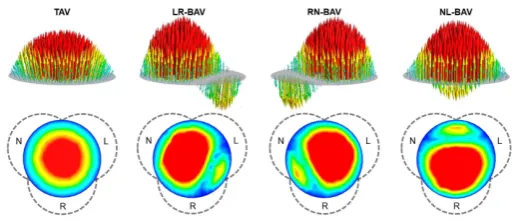
Figure 2.Aorta inlet flow conditions: peak-systolic 3D inlet velocity profiles (top: velocity vector field; bottom: transverse view of the velocity contour field and sinus wall outline; L: left-coronary sinus; R: right-coronary sinus;
N: non-coronary sinus).
obtained from the literature [21]. All waveforms reflected a cardiac period of 0.86 s (i.e., heart rate of 70 beats per minute). The aortic wall was constrained in the axial direction at the inlet and outlet sections but was al-lowed to move in the radial and circumferential directions at all locations. A linear elastic support condition with a foundation stiffness of 75 mmHg/mm [22] was prescribed on the outer aortic wall to account for the damping effect generated by the surrounding tissues on the aorta.
2.3. Computational Approach
[image:3.595.168.433.288.399.2]A mesh sensitivity analysis was performed to determine an appropriate mesh density for the fluid domain. This analysis was conducted on the TAV AA geometry and consisted of quantifying the convergence of the time- averaged WSS predicted over the entire aortic wall under increasing mesh density. The initial coarse mesh was based on a maximum element size of 1.3 mm and consisted of 194,821 elements. The progressive decrease of the maximum element size by 8%, 23%, 38% and 54% produced a 12%, 20%, 22% and 22% increase, respec-tively, in the time-averaged WSS predicted over the entire aortic wall relative to the value obtained with the ini-tial mesh. The second mesh refinement, which generated less than 2% change in time-averaged WSS relative to the finest grid tested, was considered sufficiently resolved to capture the flow in all AA models. The final com-putational grid consisted of 98,625 elements in the structural domain and 368,149 in the fluid domain, which permitted to achieve a spatial resolution of 100 μm in the fluid domain near the aortic wall. Each simulation re-quired 30 hours of computing time on a Dell Precision T7500 workstation (dual quad-core 3.20 GHz Intel Xeon processors, 48 GB DDR3 SDRAM).
2.4. Flow and WSS Characterization
Aorta hemodynamics was assessed in terms of streamline, velocity and WSS fields captured during the accelera-tion phase (t = 180 ms), at peak systole (t = 220 ms) and during the deceleraaccelera-tion phase (t = 340 ms). The spatial variations of the velocity profile along the streamwise direction were investigated by characterizing the local velocity contour field over three cross-sections located 10 mm (proximal section), 35 mm (middle section) and 55 mm (distal section) downstream of the AA inlet (see Figure 1). In addition, the angular distribution of the lon-gitudinal WSS component τrz (i.e., component acting in the direction of the main flow) was investigated in the proximal and middle AA sections at 18 equi-angularly spaced points (20˚ increment) along the wall circumfe-rence (see insets in Figure 1). At each point, the longitudinal WSS was characterized in terms of its peak-systolic value τrz SYS(θ) as well as its temporal characteristics quantified in terms of temporal shear magnitude (TSM),
( )
( )
0
1
TSM T rz ,t d ,t
T
θ =
∫
τ θ (1)and oscillatory shear index (OSI),
( )
( )
( )
0 0
1
OSI 1 , d , d ,
2
T T
rz t t rz t t
θ = −
∫
τ θ∫
τ θ (2)respectively, where τrz(θ, t) represents the local longitudinal WSS on the wall circumference at time t and T is the cardiac period. Those WSS characteristics were also investigated in the posterior convexity, posterior con-cavity, anterior convexity and anterior concavity of the wall by calculating the average peak-systolic WSS, TSM and OSI over each quadrant.
3. Results
3.1. General Flow Characteristics
Figure 3.Velocity and streamline fields: (a) Acceleration phase, (b) Peak systole, and (c) De-celeration phase (A-A: proximal section, B-B: middle section, C-C: distal section, post:
post-erior, ante: anterior, conv: convexity, conc: concavity).
complex alterations of the jet skewness as the flow develops along the streamwise direction. In the LR-BAV AA, the high velocity region migrates from the posterior convexity quadrant in the proximal section toward the post-erior concavity quadrant in the middle and distal sections. In contrast, the initial skewness of the flow toward the posterior concavity and the anterior region of the proximal RN-BAV AA and NL-BAV AA, respectively, relo-cates to the posterior convexity in the middle section and to the posterior concavity in the distal section. During the deceleration phase (Figure 3(c)), the decrease in flow momentum is accompanied by an overall increase in flow helicity in all AA models, as suggested by the recruitment of additional streamlines in counterclockwise swirling motion and their penetration into the core of the flow. While this phenomenon remains moderate and localized between the proximal and middle sections of the TAV AA, it is more pronounced and extends to the distal section in all BAV AAs. As a result, while the valve anatomy strongly affects the degree of flow asymme-try in the proximal AA, it has little effect on the flow in the distal AA.
3.2. Global WSS Characteristics
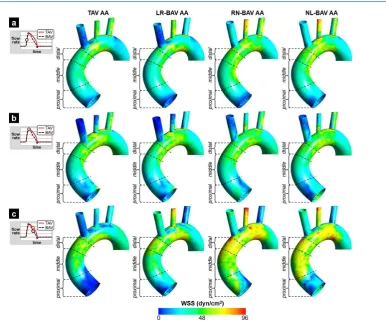
Figure 4. Total WSS fields: (a) Acceleration phase, (b) Peak systole, and (c) Deceleration phase.
segments, the wall regions experiencing high WSS magnitudes localize to the concavity, regardless of the valve anatomy. During the deceleration phase (Figure 4(c)), the decrease in flow momentum results in a net reduction in WSS in the proximal TAV AA, while the increased flow helicity detected in the middle and distal TAV AA generates a WSS overload in those regions. The intense flow helicity predicted in all three BAV AAs results in a marked increase in WSS. While those high WSS levels remain localized to the distal segment of the LR-BAV AA, they diffuse over the entire wall of the RN-BAV and NL-BAV AAs.
3.3. Peak-Systolic Longitudinal WSS Distribution
In all models, the peak-systolic longitudinal WSS captured in the proximal AA (Figure 5(a)) reflects the cha-racteristics of the inlet velocity profile. τrz SYS is essentially uniform over the entire circumference of the TAV AA and more asymmetric in all BAV AAs. This asymmetry subjects the BAV AAs to a positive stress overload in the region impinged by the valvular jet and a negative stress in the diametrically opposite region. Those cha-racteristics are particularly evident in the LR-BAV AA (mean convexity τrz SYS: +13 dyn/cm2
; mean concavity τrz SYS: −9.2 dyn/cm2
). The backward deflection of the low-velocity peripheral streamlines observed in the prox-imal RN-BAV and NL-BAV AAs results in a negative peak-systolic longitudinal WSS in the anterior convexity of the RN-BAV AA (τrz SYS = −32.5 dyn/cm2) and in the posterior convexity of the NL-BAV AA (τrz SYS = −29.5
dyn/cm2). The flow development from the proximal to the middle AA section is accompanied by an overall in-crease in longitudinal WSS magnitude (Figure 5(b)). At the same time, the curvature of the aortic wall tends to eliminate the effects of the initial discrepancies in jet skewness imposed at the AA inlet and to normalize the longitudinal WSS distributions among all models. As a result, the longitudinal WSS distributions in the TAV, LR-BAV and RN-BAV AAs exhibit similar patterns with a stress overload in the posterior concavity quadrant of the wall (τrz SYS > 44.6 dyn/cm2) and moderate stress levels in the other quadrants (τrz SYS < 36.2 dyn/cm2
). The NL-BAV AA exhibits more contrasted peak-systolic WSS distributions in the posterior and anterior regions of the wall (mean τrz SYS: 43.3 and 19.7 dyn/cm2
Figure 5. Local and quadrant-averaged longitudinal WSS distributions at peak systole in (a) the proximal section, and (b) the middle section of each model (post: posterior, ante: anterior,
conv: convexity, conc: concavity).
3.4. TSM Distribution
In the proximal AA (Figure 6(a)), the TAV generates a relatively uniform TSM distribution along the wall cir-cumference. The wall concavity and convexity are exposed to mild WSS levels (mean TSM: 5.3 and 7.0 dyn/cm2, respectively). The BAV AAs exhibit a higher degree of TSM variability along the wall circumference and the extrema locations depend on the particular BAV fusion type. In addition, all BAVs subject the proximal AA to a stress overload relative to the TAV. While this overload affects the entire LR-BAV AA wall (38% and 22% TSM increase in the convexity and concavity, respectively, vs. TAV AA), it localizes only to the anterior convexity of the RN-BAV AA (191% TSM increase vs. TAV AA) and to the posterior convexity of the NL- BAV AA (117% TSM increase vs. TAV AA). In the middle AA section (Figure 6(b)), the flow development occurring along the wall curvature increases the overall TSM levels in all models (58%, 30%, 27% and 26% in-crease vs. proximal section in TAV-AA, LR-BAV AA, RN-BAV AA and NL-BAV AA, respectively). The wall curvature effect tends to eliminate the TSM discrepancies observed in the proximal TAV and LR-BAV AAs by making the distributions more equally asymmetric (high TSM in the posterior region, low TSM in the anterior region). Similarly, the RN-BAV and NL-BAV generate essentially similar and asymmetric TSM distributions in the middle AA section (high TSM in the convexity region, low TSM in the concavity region).
3.5. OSI Distribution
Figure 6.Local and quadrant-averaged TSM distributions in (a) the proximal section, and (b) the
middle section of each model (post: posterior, ante: anterior, conv: convexity, conc: concavity).
Figure 7.Local and quadrant-averaged OSI distributions in (a) the proximal section, and (b) the
[image:8.595.119.479.403.691.2]The models reveal the existence of notable flow abnormalities in BAV AAs relative to a normal TAV AA. Con-sistent with previous reports [8] [10] [20] [24], our FSI results indicate that, regardless of its morphotype, the BAV gives rise to a skewed helical flow in the AA, which contrasts with the smooth streamlined flow observed downstream of the TAV. Those flow abnormalities affect the WSS environment of the AA by altering its angu-lar distribution along the wall circumference, its local magnitude and directionality. Consistent with previous 4D MRI measurements [8] [10], our simulations indicate that the TAV subjects the AA to a relatively uniform WSS distribution along the circumference, while the BAV generates strongly asymmetric WSS distributions, whose skewness depends on the type of cusp fusion and varies as the flow develops along the AA. Similarly, while all BAVs generate regions of WSS overload in the proximal AA relative to the TAV, the type of cusp fusion strongly affects the location of stress overload. In the middle AA, while the flow development along the curved aortic wall tends to normalize the WSS levels in the LR-BAV AA, it amplifies flow helicity in the RN-BAV and NL-BAV AAs, which results in sustained elevated WSS in those models. Those WSS abnormalities are exacer-bated during the deceleration phase in the RN-BAV and NL-BAV AAs, as suggested by the extensive WSS overloads imposed on the middle and distal wall segments relative to the TAV and LR-BAV AAs.
4.2. Comparison with PCMRI Measurements
The WSS levels computed by our models are systematically higher than those previously reported in vivo. In the proximal AA, the maximum WSS predicted along the wall circumference at peak systole was 19.3 and 21.0 dyn/cm2 in the TAV AA and LR-BAV AA, respectively. Those levels are above those captured with phase- contrast cardiac magnetic resonance measurements, which reported maximum peak-systolic WSS magnitudes of 8.5 and 15.6 dyn/cm2, respectively, in similar anatomies [25]. Similarly, in the middle AA, the circumferentially averaged WSS predicted in the TAV, LR-BAV and RN-BAV AAs at peak systole were 37.9, 34.5 and 32.5 dyn/cm2, respectively. Those levels are one order-of-magnitude larger than those reported by PCMRI in the tu-bular AA portion of TAV and LR-BAV patients (4 ± 1 and 8 ± 2 dyn/cm2, respectively) [26] and those reported by 4D flow MRI in TAV, LR-BAV and RN-BAV patients (~6 dyn/cm2) [24]. The nature of those discrepancies is two-fold. First, our FSI simulations implemented a finer spatial resolution (near-wall spatial resolution: 100 μm) than the MRI measurements (spatial resolution: 2 mm). Second, as compared to in vivo measurements con-ducted in dilated BAV aortas, our models were based on a normal AA geometry, which permitted to isolate ef-fectively the impact of the valve anatomy on AA hemodynamics while discarding the effects of a pre-existing aortopathy or the inherent variability in AA anatomy.
4.3. Implications for BAV Aortopathy
[27] [28] and affect more predominantly the aortic root (i.e., type-1 dilation phenotype) and tubular AA portion (i.e., type-2 dilation phenotype) [19]. Collectively, those observations suggest that the unidirectional WSS envi-ronment on the convexity of the proximal LR-BAV AA could trigger a local injury response causing the pro-gressive degradation of the aortic media. The sensitivity of the AA wall to such WSS environment and its dra-matic downstream effects on extracellular matrix degeneration have been evidenced ex vivo [17], confirming the susceptibility of this unidirectional WSS to focally mediate aortic medial degradation.
The validity of this hemodynamic etiology is also supported by our flow predictions in the NL-BAV and RN-BAV AA models. The WSS abnormalities predicted in both models consisted of intense WSS overloads and contrasted WSS directionalities along the wall circumference. Interestingly, those WSS abnormalities were less local and more diffuse over the proximal and middle AA than in the LR-BAV AA, which correlates with the predominant type-3 dilation phenotype (i.e., dilation of both the entire AA and the transverse aortic arch) typi-cally observed in those patients [19]. While causality between those WSS patterns and the local biology of the wall has not been established yet, the present study provides the mechanical data required for its future ex vivo investigation using the shear stress device designed in our laboratory [29].
4.4. Limitations
The flow conditions prescribed at the inlet of the aorta model are idealized as they were generated by extrapo-lating velocity profiles obtained from previously published 2D FSI simulations [17]. While this approach may seem simplistic, it captured most of the flow features observed by PCMRI in realistic patient-specific aorta ana-tomies [8] [20]. In this context, although caution should be taken before extrapolating the quantitative WSS data to human aortas, the analysis described in this paper provides new important qualitative insights into the flow and WSS differences between TAV and BAV AAs. Improved unified models integrating the 3D geometries of the valve and the AA are currently under development in our laboratory.
In addition, while in vivo and in vitro studies have demonstrated the existence of a transitional or slightly tur-bulent flow in the aorta, aortic flow was modeled as laminar in this study. Although this simplification may generate some inaccuracy at peak systole and in the early deceleration phase, it permitted to capture the near-native hemodynamic characteristics in the ascending aorta during most of the cardiac cycle. Improved models based on direct numerical simulations may be needed to resolve turbulence explicitly at the highest level of fidelity. However, this approach requires a computational grid able to resolve all the scales and is therefore not practical for FSI problems.
5. Conclusion
In this study, we quantified the flow and WSS environments in a normal, non-dilated AA subjected to the flows of a TAV and three BAV morphotypes. The results demonstrate: 1) the existence of abnormalities in WSS mag-nitude, directionality and circumferential distribution on BAV AAs; and 2) the dependence of the locations of WSS abnormalities on the type of BAV cusp fusion. This flow characterization sheds new light on the potential role played by hemodynamic stresses in BAV disease and provides the mechanical data required for the rigorous assessment of the hemodynamic theory of BAV aortopathy. Future implementation of those models with pa-tient-specific anatomies and flow conditions may guide the clinical assessment of valvular function and the se-lection of appropriate treatment strategies.
Acknowledgements
This work was supported by the National Science Foundation under Grant CMMI-1148558; and the American Heart Association under Grant 14PRE18940010. The authors would like to thank Andrew McNally (University of Notre Dame) for his technical assistance with the model and Samantha Atkins (University of Notre Dame) for providing manuscript editing assistance.
References
[1] Ward, C. (2000) Clinical Significance of the Bicuspid Aortic Valve. Heart (British Cardiac Society), 83, 81-85.
http://dx.doi.org/10.1136/heart.83.1.81
[7] Hope, M.D., Meadows, A.K., Hope, T.A., Ordovas, K.G., Reddy, G.P., Alley, M.T., et al. (2008) Images in Cardi-ovascular Medicine. Evaluation of Bicuspid Aortic Valve and Aortic Coarctation with 4D Flow Magnetic Resonance Imaging. Circulation, 117, 2818-2819. http://dx.doi.org/10.1161/CIRCULATIONAHA.107.760124
[8] Barker, A.J., Lanning, C. and Shandas, R. (2010) Quantification of Hemodynamic Wall Shear Stress in Patients with Bicuspid Aortic Valve Using Phase-Contrast MRI. Annals of Biomedical Engineering, 38, 788-800.
http://dx.doi.org/10.1007/s10439-009-9854-3
[9] Bauer, M., Siniawski, H., Pasic, M., Schaumann, B. and Hetzer, R. (2006) Different Hemodynamic Stress of the As-cending Aorta Wall in Patients with Bicuspid and Tricuspid Aortic Valve. Journal of Cardiac Surgery, 21, 218-220.
http://dx.doi.org/10.1111/j.1540-8191.2006.00219.x
[10] Bissell, M.M., Hess, A.T., Biasiolli, L., Glaze, S.J., Loudon, M., Pitcher, A., et al. (2013) Aortic Dilation in Bicuspid Aortic Valve Disease: Flow Pattern Is a Major Contributor and Differs with Valve Fusion Type. Circulation Cardi-ovascular Imaging, 6, 499-507. http://dx.doi.org/10.1161/CIRCIMAGING.113.000528
[11] Saikrishnan, N., Yap, C.-H., Milligan, N.C., Vasilyev, N.V and Yoganathan, A.P. (2012) In Vitro Characterization of Bicuspid Aortic Valve Hemodynamics Using Particle Image Velocimetry. Annals of Biomedical Engineering, 40, 1760-1775. http://dx.doi.org/10.1007/s10439-012-0527-2
[12] Seaman, C., Akingba, A. and Sucosky, P. (2014) Steady Flow Hemodynamic and Energy Loss Measurements in Nor-mal and Simulated Calcified Tricuspid and Bicuspid Aortic Valves. Journal of Biomechanical Engineering, 136, Ar-ticle ID: 041001. http://dx.doi.org/10.1115/1.4026575
[13] Seaman, C. and Sucosky, P. (2014) Anatomic versus Effective Orifice Area in a Bicuspid Aortic Valve. Echocardio-graphy, 31, 1028. http://dx.doi.org/10.1111/echo.12720
[14] Chandra, S., Rajamannan, N.M. and Sucosky, P. (2012) Computational Assessment of Bicuspid Aortic Valve Wall- Shear Stress: Implications for Calcific Aortic Valve Disease. Biomechanics and Modeling in Mechanobiology, 11, 1085-1096. http://dx.doi.org/10.1007/s10237-012-0375-x
[15] Nathan, D.P., Xu, C., Plappert, T., Desjardins, B., Gorman, J.H., Bavaria, J.E., et al. (2011) Increased Ascending Aor-tic Wall Stress in Patients with Bicuspid AorAor-tic Valves. The Annals of Thoracic Surgery, 92, 1384-1389.
http://dx.doi.org/10.1016/j.athoracsur.2011.04.118
[16] Pasta, S., Rinaudo, A., Luca, A., Pilato, M., Scardulla, C., Gleason, T.G., et al. (2013) Difference in Hemodynamic and Wall Stress of Ascending Thoracic Aortic Aneurysms with Bicuspid and Tricuspid Aortic Valve. Journal of Biome-chanics, 46, 1729-1738. http://dx.doi.org/10.1016/j.jbiomech.2013.03.029
[17] Atkins, S.K., Cao, K., Rajamannan, N.M. and Sucosky, P. (2014) Bicuspid Aortic Valve Hemodynamics Induces Ab-normal Medial Remodeling in the Convexity of Porcine Ascending Aortas. Biomechanics and Modeling in Mechano-biology, 13, 1209-1225. http://dx.doi.org/10.1007/s10237-014-0567-7
[18] Fazel, S.S., Mallidi, H.R., Lee, R.S., Sheehan, M.P., Liang, D., Fleischman, D., et al. (2008) The Aortopathy of Bicus-pid Aortic Valve Disease Has Distinctive Patterns and Usually Involves the Transverse Aortic Arch. The Journal of Thoracic and Cardiovascular Surgery, 135, 901-907, 907.e1-2.
[19] Kang, J.-W., Song, H.G., Yang, D.H., Baek, S., Kim, D.-H., Song, J.-M., et al. (2013) Association between Bicuspid Aortic Valve Phenotype and Patterns of Valvular Dysfunction and Bicuspid Aortopathy: Comprehensive Evaluation Using MDCT and Echocardiography. JACC Cardiovascular Imaging, 6, 150-161.
http://dx.doi.org/10.1016/j.jcmg.2012.11.007
http://dx.doi.org/10.1148/radiol.09091437
[21] Olufsen, M.S., Peskin, C.S., Kim, W.Y., Pedersen, E.M., Nadim, A. and Larsen, J. (2000) Numerical Simulation and Experimental Validation of Blood Flow in Arteries with Structured-Tree Outflow Conditions. Annals of Biomedical Engineering, 28, 1281-1299. http://dx.doi.org/10.1114/1.1326031
[22] Lantz, J., Renner, J. and Karlsson, M. (2011) Wall Shear Stress in a Subject Specific Human Aorta—Influence of Flu-id-Structure Interaction. International Journal of Applied Mechanics, 3, 759-778.
http://dx.doi.org/10.1142/S1758825111001226
[23] Donea, J., Guiliani, S. and Halleux, J.P. (1982) An Arbitrary Lagrangian-Eulerian Finite-Element Method for Transient Dynamic Fluid Structure Interactions. Computer Methods in Applied Mechanics and Engineering, 33, 689-723.
http://dx.doi.org/10.1016/0045-7825(82)90128-1
[24] Mahadevia, R., Barker, A.J., Schnell, S., Entezari, P., Kansal, P., Fedak, P.W.M., et al. (2014) Bicuspid Aortic Cusp Fusion Morphology Alters Aortic 3D Outflow Patterns, Wall Shear Stress and Expression of Aortopathy. Circulation,
129, 673-682. http://dx.doi.org/10.1161/CIRCULATIONAHA.113.003026
[25] Hope, M.D., Hope, T.A., Crook, S.E.S., Ordovas, K.G., Urbania, T.H., Alley, M.T., et al. (2011) 4D Flow CMR in Assessment of Valve-Related Ascending Aortic Disease. JACC Cardiovascular Imaging, 4, 781-787.
http://dx.doi.org/10.1016/j.jcmg.2011.05.004
[26] Barker, A.J., Markl, M., Bürk, J., Lorenz, R., Bock, J., Bauer, S., et al. (2012) Bicuspid Aortic Valve Is Associated with Altered Wall Shear Stress in the Ascending Aorta. Circulation Cardiovascular Imaging, 5, 457-466.
http://dx.doi.org/10.1161/CIRCIMAGING.112.973370
[27] Cotrufo, M., Della Corte, A., De Santo, L.S., Quarto, C., De Feo, M., Romano, G., et al. (2005) Different Patterns of Extracellular Matrix Protein Expression in the Convexity and the Concavity of the Dilated Aorta with Bicuspid Aortic Valve: Preliminary Results. The Journal of Thoracic and Cardiovascular Surgery, 130, 504-511.
http://dx.doi.org/10.1016/j.jtcvs.2005.01.016
[28] Della Corte, A., Quarto, C., Bancone, C., Castaldo, C., Di Meglio, F., Nurzynska, D., et al. (2008) Spatiotemporal Pat-terns of Smooth Muscle Cell Changes in Ascending Aortic Dilatation with Bicuspid and Tricuspid Aortic Valve Steno-sis: Focus on Cell-Matrix Signaling. The Journal of Thoracic and Cardiovascular Surgery, 135, 8-18.e2.
http://dx.doi.org/10.1016/j.jtcvs.2007.09.009