© 2018, IRJET | Impact Factor value: 6.171 | ISO 9001:2008 Certified Journal | Page 2771
Implementation of Voice Based Home Automation System Using
Raspberry Pi
Harshada Rajput
1, Karuna Sawant
2, Dipika Shetty
3, Punit Shukla
4, Prof. Amit Chougule
51,2,3,4
Student of Graduation, Department of Computer Engineering, G.V. Acharya Institute of Engineering and
Technology, Mumbai University, Mumbai, 400098, Maharashtra, India.
5
Head of Department, Department of Computer Engineering, G.V. Acharya Institute of Engineering and
Technology, Mumbai University, Mumbai, 400098, Maharashtra, India.
---***---Abstract -
Voice Based Home Automation System usingRaspberry Pi is the project which will be very useful for old age people and disabled people, basically for one’s who cannot perform basic activities efficiently. It is the idea which corresponds to the new era of automation and technology. The main aim of the home automation system is to make life easier. Mobile devices are very common among everyone due to its user friendly interface and portability features. In this project we aim to control electrical home appliances by android voice commands using Wi-Fi as communication protocol between Raspberry Pi and Android device. Raspberry Pi 3 becomes a better option for home automation via internet due to its feature of inbuilt Wi-Fi and Bluetooth. [6]
Key Words: Raspberry Pi, Android, Home Automation System, Voice, Ubuntu.
1. INTRODUCTION
In today’s day to day life automation can play a major role. Automation makes thing simple. The main benefit of any automated system is reducing human labor, efforts, time and errors due to human negligence.[1] A Raspberry Pi is a credit card-sized computer which can be used for developing various applications. This project is based on Internet of Things (IoT). Internet of Things is a network of devices such as electrical appliances for connectivity which enables these devices to connect and exchange data. This project represents a flexible way to control devices. In this project we are working on an android application where a user will provide voice commands for controlling devices such as “Turn light on” which will be connected to raspberry pi and according to it the required process will work via Wi-Fi. MySQL database and PHP is required for connectivity. This automation can be used majorly not only in home but offices and hospitals also. User can register and authenticate himself/herself in android device and after successful login he/she can give the input commands and operate the devices. It also provides security from third party users. It allows controlling number of home appliances simultaneously. Python is used as the main programming language which is default, provided by Raspberry Pi. This system requires micro SD card with an OS (Ubuntu Mate) for Raspberry Pi. Using this we can say a regular home is converted to smart home. [6]
Voice Based Home Automation System Using Raspberry Pi is the hardware and software project in which user get the
chance to operate all the electronic devices using smartphone through voice commands .User may Launch an application of “Home Control” in smartphone and connect to appropriate Wi-Fi for connection with Raspberry Pi then he/she may get registered. After successful Registration user must Login in to operate the application and give voice command accordingly. The process of command matching is done and Raspberry Pi Performs operation of ON/OFF on that particular device. This way user gets the flexibility to do this activity easily and efficiently.
2. EXISTING SYSTEM
[image:1.595.321.545.641.762.2]In traditional method we have switches, switch boards which are connected through wires to each electronic device. In existing system of Arduino the foremost aim of technology has been to increase efficiency and decrease effort. [1]It thus is of extreme importance to simplify human interfacing with technology. Automation is one such area that aims that achieves simplicity while increasing efficiency. Voice controlled Home Automation System aims to further the cause of automation so as to achieve the goal of simplicity. Applications are being developed on Android system that is useful to us in various ways. Another upcoming technology is natural language processing which enables us to command and control things with our voice. [1] Combining all of these, it presents a microcontroller based voice controlled home automation system using smartphones. Such a system will enable users to have control every appliance in his/her home with their voice. An Arduino Uno microcontroller circuit processes commands and perform operations on devices. [1] The connection between the Arduino and the smartphone is achieved by Bluetooth, which is used for sharing data. [1]
© 2018, IRJET | Impact Factor value: 6.171 | ISO 9001:2008 Certified Journal | Page 2772
3. PROPOSED SYSTEM
[image:2.595.323.545.184.567.2]The proposed system includes a voice controlled system that will enable users to control basic level home automation. The system includes a Raspberry Pi whose GPIO pins will be used to transfer signals to a controller based on voice commands filtered by the Raspberry Pi’s module. A user friendly interface is built for the android device that allows the user to interact with the Raspberry Pi. The overall design of Home Automation System (HAS) implements wireless communication between a Raspberry Pi module and an android based application. The main operating system uses Wi-Fi to provide remote access from raspberry pi. The Home Automation project is based on a Raspberry Pi 3 processor. The android application controls the Raspberry Pi wirelessly to perform the necessary function. . The connection between the Raspberry Pi and the controller is established via inter-connection. The simplification of services would entail a wider adoption of existing technology and would help people with varied disabilities access the same technology. Voice controlled House Automation System leverages the power of Raspberry Pi to provide a holistic voice controlled automation system.
Fig -2: Basic Flow of Proposed System
The instructions from the user will be transmitted through the Wi-Fi network. The raspberry pi board is configured according to the home system and it will enable the relay circuit as per user request. The relay circuit is used to control the Electronic devices and can add additional security features. The main objectives of the proposed system is to design and to implement a cheap and open source home automation system that is capable of controlling and automating most of the house appliances through an android device.
Proposed System Work Flow
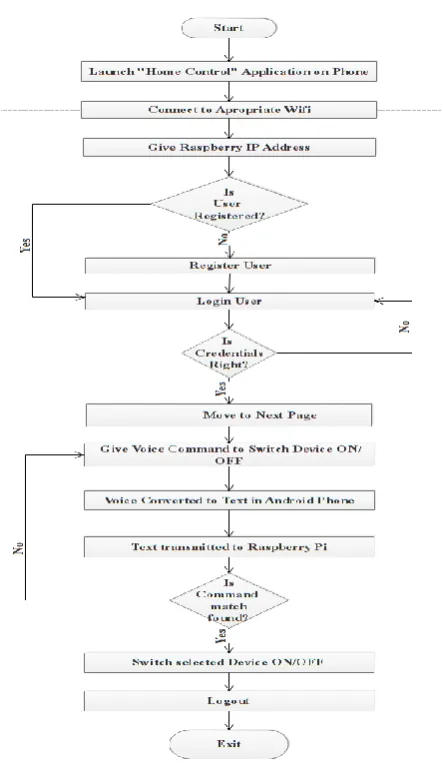
In proposed flowchart of voice based home automation using the technology of the Raspberry Pi. The system flow starts from the android app first user have to launch the “Home Control” app in his/her smartphone. Then check for available Wi-Fi modules and connect to particular Wi-Fi which is also connected to the raspberry pi. Once smartphone is connected to the Wi-Fi user has to provide the IP address of the Raspberry Pi. Then user gets registered. After this user Login where users credentials is checked. If it is right user moves to next page where user has to give the voice command to switch desired appliance on/off. Like
[image:2.595.40.283.364.460.2]device name on/off. Voice is converted to text in the android phone itself. Then the Text is transmitted to raspberry pi from the phone through wireless connection. After this text matching is done on successful text matching that appliance is switched on/off. Finally after the use user may Logout from the app. This is the flow of proposed system that is voice based home automation using Raspberry Pi technology.
Fig -3: Proposed Flowchart
3.1 SYSTEM ARCHITECTURE
© 2018, IRJET | Impact Factor value: 6.171 | ISO 9001:2008 Certified Journal | Page 2773 3.2 HARDWARE REQUIREMENTS
1. System: Raspberry Pi 3 model B 2. Ram: 1 GB.
3. Monitor: 15 VGA Color. 4. SD card: 16GB class 10. 5. External mouse and keyboard. 6. HDMI to VGA convertor
Hardware:
The Hardware Requirements of the Systems are:
[image:3.595.30.555.40.628.2] RASPBERRY PI
Fig -5: Raspberry Pi
Raspberry Pi is a microcontroller that has potential to work same as computer. It runs with the Python programming language, and is a great way to learn about hardware hacking and coding.
The Raspberry Pi 3 is the third generation Raspberry Pi.
Raspberry Pi 3 has:
o 802.11n Wireless LAN.
o A 1.2GHz 64-bit quad-core ARMv8 CPU.
o Bluetooth 4.1.
o Bluetooth Low Energy (BLE).
o 1GB RAM.
o 4 USB ports.
o 40 GPIO pins.
o Full HDMI port and Ethernet port.
o Combined 3.5mm audio jack and composite video.
o Camera interface (CSI) and Display interface (DSI).
o Micro SD card slot (now pull rather than push-push).
o Video Core IV 3D graphics core
.
RELAY AND RELAY DRIVER :
[image:3.595.313.556.372.501.2]Relay is the electromagnetic switch. Relay allows one circuit to switch another circuit while they are separated. Relay is used when we want to use a low voltage circuit to turn ON and OFF the device which required high voltage for its operation. [7] Relay is divided into two parts, one is input and other is output. Input side is nothing but a coil which generate magnetic field when small input voltage is given to it.
Fig -6: Relay and Relay Driver
ANDROID MOBILE DEVICES :
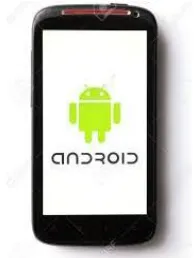
The android application is downloaded and installed on the android device to provide the user with an interface to interact with the Raspberry Pi. This application allows the user to control the appliance.
[image:3.595.40.255.429.592.2] [image:3.595.386.483.607.736.2]© 2018, IRJET | Impact Factor value: 6.171 | ISO 9001:2008 Certified Journal | Page 2774 3.3 SOFTWARE REQUIREMENTS
1. Operating system: Ubuntu Mate, Windows 2. Front-end: Java JDK 1.6
3. Software’s used: Android Studio, Python, MySQL, PHP.
Software:
Software required to develop home automation system based on the function analysis requirement are as follows:
OPERATING SYSTEM RASPBIAN :
[image:4.595.316.557.199.360.2]Raspbian would be the operating system (based on Linux kernel) of Raspberry Pi.
Fig -8: Ubuntu Mate OS (Linux)
PYTHON :
Python is a programming language used by Raspberry including execution of GPIO command.
Fig -9: Python Language
3.4 TECHNOLOGY USED
RASPBERRY PI 3:
Raspberry Pi 3 is an elevation to upcoming future technologies which improves connectivity with Bluetooth and Wi-Fi on board. [8] The Raspberry Pi 3 has improved power management, up to 2.5 Amps, to support more powerful external USB devices. The Raspberry Pi 3 has four in-built USB ports helps to provide connectivity for a mouse, keyboard, or any other USB hub. We can power the Raspberry Pi 3 by just plugging any USB power supply into
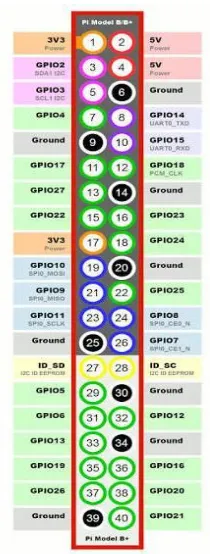
[image:4.595.35.287.270.393.2]the micro- USB port. There’s no power button so the Pi will begin to boot as soon as power is applied, to turn it off, simply shut down the Pi 3 and then remove power. The four in-built USB ports can give output up to 1.2A which enables to connect more USB devices that requires more power. This does require a 2Amp micro USB Power Supply. On top of all that, the low-level peripherals on the Pi make it great for hardware hacking. The 40-pin GPIO header on the Pi gives access to 27 GPIO as well as 3.3 and 5V sources.
Fig -10: Raspberry Pi Board
As Studied earlier, Raspberry Pi 3 has major 40 Pins from which 27 are General Purpose Input Output Pins (GPIO). These GPIO Pins are used to perform main task of providing output to the Electronic Devices for Automation.in this project, Electronic Devices can be connected to any of the GPIO and based on that configuration is done.
[image:4.595.380.485.470.747.2] [image:4.595.33.287.482.595.2]© 2018, IRJET | Impact Factor value: 6.171 | ISO 9001:2008 Certified Journal | Page 2775 ANDROID:
[image:5.595.114.209.170.319.2]Android devices are used to give input as a voice command to Raspberry Pi. Were android programming is done using an IDE Android Studio. [6] An App “Home Control” is developed in which user can give commands according to which particular operation is performed.
Fig -12:”Home Control” App Interface
4. IMPLEMENTATION
In this project, we developed a “Home Control” Android App which will do the process of authentication of the user by Register and Login. After Successful Login user may give Voice Command for operation and then he/she logout after completion of operation of ON/OFF on specified Electronic Device.
A Voice to Text conversion App named “Home Control” is an android app in which voice command is converted to the text. Whichever command is given is converted to text and processed in Raspberry Pi and required operation is performed on Electronic Devices. In Fig-13, An App interface is shown where user command “Lights On” is given and Raspberry Pi has received the input. It performed the task and acknowledgement is given back and displayed in the App interface in Snack bar about the task performed like here “All On” is displayed.
Fig -13: Voice Input “Lights On”
5. RESULT ANALYSIS
Voice Based Home Automation System Using Raspberry Pi basically used for easy lifestyle. Mainly for old age and disabled person. User operates “Home Control” application and Register himself/herself once user get registered he/she may login by his/her provided login id and password and voice command is given and according to it, operation is performed on devices.
Our project uses the technology of Wi-Fi for communication between android device and raspberry to control devices. Wi-Fi gives us flexibility of connection and operations .hence basic necessity for our project is strong Wi-Fi connection. Voice Recognition of any command would be around 90% accuracy and depend of clarity of speech of the particular user also the pronunciation of the particular command. Voice is recognized and matched with the predefined commands if command exist then the process will execute accordingly. The “Home Control” Application runs on minimum sdk android version of kitkat and supports in all above latest versions of android. This App is tested in various versions as follows Kitkat, Lollipop, Marshmellow and Nougat. Raspberry Pi is a small powerful device which effectively performs all the operations using Operating System of Ubuntu Mate.
Our Project can provide following changes as per real time use.
According to the client the command can be generalized. Name can be provided to devices according to client. Home Control operation can be effectively performed.
6. CONCLUSION
This project covers most important feature, in which it could provide the complete smart home environment. The voice controlled home automation using Raspberry Pi is projected for the easy use and control of electronic devices by old age and disabled people. This project provides a basic system of home automation which can be easily implemented and used effectively. This system allow user to take decisions and to regulate the home appliances with the help of an android application , thus making one’s life comfortable and at the same time remotely accessible through portable devices like android phones. [6]
7. FUTURE SCOPE
The future scope of this project is:
1. Authentication: In future use, we can give voice authentication to provide security. In this only authenticated person voice can access secured device (like locker).
© 2018, IRJET | Impact Factor value: 6.171 | ISO 9001:2008 Certified Journal | Page 2776 Example: If a person gives a command “lights on”
the sensor will sense person location and only that light will get on.
3. Smart Doors: The smart Doorbell can be made by implementing voice and video calls with the person standing right outside the door and the owner remotely. Thereby increasing the safety quotient of the system. [6]
REFERENCES
[1]Sonali Sen, Shamik Chakrabarty, Raghav Toshniwal, Ankita Bhaumik,”Design of an Intelligent Voice Controlled Home Automation System,” Department of Computer Science St. Xavier’s College, Kolkata international Journal of Computer Applications (0975 – 8887) Volume 121 – No.15, July 2015.
[2]Saptarshi Bhowmik1, Sudipa Biswas2, Karan Vishwakarma3, Subhankar Chattoraj4*, Parami Roy5, “Home Automation System Using Android Application,” Department of Computer Science Jadavpur University IBM India Research Associate ESL Technologies Research Associate ESL Technologies TCS, India. International Journal of Scientific and Research Publications, Volume 6, Issue 12, December2016.
[3]Anurag Pandey1, Umesh Mishra2, Akash Chaubey3,”Voice Controlled Home Automation” BE CMPN, Department of Computer Engineering, Shree L.R. Tiwari College of Engineering, Mira Road (E), Thane, Maharashtra, India . International Journal of Research in Science & Engineering Special Issue 7-ICEMTE March 2017.
[4] T. Anitha1, T. Uppalaiah2, “Android Based Home Automation using Raspberry Pi”1Assistant Professor, 2PG Scholar, Dept. of IT, Gokaraju Rangaraju Institute of Engineering and Technology, Bachupally, TS, India . International Journal of Innovative Technologies Vol.04, Issue.01, January-2016.
[5] Mukesh Kumar, Shimi S.L, “Voice Recognition Based Home Automation System for Paralyzed People” International Journal of Advanced Research in Electronics and Communication Engineering (IJARECE).
[6] Harshada Rajput , Karuna Sawant , Dipika Shetty , Punit Shukla , Prof. Amit Chougule ,” Voice Based Home Automation System Using Raspberry Pi” , Department of Computer Engineering, G.V. Acharya Institute of Engineering and Technology, Mumbai University, Mumbai, 400098, Maharashtra, India. International Research Journal of Engineering and Technology (IRJET) Volume: 05 Issue: 04 | Apr-2018.
[7]B.P Kulkarni “IoT Based Home Automation Using Raspberry PI,” Department of Electronics and Telecommunication Engineering, P.V.P. Institute of Technology,Budhgaon, Sangli, Maharashtra, India
International Journal of Innovative Studies in Sciences and Engineering Technology (IJISSET) 2015.