Journal of Chemical and Pharmaceutical Research
__________________________________________________
ISSN No: 0975-7384 CODEN(USA): JCPRC5
J. Chem. Pharm. Res., 2010, 2(3):147-157
147
Formulation of immediate release dosage form of Ranitidine HCl
tablets using HPMC and starch acetate film former
Nansri Saha Ghosh1*, Soumik Ghosh2, Subal Debnath3, G. Ganesh kumar3, Manoj Kanti Saha3, Saurav Nandi4 and Gajanan Deshmukh5
1
G. Pulla Reddy College of Pharmacy, Mehdipatnam , Hyderabad, Andhra Pradesh, India
2
Dept. of Pharmaceutics, Annamalai University, Chennai
3
Srikrupa Institute of Pharmaceutical Sciences, Medak, Siddipet, Andra Pradesh, India
4
College of Pharmacy, SRIPMS, Coimbatore, Tamil Nadu,India
5
Suamandeep Vidyapeeth At & Po Pipariya, Waghodia, Vadodara(Gujarat), India
______________________________________________________________________________
ABSTRACT
148
immediate release formulation. Dissolution studies showed that all the three baches prepared having 98.9, 99.8 & 99.9 % dissolution for the Batch I, Batch II & Batch III respectively. The “scope” of this dissertation work is to maintain the solubility, dissolution and disintegration rate to probably improve oral bioavailability of the drug for producing process therapeutic effect.
Key words: Ranitidine hydrochloride, Film coated immediate release solid dosage form,
Hydroxy propyl methyl cellulose (HPMC-2208), Starch acetate.
______________________________________________________________________________
INTRODUCTION
The film coating process is complex and requires careful monitoring and control to ensure satisfactory results. The film coating process as such is a combination of four processes going on simultaneously [1]. 1) Distribution of coating material on large number of tablets. 2) Mixing of large batch for homogeneous results. 3) Drying or evaporation of solvent. 4) Solvent vapour removal. The difference between the sugar and film coating is that, film coating is continues process and is run in almost dry condition, which implies that the rate of drying has match the rate of spray. Different dosage forms that can be coated are tablets, capsules, pallets, granules, particles and powder.
The drug containing core and at least one other layer of drug active is overcoated and preferably an outer layer of additional drug is adapted for immediate release to preferably provide one immediate releasing layer and at least two releasing layers of a water soluble drug from the multilayered coated particle. “Film coating” technology the world over, has now advanced to the level where aqueous coating has become a routine rather than an exception [2]. This was started with the use of organic solvents but it has been replaced with aqueous film coating like due to environmental and regulatory considerations. Therefore, it is important that the core formulation be composed of excipients (HPMC & starch acetate) that will help to prevent the drug from decomposing [3]. Ranitidine HCl is an H2 blocker that decreases the amount of acid produced in the stomach. It is moisture -sensitive drug and can be a challenge to formulators because of its tendency to hydrolyze when exposed to humidity or high temperatures [4].
149
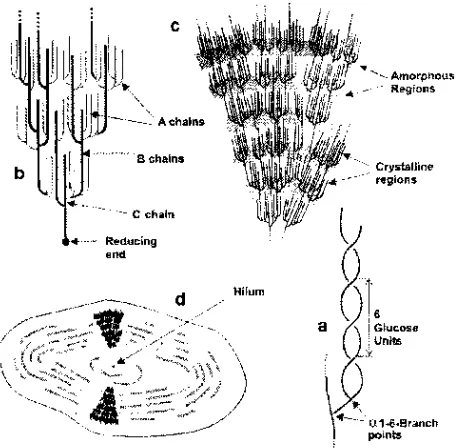
Fig. 1: Starch under microscope (Adapted from http://www.lsbu.ac.uk)
MATERIALS AND METHODS
Materials
Ranitidine HCl IP, Microcrystalline cellulose IP, Colloidal silicon dioxide IP, Magnesium stearate IP, Sodium starch Glycollate IP, Hydroxy propyl methyl cellulose IP and starch acetate, Cellulose, Propylene glycol IP, Titanium dioxide IP, Talc IP, Methylene chloride USP, Isopropyl alcohol IP, Sunset yellow FCF.
Equipments
Weighing Balance, Mechanical Sifter, Blender Mill with specified screen, Compression Machine (35 station) make by GANSONS, Colloidal Mill, Stirrer, Coating Pan, Strip Packing Machine.
Synthesis of starch acetate
Starch acetate was synthesized by acetylation of native (chemically unmodified) com starch. Commercially available com starch, with about 25% amylose was used for this purpose. To increase the degree of acetylation, the native com starch must be pregelatinized as much as possible before the reaction. Fifty grams of starch was suspended in 550 mL of deionized water in a 1000-mL conical flask [7]. The suspension was gelatinized by stirring at below 1000C for 20 min over a hotplate. Too low a temperature would produce incomplete pregelatinization. On the other hand, 100°C or higher temperature would evaporate large amount of water, resulting in charring of starch and again incomplete pregelatinization. Therefore, maintenance of temperature was crucial in this step [8].
150
[image:4.595.267.358.186.353.2]washed properly with 1 liter of acetone, filtered again and dried in the air or under vacuum without the aid of heat. Heat may dry up the powder on the top quickly leaving wet mass inside, resulting in small hard masses, which would be difficult to handle. The powder was passed through sieve number 60 or lower. The theoretical yield should be 50 g. In practice, about 45 g pregelatinized starch was obtained [9].
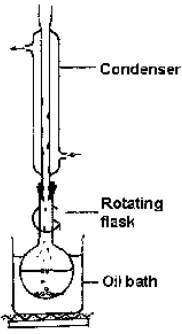
Fig. 2: System used for acetylation of starch
Acetylation of pregelatinized com starch acetic anhydride and pyridine were used as the acetylating agent and the reaction medium, respectively. Fifty grams of the obtained pregelatinized starch was dispersed in 400 g of pyridine in a 1 liter round-bottom flask, Two hundred grams of acetic anhydride was added to the dispersion. The flask was fitted to a rotary evaporator. The rotary evaporator was attached to a reflux condenser on the top. The round-bottom flask was dipped into an oil bath and rotated at low speed, The whole assembly was kept siftinginside a fiame hood. The temperature was maintained at 100°C. Lower temperature might result in incomplete reaction whereas; higher temperature would cause excessive degradation of starch molecules. The reaction was carried out for 4 h [10].
Initially the mixture was in a suspension form but after 15-20 minutes it appeared to be a homogeneous viscous mass. Continuous stirring is required for proper mixing of the reactants. The final reaction mixture came out as a transparent light amber colored jellylike mass. The mixture was transferred to a container with larger opening and cooled to room temperature. The product was precipitated from 2600 ml of ethanol under high shear homogenization. The obtained precipitate was filtered through Whatman number 3 fiher paper, washed well with 1600 ml and 1200 ml of ethanol consequently and filtered again. A well washing could be demonstrated by the absence of pyridine smell in the precipitate. More washing was performed when required. Finally, it was dried in the air or under reduced pressure in absence of heat, The powder was passed through sieve number 60 or lower [11 and 12].
Sifter
151
Colloidal silicon dioxide IP is mixed and sifted along with 40 mesh sifted Na starch glycollate IP through 40 mesh. If any extraneous matter is observed on sieve, it should be immediately informed to the production department.
Blending
First setup the octagonal blender properly. then load processed recoverable and sifted materials into octagonal blender, stearate IP. Blend for 40 mins at the speed of 11 rpm. Premix stearate IP with 6-7 kg of unlubricated blend from the blender in a double polybag for 2-3 mins, shift through 20 #mesh. Add the above materials into the blender for 5 mins. unload the blend into double polythene-lined drum, place silica gel bags at the top of the container in between two polybags and record the weight [13].
Compression
The upper and lower punches and dies are checked before starting. The lubricated granules are loaded into machine hoper and compress the lubricated granules in to tablets using 9.5 mm normal concave punches and dies. The machine is started by inching and check for any noise. The first two round of tablet are collected and destroy them by dispersing in H2O. After setting the initial tablets are checked and record the observations in the initial parameters check record [14].
Initial parameters checking during process
Appearance - white to pale yellow, round biconvex tablet with plain surface on “both sides”, Weight of 20 tablets 5.840 gms ± 2 %( 5.723-5.957g), Hardness NLT 3.0 kg/cm², Thickness 4.4 ± 0.2 mm (4.2 mm – 4.6 mm), Friability not more than 1.0% w/w. disintegration time not more than 12 mins, individual weight variation 292 mg ± 5 %( 277.4 -306.6 mg), 40 tablets are taken and checked all the above parameter by the QA persons, every two hours of the compression. Container weight record should be maintained for the compressed tablet. It contains the tare
weight, gross weight, net weight, etc. then average weight should be calculated. The compressed
tablets should be coated within 2 days from the date of compression.
Coating suspension preparation
152 Coating procedure
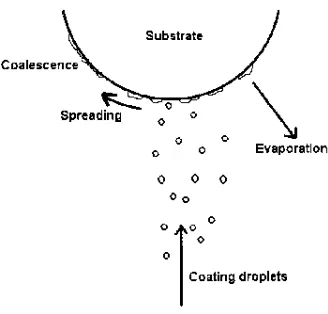
[image:6.595.215.379.177.334.2]First setup the coating pan as per the SOP. Load compressed tablets into the coating pan and rotate the coating pan at 1 rpm for dedusting and preheating of the tablets till the bed temperature reaches around 45°c.
Fig. 3: Dynamics of coating process
The tablets recoated with following parameter
Inlet temperature 62 ± 7°c, Bed temperature 42 ± 5°c, Outlet air temperature 40 ± 5°c, Atomization air pressure 3.5 to 5.0 kg/cm², Spray gun distance 29 ± 3 cm, Pan RPM, 8 ± 2 rpm, Peristaltic pump RPM 55 ± 10 rpm, Dry the coated tablet after completion of spraying for 40 mins, by controlling inlet temperature between 55 to 65°c, maintain the bed temperature 42 ± 5°c at 1 rpm of the coating pan. Cool the dried coated tablets to room temperature in the coating pan at 1 rpm of the coating pan keeping the inlet blower “OFF” and exhaust blower “ON”. Check the moisture content of the coated tablet and record the result. Collect coated tablet in double polythene bags lined containers and place silicon gel bags at the top of the container in between two poly bags [16, 17].
Sampling procedure after coating
Collect the sample lot wise before and after coating from the different points of coating pan. Samples should be approximately 10-15 tablets from each sampling point. Then calculation for group weight of 10 tablets done from each sampling location, collected before and after coating operation. Calculate the individual weight of 10 tablets. Calculate the weight gain of the tablets as per formula. Weight buildup per tablet for Lot (A) = (Y-X) = xxx mg. Use this calculated Avg. wt of coated tablets as the basis for the batch yield calculations [18].
Avg. wt of coated tablet = (Avg.wt of Lot A + Avg.wt of Lot B + Avg.wt of Lot C) / 3 = xxx mg.
Inspection procedure
153 Dissolution study
RPM of dissolution apparatus = 50, Dissolution medium = Water, Volume of dissolution medium = 900 ml, Temperature of dissolution medium = 37°c, Sampling interval = 45 min, Standard solution prepared by transferring 93.8 mg of Ranitidine HCl in a 200 ml volumetric flask. Dissolved and diluted to volume with water and mixed. Five ml of this solution is transferred into 250 ml volumetric flask, diluted to volume with water and mixed [19].
Sample solution was prepared by taking six tablets in six dissolution flasks containing 900 ml of water that has equilibrated to 37°C. Air bubbles are excluded from the surface of the tablets and the apparatus is started. Samples are collected after specified time. Samples are drawn from a zone midway between the surface of the medium and top of the rotating blade and not less than 1 cm from vessel wall and filtered through 0.45µ membrane filter after discharging the first 5 ml. 5 ml of this filtrate is transferred into 100 ml volumetric flask and diluted to volume with water and mixed.
Analysis of Ranitidine hydrochloride formulation by HPLC
Standard preparation was prepared by transferring 111.9 mg of Ranitidine Hydrochloride into 100 ml volumetric flask dissolved and diluted and the volume is making by mobile phase. This solution 5.0 ml was transferred to a 50 ml volumetric flask, diluted to volume with mobile phase. Sample solution prepared by transferring grinded 20 tablets and 304.7 mg (Quantity of blend is equivalent to 1.5 mg of Ranitidine HCl) of powdered was taken into a 500 ml volumetric flask. Mobile phase (400 ml) was added and shaken for 20 mins and diluted to 500 ml with the mobile phase and mix. Now through 0.45µ membrane filter it is filtered and the first 5 ml of filtrate is discarded. Transferred 3.0 ml of filtrate to a 100 ml volume with mobile phase & mixed.
Uniformity of content calculated by the following formula,
Uniformity of content = [A]*[C]*[100]/[B]*[D]
Where, Weight of individual tablet in mg [A], Average weight of tablet in mg [B], Assay obtained in mg per tablet [C], Label claim of active ingredient in mg per tablet [D].
RESULTS
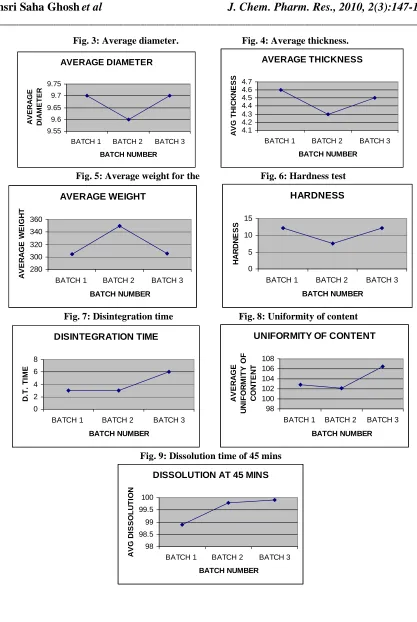
Table 1: Analysis of parameters for diameter, thickness, average weight, hardness and uniformity of weight
Parameters Specification Batch-I Batch-II Batch-III
Diameter The diameter of individual tablet should be with in 9.50 mm to 9.90 mm
Max: 9.74 mm Min: 9.62 mm Avg: 9.7 mm
Max: 9.65 mm Min: 9.50 mm Avg: 9.60 mm
Max: 9.68 mm Min: 9.64 mm Avg: 9.7 mm Thickness The thickness of individual
tablet should be with in 4.30 mm to 4.7 mm
Max: 4.62 mm Min: 4.49 mm Avg: 4.6 mm
Max: 4.45 mm Min: 4.26 mm Avg: 4.3 mm
Max: 4.57 mm Min: 4.43 mm Avg: 4.5 mm Average Weight The average weight should be
in the range of 298.9 mg to 311.1 mg
304.83 mg 349.40 mg 305.30 mg
154
Avg:12.1 kg/cm² Avg:7.6 kg/cm² Avg:12.2 kg/cm² Uniformity of
weight
When 20 tablets are weighted not more than 2 of the individual weight deviate from the average weight by more than ± 5.0 % w/w and no one tablet deviates by more than ± 10.0% w/w
Complies Complies Complies
Disintegration time
Not more than 15 mins 3.0 mins 3 mins 6 mins
Uniformity of Content
When 10 tablets are tested for their content, the content of in each tablet is between 90.0 % and 110.0 % of label claim
Max: 103.5 % Min: 102.1 % Avg: 102.8 % RSD: 0.584 %
Max: 102.9 % Min: 101.1 % Avg: 102.1 % RSD: 0.591 %
Max: 107.9 % Min: 104.6 % Avg: 106.5 % RSD: 1.094 %
Table 2: Dissolution study
Specification Batch-I Batch-II Batch-III
Not less than 75 % [D] of labeled amount of Ranitidine HCl dissolved in 45 min
Max: 101.8 % Min: 97.5 % Avg: 98.9 %
Max: 100 % Min: 99 % Avg: 99.8 %
Max: 100.2 % Min: 99.5 % Avg: 99.9 %
It was found that the assay value 153.82 mg, 153.7 mg and 159.71 mg for the Batch I, Batch II and Batch III respectively which compiles the specification not less than 138.7 mg and not more than 165.0 mg.
In process sample test result
All the three batch I, II & III complies the specification that Ranitidine HCl tablets are white to pale yellow free flowing powder, free from extraneous matter. Assay for the Ranitidine hydrochloride showed 151.2 mg, 153.2 mg and 146.6 mg for the Batch-I, Batch-II and Batch-III respectively where it complies the specification limit not less than 142.5 mg and not more than 157.5 mg.
Finished product – test
155
Fig. 3: Average diameter. Fig. 4: Average thickness.
AVERAGE DIAMETER 9.55 9.6 9.65 9.7 9.75
BATCH 1 BATCH 2 BATCH 3
BATCH NUMBER A V E R A G E D IA M E T E R AVERAGE THICKNESS 4.1 4.2 4.3 4.4 4.5 4.6 4.7
BATCH 1 BATCH 2 BATCH 3
BATCH NUMBER A V G T H IC K N E S S
Fig. 5: Average weight for the Fig. 6: Hardness test
AVERAGE WEIGHT 280 300 320 340 360
BATCH 1 BATCH 2 BATCH 3
BATCH NUMBER A V E R A G E W E IG H T HARDNESS 0 5 10 15
BATCH 1 BATCH 2 BATCH 3
BATCH NUMBER H A R D N E S S
Fig. 7: Disintegration time Fig. 8: Uniformity of content
DISINTEGRATION TIME 0 2 4 6 8
BATCH 1 BATCH 2 BATCH 3
BATCH NUMBER D .T . T IM E
UNIFORMITY OF CONTENT
98 100 102 104 106 108
BATCH 1 BATCH 2 BATCH 3
BATCH NUMBER A V E R A G E U N IF O R M IT Y O F C O N T E N T
Fig. 9: Dissolution time of 45 mins
DISSOLUTION AT 45 MINS
98 98.5 99 99.5 100
BATCH 1 BATCH 2 BATCH 3
156 DISCUSSION
Single dose of the active ingredients is small and an inert substance microcrystalline cellulose (Diluent) is added to increase the bulk of the powder to make the tablet a practical size for compression. Diluents used for direct compression formulas give the powder mixture necessary flow ability and compressibility. To delay or control the rate of release of drug from the tablet, microcrystalline cellulose (a polysaccharides) used which is a special form of cellulose fibril in which individual crystallites are held together largely by H- bonding. Disintegration occurs by breaking inter crystallite bonds by the disintegrating medium. It acts as diluent and disintegrating agent. Glidents colloidal silicon dioxide is intended to promote flow of the tablet granulation or powder materials by reducing the friction between the particles.
Lubricants (magnesium stearate) prevent adhesion of the tablet material to the surface of dies and punches. Improve the flow properties of the granules. Facilitate ejection of the tablets from the die cavity. Disintegrants (sodium starch glycolate) is a cross-linked starch, swells 7 to 12 folds in less than 30 sec. Mixture of substances added to tablet to facilitate its breaking or disintegration after administration in the GIT. The quantity of a film can be modified by the use of “internal” or “external” plasticizing techniques (propylene glycol). Opacifier (titanium dioxide) is a very fine inorganic powder used in the coating solution formulations to increase film coverage. Solvent (methylene chloride and isopropyl alcohol) have the primary function of a solvent system is to dissolve or disperse the polymers and other additives and convey them to the substrate surface. Colorant (sunset yellow FCF lake) are dissolved in the binding solution prior to the granulating process, during drying their color may migrate to the surface and produce mottling.
CONCLUSION
HPMC and starch acetate closely approaches the desired attributes of an ideal polymer for film coating. A mixture of HPMC and starch acetate with other polymers or plasticizer is used to eliminate bridging or filling problems. This polymer is also used considerably in glossing solution. This polymer is a material of choice for air suspension and pan-spray coating systems. Starch acetate produced good free films, Coating weight gain, plasticizer concentration and curing temperature were observed to be the three most signifícant formulation and process variables that affected overall drug release from the coated beads. Considering all the previous datas, it could be concluded that the prepared immediate release Ranitidine hydrochloride coated with HPMC and starch acetate had desired in vitro release profile and the correlations suggested that in could be used for in vivo animal studies.
REFERENCES
[1] Cole E T, Scott R A, Connor A L, Wilding I R, Petereit H U, Schminke C, Beckert T, Cade D. Int J Pharm, 2002; 231: 83-95.
[2] Pissinati R, Oliveira P. Eur J Pharm Biopharm, 2003; 55: 313-321.
157
[4] H Kortejärvi, M Yliperttula, J B Dressman, H E Junginger, K K Midha, V P Shah, D M Barends. Journal of Pharmaceutical Sciences. 2005, 94 (8): 1617 –1625.
[5] Korhonen O, Pohja S, Peltonen S, Suihko E, Vidgren M, Paronen P, Ketolainen J. AAPS
PharmSci Tech, 2002; 3, article 34.
[6] Korhonen O, Raatikainen P, Harjunen P, Nakari J, Suihko E, Peltonen S, Vidgren M, Paronen P. Pharm Res, 2000, 17; 1138-1143.
[7] Kruger L H, Rutenberg M W. Production and uses of starch acetates. In: Whistler R L, Paschall E F (Eds.), Starch : Chemistry and Technologv. Academic Press, New York, 1967, 389-401.
[8] Mullen J W, Pacsu E. Ind Eng Chem, 1974, 34: 1209-1217.
[9] Nakano M, Nakazono N, Inotsume N. Chem Pharm Bull, 1987; 35: 4346-4350.
[10] Pohja S, Suihko E, Vidgren M, Paronen P, Ketolainen J. J Control Rel, 2004; 94: 293-302. [11] Sakellariou P, Row R C, White E F T. Int J Pharm, 1985; 27: 267-277.
[12] A Bauer-Brandl; D Becker. Drug Development and Industrial Pharmacy, 1996; 22 (5): 417 – 430.
[13] Milind P Wagh, Chetan P Yewale, Santosh U Zate, Paresh I Kothawade, Ganesh H Mahale.
International Journal of Pharmacy and Pharmaceutical Sciences, 2010; 2 (1): 154-157.
[14] Sharma S, Gupta G D. Asian J Pharmaceutics 2008; 70‐72.
[15] Luca Quaroni and George Chumanov. J Am Chem Soc, 1999; 121 (45): 10642–10643
[16] John C Heckel, Lydia M Kisley, Joseph M. Langmuir, 2009; 25 (17): 9671–9676
[17] Amar S Kumbhar and George Chumanov. Chemistry of Materials, 2009, 21 (13): 2835-2839.
[18] N S Dey, S Majumdar and M E B Rao. Tropical Journal of Pharmaceutical Research, 2008; 7 (3): 1067-1075.