Proceedings International Conference of Technology Management, Business and Entrepreneurship 2012 (ICTMBE2012), Renaissance Hotel, Melaka, Malaysia 18-19 Dec 2012
495
MIXING QUALITATIVE AND QUANTITATIVE APPROACHES
IN THE COMMITMENT RESEARCH
Eta Wahab
1,Alina Shamsuddin
2,Nor Hazana Abdullah
3and Rohaizan Ramlan
4Faculty of Technology Management and Business Universiti Tun Hussein Onn Malaysia
86400 Parit Raja Batu Pahat Johor Malaysia
1[email protected], 2[email protected], 3[email protected] and 4[email protected]
ABSTRACT
It is crucial for any researcher who involve in the research area related to commitment to choose an appropriate method of study. This is due to the nature of the commitment area that necessitate for the richness of data as well as the sensitivity concern of such area. Thus, a mixed method approach is proposed in conducting research in commitment area. This article concludes with recommendations for future research especially in commitment to reinforce the mixed method approach in this area.
Keywords: Mixed Method Approach, Methodological Approach and Commitment
Introduction
The organizational commitment, which was drawn from psychological attachment of an employee with the organization for which he or she works, has implication for whether or not an employee will choose to remain with the organization. Organizations with strong employee attachment or organizational commitment tend to have lower turnover or intention to leave (Porter & Steers 1973; Allen & Meyer 1990). Thus, in the interests of improving organizational commitment, which in turn could reduce employee turnover, the key antecedents of perceived organizational support (POS) and how this will enhance employees’ commitment from SMEs’ perspectives need to be addressed.
Even though there is an extensive literature with respect to POS and organizational commitment, there has not been much research done in small and medium enterprises, especially in the non-western context (Rhoades & Eisenberger 2002). Cohen (2003) reported that most of the research related to commitment had been implemented in the western setting. In this paper, we attempt to provide some important attention towards the need for the methodological approach to ensure that the data collection is being conducted properly in order to determine the real issues of POS and organizational commitment from Malaysian perspective. Thus, a mixed method which comprise both qualitative and quantitative approaches is recommended for conducting research in this area.
Issues On Research Methodology
Proceedings International Conference of Technology Management, Business and Entrepreneurship 2012 (ICTMBE2012), Renaissance Hotel, Melaka, Malaysia 18-19 Dec 2012
496
Existing Methodology Approaches
Existing commitment studies have used either the quantitative or the qualitative approach. However the quantitative approach has dominated research in this area. The quantitative researcher develops a research question based on a theoretical background and previous studies. Kelle (2006) argued that the research question development process might create problems in theory building and also in measurement of variables. Specifically, lack of cultural knowledge about specific structures, patterns and social phenomena will bring about problems of theory building and hypothesis construction and thus will result in mis-specification of statistical models. For example real phenomena will not be fully understood if functional relationships between certain variables are not correctly specified owing to lack of common ground in culture knowledge. In addition, insufficient knowledge of the ‘life world’ of their research subjects may result in problems for operationalization and measurement of variables.
The qualitative approach could also suffer some methodological problem. The issue of transferability of the finding can be associated with methodological problems in qualitative research. For example, as there are only limited numbers of people involved in the interview process, the research finding cannot be generalized. Qualitative approaches also can increase the likelihood of social transferability bias. In this regard, respondents might over report actions or underreport their organizational commitment behavior which might bias the result of the research findings (Spector, 2006)
Need for Mixed Method Approach
Grene, Caracelli and Graham (1989, p. 256) define mixed methods as “those that include at least one quantitative method (designed to collect numbers) and one qualitative method (designed to collect words), where neither type of method is inherently linked to any particular inquiry paradigm”. Tashakkori and Teddlie (1998) further defined mixed methods as “those that combine the qualitative and quantitative approaches into the research methodology of a single study or multi phased study” (p. 17-18). Owing to the complementary nature of the information obtained from both techniques, a number of studies have used a mixed method approach for data collection purposes (Miles & Huberman 1994; Creswell 2009; Anderson & Young 1999).
Combining or integrating quantitative and qualitative data collection methods within studies is well recognized throughout the literature and can provide multiple advantages. Rossman and Wilson (1991) described these benefits as falling into three broad areas: (a) enables confirmation or corroboration of both qualitative and quantitative method via triangulation (b) explains in detail or develops the analysis which enriches either qualitative or quantitative techniques and (c) establishes new ways of thinking about contrary findings. Furthermore, the combination of the qualitative and quantitative approaches provides cohesive and coherent outcomes, since each method has its own strength to provide relevant data (Hohental 2006). For example, the qualitative data collection methods, which include interviews, focus group and observation methods, have enormous benefits such as assisting in developing theory, exploring new topics, collecting information about an experience or topic, clarifying quantitative findings and exploring different dimensions of respondents’ experience (Jackson & Trochim 2002; Sproull 1988).
Proceedings International Conference of Technology Management, Business and Entrepreneurship 2012 (ICTMBE2012), Renaissance Hotel, Melaka, Malaysia 18-19 Dec 2012
497
method studies, the inferences made at the end of one phase (for example qualitative studies) can lead to the question and or design of a second phase (for example quantitative studies).
Mixed Method Approach: Evidence From Perceived Organizational Support (POS) And Organizational Commitment Research
The need for mixed method in POS and organizational commitment study is based on a number of factors. POS and organizational commitment research based on the Malaysian environment has received less attention. Although there has been some research on organizational commitment done in Malaysia, there has been less research on the contribution of POS. In addition, almost all theories of POS and organizational commitment are developed based on a western perspective (Cohen 2003). Thus, some of the theories might not be applicable to the Malaysian context. In addition, insufficient knowledge of POS and organizational commitment in Malaysia would create a problem with operationalization of the theoretical concepts and measurement development. This may yield a misleading picture of POS and organizational commitment practiced in Malaysia. Thus, limited knowledge about the constructs and dimensions of POS and organizational commitment could be overcome by conducting the qualitative study at an earlier stage of the study. Furthermore, as suggested by Kelle (2006), to understand the investigated phenomena, the functional relations between certain variables such as POS and organizational commitment, need to be correctly specified.
The mixed method approach is also needed to further investigate the impact of national culture on organizational commitment, since previous studies found national culture to have different impacts on organizational commitment. In addition, as there are limited studies that look at the GLOBE culture dimension called ‘in-group’ collectivism, there is a need to explore and observe this dimension to reflect the Malaysian environment. Thus qualitative enquiry that focuses on the GLOBE culture dimension is needed before concepts in the quantitative model can be measured and tested.
The mixed method approach in this research was conducted in two phases. The data collection and analysis of the study was initially conducted using a qualitative approach; this was followed by the quantitative phase. This approach, which is referred to as a sequential exploratory strategy, is appropriate for exploring the phenomenon (Creswell 2003). Tashakkori and Teddlie (1998) recommended that the qualitative phase could assist in explaining the phenomena, whereas the quantitative phase can help in the interpretation of the qualitative study.
The Research Process
The following describes in detail the steps in the mixed method research process.
First Phase: A. Literature Review
Proceedings International Conference of Technology Management, Business and Entrepreneurship 2012 (ICTMBE2012), Renaissance Hotel, Melaka, Malaysia 18-19 Dec 2012
[image:4.612.71.516.110.362.2]498
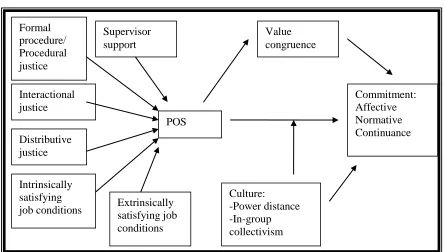
Figure 1: Initial model based on literature review
Second Phase: Qualitative Field Study
The field study was chosen as a research method for the qualitative phase of the research (Zikmund 2003; Creswell 2003). The reason behind adopting this approach was to search for and identify additional relevant factors and variables related to POS and organizational commitment that might not have been recognized in the literature review. The strength of qualitative research lies in its emphasis on ‘discovery, insight and understanding from the perspectives of those being studied which offers the greatest promise of making significant contribution to the knowledge base and practice’ in organizations (Merriam 1988).
The interview technique was used to collect qualitative data for the present study. This method is used largely by social scientists for collecting data in qualitative research. The key benefits of using qualitative interviews in data collection are the capacity to generate in-depth data and flexibility to use with ease anywhere (King 1994). A semi-structured interview method was used to obtain the data on antecedents of POS and how this could influence organizational commitment. By using this technique, participants’ perspectives and viewpoints could be gained. Rubin and Rubin (2005) recommended that semi- structured interviews be used to explain the answers from the initial questions. The advantage of a semi-structured interview is that it allows an interviewer to concentrate on the specific issues and topics. For this study, Berg’s (2004) semi-structured interview format guided the interview process.
Data for the qualitative field study phase for the this study was collected by interviewing employees of medium enterprises. Interviews were conducted using a semi-structured interview technique. The main reason for conducting the interview was to further explore the factors and variables of POS, organizational commitment and GLOBE culture. During this phase, the factors and variables from the literature review were explored in detail and the initial research model was verified. Besides this, exploration-relevant factors and variables were also identified in this stage. The qualitative data were
Supervisor support Formal
procedure/ Procedural justice
Interactional justice
Distributive justice
Intrinsically satisfying
job conditions Extrinsically satisfying job conditions
POS
Value congruence
Culture:
-Power distance -In-group collectivism
Proceedings International Conference of Technology Management, Business and Entrepreneurship 2012 (ICTMBE2012), Renaissance Hotel, Melaka, Malaysia 18-19 Dec 2012
499
analyzed using content analysis. Following this analysis and review of the related literature (Miles & Huberman 1994; Yin 2003), additional new factors could be included in the model. Thus, at the end of this stage, the comprehensive final research model was constructed.
Interview guidelines were first developed to provide a structure for the collection of data. These guideline was constructed by integrating the constructs from the initial research model. As the participants involved in these interviews varied from lower levels up to higher levels of management, the participations were given an option to use either English or Bahasa Malaysia language during the interview. The complete interview data were then transformed from voice recording into text units called the interview transcript. The interviews were transcribed by the researcher. Where applicable, the interview transcript was translated from Bahasa Malaysia to English.
The qualitative data analysis for this study was undertaken using content analysis. Holsti’s (1969) content analysis technique for coding and categorizing was applied in this study. The main reason for conducting content analysis is to extract the factors and variables of the study. Basically, it is essential to identify the themes and classify the text into specific content categories before content analysis can be used. The process of content analysis comprises identifying the categories related to research, sorting the occurrences into categories and counting the occurrences of each of the categories.
In analyzing the qualitative data, two sequential steps were undertaken. The first step was to review the participant transcript by reading the transcript line by line, and at the same time scanning to identify key words from the interview transcript. Subsequently, the data were categorized into different codes. These codes reflected the factors and variables in the initial research model. These developed codes and categories were cross-referenced with the literature review. Where applicable, revision of codes and category was undertaken. This study also applied Miles and Huberman’s (1994) and Yin’s (2003) technique to identify new items related to the research. Lastly, the factors and variables from the initial step were organized in table or matrix form.
The second step in analyzing the qualitative data was to arrange and to take note of any similarities and differences between the matrix for all participants. In addition to factors and variables, the links between factors were also identified. This step is then repeated for all participants. Based on the variables, factors and the link between each factor, individual models for the ten respondents were developed. Once the individual models for ten interviews were developed, this step was completed. Based on the analysis of the field study, a model that combined the answers from all participants was developed (see Figure 2).
Third Phase: Model Refinement And Comprehensive Combined Research Model
Proceedings International Conference of Technology Management, Business and Entrepreneurship 2012 (ICTMBE2012), Renaissance Hotel, Melaka, Malaysia 18-19 Dec 2012
500
Fourth Phase: Quantitative Field Study
In the quantitative field survey phase the questionnaire was developed based on the comprehensive final research model derived from the qualitative study and literature review. The aim of data collection was to verify the hypotheses that had been developed. Before the questionnaire could be distributed, the questionnaire was pre-tested to assure content validity. Data for the survey were then collected from randomly selected medium enterprises specifically in the manufacturing sector. Data from the survey were then analysed through Structural Equation Modelling using Partial Least Squares (PLS) technique. The results and findings determined the factors of POS that influenced organizational commitment among employees of medium enterprises.
Future Research Direction
The proposed model in the context of Malaysia derived from both qualitative and quantitative method can assist researcher for a foundation of how people perceived support towards commitment in the organization. The mixed method approach can also serve as important tools especially to derive important culture dimension in this study at the early stage of the study.
Although the usage of the usage of quantitative method (for example closed ended question only) is generally accepted in organizational commitment study, such method could increase the probability of bias among respondent. Thus the open-ended question (through qualitative approach) could defeat the possible difficulties arise from the closed ended question. Thus among suggestion for collecting data in the area of organizational commitment is to have a multiple of methods in order to enhance our understanding of people behavior especially in the Malaysian perspective .
Conclusion
In this paper, the need for methodological concerns in the area of POS were discussed. A mixed method was proposed in conducting research in POS. The limitation of only one method in existing studies were also been discussed. Through mixed approach, issues of POS can be derived using qualitative approach. The proposed model can further be examined by quantitative approach to strengthen the result of the research.
References
Allen, N.J. & Meyer, J.P. (1990). The measurement and antecedents of affective, continuance and normative commitment to the organization. Journal of Occupational Psychology, 63(1), 1-18.
Anderson, S.W. & Young, S.M. (1999). The impact of contextual and process factors on the evaluation of activity-based costing systems. Accounting, Organizations and Society, 24(7), 525-559.
Berg, B.L. (2004). Qualitative research methods for the social sciences, 5th edn, Pearson, Boston, MA
Borkan, J.M. (2004). Mixed methods studies: a foundation for primary care research. Annals of Family Medicine. 2(1), 4-6
Proceedings International Conference of Technology Management, Business and Entrepreneurship 2012 (ICTMBE2012), Renaissance Hotel, Melaka, Malaysia 18-19 Dec 2012
501
Creswell, J.W. (2003). Research design: qualitative, quantitative and mixed methods approaches, 2nd edn, Sage Publication, Thousand Oaks, California.
Creswell, J.W. (2009). Research design: qualitativ, quantitative and mixed methods approaches, 3rd edn, Sage Publications, Thousand Oaks, California.
Greene, J.C., Caracelli, V.J. & Graham, W.F. (1989). Toward a conceptual framework for mixed-method evaluation designs. Educational Evaluation and Policy Analysis, 11(3), 255-274.
Hohental, J. (2006). Integrating qualitative and quantitative methods in research on international entrepreneurship. Journal of International Entrepreneurship, 4(4), 175-190.
Holsti, O.R. (1969). Content analysis for the social sciences and humanities, Addison-Wesley publishing company, Reading, Mass.
Jackson, K.M. & Trochim, W.M.K. (2002). Concept mapping as an alternative approach for the analysis of open-ended survey responses. Organizational Research Methods, 5(4), 307-336.
Kelle, U. (2006). Combining qualitative and quantitative methods in research practice: purposes and advantages, Qualitative Research in Psychology, 3(4),. 293-311.
King , N. (1994). 'The qualitative research interview, in C Cassell and G Symon (eds.), Qualitative Methods In Organizational Research : A Practical Guide, Sage publications, London, UK, pp. 14-36.
Merriam, S.B. (1988). Case study research in education: a qualitative approach, Jossey-bass, San Francisco.
Miles, M.B. & Huberman, A.M. (1994). Qualitative data analysis: an expanded sourcebook, Sage publications, Thousand Oaks, Carlifornia
Porter, L.W. & Steers, R.M. (1973). Organizational, work, and personal factors in employee turnover and absenteeism. Psychological Bulletin, 80(2), 151-176.
Rhoades, L. & Eisenberger, R. (2002). Perceived organizational support: a review of the literature,
Journal of Applied Psychology, 87( 4), 698-714.
Rossman, G & Wilson, B. (1991). Numbers and words revisited: Being "Shamelessly eclectic”.
Evaluation reviews, 9(5), 627-643.
Rubin, H.J. & Rubin, I. (2005). Qualitative interviewing; The art of hearing data 2nd edn, Sage publications, Thousand Oaks, CA.
Spector, P. (2006). Method variance in organizational research: truth or urban legend? Organizational Research Methods. 9(2), 221-232.
Proceedings International Conference of Technology Management, Business and Entrepreneurship 2012 (ICTMBE2012), Renaissance Hotel, Melaka, Malaysia 18-19 Dec 2012
502
Tashakkori, A. & Teddlie, C. (1998). Mixed methodology: Combining qualitative and quantitative approaches Sage publications, Thousand Oaks, CA.
Yin, R.K. (2003). Case study research: design and methods, 3rd edn, Sage Publication, Thousand Oaks, California.
Proceedings International Conference of Technology Management, Business and Entrepreneurship 2012 (ICTMBE2012), Renaissance Hotel, Melaka, Malaysia 18-19 Dec 2012
503
Figure 2: Proposed model based on qualitative study
Supervisor support
Cares about my opinion Cares about my well being Considers goals
Concern for me Monitors my work
Guidance on how job to be done Knowledgeable in his area Has human relations skills
Intrinsically satisfying job condition
Personal accomplishment Personal development Undertake original task Takes responsibility Adopts own approach to job Contribute to organization’s success Climate for work group
Social relationships
Facilities for religious purposes Time off for personal reasons
Antecedents Commitment
Interactional justice
Supervisor considers viewpoint Supervisor provides timely feedback Supervisor treats with kindness Supervisor trusts employee
Formal procedures
Designed to hear the concern of employee Designed to provide feedback towards decision on reward & training Allows clarification about decisions
Value congruence
Attached to organization based on similarity between my values & organization values
Personal values and organization values become similar since starting the job
Prefer the organization because of its values
Affective commitment
Happy to spend career in organization Feel organization’s problems as my own Feel a sense of belonging
Emotionally attached to organization Feel like part of family in organization Organization has personal meaning
Normative commitment
Do not feel right to leave organization
Organization deserves my loyalty
Continuance commitment
Staying in organization is necessity Too much life will be disrupted if leaving organization
Have put so much into organization Scarcity of job options if leaving the organization
External factor
Distance from home to company
Transportation system from home to company
Offer from another company Family reasons
In-group collectivism
Group members take pride in superior‘s individual accomplishment Superior takes pride in individual
accomplishment of group members
Loyal toorganization Proud to be part of the team
Power distance
Influence based on authority of one’s position Expected not to question when in
disagreement People in positions of power try to increase social distance
Extrinsically
satisfying job condition
Proceedings International Conference of Technology Management, Business and Entrepreneurship 2012 (ICTMBE2012), Renaissance Hotel, Melaka, Malaysia 18-19 Dec 2012
504
Figure 3: Comprehensive model based on both qualitative and quantitative study
Supervisor support Formal procedures Perceived organizational support (POS) Interactional justice Distributive justice Intrinsically satisfying job conditions Extrinsically satisfying job conditions Value congruence Affective commitment External factors Continuance commitment Normative commitment Power
distance In-group collectivism