Substance Abuse Amongst High School Learners in
Rural Communities
Kholofelo Mothibi
Department of Criminology and Criminal Justice, School of Social Sciences University of Limpopo Turfloop Campus *Corresponding Author: [email protected]
Copyright © 2014Horizon Research Publishing All rights reserved
Abstract
Substance abuse amongst high school students in South Africa is of great national concern. With the change in the government and its stance on democracy, a National Strategic Action Plan (NSAP) for the prevention of substance abuse among the youth in the country was developed by the South African Alliance of Prevention of Substance Abuse (SAAPA) in 1999. The aim of the SAAPA is to encourage networking amongst all organizations, both government and civil society, concerned with substance abuse in South Africa. Unfortunately this organization has not yet started functioning in most rural communities including Botlokoa (Eisleben Village).Using a sample (N=30) of learners who abuse substances in high schools at Eisleben Village this paper aims to explore the factors contributing to substance abuse among high school learners. The incidents and effects of substance abuse will be highlighted. The paper will further highlight substance abuse and its relation to crime.Keywords
Substance Abuse, Crime, Violent Behaviour, Learner, Adolescence1. Introduction
This article focuses on the factors contributing to substance abuse among high school learners in rural communities. The relationship between substance abuse and crime is also highlighted. Unfortunately, research done on this matter has not had much influence on the implementation of substance abuse prevention policies. Over the past years, South Africa has experienced a political transformation that has riveted attention around the world. A country once known for its policy of racial segregation or apartheid has emerged as a new democracy with a racially integrated government of national unity. South Africa is now one of the most sought after tourist destinations and has attracted foreign investments from every major country around the world. Ironically, it is also emerging as one of the most lucrative countries for drug trafficking, substance abuse and the crime that typically follows [37].
Substance abuse in South Africa has reached epidemic proportions. The most abused substance is alcohol. Alcohol is a major cause of crime, violence and moral decay in South Africa. Between 65% and 70% of violent crimes in Cape Town can be attributed to the intake of alcohol[17]. In response to the high rate of substance abuse amongst learners, the South African government is joining hands with the United Nations International Drug Control Programme (UNDCP). This organization supports the establishment of ten community centers for counseling, treatment and rehabilitation of substance abusers in the most affected parts of the country. A study that explores the underlying factors contributing towards substance abuse amongst high school learners in Eisleben village, Botlokoa Ga-Ramokgopa is the first of its kind for this area. It thus exposes the level of the problem for the area.
The problem of substance abuse (the use of illegal substances such as marijuana, cocaine, alcohol,) has increased recently in schools in Eisleben village, Botlokoa Ga-Ramokgopa. As a result there is a high failure rate at the end of each academic year. It is assumed that there is a close link between this problem and the high truancy rate, poor homework responses and the lack of concentration by students during classes. Aggressiveness towards teachers and elders, which sometimes leads to conflict and scuffles between teachers and learners also appear to be associated with substance abuse.
A challenge to researchers is poor allocation of funds to explore factors contributing to substance abuse among learners. Therefore, adequate funding should be allocated for projects addressing the issue of substance abuse. Intervention research to develop effective means of preventing and treating the harms associated with substance use is required, particularly substance-related injuries and substance related sexual risks. The intervention research should also focus on establishing the cost-effectiveness, efficiency and effectiveness of current prevention and treatment services in the province.
1.1. Aim and Objectives
The aim of this study is to explore the contributory factors leading to substance abuse amongst a group of high school learners in Eisleben village, Botlokoa Ga-Ramokgopa.
1.2. Objectives
The objectives are as follows:
• To explore and understand the underlying factors that contributes towards substance abuse amongst a group of high school students.
• To describe the nature of substance abuse in schools. • To indicate the relation between substance abuse and
crime.
2. Method
2.1. Design of the Study
The researcher used the qualitative research method because qualitative research uses detailed descriptions from the perspective of the research participants themselves as a means of examining specific issues and problem under study. It conveys a richness and intensity of detail in a way that quantitative research cannot [10]. The study is explorative since little is known about substance abuse in the Botlokoa area. The purpose of the exploratory design is to explore the phenomenon and to gather preliminary facts in the process
2.2. Settings and Subjects
The population is comprised of students from grade 8 to 12 at the Tabudi and Seale High Schools. The sample is made up of both males and females who abuse substances, with the age ranging from 13 to 19 years. The researcher used non-probability sampling methods because the probability of any particular member of the population being chosen was unknown. Non-probability sampling is used because the procedures used to select units for inclusion in a sample are much easier, quicker and cheaper when compared with probability sampling.
The non-probability sampling used is purposive sampling and snowball sampling. In purposive sampling, the
researcher purposefully chose persons who reflected the appropriate characteristic required of the sample members, such as substance abuse, which is relevant to the research topic. In snowball sampling, the researcher began the research with few respondents who are known abusers. Subsequently, these respondents gave other names that met the criteria of research, which in turn gave more new names. The process continued until adequate numbers of persons were interviewed or until no more respondents were discovered.
2.3. Instruments
The researcher used quantitative methods of data collection to test and validate existing literature about how and why phenomenon occurs. Open-ended questionnaires were used so as to obtain insight in the respondent’s understanding of the phenomenon[10]. Sixteen (16) open-ended questionnaires were administered to the respondents from Seale High school and 14 questionnaires were given to respondents from Tabudi High School. The questions were written in English and the researcher clarified some of the difficult terms.
On the dates agreed with the schools, the researcher was given a class to network and identify students who abuse substances. The researcher sought co-operation of the teachers depending on the size of the class, the student’s age range and the periods, the researcher was given guidance or study periods to avoid disrupting lessons and causing disorganization among the students. Before choosing respondents, students were first informed of the purpose of the research and were allowed to ask questions regarding the study and those who did not want to participate in the study were excused.
2.4. Data Analysis
Data was analyzed using Statistical Package for Social Science (SPSS). The outcome determined causes and levels of substance abuse amongst students.
3. Results
Data provided on the completed questionnaires were analysed with the aid of the software programme SPSS. The answers given by the respondents to the open-ended question were examined and presented in a frequency table. The students were asked a variety of questions relating to substances commonly abused, characteristics, suppliers, effects, school authorities’ response, factors encouraging the abuse and the criminal activities commonly committed under the influence of substances.
due to the fact that they are regarded as adults and the law does allow them to consume some of the drugs like tobacco and alcohol. Out of 30 respondents, 23 (77%) are males and 7 (23%) females.
Table 1. Description of respondents
AGE OF RESPONDENTS
Respondents
Frequency %
13-15 17 56
16-18 8 27
19+ 5 17
GENDER
100
Male 23 77
Female 7 23
RELIGION African Traditional
Religion 25 83
Christianity 5 17
GRADE
8-10 17 57
11-12 13 43
TOTAL 30 100
Seventeen percent (17%) of the respondents are Christians and they abuse substances. The respondents in grade 9 and grade 12 abuse substances more than any other grades. Ninety-seven percent (97%) indicate using marijuana as shown in Table 2. This indicates that marijuana is one of the drugs that are commonly used by adolescents. Fifty-three percent (53%) of the respondents indicate not using cocaine. Majority of the respondents, ninety-seven percent (97%) use alcohol. Alcohol is regarded as the mostly abused substance worldwide.
Table 2. Substances mostly abused
SUBSTANCES Respondents
Frequency %
Marijuana 29 97
Cocaine 14 47
Alcohol 29 97
Cigarettes 28 93
Snuff 1 3
Glue 11 37
TOTAL 30 100
It is not surprising to see large numbers of respondents using cigarettes as reflected in Table 2. Morojele[22] found
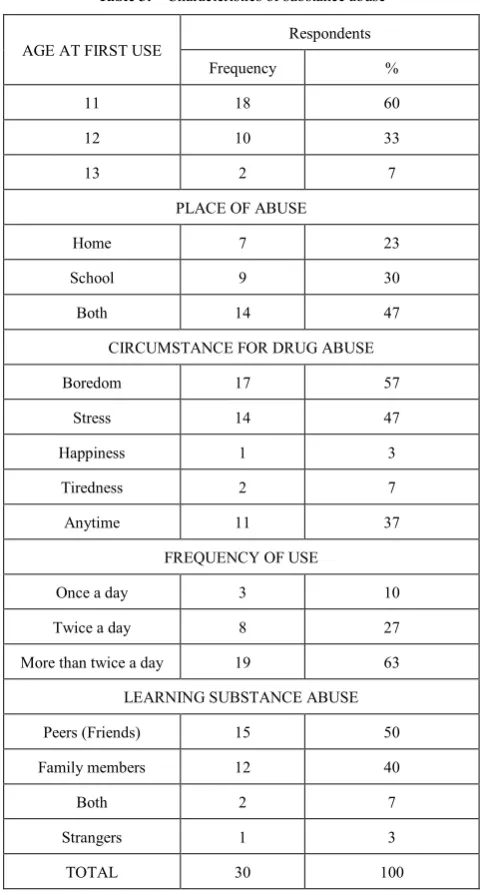
[image:3.595.311.554.209.657.2]that cigarette smoking is socially acceptable in many countries. This table indicates that majority of the respondents do not use snuff. Only 3% indicated using snuff. This finding is not surprising since the National Institute on Drug Abuse[24] found that snuff was very popular in the eighteenth century in Europe but by the nineteenth century cigars had become the primary tobacco products. Only 37% of the respondents use glue. Table 3 revealed that the majority of the respondents (60%) started using drugs at the age of 11.
Table 3. Characteristics of substance abuse
AGE AT FIRST USE Respondents
Frequency %
11 18 60
12 10 33
13 2 7
PLACE OF ABUSE
Home 7 23
School 9 30
Both 14 47
CIRCUMSTANCE FOR DRUG ABUSE
Boredom 17 57
Stress 14 47
Happiness 1 3
Tiredness 2 7
Anytime 11 37
FREQUENCY OF USE
Once a day 3 10
Twice a day 8 27
More than twice a day 19 63
LEARNING SUBSTANCE ABUSE
Peers (Friends) 15 50
Family members 12 40
Both 2 7
Strangers 1 3
TOTAL 30 100
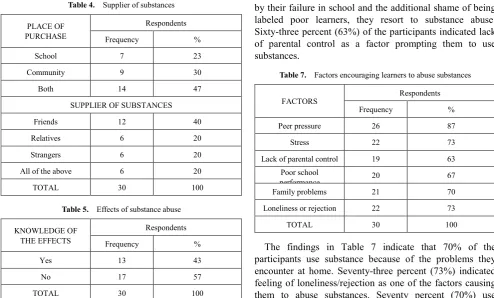
[image:3.595.58.301.565.726.2]Table 4. Supplier of substances
PLACE OF PURCHASE
Respondents
Frequency %
School 7 23
Community 9 30
Both 14 47
SUPPLIER OF SUBSTANCES
Friends 12 40
Relatives 6 20
Strangers 6 20
All of the above 6 20
TOTAL 30 100
Table 5. Effects of substance abuse
KNOWLEDGE OF THE EFFECTS
Respondents
Frequency %
Yes 13 43
No 17 57
TOTAL 30 100
As shown in Table 6, school authorities are aware that students are abusing drugs. A poor homework response, high failure rate, truancy, aggressiveness towards teachers and fellow learners has led the authorities to quickly realize that students are abusing substances. The research reveals that school authorities are doing little or nothing to stop them from abusing drugs. This might be due to the fact that schools do not have a clear policy that explains the measures to be taken if a student caught using drugs at school.
Table 6. School authorities and abuse of substances SCHOOL
AUTHORITIES’ AWARENESS
Respondents
Frequency %
Yes 23 77
No 7 23
SCHOOL MEASURES
Suspension 8 27
Corporal Punishment 14 47
Nothing 1 3
Unknown 7 23
TOTAL 30 100
The study further reveals in Table 7 that 87% of respondents use substances because of peer pressure. Seventy-three percent (73%) of the respondents use substances because of stress. Sixty-seven percent (67%) of the participants indicated poor school performance as a factor forcing them to resort to substance abuse. Discouraged
[image:4.595.56.551.75.373.2]by their failure in school and the additional shame of being labeled poor learners, they resort to substance abuse. Sixty-three percent (63%) of the participants indicated lack of parental control as a factor prompting them to use substances.
Table 7. Factors encouraging learners to abuse substances
FACTORS Respondents
Frequency %
Peer pressure 26 87
Stress 22 73
Lack of parental control 19 63
Poor school
performance 20 67
Family problems 21 70
Loneliness or rejection 22 73
TOTAL 30 100
The findings in Table 7 indicate that 70% of the participants use substance because of the problems they encounter at home. Seventy-three percent (73%) indicated feeling of loneliness/rejection as one of the factors causing them to abuse substances. Seventy percent (70%) use substance because of boredom. As shown in Table 8, an overwhelming majority of respondents indicated that drugs pushes or drive them to criminal activities.
Table 8. Criminal involvement and substance abuse CRIMINAL
ACTIVITIES UNDER THE INFLUENCE
Respondents
Frequency %
Yes 30 100
No - -
TYPE OF CRIME COMMITTED
Assault 7 23
Robbery 5 17
Rape 3 10
Theft 3 10
Housebreaking 6 20
Vandalism 6 20
TOTAL 30 100
4. Discussions
offenses” versus “property offenses” further implies that differences exist between two types of offenders in terms of the nature of alcohol and drug involvement[34] It is commonly assumed, for instance, that violent crimes are more likely to be committed by persons who abuse hard drugs (heroin and cocaine), while less serious crimes (offenses against property) are committed by users of alcohol and marijuana.
According to Natarajan[23], drugs are related to crime in multiple ways. Most directly, it is a crime to use, possess, manufacture, or contribute drugs classified as having a potential for abuse. Drugs are also related to crime through the effects they have on the user’s behavior and by generating violence and other illegal activity in connection with drug trafficking. While statistical patterns strongly suggest that psychoactive substances play significant roles in acts of violence, they do not explain the nature of those relationships. In trying to establish a connection between violence and substances, potential links were recognized in terms of the four levels noted below:
4.1. Social and Economic Forces (Macrosocial)
These are the processes that affect large social units such as nations or communities. Examples include cultural practices related to alcohol use, economic and social processes surrounding the illegal markets in which psychoactive drugs other than alcohol are sold. The relationship between illegal drug market activity and lethal violence are entwined with social and economic processes in the community. Fragments of evidence suggest that some or all of the following factors may influence the relationship between levels of violence and illegal drug market activity:
i.) Stability of drug market control. Situations that produce violent encounters, such as fights over territorial allocations or misunderstandings between buyers and sellers. Where the spread of crack manufacturing technology encouraged new organizations to enter the markets, the resulting destabilization may temporarily have increased the frequency of violent encounters.
ii.)Strength of informal violence controls. Where the exodus of legitimate economic opportunities from urban communities took with it many people committed to legal, nonviolent values, those people were no longer available for roles in preventing drug-related violence.
4.2. Encounters between People (Microsocial)
These are the characteristics of encounters between people. Examples include group drinking in settings where violence is expected and socially accepted, arguments that are begun or aggravated because the participants are under the influence of drug/alcohol, and disputes involving organization, buyers, and sellers in illegal drug markets. In a variety of ways, alcohol and drugs modify encounters
between people in ways that make these substances greater hazards for violence. In the case of alcohol, these hazards tend to be related to use, while for illegal psychoactive drugs they tend to be related to distribution and purchase.
i.) Alcohol use and sexual violence. Some therapists who treat violent sex offenders have reported that their patients tend to have both histories of alcohol abuse and high blood levels of testosterone. The frequent involvement of alcohol in acquaintance rapes suggests that social expectations may also be at work, that is, young men who expect to have sex after drinking may try to satisfy their expectations, sometimes forcibly if they encounter resistance.
ii.) Illegal drug markets. Illegal drug markets operate outside the world of contract law, courts and mediators for resolving disputes, and business customs that distinguish socially acceptable from unacceptable approaches to buying and selling.
iii.) Obtaining drug purchase money. In some settings, the need for money to buy drugs also increases the chance of a violent encounter. A taxi driver carrying a passenger late at night, for example, is presumably at greater risk of being robbed if the passenger wants to buy drugs but lacks the cash to do so. While robbery is still a common way to obtain money to buy drugs, it has been replaced by drug selling in some large cities. Violence is related to the distribution, purchase, and use of illegal drugs in a wide variety of human interactions.
4.3. Psychosocial Links
Evidence from research conducted by Walters[37] indicates that patterns of substance abuse and aggressive behavior reinforce each other. Patterns of aggressive behavior and substance abuse often become intertwined starting in childhood. Early childhood aggression is a predictor of later heavy drinking, and the combination is associated with an above –average risk of adult violent behavior, especially among those who also abuse other psychoactive drugs. Research suggests at least three possible explanations for the link between substance abuse and violent behavior in adolescents.
i.) First, adolescents may chronically use psychoactive substances to help them temporarily escape from such feelings of rage, guilt, worthlessness, or depression-emotions that often precede aggressive behavior.
ii.)Secondly, underlying family problems or socially expected responses may lead some adolescents to patterns of heavy drinking and fighting as ways to demonstrate their masculinity.
iii.)Lastly, boys who regularly observe older males fighting while drinking may learn to expect that violent behavior accompany alcohol use.
Knowing what the effects of these substances are essential for a better perspective on its role in crime causation. This knowledge will also help in efforts to try to curb the situation and find solutions.
4.4. Alcohol
Alcohol is particularly attractive to the youth, as consuming it at this age is seen as a sign of maturity or adulthood. Alcohol was found to be the primary substance abuse amongst students, regardless of age or level of substance involvement. Adolescents who develop alcohol problems generally begin drinking alcoholic beverages in the form of wine, beer or distilled spirits during their early or mid-teen years. By their senior years of high school, more that 75% report had at least one alcoholic drink during the previous years [22].
4.5. Alcohol and Crime
Alcohol used alone or in combination, dramatically increases the risk of violent behavior and contributes significantly to the prevalence of adolescent suicide, fighting and robbery. A consistent and positive relationship between the use of alcohol and violent crime involving aggressive behavior has been identified[28]. Bennett and Holloway [2] examined the nexus between alcohol and violent crime by specifying alcohol as a moderating variable that may interact with other major causes of violent crime. Four major causes of violent crimes at the individual level are identified, namely individual motives or attitudes, aggression and hostility, impulsivity, and the loss of problem-solving abilities. Data indicate that the usual drinking pattern does not constitute an independent cause, but has significant interactions with two of the major causes: deviant attitudes, aggression and hostility. Incidence rates of crime and alcohol abuse in South Africa are unacceptably high. Relationships are sought between crime, violent crime and suicide attempts on the one hand, and demographic and alcohol-related variables on the other. According to Parry[29] one in two non-natural deaths in Cape Town in 2003 had alcohol levels greater than 0.05g/100ml. More than one in three patients seen at trauma units in Cape Town in 2001 had high alcohol levels. Alcohol had been linked to many other problems. The commonly associated relationship between alcohol use and violent crimes can be explained, for the most part, by two mechanisms: pharmacological mechanism and social mechanism.
4.6. Pharmacological Mechanisms
According to Pagliaro and Pagliaro[28], the first pharmacological mechanism involves the direct effect of alcohol as a sedative-hypnotic. As a sedative-hypnotic, alcohol depresses the central nervous system, decreasing social inhibitions and impairing cognitive processing. For example, aggressive and sexual behavior or thoughts about
such behavior that has been suppressed because of acquiescence to social norms or concern for associated consequences are released from conscious control, making them more likely to be acted on. Obviously, this pharmacological mechanism would significantly interact with the personality of the user, assuming that two adolescents drank alcohol to the same level of intoxication. The disinhibitory effects would most likely result in an increased risk for violent behavior in the adolescent who had such a predisposition in comparison to the adolescent who did not.
4.7. Social Mechanisms
The second mechanism, the social mechanism, involves intervening psychological and sociological variables, including cognitive social learning variables. When drinking alcohol, children and adolescents anticipate certain effects from the alcohol and behave in a manner that they have learned is expected of them. For example, if men drink to feel more “strong”, “manly”, or “powerful ”, and if the social role expectation of being strong, manly, or powerful is to be more aggressive, then adolescents, particularly boys, will be more likely, when drinking, to act in accordance with this expectation [28].
4.8. Marijuana
Herbal or vegetable marijuana is, by a small margin, the commonest form of the drug in use worldwide. This is prepared by drying and chopping the leaves of the marijuana plant into a coarse cut tobacco-like mixture.
4.9. Marijuana and Crime
A unique problem exists when trying to consider marijuana’s effect on crime. Some studies, mentioned earlier have shown a correlation between marijuana use and other minor criminal behavior. Literature on marijuana and driving contains several references to the role of marijuana in the traffic violations, accidents and fatalities. According to the National Institute on Drug Abuse[26] marijuana affects many skills required for safe driving: alertness, the ability to concentrate, coordination, and reaction time. Marijuana use can make it difficult to judge distances and react to signals and sounds on the road. In 1996 the Human Science Research Council found a correlation between crime and marijuana. The use of marijuana tended to precede the use of alcohol, which in turn led to illicit drug taking and concurrently led to involvement in criminal activities. Property crimes were associated with smoking of marijuana in groups. Marijuana use seemed particularly well entrenched among offenders in the Western Cape, Eastern Cape, Kwa Zulu Natal and Mpumalanga.
Cocaine is a central nervous system stimulant that has gained great popularity in a variety of drug forms. Cocaine is a pure white crystalline powder. The crystals are very small and even and sparkle when exposed to the light. It is usually about 85% pure at the end of the manufacturing process and it is in this form that it enters different parts of the world. There are several street names for cocaine: coke, snow, bernice, big c, bombita etc. [38].
4.11. Cocaine and Crime
There is widespread belief that in general and crack cocaine in particular “causes crime to go up at a tremendously increased rate” [1]. Since 1985 researchers and others, have increasingly recognized Goldstein’s framework as helpful in understanding the nature of drug/crime associations. The Goldstein framework sets out 3 principal types of drug-related crime: systemic crime, psychopharmacologically driven crime, and economically compulsive crime. Although this framework was developed with violent crime in mind, its economic-compulsive prong is useful and relevant in considering nonviolent drug-related crime as well[15].
4.12. Systemic Crime
Systemic crime arises out of the system of drug distribution. It includes; disputes over territory between rival drug dealers, assaults and homicides committed within dealing hierarchies as means of enforcing normative codes, robberies of drug dealers and the usually violent retaliation by the dealers or their bosses, elimination of informers, disputes over drugs and/ or drug paraphernalia, punishment for selling adulterated or phony drugs, punishment for failing to pay one’s debts, and robbery violence related to the social ecology of coping areas. Systemic violence has been referred to as a means to achieve “economic regulation and control” in an illicit atmosphere[36]. The primary association between cocaine and violence is systematic. It is the violence associated with the black market and distribution. Factors such as “volatile and jittery” nature of the early cocaine market, its tendency to attract younger, presumably more crime-prone sellers, and later attempts by organized dealer groups to exert control, all led to an atmosphere in which participants in the cocaine trade were apt to “use violence to maintain discipline, resolve disputes, and enforce control” [36].
4.13. Psychopharmacologically Driven Crime
Psychopharmacologically driven crime occurs when “individuals, as a result of short-or long-term ingestion of specific substance, become excitable, and/ or irrational and exhibit violent behavior”. In short, use of the drug directly affects behavior, one consequence of which is criminal conduct. Seddon[36] notes that drugs may also have a
psychopharmacological effect if they are used to boost courage to commit crimes, either because they affect the brain in this manner directly or because the user expects the drugs to have this effect and, through a process of “self-fulfilling prophecy”, they do. In addition, psychopharmacologically driven violence may stem from drug use by the victim as well as the perpetrator. In other words, “drug use may contribute to a person behaving violently or it may alter a person’s behavior in such a manner as to bring about that person’s violent victimization”.
4.14. Economically Compulsive Crime
Economically compulsive crime is committed by persons who are financially driven to the criminal activity by financial needs brought about by drug consumption, for example robbery that is committed by drug users “in order to support costly drug use”. Economically compulsive actors are not primarily motivated by impulses to act out violently. Rather, their primary motivation is to obtain money to purchase drugs.
4.15. Social and Community Factors Associated with Substance Abuse amongst Adolescents
A number of social and community factors associated with substance abuse are outlined and discussed below:
4.16. Community Factors in Availability
Specific psychoactive drugs are more available in some communities than in others. Alcohol, tobacco and marijuana are available, to some degree, in virtually every American Community and worldwide. The quality, cost, and ease of availability, however, may vary widely. Other drugs, including cocaine, crack, and heroin, are available in some communities and unavailable in others. Obviously an adolescent must have access to a drug before becoming a user of it. The more available the drug is, the easier it is for an adolescent to become a user[33].
4.17. Peer Factors and Learning Functionality of Drug Use
images. Peer mutual reinforcement of beliefs regarding the payoffs for drug use provides a powerful social basis for drug use [33].
4.18. Community Factors that Neutralize Restraints
In every society the use of certain drugs is accepted as normative but the use of other drugs is taboo. Norms also dictate acceptable situations, purpose, and participants. The news media play an important role in shaping youths’ ideas about drugs by both establishing restraints and neutralizing them.
School
According to Joseph[16], the school environment plays a major role in the process of developing adolescent drug use. Schools that are rigid and authoritarian in their disciplinary policies tend to promote disrespect for authority. When students are subject to rules that exist purely by the official order of some authority figure, without need for any rational basis, can doubt the rationality of all society’s rules including those regarding drugs. The negative attitudes fostered by authoritarian school systems make students more susceptible to drug use. According to Clintock[8], one of the wishes parents have about their children is achievement in school. The academic achievement of a child is regarded as a determining factor for the child’s success. Adolescents, who fail more than once at school, have a tendency of regarding themselves as outcasts. Drug abuse may occur when there is academic failure. Frequently, those adolescents fail to develop the skills necessary to learn, integrate concepts and to succeed in school. Fields[12] maintains that many adolescents have learning disabilities, emotional problems, and attention-deficit disorders. Parents often deny these emotional and learning disabilities until the child is much older. The school system may also fail to adequately address these problems, resulting in education failure. Failure at school causes children to disregard school as a viable option for success in the real world. Substance abuse is often the choice for these young people. Discouraged by their failure in school, the additional shame of being labeled poor learners (i.e. stupid) leads to rebellious behavior and substance abuse. Lack of church involvement also appears to be a factor in the initiation of drug use. The greater the regularity of church attendance, the lower the use of drugs [12].
4.19. The Peer Factor that Neutralize Restraints
The peer group is a powerful influence promoting adolescent drug use. The importance of peer pressure urging the adolescent to use drugs may well have been generally over estimated. Drug use may be a condition for acceptance as a member of some peer groups. Adolescents learn from these associations that much of what school and media have taught the adolescent about drugs is false. The drug-using peer group teaches the adolescent that drug users as a group are no more sick or evil or weak or dependent than the rest of their peers. Perceived drug use by peers may be as important
as actual peer drug use. Adolescents who believe that drug use is common among their peer group are likely to accept the idea that drug use is normative behavior [8].
Functions of the Peer Group
The functions of the peer group are very distinguishable. These include the following:
Through the peer group, the adolescent realizes the gradual attainment of independence or emancipation from parents and are forced to stand on their own feet and make own decisions. They also begin to share their own feelings and thoughts with their peers, more than with their parents.
Secondly the peer group gives the adolescent an opportunity to practice social skills and to communicate with members of the opposite sex. It further serves to meet the young person’s needs for friendship. Because of fear of loneliness, adolescents view acceptance by the peer group as highly important.
Levant in Mokoena[19] states that clinically defined, peer pressure refers to influence from others who are about the same age. He adds that as children move towards their teen years, fitting in becomes a dominant influence in their lives. He further explains that peer pressure can be divided into four categories, and all of them can have powerful influence on an adolescent.
Friendly pressure refers to a friendly offer to try something. This can range from anything from cigarettes to alcohol, for example: “would you like to try some?” Teasing pressure refers to strong pressure in which people tease young people to try a drug, for example: “Come on do not be a fool try it.” Indirect or tempting pressure refers to a pressure to use drugs without direct offer. Heavy pressure refers to the strongest pressure used to influence a young person to do something, for example: “I won’t be your friend if you don’t”.
4.20. Family Factors and Their Influence on Adolescent Behavior
Various family factors have been reported to account for adolescent substance abuse are discussed below:
4.21. Environmental Influence
When one or more members of a family are unable to fulfill their obligations, a break up in the family unit will result, which will change the family structure. There are a number of environmentally induced factors, which affect the lives of the adolescent.
Divorce and Separation
matured behavior on their children and are less consistent in behavior than parents in intact families. The impact of divorce on adolescents will vary from one individual to another based on a host of conditions such as the family situation prior to divorce, the adolescent’s age, the availability of social supports such as extended family and friends and whether the divorce involves economic hardships.
According to Fields[12] adolescents from divorced homes frequently have a lower self-concept than those from intact homes. The divorced parents communicate less effectively with their children. They are also less likely to ask for their child’s opinion than parents in intact families. The divorced mother tries to control the adolescent child by being more restrictive and giving more commands, which the child ignores or resists. The divorced mother uses more negative sanctions than the divorced father. This attitude can contribute to an increased resistance by the adolescent. The functioning of children from a divorced family is affected by the way the family functioned in the years before the divorce. While some adolescents do recover and restabilise their lives after their parents’ separation, there are those who do not manage to stabilize and often look for alternative ways of coping with the situation, and this may give rise to maladaptive behavior such as substance abuse.
4.22. Psychological Factors Associated with Substance Abuse among Adolescents
A number of the psychological variables, alone and in combination, have been reported to account for adolescent substance abuse.
4.23. Conduct Disorder
A repetitive and persistent pattern of behavior involving early aggression, destruction of property, deceitfulness, theft, and violation of parental rules (e.g. running away from home) is indicative of conduct disorder. The implication of this pattern is that adolescents who are at risk for initiating substance abuse are les socially adapted to the demands of the mainstream normative culture. Thus, substance abuse may result from conduct disorder. There is a significant positive relationship between “early childhood aggression” and “heavy use or abuse of drugs” during adolescence. In addition, a prerequisite for the diagnosis of antisocial personality disorder in adults is the appearance of symptoms of conduct disorder. Antisocial behavior in childhood, significantly increase the risk of persistent adult criminality and have early onset, severe substance abuse in both males and females. Conversely, it also appears that the chronic regular use of various substances can presage or contribute to the development of conduct disorder. Children with parents who have had substance abuse problems are themselves likely to be at high risk for conduct disorder, later substance
abuse, and early psychiatric hospitalization [28]. Young adults who had been diagnosed as hyperactive in childhood were found to have had greater involvement with alcohol and drug abuse. The three key features of attention –deficit hyperactivity disorder are inattention, impulsivity, and hyperactivity. It is very possible that adolescents with this disorder will use substances to self-medicate and manage their symptoms. The symptoms of inattention include not completing tasks, being easily distracted, being unusually disorganized and forgetting daily activities.
4.24. Depression
Depression can either be an antecedent to, or a consequence of, substance use. For example, adolescents who are depressed may use substances in an effort to forget their problems. Conversely, other adolescents may abuse substances to “party” or to celebrate their teams’ victory, only to subsequently become depressed as a direct result of the substance’s pharmacological action as a sedative hypnotic. In these situations, a vicious cycle can begin in which depression leads to drinking (and further depression) or drinking leads directly to depression, either way, each situation encourages additional drinking for relief [28]. Whatever its cause, depression is commonly associated with the use of various substances by adolescents. The most common reason for using substances is to avoid the depressive effects associated with emotional deprivation, mood disorder or both. Similarly, substance abuse can provide a depressed adolescent with a way of coping with overwhelming feelings[28].
Disturbances in affect or mood are common causes of substance abuse and addiction to medical and nonmedical psychoactive substances. Individuals who are experiencing problems in regulating their affect and mood may self-medicate with substances. Substances may be used to alleviate and self-medicate feelings of anxiety or panic. Dysthymic disorder, cyclothymic disorder, atypical depression and bipolar disorder are the primary affective, or feeling disorder associated with self-medicating with substances. Seasonal affective disorder is another form of depression that leads to increased substances abuse, especially during the “sunless” winter months in certain environments[12].
4.25. Drug Use as a Passive Activity
5. Conclusions
As stated earlier in this article, the problem of substance abuse in school has increased worldwide. There is need for incorporating substance abuse prevention into the school’s subject matter in all grades. In this article the researcher has explored the underlying factors that contribute towards substance abuse among adolescents. The study has indicated the incidence, effects of substance abuse and its relation to crime. The study revealed alcohol and marijuana as the mostly abused substances. The relationship between alcohol, cocaine, marijuana and crime is also indicated in the study. The researcher has also identified common various factors associated with substance abuse which includes: social and community factors, family factors and psychological factors. It is clear from this article that there are no clear, consistently enforced drug-use policies that specify drug offenses, consequences (including notification of the police), and procedures.
Security measures have not been developed nor implemented to eliminate drug use from school premises and school functions. Professional assistance is not provided to learners who have family problems or personal problems to avoid them resorting to drug use as a coping mechanism. Further research is required to assess the impact of substance abuse on learning. The implementation and application of substance abuse prevention policies needs to be evaluated.
6. Limitations
The research was not funded by any organisation and therefore the researcher had to cover all costs.
The school authorities were not cooperative and students were reluctant to participate.
REFERENCES
[1] Allen, C. (2005). The link between heroin, crack cocaine and crime. The British Journal of Criminology. Vol 45(3) Page 355-372.
[2] Bennett, T. & Holloway, K. (2005). Understanding drugs, alcohol and crime. Bershire: McGraw-Hill House.
[3] Bezuidenhout, C. (2011). A southern perspective on fundamental criminology. Cape Town: Pearson.
[4] Brecht, M & Herbeck, D.M. (2013). Methamphetamine use and violent behaviour: User perception and predictors. Journal of Drug Issues. Vol 43(4), Page 468-482.
[5] Brook, J.S., Cohen, P., Whiteman, M. (1990). A family interaction approach. In Scheier, L.M., & Hansen, W.B. (2014). Parenting and teen drug use: The most recent findings from research, prevention and treatment. New York: Oxford University Press.
[6] Brook, J.S., & Morojele, K.N. (2005). Predictors of cigarettes
use among South African adolescents. International Journal of Behavioral Medicine. Vol 12(4), Page 207-217.
[7] Central Drug Authority (2011). South Africa drugs and alcohol statistics. Available at: http://www.dsd.gov.za/cda/in dex.php?option=comcontent&task=71&Itemid=119 . Accessed 12 October 2012.
[8] Clintock, A. (2003). Drug addiction. Singapore: Eagles Publishing Company.
[9] Cullen, F.T & Wilcox, P. (2010). Encyclopedia of criminological theory. New York: Sage Publications.
[10] De Vos, A.S., Strydom, H., Fouche, C.B & Delport C.S.L. (2012). Research at grass roots: for the social sciences and human service profession 4th ed. Pretoria: JL Van Schaik Publisher.
[11] Drug and Drug Trafficking Act no. 140 of 1992, South Africa. Cape Town: Butterworth. Available at:
https://www.daggacouple.co.za/.../1992/.../drugs-and-drug-tr afficking-ac... Accessed 16 October 2012.
[12] Fields, R. (2001). Drugs in perspective. A personalized look at substance use and abuse,
[13] 4th ed. New York: McGraw-Hill Companies.
[14] Flisher, A.J., Parry, C.D.H., Lombard, C.J., Muller, M., & Evans, J. (2003). Substance use by adolescents in Cape Town. Journal of Adolescent Health. Vol 32(1), Page 58-65. [15] Goldstein, J.P. (1985). Drugs, crime and the tripartite
framework. In Powell, M. (2011). A comprehensive analysis of the drug crime relationship. Research Report. Available at: http://opensiun.lib.edu/gs_rp/100. Accessed 15 October 2012.
[16] Joseph, G.M. (2011). Drug Use and Delinquency: Causes of dropping out of high school? Journal of Drug Issues. Vol 41(4) Page 87-96.
[17] Khan, F. (2002). Servamus: South Africa- a leader in drug abuse. Cape Town: Briza Publication.
[18] Lewis, J.A., Dana, R.Q., & Blevins, G.A. (2011). Substance abuse counseling 4th ed. Belmont, CA: Brooks/Cole. [19] Levant, G. (1988). Keeping kids drug free. In Mokoena, T.L.
(2012). Social factors influencing drug abuse: A study of impatient adolescents at Magaliesoord Centre. Unpublished Masters Dissertation. Pretoria: University of Pretoria. [20] Liquor Act no. 27 of 1989 (as amended), South Africa. Cape
Town: Butterworth. Available at: www.greengazette.co.za/a cts/liquor-act_1989-027. Accessed 13 November 2011. [21] Madu, S.N., & Matla, M.P. (2003). Correlation for perceived
family environmental factors with substance use among adolescents in South Africa. Psychological Reports, Vol 92, Page 403-415.
[22] Morojele, N.K. (2006). Perceptions of sexual risk behaviors and substance abuse among adolescents in South Africa: A qualitative investigation. Aids Care. Vol 18(3), Page 215-219. [23] Natarajan, M. (2010). Drugs and crime. New York: Ashgate
Publishing.
www.apa.org/about/gr/science/spin/2012/02/nida-fda.pdf. Accessed 20 September 2012.
[25] National Institute on Drug Abuse (NIDA). Drugs of abuse. Available at:
www.drugabuse.gov.publications.research.reports. Accessed 25 November 2007.
[26] National Institute on Drug Abuse (NIDA). Inhalant abuse: Research Report. Available at:
www.drugabuse.gov.publications.research.reports. Accessed 16 November 2005.
[27] National Household Survey on Drug Abuse (NHSDA). Illegal substances: Research Report. Available at: www.oas.samhsa.gov/nsduh.htm. Accessed 11 March 2004. [28] Pagliaro, A.M., & Pagliaro, L. (2011). Substance use among
children and adolescents: its nature, extent, and effects from conception to adulthood. New York: Wiley Publishing Company.
[29] Parry, C.D.H. (2005). South Africa: Alcohol today. Journal of Addiction. Vol 45, Page 426-429.
[30] Parry, C.D.H., Pluddeman, A., Louw, A., & Leggett, T. (2002). The 3-Metros study of drugs and crime South Africa. American Journal of Drugs and Alcohol Abuse. Vol5 (2),
Page 43- 53.
[31] Pelzer, K. (2009). Prevalence and correlates of substance abuse among school children in six African countries. International Journal of Psychology. Vol 44(5), Page 378-386.
[32] Pinger, R.R., Payne, W.A., Hahn, D.B., & Hahn, E.J. (1995). Drugs issues of today. New York: C Brown Publishers. [33] Ray, O. & Ksir C. (2002). Drugs, society, and human
behavior. New York: McGraw-Hill Companies.
[34] Resignato, A.J. (2010). Violent Crime: A function of drug use or drug enforcement? Journal of Applied Economics. Vol 32(6), Page 681-688
[35] South African Police Service (2012). Available at: http://www.saps.gov.za/statistics/reports/crimestats/2012/cat egories.htm. Accessed on 14 October 2012.
[36] Seddon, T. (2006). Drugs, crime and social exclusion. British Journal of Criminology. Vol 46(4), Page 680-703.
[37] Walters, J.P. (2000). Drug- related crime. New York: McGraw-Hill Companies.