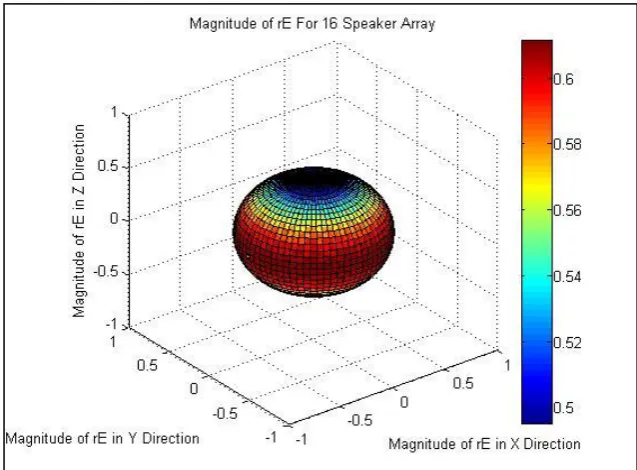
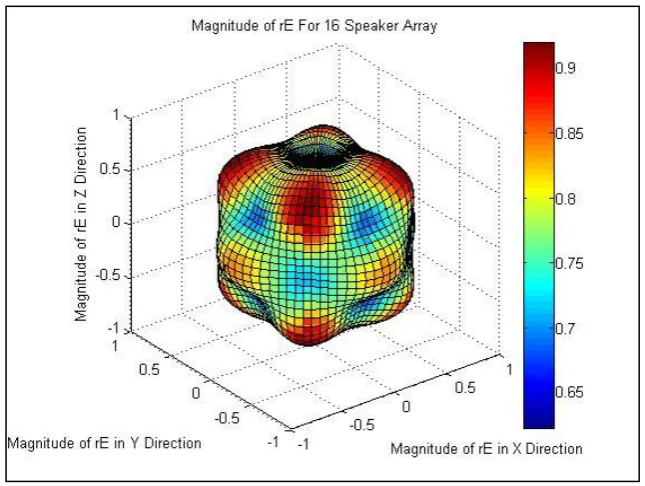
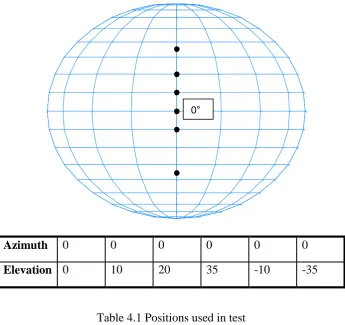
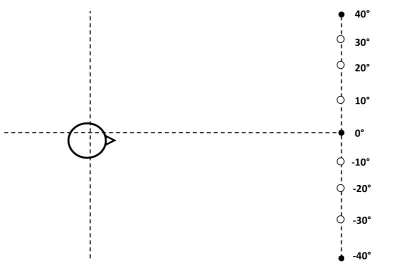
Future Spatial Audio:
Subjective Evaluation of
3D Surround Systems
Paul James Power
Acoustics Research Centre
School of Computing, Science and Engineering
College of Science and Technology
University of Salford, Salford, UK
ii
Contents
1 Introduction ... 1
1.1 Perceptual Benefits of the Inclusion of Surround Channels ... 1
1.1 Approach ... 2
1.2 Research Objectives ... 3
1.3 Organisation of the Thesis ... 4
1.4 Contributions to the Field ... 6
2 Literature Review ... 8
2.1 History of Surround Systems ... 8
2.2 Surround With Height ... 9
2.3 Spatial Rendering Methods in 3D Audio ... 10
2.4 Perceptual Cues ... 11
2.5 Summary ... 16
2.6 Recording Localization Judgements ... 17
2.7 Summary ... 18
2.8 Localisation in Reproduced Sound ... 18
2.9 Summary ... 22
2.10 Number of Channels and Positioning in 3D Surround Systems and its Impact on Envelopment ... 23
2.11 Spatial Audio Quality in 3D Surround ... 25
2.12 Summary ... 31
2.13 Initial Area for Investigation ... 32
3 Surround Sound Development ... 33
3.1 Introduction ... 33
3.2 Development of Spatial Audio Systems ... 33
3.2.1 Mono ... 33
3.2.2 Binaural ... 33
3.2.3 Stereo ... 34
3.2.4 Quadraphonics ... 36
iii
3.2.6 Summary ... 39
3.3 Surround With Height ... 39
3.3.1 NHK 22.2 ... 39
3.3.2 Dolby Pro Logic IIz ... 40
3.3.3 10.2 ... 41
3.3.4 Dolby Atmos ... 43
3.3.5 Summary ... 43
3.4 Spatializing Methods for 3D Reproduction ... 44
3.4.1 Vector Base Amplitude Panning ... 44
3.5 Ambisonic Encoding/Decoding ... 46
3.5.1 Introduction ... 46
3.5.2 Ambisonic Encoding ... 47
3.5.3 SoundField Microphone ... 47
3.5.4 Eigenmike ... 48
3.5.5 Theoretical Encoding ... 49
3.5.6 Resolution of Different Ambisonic Orders ... 51
3.5.7 Decoder Types ... 53
3.5.8 Dual Band Decoder ... 55
3.5.9 Limits to Correct Soundfield Reconstruction ... 56
3.5.10 Near Field Compensation ... 56
3.5.11 Speaker Array Configuration ... 56
3.5.12 Platonic Solids ... 57
3.5.13 Irregular Layouts ... 58
3.5.14 With Height Irregular Layout Solutions ... 58
3.6 Normalisation Schemes... 58
3.6.1 FurseMalham (FuMa) ... 59
3.6.2 N3D ... 59
3.6.3 SN3D ... 59
iv
3.8 Human Hearing Mechanisms in Spatial Audio ... 61
3.8.1 Median Plane ... 62
3.8.2 Frontal Plane ... 63
3.8.3 Cone of Confusion ... 64
3.8.4 Precedence Effect ... 64
3.8.5 Masking ... 65
3.8.6 Summary ... 67
3.9 Assessment of Spatial Audio Quality ... 67
3.9.1 Spatial Impression in Concert Hall Acoustics ... 71
3.10 Purpose of Spatial Audio Systems ... 71
3.10.1 Objective Measures ... 72
3.10.2 Importance of the Direction of Reflections in Concert Hall Acoustics in Terms of Subjective Preference ... 73
3.10.3 Clarity ... 74
3.11 Reproduced Sound with Height ... 75
3.12 Summary ... 75
3.12.1 Current Reproduction Systems ... 75
3.12.2 Human Hearing ... 76
3.12.3 Masking ... 76
3.12.4 Importance of the Direction of Reflections ... 76
3.12.5 Rendering Methods for 3D Surround ... 77
3.13 Conclusion ... 77
4 Experiment 1 Localisation in the Median Plane ... 78
4.1 Introduction ... 78
4.2 Median Plane ... 78
4.3 Ambisonic Encoding/ Decoding ... 78
4.4 Stimulus ... 82
4.5 Angle Referencing ... 83
v
4.7 Results ... 84
4.8 Discussion ... 88
4.9 Summary ... 90
4.10 Conclusion ... 90
5 Experiment 2 Localisation in the Frontal Plane... 91
5.1 Introduction ... 91
5.2 Test Set Up ... 92
5.3 Stimulus ... 94
5.4 Ambisonic Decoding ... 94
5.5 Listeners ... 94
5.6 Results ... 94
5.7 Discussion ... 100
5.8 Summary ... 102
5.9 Conclusion ... 102
6 Evaluation of Envelopment in With height and Horizontal Surround Part 1 ... 104
6.1 Introduction ... 104
6.2 Objective Investigation ... 104
6.3 Simulation ... 105
6.4 HRTF’s ... 106
6.5 Simulation Results ... 107
6.6 IACC of Real Soundfield ... 109
6.7 Objective Measures Results ... 111
6.8 Subjective Test ... 112
6.9 Experimental Design ... 112
6.10 Stimuli ... 113
6.11 System Levels ... 113
6.11.1 Evaluation of Envelopment ... 113
6.11.2 Training ... 113
vi
6.12 Subjective Test Results ... 115
6.13 Discussion ... 117
6.14 Summary ... 119
6.15 Conclusion ... 119
7 Evaluation of Envelopment in With height and Horizontal Surround Part 2 ... 121
7.1 Introduction ... 121
7.2 Stimuli ... 121
7.3 Ambisonics ... 122
7.4 Speaker Arrays ... 122
7.5 Decoding ... 123
7.6 Test Environment ... 125
7.7 Array Dimensions ... 125
7.8 Calibration of individual Speakers ... 125
7.9 Level Alignment between Systems ... 125
7.10 Objective Measure ... 126
7.11 Evaluating Envelopment ... 127
7.12 Results ... 127
7.12.1 Football Atmos ... 128
7.12.2 Proms Applause ... 128
7.12.3 Music ... 129
7.13 ANOVA Analysis ... 130
7.14 Discussion ... 131
7.15 Summary ... 132
7.16 Conclusion ... 133
8 Exploring Spatial Perception in 3D Surround Systems ... 134
8.1 Introduction ... 134
8.2 Descriptive analysis ... 134
8.3 Generation of Descriptive Terms ... 137
vii
8.3.2 Test Environment ... 137
8.3.3 Array Dimensions ... 137
8.3.4 Calibration of individual Speakers ... 137
8.3.5 Stimuli ... 138
8.3.6 Ambisonic Decoding... 138
8.3.7 Level Alignment between Systems ... 139
8.3.8 Collection of Individual terms ... 139
8.3.9 Participants ... 140
8.3.10 Instructions to Participants ... 140
8.4 Descriptors elicited ... 140
8.4.1 Horizontal versus Surround with Height ... 141
8.5 Focus Groups ... 143
8.5.1 Focus Group 1 ... 143
8.5.2 Remaining Terms ... 145
8.5.3 Summary ... 145
8.5.4 Focus Group Session No2 ... 146
8.5.5 Final Focus Group Session No3 ... 147
8.5.6 Event Distribution ... 147
8.6 Summary ... 148
8.6.1 Foreground Spatial Distribution ... 149
8.6.2 Background Spatial Distribution ... 149
8.6.3 Presence ... 149
8.6.4 Realism ... 149
8.6.5 Size ... 150
8.7 Summary ... 150
9 Perception of 3D Surround Systems ... 151
9.1 Introduction ... 151
9.1.1 Systems ... 151
viii
9.1.3 Array Dimensions ... 151
9.1.4 Calibration of Individual Speakers... 152
9.1.5 Stimuli ... 152
9.1.6 Down mixing ... 153
9.1.7 Level Alignment between Systems ... 154
9.1.8 Test Procedure... 155
9.2 Results ... 155
9.2.1 Ambisonic and VBAP Systems Results and Analysis ... 155
9.2.2 Foreground Attribute... 155
9.2.3 Background Attribute ... 157
9.2.4 Presence Attribute ... 158
9.2.5 Size Attribute ... 160
9.2.6 Realism ... 161
9.3 Significance of Results... 163
9.3.1 Foreground Attribute... 164
9.3.2 Background Attribute ... 165
9.3.3 Presence ... 167
9.3.4 Size ... 168
9.3.5 Realism ... 170
9.3.6 Significance of Results Summary ... 171
9.4 Subjective Evaluation Summary ... 172
9.5 Independence between Attributes ... 173
9.5.1 Summary ... 177
9.6 Principal Components Analysis- Focus on Surround Systems ... 178
9.6.1 Ambisonic and VBAP Surround Systems... 178
9.6.2 Ambisonic Surround Systems ... 181
9.6.3 VBAP Surround Systems ... 183
9.6.4 Ambisonic 3D Surround System ... 185
ix
9.7 VBAP Systems ... 188
9.7.1 VBAP 3D Surround System ... 188
9.7.2 VBAP 2D Surround System ... 191
9.7.3 Subjective Results Summary ... 193
9.8 Objective Measure IACC ... 194
9.8.1 Correlation between Objective and Subjective Measures ... 197
9.8.2 Objective Measures Summary ... 199
9.9 Criticisms of the Method... 200
9.10 Chapter Discussion ... 201
9.10.1 Independence of Scales ... 202
9.10.2 Relationship between Attributes ... 203
9.10.3 Attribute Scales ... 204
9.10.4 PCA Grouping of Attributes ... 206
9.10.5 Objective Measure ... 207
9.10.6 Similarity between Samples ... 207
9.11 Summary ... 208
10 Summary and Conclusions ... 211
10.1 Chapter 2 ... 211
10.1.1 Chapter 3 ... 213
10.1.2 Chapter 4 ... 214
10.1.3 Chapter 5 ... 214
10.1.4 Chapter 6 ... 214
10.1.5 Chapter 7 ... 215
10.1.6 Chapter 8 ... 215
10.1.7 Chapter 9 ... 216
10.2 Summary ... 217
10.3 Further Work ... 218
10.3.1 Localisation in the Median Plane ... 218
x
10.3.3 Evaluation of Envelopment in With Height and Horizontal Surround Part 1 ... 218
10.3.4 Evaluation of Envelopment in With Height and Horizontal Surround Part 2 ... 218
10.3.5 Perception of 3D Surround Systems ... 219
11 Appendix 1 Matlab Code for the Creation of Decoding Matrices ... 220
12 Appendix 2 Evaluation of Localisation in the Median Plane ... 222
13 Appendix 3 Evaluation of Localisation In The Frontal Plane ... 223
14 Appendix 4 Example Code for Multichannel Simulation ... 224
15 Appendix 5 Evaluation of Envelopment in With Height and Horizontal Surround Systems Part 1 225 16 Appendix 6 Evaluation of Envelopment in With Height and Horizontal Surround Systems Part 2 226 17 Appendix 7 Exploring Spatial Perception In 3D Surround Systems Test Instructions ... 227
18 Appendix 8 Exploring the Perception of 3D Surround Systems ... 228
xi
List of Figures
Figure 1.1 Hierarchy of Spatial Audio Quality ... 3
Figure 3.1 Stereo Configuration ... 35
Figure 3.2 Quadraphonic Layout ... 36
Figure 3.3 ITU 5.1 Layout ... 38
Figure 3.4 NHK 22.2 Layout(Hamasaki et al., 2004a) ... 40
Figure 3.5 The Dolby IIz Configurations Left 5.1 and right 7.1(Tsingos et al., 2011) ... 41
Figure 3.6 10.2 Configuration(Kim et al., 2010) ... 41
Figure 3.7Auro 3D Layout(Auro3D, 2014) ... 42
Figure 3.8 Dolby Atmos Layout(Dolby, 2012) ... 43
Figure 3.9 VBAP Panning Principle(Pulkki, 2001) ... 44
Figure 3.10 Area Where Virtual Images Are Not Stable(Pulkki, 2001) ... 45
Figure 3.11 Soundfield Microphone Capsules (Farrar, 1979) ... 48
Figure 3.12 The Eigenmike ... 49
Figure 3.13 left to Right 1st, 2nd and 3rd Order Polar patterns for a source at 0° ... 51
Figure 3.14 Directivity of 1st Order Polar Pattern Using a Basic Decode (blue is negative phase) ... 54
Figure 3.15 Directivity of 1st Order Polar Pattern Using a Max rE Decode (Blue is Negative Phase) ... 54
Figure 3.16 Directivity of 1st Order Polar Pattern Using In Phase Decoding ... 55
Figure 3.17 The Platonic Solids ... 57
Figure 3.18 Median Plane ... 62
Figure 3.19 Frontal Plane ... 63
Figure 3.20 Cone of Confusion ... 64
Figure 4.1 Magnitude of rE For 16 Speaker Array 1st Order ... 79
Figure 4.2 Magnitude of rE For 16 Speaker Array 2nd Order... 80
Figure 4.3 Magnitude of rE For 16 Speaker Array 3rd Order ... 80
Figure 4.4 Speaker Array Used in Subjective Test ... 81
Figure 4.5 markers used in test 0° referenced to listeners gaze ... 83
Figure 4.6 Mean and 95% confidence intervals for virtual source positions 1st order (where ° refers to angle in azimuth and ᵠ angle in elevation) ... 85
xii
Figure 4.8 Mean and 95% confidence intervals for virtual source positions 3rd order (where °
refers to angle in azimuth and ᵠ angle in elevation) ... 86
Figure 4.9 Mean and 95% confidence intervals for the 3 orders tested ... 87
Figure 5.1 Left Virtual Source Positions, Right Real Source Positions ... 92
Figure 5.2 Mean and 95% confidence intervals for real source positions (where ° refers to angle in azimuth and ᵠ angle in elevation) ... 95
Figure 5.3 Mean and 95% confidence intervals for virtual source positions 1st order (where ° refers to angle in azimuth and ᵠ angle in elevation) ... 96
Figure 5.4 Mean and 95% confidence intervals for virtual source positions 2nd order (where ° refers to angle in azimuth and ᵠ angle in elevation) ... 96
Figure 5.5 Mean and 95% confidence intervals for virtual source positions 3rd order (where ° refers to angle in azimuth and ᵠ angle in elevation) ... 97
Figure 5.6 Total number of up/down confusions 1st-3rd order ... 97
Figure 5.7 Number of Front/Back Confusions 1st, 2nd and 3rd Order for Pink Noise ... 98
Figure 5.8 Number of Front/Back Confusions 1st, 2nd and 3rd Order for Female Speech .... 98
Figure 5.9 Total average error for 1-3rd order ... 99
Figure 6.1 Simulation Flow ... 106
Figure 6.2 IACC of white noise sample... 107
Figure 6.3 IACC of simulated height systems ... 108
Figure 6.4 IACC of simulated height systems ... 108
Figure 6.5 IACC of Height system and 5.1 system ... 109
Figure 6.6 Speaker arrays used for IACC measurement... 111
Figure 6.7 Mean and 95% confidence intervals of surround horizontal and with height Systems ... 116
Figure 6.8 Scatter plot of IACC versus subjective score ... 117
Figure 7.1 Uniformity of Energy and Velocity for 1st Order Decode 4_OCT_4 ... 123
Figure 7.2 Uniformity of Energy and Velocity for 1st Order Decode 3_OCT_3 ... 124
Figure 7.3Uniformity of Energy and Velocity for 3rd Order horizontal 2nd Order Height Order Decode 4_OCT_4 ... 124
Figure 7.4 Mean and 95% confidence intervals for football sample ... 128
Figure 7.5 Mean and 95% confidence intervals for proms applause sample ... 129
Figure 7.6 Mean and 95% confidence intervals for music sample ... 129
xiii
xiv
xv
List of Tables
Table 3.1 Decoder Type and Correcting Gains for Each Order (Daniel, 2000) ... 53
Table 3.2 Frequency limit for correction reproduction ... 56
Table 3.3 Different normalisation Schemes comparisons (Bates, 2009) ... 60
Table 3.4 Attributes Derived by Other Researchers Using Descriptive Analysis ... 71
Table 4.1 Positions used in test ... 82
Table 4.2 Input levels to the speakers relative to the centre channel input 0dB ... 83
Table 4.3 Repeated Measures ANOVA Summary Table for Significance Test between Orders ... 88
Table 5.1 Stimuli and real and virtual positions tested ... 92
Table 5.2 Input levels to the speakers relative to the centre channel at 0dB ... 93
Table 5.3 Bonferroni post hoc output table of pairwise comparisons ... 100
Table 6.1 Speaker arrays used in simulation ... 106
Table 6.2 Speaker arrays used for real soundfield measurement ... 110
Table 6.3 IACC of real reproduction and simulated reproduction systems ... 112
Table 6.4 Pearsons correlation coefficient of subjective score versus IACC for real and simulated soundfields... 117
Table 7.1 Sound scenes used in the experiment ... 122
Table 7.2 Speaker configurations and ambisonic orders used in experiment ... 125
Table 7.3 Input levels of the systems used relative to the centre channel at 0dB ... 126
Table 7.4 IACC Values for Each System and Sound-Scene ... 126
Table 8.1 Sound sources used in elicitation ... 138
Table 8.2 Systems and Decoding Order Used ... 139
Table 8.3 Gains of respective systems relative to mono centre channel ... 139
Table 8.4 Frequency of Attributes ... 140
Table 8.5 Attributes of >4 given for horizontal surround systems ... 142
Table 8.6 Attributes of >4 given for surround with height ... 142
Table 8.7 comparison of spatial attributes from other studies with the current study ... 143
Table 8.8 Miscellaneous Descriptors ... 143
Table 8.9 Timbral Attributes... 144
Table 8.10 Words classed as event distribution ... 145
Table 8.11 the remaining words left after the first focus group session ... 146
xvi
Table 8.13 Words classed as relating to physical size of the sound scene ... 147
Table 8.14 Descriptors Relating to Presence ... 148
Table 9.1 Additional Sound Scenes Used in Subjective Test ... 153
Table 9.2 Input Levels of Each System Relative to the Centre Channel of Input 0dB ... 155
Table 9.3 Significance of Two Way ANOVA for the Five Attributes used, (*) Sphericity Violated Donates Greenhouse Geisser Correction ... 163
Table 9.4 Pairwise Comparisons for Factor System Using Bonferroni Correction Ambisonic ... 164
Table 9.5 Pairwise Comparisons for Factor System Using Bonferroni Correction VBAP ... 164
Table 9.6 Pairwise Comparisons for Interaction System*Stimuli Using Bonferroni Corrections for Foreground Attribute Ambisonics ... 165
Table 9.7 Pairwise Comparisons for Interaction System*Stimuli Using Bonferroni Correction for Foreground Attribute VBAP ... 165
Table 9.8 Pairwise Comparisons for Factor System Using Bonferroni Correction Ambisonic ... 166
Table 9.9 Pairwise Comparisons for Factor System Using Bonferroni Correction VBAP ... 166
Table 9.10 Pairwise Comparisons for Interaction System*Stimuli Using Bonferroni Correction for Background Attribute Ambisonics ... 166
Table 9.11Pairwise Comparisons for Interaction System*Stimuli Using Bonferroni Correction for Background Attribute VBAP ... 167
Table 9.12 Pairwise Comparisons for Factor System Using Bonferroni Correction Ambisonic ... 167
Table 9.13 Pairwise Comparisons for Factor System Using Bonferroni Correction VBAP . 167 Table 9.14 Pairwise Comparisons for Interaction System*Stimuli Using Bonferroni Correction for Presence Attribute Ambisonics ... 168
Table 9.15 Pairwise Comparisons for Interaction System*Stimuli Using Bonferroni Correction for Presence Attribute VBAP ... 168
Table 9.16 Pairwise Comparisons for Factor System Using Bonferroni Correction Ambisonic ... 169
Table 9.17 Pairwise Comparisons for Factor System Using Bonferroni Correction VBAP . 169 Table 9.18 Pairwise Comparisons for Interaction System*Stimuli Using Bonferroni Correction for Size Attribute Ambisonics ... 169
xvii
xviii
Acknowledgements
xix
Abstract
Introduction
1
1
Introduction
In this section a background to the research is given along with the areas to be investigated.
1.1
Perceptual Benefits of the Inclusion of Surround Channels
There has been a large amount of research into the perception of surround systems in the horizontal plane. The development of the stereo system to include rear channels creating the 5.1 system has been added for two purposes, the reproduction of lateral energy and rear sound effects (Rumsey, 2005). It is also stated by Stuart (1996) that the move from stereo to multichannel is significant, providing better sound source separation with lower masking thresholds. Further, it has been stated by Soulodre et al. (2003) that the addition of centre and surround channels allows sound to arrive from a number of locations, in turn allowing for a greater sense of realism. Therein the benefits of the addition of rear channels to the stereo system have been established.
There has been a move recently to extend horizontal surround systems to include height channels in a bid to develop surround systems and enhance the listening experience further. Recently layouts have been proposed which are additions to the 5.1 set up which are the Auro 3D layout which features four height channels and a total number of nine channels, whilst the NHK 22.2 system which has been developed by the Japanese broadcasting corporation which features nine height channels and a total of twenty four channels. There has not been a large amount of perceptual research into these systems to establish the perceptual benefits and these systems feature differing numbers of speaker channels, therefore in terms of wider consumer adoption it will be necessary to balance the number of additional channels with the perceived perceptual performance.
A statement from Davis (2003) also points out that the current 5.1 systems have been developed through years of intensive research and as a consequence provide a highly convincing reproduction. Further, he states:
“Any future system will have to provide a significantly better experience in an economical manner”
Introduction
2
The 1st order ambisonics provides limited resolution in the soundfield but has the ability to produce enveloping soundfields (Zacharov and Koivuniemi, 2001), (Guastavino et al., 2007), (Berge and Barrett, 2010) and (Cengarle, 2012). However now there is the availability of higher order ambisonics which extends the ambisonic reproduction beyond 1st order, this provides a greater resolution in the reproduced soundfield (Bertet et al., 2013). It was first proposed to extend 1st order to 2nd order by Bamford and Vanderkooy (1995) and can now be extended further to higher orders, the most widely used is 3rd order.
Even around the time when Gerzon was proposing to use ambisonics to reproduce surround with height, there were engineers who did not believe there were any perceptual advantages as the statement by Nisbett (1970) below communicates:
“I am not being totally facetious when i suggest that if God had meant us to take an interest
in the vertical separation of sounds, we would have an ear on the top of our heads. Lacking
such a rainwater collector, i don’t see much need to feed directional information in this
sense”
Therefore the research question arises: Does the addition of height significantly enhance the listening experience?
To answer the research question set out various aspects of the listening experience have been assessed using quantitative and qualitative methods. This required a number of different approaches utilising objective and subjective methods. From this an assessment of 3D surround systems from several different perspectives and an insight into how 3D surround systems impact on the listening experience have been gained.
1.1
Approach
Introduction
3
Sound quality is considered to be composed of two broad categories by (Letowski, 1989) these are timbral and spatial. Further, Rumsey (2006) also states that spatial attributes account for over a third of all quality ratings in listening tests and therefore are important in determining the quality of a system. It has been stated by Rumsey (1998b) that it is important to establish the ability of a system to place a sound source with accuracy, referring to localisation. In addition, Berg and Rumsey (2000) describe that spatial impression is also an important attribute and more recently George et al. (2010) also states that the sub attribute of ‘spatial impression’ envelopment is one of the main attributes driving multichannel development.
Detailed in Figure 1.1 it can be seen that the spatial audio quality broadly consists of several different components based on the statements of the previous authors, attributes of which include localisation, apparent source width and envelopment.
Figure 1.1 Hierarchy of Spatial Audio Quality
The previous description has helped define the direction of assessment of with-height systems. Since the aforementioned attributes are important in spatial audio reproduction. Although these attributes, especially envelopment, have been concerned mostly with surround in the horizontal therefore it is uncertain how the height channels impact on these attributes and whether the addition of height could generate new percepts.
1.2
Research Objectives
Overall the objective of the research was to investigate the impact of the addition of height to surround systems. This has included the factors outlined earlier in terms of localisation of virtual sources in with height systems, an investigation into the number and positioning of
Spatial Audio Quality
Localisation Spatial Impression
Introduction
4
height channels to enhance envelopment and finally the use of a more exploratory technique to discover if there are any unique attributes concerned with 3D surround systems. More specifically these objectives were:
1. To investigate if higher order ambisonics can increase the localisation accuracy of virtual sources in the median plane and in the frontal plane.
2. To investigate if there are any perceptual advantages in using higher order ambisonics
3. To investigate the effect of the positioning and number of height channels on the perception of envelopment.
4. To discover if there are unique attributes connected to the perception of 3D surround systems.
1.3
Organisation of the Thesis
In Chapter 2 a review is included which examines previous work carried out in several different areas concerning surround sound with height. This starts with an historical account of the development of reproduction systems to the present state of the art. The rendering methods available for creation of surround with height are also explored and the perceptual benefits of each method. The review then moves onto localisation in human hearing with a particular focus on the localisation of sources in the vertical plane and the cues available in terms of the direction of arrival and in addition the localisation accuracy in terms of the frequency content of the sound source. The review then moves onto spatial attributes which have been identified as being important in the reproduction of surround sound in the horizontal plane and then moving to the research which has been carried out into the perception of 3D surround systems. Particular focus has been on highlighting the fact that the perceptual qualities of spatial audio is multidimensional and that research methods used have asked more general questions of listeners therefore not revealing in which way 3D surround systems are impacting on the listening experience.
Introduction
5
3D reproduction over loudspeakers and the benefits of each method. Details are then given of the rendering method used in this thesis to create 3D soundfields, after which an account of the human hearing mechanisms used to perceive these soundfields are detailed with a particular focus on elevated sources. Finally an account is given of the perceptual benefits of surround sound systems and the possible benefits of extending surround reproduction with the use of height channels.
The first area of investigation involved assessing localisation in 3D systems using ambisonics as the rendering method. This broke the localisation experiments into two tests. In Chapter 4 this allows sources to be evaluated in the median plane using one stimulus source and varying the virtual source position. Three different ambisonic orders are evaluated and the localisation error for each order is detailed and a discussion is presented and the validity and limitations of the results are considered.
In Chapter 5 a second localisation test is carried out using two stimulus sources. Particular focus is given to sources elevated in the frontal plane. Results are presented which compares the perceived localisation of pink noise versus a female speech sample. Further, virtual sources are compared to real speaker positions. Results are presented which detail the use of higher order ambisonics in terms of localisation accuracy for virtually elevated sources and the limitations of the experiment are considered.
In Chapter 6 a number of different with height speaker layouts are investigated focussing on the attribute envelopment. This involved an objective and subjective evaluation of a number of different 2D and 3D speaker layouts. A computer simulation of different 2D and 3D layouts is carried out and the resultant output of each system is binaurally measured using IACC. The following stage involved a controlled subjective test with the same layouts and further measurements of the real soundfields again using the IACC. The results of the objective and subjective evaluation are presented and discussed, the limitations and validity of the investigation are also considered.
Introduction
6
envelopment are discussed along with effects of different sound scenes on the results. Finally the limitations of the experiment are also considered.
In Chapter 8 a descriptive analysis is initiated by carrying out an elicitation utilising 2D and 3D surround systems. A large number of descriptors are collected based on spatial and timbral attributes. Three separate focus group meetings reduced 384 descriptors into five scales based on spatial attributes of the reproduced sound. The final scales could then be used in a subjective evaluation.
Chapter 9 details a subjective test utilising the unique attribute scales derived from the previous elicitation in Chapter 8. 2D and 3D systems utilised in the elicitation stage were used in the subjective test and a number of additional systems were also included and also additional sound scenes. Objective measures were also carried out on the different systems. The subjective and objective results are presented along with further analysis of the subjective scale usage using PCA (principal components analysis) are also presented.
In Chapter 10 a summary and conclusion is detailed with reference to each of the chapters included in the thesis. The avenues for further work are also detailed.
1.4
Contributions to the Field
Overall the research carried out in this thesis is novel, in the fact that it sets out to contribute to the understanding of the addition of height channels to the surround listening experience through several separate subjective evaluations.
Contributions have been made to the improvement of localisation of sources panned in a 3D surround system by using higher order ambisonics (HOA).
Contributions have also been made to develop an understanding of the addition of height channels to the perception of envelopment, where it has been shown that 3D surround systems can be used to enhance the perception of envelopment.
Experimentation has shown that for certain sound scene compositions the addition of height does not significantly enhance the listening experience over current reproduction formats for example stereo and 5.1.
Introduction
7
Literature Review
8
2
Literature Review
In this section a review of previous research carried out is given, particular focus is paid to surround systems with height which includes methods of rendering 3D sound scenes over 3D speaker arrays. The review then moves onto the research carried out into the ability of the human hearing system to localise elevated sound sources and the advantages and disadvantages of sources originating in the vertical plane. An overview is given to the methods previously used to quantify elevated sound sources and the advantages and disadvantages of each method. Finally an account of important attributes in surround reproduction is reviewed and consideration is given as to the implication of these attributes in with height surround systems.
The review starts with an historical account of the development of reproduction systems from mono to multichannel.
2.1
History of Surround Systems
The development of multichannel systems was started by Blumlein in 1931 who developed no less than 128 patents, which included the stereo format allowing the recording, transmission and reproduction of sound using two channels of audio, however this system was not put to practical use until the 1950’s (Torick, 1998). Around the same time Harvey Fletcher of Bell labs was experimenting with a wall of microphones which picked up the source at one side and reproduced the audio on the reverse side with a wall of speakers, which was later reduced to a three channel system (Streicher and Everest, 1998).
The previously mentioned stereo system utilised only two channels of audio in front of the listener. Although a conductor named Leopold Stokowski was working with Disney and RCA on a commercial theatre system called Fantasound in 1940. This provided three frontal channels and additional speakers placed around the audience for extra effects (Davis, 2003).
Literature Review
9
The beginnings of the current 5.1 system in use today came in 1975 with the creation of Dolby stereo, this system included three frontal channels, a stereo configuration with an additional centre channel at the front and a single rear channel. Around the same time another researcher Michael Gerzon was proposing ambisonics (Gerzon, 1973), which was a complete recording, transmission and reproduction system with the ability to reproduce 3D surround, however this was around the time when quadraphonics was also vying for commercial success so ambisonics never realised commercial adoption. Another researcher called Mantel was also proposing surround systems with height to provide better reproduction of the recording space, with a paper entitled ‘optimum multiphony’ (Mantel, 1975), although similar to Gerzon this never attained widespread adoption. Yet, the Dolby stereo system won through and became a commercial success and was the subject of much development which then led to a standardised system in 1991 known as 5.1 defined in ITU-R Rec. B.S775-1. , which included five discrete channels, three frontal channels two rear surrounds and a low frequency channel.
2.2
Surround With Height
The circumstances in which the previous 3D surround systems had been introduced and ultimately their failure may have been because of the disillusionment caused by the quadraphonic system. Although this was not the end of the foray into 3D surround systems because in 1999 a 10.2 system with two front height channels and a ceiling speaker, dubbed ‘the voice of god channel’ was proposed by Thomlinson Holman (Willis, 1999). This then led to another system proposed by the Japanese broadcaster NHK in 2006 which features height; the 22.2 system which has been in development for several years now featuring nine height channels (Hamasaki et al., 2006). In addition the I.T.U (International Telecommunications Union) have produced a document detailing numerous spatial audio systems which include a 9.1 system which consists of the original I.T.U 5.1 system with the addition of four height channels and which also details the 22.2 system (ITU, 2011).
A system which utilises two front height channels similar to Thomlinson’s system that did make it into commercial success and people’s homes is the Dolby Pro Logic IIz system (Tsingos et al., 2011), which utilises the common 5.1 system but includes two front height channels measured at 45° inclination above the two stereo channels.
Literature Review
10
29 industry professionals were interviewed about applications for 3D surround systems indicated that news broadcast on radio or TV as expected would not require 3D sound, but cinema, home DVD, and TV, would benefit from 3D surround. With a view to developing surround systems with height whichever way is proposed to do this it will need to be backward compatible since it will also have to cater for current legacy systems like stereo, 5.1, and future developments and also the current commercial studios be it post production, music, or indeed broadcast facilities.
There are a choice of spatial rendering methods however not all of them provide the facility to create surround with height. An overview of these methods will be given.
2.3
Spatial Rendering Methods in 3D Audio
Within the bounds of surround reproduction there are a number of techniques to facilitate the creation of spatial sound-fields. The first and foremost is the amplitude panning method used in stereo and surround systems today, invented in 1931 by Alan Blumlein. This method is designed to allow sources to be placed at different angular offsets to allow instruments to be placed in different positions to build up a sound scene utilising the sine/cosine panning law (Tomlinson, 2000), or in more advanced cases in surround systems to place sources around a listener in the horizontal plane.
A more sophisticated method of surround reproduction was developed at Delft University by Berkhout, de Vries and Vogel (Berkhout, 1992) this system worked on the theory that any point of a wave-front can be considered as a secondary source. The basis of wavefield synthesis (WFS) is in the mathematical principles stated by the Huygens theory. WFS systems require a large number of planar arrays of speakers which are used to reproduce virtual sources. The benefits of WFS are in the fact that the reproduction of the source is not only valid at one point in space but at any point within the whole area, which is only delimited by the speaker array, drawbacks of WFS are in the fact that spatial aliasing occurs above a certain frequency caused by the physical distance between the transducers, thus correct frequency reproduction can only be guaranteed up to a frequency limit (Daniel et al., 2003), Traditionally WFS is confined to the horizontal only reproduction, although recently there has been a small amount of research into the inclusion of height in WFS systems (Rohr et al., 2013).
Literature Review
11
surround systems, using two speakers at any one time or arrangements of three speakers in triangles for 3D systems. This system was conceptualised by Pulkki (2001) and was a tool used for spatial audio panning and also to study human hearing, within his paper he detailed the fact that with elevated sources in the median plane, not one panning law could be used to characterise human hearing. VBAP is not a complete system since it does not allow the capture of acoustical events, only the panning of recorded or synthesized sounds.
Ambisonics is a technology that was proposed back in 1973 which would allow the reproduction of surround systems with height. A paper on the topic of 3D systems which used the term ‘periphonics’ to refer to systems with height was presented at the AES (Audio Engineering Society) entitled ‘Periphony with height sound reproduction’ by Gerzon (1973). This paper encompassed a whole theory from recording to reproduction and also grounded the technology in human hearing mechanisms by taking into account the optimisation of frequencies relating to the ITD (inter-aural time difference) and ILD (inter-aural level difference). However, at the time it was not received with much enthusiasm due to failings of the quadraphonic system. Although now with the development of spatial audio systems to include height, ambisonics could provide a means for creation and reproduction of 3D sound.
Some of the current surround systems with height feature large numbers of channels which would be a limiting factor when proposing systems for wider adoption in consumers’ homes for example or in terms of required bandwidth for broadcast. Although it may be that the number of channels in the vertical could be reduced compared with the horizontal and still provide an enhanced listening experience.
Psychoacoustic research has been carried out into the capabilities of human hearing with sources in the vertical plane. The next section will illuminate some of the shortcomings of human hearing with sources in the vertical plane.
2.4
Perceptual Cues
Literature Review
12
specified direction using amplitude or time differences which are found in common stereo reproduction. However sources placed above a listener or at a specified angular height will utilise spectral filtering caused by a combination of head, pinna, and shoulders. These cues in addition to the duplex theory are said to provide the auditory system with the necessary information to interpret where the sound is coming from. Other factors involved include the spectral content of the actual sound source which also helps in determining the location of elevated sound sources, but can also fool the auditory system causing inaccurate localisation.
Early studies by Roffler and Butler (1968) into the spatial location of different high and low tones using a bank of speakers displaced vertically with respect to a seated listener, found that sound sources were judged in terms of their respective pitch. This was demonstrated by asking the participants to call out which loudspeaker was producing the tone using numbered speakers which were hidden from view. They found that the sources were judged as coming from a higher position than that of the speaker which was reproducing the sound and that the sounds respective position was based on its pitch rather than speaker orientation. It was also concluded that in order for a sound to be correctly placed by a listener in the vertical, the sound must be complex, and include frequencies above 7 kHz, in order that the wavelengths of the sound source are small enough to interact with the human pinna. This is also reinforced by Pulkki (2001) in that in his tests it was found that high passed noise was localised significantly easier than low passed. Roffler and Butler also found that participants with occluded pinna were not able to localise noise containing only frequencies above 8kHz, contrary to this they were able to localize the sound when it was placed in the horizontal plane with occluded pinna, probably due to the available ITD (inter aural time differences) and ILD (inter aural level differences) cues in the horizontal.
Literature Review
13
behind which had a small peak between 10-12kHz with a decrease in energy above and below the peak. This was similar to the findings of Blauert (1996) in which he determined that the location of narrowband noise in the median plane was governed by the frequency of the sound source not the actual position. This phenomenon was also demonstrated in an experiment by Bloom (1977) who asked subjects to move the centre frequency of filters until a wideband source matched that of the fixed source. He found that the position subjects matched the virtual source to the real source corresponded with that of the notch frequencies of the external pinna. Hebrank and Wright summarise their findings by reporting that the relationship between the notch frequency and elevation is responsible for what they term as ‘auditory highness’.
As previously illustrated sources in the median plane will provide equal cues to each ear, this leads to the question of whether localising a source in the median plane is a binaural or monaural process. Two experiments were carried out by Hebrank and Wright (1974a) in which the first experiment the participants had to localise a flat spectrum white noise which was chosen to be a familiar sound, white noise was also processed using delays and filtering to create an unfamiliar sound. This process encompassed the first experiment in which listeners localised the sources binaurally in the median plane. A second test was then carried out using the same sound sources which listeners then had to localise the sources in the median plane with one ear occluded. However in the second test listeners were provided with feedback once they had given their answer so that they could learn monaurally to localise the sources. The authors found that the confusion created by the processed white noise was a feature of the monaural and binaural condition, demonstrating that certainly in their situation two ears are not used for median plane localisation. Further to this the training provided in their second test showed that participants can localise as well monaurally in the median plane.
Literature Review
14
from the results that binaural localisation, comparing high passed noise with low passed noise in the median and lateral vertical plane that the proficiency for localisation of the high passed noise surpassed that of low passed noise, this agrees with the previous research of Hebrank and Wright. It was also found that monaural localisation in the lateral vertical plane was improved when high passed noise was used over low passed, this concurs with the theory that the filtering effects of the pinna helps localise elevated sound sources. Further, it is stated that when listening monaurally there is a need for high frequencies to locate a sound in the lateral vertical plane, however with the use of binaural cues listeners can localise low passed noise in the lateral vertical plane. Although at elevations greater than 45° this breaks down, contrary to this high passed noise can be located accurately at elevations up to 60°.
It has been explained previously that the duplex theory allows localisation of sources in the horizontal plane, and that other cues like HRTF’s (head related transfer functions) allow localisation of sources in the vertical, it has also been proposed by Wallach (1939) that dynamic head movements also facilitate the localisation of sources in the vertical dimension, due to head movements which produce variations in inter-aural differences to resolve the position of sources in the vertical, this movement of the head not only on the lateral axis right and left, but also from tilting the head from side to side.
Literature Review
15
performance, with broadband and impulsive sources providing best performance, contrary, that low frequency sound sources and sources with slow amplitude envelopes being worse.
Recent research by Ashby et al. (2011) investigated the influence of head rotation on the localisation of elevated sound sources. They used a multi microphone sphere consisting of four pairs of omni-directional microphones distributed around the equator of a plastic sphere. The sphere was placed on the top of a simulated torso and mounted on a rotating table. A single speaker was used moving in increments of 5° from -20° to +70° and the turntable rotated in increments of 5° so that the impulse response of each microphone could be captured. Analysing each pair of microphone responses separately it was found that each had its own cone of confusion, however that there was some indication of the source position possibly from torso reflections. Yet when the responses from all the microphones were combined the source could be positioned accurately confirming the work of Wallach (1939) that head rotation does help in localising elevated virtual sound sources. Further, narrow and broadband noise sources were also tested spanning the frequency ranges that coincide with the duplex theory. For broadband sources these were localised well, however for noise sources coinciding with inter aural time differences these were degraded but could still be positioned with some accuracy. This coincides with the work of Butler and Humanski (1992) who found that elevated sounds containing high frequencies were localised with more precision than those containing solely low frequencies.
Literature Review
16
It would seem then that a combination of a number cues are used by the auditory system to locate the direction of a source in the vertical. In addition Davis and Stephens (1974) study the effects of stimulus intensity in the median plane. Two different stimuli were used, one being white noise and the other speech, participants were also observed and no head movements were made. Repeats of the stimuli were used. It was found that the noise stimuli could be localized significantly more accurately than the speech stimuli. It was also found that an increase in amplitude also lowered the localisation error, and that subsequent repeats of stimuli did not reveal any learning effects for vertical localisation. It was also interesting to note that the authors did not report any elevation offsets of sound sources, which have been reported by others concerning sounds containing high frequencies.
2.5
Summary
From the previous review of human hearing with elevated sources it would seem that there are a number of different ways in which humans can resolve the position of elevated sources. This can be achieved with methods which include tilting and turning of the head, it has also been identified that the spectral content of the sound source also plays a significant part, with sound sources including high frequencies being easier to locate than sources containing low frequencies when placed at an elevation. These factors would certainly have an impact when considering reproduction of sound sources over surround systems with height. In addition the auditory system can be fooled by manipulating the high frequencies (which mimics the effects of the pinnae on high frequencies) sources can be made to appear at different elevations independent of the actual source producing the sound, this would have an impact on the panning of sources in the vertical, since the intended positioning of a source may not match its perceived position.
Finally, because of the limitations of human hearing in the vertical it may be possible to reduce the number of channels and still provide a significantly enhanced listening experience.
Literature Review
17
2.6
Recording Localization Judgements
Setting out to find the spatial precision of a sound reproduction system has complications. Evaluation of 2D systems itself is problematic however 3D brings further problems and a number of methods have been used to record localisation judgements from participants.
A method used by Wightman and Kistler (1989) to investigate the spatial position in elevation and azimuth of noise bursts presented over speakers or headphones consisted of allowing the participant to call out using spherical coordinates the apparent position of the virtual source, for example a source directly ahead with no elevation would produce a response of 0,0 or a sound heard to the right of the participant with a slight elevation would produce the response 90,0. The authors state that they were concerned that this would produce unreliable results, however they found that participants quickly became accustomed to the method and gave reliable results.
Literature Review
18
other relied on finger pointing. The 3D visual feedback systems relied on a laser scanning of the participants bust to derive the anatomical shape of the participant. Front back confusions were found for their data, and also down/up confusions. Comparing their different methods, the authors found that the 3D visual feedback system provides less error than the 2D visual feedback system with a reduced angular error of three degrees. Although the finger pointing method with 3D feedback produces the least error, and also provides the fastest response time compared with the other methods.
Similar to the previous author an investigation into user interfaces for localisation tests has been carried out by Schoeffler et al. (2014). Two different interfaces were investigated one used a 2D view whilst the other allowed a 3D view using a movable camera. To evaluate the two methods a six channel speaker array was used. Three signals were utilised pink noise, castanets and a sine wave of 220Hz. The speakers were screened from the listeners view. Using each of the GUIs (graphical user interface) in turn, 30 listeners reported their localisation judgement with them. The 3D GUI was found to be slightly more accurate than the 2D one, but the 3D method was not statistically significantly more accurate than the 2D version. Further, it was explained that listeners were faster at reporting with the 2D GUI than the 3D, reasons for this was that the 2D GUI had two views at the same time and for the 3D system to have the same perspective the camera had to be moved increasing the response time.
2.7
Summary
It would seem from the previous investigation that to a certain extent the use of sophisticated reporting methods in localisation test do reduce the reporting error. However, it would seem that there is still no perfect method for reporting the position of a sound without some inaccuracies and also hindrance to the user reporting their judgement.
The positioning accuracy of a number of rendering methods, mainly ambisonics, have been investigated using 3D surround systems, and as will be described in the next section a number of different techniques have been adopted in order to record localisation judgements.
2.8
Localisation in Reproduced Sound
Literature Review
19
A study of the localisation of sources in the median and horizontal plane was carried out by Pieleanu (2004) varying the elevation of pink noise in 5° increments, utilising a dodecahedron configuration of speakers. Reverberation was also used to simulate a more reverberant environment. Rendering of the sources was handled using 1st and 2nd order ambisonics. In the initial evaluation of the results they found that there was no trend to each of the listener’s responses. For sources on the horizontal plane there were large deviations for 1st order for both anechoic stimuli and reverberant one and no significant improvement with 2nd order. Taking the total average over all subjects for the anechoic environment 1st order was found to be slightly better than 2nd order. Evaluation of sources in the median plane found similar results where no significant difference was found between orders, no matter where the virtual sources were positioned using 1st order ambisonics, the virtual sources grouped around 10-11° in elevation and slightly higher for 2nd order, it could be that no matter the ambisonic order used there would still be no improvement because of the factors outlined by Hebrank and Wright (1974b) in that localisation of sources in the median plane are dominated by spectral cues alone. Ioana concludes that for horizontal errors training would provide better results, although for elevated sources in the median plane this would not be the case, possibly due to factors found by Pulkki (2001) in that not one panning law could explain the localisation of virtual sources in the median plane.
Literature Review
20
array. There was also a tendency to overestimate the angle of elevated sources, however this could have also been caused by the type of sound source used, certainly in the case of pink noise, and could be linked to factors outlined by Roffler and Butler (1968) and Blauert (1996) in that the sound source assumes an elevated position based on its frequency content not its actual elevation. Unfortunately there was no breakdown regarding the performance of the systems using the different sound sources.
Capra et al. (2007) Investigated 1st order ambisonics, and a triple stereo dipole configuration using trans-aural techniques. A six speaker configuration was used for the triple stereo dipole, with 16 speakers used for the 1st order ambisonic system arranged in a horizontal octagon, with four speakers arranged above and below the listener in a cube. The triple dipole system had a set of speaker’s front and rear, and a set positioned above the listener. In order to test the localisation of the two systems pink noise was used as the stimulus. The subjects were asked to simply write down the direction in elevation and degrees the position of the source using a small plastic sphere, which had elevation and azimuth marked on it. Twenty listeners took part in the test using 21 different source locations of which 8 were real speaker locations. Horizontal and elevated sources were used, however of more interest in this study are the elevated sources. No clear statistical significance was found between systems, although the triple stereo dipole system had slightly better localisation by 3% than the ambisonic system. It was also noted that localisation of sources not on the horizontal were much harder to achieve for both systems. It was found that five of the real speaker positions were localised correctly by 80% of the participants and by 100% of participants within 30°. The imprecise localisation of the ambisonic system could have been due to the use of a 1st order system, yet the dipole system was worse for sources in the lower sector, this would be because the dipole system had no speakers located below the listener. These are similar results to that of (Pieleanu, 2004) and in fact were not improved with the use of 2nd order material, however it may be that the increase to 3rd order may provide more precise results.
Literature Review
21
each speaker, for example to pan a source in a 2D array to the left speaker, a delay was inserted into the right speaker, for the 3D implementation a triplet of speakers is used and delays and gains are calculated for all 3 speakers to pan the virtual source. A variety of audio samples were used, these included jazz recordings and pop music, which were used over noise bursts, the authors stating that these were more representative of the type of sounds people would listen to. Further, it is not stated whether the speaker array was screened from the listeners view and the sound samples were long in duration >20seconds. Only four positions were tested, and it was found that overall the 3rd order ambisonic method and VBAP method gave similar results and were more reliable than the ITD method.
The localisation of two ambisonic orders was evaluated by Braun (2011) utilising a Soundfield microphone which covers 1st order, and an Eigenmike which recreates 4th order ambisonics. Instead of recording arbitrary sources impulse responses were used, which were measured in a non-anechoic environment, however windowing of the impulse responses was used to remove reflections. A number of directions encompassing a variety of elevations and azimuths were measured. The impulse responses were then convolved with pink noise which created the test material. Further the author then utilised virtually encoded sources of 1st and 4th order to compare with the pink noise sources. To reproduce the audio, a non-regular array of speakers covering the hemisphere was used consisting of 24 loudspeakers and the decoder was optimised for this configuration. To record participants judgements, a toy gun was used which had laser tracking, further 5 real loudspeakers were utilised at select positions. Their results showed that as expected the 4th order provided better positioning of sources, with the 1st order material showing a high number of errors and the 1st order synthetic sources showing fewer errors. Yet the 4th order synthetic sources and Eigenmike recordings were comparable. Overestimation of elevated sources was found for 1st order soundfield, possibly due to previously outlined factors concerning human hearing in the vertical. And because lower order ambisonics has a larger active loudspeaker number compared to higher order ambisonics. However, the author states that it was due to the absence of the bottom layer of speakers which causes an imbalance of energy in the speaker array causing sources to be pulled up.
Literature Review
22
decoders are evaluated utilising horizontal 1st, 3rd, and 7th order decoding with 1st order utilised for height. Further to this two different environments were utilised, this was a room with similar properties to that of a domestic environment, and a semi anechoic chamber. The participants were asked to consider sound source direction and relative perceptual quality, this allowed the simultaneous comparison of stimuli similar to a MUSHRA (ITU, 2001) (Multiple Stimulus with Hidden Anchor and Reference) test. It was not stated if the speaker array was hidden from the listeners view. In each case using the 1st, 3rd and 7th order decoder, two female samples and a male speech sample were distributed within the horizontal plane, in addition a musical excerpt was also used with the instruments being distributed around the horizontal in a similar manner to the speech samples, tones of 400Hz, 1.5kHz and 7kHz were also used and distributed around the horizontal plane also, no exact intended directions for the sources were given. The 1st order cube included was used to add reverberation. In terms of the distributed speech samples it was found that the increase in decoding order from 3rd to 7th order did not provide a significant difference for immersion. It was also found that in the domestic listening room environment there were larger perceived deviations for the female speech sample than the male sample, with an average deviation +-20°. However large deviations were shown for the pure tone stimuli and it was stated by participants that this was the hardest to localise and it was found that in the domestic environment there was a smaller localisation error compared with the semi anechoic environment. For the music sample the highest preference was for the 3rd order decode with and without height, with the 7th order decode being least preferred. Overall it was found that the 3rd order decode without height offers the highest degree of immersion, however that for localisation of speech and music the increase to 7th order provided more accurate results and that the introduction of height did not improve the preference scores significantly.
2.9
Summary
Literature Review
23
(2012) that an increase from 1st to 3rd order provided significantly better localisation accuracy and that the further increase to 7th order provided further increased accuracy, but that the increase from 3rd to 7th order did not give the best sense of immersion. Further it was found by Morrell and Reiss (2009) that the use of a number of different rendering methods which included VBAP, ITD panning and also 3rd order ambisonics, that 3rd order ambisonics and VBAP provided the greatest accuracy, therefore it may be that 3rd order ambisonics would be sufficient to provide significant localisation accuracy over 1st order.
The previous review of localisation tests illustrate that it may be necessary to consider a number of factors to provide accurate localisation. Although good localisation is not the only factor which makes for a highly rated listening experience, for example looking towards concert hall acoustics there are five main important subjective factors these are: clarity, reverberance, spatial impression, intimacy and loudness (Barron, 2009). It has been noted that there has been much research into the abilities of horizontal surround systems in terms of spatial impression (Morimoto, 1997) , particularly 'envelopment' (Soulodre et al., 2002), (Soulodre et al., 2003), (George et al., 2010).
The next section will explore the research carried out into the perception of with height systems in terms of the number and positioning of the height channels focussing on the attribute envelopment.
2.10
Number of Channels and Positioning in 3D Surround Systems and its
Impact on Envelopment
Literature Review
24
A similar study has been carried out by the national broadcaster in Japan (ITU, 2012) (NHK), who evaluated several different speaker configurations utilising decorrelated noise signals. This was to determine the minimum number of speakers using a height configuration that was needed to give significant improvements over horizontal systems. It was found that a configuration of two rings of 8 speakers, one at ear height and another above the listener at 45° was enough to provide a significant improvement in terms of envelopment. Further, they found that an increase in speakers beyond 12 in the horizontal plane saturated the sensation of envelopment providing no further improvement. Yet a further increase in speakers in the vertical plane continued to give further improvements. These results differ from the recommendations of the previous author, since the speakers were placed at an elevation of 45° whereas Oode et al. (2011) recommends that when no speaker is placed above the listeners head the elevation of the height channels should be 60° to produce spatially uniform sound.
More recently a study by Sawaya et al. (2013) investigated the effect of changing the angles of elevation and azimuth of a 22.2 system on the perception of envelopment. In order to evaluate the perception of envelopment two different sound sources were used one was a recording of an organ in a cathedral the other source was of de-correlated white noise. A reference system was used which was the 22.2 system. The first experiment focussed on changing the azimuth angles of speakers on the top layer using the angles 15°, 30°, 60° and 75° the second focussed on changing the elevation angles of the height channels. A double blind triple stimulus with reference method was used and listeners were asked to assess the impairment of spatial impression on a five point scale compared to the reference. The changes in azimuth for the two different sound sources for the horizontal layer showed significant differences, however for the top front layer this showed no significant difference. Their second experiment on changes in elevation angle on envelopment used a reference scenario of 8 speakers placed at an elevation angle of 45°. Three other conditions were compared against the reference which were 15°, 30°, and 60° elevations. Using the same test method as before participants compared the different elevation configurations to that of the reference. It was found that as long as the centre top channel was held constant the changes in elevation made no significant difference to the perception of spatial impression.
Literature Review
25
effect on the perception of envelopment. The test content was created by convolving impulse responses which were captured in a concert hall using a multichannel microphone configuration with three different elevations for the microphones capturing the height content. The reproduction system consisted of an ITU 5.1 system in the horizontal with two height channels placed at 25° elevation and three different azimuths 90° 110° 130°. Note that these angles are greater than those used by the previous author and no mention was made of the speakers being screened from participants view. Five test conditions were created which consisted of anechoic music convolved with the impulse responses of the three different elevated speaker positions, and also a virtual height surround created from transaural reproduction. Fifteen listeners ranked the reproductions using the appropriateness of reproduction as the criteria. The authors found that the positioning of the elevated channels, in terms of azimuth, had a significant effect, contrary to the previous author who used a different set of azimuth angles for the elevated channels and found no significant difference. They do not state which azimuth angles were significant. Further, listeners were also asked to provide descriptors for the reproduction which was ranked highest, these were categorized into five attributes which were naturalness, spaciousness, envelopment, immersiveness and image dimension.
2.11
Spatial Audio Quality in 3D Surround
A large amount of research has been carried out into 5.1 surround systems, and it has been found that a there are a number of attributes that make up the overall listening experience. Previously localisation and envelopment have been the focus of research by others, however more detailed studies have went further and identified that the spatial qualities are multidimensional (Bech, 1999), (Zacharov, 2000).
With the view of increasing the listening experience by adding height channels it is necessary to investigate the effect this has on spatial perception. However a review of some of the previous research into horizontal surround systems will be given, since this highlights some of the preferential attributes of horizontal surround reproduction.