International Journal of Emerging Technology and Advanced Engineering
Website: www.ijetae.com (ISSN 2250-2459, ISO 9001:2008 Certified Journal, Volume 9, Issue 10, October 2019)
48
Efficiently Path Optimization using Modify Plant Grow
Optimization Techniques
Medha Shrivastava
1, Prof. Deepak Rathore
2Branch- MCSE, Department- Computer Science & Engineering, College Name-LNCT, Bhopal, India
Abstract-- Robots can be used to replace worker to finish a lot of complex works in harsh environments. Recent years, many investigates have been seen in the application field of robots. For example, robot navigation has become one of the most popular research fields.The programming of an algorithm which is complete, deterministic and able to generate an acceptable path in Realtime will permit to achieve a high level of autonomy. Which means for example that you will be able to read the newspaper when your car will autonomously drive you to your job.This paper used plant grow optimization algorithm for the selection of path in obstacle environments. The plant grow optimization algorithm is multi-objective optimization technique with multiple constraints such as growing of leaf and competition of branch. The plant grow optimization enriched the search space for the selection of path in free environments.
Keywords: Path Planning, Robotics, Obstacles, Plant Grow Optimisation.
I. INTRODUCTION
Path planning is one of the core content of mobile robotics research field in recent years, which is to find an optimal and collision free path from the starting point to destination. The problem of path planning has the characteristics of complex, more binding, and multi-objective. The traditional path planning algorithms include Dijkstra algorithm and A* algorithm[1-3]. Dijkstra algorithm is a classic path search algorithm, and it is a kind of greedy algorithm, though it can plan a optimal path, The algorithm will expand from the starting point to outside until find the destination node. Algorithm has high computational and low efficiency because of traversing the node. A* algorithm is a kind of heuristic algorithm, it determines the distance from the current point to the target point through the evaluation function. A non-ideal estimation function may lead to find a bad path in a complex environment. In recent years, the domestic and foreign experts and scholars have put forward to many bionic intelligent optimization algorithms, such as Genetic algorithm, artificial fish algorithm, leapfrog algorithm, neural network algorithm and ant colony algorithm, which have been applied to path planning[4-7]. Robot path planning is one of important issues in environment modelling.
Modelling is the process of turning the reality of the physical space into the space which is understood by robot through the extraction and analysis according to the known environment information. It can effectively reduce the trouble in the process of path search. This paper divided the environment of robot into two dimensions by using the grid method, and the grids are numbered from left to right and from top to bottom[8-12].In the rest part of this paper, section II-proposed work, section III-proposed model, section IV- simulation &result analysis and finally section V-conclusions& future scope.
II. PROPOSED WORK
The automatic path planning is important area of research in the field of automation. In this dissertation used plant grow optimization technique for the planning of robot path selection. The plant grow optimization algorithm is inspired by the process of development of plants. The development of plants divided into three section as describe below
1.Morphogen
In the case of morphogen check the status of plants for growing.
2.Branching
In the case of branching check the section condition of new leaf policy
3.Termination
Termination is final process of plant theory. The termination process gives the optimal solution of given problem
The following parameter is used for the process of path, x1, x2,…………..,xn is the path component of robot. W is the Wight factor for the path, is the value of morphogen, c1 and c2 is contour value of path.
Step1. Define the value of path-setset S1{x1, x2,………….xn} with population
Assign the value of contour and weight of path C1=0, C2=0 and W=0
a.Morphogen selection of plant function
International Journal of Emerging Technology and Advanced Engineering
Website: www.ijetae.com (ISSN 2250-2459, ISO 9001:2008 Certified Journal, Volume 9, Issue 10, October 2019)
49
Here Ffd is initial length and Fpf is final length of plant and w is set of path component of sum sets
The path components set the value of branch
{ }. these branch value proceed for the
estimation Competition condition of local leaf.
{
( )
∑ ( ) ( )
Here is target value of path, and LI is the value of path difference.
Step2. Branching condition
Input the selected path for the Competition
1. Calculate the value of relative path of C1 and C2
Here Lsi the difference of path length. 2. The PGO estimate the final path for selection.
={
(3)
3. create the relative FS difference value of path
∑ ∑
4. if the value of Rd is zero the path termination condition is call
step 3 Termination
Where is the relative difference of ; is the fitness value; standard deviation and local density are defined in formula (5):
{
√∑
∑
∑( )
Defining ( )as the absolute distance between the two-optimal path
( )
√( )( )
√( )
and finally, path is terminated.
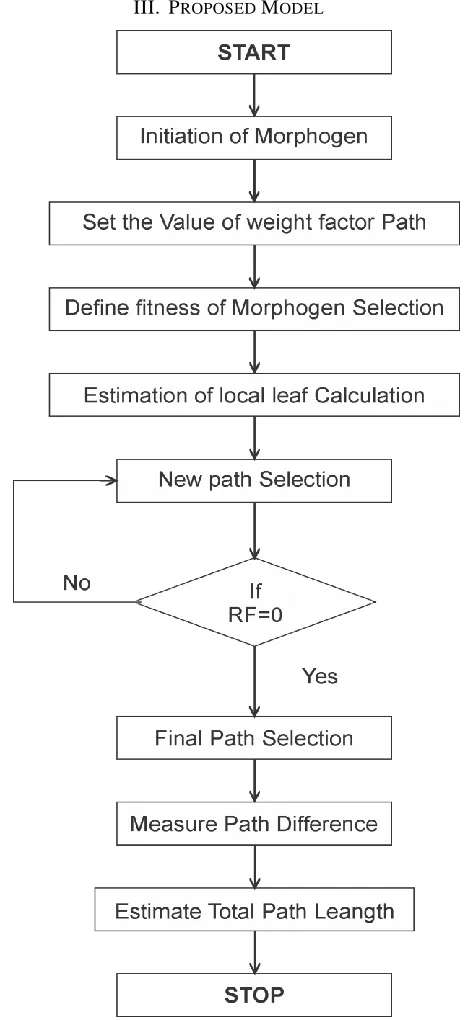
[image:2.612.326.558.172.682.2]III. PROPOSED MODEL
International Journal of Emerging Technology and Advanced Engineering
Website: www.ijetae.com (ISSN 2250-2459, ISO 9001:2008 Certified Journal, Volume 9, Issue 10, October 2019)
50
[image:3.612.324.554.129.362.2]IV. SIMULATION &RESULT DISCUSSION
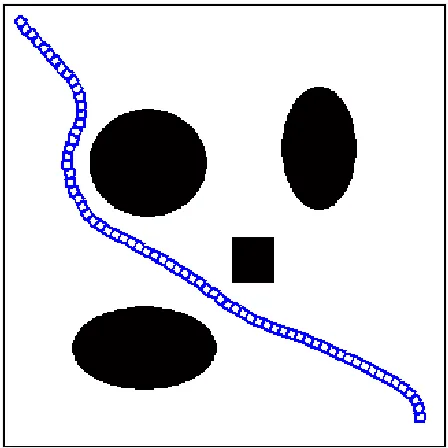
Figure 2: window show that the output result when using proposed method on input map-1 in our Robot path optimization project.
[image:3.612.55.285.141.387.2]Figure 3: window show that the output result when using Leapfrog method on input map-2 in our Robot path optimization project.
Figure 4: window show that the output result when using proposed method on input map-3 in our Robot path optimization project.
[image:3.612.56.280.420.644.2]Here we were showing result of different initial points, destination points with different point of obstacle.
Table 1:
Given Table Shows That Resultant of Our Implementation Robot Path Optimization Using Leapfrog Method On 5 Cases of Map.
M a p Map 1
M a p 2
M a p 3
M a p 4
M a p 5 Processing Time 1.4652 1 . 6 8 3 4 1.6430 1.47892 1.5591 Path Length 11.039 1 0 . 9 8 5 11.009 10.977 1 1 . 0 0
Table 2:
Given Table Shows That Resultant of Our Implementation Robot Path Optimization Using Proposed Method On 5 Cases of Map.
M a p M a p 1
M a p 2
M ap 3
M ap 4
International Journal of Emerging Technology and Advanced Engineering
Website: www.ijetae.com (ISSN 2250-2459, ISO 9001:2008 Certified Journal, Volume 9, Issue 10, October 2019)
[image:4.612.62.278.170.341.2]51
Figure 5: comparative performance show that the processing time forLeapfrog and Proposed method using map1, map2, map3, map4, map5 obstacles image. In the comparison, proposed method takes less
time to process compare to Leapfrog method.
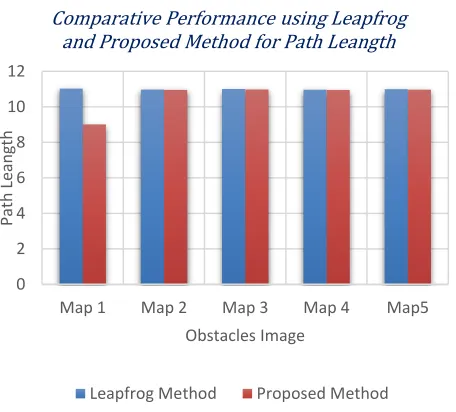
Figure 6: comparative performance show that the path length for Leapfrog and Proposed method using map1, map2, map3, map4, map5 obstacles image. In the comparison, proposed method gets less
path distance compare to Leapfrog method.
V. CONCLUSIONS &FUTURE SCOPE
This dissertation modified the optimal path selection using plant grow optimization algorithm. The plant grow optimization algorithm is multi-objective function for the selection of multiple path with obstacle space. The selection of collision free path used multiple branch and leaf selection process. The choice of cost function is an important element that has a major effect on the optimal path. While a minimum branch is desired, some level of efficiency should be included, particularly when dealing with multiple obstacle. A cost function that includes both a minimum time element and a measure of minimizing effort is desirable. The modified path selection algorithm validated in to simulation scenario one is image obstacle and fixed path, free space path selection with single obstacle. In all Two scenarios, the value of path length is optimal instead of leapfrog path selection algorithm. Obstacle avoidance was included by defining path constraints that consisted of the minimum distance between the manipulators’ links. Using parametric equations to define each link, an optimization problem was formulated and simultaneously solved to determine the minimum distance between each link and any potential obstacle.
REFERENCES
[1] Belinda Matebese, Daniel Withey and Mapundi K. Banda "Path planning with the leapfrog method in the presence of obstacles", IEEE, 2016, Pp 613-618.
[2] B.T. Matebese, D.J. Withey and M.K. Banda “Application of the leapfrog method to robot path planning”, IEEE, 2014, Pp 710-715. [3] Hao-dong ZHU and Bao-feng HE “Path planning of mobile robot
using optimized ACA”, AITA, 2016, Pp 92-98.
[4] Prithviraj Dasgupta “coverage path planning using mobile robot team formations”, IGI Global, 2015, Pp 214-227.
[5] Andrea I. Schäfer, Gordon Hughes and Bryce S. Richards “Renewable energy powered membrane technology: a leapfrog approach to rural water treatment in developing countries”, Elsevier, 2014, Pp 1-44.
[6] S. Sekar and K. Prabhavathi “Numerical solution of first order linear fuzzy differential equations using leapfrog method”, IOSR Journal of Mathematics, 2014, Pp 7-12.
[7] Noor Hazarina Hashim, Jamie Murphy, Olaru Doina and Peter O’Connor “Bandwagon and leapfrog effects in internet implementation”, International Journal of Hospitality Management, 2014, Pp 91–98.
[8] S. Sekar and M. Vijayarakavan “Numerical investigation of first order linear singular systems using leapfrog method”, International Journal of Mathematics Trends and Technology, 2014, Pp 89-93. [9] Ki-Baek Lee and Jong-Hwan Kim “Multi-objective particle swarm
optimization with preference-based sort and its application to path following footstep optimization for humanoid robots”, IEEE, 2013, Pp 1-13. 0 0.2 0.4 0.6 0.8 1 1.2 1.4 1.6 1.8
Map 1 Map 2 Map 3 Map 4 Map5
Pro ce ss in g Ti me Obstacles Image
Comparative Performance using Leapfrog
and Proposed Method for Processing Time
Leapfrog Method Proposed Method
0 2 4 6 8 10 12
Map 1 Map 2 Map 3 Map 4 Map5
Pa th L ean gth Obstacles Image
Comparative Performance using Leapfrog and Proposed Method for Path Leangth
[image:4.612.54.282.408.614.2]International Journal of Emerging Technology and Advanced Engineering
Website: www.ijetae.com (ISSN 2250-2459, ISO 9001:2008 Certified Journal, Volume 9, Issue 10, October 2019)
52
[10] P. Raja and S. Pugazhenthi “Optimal path planning of mobile robots:a review”, International Journal of Physical Sciences, 2012, Pp 1314-1320.
[11] Jonathan Binney, Andreas Krause and Gaurav S. Sukhatme “Informative path planning for an autonomous underwater vehicle”, IEEE, 2010, Pp 4791-4796.