Development of Technique for Formation of Equi- Sized
Clusters in Wireless Sensor Networks for Efficient
Enery Management
Shrijana Pradhan
Department of CSE, SMIT Sikkim Manipal University
Kalpana Sharma
Department of CSE, SMIT Sikkim Manipal University
ABSTRACT
The effectiveness of a cluster in WSN solely depends on the effectiveness of the cluster head as it acts as a transient communication link between the cluster and the base station. Cluster head in addition to information relay also performs the task of aggregating information from the sensors. Energy depletion does not only take place because of communication but due to inherent calculation involved as well. So as to maintain sound health of all the cluster head it is mandatory that the entire clusters are equi-sized in nature. These requires for near about approximate sensors in all the clusters.
The prime objective should be to create equi-sized clusters, devise efficient cluster head rotation mechanism with improved data aggregation.
Keywords
WSN, cluster, cluster head, aggregation, equi-sized
1.
INTRODUCTION
1.1
Wireless Sensor Network
Wireless sensor network is a collection of sensor nodes that communicate and coordinate wirelessly to achieve some goal. Sensors are type of transducer that converts physical parameters into digital form which can be processed further. A sensor node also contains processing, communication and storage components. With the advancement in technologies like very large scale integration (VLSI), micro-electromechanical systems (MEMS), miniaturization of computing and sensing components and wireless communication resulted into widespread use of wireless sensor networks. [9]
Due to the inherent limitations of sensor nodes and wireless communication, WSN suffers from variety of challenges and constraints. Sensor nodes are provided with limited power supply (eg: battery), their energy must be used in optimal manner so as to complete mission time efficiently. Once sensor nodes are deployed, they must startup, configure and organize self them self in the network. Further, due to wireless communication, sensor networks suffer from various constraints, eg: attenuation, interference, security etc. [4]. Therefore it is mandatory for the protocols and algorithm of WSN must operate efficiently in resource constraint devices.
1.2
Routing in Wireless Sensor Network
Routing in wireless sensor networks can be classified into various categories. One of the classifications is based on structure and organization of networks. With respect to this, routing can be flat based, hierarchical based and location based. Function of routing protocol is to determine route from source to destination (sink). In flat based routing, all sensor node shares equal responsibility whereas in hierarchical based routing, some nodes share more workload than that of others. Location based routing relies on location information
(computed using GPS or based on anchor node). Flat based routing suffers from various challenges of WSN such as scalability and efficiency. Location based routing requires more energy and processing power that makes it difficult to implement in resource constraint networks [9]. Above stated weaknesses can be reduced significantly in hierarchical approaches.
1.3
Clustering in Wireless Sensor Network
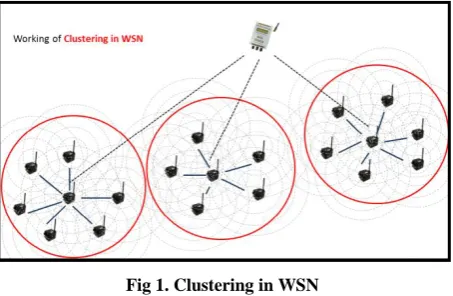
[image:1.595.317.544.426.574.2]Clustering is a hierarchical based routing technique in which deployed nodes are grouped into clusters. One of the nodes from cluster is selected as head which is responsible for communicating to base station [1]. All other nodes called as cluster member communicates directly to cluster head and all communication to base station passes through cluster head. Other than routing, clustering also facilitates in-network data aggregation, duty cycling and reduce collision in wireless channel. Due to inherent limitations of sensor networks, this technique suffers from various challenges such as formation of clusters, cluster head selection and rotation of this responsibility among group members.
Fig 1. Clustering in WSN
Fig 2. Energy depletion in WSN
Designed solution aims to provide mechanism for:
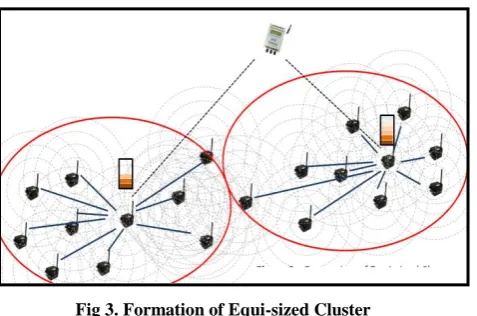
[image:2.595.55.293.72.225.2] Equi-sized clusters for better energy management
Fig 3. Formation of Equi-sized Cluster
We assume a sensor network model with following properties:
All the sensor nodes are homogeneous with limited supply of energy.
Each node senses the data and transfers the information to the cluster head.
All nodes are reachable to base station.
Energy model under consideration
Energy dissipated for radio transmission ETx(k,d) of a message of ‘k’ bits over distance ‘d’
ETx(k,d)=ETx-elec(k)+ETx-amp(k,d)=Eelec*k+Eamp*k*d2 Energy dissipated for reception ERx(k) of a message of ‘k’ bits
ERx(k)=ERx-elec(k)=Eelec*k where
ETx-elec(k): transmitter circuitry
ETx-amp(k,d): transmitter amplifier
Eelec: transmitter or receiver circuitry dissipation per bit
Eamp: transmit amplifier dissipation per bit
2.
LITERATURE SURVEY
Dechene et. al. [5] analyzed various clustering mechanism based on Heuristic Algorithms, Weighted Schemes, Hierarchical Schemes, Grid Schemes to determine their benefits and limitations with respect to its power, reliability and QoS metrics which plays a pivotal role in designing
proposed Low Energy Adaptive Clustering Hierarchical Protocol (LEACH) that uses randomized technique for cluster formation, local control for data transfers and low-energy media access control (TDMA or CDMA MAC to reduce inter-cluster and intra cluster collisions) and application specific data processing where in node becomes cluster head using stochastic mechanism by considering some factors like residual energy of nodes or distance from base station. Bandyopadhyay et. al. [7], proposed a distributed and randomized clustering algorithm for organization of sensor nodes in a wireless sensor network into clusters. This work was extended to generation of multiple hierarchies of cluster heads for efficiently utilizing energy.
Chi [3], introduces an Energy-aware Grid-based Routing scheme (EAGER) in a virtual grid based structure, for increasing the lifespan of WSN by efficiently managing energy dissipation. In EAGER, one of the nodes called the grid head is used for communication of information from the grid to base station.
Stefanos et. al. [2] discussed Equalized Cluster Head Election Routing Protocol (ECHERP), which pursues energy conservation through balanced clustering. In order to elect a cluster head (CH), the routing information and the energy spent in the network are formulated as a linear system, the solution of which is computed using the Gaussian elimination algorithm. It considers the current and the estimated future residual energy of the nodes, along with the number of rounds that can be cluster heads, in order to maximize the network lifetime.
Vaidyanatha et. al. [6] proposed three methods for aggregation namely In-Network, Grid-based and Hybrid schemes. The In-Network scheme identifies the sensor with most significant information and selects that sensor as data aggregator to send packets to the base station. Grid-based scheme has predefined data aggregators that aggregates information from a region and then sends it to the base station. Whereas the hybrid schema combines the features of the both in order to select the best aggregator.
3.
PROPOSED SOLUTION STRATEGY
It involves generating equi-sized cluster of sensor nodes. This phase is portioned into two different identifiable independent processes for devising methods for clustering
Once the sensor nodes are activated on deployment, the sensor node goes into idle mode for period of time generated through randomization (idle time= rand () %n for n number of node). After the initial idle phase is over the node self elects oneself as cluster head and sends cluster head advertisement message to all other nodes within its radio range. Upon receiving response from the collaborating nodes it then decides to continue as cluster head or to join other existing cluster.
[image:2.595.55.294.262.420.2]4.
SIMULATION RESULTS
[image:3.595.325.533.69.427.2]Case 1: The cluster heads in this case were selected randomly after certain interval where in a random number is generated that represents the ID of the cluster head.
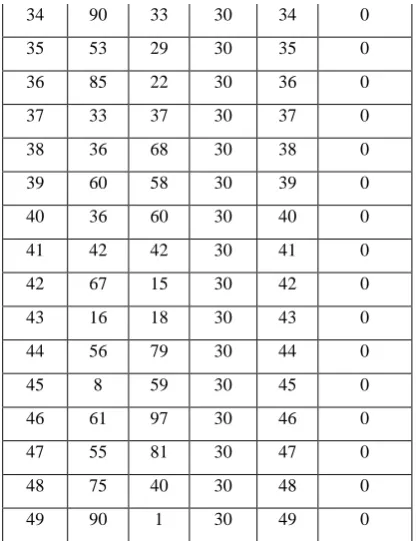
[image:3.595.65.269.202.758.2]Table 1 below highlights the distribution of 50 nodes in the x, y plane of size 100 x 100 units. The nodes are assigned node identification from 0-50. Assuming the deployed nodes to be homogeneous the initial attributes of all the nodes are same. Each node has a range of 30 units. At the point of deployment all the nodes assumes self to be cluster head and has self identification as cluster head identification.
Table 1: Node Distribution
node. ID
node. Xc
node. Yc
node. Range
node. Head
node.
Members. Count
0 46 30 30 0 0
1 82 90 30 1 0
2 56 17 30 2 0
3 95 15 30 3 0
4 48 26 30 4 0
5 4 58 30 5 0
6 71 79 30 6 0
7 92 60 30 7 0
8 12 21 30 8 0
9 63 47 30 9 0
10 19 41 30 10 0
11 90 85 30 11 0
12 14 9 30 12 0
13 52 71 30 13 0
14 79 16 30 14 0
15 81 51 30 15 0
16 95 93 30 16 0
17 34 10 30 17 0
18 79 95 30 18 0
19 61 92 30 19 0
20 89 88 30 20 0
21 66 64 30 21 0
22 92 63 30 22 0
23 66 64 30 23 0
24 39 51 30 24 0
25 27 0 30 25 0
26 95 12 30 26 0
27 8 66 30 27 0
28 47 42 30 28 0
29 74 69 30 29 0
30 89 83 30 30 0
31 66 41 30 31 0
32 90 78 30 32 0
33 65 79 30 33 0
34 90 33 30 34 0
35 53 29 30 35 0
36 85 22 30 36 0
37 33 37 30 37 0
38 36 68 30 38 0
39 60 58 30 39 0
40 36 60 30 40 0
41 42 42 30 41 0
42 67 15 30 42 0
43 16 18 30 43 0
44 56 79 30 44 0
45 8 59 30 45 0
46 61 97 30 46 0
47 55 81 30 47 0
48 75 40 30 48 0
49 90 1 30 49 0
Here paramaters node.ID, node.Xc, node.Yc, node.Range, node.Head and node.Members.Count represents node identification, x-coordinate, y-coordinate, range, current head identification and member count resepectively. Where in member count represent the number of members in the clusters formed.
After the nodes are successfully deployed in the deployment area, a node is randomly selected and all the nodes that fall into the communication range of that are grouped to from clusters. The process is repeated for number of times that equals to the number of nodes.
[image:3.595.324.533.613.754.2]Table 2 highlights the formation of clusters where the head identification of the nodes changes to the cluster head identification and also the member count of the cluster head changes.
Table 2: Cluster Head Selection
node.
ID
node.
Xc
node.
Yc
node.
Range node.
Head
node.
Members. Count
0 46 30 30 37 0
1 82 90 30 11 0
2 56 17 30 31 0
3 95 15 30 3 6
5 4 58 30 27 0
6 71 79 30 11 0
7 92 60 30 11 0
8 12 21 30 37 0
9 63 47 30 31 0
10 19 41 30 37 0
11 90 85 30 11 11
12 14 9 30 43 0
13 52 71 30 46 0
14 79 16 30 3 0
15 81 51 30 31 0
16 95 93 30 11 0
17 34 10 30 37 0
18 79 95 30 11 0
19 61 92 30 11 0
20 89 88 30 11 0
21 66 64 30 31 0
22 92 63 30 11 0
23 66 64 30 31 0
24 39 51 30 37 0
25 27 0 30 43 0
26 95 12 30 3 0
27 8 66 30 27 3
28 47 42 30 37 0
29 74 69 30 31 0
30 89 83 30 11 0
31 66 41 30 31 8
32 90 78 30 11 0
33 65 79 30 11 0
34 90 33 30 3 0
35 53 29 30 37 0
36 85 22 30 3 0
37 33 37 30 37 10
38 36 68 30 27 0
39 60 58 30 31 0
40 36 60 30 37 0
41 42 42 30 37 0
42 67 15 30 3 0
43 16 18 30 43 2
44 56 79 30 46 0
45 8 59 30 27 0
46 61 97 30 46 3
47 55 81 30 46 0
48 75 40 30 31 0
49 90 1 30 3 0
[image:4.595.325.534.72.140.2]In the table above consider node 3, it is a cluster head with 6 nodes in its cluster.
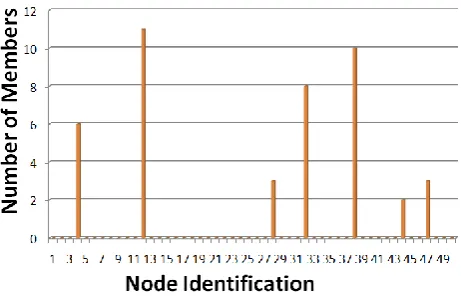
Fig 5: Member count in each cluster(random)
However, the clustering process results in formation of clusters that are not of same size represented as in Fig 5 where in along y-dimension the member count is represented and along x-dimension node identification is represented. Such nonuniform distribution results in variable depletion of energy in different cluster heads. To resolve this crutial concern all the cluster heads should have near about approximatly same number of members in their cluster. This mandates determining knowledge of the nearest neighbouring cluster head with whom the nodes can be shared. Table 3 highlights the inter cluster head distances.
The distance between the cluster heads are determined using Euclidean distance, where the distance is represented as
Distance=√(y2-y1)2+(x2-x1)2
The purpose for determing the inter cluster head distance is to look for the nearest cluster heads that a cluster head can share the nodes with while forming equisized clusters.
[image:4.595.319.550.175.323.2]Table 3 below represents the inter cluster distance between the cluster heads listed in table 2 wherein node.D is the intercluster distance.
Table 3: Inter-Cluster Head Distance
node.D
node.ID 37 43 11 3 31 46 27
37 0 25 74 65 33 66 38
43 25 0 99 79 55 90 48
11 74 99 0 70 50 31 84
3 65 79 70 0 38 88 100
31 33 55 50 38 0 56 63
46 66 90 31 88 56 0 61
[image:4.595.332.525.594.754.2]After the inter cluster head distance has been successfully determined further it is necessary to determine the identification of the nodes in the cluster. Table 4 highlights the members in the respective clusters.
Table 4: Cluster Member Representation
ID Count node.Members.ID
37 10 41 10 28 0 24 4 35 40 17 8
43 2 12 25
11 11 30 20 32 1 16 18 6 22 7 33 19
3 6 26 36 49 14 34 42
31 8 9 48 39 15 21 23 2 29
46 3 47 44 13
27 3 45 5 38
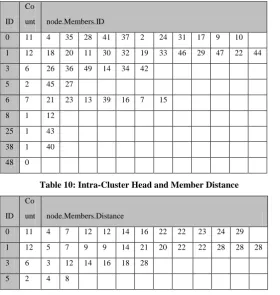
Table 5 highlight the distance of the members from the respective cluster head so as to identify nearest and the farthest member. This information is plays a crutial role while sharing nodes with other clusters.
Table 5: Intra-Cluster Head and Member Distance
ID Count node.Members.Distance
37 10 10 14 14 14 15 18 21 23 27 26
43 2 9 21
11 11 2 3 7 9 9 14 19 22 25 25 29
3 6 3 12 14 16 18 28
31 8 6 9 18 18 23 23 26 29
46 3 17 18 27
27 3 7 8 28
[image:5.595.60.294.533.680.2]Fig 6 represents distribution of members from the initially formed clusters. Here, near about approximate sensors are deployed in each cluster. This will aid in managing energy of the cluster heads i.e. approximately uniform depletion of the energy.
Fig 6: Member count in each cluster after distribution(random)
Case 2: The cluster heads in this case were selected sequentially after certain interval based on their ID.
Table 6 below highlights the distribution of 50 nodes in the x, y plane of size 100 x 100 units. The nodes are assigned node
identification from 0-50. Assuming the deployed nodes to be homogeneous the initial attributes of all the nodes are same. Each node has a range of 30 units. At the point of deployment all the nodes assumes to be cluster head and has self identification as cluster head identification.
Table 6: Node Distribution
Node.
ID
node.
Xc
node.
Yc
node.
Range node.
Head node. Members.
Count
0 46 30 30 0 0
1 82 90 30 1 0
2 56 17 30 2 0
3 95 15 30 3 0
4 48 26 30 4 0
5 4 58 30 5 0
6 71 79 30 6 0
7 92 60 30 7 0
8 12 21 30 8 0
9 63 47 30 9 0
10 19 41 30 10 0
11 90 85 30 11 0
12 14 9 30 12 0
13 52 71 30 13 0
14 79 16 30 14 0
15 81 51 30 15 0
16 95 93 30 16 0
17 34 10 30 17 0
18 79 95 30 18 0
19 61 92 30 19 0
20 89 88 30 20 0
21 66 64 30 21 0
22 92 63 30 22 0
23 66 64 30 23 0
24 39 51 30 24 0
25 27 0 30 25 0
26 95 12 30 26 0
27 8 66 30 27 0
28 47 42 30 28 0
29 74 69 30 29 0
30 89 83 30 30 0
31 66 41 30 31 0
32 90 78 30 32 0
34 90 33 30 34 0
35 53 29 30 35 0
36 85 22 30 36 0
37 33 37 30 37 0
38 36 68 30 38 0
39 60 58 30 39 0
40 36 60 30 40 0
41 42 42 30 41 0
42 67 15 30 42 0
43 16 18 30 43 0
44 56 79 30 44 0
45 8 59 30 45 0
46 61 97 30 46 0
47 55 81 30 47 0
48 75 40 30 48 0
49 90 1 30 49 0
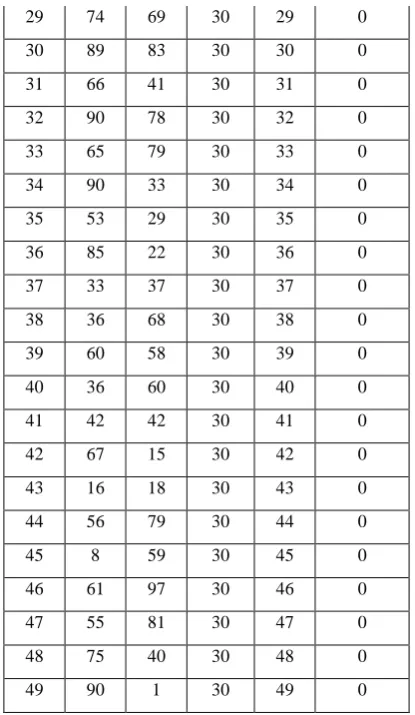
After the nodes are successfully deployed in the deployment area, the nodes are sequentially selected and all the nodes that fall into the communication range of that are grouped into clusters. The process is repeated for number of times that equals to the number of nodes.
[image:6.595.325.533.62.686.2]Table 7 highlights the formation of clusters where the head identification of the nodes changes to the cluter head identification and also the member count of the cluster head changes.
Table 7: Cluster Head Selection
node.
ID
node.
Xc
node.
Yc
node.
Range node.
Head
node.
Members.
Count
0 46 30 30 0 11
1 82 90 30 1 12
2 56 17 30 0 0
3 95 15 30 3 6
4 48 26 30 0 0
5 4 58 30 5 2
6 71 79 30 6 7
7 92 60 30 6 0
8 12 21 30 8 1
9 63 47 30 0 0
10 19 41 30 0 0
11 90 85 30 1 0
12 14 9 30 8 0
13 52 71 30 6 0
14 79 16 30 3 0
15 81 51 30 6 0
16 95 93 30 6 0
17 34 10 30 0 0
18 79 95 30 1 0
19 61 92 30 1 0
20 89 88 30 1 0
21 66 64 30 6 0
22 92 63 30 1 0
23 66 64 30 6 0
24 39 51 30 0 0
25 27 0 30 25 1
26 95 12 30 3 0
27 8 66 30 5 0
28 47 42 30 0 0
29 74 69 30 1 0
30 89 83 30 1 0
31 66 41 30 0 0
32 90 78 30 1 0
33 65 79 30 1 0
34 90 33 30 3 0
35 53 29 30 0 0
36 85 22 30 3 0
37 33 37 30 0 0
38 36 68 30 38 1
39 60 58 30 6 0
40 36 60 30 38 0
41 42 42 30 0 0
42 67 15 30 3 0
43 16 18 30 25 0
44 56 79 30 1 0
45 8 59 30 5 0
46 61 97 30 1 0
47 55 81 30 1 0
48 75 40 30 48 0
49 90 1 30 3 0
[image:6.595.63.272.70.341.2] [image:6.595.64.271.460.758.2]Fig 7: Member count in each cluster(sequential)
[image:7.595.59.274.76.206.2]Table 8 highlights the inter cluster distance.
Table 8: Inter-Cluster Head Distance
node.D
node.Id 0 1 3 5 6 8 25 38 48
0 0 69 51 50 55 35 35 39 30
1 69 0 76 84 15 98 105 50 50
3 51 76 0 100 68 83 69 79 32
5 50 84 100 0 70 37 62 33 73
6 55 15 68 70 0 82 90 36 39
8 35 98 83 37 82 0 25 52 65
25 35 105 69 62 90 25 0 68 62
38 39 50 79 33 36 52 68 0 48
48 30 50 32 73 39 65 62 48 0
Table 9 highlights the members in the respective clusters.
Table 9: Cluster Member Representation
ID Co
unt node.Members.ID
0 11 4 35 28 41 37 2 24 31 17 9 10
1 12 18 20 11 30 32 19 33 46 29 47 22 44
3 6 26 36 49 14 34 42
5 2 45 27
6 7 21 23 13 39 16 7 15
8 1 12
25 1 43
38 1 40
[image:7.595.318.566.195.355.2]48 0
Table 10: Intra-Cluster Head and Member Distance
ID Co
unt node.Members.Distance
0 11 4 7 12 12 14 16 22 22 23 24 29
1 12 5 7 9 9 14 21 20 22 22 28 28 28
3 6 3 12 14 16 18 28
5 2 4 8
6 7 15 15 20 23 27 28 29
8 1 12
25 1 21
38 1 8
48 0
Fig 8 represents distribution of members from the initially formed clusters to generated approximately similar sized clusters for managing energy efficiently.
Fig 8: Member count in each cluster after distribution(sequential)
From Fig 6 and Fig 8 it is evident that distribution mechanism irrespective of whether it is sequential or random, creation of equi-sized clusters would greatly aid inefficient management of cluster head energy.
5.
CONCLUSION
The efficiency of wireless sensor network greatly relies on the ability of sensors to manage their residual energy. In this work an attempt has been made to devise mechanism for generating equi-sized clusters in a wireless sensor network for optimizing energy usage for increasing the life time of the network. This work can be further extended to devising efficient cluster head rotation mechanism for maintaining sound health of the clusters aided with improvised data aggregation technique.
6.
REFERENCES
[1] Enam, R. N. ,Qureshi, R., Misbahuddin, S., A Uniform Clustering Mechanism for Wireless Sensor Networks, International Journal of Distributed aSensor Networks, Volume 2014,pp-14, 2014.
[2] Nikolidakis, S. A., Kandris, D., Vergados, D. D., Douligeris, C., Energy Efficient Routing in Wireless Sensor Networks Through Balanced Clustering, Algorithms 2013, Volume 6, issue 1, pp 29-42, 2013. [3] Chi, Y. P., Chang, H. P., An energy-aware grid-based
routing scheme for wireless sensor networks, Telecommunication Systems, Volume 54, Issue 4, pp 405-415, 2013.
[4] Kumar, V., Jain, S., Tiwari, S., Energy Efficient Clustering Algorithms in Wireless Sensor Networks: A Survey, IJCSI International Journal of Computer Science Issues, Vol. 8, Issue 5, No 2, 2011.
[image:7.595.51.283.260.438.2] [image:7.595.27.308.472.768.2]Networks, ICIAFS 4th International Conference on Information and Automation for Sustainability, 2008. [6] Vaidyanatha, K., Sur, S., Narravula, S., Sinha, P., Data
Aggregation Techniques in Sensor Networks Technical Report OSU-CISRC-11/04-TR60
[7] Bandyopadhyay, S., Coyle, E. J., An Energy Efficient Hierarchical Clustering Algorithm for Wireless Sensor Networks, IJCTN International Journal of Computer and
Telecommunications Networking Vol. 44 Issue 1, 15 2004.
[8] Heinzelman, W., Chandrakasan, A., Balakrishnan, H., An application-specific protocol architecture for wireless microsensor networks, IEEE Transaction on Wireless Communications, vol. 1, no. 4, pp. 660–670. 2002 [9] Dargie, W. Poellabauer, C., Fundamentals of Wireless