“Examining the Work-Home Interface: An
Ecological Systems Perspective”
Richard A. MacKinnon
A Thesis Submitted in partial fulfilment of the requirements of the
University of East London for the degree of
Professional Doctorate in Occupational Psychology
Abstract
This dissertation outlines a mixed-methods investigation of work-life balance, examining the construct from an ecological systems theory perspective. This necessitated research at the individual, group, organisational and wider societal levels and included three studies: two using quantitative methodology and one using qualitative.
The quantitative phase included two studies that examined the experience of the home-work interface from the perspective of the employee, examining the impact of demographic differences, job design and organisational work-life balance culture on both their work-life balance satisfaction and actual outcomes of work and home domain interaction. This revealed the key role of demographic differences in employees’ satisfaction with work-life balance culture and the moderating role of work locus of control in the relationship between negative domain interaction outcomes and self-reported wellbeing.
Table of Contents
ABSTRACT ... 2
LIST OF TABLES ... 7
ACKNOWLEDGEMENTS ... 10
PREFACE ... 11
1. INTRODUCTION ... 13
1.1 A Conceptual Review of Work-Life Balance ... 15
1.2 Adopting An Ecological Systems Perspective ... 44
1.3 Aims of the Present Research ... 70
1.4 Chapter Summary ... 77
2. METHODOLOGY ... 78
2.1 Introduction ... 78
2.2 What is a Mixed Methods approach? ... 78
2.3 Defining the Mixed Methods approach ... 79
2.4 Why conduct Mixed Methods Research? ... 82
2.5 The Merits of Mixed Methods Research ... 85
2.6 Difficulties Associated with the Mixed Methods Approach ... 86
2.7 Mixed Methods and the Scientist-Practitioner ... 87
2.8 Methodological Rationale of the present research ... 89
3. RESULTS – QUANTITATIVE STUDIES ... 93
3.1 Introduction ... 93
3.2 Measures ... 95
3.3 Methodology – Phase 1 ... 105
3.4 Results – Phase 1 ... 108
3.5 Methodology – Phase 2 ... 136
3.6 Results – Phase 2 ... 138
3.7 Discussion ... 143
3.8 Chapter Summary ... 152
4. RESULTS – QUALITATIVE STUDY ... 153
4.1 Introduction ... 153
4.2 Methodology ... 154
4.3 Results ... 163
4.4 Discussion ... 225
4.5 Limitations of the present study ... 232
4.6 Chapter Summary ... 234
5. DISCUSSION ... 235
5.1 Introduction ... 235
5.2 Synthesis of Results ... 236
5.3 Benefits of a Mixed Methods Approach ... 244
5.5 Potential Methodological Weaknesses ... 256
5.6 Suggestions for Future Research ... 261
6. CONCLUSIONS ... 263
REFERENCES ... 264
APPENDIX A: ONLINE SURVEY MEASURES ... 283
1. Work-Life Balance Culture ... 283
2. Dutch Questionnaire on The Experience and Assessment of Work (VBBA) ... 285
3. SWING (Survey Work-Home Interface Nijmegen) ... 287
4. Cybernetic Coping Scale ... 289
5. Work-Life Balance Attitudes Measure ... 290
6. General Health Questionnaire - GHQ12 ... 292
APPENDIX B: QUALITATIVE INTERVIEWS – INITIAL QUESTIONS ... 295
List of Tables
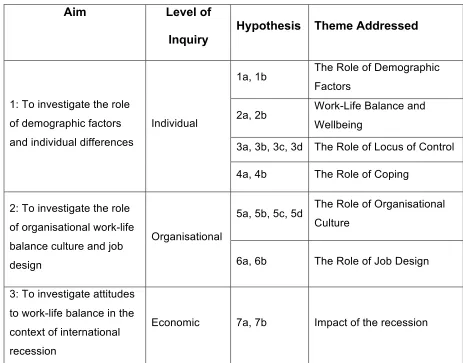
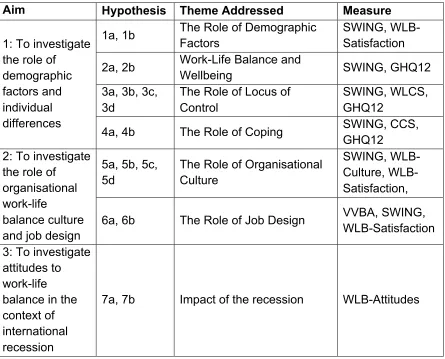
TABLE 1.1 – ALIGNMENT OF RESEARCH AIMS, LEVELS OF INQUIRY, RESEARCH HYPOTHESES AND THEMES ADDRESSED ... 71
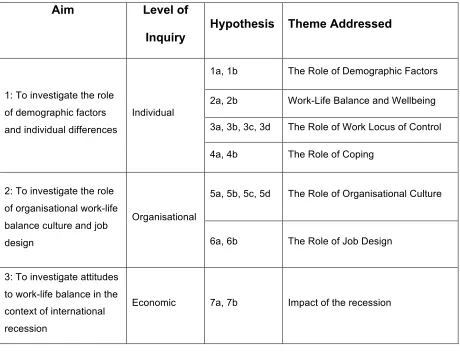
TABLE 3.1 – ALIGNMENT OF RESEARCH AIMS, LEVELS OF INQUIRY, HYPOTHESES AND THEMES ... 95
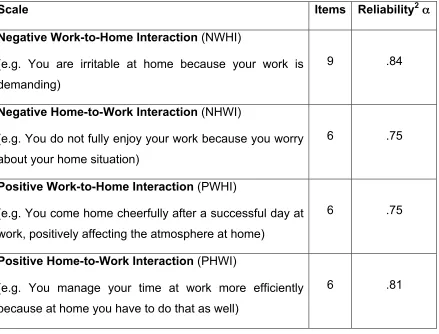
TABLE 3.2 – STRUCTURE, SAMPLE ITEMS AND PROPERTIES OF THE SWING QUESTIONNAIRE ... 97
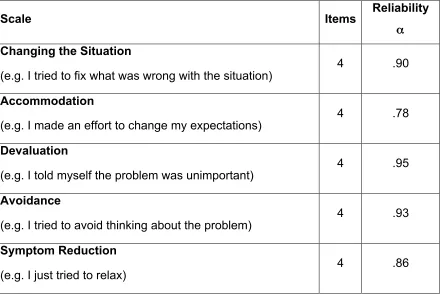
TABLE 3.3 – STRUCTURE AND PROPERTIES OF THE CYBERNETIC
COPING SCALE ... 98
TABLE 3.4 – STRUCTURE AND PROPERTIES OF THE MEASURE OF
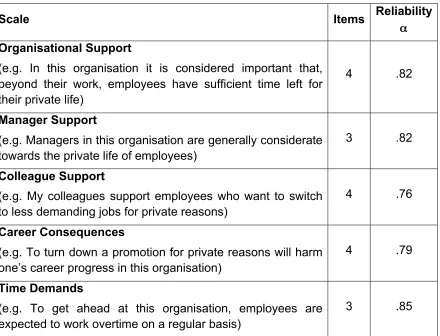
ORGANISATIONAL WORK-LIFE BALANCE CULTURE ... 100
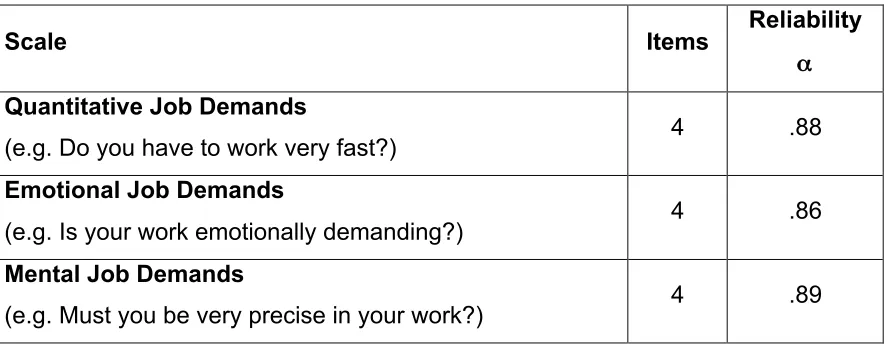
TABLE 3.5 – STRUCTURE AND PROPERTIES OF THE VBBA ... 101
TABLE 3.6 – ALIGNMENT OF MEASURES AGAINST RESEARCH AIMS AND THEMES ... 104
TABLE 3.7 – OVERALL RESULTS OF SWING MEASURE ... 109
TABLE 3.8 – SWING SCALES EXPRESSED AS MEANS OF MEANS ... 110
TABLE 3.9 – NEGATIVE DOMAIN INTERACTION FOR MALES AND
FEMALES ... 111
TABLE 3.10 – NEGATIVE DOMAIN INTERACTION FOR PARENTS AND NON-PARENTS ... 111
TABLE 3.12 – NEGATIVE DOMAIN INTERACTION FOR HETEROSEXUALS AND GAYS/LESBIANS ... 112
TABLE 3.13 – NEGATIVE DOMAIN INTERACTION FOR
MARRIED/PARTNERED AND SINGLES ... 113
TABLE 3.14 – OVERALL LEVELS OF WORK-LIFE BALANCE
SATISFACTION ... 113
TABLE 3.15 CORRELATIONS BETWEEN SWING SCALES AND WLB
SATISFACTION ... 114
TABLE 3.16 RESULTS OF STEPWISE REGRESSION OF WLB ITEM ONTO SWING SCALES ... 115
TABLE 3.17 – OVERALL SCORES ON THE GENERAL HEALTH
QUESTIONNAIRE (GHQ12) ... 117
TABLE 3.18 CORRELATIONS BETWEEN NEGATIVE SWING SCALES AND GHQ12 ... 117
TABLE 3.19 – OVERALL RESULTS FOR THE WORK LOCUS OF CONTROL SCALE (WLCS) ... 119
TABLE 3.20 – CORRELATIONS BETWEEN NEGATIVE SWING SCALES AND LOCUS OF CONTROL ... 120
TABLE 3.21 – CORRELATIONS BETWEEN POSITIVE SWING SCALES AND WORK LOCUS OF CONTROL ... 121
TABLE 3.22 – SCALE RELIABILITY FOR THE CYBERNETIC COPING
SCALE ... 123
TABLE 3.24 – CORRELATIONS BETWEEN POSITIVE ORGANISATIONAL WORK-LIFE BALANCE CULTURE SCALES AND NEGATIVE AND POSITIVE WORK-TO-HOME INTERACTION ... 127
TABLE 3.25 – CORRELATIONS BETWEEN VBBA SCALES AND NEGATIVE SWING SCALES ... 132
TABLE 3.26 – MULTIPLE REGRESSION: NWHI, WORK-LIFE BALANCE CULTURE AND VBBA SCALES ... 134
TABLE 3.27 – CORRELATIONS BETWEEN VBBA SCALES AND WORK-LIFE BALANCE SATISFACTION ... 135
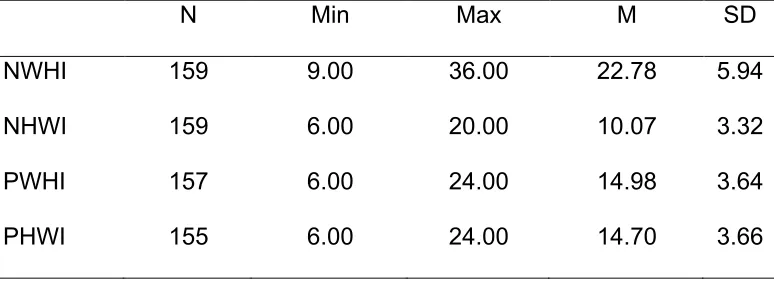
TABLE 3.28 – DESCRIPTIVE STATISTICS: WORK-LIFE BALANCE IN THE CONTEXT OF RECESSION ... 139
Acknowledgements
I would like to acknowledge the support and encouragement provided by my supervisory team at the University of East London: Dr. Carla Gibbes and Dr. Kirsty Soar. Their insight and clarification of the route through the doctoral research maze was indispensible.
I would also like to extend my thanks to my colleagues at Talent Q for their continued support and forbearance while I attempted to combine work and research.
I would like to thank the assorted friends and colleagues who encouraged me to persevere in the face of setbacks and increasing workload: especially Dr. Almuth McDowall who initially sparked my professional interest in the topic of work-life balance and Prof. Frank Bond for his advice with regard to methodological and statistical challenges.
Thanks also to my research participants who generously gave of their time to complete questionnaires and sit through interviews.
Finally, I would like to thank my family for their love, encouragement and support during my studies; my parents Paula and Stewart, my sister Fiona and my partner Frank, without whom I could not have completed this dissertation.
Richard A. MacKinnon, CPsychol CSci, AFBPsS
Preface
The following document presents the results of a mixed methods research project investigating work-life balance from an ecological systems perspective. This perspective acknowledges the impact of individual differences, organisational culture and societal context on employees’ experience of the work-home interface.
Chapter 1 begins with a conceptual review of the work-life balance construct and how it has evolved over the last fifty years, alongside the societal and occupational developments that have preceded theoretical evolution. The relevance of the Ecological Systems perspective is presented, and the key variables that impact employees' experience of the interface between work and personal domains of life are presented in terms of a multi-level hierarchy including individual, organisational and societal factors. The chapter closes with a presentation of the aims and objectives of the research.
Chapter 2 discusses the mixed methods approach adopted for this research, describing the value such an orientation brings to work-life balance research. The chapter closes with a statement on the epistemological position of the researcher and how this has influenced the research design.
the impact of the economic context on their own experience of work-life balance.
Chapter 4 presents the results of the qualitative study, based on interviews conducted with senior organisational stakeholders responsible for the formulation and/or deployment of work-life balance related policy.
1. Introduction
The growth in interest in work-life balance has resulted in a plethora of research approaches, contrasting operational definitions and foci for research (Edwards & Rothbard, 2000; Burke & Greenglass, 1987).
This chapter begins with a conceptual review of work-life balance, beginning with an examination of how language and terminology have impacted our understanding and interpretation of the interface between work and home domains. The societal and occupational changes that provide context for work-life balance are then outlined.
Next, the evolution of work-life balance from earlier frameworks in the 1960s to its more recent conceptualisations is presented, alongside the methodological criticisms levelled at these approaches.
Reflecting the ecological systems theory perspective outlined in the conceptual review, the relevance of work-life balance is presented at multiple levels of experience, along with a review of the variables that can impact employees, organisations and society as a whole at each level.
the work-home interface has been consistently identified as a stressor (O’Driscoll, 1996; Cooper & Lewis, 1998; Cunningham & De La Rosa, 2008; Kirkcaldy, Shephard & Furnham, 2002). Both constructs are important in terms of examining behavioural responses to perceived imbalance between work and home domains.
Next, the organisational perspective is explored, highlighting the role of both job design and organisational culture in the employee experience of work-life balance, while simultaneously addressing the apparent gulf between policy deployment and employee take-up of flexible working arrangement.
In acknowledgement of the role played by national culture, recent data from across Europe are reviewed and placed in contrast to data from the United States, illustrating the need for national and cultural contexts to be considered. This is included in order to highlight the impact national context has on various inputs into the work-life equation such as: employment law, division of labour in the home and access to flexible working arrangements.
The economic perspective is then addressed, highlighting the importance of the prevailing economic climate in any discussion of work-life balance. As this research was conducted at the outset of a significant banking crisis in Europe and further afield, and considering work-life balance factors such as job design and job security are so inextricably linked, it is imperative to consider the wider socio-economic context.
1.1 A Conceptual Review of Work-Life Balance
This section reviews the concept of work-life balance in four stages. Firstly, the important consideration of language and its impact on the conceptualisation and investigation of the construct is examined. This goes to the core of the matter by posing the very basic questions of what is meant by “work”, “life” and “balance”.
Next, a review of the societal and occupational developments that have led work-life balance to become a pre-eminent issue in contemporary psychological research is presented. This is followed by a summary of the methodological critiques levelled at much of the existing literature. Finally, a review of the competing theoretical frameworks that researchers have used to explain work-life balance is presented, along with the rationale for adopting an ecological systems perspective.
1.1.1 The Impact of Language
Like many other research areas in the domain of psychology, the terminology used to address work-life balance has developed with time, in the most part reflecting an evolution of research focus. However, there still remains a plethora of terms used, seemingly interchangeably, to describe an examination of the interface between the workplace and an employee’s home life. Probably the most popular term in use is a collective “Work-Life Balance”, though a number of others are still in use: Family Balance, Family Conflict, Work-Family Interference, Work-Work-Family Spillover and so on.
issue with regard to language, meaning and interpretation of work-life balance issues. These explore the language and contexts used in the research to date, and highlight its limitations in addressing a more holistic view of the construct in question. Ozbilgin, Beauregard, Tatli and Bell’s 2010 critique of the positivist framework of previous research point to its limited scope of what “family” and “work” represent. They highlight these as “blind spots” in work-life research. Similarly, Geurts and Demerouti (2003) point out that there is little agreement as to what constitutes “work” and “non-work” and simultaneously highlight the difficulty this brings to a contemporary context in which previously distinct domains and roles have become increasingly interrelated.
What is Work?
Traditional definitions of “work” involve reference to structured, paid employment (e.g. Warr, 2002). However, such references to the concept exclude effort-related activity that is done outside of formal employment. An example here would be the selection of domestic chores that are done in most households on a weekly basis (e.g. cleaning, gardening). Though the stakeholders are usually not paid for fulfilling these, they often involve physical labour and exertion, and yet because of their temporal or geographical context, are traditionally classified as being part of the non-work domain.
work-related skills are called into play. Consider the website developer who is employed Monday to Friday to develop and maintain corporate websites and at the weekends uses these same skills to develop and maintain a website for his local neighbourhood watch association. He is formally employed and paid to fulfil the former, but engages in the latter free of charge.
The contemporary work domain is not as distinct from the non-work domain, either spatially or temporally (Geurts & Demorouti, ibid) due to advances in technology and work design, which have freed work activity from fixed work environments and schedules. As work has increasingly impinged on the non-work domain, there is some evidence that the opposite is also true. Geurts and Demorouti (ibid) cite the example of concierge-type services offered in some organisations, which provide personal care services to employees at work (e.g. picking up laundry, arranging travel) as well as work-based fitness facilities and child care centres.
While temporally and geographically “at work”, many employees can now access the internet to complete home domain tasks (e.g. online grocery shopping, holiday planning, personal email exchanges).
What is Family?
Firstly, a restrictive definition of the term excludes those individuals for whom home life does not conform to the traditional concept of nuclear family (i.e. a co-habiting, married man and woman with children). It excludes single-parent families, same-sex relationships (whether formally state-recognised or not; whether involving the raising of children or not), childless couples and, of course, single people without any caring responsibilities.
In 21st century Europe, “Family” as a concept now encompasses a much broader range of relationships and generations than the “traditional” co-habiting married husband and wife with children. Previous research into work-life balance has made the mistake of conflating “family” with this traditional structure, a failing that is explored in more depth later in this chapter. As Barnett and Hyde (2001) point out:
“The lives of women and men, the relationships that they establish, and their work have changed dramatically in the last 50 years, but the
dominant theories driving research in these areas have not.” (Barnett & Hyde, 2001, p781)
Casper, Eby, Bordeaux, Lockwood and Lambert (2007) emphasise the need to acknowledge the requirements and contexts of single employees and those without children and highlight the paucity of measures sensitive to their situations.
Traditional definitions of “family” are now insufficient to deal with the diversity of familial units that make up the modern employee pool. David Popenoe’s (1993) assertion that the American family is in decline and his belief that this was an extremely unwelcome development echoes much of the reactionary social commentary experienced by modern family units. Popenoe (ibid) asserts that to count as a family, there needs to be a dependent (child or adult) in the mix:
“I define the family as a relatively small domestic group of kin (or people
in a kin-like relationship) consisting of at least one adult and one
dependent person. This definition is meant to refer particularly to an
intergenerational unit that includes (or once included) children, but
handicapped and infirm adults, the elderly and other dependents also
qualify.” (Popenoe, 1993, p529)
What is Balance?
The term “balance” is also problematic. “Balance” suggests a 50/50 split between work and home life, a ratio that may not suit everyone, while simultaneously suggesting that balance between the two domains is possible, even desirable. Lewis (2003) points to work-life integration as a suitable and more accurate alternative to work-life balance as it better represents reality. “Integration” speaks to the ongoing, dynamic efforts employees make to ensure the work and non-work domains of life co-exist in a complimentary, as opposed to mutually-destructive, relationship.
Moen and Hernandez (2009) also critique the use of the term balance, pointing out the inherent inference that “balance” places the focus on the individual’s challenges, rather than on societal or organisational issues which place the individual in an undesirable position in the first place.
Lewis, Gambles and Rapoport (2007) make the distinction between the narratives of “personal control of time” and that of “workplace flexibility”. The first places the onus on the individual employee to balance the various demands placed upon them in both work and non-work domains, intimating that responsibility for managing this lies with the employee.
flexibility, regardless of what is explicitly stated in policy documents (Burke, 2006).
This second narrative assumes that organisational policy-making is the solution to work-life conflicts, rather than taking a holistic view of the employee experience – that is, as a member of a wider community and a national workforce (Lewis et al, 2007).
Acknowledging the above critique of the terminology, a more neutral alternative may be to distinguish between the “work” and “non-work” domains, while referring to the interactions between the two as the “work-home interface”. This excludes any possible exclusion of “non-traditional” family units and also serves to include non-work activities or obligations not directly related to family members (e.g. sport and leisure). The term “work-life balance” will be used henceforth to refer to the research topic as a whole.
1.1.2 Work-Life Balance: Societal and Occupational Evolution
Societal and market changes have combined to require more flexible and adaptive organisations – and, of course, employees to fulfil the work of these organisations.
“As time expands in the global 24-hour market place, and space and
distance are compressed by information and communication technology,
temporal and spatial boundaries between paid work and personal life
have become increasingly blurred” (Lewis, 2003, p343).
Cooper and Jackson (1997) outline the significant shifts in social and workplace environments taking place by the late 1990s, and it is key that a construct such as work-life balance, impacted by multiple layers of socio-economic variables, needs to be examined in the light of such wider change.
Up to and including the 1950’s, the focus of most comparable research in this area was on families under stress. It included an examination of the experience of families in the Great Depression (US) and the impact of the Second World War on the world of work – that is, the absence of many male breadwinners (Moen, 2010).
what it was to be a working mother, quickly followed by research into the roles played by the “modern” working father (Moen, ibid).
A logical consequence of this increase in the number of working mothers was an increase in the number of dual-earner families, which in turn put additional strain on the home life of many employees. Traditional division of labour in the home (at least in Western European terms) highlighted the potential for friction between the work and home roles of women (Bianchi, 2010). In other words, there was no corresponding change to the division of labour in the home domain, with the result that working women had, in effect, two jobs: one paid, outside the home and one unpaid, at home.
A further consequence of this increase in women at work – now working in more senior positions and thinking in terms of a career – was that women were moving into jobs created by and for men. They were working to schedules and within roles that suited the demands of men, and which did not take account of the dual responsibility many of these women had as mothers. Moen and Roehling (2005) refer to this as the “career mystique”. That is, the expectation that continuous, full-time employment is the path to fulfilment, and that the growing number of women in the workforce began to accept this as fact. In doing so, they flexed around the pre-existing standards of what it meant to be “at work”, standards set by men without the experience of inter-domain friction and workload of women.
“’Equality’ meant moving into men’s jobs, replete with taken-for-granted
workforce with no family-care responsibilities, or else on poor women
workers who relied on their networks of kin and friends to look after their
children” (Moen, 2010 p3).
In the 1970s, organisations began to acknowledge and respond to the pressures experienced by their female employees and started offering various forms of childcare support, which in turn drew the attention of social researchers wishing to evaluate their impact and effectiveness.
The 1980s saw the growth in popularity of the Employee Assistance Programme (EAP), a catch-all term for employer-funded support for employees in terms of well-being. These tended to focus on interventions to avoid home life interfering with performance and attendance at work, setting the tone for much of the psychological research in this decade: the impact of home circumstances on the workplace and, in particular, where this impact is negative. Much of the focus of EAPs was tertiary in nature – that is, it aimed to address employee wellbeing only after said wellbeing had been negatively impacted by workplace factors.
perspective of: “What you do in the office is our business. What you do outside is your own” (Friedman, Christensen and DeGroot, 2000, p2).
From the 1990s onwards, a need for workplace flexibility, in order to better balance employees’ work and non-work lives, was being cited by more and more employees as a key deciding factor when job-seeking.
The Contemporary Workplace
The modern workplace, while being arguably superior in many aspects compared to its historical manifestations (e.g. in terms of safety, access to employee support programmes, improved technology and so on) is far from perfect. A number of modern factors combine to represent risks for the contemporary employee and these include:
The demographic make-up of the modern workforce: Women’s increasing participation in the workforce is undoubtedly a major consideration when examining work-life balance. However, changes have not just impacted female employees. Male employees are now spending more time engaged in home-based activities (e.g. housework, childcare) than ever before (Sayer, 2005), mirroring some of the pressures faced by women at work (Bianchi, Robinson & Milkie, 2006; Bittman, 2000). This development has by no means equalised the division of labour in the home, but instead has served to increase the proportion of employees facing increased personal demands in their home domain.
“family” and “workplace” represents what they term a “defining trend of the 2000 – 2010 decade”.
Changes to the nature of work itself: What we term “work” now in the 21st century has evolved considerably from the type of work our predecessors did in the 1950s. There has been an explosion in the knowledge-based economy, reliant on the production of ideas and expertise rather than physical and tangible products. This has lent itself to a different kind of workplace, characterised in many cases by the prevalence of communication tools (e.g. email, telephones) and how the work itself is carried out (cooperative meetings, tele- or video-conferences) rather than a production facility (Schieman, Milkie & Glavin, 2009).
We have also witnessed a progressive globalisation of work, which has resulted in a 24-hour society (Presser, 2003). For organisations, this has necessitated constant awareness of global developments and sensitivity to activity across multiple time zones, while for the employee, it has seen developments in where and when work is carried out (Schieman, Milkie & Glavin, 2009) impacting their attempts at balancing the two main domains of work and home (Bianchi, Robinson & Milkie, 2006).
and Moen (2007) point out, flexible working arrangements represent a minority manifestation of working practices and there remains a “fundamental temporal organisation of work” (Moen, 2010 p.4) with the intact
“…norms and expectations of…8 hours or more work days, 5 day or
more work weeks, 48 or more weeks work years and a lifetime of
continuous work until death or retirement, whichever comes first” (Moen, ibid p.13).
The impact of information technology: For many employees, recent advances in information technology have freed them from a single location for work. Laptop computers, mobile phones and instant email devices such as the Blackberry and iPhone mean that employees engaged in “information work” can effectively be productive regardless of their location. (Hill et al, 2003). Quesenberry and Trauth (2005) referred to the increase in “ubiquitous computing”, facilitated by information technology that simplifies such information work. They define ubiquitous computing as:
“…situations where multiple computers are invisible, indistinguishable
and available to an individual throughout a physical environment and
thus woven into the fabric of everyday life.” (Quesenberry & Trauth, 2005, p47).
email. The implication of the Blackberry is that the employee can “stay on top of” email communications even when away from their desk, when commuting or indeed working from home. They can manage and update their schedules via electronic calendars, accepting or rejecting invitations to meetings or conference calls as required. Similar technology based on access to the internet via remote or laptop computers can provide employees with access to all of their work-related files and other organisational information from wherever they are in the world. This kind of technological advancement has reduced the need for many to be present in a static work environment for their entire working week and has facilitated more flexible approaches to managing work and productivity.
However, with this flexibility comes the danger of blurred boundaries between work and personal domains. Remaining contactable outside of work – or merely the perception that this is somehow advantageous or even required – has its disadvantages. Duxbury and Higgins (2003) found that 70% of their 33,000 research participants felt that ubiquitous computing increased their stress levels. Similarly, Perrons (2003) and Sullivan and Lewis (2001) reported the presence of ubiquitous computing technology as a cause of blurred boundaries between work and home.
potential negative impact on work-life balance through employee over-reliance on, and compulsive checking of, email through ubiquitous email devices. Their research indicated over-use of such devices increased perceived workload and lead to what they termed “technology-family conflict”.
1.1.3 Methodological Issues
Before examining the numerous theoretical perspectives that have sought to best explain work-life balance, it is useful to highlight some of the over-arching methodological weaknesses apparent in this literature. A number of researchers (e.g. Casper et al, 2007, Schultheiss, 2006, Ozbilgin et al, 2010) have recently examined the work-life balance research base and found it lacking in multiple areas relating to the methodology deployed and theoretical frameworks underpinning the work. The most frequently cited criticisms are outlined below and set the scene for the rationale behind the research discussed in subsequent chapters.
Over-reliance on cross-sectional, quantitative methodology
The use of poor measures
The use of self-report measures (e.g. surveys) is held up as a weakness of much of the research to date. Casper et al’s 2007 review of the work-life balance literature found that surveys were the most popular method used, with 85% of studies included in their meta-analysis including survey methodology. Self-report measures have a number of advantages, however, including the sampling of large groups of participants in an economical and efficient manner. Of more importance here is the content of these measures and their theoretical underpinnings. Measures used in previous research have in many cases conflated concepts and exhibited poor criterion validity, measuring only certain aspects of the entire work-life balance construct (Schultheiss, 2006).
Uni-directional focus
Much of the existing research has adopted a uni-directional focus, primarily investigating the negative impacts of work-to-home imbalance. While research has also focused on conflict originating in the other domain (i.e. from home to work), very little has been conducted examining these phenomena concurrently and in a holistic way (Schultheiss, ibid).
Unrepresentative participant groups
and couples without children. It also excludes those outside of any relationships: the single, childless employee.
Much of the research conducted in the US is difficult to generalise to a European context due to the significant differences in working culture, workplace legislation and approach to social welfare and social support.
Finally, the predominant research focus with regard to work-life balance has been on professional or “qualified” employees (Richardson and Rothstein, 2008), ignoring the experience of those in non-professional roles or less flexible work environments.
A focus on negative outcomes
A number of researchers have over-emphasised the potential for work-life conflict, or ‘Work-Family Conflict”, setting the tone of the research agenda and in some ways, the interpretation of the high-level concept of work-life balance (Schultheiss, ibid). That is, attempts at balancing the demands of work and non-work are inherently challenging and have negative outcomes.
1.1.4 Work-Life Balance: Conceptual Evolution
arranged in a largely temporal order, with the older approaches outlined first and more recent developments presented last.
“Classical” conceptualisations of the work-home interface
The earliest conceptualisations of how employees manage the interface between work and home (referred to as “Classical” hypotheses by Guerts & Demerouti, 2003) emphasise the separation of the domains.
The Segmentation / Segregation hypothesis (Dubin, 1956; Dubin & Champoux, 1977) posited that employees perceive the work and home domains to be separate, on numerous levels – including psychologically, physically and temporally. According to this hypothesis the demands of each domain make unique demands on the employee Guerts and Demerouti (ibid) point out that little evidence exists to support this hypothesis, but add that where segmentation does exist between domains, it can be due to the conscious efforts of the employee when attempting to prevent a negative impact of work demands on their home life.
employees engaging in similar non-work activities (e.g. Rousseau, 1978). Conflicting evidence (e.g. Mansfield & Evans, 1975) found the opposite to be true. Edwards and Rothbard (2000) refer to spillover as “effects of work and family on one another that generate similarities between the two domains.” (Edwards and Rothbard, 2000, p180) and suggest that spillover need not necessarily be negative in nature. However, they also highlight a plethora of terms that have been used interchangeably with this, including: generalisation, isomorphism and extension. Further, they distinguish between two forms of spillover: one which represents similarly between constructs in the two domains (e.g. work satisfaction and family satisfaction) and the other which represents transfer of experiences from one domain to the other (e.g. displaying work-related fatigue when at home, which then impacts family functioning).
Role Strain / Scarcity Hypothesis
This model posits that participation in one role (e.g. as an employee) has a negative impact on participation in others (e.g. as a mother) due to finite energy available to any individual in a given time period and thus leads to inter-role (and therefore inter-domain) conflict. Greenhaus and Beutell (1985) examined this relationship in terms of conflict between work and family based on role participation and identified three distinct forms of conflict:
family) more onerous and difficult to fulfil. Finally, behaviour-based conflict, which occurs when specific patterns of behaviour that are associated with a given domain make fulfilment of the other domain more difficult. Guerts and Demerouti (ibid) cite the example of difficulties faced by employees when attempting to maintain a business-appropriate demeanour in the work domain and adopt a different set of more informal behaviours when in the home domain.
A further theoretical perspective emerging from the role theory perspective is
work-family conflict, which specifically focuses on the negative consequences of unwanted domain interaction. Researchers such as Rothbard (2001) and Frone et al (1992b) have examined the perceived deleterious effect on employees who perform multiple roles in work and non-work domains. This research (e.g. Frone et al, 1992b) has tended to illustrate that inter-domain conflict is not evenly distributed, such that employees tend to report more work-to-home conflict than home-to-work. However, work-family conflict has been consistently found to be bi-directional (Frone, Russell, & Cooper, 1992). Further, such research has simultaneously examined the role of stress in the work-home interface and the role of subjective perception of stressors in the stressor-strain relationship (e.g. Greenhaus & Parasuraman, 1986). Edwards and Rothbard (1999) investigated the role of cognitive appraisal in this relationship, finding that employees’ well-being in both domains increased when their appraisal of the domain interaction matched their subjective requirements.
interaction and demonstrated the role of neuroticism in the manifestation of conflict between the domains, in both directions.
While these types of strain may well manifest in some employees as a result of unwelcome domain interaction, the Roles Strain / Scarcity Hypothesis and Work-Family Conflict perspectives have been superseded by theoretical perspectives which do not view inter-domain interaction in inevitably negative terms and these are discussed below.
Role Enhancement Hypothesis
This hypothesis takes an opposite view to that of the conflict-focused approaches and (e.g. Marks, 1977) proposes that human energy is abundant and that participation in multiple roles actually facilitates meeting the roles’ requirements. This view posits that compensation and spillover can’t really be distinguished and may in fact operate simultaneously. Evidence for the positive impact of multiple role adoption has grown over the last decade. Barnett and Hyde (2001) state that:
“…multiple roles are not harmful and are, in general, beneficial for women and men as reflected in mental health, physical health and
relationship health” (Barnet & Hyde, 2001, p 785).
Barnett, Marshall and Pleck (1992) found that for men, psychological wellbeing benefitted equally from involvement in separate roles as father, spouse and employee. Such evidence counters the role scarcity hypothesis and seems to be more representative of the modern employee’s experience of multiple role fulfilment.
Barnett and Hyde (ibid) propose that several processes contribute to the positive effects results from multiple role fulfilment, including a buffering effect between roles, the additional income resulting from increased involvement in paid work and the increased opportunities for social support afforded by multiple role involvement. They also point to the increased opportunities for such multiple role adoptees to experience success – that is, to develop their self-confidence and self-efficacy.
However, there appear to be limits to the positive impact of multiple life roles. Voydanoff and Donnelly (1989) found a curvilinear relationship between time spent in roles and psychological distress. They found that both number of roles and time spent in any given roles have upper maximum levels before psychological distress is experienced.
Conservation of Resources Theory
Cropanazano, 1999). Essentially, COR proposes that employees seek to acquire and maintain resources, which may take the form of specific conditions or experiences (e.g. paid employment, parenthood), emotions (satisfaction), or energies (e.g. motivation, monetary reward).
As such, employees experience a negative reaction when these resources are threatened, depleted or a potential threat to the resources is identified. In contrast to models that emphasise differences and potential for conflict between roles and the domains in which they reside, applying COR to the work-home interface suggests that involvement in multiple domains and roles may be necessary as the different resources may only be attainable through such involvement (e.g. salary and job satisfaction from the work domain; parenthood and self-development in the home domain).
However, while research has demonstrated the value of the COR model in understanding the relationship between the work-home interface and psychological strain (e.g. Grandey & Cropanzano, 1999) much of the work conducted within this COR framework has suffered from the same conceptual limitations referred to in section 1.1.1. of this chapter. Namely, conflation of “family” with home, or personal life and framing of the phenomenon as “work-family conflict”, which assumes negative interaction between the domains.
Work-Family Facilitation
extent to which participation at work (home) is made easier by virtue of the experiences, skills, and opportunities gained or developed at home (work)” (p. 145). Wayne et al (ibid) critiqued the lack of research evidence in support of facilitation, as well as the perceived lack of theory of the facilitation research to date. Their definition of facilitation sets it apart from the other positively-orientated model of spillover by emphasising additional factors: these include viewing individuals, not as passive players in the interaction between domains and roles in their lives, but as growth-oriented individuals who have a tendency to positivity and development. They therefore actively pursue required resources and success in this is also a measure of their environment and their personal characteristics.
Alis and O’Driscoll (2008) also explored the facilitation perspective, making a distinction between domains and roles – something that previous research in work-life balance has tended to blur. In their paper they distinguish between two roles within the non-work domain (family and personal benefit activities). They also moved away from a sole focus on time-based conflict emphasising the additional importance of psychological domain involvement. They highlighted the positive impact of deep involvement in personal benefit activities for both wellbeing and facilitation between the work and non-work domains while reinforcing the theoretical benefits of measuring both inter-domain conflict and facilitation to provide a more rounded view of the employee experience.
Work/Family Border Theory
between domains and across the work-home interface. The nature of the interface will change from permeable (when work and home domains are similar) to strong (when the domains differ significantly) and in addition, employees are purposeful actors in this process and work to shape the border between domains based on conscious consideration of their needs and the relative demands of the domains.
Key to this concept is the variable of “influence”, in that for employees with relative influence in their domain (“central participants”), shaping the nature of the border will be easier than for those who Clark labels “peripheral participants”. The latter are more likely to experience inter-domain conflict. Relative influence can be due to a variety of factors including integration with the culture of the domain or engagement with the other players (e.g. colleagues at work, family members or friends at home).
While attractive, there is a relative paucity of research evidence to support this theory, which also fails to include an explanatory mechanism for the experience of overload in either domain.
Ecological Systems Theory
at play when the interface between work and home results in negative outcomes for employees.
In an attempt to identify some of these additional factors, they turned to Ecological Systems theory, advanced by developmental psychologist Urie Bronfenbrenner. Proposed within the context of child development, this theory (Bronfenbrenner, 1979, Bronfenbrenner, 1999) posits that development and children’s interaction with the world around them must be examined from a series of complimentary perspectives.
Firstly, there is the microsystem, which includes factors such as cognition, emotion and biology. This interacts with, and is influenced by, the mesosystem, which includes the influences of family, school and immediate environment. Bronfenbrenner’s exosystem includes the interaction between proximate and distal environments, such as the influence a parent’s workplace has on a child’s experience of home. A further factor is the macrosystem, which includes the culture in which the individual and their family live, as well as their socioeconomic status.
person-environment interactions, necessitating their inclusion in any examination of the work-home interface for a full understanding of the dynamics at play.
Testing their theoretical model, Grzywacz and Marks (2000) survey 1,986 employees and demonstrated the impact of gender, family support, job-related pressure on the experience of the work-home interface and that the presence or absence of various ecological resources (e.g. support from others at home or work, decision-latitude) impacted spillover between the work and home domains.
They also found evidence for a model of spillover that is orthogonal, rather than isomorphic. That is, the four pathways through which the domains can impact each other (positive work-to-home spillover, negative work-to-home spillover, positive home-to-work spillover and negative home-to-work spillover) are distinct and not simply the same pathway viewed from opposing perspectives. This conceptualisation of interaction between the domains is more fully explored in the section below.
Domain Interaction
simultaneously considering how the domains can impact each other positively as well as negatively. This model moves away from a simplistic uni-directional (usually work-to-home) focus, which pre-supposes domain conflict in much of the earlier literature.
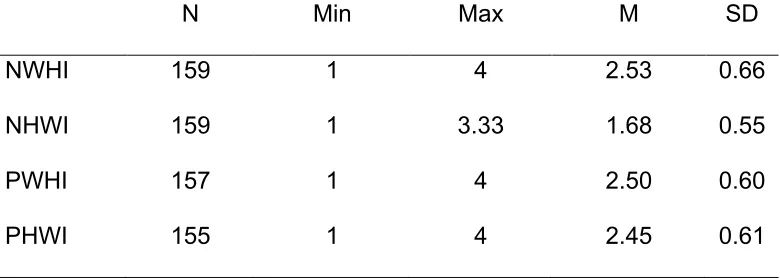
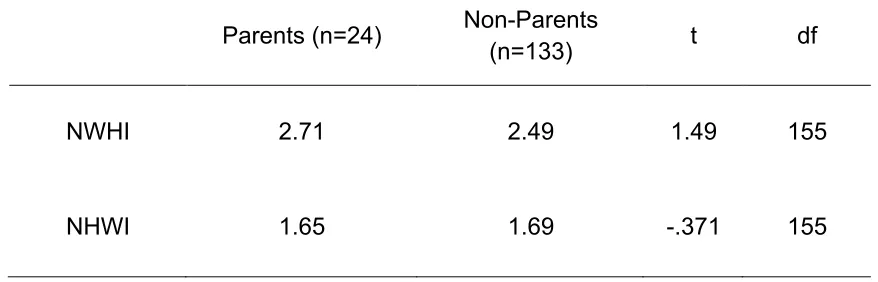
Further, the model proposes four potential interactions: negative work-to-home interaction (NWHI), positive work-to-home interaction (PWHI), negative home-to-work interaction (NHWI) and positive home-home-to-work interaction (PHWI). The domain interaction approach is beneficial when compared to earlier models of the work-life interface as it is effectively gender-neutral, does not pre-suppose either the direction or the nature of the interaction, leaving open the potential for work to positively impact the experience of employees at home and for positive experiences in the home domain to create the potential for a more positive work experience.
This approach compliments that of the ecological systems theory approach, in that ecological systems theory provides an inclusive framework within which to examine and understand the interface between work and home, taking account of the multiple levels of experience that can impact this interface. The domain interaction approach emphasises the potential for impact to be bi-directional and either positive or negative.
from the work-home interface, as opposed to satisfaction with “work-life balance” as a single construct. Thus the work-home interface is measured in terms of frequency of outcomes (both positive and negative) to provide a holistic view of an employee’s experience moving between the domains. The SWING questionnaire is described in detail in section 3.2.
Summary
There are therefore a number of competing models attempting to explain work-life balance, some with more supporting evidence than others. The more recent conceptualisations seem better aligned with the challenges of the modern workplace and modern definitions of the family unit.
This research project examines the work-home interface from an ecological systems perspective – as it acknowledges the multiple levels of experience that impact an individual’s work-home interface and is therefore a more complete and holistic conceptualisation of the construct than its deterministic predecessors. Considering the evidence for a changing workplace and changed workforce (as set out earlier in this chapter) this perspective on work-life balance provides the researcher with the opportunity to more fully understand the employee experience.
1.2 Adopting An Ecological Systems Perspective
Reflecting the inclusive orientation of the Ecological Systems perspective (as per Grzywacz & Marks, 2000) when applied to work-life balance, it is appropriate to examine the variables that may influence the experience of the work-home interface for employees. The following section explores these variables from four perspectives: that of the individual employee, the organisational perspective, the national/cultural level and finally the perspective of the economic context. This largely mirrors the micro-, meso-, exo- and macro-system perspectives inherent in the ecological systems approach, while also reflecting the multiple layers of investigation adopted for the present research project.
1.2.1 The Individual Level
The Relevance of Examining Work-life Balance at the Individual Level
Work is an important determinant of health and wellbeing. Research into occupational stress has long highlighted the interface between work and home as a potential stressor and researchers have presented complimentary and sometimes conflicting theories on the dynamics of job-related stress (e.g. Karasek, 1979; Karasek, 1998; Godin, 2003; Siegrist, 2001).
“…positively related to having a mood, anxiety, and substance dependence disorder. Depending on the type of work-family conflict and
type of disorder, employees who reported experiencing work-family
conflict often were 1.99-29.66 times more likely than were employees
who reported no work-family conflict to experience a clinically significant
mental health problem.” (Frone, 2000, p888)
MacEwan and Barling (1994) demonstrated the link between increased work-life “imbalance” and increased risk of anxiety and depression, and further illustrated how gender differences became apparent when the direction of imbalance was taken into account. They found that female employees experienced more distress as a result of work-to-family imbalance, whereas male employees experienced more distress under conditions of family-to-work imbalance. In their meta-analysis of the work-life balance literature, Joyce, Pabayo, Critchley, and Bambra (2010) illustrated that flexible working alternatives (e.g. self-scheduling) are associated with improvements in physical health (e.g. lowered blood pressure, improved sleep quality) and mental health (e.g. reduced psychological stress).
Factors relevant to work-life balance at the individual level
A number of factors can impact the experience of the work-home interface at the individual level. These include both demographic factors (i.e. gender, sexual orientation, relationship status and caring responsibilities) and aspects of personality (i.e. locus of control and coping strategies).
1. Gender
There is a considerable research base illustrating workplace inequalities based on gender (Geurts and Demerouti, 2003) and the unequal distribution of labour between the genders in the home. Women are disadvantaged on a number of fronts, though legislation has attempted to address this inequality by acknowledging the role of demands from the home domain and highlighting the need for flexible working arrangements (e.g. The Equality Act, 2010 in the UK which enshrines the rights of working parents to request flexible working arrangements, protects the rights of breastfeeding mothers, and extends the employment rights of new mothers and pregnant employees).
and so on. Paternity leave itself is still a relatively modern concept. Lewis et al (2007) point out that most organisational work-life balance or flexible working initiatives fail to address men’s non-work domain needs.
Ozbilgin et al (2010) also argue that there are other demographic variables of interest and gender should not be addressed as either a “women-only” issue or even as the prime demographic variable of research interest, to the detriment of other variables. These include: relationship status, sexual orientation, socioeconomic class and race.
In an American context, Bianchi (2010) summarises the situation as follows:
“In 2010, American mothers are still rushing about but in families that
are far more complex and where women’s labour force participation is
arguably as important as men’s participation to the economic well-being
of their families” (Bianchi, ibid, p1).
2. Sexual Orientation
Schultheiss (2006) points out that gay and lesbian employees face varying levels of discrimination and stigma in the workplace, adding to any difficulties they will face in managing the potential conflicts between work and personal life.
“Lesbian and gay couples experience many of the same issues faced by
heterosexual couples, including challenges associated with the
work-family interface. However, lesbian and gay couples face these
challenges within the context of stigma, isolation and invisibility”
(Schultheiss, 2006, p335).
Sexual orientation has consistently been identified as a potential stressor at work and workplace bullying and harassment on the basis of sexual orientation is consistently reported by gay advocacy groups, unions and researchers (e.g. Wright, Colgan, Creegan and McKearney 2006).
Nam Cam Trau and Hartel (2004) point out that there is a dearth of research on the experience of gay men at work (compared to that on the experience of lesbians, particularly when it comes to career progression) and that many researchers have been operating under the assumption that gay men face fewer obstacles at work compared to lesbians, because they share the gender of the “dominant” power group at work. However, Irwin (1998) found that workplace prejudice against gay men is most likely to happen in traditionally male-dominated work environments.
managers can draw conclusions as to an employee’s sexual orientation. Clair, Beatty and MacLean (2005) cite the example of a female employee who requires time off due to the birth of a child.
“But she must explain her situation because she is a lesbian and her
child is being carried by her partner. Thus, the woman must “out” herself
in order to receive standard parental benefits”. (Clair, Beatty & MacLean, 2005, p79)
As a result, where personal life domain issues require a degree of flexibility in the work domain, gay and lesbian employees may find themselves in the unenviable position of trying to maintain secrecy around their own sexual orientation and living arrangements while simultaneously explaining their need for flexibility to their line manager and colleagues.
Clair et al (2005) also point out that the management of information concerning invisible difference in the workplace is shaped by the threat of stigmatisation from colleagues and concurrent concerns about authenticity and legitimacy. That is, gay and lesbian employees have to conceal information about sexual orientation in order to avoid potential negative occupational consequences.
hetero-about their sexual orientation (or indeed actually attempt deceit in this regard), known as “passing”. Alternatively, they may choose to absent themselves from all discussion or reference to personal, home domain topics so that reference to relationships (and inferences regarding sexual orientation) never arise – a subset of “passing”, referred to as “discretion” (Woods, 1994).
Decisions as to whether or not to “come out” as gay or lesbian in the workplace are in part made on evaluations of the diversity climate at work (Tsui and Gutek, 1999). Researchers have demonstrated the positive role that supportive colleagues (Ragins and Cornwall, 2001b) and line managers (Day and Schoenrade, 1997) play in helping employees decide to share information regarding their sexual identity. Clair et al (ibid) also point to the role of organisational policy, specifically as to whether policy relating to harassment bullying on the basis of sexual orientation are enforced or not.
Sexual orientation is therefore not simply a matter for the home or non-work environment, as employees’ perceptions of safety and career progression hinge on others’ acceptance of their sexual identity. Work and home cannot be de-coupled in this regard, making sexual orientation a prime demographic of interest for researchers of work-life balance.
3. Relationship Status
dependant children. Schultheiss (1996) has indicated that the unrepresentative nature of the samples included in much of the research has limited the applicability of its outcomes. Relationship status, and its bearing on the experience of the work-home interface, is a pertinent example. Very little research has specifically examined the differing experiences of married and single employees (Casper et al, 2007).
Some research has focussed on the work-life balance experience of young graduates (e.g. Sturges & Guest, 2004) a group of predominantly unmarried individuals. Sturges and Guest found that concern for work-life balance was a significant issue for young graduates. However, many of these employees may be in stable relationships outside of marriage, clouding the issue of relationship status.
As such, relationship status represents an important determinant in how employees interpret the potential for work flexibility and the inherent fairness, or equity, in how they are treated by their employers.
4. Caring Responsibilities
Employees’ caring responsibilities are directly relevant to their experience of the work-home interface. Caring responsibilties (e.g. childcare or care for an older relative), have the potential to impact availability for work, time available for post-work recovery and leisure. Aside from the temporal impact, caring responsibilities seem to negatively impact satisfaction with work-life balance. Eurofound’s (2010) data illustrates that parents are much less satisfied with the time they have available for family responsibilities than non-parents, and single parents even less so. Satisfaction with work-life balance also drops progressively with the number of children in the household.
The last 15 years have also seen an increased research focus on the so-called “sandwich generation”, members of the “baby boomer” generation who have both childcare and elder care responsibilities (Pierett, 2006). They may have dependant children or indeed grandchildren while also elderly relatives (parents or others) with care needs. This phenomenon is not necessarily a new one – traditionally, elderly parents were cared for by their children in any number of societies across the world. However, as the number of working mothers has increased, so too has the number of mothers who also have care responsibilities for parents.
and their health declines – in contrast with the more predictable developmental paths of children who tend to become increasingly independent with age. Buffardi, Smith, O’Brien and Erdwins (1999) found that care for older relatives was associated with lower levels of perceived organisational support, lower pay, holiday and satisfaction with work-life balance. Their data indicated that carers of older adults experienced more negative impacts than those with childcare responsibilities. Wolfson et al (1993) found that both sons and daughters felt equal responsibility for provision of care for their elderly parents, highlighting a more equal share of the care-giving workload between the genders than in terms of childcare.
Caring responsibilities of any kind, therefore, have the potential to negatively impact satisfaction with work-life balance and reduce opportunities for flexibility in the scheduling of work and should be considered key demographic variables of interest when examining the home-work interface.
5. Locus of Control
Locus of Control (Rotter, 1966) has consistently been implicated in the experience of occupational stress (Kirkcaldy et al 2002; Hendrix, 1989; Parkes, 1991; Spector, 1987). Kirkcaldy et al (2002) describe the concept (along with Type A behaviour) as:
As a facet of personality, the concept of locus of control places individuals onto a continuum between an “internal” and “external” orientation. Rotter describes the construct as:
“Internal versus external control refers to the degree to which persons
expect that a reinforcement or an outcome of their behavior is contingent
on their own behavior or personal characteristics versus the degree to
which persons expect that the reinforcement or outcome is a function of
chance, luck, or fate, is under the control of powerful others, or is simply
unpredictable.” (Rotter, 1989, p489)
Developing out of Rotter’s social learning theory of personality, the construct has since been applied and investigated in numerous contexts. Contextualised within the workplace, employees with an internal locus of control believe they have more control over environmental factors at work than employees with an external locus of control. They believe that events are a direct result of their own actions, whereas those with an external locus of control are more likely to attribute events to external factors such as fate or luck.
Kirkcaldy et al (2002) illustrate the positive impact of an internal locus of control on employees’ overall health and wellbeing, satisfaction at work, persistence in dealing with challenges and interpretation of experienced success.
workplace) application of the construct, rather than a competing definition, and as with measures focusing on health-related behaviours and religious belief-related behaviours, the work-based measurement of locus of control does not contradict or compete with earlier formulations.
Despite the popularity of locus of control within the job-related stress literature, it has received very little attention in the work-home interface literature. This is disappointing, as this construct has implications for how employees deal with workload prioritisation, organisational change, and addressing conflicting demands – all factors that can influence an employee’s experience of the interface between work and home. As Andreassi and Thompson (2007) point out:
“It is possible that an employee’s dispositional tendency to believe (or not
believe) they have control is as important or more important than the
actual control available in the work environment.” (Andreassi & Thompson, 2007, p723)
an internal locus of control was negatively related to inter-domain conflict (in either direction).
Despite the methodological weaknesses noted above, due to its impact on employees’ interpretation of experienced events and its links to their own behavioural responses (Kirlcaldy et al, 2002) locus of control remains a construct of relevance for any examination of the work-home interface. Its position as a well-recognised workplace stressor, alongside the work-home interface itself, make it a natural focus for research attention when examining the work-life balance experience from the employee perspective.
6. Coping Strategies
Broadly speaking, coping refers to the cognitive and behavioural responses instigated by employees when faced with situations with the potential to cause strain (Lazarus & Folkman, 1984). Scheck, Kinicki and Davy (1997) posit that stress leads to perceptions of disequilibrium in employees’ lives, leading them to engaging in coping responses in order to restore equilibrium. As dissatisfaction with the work-home interface has consistently been identified as a work-related stressor (O’Driscoll, 1996), an examination of employees’ coping responses to perceived imbalance is highly relevant.
The latter coping strategy refers to an individual’s attempts to clearly identify the source of the distress (the problem) and then address this source by elimination or circumventing it.
Research has largely supported the efficacy of problem-focussed coping strategies (e.g. Koeske, Kirk, & Koeske, 1993). However, emotion-focused coping has been demonstrated to be helpful in contexts where the problem faced by the individual is not amenable to change (e.g. Aryee, Luk, Leung and Lo, 1999).
In alignment with the theme of examining work-life balance from a diversity perspective at the individual level, it is key to understand how coping strategies are influenced by individual differences and how their deployment in turn impacts perceptions of dissatisfaction and the interface between work and home. Krajewski and Goffin (2005) report that both gender and work context influence the deployment of coping strategies, further highlighting the need to understand how employees may differ in their coping responses to perceived conflict between work and home domains. Somech and Drach-Zahavy (2007) also highlight the role of gender, but also gender role ideology, in employee’s success in deploying coping strategies.
“Therefore, the ability to cope with the stress arising from the
simultaneous demands of work and family might, at least partially, be a
function of the individual’s capabilities.” (Somech and Drach-Zahavy, 2007, p1).
In summary, application of existing coping research results onto the work-home interface context illustrate that both direction of inter-domain conflict and demographic factors (e.g. gender) play a role in the efficacy of the coping strategies adopted by an employee.
1.2.2 The Organisational Level
The Relevance of examining Work-life Balance at the Organisational Level
The negative impacts of work-life imbalance do not simply impact the individual employee. Research has also established the deleterious effects of poor work-life balance at the organisational level. “Work-to-family conflict” has been identified as a cause of decreased job satisfaction (e.g. Rice et al, 1992; Bedeian, Burke & Moffett 1988; Thomas and Ganster, 1995; Duxbury, Higgins and Thomas, 1996), and subjective career success (Peluchette, 1993).