Faculty
Handbook
2014
F A C U L T Y H A N D B O O K 2 0 1 4
4
This handbook contains information that was considered accurate at the time of printing but should not be construed as a legal and binding publication. The University’s website will always have the most current University policies and procedures in their entirety, and faculty should consider the University’s website an additional and reliable source of information.
5
C O N T E N T S
A Message from the Chancellor A Message from the Vice Chancellor 2013-2014 Academic Calendar
1. THE UNITED ARAB EMIRATES UNIVERSITY 2. EMPLOYMENT
3. CURRICULUM AND INSTRUCTIONS 4. ADMINISTRATION
F A C U L T Y H A N D B O O K 2 0 1 4
7
A M E S S A G E F R O M T H E C H A N C E L L O R
The United Arab Emirates University is committed to accomplish its mission, based on a clear, far reaching vision of HH Sheikh Khalifa Bin Zayed Al Nahyan, The president of the United Arab Emirates, who succeeded his father the late Sheikh Zayed Bin Sultan Al Nahyan (May his soul rest in peace), of placing UAE University among the top-ranked and internationally renowned universities. To that end, HH Sheikh Khalifa Bin Zayed has provided the university with full support and in return, UAE University has realized the importance of its role in the development of the country.
I am proud to announce that the University is proceeding towards the achievement of its mission to “Make a positive contribution to the advancement of the United Arab Emirates and the wealth of knowledge in the society by preparing students for employment and future leadership, providing research solutions in strategic areas, and engaging closely with relevant authorities and the broader community.” In addition to being the first and most comprehensive educational university in the country, it has occupied a leading role as a research-intensive university not only at national and regional levels but also at the international level. It has left its indelible marks by its contribution towards the advancement of science and development in knowledge and technology in various disciplines. While moving forward with its ambitious research agenda, it continues to provide a strong and purposeful educational environment aiming at preparing the students to confront the competitive world. It has addressed the issue of self-learning and independence of thinking through the use of the latest educational philosophies and technological environments.
The emphasis of the university has shifted over the last several years to respond to the needs of the country. With its new inspiring campus, that is fully equipped with the most recent and advanced educational and research facilities, the UAE University positively and remarkably contributes to enhancing the future and sustaining the prosperity of the nation. Currently, the university demonstrates a unique example where education and research blend together to develop an exciting learning environment. The university will continue to serve and respond to the community and the country in an efficient and timely manner.
Since Information Technology (IT) infrastructure has become a necessity for every modern progressive society, UAEU has wasted no time in adopting the latest technology and building a complete integrated IT infrastructure. It has integrated all aspects of IT services with those of the academy. Almost all the operations at the University are conducted and managed through the electronic platforms and web-based applications.
This handbook provides some of the essential information for faculty members. I invite you to go through this handbook and explore more about the university.
Sheikh Hamdan Bin Mubarak Al Nahayan Chancellor of the UAE University
F A C U L T Y H A N D B O O K 2 0 1 4
9
A M E S S A G E F R O M T H E V I C E C H A N C E L L O R
The United Arab Emirates University is striving to provide the finest education and the best learning and research environment to its students and faculty. The university recognizes that the students must be well-prepared to be valuable members of a rapidly changing society where it desires responsible and participative citizens. The graduates of the UAE university should be ready to meet the challenges and requirements of the job market, in the various areas, without any further training.
In light of these demands, the university will continue to enhance its academic and administrative operations. To that end, and to ensure distention and quality in all areas of its operations, the University is seeking accreditation through one of the major international accreditation bodies. The University is aggressively moving forward to attain the standards of prominent, world-class universities that will allow its students to excel and be successful for their future and career.
Recognizing that the students are a key stakeholder of the university we seek their active participation in decision-making at the university, so, as a learning institution, the university is doing every possible effort to improve the students’ educational experiences and prepare them to meet future challenges in a rapidly changing environment. Moreover, to help the students’ success during their study years and beyond, the university is making significant changes to continuously evaluate its teaching and learning processes. Many of the colleges, are redefining course goals and objectives, revising course content, and evaluating contemporary teaching and learning methodologies for implementation in the immediate future. The aim to produce rounded graduates who are well prepared with critical and innovative thinking, the necessary knowledge, technical skills and in-service training for a competitive labor market.
To complement these efforts for attaining world-class standards, the university is also improving the quality of its services to the students and the community. The university has created a foundation that supports the transformation of the work culture to be customer-focused through teamwork, innovation, receptiveness, and efficiency. Beginning with a major reorganization the university has revised, and continues to re-evaluate, its by-laws, policies, and procedures so the workforce is responsive and effective to its stakeholders. The recent, and future, endeavors of the UAE University help us retain our position as a pioneer of higher education in the UAE, while maintaining societal values and long withstanding principles to meet the expectations of the different constituencies at the various levels.
Dr. Ali Rashid Al-Naimi
F A C U L T Y H A N D B O O K 2 0 1 4
10
U A E U n i v e r s i t y A c a d e m i c C a l e n d a r 2 0 1 3 / 2 0 1 4
Fall Semester (2013)Day Date Events
Sunday 25-Aug New Faculty report to work
Tuesday 27-Aug Instructors of foundation programs report to work Wed-Tues 28 Aug - 3 Sept Placement Exams, New Student Orientation, Advising Sunday 1-Sep Returning Faculty and Academic Administrators Sunday 1-Sep Registration for New Students
Sunday 8-Sep Classes Begin , add/drop begins Thursday 12-Sep Last day to add courses
Sunday 6-Oct Last day to withdraw /drop without failure Thursday 24-Oct Deadline for temporary withdrawal requests Sunday 27-Oct Beginning of traditional mid-term examination period Wednesday 6-Nov End of traditional mid-term examination period
Sunday 10-Nov Academic Advising period for Spring semester (2014) begins Sunday 24-Nov Registration for Spring semester (2014) begins
Sun-Thurs 15 Dec - 2 Jan Winter Break (no classes, except for internship students who should follow the schedule of their employers ). Sunday 19-Jan Application for inter-college transfer
Thursday 30-Jan Last day of classes Saturday 1-Feb Final Examinations begin Thursday 6-Feb Deadline for inter-college transfer Thursday 6-Feb Final Examinations end
Sunday 9-Feb Grades due to Registrar’s Office Monday 10-Feb Grades Announced
Spring Semester (2014)
Day Date Events
Sunday 2-Feb New Faculty (Spring 2014) report to work
Sun -Thurs 9-13 Feb New Student Orientation, Advising, Testing, and Registration
Sunday 16-Feb Classes Begin, add/drop begins Thursday 20-Feb Last day to add courses
11
Sunday 16-Mar Last day to withdraw /drop without failureThursday 27-Mar Deadline for temporary withdrawal requests
Sun-Thurs 30 Mar - 10 Apr Spring Break (no classes, except for internship students who should follow the schedule of their employers ). Sunday 20-Apr Beginning of traditional mid-term examination period Thursday 1-May End of traditional mid-term examination period
Sunday 4-May Academic Advising period for Summer/Fall Semester (2014) Sunday 18-May Registration period for Fall Semester (2014) begins Saturday 7-Jun Class Meeting ( make up day )
Sunday 8-Jun Application for inter-college transfer Thursday 19-Jun Last day of classes
Saturday 21-Jun Final Examinations begin Thursday 26-Jun Deadline for inter-college transfer Thursday 26-Jun Final Examinations end
Sunday 29-Jun Grades due to Registrar’s Office Monday 30-Jun Grades announced
Tuesday 1-Jul Summer break begins Summer Semester (2014)
Day Date Events
Sun - Thurs 8 - 12 June Advising and registration
Tuesday 1-Jul Classes Begin, add/drop begins Wednesday 2-Jul Last day to add courses
Saturday 5-Jul Last day to withdraw /drop without failure Sun-Mon 13 - 14 July Traditional mid-term examination period Tuesday 5-Aug Last Day of classes
Wed-Thurs 6 - 7 Aug Final Examinations
Friday 8-Aug Grades due to Registrar’s Office
Saturday 9-Aug Grades announced; Summer semester ends Note: Islamic holiday may result in amended dates.
The
United Arab Emirates
University
F A C U L T Y H A N D B O O K 2 0 1 4
T H e U N i T e D A r A B e m i r A T e s U N i v e r s i T Y
T H e U N i T e D A r A B e m i r A T e s U N i v e r s i T Y
15
1 . T H E U N I T E D A R A B E M I R A T E S U N I V E R S I T Y
1.1 THE UNIVERSITY
The United Arab Emirates University (UAEU) is a national institution of higher education offering Bachelor, Master’s and Doctorate degrees in the different disciplines of science from nine colleges. The University is also regarded as a research institution with a strong commitment to the development of the community and the nation.
VISION
Leadership and excellence in higher education and scientific research at the regional and international levels.
MISSION
Make a positive contribution to the advancement of United Arab Emirates by preparing graduates for future leadership, providing quality education that meets international standards, developing research solutions in areas strategic to the nation, and collaborating effectively with other organisations to promote knowledge in the society.
NATIONAL VALUES, HERITAGE AND CULTURE
The University respects the deep-rooted values and the rich heritage of UAE and seeks to maintain and sustain them. The University also respects cultural diversity, multiculturalism and variety of opinions.
INTEGRITY AND TRANSPARENCY
We adhere to the highest ethical principles and pledge to work with integrity and transparency in order to achieve justice and promote institutional trust, credibility and accountability.
SPIRIT OF TEAMWORK
We support one another at work through cooperation and teamwork and we value the healthy environment created by this approach.
LEADERSHIP AND LIFE-LONG LEARNING
We foster a spirit of innovation, initiative and excellence, implement international best practices in all University activities, and focus on student success, life-long learning and sharing of knowledge.
F A C U L T Y H A N D B O O K 2 0 1 4
T H e U N i T e D A r A B e m i r A T e s U N i v e r s i T Y
16
EFFECTIVENESS IN DECISION-MAKING
We are committed to basing our decisions and plans on evidence and analysis, and adopting efficient systems and procedures.
EFFECTIVE COMMUNICATION
We are committed to using a variety of communication methods with all concerned parties (staff, students, partners, vendors, and the local and international community).
GOALS
The main goals of the UAE University include:
• Prepare leading and pioneer graduates in their majors and specialilations. • Develop scientific research capacity and innovation in areas of national and
regional importance.
• Achieve academic excellence in accordance with the academic accreditation and institutional accreditation standards.
• Promote the University’s role in the transfer of knowledge and skills to serve society. • Ensure that administrative services are provided according to high standards
of quality, efficiency and transparency.
Historical Facts about UAE University
• A federal institution established in 1976 by Federal Law number “4”, based on an initiative of His Highness Sheikh Zayed Bin Sultan Al Nahayan, late President of UAE;
• First university in the UAE;
• Free education, transportation, and accommodation for undergraduate students; • Started in Fall 1977 with 4 colleges (Arts, Science, Education, and Business and Economics); • Other colleges established later: Shari’ah and Law 1978; Food and Agriculture 1980;
Engineering 1980; Medicine and Health Sciences 1986; University General Requirements Unit (UGRU) 1994; and Information Technology 2000. In 2007, the College of Sharia and Law was replaced by the College of Law and the College of Sharia and Islamic Studies. • First master’s program offered by College of Sciences in 1991 in Environmental Sciences. VALUES
• Respect values, heritage and cultural diversity. • Integrity and Transparency.
• Spirit of Teamwork.
• Leadership and life-long learning. • Effectiveness in decision-making. • Effective communication.
T H e U N i T e D A r A B e m i r A T e s U N i v e r s i T Y
17
Important Facts
• The main university is located in the city of Al Ain.
• The classes are run separately for male and female students. • Some of the graduate programs are offered in Abu Dhabi. • The University has Offices in Abu Dhabi and Dubai.
• In addition to UAE national students, the University admits international students who meet certain criteria. Currently about one-third of the students population are non-national.
• All students reside in university accommodations, except those who are living with their families in, or close to, Al Ain.
UAEU Firsts
• Based on the QS World University Rankings, the University is ranked first in terms of diversity of faculty members (about 65 nationalities).
• College of Business and Economics is the first business school in the Middle East to be accredited by the Association to Advance Collegiate Schools of Business (AACSB), the American professional body to accredit schools of business.
• Zayed Library was the first UAE library to have an American Studies Corner. • In 2005, the College of Education became the first college outside the
United States to be granted international recognition by the Center for Quality Assurance in International Education in conjunction with the National Council for Accreditation of Teacher Education.
Accreditation
• College of Engineering: All the programs were accredited for a period of 6-years by the Accreditation Board for Engineering & Technology (ABET) in 2011. Prior to that the programs received Substantial Equivalency from the same organization for two 6-years accreditation periods; 1999-2005, and 2005-2011.
• College of Business and Economics: Accredited by the Association to Advance Collegiate Schools of Business (AACSB).
• College of Education: Recipient of International Recognition for 2005-2010 through recognition from Center for Quality Assurance in International Education (CQAIE) using National Council for Accreditation of Teacher Education (NCATE).
F A C U L T Y H A N D B O O K 2 0 1 4
T H e U N i T e D A r A B e m i r A T e s U N i v e r s i T Y
18
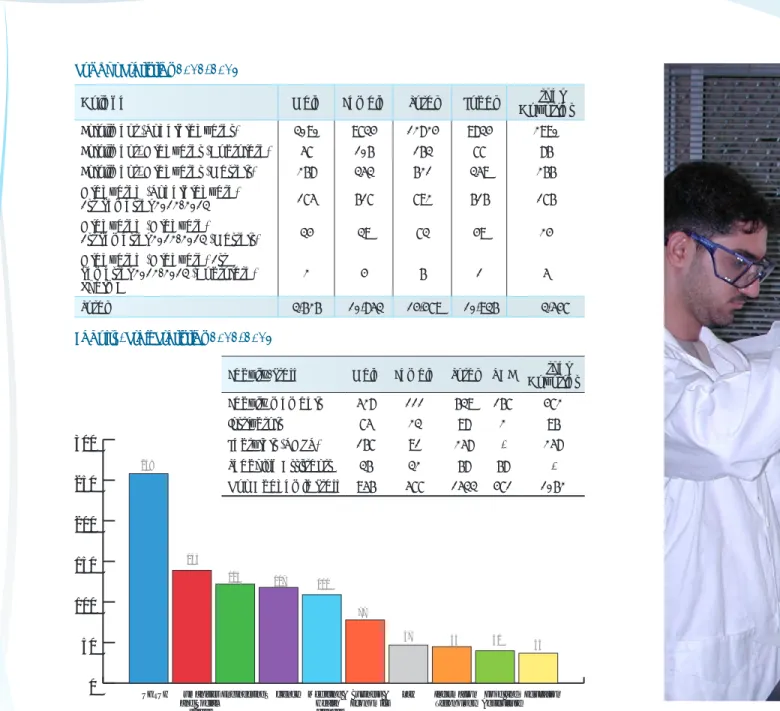
Sudent Statistics 2012/2013
College Male Female Total Local Countries Other
Enrollment (Undergraduates) 3090 9734 12824 9834 2990 Enrollment, Graduates (Doctorate) 57 106 163 77 86 Enrollment, Graduates (Masters) 268 353 621 359 266 Graduated (Undergraduate) 1st Semester 2012/2013 175 617 792 616 176 Graduated (Graduate) 1st Semester 2012/2013 (Masters) 34 39 73 49 24 Graduated (Graduate) 1st Semester 2012/2013 (Doctorate) PharmD 2 4 6 1 5 Total 3,626 10,853 14,479 10,936 3,547 Faculty/Staff Statistics 2012/2013
0
50
100
150
200
250
300
UGRUH umanities and Social StudiesEngineeringS cience Medicine & Health Sciences
Business &
Economics Law InformationTechnologyAgricultureFood and Education 258 135 124 117 111 77 47 45 41 35
Figure 1 presents the total number of faculty members and instructors in the different colleges.
Faculty/Staff Male Female Total UAE CountriesOther Faculty members 528 111 639 167 472 Instructors 75 23 98 2 96 Lecturers (UGRU) 167 91 258 - 258 Teaching Assistants 36 32 68 68 -Non Academic Staff 956 577 1533 471 1062
T H e U N i T e D A r A B e m i r A T e s U N i v e r s i T Y
19
1.2 ORGANIZATION OF UAE University
The organizational structure of the UAE University is designed to ensure that all operations and activities at the various levels are conducted in an efficient and timely manner. The Vice Chancellor has four Deputies in the areas of academic affairs, research and graduate studies, finance and administration affairs, and students affairs and enrollment. The Deputy Vice Chancellor for Academic Affairs (Provost) is responsible of all academic issues including undergraduate curricula and programs, academic personnel, and academic units. Issues related to graduate college and graduate students, research centers, library, funded projects and consultation services are handled by the Deputy Vice Chancellor for Research and Graduate Studies. Other issues, related to human resources, budget, financial affairs, procurement services and general services fall under the responsibility of the Deputy Vice Chancellor for Finance and Administration Affairs (Secretary General). The Deputy Vice Chancellor for Students Affairs and Enrollment supervises all activities related to students enrollment and registration as well all employment and alumni.
Funding of the university is mainly provided by the country’s federal government through the Ministry of Finance and Industry (MOFI) based on the number of students served by the university. In addition, external funding is awarded by various organizations and agencies partnering or contracting with the university in support of its education and research missions.
e m p l o y m e n t
22
e m p l o y m e n t
23
2 . E M P L O Y M E N T
2.1 RECRUITMENT
Recruitment normally begins with the department and college who request authorization to recruit from the Provost Office. The initiating department takes responsibility for conducting the search and recommending candidates to the dean. The department chair and the dean recommend to the Provost Office the shortlist of candidates to start the interview process, after which, an offer of employment is extended to the preferred candidate through the Human Resources Department, to be signed and returned within a certain time frame. Specific procedures are then sent to the candidates to facilitate their joining the University.
2.2 APPOINTMENTS
The UAE University has established criteria and standards to guide the appointment of new faculty. The University uses a system similar to the American system in assigning faculty titles and in appointing them to various positions.
Assistant Professors
An assistant professor must have a Ph.D. or its equivalent from an accredited university, be qualified as an able teacher, and exhibit other qualifications as may be stipulated by individual colleges.
Associate Professors
An associate professor must be a PhD holder who has written and published original academic research or produced some equivalent form of scholarship while an assistant professor. He/she should have carried out distinguished activities in teaching, scholarship or service and should have spent at least four years as a full-time faculty member at the rank of assistant professor.
Individuals without university work experience may be hired if they are PhD holders who have undertaken post-doctoral research in their specialization and have carried out distinguished scholarly activities therein for a minimum period of six years after their PhD, provided that they are well qualified to teach at the United Arab Emirates University in a way that meets individual college standards.
Professors
A professor must be a PhD holder who has conducted and published original research in his/her specialization while an associate professor. He/she should have conducted distinguished activities in teaching, scholarship or service, with an
e m p l o y m e n t
24
2
F A C U L T Y H A N D B O O K 2 0 1 4experience in supervision of Master’s or PhD theses, and should have spent at least five years as a full-time faculty member at the rank of associate professor.
Individuals without university work experience may be hired if they are a PhD holders who have published post-doctoral research in their own field of specialization or achieved distinction through other accomplishments and continued research for a minimum period of twelve years after the PhD, provided that they are well qualified to teach at the United Arab Emirates University in a way that meets individual college standards.
Visiting Faculty
Individuals from other universities may be appointed as visiting faculty, for one semester or one academic year, at a rank (assistant professor, associate professor, or professor) that commensurate with experience and rank at their home universities.
Instructors
Instructors must have a Master’s degree or equivalent from an accredited university and have either demonstrated teaching effectiveness in previous appointments or provided evidence of probable success as an effective teacher. Instructors are considered as non-faculty academic staff.
Adjunct Positions
These are individuals whose primary employment is external to the University and whose special expertise or professional qualifications make them uniquely qualified to render assistance to specific academic areas. There are three ranks of adjunct appointments: adjunct assistant professor, adjunct associate professor and adjunct professor. Adjunct professors may teach up to a maximum of 6 credit hours per semester.
Joint Appointments
In order to enrich the educational and research activities in the University, a faculty member with interdisciplinary experience may be given a joint appointment in more than one academic department, program, or college. This joint appointment is for a limited period that could be renewed when deemed necessary, after which the faculty member returns to his/her main department/program.
At appointment, the main department to which the faculty member will belong is determined based on a recommendation from the college dean if the joint appointment is in the departments or programs of his/her college. If the joint appointment is in different colleges, the main department will be determined based on recommendations from the deans of all concerned colleges.
e m p l o y m e n t
25
2.3 CONTRACTS
The employment contract or letter of offer establishes the terms and conditions applicable to the appointment. The contract or offer terms comply with the Human Resources policies for the category and type of appointment.
Full-time expatriate faculty contracts will contain terms of employment with the University. This section summarizes normal contract terms of appointment, termination, and end of service.
Professorial Ranks (Full-time expatriate faculty members)
Length of term: 4 years
Probation: 2 years (may be confirmed after one year in some cases)
Renewal: up to 4 years, renewable for other terms based on performance Highly performing full professors may be given a 4-year rolling contract
Instructors
Length of term: 3 years Probation: 1 year
Renewal: up to 3 years, and can be renewed for other terms based on performance.
Visiting Faculty
Normally appointed for one or two semesters and their assignment might be renewed.
Adjunct/Part time Faculty
Appointed to teach one or two courses with a maximum of 6 cr. hr. The appointment might be renewed based on the needs.
Salary Assessment
A faculty’s salary is based on an assessment according to the Faculty and Staff Classification, Pay and Benefits policy in effect upon being hired. The factors of assessment are experience, education, previous salary, market conditions, internal equity and any other competitive factors.
Contract Termination before Expiration Date
A faculty’s contract can be terminated by him/her or by the University according to the following:
e m p l o y m e n t
26
2
F A C U L T Y H A N D B O O K 2 0 1 4Faculty Member
A faculty member who wants to terminate his/her contract should submit his/her resignation six months prior to the date it takes effect. In case the faculty member insists on resigning without giving the minimum six-month notice, related human resources policies will be applicable.
The University
The University may terminate the contract during the probationary period. Notification for the faculty must be issued no later than six months prior to the end date of the contract. Meanwhile, the contract will be terminated before its expiration date in any one of the following conditions:
• The faculty member’s resignation is accepted.
• Cancellation of the position, in which case the faculty member is
recompensed with a full six-month salary or will be paid to the end of his/her contract, whichever is less unless he is given the legal notice.
• Permanent physical disability. • Penal dismissal.
• Court sentence on the faculty member related to immoral behavior or breach of trust.
• Reaching the age of 65, unless an approval to extend his/her service is issued in accordance with the rules in effect.
Seconded Faculty
These regulations apply to faculty members seconded from other universities, provided that they are not contradicting the policies governing periods of secondment in effect at their original universities. In all cases, secondment may be extended upon the request of the University, and the contract of a seconded faculty member expires automatically at the end of his/her secondment period.
End of Service
In addition to the above mentioned conditions, a faculty member’s service ends in the case of death, or in the case of absence exceeding one month without consent.
e m p l o y m e n t
27
Reaching age of Retirement
A faculty member’s service ends when he/she reaches the age of 65. If this happens during the academic year, he/she remains in service until the end of the academic year, retaining all his/her rights and administrative titles. His/her service may be extended annually with the approval of the Vice Chancellor.
Absence
It will be considered a resignation if a faculty member absents himself/herself for more than one month without prior consent. Under special conditions, the Vice Chancellor may consider this period of absence as an unpaid leave.
2.4 BENEFITS
Benefits in this section are for faculty hired in 2006 or later (excluding Faculty of Medicine & Health Sciences). The expected salary for the different academic ranks may differ from one specialty to another not only among the different Colleges and Departments but also among the different areas within the same Department. The monthly salary includes an adjusted salary and a complementary allowance. The average range of the salary for the different ranks is given hereafter.
Rank Adjusted SalaryRange Complementary Allowance Total Monthly Salary Range
Professor 21,000 – 27,000 8,125 29,125 – 35,125
Associate Professor 18,000 – 23,000 6,525 24,525 – 29,525 Assistant Professor 15,000 – 20,000 5,100 20,100 – 25,100
Instructor 10,000 – 16,000 2,925 12,925 – 18,925
In addition to the monthly salary faculty members are entitled to receive other benefits as provided in the following table.
e m p l o y m e n t
28
2
F A C U L T Y H A N D B O O K 2 0 1 4Benefit Professor Associate Professor ProfessorAssistant Instructor
Vacation Tickets (Economy class except for Deans who are entitled to business class)
Employee & Dependents (Spouse and up to three children). Furniture Allowance (For expatriates with unfurnished house) Married: 40,000
Single: 35,000 Married: 30,000Single: 25,000
Educational Fees 15% of the employee’s gross annual salary, for a Max of three children (conditions apply) Accommodation Eligible
Repatriation
Expenses AED 3,000
Vacation Leave Inter-semester, summer vacation, religious and national holidays Medical Insurance 100% employer paid. Coverage is provided for employee, spouse and up to three eligible children up to the age of 18. Moving Expenses AED 2,000 after completing one year of employment
End of Service
Benefit One month’s salary for each full year of service, pro-rated
Sick Leave
Employees are entitled to sick leave with full pay for up to 15 working days and with half pay for up to additional 15 working days per contract year for personal illness or attendance upon ill immediate family member, either in or out of the UAE. Sick leave for work-related injuries may be extended for up to six months with full pay.
Maternity Leave For female employees for 60 calendar days Bereavement
Leave 5 working days with provisions Accommodation
Employees are entitled to this benefit as indicated on the Faculty and Staff Pay Grade and Benefits Chart. The University shall provide unfurnished accommodation or allowance for faculty members, provided that there is no duplication of benefits for an employee and his/her spouse.
e m p l o y m e n t
29
Furniture Allowance
Employees who are provided with unfurnished accommodation may receive a furniture allowance as per the Faculty and Staff Pay Grade and Benefits Chart. This furniture shall be deemed the property of the employee following the lapse of three years of service, which will be calculated from the date of payment of the allowance. Should an employee leave before the end of three years, he/she will be required to reimburse the University a pro-rated amount of the furniture allowance.
Medical Insurance
The University shall provide faculty members and their families access to a health insurance scheme, which is funded by the University as indicated in the Faculty and Staff Pay Grade and Benefits Chart. Coverage is provided for faculty, spouse and up to three eligible children up to the age of 18. The faculty may secure coverage for additional children by paying the additional premium.
Educational Fees
Educational fees faculty may be reimbursed as noted on the Faculty and Staff Pay Grade and Benefits Chart for up to three eligible children, up to the age of eighteen, attending up through high school, not inclusive of kindergarten, pre-school, special education or child care.
Vacation Tickets
The University provides air tickets to employees hired on external contracts for commencement of employment with the United Arab Emirates University and at the end of employment if the employee is repatriating to his/her home country. Employees who are eligible for vacation air tickets as indicated on the Faculty and Staff Pay Grade Chart will receive annually the cash equivalent of the cost of the tickets to the University. Employees may choose to travel or not, as they wish. The country and city of residence shall be specified in the contract of employment and shall be determined by the passport on which the employee’s UAE resident visa is stamped.
Moving Expenses
The University provides 2,000 AED as assistance in moving faculty from their home country to the University.
Repatriation Expenses
The University provides 3,000 AED as assistance in repatriating faculty to their home country as indicated on the Faculty and Staff Pay Grade and Benefits Chart.
e m p l o y m e n t
30
2
F A C U L T Y H A N D B O O K 2 0 1 4End-of-Service Benefits
Faculty members are eligible for an end-of-service payment upon leaving the employment of the University, after having completed at least one full year of employment. This payment will be at the rate of one month’s salary for each full year of service (i.e., 365 days) plus a pro-rated amount for any partial year. Salary for this purpose is the salary applicable in the final month of each contract.
Vacation Leave
Vacation days are paid days off and are provided to faculty as per the Faculty and Staff Pay Grade and Benefits Chart. For faculty members, the vacation days are summer vacation, religious and national holidays and any other vacations that might be specified in the academic calendar. During the period of mid-semester and final exams, the faculty members involved in the exam process are expected to run exams even during regular holidays.
Pay in Lieu of Vacation
In special cases, and on the recommendation of the Dean and approval of the Deputy Vice Chancellor for Academic Affairs, where vacation days will be lost due to work requirements, a faculty may receive payment equivalent to his/her salary for the lost vacation days.
Sick Leave
Employees are entitled to sick leave with full pay for up to 15 working days and with half pay for up to an additional 15 working days per contract year for personal illness or attendance upon an ill immediate family member, either in or out of the UAE. If all sick leave days have been used, the employee may use annual vacation leave. Under special circumstances, an employee may be granted up to an additional 30 days of sick leave without pay. If, however, an employee does not recover, his/her employment may be terminated due to unfitness for duty.
Sick leave may be taken for employee injuries, including work related injuries. An employee may be required to provide a doctor’s statement for any sick leave taken. Sick leave for work-related injuries may be extended for up to six months with full pay. The University may require the employee to provide a written medical report from a physician of the University’s choice.
Maternity Leave
Female faculty members employed on a full-time basis are entitled to maternity leave for a period of sixty calendar days with full pay. Additional maternity leave without pay, to a maximum of thirty days, may be approved by the Provost. Maternity leave will normally apply from the date of delivery. Should the faculty need to take sick leave prior to delivery, a doctor’s certificate must be presented.
e m p l o y m e n t
31
Bereavement Leave
With the approval of the Director of Human Resources, an employee may be granted bereavement leave with pay for a period not exceeding five working days for compassionate reasons related to the death of an immediate family member. A Muslim female faculty will be granted a bereavement leave with full pay for a period of four months and ten days in the event of the death of her husband.
Unpaid Special Leave
Unpaid leave may be granted to an employee upon approval of appropriate University authorities for a period not to exceed thirty days. Granting of unpaid leave will be considered in the event the employee does not have unused vacation leave. Unpaid leave will be deducted from the next month’s salary. For leaves in excess of thirty days, the employee will not be eligible to accrue vacation leave for this period.
Hajj Leave
The University may provide paid leave for up to twenty calendar days to Muslim faculty who are attending their very first Hajj.
Salary Increase
The University will establish procedures which may provide an annual salary increase or an annual merit increase programs. These programs will be developed in conjunction with the annual operating budget. Procedures for equity salary adjustments will also be developed.
Duplication of Benefits
Duplication of benefits may occur when a UAE University employee receives benefits and his or her spouse also receives benefits from another UAE government or partly owned UAE government entity. The UAEU employee must inform the University when his/her spouse works for a UAE government entity or one of its agencies. If duplication of benefits is determined, the University will:
• If both spouses are employed by the University, grant the benefits to the spouse earning the higher salary.
• If one spouse works for another government office or agency, restrict University benefits to those that the spouse does not receive from the other government or its agency.
e m p l o y m e n t
32
2
F A C U L T Y H A N D B O O K 2 0 1 4Death or Disability of an Employee or Death of an Immediate Family Member
Salary and End-of-Service Benefits: In the event of the death of an employee, the dependent family members, or legal beneficiaries of the employee as specified in the employment contract, receive the salary for the month during which death occurred, a payment equivalent to six additional months’ salary, and the end-of-service benefits. These benefits are in addition to the compensation specified in the respective UAE Cabinet Decision.
Repatriation: The University pays the cost of embalming and repatriating the body of the employee in addition to repatriating the employee’s family and their personal effects.
Employee payments due to the University: The University may waive any requirement for the repayment of certain amounts owing to the University by the deceased employee.
Disability: In the event of total or partial disability resulting from accidents at work, the compensation shall be determined in accordance with the appropriate Cabinet Decisions applied by the Civil Service regulations in the UAE on a case-by-case basis. In the event of total incapacity of the employee, the employee may be exempted from repayment of the furniture allowance.
2.5 RIGHTS AND RESPONSIBILITIES
It is the duty of University leadership to promote and maintain an academic environment in which the faculty can be successful. In the meantime, it is incumbent upon faculty to be active, diligent and energetic in the pursuit of the University’s goals. It is also the responsibility of faculty to adhere to University policies, and respect and protect the University’s assets and image.
Professional Code of Ethics
Faculty members are scholars, educators, and members of a scholarly community. They are committed to integrity, honesty, fairness, collegiality and entitlement to scholarly enquiry free of constraints. They share and respect responsibilities and standards of conduct that give effect to these commitments. Faculty, guided by a deep conviction of the worth and dignity of the advancement of knowledge, recognize the special responsibilities placed upon them, which include:
• Seeking and stating the truth as they see it, in their subject.
• Devoting energies to developing and improving their scholarly competence. • Accepting the obligation to exercise critical self-discipline and judgment in
using, extending and transmitting knowledge. • Practicing intellectual honesty.
• Avoiding subsidiary interests to seriously hamper or compromise their freedom of enquiry.
e m p l o y m e n t
33
As Teachers: Faculty encourage the free pursuit of learning in their students.• They hold before them the best scholarly and ethical standards of their discipline.
• Faculty demonstrate respect for students as individuals and adhere to their proper roles as intellectual guides and counselors.
• Faculty make every reasonable effort to foster honest academic conduct and to ensure that their evaluations of students reflect each student’s true merit.
• They respect the confidential nature of relationship between faculty and student.
• They avoid any exploitation, harassment or discriminatory treatment of students.
• They acknowledge significant academic or scholarly assistance from them. • They protect their academic freedom.
As Colleagues: Faculty have obligations that derive from common membership in the community of scholars.
• Faculty do not discriminate against or harass colleagues. • They respect and defend the free enquiry of associates.
• In the exchange of criticism and ideas, faculty show due respect for other opinions.
• Faculty acknowledge academic debt and strive to be objective in their professional judgment of colleagues.
• Faculty accept their share of faculty responsibilities for governance of their institution.
As Members of An Academic Institution: Faculty seek above all to be effective teachers and scholars.
• Although faculty observe the stated regulations of the institution, provided the regulations do not contravene academic freedom, they maintain their right to criticize and seek revision.
• Faculty give due regard to their paramount responsibilities within their institution in determining the amount and character of work done outside it. • When considering the interruption or termination of their service, faculty
recognize the effect of their action upon the program of the institution and give due notice of their intentions.
e m p l o y m e n t
34
2
F A C U L T Y H A N D B O O K 2 0 1 4As Members of Their Community: Faculty have rights and obligations towards other UAE residents.
• Faculty measure the urgency of these obligations in the light of their
responsibilities to their subject, to their students, to their profession and to their institution.
• When they speak or act as private persons, they avoid creating the impression of speaking or acting for their college or university.
• As individuals engaged in a profession that depends upon freedom for its health and integrity, faculty have a particular obligation to promote conditions of free enquiry and to further understanding of academic freedom.
Academic Freedom
The University is committed to principles of freedom for teaching and intellectual enquiry and to the ethical and reasoned conduct of research, publication of findings, and expression of ideas and beliefs. The United Arab Emirates University recognizes that it operates within the context of the culture, mores and laws of the United Arab Emirates. Any questions or concerns with issues of academic freedom at the United Arab Emirates University should be addressed through academic channels, beginning with the Department Head, proceeding to the Dean and then to the Academic Personnel Office.
Faculty members are encouraged to review the HR policies on Code of Conduct which is applicable to all employees at UAE University and Academic Personnel Policies on Faculty Code of Professional Ethics.
Responsibilities
Teaching: All faculty members with teaching responsibilities are expected to be effective teachers commensurate with their rank and experience. They are to contribute to the overall effectiveness of the academic programs to which they have been assigned.
All faculty are expected to create and maintain an educational environment that facilitates and supports student learning. Faculty are expected to:
• Develop course syllabi
• Design lectures, tutorials or labs with care
• Coordinate their instruction and assessment with others, so that students experience an integrated, cohesive program of study.
Classroom pedagogy should reflect best professional practices and the utilization of appropriate technology to enhance teaching and learning. Faculty are responsible for:
e m p l o y m e n t
35
• The assessment of each student’s academic work by assigning grades thatreflect individual student progress
• The use of grading standards and evaluations to ensure that students have achieved learning outcomes at a level commensurate with the University’s high academic standards
Faculty (excluding the College of Medicine and Health Sciences) should expect teaching load assignments each semester as follows:
• Instructors: 15 credit hours (weekly) or its equivalent of contact hours. • Faculty: 12 credit hours (weekly) of undergraduate courses and 9 credit
hours (weekly) of graduate courses or pro-rata for faculty teaching a mix of undergraduate and graduate courses.
Faculty are required to schedule and post at least four office hours weekly (two hours for each campus, male and female). University College instructors must give time for office hours and committee service as set by the Dean of University College and approved by the Provost.
Scholarship: All faculty members having the rank of assistant professor, associate professor and professor are expected to develop and maintain a program of scholarship that is appropriate to their appointment, discipline and area of specialization. Full professors and associate professors are expected to be more productive in research.
Research Active Faculty: While research activities in different disciplines need to be measured in different ways, the UAEU’s expectation is that all its faculty members are engaged in active research. Research active faculty are those who publish their findings in internationally peer-reviewed journals that are at the top of their fields, acquire internal and external research funding, and train undergraduate and graduate students. Therefore it is expected that Department Chair and senior faculty members within each Department and College will mentor the newly recruited faculty members so that they can establish their independent research programs. Therefore, the expectations from senior faculty members are much higher than those faculty members who are at junior ranks in their academic career. In line with these measures (publication track record and securing research grants) for each faculty member are already being used during their annual performance evaluation and promotion.
It is widely recognized that there are variations in the research culture and publication trends of various disciplines with medicine and life sciences for example publishing and referencing articles at a much higher rate than in Math and Education. Also, funding for Engineering and the Applied Sciences is typically higher than for Social Sciences or Humanities.
e m p l o y m e n t
36
2
F A C U L T Y H A N D B O O K 2 0 1 4Thus, evidence for research activity and targets for research activity will vary depending on the discipline. The Office of DVC for Research and Graduate Studies plans to engage in a dialogue with the colleges to work out relevant targets for research productivity in each College which would reflect on the respective faculty members in each discipline. In general, full-time faculty members are expected to strive for scholarly leadership in their fields and maintain continuity by publishing on average at least two original research papers annually in leading indexed journals and scientific conferences.
Service: All faculty members are expected to contribute to the service mission of the University in a manner appropriate to their rank, length of service and discipline. The service mission includes activities both internal and external to the University.
• External service is an extension of the knowledge and skills of the faculty, which are made available to the various s of the institution.
• Internal service includes student advising and mentoring and various activities related to University governance.
Conflict of Interest
The University considers any business or professional activity by an employee outside the University a potential conflict of interest. Employees of the University must avoid conflicts of interest especially when it may potentially harm the integrity or mission of the University. In all circumstances, such activities must not interfere with assigned University responsibilities and should advance the University mission.
An employee of the University who provides, or whose family (parents, children, brothers or sisters, spouse and spouse’s parents) provides goods or services to the University must disclose this relationship to the Office of the Secretary General prior to offering the goods or services.
Faculty and professional staff may engage in consulting, service or other activities for pay only after receiving written approval from their dean, director or authorized University official. University property, equipment and facilities shall not be used to support outside employment unless approved in writing by the dean, director or other authorized official.
2.6 WORKLOAD
As per “Faculty Responsibilities” Policy, a full-time faculty should be engaged in teaching, research and service. The balance among the particular components of a faculty member’s responsibilities may vary over time with one component outweighing the other at a particular juncture. Nevertheless, over their careers, faculty members are expected to make a balanced and significant contribution in all three areas.
e m p l o y m e n t
37
The faculty members of a Program, Department, or College, as pertinent, arecollectively responsible for carrying out the teaching load for offered courses and instructional activities as published in the University Time Schedule. Program Coordinators and Department Chairs are responsible to promote equity in workload assigned to Program or Department faculty members. Assignment of the teaching load of individual faculty members should take into consideration the balance of expected outcomes in teaching, research, and service over time. The Dean is responsible to ensure that faculty workload assignments across the Departments and/or Programs are generally well balanced.
Under unexpected circumstances, where a faculty member is unable to fulfill his teaching duties due to illness or other situations, the Department Chair, in consultation with the Dean, should reassign his teaching load to other qualified faculty members.
Reductions in the teaching workload may be made by the Dean to faculty members for a specific period of time and specific reasons. Faculty members and instructors may be compensated for taking a teaching overload according to UAEU approved rates.
Workload assignments include the entire range of a faculty member’s responsibilities, such as instructions, advising, committee work, thesis supervision, guidance of students organizations, research, service, and curriculum development. Assignments take into account the number of course preparations, levels of courses taught, student enrollments, subject matter, support from clerical and other staff or teaching assistants, and administrative responsibilities.
The maximum teaching load for regular faculty members is 24 credit hours, or equivalent, per academic year. Ideally teaching is divided equally between fall and spring semesters. Consequently, faculty members who have high teaching load assignments in the fall may request a reduction in their spring teaching load. The maximum teaching load for instructors is 30 credit hours (equivalent to 36 contact hours) per academic year. The maximum teaching load for faculty only teaching in graduate programs is 18 credit hours, or equivalent, per academic year, or pro-rata for faculty teaching a mix of undergraduate and graduate courses.
The minimum teaching load for faculty members with a load reduction for extraordinary research activities or other administrative duties is six credit hours per semester for faculty members and 9 credit hours (equivalent to 12 contact hours) per semester for instructors. In special cases and with the approval of the Provost, the minimum teaching load for faculty members might be reduced to 3 cr. hr. per semester.
e m p l o y m e n t
38
2
F A C U L T Y H A N D B O O K 2 0 1 4The targeted teaching load for faculty, distinguished in research or heavily involved in teaching graduate courses, is 18 credit hours per academic year. In exceptional circumstances where teaching overloads are inevitable, teaching overload compensation is made for every credit hour taught above the maximum teaching load requirement with a maximum of 6 cr. hr. per semester. The compensation for any teaching load that exceeds or falls short of a credit hour is made pro rata. The Dean may reduce, up to a maximum of three credit hours (per semester), the teaching load of faculty members who are heavily involved in research, or teaching graduate courses, or providing outstanding university and community service, or conducting specific assignments that are beyond the normal duties of faculty members. No teaching load reduction is given for minor administrative or service duties.
Faculty without administrative contracts may be granted a maximum of six credit hours reduction for additional administrative duties in the service of the University. New faculty members who are at the outset of their academic careers may be awarded a reduced teaching assignment of three credit hours during their first semester at the University. Such faculty will not normally be assigned committee service or student advising.
Faculty members may be entitled to buy-out their teaching with income deriving from external research grants or consultancy. Approvals are granted by the Dean in consultation with the Department Chair. A faculty member may request the buy-out of a minimum of two and a maximum of six credit hours in any semester where one credit hour is worth 1/24 of the total value of the faculty member’s annual compensation package. Faculty members must inform the Department Chair and the Dean of their intension to buy-out their time so that proper arrangement can be made to appoint a visiting/adjunct professor to cover the teaching load.
Reassignment from Teaching
Reassignment from teaching to other duties will be authorized when faculty are needed for assignments that cannot be accomplished within the normal range of workload activities. These reassignments may be to administrative responsibilities, research and scholarship, and service and outreach. Approvals of departmental reassignments are made by the dean, while those of college reassignments are made by the Deputy Vice Chancellor for Academic Affairs.
e m p l o y m e n t
39
2.7 STUDENT EVALUATION OF TEACHING
Towards the end of each semester, students are given a questionnaire on each course they took. The results of these questionnaires become a part of the faculty member’s performance report and will be considered in performance evaluations used for promotion.
Faculty members and instructors should consider the student evaluation of teaching as a good indicator for their performance in teaching. They should identify their own areas of strengths and weaknesses and hence strive to improve their performance in teaching through attending relevant faculty development programs.
2.8 FACULTY PERFORMANCE REVIEW
The Faculty Performance Review process is based on the academic values of collegiality, peer review, and collective critique. It requires the application of the academic skills of critical reasoning and impartial judgment based on available evidence.
The performance of all faculty members in Teaching, Scholarship and University and Community service is continuously assessed at the Department and College levels through the on-line faculty evaluation system. The factors taken into consideration include productivity and accomplishments in these three areas of competency. Peer Evaluation of Teaching (PET), consisting of a series of classroom visits, is another effective mechanism to evaluate faculty teaching performance, and to guide the professional development of faculty in the area of teaching and instructional effectiveness.
The Peer Evaluation Teaching does not have to be conducted annually. However, it should be conducted for newly appointed faculty during their first year of service, and for faculty applying for promotion. For all other faculty, the evaluation is conducted every 2-3 years. Both faculty performance evaluation and peer evaluation of teaching provide useful mechanism to guide the professional development of faculty and for decisions pertaining to promotion and renewal of contract of faculty members.
Frequency of the Performance Review
The faculty performance is reviewed annually by the Department Chair and every other year by the Department Performance Review Committee and the Dean. For a typical faculty member, the process will start in the first year of joining the University through the preparation of an 18-month work/activity plan starting from
e m p l o y m e n t
40
2
F A C U L T Y H A N D B O O K 2 0 1 4the date of initial appointment. The interim review will take place before the end of the first academic year. The self-evaluation report will be prepared by the end of March of the following academic year and the review process should be completed before the end of the second semester of that academic year.
If the faculty member successfully completes the probationary period, the same process will be repeated in the third year and fourth years of appointment. Faculty members with rolling contracts will be subject to the same process.
Timeline
The following timeline should be considered in the planning and review of faculty performance.
Activity Deadline Responsibility Start Completed
Year One
Preparation of faculty work plan Mid-September SeptemberEnd of Faculty Chair reviews annual plan with
faculty Early October Mid-October Chair Interim review Mid-May End of May Chair Year Two
Self-study evaluation on
performance (following AY)Mid-March (following AY)End of March Faculty Departmental review committee
report Early April early May Committee Chair review Early May Mid-May Chair Report sent to individual faculty Mid-May Chair Individual faculty response on report Mid-May End of May Faculty Dean’s review and evaluation Early June Mid-June Dean Preparation of the Work Plan
At the beginning of the academic year, each College holds a workshop that focuses on the College strategic plan and discusses how Department plans dovetail with the College plan. The workshop sets the context for the faculty members’ planning and review process. Each Department’s plan sets out directions and standards for
e m p l o y m e n t
41
faculty members in the areas of teaching, scholarship and service. The balance ofcontributions will depend on individual circumstances, such as rank and length of service. A Department Plan is established by the Department Chair in consultation with the faculty in the Department and should be considered a collegial activity and shared commitment.
Faculty members draft their goals for a period of 18 months in the context of the Department Plan. Goals should be specific, measurable, achievable, relevant and timed. They may contain short-term objectives that are steps towards the achievement of a longer-range goal. Dependencies, where the individual ‘depends’ on someone else or something to achieve a set goal, should be identified within the goal setting process. The Department Chair reviews the draft plan. Once agreed upon, it is submitted to the Dean.
Interim Review
At any point within the second semester of the academic year and before May 31, the Department Chair should call for a formal interim review meeting with each faculty member to discuss progress towards achieving goals on the work/ activity plan. Discussion will include issues requiring resolution and the failure of dependencies. Goals set at the outset of the 18-month period might be revised as a consequence of the discussion. The Department Chair should give feedback to the faculty member on the qualities of his/her contributions to date. The feedback should be constructive and motivational.
Self-Study
Each faculty member prepares the self-study. It should be an open, frank and reflective account of performance against the activity/work plan. It should explain the conditions that facilitated or prevented successful achievement of goals. It is the responsibility of each individual faculty member to ensure that the best available evidence related to his or her performance is submitted together with the self-study to the Department Chair by the deadline.
Performance Assessment
A Departmental Review Committee is appointed by the Dean in consultation with the Department Chair. Nominated members should identify any potential conflict of interest with the faculty member being evaluated. In such cases, the Dean will decide if they should be permitted to serve in the Committee or not.
The review process of faculty performance and its outcomes are confidential to the and the members of the Department Review Committee are responsible for ensuring confidentiality, collegiality, impartiality and absence of external interference in the process.
e m p l o y m e n t
42
2
F A C U L T Y H A N D B O O K 2 0 1 4The Committee will use the self-study and the available evidence to form reasonable and justifiable conclusion that will be set out in the form of a narrative. The narrative should indicate:
• the performance level in the three areas and the extent to which goals have been met or not;
• mitigating factors affecting faculty performance over the planned period, e.g. failure of dependencies, illness, etc.;
• support, resource and development needs; and
• suggestions for goals for the forthcoming cycle of planning and review. Decisions are made by consensus or a majority vote in the case of failure to agree. The Chair of the Department Review Committee will notify the Department Chair of such disagreement and document this within the review report. The Review Committee Chair finalizes the report and submits it to the Department Chair. The Department Chair should write a response to the Review Committee’s report on each faculty member. The response should, at minimum, comment on the collegiality of the faculty member and give recommendations for goals and other actions for the subsequent work plan. The Department Chair will send the combined report to the faculty member, who may write a response and send it back to the Department Chair by an agreed deadline. All reports and responses are sent to the Dean for final review and evaluation.
The Dean reviews all reports in the evaluation of the performance of faculty members and comments from the Departmental Review Committee, the Department Chair, and the faculty member’s response. He has the final decision in all matters pertaining to the planning and review process, including management of any grievances.
Grievance
Where a faculty member has a grievance over the operation or outcomes of the planning and review process, the faculty member must provide a written account directly to the Dean. The Dean should respond to such cases within ten working days of receiving the complaint.
2.9 ACADEMIC PROMOTIONS
The United Arab Emirates University has established appropriate standards and criteria for promotion in rank and a comprehensive process for the review of applications for promotion. An adequate length of service is necessary to provide an opportunity for faculty members to establish a convincing record of teaching, scholarship, and service. Although individuals may differ in the emphasis they give to these three areas of performance, some level of accomplishment is expected in all three areas.
e m p l o y m e n t
43
Time Line for Promotion ReviewPromotion file due to Department Chair or Program Coordinator: No later than September 30th Department’s Promotion Review: Begins October 1st and ends no later than February 15th Dean’s Promotion Review: Begins no later than February 15th and ends no later than March 15th College Promotion Review: Begins no later than March 15th and ends no later than April 15th University Promotion Review: Begins no later than April 15th and ends no later than May 15th Provost’s Recommendation: By end of May
Vice Chancellor’s Decision: By mid-June
Appointment in the new rank for promoted faculty: September 1st of the next academic year The portfolio: The faculty should have three portfolios: one each for teaching, scholarship and service. The portfolios will constitute the bulk of the evidence in support of a faculty member’s application for promotion. External evaluations of the candidate’s scholarship through letters from peers provide additional evidence of the quality of scholarship. Peer Evaluation in Teaching provides additional evidence of the quality of teaching.
Requirements for promotion: Minimum performance standards for promotion are set forth in the “Faculty Promotion Procedure.” Each college and/or academic department/program within the University may establish additional standards to reflect the characteristics of the discipline or profession. However, these additional standards cannot be lower than the minimum standards identified in the University’s promotion criteria. Such standards must be approved by the Dean in the case of departmental requirements and by the Deputy Vice Chancellor for Academic Affairs in the case of college requirements.
Faculty seeking promotion to levels of Associate Professor or Professor must meet the applicable profile shown in the following Figure.
Profile Summaries for Promotion to Higher Levels of Academic Ranks
Promotion Requirements
Associate Professor
Professor
Excellent in Teaching or Scholarship at least Satisfactory in the other two areas Very Good in two areas
at least Satisfactory in the other area Excellent in Teaching or Scholarship Very Good in the second area at least Satisfactory in the third area
Outstanding Scholarship Satisfactory in Teaching and Services
e m p l o y m e n t
44
2
F A C U L T Y H A N D B O O K 2 0 1 4Specific requirements that the faculty will have to pursue for each of the performance areas are as follows:
Teaching: A candidate must present convincing and the appropriate level of evidence of performance in teaching effectiveness and related activities; each candidate’s record must be judged sufficient in quality to demonstrate the potential for continuing performance at a satisfactory level.
Scholarship: A candidate must present a strong and convincing record and the appropriate level of evidence of performance in productive research, publication, creative activity and continuous scholarly achievement, including work that is carried out at UAE University, appropriate to his/her discipline or profession and fields of specialization; each candidate’s record must be judged sufficient in quality to demonstrate the potential for continuing performance at a satisfactory level. Service: A candidate must present a convincing record of satisfactory service to the University, community and discipline or profession; each candidate’s record must be judged sufficient in quality to demonstrate the potential for continuing performance at a satisfactory level.
On the basis of scholarship alone, the candidate will be expected to: • Produce a consistent and convincing record of research, publication,
creative activity and scholarly achievement beyond typical excellent level of performance;
• Achieve a sustained record of success in securing external funding; and • Obtain external evaluations from scholars in the field that document
excellent performance in scholarship.
Evaluation of Collegiality: The department chair must include in his “Appraisal Report and Recommendation” for the candidate’s promotion case a statement concerning collegiality of the candidate. In addition, the Dean is required to write an assessment of the collegial nature of the candidate as part of his own appraisal of the application for promotion. Furthermore, each year the Chair is required to attest that the faculty member does or does not understand the nature of membership in a community of scholars, adheres to high standards of integrity and professional ethics, has the ability and desire to work as a member of a group while retaining all rights of individual expression, and exhibits a sense of responsibility for the well-being of the United Arab Emirates University and a commitment to work for the accomplishment of its goals.
2.10 FACULTY DEVELOPMENT
Faculty are eligible to attend two conferences during the academic year; one may be paid for by the University, subject to budget availability, while the second is at the faculty’s expense. Proposals to attend conferences are submitted to the Department Chair, reviewed and approved by the Dean of the College.