Dissertations and Theses Dissertations and Theses
Fall 10-28-2015
Effective Technology Implementation in Schools: Differing
Perceptions of Teachers, Administrators, and Technology Staff
Joseph Stephen Morelock Portland State University
Let us know how access to this document benefits you.
Follow this and additional works at:http://pdxscholar.library.pdx.edu/open_access_etds
Part of theEducational Administration and Supervision Commons, and theEducational
Leadership Commons
This Dissertation is brought to you for free and open access. It has been accepted for inclusion in Dissertations and Theses by an authorized administrator of PDXScholar. For more information, please [email protected].
Recommended Citation
Morelock, Joseph Stephen, "Effective Technology Implementation in Schools: Differing Perceptions of Teachers, Administrators, and
Technology Staff " (2015).Dissertations and Theses.Paper 2626.
Effective Technology Implementation in Schools: Differing Perceptions of Teachers, Administrators, and Technology Staff
by
Joseph Stephen Morelock
A dissertation submitted in partial fulfillment of the requirements for the degree of
Doctor of Education in
Educational Leadership: Administration
Dissertation Committee: Deborah Peterson, Chair Swapna Mukhopadhyay
Gayle Thieman Margaret Everett
Portland State University 2015
ABSTRACT
This study examined the connection between perceptions of teacher self-efficacy,
professional development, and leadership practices and attitudes as it relates to successful implementation of technology for student learning in K-12 schools. As external pressures exhort schools to transform the learning environment and to include more meaningful applications of technology in the learning experiences for all students, issues which create barriers to a successful implementation of new practices must be examined.
This study examined the responses of teachers, school and district administrators, and technology support personnel in a stratified random sample from 37 school districts in the state of Oregon to analyze the combined effects of teacher self-efficacy perceptions, leadership practices, and professional development as they relate to the implementation of classroom educational technology.
The study revealed perceptual differences between staff roles of what teachers know about technology and how they use technology. School contexts, such as percentages of disadvantaged or non-White students, and teacher factors, such as age and gender, affected participant perception of technology implementations and of professional development opportunities.
The researcher proposes a new framework for understanding school contexts and for planning successful technology implementations based upon a review of literature and original research.
DEDICATIONS
I dedicate this study to my family, from whom I have received so much patience and support over the last several years as I completed this journey. I am especially indebted to my wonderful wife and partner, Elaine, who dealt with late nights, multiple revisions, piles of papers strewn about, and myriad grammar doubts all while managing the busy lives of our two boys, Lorenzo and Fernando. Thank you also to my parents who showed me the value of education and of the importance of being involved in the lives of
children.
I also dedicate this study to the teachers, administrators, and support personnel who work tirelessly on a daily basis to provide the best educational experience they can for students of all ages.
ACKNOWLEDGEMENTS
In the doctoral studies process, there are so many people who support and encourage you along the way. I would like to express my gratitude and thanks to some of those amazing people here:
First, to my advisor, Deborah Peterson, without whose guidance, pressure, patience, advice, editing, cups of coffee and cheerleading this dissertation would not have been remotely possible. It impossible to put into words how much I appreciate her support and dedication to helping me completing this scholarly work.
To Swapna Mukhopadhyay, who invited me to tea one day after a long stretch of me being uninvolved in my doctoral studies and convinced me that this path was the right one. I’d like to also thank her for continuing on my committee and providing support and key human behavior insights.
To Gayle Thieman, not only for serving as a part of my committee and being a keen editor and advisor, but also for putting up with me for so many years throughout my work at Portland State, starting with my administrative licensure so many years ago and
throughout my doctoral studies.
To Stefanie Randol, whose organizational skills, patient reminders and responses to my questions made it possible to navigate the proper university roads to achieve my goals.
Lastly, I’d like to thank Margaret Everett for her willingness to serve and represent the Office of Graduate Studies, and whose keen insights helped me develop a stronger theory of action.
TABLE OF CONTENTS
ABSTRACT ... i!
DEDICATIONS ... iii!
ACKNOWLEDGEMENTS ... iv!
LIST OF TABLES ... viii!
LIST OF FIGURES ... ix! CHAPTER 1 ... 1! INTRODUCTION ... 1! Background ... 1! Significance ... 5! Researcher’s Background ... 8! Problem Statement ... 9!
Purpose of the Study ... 10!
Research Questions ... 11!
Limitations and Key Assumptions ... 12!
Definitions ... 13!
Theoretical Framework ... 14!
CHAPTER 2 ... 17!
A REVIEW OF RELATED LITERATURE ... 17!
Introduction ... 17!
Access and Equity ... 17!
Teacher Knowledge ... 19!
Teacher Learning ... 23!
Professional Development ... 28!
School Culture and Leadership ... 32!
CHAPTER 3 ... 35! METHODOLOGY ... 35! Study Overview ... 35! Potential Benefits ... 35! Research Methods ... 36! Study Design ... 37!
Research Questions Restated ... 39!
Researcher’s Role ... 39!
Participants ... 40!
Potential Risks and Safeguards ... 42!
Confidentiality, Records Management & Distribution ... 43!
First person scenarios... 44!
Discussion of the instrument’s questions ... 48!
CHAPTER 4 ... 64! DATA ANALYSIS ... 64! Background ... 64! Participants ... 65! Participant Selection ... 65! Response Rate ... 68! Results ... 72! Research Questions ... 75!
First research question. ... 76!
Second research question. ... 90!
Third research question. ... 100!
CHAPTER 5 ... 116!
DISCUSSION & CONCLUSION ... 116!
Background ... 116!
Discussion ... 117!
Differences of Opinion About Professional Development ... 117!
Teacher Knowledge and Learning ... 119!
Perceptions of Teacher Use of Technology ... 123!
Factors Affecting the Use of Technology ... 125!
Perceptions of Technology’s Advantages and Disadvantages ... 126!
Opportunities for Further Study ... 128!
Putting It All Together ... 129!
Successful Technology Implementation Cycle (STIC): A Theory of Action ... 131!
REFERENCES ... 136!
APPENDIX A – Email Invitation/Collection Correspondence ... 151!
APPENDIX B – Additional Results Tables ... 156!
APPENDIX C – Figures for Quantitative Results ... 192!
APPENDIX D – Correlation Matrices for Quantitative Results ... 214!
LIST OF TABLES
Table 1 Keywords and framework items ... 49!
Table 2 List of tables with matching theoretical framework items ... 51!
Table 3 Participant demographic information ... 52!
Table 4 Technology ratios, usage, and frequency ... 53!
Table 5 Technological Pedagogical Content Knowledge items by participant role ... 54!
Table 6 Influence of interpersonal pressures to incorporate technology ... 56!
Table 7 Professional development ... 57!
Table 8 Influences of leadership, peer support and teacher inclusion ... 58!
Table 9 Professional and adult learning factors ... 59!
Table 10 Additional influential teacher attitude factors ... 60!
Table 11 Systemic and support barriers to incorporate technology ... 61!
Table 12 Policy and practice barriers to incorporate technology ... 62!
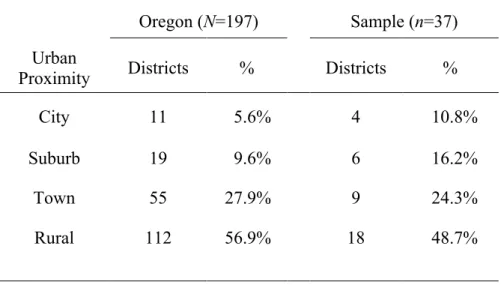
Table 13 Comparison of Oregon school districts and study sample ... 66!
Table 14 Percentage of economically disadvantaged students as reported by study participants ... 70!
Table 15 Research questions and related questions ... 75!
Table 16 Variables and their measures for the first research question ... 76!
Table 17 Significant covariates for Professional Development (Combined) ... 79!
Table 18 Significant covariates for Professional Development Relevancy (Combined) .. 81!
Table 19 Significant covariates for Technology Frequency ... 87!
Table 20 Significant covariates for Challenge (Combined) ... 89!
Table 21 Research question 2 and its related questions ... 90!
Table 22 Variables and their measures for the second research question ... 91!
Table 23 Significant covariates for Technological Knowledge (TK) ... 92!
Table 24 Significant covariates for Technological Content Knowledge (TCK) ... 94!
Table 25 Significant covariates for Technological Pedagogical Knowledge (TPK) ... 95!
Table 26 Significant covariates for Technological Pedagogical Content Knowledge (TPACK) ... 95!
Table 27 Significant covariates for CHAT 2 ... 97!
Table 28 Significant covariates for CHAT 3 ... 98!
Table 29 Significant covariates for CHAT 4 ... 98!
Table 30 Significant covariates for CHAT 6 ... 99!
Table 31 Research question 3 and its related questions ... 100!
Table 32 Variables and their measures for the third research question ... 101!
Table 33 Significant covariates for Usage 1 ... 102!
Table 34 Significant covariates for Usage 4 ... 104!
Table 35 Significant covariates for Usage 5 ... 105!
Table 36 Significant covariates for Usage 6 ... 106!
Table 37 Significant covariates for Usage 7 ... 107!
LIST OF FIGURES
Figure 1. Components of the TPACK framework ... 20!
Figure 2. Basic structure of the Activity Theory framework ... 24!
Figure 3. Expanded structure of the Activity Theory framework ... 25!
Figure 4. Cultural Historical Activity Theory framework ... 27!
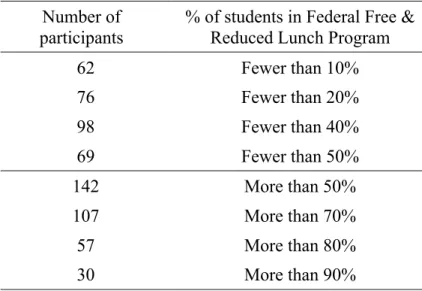
Figure 5. Ratios of technology devices to students based upon attendance in schools with listed percentages of students who participate in the Federal Free and Reduced Lunch Program as reported by study participants. ... 72!
CHAPTER 1 INTRODUCTION
Background
As the world around us goes through a period of rapid technology iterations and disruptive change, the pressure on schools to keep up has never been greater (Cummins, Brown, & Sayers, 2007; National Association of State Boards of Education [NASBE], 2012). American public schools have been under fire for not innovating enough, not providing individualized instruction and for not changing in a relevant way to prepare students for the world of work and additional educational opportunities (Culp, Honey, & Mandinach, 2005). Education technology policy papers in the last two decades have suggested that technology, in general, will either drive educational change, make the traditional model of school irrelevant, or provide students with the access they need to be successful in the future and to level the playing field for all students (Culp, Honey, & Mandinach, 2005). Those policies often have used either a symbolic approach to play to the societal values, whether those are economic stability or global competitiveness, or they have focused on the rational perspective, using technology to solve or substantially alleviate problems or issues known to researchers and practitioners in the education field. School systems have been slow to adopt emerging technologies or make the changes to keep up with changing demands. Several studies of access issues and of relevant pedagogical shifts have been done as well as research into when and how classroom teachers adopt technology and how school and district leaders support those efforts.
Even while budgets tighten, stakeholders are demanding innovation in the classroom and technology access for students (Culp, Honey, & Mandinach, 2005).
Teachers, who may have been educated themselves in a completely different era of schooling, are being asked to engage students in new ways with little access to training and professional development. Meanwhile, superintendents are responding to requests from school boards and patrons to individualize instruction for all students (Judge, Puckett, Cabuk, 2004; NASBE, 2012). Often, teachers or administrators are seen as the ones holding back the technology adoption in schools, and in turn they respond to the public that there is not enough money, or time, or commitment by the district or state to comply (NASBE; Sugar, Crawley, & Fine, 2004; Warschauer & Ware, 2008). In some schools and classrooms, low-income students are missing the educational opportunities that newer technologies can provide, while in others, those who do have access begin to “check out” of traditional school and look for alternatives, possibly due to the archaicness of what they are expected to endure (Collins, 1991; Toffler, 1981; Prensky, 2008). Clearly, there is a need for research to find solutions to some of these seemingly dichotomous viewpoints and situations.
Schools, and the very necessity of education, are being seen in a new light as well. While the current structure of the vast majority of public schools was created in a
response to the Industrial Revolution and before there was an organized public schooling system in place (Collins & Halverson, 2010), the technological innovations of more recent history and the pressures to integrate them into schools are happening at a time when school systems already exist, albeit still a reflection of their original intent:
reacting to a changing cultural and world-of-work landscape of the late 1800s (Collins & Halverson, 2010). The structures of the past were developed around the concept of an
educator holding and delivering all the knowledge students would need to master
(Dewey, 1938; Halverson & Shapiro, 2013). By contrast, information technologies, when accessed and employed by students, give them “control of relevant information and provide systems to manage cognitive load so that users can focus on the appropriate information to facilitate activities” (Halverson & Shapiro, 2013, p.168). To clarify, students in schools today are learning previously curated information on the off-chance they may need to recall it later, instead of learning to “crisscross” the information landscape in order to practice learning structures which help them acquire deeper
knowledge of complex concepts from multiple perspectives now and in the future (Spiro, Coulson, Feltovich, & Anderson, 1988). Collins and Halverson succinctly state this difference as “schools foster case learning; information technologies foster just-in-time learning” (p. 20).
The number of students who do have access to technology in order to engage in just-in-time learning is increasing nationally, in spite of the dearth of access at school. According to a Pew Internet & American Life Project study (Madden, Lenhart, Duggan, Cortesi, & Gasser, 2013)
•!78% of teens now have a cell phone, and almost half (47%) of them own smartphones.
•!23% of teens have a tablet computer, a level comparable to the general adult population.
•!95% of teens use the Internet.
•!93% of teens have a computer or have access to one at home.
•!71% of teens with home computer access say the laptop or desktop they use most often is one they share with other family members.
Other studies show the desire of teachers to incorporate more technology-rich resources in order to foster just-in-time learning is thwarted by technology access barriers in school. In a study by the Pew Research Center (Purcell, Heaps, Buchanan, & Friedrich, 2013), researchers found that
•!56% of teachers of the lowest income students say that a lack of resources among students to access digital technologies is a “major challenge” to incorporating more digital tools into their teaching; 21% of teachers of the highest income students report that problem;
•!49% of teachers of students living in low income
households say their school’s use of internet filters has a major impact on their teaching, compared with 24% of those who teach better off students who say that.
The rapidly expanding availability of information and our exposure to it require researchers to consider additional theoretical frameworks for knowledge and skill acquisition on the part of both students and teachers. The role of leadership in removing barriers, providing vision and support, as well as demanding equity for all students is also in need of clarity and definition.
Access barriers to technology tools, information resources, and creative opportunities remain stubbornly large for many lower-income students in schools. Further, many schools reflect an image of what was created in the past as a response to a
different technology (industrial) revolution (Collins & Halverson, 2010). Transformation of school practices must begin to more closely mirror the technology revolution currently underway. It is imperative we understand the issues and pathways to meaningful action. At this time of rapid change in the world outside the classroom, we need critical research in successful practices in order to transform what is happening within its walls.
Significance
Studies of access equity have pervaded educational research for decades. Throughout much of Krashen’s work (1989, 1995, 1997) detailing reading skill
improvement and bilingual education, he posits that access to a text-rich environment that has materials of interest to the students is a key factor in improving reading and literacy skills and attitudes. His research showed that one of the best predictors of reading ability scores on the 1992 National Assessment of Educational Progress (NAEP) was the ratio of books per student in their school libraries (Krashen, 1995). In schools where there was a higher book-to-student ratio, both nationally and in California, their achievement scores outpaced other schools by a significant amount (Krashen, 1997). There are multiple levels to consider in this research. First, if schools do not spend some of their budget purchasing reading materials, then no students will have high access to those materials. Without access to reading materials in the library, where most low socio-economic status (SES) students can get to them, the chance that they will spend more time outside of class reading decreases. In turn, as the NAEP assessment shows, without more practice
that without expanded access to reading materials, students from a lower SES or underserved school are at a distinct disadvantage.
Additionally, the current state of available and extensive text opportunities is presenting new issues of access barriers to literacy development. The term “literacy” is difficult to define, and there is a movement among the literature to redefine it completely (Warschauer & Ware, 2008). Some argue that literacy extends well beyond the decoding of words and texts toward a contextual, personal, social, and economic understanding of the concepts and ideas (Frechette, 2002; Kress, 2003, Warschauer & Ware). Kress asserts that “it is no longer possible to think about literacy in isolation from a vast array of social, technological, and economic factors” (p. 1). Frechette (2002) agrees and adds that
traditional approaches to literacy in a text environment have been changed to reflect the understanding that “the function and the purpose of text is contextual, historical, cultural, and personal” (p. 24). She goes on to describe that the shift from a traditionally textual world to an increasingly multimedia-rich one requires the vital skill of “media literacy” (p. 24). These issues, of learning to navigate, discern, and dissect that which can be found online, may well be an insurmountable hurdle for those who have little access to the tools, or the experience or instruction required to develop those “new media” literacy skills. Additionally, Dewey’s work (1938) details the importance of providing
educational opportunities through experiences of importance and interest to the student. For those learners who have restricted access to online or outside reading opportunities or less experience with decoding and defining what they read in context of their own
heritage or social history, there is a growing problem of inequitable access to the learning experience.
Taken together, the research into student access of text materials and the
development of a modern understanding of literacy and media literacy (Frechette, 2002; Kress, 2003, Warschauer & Ware) point to the necessity of providing a learning
environment replete with access to texts in a variety of formats, student interest levels, and from widely varied sources. Of course, in order for students to gain access to such experiences and reading opportunities, they must have access to the tools that can take them there. These tools can be as small and mobile as a phone, to the more complex tools, such as a tablet or state-of-the-art computer center with high-level creation and collaboration tools. Therefore, the access roadblock is the simplest to understand. Fewer tools equals less access. Less access means less opportunity for outside-school or high-interest resources.
Beyond simply spending money and deploying devices in a willy-nilly fashion, leaders must understand the importance of modern technology in schools and teachers must be given the opportunities to learn and to practice with those technologies so that their pedagogical power might be unleashed. Careful attention to professional
development, decision-making opportunities about purchases, and an understanding of how adults perceive their own abilities may be the crucial factors in a successful educational technology implementation.
This study investigated three primary areas related to the use of technology in schools: (1) teachers’ perception of their own levels of technological, pedagogical, and
content knowledge (Mishra & Koehler, 2006); (2) critical leadership actions and styles which influence technology integration by teachers; and (3) factors which influence teachers’ willingness or ability to learn to use and to integrate technology in their classroom. Each of these perspectives was seen through three sets of respondent group lenses: teachers, administrators, and technology support staff. This research examined the relationship among perception of abilities and knowledge of teachers by different groups, the leadership actions and styles that inhibit or encourage teacher technology integration, and other factors impacting teacher willingness to employ technology with students.
Researcher’s Background
In my current role as a curriculum director and district technology leader for a medium-sized school district, the importance of successfully implementing technology resources as a support for improving the achievement and the opportunities of all students in schools is my daily concern. As available funds are reduced, the strategic and
purposeful engagement of technology in classrooms must show signs of improving the experience and the achievement of both students and staff. In the last decade in Oregon, monies from the state’s general fund for K-12 public schools in Oregon has grown at a rate of 15% (Oregon Department of Education, 2014a) while the costs of the Public Employee Retirement System (PERS) rose 47% between 2007 and 2012 (Oregon Health Sciences University, 2012). With the rising costs of healthcare and the unpredictable rise and fall of school funding since 2003 (Oregon Department of Education, 2014a), coupled with the possibility of PERS costs nearly doubling in the next two years, school systems are wary of any purchase without measurable and direct impact on student engagement
and achievement. With the increasing need for shrinking budgets to be carefully and wisely spent, discovering the essential success factors of leadership practice in
technology implementation as well as core practices exhibited by teachers in improving the achievement of their students while employing technology in a meaningful way is of great interest to both the researcher and to other school and district leaders across the country.
Problem Statement
Technologies available for student learning vary so widely across the United States that it is nearly impossible for any researcher to present a histogram of the current state of technology use in schools. Access barriers for many of the lower-income students in schools to technology tools, information resources, and creative opportunities remain daunting. While many schools reflect an image of what was created in the past as a response to the Industrial Revolution (Collins & Halverson, 2010), the world around us has changed exponentially. The rapidly expanding availability of information and
students’ and teachers’ constant exposure to it requires researchers to consider additional theoretical frameworks for knowledge and skill acquisition. Activity theory as a learning framework may help researchers understand how both groups, adults and students, become comfortable and eventually proficient in new skills and capabilities (Jonassen & Rohrer-Murphy, 1999). Further, it is important to understand how teachers view
professional development and change (Guskey, 2002) and how their views and their commitment to it shifts over the course of their career (Vermunt & Endedijk, 2011). It is
also important to understand how teachers view their own abilities (Mishra & Koehler, 2006) as we design professional development for their benefit.
Teacher empowerment in technology purchasing decisions is an area with scant research, though there is a plethora of research on the need for being an inclusive and engaging leader (Deal & Peterson, 2009; Marzano, Waters, & McNulty, 2005; Schmoker,
1999; Anderson & Dexter, 2000; Becker, 1992; Cordeiro & Cunningham, 2013; Davies,
2010; Lecklider, Britten, Clausen, & Muncie, 2009). The role leadership provides in removing barriers (Ertmer, 1999), providing vision and support (Anderson & Dexter, 2000), as well as demanding equity for all students in technology implementations requires clarity of purpose. Prior studies showed that administrative direction and control over budgets proved to be the most important factor in technology use in schools
(Becker, 1992). However, since technology devices have become ever easier to use by a broader audience and the pressure to use technology in schools has increased, the prior research may not apply under current and ever-changing circumstances.
By using a mix of both closed-ended quantitative survey responses and qualitative open-ended responses from three primary groups of educators- teachers, administrators, and technology staff, the researcher hoped to provide insight into certain existing conditions and leadership practices which support well-implemented technologies for learners and directions for leaders to consider in order to harness these conditions to enhance teacher acumen and increase student access to technology and the meaningful opportunities it can provide in the learning environment.
The purpose of this study was to explore the effects of leadership practice upon the successful integration of technology in the learning environment. A second purpose of this study was to understand the interplay of theories of learning, frameworks for understanding how teachers feel about their own abilities and comfort with technology, and the practices and attitudes of leadership. Finally, this study proposed to present the data collected in a format that can be easily understood and applied by leaders and teachers in schools today.
Research Questions
While there are thousands of articles, books, and conference proceedings that deal with technology use in the classroom, strikingly few specifically unite the impact on student access of leadership practices, student (child) and teacher (adult) learning frameworks, and stakeholder input on purchasing decisions related to classroom technology.
This paper examines core issues surrounding the changing nature of learning and acquiring knowledge and structures, the impact of leadership at various levels within the organization, and how well-implemented, highly-available technologies may improve student opportunity. The researcher then proposes a theory of action in order to address some of the key findings of the research. Following the review of literature, this paper describes a mixed-methods survey using a primarily quantitative survey of thirty-five items with an additional three simultaneously-collected supporting qualitative items (Morgan, 1998) to answer the following questions:
1.! How do leadership styles and/or practices impact the implementation of technology initiatives?
2.! What factors specific to teacher characteristics inhibit or encourage their application of technology in learning experiences for students?
3.! What additional factors related to the beliefs, attitudes or policies of schools and school personnel influence the implementation of technology?
Limitations and Key Assumptions
The proposed study has the following limitations:
1.! The survey instrument collected self-perception data and as such, is limited to how the respondents view their own work and the work of others.
2.! There are some issues with correlating data elements which come from the same self-reporting source (Podsakoff & Organ, 1986).
3.! The study primarily focuses on participants whose central or building-level administration has given permission to the researcher to make contact with the teachers (and other administrators and support staff), so the study may not represent a true random sample.
4.! The bulk of the data collected will be quantitative in an effort to reduce the effects of researcher bias, as the researcher is a professional in the area of district and technology leadership.
5.! The researcher is a White male with an advanced education employed in a public school system as a central office administrator. As such, the scope of
what defines equity and other concepts in this study are based upon this perspective.
The proposed study includes the following key assumptions: (a) the selected participants responded to the survey accurately and of their own free will; (b) the selected participants understood the questions presented, in vocabulary, scope, and intent; (c) the data collected largely represents self-perception and opinion data by three distinct groups who function in the same environment but who have very different roles; and (d) the interpretation of the data best approximates the intent of the respondents and makes connections based upon that data and not upon researcher bias.
Definitions
For the purpose of this study, the following definitions are used:
1.! Teacher: a classroom teacher, not including instructional “coaches” nor teacher assistants;
2.! Administrator: may include any school official not directly tied to technology support, including principals, area managers, district directors, superintendents;
3.! Personal Learning Network (PLN): informal professional social groups and collegial relationships formed by teachers (usually through electronic means) as a way to explore their profession, gather wisdom and information about issues, and share their own expertise;
4.! Staff: teachers, support personnel, or others under the direction of a school-based or a district-based administrator;
5.! Technology staff: may include technology support staff, technology coaches, technology managers, directors, CIO/CTO, or other technology administrator;
6.! Technological Pedagogical Content Knowledge (TPACK): a framework describing the intersection of knowledge of technological, pedagogical, and content by teachers.
Theoretical Framework
This study is structured to examine the impact of teacher self-efficacy,
professional development, theories of activity and learning, and actions and perceptions of leadership factors in a connected way that allows for significant discussion on the impact of each one, both individually and as a whole. The theoretical framework is comprised primarily of the following theories of measuring what teachers know and describing how they learn:
1.! Teachers arrive at a new learning task, such as attempting to integrate technology into their daily work with students, with perceptions of their own personal level of
technological, pedagogical, and content (TPACK) knowledge;
2.! Cultural-Historical Activity Theory (CHAT) helps the researcher describe learning actions in the classroom context, including the role of the community, division of labor, and rules. This study examines leadership and support personnel actions and perceptions through the lens of CHAT.
Additionally, a review of literature caused the researcher to develop predispositions to guide the research. The predispositions include the following:
1.! Reducing opportunity or production gaps between upper income and lower income students in schools is a worthwhile goal and schools should be providing those rich, technology-supported educational experiences for all students (Attwell & Battle, 1999; Becker, 2000; Cummins, Brown, & Sayers, 2007; Goode, 2010; Graham, 2011; Jackson, Zhao, Kolenic, Fitzgerald, Harold, & Von Eye, 2008; Judge, Puckett, & Cabuk, 2004; Norris, 2003; Rogoff & Wertsch, 1984; Selwyn, 2003; Warschauer, Knobel, & Stone, 2004; Warschauer & Ware, 2008);
2.! Integrating technology in classrooms, schools, and districts is a difficult endeavor and there are many factors which affect its effective implementation (Abbitt, 2011;
Erdogan & Sahin, 2010; Ertmer, 1999 & 2005; Ertmer, Ottenbreit-Leftwich, Sadik, Sendurur, & Sendurur, 2012; Jordan, 2013; Koehler & Mishra, 2009; Koh & Chai, 2011; Lin, Tsai, Chai, & Lee, 2013; Mishra & Koehler, 2006);
3.! Teachers are the primary source of educational opportunities for students in schools and will be the persons responsible for the majority of the pedagogical changes that occur in order to adjust for classroom technology integration (Clark & Hollingsworth, 2002; Guskey 1986 & 2002; Schmoker, 1999);
4.! Teachers (and administrators) will need additional and ongoing professional development in order to integrate technology resources in a powerful way in their classrooms (Cummins, Brown, & Sayers, 2007; Deal & Peterson, 2009; Fullan, 2010; Guskey 1986 & 2002; Hattie, 2009; Parrett & Budge, 2012; Reeves, 2009; Tharp & Gillimore, 1988);
5.! Professional development opportunities has different meaning to teachers at different times in their careers, and that perception of the abilities to use technology (of
themselves and by others) will have an impact on their success (Clarke & Hollingsworth, 2002; Guskey 1986 & 2002; Huberman, 1989; Richter, Kunter, Klusmann, Lüdtke, & Baumert, 2011; Vermunt & Endedijk, 2011);
6.! Additional data about events and processes that teachers, leaders, and support personnel perceive as barriers to classroom technology integration may inhibit increased access to students in order to provide equity in their school opportunities (Judge, Puckett, Cabuk, 2004; Madden, Lenhart, Duggan, Cortesi, & Gasser, 2013; NASBE, 2012; Purcell, Heaps, Buchanan, & Friedrich, 2013; Sugar, Crawley, & Fine, 2004; Warschauer & Ware, 2008).
By using the theoretical framework outlined above along with the predispositions developed from the review of literature, this study highlights additional domains of research to be explored as well as tangible, usable action items for both administrators and support personnel to use in their work designing professional development, technology deployments, and action for equity.
CHAPTER 2
A REVIEW OF RELATED LITERATURE
Introduction
The review of related research is separated into a discussion of access and equity, teacher knowledge, teacher learning, professional development, and school culture and leadership. In each section, the researcher will describe current literature supporting various aspects of the concepts in the framework as well as detailing some of the limitations of the research recommendations.
Access and Equity
The “digital divide” has been a term used to define the difference between the “haves” and the “haves not” groups of individuals who have or do not have access to modern technology tools (Goode, 2010; Jackson, Zhao, Kolenic, Fitzgerald, Harold, & Von Eye, 2008; Judge, Puckett, & Cabuk, 2004; Norris, 2003; Warschauer & Ware, 2008). While the tools that allow students to create, collaborate, share, search, read and learn have become readily available for some, there is a chasm between those who can afford to purchase such tools personally and those who cannot (Lievrouw & Farb, 2003). This includes individuals and schools alike. So while some students will be afforded the opportunity to develop their media literacy skills because of their socioeconomic status, others will not, either because of their income level or the state of technology availability in their schools.
Among those students who can get access to technology tools, there are other issues in the “digital divide” that are cause for alarm. How the computer or other
1999; Selwyn, 2003; Warschauer, Knobel, & Stone, 2004). If a computer is primarily used at school for drill and practice activities or mandated assessments only, then the level of usage outside school has the propensity to be very perfunctory (Attwell & Battle, 1999; Cummins, Brown, & Sayers, 2007; Warschauer, Knobel, & Stone, 2004). Without regular access and opportunities to use the computer for activities beyond electronic textbooks or testing machines, what chance do learners have outside the school day to understand the power of the tools and to develop their personal media literacy skills? This has also been called an opportunity or production gap and can be considered a second-level digital divide (Attwell, 2001; Graham, 2011; Norris, 2003). The importance of an adult guide to help students develop an understanding of how to use tools and resources beyond the classroom is critical in a constructivist approach to teaching and learning (Rogoff & Wertsch, 1984). Without a rich experience using and learning the power of the tools while in school with a knowledgeable guide to help scaffold the learner’s
understanding of how to use tools to create, research, or collaborate, a poor experience outside of school with similar tools will likely be the result. If the gap remains between those who have and those who do not have access to modern technology outside school, the inequity of more intellectual and creative uses of technology will remain unchanged (Becker, 2000).
We know technology access and usage models affect lower socio-economic (SES) students differently than higher SES students (Cummins, Brown, & Sayers, 2007;
Warschauer, Knobel, & Stone, 2004), and that low-income schools suffer from computer use as performativity, i.e., computer technology used in a way to learn to use the tool
itself, not the application of the tool for higher-order learning. Warschauer, Knobel, and Stone also found that in schools with high numbers of low SES students, combined with the additional pressure of scoring well on high stakes tests and with policy shifts to move to standards-based learning, teachers often feel the need to use technology to prepare students for a test or rote skill rather than using it for expanding and extending the learning environment. We can see that policy changes at the national level, e.g. high-stakes testing and standards-based teaching models, affect students from lower income families much more than those from higher income environments (Cummins, Brown, & Sayers). The most recent Oregon Department of Education’s (2013) statistics for the 2011-2012 school year show a state average of 53% of students enrolled in the federal Free & Reduced Lunch Program, with several districts and schools reporting numbers in the 80-90% range. These Oregon students will feel the effects of national and state policy differently than other populations within the school who will not (Ruiz-de-Velasco, Fix, & Clewell, 2000; Wenglinsky, 1998). It is important that we craft policy that allows for and encourages technology use to engage students in higher-level learning opportunities both in and out of school and to understand the reality of numbers of kids living in poverty among us who may only have this chance if school provides it. Every aspect of these issues and others will require thoughtful policy planning, extensive dialog, and careful curation.
Teacher Knowledge
Among the factors that can contribute to the lower availability of technology for students in classrooms and schools, clearly some stand out in the professional research.
The first factor, successful integration of technology by the teacher, can best be described via the TPACK framework developed by Mishra and Koehler (2006). The framework is a way to understand the relationship between and among three specific components of teacher knowledge: technology, pedagogy, and content. TPACK helps us understand the complex nature of those relationships and the difficulty in getting them all to interact in a balanced, powerful way.
Figure 1. Components of the TPACK framework Reproduced by permission of the publisher, © 2012 by tpack.org
In terms of teacher knowledge as described by Koehler and Mishra (2009), there are three core areas, each of which has an equal weight in the success of teachers
integrating technology effectively: content, pedagogy, and technology. TPACK does not make the argument for or against using technology in an integrated way per se, but that the framework should be used as a medium for understanding some of the connections and the complexities between following areas as described by Mishra and Koehler (2006):
1.! Content knowledge (CK) refers to the material to be taught and learned, and Koehler and Mishra (2009) make the argument that teacher subject-area content knowledge is important in successful integration.
2.! Pedagogical knowledge (PK) is the awareness and understanding the teacher has of those practices which influence teaching and learning, including techniques and approaches.
3.! Pedagogical content knowledge (PCK) is the interpretation and presentation of the subject matter being taught and learned and includes much of the teacher’s craft in determining how and how much students are taught about that subject.
4.! Technology knowledge (TK) refers to the teacher’s awareness of different technologies and their usage; TK will be a difficult area to be specific about, as technology tools are rapidly outdated and updated.
5.! Technological content knowledge (TCK) refers to the teacher’s understanding of how technology can create new representations of the content being explored.
6.! Technological pedagogical knowledge (TPK) refers to the teacher’s knowledge of how teaching and learning can be changed by the application of technology; and, it
also refers to his/her understanding of how to use technology tools in a pedagogical way for which they were not necessarily designed.
7.! Technological pedagogical content knowledge (TPACK), then, is the intersection of knowledge about teaching and learning, subject matter expertise, and the rapidly changing landscape of technology.
The TPACK framework appears straightforward when described and/or put into pictorial representations. However, effectively teaching with technology is a challenging process, and the framework should be seen as a fluid representation as strengths and weaknesses of teachers change depending upon their comfort level with any of the three core areas (PK/CK/TK) and the instructional task in which they are involved (Koehler & Mishra, 2009).
It is important to note that some research makes the connection between teacher knowledge and teacher self-efficacy when it comes to using the TPACK framework as a measurement instrument (Abbitt, 2011; Ertmer, 2005). It is possible that teacher self-efficacy is one of the barriers to technology integration in classrooms because of the teacher’s level of confidence in either choosing or using a technology tool (Abbitt, 2011; Ertmer, 1999 & 2005; Ertmer, Ottenbreit-Leftwich, Sadik, Sendurur, & Sendurur, 2012). How teachers feel about their own technological, content, or pedagogical abilities have shown to be strong indicators of successful technology integration and powerful usage by teachers (Ertmer et al., 2012; Abbitt, 2011). There are studies that have shown both age and gender effects on the TPACK self-assessment as well (Erdogan & Sahin, 2010; Jordan, 2013; Koh & Chai, 2011; Lin, et al., 2013).
As part of the research framework for this study, there is a focus on teacher perception of their self-efficacy in the seven areas detailed by the TPACK framework. These indicators are one of the focus areas of the data and have been shown in the past to be key insights into both the how and the why of teacher technology integration. The TPACK framework, however, is only a method by which to measure and understand the complex connections between the areas of content, pedagogy, and technology.
Additionally, though it has been shown to be a tool that can measure progress in the areas via a pre and post test measurement (Schmidt, Baran, Thompson, Mishra, Koehler, & Shin, 2009; Chai, Koh, Tsai, & Tan, 2011), the TPACK framework is not meant to be used as a tool to discover how teachers gain more knowledge in the seven areas. In order to understand how teachers learn instead of what they know, we will need to examine other frameworks.
Teacher Learning
In order to describe the process of teacher learning, the researcher has selected Activity Theory, detailed by a number of authors as way to understand and measure complex learning processes (Engeström, 2000 & 2001; Jonassen & Rohrer-Murphy, 1999; Feldman & Weiss, 2010; Daniels, 2004; Koszalka & Wu, 2004; Nardi, 1996). Jonassen and Rohrer-Murphy (1999) describe the purpose of the theory thusly:
Activity cannot be understood or analyzed outside the context in which it occurs. So when analyzing human activity, we must examine not only the kinds of activities that people engage in but also who is engaging in that activity, what their goals and intentions are, what objects or products
result from the activity, the rules and the norms that circumscribe that activity, and the larger community in which the activity occurs (p. 62).
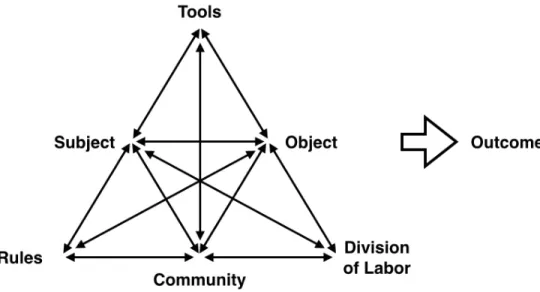
Figure 2. Basic structure of the Activity Theory framework (Adapted from Engestr m, 2000; Feldman & Weiss, 2010)
Figure 2 is a commonly-used graphic to describe the core framework of Activity Theory as generally two triangles, showing the relationship between the subject, the object, tools, community, rules, division of labor, and an outcome (Engeström, 2000; Koszalka & Wu, 2004; Jonassen & Roher-Murphy, 1999). Jonassen and Rohrer-Murphy (1999) say that Activity Theory “posits that conscious learning emerges from activity (performance), not as a precursor to it” (p. 62).
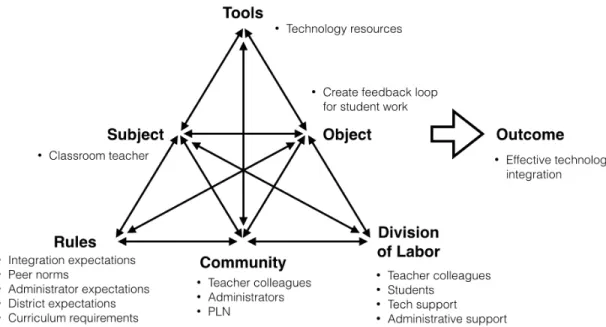
Figure 3. Expanded structure of the Activity Theory framework (Adapted from Engestr m, 2000; Feldman & Weiss, 2010)
Figure 3 describes the framework of Activity Theory in the manner in which it is used for the study. The “subject” in Activity Theory is the central active learner or actor. In most instances, these learners will not be acting alone (Engeström, 2001), so the subject would possibly have the support of the greater learning community around her, and/or a person or group of persons with whom to share the learning work. So, in Figure 3, then, the subject is the classroom teacher engaged in the work, who is supported by her “community” which may include her teacher colleagues, building or district-level
administrators who provide support, or her personal learning network (PLN). Further, she may be dividing the labor of the learning task by calling on her colleagues to possibly co-design a lesson, or asking her students to provide feedback to her, or sharing the
workload with an administrator or technology support personnel. Additionally, “rules” or norms may guide in what manner the subject learns. School and district culture norms,
technology policy, and possibly supervisor expectations all play a role in how the subject will approach the task.
Jonassen and Rohrer-Murphy (1999) inform us that a “fundamental assumption of Activity Theory is that tools mediate or alter the nature of human activity” (p. 67). That is, the tools we learn to use for a task impact the way we think about the task, thereby fundamentally changing the way we learn. However, tools also go through changes over a period of time as their capabilities are constantly being discovered and rediscovered in response to how we humans use them and are changed themselves; in Activity Theory, they are explained as “a reflection of their historical development- they change the process and are changed by the process” (p. 67).
The “object” refers to the learning task or the “constantly reproduced purpose of a collective activity system that motivates and defines the horizon of possible goals and actions” (Daniels, 2004, p. 190). In the example shown in Figure 3, it could be the development or implementation of or the learning about a manner in which to provide students better feedback on their work and progress. Daniels differentiates goals from objects by saying that “goals are primarily conscious, relatively short-lived and finite aims of individual actions” (p. 61).
The outcome should be seen as the point at which the subject has finally made sense and meaning. The outcome in Figure 3 above is “effective technology integration,” which guides the task learning work the subject is doing. That is, if successful in the work of developing or learning a process by which to give students more appropriate feedback.
Activity Theory was first developed in Russia during the 1920s and 1930s, but has seen a large amount of study and adjustment over time (Engeström, 2000; Jonassen & Rohrer-Murphy, 1999; Nardi, 1996). In the later years of development,
“cultural-historical activity theory” (CHAT) gained popularity as a way to describe what innate and learned experiences the subject (and other actors) bring to the learning task at hand (Feldman & Weiss, 2010; Koszalka & Wu, 2004).
Figure 4. Cultural Historical Activity Theory framework (Adapted from Koszalka & Wu, 2004)
Considering the additional factors as seen on the left of Figure 4, each subject brings to the task their social-cultural perspective, their personal history, and in this case, their abilities and beliefs about technology tools. The same could be true for those in the supporting community (administrators, peers) or in the group with whom the teacher will
share the task (technology support, students, peers), thereby providing additional complex factors to study and to understand by research.
It is important to remember both Activity Theory and Cultural-Historical Activity Theory frameworks are meant to describe the learning activity as a continual process, not as a singular event. Further, it is critical to understand that much of Activity Theory and its offshoots see learning as a social activity; learning is rarely done by individuals on their own without connecting with other humans in the knowledge and experience-building process (Engeström, 2001; Feldman & Weiss, 2010).
While Activity Theory and Cultural-Historical Activity Theory can provide us a framework to understand how humans interact with mediating tools and with the support of others and the rules and norms by which they are bound, we also must consider how to reach those learners when we attempt to provide them the learning opportunities they may need.
Professional Development
The primary method of changing pedagogical practices and pedagogical
knowledge growth is professional development. Among much of the literature, there is clear consensus that the need for continuous professional development is a necessary and worthwhile endeavor (Cummins, Brown, & Sayers, 2007; Deal & Peterson, 2009; Fullan, 2010; Guskey 1986 & 2002; Hattie, 2009; Parrett & Budge, 2012; Reeves, 2009; Tharp & Gillimore, 1988). As there are several aspects of professional development to consider, only a few of those will be presented here.
Using professional development activity as a way to improve teacher
effectiveness is a generally accepted goal (Guskey 2002). In order to understand what makes professional development effective, we must understand:
1.! when and why teachers engage in it and how it affects them (Clarke & Hollingsworth, 2002; Guskey 1986 & 2002; Richter, Kunter, Klusmann, Lüdtke, & Baumert, 2011; Vermunt & Endedijk, 2011);
2.! which models make it most effective (Clarke & Hollingsworth, 2002; Glazer & Hannafin, 2006; Guskey, 2002); and
3.! which additional types of activities can have effect on teacher practice and student outcomes (Jurasaite-Harbison & Rex, 2005; Rathgen, 2006; Voogt, Westbroek, Handelzalts, Walraven, McKenney, Pieters, & de Vries, 2011).
For teachers, the value in professional development is found when they believe it will help them improve their knowledge and skills to a point that they will be able to notice a measurable difference in student achievement (Guskey, 2002). According to some research, development activities which fail are often geared toward changing teacher attitudes and beliefs before getting teachers to try techniques first to change their practice and affect student outcomes (Clark & Hollingsworth, 2002; Guskey 1986 & 2002). In simpler terms, “seeing is believing,” and according to research on professional development, that statement holds mostly true. To further explore the role of change in teacher practice leading to a change in teacher beliefs and attitudes, Clark and
Hollingsworth (2002) note that the actual change occurs through the mediating process of “reflection” and “enaction” by the teacher. That is to say that the actual change in
practice happens when teachers attempt a new practice and then spend time thinking about it or sharing it with colleagues in order to look for patterns of success or failure. All of the authors agree that professional development is an ongoing and fluid process, making it difficult to define in a straightforward manner.
To further complicate designing school and teacher change-making resources, teachers tend to use professional development activities, collaborate with their peers, and read professional literature in differing patterns over the course of their careers (Richter et al., 2011; Vermunt & Endedijk, 2011). As for inservice or traditional professional development, teachers tend to use it less at the beginning of their careers, peak in their mid-career, and then tapering off sharply in the latter part of their years working (Huberman, 1989; Richter et al., 2011).
In contrast, teacher collaboration follows a more linear path, with peer
collaboration starting at a high level in their career and steadily decreasing over the years (Richter et al., 2011). Somewhat paradoxically, teachers appear to read less professional literature at the beginning of their careers and increasingly more over the course of their years in the profession, in a linear trajectory opposite that of the collaboration line (Richter et al., 2011). Taken together, it would appear that teachers begin their career as more collaborative professionals and then as they mature in their profession, they increasingly become more individualistic relying less on their peers and more on their own information gathering. As influences from the outside put pressure on the school system (i.e., technology and the expectations of its use in school), these competing
factors challenge leaders to develop meaningful and engaging professional development opportunities.
The research into professional development models varies greatly as to structure, timing, and content. Practices such as a collaborative apprenticeship, whereby teachers support their peers as coaches and modelers of successful strategies, show promise as teams of teachers collaborate with each other during the school day rather than as part of a disconnected event (Glazer & Hannafin, 2006). Another study showed that taking an active role as a classroom researcher played a role in changing their practice and was a powerful way to take part in professional learning to improve teacher knowledge
(Rathgen, 2006). Other studies have shown that teachers can improve their knowledge of content and pedagogy, both individually and as a group of teachers, when they
collaboratively build curriculum (Voogt et al., 2011). Following up on what Clark and Hollingsworth (2002) call the Interconnected Model of Professional Growth, Voogt et al. state, “from the perspective of the team, the interaction reflects the reflection and
enactment processes that foster the learning of individuals and the team (p. 1243).” It is important to note that in the research reviewed, most mentioned the importance of professional development in the improvement of teacher practice and student achievement. Primarily, teachers believe that their students will benefit and so they “participate in staff development activities primarily because they believe such activities will help them to become better teachers” (Guskey, 1986).
School Culture and Leadership
The research is clear about several teaching and learning factors which impact the
integration and usage of technology resources by teachers with students in classrooms: 1) teacher attitudes and beliefs (Abbitt, 2011; Cope & Ward, 2002; Ertmer, 2005; Ertmer,
et al., 2012; Kim, Kim, Lee, Spector, & DeMeester, 2013; Ottenbreit-Leftwich,
Glazeweski, Newby, & Ertmer, 2010), 2) teacher instruction and instructional models (Inan & Lowther, 2010; Keengwe, Pearson, & Smart, 2009; Koehler & Mishra, 2009; Land & Greene, 2000), 3) teacher knowledge of technology (Margerum-Leys, 2004;
Mueller, Wood, Willoughby, Ross, & Specht, 2008), and 4) the cultures and ecologies of
schools, including social capital resources (Frank, Zhao, & Borman, 2004; Zhao & Frank, 2003).
In spite of the research mentioned above, there is a dearth of research into technology and its connection to school culture by the currently-popular school
improvement authors. Technology and its use by students, teachers, or administrators is rarely if ever mentioned or discussed in depth in the literature on teaching (Danielson, 2007; Marzano, 2007), or teacher supervision (Danielson & McGreal, 2000; Downey, Poston Jr, Steffy, English, & Frase, 2004; Marshall, 2009; Marzano, Frontier, & Livingston, 2011; Tucker, & Stronge, 2005), or school leadership and culture
development (Deal & Peterson, 2009; Marzano, Waters, & McNulty, 2005; Schmoker, 1999).
The role of the principal and of district leadership has been well documented as a key factor in the implementation of technology resources in schools (Anderson & Dexter,
2000; Becker, 1992; Cordeiro & Cunningham, 2013; Davies, 2010; Lecklider, Britten,
Clausen, & Muncie, 2009). Anderson and Dexter (2005) found that at the school level,
technology efforts were “seriously threatened unless key administrators become active technology leaders in school” (p.74). They also found that even though principals may lag behind teachers or others in their own ability to use technology, they “tend to recognize their need to be involved and involve others with technology use in
classrooms” (p.55). Another surprising facet of their research discovered that technology leadership had in fact more impact on the outcomes they measured than classroom technology and infrastructure purchases did (2005). That is, leadership at the local level (which could include policy as well as personnel) was more important to a
well-implemented technology integration effort than was purchasing and deploying devices even to a wide group of teacher recipients.
Becker (1992) noted that a trend existed to decentralize decision-making among teachers and building-level administrators in terms of technology purchasing and usage. However, his research showed that if the goals of technology in schools were explicitly to use them to engage students in higher-order thinking learning tasks and be used for more than just basic computer skills training, then it was not a decentralized approach that work best, “but (a) substantial district-level involvement in school-level decision-making and (b) the active presence and leadership of a school-level computer coordinator” (p. 25). Since the time of Becker’s research cited above, many changes have happened in terms of available technologies for schools. In most cases, the complexities of technology have fallen away as more powerful and far simpler devices have been brought to market.
There is a need to update this research area in light of the probable increased number of teachers using technology in their daily lives as well as in their classrooms.
In some cases, the need for leadership in technology is more about removing obstacles (Ertmer, 1999) or being able to ask the right questions (Heifetz & Laurie, 1996) than it is to be a good role model for using technology (Anderson & Dexter, 2000). Unfortunately, without additional publications talking deeply about the role technology has as a necessary instructional tool in student engagement, as a tool for equity in
information access, or as a key aspect of 21st Century learning (United States Department of Education, 2010; Partnership for 21st Century Skills, 2013), schools may find
themselves having a more difficult time explaining their financial investment in technology for education. Of course, public education is not solely about using technology in school. However, if today’s educational experience does not include technology as a meaningful and integrated learning tool for students, the world and the learning outside the school walls will supersede that which happens within, and schools will be on a path of eventual irrelevancy. In schools today, we are essentially preparing students who will either live into the 22nd Century or at a minimum, have a major impact upon it. We need to find additional motivational opportunities for schools to engage in the work of transforming themselves into relevant and vibrant institutions that serve the public good and prepare students for the world in which they live now and for the world they will find in their future.
CHAPTER 3 METHODOLOGY
Study Overview
This mixed methods study uses Morgan’s (2014) model of supplementing quantitative data with qualitative data, both of which are collected simultaneously. Morgan states that this quadrant of the sequential priorities model has as its goal “ to create a sense of how real people are connected to the findings from quantitative methods” (p. 173). I used stratified random sampling (Borg & Gall, 1983; Fraenkel & Wallen, 1996) to identify 37 districts that represent the size, location, socio-economic, and racial/ethnic background of 18.8% of schools in Oregon (NCES, 2014). I requested participation from this stratified sample of districts using NCES district classifications to determine a sample that represented districts that mirror the state percentage of students who attend schools in or near cities, suburbs, towns, and rural settings. Data was
collected from three types of respondents: classroom teachers, administrators, and technology support personnel. The purpose of the study was to examine core issues surrounding the impact of leadership attitudes and practices at various levels within the organization as well as the attitudes instructional staff have about their ability and usage of technology with students during technology implementations. The data provides insight into conditions that support optimal implementation of technology initiatives and a potential theory of action for school leaders.
Potential Benefits
incorporate and infuse technology tools in order to produce higher achieving pupils and a more relevant educational environment (Culp, Honey, & Mandinach, 2005; Cummins, Brown, & Sayers, 2007; NASBE, 2012). Often, the difficulty in implementing
technology initiatives lies in deciding what the most effective tools are and how to deploy them. By analyzing how teachers feel about the ways technology is presented to them, the opportunities they may be offered, and the leadership structures and practices which either enable or inhibit the delicate balance of the integration of technology for learning, we may be better understand the procedures and the planning necessary to implement such changes. The results of this study may assist schools and districts in their
communication strategies and planning efforts with staff in order to ensure technology integration projects produce better achievement results and have a lasting, long-term impact.
Research Methods
This is an illustrative study from a single point in time survey in an attempt to surface key indicators that signal successful actions and attitudes in the implementation of technology for students. The study did not focus on whether or not technology helps students in their studies specifically, rather it proposed to provide insight into the factors that allow technology integration efforts to flourish.
Participants were confidential, as respondents were asked to select their district from a list of potential choices. Since the study did not ask for school names, district name was the most locally identifying factor. There was no further coding that could have allowed connecting survey responses with the respondents. The stratified sample
(Borg & Gall, 1983) targeted districts that mirror the population centers and areas of the state of Oregon. That is, the researcher attempted to collect data from a representative sample of districts to include the same relative percentage of schools in or near city, suburb, town, and rural settings as there are in the state (Borg & Gall, 1983).
A mixed methods research approach was used in this study. It was primarily a quantitative data collection with supplemental qualitative data elements, and its goal is to provide education leaders insight into the attitudes and actions that have the most impact upon technology integration. Quantitative data was the bulk of the data collected and qualitative data elements were used to gain further insight into why participants
responded the way they did in the quantitative section (Creswell & Clark, 2007; Miles & Huberman, 1994; Morgan 2014). Morgan calls this putting “a human face on the data” (p. 155), and the researcher feels mixed methods is a necessary research method design in order to more fully understand both self-efficacy issues for teachers and leadership and technology support actions and attitudes.
Study Design
A single online survey was used for this study. The survey instrument delivery tool was chosen as Portland State University provides a license for all staff and students and the data can also easily be exported to popular data analysis tools (see Appendix E for the full survey). The online survey tool also has data safeguards for security and there are tools available for general data analysis. By using an initial crosstab review of the data, I was able to develop additional correlation tests beyond those listed below which
were processed in another data modeling software package. Some correlation tests used to study student technology implementations included:
1.! demographic trends (gender, race, ethnicity, age); 2.! technology usage trends (see Table 5 below); 3.! teacher self-efficacy beliefs (see Table 6 below);
4.! leadership actions or attitudes (see Tables 9 and 12 below);
5.! beliefs and attitudes of technology support personnel (see Tables 9, and 12 below) and
6.! professional development opportunities (see Table 7 below).
A single survey was developed and had three distinct sections which were visible to the participants depending upon the role the participant selected which described their normal daily work. The participant roles included: teachers, administrators, and
technology support personnel. The survey included an informed consent response, three quantitative school information questions, five personal demographic responses, 24 Likert scale questions, and three supplemental qualitative open-ended response items (see Appendix E). Schools and districts across Oregon were contacted in order to recruit participants for the study.
The survey was comprised of adapted quantitative items from a TPACK survey (Schmidt et al., 2009), a technology purchase decision-making survey from Becker (1992), a teacher and their home use of technology survey (Purcell et al., 2013), and quantitative and qualitative items developed by the researcher and based on a literature review of successful technology implementation strategies. In this mixed methods