2018 Commonwealth Games:
progress
Queensland Audit Office
Location Level 14, 53 Albert Street, Brisbane Qld 4000 PO Box 15396, City East Qld 4002
Telephone (07) 3149 6000 Email [email protected] Online www.qao.qld.gov.au
© The State of Queensland. Queensland Audit Office (2014)
Copyright protects this publication except for purposes permitted by the Copyright Act 1968. Reproduction by whatever means is prohibited without the prior written permission of the Auditor-General of Queensland. Reference to this document is permitted only with appropriate acknowledgement.
Front cover image is an edited photograph of Queensland Parliament, taken by QAO.
Contents
Summary ... 1 Conclusions ... 1 Key findings ... 2 Recommendations ... 5 Reference to comments ... 5 1 Context ... 7 1.1 Timeline ... 71.2 Roles and responsibilities ... 11
1.3 Guidance and support ... 12
1.4 Budget ... 13
1.5 Audit objective, method and cost ... 14
1.6 Report structure ... 15
2 Program management ... 17
2.1 Background ... 18
2.2 Conclusions ... 18
2.3 Program management ... 19
2.4 Reporting and monitoring progress ... 24
2.5 Planning progress ... 26
3 Operations ... 29
3.1 Background ... 30
3.2 Conclusions ... 30
3.3 Functional area planning ... 30
3.4 Net operating cost ... 32
3.5 Contributions from other governments ... 37
4 Infrastructure ... 39
4.1 Background ... 40
4.2 Conclusions ... 40
4.3 Net capital cost ... 40
4.4 The Games village ... 42
4.5 Games venues ... 46
4.6 Items not included in capital budget ... 48
5 Legacy ... 49 5.1 Background ... 50 5.2 Conclusions ... 50 5.3 Legacy planning ... 50 5.4 Benefits realisation ... 51 5.5 Legacy budget ... 52
Appendix A— Comments... 54
Summary
The Commonwealth Games is a major international sporting competition held every four years. Athletes represent 71 nations from the 53 member states of the Commonwealth of Nations. The Commonwealth Games typically involves about 6 500 athletes and team officials, more than 20 competition and key non-competition venues, up to 17 sports, more than 1.2 million tickets, over 50 000 workers (staff and volunteers) and the movement of around 150 000 people per day.
To maintain the high regard of the international community, organisers try to deliver a positive experience for stakeholders in all aspects of the Commonwealth Games. Central to the Commonwealth Games philosophy is to deliver friendly competition of a high standard, to build the brand worldwide and to create legacy benefits for the host city and country.
Commonwealth members bid for the right to host the Commonwealth Games. It is important to host cities and the Commonwealth Games brand that hosting does not translate to high costs, negative publicity, a negative legacy or a financial burden for the host city.
Planning for the many elements required to host a Commonwealth Games, from ticketing to television rights, from venues to volunteer arrangements, takes years and must integrate well with every other element to make an event run successfully over 11 days, in addition to the operational period that extends well before the opening ceremony and after the closing ceremony. Many entities are involved in decision making and delivery of each element. The delivery of a Commonwealth Games is a complex program of work, with interdependent and highly coupled projects and activities.
The experience of the Delhi 2010 Commonwealth Games demonstrates the complexities of planning and delivering a Commonwealth Games. The Comptroller and Auditor-General of India, in his report tabled in the India Parliament in 2011, noted:
The unique challenge of managing and monitoring the activities of multiple agencies for delivering the Games Project should have been met by entrusting its stewardship to a single point of authority and
accountability, with adequate mandate to ensure all deliverables in time, to cost, and to specified quality standards.
The Comptroller and Auditor-General of India found the absence of a single point of authority and accountability, lack of clear governance structure and multitude of coordination
committees 'led to complete diffusion of accountability'. While Delhi represents an extreme manifestation of the complexities of planning a Commonwealth Games, these are
complexities that all Games organisers must overcome.
We conducted this audit during 2014, from more than four years to three and a half years before the City of Gold Coast hosts the 2018 Commonwealth Games (the Games) and while organisers were developing delivery plans and strategies. We examined the progress of preparations for hosting the Games in terms of governance, project planning, cost and delivering legacy benefits.
Conclusions
While preparations for the Games are progressing, overall planning, budgeting and governance is not at the level of maturity required to provide assurance across the entire
2018 Commonwealth Games: progress Summary
Slippage is inevitable in such a complex program of work; however, at present there is no mature aligned and integrated master plan between the Games partners suited to a program of this complexity to provide the Games partners with realistic management information to understand the effect of these slippages.
The current budgeted net cost of the Games to the state cannot yet be relied upon as an accurate indicator of likely final cost, because the Games budget has not yet moved past its initial high level perspective. More detailed analysis of costs is required. Without this budget discipline, spending more than needed is as much a risk as spending more than budgeted. Delivering the Games is a complex multi-entity program. Applying disciplined and robust governance arrangements, program management and budget management does not guarantee success but does significantly improve the potential for successful delivery. Organisers have three and half years of planning until staging the Games. Prioritising these areas will optimise organisers' ability to deliver the Games on time and within budget; most importantly, this will achieve the legacy objectives sought. It is encouraging that organisers have started to turn their attention to these critical aspects.
Key findings
Net cost of the Games
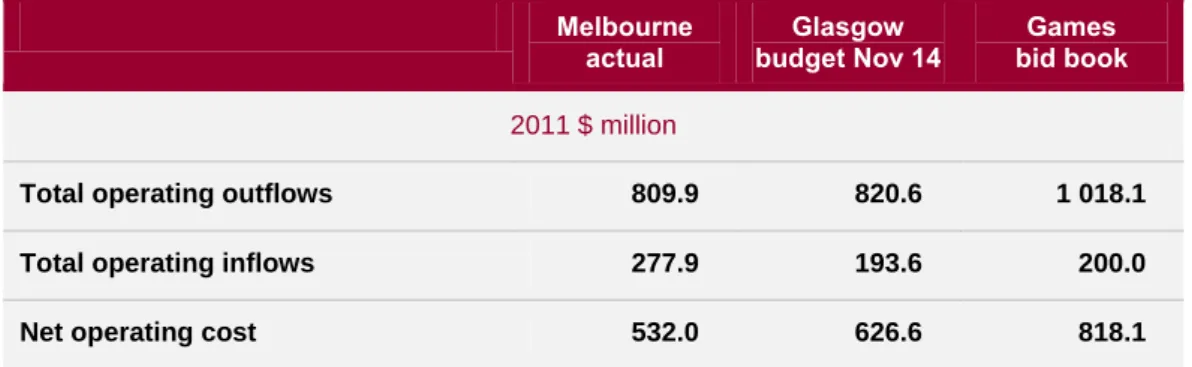
The company set up to prepare the bid for the right to host the Games, Gold Coast 2018 Commonwealth Games Bid Company, developed an initial high level top-down budget (the bid budget) in 2011, which included planned costs, revenue and the estimated net cost to the state of hosting the Games. This was based on a number of assumptions and the actuals and estimates from the Melbourne 2006 and Glasgow 2014 Commonwealth Games. While this is appropriate for an initial budget, we would expect the bid budget to be managed forward. By incorporating outputs of the strategic planning phase and active contracts, organisers could refine the assumptions and estimates in this bid budget to increase confidence. This is now starting to occur and it is needed for Games organisers to know the various budgets are realistic.
The current target for the net cost of the Games to Queensland is $1.483 billion which includes annual cost escalation until 2019–20. This represents an increased net cost to the state of 8.3 per cent (or $113.2 million) from the bid budget, after including the annual cost escalation. The escalated cost increased because the Games village procurement has changed. This reduced upfront capital outlays for the state, but increased total costs over the life of the project. This increase in the net cost to the state was partly offset by cash grants from the Australian Government of $156 million, announced as part of the federal budget; and from the Council of the City of Gold Coast of $100 million towards planning and delivery costs and $10.5 million for venue infrastructure. The bid budget did not factor either amount into the initial net cost estimate.
Program management
The Gold Coast 2018 Commonwealth Games Corporation (GOLDOC) is accountable for the overall success of the Games, but does not have full authority to resolve conflicts, should they occur. A partners' forum of GOLDOC and other entities involved in the Games must escalate issues the forum does not resolve to Cabinet, which may affect timeliness. With the exception of the Games village contracting and financial close, individual entities are managing individual projects well.
In contrast, overall program management of the Games has deficiencies. Organisers cannot rely solely on the master plan to manage Games progress for decision making, coordinating and monitoring the separate elements of the Games and their dependencies. As a basic roadmap with task lists, it is not fit-for-purpose in a complex program of this size and scale.
Neither GOLDOC nor the Office of Commonwealth Games Coordination (OCGC) has adequate program management capability or resources to manage the state's objectives and interests for delivery of the Games and the overall program of work across Games partners. GOLDOC is potentially better placed to fulfil this function because its management capability for its individual projects is more developed and is planned to evolve with the organisation's growth. GOLDOC does not currently have authority, capacity, or adequate capability to support the whole-of-Games program across all delivery partners and is scheduled to start winding down after the Games and dissolve shortly after. For these reasons, OCGC is a more logical fit for performing the overall program management role across Games partners, but its capacity and capability is less developed.
As a result, organisers are not monitoring risk adequately across delivery partners and the whole-of-Games program to meet milestones and identify the consequences of individual project slippage. In the absence of a whole-of-Games program management approach, the delivery partners rely on steering committees and informal techniques such as good working relationships for information sharing, decision making and formal reporting.
Operations
Some milestones have slipped, according to the Games roadmap and task lists, but organisers do not fully understand the effects.
As an example, GOLDOC's development of the 41 functional area strategic plans fell behind schedule. Plans due in March 2014 were completed in August 2014; those due in June and October 2014 were still under development in November 2014. Delays in completing final functional area plans affect organisers' ability to do detailed bottom-up budgeting and operational planning.
Planning is most advanced for the transport and security functional areas. Organisers need to manage some risks. While the security budget has decreased from $129.1 million to $127.9 million, organisers intend to review security shifts and budget in 2015; and are monitoring the operational, resourcing and budget implications of recent increases in the national threat level and any potential future increases.
Organisers have started mapping and aligning the workforce to forward work plans for some functional areas. Delays in completing functional area plans and starting operations plans have affected those areas not yet started.
As planning progresses, the approved budget for operating outflows has increased by $77.9 million, from $1 245.2 million to $1 323.1 million (6.3 per cent). A budget adjustment has contributed $27 million of this increase with a corresponding decrease in the capital budget. The adjustment corrected the treatment of overlay contingency in the bid book as a capital expense to an operating expense. As the budgets for many operating outflow line items are summary estimates (based on past Commonwealth Games), we are not assured these budgets are realistic.
The high level ‘top-down’ approach the bid budget adopted was appropriate for that time. Organisers have not done detailed reviews of each budget line item, where possible from a zero-base, to set a final approved budget. This work has started but delays in completing the functional area plans have affected progress.
The bid and the current budget do not include all operational costs, including operational expenses of the international leg of the Queen's baton relay and additional opening and
2018 Commonwealth Games: progress Summary
Infrastructure
The budget has changed since 2011 when organisers prepared the bid to host the Games. The most significant change to the budget related to the Games village delivery model which changed from a state responsibility to private sector investment and delivery. A review of the Games village delivery model included in the bid budget identified unrealistic assumptions and resulted in a revised delivery model. The change will reduce construction and property holding risks to the state and decrease the capital costs of the village project, but will also decrease revenue the state anticipated from its sale of village properties to the market. Instead of the original estimate of a total net cost to the state of $121.4 million, the current budget estimate for the changed village delivery model translates to an estimated total net cost of $446.1 million—an increase of $324.7 million from the escalated bid budget costs. The total net cost includes capital costs and contingencies, capital proceeds from asset sales, operating costs and contingencies associated with overlays.
The current total net cost estimate to the state for the Games village is $284.7 million; the state expects to update the Games budget after it has finalised arrangements with the developer. This is a $163.3 million increase over the escalated bid budget total cost. The bid budget and the current budget do not include all capital costs; for example,
associated transport capital works, the contribution of state land at Gold Coast Parklands for the Games village and local government infrastructure. As organisers test planning
assumptions and Games partners review their delivery responsibilities, a successful project will require more stringent controls over costs.
The Games village is to accommodate 6 500 athletes and officials for 25 days, including the 11 days of the Games competition. This may be inadequate, noting there were
7 300 athletes and officials at the Glasgow Games.
The contracting process for the Games village did not progress smoothly. The contract and financial close between the Queensland Government and the developer constructing the Games village was to be finalised in March 2014, but was not finalised until
mid-November 2014. This has not delayed construction at this stage.
Progress in planning for seven of the 18 Games venues has slipped against some initial due dates in the venue master delivery program. These delays are not significant at this stage; organisers are managing slippage to bring the projects back on track and the scheduled completion dates have not been affected.
Legacy
Although the objectives of hosting the Games include legacy benefits for the state and the City of Gold Coast, the bid budget did not dedicate specific amounts for legacy elements such as sports, education and community programs in the lead up to the Games. The Games partners will seek funding for legacy elements within the existing Games budget or rebadging of other government programs to help deliver the Games legacy.
The current legacy strategy lacks detail on measuring the intended achievements and benefits to the community. Organisers are developing the evaluation framework; baseline data will be needed to measure the reality of the Games legacy.
Recommendations
It is recommended that:1. a revised governance structure for the Games is implemented with single
whole-of-Games program delivery accountability and the requisite authority over individual project governance arrangements and includes:
a program management office with adequate capability, resources and tools for a program the size and complexity of the Games
independent program assurance to assess efforts periodically and strengthen its program management capabilities.
It is recommended that the Gold Coast 2018 Commonwealth Games Corporation: 2. completes the functional area strategic plans to better inform planning and
budget management.
It is recommended that the Office of Commonwealth Games Coordination: 3. refines its current budget to increase its accuracy and confidence by:
reviewing all cost elements based on current plans, contracts and other known information
baselining the budget to provide a basis for monitoring and reporting 4. implements or enhances the existing budgeting system to:
capture and record all Games costs and contingency movements include adequate environment and application‑based controls over data
integrity, integration, change control, multi-user access and size restrictions 5. completes its legacy evaluation framework and includes measures, targets, time
frames and baseline data to evaluate realisation of legacy benefits.
Reference to comments
In accordance with section 64 of the Auditor-General Act 2009, we provided a copy of this report to the Gold Coast 2018 Commonwealth Games Corporation; the Council of the City of Gold Coast; the Department of Tourism, Major Events, Small Business and the
Commonwealth Games; and the Department of State Development, Infrastructure and Planning with a request for comments.
Their views have been considered in reaching our audit conclusions and are represented to the extent relevant and warranted in preparing this report.
1
Context
The City of Gold Coast will host the Gold Coast 2018 Commonwealth Games (the Games) from 4–15 April 2018, with additional competition venues in Brisbane, Townsville and Cairns. The Games is a major event for Queensland and Australia, affecting our international profile and reputation. By hosting the Games, the Queensland Government expects to deliver significant economic, environmental, social and community legacies to the state. The government expects economic benefits up to AUD $2 billion, including 30 000 full time equivalent jobs created over five years.
The Queensland Government’s strategic objectives for hosting the Games are to: demonstrate Queensland’s ability to stage a successful, inspiring and memorable
international event
leverage the Games to derive economic benefits and develop local business and workforce capability
maximise long term community, sport and health benefits from the Games strengthen Queensland as Australia’s premier tourist destination.
Organisers require proactive management strategies to plan and deliver the complex program of multiple interdependent projects behind staging the Games and to anticipate Games challenges:
the deadline is immovable
the involvement of many government agencies, private sector partners, and other stakeholders and volunteers requires clear responsibilities and coordination
environmental, socio-economic and geo-political conditions affect the construction of infrastructure and the event itself
there are significant reputational and delivery risks
the construction and redevelopment of major infrastructure and operations involve one of the Queensland Government's most significant procurement programs over the next five years.
1.1
Timeline
1.1.1
Commonwealth Games bid
The Commonwealth Games Federation (CGF) directs and controls the Commonwealth Games. The CGF began the process to choose a host city for the 2018 Commonwealth Games on 23 December 2009, calling for bids from its 71-member Commonwealth Games Associations (CGAs).
The Queensland Government, the Council of the City of Gold Coast and the Gold Coast 2018 Commonwealth Games Bid Company (the bid company) submitted a joint bid in 2011. The bid company developed the bid which cost $9.56 million.
The bid addressed 15 mandated themes comprising: Commonwealth Games vision and concept; political and economic climate and structure; legal aspects; customs and immigration formalities; environment, legacy and meteorology; finance; marketing and communications; sport and venues; Commonwealth Games village; medical and health services; security; accommodation; transport; technology; and media operations.
2018 Commonwealth Games: progress Context
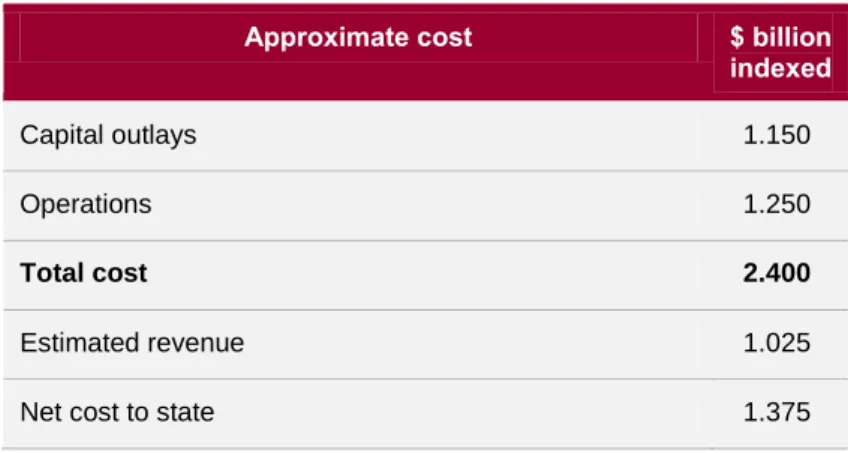
Figure 1A summarises the estimated total cost of the Games to the State of Queensland provided in the bid, including indexation to reflect the actual cash flows expected over the period up to and after the Games.
Figure 1A
Estimated net cost of the Games to the State of Queensland
Approximate cost $ billion indexed
Capital outlays 1.150
Operations 1.250
Total cost 2.400
Estimated revenue 1.025
Net cost to state 1.375
Source: Queensland Audit Office
The CGF determined that the Gold Coast bid had 'developed plans which, if delivered, will fundamentally meet the technical requirements of staging the Games'.
On 11 November 2011, the President of the CGF announced that the City of Gold Coast will host the XXI Commonwealth Games in 2018.
1.1.2
Games planning process
Figure 1B shows the key planning phases and timeline to host the Games in April 2018.
Figure 1B
The Games planning phases
Source: Adapted from Gold Coast 2018 Commonwealth Games Corporation, Roadmap version 2, October 2013
The CGF provides project management guidance to the host cities by listing general activities and tasks across Commonwealth Games planning phases. Our audit covered the first two of three planning phases of the Games:
Foundation planning—commencing when the host city is selected, this phase occurred from February 2012 to December 2012. Establishing legislation forms the organising committee (in this case, the Gold Coast 2018 Commonwealth Games Corporation or GOLDOC) which develops reporting structures, recruits senior personnel and prepares the business plan for the organising committee and its Games partners. The organising committee establishes a 'Games road map'—similar to a high level Gantt chart—and a 'Games master schedule'—a project management schedule for tasks, time frames and resources. This phase also determines procurement for all major venues and initial overlay strategies.
Strategic planning—occurring from January 2013 to December 2014, this phase defines service levels, preliminary scopes of work, deliverables, resource requirements and budget implications.
Operational planning—to occur from January 2015 to December 2016, this phase produces more detailed plans across all Games delivery functions and programs; and determines workforce numbers required for the final phase of Games recruitment, including volunteers. The venue planning and delivery should be underway and a model venue exercise conducted that informs the detailed operating model for all competition and non-competition venues.
2018 Commonwealth Games: progress Context
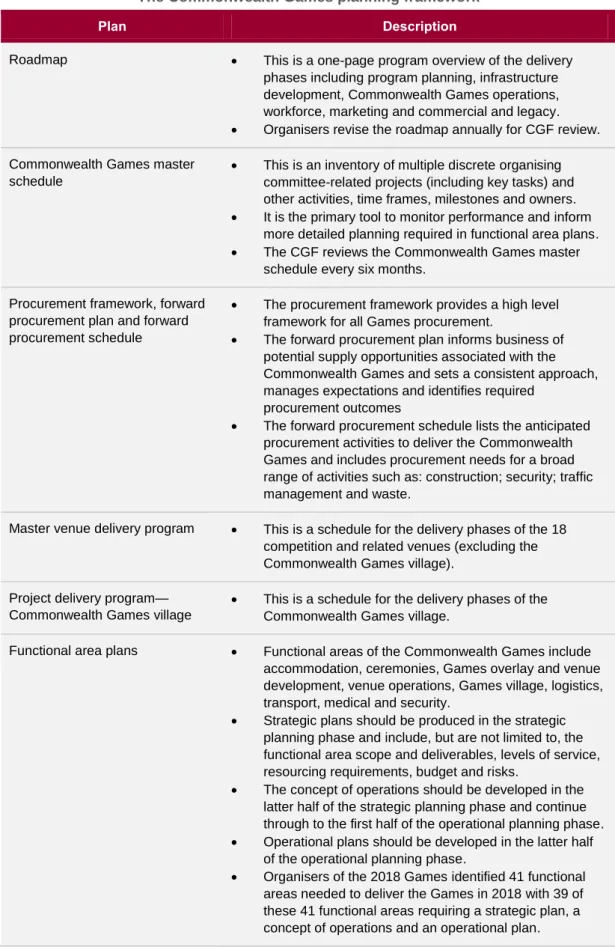
Figure 1C describes the key planning documents for the Commonwealth Games.
Figure 1C
The Commonwealth Games planning framework
Plan Description
Roadmap This is a one-page program overview of the delivery phases including program planning, infrastructure development, Commonwealth Games operations, workforce, marketing and commercial and legacy.
Organisers revise the roadmap annually for CGF review. Commonwealth Games master
schedule
This is an inventory of multiple discrete organising committee-related projects (including key tasks) and other activities, time frames, milestones and owners.
It is the primary tool to monitor performance and inform more detailed planning required in functional area plans.
The CGF reviews the Commonwealth Games master schedule every six months.
Procurement framework, forward procurement plan and forward procurement schedule
The procurement framework provides a high level framework for all Games procurement.
The forward procurement plan informs business of potential supply opportunities associated with the Commonwealth Games and sets a consistent approach, manages expectations and identifies required
procurement outcomes
The forward procurement schedule lists the anticipated procurement activities to deliver the Commonwealth Games and includes procurement needs for a broad range of activities such as: construction; security; traffic management and waste.
Master venue delivery program This is a schedule for the delivery phases of the 18 competition and related venues (excluding the Commonwealth Games village).
Project delivery program— Commonwealth Games village
This is a schedule for the delivery phases of the Commonwealth Games village.
Functional area plans Functional areas of the Commonwealth Games include accommodation, ceremonies, Games overlay and venue development, venue operations, Games village, logistics, transport, medical and security.
Strategic plans should be produced in the strategic planning phase and include, but are not limited to, the functional area scope and deliverables, levels of service, resourcing requirements, budget and risks.
The concept of operations should be developed in the latter half of the strategic planning phase and continue through to the first half of the operational planning phase.
Operational plans should be developed in the latter half of the operational planning phase.
Organisers of the 2018 Games identified 41 functional areas needed to deliver the Games in 2018 with 39 of these 41 functional areas requiring a strategic plan, a concept of operations and an operational plan.
Source: Adapted from the Commonwealth Games Manual - Project Management, the Commonwealth Games Federation, July 2010
1.2
Roles and responsibilities
The Games partners have contractual obligations to deliver the Games in 2018. The CGF 2018 host city contract, which the Games partners signed in November 2011, sets out a range of legal, commercial, organisational reporting and financial obligations to deliver the Games. Figure 1D outlines the specific responsibilities of the Games partners.
Figure 1D
Roles and responsibilities of Games partners and delivery agencies
Agency Role / responsibility
Commonwealth Games Federation (CGF)
The CGF owns and controls the Commonwealth Games and all related rights.
It establishes Commonwealth Games requirements and standards and oversees conduct of each Commonwealth Games.
It provides a range of services to support candidate and host cities including: Commonwealth Games manuals that establish legal and technical obligations; guidance for timelines and planning requirements; and some operational procedures and processes regarding specific Commonwealth Games functions.
The Australian
Commonwealth Games Association Inc. (ACGA)
The ACGA hosts the Games on behalf of the CGF and is the national controlling body in Australia for the Commonwealth Games with responsibility for operations, publicity and development.
The ACGA, with the approval of the CGF, delegates the organisation of the Commonwealth Games to an organising committee. The committee works in partnership with the ACGA and is directly responsible to the CGF.
The ACGA heads the sports and technical committee of the Gold Coast 2018 Commonwealth Games Corporation Board and is responsible for the development of the Australian team.
Gold Coast 2018 Commonwealth Games Corporation (GOLDOC)
GOLDOC is the organising committee, responsible to the Minister for the Commonwealth Games for the organisation of the Games.
The CGF considers GOLDOC the agency responsible for leading delivery of the Games.
GOLDOC’s primary functions are to arrange the organisation, conduct, promotion and commercial and financial management of the Games and overlay (temporary works and services to meet the CGF standards).
GOLDOC works in partnership with the ACGA and the CGF. The Office of
Commonwealth Games Coordination (OCGC), within the Department of Tourism, Major Events, Small Business and the Commonwealth Games (DTESB)
OCGC is responsible for managing the Games budget; coordinating the whole of government service delivery for the Games; and leading the legacy program and arts and cultural festival.
The Minister for Tourism, Major Events, Small Business and the Commonwealth Games is responsible for the event and overall coordination.
Economic Development Queensland (EDQ), a commercial business
EDQ is responsible for selecting and contracting the developer to construct the Games village. Once EDQ achieves financial close, it passes responsibility to manage the developer contract to the DSDIP
2018 Commonwealth Games: progress Context
Agency Role / responsibility
Major Projects Office, within DSDIP
The DSDIP Major Projects Office is responsible for planning and
overseeing the construction of the Games venues and the Games village. This responsibility does not include overlay works.
The Commonwealth Games Infrastructure Authority (CGIA)
The CGIA assists EDQ and the Major Projects Office in planning and developing the Games village and venues.
The CGIA oversees planning through to development and delivery of the Games village and Games venues.
Members of the CGIA include: the Director-General of DSDIP, the Director-General of DTESB, the Chief Executive Officer of the Council of the City of Gold Coast and the Chairperson of GOLDOC.
Council of the City of Gold Coast (Council)
The Council of the City of Gold Coast is contributing $110.5 million cash to the Queensland Government and an estimated 'in kind' contribution of more than $105.5 million. Council's in kind contribution includes: - additional city operations and services
- Games venue and precinct works - human resource support
- public domain improvements
- legacy programs (tangible and intangible, long-lasting community benefits).
Council will deliver city services that support the Games and maintain its usual services to the city during the Games.
Other Games delivery agencies
At the time of audit, other Games delivery agencies include the Australian Government, the Queensland Police Service, the Department of
Transport and Main Roads, Queensland Treasury and Trade and the Department of the Premier and Cabinet.
Although many Queensland Government departments will have lead roles to deliver functional areas over the course of the Games, this report includes only those departments or agencies with significant progress to date.
Source: Queensland Audit Office
1.3
Guidance and support
Hosting the Games involves a complex program of work spread over six and a half years, from host city announcement to staging the Games. The main elements of Games planning span an infrastructure program and an operations program. Each program has many interdependent projects involving numerous agencies, partners and stakeholders across all levels of government and the public, private and not for profit sectors. Delays or delivery failure on any project can affect the timely delivery of a quality Games within budget. The CGF manuals and the advice and reviews of the CGF Coordination Commission guide planning for the Games. The CGF manuals describe high level planning phases and set milestones for deliverables. The CGF developed the methodology and tools to reflect the host city experiences of previous Commonwealth Games. Some aspects of manuals may not be relevant to every Commonwealth Games, depending on the level of existing
infrastructure and services available in each host city. The CGF encourages each host city to adapt the manuals to suit its location and culture, subject to binding contractual agreements. The CGF (through the Coordination Commission) assesses a host city's preparations in planning, progress and technical aspects every six months, with the last review scheduled to occur in late 2017. The assessment includes inspection visits, onsite meetings and review of progress reports and strategies. The CGF also provides continuous technical advice and support to the organising committee, GOLDOC.
1.4
Budget
Three agencies manage the Games budget:
The OCGC oversees the whole of Games budget.
DSDIP manages the capital budget to construct the athletes' village and event venues. GOLDOC manages the operations budget to deliver the event.
The Commonwealth Games Finance Committee monitors the Games budget and associated financial risks. This committee is primarily an information sharing forum that makes
recommendations to the Director-General of DTESB.
The approved Games budget reflects any additional net operating and capital outlays required to deliver the Games; or any future capital expenditure.
Offsetting operating expense cash outflows with operating revenue inflows achieves net cost.
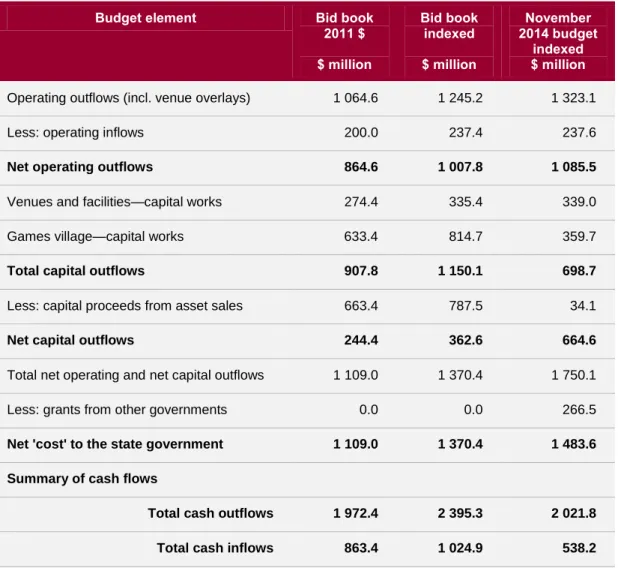
Figure 1E compares the bid book budget to the present approved Games budget.
Figure 1E Composition of budget
Budget element Bid book 2011 $ $ million Bid book indexed $ million November 2014 budget indexed $ million
Operating outflows (incl. venue overlays) 1 064.6 1 245.2 1 323.1
Less: operating inflows 200.0 237.4 237.6
Net operating outflows 864.6 1 007.8 1 085.5
Venues and facilities—capital works 274.4 335.4 339.0
Games village—capital works 633.4 814.7 359.7
Total capital outflows 907.8 1 150.1 698.7
Less: capital proceeds from asset sales 663.4 787.5 34.1
Net capital outflows 244.4 362.6 664.6
Total net operating and net capital outflows 1 109.0 1 370.4 1 750.1
Less: grants from other governments 0.0 0.0 266.5
Net 'cost' to the state government 1 109.0 1 370.4 1 483.6 Summary of cash flows
Total cash outflows 1 972.4 2 395.3 2 021.8 Total cash inflows 863.4 1 024.9 538.2
2018 Commonwealth Games: progress Context
The nominal budget for the net cost of the Games to the state has increased by
$374.6 million, from $1.11 billion (in 2011 dollars) when Gold Coast won the Games to a new revised cap of $1.48 billion approved in November 2014. The bid book process required that the Games budget was expressed in 2011 real dollars. The Games budget included annual cost indexation to 2019–20 to express the Games cost for the period up to and after the Games. The annual cost escalation has contributed $261.4 million of the budget increase to date, meaning $113.2 million or 30.2 per cent of the total cost increase is due to factors other than indexation.
Aside from the increase in net costs between the 2011 bid book budget and the current indexed budget due to forecast price movements, the budget increased because of a change in the delivery of the Games village and inclusion of the Australian Commonwealth Games Association marketing fees. These cost increases have been offset by including
contributions from the federal government and the Council of the City of Gold Coast. The state decided in December 2012 not to build, own and sell the athletes' village, but to deliver this through a public private partnership (PPP). PPPs are intended to transfer the financing, construction and ownership risks to the private sector. In exchange, the state foregoes associated revenues.
This decision reduces capital outlays in the lead up to the Games, reduces the construction and property holding risks associated with the Games village and contributes to the
government’s policy objective of returning to a fiscal surplus by 2015–16.
It also means the government foregoes revenue expected from selling accommodation after the Games, estimated to be $787.5 million after indexation. This compares to proceeds of $34.1 million expected from the PPP, a net fall in capital inflows of $753.4 million.
The current total cost estimate for the Games village, excluding overlays, is $164.3 million and is yet to be updated in the budget. This estimate involves nil revenues from selling accommodation as the private sector has the risk associated with the construction and sale of the accommodation. The state has provided the private sector with a 10-year rental guarantee to assist in the staged release of properties to the market. This arrangement, over a 10-year period after the Games, guarantees the developer a minimum return on
investment until the sale of the residential village. The estimated cost of the state providing the developer with income support totals $21.0 million, based on a 90 per cent probability outcome.
1.5
Audit objective, method and cost
Hosting the Commonwealth Games relies on significant investment of public money and partnership with the private sector. Given the current budgetary pressure on all three levels of Australian governments, it is important that public money invested in the Games is spent carefully and delivers the intended benefits.
The objective of this audit is to determine whether the Games is on track to be delivered on budget and on time.
The audit was conducted between January and early November 2014, while the Games partners were in the strategic planning phase of the Games. Some of the major infrastructure projects, including the Games village, had commenced and the Gold Coast Aquatic Centre was completed. This phase covered the time from November 2011 when Gold Coast won hosting rights until early November 2014 when our audit concluded.
As we expected, much of the work of Games partners we reviewed was 'work in progress', undergoing continual change and development.
Consequently, our primary focus was to consider whether:
the full cost of the Games is being captured and managed—with a focus on how these costs relate to the approved budget
progress for delivering the Games is on track—with an emphasis on Games infrastructure, given the longer lead times for capital acquisitions and their relatively large costs as a proportion of the total costs
governance and program management arrangements are appropriate to deliver the Games—with a focus on clarity of roles and responsibilities of the various partners and on project and program management.
We audited the activities of the Council of the City of Gold Coast, GOLDOC, DSDIP and DTESB within these areas of focus.
We did not examine the suitability of detailed technical components of Games deliverables or replace the CGF's formal assessment of the Games partners' plans and progress to host the Games.
The cost of the audit was $490 000.
1.6
Report structure
The remainder of the report is structured as follows: Chapter 2—Program management
Chapter 3—Operations Chapter 4—Infrastructure Chapter 5—Legacy
Appendix A contains responses received Appendix B contains the audit details Appendix C contains the functional areas Appendix D contains the venues progress
2018 Commonwealth Games: progress Context
2
Program management
In brief
Background
Effective governance and program management capability are essential to timely and cost effective delivery of a complex, multi-agency, multi-project program of work such as the Commonwealth Games. We expected to find fit-for-purpose governance and program management arrangements to deliver the Gold Coast 2018 Commonwealth Games (the Games) on time and within budget and with a focus on benefits to be realised.
Conclusions
Games partners are generally managing their projects well, but no agency is responsible for program management across the Games partners and delivery agencies. Instead, program governance and management across the partners, delivery agencies and the overall program of work is decentralised, immature and unsuited to the size, complexity and stakeholder demands involved in delivering the Games.
The current governance structure relies heavily on various steering committees and informal good relationships rather than sound systems and practice. At present, neither the Gold Coast 2018 Commonwealth Games Corporation (GOLDOC) nor the Office of Commonwealth Games
Coordination (OCGC) has the capability or capacity to perform the program management function across the Games partners and overall program of work.
Robust governance and management at the whole-of-program level increase the likelihood of the Games being high quality, on time, within budget and realising the intended benefits for
Queenslanders
Key findings
GOLDOC is the organising committee accountable for the overall planning and hosting of the Games. This accountability is not supported by the governance structure in place, which lacks centralised authority to drive performance, make decisions, resolve issues, deliver outcomes and manage resources within cost and time constraints.
Individual project management capability is adequate but overall program management capability is dispersed and not coordinated effectively.
Decentralised program management hampers processes to report information to decision makers and stakeholders.
There is no whole-of-program tool or system that reports on progress or shares information. GOLDOC is in the process of enhancing its program management capability, including acquiring an enterprise program management system and recruiting program managers.
2018 Commonwealth Games: progress Program management
2.1
Background
A 'program' is defined as a set of projects and other activities that work together to achieve a planned outcome. Successful staging of the 2018 Commonwealth Games (the Games) is not about delivery of venues, marketing, ticketing and other elements, but the coordinated and integrated delivery of all these elements for 11 days in 2018 in a way that achieves legacy outcomes for the state.
The Games involves multiple agencies across all levels of government and public, private and not for profit sectors and significant investment of funds—presenting particular
challenges for program governance and management. The Games, by nature, involves one of the most complex programs of multiple interdependent projects to be delivered in
Queensland.
As the complexity of a program increases, good governance and robust program
management become more critical. These must be in place to anticipate and resolve issues and challenges in a disciplined and structured manner. While good governance and program management do not guarantee success, they increase the likelihood of delivering a major program on time, within budget, to quality expectations and with planned benefits.
Governance is important for stewardship of a significant and complex program of work such as the Commonwealth Games. It is the exercising of authority to ensure accountability; driving performance and establishing strategies to deliver outcomes and manage resources within cost and time constraints. Good governance, supported by a robust program
management capability, ensures you are ‘doing the right things’ and ‘doing them right’— deliverables are working towards planned outcomes and benefits; keeping on track and reporting progress; using resources efficiently and effectively; and identifying and resolving risks before they become issues.
This audit examined the governance arrangements and program management capabilities for the Games and expected to find:
accountability—a single entity or unit responsible for the overall Games program with appropriate decision making authority to drive performance and resolve issues capability—suitable program management capability that recognises the size,
complexity and multi-organisational nature of stakeholders responsible for delivering the Games
coordination—program planning across the projects and activities required to deliver the Games, aligned with interdependencies and mapped to manage risks.
2.2
Conclusions
With the strategic planning phase due to be completed at the end of 2014, now is the time to address the overall governance and program management issues we found, as it will be much more difficult to do later.
We found the governance and project management capabilities of the entities delivering individual projects required to host the Games are adequate and, with the exception of the Games village contracting and financial closure, individual entities are managing individual projects well.
Authoritative decision making at a whole-of-Games program level is affected because governance and management of the program of Games projects is decentralised, immature and unsuited to the size, complexity and multi-organisational nature of stakeholders
responsible for delivering the Games.
The lack of a program management office (PMO) with the necessary authority, program management capability and tools to drive and coordinate the planning and delivery of the Games across Games partners and delivery agencies, has not, at this stage, presented an issue.
As the volume of projects and work in progress greatly increases over the next three and a half years, the decision making and governance structure is likely to be stretched
significantly. Time is a major constraint for a program of work as substantial and complex as the Commonwealth Games. While three and a half years remain before the staging of the Games, this is a tight and immoveable time frame for the scale and complexity of work required. At present, neither the Gold Coast 2018 Commonwealth Games Corporation (GOLDOC) nor the Office of Commonwealth Games Coordination (OCGC) has adequate capability and resources to manage the state's objectives and interests for delivery of the Games and the overall program of work across Games partners and delivery agencies. Better program management capability will improve monitoring progress, decision making, problem solving and information sharing and enhance the existing arrangements and relationships. Enhancing the governance and program management capability will maximise the likelihood of delivering a high quality Games on time, within budget and realising the intended benefits for Queenslanders.
2.3
Program management
The Australian National Audit Office in its better practice guide, Implementation of Programme and Policy Initiatives - Making Implementation Matter, comments:
Experience indicates that the likelihood of effective cross-agency implementation is greater when there is an overarching, high-level implementation plan that is coordinated by a nominated lead agency and has clearly defined critical cross-agency dependencies and
responsibilities.
At this time, the Games is missing the key elements of an overarching, high-level implementation plan and a coordinating lead agency. Neither GOLDOC nor OCGC is performing the important overall whole-of-Games program management function.
2.3.1
Accountability and authority
Typically, the program manager is responsible for program set up and management and is accountable for the overall program delivery. The program manager is usually supported by a program management office (PMO), especially in the case of large, complex, multiagency programs.
In its project management manual, the Commonwealth Games Federation (CGF) states that it considers the organising committee (GOLDOC) to be responsible for leading delivery of the Games. Essentially, it considers the GOLDOC Board to be the program manager and GOLDOC to be the PMO.
This view does not reflect the reality of the governance structure put in place for the Games. This is demonstrated by the Games governance structure shown in Figure 2A.
2018 Commonwealth Games: progress Program management
Figure 2A
Games governance structure
Source: Queensland Audit Office adapted from the Office of Commonwealth Games Coordination In this structure, information and decision making only comes together at the Cabinet level. As a result, coordination between the five main components (being event, budget, Games village, venues and city operations) of the Games program relies on the good interagency relationships and various committees that have been established, rather than program management. While GOLDOC has accountability as the PMO, the governance structure in place inhibits its ability to perform this role effectively so it lacks the requisite authority needed for:
coordination monitoring decision making
preventing and resolving issues.
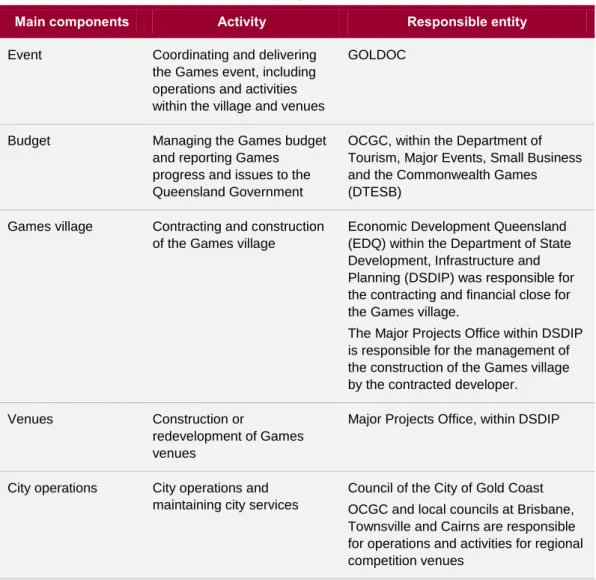
GOLDOC is not responsible for the whole-of-program management function for the Games. The five main areas of responsibility, and the entities responsible for managing them, are outlined in Figure 2B.
Figure 2B Games program areas
Main components Activity Responsible entity
Event Coordinating and delivering the Games event, including operations and activities within the village and venues
GOLDOC
Budget Managing the Games budget and reporting Games progress and issues to the Queensland Government
OCGC, within the Department of Tourism, Major Events, Small Business and the Commonwealth Games (DTESB)
Games village Contracting and construction of the Games village
Economic Development Queensland (EDQ) within the Department of State Development, Infrastructure and Planning (DSDIP) was responsible for the contracting and financial close for the Games village.
The Major Projects Office within DSDIP is responsible for the management of the construction of the Games village by the contracted developer.
Venues Construction or
redevelopment of Games venues
Major Projects Office, within DSDIP
City operations City operations and maintaining city services
Council of the City of Gold Coast OCGC and local councils at Brisbane, Townsville and Cairns are responsible for operations and activities for regional competition venues
Source: Queensland Audit Office
A revised governance structure has been developed but is yet to be approved. This structure does not include an agency performing the whole-of-Games program management function. At this early stage of the Games development, the lack of overall program governance and management has not resulted in any significant problems. This is due to the good working relationships Games partners have established and the limited number of projects that have progressed. As the numbers and pace of projects and work activity increase, relying on good interagency relationships and committees will not suffice and the need for overall program management will grow. Overall program management includes timely and decisive problem solving, decision making and risk management across the program. Having robust
governance arrangements in place before work increases will help keep deliverables on track, ensure efficient and effective use of resources and identify and resolve issues before they become problems.
2018 Commonwealth Games: progress Program management
2.3.2
Capability and tools
Four key elements of program management operational capability need to be put in place to enable the required outcomes and benefits:
robust and repeatable processes and functions to manage cost, progress and performance
the right organisational skills and resourcing levels effective technology, information systems and tools information and data.
Capability
GOLDOC and OCGC are managing their individual projects but neither is performing the important management role across the overall program of work. The program management capability that exists is decentralised; tends to be focused on agency-specific projects; and is immature and unsuited to manage the size, complexity and multi-organisational nature of stakeholders responsible for delivering the Games. This is because:
there is no single point of program management for coordination, monitoring, decision making and prevention or resolution of issues
the PMO capability to govern across the whole Games is immature and inadequately staffed with qualified and skilled people able to drive and support program management there is no single tool or system to report and share information across all stakeholders. While limitations on program management capability have had little effect to date, this is likely to change as the amount and complexity of work in progress increases.
GOLDOC is responsible for the event and Games operations and has adequate program management for this events and operations role. It is currently enhancing its program management capability in this area.
GOLDOC is not performing the program management function across the overall
whole-of-Games program. It is not responsible for the whole-of-Games budget, overseeing the whole-of-Games program planning or monitoring implementation across Games partners. It does not currently have the capacity or capability to undertake the program management role across the entire whole-of-Games program. GOLDOC's program management system—the Games master schedule—excludes the planning, coordination and monitoring of the Games village, competition venues and city operations of local governments.
In January 2014, the CGF Coordination Commission reported that it had some concerns with the small size of the GOLDOC workforce and noted that it was important that enough skilled resources were available to keep pace with the large amount of planning work due for completion in 2014.
As at 1 July 2014, GOLDOC estimated it had 46 full time equivalent staff which was
consistent with its planned staffing levels. GOLDOC complements its existing staffing levels with the use of consultants to assist in some planning activities, such as developing some functional areas plans. With the strategic planning phase now nearing completion, GOLDOC has started to enhance its program management capabilities and is currently recruiting for program managers for the transport and security functional areas.
Given that GOLDOC is not performing the PMO role across the Games program, its current staffing and contracting arrangements are adequate to perform its present events and Games operations roles.
OCGC may be a logical fit to perform this overall Games program management function from a state objective and enduring legacy perspective, partially because GOLDOC will wind down and cease to operate within a short period after the Games are over. OCGC's program management capacity and capability are not adequate for this purpose currently and are less developed than those of GOLDOC.
At present, neither GOLDOC nor OCGC has the staff, tools or capability to perform the crucial program management role in planning and organising the Games. They will need to accelerate the growth in organisation capacity, capability and systems if either is to take on this role successfully.
Tools
There is no program management tool used across the Games program. Agencies involved in the Games program are using various project management tools.
At present, the Games master schedule is the project management tool GOLDOC uses. As at March 2014, the Games master schedule contained more than 3 300 tasks, including those scheduled to start in future years.
While the CGF does not specify the systems or tools to be used, it states project
management tools are needed to develop and manage the Games master schedule, report progress and monitor issues and risks. It recommends a network tool over a stand alone system, so functional areas build and manage their own detailed plans, but with the agreed critical deliverables and milestones linked to the high level master schedule. A network tool will allow for dependency links and avoids placing a high maintenance workload on one project manager or team.
As a management tool, the Games master schedule spreadsheet has a number of limitations which make it difficult to determine whether the whole Games project is on track, on budget, or if intervention is required. These limitations include:
inability to show the relationships and dependencies between tasks and functional areas to assist in cross-functional area planning, early identification of schedule problems and project risk management
difficulty assessing whether tasks or projects have slipped and the significance of the slippage
lack of a critical path to identify immovable milestones and deliverables so the project is delivered according to the time frame of the project plan
limited ability to highlight milestones that are overdue
limited use as a reporting tool due to size, with the inability to summarise progress and define issues and risks the GOLDOC Board needs to address
different systems manage status, current issues and risks
over-reliance on good communication between stakeholders so accurate information is shared regularly
no visibility of the planned work according to budget estimate or actual cost. This has not been problematic at this point in planning for the Games, but the need to develop this capability will rapidly grow.
The GOLDOC executive is aware of the limitations of the current Games master schedule and has selected an enterprise project management system and enterprise resource management system to enhance its program management capability. Organisers are still determining the details of the functionality and application of these two systems, including the level of accessibility across Games partners. As new functional areas start to progress, the instrument used for planning and monitoring will be increasingly important for sharing data.
While establishing an effective program management capability can take time, three years have passed since Gold Coast won its bid to host the Games. Games organisers urgently
2018 Commonwealth Games: progress Program management
2.3.3
Coordination
The effective coordination of procurement, project and program activities lies at the heart of any program's ability to achieve desired costs, schedule, outputs and outcomes. Having effective governance structures and program management capability aids planning and coordination.
The planning and coordination for the overall program of work needed to deliver the Games are not as effective as they could otherwise have been. This is largely due to the needs for improved governance structures and PMO support across the Games partners and overall program of work. While organisers have undertaken considerable work to develop a Games roadmap, Games master schedule, roles and responsibilities matrix, forward procurement schedule and venue and village project schedules, there is poor alignment between these key documents. This is because:
there a lack of one to one relationships of activities between the documents dependencies between activities have not been mapped
the Games master schedule lacks target dates and milestones for some activities. Without the key relationships and dependencies, it is difficult to monitor overall performance of the program, ensure that agencies are working to the same schedule, identify any
potential effect of delays or missed milestones and plan to take corrective actions.
The roadmap is the program map for the Games which GOLDOC monitors, but there are no effective processes supporting the map; nor is there any central agency to command
information across Games partners, identify issues, impose solutions or escalate unresolved problems. The lack of mapping of project dependencies and resource/staffing requirements against the roadmap also hampers overall program management performance.
GOLDOC is responsible for coordinating, planning and monitoring the progress of the 41 functional areas. GOLDOC currently uses spreadsheets for the Games master schedule across all 41 functional areas. The Games master schedule was developed through a top-down approach and informs the development of some functional areas. The schedule includes tasks that are contractual obligations, as well as tasks with self-determined time frames.
There is limited inclusion of Brisbane City Council, Townsville City Council and Cairns Regional Council at this stage of planning. These councils, in addition to the Council of the City of Gold Coast, are all responsible for hosting various aspects of the Games.
2.4
Reporting and monitoring progress
There is a good level of cross-representation in the various committees and working groups established for the Games. Most of the committees are advisory, rather than decision making committees. There is no single point, agency or unit in the governance structure which receive progress reports across all projects, or prioritised risk areas.
There are three channels for reporting and monitoring the Games progress:
through the Department of State Development, Infrastructure and Planning (DSDIP), including Economic Development Queensland (EDQ) and the department's Major Projects Office to the Minister for State Development, Infrastructure and Planning regarding the capital program
through the OCGC to the Minister for Tourism, Major Events, Small Business and the Commonwealth Games and to Cabinet for selected government projects
through GOLDOC executive to the GOLDOC Board for 'the operations', (which largely exclude the construction program) and through GOLDOC to the CGF for most aspects of the Games, as required.
Figure 2C
Games reporting and monitoring framework
Source: Queensland Audit Office, adapted from OCGC governance documents
Additionally, the Council of the City of Gold Coast monitors and reports its progress internally, with some shared responsibilities reported through GOLDOC. The local
governments of Brisbane, Townsville and Cairns have not yet begun city operation planning or works and are not included in the existing reporting and monitoring channels. This means the various entities responsible for the five main components of the overall Games program (Games village, venues, budget, events and city operations) are monitoring and reporting their work independent of one another, relying on good relationships and committee meetings rather than any formalised program management framework.
The GOLDOC Board meets approximately every two months and the GOLDOC executive updates the Board on selected projects. The Board does not receive a progress report across all projects, or prioritised risk areas.
The lack of a management reporting tool, or a management dashboard, precludes
summarising the large volume of detailed progress information succinctly. Such a summary would allow senior managers and the Board to track progress and understand where management intervention and attention are required.
There is some duplication of effort between GOLDOC and OCGC in reporting on
whole-of-Games progress, but this is largely unavoidable because of the complexity of the project and various stakeholders involved. GOLDOC reports to the CGF every six months on the progress of preparations for the Games. The CGF also requires Games-wide status reports of performance against the project schedule (Games master schedule), budget and
2018 Commonwealth Games: progress Program management
2.5
Planning progress
Figure 2D outlines the key phases in the Games planning schedule. The foundation phase is complete and the Games are currently in the strategic planning phase, which relates to the period from January 2013 to December 2014.
Figure 2D
Current point in time in the Games planning schedule
Source: Queensland Audit Office
2.5.1
Foundation phase progress
GOLDOC scheduled the foundation planning phase for the Games from February 2012 to December 2012. The foundation phase is critical because it sets up the entire basis for the governance control environment.
The foundation phase involved:
establishing the organising committee (GOLDOC), including its legal entity and GOLDOC Board, senior executive team, governance framework, budget, strategic business plan, office accommodation, expansion strategy and pre-Games procurement process
developing the marketing and revenue raising plans and starting implementation supporting government development of legacy plans and programs
developing the Games organisational plan
starting intellectual property registration and protection
agreeing initial roles, responsibilities and decision avenues among Games delivery partners
reviewing infrastructure requirements and developing venue briefing program and related information requirements and timeline
establishing strategic business plans and the structure and process for the Games village development with delivery partners
validating the venue plans against the bid proposal.
This phase was largely completed on schedule, with the exception of venue and village areas completed in 2014:
venue briefing program and related information requirements and timeline
strategic business plans and structure and process for the village development with delivery partners
venue plans validated against the bid proposal.
At this stage, these delays do not appear to have had any significant effect on overall progress.
2.5.2
Strategic planning phase progress
We assessed the current status of the key deliverables according to key planning documents including:
the roadmap
Games master schedule
venues and Games village schedules forward procurement schedule budget
CGF project management manual.
The lack of alignment between these planning documents and schedules complicates tracking the progress of the Games. It can be difficult to establish which time frames or milestones are being targeted. It can also be difficult to assess the effects any delays or missed milestones have on other activities or the overall program, because dependencies within and between these schedules are not mapped.
We determined some projects have slipped against the program schedule and detail these further in this report in the categories of operations, infrastructure and legacy.
3
Operations
In brief
Background
The Commonwealth Games is a complex event comprising a program of numerous infrastructure and operations projects, each with many deliverables and dependencies across a variety of stakeholders. The Gold Coast 2018 Commonwealth Games (the Games) partners currently have less than four years to construct major infrastructure; and to design and implement operational and commercial plans for hosting this major international event. We expected to find that the Games program of work is progressing in accordance with agreed milestones and that any delays or issues are being managed effectively.
Conclusions
Some project milestones have slipped and are outstanding, including the development and finalisation of strategic plans for key functional areas. Although slippage has occurred and is being managed, it is difficult to know what effect this will have on the overall Games delivery because the detailed schedule and dependencies have not yet been determined. Slippage effects need to be addressed to allow for detailed budget, resource and workforce planning. A more rigorous zero-based approach to the budget would improve both cost discipline and the benchmark against which to forecast and analyse variances.
Key findings
The ‘top down’ incremental approach to setting the initial budget and likely net cost of the Games was a reasonable basis with which establish these initial figures at that time. A more rigorous zero-based approach is now needed and has started but, at this stage, it is not yet possible to be assured sufficiently the budget estimates are realistic.
There is a lack of alignment between key planning documents meaning that, in some cases, it is difficult to identify which time frames are being targeted; the dependencies across projects that have not been identified; and the effect that delays in any projects will have on the overall program.
Development functional area strategic plans are behind schedule but may still be delivered by the end of December 2014, in accordance with the roadmap.