An Evaluation of the Effectiveness and
Validity of the Preparatory Year
Programme in Preparing Students for
Studying in Taibah University
in Saudi Arabia
A dissertation presented to Dublin City University in fulfilment
of the requirements for PhD
By:
Ahmad Alblowi
BA MA
(Hons)Supervisor: Professor Gerry McNamara
School of Education Studies
Declaration
I hereby certify that this material, which I now submit for assessment on the programme of study leading to the award of Doctor of Education is entirely my own work, that I have exercised reasonable care to ensure that the work is original, and does not to the best of my knowledge breach any law of copyright, and has not been taken from the work of others save and to the extent that such work has been cited and acknowledged within the text of my work.
Signed:
ID No: 10103724 Date:
Dedication
To my father,
Acknowledgements
First, I would like to thank my supervisor, Prof Gerry McNamara, for the great effort, time, and encouragement towards this study and in all stages of my PhD. I am highly grateful to Prof Joe O'Hara, the co-supervised, who has been a great source of help and support. Special thanks go to Mr Gerry Conyngham for his assistance and advice regarding statistical analysis. I also extend my gratitude to Dr Martin Brown Who provides me advice regarding the appropriate style of writing. without forgetting the many pieces of advice received from my examiners Dr Mary Collins, Dr Charlotte Holland and Dr Kevin Williams.
Through my study journey I received great support and love from my beloved mother and wife, who endured exile and stood with me throughout the study period. This is without forgetting my children for bearing my preoccupation for them in the many periods during my study. Also, would like to thank my brothers for backing and supporting me throughout these years. Finally, I wish to thank my friends for their advice and help.
Contents
Declaration ... I Dedication ... II Acknowledgements ... III Contents ... IV List of Tables ... XIII List of Figures ... XVII Abstract ... XX
Chapter 1 Introduction and Background ... 1
1.1 Introduction ... 1
1.2 Preparatory Year Programme at Taibah University ... 2
1.3 Background of the Researcher... 2
1.4 Research Location ... 3
1.5 Significance of the Study ... 4
1.6 Aim of the Research ... 4
1.7 Research Questions (RQs) ... 5
1.8 Methodology ... 6
1.9 The Key Contributions of this Study ... 7
1.10 Higher Education Policy in Saudi Arabia ... 8
1.10.1 Higher Education Policy as Articulated in the Policy Documents of Saudi Arabia ... 11
1.10.2 Orientations and Goals of the Ninth Development Plan for Higher Education ... 12
1.10.2.1 General Goals ... 12
1.10.2.2 Policies ... 13
1.10.2.3 Specific Goals of the Ninth Development Plan ... 13
1.11 Preparatory Year Programme in Some Countries ... 14
1.11.1 Preparatory Year in the United Kingdom and Ireland ... 14
1.11.2 Preparatory Year Programme in Saudi Arabia ... 16
1.11.2.1 Preparatory Year Programme at Taibah University ... 18
1.11.2.2 Deanship of Educational Services at Taibah University ... 21
1.11.2.3 Establishment of the Preparatory Year Programme ... 21
1.11.2.4 Goals of the Preparatory Year Programme ... 22
1.11.2.7 Study Plan for the Preparatory Year Programme ... 23
1.11.2.8 Technical Preparation at the Deanship of the Preparatory Year ... 26
1.12 Admission to Undergraduate Study ... 27
1.12.1 Admission in Some European Countries ... 27
1.12.2 Admission to Undergraduate Study in Saudi Arabia ... 31
1.12.2.1 Reality of Admission to Universities in the Kingdom of Saudi Arabia ... 31
1.12.2.2 Criteria for Admission to Universities in the Kingdom of Saudi Arabia ... 33
1.12.2.3 National Centre for Assessment in Higher Education (Qiyas) ... 35
1.12.2.4 Examinations System in Secondary School in Saudi Arabia ... 36
1.13 Admission Criteria for the Preparatory Year Programme at Taibah University ... 38
1.14 Structure of the Thesis ... 39
1.15 Summary ... 40
Chapter 2 Literature Review ... 41
2.1 Introduction ... 41
2.2 Efficiency and Effectiveness in Education ... 42
2.2.1 Indicators of Efficiency and Effectiveness in Higher Education. ... 43
2.2.1.1 Quantitative Indicators ... 43
2.2.1.2 Qualitative Indicators ... 45
2.2.1.3 Outcome Indicators. ... 45
2.2.1.4 Process Indicators... 47
2.3 Existing Data Collection Approaches and Methodologies ... 49
2.4 The Link between Secondary and Higher Education ... 51
2.5 Broader Indicators of Higher Education Efficiency and Effectiveness... 53
2.6 Admissions Criteria Predictive Values ... 57
2.6.1 The impact of Admissions Criteria ... 58
2.6.2 The Saudi Context ... 60
2.6.2.1 Predictive Value for the Different Tracks ... 63
2.6.2.2 Predictive Value by Gender ... 64
2.7 Issues for Preliminary Year Students (Including in KSA) ... 65
2.8 Issues for Preparatory Year Students in Saudi Arabia ... 67
2.9 Curricular and Pedagogical Elements (as Process Indicators) ... 69
2.10 Campus Facilities ... 71
2.11 Summary and Conclusions ... 73
Chapter 3 Methodology ... 77
3.2 Quantitative and Qualitative Approaches ... 77
3.2.1 Quantitative Approach ... 77
3.2.1.1 Advantages of the Quantitative Approach ... 78
3.2.1.2 Disadvantages of the Quantitative Approach ... 79
3.2.2 Qualitative Approach ... 79
3.2.2.1 Advantages of the Qualitative Approach ... 80
3.2.2.2 Disadvantages of Qualitative Research ... 80
3.2.3 Mixed Approach ... 80
3.2.3.1 Emergence of Mixed Methods ... 81
3.2.3.2 Why Mixed Methods... 82
3.2.3.3 Types of Mixed Research Methods... 83
3.3 The Mixed Methods Model of Study ... 88
3.4 Ethical Issues in Mixed Methods Design ... 90
3.5 Research Tools ... 90
3.5.1 Interviews ... 93
3.6 Methodological Overview ... 94
3.7 Ethical Considerations ... 96
3.8 Predictive Power of Admissions Criteria ... 98
3.8.1 Data Collection and Participants ... 99
3.8.2 Data Analysis Methodology ... 99
3.9 The Effectiveness of the Preparatory Year from the Student Perspective ... 101
3.9.1 Data Collection ... 101
3.9.1.1 Questionnaire Survey ... 102
3.9.1.2 The Pilot Study of Students’ Questionnaire ... 103
3.9.1.3 Each Axis’ Correlation Coefficient with the Total Score of the Questionnaire ... 104
3.9.2 Interviews ... 105
3.9.2.1 Pilot Study of Interviews ... 105
3.9.3 Data Analysis Method ... 108
3.9.4 Student Survey ... 109
3.9.4.1 Student Survey Items ... 109
3.10 The Effectiveness of the Preparatory Year from the Trainer Perspective .... 115
3.10.1 Data Collection ... 116
3.10.2 The Trainers’ Survey ... 116
3.10.3 Reliability and Validity ... 116
3.10.5 Trainers Interviews ... 118
3.10.6 Data Analysis Method ... 119
3.10.7 Constructs and Items ... 119
3.11 The Effectiveness of the Preparatory Year from the Perspective of Undergraduate Faculty Members ... 123
3.11.1 Reliability and Validity ... 124
3.11.2 The Pilot Study of Efficiency Questionnaire ... 124
3.11.2.1 Reliability coefficient (split-half method) result ... 125
3.11.3 Data Collection ... 125
3.11.4 Data Analysis Method ... 126
3.11.5 Programme Effectiveness Interviews ... 126
3.12 Summary ... 127
Chapter 4 Quantitative Results... 131
4.1 Introduction ... 131
4.2 Ability of Admission Criteria to Predict Academic Performance ... 131
4.3 Study Sample ... 132
4.3.1 Statistics of Full Study Sample ... 134
4.3.1.1 Pearson’s Correlation Coefficient: ... 134
4.3.1.2 Multicollinearity: ... 135
4.3.1.3 Multiple Linear Regression Analysis–Enter Method: ... 135
4.3.1.4 Normality Distribution of Residuals: ... 137
4.3.2 Statistics for Males and Females Separately: ... 138
4.3.3 Pearson’s Correlation Coefficient: ... 139
4.3.3.1 Multicollinearity: ... 140
4.3.3.2 Male sample: ... 141
4.3.3.3 Normality Distribution of Residuals for Male Sample: ... 142
4.3.4 Female Sample: ... 143
4.3.4.1 Normality Distribution of Residuals for Female Sample: ... 145
4.3.4.2 Comparison Between Males and Females: ... 146
4.3.5 Statistics for Separate Tracks ... 146
4.3.5.1 Pearson’s Correlation Coefficient: ... 147
4.3.5.2 Multicollinearity: ... 147
4.3.5.3 Separate Multiple Linear Regression Analysis (Enter Method) for each Track: ... 148
4.3.5.4 Natural Sciences Track: ... 149
4.3.5.5 Normality Distribution of Residuals for Natural Sciences: ... 150
4.3.5.6 Health Sciences Track: ... 151
4.3.5.8 Social Studies Track:... 154
4.3.5.9 Normality Distribution of Residuals for Social Studies:... 155
4.3.5.10 Comparison of Health Sciences, Natural Sciences and Social Studies: ... 156
4.4 Student Assessment of Programme Components (Student Questionnaire) ... 156
4.4.1 Sample of Students Survey ... 157
4.4.2 Dealing with Missing Data ... 159
4.4.3 Reliability: ... 159
4.4.4 Theme I, Part 1: Student Assessment of Academic Content ... 160
4.4.4.1 Student assessment of academic content–gender differences: ... 161
4.4.4.2 Student Assessment of Academic Contents–Branch Differences:.... 162
4.4.5 Theme I, Part 2: Student Assessment of Trainers ... 163
4.4.5.1 Student Assessment of Trainers – Gender differences: ... 164
4.4.5.2 Student Assessment of Trainers – Branch Differences: ... 165
4.4.6 Theme I, Part 3: Student Assessment of Programme Assessment Methods ... 166
4.4.6.1 Students’ Opinions about Assessment Methods – Gender Differences: ... 167
4.4.6.2 Students’ Opinions about Assessment Methods – Branch Differences: ... 167
4.4.7 Theme I, Part 4: Students’ Perspectives on Academic Advising ... 169
4.4.7.1 Students’ Opinions about Academic Advising – Gender Differences: ... 169
4.4.7.2 Students’ Opinions about Academic Advising – Branch Differences: ... 170
4.4.8 Theme I, Part 5: Students’ Perspectives on University Environment... 171
4.4.8.1 Student Assessment of University Environment – Gender Difference: ... 172
4.4.8.2 Student Assessment of University Environment – Branch Differences: ... 173
4.4.9 Theme I, Part 6: Students’ Perspectives on the Achievement of Programme Goals ... 174
4.4.9.1 Assessment of Goals Achievement – Gender Differences: ... 175
4.4.9.2 Assessment of Goals Achievement – Branch Differences:... 175
4.4.10 Theme II: Student Assessment of the Relationship between Academic Subjects and Programme Goals ... 177
4.4.10.1 Student Assessment of Relationship between Academic Subjects and Goals – Gender Differences: ... 178
4.5.1 Sample of trainers Survey ... 180
4.5.2 Dealing with Missing Data: ... 181
4.5.3 Reliability: ... 182
4.5.4 Theme I, Part 1: Trainers’ Assessment of Academic Content ... 183
4.5.4.1 Trainers’ Assessment of Academic Content – Gender Differences: 184 4.5.4.2 Trainers’ Assessment of Academic Content – Branches Differences: ... 185
4.5.5 Theme I, Part 2: Trainers’ Perspectives on Assessment Methods ... 186
4.5.6 Trainers’ Opinions about Assessment Methods – Gender Differences: .. 186
4.5.6.1 Trainers’ Opinions about Programme Assessment Methods – Branch Differences: ... 187
4.5.7 Theme I, Part 3: Trainers’ Opinions Regarding Academic Advising... 188
4.5.7.1 Trainers’ opinions about academic advising–gender differences: .... 188
4.5.7.2 Trainers’ Opinions About Academic Advising – Branch Differences: ... 189
4.5.8 Theme I, Part 4: Trainers’ Perspectives on University Environment ... 189
4.5.8.1 Trainers’ Assessment of University Environment – Gender Differences: ... 191
4.5.8.2 Trainers’ Assessment of University Environment – Branch Differences: ... 191
4.5.9 Theme I, Part 5: Trainers’ Perspectives on Goals Achievement ... 192
4.5.9.1 Trainers’ Perspectives on Goals Achievement – Gender Differences: ... 192
4.5.9.2 Trainers’ perspectives on goals achievement–branch differences: ... 193
4.5.10 Theme II: Perspectives of Trainers’ on the Relationship between Academic Subjects and Programme Goals ... 194
4.5.10.1 Trainers’ Opinions about the Relationship between Subjects and Goals – Gender Differences: ... 195
4.5.10.2 Trainers’ Opinions about the Relationship between Subjects and Goals – branch Differences: ... 195
4.6 Faculty Members’ Views Regarding the Effectiveness of the Preparatory Year Programme (Faculty Member Questionnaire) ... 196
4.6.1 Sample of Faculty Members ... 197
4.6.2 Dealing with Missing Data ... 197
4.6.3 Reliability: ... 198
4.6.4 Differences in Academic Efficiency between the Two Types of Students: ... 198
4.6.4.1 Faculty Members Views Regarding Academic Efficiency– Gender Differences: ... 200
4.6.5.1 Faculty Members’ Overall View of Programme Effects–Gender
Differences: ... 200
4.7 Summary ... 201
Chapter 5: Qualitative Results ... 203
5.1 Introduction ... 203
5.2 Findings from Student Interviews ... 203
5.2.1 Student Sample ... 204
5.2.2 Part 1: Students’ Opinions Regarding the Content of the Preparatory Year Programme ... 204
5.2.2.1 Length of Subjects: ... 206
5.2.2.2 Link to Specialisation: ... 207
5.2.2.3 Activities and Exercises: ... 207
5.2.3 Part 2: Students’ Opinions Regarding Trainers ... 208
5.2.3.1 Facilitating Understanding: ... 208
5.2.3.2 Using Teaching Aids: ... 209
5.2.3.3 Discussions between Teachers and Ttudents: ... 209
5.2.3.4 Maximising Time: ... 210
5.2.4 Part 3: Students’ Opinions Regarding University Environment ... 210
5.2.4.1 Students’ Opinions Regarding Classrooms:... 211
5.2.4.2 Students’ Opinions Regarding Places for Resting, Eating and Activities: ... 211
5.2.4.3 Students’ Opinions Regarding Laboratories and Library: ... 212
5.2.4.4 Students’ Opinions Regarding Online Services: ... 213
5.2.5 Part 4: Students’ Opinions about Evaluation Methods ... 213
5.2.6 Part 5: Students’ Perspectives about Academic Guidance ... 215
5.2.7 Part 6: Students’ Perspectives about Achieving Programme Goals ... 216
5.2.8 The Relationship between Subjects and Goals ... 218
5.3 Findings from Trainers’ Interviews ... 219
5.3.1 Trainer Sample for Interviews ... 219
5.3.2 Part 1: Trainers’ Opinions Regarding the Content of the Preparatory Year Programme ... 220
5.3.2.1 Length of Subjects: ... 221
5.3.2.2 Activities and Exercises: ... 221
5.3.3 Part 2: Trainer’s Opinions Regarding University Environment ... 221
5.3.3.1 Trainer’s Opinions Regarding Classrooms: ... 222
5.3.3.2 Trainer’s Opinions Regarding Places for resting, eating and activities: ... 222
5.3.3.4 Trainer’s Opinions Regarding Online services: ... 223
5.3.4 Part 3: Trainers’ Opinions about Evaluation Methods ... 224
5.3.5 Part 4: Trainers’ Perspectives on Academic Advising ... 226
5.3.6 Part 5: Trainers’ Viewpoints Regarding Goals Achievement ... 227
5.4 Findings on Programme Effectiveness ... 228
5.4.1 Faculty Members Sample for Interviews ... 229
5.4.2 General Differences between Students ... 229
5.4.3 English Language Skills ... 230
5.4.4 Computer Use ... 230
5.4.5 Cooperative Learning, Teamwork and Constructive Dialogue ... 230
5.4.6 Decision Making, Problem Solving and Responding to Constructive Criticism ... 230
5.4.7 Interaction with the Environment ... 231
5.4.8 Work ethic and Attendance ... 231
5.4.9 Identifying Abilities ... 231
5.4.10 Student – Teacher Dynamic ... 232
5.4.11 Structured Learning and Planning ... 232
5.4.12 Comprehension ... 232
5.4.13 Determinants of Difference ... 233
5.4.14 Additional Insights ... 233
5.5 Summary: ... 233
Chapter Six Discussion ... 235
6.1 Introduction ... 235
6.2 Ability of Admission Criteria to Predict Academic Performance ... 235
6.2.1 Correlation Coefficients between the Three Criteria and GPA ... 236
6.2.2 Predictive Ability of the Admission Criteria for the Entire Sample ... 236
6.2.3 Predictive Ability of the Admission Criteria by Gender ... 237
6.2.3.1 Pearson’s Correlation Coefficient ... 237
6.2.3.2 Separate Multiple Linear Regression Analyses (Enter Method) for Males and Females: ... 238
6.2.4 Statistics for Separate Tracks ... 238
6.2.4.1 Pearson’s Correlation Coefficient: ... 239
6.2.4.2 Separate Multiple Linear Regression Analysis (Enter Method) for each Track: ... 239
6.3 Student Assessment of Programme Components ... 240
6.3.1 Students’ Perspectives on the University Environment ... 240
6.3.2 Students’ Perspectives on the Achievement of Programme Goals ... 241
6.3.4 Students’ Perspectives on Academic Advising ... 243
6.3.5 Student Assessment of Trainers ... 243
6.3.6 Student Assessment of Programme Evaluation Methods ... 244
6.3.7 Student Assessment of the Relationship between Academic Subjects and Programme Goals ... 245
6.4 Trainers’ Assessment of Programme Components ... 245
6.4.1 Trainers’ Perspectives on University Environment ... 246
6.4.2 Trainers’ Perspectives on Goals Achievement ... 247
6.4.3 Trainers’ Opinions Regarding Academic Advising ... 248
6.4.4 Trainers’ Perspectives on Assessment Methods ... 248
6.4.5 Trainers’ Assessment of Academic Content ... 249
6.4.6 Trainers’ Assessment of the Relationship between Academic Subjects and Programme Goals ... 250
6.5 Faculty Members’ Views Regarding the Effectiveness of the Preparatory Year Programme ... 250
6.5.1 Faculty Members’ Overall View of the Programme’s Effects: ... 251
6.6 Recommendations ... 251
6.7 Proposals for the Study ... 252
6.8 Limitation and Delimitation of Study ... 253
6.9 Overall Conclusions ... 253
References ... 255 Appendix A – Permission to Carry Out Study
Appendix B – Students Questionnaire Appendix C – Trainers Questionnaire Appendix D – Efficiency Questionnaire Appendix E – Students Interviews Appendix F – Trainers Interviews
Appendix G – Program Effectiveness Interviews Appendix H: Students Models
Appendix I: Trainers Models Appendix J: efficiency Models
Appendix K – pilot study analysis (Students) before deleting some items Appendix L – pilot study analysis (Students) after deleting some items Appendix M – pilot study analysis (Trainers) before deleting some items Appendix N– pilot study analysis (Trainers) after deleting some items Appendix O – pilot study analysis (Efficiency) before deleting some items
List of Tables
Table 1 Study Plan for the Health Sciences Track ... 25
Table 2 Study Plan for the Applied Sciences Track ... 26
Table 3 Study Plan for the Humanities Track ... 26
Table 4 Enrolees in Public and Private Universities for the Scholastic Year 2013–
2014 ... 32
Table 5 Cronbach's Alpha of the Students Questionnaire Axes ... 103
Table 6 The Correlation Coefficient between each Axis of the Total Score of the Students Questionnaire... 104
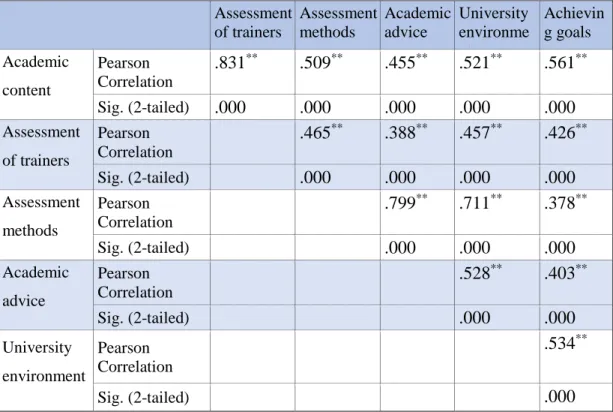
Table 7 the Correlation Coefficients between the of Students Questionnaire Axes 104 Table 8 Cronbach's Alpha of Trainers Questionnaire Axes ... 117
Table 9 The Correlation Coefficient between each Axis of the Total Score of the Trainers Questionnaire ... 117
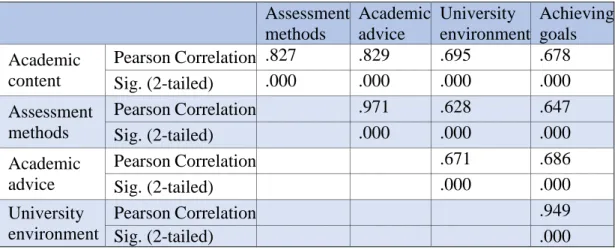
Table 10 The correlation coefficients between the axes ... 118
Table 11 Cronbach's Alpha of efficiency Questionnaire ... 125
Table 12 Reliability Coefficient (Split-half Method) of efficiency Questionnaire .. 125
Table 13 Branch Breakdown: The Ability of Admission Criteria Sample ... 132
Table 14 Gender Breakdown: The Ability of Admission Criteria Sample ... 132
Table 15 Tracks Breakdown: The Ability of Admission Criteria Sample ... 132
Table 16 Description of Variables of the Ability of Admission Criteria Sample. 134 Table 17 Pearson's correlation coefficient of Admission Criteria ... 134
Table 18 Variables Entered/Removed of the Ability of Admission Criteria Study . 136 Table 19 Model Summary of the Ability of Admission Criteria Study ... 136
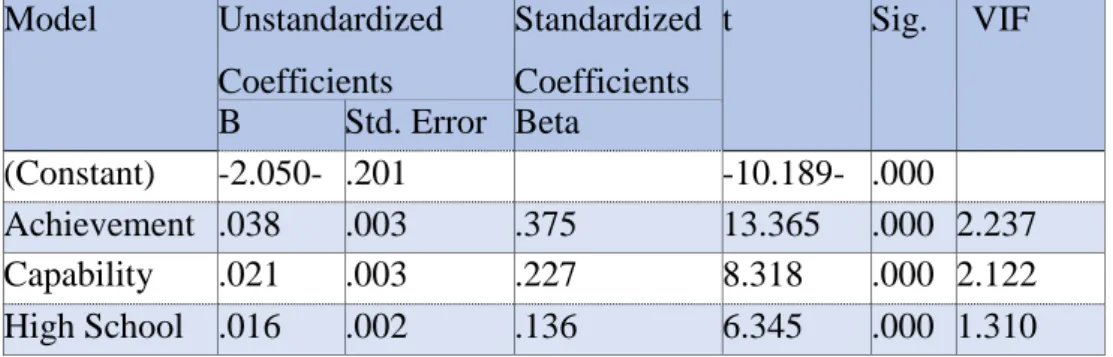
Table 20 Coefficients of the Ability of Admission Criteria Study ... 136
Table 21 Descriptive Statistics- Male and Female ... 139
Table 22 Pearson Correlation Coefficient- Male and Female ... 139
Table 23 Variables Entered/Removed- Male and Female ... 141
Table 24 Model Summary- Male and Female ... 141
Table 25 Coefficients of Male Sample... 141
Table 26 Coefficients of Female Sample ... 144
Table 27: Descriptive Statistics - Tracks ... 146
Table 28 Pearson Correlation Coefficient- Tracks... 147
Table 29 Variables Entered /Removed- tracks... 148
Table 30 Model Summary- tracks ... 148
Table 32 Coefficients of Health Sciences Sample ... 151
Table 33 Model Summary of Health Sciences Sample ... 152
Table 34 Re-test Coefficients of Health Sciences Sample ... 152
Table 35 Coefficients of Social studies Sample ... 154
Table 36 Students Survey Sample Description ... 158
Table 37 Cronbach's Alpha of Students Survey Axis ... 160
Table 38 Student assessment of programme academic content ... 161
Table 39 T test Results - Differences between Means of Male and Female Views about the Programme Content... 162
Table 40 One-way ANOVA Results - Differences between Branches Means of Students’ Views about the Programme Content ... 162
Table 41 Posthoc Results - Differences between Branches Means of Students’ Views about the Programme Content. ... 162
Table 42 Student Assessment of Trainers ... 164
Table 43 T test Results - Differences between Means of Male and fFemale Students’ Views about the Programme Trainers. ... 164
Table 44 One-way ANOVA Results - Differences between Branches Means of Students’ Views about the Programme Trainers ... 165
Table 45 Posthoc results - Differences between Branches Means of Students’ Views about the Programme Trainers. ... 165
Table 46 Students Opinion about the Programme Assessment ... 167
Table 47 T test results - differences between means of male and female students’ views about the programme Assessment. ... 167
Table 48 one-way ANOVA Results - Differences between Branches Means of Students’ Views about the Programme Assessment Methods. ... 168
Table 49 Posthoc Results - Differences between Branches Means of Students’ Views about the Programme Assessment. ... 168
Table 50 Student Opinion in Academic Advice. ... 169
Table 51 T test Results - Differences between Means of Male and Female Students’ Views about the Programme Advice... 170
Table 52 One-way ANOVA Results - Differences between Branches Means of Students’ Views about the Programme Advice. ... 170
Table 53 Posthoc results - Differences between Branches Means of Students’ Views about the Programme Advice. ... 170
Table 54 Students Opinion about the University Environment. ... 172
Table 55 T test Results - Differences Between Means of Male and Female Students’ Views about the University Environment. ... 172
Table 57 Posthoc Results - Differences between Branches Means Students’ Views
about the University Environment. ... 173
Table 58 Students Opinion about the Programme Achieving Goals ... 175
Table 59 T test Results - Differences between Means of Male and Female Students’ Views about the Programme Achieving Goals. ... 175
Table 60 One-way ANOVA Results - Differences between Branches Means of Students’ Views about the Programme Achieving Goals. ... 176
Table 61 Posthoc Results - Differences between Branches Means Students’ Views about Achieving Goals. ... 176
Table 62 Students Opinion about Relationship between Subjects and the Goals .... 177
Table 63 T test Results - Differences between Means of Male and Female Views about the Relationship between Subjects and Goals. ... 178
Table 64 One-way ANOVA results - Differences between Branches Means of Students’ Views about the Relationship between Subjects and Goals. ... 178
Table 65 Posthoc Results - Differences between Branches Means Views about the Relationship between Subjects and Goals... 179
Table 66 Trainers Sample Description ... 181
Table 67 Cronbach's Alpha of Trainers’ Survey Axis ... 182
Table 68 Trainers’ Specialization ... 183
Table 69 Trainers’ Assessment of Arogramme Academic Content ... 184
Table 70 T test Results - Differences between Means of Male and Female Views about the Programme Content... 184
Table 71 One-way ANOVA Results - Differences between Branches Means of Trainers’ Views about the Programme Content ... 185
Table 72 Posthoc Results - Differences between Branches Trainers’ Views about the Programme Content. ... 185
Table 73 Trainers’ Opinion about the Programme Assessment Methods... 186
Table 74 T test results - differences between means of male and female Trainers’ Views about the Programme Assessment. ... 187
Table 75 One-way ANOVA Results - Differences between Branches Means of Trainers’ Views about the Programme Assessment... 187
Table 76 Trainers’ Opinion in Academic Advice. ... 188
Table 77 T test Results - Differences between Means of Male and Female Trainers’ Views about the Programme Advice... 189
Table 78 One-way ANOVA Results - Differences between Branches Means of Trainers’ Views about the Programme Advice. ... 189
Table 79 Trainers’ Opinion About the Programme Environment. ... 190
Table 80 T test Results - Differences between Means of Male and Female Trainers’ Views about the Programme Environment. ... 191
Table 81 One-way ANOVA Results - Differences between Branches Means of
Trainers’ Views about the Programme Environment... 191
Table 82 Trainers’ Opinion about the Programme Achieving Goals ... 192
Table 83 T test Results - Differences between Means of Male and Female Trainers’ Views about the Programme Achieving Goals. ... 193
Table 84 One-way ANOVA Results - Differences between Branches Means of Trainers’ Views about the Programme Achieving Goals. ... 193
Table 85 Trainers’ Opinion about Relationship between Subjects and the Goals ... 194
Table 86 T test Results - Differences between Means of Male and Female Trainers’ Views about the Relationship between Academic Subjects and PYP Goals. ... 195
Table 87 One-way ANOVA results - Differences between Branches Means of Trainers’ Views about the Relationship between Academic Subjects and Goals. ... 195
Table 88 Faculty Members Sample Description. ... 197
Table 89 The Difference in Academic Efficiency between the Two Types of Students. ... 199
Table 90 the Difference in between the Two Types of Students by Gender. ... 200
Table 91 Faculty Members Overall View of the Impact of the Programme on the Student. ... 200
Table 92 Faculty Members Overall View by Gender. ... 201
Table 93 Student Sample Demographic Data for Interviews... 204
Table 94 trainers Sample Demographic Data for Interviews ... 219
List of Figures
Figure 1 Sequential Phases Mixed Studies Structure ... 84
Figure 2 Sequential Exploratory Approach... 84
Figure 3 Sequential Transformative Approach ... 85
Figure 4 Concurrent Triangulation Strategy ... 86
Figure 5 Concurrent Nested Strategy ... 87
Figure 6 Concurrent Transformative Strategy ... 88
Figure 7 Concurrent Triangulation Model and the Time-phrase ... 89
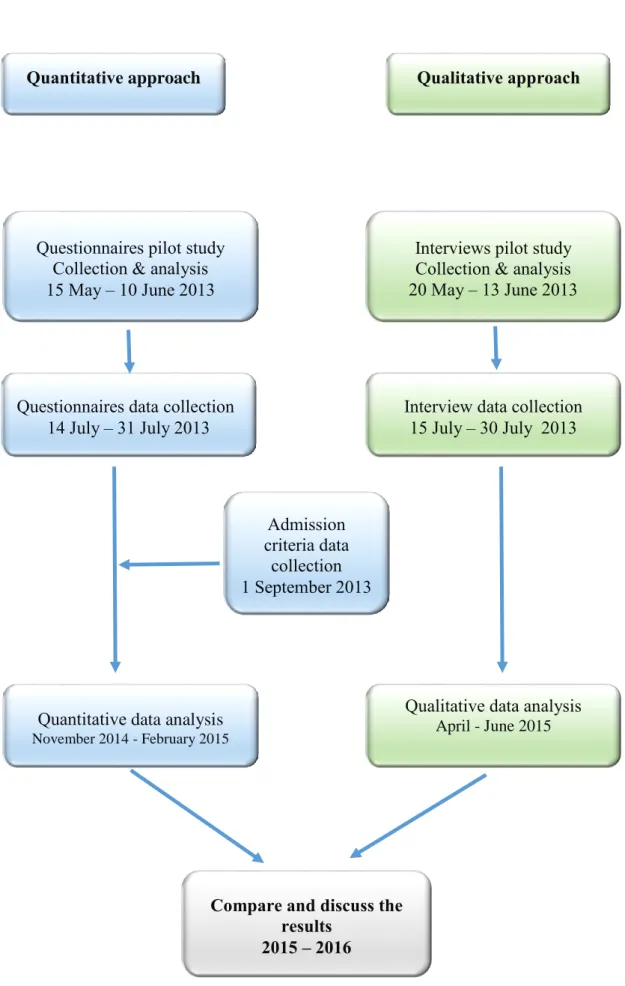
Figure 8 The TimeLine for Collection of Quantitative and Qualitative Data. ... 92
Figure 9 Tracks Breakdown: The Ability of Admission Criteria Sample ... 133
Figure 10 Gender Breakdown: The Ability of Admission Criteria Sample... 133
Figure 11 Branches Breakdown: The Ability of Admission Criteria Sample ... 133
Figure 12 Histogram of standardised residuals ... 138
Figure 13 Normal P-P Plot of regression standardized residual ... 138
Figure 14 Histogram of Standardised Residual of Male Sample ... 143
Figure 15 Normal P-P Plot of Regression Standardised Residual of Male Sample. 143 Figure 16 Histogram of Standardised Residuals of Female Sample ... 145
Figure 17 Normal P-P plot of Regression Standardised Residual of Female Sample ... 145
Figure 18 Histogram of Standardised Residuals of Natural Sciences Sample... 150
Figures 19 Normal P-P Plot of Regression Standardised Residual of Natural Sciences Sample ... 151
Figure 20 Histogram of Standardised Residuals of Health Sciences Sample ... 153
Figure 21 Normal P-P Plot of Regression Standardised Residual of Health Sciences Sample ... 153
Figure 22 Histogram of Standardised Residuals of Social Studies Sample. ... 155
Figure 23 Normal P- Plot of Regression Standardised Residual of Social Studies Sample ... 155
Figure 24 Tracks / Branches Breakdown: Students Survey Sample ... 158
Figure 25 Gender Breakdown: Students Survey Sample ... 159
Figure 26 Branch Mean Scores of Students’ Views about Programme Content ... 163
Figure 27 Branch Mean Scores of Students’ Views about Trainers ... 166
Figure 28 Branch mean Scores of Students’ Views about Assessment Methods .... 168
Figure 29 Branch Mean Scores of Students’ Views about Academic Advising... 171 Figure 30 Branch Mean scores of Students’ Views about University Environment 174
Figure 31 Differences amongst the Means of the Branches in Relation to Goals
Achievement ... 176
Figure 32 Differences between Branches Means Views about the Relationship between Subjects and Goals. ... 179
Figure 33 Tracks / Branches Breakdown: Trainer Survey Sample ... 181
Figure 34 Branch Mean Scores of Trainers’ Views about Programme Content... 185
Figure 35 Branch Mean Scores of Trainers’ Views on Assessment Methods ... 187
Figure 36 Branch Mean Scores of Trainers’ Views about Academic Advising ... 189
Figure 37 Branch Mean Scores of Trainers’ Views about University Environment 191 Figure 38 Differences amongst the Means of the Branches in Relation to Goals Achievement ... 193
Figure 39 Differences amongst the Means of the Branches in Terms of Subject – Goals Relationship ... 196
Acronyms
NSSE The National Survey of Student Engagement
BCSSE The Beginning College Survey of Student Engagement FSSE The Faculty Survey of Student Engagement
CSEQ The College Student Experiences Questionnaire LTPF The Learning and Teaching Performance Funds ELC English Language Centre
OPEC Organization of the Petroleum Exporting Countries
UNESCO The United Nations Educational, Scientific and Cultural Organization NCUK Northern Consortium United Kingdom
DIFC Dublin International Foundation College
SUPER Saudi University Preparatory English Requirements CEFR Common European Framework Reference
DAAD The German Academic Exchange Service ICDL The International Computer Driving License
UCAS The Universities and Colleges Admissions Service BMAT Bio Medical Admissions Test
TSA) The Transportation Security Administration PYP The preparatory year programme
HSG High school grade
ICT Information and Communication Technology AVCC Australian Vice Chancellors Committee
Abstract
An Evaluation of the Effectiveness and Validity of the Preparatory Year Programme in Preparing Students for Studying in Taibah University in Saudi Arabia
Ahmad Alblowi
This study is entitled ‘Evaluation of the Effectiveness and Validity of the Preparatory Year Programme at preparing Students for Studying in Taibah University’. Within the
Taibah University, students are distributed to the various specializations at the
university according to their results at the end of this preparatory year. It is a relatively new programme that has not been subjected to sufficient evaluation. The study explored the strengths and weaknesses of the programme with a focus on
identifying ways to contribute to its improvement and development. The study used a
mixed approach where the use of multiple linear regression was used to examine the ability of the admission criteria to predict the academic performance of programme students through examining the results of 3878 students. The results show that stronger acceptance criteria were provided by the achievement test followed by a student’s high-school mark and finally a capability test.
To evaluate the effectiveness of the programme elements and the achievement of its objectives from the perspective of students and trainers, data was collected through 1972 student questionnaires, 98 trainer questionnaires and eight semi-structured interviews with students and four with trainers. Studying the effectiveness of the programme from the viewpoint of faculty members was done using 167 questionnaires and five semi-structured interviews. The results show the weaknesses of the university environment and the failure of the programme to meet its goals from the students’ and trainers’ viewpoints. The evaluation by faculty members of the effectiveness of the programme showed a positive view of the programme and expressed the view that students who have completed the programme have better skills and more knowledge than those who have not. The study recommended to allocate the largest proportion of a weighted percentage for acceptance to achievement test-results,
followed by high school, and finally aptitude test-results. Furthermore, the study found
Chapter 1 Introduction and Background
1.1Introduction
Preparatory programmes are usually administered at many Saudi universities and are generally intended to improve the students’ ability to access and complete college education. They are also designed to satisfy the educational objectives of Saudi Arabia (Alshumaimeri 2011). According to the Eighth Development Plan, the transition from secondary to higher education should be conducive to a higher proportion and quality of students progressing to post-graduate studies (Ministry of Economy and Planning 2004).
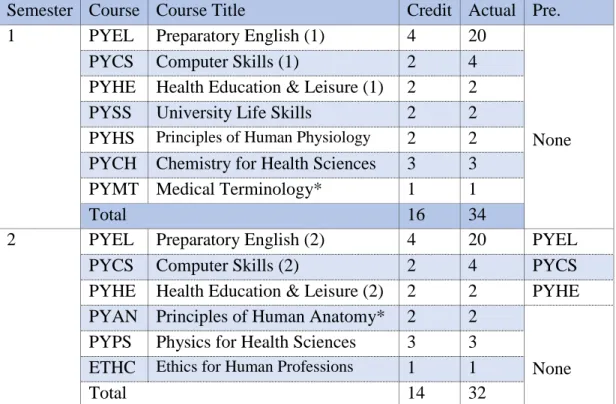
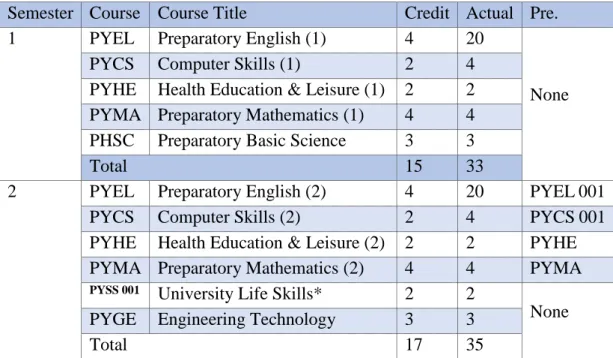
The Preparatory Year Programme (PYP) at Taibah University is one that specifically prepares students for university study. The period of study is one academic year and the programme covers three tracks of study: health sciences, applied sciences and humanities. It is a prerequisite for admission into the undergraduate programmes of different departments, and the student has to study in all tracks English language, university skills. All students are distributed throughout the various faculties and are able to specialize at the end of the programme, according to their results, their interests and the number of students that can be accepted into each department (Dean of Academic Services 2013c).
This study provides value because it evaluates a Saudi educational component that accounts for a substantial proportion of university funding and determines the future of many students. The evaluation of the preparatory year programme facilitates scrutiny of its validity and effectiveness and sheds light on perceived strengths and weaknesses, identifying ways in which it can be improved. There is a need for conducting research in Saudi Arabia to help policymakers and institutions to modify the programmes to ensure that students who participate in them are fully prepared for their university education.
This study evaluates the effectiveness and validity of the programme intended to prepare students for study at Taibah University in Saudi Arabia. This chapter provides an overview of the higher education system in the country, which includes a discussion of the criteria for admission to Saudi universities in general, and Taibah University in particular, as well as the admission tests that are applied. It also provides a description of PYP’s in other Saudi universities and related educational ventures in international
institutions. The programme offered by Taibah University and all its components are presented in detail.
In addition, an overview of the research context the research questions and goals is provided, as well as a description of the research methodology and its tools.
The chapter closes with an outline of the Structure of the Thesis, which provides the focus for the remaining chapters.
1.2Preparatory Year Programme at Taibah University
The Preparatory Year Programme at Taibah University is a programme to prepare students for university study. The period of study is one academic year. The study plan in the programme is divided into three tracks: health sciences, applied sciences and humanities. Some courses can be taken during the first or second semester. The preparatory year programme is a prerequisite to admission into the undergraduate programmes at different departments, such as science, health and the humanities. The student studies in all tracks. English language, university skills and other subjects vary depending on the track. Students can, towards the end of the programme, attend courses in the various faculties and departments at the university in accordance with their interests, their scores and the number of students that can be accepted into each department. (Dean of Academic Services 2013c).
1.3Background of the Researcher
The researcher worked in the public education sector for 16 years as a teacher, student advisor and educational supervisor. Then he served as the head of the Department of Exams and Acceptance in the Management of Education division in the province of Alula. During this period, the researcher also chaired the comprehensive committee evaluation of schools and served as coordinator for the National Centre for Assessment in Higher Education. In conjunction with fulfilling these career obligations, he earned a higher diploma in measurement and evaluation and a Master’s degree with academic distinction and first class honours from Umm Al-Qura University in Mecca.
In 2009, the researcher moved to the Alula branch of Taibah University to work as a lecturer in the Educational Preparation Department of the Faculty of Science and Arts.
university’s Alula division. The researcher’s responsibilities resulted in travel to Ireland at the end of 2010 for English doctoral studies, which was funded by Taibah University.
During the work for the preparatory year programme, there was an urgent need to evaluate its components. The researcher’s year in the supervisory post was the first year during which the programme was offered in Alula. The expansion plan for the programme focuses on new employees, accelerating the rental of buildings for students and students’ fear of undertaking the programme. All these developments encouraged the researcher to augment his expertise in the field.
Additionally, minimal attention has been directed towards preparatory year programmes in Saudi Arabia, and the few studies that address this issue focus only on certain parts, rather than all the components of a given programme. Research on the specific circumstances of Taibah University is even more scarce. To fill these voids, the current research is aimed at exhaustively investigating the components of Taibah University’s preparatory year programme. The investigation spans an analysis of the admission and pass criteria, the purposes and components of the programme and its effectiveness in reinforcing the competencies of students enrolled in different colleges.
1.4Research Location
Al Madinah Province is one of thirteen provinces in Saudi Arabia, and ranks third in terms of area, and fifth in terms of population among other provinces.
The number of provinces of the Emirate Madinah is six provinces (Ministry of Interior 2016). The population in 2010 was more than 1,777,933 people (General Authority for statistics 2016).
The largest of its affiliated cities is Yanbo. Its distance from Medina is 220 km and from Alula about 320 km.
There are two universities in the city of Medina: Islamic University and Taibah University. Taibah University was founded in 2003. The university started with seven colleges and evolved until, in the academic year 2013–2014, it included 28 colleges and one institute. Of these, 16 colleges are located at the headquarters of Medina and the rest in Yanbu, Alula, Hinakiyah, Khyber, Almahd and Badr. The number of university students reached 69,110 students in the academic year 2015-2016 (Taibah University 2016).
1.5Significance of the Study
This study provides value because it evaluated a Saudi educational component that accounts for a substantial proportion of university funding and determines the future of many students. The specific contributions of this work were enumerated as follows:
The evaluation of the preparatory year programme facilitates scrutiny of the validity and effectiveness of the programme.
The evaluation sheds light on the strengths and weaknesses of the programme.
The results are expected to drive improvements to the programme.
The evaluation serves as an initial point of departure for a potentially considerable body of research on the preparatory programmes offered in Saudi Arabian universities.
1.6Aim of the Research
The study seeks to determine the effectiveness and validity of Taibah University’s preparatory year programme by assessing the programme components. To this end, the following objectives are undertaken:
1) To examine the effectiveness with which the admission criteria of Taibah University predicts the academic performance of preparatory year students. 2) To investigate, from students’ and trainers’ perspectives, the relationship between
the contents and goals of the preparatory year programme.
3) To assess the programme components from the perspectives of students and trainers.
4) To evaluate the extent to which the programme objectives are achieved, as viewed by students and trainers.
5) To determine the viewpoints of faculty members regarding the effectiveness of the programme.
Note that some colleges (e.g. community colleges) and university departments do not require enrolment in preparatory year programmes.
1.7Research Questions (RQs)
RQ 1 - What is the predictive effectiveness of the criteria for admission into Taibah University’s preparatory year programme for each track and gender?
RQ 2 - From the perspectives of students, how effective is the preparatory year programme?
The sub-questions were as follows:
- What are the students’ evaluations of the programme’s main elements (academic content, trainers, methods of evaluation, academic advising and university environment)?
- To what extent does the programme achieve its goals?
- What is the relationship between the subjects offered in the programme and its goals?
- Does the branch significantly affect the students’ evaluations of the programme’s main elements?
- Do the students significantly differ in their assessments of the programme’s main elements in relation to gender?
RQ 3 - From the perspectives of trainers, how effective is the preparatory year programme?
The sub-questions were as follows:
- What are the trainers’ evaluations of the programme’s main elements (academic content, methods of evaluation, academic advising and university environment)?
- To what extent does the programme achieve its goals?
- What is the relationship between the subjects offered in the programme and its goals?
- Do the trainers significantly differ in their evaluations of the programme’s main elements in relation to branch?
- Do the trainers significantly differ in their assessments of the programme’s main elements in relation to gender?
RQ 4 - How effective is the preparatory year programme in improving the performance of undergraduate students who completed it in comparison with those who did not enrol in it?
The sub-question is:
- Do the Faculty members significantly differ in the effectiveness of the preparatory year programme in relation to gender?
1.8Methodology
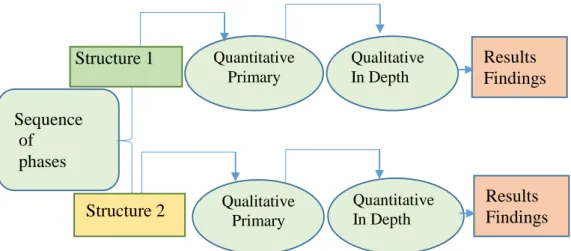
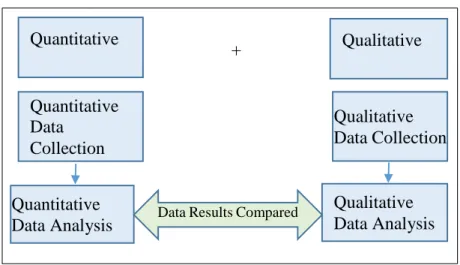
The data collection process adopted a mixed-methods approach, employing both qualitative and quantitative techniques. The Concurrent Triangulation Strategy was chosen because when one uses more than one tool or method of data collection and analysis it is important to verify or ascertain the validity of the results. The quantitative data consisted of students’ admission scores and average grades at the end of the preparatory year, which were provided by the Deanship of Admission and Registration at Taibah University. In addition, further data was obtained from online questionnaires distributed by e-mail to the PYP students, trainers and faculty members. The qualitative data was compiled from semi-structured interviews that were carried out with the respondents. The questionnaires provided the researcher with an opportunity to draw large amounts of information from the respondents. This is one advantage that it holds over other methods, such as interviews that can be extremely time consuming. Interviews were therefore used to enhance reliability of the data.
The pilot study involved a total of 108 students, 22 trainers and 22 faculty members drawn from Alula Branch. This sample was obtained randomly. The pilot study that was carried out for the interview process was conducted with three interviewees; one
To determine the predictive value of the admissions criteria, the final sample consisted of 3,876 students. Pearson’s correlation coefficient and multiple regression analyses were conducted, and frequency tables and graphs used to display the data. The questionnaires were completed by 1,972 students, 165 trainers and 98 faculty members. Statistical analysis was carried out to calculate the percentages of frequencies, means and standard deviations for each item and for an entire axis; a t-test was conducted to compare averages on the basis of gender, and one-way ANOVA was performed to compare means on the basis of branch. Finally, posthoc tests based on the ANOVA results were conducted when required.
The qualitative data was collected through 17 semi-structured interviews. Eight of these were with students, four with trainers and five with faculty members. NVivo 10™ software was selected to assist in the analysis of the data.
1.9The Key Contributions of this Study
This study could help Taibah University and the programme managers review the programme and address weaknesses in the programme, leading to improved performance within the programme. It also sheds light on some of the items that need further study and research. Regarding the predictive ability of the admission criteria, the results of this study will help to review the proportion of each criterion in the weighted grades for accepting students in the light of the strength of each criterion. This study used a mixed approach. Therefore, this study may encourage more use of this method in research in Saudi Arabia. The study can also be applied to other programmes in Saudi universities to help compare them. The approach of this study and its tools, including the analysis techniques, can be used to evaluate the preparatory year programmes applicable in all Saudi universities due to the great similarity among
these programmes. It can also be used to evaluate similar academic programmes. In addition, this study reviewed experiences around the world with respect to acceptance criteria and the programmes that prepare students for university study. The methods of evaluating university programmes would be useful for researchers and those interested in Saudi Arabia.
1.10Higher Education Policy in Saudi Arabia
Saudi Arabia was founded in 1932, during a time when the country was suffering from poverty and limited educational services. Only 12 schools with 700 students existed. The discovery of oil in 1938 changed the economic and developmental conditions of the country. Likewise, the education sector rapidly evolved; in 1950, 365 schools that catered to 42,000 students were in operation. The year 1954 saw the formation of the Saudi Ministry of Education, which monitors all education sectors in the country. At that time, education programmes and institutional offerings were available exclusively to male students. The first university in the country, King Saud University, was established in Riyadh in 1957 to meet the demand for professional education for young Saudi men. The establishment of the university helped satisfy Saudi Arabia’s educational needs without students having to acquire education abroad. By 1959, the need to educate the female population grew, thus prompting King Saud University to seek permission, support and approval from religious scholars and clerics to provide education for women. This development led to the establishment of the first school for girls in Riyadh and gave rise to the norm of having single-sex schools in the country. The practice of separation between males and females at the schools persists to this day (Alamri 2011).
Public primary and secondary education in Saudi Arabia is provided with no cost to Saudi and non-Saudi students, but higher and professional education is provided solely to Saudi students. The students are given stipends as encouragement to pursue higher education—an ineffective scheme given that the literacy level in the country has remained low, especially amongst female students. According to Prados and Alfred
94.68%, of which males accounted for 96.79% and females accounted for 87.92% For those who above 15 years old. According to the Saudi Central Department of Statistics and information website.
After the establishment of King Saud University in 1957, six other universities were established in the next 20 years. In 1961, Islamic University was formed (Islamic University 2012), and in 1963, the King Fahd University of Petroleum and Minerals was established (King Fahd University 2014). King Abdul-Aziz University and Umm Al-Qura University were founded in 1967 (King Abdul-Aziz University 2014; Umm Al-Qura University 2014). The year 1974 witnessed the founding of Imam Muhammad bin Saud Islamic University (Imam Muhammad bin Saud University 2014), and the following year, King Faisal University was formed (King Faisal University 2014).
Higher education in Saudi Arabia is managed by the Ministry of Education, which espouses various objectives. First, it aims to guide the establishment of higher education institutes and focus on courses that are needed by the country’s learners. Second, the Ministry is mandated to develop and manage higher education institutes in the country. Third, it is responsible for improving communication amongst higher education institutes and interaction with other relevant ministries. Finally, the Ministry represents Saudi Arabia in various cultural offices across the globe, such as the Saudi Arabian Cultural Mission to Washington, D. C. in 2011. The Ministry of Education is the central authority that directs higher education (university education) to ensure university operations conform to government policies. It also coordinates and promotes scientific research in accordance with the rules and regulations of universities (Alamri 2011; Ministry of Higher Education 2010).
Higher education in Saudi Arabia has exhibited strong growth and development, as reflected by the establishment of a number of private education institutions in the last decade. Today, institutions offering education in various fields continue to be established. The country currently has 25 government universities (Ministry of education 2016a), ten private universities (Ministry of education 2016b) and 39 private colleges. (Ministry of education 2016c)
Saudi Arabia is a member of the Organization of the Petroleum Exporting Countries (OPEC), and is the largest oil supplier in the world with substantial oil reservoirs. The increase in economic dependence on oil revenues protected Saudi Arabia from the 2008 financial crisis, during which time the government was able to sustain the education scheme/policy called the ‘King Abdullah Scholarship Programme’. The programme provides government funding to students who wish to acquire education overseas, and the scholarship covers tuition fees and living expenses for the entire duration of the study. This programme was initiated in 2005 to satisfy labour demands, especially for university faculty members. From its inception, approximately 70,000 Saudi students travelled to foreign countries to enrol in undergraduate, graduate and postgraduate programmes in various disciplines. The majority of these students studied in the United Kingdom, the United States, Australia and Canada (Ministry of Higher Education 2014). According to a report by the Ministry of Higher Education (2014), UNESCO has ranked Saudi Arabia among the global top four in terms of the population of students studying abroad. The top three are China (421,000 students), India (153,300 students) and South Korea (105,300 students). UNESCO also indicates that more Saudi students study overseas than Japanese and American students. Furthermore, UNESCO has ranked Saudi Arabia at the top position in terms of the proportion of overseas-studying individuals out of the country’s total population at 0.03%.
Saudi students have ample opportunity to study under different disciplines in various international universities, regardless of gender. However, Saudi female students are required to be accompanied by a close male relative (Mehram in Arabic) so they have the support they need should they encounter difficulties abroad. The government also shoulders the living costs of the Mehram. In 2010, the Ministry of Higher Education began providing scholarship programmes to Saudi students who want to study at private Saudi universities, thereby expanding the opportunities of those who cannot afford higher education at such institutions.
The measures implemented by the government attests to Saudi Arabia’s commitment to continually develop its higher education sector. As previously stated, these measures are expected to enable the country to fill its labour gap. Accordingly, such
improvements will translate to greater career opportunities for thousands of higher education students (Alamri 2011).
On January 29, 2015, a Royal Decree was issued to merge higher education bodies and the Ministry of Education as one ministry.
1.10.1Higher Education Policy as Articulated in the Policy Documents of Saudi Arabia
The fifth item in Part III is associated with the goals of higher education and the educational policy goals of Saudi Arabia. Article (108) indicates that higher education encompasses all the stages, types and levels of practical specialisation and the care of skilled individuals and geniuses for the development of their talents. These measures are designed to satisfy the different needs of the community in the present and future; the manner by which these needs are met should keep pace with useful development that realises the noble goals of the nation. The most prominent goals of higher education in terms of searching for individuals who will competently ensure the sustained progress of the country are as follows (The Higher Committee for Education Policy 2005):
Article (110): This article revolves around the preparation of highly qualified citizens, who are eligible scientifically and intellectually to perform their duties in the service of their country and promote their nation in accordance with the sound beliefs and wise principles of Islam.
Article (111): This article mandates the provision of opportunities for genius students to pursue graduate studies in various scientific specialisations under the same disciplines. The fifth item in Part IV of the article is associated with the design of higher education stages. The contexts involve are indicated in the succeeding articles. Article (130): Higher education begins after secondary schooling or its equivalent. Article (131): Higher education in its various civilian and governmental branches is subject to the authority of the Supreme Education Institution.
Article (134): Higher education is coordinated amongst different colleges to achieve a balance in the country’s needs with respect to various facilities.
Article (135): Departments of higher education studies in various specialisations under the same disciplines should provide education to students whenever their abilities and other potential factors warrant such provision.
Article (136): Universities grant university degrees to graduates of different specialisations.
1.10.2Orientations and Goals of the Ninth Development Plan for Higher Education
The Ninth Development Plan anticipates that higher education in the Kingdom will face two challenges: the rising social demand for higher education and the increasing demand for high-quality professional competencies in the labour market. These challenges involve two specific dimensions quantitative and qualitative which must be taken into account when designing future enrolment policies. The strategy is based on the development of higher education in the plan in accordance with a set of general goals, policies and detailed objectives that serve as vectors for any future designs in the higher education sector. The most significant goals in this regard are provided below. (Ministry of Economy and Planning 2009)
1.10.2.1General Goals
This plan aims at increasing the internal and external efficiency. This efficiency is key in the achievement of development requirements. It is also meant to improve the quality of education by applying modern management systems and optimizing the use of information technology and communications. The plan will also incorporate local communities into the actions by creating active mutual partnerships. Scientific institutions across the globe have the potential of helping in the process of realization the goals under this plan. Therefore, the plan will develop coordination and cooperation with these institutions both within the country and globally in an effort to achieve these development goals. (Ministry of Economy and Planning 2009)
1.10.2.2Policies
As indicated in the Ninth Development Plan, policies are classified according to target objectives. Various policy statements have been put in place to optimise the operations towards the objectives. One of the policies provides for the inclusion of the courses and curricula that impart skills, knowledge and attitudes that meet the needs of the labour market. There will be procedures to determine the quality of various higher education indicators in regard to the faculty members, students, actual hours and the programmes that characterize the education process. Periodical reviews of the plans, curricula and the study programs will be carried out. These reviews will be geared towards linking the educational process of these aspects to their quality output. The plan will also seek to improve the quality of higher education in terms of technical output. Another policy seeks to increase the flexibility in educational programmes at higher learning institutions. The plan is also intended to work towards attracting outstanding faculty members in order to promote the viability of the workforce. It will also enhance the effectiveness of application of modern management concepts in running higher education institutions and ensure that they benefit from successful experiences. Another policy provides for the creation of digital boundaries through providence of data banks and other digital resources in all higher learning institutions. (Ministry of Economy and Planning 2009)
1.10.2.3 Specific Goals of the Ninth Development Plan
The plan aims at the continual evaluation of the curricula of the university. It will also enhance internal efficiency of institutions of higher education and reduce the average number of years spent by students in those institutions until graduation is 4.5 years for colleges with four-year studies, 5.5 years for colleges with five-year studies and 6.5 years for colleges with six-year studies. The Ninth Development Plan will also widen the dissemination of cooperative education mechanisms in institutions that are compatible with this type of education. The dynamism in labour market needs necessitates that education be aligned to the changes in order to make the students able to compete for various opportunities. The plan will increase the programs and courses in an effort to respond to this dynamism. It will also develop services and student activities such as healthcare, housing, sports, cultural and social activities, social care
for students in need, libraries, meals, transportation services and books. (Ministry of Economy and Planning 2009)
1.11Preparatory Year Programme in Some Countries
1.11.1Preparatory Year in the United Kingdom and Ireland
An increasing number of students from non-English speaking countries travel to Ireland and the United Kingdom(UK) to seek additional assistance in developing their English language skills. This influx has motivated many universities and other educational institutions to provide foundational programmes. Education in the foundation year encompasses the provision of the basic knowledge required for admission and study at the universities of Ireland and the UK. Foundational courses are provided by the universities themselves or institutes who partner with universities (Education in Ireland 2014). Welcome Ireland (2014) indicates that after completing foundational courses, approximately 80% of students acquire admission to their university of choice and disciplinary preference. Foundational programmes are recognised by international bodies, including the Saudi Ministry of Education. A foundational programme consists of several courses. Core courses may include English, mathematics and other classes intended to develop essential skills, such as communication, cultural awareness and information technology competency. Courses are taken in accordance with a student’s target field of study for his/her undergraduate education. The training and education acquired from these courses facilitate performance in undergraduate programmes. Students can choose subjects amongst four disciplines: business, information technology, medical sciences or sciences. Accordingly, students are taught different courses in a given subject (Education in Ireland 2014; The Complete University Guide 2014).
Lectures are a primary medium for course delivery, and performance is determined by end-year examinations in May, class attendance and periodic assessments throughout the academic year (Welcome Ireland 2014). Most foundational programmes are administrated by universities with faculty dedicated specifically to such initiatives. Some of these institutions are University College Dublin (UCD), DCU, Waterford
are required to obtain a minimum grade of D to pass the foundation year and acquire eligibility to carry on with their studies in a university undergraduate programme (UCD 2014; Waterford Institute of Technology 2014; DCU 2014).
Certain institutes have a standing joint venture with universities to provide the Northern Consortium United Kingdom (NCUK) foundational programme, which was developed in 1987 when 11 universities entered into a partnership to design the programme. In Ireland, only one institute offers the NCUK foundational programme. This institute is the Dublin International Foundation College (DIFC), which teaches various courses under the initiative. It offers the foundational programme to undergraduate students and graduate programmes to graduate students. The aims of the programme are to develop essential English language skills and deliver the courses that are necessary to future education (NCUK 2014). The English language course at DIFC is English for Academic Purposes (EAP); passing this class exempts students from taking international English examinations (DIFC 2014). The institute also assists students in the university application process. Ireland is home to 11 NCUK partner universities, namely, NUI Maynooth, University College Cork, the University of Limerick, Queen’s University Belfast, NUI Galway, the University of Ulster, Dublin Institute of Technology, Galway Institute of Technology, Athlone Institute of Technology and Griffith College Dublin. In the UK, seven institutions provide the NCUK foundational programme. Some of the 16 partner universities that offer the programme are the University of Liverpool, the University of Manchester, the University of Bradford, the University of Huddersfield, the University of Sheffield and the University of Leeds (DIFC 2014; NCUK 2014).
Students are required to satisfy eligibility standards when applying for the NCUK foundational programme. They should have completed 12 years of schooling (i.e. completed secondary education), have a minimum IELTS score of 5.0 and completed the online application form on an institution’s website (DIFC 2014). Numerous non-English speaking students, such as Saudi, Chinese and Polish students, are currently enrolled in the NCUK programme.
1.11.2Preparatory Year Programme in Saudi Arabia
The objective of the English language Preparatory Year Programme (PYP) is to enhance Saudi students’ English proficiency skills for them to gain eligibility for study in undergraduate programmes in the country. The programme also aims to improve students’ English comprehension and speaking abilities, which is achieved by employing native English-speaking teachers. These multinational English tutors join a university to develop the curriculum, provide mentorship and work towards improving the English language skills of Saudi students. In Saudi universities’ preparatory year programmes, English has become the primary medium of instruction for all courses, given that the language is viewed as important in various fields. Preparatory programmes are also designed to satisfy the educational objectives of Saudi Arabia (Alshumaimeri 2011).
The English language programme spans two semesters in one academic year. Each week, students are taught for 20 hours, which accumulates to 600 hours over the two semesters. The programme objectives are to improve students’ English language skills and develop language abilities that are essential to educational and professional endeavours. The first semester focuses on general English, which comprises lessons on expressing and communicating in the language. The second-semester centres on academic English language skills, with the curriculum emphasising academic reading and writing abilities. Academic English is taught in a manner that prepares students for completing international English language tests, such as IELTS, TOEFL and the Preliminary English Test (PET).
The student-specific objectives that should be realised at the end of the English language programme are as follows. Firstly, students should possess advanced skills and linguistic competence in the English language. Secondly, they should exhibit effective English communication in written and spoken forms. Thirdly, they should exhibit basic academic English language skills. Lastly, they should be able to perform in international English tests and pass with minimum requirements.
Longman. Such partnerships have improved the curriculum, English teaching materials and preparatory year programmes offered in Saudi Arabia.
Students applying for a preparatory year programme are required to take a placement test, which can vary between a computer- and paper-based test. The test enables an institution to determine the proficiency levels of students. The results are classified into six levels according to English language abilities. The English language programme develops and improves students’ language competence in listening, speaking, reading and writing. At the same time, the focus is devoted to grammar, vocabulary and pronunciation. The comprehensive methodology adopted in the programmes is aimed at enhancing fluency and accuracy in using the English language.
Teaching staff are qualified native English teachers, of which 80% use English as their first language. Teachers possess substantial credentials, having graduate and postgraduate qualifications in English, as well as training from Cambridge-based English language teaching institutions (CELTA and DELTA).
Teachers are integral to encouraging English as a Foreign Language (EFL) students. This motivation can stem from the methods used to teach the language, teachers’ charismatic personalities, course materials or the holistic system adopted by an institution. Teachers are in a position to share their experiences with students, thereby enabling them to provide support during a student’s course of study. Authentic and interesting learning materials foster enthusiasm in students. The different measures teachers have incorporated into their teaching have also facilitated improvement in the learning abilities of students. A necessary requirement is to develop teaching methods that motivate students, reinforce learning abilities, foster interaction with students and create an engaging learning atmosphere. Providing a dynamic and diverse educational system that considers the individual characteristics of learners is equally important (Alshumaimeri 2011).
The preparatory programmes in Saudi Arabia are newly developed in response to the demand for improved English language skills that will afford students the eligibility and competence required to pursue higher education and professional careers. Such programmes are designed specifically for newly graduated high school students who