LIST OF ARTICLE PHYSICS EDUCATION
Code TITLE Page
PHY-01019 THE CHARACTERISTICS MASTERY TEST
DEVELOPMENT OF EARTH AND SPACE CONCEPTS FOR TEACHERS PROSPECTIVE
Taufik Ramlan Ramalis, Liliasari, Dany Herdiwidjaya
P-5 PHY-01044 DEVELOPING RESEARCH-BASED PHYSICS
LEARNING MODELS WITH GUIDED INQUIRY APPROACH FOR STUDENTS OF SMAN 1 PADANG Usmeldi
P-10 PHY-01064 THE RELATIONSHIP BETWEEN STUDENTS’S SELF
-EFFICACY AND PHYSICS ACADEMIC ACHIEVEMENT WITH PEER INSTRUCTION
Shinta Faramita, Ida Kaniawati
P-18 PHY-01072 THE EFFECT OF METACOGNITIVE STRATEGY ON
STUDENTS PROBLEM SOLVING ABILITY Nyoman Ari Cahyani Damawati
P-24 PHY-01094 EFFECT OF CONTEXTUAL LABORATORY METHOD
ON SCIENCE PROCESS SKILLS Irfan Ansori, Dadi Rusdiana
P-29 PHY-01128 THE EFFECTIVENESS OF USING INTERACTIVE
MULTIMEDIA TO INCREASING STUDENTS MASTERY CONCEPT ON ABILITY OF NATIONAL EXAMINATION OF PHYSICS IN TERNATE CITY NORTH MALUKU PROVINCE
Saprudin, Nurdin A Rahman
P-37
PHY-01130 MODEL PROBLEM SOLVING LABORATORY TO IMPROVE COMPREHENSION THE CONCEPT OF STUDENTS
Adam Malik
P-43 PHY-01191 GRAPHICAL REPRESENTATION PROFILE OF
PROSPECTIVE TEACHERS OF PHYSICS ON THERMODYNAMICS COURSE
Abdul Hakim, Liliasari, Agus Setiawan
P-49 PHY-01216 COOPERATIVE LEARNING JIGSAW TYPE TO
INCREASE MASTERY CONCEPT OF PHYSICS STUDENTS IN ELECTRIC FIELD TOPICS
Muhamad Gina Nugraha, Duden Saepuzaman, David E Tarigan, Kartika Hajar Kirana
P-53
PHY-01225 INFLUENCE OF THE NATURE OF SCIENCE
PERCEPTION TO TEACHING-LEARNING ABILITY AND SCHOOL PHYSICS CONCEPT ACQUISITION AT PROSPECTIVE PHYSICS TEACHERS
LiaYuliati, Nuril Munfaridah
Bandung, October 17
th, 2015
2 P
Code TITLE Page
PHY-01226 THE DEVELOPMENT OF ANDROID-BASED APPLICATION TO IMPROVE THE ACCURACY, EFFICIENCY, AND EFFECTIVENESS OF MICRO TEACHING AND INTERNSHIP ASSESSMENT Choirul Huda, Djoko Adi Susilo
P-65
PHY-01242 THE EFFECTS OF SCAFFOLDINGS IN COOPERATIVE LEARNING ON PHYSICS ACHIEVEMENT AMONG SENIOR HIGH SCHOOL STUDENTS
Supriyono Koes H.
P-69 PHY-01244 DEVELOPMENT OF VIRTUAL SIMULATION MEDIA AS
A TOOL TO INCREASE STUDENT'S CONSISTENCY CONCEPTION ON HEAT TRANSFER CONCEPT Zulmiswal Suherli, Andi Suhandi
P-75 PHY-01257 IDENTIFICATION ON PRE-SERVICE TEACHERS
MISCONCEPTION ON ELECTROSTATIC CONCEPT WITH THREE-TIER TEST DIAGNOSTIC INSTRUMENT Uswatun Khasanah, Agus Setiawan
P-81 PHY-01282 DESIGN OF MR.FLUID INSTRUCTIONAL MEDIA FOR
FOSTERING STUDENTS’ CREATIVE THINKING
Eko Hari Tiarto, Abdurrahman
P-85 PHY-01311 THE IMPLEMENTATION OF PROBLEM BASED
LEARNING MODEL THROUGH SCIENTIFIC
APPROACH TO IMPROVE STUDENT'S CONCEPTUAL UNDERSTANDING ON SIMPLE HARMONIC MOTION Muslim
P-91
PHY-01327 DESIGN STUDENT WORKSHEET AS A FACILITATOR OF STUDENT SCIENTIFIC ARGUMENTATION SKILLS Arina Khusnayain, Agus Suyatna
P-96 PHY-01345 REQUISITE ANALYSIS OF EARTH AND SPACE
SCIENCE TEACHING MATERIALS THAT
ACCOMMODATES MULTIPLE INTELLIGENCES AND
EMBED JUNIOR HIGH SCHOOL STUDENTS’
PERSONAL CHARACTER
Winny Liliawati, Jusdhistira Aria Utama, Taufik R Ramalis
P-102
PHY-01358 THE NEED ANALYSIS DEVELOPMENT OF TEST
INSTRUMENT BASED ONINQUIRY FOR UNCOVERING STUDENTS HIGHER-ORDER THINKINGSKILLS
Rika Syafitri, Chandra Ertikanto
P-108 PHY-01387 THE DESCRIPTION OF LEARNING PHYSICS IN
HIGHSCHOOL OF BANDAR LAMPUNG
CITY:PERSPECTIVESF INQUIRY BASED LEARNING Agus Riawan, Agus Suyatna
P-114 PHY-01388 THE COMBINATION OF EXPERIMENTAL
LABORATORY AND SIMULATIONS (CELS):AN INTEGRATED MEDIA TO UNDERSTAND FORCE DIAGRAM CONCEPT FOR SENIOR HIGH SCHOOL STUDENTS
Code TITLE Page Duden Saepuzaman, Achmad Samsudin, Asep Dedy Sutisno,
Ida Kaniawati, Lili
PHY-01396 DIDACTICAL DESIGN RESEARCH: ANALYZING LEARNING PROCESS OF EYES CONDITION CONCEPT
BASED ON STUDENTS’ LEARNING OBSTACLE USING
RETROSPECTIVE ANALYSIS
Dessy Norma Juita, Harun Imansyah, Ridwan Efendi, Agus Fany Chandra W, Haris Djajadi
P-126
PHY-01397 USING INTERACTIVE MULTIMEDIA TO
UNSERSTANDING OF THE CONCEPT OF STARS AT IPBA LECTURES
Erwina Oktavianty
P-133 PHY-01399 PROFILE MISCONCEPTIONS AND CONCEPTION OF
STUDENTS PRE-SERVICE PHYSICS TEACHER ON TOPIC HEAT AND HEAT TRANSFER
Ika Mustika Sari, Duden Saepuzaman, Saeful Karim
P-138 PHY-01424 INVESTIGATING THE ABILITY IN SOLVING HIGHER
ORDER THINKING TEST OF CIRCULAR MOTION Ponimin, Suparni, Sarwanto, Widha Sunarno
P-142 PHY-01446 APPLICATION OF REMEDIAL TEACHING WITH
INTERACTIVE DEMONSTRATION METHOD TO MASTERY LEARNING ACHIEVEMENT AND PROFILE OF STUDENTS MOTIVATION TO LEARN ON THE CONCEPT OF HEAT
Maulia Prhatiwi, Ida Kaniawati
P-146
PHY-01451 THE THREE-TIER TEST (TTT) FOR IDENTIFY THE
QUANTITY OFSTUDENT’S MISCONCEPTION ON ARCHIMEDES’S LAW.
Riski Muliyani, Ida Kaniawati, Lilik Hasanah
P-153 PHY-01475 THE CULTURE OF TEACHER SUSING AUTHENTIC
ASSESSMENT INSTRUMENTS IN PHYSICS LEARNING Viyanti, Cari, Widha Sunarno, Zuhdan Prasetyo
P-158 PHY-01488 DEVELOPING TEACHING MATERIALS AND
ASSESSMENTS OF INTRODUCTORY PHYSICS BASED ON TAXONOMY OF INTRODUCTORY PHYSICS
PROBLEM (TIPP) AND LOCAL CULTURE TO IMPROVE
PROBLEM SOLVING ABILITY OF TEACHER CANDIDATE STUDENTS
Nur Jannah, I Wayan Darmadi, Abdul Rahman
P-164
PHY-01509 PRE-IDENTIFICATION OF PHYSICS STUDENTS’ MENTAL MODELS IN THE CONCEPT OF HEAT CONVECTION THROUGH PREDICTION
Ika Mustika Sari, Saeful Karim, Dadi Rusdiana
P-174 PHY-01517 ANALYSIS OF STUDENTS’S MULTIPLE
REPRESENTATION CAPABILITIES PROFILE BASED THE RESULTS OF LIMITED DESCRIPTIONS TEST AND STRUCTURED DESCRIPTIONS TEST AT JUNIOR HIGH
Bandung, October 17
th, 2015
4 P
Code TITLE Page
SCHOOL
Sidik Nulhaq, Setiya Utari, Parsaoran Siahaan
PHY-01530 STUDENT’S SCIENTIFIC CONSISTENCY OF OPTICS GEOMETRICAL USING THREE TIER TEST
Siti Sarah Kaniani, Selly Feranie, Yuyu Rachmat Tayubi Ika Mustika Sari, Duden Saepuzaman, Iyon Suyana
P-186 PHY-01531 FIVE-STAGE APPLICATION OF CONCEPTUAL
MODELS ASSISTED TEACHING HANDS-ONACTIVITY TO IMPROVE STUDENT SCIENTIFIC CONSISTENCY IN MATERIAL TEMPERATURE AND HEAT DenisaIrla Saeful Karim, Selly Feranie, Ika Mustika Sari, Duden Saepuzaman, Iyon Suyana
P-191
PHY-01536 DESCRIBING THE IMPACT INQUIRY BASED
ECOPEDAGOGY ON STUDENTS’ACHIEVEMENT AND
ATTITUDES
Nurasyah Dewi Napitupulu, Ahmad Munandar
P-197 PHY-01176 DESIGN OF SKY QUALITY METER (SQM) POSITION
CONTROL BY EMPLOYING VISUAL-BASED PROGRAMMING
Prasika Dharma Yoga, Ahmad Aminudin, Judhistira Aria Utama
P-203
PHY-01205 ELECTRICAL CHARACTERIZATION OF FE2TIO5 :1.0 % MOLE MNO2CERAMICS MADE WITH DIFFERENT SINTERING TIME FOR NTC THERMISTOR
Wiendartun, Risdian, Fitrilawati, RE Sinegar
P-207 PHY-01526 SYNTHESIS AND CHARACTERIZATION OF
NANOCOMPOSITE MATERIAL USING EPOXY RESIN MATRIX AND NANOSILICA
Leni Marlina, Ida Sriyanti
P-213 PHY-01456 EFFECT OF TREFFINGER CREATIVE PROBLEM
SOLVING (CPS) STRATEGY ON PHYSICS LEARNING FOR ENHACHING CPS THINGKING SKILLS IN VOCATIONAL STUDENTS
Rahayu Retnaningsih,Johar Maknun
PHY-01019
The Characteristics Mastery Test Development of Earth and
Space Concepts for Teachers Prospective
Taufik R. Ramalis1, a) Liliasari2,b) and Dany Herdiwidjaya3)
1)
Physics Education Department, UPI
2)
Postgraduate School, UPI
3)
Astronomy Department, ITB
Article info Abstract
Keywords: This study was aimed to analyze the characteristics of the development of tests mastery of the concept of earth and space according to classical test theory and item response theory. The test is based on the basic concepts and essential principles of the earth and space science. The research method using mixed methods with design embedded experimental models. The analysis in this study is based on 41 responses student teachers who have taken courses ESS at the Physics education department at one of the educational and educators institutions in Bandung city. By comparing the classical test theory and item response theory, the overall conclusion of this evaluation is that the model of 3PL is better to use when evaluating the test.
Corresponding Author:
a)[email protected] b)[email protected]
INTRODUCTION
Earth and Space Science (ESS) is a part of the Physics, which specifically examines about natural phenomena on Earth and celestial bodies as part of the solar system and the universe as a whole. Some theories and laws of physics can be used to explain more in depth the state of the earth and the universe as a whole. As the mathematical tools used in physics and engineering, also contribute to further study of the universe. Some concepts or principles of physics and some natural phenomena can be studied with the help of mathematics. BA is our home and roof. We rely on both to the existence and survival. Resources give us groceries for life. A simple change in the system of Earth and Space have a major influence on society and on the journey of human civilization. Understanding Earth and Space systems and how we interact with it, it is very important for survival.
The phenomenon of ESS everyday including storms, tsunamis, extreme weather, floods, volcanic eruptions, landslides, so familiar with the community, therefore some studies highlight the need to improve the mastery of concepts BA at school or college, through learning associated with inquiry and direct experience1. In addition, the inquiry can foster critical thinking skills, which is the basis for developing other high-level skills2.
In the last 15 years, research on science education BA increased relatively more sharply compared to other science education research, this is in line with the issues which often arise and be the talk as well as the needs of the people in America, even in the world3. Student misconceptions in ESS as well as the textbooks are still often found4. One of the most fundamental challenges in creating a society which berliterasi BA is to instill the basic concepts and understanding of age-appropriate BA learners, and this can be built through the learning experience5.
ESS literacy is very important in the formation of history. Many of the challenges facing humanity (the depletion of energy and mineral resources, climate change, water shortage, natural disasters) are directly related to ESS. There are tough decisions to be
Bandung, October 17
th, 2015
6 P
taken by the government (local and central) associated with these problems, and the survival of the people of the twenty-first century will depend on the success of this decision. Human history is a record of creativity and ingenuity of people in solving problems. Solutions relating to the issue of BA and with the current challenges, will also come from human creativity, both as individuals and society. We need society and government ESS literate.
To create a society that ESS literacy, influenced by the quality of education including educational aspects of science teacher candidates in it, which is believed to play an important role for science education reform. Prospective teachers must be prepared so as to understand, control, and foster ESS literacy for everyday life of their students.
Evaluation of learning outcomes in FPMIPA UPI (mid and last semester), using a form of test descriptions and / or multiple-choice test. Construct a multiple choice test, but must pay attention to distinguishing features and level of difficulty, also should pay attention to detractors option. To determine the quality of the test items required analysis of the characteristics of test items, so that the strength or weakness of the test can be known.
This study aimed to analyze the characteristics of the test mastery of ESS concepts base on classical test theory (CTT) and item response theory (IRT). Analysis with CTT that determines the standard deviation, reliability, distinguishing features and level of difficulty. IRT analysis through item characteristic curve and function information.
RESEARCH METHODOLOGY
Based on the type of data, the model used in this research is with approach Embedded Mixed Methods Experimental Model. This model has inherent qualitative data in experimental design. Embedded design procedure is to combine (mix) a set of different data in a single level design. Priority quantitative model, with qualitative data attached to this methodology6. This research method is shown in Figure 1:
In the qual before intervention, qualitative data the essential principles and basic
concepts ESS obtained from the field study, the study of literature, as well as analysis and synthesis of the journal. At this stage produced a syllabus and lesson plan, as well as the concept of mastery test instrument ESS. Tests consists of 40 questions multiple choice form with four option. Grating tests listed in appendix table 1. The device learning and test devices examined by two expert people, and the results of judgment becomes the input for the revision. Aspects examined by the expert covers material and construction tests.
In the QUAN pre measure, exlore initial information ESS concept mastery students
through tests that have been compiled. Intervention in the form of the form of activity review and revision based test that's been made, he explored the essential principles and basic concepts ESS (Qual during intervention).
After the intervention, test mastery of ESS concepts re-evaluated in QUAN post measure, with the classical item theory and response item theory. Results of analysis for
intervention becomes the input to increase quality tests mastery of concepts ESS (qual after intervention). After a whole series of stages completed, then analyzed and interpreted (Interpretation based on QUAN (qual) result).
FIGURE 1. Embedded Experimental Research Design Model
inter - vention qual before intervention QUAN pre measure QUAN post measure qual after intervention Qual during intervention Interpretation based on QUAN ( qual) result
Test was given to 41 students who have taken the ESS course. CTT analysis is to determine the standard deviation, the Kuder Richardson (KR-20) reliability, discrimination index by point biserial correlation coefficient (rpbis), level of difficulty (p) by an average of correct answers, and the standard error of measurement.
IRT analysis is to determine the parameters of the test item; distinguishing (a), the level of difficulty (b), and factor guesses / guessing (c); by the maximum likelihood method. Then the characteristic curve analysis tests based on test items. Item characteristic curve is a mathematical function that connects the probability of correctly answering an item tests the ability of the participants. The types of item response theory depends on the parameters used are7:
1. One-Parameter Logistic Model (1PL), emphasizes the difficulty level parameter item (b). The equation are:
... (1) where,
Pi(θ)μ probability that the test participants have the θ ability randomly selected to answer the i-item correctly. : the level of ability of the subject (as independent variables). a : discrimination index each item. bi : difficulty level of item. i : The subscript i indicates the item; 1, 2, 3 ... n n : number of items in the test.
2. Two-Parameter Logistic Model (2PL), involves two parameters namely the level of difficulty of items (b) and discrimination index item (a).
….. (2)
where, ai:
discrimination index item. D: scaling factor which value is 1.7
3. Three-Parameter Logistic Model (3PL), involves three parameters namely the level of difficulty of items (b) and distinguishing items (a) and the guesses factor (c). The equation is
….. (3)
where ci: guess factor item.
From equation (1), (2), and (3), it appears that the 2PL model is a special case 3PL model when factors guesses ci = 0. And the 1PL model is a special case of 2PL models when distinguishing ai = a. Each parameter in 1PL, 2PL and 3PL calculated using eirt
software version 1.3.0. Software have been relatively easy to use and compatible with MS
Excel.
Information of each model are described by function information or information function (IF). IF is a function of the extent to which the chosen 1PL, 2PL, or 3PL model, is able to provide information on the estimated ability. The higher the peak of the IF, the more informative also chosen model is able to explain traits-level test participants. Mathematically, a function information item (IF) is expressed by the equation:
….. (4)
Derivative ∂Pi(θ)/∂θ shows the gradient of the curve characteristics of the item. The maximum coefficient of direction occur at the steepest part. This happens on the difficulty level parameter value (b) on the model 1PL and 2PL, and slightly larger than the difficulty
Bandung, October 17
th, 2015
8 P
level parameters (b) the model 3 PL. In the model 2PL and 3PL, IF will increase if parameter distinguishing (a) increases8. IF the 3PL models will increase if the guess factor parameter (c) is getting smaller. Accumulation of the overall function of the items of information will be obtained information function tests or test information (TI), which is a mathematical formula is:
….. (5)
RESULTS AND DISCUSSIONS
As already mentioned before that CTT is performed on each of the tests is to determine the standard deviation, reliability, power differentiator (rpbis), and the level of difficulty (p). The standard deviation of 9.313 and KR-20 reliability tests is 0.920. Discrimination index test items ranged from 0.088 to 0.706, and the level of difficulty ranges from 0.780 to 0.146. Distribution chart level of difficulty (p) for discrimination index (rpbis) is shown in Figure 3.
Discrimination index, r pbis
FIGURE 3. The distribution of the level of difficulty vs. discrimination index Level of difficulty (p) are grouped into difficult (p≤0,3), moderate (07≥p> 0.3), and easy (p> 0.7)8. By referring to that good test item has discrimination index rpbis≥0,4, figure 3 is shown that the six items have discrimination index low (number item 18, 3, 28, 31, 12, and 26). By using eirt software version 1.3.0, obtained IRT parameter: (a) distinguishing features, (b) the level of difficulty (b), and (c) guess factor, for each model of logistics. Then graphed information function based on the equation (4) as shown in Figure 4.
Ability,
FIGURE 4. information function 0 2 4 6 8 10 12 -4 -3 -2 -1 0 1 2 3 4 Inf or ma si Tes , IT( ) 1 PL 2 PL 3 PL
From figure 4 it appears that IF on 3PL model have highest peak. This means that the 3PL model can provide better information about the relationship between the response of the participants of the test pattern with the overall characteristics of each item. It also has implications for the ability of the participants estimate the precision of the test, the IF higher then the precision of a model in estimating the ability of the participants.
CONCLUSION AND RECOMMENDATION
ESS concept mastery test can distinguish groups of low and high groups, and detractors functioning properly. From the analysis of the acquired IRT models the most rational parameter logistic 3PL is a model, it is shown on the information function test and standard error of measurement. From the characteristic curve of each item, obtained by distinguishing, level of difficulty, and the guess factor.
The procedure in this study makes it possible to construct a test that will meet the specifications of the desired test. So we can build a test that has a good discrimination the particular capabilities. That is, the ability of the group of participants, the test item can be chosen so as to maximize the test information on the capabilities of the participants. Of course, this test item selection option will make a major contribution to the balanced capabilities expected precision.
If we want to know the increase or change in control of ESS with a test concept that refers to specific criteria, generally we will observe the test results on the pretest lower than the posttest. Therefore, it is suggested should select items that are easy relatively to pretest and relatively more difficult to posttest. Then, because items in both tests measure the same ability, and estimates the capability does not depend on the choice of specific test items, we can measure change by reducing the ability of estimate pretest posttest estimation capabilities
ACKNOWLEDGMENTS
Thanks to Directorate General of Higher Education through research and community service institutions (LPPM UP)I, for the support given research costs. Thanks are also due lecturer of Physics education department UPI for supporting during the implementation of the research.
REFERENCES
[1]. A. Lelliott and M. Rollnick, Int. J. Sci. Educ. Vol. 32, No. 13, 1771–1799 (2009).
[2]. K. Jurecki and C. F. Wander, J. Geos. Educ. Vol. 60, pp. 100-105 (2012). [3]. B. W. Miller and W. F. Brewer, Int. J. Sci. Educ. Vol. 32, No. 12, 1549– 1560 (2010).
[4]. C. Jonh and H. King, Int. J. Sci. Educ. Vol. 32, No. 5, pp. 565–601 (2010). [5]. A. L. Lesley and D. Giroux, Geogr. Comp Vol 4, No. 9, hlm. 1203–1217 (2010)
[6]. J. W. Creswell and V. P Clark, Designing and Conducting Mixed Methods Research, (Sage Publications London, 2007), pp. 67-69.
[7]. D. M. Christine, Item Response Theory, Understanding Statistics Measurement (Oxford University Press, New York, 2010), pp. 353-356.
Bandung, October 17
th, 2015
10 P
PHY-01044
Developing Research-based Physics Learning Models with
Guided Inquiry Approach for Students of SMAN 1 Padang
Usmeldi
Padang State University
Hamka street, Air Tawar, Padang, West Sumatera, Indonesia
Article info Abstract
Keywords: Physics learning, research, guided inquiry.
Learning models which was expected in 2013 curriculum is an active student learning with a scientific approach. One of the active student learning model is research-based learning with guided inquiry approach. The results of the preliminary survey of the implementation of physics learning in Secondary High School (SMAN) 1 Padang showed that teachers have not been implementing research-based learning with guided inquiry approach. Physics learning implemented through experiment that were verified theory. There are still many students who have not been thoroughly studied physics. Physics laboratory and the equipment already available as support facilities, but has not been used optimally. Research-based learning is a learning model that can improve scientific skills and student learning outcomes. To be able to carry out research-based learning, required lesson plan, student worksheets, and handout. This research aims to develop research-based physics learning model that valid, practical, and effective for students of SMAN 1 Padang. Research and development using the 4D model of Thiagarajan. The research instrument was an interview guide, observation sheet, sheet validation, practicality questionnaire, affective assessment sheet, skills assessment sheet and achievement test. The results showed that the learning model has included the category of valid, practical and effective in improving student competence. Validity of learning model based on expert judgement. Practicality of learning model based on the observation, teachers and students responses. The effectiveness of the learning model based on student learning outcomes in the domain of cognitive, scientific skills, and affective. Suggested to high school physics teacher in order to implement research-based learning with guided inquiry approach.
Corresponding Author: [email protected]
INTRODUCTION
Physics is one branch of science, and a science that was developed through the steps of observation, problem formulation, formulation of hypotheses, testing of hypotheses through experimentation, conclusions, as well as the discovery of theories and concepts. Depdiknas (2006) explains that the subjects of physics learning activities carried out through process skills activities that include exploration (to obtain information, facts), experimentation, and problem solving (to strengthen the mastery of concepts). Exploration activities aim to provide opportunities for students to obtain information, stories, and facts which related to knowledge to achieve basic competence. The experiments activities carried out in the laboratory with the aim to strengthen the concepts in accordance with the basic competencies in the syllabus. Subjects of physics cannot be separated from the experiments activities so that students are required to think scientifically based on the scientific method. Therefore in physics learning, teachers must conduct exploration
activities and experiments to realize the goal of physics learning. Physics learning has a very important role in order to establish a scientific attitude, analytical thinking, and foster the creativity of students.
Physics is considered important to be studied as a separate subject with some consideration. First, in addition to providing supplies to students of science, physics was intended as a vehicle to foster thinking skills that are useful for solving problems in everyday life. Second, to provide the knowledge of students, understanding, and capabilities that is requied in higher education and development of science and technology. To achieve these objectives requires a systematic process, integrated, effective, and sustained through quality learning activities.
One factor that affects the quality of learning is teaching material availability. Teaching material is a form of planning the learning process. Teachers are required to make a teaching material that consists of a syllabus, lesson plans, teaching materials, instructional media, and assessment instruments that included the domain of knowledge, attitude, and skills along with answer keys and rubrics (Depdiknas, 2008). Selecting and using the appropriate teaching material in the learning process is a very important factor in guiding students to acquire learning experience. The good teaching material can facilitate the realization of interactive learning, inspirative, fun, challenging, and motivating students to actively participate and provide enough space for innovation, creativity, and independence in accordance with their talents, interests and physical and psychological development of students (Depdiknas, 2007). Through the good teaching material, students are expected to become more active and the learning process become more meaningful for students.
Observations showed that the teaching material used in SMAN 1 Padang has not included a good teaching material. SMAN 1 Padang is one of the excellent schools in Padang. SMAN 1 Padang has a good grades of National Examination, full infrastructure, teachers that are competent in their field, and good administration. The excellence of the SMAN 1 Padang should has an impact on the learning process. However, reality shows that most of the learning outcomes of students of SMAN 1 Padang has not reached the minimal target of competency. It can be seen from the physics class X academic year 2014/2015. From seven classes, the highest passing grade is 40.6%. The average value of the highest grade is 78.5 while the minimal target of competency is 80. To determine the cause of low outcome of the student, given a questionnaire to students of class X MIA in SMAN 1 Padang about the learning process and the teaching material used. The survey showed that in the learning activities of students rarely conducted the experiments in the laboratory. Activities in laboratory experiments are useful to foster the spirit of researching for students to acquire knowledge based on experimental results.
To solve the problems that have been describe, the variety of teaching material needs to be improved so that the learning process can be conducted well, can foster students' independence, so it will improve the skills of critical thinking in solving problems. One model of learning in accordance with the 2013 curriculum is research-based learning model with guided inquiry approach. Wardoyo (2013) explains that the research-based learning is learning based on research approach in the learning process. The learning process combine the research and meaningful learning. Students are required to connect the learning experience at school with real life. In the learning process, students need to try the acquire knowledge through research and correlate the learning material with real life.
According to Lockwood (Poonpan, 2001) research-based learning is an intruction system which use an authentic learning, problem solving, cooperative learning, hands-on, and inquiry discovery approach, guided by a constructivism philosophy. Its usefulness had been recognized for many decades of research in the classroom but had not been adopted
Bandung, October 17
th, 2015
12 P
as a teaching method. Research-based learning is based on the philosophy of constructivism which includes four aspects: learning to build student understanding, learning to develop the prior knowledge, learning as process of social interaction, and meaningful learning is achieved through real experience. Research-based learning is a learning method that uses authentic learning, problem solving, cooperative learning, contextual (hands-on and minds-on), and the inquiry approach (Widayati, 2010). Arifin (2010) suggest steps that research-based learning model, "A curriculum integration in three stages sophistication of research involvement (Exposure, Experience, and Capstone) that will enhace student competencies". Jenkin (Yahya 2010) explains the advantages of the research-based learning models give students the chance to practice the searching, formulating hypotheses, collecting and analyzing data, and concluding the result.
To carry out research based learning, teaching material must be developed. Teaching material include lesson plan, handouts, student worksheets, and assessments. The teaching material is designed based on the analysis of learning needs of students and attention to the characteristics of the subject matter. Teaching materials are made in a systematic, clear and specific, presenting illustrations, schemes, examples of which can be interesting to learn, and easy to learn. In the student worksheet, there are questions that can guide students in developing creative and innovative thinking ability.
Problems in this research are: How to develop research-based learning model in physics learning for high school students that valid, practical, and effective? The aim of research is to produce research-based learning model in physics learning for high school students that valid, practical, and effective.
METHOD
The research design used methods of research and development which refers to the four D models. According to Thiagarajan (Trianto 2009) four D models stage is define, design, develop, and disseminate. The research was conducted to physics teaching for high school students. Subjects were physics learning model for high school students. Respondents were students and physics teachers at SMAN 1 Padang. Data collection instruments are validation sheets, observation sheets, questionnaires, and achievement test. Based on the type of data collected the data was analyzed qualitatively and quantitatively. Validation data of teaching material, observation, questionnaires, and test results were analyzed descriptively and compared with the criteria of validity, practicality, and effectiveness of the teaching material. Implementation data of learning models were analyzed qualitatively by revising readability. Revisions were made based on the records of researchers, the results of observations by the observer on the implementation of learning model, the opinion of experts and teacher.
RESULTS AND DISCUSSION
Research Based Learning Models with Guided Inquiry Approach
The research has produced a research-based learning models with guided inquiry approach. Research-based learning is a learning model that uses research in the learning process. Research-based learning is based on the philosophy of constructivism which includes four aspects, namely learning that build student understanding, learning to develop prior knowledge, learning is a process of social interaction, and meaningful learning is achieved through real experience. Research is an important means to improve the quality of learning. Research component consists of the background, procedures, implementation, research results, discussion, and publication of research results (Puskur, 2010). The research-based learning models consists of six stages: (1) exposure stage, (2)
lecturing of core knowledge, (3) experience stage, (4) internal report for feedback, (5) presentation, and (6) final report (Arifin, 2010). Research-based learning model implemented with guided inquiry approach. According to Eggen and Kauchak (Trianto, 2010) guided inquiry learning stages are: (1) Formulate a problem. Teachers guide students to identify problems. (2) Formulate hypotheses. Teachers provide students with opportunities to brainstorm in formulating hypotheses. Teachers guide students in formulating hypotheses and prioritize which hypothesis is a investigation priority. (3) Design the experiment. Teachers provide students with opportunities to determine the steps of the experiment in accordance with the hypothesis. Teachers guide students to sort the steps of the experiment. (4) Conduct the experiment. Teachers guide students to get information through the experiment. (5) Collect and analyze data. Teachers provide an opportunity for each group to present the results of data analysis. (6) Make conclusions. Teachers guide students in making conclusions. Stages of research-based learning with guided inquiry approach can be seen in Table 1.
Table 1. Stages of Research-based Learning with Guided Inquiry Approach
Stages Teachers activity Students activity
Exsposure Stage Teachers guide students to prepare themselves and pray Teachers explain the learning objectives and motivate students by giving phenomena in everyday life.
Students listen and observe phenomena that are presented by the teacher
Students record the teacher's explanation about the learning objectives
Lecturing of core knowledge
Teachers present a problem about the interesting phenomenon regarding the concepts presented with the aim to train students to observe a phenomenon. Teacher asks students to describe observations
Teachers provide references related to the concepts that have been presented
Teachers ask the students to search for information about the problem based on references
Teachers lead students to ask questions to identify problems
Students ask questions about the phenomena presented teachers
Students read references
Students identify the problems based on questions of teachers
Experience stage Teachers divide the group of students
Teachers guide students to formulate a problem Teachers guide students to formulate a hypotheses and predict the answer based on the problems
Teachers guide students to design an experiment, collecting data, conducting experiments Teachers guide students to test the hypothesis
Formulate a problem
Formulate a hypotheses and predict the answers based on problems
Design the experiment and collect data Test the hypothesis
Intern report for feedback
Teachers guide students in the group to work and learn Teachers tell students to look for information or answers to obstacles in the experiment process through discussion
Students discuss the results of the hypothesis of the experiment has been done
Students seek information through reading and discuss to answer the problems in the
experiment Presentation Teachers ask the students to present the answer to the
problem in the class systematically
Teachers ask the students to compare answers are presented with answers that have been obtained through readings and discussion
Teachers provide an opportunity for other students to provide feedback on the results of his presentation
Students present the answers that they have acquired in class
Other students observe and provide feedback to the answers of the group presentation
Bandung, October 17
th, 2015
14 P
Stages Teachers activity Students activity
Final report Teachers guide the students to formulate conclusions Teachers confirm the conclusions and provide detailed information about the concept being studied
Teachers ask the students to give a final report based on experiments that have been carried out
Students are formulate conclusions about the solution the problem in a thorough study of the first to the last stage in the form of a final report with guided of teachers.
Validity of Learning Model
Learning models, lesson plan, student worksheets, and assessments that compiled based on learning model were validated by three experts judgement. Aspects assessed by experts judgement is the contents feasibility, construction feasibility, and language feasibility. Results of the validation of learning model and teaching material can be seen in Table 2.
Table 2. Results of the Validation of Learning Model and Teaching Material No Assessment Component Experts Judgement Average Score Category
FY RL ZS EZ
1 Contents feasibility 79 76 73 79 76.8 Valid 2 Construction feasibility 77 72 79 75 75.8 Valid 3 Language feasibility 70 71 80 80 75.3 Valid
Results of the validation of learning model and teaching material showed that the learning model and the teaching material includes a valid category.
Practicality of Learning Model
Field testing of learning model is the practicality of the learning model and teaching materials. Field testing of research based learning model with guided inquiry approach conducted the four meeting. During the field testing, researcher helped by physics teachers SMAN 1 Padang as an observer. The task of observer is observing the implementation of learning model and student activities. Practicality of learning model based on the learning feasibility and student response. The results of observations indicate that the learning model can be implemented by teachers and students. The response of students to the implementation of learning model shows that learning model easily implemented by students. Thus it can be stated that the research-based learning model with guided inquiry approach included the practical category.
Effectiveness of Learning Model
Student learning outcomes can be seen in Table 3. Student learning outcomes in the cognitive domain showed good progress. The average value of student learning outcomes in the cognitive domain is 81.54 and mastery learning percentage is 93.75%. The average value of student learning outcomes in psychomotor domain is 80.19 and mastery learning percentage percentage is 86.50%. Student learning outcomes in the affective domain including the excellent category for all students with an average of 81.48. More than 85% of students have met the mastery learning criteria. Thus it can be stated that the research-based learning model with guided inquiry approach is effective in improving the students competence on physics subject.
Table 3. Student Learning Outcomes
Outcomes 1 2 3 4 Score
1 Cognitive 75.03 80.21 80.78 90.14 81.54 Very good
2 Psychomotor 74.40 75.15 85.12 86.10 80.19 Good
3 Affective 79.81 80.54 81.45 84.12 81.48 Very good
DISCUSSION
The integration of guided inquiry approach to research-based learning process conducted by the adjustment of stage learning. Research-based learning model with guided inquiry approach generated in this research is valid, practical, and effective to improve the competence high school students in physics. Results of this research was supported by Zubaedah (2013), Rokhimi (2013), and Bella (2013) in his research concluded that the application of research-based learning can improve the activity, process skills, and learning outcomes the fifth grade students of Elementary School in science lessons.
Research-based learning model with guided inquiry approach was conducted in the laboratory. The importance of laboratory activities to understand the concepts of physics for students presented by Ivins and Raghubir. According to Ivins (McComas, 2005) laboratory activities is more effective in helping students learn the concepts of physics. Raghubir (McComas, 2005) found that students showed a high level of cognitive ability when they actually acquire knowledge through laboratory activities. Inquiry experiment activities that are more challenging students in finding the physics concept than the verification activities. Results of Cox's research (2002) stated that laboratory activities inquiry can improve the performance of students in doing practical work. Wahyudin's research (2010) states that the application of the method of guided inquiry with multimedia can increase of interest and understand of high school students.
Research-based physics learning with guided inquiry approach can improve to students competencies of physics as a whole, not just reach the minimum competency and skills but also a scientific attitude and internalize behavior in life, thus becoming their characters. Prayitno (2010) states that the association the character education with instructional materials containing five aspects of I: faith and piety, initiative, industrius, individuals, and interaction. Faith and piety include rules divinity and religious life. Initiative means spirit, willingness to try, unyielding to achieve something useful. Industrius means working earnestly, diligent, disciplined, productive, value-added considerations, honest, entrepreneurial spirit. Individuals include potential quality, diversity and independence. Interaction implies individual relationship with other individual.
The process of attitudes formation assessed from start invisibility the students attitude indicator. This process can be seen that an increase in the number of students who show started sightings attitude indicator. Attitude formation process essentially requires a long time, as stated by Nugroho (2011) that attitude formation occurs with some steps to change personal attitudes which started from dissatisfaction, followed by having a logical and rational vision, risk-taking, and responsible to arrive at consistent stage. At this stage of consistently been able to say for a change in attitude in a person. It is certainly not easy given the challenges the students every day. Therefore, in a number of meetings in learning, students' attitudes is difficult to know the level of consistency.
CONCLUSSION
Research has produced a research-based learning model with guided inquiry approach. Research-based learning is a learning model that uses research in the learning process.
Bandung, October 17
th, 2015
16 P
There are six steps of research based learning, namely: exposure stage, lecture of core knowledge, experience stage, the internal report for feedback, presentation, final report, which is integrated with guided inquiry approach which consists of six steps: formulating the problem, formulating hypotheses, designing experiments, conduct experiments, collect and analyze data, and concluded.
Research-based learning model with guided inquiry approach is valid, practical, and effective to improve the competence students in physics. The cognitive of students is in the very good category. The psychomotor of students also in good category.The affective of the students is in the very good category. Mastery learning of students on cognitive and psychomotor domain more than 85% complete. It is recommended to teachers of physics to apply this learning model. For further researchs to develop a material of learning model that has not been done in this learning model.
REFERENCES
Arifin, P. 2010. Makalah Seminar Nasional Research Based Learning. Bandung: Institut
TeknologiBandung.
Bella, Anjuntia, dkk.2013. Peningkatan Keterampilan Proses dan Hasil Belajar IPA Melalui Model Research Based Learning Siswa Kelas V SD. Surakarta: PGSD FKIP
Universitas Sebelas Maret.
Cox, A.J., Junkin, W.F. 2002. “Enhanced Student Learning in the Introductory Physics Laboratory”. Physics Education. 37(1). 37-44.
Depdiknas. 2006. Petunjuk Teknis Pengembangan Silabus dan Contoh/model Silabus SMA/MA Mata Pelajaran Fisika. Jakarta: Direktorat Jendral Manajemen Dikdasmen
Direktorat Pembinaan SMA
Depdiknas. 2007. Standar Proses Untuk Satuan Pendidikan Dasar dan Menengah.
Jakarta: BSNP
Depdiknas. 2008. Pedoman Pengembangan Perangkat Pembelajaran KTSP. Jakarta: BSNP
Bintang Anggun Maulyda, B.A., Setyo Budi, Kartika Chrysti Suryandari. 2015.“Aplikasi Model Research Based Learning Berbasis Pendidikan Karakter untuk Meningkatkan Pembelajaran IPA di Kelas V SDN 3 Selang Tahun Ajaran 2014/2015”. Kalam Cendekia, Vol 3(1.1), 19-24.
McComas, W. 2005. “Laboratory Instruction in the Service of Science Teaching and Learning”. The Science Teacher. 72(7). 24-29.
Nugroho, Widyo Sulasdi. 2011. “Integrasi Pendidikan Berkarakter dalam Kurikulum MIPA dan Pendidikan MIPA”. Prosiding Seminar Nasional FMIPA UNP. Padang:
UNP.
Poonpan, S. 2011. Indicators of Research Based Learning InstructionalProcess: A Case Research of BestPractice in a Primary School. Dissertation: Department of Research
and Psychology in Education, Faculty of Education, Chulalongkorn University.
Prayitno dan Khaidir, Afriva. 2010. Model Pendidikan Karakter-Cerdas. Padang: Universitas Negeri Padang Press.
Rokhimi, dkk. 2013. Penerapan Model Research Based Learning Dalam Peningkatan Pembelajaran IPA tentang Gaya Pada Siswa Kelas V SDN 1 Sikayu Tahun Ajaran 2013/2014. Surakarta: PGSD FKIP Universitas Sebelas Maret.
Trianto. 2010. Mendesain Model Pembelajaran Inovatif Progresif. Konsep, Landasan, dan Implementasinya pada Kurikulum Tingkat Satuan Pendidikan. Jakarta: Kencana
Prenada Media Grup.
Wahyudin, Sutikno , A. Isa. 2010. “Keefektifan Pembelajaran Berbantuan Multimedia Menggunakan Metode Inkuiri Terbimbing untuk Meningkatkan Minat dan Pemahaman Siswa”. Jurnal Pendidikan Fisika Indonesia 6 (2010) 58-62
Wardoyo, Mangun Sigit. 2013. Pembelajaran Berbasis Riset. Jakarta: Indeks Permata
Widayati, Diah Tri, dkk. 2010. Pedoman Umum Pembelajaran Berbasis Riset.
Yogyakarta: UGM.
Yahya, Iwan. 2010. Manajemen Empat Langkah dalam Pengembangan Bahan Ajar Berbasis Riset: Sebuah Pengalaman dari Perkuliahan Akustik di Jurusan Fisika FMIPA UNS. Makalah disajikan dalam Pelatihan Penulisan Buku Ajar Berbasis Riset
yang diselenggarakan oleh LPPM UNS 19 Oktober 2010.
Zubaedah, dkk. 2013. Peningkatan Keaktifan Pembelajaran Sains Melalui Penerapan Research Based Learning Pada Siswa Kelas V Sekolah Dasar. Surakarta: PGSD FKIP
Bandung, October 17
th, 2015
18 P
PHY-01064
The Relationship Between Students’s Self
-Efficacy and Physics
Academic Achievement With Peer Instruction
Shinta Faramita1, a)Ida Kaniawati2,b)
1
Physics Education,Postgraduate School of Indonesia University of Education.
2
Department of Physics Education, Indonesia University of Education.
Article info Abstract
Keywords: Peer instruction (PI), which formerly introduced by Eric Mazur, is a teaching method that revolutionize students’ learning experiences in class by optimizing students engagement in class discussion. The key feature of PI is ConcepTest to help resolve student misconceptions about subject matter in order to build great fondation about conceptual understanding. where student has two answering oppurtunies in each question: once after a round of individual reflection and once again after have discussion with peers. To distinguish between the student whom know the correct anwers by learning process and the student whom influenced by neighbors answer that they perceive more knowledgeable, we need to use an isomorphic question as additional ConcepTest. This study has been conducted to investigate the improvement of correlation between students’ self-efficacy and physics academic achievement with peer instruction teaching method. This study used quasi experiment research method with the matching pretest-postest control group design. The results shown that implementation of peer instruction teaching method increased positive correlation between students’ self-efficacy and their physics academic achievement. Such interventions in group discussion around a pair of ConcepTest could helping students builds a sense of mastery, providing mastery experiences, social persuasion about their capabilites to success.
Corresponding Author: a) [email protected] b) [email protected] INTRODUCTION
Based on preliminary studies that have been conducted by author about students’ academic self-efficacy, it is found that student’s biggest difficulty in physics is they do not know what to do to handle it. Not only did they display this attitude towards test, but they also had the same feelings towards physics class activities and assignments.This is not the
first time author seen students’ negative perpective on physics. After did some further
investigation, it is found that they actually did know what to do, but simply believes that they did not. This is great representative of students who has little self-efficacy in physics. This sample case about students with low self-efficacy is one of the most commonly phenomenon faced by teacher. Perceived self-efficacy is defined as people’s beliefs about their capabilities to produce designated levels of performance that exercise influence over events that affect their lives. Self-efficacy beliefs determine how people feel, think, motivate themselves and behave [1].
There are many research has shown that there is positive correlation between students’ self-efficacy and academic achievement [2-4]. Self-regulation is considered as key role in students learning processes and attainments by setting challenging goals for themselves. Self-regulated students exhibit a high sense of efficacy in their capabilities, which is influences their sense knowledge and skill goals they set for themselves and their
commitment to fulfill these challenges. This conception not only encompasses the cognitive skills emphasized metacognitive theorist, but also extends beyond to include the self regulation of motivation, the learning environment, and social support for self-directedness [5].
Peer instruction (PI), which formerly introduced by Eric Mazur [6] is a teaching method that revolutionize students’ learning experiences in class by optimizing students engagement in class discussion. The key feature of PI is ConcepTest to help resolve
student misconceptions about subject matter in order to build great fondation about conceptual understanding where student has two answering oppurtunies in each question: once after a round of individual reflection and once again after have discussion with peers. To distinguish between the student whom know the correct anwers by learning process and the student whom influenced by neighbors answer that they perceive more knowledgeable, instructor need to use an isomorphic question as additional ConcepTest.ConcepTest is widely known as central feature of peer instruction (PI) teaching method. ConcepTest,
which is abbreviation of Conceptual Test, is presented in PI as brief lecture-style
presentation on key points of physics to help resolve student misconceptions about subject matter [7-9]. Students are asked to choose their own answers and then convince their peers of the correctness of their answer as a process to forces student to think and argue through discussion [6, 10]. The basis for this teaching method is conseptual understanding which is actively constructed by learner, who has much impact on their understanding as instructor. Based on previous exposure, this study aimed to investigate the improvement of correlation between self-efficacy and physics academic achievement as impact of peer instruction teaching method, and see students’ switching response profile on ConcepTest.
RESEARCH METHODOLOGY
This study used quasi experimental research method with the matching pretest-posttest control group design. The sample consisted of 66 tenth-grade students (N experimental class = 34; N control class = 32). Sample was determined by random selection after
population fulfilled the normality and homogeneity prerequisite. Independent variabel in this study are conventional teaching model integrated peer instruction (x1) and conventional teaching model (x2). Conventional teaching model used in this research is
guided inquiry. Dependent variable in this study are students’ self-efficacy (O1) and physics academic achievement (O2).
FIGURE 1. The matching pretest-posttest control group design
Two ConcepTest were posed during. Student answered each ConcepTest in two rounds
of questioning by posing their response via Flashcard. Fig. 2 illustrate the diagram of implementation of peer instruction teaching method with two ConcepTest. The first round of the first ConcepTest (CT1) is in the beginning of class, the second round of the first
ConcepTest (CT1ad), first round of the second ConcepTest (CT2), and the second round of the second ConcepTest (CT2ad) is in the end of class. Subscript of ‘ad’ refers to after discussion activity with peers.
Bandung, October 17
th, 2015
20 P
FIGURE 2.. Diagram of peer instruction teaching method with two ConcepTest
The class were met once a week for 90 minutes over a heat and temperature topic, were in place for three weeks (not included pretest and postest). The instrument that used to
measure students’ self-efficacy is the Self-Efficacy Instrument for Nonmajors [11]. Concept Acqusition Test instrument for heat and temperature topic is developed by writer
to measures students’ physics academic achievement.
Correlational analysis of self-efficacy survey and physics academic achivement test used Pearson Product Moment. Table 1 shows coefficient interpretation of correlation [12].
TABLE 1. Correlation coefficient interpretation Correlation Coefficient r≤ 0,20 0,20<r≤ 0,40 0,40 <r≤ 0,60 0,60 <r≤ 0,80 0,80 <r≤ 1,00
Interpretation Very weak Weak Moderate Strong Very strong
RESULTS AND DISCUSSION
TABLE 2. The mean results from the pre and post data of students’ self efficacy survey and physics academic test
Subject N Pre-Survey Mean Post-Survey Mean Sig. (2-tailed) Pre-Test Mean Pre-Test Mean Sig. (2-tailed) Experimental Class 34 3.85 6.92 .000 18.2 61.9 .000 Control Class 32 4.23 5.37 .000 17.8 44.5 .000
Table 2 shows the mean of pre and post data of students’ self-efficacy survey and
physics academic test. Both class’s data were compared to answer the research question
regarding to investigate the improvement of correlation between self-efficacy and physics academic as impact of peer instruction teaching method. The t-test resulted in all significance (Sig.) values being less than .05 (Sig. < 0.05). which means the difference between the pre and post data were significant. Meaning the diference could have been done due to impact of given treatment. Then we calculated correlation coefficient (r) using SPSS 20.0 software.
Correlational analysis of self-efficacy survey and physics academic achivement test, used Pearson Product Moment, shows that there are different significant result before and after treatment for both class. Table 3 shows The pre-survey data correlated to the pre-test data and the post-survey data correlated to the post-test data. Before treatment, there are no significant positive correlations between self-efficacy and physics academic achievement (Sig. > .05), and after treatment there are significant positive correlations between two dependent variables (Sig. < .05). Before treatment, experimental and control class had a very weak correlation between self-efficacy and physics academic achievement
(rexperimental class= .142 and rcontrol class= .138). Discrepant things was found after treatment, correlational analysis showed that experimental class attained higher correlation value that control class (rexperimental class= .801 and rcontrol class= .590).
TABLE 3. The pre-survey data correlated to the pre-test data and the post-survey data correlated to the post-test data
Data Experimental
Class
Control Class
Pre-Survey and Pre-Test Correlation .142 .138
Pre-Survey and Pre-Test Correlation
Significance (2-tailed) .424 .450
Post-Survey and Post-Test Correlation .801 .590
Post-Survey and Post-Test Correlation
Significance (2-tailed) .000 .000
We found that increased positive correlation of experimental class was higher than control had. The increased positive correlation simply strengthen the fact when students perceive they have competence in their knowledge, beliefs and feelings about their capabilities plus their expectation of success [13] they will show improvement in their performance in physics. Students are facilitated by ConcepTest in PI to understands basic
concepts as an effort to reach the higher level of cognitive domain, that is apllying, analyzing, evaluating, untill creating. During answering ConcepTest, students beliefs to
solve challenge task are improved. In summary, the key element is the beliefs the students have of themselves will lead to confdence and competence in doing the task. Numerous studies have shown that students with a high sense of academic self-efficacy display greater persistence, effort, and intrinsic interest in their academic learning and performance [2, 14]. The same result emphasized in at college level, Chemers, Hu, and Garcia [15] found academic self-efficacy strongly related to performance and adjustment to college student. Self-efficacy has been shown to be an accurate predictor of succes in academic
performance and Pajares [16] even found that twenty five percent of a student’s academic
succes is based solely on their self-efficacy [17]. Academic self-efficacy influences the academic persistence and this is necessasry to mantain high academic achievement [18].
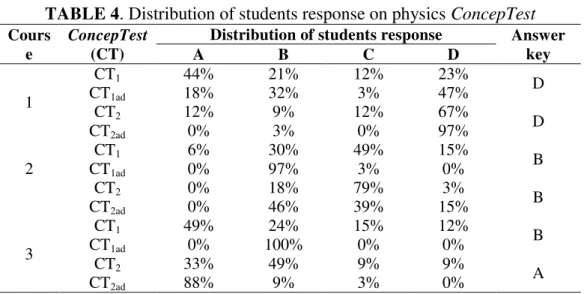
TABLE 4. Distribution of students response on physics ConcepTest
Cours e
ConcepTest (CT)
Distribution of students response Answer key A B C D 1 CT1 44% 21% 12% 23% D CT1ad 18% 32% 3% 47% CT2 12% 9% 12% 67% D CT2ad 0% 3% 0% 97% 2 CT1 6% 30% 49% 15% B CT1ad 0% 97% 3% 0% CT2 0% 18% 79% 3% B CT2ad 0% 46% 39% 15% 3 CT1 49% 24% 15% 12% B CT1ad 0% 100% 0% 0% CT2 33% 49% 9% 9% A CT2ad 88% 9% 3% 0%
Bandung, October 17
th, 2015
22 P
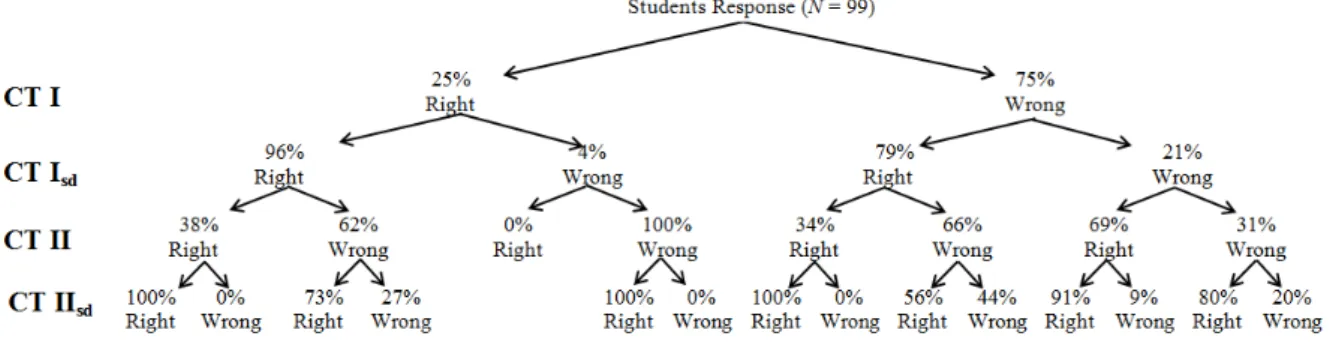
FIGURE 3. The brekdown of students response on physics ConcepTest
Tables 4 and Fig. 3 shows the distribution and breakdown of students response on
ConcepTest. This result indicate that peer discussion enhances students’ conceptual
understanding. Of the three pairs ConcepTest, they are all had four answer choice. This
study support the subtantial value of student discussion in PI as an effective way to create meaningfull learning experience in class. The impact of PI have mantained the
“transmissionist” view that during discussion suggest a more constructivist explanation: that these students are arrives at conceptual understanding on their own, through the proccess of group discussion [8]. Additionaly fact, we found that student with low self-efficacy are more likely to switch their responses into negative direction (from right to wrong and from wrong to a different wrong) than student with high self-efficacy. Otherwise, student with high self-efficacy are much more likely to switch from wrong to right than student with low self-efficacy. This facts indicated that the instructors may need to ensuring effective pairing so that students get greater support for reveal and overcome their conceptual understanding by discussion activity. Such interventions in group discussion aroun a pair of ConcepTestcould helping students build a sense of mastery, providing mastery experiences, social persuasion about their capabilities to succeed, and reducing stresful provoking situations.
CONCLUSIONS
Research has shown that the implementation of peer instruction teaching method can
improve the correlation between students’ self-efficacy and their physics academic achievement. Student with high self-efficacy often display greater performance than the low one. Additionaly fact, we found that student with low self-efficacy are more likely to switch their responses into negative direction. So the instructor may need to consider an effective pairing in order to give student a meaningfull learning experience by qualified discourses in discussion.
ACKNOWLEDGEMENT
The author would like to thank to the students in our research classroom at Senior High School 2 Banjar who have taught us much, and Bu Ida Kaniawati whose generous advices guided the research and development of the manuscript.
REFERENCES
Bandura, A. (1994). Self-efficacy. In V. S. Ramachaudran (Ed.), Encyclopedia of human behavior (Vol. 4, pp. 71-81). New York: Academic Press.
Pajares, F. (1996). Self-Efficacy Beliefs In Academic Settings. Review of Educational Research, 66 (4), pp. 543-578.
Schunk, D.H (1995). Self Efficacy and Education and Instruction. In Maddux (ed.), Self efficacy, Adaptation and adjustment: Theory, Research and Application. New York: Plenum Press.
Mahyuddin, R., Elias, H., Cheong, L. S., & Fauzi, M. (2006). The Relationship Between
Studens’s Self Efficacy and Their English Language Achievement. Jurnal Pendidik dan Pendidikan, 21, 61-71.
Zimmerman, B. J.M., Bandura,. & Martinez, M. (1992). Self Motivation for Academic Attainment: The Role of Self Efficacy Beliefs and Persona Goal Setting. American Educational Research Journal, 29, 663-676.
Mazur, E. & Crouch, C. (2001). A Peer Instruction: Ten Years of Experiences and Results.
Am. J.Phys. 69 (9), pp. 970-977.
Mazur, E. (1997). Peer Instruction: A Users’s Manual. Upper Saddle River, New Jersey: Prentice Hall.
Smith, M. K., Wood W. B., Adams W. K., Wieman C., Knight J.K., Guild N, Su TT (2009). Why Peer Discussion Improves Student Performance On In-Class Concept Questions. Science Magazine Vol. 323, 122–124.
Miller, K., Schell, J., Andrew,. H., Lukoff, B., & Mazur, E. (2015). Respose Switching and Self-Ffficacy in Peer Instruction Clasroom. Phys. Rev. ST Phys. Educ. Res 11, 010104,
1-8.
Beatty, I. D., Gerace, W. J., Leonard, W. J., & Dufresne, R. J. (2006). Designing effective questions for classroom response system teaching. American Journal of Physics 74, 31–39. Caldwell JE (2007). Clickers in the large classroom: current research and best-practice tips. CBE Life Sci Educ6, 9–20.
Baldwin, J.A., Ebert, D., Burns, D. J. (1999). The Development of a College Biology Self-Efficacy Instrument for Nonmajors. Science Education, 83, 397-408.
Arikunto, S. (2013). Dasar-dasar Evaluasi Pendidikan (Edisi 2). Jakarta: Bumi Aksara. Boekarts, M. (1991) Subjective Competence: Appraisals and Self Assesments. Learning
and Instruction, 1, 1-7.
Lennon, J. M. (2010). This is a chapter. In Self-Efficacy, Noncognitive Skills in the Classroom: New Perspective on Educational Research (pp. 91-116). RTI Press publication No. BK-0004-1009. Research Triangle Park, NC.
Chemers, M. M., Hu, L. T., & Garcia, B. F. (2001). Academic Self-Efficacy and First Year College Student Performance and Adjustment. Journal of Educational Psychology 93
(1): 55-64.
Pajares, F. (2005). Self-Efficacy During Childhood and Adolescence. Self-Efficacy Beliefs of Adolescents (pp. 339 -370): Information Age.
Lusby, B. (2012). Increasing Student’s Self-Efficacy in Mathematics. Rising Tide Vol. 5.
Lent, R. W., Brown, A. D., and Larkin, K. C.. (1984). Relation of self-efficacy expectations to academic achievement and persistence. Journal of Counceling Psychology, 31, 356-362.
Bandung, October 17
th, 2015
24 P
PHY-01072
The Effect of Metacognitive Strategy on Students Problem
Solving Ability
Nyoman Ari Cahyani Damawati
Indonesia University of Education, Bandung, Indonesia
Article info Abstract
Keywords:
Metacognitive Strategy, Problem Solving Ability
This study has investigated the effect of metacontive strategy on student’s problem solving ability in physics. The design for this study was a quasi experimental with non-equivalent post-test only control group design. Two groups of senior high school students (n=84) participated in this study. During 4 weeks study, one group received the metacognitive startegy while the other group acted as control. Data of the study were collected by problem solving ability test. Finding of the study indicate that strategy instruction was effective on physics problem solving ability (F=93,790; p<0,05). Students which are thaught with metacognitive strategy showed a better problem solving ability. The researcher recomend that metacognitive strategy be infused in classroom so it can help students to learn learning material more efficiently, give them a better understanding toward the learning material, and retain information longer.
Corresponding Author: [email protected]
INTRODUCTION
The main target of modern education are helping learner to enhance their problem solving ability in order to be a good problem solver (Trianto, 2008). Schoenfeld (1992) said that problems are hold an esscential role in science learning (physics) and helps them to construct their problem solving ability. This ability can be used not only in solving mathematical problem, but also solving socioscientific problems or any other problems related to issues or phenomenon around them. Those problems are solved by applying physics concepts they have understood. So, student with a good problem solving ability will showed a better performance in applying their knowledge to solving problems. Polya (on Schunk, 2009) said that, there are four stages in solving problem, which are; understand the problem, devising a plan, carrying out, looking back.
Using the right learning strategies can helps students to developing their problem solving ability, metacognitive strategy are one of the learning strategy that can be used. Byrnes (2008) said, metacognition is a form of cognition which involved activity to
controled one’s own cognition processes. Metacognition is an appreciation of what one already knows, together with a correct apprehension of the learning task and what knowledge and skills it requires, combined with the ability to make correct inferences
about how to apply one’s strategic knowledge to a particular situation, and to do so efficiently and reliably (Peirce, 2003). In other words, metacognition is a mental process
related with one’s ability in comprehending their own thinking process or high order
cognition.
According to Pintrich (on Wernke et al., 2011), there are four steps in metacognitive strategy, which are ; planning, monitoring, regulation, dan evaluation. Planning involved problem analyzing, finding relevant informations and also choosing the right strategies.


![FIGURE 1. (a)Implementation models to reach NoS literacy [18] . (b) The teachers’](https://thumb-us.123doks.com/thumbv2/123dok_us/11023021.2989581/61.892.198.727.120.345/figure-implementation-models-reach-nos-literacy-b-teachers.webp)