www.cscanada.org DOI:10.3968/11033
Research on the Method and Effectiveness of College Admissions Publicity
TANG Yusheng
[a],*; HAN Yinben
[b]; ZHANG Wenxin
[c]; XIE Dan
[b][a] School of Life Sciences, Northwestern Polytechnical University, Xi’an, Shaanxi, China.
[b] Admission Office, Northwestern Polytechnical University, Xi’an, Shaanxi, China.
[c] Office of General Affairs, Northwestern Polytechnical University, Xi’an, Shaanxi, China.
*Corresponding author.
Supported by the Shaanxi Provincial Social Science Foundation { Project #2017S041}, and the National Education Examination Research Plan 2017 Key Project Foundation (Project #GJK2017022).
Received 2 March 2019; accepted 24 May 2019 Published online 26 June 2019
Abstract
High-quality students are an important foundation for the cultivation of talents in colleges and universities. College admissions and publicity is an important means for universities to increase the quality of new students. This article takes a university as a case study, analyzes the effectiveness of several forms of admission propagandas, and verifies it from the perspective of the quality of student source feedback. At the same time, it puts forward a new idea of college admission propaganda under the background of the new college entrance examination reform.
Key words:
Admission; Quality of students; EffectivenessTang, Y. S., Han, Y. B., Zhang, W. X., & Xie, D. (2019). Research on the Method and Effectiveness of College Admissions Publicity. Cross-Cultural Communication,15(2), 56-61. Available from: http//www.cscanada.net/index.php/ccc/article/view/11033 DOI: http://dx.doi.org/10.3968/11033
In 2018, the number of students participated in the college entrance examinations reached 9.75 million, which is an increase of 350,000 students from 2017, setting the new largest number of students since 2010. According to the statistics of the Ministry of Education, as of March 30,
2018, there were 2,879 colleges and universities across the country, including 2,595 general higher education institutions (including 266 independent colleges) and 284 adult higher education institutions. At the same time as the number of participants of college entrance examinations increases, the pool size of candidates for colleges and universities is also expanding. All major universities are actively looking for good students, especially the top-notch quality ones. With the increasingly fierce competition for high-quality students, colleges and universities have adopted a variety of recruitment activities to attract outstanding candidates to apply.
1. METHOD AND EFFECTIVENESS OF
ADMISSIONS PUBLICITY
1.1 Building a High-Quality Student Source Base Building a high-quality student source base is an important means to establish a stable relationship with high schools and to enhance the effectiveness and pertinence of publicity. At present, most of the key universities in the country are developing high-quality student source bases. Colleges and universities generally choose to cooperate with high schools with high-quality student source and a large number of applicants to build their own high-quality student bases by signing agreements and listings and deepen exchanges and cooperation with middle schools. This admissions propaganda model of constructing of a high-quality student base should be said to achieve a win-win cooperation between universities and high schools. For colleges and universities, with the increasingly fierce competition for high-quality students, it is urgent to establish stable and reliable cooperation with high schools, improve their visibility and influence, and strive to attract more outstanding candidates to apply. The high schools, on the other hand, hope that with the abundant intellectual resources of colleges and universities, can be
provided with the corresponding basic educational support for the cultivation of talents.
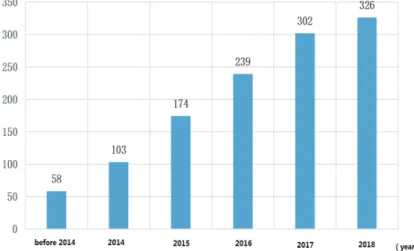
Figure 1 shows the construction of a high-quality student source base in a university. It can be seen from the figure that the school began to increase efforts to build a
high-quality student source base in 2014. The number of student bases has increased significantly in 5 years, and it has increased 217% in 2018 compared with 2014. The construction of the source base is effective.
figure 1
Number of student source base from 2014 to 2018 (unit: student)
Figure 2 shows the statistics of the number of students admitted from the three high schools after the construction of the high-quality student base by a university. It can be seen from the table that the number of admissions in 2016 and 2017 has increased since the establishment of the student source base in 2015. This shows that the construction of high-quality student source base is indeed an effective means to attract candidates to apply for examinations. However, it is not difficult to find that in the fourth year after the establishment of the student
base, the number of admissions in some high schools has decreased. This is also consistent with the characteristics of high school. High school usually takes three years. When the high-quality student source base is built, there will be some influence in the students. However, after the three years of graduates, the students who follow will need some time to get to know the colleges. Therefore, the construction of high-quality student source base is a long-term process that needs to be carried out continuously, and the number of admitted students can be maintained.
figure 2
Number of admitted students from the high-quality student source bases for a university from 2015 to 2018
1.2 Conducting Science Lectures for High School Students
Well-known scholars from universities give science lectures in high school is a win-win choice for both the
universities and high schools. On the one hand, it fulfills the social functions of the university to serve the society. Scientists, with their own scientific research, explain the most cutting-edge scientific knowledge to the majority
of high school students. And it also enables high school students to understand the professional characteristics of the university, which is a good means of university admissions and publicity. For high schools, a high-quality science lecture cannot only expand the students’ horizons, but also let them have a deeper understanding of a certain subject area and stimulates students to love
science and dedicate to science, which is conducive to the improvement of students’ overall quality.
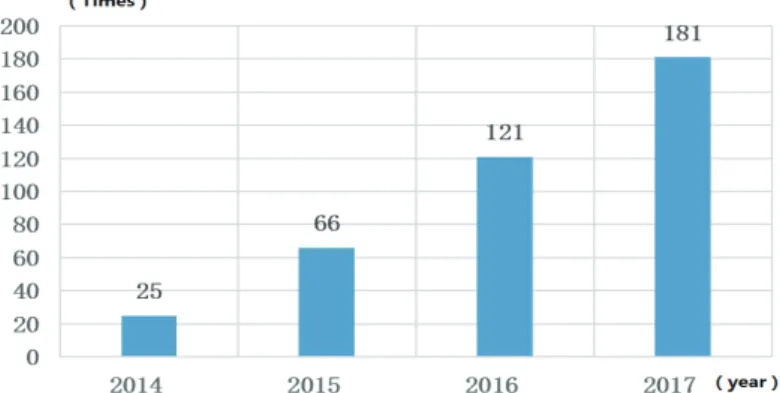
Figure 3 shows the number of a university’s popular science lectures in high schools in the past four years. It can be seen from the figure that the number of popular science lectures in the school has increased more than six times within the four years.
figure 3
Number of science lectures given in high schools by a university from 2014 to 2017 (unit: lecture)
The promotion of university’s publicity using science lectures is significant. Figure 4 shows the changes in the number of students admitted to the university from some high schools after the science lectures. After the science lectures in 2015, the number of admissions from some high schools in 2016 and 2017 increased significantly.
However, it is found that within 2-3 years after the science lectures, the number of students admitted from the high schools has decreased. This is consistent with the trend reflected in Figure 3, indicating that science and technology activities must also be maintained in secondary schools.
figure 4
Number of students admitted from high school from 2015 to 2018
1.3 Admissions Counseling After the College Entrance Examination
Admissions counseling after the college entrance examination is the most direct way of publicity for admissions. The college sent teachers from the admission office to high schools across the country in order to conduct face-to-face admission consultation with candidates and their parents. Figure 5 shows the number of concentrated consultations sent out by a university after the college
entrance examination for the last five years. It can be seen from the figure that the number of concentrated consultations after the college entrance examination increased by nearly 600 within five years, and each university recruiter was responsible for three high schools. There were only about 1,000 high schools included in the university admission in 2014, and by 2018, the university admission includes more than 2,800 high schools, which basically achieved a full coverage of the national key high schools.
figure 5
Number of recruiters sent out by a university after the College Entrance Exam from 2014 to 2018
2. FEEDBACK ON THE QUALITY OF
STUDENT SOURCE
In addition to the change in the number of students, another direct measure of the effectiveness of admissions is the improvement of the quality of students. The quality of students can be measured by multiple dimensions, and the change of admission status is a very important reference.
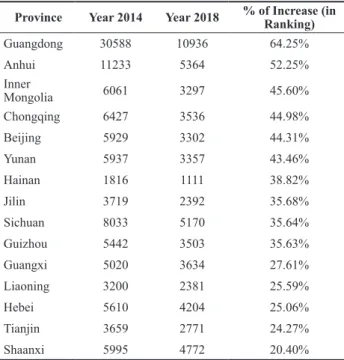
Table 2 shows the statistics of the changes in the admission status of a university in some provinces in 2014 and 2018. It has increased by more than 20% in 15 provinces in 2018, comparing with 2014, indicating that the university’s admission and publicity has achieved remarkable results.
Table 2
The Statistics of the Changes in Admission Status of a University in Some Provinces
Province Year 2014 Year 2018 % of Increase (in Ranking)
Guangdong 30588 10936 64.25% Anhui 11233 5364 52.25% Inner Mongolia 6061 3297 45.60% Chongqing 6427 3536 44.98% Beijing 5929 3302 44.31% Yunan 5937 3357 43.46% Hainan 1816 1111 38.82% Jilin 3719 2392 35.68% Sichuan 8033 5170 35.64% Guizhou 5442 3503 35.63% Guangxi 5020 3634 27.61% Liaoning 3200 2381 25.59% Hebei 5610 4204 25.06% Tianjin 3659 2771 24.27% Shaanxi 5995 4772 20.40%
Note: % increase in ranking in 2018 comparing with 2014 is calculated as:
3. REFLECTIONS ON THE ADMISSION
P R O P A G A N D A U N D E R T H E
BACKGROUND OF THE NEW COLLEGE
ENTRANCE EXAMINATION REFORM
The “Implementation Opinions of the State Council on Deepening Reforms to the Student Examination and Admission System “ promulgated in September 2014 clearly defined the “integration examination, comprehensive evaluation, and multi-dimensional examination admission model” as the main goal of the reform and determined that the explicit requirements of the modern education examination admission system with Chinese characteristics will be basically established by 2020. The two pilot areas, Shanghai and Zhejiang, took the lead in exploring and implementing the “two-basis, one-reference” new College Entrance Examination system (it refers to the selection of students based on the results of the unified college entrance examination and the high school-level test scores and reference to student’s overall quality). They have undergone comprehensive reforms in terms of examination subjects, score calculation, voluntary work, and application methods.
On the basis of the programs implemented in Zhejiang and Shanghai, as of the beginning of 2017, all provincial-level administrative regions in China have issued local “deepening the examination and admission system implementation plan”. Although the starting time of the reforms is different in different provinces, all of them will basically start in 2018-2020, and comprehensive reforms will be completed by 2022 at the latest. Under the background of the new College Entrance Examination, the admission and publicity of colleges and universities should be organically combined with the training of talents and measures of effectiveness should be taken. First, universities should strengthen their research, combining with the national strategic needs, and clarify
the main tasks of admission and publicity. They should also formulate provincial admission and publicity work plan, fully consider the multi-level and comprehensive factors, and continuously summarize and re-inform the previous admission work promotion. In particular, in the face of the country’s major strategic needs and in accordance with the “Made in China 2025” and industrial Internet talent demand, universities should accelerate the construction of new STEM talents and increase the promotion of automative manufacturing, big data analysis, artificial intelligence, and other emerging professions. At the same time, due to the uneven development of economy, population, and education in various provinces, it is necessary to carry out admission and publicity in a hierarchical manner according to the geographical differences of students, so as to attract high-quality students to a greater extent. The second is to promote large-scale admission and large-scale training and to improve the level of personnel training. The new College Entrance Examination system, due to the diversity of student choices and the increasing diversity of students, forces the reform of talent training in colleges and universities. Because it no longer distinguishes between one and two admission lines, it breaks the identity of colleges and universities, making colleges and universities starting the competition at the same starting line and forcing colleges to develop characteristics and to improve differentiated competitive strength. At the same time, colleges and universities as a whole must stand on the student source market, and the faculty must form a joint force. The teaching department must be deeply involved in the admission work. The high degree of linkage between admission, training, and management is an inevitable choice for colleges and universities. Large-scale admission and large-Large-scale training have become the countermeasures that colleges and universities have to consider. The third is to thoroughly study new methods and models for admission and to explore comprehensive evaluation of admission. The new College Entrance Examination system poses greater challenges to the talent assessment and selection capabilities of colleges and universities. Therefore, high-level universities should setup their own admission standards and methods from the perspective of talent cultivation and disciplinary development. What kind of quality or potential students do colleges and universities want to recruit? In addition to the College Entrance Examination results, how is the student’s ability evaluated? For example, humanities morality, scientific knowledge, learning potential, personality characteristics, social participation, and other aspects should be the main focuses of high-level university examinations. What methods can be used to enable colleges to discover and attract students with such qualities, and what improvements are needed? Those are the issues that needs to be considered. The fourth is to strengthen professional and academic publicity and start
the career planning of high school students in advance. After the College Entrance Examination reform, the candidates’ choices on majors have been moved ahead of time; in colleges and universities, school and departments and even majors have become the mainstay of admission. In the past, the competition on student resource among the schools will become competition among the majors in the school and similar majors in different schools. Therefore, schools and departments should increase the publicity of their disciplines and career planning. In addition to popularizing the basic knowledge of majors and disciplines, it is necessary to highlight the differences and characteristics of schools in the process of introducing similarities between different universities in order to attract more excellent students who meet the training requirements and have the potential to cultivate. Universities need to have an in-depth understanding of current high education, the career development path of high school students, and their parents’ needs of information in this regard, and to tell the story of their majors and disciplines in a way that is easy for the audience to understand. According to the speed of the current College Entrance Examination reform, in the near future, universities that can tell the story of professions and disciplines can have a place in the fierce competition for students. The fifth is to deepen the cooperation with high-quality high schools. After the reform of the new College Entrance Examination, in addition to the traditional College Entrance Examination, students must meet many important goals in the high school examinations, selective examinations, comprehensive quality evaluation, and professional choosing. High-level universities must understand, discover, and cultivate the best quality students in multi-level, multi-angle three-dimensional cooperation. In addition to the cooperation method of professional, academic publicity and career planning that can be considered to enter the high school stage in advance, it is also possible to consider building a scientific and technological society and laboratories, conducting exchanges of literature and sports activities, starting summer camps, summer schools, and using university resources to train high school teachers.
Higher education and basic education are closely connected with talents training, a long-term mechanism for talent selection and training can only be realized in such way, and high-quality universities and high-quality high schools can form a good foundation for high-quality cooperation and win-win relationship for the future development of students and college talents training.
REFERENCES
Du, T., Jin, X., & Wu, Z. (2018). Research on the Implementation Plan of Admission Publicity in Colleges and Universities.
Sun, H. (2018). Problems and countermeasures of college graduates admission publicity under the background of first-class discipline construction. Journal of Educational
Institute of Jilin Province, (34), 73-76.
Chen, G. (2016). Reflection and improvement of the status of the connection between high school and university.
Contemporary Education Sciences, (6), 3-6.
Feng, K. (2011). Thoughts on admission by majors in colleges and universities. Journal of China West Normal University,
(3), 85-87.
Zhang, F. (2005). Case analysis of factors affecting the admission plan. Journal of Shenyang Aerospace University,