Contents lists available atScienceDirect
Preventive Medicine Reports
journal homepage:www.elsevier.com/locate/pmedr
Review Article
Exploring the effectiveness of physical activity interventions in women with
previous gestational diabetes: A systematic review of quantitative and
qualitative studies
A.K. Buelo
a,⁎, A. Kirk
b, R.S. Lindsay
c, R.G. Jepson
aaScottish Collaboration for Public Health Research and Policy, School of Health in Social Science, University of Edinburgh, United Kingdom of Great Britain and Northern Ireland
bPhysical Activity for Health group, School of Psychological Sciences and Health, University of Strathclyde, United Kingdom of Great Britain and Northern Ireland cInstitute of Cardiovascular and Medical Sciences, British Heart Foundation Glasgow Cardiovascular Research Centre, University of Glasgow, United Kingdom of Great Britain and Northern Ireland
A R T I C L E I N F O
Keywords: Female
Diabetes, gestational Diabetes mellitus, type 2 Exercise
Life style Systematic review
A B S T R A C T
Women with previous Gestational Diabetes Mellitus (GDM) have seven times the risk of Type 2 diabetes later in life compared to women without GDM. Physical activity can reduce this risk and most women with previous GDM are not physically active.
Aims: To explore: (1) effectiveness of physical activity interventions for women with previous GDM; (2) factors that women with previous GDM perceive influence their physical activity; (3) how these factors are addressed by the interventions.
Methods:A systematic review of quantitative (aim 1) and qualitative (aim 2) studies with a mixed-methods synthesis (aim 3) was conducted in October 2017 following Cochrane methodology. Of 8101 articles identified, twenty-eight studies were included in total: 18 in Review 1 and 10 in Review 2.
Results:Four interventions significantly increased physical activity and 14 had either mixed effectiveness or no changes in physical activity. Reporting of intervention components and study quality varied greatly. Relevant qualitative factors included accounting for childcare issues, social support and cultural sensitivities. Interventions that incorporated these factors were associated with effectiveness. Education about how to reduce future risk of Type 2 diabetes and using pedometers in interventions were not associated with intervention effectiveness. Other factors that future interventions should address consist of ‘putting others before yourself’; ‘putting off lifestyle change’; ‘lack of support from healthcare professionals’ and ‘being a healthy role model for families’.
Conclusion:Combining the results of qualitative and quantitative studies can provide a nuanced understanding of the effectiveness of physical activity and lifestyle interventions.
1. Introduction
Gestational diabetes mellitus (GDM) is glucose intolerance with first onset during pregnancy and affects approximately 1 in 29 pregnancies worldwide (Amorim and Katz, 2011;Guideline, 2015). There are sig-nificant health risks to a mother and baby including preeclampsia, emergency caesarean section and neonatal hypoglycaemia. After de-livery, mothers experience seven-times increased risk of Type 2 dia-betes (T2D) compared to women who had normoglycaemic pregnan-cies. The National Institute for Health and Care Excellence (NICE)
guidelines advise education about lifestyle change to reduce or delay future risk of T2D (Guideline, 2015).
Participation in physical activity improves blood glucose levels and can prevent or delay onset of T2D (Amer Diabet, 2017). The Diabetes Prevention Programme demonstrated that lifestyle intervention can reduce risk of T2D onset by 34% at 10-years (“10-year follow-up of diabetes incidence and weight loss in the Diabetes Prevention Program Outcomes Study”, 2009). This also holds true for women with a history of GDM (Aroda et al., 2015). A US-based prospective cohort study of 4554 women with previous GDM found that women who met current
https://doi.org/10.1016/j.pmedr.2019.100877
Received 26 January 2019; Received in revised form 28 March 2019; Accepted 22 April 2019
Abbreviations:GDM, gestational diabetes mellitus; T2D, type 2 diabetes mellitus
⁎Corresponding author at: 9 Hope Park Square, Edinburgh EH8 9NW, United Kingdom of Great Britain and Northern Ireland.
E-mail address:[email protected](A.K. Buelo).
Available online 03 May 2019
guidelines of 150 min of moderate-vigorous physical activity per week, had 47% lower risk of developing T2D (RR, 0.53; 95%CI, 0.38–0.75), even after adjusting for BMI (Bao et al., 2014). However, the majority of women with previous GDM are not physically active to levels re-commended by guidelines. An Australian study found that only one-third of women with previous GDM were physically active (Smith et al., 2005).
Previous systematic reviews have examined whether interventions can improve lifestyle behaviours, including physical activity, in women with a history of GDM (Chasan-Taber, 2015;Gilinsky et al., 2015b;Guo et al., 2016;Jones et al., 2017;Miyazaki et al., 2017;Peacock et al., 2014; Pedersen et al., 2017). Five systematic reviews examined ran-domised control trials for this group (Chasan-Taber, 2015; Gilinsky et al., 2015b;Guo et al., 2016;Miyazaki et al., 2017;Pedersen et al., 2017), whereas others examined all study designs (Jones et al., 2015; Peacock et al., 2014). Taken together, these reviews showed lifestyle interventions lead to either insignificant or small but positive effects on T2D risk reduction in women with previous GDM. However, interven-tions that aimed to increase only physical activity have largely been ineffective in changing physical activity or anthropometric measure-ments, whereas dietary interventions or combination (e.g. dietary and physical activity) interventions were more effective in changing an-thropometric measurements (Jones et al., 2015). This discrepancy in overall effectiveness between solely physical activity interventions and dietary or combination interventions may be due to overemphasis on diet with physical activity being considered less important, or time constraints limiting physical activity more than dietary changes (Gilinsky et al., 2015a; Jones et al., 2017). Sample sizes in most in-tervention studies are also small due to the studies being feasibility or pilot studies, and there are significant difficulties in recruiting and re-taining participants (Guo et al., 2016; Jones et al., 2017). Previous research has shown that physical activity can reduce risk of T2D, but current interventions for women with previous GDM have largely been unable to change their physical activity behaviour.
It is important to understand why interventions to increase physical activity have largely been ineffective and how they can be modified to better fit women's lives. Understanding why could have practical im-plications in determining what interventions should be tested in the future. Therefore, the current systematic review aims to explore the effectiveness of physical activity interventions for women with a history of GDM, using both quantitative and qualitative review methods.
Part of the Six Steps in Quality Intervention Development (6SQuID) framework informed the methodology of this systematic review. 6SQuID was developed due to the recognition that there was a gap in guidance to develop public health interventions in a way that was rigorous, evidence-based and participatory (Wight et al., 2015). It en-courages co-production of interventions with stakeholders and the use of theory alongside research to maximise the impact of interventions. The first two steps of 6SQuID are to 1) define and understand the public health problem and its cause, and to 2) clarify which modifiable and non-modifiable causal and contextual factors shape the problem. The remaining steps of 6SQuID are 3) identifying the change mechanism; 4)
identifying how to deliver the change mechanism, then 5) and 6) testing and refining the intervention and collecting sufficient evidence of effectiveness to justify more rigorous evaluation (Wight et al., 2015). The current review informs the first two steps of 6SQuID by under-standing the factors that women with previous GDM say influence their physical activity and reviewing how interventions have tried to address the problem of physical inactivity in this group. This lays the founda-tion for future physical activity intervenfounda-tion development using sound evidence and theory for women with previous GDM.
To review both interventions and factors to understand what works and why, respectively, a systematic review method of both quantitative and qualitative studies was undertaken (Thomas and Harden, 2008). This type of review integrates quantitative and qualitative research to understand why certain interventions may be effective or ineffective. Qualitative data can aid in understanding the contextual factors that may influence intervention effectiveness (Gilinsky et al., 2015b). This may allow practitioners and policy-makers to make pragmatic decisions regarding the development and implementation of future physical ac-tivity interventions in this population.
The aims of this review were three-fold:
1. To evaluate the effectiveness of interventions to increase physical activity in women who have had GDM (Review 1);
2. To understand the modifiable and non-modifiable factors that in-fluence the physical activity of women with a history of GDM (Review 2); and.
3. To synthesise the previous two aims to understand which factors (of Review 2) may influence the effectiveness of the interventions (of Review 1) (Mixed-methods synthesis).
2. Methods
The protocol of this systematic review was registered on the International prospective register of systematic reviews (PROSPERO) in February 2018 (CRD42018085863) and reported using the Preferred Reporting Items for Systematic Reviews and Meta-Analysis (PRISMA) (Moher et al., 2009). This review was conducted to inform future in-tervention development within the 6SQuID framework (Wight et al., 2015).
[image:2.595.39.561.652.744.2]2.1. Inclusion criteria
Table 1shows the inclusion criteria for the qualitative and quantitative reviews using the SPIDER and PICOS eligibility criteria, respectively. PICOS (Population, Intervention, Comparison group, Outcome, Study de-sign) systematically defines the eligibility criteria for a quantitative in-tervention review (Schardt et al., 2007), and SPIDER (Sample, Phenomena of Interest, Design, Evaluation, Research type) is a similar qualitative tool (Cooke et al., 2012). As the majority of studies were short-term, we have used changes in physical activity as the primary end point, but have in-cluded details of studies with T2D as one endpoint (alongside physical activity) because it is a clinically significant end point.
Table 1
Eligibility criteria for the qualitative and qualitative reviews, prior to synthesis. Theboldedeligibility criteria are the common terms between the reviews and
therefore were used in the search strategy.
Quantitative review - PICOS Qualitative review - SPIDER
Population: Women with previous gestational diabetes. Sample: Women with previous gestational diabetes. Intervention: Lifestyle interventions specifically designed for women with previous
gestational diabetes. Phenomena of Interestrelated term (e.g. exercise).: At least one overall theme about physical activity or a Comparison: any control group. Design: Any qualitative methods including in-depth interviews, focus groups,
ethnography, reflective diaries and case-study methodologies.
Outcome: Physical activity or a related outcome (e.g. exercise) must be at least one of the
2.2. Search strategy
An electronic search was conducted in October 2017 across the following databases: Medline, Cinahl, EMBASE, Wiley Cochrane, PsycINFO, Web of Science, ASSIA, ProQuest, EthOs, OpenGrey and ClinicalTrials.gov with no date or language restrictions. The search terms used were related to the phrases “gestational diabetes” and “physical activity”, as these were commonalities in the quantitative and qualitative reviews' eligibility criteria. The search strategy was devel-oped and refined with the help of a subject specialist librarian (Supplementary Table 1).
After the databases were searched, all resultant records were im-ported into referencing software (EndNote). Duplicates were removed using software and hand-searching. Forward and backward citations for all included studies were conducted in May 2018, to check reference lists of cited studies and subsequent citations of included studies for additional relevant studies, respectively (Greenhalgh and Peacock, 2005).
2.3. Applying the inclusion criteria
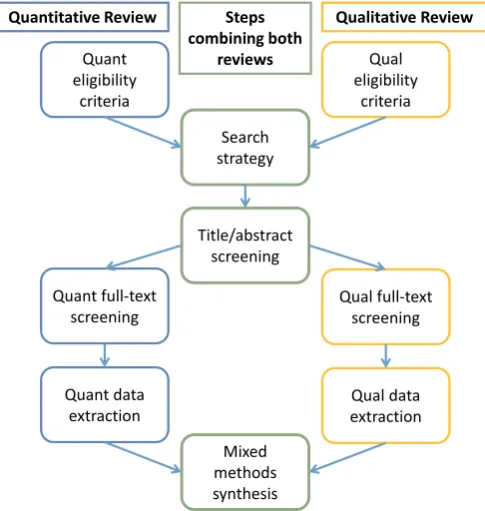
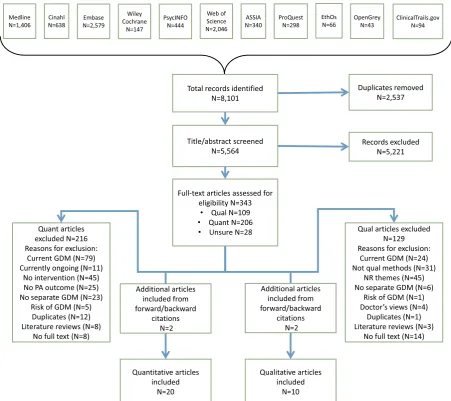
Two reviewers (AB and RP or DH) screened the titles and abstracts for relevant records (Fig. 1). RP and DH were research assistants for the review: RP conducted the qualitative review and DH conducted the quantitative review, whereas AB conducted both reviews simulta-neously. If records appeared potentially relevant to the quantitative or qualitative records based on eligibility criteria, they were separated into respective folders to have their full-texts searched. Two reviewers subsequently screened full-texts and determined what studies to include in the reviews. Disagreements were resolved through discussion. Au-thors were contacted for further information if data was missing, or it was unclear if the study should be included.
2.4. Quality assessment
Study quality was duplicate-assessed using The Cochrane Collaboration's tool for assessing risk of bias and the Critical Appraisal
Skills Programme (CASP) qualitative checklist. Disagreements were resolved through discussion (AB and RP or DH). No studies were ex-cluded on the basis of their quality assessment but accounted for in later synthesis.
2.5. Data extraction
The data from the included quantitative studies were extracted into a modified Cochrane Collaboration data extraction form using Microsoft Excel. Additional intervention details were added, including intervention development, timing, delivery, theoretical basis, and content. Two reviewers (DH and AB) extracted the quantitative data independently and compared data extraction forms.
The data from the qualitative review were extracted into QSR International NVivo 10.0 software. Two reviewers extracted and ana-lysed the qualitative data independently and discussed themes together to improve rigor (RP and AB) (Mays and Pope, 1995).
2.6. Data synthesis
For the quantitative studies, clinical heterogeneity was assessed after data extraction to see if the quantitative synthesis could be per-formed using meta-analysis. Meta-analysis was not feasible due to the heterogeneity of study designs, intervention components, and outcome definitions present, therefore a narrative analysis was undertaken.
Thematic analysis and synthesis was used in accordance with Clarke and Braun's method to develop common themes between included studies (Braun and Clarke, 2006). Line-by-line coding to generate nodes preceded development of descriptive themes based on general themes and categories. The themes were divided into barriers and facilitators to physical activity in line with Dahlgren and Whitehead's determinants of health model (Dahlgren and Whitehead, 1991). Details about qualita-tive method, study objecqualita-tives, sample size, and analysis method were also extracted for comparison.
2.7. Mixed-methods synthesis of the quantitative and qualitative studies together (aim 3)
In the synthesis of the quantitative and qualitative reviews, the findings were combined in a matrix that juxtaposed the qualitative factors influencing physical activity with the quantitative interventions, according to Thomas and Harden's mixed methods synthesis technique (Thomas and Harden, 2008). One reviewer (AB) developed the matrix and thoroughly reviewed the intervention descriptions to determine if it addressed the barriers and facilitators found in the qualitative synth-esis, then gaps, matches and mismatches were identified. Gaps were defined by previous studies as when the interventions includeddid not address the qualitative factors women discussed as important to them. Matches were when the interventionsdidaddress the qualitative fac-tors andwere moreeffective. Mismatches were when the interventions
did notaddress the qualitative factors butwere not more effective
(Thomas and Harden, 2008). Quality was considered at this stage: confidence in the synthesis was determined based on the number and quality assessment of the studies addressing each factor.
3. Results
[image:3.595.42.285.462.718.2]From the database searches, 8101 records were identified. After duplicates were removed, 5564 records remained. Screening of the ti-tles and abstracts and eliminating irrelevant records resulted in 343 full-texts to screen. This included 109 studies that were qualitative, 206 that were quantitative, and 28 with an unclear study design (seeFig. 2). After forward and backward searches, 20 quantitative (18 separate studies) and 10 qualitative studies were included in the analysis. Fig. 1.This figure shows the search process for combining the two reviews
3.1. Characteristics of quantitative studies
Of the eighteen quantitative intervention studies included twelve of these were randomised controlled trials (RCTs) and six were single-arm pre-post study design. Studies were based in Australia (7), United States (5), Canada (4), China (1) and Spain (1).
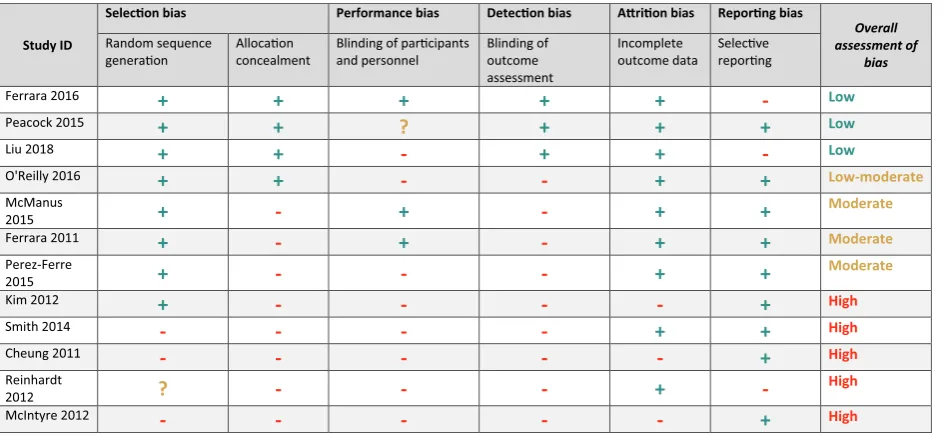
Study quality was judged to be poor based on the Cochrane risk of bias tool. Seven studies were deemed high risk of bias, six were mod-erate or low-modmod-erate, and two studies had low risk of bias (Tables 2 and 3). The sample sizes varied significantly between studies (median sizeN= 54, rangeN= 17 to 2280). Recruitment rates were generally poor: only 5 of 18 studies had recruitment rates over 50%. Two studies did not report recruitment rates but sample sizes were small. One paper suggested recruitment difficulties were due to childcare pressures, employment and general time constraints not allowing potential par-ticipants to take part (Nicklas et al., 2014). Interventions with more strict eligibility requirements had lower rates (below 50%) of recruit-ment. Studies that had higher rates (above 50%) of recruitment re-cruited during pregnancy (Ferrara et al., 2011;Nicholson et al., 2016; Perez-Ferre et al., 2015); waived consent for participation (Ferrara et al., 2014) or used culture-specific methods of recruitment ( Philis-Tsimikas et al., 2014).
Nine studies focussed on improving both physical activity behaviour
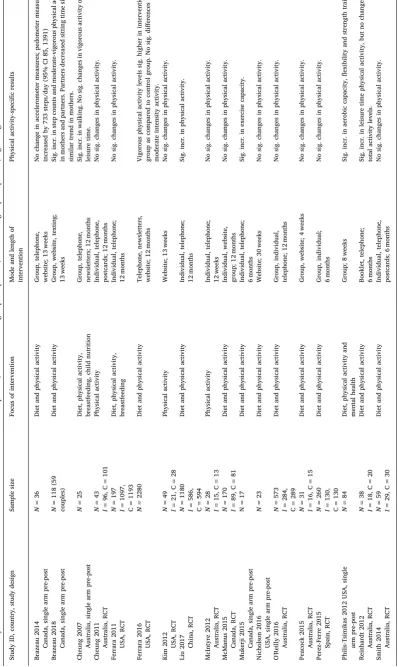
and diet (Brazeau et al., 2014b;Brazeau et al., 2018;Ferrara et al., 2016; Liu et al., 2018; Mukerji et al., 2015; Nicholson et al., 2016; O'Reilly et al., 2016;Peacock et al., 2015;Reinhardt et al., 2012;Smith et al., 2014), six were more general lifestyle-based interventions that included physical activity, diet and other components (such as breast-feeding) (Cheung et al., 2007; Ferrara and Ehrlich, 2011; Mcmanus et al., 2015;Perez-Ferre et al., 2015;Philis-Tsimikas et al., 2014), and three interventions were solely focussed on physical activity (Cheung et al., 2011;Kim et al., 2012;McIntyre et al., 2012). Refer toTable 4for a summary of the included intervention studies (Supplementary Table 2 contains more detail).
[image:4.595.71.523.55.456.2]Intervention components also varied significantly: nine interven-tions took place with individual participants, either in-person or on the telephone (Cheung et al., 2011; Ferrara et al., 2011; Ferrara et al., 2016;Liu et al., 2018;McIntyre et al., 2012; Mcmanus et al., 2015; Mukerji et al., 2015;Reinhardt et al., 2012;Smith et al., 2014). Five used a web platform (Brazeau et al., 2014a;Ferrara et al., 2016;Kim et al., 2012;Mcmanus et al., 2015;Nicholson et al., 2016), three were group-based (in-person) (Brazeau et al., 2018; Peacock et al., 2015; Philis-Tsimikas et al., 2014), and four were a combination of individual and group-based (Brazeau et al., 2014a;Cheung et al., 2007;O'Reilly et al., 2016;Perez-Ferre et al., 2015). The median intervention length was six months and ranged from four weeks to one year.
3.2. Summary of intervention effectiveness
Four studies – three pre-post study design with moderate risk of bias and one RCT with low-moderate risk of bias – demonstrated sig-nificantly increased physical activity as a result (Brazeau et al., 2018; Liu et al., 2018;Mukerji et al., 2015;Philis-Tsimikas et al., 2014). Five studies had mixed results, in which there was at least one significant and one insignificant result relating to physical activity measures (Brazeau et al., 2014a; Cheung et al., 2007; Ferrara et al., 2016; Nicholson et al., 2016;Reinhardt et al., 2012). Nine studies had no significant changes in physical activity (Cheung et al., 2011;Ferrara et al., 2011;Kim et al., 2012;McIntyre et al., 2012;Mcmanus et al., 2015; O'Reilly et al., 2016; Peacock et al., 2015; Perez-Ferre et al., 2015;Smith et al., 2014).
3.3. Characteristics and quality of qualitative studies
Ten studies published from 2009 to 2015 were included in the qualitative review (Table 5). The median sample size was 18 partici-pants, ranging from 7 to 57 participants. Five studies partially focussed on experiences and belief surrounding physical activity by ethnic
minority or indigenous women in high-income countries, including Aboriginal and immigrant women in Australia (Bandyopadhyay et al., 2011;Razee et al., 2010); Algonquin women in Canada (Gaudreau and Michaud, 2012); and Hispanic and African American women in America (Tang et al., 2015). The remainder of the studies were inter-views primarily with white women in high-income countries, and one with Tongan women in Tonga.
The studies assessed by the Critical Appraisal Skills Programme (CASP) were of moderate or high quality. All studies were rated lower in quality because they did not adequately consider the relationship between researcher and participant, describe ethical issues in sufficient detail or discuss data analysis rigorously. The remaining categories were largely addressed (Table 6).
3.4. Synthesis of qualitative studies
[image:5.595.75.548.89.308.2]In inductively coding and developing themes for the included qua-litative studies, the nodes (and subsequent themes) were grouped into Dahlgren and Whitehead's social determinants of health model. All themes found fit into the model, as it encompasses all layers of health determinants (Dahlgren and Whitehead, 1991). InFig. 3, the barriers to Table 2
The Cochrane risk of bias tool for the quantitative studies with a randomised controlled trial study design. Green = quality domain is present; red = quality domain is absent; yellow = unclear if domain is present or absent.
Study ID
Selec!on bias Performance bias Detec!on bias A"ri!on bias Repor!ng bias
Overall assessment of
bias
Random sequence genera!on
Alloca!on concealment
Blinding of par!cipants and personnel
Blinding of outcome assessment
Incomplete outcome data
Selec!ve repor!ng
Ferrara 2016
+
+
+
+
+
-
LowPeacock 2015
+
+
?
+
+
+
LowLiu 2018
+
+
-
+
+
-
LowO'Reilly 2016
+
+
-
-
+
+
Low-moderateMcManus
2015
+
-
+
-
+
+
Moderate
Ferrara 2011
+
-
+
-
+
+
ModeratePerez-Ferre
2015
+
-
-
-
+
+
Moderate
Kim 2012
+
-
-
-
-
+
HighSmith 2014
-
-
-
-
+
+
HighCheung 2011
-
-
-
-
-
+
HighReinhardt
2012
?
-
-
-
+
-High
[image:5.595.73.548.590.748.2]McIntyre 2012
-
-
-
-
-
+
HighTable 3
The risk of bias tool for the quantitative studies with a pre-post study design included in the review. Green = quality domain is present; red = quality domain is absent; yellow = unclear if domain is present or absent.
Study ID Obj
e
c!v
e
s
El
igib
il
ity
Repre
se
nt
a!
v
eness
En
ro
lme
n
t
S
am
p
le
size
In
ter
ve
n!
on
Out
come
s
B
lin
di
n
g
Reten!
o
n
S
ta!s!
cs
S
tu
d
y
des
ig
n
Ri
sk
of
B
ia
s
Philis-Tsimikas 2012
+
+
+
+
?
+
+
-
?
+
+
Low-moderateNicholson 2016
+
+
-
+
?
+
+
-
-
+
+
ModerateBrazeau 2018
+
+
-
+
?
+
+
-
+
+
-
ModerateMukerji 2015
+
+
?
+
-
+
+
-
-
+
+
ModerateCheung 2007
-
-
?
?
-
+
+
-
-
+
-
HighTable 6
The Critical Appraisal Skills Programme (CASP) checklist for qualitative studies. Green = quality do-main is present; red = quality dodo-main is absent; yellow = unclear if dodo-main is present or absent.
Study ID
Clea
r
ai
m
s?
Ap
pro
pria
te
m
eth
od
s?
App
ro
pria
te
st
u
d
y
des
ig
n
?
A
ppro
pr
ia
te
re
cruit
m
e
nt
?
A
p
pro
p
ri
a
te
d
ata
col
lec
on
?
Con
si
dere
d
rela
on
shi
p?
Eth
ics?
Rigo
ro
u
s
an
a
ly
sis
?
Cl
e
a
r
fin
d
in
gs
?
Re
searc
h
val
u
ab
le?
S
tu
d
y
q
u
a
li
ty
Bandyopadhyay 2015
+
+
-
+
-
-
+
+
+
+
HighBieda 2009
+
+
+
+
-
-
+
+
+
+
HighDoran 2008
+
+
+
+
+
-
-
+
+
+
HighDoran 2010
+
+
+
+
-
-
-
-
-
+
ModerateGaudreau 2012
+
+
+
+
-
-
+
+
+
+
HighGraco 2009
+
+
+
+
-
-
-
-
-
+
ModerateLie 2013
+
+
-
+
+
-
-
-
+
+
ModerateRazee 2010
+
+
+
+
-
-
-
+
+
+
ModerateTang 2015
+
+
+
-
+
-
-
-
+
+
High [image:7.595.132.462.246.454.2]Tierney 2015
+
+
+
+
+
-
-
+
+
+
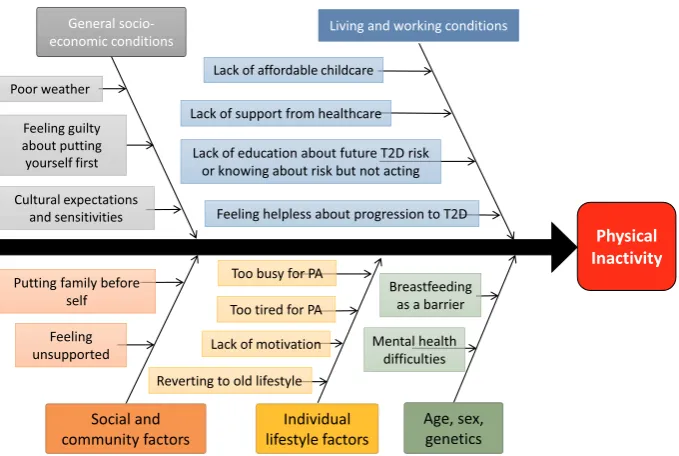
HighFig. 3.This fishbone diagram shows the primary barriers identified in the qualitative synthesis. The themes are grouped according to Dahlgren and Whitehead's determinants of health model.
Table 5
Summary of included qualitative studies. PA = physical activity; GDM = gestational diabetes mellitus; DM = diabetes mellitus; GTT = glucose tolerance test.
Study ID Location Data collection method Focus Sample size
Bandyopadhyay 2015 Australia Interview Postpartum GTT, lifestyle 33
Bieda 2009 USA Interview GDM, lifestyle change 25
Doran 2008 Australia Interview GDM, lifestyle change 8
Doran 2010 Australia Interview GDM, PA 11
Gaudreau 2012 Canada Observation/interview Lifestyle 7
Graco 2009 Australia Interview PA 10
Lie 2013 UK Interview Lifestyle 31
Razee 2010 Australia Interview Lifestyle 57
Tang 2015 USA Interview T2D, lifestyle 23
[image:7.595.129.469.491.719.2]physical activity identified during the thematic synthesis have been grouped into the following levels: 1. Constitutional factors; 2. In-dividual lifestyle factors; 3. Social and community networks; 4. Living and working conditions and 5. General socio-economic, cultural and environmental conditions. The following sections will discuss the most prevalent factors that women said influenced their physical activity.
3.4.1. Constitutional factors
Mental health and breastfeeding were both described as constitu-tional factors that influenced physical activity in women with previous GDM. A significant theme that emerged from the Razee and colleagues' study was the importance of mental health in influencing physical ac-tivity behaviours (Razee et al., 2010). Both mental health and breast-feeding as physical activity-limiting factors were present in one study each, but were included in the review as the authors have been unable to find these factors reported in other reviews.
3.4.2. Individual lifestyle factors
Women commonly mentioned not having the time or energy to be more physically active due to competing demands, including mother-hood and childcare, working and domestic responsibilities (N= 7) (Bandyopadhyay et al., 2011;Doran, 2008;Graco et al., 2009;Lie et al., 2013;Razee et al., 2010;Tang et al., 2015;Tierney et al., 2015). Sev-eral women mentioned being disorganised as something that influenced their lack of time: “I think time has a lot to do with it. It's just time to get organised” (Tierney et al., 2015).
3.4.3. Social and community networks
Family responsibilities played a large role in women's likelihood of participating in physical activity, both positively and negatively. Women discussed how being the primary caregiver and household manager made finding time to be active difficult: “I don't really spend too much time thinking about [my risk for diabetes]. Because I've got two kids under four and I am too busy to spend my day worrying about [my health]” (Razee et al., 2010). Other women were motivated to be more active and healthy to be role models for their family and to “be there to bring up their children” (Razee et al., 2010).
3.4.4. Living and working conditions
Education about the risk of T2D with a history of GDM played a large role in this level of the socioecological model: women spoke at length about being unsure and uneducated about the risk of future T2D (Doran, 2008; Lie et al., 2013;Razee et al., 2010; Tang et al., 2015; Tierney et al., 2015). They were unsure of how to prevent T2D in the future and if it was even possible (Doran, 2008). Some women were aware of their increased risk for T2D but wanted more information about prevention. Overall, there was high variability in women's knowledge and understanding of ability to prevent T2D.
One theme found in the qualitative synthesis was a lack of support and follow-up from their healthcare providers (N= 5) (Doran, 2008; Doran and Davis, 2010; Graco et al., 2009; Lie et al., 2013; Tierney et al., 2015). Women spoke of “being left high and dry” after their post-natal check (Lie et al., 2013). They felt solely responsible to schedule follow-up post-GDM care, at times stating that their “GPs don't seem to have expertise in that particular field” (Tierney et al., 2015). The lack of follow-up care seems to have played an important role in their lack of education about preventing future diabetes risk: “Nobody told me any-thing about type 2 diabetes…they were so focused on the immediate preg-nancy problems” (Doran, 2008). Some said their doctor was an excep-tion, but overall women were dissatisfied with their postpartum care relating to their GDM.
Lack of access to affordable childcare was mentioned in six studies as being prohibitive to physical activity (Bandyopadhyay et al., 2015; Doran, 2008;Graco et al., 2009;Lie et al., 2013;Razee et al., 2010; Tang et al., 2015).
3.4.5. General socio-economic, cultural and environmental conditions The theme of putting others before oneself and feeling guilty when putting yourself first was decided by the reviewers to fit into the broadest macro-category, as it represents a cultural norm that many women feel is important for them to fit into their roles of mother and caregiver (Currie, 2004). The majority of studies (N= 6) addressed these overlapping themes in some way (Gaudreau and Michaud, 2012; Graco et al., 2009;Lie et al., 2013;Razee et al., 2010;Tang et al., 2015; Tierney et al., 2015): women described feeling guilty about taking time for themselves (especially if that required asking a friend or family member to watch their children) and also felt that “[they] tend to put [themselves] down the pile a bit … everything else comes first really” (Tierney et al., 2015).
Other themes in this category included the importance of culture-appropriate information and interventions (Doran and Davis, 2010; Gaudreau and Michaud, 2012;Razee et al., 2010;Tang et al., 2015), though one study refuted that by suggesting that there are universal challenges of being a mother (Tang et al., 2015). Lastly, poor weather was mentioned as a barrier to exercise (Bandyopadhyay et al., 2015; Tierney et al., 2015).
3.4.6. Suggesting physical activity intervention ideas
Seven studies explored potential physical activity interventions, either by explicitly asking women or women suggesting ideas (Bandyopadhyay et al., 2011; Doran, 2008; Gaudreau and Michaud, 2012;Lie et al., 2013;Razee et al., 2010;Tang et al., 2015;Tierney et al., 2015). Women emphasised that walking was “the most helpful and practical form of physical activity” (Razee et al., 2010) as it “both energises and relaxes” (Gaudreau and Michaud, 2012). Several studies reiterated having social support to facilitate long-term lifestyle change (Doran, 2008;Razee et al., 2010; Tierney et al., 2015). This included linking family wellbeing with physical activity as an opportunity to be seen as a role model for children (Bandyopadhyay et al., 2015;Razee et al., 2010; Tang et al., 2015).
3.5. Mixed-methods synthesis
The mixed-methods synthesis compared the included intervention components with the qualitative factors and revealed several matches, gaps, and mismatches. Table 7provides an in-depth analysis of the mixed-methods synthesis.
There did not appear to be a relationship between the prevalence of themes in the qualitative synthesis and the number of intervention studies that addressed that factor – one of the most prevalent themes (in 7 qualitative studies), ‘feeling guilty about taking time to oneself’, was only addressed directly in one intervention. The theme addressed most often by interventions was social and community support (8 interventions), whereas three themes were not addressed explicitly by any interven-tions: ‘putting off lifestyle change’, ‘being a healthy role model for family’, and ‘reverting back to pre-GDM lifestyle’. In the mixed-methods synthesis, three matches were evident in which effective interventions appeared to address the qualitative factors more than ineffective interventions. These included ‘lack of affordable childcare’, ‘social and community sup-port’ and ‘provision of culturally sensitive interventions’. Walking as a preferred form of activity and education about T2D were mismatches between the qualitative literature and the quantitative interventions. Women identified walking as their preferred form of physical activity and a lack of education about T2D to be prohibitive to taking action, but intervention studies in the review that addressed these factors were no more likely to be effective than studies that did not address these factors.
4. Discussion
effectiveness for women with previous GDM, which can help practi-tioners and researchers develop more effective interventions. There have been other reviews that summarise the intervention literature systematically, but none have synthesised both qualitative and quan-titative literature together.
The qualitative synthesis separated all factors influencing physical activity into discrete groupings by Dahlgren and Whitehead's determi-nants of health model, but these factors clearly relate and interplay within and between levels. For example, mental health difficulties as a constitutional factor can also relate to an individual's lack of motivation (a common symptom of depression); feeling unsupported by healthcare professionals and feelings of guilt about prioritising oneself (Liss et al., 2013).
Walking and education about T2D were mismatches, meaning in-terventions that addressed these factors were not associated with ef-fectiveness. This may be due to over-estimating the benefits and sus-tainability of walking for time-constrained women with previous GD. Education about risk of T2D should be combined with other interven-tion tools (social support, cultural-specific activities) to increase inter-vention effectiveness, as previous research has shown that education alone is insufficient to change behaviour (Marmot, 2005).
Health behaviours are significantly influenced by systems such as environment and culture (Marmot, 2005). However, the qualitative synthesis only identified a few factors that lay within these larger spheres, such as cultural expectations and sensitivities. This may be due to cultural overemphasis on individual behaviour determining lifestyle and health and therefore, women not realising the extent that larger systems influence our behaviour (Robert et al., 2008).
This review demonstrates disconnect between the perceptions of women with previous GDM's towards physical activity and the target of current physical activity interventions. New approaches to intervention development are needed to ensure that barriers to behaviour change are being addressed. Co-production is an increasingly popular methodology that involves research participants being active members of the re-search process (Hawkins et al., 2017) and could help to close this gap between perceptions and interventions.
4.1. Strengths and limitations of the study
The strengths of this systematic review include being a highly practical method of reviewing the literature with immediate and practical recommendations for practice. Using methods such as these can lead to practical improvements in diabetes prevention and man-agement interventions to understand what works for whom, in what contexts and why. This review provided added value compared with conventional reviews, as it uses qualitative data to explore why certain interventions are effective or ineffective, and what interventions should be trialled in the future. We also followed a rigorous and comprehen-sive methodology, with duplicate screeners throughout title and ab-stract screening, full-text review and data extraction.
For the mixed-methods synthesis, we were highly dependent on descriptions of the interventions to determine which factors the inter-vention addressed. It was clear that some descriptions of the interven-tions were poorly detailed and therefore our mixed methods synthesis may have incorrectly categorised some interventions to be lacking certain factors that they actually did address. Additionally, as the method of sorting qualitative themes in the Dahlgren and Whitehead model is novel, some may contest the sorting decisions made of the authors. However, the model is used primarily to frame the qualitative synthesis and did not impact on the thematic analysis or subsequent mixed-methods synthesis conducted.
Importantly, the conclusions of this review are correlative in nature and it would be inappropriate to assume causation due to the ob-servational nature of the analyses. Due to the quality of the quantitative studies being mainly of moderate or high risk of bias, the results should be interpreted with caution. Future intervention studies should
comprehensively report intervention components and implementation and work to improve quality of their study designs.
A practical limitation of the mixed-methodology used is the time-intensive nature of the review. The review involves conducting two separate systematic reviews, and adding an additional synthesis to the qualitative and quantitative synthesis. While steps were taken to reduce the workload (e.g. searching for the qualitative and quantitative lit-erature together), it may not be a practical method of reviewing the literature for researchers or practitioners with limited resources. 4.2. Comparisons with other studies
Some findings of this review support previous reviews. Two recent qualitative reviews on general perceptions of women with current and previous GD found several similar barriers to physical activity, in-cluding putting family before themselves; lack of time; limited childcare and bad weather (Dennison et al., 2019;Parsons et al., 2014). Another review looked exclusively at randomised controlled trials to increase physical activity in women with previous GDM and found no inter-ventions resulted in significant changes in physical activity (Jones et al., 2017). The current review found four studies that significantly in-creased physical activity, three with pre-post study designs. Pre-post study designs cannot determine causality in interventions, but can provide a pragmatic and cost-effective ways of exploring an interven-tions' effects.
A recent review by Nielsen and colleagues highlighted the im-portance of family-contextualised interventions to increase physical activity in women with a history of GDM (Nielsen et al., 2018). Their narrative review highlighted that “much remains to be understood about what such strategies should involve if they are to be effective” (p. 717), and emphasised the need for multiple avenues of intervention, from psychological to social approaches (Nielsen et al., 2018). This review aimed to fill that gap in understanding by exploring what factors women with previous GDM say is important to them when considering physical activity and how well these factors are represented in previous trials of physical activity interventions.
5. Conclusions
The mixed-methods review process can help design more effective T2D management and prevention techniques for high-risk groups. Exploring what the target audience for an intervention says is an im-portant step in understanding the problem the intervention is trying to address, as is reviewing what has been done before and why it has not worked previously. This review methodology systematically reviews both of these points effectively and efficiently to help design better interventions going forward.
difficulties.
Supplementary data to this article can be found online athttps:// doi.org/10.1016/j.pmedr.2019.100877.
Acknowledgements
This systematic review was undertaken as part of a Diabetes UK PhD studentship. The views expressed in this publication are those of the authors and not necessarily those of the funders. The funders had no role in study design, data collection and analysis, decision to publish, or preparation of the manuscript. The authors would like to thank Russell Penman and Daniel Hillhouse for their assistance in duplicate-screening the studies, Marshall Dozier for her assistance in developing the search strategy and Jane Noyes for her advice about methodology.
Funding
This systematic review was undertaken as part of a Diabetes UK PhD studentship (16/0005562).
Conflicts of interest
The authors declare no conflicts of interest. References
10-year follow-up of diabetes incidence and weight loss in the Diabetes Prevention Program Outcomes Study, 2009. Lancet 374 (9702), 1677–1686.https://doi.org/10. 1016/s0140-6736(09)61457-4.
Amer Diabet, A., 2017. Management of diabetes in pregnancy. Obstet Gynec Survey 72 (5), 264–266.https://doi.org/10.2337/dc18-S013.
Amorim, M.M.R., Katz, L., 2011. Gestational Diabetes: Evidence-based Screening, Diagnosis and Treatment Gestational Diabetes. InTech.
Aroda, V.R., Christophi, C.A., Edelstein, S.L., Zhang, P., Herman, W.H., Barrett-Connor, E., ... Diabetes Prevention Program Research, G, 2015. The effect of lifestyle inter-vention and metformin on preventing or delaying diabetes among women with and without gestational diabetes: the Diabetes Prevention Program outcomes study 10-year follow-up. J. Clin. Endocrinol. Metab. 100 (4), 1646–1653.https://doi.org/10. 1210/jc.2014-3761.
Bandyopadhyay, M., Small, R., Davey, M.A., Oats, J.J., Forster, D.A., Aylward, A., 2011. Lived experience of gestational diabetes mellitus among immigrant South Asian women in Australia. Australian & New Zealand Journal of Obstetrics & Gynaecology 51 (4), 360–364.https://doi.org/10.1111/j.1479-828X.2011.01322.x.
Bandyopadhyay, M., Small, R., Davey, M.A., 2015. Attendance for postpartum glucose tolerance testing following gestational diabetes among South Asian women in Australia: a qualitative study. Int. J. Gynaecol. Obstet. 131, E149.https://doi.org/10. 4172/2325-9795.1000178.
Bao, W., Tobias, D.K., Bowers, K., Chavarro, J., Vaag, A., Grunnet, L.G., ... Zhang, C., 2014. Physical activity and sedentary behaviors associated with risk of progression from gestational diabetes mellitus to type 2 diabetes mellitus. JAMA Intern. Med. 174 (7), 1047.https://doi.org/10.1001/jamainternmed.2014.1795.
Braun, V., Clarke, V., 2006. Using thematic analysis in psychology. Qual. Res. Psychol. 3 (2), 77–101.https://doi.org/10.1191/1478088706qp063oa.
Brazeau, A. S., Leong, A., Meltzer, S. J., Cruz, R., DaCosta, D., Hendrickson-Nelson, M., … Mo, M. M. s. g. (2014a). Group-based activities with on-site childcare and online support improve glucose tolerance in women within 5 years of gestational diabetes pregnancy. Cardiovasc. Diabetol., 13(104), 104. doi:https://doi.org/10.1186/1475-2840-13-104.
Brazeau, A.S., Leong, A., Meltzer, S.J., Dacosta, D., Hendrickson-Nelson, M., Joseph, L., Das-Gupta, K., 2014b. A novel intervention to improve glucose tolerance in women with past gestational diabetes. Diabetes 63, A171. https://doi.org/10.2337/db14-665-832.
Brazeau, A. S., Meltzer, S. J., Pace, R., Garfield, N., Godbout, A., Meissner, L., … Dasgupta, K. (2018). Health behaviour changes in partners of women with recent gestational diabetes: a phase IIa trial. BMC Public Health, 18(1), 575. doi:https://doi. org/10.1186/s12889-018-5490-x.
Chasan-Taber, L., 2015. Lifestyle interventions to reduce risk of diabetes among women with prior gestational diabetes mellitus. Best Practice & Research in Clinical Obstetrics & Gynaecology 29 (1), 110–122.https://doi.org/10.1016/j.bpobgyn. 2014.04.019.
Cheung, N.W., Smith, B.J., Henriksen, H., Tapsell, L.C., McLean, M., Bauman, A., 2007. A group-based healthy lifestyle program for women with previous gestational diabetes. Diabetes Res. Clin. Pract. 77 (2), 333–334.https://doi.org/10.1016/j.diabres.2006. 10.025.
Cheung, N.W., Smith, B.J., van Der Ploeg, H.P., Cinnadaio, N., Bauman, A., 2011. A pilot structured behavioural intervention trial to increase physical activity among women with recent gestational diabetes. Diabetes Res. Clin. Pract. 92 (1), e27–e29.https:// doi.org/10.1016/j.diabres.2011.01.013.
Cooke, A., Smith, D., Booth, A., 2012. Beyond PICO: the SPIDER tool for qualitative evidence synthesis. Qual. Health Res. 22 (10), 1435–1443.
Currie, J., 2004. Motherhood, stress and the exercise experience: freedom or constraint? Leis. Stud. 23 (3), 225–242.https://doi.org/10.1080/0261436042000251987. Dahlgren, G., Whitehead, M., 1991. Policies and Strategies to Promote Social Equity in
Health. Institute for future studies, Stockholm.
Dennison, R., Ward, R., Griffin, S., Usher-Smith, J., 2019. Women's views on lifestyle changes to reduce the risk of developing type 2 diabetes after gestational diabetes: a systematic review, qualitative synthesis and recommendations for practice. Diabet. Med. 1–16.
Doran, F., 2008. Gestational diabetes mellitus: perspectives on lifestyle changes during pregnancy and post-partum, physical activity and the prevention of future type 2 diabetes. Australian Journal of Primary Health 14 (3), 85–92.https://doi.org/10. 1071/PY08040.
Doran, F., Davis, K., 2010. Gestational diabetes mellitus in Tonga: insights from health-care professionals and women who experienced gestational diabetes mellitus. N. Z. Med. J. 123 (1326), 59–67.
Ferrara, A., Ehrlich, S.F., 2011. Strategies for diabetes prevention before and after pregnancy in women with GDM. Curr. Diabetes Rev. 7 (2), 75–83.
Ferrara, A., Hedderson, M.M., Albright, C.L., Ehrlich, S.F., Quesenberry Jr., C.P., Peng, T., ... Crites, Y., 2011. A pregnancy and postpartum lifestyle intervention in women with gestational diabetes mellitus reduces diabetes risk factors: a feasibility randomized control trial. Diabetes Care 34 (7), 1519–1525.https://doi.org/10.2337/dc10-2221. Ferrara, A., Hedderson, M. M., Albright, C. L., Brown, S. D., Ehrlich, S. F., Caan, B. J., … Quesenberry, C. P., Jr. (2014). A pragmatic cluster randomized clinical trial of dia-betes prevention strategies for women with gestational diadia-betes: design and rationale of the Gestational Diabetes' Effects on Moms (GEM) study. BMC Pregnancy & Childbirth, 14, 21. doi:https://doi.org/10.1186/1471-2393-14-21.
Ferrara, A., Hedderson, M.M., Brown, S.D., Albright, C.L., Ehrlich, S.F., Tsai, A.L., ... Quesenberry, C.P., 2016. The comparative effectiveness of diabetes prevention stra-tegies to reduce postpartum weight retention in women with gestational diabetes mellitus: the Gestational Diabetes' Effects on Moms (GEM) cluster randomized con-trolled trial. Diabetes Care 39 (1), 65–74. Retrieved from.http://onlinelibrary.wiley. com/. https://doi.org/10.2337/dc15-1254.
Gaudreau, S., Michaud, C., 2012. Cultural factors related to the maintenance of health behaviours in Algonquin women with a history of gestational diabetes. Chronic Diseases and Injuries in Canada 32 (3), 140–148.
Gilinsky, A.S., Dale, H., Robinson, C., Hughes, A.R., McInnes, R., Lavallee, D., 2015a. Efficacy of physical activity interventions in post-natal populations: systematic re-view, meta-analysis and content coding of behaviour change techniques. Health Psychol. Rev. 9 (2), 244–263.https://doi.org/10.1080/17437199.2014.899059. Gilinsky, A.S., Kirk, A.F., Hughes, A.R., Lindsay, R.S., 2015b. Lifestyle interventions for
type 2 diabetes prevention in women with prior gestational diabetes: a systematic review and meta-analysis of behavioural, anthropometric and metabolic outcomes. Prev. Med. Rep. 2, 448–461.https://doi.org/10.1016/j.pmedr.2015.05.009. Graco, M., Garrard, J., Jasper, A.E., 2009. Participation in physical activity: perceptions
of women with a previous history of gestational diabetes mellitus. Health Promot J Austr 20 (1), 20–25.https://doi.org/10.1071/HE09020.
Greenhalgh, T., Peacock, R., 2005. Effectiveness and efficiency of search methods in systematic reviews of complex evidence: audit of primary sources. Bmj 331 (7524), 1064–1065.https://doi.org/10.1136/bmj.38636.593461.68.
Guideline, N., 2015. Diabetes in Pregnancy: Management From Preconception to the Postnatal Period. February..
Guo, J., Chen, J.L., Whittemore, R., Whitaker, E., 2016. Postpartum lifestyle interventions to prevent type 2 diabetes among women with history of gestational diabetes: a systematic review of randomized clinical trials. J. Women's Health 25 (1), 38–49. https://doi.org/10.1089/jwh.2015.5262.
Hawkins, J., Madden, K., Fletcher, A., Midgley, L., Grant, A., Cox, G., … Bonell, C. (2017). Development of a framework for the co-production and prototyping of public health interventions. BMC Public Health, 17(1), 689.
Jones, E., Fraley, H., Mazzawi, J., 2015. Appreciating culture and recent motherhood: tailoring postpartum lifestyle interventions to promote cardiometabolic health in women with prior gestational diabetes. Nurs. Res. 64 (2), E75–E76.https://doi.org/ 10.1007/s10995-016-2092-z.
Jones, E.J., Fraley, H.E., Mazzawi, J., 2017. Appreciating recent motherhood and culture: a systematic review of multimodal postpartum lifestyle interventions to reduce dia-betes risk in women with prior gestational diadia-betes. Matern. Child Health J. 21 (1), 45–57.https://doi.org/10.1007/s10995-016-2092-z.
Kim, C., Draska, M., Hess, M.L., Wilson, E.J., Richardson, C.R., 2012. A web-based ped-ometer programme in women with a recent history of gestational diabetes. Diabet. Med. 29 (2), 278–283.https://doi.org/10.1111/j.1464-5491.2011.03415.x. Lie, M.L., Hayes, L., Lewis-Barned, N.J., May, C., White, M., Bell, R., 2013. Preventing
type 2 diabetes after gestational diabetes: women's experiences and implications for diabetes prevention interventions. Diabet. Med. 30 (8), 986–993.https://doi.org/10. 1111/dme.12206.
Liss, M., Schiffrin, H.H., Rizzo, K.M., 2013. Maternal guilt and shame: the role of self-discrepancy and fear of negative evaluation. J. Child Fam. Stud. 22 (8), 1112–1119. https://doi.org/10.1007/s10826-012-9673-2.
Liu, H., Wang, L., Zhang, S., Leng, J., Li, N., Li, W., ... Hu, G., 2018. One-year weight losses in the Tianjin Gestational Diabetes Mellitus Prevention Programme: a rando-mized clinical trial. Diabetes Obes. Metab. 20 (5), 1246–1255.https://doi.org/10. 1111/dom.13225.
Marmot, M., 2005. Social determinants of health inequalities. Lancet 365 (9464), 1099–1104.https://doi.org/10.1016/S0140-6736(05)71146-6.
McIntyre, H.D., Peacock, A., Miller, Y.D., Koh, D., Marshall, A.L., 2012. Pilot study of an individualised early postpartum intervention to increase physical activity in women with previous gestational diabetes. Int. J. Endocrinol. 2012, 892019.https://doi.org/ 10.1155/2012/892019.
Mcmanus, R.M., Donovan, L., Miller, D., Mottola, M., Giroux, I., Rosas-Arellano, P., 2015. Families Defeating Diabetes (FDD): a Canadian intervention for family-centered diabetes prevention following gestational diabetes (GDM): initial results. Diabetes 64, A632.https://doi.org/10.2337/db1524622510.
Miyazaki, C., Tanase-Nakao, K., Arata, N., Mori, R., Kawasaki, M., Ota, E., 2017. Nonpharmacological interventions to prevent type 2 diabetes in women diagnosed with gestational diabetes mellitus: a systematic overview. Diabetol. Int. 8 (2), 160–180.https://doi.org/10.1007/s13340-017-0316-0.
Moher, D., Liberati, A., Tetzlaff, J., Altman, D.G., 2009. Preferred reporting items for systematic reviews and meta-analyses: the PRISMA statement. Ann. Intern. Med. 151 (4), 264–269.https://doi.org/10.1371/journal.pmed.1000097.
Mukerji, G., McTavish, S., Glenn, A., Delos-Reyes, F., Price, J., Wu, W., ... Lipscombe, L.L., 2015. An innovative home-based cardiovascular lifestyle prevention program for women with recent gestational diabetes: a pilot feasibility study. Can. J. Diabetes 39 (6), 445–450.
Nicholson, W.K., Beckham, A.J., Hatley, K., Diamond, M., Johnson, L.S., Green, S.L., Tate, D., 2016. The Gestational Diabetes Management System (GooDMomS): development, feasibility and lessons learned from a patient-informed, web-based pregnancy and postpartum lifestyle intervention. BMC Pregnancy & Childbirth 16 (1), 277.https:// doi.org/10.1186/s12884-016-1064-z.
Nicklas, J.M., Zera, C.A., England, L.J., Rosner, B.A., Horton, E., Levkoff, S.E., Seely, E.W., 2014. A web-based lifestyle intervention for women with recent gestational diabetes mellitus: a randomized controlled trial. Obstet. Gynecol. 124 (3), 563.https://doi. org/10.1097/AOG.0000000000000420.
Nielsen, K.K., Grunnet, L.G., Maindal, H.T., Worksh, D.D.A.W., 2018. Prevention of type 2 diabetes after gestational diabetes directed at the family context: a narrative review from the Danish Diabetes Academy symposium. Diabet. Med. 35 (6), 714–720. https://doi.org/10.1111/dme.13622.
O'Reilly, S. L., Dunbar, J. A., Versace, V., Janus, E., Best, J. D., Carter, R., … Group, M. S. (2016). Mothers after gestational diabetes in Australia (MAGDA): a randomised controlled trial of a postnatal diabetes prevention program. PLoS Med., 13(7), e1002092. doi:https://doi.org/10.1371/journal.pmed.1002092.
Parsons, J., Ismail, K., Amiel, S., Forbes, A., 2014. Perceptions among women with ge-stational diabetes. Qual. Health Res. 24 (4), 575–585.https://doi.org/10.1177/ 1049732314524636.
Peacock, A.S., Bogossian, F., McIntyre, H.D., Wilkinson, S., 2014. A review of interven-tions to prevent type 2 diabetes after gestational diabetes. Women & Birth: Journal of the Australian College of Midwives 27 (4), e7–e15.https://doi.org/10.1016/j. wombi.2014.09.002.
Peacock, A.S., Bogossian, F.E., Wilkinson, S.A., Gibbons, K.S., Kim, C., McIntyre, H.D., 2015. A randomised controlled trial to delay or prevent type 2 diabetes after gesta-tional diabetes: walking for exercise and nutrition to prevent diabetes for you. Int. J. Endocrinol. 2015, 423717.https://doi.org/10.1155/2015/423717.
Pedersen, A.L.W., Terkildsen Maindal, H., Juul, L., 2017. How to prevent type 2 diabetes in women with previous gestational diabetes? A systematic review of behavioural
interventions. Prim Care Diabetes 11 (5), 403–413.https://doi.org/10.1016/j.pcd. 2017.05.002.
Perez-Ferre, N., Del Valle, L., Torrejon, M. J., Barca, I., Calvo, M. I., Matia, P., … Calle-Pascual, A. L. (2015). Diabetes mellitus and abnormal glucose tolerance development after gestational diabetes: a three-year, prospective, randomized, clinical-based, Mediterranean lifestyle interventional study with parallel groups. Clinical nutrition (Edinburgh, Scotland), 34(4), 579–585. doi:https://doi.org/10.1016/j.clnu.2014.09. 005.
Philis-Tsimikas, A., Fortmann, A.L., Dharkar-Surber, S., Euyoque, J.A., Ruiz, M., Schultz, J., Gallo, L.C., 2014. Dulce mothers: an intervention to reduce diabetes and cardio-vascular risk in Latinas after gestational diabetes. Transl. Behav. Med. 4 (1), 18–25. https://doi.org/10.1007/s13142-014-0253-4.
Razee, H., van Der Ploeg, H., Blignault, I., Smith, B., Bauman, A., McLean, M., Cheung, N., 2010. Beliefs, barriers, social support, and environmental influences related to dia-betes risk behaviours among women with a history of gestational diadia-betes. Health Promotion Journal of Australia 21 (2), 130–137.https://doi.org/10.1071/HE10130. Reinhardt, J.A., Grzegrzulka, R., Timperley, J.G., Van Der Ploeg, H.P., 2012.
Implementing lifestyle change through phone-based motivational interviewing in rural-based women with previous gestational diabetes mellitus. Health Promotion Journal of Australia 23 (1), 5–9.
Robert, S.A., Booske, B.C., Rigby, E., Rohan, A.M., 2008. Public views on determinants of health, interventions to improve health, and priorities for government. WMJ 107 (3), 124–130.
Schardt, C., Adams, M.B., Owens, T., Keitz, S., Fontelo, P., 2007. Utilization of the PICO framework to improve searching PubMed for clinical questions. BMC medical in-formatics and decision making 7 (1), 16.
Smith, B.J., Cheung, N.W., Bauman, A.E., Zehle, K., McLean, M., 2005. Postpartum physical activity and related psychosocial factors among women with recent gesta-tional diabetes mellitus. Diabetes Care 28 (11), 2650–2654.https://doi.org/10. 2337/diacare.28.11.2650.
Smith, B.J., Cinnadaio, N., Cheung, N.W., Bauman, A., Tapsell, L.C., Ploeg, H.P., 2014. Investigation of a lifestyle change strategy for high-risk women with a history of gestational diabetes. Diabetes Res. Clin. Pract. 106 (3), e60–e63. Retrieved from. http://onlinelibrary.wiley.com/. https://doi.org/10.1016/j.diabres.2014.09.035. Tang, J.W., Foster, K.E., Pumarino, J., Ackermann, R.T., Peaceman, A.M., Cameron, K.A.,
2015. Perspectives on prevention of type 2 diabetes after gestational diabetes: a qualitative study of Hispanic, African-American and White women. Matern. Child Health J. 19 (7), 1526–1534.https://doi.org/10.1007/s10995-014-1657-y. Thomas, J., Harden, A., 2008. Methods for the thematic synthesis of qualitative research
in systematic reviews. BMC Med. Res. Methodol. 8 (1), 45.https://doi.org/10.1186/ 1471-2288-8-45.
Tierney, M., O'Dea, A., Danyliv, A., Noctor, E., McGuire, B., Glynn, L., … Dunne, F. (2015). Factors influencing lifestyle behaviours during and after a gestational dia-betes mellitus pregnancy. Health Psychol Behav Med, 3(1), 204–216. doi:https://doi. org/10.1080/21642850.2015.1073111.