http://eprints.whiterose.ac.uk/142695/
Version: Published Version
Proceedings Paper:
Hernan, L. and Ramirez-Figueroa, C. (2018) The technological invisible - image making as
an exercise of power. In: Proceedings of the 5th Biennial Transdisciplinary Imaging
Conference. 5th Biennial Transdisciplinary Imaging Conference 2018, 18-20 Apr 2018,
Edinburgh, UK. Transdisciplinary image Conference , pp. 471-487.
https://doi.org/10.6084/m9.figshare.6104708
[email protected]
https://eprints.whiterose.ac.uk/
Reuse
This article is distributed under the terms of the Creative Commons Attribution (CC BY) licence. This licence
allows you to distribute, remix, tweak, and build upon the work, even commercially, as long as you credit the
authors for the original work. More information and the full terms of the licence here:
https://creativecommons.org/licenses/
Takedown
If you consider content in White Rose Research Online to be in breach of UK law, please notify us by
The Technological Invisible Ñ
Image Making as an Exercise of Power
Luis Hernan [email protected]
Newcastle University, Newcastle, NE1 7RU, UK
Carolina Ramirez-Figueroa [email protected] The Bartlett School of Architecture, UCL, London, ÙWC1H 0QB, UK
Photo: Luis Hernan
The Technological Invisible.
Image Making as an Exercise of Power
Abstract
In this paper we explore the dynamics of power involved in the representation of digital devices. We reflect on a series of images produced by Amazon and Apple and suggest that their role as instruments of power is not defined by the companiesÕ financial might. We argue that these images are bound in a matrix, the locus of which resides in the representation of the
technological invisible, elements of technology that are supra-sensible such as software, data, and wireless infrastructure. We use a research through design approach to analyse how representing invisible aspects of technology involves a series of decisions, through which agendas are embedded to influence the way we imagine the technology to operate and integrate in daily lives. We suggest that these dynamics are not the preserve of traditionally powerful actors, but that can be used by designers to reimagine technology.
Introduction
In the run-up to the 2017 Christmas season, Amazon released images for their marketing campaign #JustAsk
promoting Echo, a voice activated, Ôpersonal assistantÕ device. The images use a white background and combine photographic images of Echo juxtaposed with hand-drawn style illustrations. One image shows Echo
on the foreground with the sketch of a dog sitting
Luis Hernan
School of Architecture, Newcastle University [email protected]
Carolina Ramirez-Figueroa
The Bartlett School of Architecture University College London
behind it, pouch face looking right, left paw raised at an angle signalling to the device, which doubles as a bowl. A caption, hand written style, frames the image ÔAlexa,
reorder dog foodÕ. A smaller paragraph sits beneath:
ÔJust ask Alexa to help with the shopping without lifting a finger. Get music, news, control your smart home and
more, simply using your voiceÕ (É).
The graphic technique highlights the seamless integration of the device in everyday activities. Echo doubles as kitchen utensil holder, radio DJ microphone, topper for a Christmas stocking, baking sheet for a Christmas turkey, shaving cream can, baby bottle, AA battery, aerobics stepper, cocktail glass, hairspray can, paint bucket, lipstick, Christmas tree base, table lamp base. Incantations conjures up the powers of an all-mighty, cloud-based assistant Ñ Alexa, reorder shaving cream; play lullabies; reorder more batteries; play workout music; what is the weather like in Hawaii; set the turkey timer for 5 hours; reorder hairspray; play music for cooking; whereÕs the nearest hardware store; reorder lipstick; turn on Christmas; turn off the lights.
In this paper, we analyse how these images are mobilised as instruments of power. We suggest that their capacity to influence decisions and desires does not reside solely in financial control of the mean of production and developments. These images are bound in a matrix of imagery, the locus of which resides in the representation of the technological invisible. We analyse how representing invisible aspects of
technology involves a series of decisions through which agendas are embedded to influence the way we imagine technology to operate and integrate in our lives. We suggest that these dynamics are not the preserve of traditionally powerful actors, but that can
be used by designers to reimagine technology. We illustrate the argument through Digital Ethereal, a research through design project that uses conceits to think of wireless technologies as spectral figures.
Productive Ambiguity
The technique used in #JustAsk generates a fruitful tension. We interpret the photographic image as depicting a real object and take the hand-drawn sketches to be allusions to the imagination Ñ things that are abstracted and represented, but that are not ÔrealÕ in the same way that the image of the device is. The photographic image appears more solid, the illustration more ethereal in a productive reverse of assumptions. We hold daily life as more real than a device that is just being introduced to the market. The visual device helps to position Echo as an intuitive piece of equipment that sits invisibly in the fabric of life itself. Echo is invisible, unobtrusive, the pinnacle of
convenience.
The tension extends further to the relation between the image and the reality it is intended to capture. The combination of photographic and hand-drawn
techniques yields a productive ambiguity as to whether images are intended to be documentary Ñreflecting real-world usage of technologyÑ or, to borrow Denis Wood term, propositional Ñ in the sense that they mediate, present, and construct the world in deliberate configurations. In Alexa Moments, a previous
integrated. Describing the production of the campaign, AmazonÕs creative team reported to have been Ôinspired by real user stories, some of them gleaned from the more than 43,000 customer reviews of the product on AmazonÕ [25:2].
Image Making and Future Making
Regardless of how much of real world data goes into producing the marketing campaign, the images can be said to not only document reality, but to also make
futures. One common criticism of so-called personal
assistants is the way that technical limitations seem to stymie their ability to operate as one. Features in newspapers, blogs, and social media regularly
document personal assistantsÕ ÔgaffesÕ, ÔmishapsÕ, Ôepic fails', and when they Ôgo wrongÕ. In one, Alexa was reported to order a dollÕs house and four pounds of sugar cookies after a child asked the device ÔCan you
play dollhouse with me and get me a dollhouseÕ. After a
local TV station reported the story, viewersÕ devices ordered the same items after the trigger word ÔAlexaÕ was mentioned [27]. Twitter feeds have reported of shopping lists that include ÔgirlfriendÕ and Ôhunk of pooÕ as items [34], of mishearing ÔSnipperÕ for porn, and devices Ôgoing rogueÕ and responding to a radio feature by resetting the homeÕs thermostat to 70 degrees [5].
The images can be seen as the vehicle through which Amazon counters some of these issues, suggesting how voice recognition should be operated by the user. There is a pragmatic dimension to this Ñ at this point of development, Echo is capable of understanding these
queries. An alternative reading suggests that the tension between the documentary and propositional enables companies to construct imaginaries of the technology. They tell the public what to expect of
current and future technologies released by the companies. A magazine article on the device calls it a ÔSuburban guardian angelÕ [17].
#JustAsk is part of a long lineage of imagery intended
not only to promote a product, but to actively shape the way technology is understood and absorbed. In 1987, Apple released a video prototype of the
Knowledge Navigator Ñ a highly-skilled
anthropomorphic ÔassistantÕ which represented a new paradigm in human-computer interaction.
The ad opens to a background of classical music. A dolly camera shows a porcelain cup, photographs in golden frames, a radiometer, and neat stacks of paper sitting atop a dark mahogany desk in a high ceiling office. A middle-aged man walks into the room and opens a device to reveal an anthropomorphic assistant. He walks towards the window, cup in hand, and pours himself a coffee off a silver jug. A carefully modulated voice reads outÑ ÔYou have three messages. Your graduate research team in Guatemala just checking in (É) And your mother reminding you about your
fatherÕsÕ. The man touches the screen, cutting the
device short and dictates Ñ Ôsurprise birthday party
next SundayÕ. The exchange unfolds and moves to plan
a lecture, showing off the deviceÕs skills to pull up recent articles on deforestation, summarising a paper, and contacting Jill, a fellow researcher and friend.
The video was initially intended as a marketing tool, produced for a keynote speech that John Sculley, then CEO, would be delivering at Educom, a college
didnÕt depict actual technologies or active development streams. Instead, they were aimed at suggesting Ôthat Apple had a vision of the future, and they prompted a popular internal myth that the company was Òinventing the future.Ó[11:8]Õ
Image as power instrument
The Knowledge Navigator traded in an emerging myth
of future prediction. The video is often understood in popular culture as proving how Apple Ôpredicted the futureÕ [8,11,26,28,29]. The notion of prediction is problematic, as it tends to obscure the way certain actors exercise power. There are two general definitions of prediction. One involves the study of present conditions in a system to create a model that connects different events to extrapolate a future position. In this understanding, the entity making the prediction is external to the system; it remains detached and simply assesses the possibilities without exercising any influence [30]. Another interpretation of prediction edges closer to notions of sophistry and divination, and suggests the existence of obscure, powerful forces outside human control, and the existence of a medium that interprets and channels them but who has little or no influence. Describing the images as predictions of the future assumes a
documentary role Ñ they are thought to register the outcome of an analysis, or to be a mystical channelling. In any case, the influence of the oracle is obscured.
It could be argued that images do not ÔpredictÕ, but ÔmakeÕ futures by informing imaginaries which, in turn, give shape to human endeavour and innovation. We borrow from the work of Castoriadis [9] in using the term to refer broadly to collective acts of imagination Ñ involving tropes, images and archetypes Ñ which
construct an understanding of how technology operate, how it should integrate in everyday life and, ultimately, how they redefine what it means to be human.
#JustAsk and Knowledge Navigator offer good
examples of the interaction between technology and imaginaries. In reflecting on the design and production
of Knowledge Navigator, Dubberly [11] names check
Star Wars, Star Trek, and William GibsonÕs Neuromancer as some of the main sources of
inspiration. David Limp, AmazonÕs Senior Vice-President for devices, explains how in developing Echo ÔThe bright light, the shining light thatÕs still many years away, many decades away, is to recreate the Star Trek computer. That computer, you could be anywhere on the Starship Enterprise and you could say the world ÒcomputerÓ and it would wake up and answer any question, and thatÕs our goalÕ [16].
The relationship between science fiction and techno-science is well documented [22], often characterised as a productive exchange that inspires innovation. The interaction, however, produces images that are capable of politics Ñ of influencing peopleÕs beliefs and actions. Vicki Goldberg [15] has described images as
that artefacts physicalize and reinforce belief systems and the agenda of specific political regimes.
Extending the argument, it can be said that the images
of #JustAsk and Knowledge Navigator are not innocent
Ñ they produce imaginaries that promote, modify, or hinder political agendas and values. They promote a vision of the future in which people ÔtalkÕ to their computer, mobilising science fiction images. These goals, it has been argued, are subsumed to other agendas that involve, for example, the combination of voice recognition, machine learning, and cloud technologies to produce so-called big data that can be used to improve personalised marketing [32].
One aspect that is worth of analysis is where the locus of power in these images lies. One argument is to say that technology companies wield financial control over the development and production. They can dictate which technologies are prioritised, and carefully calibrate utopic vignettes where these technologies are embedded in every-day situations. The images however are also bound in a matrix of cultural meaning, whose locus is located in the way that the technological invisible is represented.
In order to operate, devices such as Echo depend on a meshwork of invisble technologies Ñ computer code, data streams, electromagnetic signals, analogue to digital transduction protocols. Wireless technologies for example provide a convenient, blanket coverage of data connectivity that enables the device to ÔcaptureÕ voice queries, send those to a server to interpret, and provide users with a reply. The way we imagine these ÔinvisibleÕ technologies shape the imaginaries of how technologies are deployed in contexts of use. That is to
say, the images we produce of the invisible, and the imaginaries they elicit, are responsible for shaping how
Echo is developed, deployed, and used in real world contexts. Moreover, imagery of the invisible brokers power by elongating the link between representation and reality.
Image and truthfulness
The process of representing the invisible, of enabling its powers on the imagination, is connected to its level of truthfulness Ñ the degree to which an image can claim to be an accurate representation, certified by contiguity to the thing being captured. One concept used in framing this connection is the notion of indexicality, used in semiotics and art history to characterise how representations relate to represented phenomena. It references the theory of signs developed by Charles Sanders Peirce, who proposed a three-tier system to categorise signs depending on their distance to the thing they represent [3]. Icons, for example, represent by direct resemblance. Symbols operate on a more abstract level wherein cultural links and habits connect it to the represented. Indices represent by contiguity: they rely on physical traces and imprints to validate a connection.
alter the perceived contiguity of photographic representation [31].
Making Visible the Invisible
Indexicality, however, is complicated when dealing with the invisible. The concept is nota normative absolute and, in the context of the invisible, indexical links can be elongated to exist along a gradient which, Wolf [37] suggests, admits more possibilities beyond strict recording and makes it possible to think of the invisible in new ways.
Representing the invisible supposes drawing visual analogies Ñ , understood broadly as Ôa comparison between two objects, or systems of objects, that highlights respects in which they are thought to be similarÕ [4:1]. Drawing analogues involves an initial process of abstraction, in which decisions are taken of which aspects are highlighted and which ignored. Abstraction, Joana Boehnert argues [7], is never neutral and lends itself to mobilise political agendas, reinforce values, or enact specific understandings of the world. Similarly, the selection of analogue models has the potential to modify and produce dynamics of power. Lakoff and Johnson have explored the process of slippage between vehicle and tenor [18]. Drawing analogies involves using some characteristics of a vehicle, a known event, to understand an unknown one, the tenor. Over time, they become
indistinguishable Ñ the features of the vehicle become enmeshed with those of the tenor in our minds.
Analogy as Locus of Power: of Design and
Conceits
Analogy can be said to constitute a locus of power Ñ the centre where its dynamics are prefigured. To
technology companies for example, it is more fruitful to describe voice interaction using Star TrekÕs Computer
as analogue, with its attendant associations of subservience, than Stanley KubrickÕs HAL9000. But although analogies are instruments of power, they are not exclusive to the powerful. They can be forged and wielded by different actors, regardless of their relative position in existing dynamics. They can be, therefore, used to challenge and subvert.
Conceits are useful in exploring analogies as a strategy of dissent. The term was coined by Samuel Johnson to describe the work of 17th century metaphysical poets
and refers to ingenious forms of metaphors that are drawn more for effect than precision. They work by manipulating images and ideas in often outlandish ways, inviting new or more sophisticated
understandings [13,14]. Conceits have often been used to challenge power dynamics. The Russian poet Andrei Voznesensky [35] uses the device to great effect when he writes: Ôthey sell the blood of God here on tapÕ. Combining the image of divinity with that of a tap creates a powerful image that Andrei uses to denounce commodification of religious sentiment.
In representing the invisible, conceits also enable a different relationship with the public. It makes more transparent the speculative nature of imagery. Doing so comes at the cost of the productive ambiguity supposed in images such #JustAsk and Knowledge Navigator, but
Digital Ethereal: Conceits of Wireless
Digital Ethereal explores the use of conceits in
subverting notions of ubiquity. The project attempts to challenge and upend analogies used in representing
wireless technologies Ñthe collection of protocols which
use some form of electromagnetic signals to exchange digital information, including GPS, Wi-Fi, Bluetooth, Cellular networks, and RFID.
One analogue often used in wireless technologies is physical terrain, drawing on instruments and practices of cartography to represent it. The analogy is
connected to a series of influential texts by William J.Mitchell who, writing in 2003, speculated that the 21st
century would see a drastic increase in the role digital technologies played in the construction of cities and spaces. He depicts wireless technologies as invisible and intricate landscapes and topographies that are just as relevant to the construction of cities and cultures as the physical terrain:
Every point on the surface of the earth is now part of the Hertzian landscape(É) The
electromagnetic terrain that we have constructed
(É) consists of hotspots and deadspots, exposed areas and shielded areas, cells that get you through and overloaded cells that donÕt, signals (encoded in many different ways) that interfere with one another and signals that are cleverly multiplexed so that they donÕt interfere, jammed zones and Faraday cages, and the endless buzzes and bursts of electromagnetic noise. It is an intricate, invisible landscape [23:55 Italics not in the original].
The analogy has proved widely influential, giving shape to the language that is used to describe the technology. Dunne and Raby, for instance, use it to create an allusive image of how wireless operates as an
ÔÓelectroclimateÓ defined by wavelength, frequency and
field strength [in which] interaction with the natural and artificial landscape creates a hybrid landscape of
shadows, reflections, and hot pointsÕ [12:78]. It has
also determined the way that imagery of invisible infrastructure is produced. Alison Sant (2006), for example, develops a series of maps that represent the experience of using wireless infrastructure. Borrowing from the conventions of topography to examine Ôthe
interplay of wireless networks with the corporeal
experience of the urban landscapeÕ. Similarly, in
Immaterials: Ghost in the Field, Martinussen et.al. [19]
employ a technique which combines bespoke probes with long-exposure photography to register signal dispersion of RFID antennas, modelling their instrument on those of land surveying and cartography.
Representing wireless as terrain has some advantages. It enables to contextualise the technology in disciplines in which they traditionally wouldnÕt be considered. Notwithstanding, cartographic practices also mobilise other relationships of power. Denis Wood [38] has described the way cartography is often deployed as an instrument of the state and the powerful, being
deployed in advance of a military intervention. Drawing on the language of cartography conditions our
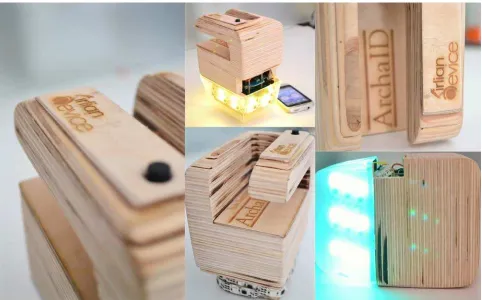
Figure 1: Composite showing the Kirlian Device, an instrument produced to explore the relationship between wireless technologies and the human body. Photo: Luis Hernan
Digital Ethereal attempts to subvert cartographic
representations by thinking of these technologies as spectres. The conceit is inspired in the cultural history of wireless technologies. The 19th century saw a period
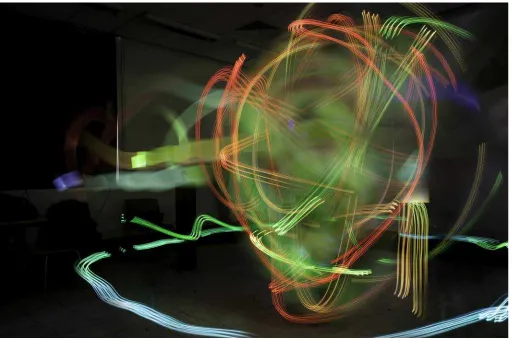
Figure 2: Composite showing the Kirlian Device, an instrument produced to explore the relationship between wireless technologies and the human body. Photo: Luis Hernan
figures, especially spectral and monstrous ones [6]. One of these is aether, a notion used in 19th century
physics to reconcile the behaviour of waves with
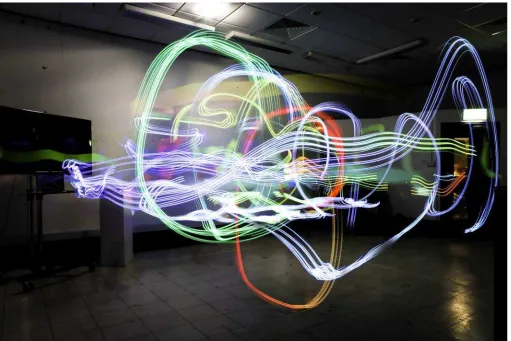
Figure 3: Image produced as part of Digital Ethereal. Photo: Luis Hernan
distance: without a chain of direct mechanical contact. In 1820 however, Hans Christian Oersted discovered that when electrical and magnetic forces combine, they create a new form of wave that cannot be explained
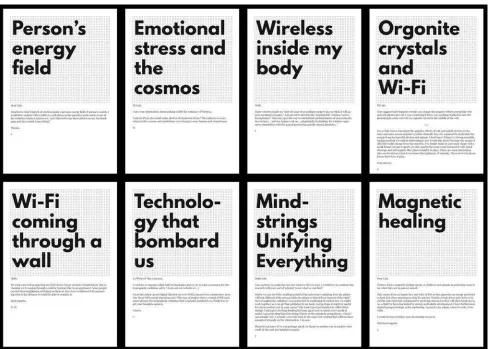
Figure 4: Anonymised correspondence showing mystical and health narratives unearthed by the project. Image: Luis Hernan
The ether has a mystical lineage. It is a central figure of Greek mythology, located among the primordial elements out of which the world was created,
constituting the mist of light that enveloped the world
Figure 5: Anonymised correspondence showing mystical and health narratives unearthed by the project. Image: Luis Hernan
invisible fluids: a public imagination in which invisible technologies, such as early wireless and x-ray
scientific and back. The ether thickens space: it is an oceanic presence, omnipresent and inescapable that infuses and saturates space.
Digital Ethereal explores the creative possibilities in the slippage of spectral figures in imagining wireless technologies. The conceit led to the design of the
Kirlian Device (Figure 1), which references the electrophotography technique developed by Semyon and Valentina Kirlian around 1939. The device operates by performing an active scan every few seconds: an authentication and discovery protocol in which Wi-Fi devices tune into the spectrum of frequencies, wait for indications of active broadcasts, and transmit a probe signal. The Received Signal Strength (RSSI) of the probe signal is recorded, parsed, and mapped into a sliding colour gradient. The images in Figures 2 and 3 are taken by following a capture choreography Ñ body movement to carry the Kirlian Device across space, following a series of rules that adapt a basic stroke to the performance of the device.
Anxities of the invisible
The images can be said to shift some of the power dynamics involved in the perception of digital technologies. They gathered attention in popular and specialised media, stimulating a playfulness in writing about the technology. One reporter described the project as ÔHere comes the Wi-Fi ghostbustersÕ [20]. Another plays on the figure of ghosts to write ÔIn his series of oddly haunting photographs, researcher and artist (É) has found the ghost in the machine. Or
maybe itÕs the machine in the ghostÕ [21]another
article opens with ÔA Machine Is Visualizing The Ghostly
WiFi Waves That Surround UsÕ [33].
The project also triggers new associations of the technology with the human body, revealing creative opportunities. A good example is the work of Annabel Giraud-Telme, a fashion designer who created a collection using the Spirit Photograph images as starting point and was shortlisted for VogueÕs Graduate Fashion Week 2015. The images also unearthed anxieties. The project«s website included a contact form in which visitors were encouraged to leave their impressions on the project. Figures 4 and 5 show a series of cards prepared with the anonymised contents of the correspondence, showing mystical readings ofthe images as well as concerns of how wireless
technologies affect human health
Conclusions
In this paper, we have argued that the analogies used in representing the invisible are the locus of power dynamics that enable corporations to dictate the narrative of how digital technologies integrate in daily lives.
We began by reflecting on #JustAsk, a series of images produced to promote Echo. We analysed how the combination of photographic image and hand-drawn sketch enables a productive ambiguity and tension that enables technology companies not only to ÔdocumentÕ technologies in actual contexts of use, but also to construct imaginaries and make futures. The imagery produced by technology companies, we have proposed, should be understood as capable of doing politics. While the notion that photographic images are capable of influencing peopleÕs opinion and action is not new, the paper contributes in analysing their locus of power. While it is often assumed that the capacity of
instruments of power resides in financial might, we argue they are bound in a matrix of cultural associations Ñ the locus of which is located in the visualisation of the technological invisible. The images we produce of the invisible, and the imaginaries they elicit, are responsible for shaping how Echo is
developed, deployed, and used in real world contexts. We used indexicality as model to analyse the capacity of images to do politics. The relationship between vehicle and tenor of the analogies used, we have argued, can be elongated without breaking the link. Although this plasticity is often used by technology companies to advance their agenda, we propose that it can also be wielded by designers to produce alternative imaginaries of technologies. To explore this possibility, we have proposed the use of conceits Ñ contrived and ingenious metaphors. We presented Digital Ethereal, a project that uses spectral figures as conceits to reframe wireless networks. Doing so enables drawing on a cultural history of wireless technologies, gathering inspiration on 19th century notions of Ether. The result
is a practice that combines bespoke instruments and rituals which produce a series of photographic images that have inspired other designers to talk about and think of wireless in alternative ways. We discuss how the images also bring to sharp relief anxieties of the invisible, manifested in mystical readings of wireless and in Electro Magnetic Hyper Sensitivity linked to the physical infrastructure of wireless.
References
1. Madeleine Akrich. 1992. The De-Scription of Technical Objects. In Shaping Technology/building Society: Studies in Sociotechnical Change, W E Bijker and J Law (eds.). Brooks/Cole.
2. A H Armstrong. 1967. The Cambridge History of Later Greek and Early Medieval Philosophy. Cambridge University Press. Retrieved from https://books.google.co.uk/books?id=U9w-w4k35H4C
3. Albert Atkin. 2005. Peirce on the Index and Indexical Reference. Transactions of the Charles S. Peirce Society 41, 1: 161Ð188. Retrieved from http://www.jstor.org/stable/40358956 4. Paul Bartha. 2013. Analogy and Analogical
Reasoning. The Stanford Encyclopedia of Philosophy (Fall 2013 Edition). Retrieved from
http://plato.stanford.edu/cgi- bin/encyclopedia/archinfo.cgi?entry=reasoning-analogy
5. Lucy Bayly. 2016. AmazonÕs Alexa Went Bonkers, Reset a UserÕs Thermostat. NBC News.
6. M P Blanco and E Peeren. 2013. The Spectralities Reader: Ghosts and Haunting in Contemporary Cultural Theory. Bloomsbury Publishing. 7. Joanna Boehnert. 2015. The Politics of Data
Visualisation. Discover Society, 23.
8. çine Cain. 2017. In 1987, former Apple CEO John Sculley launched a video depicting the computer of the future Ñ and people were furious. UK Business Insider. Retrieved January 25, 2018 from
http://uk.businessinsider.com/apple-future- computer-knowledge-navigator-john-sculley-george-lucas-2017-10
9. C Castoriadis. 1975. The Imaginary Institution of Society. MIT Press. Retrieved from
https://books.google.co.uk/books?id=6UiOqYO0fx0 C
10. Carl DiSalvo. 2014. Critical Making as Materializing the Politics of Design. The Information Society 30, 2: 96Ð105.
https://doi.org/10.1080/01972243.2014.875770
11. Hugh Dubberly. 2007. The Making of Knowledge Navigator. Dubberly Design Office. Retrieved January 25, 2018 from
http://www.dubberly.com/articles/the-making-of-knowledge-navigator.html
12. Anthony Dunne and Fiona Raby. 1998. Tunable Cities 050598. Architectural Design 68: 78Ð79.
13. T S Eliot. 2014. The Varieties of Metaphysical Poetry. Houghton Mifflin Harcourt. Retrieved from https://books.google.co.uk/books?id=mtkPAwAAQ BAJ
14. H Gardner. 1985. The Metaphysical Poets. Penguin Books. Retrieved from
https://books.google.co.uk/books?id=zS_EXPFEtK wC
15. V Goldberg. 1993. The Power of Photography: How Photographs Changed Our Lives. Abbeville. 16. Khari Johnson. 2017. How ÒStar TrekÓ inspired
AmazonÕs Alexa. Venture Beat. Retrieved January 26, 2018 from
https://venturebeat.com/2017/06/07/how-star-trek-inspired-amazons-alexa/
17. David Kiefaber. 2016. Alexa Is Your Suburban Guardian Angel in AmazonÕs New Ads for the Echo. Adweek. Retrieved from
http://www.adweek.com/creativity/alexa-your- suburban-guardian-angel-amazons-new-ads-echo-173869/
18. G Lakoff and M Johnson. 1980. Metaphors we live by. University of Chicago Press, Chicago.
19. Einar Sneve Martinussen. 2012. Making material of the networked city. In Design Innovation for the Built Environment: Research by Design and the Renovation of Practice, Michael U. Hensel (ed.). Taylor & Francis Group.
20. Jesus Maturana. 2014. Digital Ethereal, llegan los cazafantasmas Wi-Fi. Xataka.
21. Glenn McDonald. 2014. Digital ÒSpectresÓ Reveal Invisible, Wireless World. Discovery News.
22. T Michaud. 2017. Innovation, Between Science and Science Fiction. Wiley. Retrieved from
https://books.google.co.uk/books?id=9ksrDwAAQB AJ
23. W J Mitchell. 2003. Me++: The Cyborg Self And
The Networked City. Mit Press.
24. Simone Natale. 2011. A Cosmology of Invisible Fluids: Wireless, X-Rays, and Psychical Research around 1900. Canadian Journal of Communication 36, 2: 263Ð275.
25. Tim Nudd. 2016. Amazon Made More Than a Hundred 10-Second Ads Asking Alexa the Funniest Things. Adweek. Retrieved from
http://www.adweek.com/creativity/amazon-made- more-hundred-10-second-ads-asking-echo-funniest-things-173901/
26. Gil Press. 2017. Apple And The Future Of Computing. Forbes. Retrieved January 25, 2018 from
https://www.forbes.com/sites/gilpress/2017/12/18
/apple-and-the-future-of-computing/2/#528ca3236540
27. Chitra Ramaswamy. 2017. ÒAlexa, sort your life outÓ: when Amazon Echo goes rogue. The Guardian. Retrieved from
https://www.theguardian.com/technology/shortcut s/2017/jan/09/alexa-amazon-echo-goes-rogue-accidental-shopping-dolls-house
28. Brent Rose. 2011. Apple Predicted Siri 24 Years Ago So Perfectly ItÕs Scary. Gizmodo. Retrieved January 25, 2018 from
https://gizmodo.com/5846630/apple-predicted-siri-24-years-ago-so-perfectly-its-scary 29. Adam Rosen. 2011. Apple Knowledge Navigator
Video from 1987 Predicts Siri, iPad and More. Cult of Mac. Retrieved January 25, 2018 from
https://www.cultofmac.com/120716/apple- knowledge-navigator-video-from-1987-predicts-siri-ipad-and-more/
30. Stefan Rummens and Stefaan E Cuypers. 2010. Determinism and the Paradox of Predictability. Erkenntnis 72, 2: 233Ð249.
https://doi.org/10.1007/s10670-009-9199-1 31. Tom Schofield, Marian Dšrk, and Martyn
Photography. In Proceedings of the 9th ACM Conference on Creativity & Cognition (C&C Õ13), 175Ð184.
https://doi.org/10.1145/2466627.2466641
32. Tom Simonite. 2017. Alexa Gives Amazon a Powerful Data Advantage. MIT Technology Review. 33. Zach Sokol. 2014. A Machine Is Visualizing The
Ghostly WiFi Waves That Surround Us. The creators project, Vice. Retrieved from
http://thecreatorsproject.vice.com/en_au/blog/a- machine-is-visualizing-the-ghostly-wifi-waves-that-surround-us
34. Alice Truong. 2016. Amazon Echo owners are finding unexpected items like Òbig fartÓ on their shopping lists. Quartz.
35. Andrey Voznesensky. 2011. MichelangeloÕs Theme. Collection of poems.
36. Langdon Winner. 1980. Do Artifacts Have Politics? Daedalus 109, 1: 121Ð136. Retrieved from http://www.jstor.org/stable/20024652
37. Mark J.P. Wolf. 1999. Subjunctive Documentary: Computer Imagining and Simulation. In Collecting Visible Evidence, J Gaines and M Renov (eds.). University of Minnesota Press, 274Ð291. 38. D Wood. 2010. Rethinking the Power of Maps.