A Dissertation Submitted to
The Tamil Nadu Dr. M.G.R. Medical University Che nnai - 600 032
In partial fulfillment for the award of Degree of
MASTER OF PHARMACY (Pharmaceutics)
Submitted by P.SATHISH KUMAR Register No. 26106008 Under the Guidance of Mr. T. AYYAPPAN, M. Pharm.
Assistant Professor Departme nt of Pharmaceutics
ADHIPARASAKTHI COLLEGE OF PHARMACY
(Accre dite d by “ NAAC” with a CGPA of 2 .74 on a four point scale at “B” Gr ade)
CERTIFICATE
This is to certify that the dissertation entitled “COMPARATIVE EVALUATION
OF INCLUSION COMPLEX OF ACECLOFENAC PREPARED BY
DIFFERENT TECHNIQUES” Submitted to The Tamil Nadu Dr. M.G.R. Medica l
University, Chennai, in partial fulfillment for the award of the Degree of the Master of
Pharmacy was carried out by P.SATHISH KUMAR (Register No. 26106008) in the
Department of Pharmaceutics under my direct guidance and supervision during the
academic year 2011-2012.
T. AYYAPPAN, M. Pharm., Assistant Professor,
Department of Pharmace utics,
CERTIFICATE
This is to certify that the dissertation entitled “COMPARATIVE
EVALUATION OF INCLUSION COMPLEX OF ACECLOFENAC
PREPARED BY DIFFERENT TECHNIQUES” is the bonafide research work
carried out by P.SATHISH KUMAR (Register No. 26106008) in the Department
of Pharmaceutics, Adhiparasakthi College of Pharmacy, Melmaruvathur which is
affiliated to The Tamil Nadu Dr. M.G.R. Medical University, Chennai, under the
guidance of Mr. T. AYYAPPAN, M. Pharm., Assistant Professor, Department of
Pharmaceutics, Adhiparasakthi College of Pharmacy, during the academic
year 2011-2012.
Prof. Dr. T. VETRICHELVAN, M.Pharm., Ph.D., Principal,
My Heartfelt Dedication To
My Beloved Parents,
&
First and foremost, I wish to express my deep sense of gratitude to his
Holiness ARULTHIRU AMMA, President, ACMEC Trust, Me lmaruvathur for their ever growing blessings in each step of the study.
With great respect and honor, I extend my sincere thanks to THIRUMATHI LAKSHMI BANGARU ADIGALAR, Vice President, ACMEC Trust, Melmaruvathur for given me an opportunity and encouragement all the way in
completing the study.
I got inward bound and brainwave to endure experimental investigations
in novel drug delivery systems, to this extent; I concede my inmost special gratitude
and thanks to Mr. T. AYYAPPAN, M.Pharm., Assistant Professor, Department of Pharmaceutics, Adhiparasakthi College of Pharmacy for the active guidance, valuable
suggestions and a source of inspiration where the real treasure of my work.
I owe my sincere thanks with bounteous pleasure to
Prof. Dr. T.VETRICHELVAN, M.Pharm., Ph.D., Principal, Adhiparasakthi College of Pharmacy, without his encouragement and supervision it would have been
absolutely impossible to bring out the work in this manner.
I have great pleasure in express my sincere heartfelt thanks to
throughout this work.
I am very grateful to our Librarian Mr. SURESH, M.L.I.S., for his kind cooperation and help in providing all reference books and journals for the completion
of this project.
I am highly indebted to Tristar Pharmace uticals, Pondicherry, for generous gift sample of the drug. I thank to Mrs. M. Sujitha, I -M.Pharm., for kind obligation in procuring gift sample of Aceclofenac.
I also thank to Alkem Laboratories, Mumbai, for generous gift sample of the drug carrier. I thank to Mr. Zanjurne Amol Hanamant, M. Phram., for her kind obligation in procuring gift sample of β - Cyclodextrin.
I am thankful to my dear friends and seniors, for be ing a great source of help
whenever I needed and for sharing their ideas and extending support during the course
of study.
Last but not the least, I can hardly find any words enough to express gratitude
to my father M. PICHAIPILLAI, my mother P. VIJAYA, my brothers P.JAYAPRAKASH, P. CHANDRAMOHAN, my sister P.PRIYARAJA, and all my relatives for their frequent prayer, tremendous encouragement, support and love
which has proved to be a real source of inspiration, and will remain so far the life to
come, without which it would have been impossible for me to achieve this success.
CHAPTER TITLE PAGE No.
1. INTRODUCTION 1
2. LITERATURE SURVEY
2.1. Literature Review 32
2.2. Drug Profile 42
2.3. β-Cyclodextrin Profile 46
3. AIM AND OBJECTIVE 48
4. PLAN OF WORK 50
5. MATERIALS AND EQUIPMENTS
5.1. Materials Used 52
5.2.Equipments Used 53
6. PREFORMULATION STUDIES
6.1.Identification of Drug 54
7. FORMULATION OF INCLUSION COMPLEXES 57 7.1. Methods of Preparation of Inclusion Complexes 58 8. EVALUATION OF INCLUSION COMPLEXES
8.1. Phase Solubility Studies 59
8.2. UV-Spectrometric Study of Prepared Complexes 60
8.3. Fourier Transform Infrared (FTIR) Spectroscopy 60
8.4. Differential Scanning Calorimetry(DSC) Analysis 60
8.6. Drug Content Estimation 61
8.7. In vitro Dissolution Studies 61
8.8. Stability Studies 62
9. RESULTS AND DISCUSSION
9.1. Identification of Drug 63
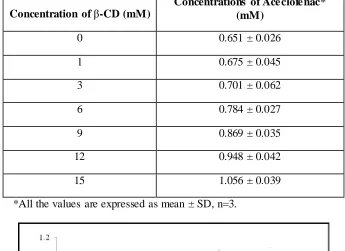
9.2. Phase Solubility Studies 70
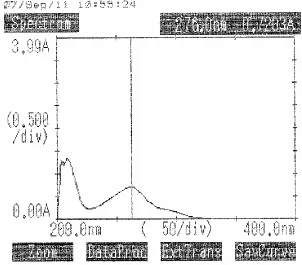
9.3. UV-Spectrometric Study of Prepared Complexes 71
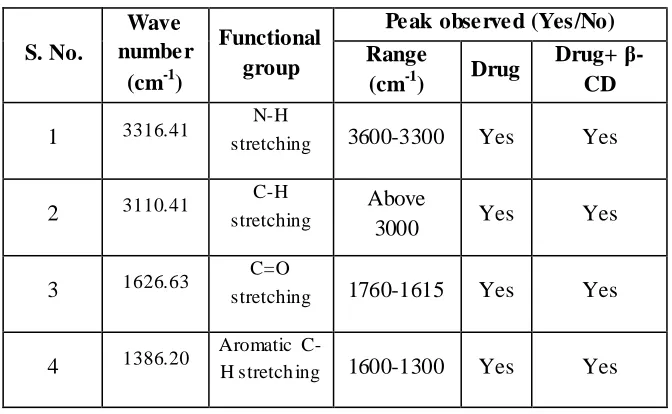
9.4. Fourier Transform Infrared (FTIR) Spectroscopy 72
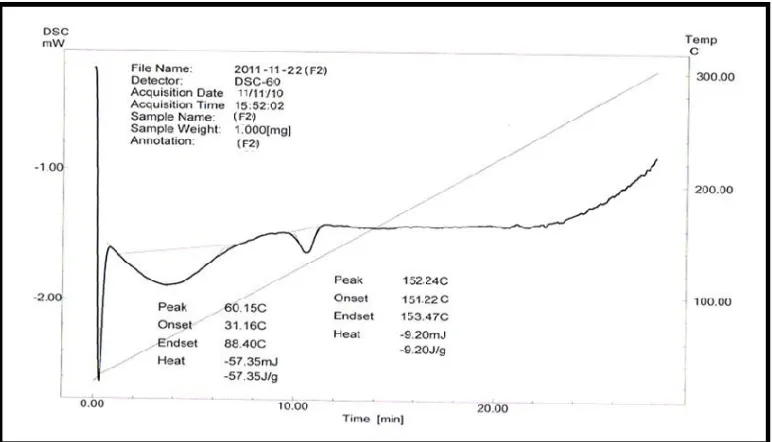
9.5. Differential Scanning Calorimetry(DSC) Analysis 74
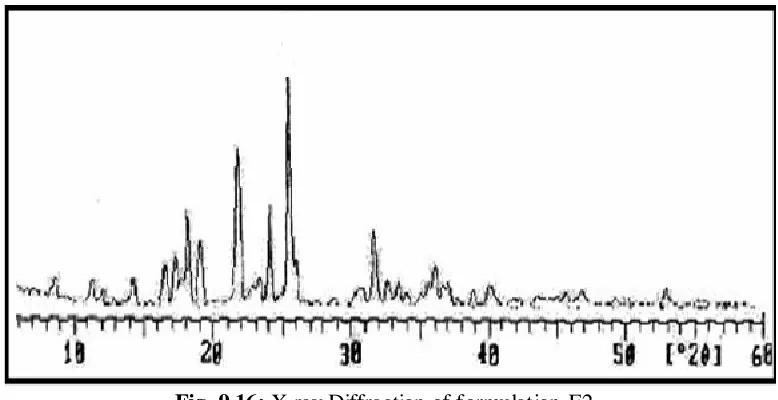
9.6. X-Ray Diffraction Studies 76
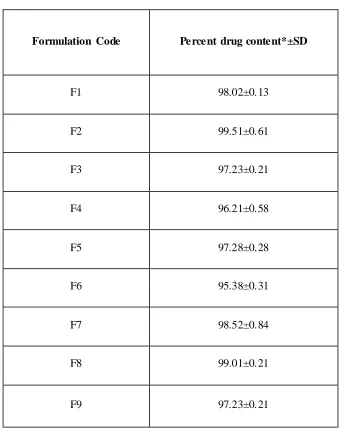
9.7. Drug Content Estimation 78
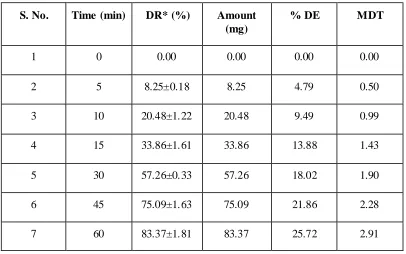
9.8. In vitro Dissolution Studies 79
9.9. Stability Studies 92
10. SUMMARY AND CONCLUSION 97
11. FUTURE PROSPECTS 100
12. BIBLIOGRAPHY 101
TABLE No. CONTENTS PAGE No.
1.1 Characteristics of cyclodextrins 20
1.2 Stability requirement for maintenance of shelf life 28
5.1 List of raw materials with source 52
5.2 List of equipments with model/make 53
7.1 Composition of inclusion complexes of Aceclofenac 57 8.1 Parameters were used for the dissolution study 62 9.1 Solubility of Aceclofenac in various solvents 63 9.2 Percentage loss on drying of Aceclofenac 64 9.3 Characteristic frequencies in FTIR spectrum of
Aceclofenac
65
9.4 Data of concentration and absorbance for Aceclofenac in Methanol
66
9.5 Data for calibration curve parameter of Methanol 67 9.6 Data of concentration and absorbance for Aceclofenac
in Distilled water
68
9.7 Data for calibration curve parameter of Distilled water 69
9.8 Assay of Aceclofenac 69
9.9 Phase solubility studies of Aceclofenac-β-cyclodextrin complexes
70
9.10 Interpretation of FTIR spectrum of Aceclofenac 73
9.11 Data for DSC thermogram parameters 75
9.12 Drug content estimation of Aceclofenac inclusion complexes
78
9.13 Dissolution profile of formulation F1 79
9.14 Dissolution profile of formulation F2 80
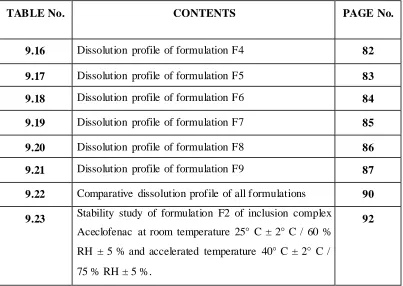
9.16 Dissolution profile of formulation F4 82
9.17 Dissolution profile of formulation F5 83
9.18 Dissolution profile of formulation F6 84
9.19 Dissolution profile of formulation F7 85
9.20 Dissolution profile of formulation F8 86
9.21 Dissolution profile of formulation F9 87
9.22 Comparative dissolution profile of all formulations 90 9.23 Stability study of formulation F2 of inclusion complex
Aceclofenac at room temperature 25° C ± 2° C / 60 %
RH ± 5 % and accelerated temperature 40° C ± 2° C /
75 % RH ± 5 %.
[image:10.612.122.525.68.354.2]FIGURE No. CONTENTS PAGE No.
1.1 Structure of cyclodextrins 18
1.2 Molecular structure of β-cyclodextrin 19
1.3 Complexation of cyc lodextrin 22
2.1 Structure of Aceclofenac 42
2.2 Pathway describing general anti-inflammatory action of Aceclofenac
43
2.3 Structure of β-cyclodextrin 46
9.1 FTIR spectrum of Aceclofenac 64
9.2 λ max of Aceclofenac in Methanol 65
9.3 λ max of Aceclofenac in Distilled Water 66 9.4 Standard graph of Aceclofenac in Methanol 67 9.5 Standard graph of Aceclofenac in Distilled Water 68
9.6 Phase solubility studies of Aceclofenac-β-cyclodextrin complexes
70
9.7 λ max of prepared complexes 71
9.8 FTIR spectrum of Aceclofenac 72 9.9 FTIR spectrum of β-cyclodextrin 72 9.10 FTIR spectrum of formulation F2 73
9.11 DSC thermogram of Aceclofenac 74
9.12 DSC thermogram of β-cyclodextrin 74
9.13 DSC thermogram of Formulation F2 75
9.14 X-ray diffraction of pure Aceclofenac 76
9.15 X-ray diffraction of β-cyclodextrin 76
9.16 X-ray diffraction of formulation F2 77
9.17 Dissolution profile of formulation F1 79
9.18 Dissolution profile of formulation F2 80
9.20 Dissolution profile of formulation F4 82
9.21 Dissolution profile of formulation F5 83
9.22 Dissolution profile of formulation F6 84
9.23 Dissolution profile of formulation F7 85
9.24 Dissolution profile of formulation F8 86
9.25 Dissolution profile of formulation F9 87
9.26 Dissolution profile of inclusion complex (kneading method)
containing various ratio i.e. 1:1, 1:2, 1:3 88 9.27 Dissolution profile of inc lusion complex (common solvent
method) containing various ratio i.e. 1:1, 1:2, 1:3 88
9.28 Dissolution profile of inc lusion complex (physical mixture)
containing various ratio i.e. 1:1, 1:2, 1:3 89 9.29 Comparative dissolution profile of all formulations 90 9.30 Comparative dissolution profile of drug content, marketed
formulation and formulation F2
91
9.31 Comparisons of drug content before and after stability
period at room temperature (25° C ± 2° C / 60 % RH ± 5 % ) 93 9.32 Comparisons of in vitro cumulative % drug release before
and after stability period at room temperature (25° C ± 2° C / 60 % RH ± 5 %).
93
9.33 Comparisons of drug content before and after stability period at accelerated temperature (40° C ± 2° C / 75 % RH ± 5 %)
94
9.34 Comparisons of in vitro cumulative % drug release before and after stability period at accelerated temperature (40° C ± 2° C / 75 % RH ± 5 %)
94
9.35 Comparisons of drug content before and after stability period at room temperature and accelerated temperature
95
9.36 Comparisons of in vitro cumulative % drug release before and after stability period at room temperature and
accelerated temperature.
% ---- Percentage
β ---- Beta
γ ---- Gamma
°C ---- Degree Celsius
µ ---- Micro
µg ---- Microgram
ACE ---- Aceclofenac
BCS ---- Biopharmaceutics Classification System
CD ---- Cyclodextrin
cm ---- Centimeter
DE ---- Dissolution Efficiency
DSC ---- Differential Scanning Calorimetry
edn ---- Edition
Fig ---- Figure
FTIR ---- Fourier Transform Infrared Spectroscopy
GIT ---- Gastrointestinal Tract
gm ---- Grams
ICH ---- Internationa l Conference on Harmonization
IP ---- Indian Pharmacopoe ia
min ---- Minute ml
Millilitre mM
Millimoles nm
---- Nanometer
NSAID ---- Non- steroidal anti inflammatory drug
RH ---- Relative Humidity
RPM ---- Revolutions Per Minute
S.No. ---- Serial Number
SD ---- Standard Deviation
t ---- Time
UV ---- Ultra Violet
vol ---- Volume
w/v ---- Weight/Volume
w/w ---- Weight/Weight
XRD ---- X-Ray Diffraction
α ---- Alpha
β-CD ---- Betacyclodextrin
1. INTRODUCTION
(Raymond C.Rowe., 2003)
Cyclodextrins are cyclic oligosaccharides containing at least six D-(+)- glucopyranose units attached by α (1Æ4) glucoside bonds. The three natural cyclodextrins, α, β, and γ differ in their ring size and solubility. They contain 6, 7 or 8 glucose units, respectively.
Cyclodextrins occur as white, practically odourless, fine crystalline powders, having a slightly taste. Some cyclodextrins derivatives occur as amorphous powders. Cyclodextrins were discovered approximately 100 years ago with the foundation of cyclodextrin chemistry being laid down in the first half of this century. In the beginning, only small amounts of relatively impure cyclodextrins could be generated and high production costs prevented their industrial usage. Recent bio-technological advancements have resulted in drastic improvements in the efficiency of manufacture of cyclodextrins, lowering the cost of these materials and making highly purified cyclodextrins and cyclodextrin derivatives available.
molecular size and polarity in hydrophobic drug molecules. The resulting complex generally leads to an improvement in some of the properties of drugs in terms of solubility, bioavailability and tolerability.
Poorly water soluble drugs are generally associated with slow drug absorption leading eventually to inadequate and variable bioavailability.
Cyclodextrins are ‘bucket like’ or ‘cone like’ toroid molecules, with a rigid structure and central cavity, the size of which varies according to the cyclodextrin type. The internal surface of the cavity is hydrophobic and the outside of the torus is hydrophilic; this is due to arrangement of hydroxyl groups within the molecule. This arrangement permits the cyclodextrin to accommodate a guest molecule within the cavity, forming an inclusion complex.
The interaction of guest molecules with cyclodextrins may induce useful modifications of the chemical and physical properties of guest molecules, which may lead to improve stability, solubility in aqueous medium and bioavailability. Poorly water soluble drugs therefore can be orally administered in the complex form by taking advantage of the well established low toxicity of the cyclodextrins by the oral route. β- Cyclodextrin appears to be the most useful complexing agent because of its unique cavity size, and ease with which it can be obtained on the industrial scale leading to reasonably cheaper price of the compound. Pharmaceutical applications of cyclodextrins as additive and drug complexing agents have been rapidly growing.
variety of substances leading to undesired drug loss as loss desired drug of absorption. In every instance the degree of this loss or absorption is a function of the drug and the type of the dosage form.
1.1. Biopharmaceutics and Pharmacokinetics:
(Brahmankar D.M and Sunil B. Jaiswal., 2009)
Biopharmaceutics is the study of physiologic and pharmaceutical factors influencing drug release and absorption from dosage forms. The optimal delivery of the active moiety to the site of action depends on an understanding of specific interaction between formulation variables and biological variables. Absorption is defined as the amount of drug that reaches the general circulation in unchanged form from the site of administration.
The drug efficacy can be severely limited by poor aqueous solubility. An insoluble or sparingly soluble drug, if ad ministered the rate of absorption and extent of bioavailability is controlled by dissolution rate in gastrointestinal fluid. The therapeutic effectiveness of a drug whose absorption is dissolution rate limited is hampered by its poor dissolution in an aqueous medium. The absorption of solid drugs administered orally can be depicted by the following chart.
Solid drugs Kd Drug solution Ka Drug in systemic
in GI fluids Dissolution in GI fluids Absorption circulation
where Kd and Ka are the rate constants for dissolution and absorption process
1.2. Methods for Enhancement of Bioavaila bility:
(Brahmankar D.M and Sunil B. Jaiswal., 2009)
As far as the definition of bioavailability is concerned, a drug with poor bioavailability is the one with
1. Poor aqueous solubility and / or slow dissolution rate in the biological fluids.
2. Poor stability of the dissolved drug at the physiologic pH.
3. Inadequate partition coefficient and thus poor permeation through the biomembrane.
4. Extensive presystemic metabolism.
The three major approaches in overcoming the bioavailability problems due to such causes are:
a. The Pharmaceutic Approach which involves modification of formulation, manufacturing process or the physicochemical properties of the drug without changing the chemical structure.
b. The pharmacokinetic approach in which the pharmacokinetics of the drug is altered by modifying its chemical structure.
The second approach of chemical structure modification has a number of drawbacks of being very expensive and time consuming, requires repetition of clinical studies and long time for regulatory approval. Moreover, the new chemical entity may suffer from another pharmacokinetic disorder or bear the risk of precipitating adverse effects. Only the pharmacokinetic approach will be dealt herewith.
The attempts, whether optimizing the formulation, manufacturing process or physicochemical properties of the drug, are mainly aimed at enhancement of dissolution rate as it is the major rate limiting step in the absorption of most drugs. There are several ways in which the dissolution rate of a drug can be enhanced. Some of the widely used methods, most of which are aimed at increasing the effective surface area of the dugs will be discussed briefly.
1.2.1. Techniques of Solubility Enhancement:
(Mohanachandran P.S et al., 2010; Brahmankar D.M and Sunil B. Jaiswal., 2009)
There are various techniques available to improve the solubility of poorly soluble drugs. Some of the approaches to improve the solubility are,
a) Physical Modifications:
Particle size reduction:
• Micronization
• Nanosuspension
• Sonocrystalisation
Modification of the crystal habit:
• Polymorphs
• Pseudopolymorphs
Drug dispersion in carriers:
• Eutectic mixtures
• Solid dispersions
• Solid solutions
Complexation:
• Use of complexing agents
Solubilization by surfactants:
• Microemulsion
• Self microemulsifying drug delivery systems
b) Chemical Modifications:
Physical Modifications:
Particle size reduction: Particle size reduction can be achieved by micronisation and nanosuspension. Each technique utilizes different equipments for reduction of the particle size.
dissolution properties of the drug. Conventional methods of particle size reduction, such as communication and spray drying, rely upon mechanical stress to disaggregate the active compound.
Nanosuspension: Nanosuspensions are sub-micron colloidal dispersion of pure particles of drug, which are stabilized by surfactants. The advantages offered by nanosuspension is increased dissolution rate is due to larger surface are exposed, while absence of Ostwald ripening is due to the uniform and narrow particle size range obtained, which eliminates the concentration gradient factor.
Sonocrystallisation: Recrystallization of poorly soluble materials using liquid solvents and antisolvents has also been employed successfully to reduce particle size. The novel approach for particle size reduction on the basis of crystallization by using ultrasound is Sonocrystallisation. Sonocrystallisation utilizes ultrasound power characterized by a frequency range of 20-100 kHz for inducing crystallization. It’s not only enhances the nucleation rate but also an effective means of size reduction and controlling size distribution of the active pharmaceutical ingredients. Most applications use ultrasound in the range 20 kHz-5 MHz.
In the case of an enantiotropic system, one polymorphs form can change reversibly into another at a definite transition temperature below the melting point, while no reversible transition is possible for monotropes. Once the drug has been characterized under one of this category, further study involves the detection of metastable form of crystal. Metastable forms are associated with higher energy and thus higher solubility.
Drug dispersion in carriers: The solid dispersion approach to reduce particle size and therefore increase the dissolution rate and abso rption of drugs was first recognized in 1961. The term “solid dispersions” refers to the dispersion of one or more active ingredients in an inert carrier in a solid state, frequently prepared by the melting method, solvent method, or fusion solvent- method. Novel additional preparation techniques have included rapid precipitation by freeze drying and using supercritical fluids and spray drying, o ften in the presence of amorphous hydrophilic polymers and also using methods such as melt extrusion.
Complexation: Complexation is the association between two or more molecules to form a nonbonded entity with a well defined stoichiometry. Complexation relies on relatively weak forces such as London forces, hydrogen bonding and hydrophobic interactions.
aggregation is favored by large planar nonpolar regions in the molecule. Stached complexes can by homogeneous or mixed. The former is known as self association and latter as complexation.
Approaches for Making Inclusion Complexes:
Physical blending method: A solid physical mixture of drug and CDs are prepared simply by mechanical trituration. In laboratory scale CDs and drug are mixed together thoroughly by trituration in a mortar and passes through appropriate sieve to get the desired particle size in the final product.
Kneading method: This method is based on impregnating the CDs with little amount of water or hydroalcoholic solutions to converted into a paste. The drug is then added to the above paste and kneaded for a specified time. The kneaded mixture is then dried and passed through sieve if required.
Co – precipitation technique: This method involves the co – precipitation of drug and CDs in a complex. In this method, required amount of drug is added to the solution of CDs. The system is kept under magnetic agitation with controlled process parameters and the content is protected from the light. The formed precipitate is separated by vacuum filtration and dried at room temperature in order to avoid the loss of the structure water from the inclusion complex.
quite simple and economic both on laboratory and large scale production and is considered alternative to the spray drying technique.
Neutralization precipitation method: This method is based on the precipitation of inclusion compounds by neutralization technique and consists of dissolving the drug in alkaline solutions like sodium / ammonium hydroxide and mixing with an aqueous solution of CDs. The resultant clear solution is then neutralized under agitation using HCI solution till reaching the equivalence point. A white precipitate is being formed at this moment, corresponding to the formation of the inclusion compound. This precipitate is filtered and dried.
Atomization / spray drying method: Spray – drying is a common technique used in pharmaceuticals to produce a dry powder from a liquid phase. Another application is its use as a preservation method, increasing the storage stability due to the water elimination. This method represents one of the most employed methods to produce the inclusion complex starting from a solution. The mixture pass to a fast elimination system propitiate solvent and shows a high efficiency in forming complex. Besides, the product obtained by this method yield the particles in the controlled manner which in turn improves the dissolution rate of drug in complex form.
Lyophilization / Freeze drying technique: In order to get a porous, amorphous powder with high degree of interaction between drug & CD, lyophilization / freeze drying technique is considered as a suitable. In this technique, the solvent system from the solution is eliminated through a primary freezing and subsequent drying of the solution containing both drug & CD at reduced pressure. Thermolabile substances can be successfully made into complex form by this method. The limitations of the technique are long time process and yield poor flowing powdered product. Lyophilization /freeze drying technique are considered as an alternative to solvent evaporation and involve molecular mixing of drug and carrier in a common solvent.
completes, adequate amount of solvent mixture is added to the above reaction mixture to remove the residual, uncomplexed free drug and CD. The precipitate so obtained is separated using whatman filter paper, and dried in vacuum oven at 40° C from 48 hrs.
Supercritical antisolvent technique: In this technique, carbon dioxide is used as anti- solvent for the solute but as a solvent with respect to the organic solvent. The use of supercritical carbon dioxide is advantageous as its low critical temperature and pressure makes it attractive for processing heat – labile pharmaceuticals. It is also non – toxic, nonflammable, inexpensive and is much easier to remove from the polymeric materials when the process is complete, even through small amount of carbon dioxide remains trapped inside the polymer, it poses no danger to the consumer. Supercritical particle generation processes are new and efficient route for improving bioavailability of pharmaceutically active compounds. In addition, supercritical fluid processes were recently proposed as a new alternative method for the preparation of drug cyclodextrin complexes. Supercritical carbon dioxide is suggested as a new complexation medium due to its properties of improved mass transfer and increased solvating power. This method constitutes one of the most innovators methods to prepare the inclusion complex of drug with CD in solid state. This is a non – toxic method as it is not utilizing any organic solvent, fast process, maintenance cost is low with promising results, but it requires a quite high initial cost.
supercritical fluid anti – solvent, the anti – solvent rapidly diffuses into that liquid solvent as the carrier liquid solvent counter diffuses into the anti– solvent. Because of the supercritical fluid expanded solvent has lower solvent power than the pure solvent, the mixture becomes supersaturated resulting in the precipitation of the solute and the solvent is carried away with the supercritical fluid flow.
Solubilization by surfactants:
Surfactants are molecules with distinct polar and nonpolar regions. Most surfactants consist of a hydrocarbon segment connected to a polar group. The polar group can be anionic, cationic, zwitterionic or nonionic. When small apolar molecules are added they can accumulate in the hydrophobic core of the micelles.
This process of solubilization is very important in industrial and biological processes. The presence of surfactants may lower the surface tension and increase the solubility of the drug within an organic solvent.
contributes to the stability of the microemulsions. Non – ionic surfactants, such as Tweens and Labrafil with high hyrophile – lipophile balances are often used to ensure immediate formation of oil – in – water droplets during production. Advantages of microemulsion over coarse emulsion include its ease of preparation due to spontaneous formation, thermodynamic stability, transparent and elegant appearance, increased drug loading, enhanced penetration through the biological membranes, increased bioavailability, and less inter-and intra – individual variability in drug pharmacokinetics.
Che mical Modifications:
base is converted to a salt, which is relatively soluble in water. The solubility of slightly soluble acid increased as the pH is increased by addition of alkali, the reason being that a salt is formed.
1.3. Monomolecular Inclusion Complexes:
(Martin’s., 2006)
Monomolecular inclusion compounds involve the entrapment of a single guest molecule in the cavity of one host molecule. Most of the host molecules are cyclodextrins. Cyclodextrins are cyclic oligo-saccharides containing a minimum of six D-(+) glucopyranose units attached by alpha-1,4 linkage. Three types of cyclodextrins namely α, β, γ consist of 6, 7 and 8 units of glucose, respectively. Alpha cyclodextrin has the smallest cavity (internal diameter almost 5 A). Beta and gamma cyclodextrins have larger internal diameter (6 and 8 A. respectively) and are useful for pharmaceutical technology.
The structures of cyclodextrins assume a truncated cone and can accommodate a wide varity of compounds. The interior of the cavity is relatively hydrophobic, whereas the entrance of the cavity is hydrophilic in nature.
Applications: These types of complexes are extensively studied for their possible uses in the design of dosage forms.
Enhance d solubility: The solubility of retinonic acid (0.5 mg/litre) is increased to 160 mg/litre by complexation with β -cyclodextrin.
Enhance d stability: The stability of drugs such as aspirin, benzocaine, ephedrine and testosterone is improved when complexed with β cyclodextrin. The inclusion complexes protect the drugs by preventing the exposure of the functional groups to the exterior of the environment.
Sustained release: Ethylated β -cyclodextrin retards the release of drugs such as diltiazem and isosorbide dinitrate, when complexed. The drug releases slowly for prolonged periods and provides sustained effect.
1.4. Cyclodextrin:
(Loftsson T. et al., 1996; Gerold Mosher et al., 2007; Szejtli J.,1990)
Cyclodextrin or cycloamylases which have recently been recognized as useful pharmaceutical excipient and comprise a family of cyclic oligosaccharides produced from starch by enzymatic degradation. The enzyme cyclodextrin- glucosyl transferase produced by Bacillus macerans acts on partially hydrolyzed starch and produces a mixture of cyclic and acyclic dextrins from which cyclodextrin are isolated.
produced hydroxy alkylated β-cyclodextrins (2 hydroxy ethyl β-CD, 2 hydroxypropyl β-CD). This modification results in greater solubility, of hydroxypropyl β- cyclodextrin and its complexes compared to β-cyclodextrin. The hydroxy groups and the hydroxypropyl groups are on the exterior of the molecule and interact with water to provide the increased aqueous solubility of the hydroxypropyl β-cyclodextrin.
Fig. 1.1: Structure of cyclodextrins
Fig. 1.2: Molecular structure of β-cyclodextrins
It is the unique configuration that gives cyclodextrins their interesting properties and creates the thermodynamic driving force needed to form host guest complexes with a polar molecules and functional groups.
1.4.1. Che mistry of Cyclodextrin:
(Raymond C.Rowe., 2003)
Table 1.1: Characteristics of cyclodextrins
α β γ
No. of glucose units 6 7 8
Molecular weight 972 1135 1297
Cavity diameter 4.7 – 5.3 6.0 – 6.5 7.5 – 8.3
Water solubility (g/100 ml) 14.50 1.85 23.2
Content (dry basis) >98 % >98 % >98 %
Specific rotation in aqueous solution (α)
D, 20
+ 147 to +150° +160 to +164° +174 to +180°
Water <10 % <14 % <11 %
Heavy metals <5 ppm <5 ppm <5 ppm
Cavity height (A°) 7.9 7.9 7.9
Cavity volume (A°)³ 174 262 427
In addition, all three cyclodextrins exhibit good flow properties and handling characteristics and are:
• Thermally stable (<200° C)
• Stable in acidic solution (pp>3) • Biocompatible.
1.4.2. Method of Manufacture:
Cyclodextrins are manufactured by the enzymatic degradation of starch using specialized bacteria (Bacillus macerans). The insoluble β-CD organic solvent complex is separated from the non-cyclic starch, and the organic solvent removed in vacuole so that less than 1 ppm of solvent remains in the β-CD. The cyclodextrin is then carbon treated and crystallized from water, dried and collected.
Hydroxyethyl-β-CD is made by reacting β-CD with ethylene oxide, while hydroxypropyl-β-CD is made by reacting with propylene oxide.
1.4.3. Complexation of Cyclodextrins:
(Martin’s., 2006)
The ability to form inclusion compounds in aqueous solution is due to the typical arrangement of glucose units in aqueous solutions. Cyclodextrins form complexes with many drugs through a process in which the water molecules located in the central cavity are replaced by either the whole drug molecule or more frequently by some lipophilic portion of the drug structure.
water molecules located in the solution. Water inside the cavity tends to be squeezed out and to be replaced by more hydrophobic species. Thus, molecules of appropriate size and stereochemistry can be included in the cyclodextrin by hydrophobic interactions.
Water is preferred solvent for complexation. The guest or proton of the which complexes with the cavity of cyclodextrin as a non-polar (hydrophobic) and prefers the non-polar environment of the cavity of cyclodextrin rather than polar aqueous environment as a result water provides a driving force for complexation reaction in addition to dissolving the guest and cyclodextrin.
Fig. 1.3: Complexation of cyclodextrin
presence of a small amount of water. In general, there are four energetically favorable interactions that help shift the equilibrium to right:
• The displacement of polar water molecules from the a polar cyclodextrin cavity.
• The increased number of hydrogen bonds formed as the displaced water returns to the larger pool.
• A reduction of the repulsive interactions between the hydrophobic guest and the aqueous environment.
• An increase in the hydrophobic interactions as the guest inserts itself into the a polar cyclodextrin cavity.
While this initial equilibrium to form the complex is very rapid (often within minutes), the final equilibrium can take much longer to reach. Once inside the cyclodextrin cavity, the guest molecule makes conformational adjustments to take maximum advantage of the weak Vander Waals’ forces that exist.
1.5. Preparation of Complexes:
(Sanoferjan A.M et al., 2000; Chowdary K.P.R et al., 2000)
Cyclodextrin complexes are prepared by the following methods: a) Kneading method
b) Common solvent method c) Physical mixture
a) Kneading method:
β-Cyclodextrin was taken in a glass mortar and little water was added and mixed to obtain a homogenous paste. Drug was then added slowly while grinding. The mixture was ground for 1 h during this process appropriate quantity of water was added to maintain suitable consistency. The paste was dried in an oven at 40° C for 48 hr. The dried complex was taken for study.
b) Common solvent method:
Drug and β-Cyclodextrin were dissolved in 25 % ammonia and the solvent was allowed to evaporate overnight at room temperature. The complex so prepared was pulverized and sifted through sieve no.80.
c) Physical mixture:
Previously weighted drug and Cyclodextrin mixture was blended in glass mortar for about an hour and passed through sieve no.85 to get physical mixture and stored in desiccator over fused calcium chloride.
d) Co-precipitate Method:
1.6. Phase Solubility Technique: (Higuchi T. and Connors K.A., 1965)
“T. Higuchi and K.A. Connors” developed the phase solubility technique. It is based on research related to how co mplexes of different complexing agents such as cyclodextrin, caffeine, polyvinyl pyrrolidone and some aromatic acids affect the aqueous solubility of drug.
1.6.1. Phase Solubility Diagrams:
Phase solubility diagrams are plots of drug solubility versus cyclodextrin concentration. The stoichiometry of drug/cyclodextrin complexes and the numerical values of their stability constants are frequently obtained from phase solubility diagrams.
For example, measurements of conductivity changes, determination of freezing point depression, viscosity measurements and calorimetric titration’s. However, only few of these methods can be applied to obtain structural information on drug/ cyclodextrin complexes.
1.7. Stability Studies:
(Lachmann L. and Herbert A. Libberman., 1991)
Stability of a drug can also be defined as the time from the date of manufacture and packaging of the formulation until its chemical or biological activity is not less than a predetermined level of labeled potency and its physical characteristics have not changed appreciably or deleteriously. The environmental factors, ingredients used and the nature of the container can affect stability.
Loss of potency usually occurs from a chemical change, the most common reaction being hydrolysis, oxidation and reduction. Potency is determined by means of assay procedure that differentiated between the intact drug and its degradation product.
Accelerating the decomposing process and extrapolating the result to normal storage conditions may make a prediction of the life of the product. Acceleration of chemical decomposition is achieved by raising the temperature of the preparations. Application of the principles of chemical kinetics to the results of accelerated storage test carried out at three or more elevated temperatures enable prediction to be made of the effective life of the preparation at normal temperature.
The reaction velocity constant k for the decomposition at each of the elevated temperature can be calculated from the slope of the line. The most satisfactory method for expressing the influence of temperature on reaction velocity is the quantitative relation proposed by Arrhenius.
–Ea/RT Where, K = Ae
K = Specific rate of degradation.
R = Gas Constant (1.987 cals/deg/mol)
T = Absolute te mperature.
A = Freque ncy factor.
Ea = Energy of activation.
The Arrhenius relationship is then employed to determine the ‘K’ value for decomposition at room temperature. This is obtained from the linear plot of the logarithm of ‘k’ value against reciprocal of absolute temperature, which is then extrapolated to room temperature (25° C). The value of ‘K’ at 25° C may be then substituted in the appropriate rate equation and an estimate obtained of the time during which the product will maintain the required quality or potency (shelf- life).
Table 1.2: Stability requirement for maintenance of shelf- life
Temperature° C Maximum time Minimum time
37° C 12 months 6.4 months.
45° C 8.3 months 2.9 months.
60° C 4.1 months 3 weeks.
85° C 6 weeks 2.5 days
If the assay is over 90 % of original potency at the minimum time (with activation energy 20 K cals/mol) at the respective temperature, in all probability the assays will be over 90 % after two years at room temperature. If the assay remain over 90 % at the maximum time shown (with activation energy 10 K cals/mol) it is certain that a potency of over 90 % will be maintained after two years at room temperature.
1.8. Applications of Cyclodextrins:
(Higuchi T. and Connors K.A., 1965; Rao B.P et al., 2007; Suresh S et al., 2004)
™ β-Cyclodextrin Inclusion Complexes:
and form inclusion complexes with apolar molecules or functional groups in water insoluble compounds.
The resulting complex hides most of the hydrophobic functionality in the interior cavity of the cyclodextrin while the hydrophilic hydroxyl groups on its external surface remain exposed to the environment. The net effect being a water-soluble cyclodextrin-drug complex. In addition to improving solubility, cyclodextrins also prevent crystallization of active ingredients by complexing individual drug molecules so that they can no longer self-assemble into a crystal lattice.
Active Stabilization: For an active molecule to degrade upon exposure to radiation, heat, oxygen or water, chemical reactions must take place. When a molecule is constrained within the cyclodextrin cavity, it is difficult for reactants (water or oxygen) to diffuse into the cavity and react with the protected guest. In the case of thermal or radiation induced degradation, the active must undergo molecular rearrangements. Again, due to the steric constraints on the guest molecule within the cavity, it is difficult for the active to fragment upon exposure to heat or light or if it does fragment, the fragments do not have the mobility needed to separate and react before a simple recombination takes place.
Compatibility Improvement: O ften one would like to combine multiple ingredients or drug actives within a single formulation due to the potential for synergistic benefits. However, different drugs are often incompatible with each other or another inactive ingredient within a formulation. Encapsulating one of the incompatible ingredients within a cyclodextrin molecule stabilizes the formulation by physically separating the components in order to prevent chemical interaction.
Material Handling Benefits: Active ingredients that are oils/ liquids or are volatile materials can be difficult to handle and formulate into stable solid dosage forms. Encapsulating these types of substances in a cyclodextrin converts them to a solid powder that has good flow properties and can be conveniently formulated into a tablet by conventional production processes and equip ment.
Irritation Reduction: Active ingredients that irritate the stomach, skin or eye can be encapsulated within a cyclodextrin to reduce their irritancy. The formation of an inclusion complex reduces the local concentration of free active ingredient below the irritancy threshold. As the complex gradually disassociates, the active ingredient is absorbed into the body for therapeutic benefits, but its local free concentration remains below levels that might be irritating.
Industrial Applications: Cyclodextrin change the physical and chemical properties of organic compounds. By this unique characteristic, cyclodextrins are used extensively in pharmaceutical, food and other industries for the following purpose: • Suppression of volatility of volatile compounds.
• Stabilization of labile components decomposed and denatured by oxidation, UV- irradiation, hydration, heating, freezing and drying.
• Drying assistance of humid or liquid food extracts, seasoning and beverages. • Reduction of bad taste and odour.
• Emulsification of oily material, solubilization water-in-soluble substances and removal of non-volatile compounds from food.
Adhiparasakthi college of pharmacy, Melmaruvathur. Page 32
2. LITERATURE SURVEY
2.1. Lite rature Review:
Recent advancements in Inclusion complexes:
1. Akbari B.V et al., (2011) had developed cyclodextrin complexes to increase the solubility, and dissolution rate of Rosuvastatin Calcium (RST), a poorly water- soluble 3-hydroxy3-methyl glut, aryl (CoA (HMG-CoA) Reductase inhibitor through inclusion complexation with β–cyclodextrin (β-CD). The inclusion complexes were prepared by three different methods viz. physical, kneading, Co- evaporation and precipitation method. The inclusion complex prepared with β–CD by kneading method exhibited greatest enhancement in solubility and fastest dissolution (98.96 % RST release in 30 min) of RST.
2. Vavia P.R et al., (1999) focused on inclusion complexation of ketoprofen with β– cyclodextrin (β-CD) and hydroxypropyl β–cyclodextrin (HP-β-CD). The solid complexes were prepared by various methodologies such as physical mixture co- precipitation, kneading and freeze drying. The drug and cyclodextrins were used in molar ratio of 1:1. Freeze drying method was found to be the method of choice for successful inclusion complexation of ketoprofen with β-CD and HP-β-CD.
The results showed that an improvement in the antibacterial activity of the drug in its inclusion complex with hydroxyl propyl β-cyclodextrin in 1:3 molar ratio.
4. Patil J.S. et al., (2010) studied about orally administered drugs completely absorb only when they show fair solubility in gastric medium and such drugs shows good bioavailability. Solid dispersion, solvent deposition, micronization are some vital approaches routinely employed to enhance the solubility of poorly water soluble drugs. Cyclodextrins, the unique cyclic carbohydrates are successfully utilized as the potential complexing agents which form inclusion complex with insoluble drugs of various techniques have been investigated to explain the methods for preparation of inclusion complexes. In the present review, an attempt was made to discuss various complexation techniques and tried to briefly highlight the potential applications, technical and economical limitations associated with these approaches.
5. Ramink singh et al., (2010) A review conducted on CD, cyclodextrins are cyclic oligosaccharides which have recently been recognized as useful pharmaceutical excipients. The molecular structure of these glucose derivatives generates a hydrophilic exterior surface and a non polar cavity interior. Such cyclodextrins can interact with appropriate size drug molecules which lead to the formation of inclusion complexes. The characterization of inclusion complexes was done with a purpose to determine the interaction of drug molecules with cyclodextrins which confirm the formation of inclusion complexes.
Adhiparasakthi college of pharmacy, Melmaruvathur. Page 34 spectroscopy. From temperature-dependent fluorescence measurements, the thermodynamic parameters ∆H and ∆S, for the complexation were estimated. Kinetics of binding was studied by stopped flow technique, from which the binding constant for inclusion complex was estimated. Further, influence of such inclusion complex on change in superoxide radical scavenging property of curcumin was examined using xanthine/xanthine oxidase assay.
7. Guowang Diao et al., (2006) A research work on CD, β-Cyclodextrin can react with nitrobenzene to form an inclusion complex which is characterized by 'H NMR and power X-ray diffractometry. The ratio of β-CD to NB in inclusion complex is determined as 1:1. At 25° C, the dissociated constant, KD, of the inclusion complex
is measured as 6.5 x 10⁻³ M in neutral solution (pH=7.0), but in alkali (pH=13.5), KD
is 3.2 x 10⁻² M which is much larger than that measured in neutral.
8. She wale B.D et al., (2008) were examined the effect of pH and concentrations of hydroxyl propyl β-cycloedextrin on the solubility of carvedilol as it shows pH- dependent solubility. But inclusion in the cavity of hydroxyl propyl-β-cyclodextrin might depend upon charge state of the molecule. So it can be concluded that solubility of carvedilol, can be increased either by the addition of hydroxypropyl-β- cyclodextrin or by adding pH lowering agents. But both these methods if are to be used together, pH should be selected carefully.
and rabbits, no significant differences were observed. The ability to selectively target quercetin via its cyclodextrin inclusion complex against cancer growth could improve the therapeutic effectiveness of cyclodextrin preparations as well as reduce adverse side effects associated with quercetin. The new cyclode xtrin inclusion complex appears to have high potential for the treatment of leukemia’s and possibly also for solid tumors.
10. Chowdary K.P.R et al., (2002) the complex formation of nifedipine with β- cyclodextrin and hydroxyl propyl β-cyclodextrin was studied. The phase solubility studies indicated the formation of a nifedipine-β-cyclodextrin (1:1 M) and nifedipine-hydroxypropyl β-cyclodextrin (1:1 M) inclusion complexes with a stability constant of121.9M-1 and 253.7M-1 respectively.
11. Chowdary K.P.R et al., (2006) tested the solubility and dissolution rate of celecoxib were markedly enhanced by complex with β-cyclodextrin and hydroxyl propyl-β- cyclodextrin. Celecoxib-hydroxypropyl-β-cyclodextrin (1:2) inclusive complex gave a 36.57- fold increase in the dissolution rate of celecoxib. Addition of polyvinylpyrrolidone results in higher complexation efficiency and markedly enhanced solubilizing efficiency of β-cyclodextrin and hydroxypropyl-β- cyclodextrin.
Adhiparasakthi college of pharmacy, Melmaruvathur. Page 36 significant increase in the drug release from kneading complex than pure drug and physical mixture. The formulation F3 having Similar dissolution profile like marketed preparation (GLUCOTROL XL) which having 50 mg of PEO. Finally it can be concluded from the study that molecular complex with β-CD play a vital to obtain a uniform, controlled and complete drug release of a poorly soluble drug from the swellable / erodible matrix tablet.
13. Sanofe rjan A.M et al., (2000) had formulated the cyclodextrin complexation of tenoxican was attempted to enhance the solubility features of the drug. The complex prepared in 1:1 M ratio by various techniques was evaluated for its dissolution profile, thermal stability and photostability. The complex prepared by neutralization method was found to yield very reliable and best results over that of the common solvent and kneading method.
14. Ramana M.V et al., (2008) showed that enhanced dissolution rate of rofecoxib in both media from betacyclodextrin complex and the further enhancement of dissolution was found in presence of ascorbic acid and citric acid and thus betacyclodextrin enhances the solubility by creating the acidic environment around the drug molecule, solubility of rofecoxib could be enhance further, which in turn would enhance the absorption of rofecoxib and produced greater pharmacological activity.
of a drug with β-cyclodextrin and HP-β-cyclodextrin. The inclusion complexes were prepared co-precipitation, kneading and microwave method. The prepared complexes were characterized using solubility study, DSC and XRD. The inclusion complexes prepared with HP-β-cyclodextrin by microwave method exhibited greatest enhancement in solubility and fastest dissolution of ziprasidone HCl.
16. Sarasija Suresh et al., (2006) made an attempt to enhance the solubility features o f the drug. Carbamazepine β-cyclodextrin complex prepared by kneading method was used to produce dispersible tablets. A 23 factorial design was employed to investigate the effect of factors such as amount of binder, hardness and type of disintegrant on the tablet disintegration time and dissolution rate. The three main factors studied had a significant influence on both response parameters.
17. Sanjula Baboota et al., (2005) have prepared inclusion complexes of rofecoxib by using dimethyl β-cyclodextrin. Complexes were prepared by physical, kneading and spray drying methods. The release profile of the drug from complexes were studied in pH 1.2 and pH 7.4 and it was found that the marketed preparations showed lesser release characteristic as compared to the complex prepared by kneading method.
Adhiparasakthi college of pharmacy, Melmaruvathur. Page 38 19. Dhaneshwar S.R et al., (2004) had prepared the methotrexate pro-drugs of α and γ -
cyclodextrin. The primary hydroxyl group of α and γ-cyclodextrin block the acidic group and the hydrolysis of cyclodextrin conjugates in colon is confir med by hydrolysis kinetic studies in rat fecal material and the conjugate showed good masking ulcerogenic potential of free drug.
20. Nagesh Bandi et al., (2004) had determined whether budesonide and indomethacin HPβ-CD complexes could be formed using a supercritical fluid process. The process involved the exposure of drug-HP-β-CD mixtures to supercritical carbon dioxide. The ability of supercritical fluid process to form complexes was assessed by determining drug dissolution, drug crystallinity and drug excipients interactions. Thus budesonide and indomethacin HP-β-CD complexes with enhanced dissolution can be formed using a single step organic solvent free SCF process.
21. Sanjula Baboota et al., (2005) had developed the inclusion complexes of meloxicam with β-cyclodextrin by various methods like grinding, kneading, solid dispersion and freeze-drying. The in-vitro dissolution rate of drug β-cyclodextrin complex was faster compared to the drug alone.
maximum enhancement of solubility up to 75 %. The inclusion complexes of nimesulide in β-cyclodextrin also increase the solubility by 663 %.
23. Dalmora M.E et al., (2001) evaluated the topical formulations of piroxicam by determination of their in vitro release and in vivo anti- inflammatory. Piroxicam was incorporated in ME (micro emulsion) and in the combined system β-cyclodextrin / ME, respectively relative to the buffered piroxicam (42.2 %). These results demonstrated that micro emulsion induced prolonged effects, providing inhibition of the inflammation for 9 days after a single dose administration.
Lite rature Review on Selected drug Aceclofenac:
24. Thiyagarajan Ayyappan et al., (2009) had formulated the solid dispersion tablet formulation of Aceclofenac, a novel non steroidal anti inflammatory drug mainly used for rheumatoid arthritis osteoarthritis and ankylosing spondylitis. Aceclofenac solid dispersion with crosspovidone showed maximum drug release and hence, the tablet formulation containing Aceclofenac, crosspovidone and polyvinyl pyrolidone K-30 solid dispersion, was prepared with a view to improve its water solubility. The drug profile was studied in 2 % w/v sodium lauryl sulphate in Distilled water. F-III gave far better dissolution than other laboratory developed formulations. The formulation was found to be stable for 30 days at 40° C± RH 75 % as per ICH guidelines, with insignificant change in the hardness, disintegration time, and in vitro
drug release pattern.
Adhiparasakthi college of pharmacy, Melmaruvathur. Page 40 modeling studies can be employed as an additional tool to support the formation of stable molecular inclusion complexation of any water insoluble drug complexed with cyclodextrins.
26. Dahiya S. et al., (2006) was prepared and characterized the binary systems of Acelofenac (AC) with hydroxypropyl beta-cyclodextrin (HP-β-CD) in equimolar ratio. Solid binary systems of Aceclofenac with HP-β-CD were prepared using co grinding, kneading, and co evaporating methods, and a physical mixture was prepared for comparison. All the binary systems showed superior dissolution and lower dose: solubility ratio (D: S ratio) as compared to pure AC. It was suggested that complexation of Aceclofenac with HP-β-CD may be used as an approach to change the drug from Biopharmaceutics Classification System BCS Class II to BCS Class I without changing its intrinsic permeability.
drugs and β-CD ratio 1:2 with SSG as superdisintegrate could be used as an effective technique for immediate release of Aceclofenac.
Adhiparasakthi college of pharmacy, Melmaruvathur. Page 42
2.2. DRUG PROFILE
(IP., 2007; BP., 2009; Kabir., et al., 2009; Merck index., 2006)
ACECLOFENAC:
Aceclofenac is a potent non-steroidal anti- inflammatory drug. Due to its preferential cox-2 blockade it has better safety than conventional NSAIDs with respect to adverse effects on gastro intestinal and cardiovascular system.
IUPAC Name : 2-[(2, 6-Dichlorophenylamino) phenyl] acetoxy acetic acid.
Description : A white to almost white crystalline powder.
Structure :
Fig. 2.1: Structure of Aceclofenac
Molecular formula : C16H13Cl2NO4
Molecular weight : 354.2
Solubility : It is practically insoluble in water; soluble in alcohol and methyl alcohol; It is freely soluble in acetone and d imethyl formamide.
Melting point : 149 - 153° C
Pharmacology:
1. Aceclofenac directly blocks PGE2 secretion at the sight of inflammation by inhibiting IL- Beta TNF in the inflammatory cells. (Intracellular action)
2. Aceclofenac stimulates the synthesis of the extra cellular matrix of the human articular cartilages.
3. Inhibits neutrophil adhesion and accumulation at the inflammatory sites in the early phase and thus blocks the pro- inflammatory action of neutrophil.
4. Aceclofenac has higher COX2 specificity than diclofenac sodium.
Adhiparasakthi college of pharmacy, Melmaruvathur. Page 44
Pharmacokinetics:
Aceclofenac is rapidly and completely absorbed after oral administration, peak plasma concentration is reached 1 to 3 hours after an oral dose. The drug is highly protein bound. The presence of food does not alter the extent of absorption of Aceclofenac but the absorption rate is reduced. It is metabolized to a major metabolite 4-hydroxyAceclofenac and to a number of other metabolites including 5–Hydroxy Aceclofenac, 4-Hyrodxydiclofenac, Diclofenac and 5-Hydroxydiclofenac. Renal excretion is the main route of elimination of Aceclofenac with 70 to 80 % of an administered dose found in the urine, mainly as the glucuronides of Aceclofenac and its metabolites of each dose of Aceclofenac, 20 % is excreted in the faeces. The plasma elimination half life of the drug is approximately 4 hours.
Drug interactions:
Aceclofenac may increase plasma concentrations of lithium, digoxin and methotrexate, increase the activity of anticoagulant, inhibits the activity of diuretics, enhance cyclosporine nephrotoxicity and precipitate convulsions when co-administered with quinolone antibiotics. Furthermore, hypo or hyperglycemia may result from the concomitant administration of Aceclofenac and antidiabetic drugs, although this is rare. The co-administration of Aceclofenac with other NSAIDs results in increased frequency of adverse event.
Adve rse drug interactions:
(7.5 %), abdominal pain (6.2 %), nausea (1.5 %), diarrohoea (1.5 %), flatulence (0.8 %), gastritis (0.6 %), constipation (0.5 %), vomiting (0.5 %), and pancreatitis (0.1 %). Other adverse effects which is not common such as dizziness (1 %), vertigo (0.3 %), and rare cases of paraesthesia and tremor.
Dosage and administration : The usual dose of Aceclofenac is 100 mg given twice daily by mouth, one tablet in the morning and one in the evening.
Storage : In an air tight container, protected from light.
Uses : Aceclofenac is used in the treatment of
Adhiparasakthi college of pharmacy, Melmaruvathur. Page 46
2.3.
β-CYCLODEXTRIN PROFILE
(Raymond C.Rowe., 2003)
β-CYCLODEXTRIN:
Synonyms : Beta-cycloamylose; betadex; beta-dextrin; cyclohepta
amylase; Cycloheptaglucan: cyclomaltoheptose; kleptose.
Functional category : Solubilizing agent and stabilizing agent.
Empirical Formula : C42 H70O35
Molecular Weight : 1135.
Fig.2.3: Structure of β-Cyclodextrin
Solubility : Soluble in 1 in 200 part of propylene glycol, 1 in 50 of water at 20° C, 1 in 20 at 50° C.
Stability and storage conditions: Stable in the solid state if protected from high humidity, should be stored in a tightly sealed container in cool, dry place.
Safety : Used in oral pharmaceutical formulations.
Handling Precaution : It should be handled in a well- ventilated
AIM
AND
3. AIM AND OBJECTIVE
The poor aqueous solubility and dissolution of relatively insoluble drugs has
been a major problem for a long time in the formulation of oral dosage form. So in
the recent years much attention has been focused on the problem of drug
bioavailability. The dissolution rate of a drug from its dosage form now considered as
an important parameter in bioava ilability, dissolution is the rate limiting step in the
absorption of the drug from solid dosage forms, especially when the drug is poorly
water soluble. Among the various approaches to improve the dissolution of the drugs,
the preparation of cyclodextrin inclusion complexes has often proven to be highly
successful.
It has short biological half-life (4 to 4.3 hours), and the usual oral dosage
regimen is 100 mg taken 2 times a day. The basic goal of therapy is to achieve a
steady state blood or tissue level that is therapeutically effective and non-toxic for the
treatment period of time.
Aceclofenac is Nonsteroidal anti-inflammatory drug (NSAID). It is phenyl
acetic acid derivative showing effective anti-inflammatory, analgesic and anti-pyretic
properties mainly used in osteoarthritis and rheumatoid arthritis.
Aceclofenac is practically insoluble in water. Its aqueous solubility is reported
as 0.53 mg/ml. The aqueous solubility of drug is improved by various techniques like
solid dispersions, micronization, solvent deposition, use of surfactants and inclusion
In the present work, was aimed to prepare and characterize the inclusion
complexes of Aceclofenac with cyclodextrins in different molar ratios by different
methods such as physical, kneading and common solvent method.
Preparation of inclusion complex using cyclodextrin for its ready water-
solubility, significant potential for solubilization and good safety profile.
The potential applications of Aceclofenac inclusion complexes:
¾ May minimize the frequent dosing intervals.
¾ Prolong the pharmacological effect.
¾ May help to improve patient compliance by reducing the gastrointestinal side
Adhiparasakthi college of pharmacy, Melmaruvathur. Page 50 4. PLAN OF WORK
LITERATURE SURVEY
SELECTION OF DRUG AND β-CYCLODEXTRIN PROCUREMENT OF DRUG AND β-CYCLODEXTRIN EXPERIMENTAL WORK
Preformulation Study
Identification of Drug
€ Organoleptic Properties
€ Determination of Melting Point
€ Solubility Study
€ Loss on Drying
€ FTIR
€ UV Spectrophotometric Study in Methanol
€ UV Spectrophotometric Study in Distilled Water
€ Assay of Aceclofenac
Formulation of complexes with β-Cyclodextrin
€ Kneading method
€ Common Solvent method
€ Physical mixtures
Evaluation of inclusion Comple xes Phase Solubility Studies
€ UV Spectrophotometric Study of Prepared Inclusion Complexes
€ Fourier Transform Infrared (FTIR) Spectroscopy