EFFECTIVENESS OF TRAINING PROGRAMME ON
KNOWLEDGE AND PRACTICE REGARDING
SELECTED FIRST AID MEASURES AMONG
NON MEDICAL PROFESSIONAL
STUDENTS
Dissertation Submitted To
THE TAMILNADU DR. M.G.R. MEDICAL UNIVERSITY
CHENNAI
IN PARTIAL FULFILMENT OF REQUIREMENT FOR THE AWARD OF
DEGREE OF
REGARDING SELECTED FIRST AID MEASURES
AMONG NON MEDICAL PROFESSIONAL
STUDENTS IN SELECTED INSTITUTIONS
AT CHENNAI 2013 – 2014.
Certified that this is the bonafide work of
Ms. TENZIN METOK
MADHA COLLEGE OF NURSING,
KUNDRATHUR, CHENNAI – 600 069.
COLLEGE SEAL :
SIGNATURE :
Dr. Mrs. TAMILARASI. B
R.N., R.M., M.Sc.(N)., M.Phil., Ph.D., Principal,
Madha College of Nursing, Kundrathur,
Chennai - 600 069, Tamil Nadu.
Dissertation Submitted To
THE TAMILNADU DR. M.G.R. MEDICAL UNIVERSITY
CHENNAI
IN PARTIAL FULFILMENT OF REQUIREMENT FOR THE AWARD OF DEGREE OF
MASTER OF SCIENCE IN NURSING
A STUDY TO ASSESS THE EFFECTIVENESS OF TRAINING
PROGRAMME ON KNOWLEDGE AND PRACTICE
REGARDING SELECTED FIRST AID MEASURES
AMONG NON MEDICAL PROFESSIONAL
STUDENTS IN SELECTED INSTITUTIONS
AT CHENNAI 2013 – 2014.
Approved by the dissertation committee on: 15.03.2013
Research Guide :
Dr. Mrs. TAMILARASI. B
R.N., R.M., M.Sc.(N)., M.Phil., Ph.D., Principal,
Madha College of Nursing, Kundrathur,
Chennai - 600 069, Tamil Nadu.
Clinical Guide :
Mrs. VATHANA. V
R.N., R.M., M.Sc. (N)., M.Phil., Associate Professor,
Medical Surgical Nursing, Madha College of Nursing, Kundrathur,
Chennai – 600 069, Tamil Nadu.
Medical Guide :
Dr. C. VIJAYA GANESH
M.D. (Consultant Physician) Dr. Kamakshi Group of Hospitals, 24 Hours CM Hospital,
Medavakkam, Chennai – 600 100.
Dissertation Submitted To
THE TAMILNADU DR. M.G.R. MEDICAL UNIVERSITY CHENNAI
IN PARTIAL FULFILMENT OF REQUIREMENT FOR THE AWARD OF DEGREE OF
To say that ‘I’ have done this work up to its fulfillment is never solitary is to defy Aristotle’s social fact that ‘man is a social animal’. Everybody in this world strives for success with every person’s help and therefore to just submit this work with ink’s note of thanks and graciousness for the helps I was provided over the years of my research. Firstly I would like to thank God almighty for always blessing me throughout my life.
My profound and hearty thanks to our founder Dr. S. Peter, Chairman, Madha Group of Academic Institutions for providing his support, encouragement and inspiring me to carry out this study in this institution.
I convey my deep and sincere thanks to Dr. Mrs. Tamilarasi. B, R.N., R.M., M.Sc.(N)., M.Phil., Ph.D., Principal, Madha College of Nursing, who has been a great inspiration for me throughout my studies in this college. Her meticulous attention and thoroughness provides a careful presentation of any project initiated. She is the pillar beyond every wall of accomplishment.
I also express my heartfelt gratitude to Prof. Mrs. Grace Samuel, R.N., R.M., M.Sc.(N)., Vice Principal, Madha College of Nursing for her excellent guidance and golden suggestion for this study.
I must also pay my heartfelt word of thanks to Mrs. Vathana. V, R.N., R.M., M.Sc. (N)., M.Phil., Associate Professor, Department of Medical Surgical Nursing for her guidance and infinite words of inspiration and encouragement throughout my research work. Half of this work couldn’t have come to fruition without her help.
I am immensely grateful to Dr. R. Ponnu Swamy, M.Tech., Ph.D., Principal, Madha Engineering College for giving permission to conduct my research study.
I extend my respect to Mr. Venkatesan, M.Sc., MBA, Ph.D., statistician for his expert guidance in data analysis.
I am grateful to all experts for validating the instrument and I am thankful to the Faculty, Classmates, Madha College of Nursing, Chennai for their support and encouragement.
I wish to acknowledge my heartfelt gratitude to Librarian, Madha College of nursing, Chennai for providing facility.
I also thank the first year students of Madha Engineering College for their valuable time and space in the sampling work.
Finally, I am deeply grateful to my loving parents Mr. Palden Dorjee la and
CHAPTER No CONTENTS PAGE No
I INTRODUCTION 1-9
Need for the study Statement of the problem Objectives
Operational definitions Hypothesis
Delimitations
4 7 8 8 9 9
II REVIEW OF LITERATURE 10-27
Review of related literature Conceptual framework
11 24
III METHODOLOGY 28-35
Research approach Research design Research variables Setting of the study Population
Sample Sample size
Sampling technique
Criteria for sample selection Description of the instrument Validity
Reliability
Ethical consideration Pilot study
Data collection procedure Data analysis
28 28 28 29 29 29 29 29 30 30 32 32 32 32 33 34
IV DATA ANALYSIS AND INTERPRETATION 36-69
V DISCUSSION 70-76
VI
SUMMARY, CONCLUSION, NURSING IMPLICATIONS, RECOMMENDATIONS
AND LIMITATIONS 77-82
REFERENCES 83-87
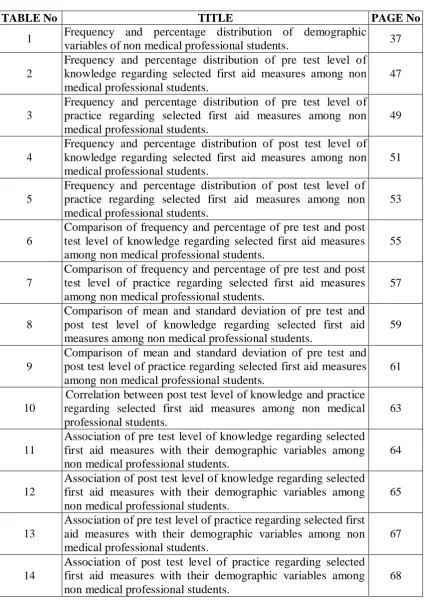
LIST OF TABLES
TABLE No TITLE PAGE No
1 Frequency and percentage distribution of demographic
variables of non medical professional students. 37
2
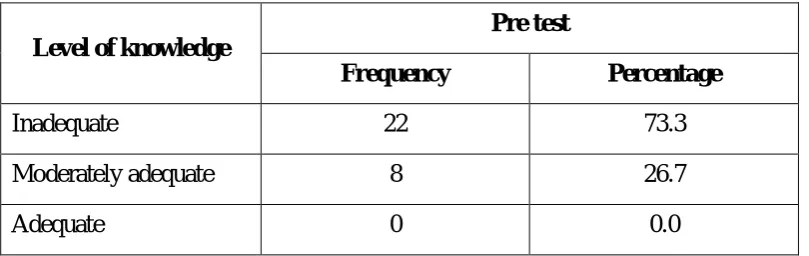
Frequency and percentage distribution of pre test level of knowledge regarding selected first aid measures among non medical professional students.
47
3
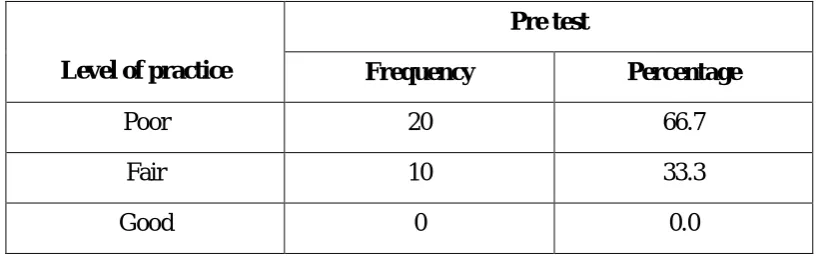
Frequency and percentage distribution of pre test level of practice regarding selected first aid measures among non medical professional students.
49
4
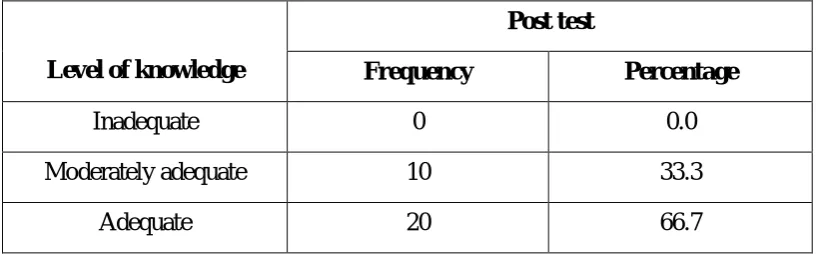
Frequency and percentage distribution of post test level of knowledge regarding selected first aid measures among non medical professional students.
51
5
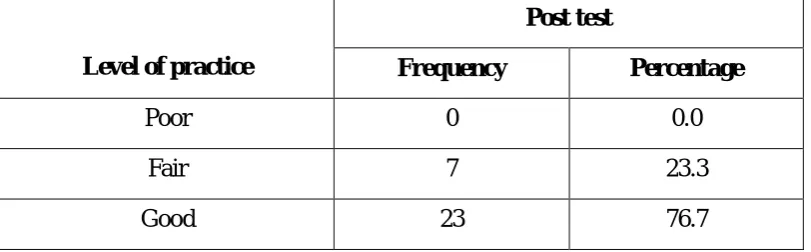
Frequency and percentage distribution of post test level of practice regarding selected first aid measures among non medical professional students.
53
6
Comparison of frequency and percentage of pre test and post test level of knowledge regarding selected first aid measures among non medical professional students.
55
7
Comparison of frequency and percentage of pre test and post test level of practice regarding selected first aid measures among non medical professional students.
57
8
Comparison of mean and standard deviation of pre test and post test level of knowledge regarding selected first aid measures among non medical professional students.
59
9
Comparison of mean and standard deviation of pre test and post test level of practice regarding selected first aid measures among non medical professional students.
61
10
Correlation between post test level of knowledge and practice regarding selected first aid measures among non medical professional students.
63
11
Association of pre test level of knowledge regarding selected first aid measures with their demographic variables among non medical professional students.
64
12
Association of post test level of knowledge regarding selected first aid measures with their demographic variables among non medical professional students.
65
13
Association of pre test level of practice regarding selected first aid measures with their demographic variables among non medical professional students.
67
14
Association of post test level of practice regarding selected first aid measures with their demographic variables among non medical professional students.
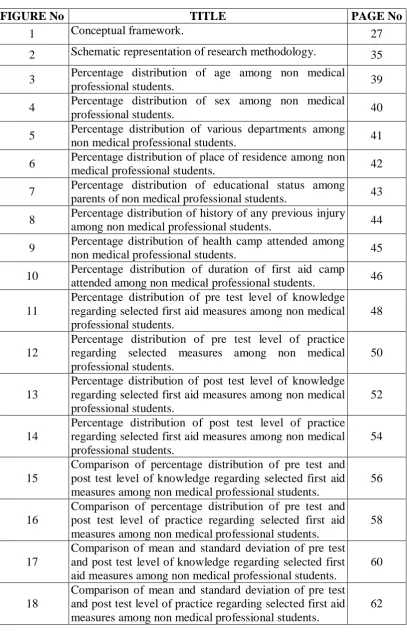
FIGURE No TITLE PAGE No
1 Conceptual framework. 27
2 Schematic representation of research methodology. 35 3 Percentage distribution of age among non medical
professional students. 39
4 Percentage distribution of sex among non medical
professional students. 40
5 Percentage distribution of various departments among
non medical professional students. 41 6 Percentage distribution of place of residence among non
medical professional students. 42 7 Percentage distribution of educational status among
parents of non medical professional students. 43 8 Percentage distribution of history of any previous injury
among non medical professional students. 44 9 Percentage distribution of health camp attended among
non medical professional students. 45 10 Percentage distribution of duration of first aid camp
attended among non medical professional students. 46
11
Percentage distribution of pre test level of knowledge regarding selected first aid measures among non medical professional students.
48
12
Percentage distribution of pre test level of practice regarding selected measures among non medical professional students.
50
13
Percentage distribution of post test level of knowledge regarding selected first aid measures among non medical professional students.
52
14
Percentage distribution of post test level of practice regarding selected first aid measures among non medical professional students.
54
15
Comparison of percentage distribution of pre test and post test level of knowledge regarding selected first aid measures among non medical professional students.
56
16
Comparison of percentage distribution of pre test and post test level of practice regarding selected first aid measures among non medical professional students.
58
17
Comparison of mean and standard deviation of pre test and post test level of knowledge regarding selected first aid measures among non medical professional students.
60
18
Comparison of mean and standard deviation of pre test and post test level of practice regarding selected first aid measures among non medical professional students.
LIST OF APPENDICES
APPENDIX No TITLE PAGE No
A Instruments i
B Certificate of ethical clearance ii C Certificate for content validity iii
D Permission letter iv
E Consent letter v
F Certificate for editing vi
ABSTRACT
Every individual knows the value of life but, there are certain situations in which it falls in danger and sometimes without appropriate steps that need to be taken and lives are lost. A drop of water is more valuable to a man who is thirsty, nearing to death than a tumbler full of water when he is dead. Yes, in most of the cases of injury if first aid is provided successfully, the dangers to life are reduced to less than 60%.
A study was conducted to assess the effectiveness of training programme on knowledge and practice regarding selected first aid measures among non medical professional students. The hypothesis formulated was there is a significant association between training programme and level of knowledge and practice regarding selected first aid measures among non medical professional students. The review of literature included studies which provide a strong foundation for the study including the basis for conceptual framework and formation of tool.
The research design used for this study was pre experimental one group pre test post test design. It was carried out with 30 samples those who fulfill the inclusion criteria. Purposive sampling technique was used to select the sample. A self administered tool was used to assess the pre test and post test level of knowledge and practice regarding selected first aid measures. Training programme was conducted for the duration of 30 to 45 minutes. The post test was assessed after fifth to seventh day by using same tool.
1
CHAPTER I
INTRODUCTION
“Safety is a cheap and effective insurance policy”
Life of each and every individual is a gift from God. Living a healthy life is foremost important part of our life. This precious life can be affected by both external and internal factors. Adolescence period is the most joyful and remembrance phase of life. Every individual have to be very cautious about our health and the wellbeing. Injuries are most common problems faced by the adolescence. First help is the best help so first aid is the provision of initial care for an illness or injury.
An emergency can happen at any time or any place. An emergency is a situation demanding immediate action. The first critical step in any emergency depends on presence of someone who will take appropriate action. The goal of the first aid course is to train the person on basics of first aid that will help them to recognize and respond to any emergency appropriately. This response may help to save a life.
First aid is the immediate care given to a person who has been injured or suddenly become ill. It includes self help and home care, if medical assistance is not available or is delayed. It also includes well selected words of encouragement, evidence of willingness to help and promotion of confidence by demonstration of competence.
between temporary and permanent disability and between rapid recovery and long hospitalization.
First aid generally consists of a series of simple, potentially life saving techniques that an individual can be trained to perform with minimal equipment. It is very important to know what to do in case of an accident or emergency. First aid is the immediate help given to an injured or ill person before the doctor arrives.
First aid is so important especially now with all the strange infections that are going around. First aid is usually meant for minor cuts and scrapes or is in reference to the first response to any kind of medical emergency. Administering first aid quickly and accurately in a traumatic injury situation can make the difference between life and death.
Basic training in first aid skills should be taught in Schools, Colleges and in work places, as it is mandatory to our modern and stressful life. First aid knowledge also increases the social responsibility of the society and strengthen humanitarian values.
Injuries resulting from road traffic accident, drowning, poisoning, falls or burns, violence from assault, self inflicted violence or acts of war kill more than five million people worldwide annually and cause harm to millions more. The injuries account for 9% of global mortality and are a threat to health in every country of the world. For every death, it is estimated that there are dozens of hospitalizations, hundreds of emergency department visits and thousands of doctor’s appointments. A large proportion of people ended up with the temporary or permanent disabilities.
3
blood flow, which could lead to shock. We have to check a person who is bleeding for other related injuries such as head injury, fracture, cuts and falls from height.
Drowning is a process resulting in primary respiratory impairment from submersion in a liquid medium. Drowning is a liquid air interface present at the entrance to the victim’s airway, which prevents the individual from breathing oxygen. Outcome may include delayed morbidity, delayed or rapid death or life without morbidity. Immediate threats include effects on the central nervous system and cardiovascular systems. Thus, the most critical actions in the immediate management of drowning victims include prompt correction of hypoxemia and acidosis.
Drowning is a leading cause of injury related to death in children. In 2000, more than 1400 united state children younger than 20 years old children were drowned. In India it is estimated that at least 1 to 4 children suffer a serious nonfatal submersion events, many of which leaves children with permanent disabilities reported by the World Health Organization (WHO) in 2006.
A fracture is a medical condition in which there is a break in the continuity of the bone. A bone fracture can be the result of high force impact or stress. As the adolescence period is a very active phase always trying to explore new and there are many chance for hurting themselves. The most common orthopedic problems about 6.8 million come to medical attention each year in the United States. The average citizen in a developed country can expect to sustain two fractures over the course of their lifetime.
Shock is the condition of being not conscious in a mental state that involves complete or near complete lack of responsiveness to people and other environmental stimuli. Fainting is due to a drop in blood pressure with drugs that depress the activity of the central nervous system. e.g. alcohol and other hypnotic or sedative drugs, severe fatigue and other causes.
The process of providing first aid measures and emergency care knowledge to the students is essential as they are the building blocks of the country.
NEED FOR THE STUDY
“If safety is a joke, then death is the punch line.”
- Paul Laforest
First aid training is the value of both preventing, treating sudden illness and accidental injury and in caring for large number of persons caught in a natural disaster. Injuries are a major but neglected public health challenge that requires concerted efforts for effective and sustainable prevention. All the system which people have to deal every day, road traffic systems are the most complex and the most dangerous. According to the worldwide statistics in 2004 stated that an estimated 1.2 million people were killed in road crashes each year and as many as 50 million peoples were injured. Projections indicate that these figures will increase by about 65% over the next 20 years unless there is new commitment to prevention. The report based on 2006 and 2007 statistics collected from 178 participating
countries, said globally over 1.2 million people die in road accidents every year and 20-25million people suffer from non fatal injuries.
5
football, cricket, short put, javelin and also in other competitive games. Thus many of these children are prone to get injuries from these.
According to World health Organization statistical report in 2012, about 1.3 million people die each year as a result of road traffic crashes. Injuries are the leading cause of death among young people aged 15-29 years. Over 90% of the world fatalities on the roads occur in low income and middle income countries, even though these countries have less than half of the world’s vehicles. Nearly half 46% of those dying on the world’s roads are vulnerable road users, pedestrians, cyclists and motorcyclists. Without action, road traffic crashes are predicated to result in the deaths of around 1.9 million people annually by 2020. Only 15% of countries have comprehensive laws relating to five key risk factors like speeding, drinking, driving, the use of motorcycle helmets, seat belts and child restraints.
India is a home to almost 19% of the world’s children. More than one third of the country’s population and around 480 million (54% of the population) of children is below the age of 25 years. Children are the future of any nation and the healthy existence of children is essential to build up a challenging nation. India is the home to nearly 500 million young people. Among those young people 37% are children less than 15 years.
Trauma is a leading cause of death in most of the countries for those under the age of 45 and the fifth leading cause of death in all age groups globally. Fracture accounts for a higher percentage of traumatic injury. In India, the most common type of fracture is hip fracture. At present, India hobbles to second place in hip fracture all around world with 4.4 lakhs people falling every year.
One year data from Bangalore shows that 209 children below the age of 18 years died and 5,505 children brought to the hospital with injury. Majority of the children belonged to average socio economic house hold and were studying in schools. Nearly one fourth of the total death in children was due to road traffic accidents. These were followed by burns with 17% and falls with 13%. Drowning and poisoning accounts for 6% and 5% respectively. It is estimated that Bangalore witnesses an average of nearly 10,000 hospitalizations every year. Road traffic accidents were the leading cause of injury with 40%, Falls are the second cause with 19% of injuries, Animal bites with 11%, Poisoning with 10%, Burns with 9% and assault accounts with 6% respectively.
The mortality rate in India due to road traffic accident and bleeding was about 1,20,000 in 2005. Deaths due to road accidents in 2009 were reported to be 126,896 and in 2010 it is increased to 133,938 which is about 5.5% over and above the previous year deaths. Tamil Nadu have accounted for 11.5% respectively of total Road accident deaths and injuries.
Drowning is one of the most serious causes of death among adolescence. The incidence shows from 2005-2009. There was an average of 3,533 fatal non boating related drowning annually in the United States, about ten deaths per day. An additional 347 people died each year from drowning in boating related incidents. About one in five people who die from drowning are children aged 14 and younger. For every child who dies from drowning, another five receive emergency department care for nonfatal submersion injuries. These nonfatal drowning injuries can cause severe brain damage that may result in long term disabilities such as memory problems, learning disabilities and permanent loss of basic functioning. People who die from drowning are mostly male.
7
Each year in the United States about 3-15% of mortality rate was due to electrical injuries. The real incident which give us awareness regarding the importance of first aid management in electrical injuries. A 22 years old male received a fatal shock as he stepped out of a caravan and made simultaneous contact with the door frame of the caravan and the ground. A damaged power cord on a power board caused the wet floor of the caravan and all conductive surfaces of the caravan to become live. An 18 years old female was walking home from a party and walked into a fallen public lighting switch wire. The wire conductor was live and the resulting injuries were fatal.
During the conversation with non medical professional students, the investigator has found that the students have inadequate knowledge regarding the first aid measures. So the investigator decided to conduct the study to assess the effectiveness of training programme on knowledge and practice regarding the selected first aid measures among non medical professionals.
The nurse being one among the member of the healthcare team can act as a facilitator and support in developing the potential abilities of the students. Hence, the investigator felt that there is a need of preparing a training programme regarding the selected first aid measures which will help them to have gain adequate knowledge, self confidence and motivation regarding selected first aid measures.
STATEMENT OF THE PROBLEM
OBJECTIVES
1. To assess the pre test level of knowledge and practice regarding selected first aid measures among non medical professional students.
2. To assess the post test level of knowledge and practice regarding selected first aid measures among non medical professional students.
3. To assess the effectiveness of training programme on knowledge and practice regarding selected first aid measures among non medical professional students.
4. To correlate the post test level of knowledge and practice regarding selected first aid measures among non medical professional students.
5. To associate the pre test and post test level of knowledge and practice regarding selected first aid measures among non medical professional students with their selected demographic variables.
OPERATIONAL DEFINITIONS
Effectiveness: Refers to producing a desirable result of training programme on selected first aid measures among non medical professional students.
Training programme: Refers to a planned programme for knowledge and practice regarding selected first aid measures among non medical professional students by using poster, hand out, pamphlets and demonstration.
Knowledge: Refers to known information regarding the selected first aid measures among non medical professional students.
Practice: Refers to the immediate measures during the time of bleeding, drowning, fracture, electrical injuries and shock to be carried out by non medical professional students.
9
Non medical professional students: Refers to those students who are studying other than the medical course, non Para medical course such as engineering, art and science etc.
HYPOTHESIS
There is a significant association between training programme and level of knowledge and practice regarding selected first aid measures among non medical professional students.
DELIMITATIONS
The sample size was delimited to 30 students.
The data collection period was delimited to 4 weeks.
10
CHAPTER II
REVIEW OF LITERATURE
The review of literature is an essential aspect of the scientific research. It is a systemic identification, location, scrutiny and summary of written material. That contains information related to the problem under study. The investigator gained insight in selected problem from an extensive review.
This chapter is designed to include the review of literature and the conceptual frame work adopted for the study.
PART I- REVIEW OF RELATED LITERATURE
First aid is the assessment and interventions that can be performed by a bystander or the victim themselves with minimal or no medical equipment.
- Markenson, et al., (2010)
The purpose of first aid is to minimize injury and disability. In serious cases, first aid is necessary to sustain life. The first aid measures provide recommendations on how to minimize the effects of accidental injuries. The recommendations describe measures that trained first aid providers are able to save the life of victim efficiently with minimum efforts.
This chapter is organized systematically and classified in the following manner
Literature related to general first aid measures.
Literature related to knowledge and practice regarding selected first aid measures.
Literature related to training programme on first aid measures.
PART I
REVIEW OF RELATED LITERATURE
Every day, there is the potential for an injury, illness or sudden health emergency to occur in the places where we live, work, learn and play. While many of these situations require no more than a band aid or others may be life threatening conditions.
First aid is the skill applied on the occurrence of injury or sudden illness using material available at that time until the arrival of proper assistance. The first aiders should know their duties and responsibilities while taking care of victims such as to preserve life, prevent condition from worsening and promote recovery.
In order to provide a effective first aid measures during emergency situations the following qualities should be present inside the well trained first aiders like they should keep up to date with knowledge and practical skill. Some evidence suggested that the first aid training programme must be implemented in school and colleges to minimize the sufferings.
Literature related to General first aid measures
12
Li. F., et al., (2012) has conducted a study to assess the pediatric first aid knowledge and attitude among staff in the preschool of Shanghai, China. This study was carried out among 1067 staffs. A stratified random sampling method was used to select the sample. The researcher used a structured questionnaire regarding injuries to the eye, inhaled poison and chocking. This study results showed that the first aid knowledge among preschool staffs was low. The investigator has recommended that there should be urgent need to educate staff member regarding first aid practice.
Tyflids. A., et al., (2012) has conducted a study to assess the epidemiological records of bone fracture sustained by student athletes of the Greek athletic facilities classes for the duration of a 1 year period. This study was conducted among 7455 male and 4921 female student athletes from the duration of September 2006 until May 2007. The fracture information was gathered by the Physical Education Teachers of the athletic facilities classes with the cooperation of orthopaedic doctors and the results were analysed with the Chi square non parametric test. This study results showed that the total 129 fractures were recorded over period of 1 year among students and 67.4% of male student athletics had sustains more fracture than 32.6% of female student athletics. The highest rate of fractures occurred in soccer and basketball players. Most injuries occurred in male student athletes who were residence of the urban region. The researcher concluded that the Overall fractures of the wrist, metacarpal bones fingers, and medial lateral malleollus were the most common injuries observed among student athletics.
Patrick. L., et al., (2009) has conducted a retrospective analysis of childhood drowning accident a total of 44 children suffering a drowning accident within the 48hrs were treated during the period of 1994 through 2008 at children centre.
impact on the outcome. Training of parents and supervisors in prevention and provision of first aid after drowning can minimize the complications associated with them.
Jiang. Y. B., et al., (2008) has conducted a study to assess the influence of elective course of emergency treatment for medical students on the cultivation of first aid knowledge and skills of cardiopulmonary resuscitation. The randomized sampling technique was used to select the data, total of 60 students has participated and divided into experimental and control group with 30 students in each group. All of the students have received a test on first aid knowledge and cardiopulmonary resuscitation skill. This study result showed that in regard with a theoretical exam score, the score of observation group were significantly higher than that in the contrast group but in regard with resuscitation maneuvers, the observation group being obviously poorer than contrast group. The researcher recommended that an elective course of emergency medicine should be included as a required course in medical college.
Uskun. E., et al., (2008) done a retrospective study on first aid measures among 939 individuals at the scene of an accident. The first aid measures were provided by 43% of emergency medical technicians, 22% of physicians and 20% of untrained persons. This study results showed that 10% of victims died at the site of the accidents, out of 245 hospitalized individuals, 15% had suffered shock, 9% were admitted for aspiration and 2% had died from excessive blood loss and fracture. The researcher concluded that the first aid measures were unsatisfactory and there is a need to increase the training for emergency medical technicians and the availability of physicians to master the out lined complications.
14
calculate rates, describe patterns and evaluate potential risk factors for sport related concussion. This study results showed that the 8.9% of all high school athletic injuries and 5.8% of all collegiate athletic injuries are concussion injuries in nature. The researcher concluded that the sport related injury surveillance systems can provide scientific data to drive targeted injury prevention projects.
Feldmen, et al., (2004) has conducted a prospective study regarding incidence, types, related factors and initial management of school injuries. The authors found that annual incidence rate of 5.4 injuries occurred out of 100 children, which appear to be under estimate of the actual rate of all injury events, 28.7% resulted in serious injuries. This study result showed that injuries were significantly more frequent in the elementary as opposed to the secondary school and boys were injured more significantly more often than girls. Most of the children with either serious or minor injuries were sent to the school office or returned to the class room. The researcher concluded that the present level of first aid training among school personal is adequate.
Grenfell. S, (2003) has conducted a study on childhood drowning and traditional rescue measures to examine the verbal autopsy data on child hood drowning. The researcher has analyzed the data on mortality rate of children under 5 years by drowning for the duration of 10 years. This study reported that 489 deaths, out of these 57% was aged 1 to 2 years and had a drowning rate of 521 per 1 lakh children. The findings suggest that community based resuscitation and emergency first aid measures are needed to improve recovery of drowned children.
Compbell. N. R., et al., (2001) has conducted an interventional study to assess the evaluation of a first aid and home safety porgramme for Hispanic migrant adolescents. A randomized sampling technique was used among 660 Hispanic adolescent age varying from 11 years to 16 years. These adolescent actively participated in a programme entitled sembrando salud (sowing the seed of health). The intervention consisted of conditions such as first aid and home safety training, tobacco and alcohol prevention. The participants were also assessed at immediate post intervention and then 1 year follows up. This study result showed that participants were better able to identify items to include in a first aid kit and how to respond in an emergency situation. The researcher concluded that sembrando salud was successful at achieving and maintaining change in confidence and knowledge of first aid and emergency response skill over a year long period.
Snowdon. A. W., et al., (2000) has conducted a study on the initial management of pelvic bone fracture. The researcher has analyzed that the mortality rate of the pelvic bone fracture and further injury is high, the uncontrolled bleeding and septic complications are the main causes of death. This study suggested that at the scene of the accident, for pre hospital immobilization and transportation a bean bag should be used as an initial care, they analyzed clinical course outcome of 132 patients with pelvic bone fracture and injuries from 1972 to 1990. This study results showed that the mortality rate dropped from 66% to 34%. The researcher recommended that the better primary and initial treatment measures can decrease the number of complications of pelvic bone fracture.
Literature related to Knowledge and practice regarding selected first aid measures
16
correctly perform a cardiopulmonary resuscitation while 94% of relief workers did not know how to perform cardiopulmonary resuscitation. The researcher concluded that the relief workers demonstrated moderate level of knowledge, attitude and practice towards the first aid.
Deepak. M. & sabitha. N. (2012) has conducted a descriptive study to assess the knowledge on first aid measures among self help group members at Mangalore. This study was carried out among 100 samples by using purposive sampling techniques. The researcher used a structured questionnaire to assess the knowledge regarding first aid practice for the duration between 2nd October to 13th November. This study result showed that majority of sample 62% had good knowledge and 38% had average knowledge about the first aid practice.
Abbas. A., et al., (2011) has conducted a comparative study to assess the level of knowledge regarding cardiopulmonary resuscitation, recovery position, asthma and bleeding among medical students trained in first aid and those with no training. This study was conducted among 250 medical students. Among them 125 students were trained and 125 students were untrained. A convenient sampling technique was used to select the students. A pre test self administered questionnaire was used for data collection. The questionnaire covered all the major topics of first aid and basic life support. This study result showed that the trained students has significantly better results than the untrained students regarding cardiopulmonary resuscitation, recovery position, asthma and bleeding.
Nyambak & Kevin. O. (2011) has conducted a descriptive cross sectional study to assess a knowledge, attitude and practice in first aid management of epistaxis by accident and emergency among clinical staff at Kenyatta. This study was conducted among 70 clinical staff during the duration between 2 months by using a structured questionnaire regarding pinching the nose, nasal packing and sitting leaning forward position. This study concluded that clinical staffs have inadequate knowledge on the standard first aid measures of epistaxis.
Khan. A., et al., (2010) has conducted a study to assess the knowledge, attitude and practice of the first aid measures among undergraduate students of Karachi. This study was carried out at various 6 colleges and out of them 3 was from medical college and 3 were from non medical college. The researcher used an interview method to select the students. The total of 446 students was participated in this study. Among them 78 students has undergone formal first aid training. This study result shows that the students who received formal first aid training have scored better than those who were not trained. The researcher recommended that first aid training programme should be introduced at school and college level.
Batfer. M., et al., (2007) has conducted a study to evaluate the first aid knowledge and attitude of primary school teachers at Turkish. This study was conducted among 312 teachers. The data were obtained by using 30 questionnaires regarding the administration of first aid. These questionnaires help to identify the teachers and to determine their knowledge and attitudes about first aid. This study result found that as the age of the teacher’s increases, appropriate first aid practice become more and more important. The researcher concluded that most of the teachers do not have correct knowledge and attitude about first aid.
18
ointment, dettol, spirit, sucking were told by urban students, while more of rural students told about use of mustard oil and other oils. Need of tetanus toxoid and immediate washing of wound was told more by urban students. Need for relevant health education was emphasized among the rural students.
Al khamees. N., et al., (2006) has conducted a study to assess the first aid knowledge and attitude among college students in Kuwait University. This study was conducted among 562 students from both science colleges and literary colleges through randomized sampling technique. A structured questionnaire including demographic data, 20 questions testing knowledge and 20 exploring attitudes was used. The score was interpretated as right answer score one and wrong answer score 0 for knowledge. This study result shows that the female student from Science College has significantly scored higher knowledge scores than male students. The researcher concluded that the more training and coursework in first aid at Kuwait University appears to be warranted with males and those in literary colleges especially to be targeted.
Parnell. M., et al., (2006) has reviewed a study to assess the knowledge and attitude towards resuscitation in Newzealand high school students. This study was conducted among 494 students with the age group of 18 to 20 years. A questionnaires method was used to assess both knowledge and attitude regarding resuscitation. This study results shows that the students has shown poor theoretical knowledge regardless of female and male students. This study finding suggested that although most high school students are willing and motivated to learn Cardio pulmonary resuscitation, a smaller percentage of students had a negative attitude towards Cardio pulmonary resuscitation that would act as a barrier to future learning or performance of resuscitation. The researcher recommended that more cardiopulmonary resuscitation training to high school should be introduced.
prevalence of epilepsy, the future or children with this disorder and Electro encephalo graph as an aid to diagnosis. In addition, misconceptions regarding first aid for epilepsy were also common. This study concluded that more than two third of the teachers believed that children with epilepsy have academic problems more often, although about half of the respondents were in favour of normal schools for such children. Only about one fifth of the teachers were confident in dealing with an epileptic child.
Engeland, et al., (2002) has conducted a study on implementation of training of first aid to junior high students. The researchers measured the implementation of the program by teachers and the attitudes and knowledge of their students. This study result discovered that students whose teachers implemented the program enthusiastically had better attitudes toward first aid implementation and the students were gain more knowledgeable in first aid. The researcher concluded that the students also demonstrated higher self efficacy scores, a higher degree of confidence that they could be effective in terms of their skills.
Gagliardi. M., et al., (2002) has conducted a study to assess the knowledge, attitude and practice of shock among school teachers by using simple self administered questionnaires to 360 school teachers. The questionnaire contained 14 questions relating to epilepsy awareness, attitudes and first aid measures of seizures. The results reveals that 38% of respondents had not heard about epilepsy, 46.6% believed that epilepsy is a chronic incurable disease and 15% of the respondents preferred to place all children with epilepsy in a special class room. Furthermore, half of the respondents who had experience with first aid management of seizures used improper and potentially harmful measures. The researcher concluded that beside the proper management of epilepsy, a general public education campaign has to conduct in future and correct the existing biases regarding epilepsy are necessary to improve the quality of life of children with epilepsy.
20
various industries. The researcher used randomized sampling techniques among 33 workers. All selected workers were interviewed using a standard questionnaire. This study result shows that 9% of the worker had inadequate knowledge regarding preventive measures and majority of the workers were exposed to a occupational hazards with injuries and accidents.
Aly. S. A., et al., (1993) has conducted a study to assess the knowledge of epilepsy and attitudes towards the condition among school teacher. A semi structured questionnaire was administered among 260 teachers. The results found that almost all teachers had heard about epilepsy, some teacher thought epilepsy as hereditary and 56% teachers believed epilepsy could be cured. The majority of teachers were interrupted in training first aid procedure. However, their knowledge of the clinical characteristics and first aid for a person during a seizure was unsatisfactory. The researcher recommended that the schools should offer some kind of information and knowledge regarding epilepsy to avoid the discrimination against pupils with epilepsy.
Literature related to Training programme on first aid measures
demonstration on first aid measures was effective in enhancing the knowledge and skills of ASHA.
Robertson. A., et al., (2010) has conducted a study to assess the attitude of high school students regarding the problem of first aid in emergency trauma. This study was conducted among 642 students from randomized selection from various high schools. A questionnaire with single choice answers was administered to them. This study results shows that about 80% respondents know the importance of first aid, only 21% undertakes the first aid procedure in emergency and 67% claimed that their skills are insufficient. This study concluded that the level of first aid training is very poor students do not learn practical skills and the training should start from primary school itself.
Georg. B., et al., (2009) has reviewed an experimental study to evaluate the effectiveness of a self structured teaching programme on the knowledge regarding first aid management and emergency care (FAM&EC) of burn patients among staff nurses in selected hospitals of Ludhiana. A non equivalent group pre test post test design was adopted by researcher. The in service education was conducted among staff nurses and test was conducted. There was highly significant difference between pre- and post test knowledge scores of experimental group among staff nurses regarding first aid management and emergency care of burn patients. Self structured teaching plan was found effective in increasing knowledge about first aid management for burn patients. This study result showed a highly statistical significant association between the knowledge scores of staff nurses who attended in service education. The researcher recommended that similar studies can conduct in different setting and different target population such as general public or nursing students.
22
children were routinely cared during electrical burn. Only 52% has Television at home but still 78% managed to watch Television for an average of 2 hours per day. 36% of students indicated they had received information of first aid. Only 7% knew to roll on the ground if their clothes caught fire and nearly 50% would pour water on a burning pot of oil. This study suggests that a television burn prevention campaign could be an effective method to improve their knowledge especially if it was endorsed by an authority figure.
Devan. P. J, (2008) has conducted a study to assess the effectiveness of structured teaching programme on knowledge, attitude and skill on first aid management among rural youth at Vellore. This study has conducted among two groups such as experimental and control group. A structured teaching programme was administered only to experimental group. This study result shows that there was a positive correlation between knowledge and attitude among experimental group but the control group had inadequate knowledge and moderate attitude on first aid management.
Quan. L., et al., (2003) has conducted a study regarding evaluation of structured teaching programme on accidental drowning of children. The study was carried out among parents from six countries. A questionnaire was administered to the sample. This study results show that the parents knowledge about how to give first aid for drowning is increased from 11% to 41%. Apart from this, mortality rate of infants dropped by 85% and in children aged 1 to 4 decreased by approximately 40% after one year. This study concluded that the structured teaching program to parents is a good tool to prevent accidental suffocation and drowning.
randomly selected schools. A separate questionnaire filled in by the teachers showed a low degree of implementation of the program. When comparing those classes that really used the program with the control classes, significant differences were revealed in many of the variables.
Huang. M. C., et al., (2002) has conducted a study to evaluate the effects of educational interventions on parental practices for recurrent febrile convulsions. The researcher used the non equivalent comparison group design to evaluate the intervention effects among the 326 parents. The samples were voluntarily chosen either to receive a mailed pamphlet regarding protecting the convulsing child and placing the child on his or her side for 196 parents or to attend a 2 hour educational program regarding protecting the convulsing child and placing the child on his or her side for 130 parents. Five telephone interviews were conducted within the 24 months after the interventions. This study result shows that Parents has demonstrated significant improvements in the recommended practices, particularly in protecting the convulsing child and placing the child on his or her side. This study concluded that the educational program and mailed pamphlet made significant improvements in recommended parental practices.
24
PART II
CONCEPTUAL FRAMEWORK
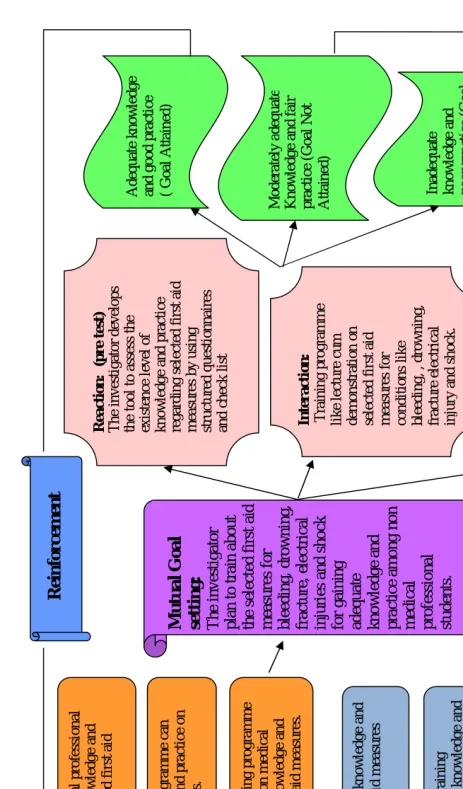
The conceptual framework for this study is based on Imogen king’s goal attainment model (1971).
Conceptual models deal with concepts that are used as building blocks and provide a conceptual perspective regarding interrelated phenomena which are closely structured.
The central focus of Imogen king’s frame work is man as a dynamic human being whose perception of objects, persons and events influence his behavior, social interaction, and health. Imogene King’s conceptual frame work includes three interacting systems which each system having its own distinct group of concepts and characteristics. These systems include personal systems, interpersonal systems, and social systems.
The personal system refers to the individual. The concepts within the personal system and fundamental in understanding human beings are perception, self, body image, growth and development, time and space. Imogene King (1981) viewed perception as the most important variables because perception influences behavior king summarized the connections among the concepts in the following statement. An individual’s perception of self, body image, time and space influence the way he or she responds to persons, objects and events in his or her life. As individuals grow and develop through the life span, experience with changes in structure and function of their bodies over time influence their perception of self, interpersonal systems involve individuals interacting with one another. King refers to two individuals as small or large groups.
non medical professional students. This involves interaction between the researcher and the non medical professional students the seven major concepts are described as follows.
Perception
Perception is the person’s representation of the reality. It influences all other behavior of a person and it is more subjective and unique to each person. The researcher perceives that the non medical professional students have lack of knowledge and practice on selected first aid measures and the non medical professional students perceives the need to gain knowledge and practice on selected first aid measures.
Judgment
The judgment is a decision made by the researcher and the non medical professional students. Here the researcher judges that the non medical professional students have lack of knowledge and practice regarding the selected first aid measures. So, the investigator planned to provide a training programme to enhance the knowledge and practice on selected first aid measures. The non medical professional students judge to utilize the training programme to enhance the knowledge and practice on selected first aid measures.
Action
This refers to the changes that have to be achieved. The researcher’s action is to implement training programme in order to improve the non medical professional student’s knowledge and practice on selected first aid measures and the students were ready to gain knowledge and practice on selected first aid measures.
Goal setting
26
Reaction
Reaction means decision to act. In this study the researcher developed a tool such as self administered multiple choice questionnaires and check list to assess the existing level of knowledge and practice regarding selected first aid measures among non medical professional students.
Interaction
Interaction is a process of perception and communication between person and environment and between person and person, represented by verbal and nonverbal behaviors that are goal directed. Here the researcher gave a training programme like lecture cum demonstration to non medical professional students on selected first aid measures for conditions like bleeding, drowning, fracture, electrical injury and shock.
Transaction
The transaction is purposeful interaction that leads to goal attainment between the researcher and the non medical professional students. Here, the researcher assesses the effectiveness of training programme on knowledge and practice regarding selected first aid measures among non medical professional students by post test using self administered multiple choice questionnaires and check list.
Positive outcome is adequate knowledge and good practice regarding selected first aid measures which has to be reinforced further. Negative outcome is moderately adequate, inadequate knowledge, fair practice and poor practice regarding selected first aid measures which needs to be reassessed for further learning.
Fig 1: MODIFI
ED K
ING'S GOAL ATTIANMENT THEORY (1971)
. Rea sse ss ment P erc ep tio n : N eed to gain kn ow led g e a n d p ra ct ice on sel ect ed fi rst ai d m ea sur es Ju dg m ent: U tiliz atio n o f tr ai n ing p rog ram m e to enh an ce th e kn ow led g e a n d p ra ct ice on sel ect ed fi rst ai d m ea sur es Ac ti o n: R eadin ess to g ain k n o w ledge and p ra ct ice on sel ect ed fi rst ai d m ea sur es React io
n: (pr
e test) Th e in vest ig at or d evelop s the t o o l to as se ss the ex ist en ce l evel of kn o w ledge and prac ti ce reg ar d in g sel ect ed fi rst ai d me as u re s by us ing struc tu re d ques ti o nnair es an d ch eck li st Inte r acti o n: Trai ni n g p ro gra mm e like le cture c u m d em o ns tra ti o n o n se le cte d f ir st a id m ea sur es for co n ditio n s l ike bl ee d in g , , dr own in g, fr a ct ur e el ectr ica l inj u ry and sho ck . Transact io n: (p o st test) Th eeffect iv en ess o f t ra inin g pr o g ramm e w a s a ssessed by po st te st le v el o f kno w le dg e an d pr a cti ce b y u si n g sel f adm in is te re d mu lti ple ch o ic e que stio nnair es a nd c h ec k list Ade quat e k n o w ledge an d go o d pra cti ce ( G oa l At ta in ed ) M o de rate ly a de quat e Kn o w ledge an d fair pr ac tic e (G o al N o t Attai n ed) Inadequa te kn o w ledge and p oor pr a ct ice (G oa l N o t Atta in ed) M utual Goal setti ng: T he i n v est iga tor p la n t o t ra in a b ou t th e se le ct ed fi rst ai d m easur es fo r bleeding , d rowning , fr a ctur e, elect rical in juri es a nd shock for ga in in g ade q uat e knowledge and pra cti ce among n on med ica l p rof ess io na l stude n ts. Rein fo rce ment P erc ep tio n : N o n m ed ica l pr ofes si on a l stude nts hav
e lack o
CHAPTER III
METHODOLOGY
The methodology is the back bone for any investigation. It is a guideline system for solving a problem with specific components such as phases, tasks, methods, techniques and tools. The successes of any research depend largely upon the suitability of the tools and the technique that the investigator follows to gather adequate data. This design was used to assess the effectiveness of training programme on knowledge and practice regarding selected first aid measures among non medical professional students in selected institutions at Chennai.
This chapter deals with a research design, setting of the study, population, sample, sample size, sampling techniques, criteria for sample selection, description of tools and data collection procedure.
RESEARCH APPORACH
Quantitative research approach was used for assessing the effectiveness of training programme on knowledge and practice regarding selected first aid measures among non medical professional students in selected institutions.
RESEARCH DESIGN
The design selected for study was pre experimental one group pre test post test design.
RESEARCH VARIABLES
Independent variables: It refers to a training programme regarding selected first aid measures.
29
SETTING OF THE STUDY
This study was conducted in Madha Engineering College at Chennai. Madha Engineering College is built on a Sprawling 30 acre site and this college is located at Kundrathur, Chennai-600 069. The College was founded in 1998 as a self financing institution. The Soosaiya Peter Educational trust has promoted this college with sole aim of spreading sound technical knowledge to the student community of Chennai and in general with the vision to impart quality technical education. This college caters to the needs of all societies around the globe. High Standards of discipline through their dedicated, involved and committed staff provide a ringing edge to the student community. The engineering department comprises of various courses like mechanical engineering, civil engineering, computer science, electronic and communication, electrical and electronic engineering. The first year classroom is located at B Block in 1st and 2nd floor.
POPULATION
The population consists of non medical professional students studying in Madha Engineering College at Chennai.
SAMPLE
The sample consists of non medical professional students those who fulfill the inclusion criteria.
SAMPLE SIZE
The study sample comprises of 30 non medical professional students in Madha Engineering College at Chennai.
SAMPLING TECHNIQUE
CRITERIA FOR SAMPLE SELECTION
Inclusion Criteria
Students from Madha Engineering College have included.
Students who were willing to participate in the study.
Students who were studying in first year engineering.
Exclusion Criteria
Students those who were studying in arts and science and teacher training.
Students who were above 20 years.
Students who were not willing to participate in the study.
DESCRIPTION OF THE INSTRUMENT
Extensive review of literature, discussion and guidance from experts enhance the development of tools. The tool consists of four parts:
Part I
It includes the demographic variable of non medical professional students which consists of age, sex, educational qualification of parents, department, place of residence, history of any previous injuries and health camp attended and duration of first aid camp.
Part II
31
The scoring was interpreted as follows
The correct response carries one mark and the wrong response carries zero mark.
Adequate knowledge - 76-100%
Moderately adequate knowledge - 51-75%
Inadequate knowledge - <50%
Part III
It consists of check list for practice about the selected first aid measures regarding bleeding, drowning, fracture, electrical injuries and shock.
There are 35 statements to assess the practice of non medical professional students regarding selected first aid measures. It has 7 statements for each component such as bleeding, drowning, fracture, electrical injuries and shock.
The scoring was interpreted as follows
It consist of five components, each component include seven statements. Presence of skill was marked as yes and it carries one marks similarly absence of skill was marked as no and it carries zero marks.
Good - 76-100 %
Fair - 51-75%
Poor - < 50%
Part IV
VALIDITY
Validity of the tool was assessed using content validity. Content validity was determined by expert from nursing and medical field. They suggested certain modifications in the tool. After the modifications they agreed this tool for assessing effectiveness of training programme on knowledge and practice regarding selected first aid measures among non medical professional students.
RELIABILITY
The reliability of the tool was assessed by using test retest method, its correlation coefficients r values are 0.76 and 0.08. The correlation coefficient was high, so the tool was appropriate and used to assess the effectiveness of training programme on knowledge and practice regarding selected first aid measures among non medical professional students.
ETHICAL CONSIDERATION
The study was conducted after the approval of dissertation committee. Formal written permission was obtained from the Chairman of Madha group of Academic Institution and the principal of Madha Engineering College. The non medical professional students were clearly explained about the study purpose and procedures. The formal written consent was taken from the samples. The usual assurance of anonymity and confidentiality was obtained.
PILOT STUDY
33
The brief self introduction was given by the investigator and explained the purpose of the study to the students to gain their co operation. The tool was explained in detail to the participants. On the first day self administered questionnaires was distributed to the participants to assess the pre test level of knowledge and assess the pre test level of practice regarding selected first aid measures by using check list. On next day the lecture cum demonstration on selected first aid measures was performed to the students for duration of 30 to 45 minutes. The post test was conducted by using the same tool on the fifth day.
DATA COLLECTION PROCEDURE
A self administered multiple choice questionnaire was used to assess the level of knowledge and practice regarding selected first aid measures among non medical professional students. The permission was obtained from the Chairman of Madha group of Academic Institutions and the principal of Madha Engineering College, Chennai. The data was collected over a period of 4 weeks duration in the month of May from 06.05.2013 to 06.06.2013. The study was carried out among 30 first year engineering students who fulfilled the inclusion criteria. A written informed consent was obtained from each participant. Self introduction was followed by adequate explanation about the purpose of the study to ensure better cooperation.
DATA ANALYSIS
35
A STUDY TO ASSESS THE EFFECTIVENESS OF TRAINING PROGRAMME ON KNOWLEDGE AND PRACTICE REGRADING SELECTED FIRST AID
MEASURES AMONG NON MEDICAL PROFESSIONAL STUDENTS IN SELECTED INSTITUTION AT CHENNAI.
Pre experimental one group pre test and post test design
Non medical professional students studying in Madha Engineering
College
30 first year Engineering students studying in Madha Engineering College
Purposive sampling technique
Self administered multiple choice questionnaires and check list First year Engineering students studying in
Madha Engineering College
Written consent, pre test, training programme on selected first aid measures and post test assessment
Descriptive and inferential statistics Research design
Sample size
Sampling technique
Data collection procedure
Analysis and interpretation Sample
Target population
Tool for data collection
[image:49.595.88.546.167.780.2]Result
36
CHAPTER IV
DATA ANALYSIS AND INTERPRETATION
Data analysis is the categorizing, ordering, manipulating and summarizing of data to reduce the intelligible and interpretable so that the research problem can be studied and tested including the relationship between variables (kerlinger 1976).
The findings are based on the descriptive and inferential statistical analyzed and presented under the following sections.
Section A : Frequency and percentage distribution of demographic variables of non medical professional students.
Section B : Frequency and percentage distribution of pre test level of knowledge and practice regarding selected first aid measures among non medical professional students.
Section C : Frequency and percentage distribution of post test level of knowledge and practice regarding selected first aid measures among non medical professional students.
Section D : Comparison of frequency and percentage of pre test and post test level of knowledge and practice regarding selected first aid measures among non medical professional students.
Section E : Comparison of mean and standard deviation of pre test and post test level of knowledge and practice regarding selected first aid measures among non medical professional students.
Section F : Correlation between post test level of knowledge and practice regarding selected first aid measures among non medical professional students.
SECTION - A
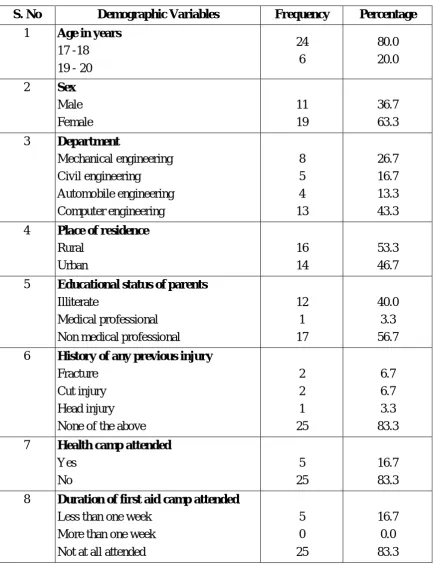
Table 1: Frequency and Percentage distribution of demographic variables of non medical professional students.
N=30
S. No Demographic Variables Frequency Percentage
1 Age in years
17 -18 19 - 20
24 6
80.0 20.0
2 Sex
Male Female 11 19 36.7 63.3 3 Department
Mechanical engineering Civil engineering Automobile engineering Computer engineering 8 5 4 13 26.7 16.7 13.3 43.3 4 Place of residence
Rural Urban 16 14 53.3 46.7 5 Educational status of parents
Illiterate
Medical professional Non medical professional
12 1 17 40.0 3.3 56.7 6 History of any previous injury
Fracture Cut injury Head injury None of the above
2 2 1 25 6.7 6.7 3.3 83.3 7 Health camp attended
Yes No 5 25 16.7 83.3 8 Duration of first aid camp attended
Less than one week More than one week Not at all attended
38
Table 1 depicts the distribution of demographic variables of non medical professional students. With respect to age of non medical professional students, the majority 24 (80%) were in the age group of 17 to 18 years and 6 (20%) were in the age group of 19 to 20 years. With regard to the sex, the majority of the patients 19 (63.3%) were females and 11 (63.3%) were males. Regarding the various departments of the students, the majority of the students 13 (43.3%) were in computer engineering department, 8 (26.7%) were mechanical engineering department, 5 (16.7%) were civil engineering department and 4 (13.3%) were auto mobile engineering department. Considering the place of residence, the majority of students 16 (53.3%) were from rural area and 14 (46.7%) were from urban area.
With regard to their educational status of their parents, 17 (56.7%) parents were non medical professionals, 12 (40%) were illiterates, 1 (3.3%) were medical professional. With regard to the history of any previous injury, 25 (83.3%) students had no history of previous injury, 2 (6.7%) students had fracture, 2 (6.7%) students had cut injury and 1 (3.3%) had head injury.
Fig. 3:
Per
cen
tage dist
rib
ut
io
n of
age a
m
o
n
g
n
o
n m
ed
ical pro
fe
ssi
o
n
a
l s
tudent
s.
0
10
20
30
40
50
60
70
80
90
100
17-18 y
ears
19-20 y
ears
80%
20%
Per cen ta ge
A
ge
in y
ears
17-18 y
ears
19-20 y
40
40
Fig. 4:
P
er
ce
nt
ag
e d
ist
ribu
ti
o
n o
f se
x a
m
o
ng
no
n
me
d
ic
a
l p
ro
fe
ss
io
na
l st
u
d
ent
s.
36.7%
63.3%
M
ale
F
ema
le
42
42
Fig. 6:
Per
cen
tage distr
ib
ut
io
n
o
f
p
lace of
res
idence a
m
o
n
g non med
ical
pr
o
fes
si
o
n
a
l s
tudent
s.
53.3%
46.7%
Rural Urban
P
lace o
f
Re
Fig. 9:
P
er
ce
nt
ag
e d
ist
ribu
ti
o
n o
f he
a
lt
h ca
m
p a
tt
end
ed
b
y no
n m
ed
ic
a
l
p
ro
fes
si
o
na
l st
u
d
ent
s.
16.7%
83.3%
Heal
th
Cam
p at
ten
ded
Y
es
46 46 Fig. 10: Percent age di st rib ut io n o f th e durat io n o f fi rst ai d ca m p att en
ded by n
SECTION - B
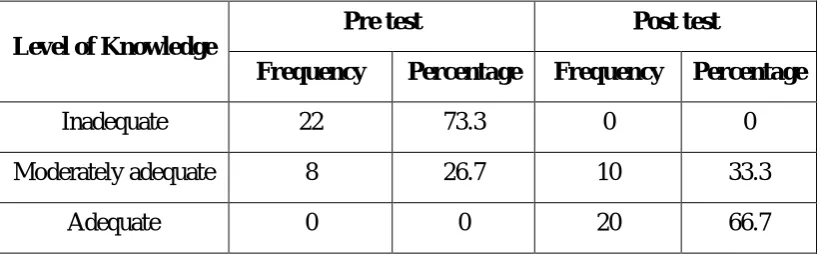
Table 2: Frequency and percentage distribution of pre test level of knowledge regarding selected first aid measures among non medical professional students
N=30