Parental Alienation Workshop: A pilot program for targeted parents Matthew Ferber
BBehSc (Hons)
A report submitted in partial requirement for the degree of Master of Psychology (Clinical) at
Contents
Statement……… iii
Acknowledgements……… iv
Abstract……….. 1
Introduction……… 2
Parental Alienation Syndrome vs Parental Alienation………... 3
The Alienating Parent………. 4
The Targeted Child………. 7
The Targeted Parent and their Psychological Wellbeing……….. 8
Current Interventions for Targeted Parents……… 10
The Present Study………... 11
Method……… 12
Participants………. 12
Materials………. 13
Procedure……… 14
Data Analysis………. 15
Results……… 16
Missing data……… 16
Descriptive Statistics……….. 16
Reliable change index……… 18
Clinically significant change……….. 21
Qualitative Analysis……… 21
Discussion………... 23
Clinical Implications……….. 26
Limitations and future research……….. 27
Conclusion……….. 28
References………... 30
Appendix A………. 38
Appendix B………. 41
Appendix C………. 43
Appendix D……… 45
3 Appendix E………. 48
3 Appendix F………. 50
Statement
I declare that this research report is my own work and that, to the best of my knowledge and belief, it does not contain material from published sources without proper acknowledgement, nor does it contain material which has been accepted for the award of any other higher degree or graduate diploma in any university.
Acknowledgements
I would like to thank my supervisor Dr Mandy Matthewson for her unwavering support and for sharing her passion for this topic with me. I would also like to thank Dr Michael Quinn for his crucial guidance on all things statistical. I am
grateful to all the participants; their willingness to candidly share their stories was valuable far beyond the bounds of this research project. Lastly, I would like to extend
Abstract
Parental alienation is a circumstance experienced by some families during and in the wake of parental separation. It is primarily characterised by a child's unwarranted rejection of one parent and solidarity with the other (Bernet, von Boch-Galhau, Baker, & Morrison, 2010). Following long standing discourse on the
characteristics of a closely related concept, Parental Alienation Syndrome (PAS), the concept of parental alienation has emerged to recognise that a broad range of factors can influence the unwarranted rejection of a parent by a child (Meier, 2009). As a result of this course of evolution in the literature, characteristics and experiences of the alienated parent (targeted parent), in contrast to those of the rejecting child (targeted child) and alienating parent, are still emerging and are not equally
represented nor understood (Balmer, Matthewson, & Haines, 2017). Nonetheless, the current study does not aim to critically analyse the broad literature and theoretical models of parental alienation, rather the scope of this study is focused on
investigating how might a targeted parent be supported, specifically by evaluating a pilot programme. Indeed, considering the emerging literature on the experiences of the targeted parent, with what is known about the alienating parent and rejecting child, there is enough evidence to infer that the targeted parent is negatively
impacted by parental alienation and in need of support. Similarly, interventions that recognise the needs of targeted parents are non-existent and knowledge that would inform such intervention currently only exists in the form of surmised guidelines, further illuminating the need to investigate how this population might be supported (Ellis, 2005).
Parental Alienation Syndrome vs Parental Alienation
Gardner (2004) drew upon his work with families in the midst of
pathological syndrome, termed parental alienation syndrome (PAS). He identified behaviours in the targeted child that were broadly characterised by the unreasonable rejection of the targeted parent. He suggested that this occurred as a result of the influence of the other alienating parent on the targeted child, and the child’s own contribution to the denigration of the targeted parent (Gardner, 1998). PAS has not been validated by research, and has been subject to criticism for numerous reasons, including concerns surrounding its reliability and validity as a mental disorder diagnosis (Bernet et al., 2010; Bond, 2007; Warshak, 2001, 2003).
One of the main criticisms of Gardner’s approach is that it is not grounded in existing psychological constructs and literature. In contrast the model introduced by Childress (2015), is drawn from the existing knowledge regarding attachment theory, intersubjectivity, personality disorders, family systems, complex trauma, trans-generational transmission of attachment trauma, and pathological mourning. However, Childress’ work remains theoretical and has not been empirically tested.
Controversy aside, there is undoubtedly movement in the literature away from a focus on the diagnosis of the child. Indeed the term parental alienation has emerged to capture the features of a family system and the contributions of all its members, that result in a child’s unwarranted rejection of one parent and solidarity
The Alienating Parent
In the context of parental alienation, it has been noted that the alienating parent will enact a number of behaviours (alienating tactics) that take numerous forms, but all seek to foster the alienation of the targeted parent (Baker & Darnall, 2006). Indeed, an alienating parent may discourage any alliance with the targeted parent and attempt to restrict the time the target child and parent spend together or eliminate it all together. They may attempt to restrict, interfere with or eliminate communication between the targeted child and parent. Disclosing particular
information, either directly or indirectly, to the targeted child can defame the target parent or make them seem dangerous (Baker & Darnall, 2006; Balmer et al., 2017). Additionally, an alienating parent may encourage the target child to exclusively align with them. This may be done explicitly by stating as such, for example by saying "They left us" to the child or it may be done more implicitly by withdrawing love when the target child demonstrates any support for, or alignment with, the target parent (Baker & Darnall, 2006; Balmer et al., 2017). On the simplest level, perhaps these behaviours can be understood as stemming from a polarised perspective that the targeted parent is bad and the alienating parent is good.
When considering these behaviours, it may be easy to vilify the parent enacting them. However, as some researchers have theorised, these parents may possess personality traits and experience situational factors that leave them
parents are more likely to magnify their virtuousness and minimise their flaws when responding to a personality inventory (Bagby et al., 1999; Bathurst et al., 1997). Researchers have shown that this defensiveness is present in cases of parental alienation and is perhaps more extreme than cases of mere litigation, demonstrating influences beyond the situational factor of litigation (Gordon, Stoffey, & Bottinelli, 2008; Siegel & Langford, 1998). Gordon et al. (2008) argued that this defensiveness may be driven by narcissistic and borderline personality traits. They posit that
defensive responses represent a lack of ambivalence, or a polarised perspective of the world which is characteristic of individuals with borderline or narcissistic personality traits.
Narcissistic and borderline personality traits seem to be a helpful overlay when understanding why a parent may engage in alienating tactics. It can be understood that individuals with narcissistic traits and those with borderline traits differ in their motivations, but are both vulnerable to engaging in alienation tactics. Both may disparage the targeted parent and foster an unhealthy alignment with the targeted child. In their eyes, their child’s closeness with the other parent is perceived as a threat and something that represents an intolerable distance or separation from themselves (Baker, 2006). The alienating parent uses the child to meet their
relational needs, while the child’s are set aside, imparting subtle or overt obligation to exclusively align with them and fear closeness with the target parent (Childress, 2015; Garber, 2011).
fluctuate between these perspectives (Bender & Skodol, 2007; Friedman, 2004). Similarly, they often have an unstable sense of self, leaving them highly dependent on and preoccupied with the validation of others (Bender & Skodol, 2007).
Therefore, separation can be experienced as an especially devastating event, an abandonment at the hands of an inadequate partner (Dozier, Stovall-McClough, & Albus, 2008; Friedman, 2004). This preoccupation is extended to the child as well as the former partner, meaning that the individual is more dependent on the child, and sensitive to their perceived rejection, finding the child’s love for the other parent inherently threatening (Baker, 2006). Furthermore, as they also experience emotional regulation difficulties, they may also use the child to soothe themselves and draw the child in to their own rejection rather than prioritising the needs of the child (Baker, 2006; Garber, 2011).
Narcissistic individuals also have a number of traits that may make them more vulnerable to being an alienating parent, including a need for unwavering admiration that is underpinned by insecurity and interpersonal vulnerability (Baker & Andre, 2008; Friedman, 2004; Pincus & Lukowitsky, 2010). They can experience the separation as deeply wounding, and feel the need to gain the upper hand with the targeted parent in an attempt to boost their fragile self-esteem (Kelly & Johnston, 2001). Those with narcissistic tendencies often lack empathy, and are completely consumed by their own inner state, which enables them to behave in ways which hurt others (Pincus & Lukowitsky, 2010). In terms of their relationship with their
The Targeted Child
In circumstances of parental alienation, almost by definition, targeted
children present with beliefs and behaviours that are rejecting of the targeted parent. Gardner (2002) posits a list of ‘symptoms’ a targeted child may express as a part of PAS. Although PAS is shrouded with controversy and remains unsubstantiated, there is value in considering his work with that of other authors as it too, examines how circumstances of parental alienation may manifest in the presentation of the children involved. Central to the child’s presentation are beliefs that the targeted parent is unacceptable and related expressions of hatred towards them, something that Gardner (2002) aptly terms ‘a campaign of denigration’. These beliefs are often insubstantial
in their foundations, depict the targeted parent as entirely bad, and exude the influence of the alienating parent despite the child’s ostensive ownership (Kelly & Johnston, 2001). Such beliefs manifest in a number of behaviours, including the refusal to visit the targeted parent or to see them at all, openly disparaging the targeted parent to others, and staunchly and invariably supporting the alienating parent in matters of the parental conflict (Kelly & Johnston, 2001). Moreover, the animosity often spreads to all that is associated with the targeted parent, including friends, family and even pets (Gardner, 2002; Kelly & Johnston, 2001). Although many children may be exposed to alienating tactics, not all become alienated, and this alienation also varies in severity. Some children may be more vulnerable to being alienated by virtue of their pre-existing psychological wellbeing (Kelly & Johnston, 2001).
The existing literature on targeted parents suggests that as one member of the alienation triad, they themselves may inadvertently influence their alienation. For example, it is posited that targeted parents may have poor parenting skills, trouble regulating their emotions, and lack warmth in their interactions with their children (Johnston, 2003; Kelly & Johnston, 2001). Baker (2006) outlines that some targeted parents are not active enough in maintaining a close relationship with their children, failing to initiate regular communication or becoming completely uninvolved. Here they may be perceived as giving up on the situation and send a message to their child that they are not valued, a sentiment that is likely to further consolidate any
alienation. It is important to note that the little research that exists on parenting quality demonstrated by targeted parents has largely originated from the alienating parent’s perspective (Balmer et al., 2017; Templer et al, 2017). Emerging research from the targeted parent’s perspective suggests that to the contrary, they are equipped
to parent competently, and are motivated to be involved with their children (Balmer, Matthewson, & Haines, 2017).
Nonetheless, prior to separation, the relationship between the targeted parent and targeted child has typically been at least satisfactory (Kelly & Johnston, 2001). Yet the targeted child’s presentation and behaviour toward the targeted parent are
2005). Meanwhile, the targeted parent must continue to try to reason and engage with the hostile alienating parent (Balmer et al., 2017). Further to this, research
demonstrates that even when targeted parents engage with the alienating parent and the child in the most non-reactive manner possible, and persist in attempting to reconnect with the child, reunification of the targeted child and targeted parent is far from certain (Baker & Darnall, 2006).
Beyond the immediate hurt of this rejection, parental alienation is in effect, the cessation of the child-parent relationship, which stands to rob the targeted parent of the rewards of parenthood (Ellis, 2005). Firstly, the opportunities for the
generativity associated with parenthood are a significant source of psychological growth and wellbeing for parents (An & Cooney, 2006; Gallagher & Gerstel, 2001; Nomaguchi & Milkie, 2003). Further to this, Nomaguchi (2012) found that the child-parent relationship can influence child-parent wellbeing in the domains of self-esteem, self-efficacy and depression. It is also thought that children cause their parents to expand and maintain valuable social connections with friends and family (Gallagher & Gerstel, 2001). Additionally, targeted parents also suffer the loss of their identity and role as a parent, and can experience a sense of shame both within themselves, and also related to societal disapproval (Baker & Darnall, 2006; Poustie,
Matthewson, & Balmer, 2018). Hence it can be understood that the alienation represents significant loss for the targeted parent that carries across to their sense of identity, purpose in life, and overall wellbeing.
difficulties as a result of experiencing parental alienation. Themes of despair, loss of meaning in life, suicidal ideation, isolation and depression are but a few of the themes identified within the experiences reported by targeted parents. Additionally, Balmer et al. (2017) investigated the experience of targeted parents with an intent to quantify their situational distress and state of mental health. Targeted parents were found to appraise their situation as highly distressing and mostly uncontrollable by others, believing mostly that they had no one to assist them in a situation that was unlikely to change. Moreover, these same targeted parents reported experiencing moderate levels of depression, anxiety and stress. Certainly, there are grounds to support targeted parents with their mental health and provide interventions designed to meet targeted parents’ presentations (Balmer et al., 2017; Poustie et al., 2018).
Current Interventions for Targeted Parents
have assigned to support them is ignorant of parental alienation and ill equipped to support them in their situation (Poustie et al., 2018; Templer et al., 2017).
Some authors provide guidelines for supporting targeted parents. Baker and Andre (2008) outline that targeted parents are subject to much shame and suggest targeted parents require interventions that validate their experience and are non-blaming. Moreover, they propose Cognitive Behaviour Therapy (CBT) as a potentially suitable mode of therapy for addressing targeted parents’ hopelessness and emotional distress. Further to this, CBT seems an apt treatment for the recently identified characteristics of targeted parents’ mental health, namely stress, anxiety and depression (Balmer et al., 2017). CBT aims to help manage or resolve emotional distress that originates from maladaptive thought processes and has been shown to be efficacious in helping people manage stress, and treating anxiety and depression (Antoni et al., 2001; Cuijpers et al., 2013; Cuijpers, van Straten, Andersson, & van Oppen, 2008; Hofmann & Smits, 2008; Richardson & Rothstein, 2008; Rubin & Yu, 2017). In theory, the CBT component of an intervention program would aim to provide targeted parents with the skills to help them cope with their emotional distress and factors that are outside their control (Duarte, Miyazaki, Blay, & Sesso, 2009). However, the guidelines of Baker and Andre (2008) are built on clinical observations and the notion that CBT might be helpful for targeted parents remains untested.
The Present Study
elements to support targeted parents in a group workshop format delivered in one day. More specifically these elements included; an overview of parental alienation in the research literature and implications for mental health (Bernet, von Boch-Galhau, Baker, & Morrison, 2010; Childress, 2015; Gardner, 2004; Warshak, 2003), an overview of the grieving process as it might apply to parental alienation (Worden, 2018), a description of cognitive-behavioural approaches to coping with depression, anxiety and stress (Antoni et al., 2001; Dimidjian et al., 2006), an overview of the research on alienating parents and strategies for communicating with them
(Childress, 2015; Mason & Kreger, 2010), and what might be expected regarding reunification (Ward & Matthewson, 2016). These elements were aimed at providing an informed and non-blaming intervention that empowers targeted parents in
managing what is in their control regarding their experiences with parental alienation and its impact on their mental health, rather than aiming to resolve their situation. While psychoeducation and CBT interventions have been shown to work for some presentations, currently there is no existing literature base specific to treating targeted parents with CBT and psychoeducation in a one-day workshop format (Antoni et al., 2001; Gallagher-Thompson, 2000; Gallagher-Thompson, Gray, Dupart, Jimenez, & Thompson, 2008). The current study is preliminary and did not aim to test any hypotheses, rather, to explore mental health outcomes and stress appraisal as a potential mechanism for change as a result of attending the program.
Method Participants
experiencing alienating tactics. They were excluded from participating in the
workshop if they were deemed to be experiencing a distressing immediate crisis, and or experiencing severe mental health issues as determined by a screening interview based on the Mini-International Neuropsychiatric Interview (MINI) (Sheehan et al., 1998). See Appendix A for a copy of the screening interview. Two workshops were facilitated, one in November 2016 (N = 17) and one in December 2017 (N = 7); participants attended one of these two workshops. Some participants chose not to fill out the surveys and after the data collection phase it was discovered that due to University email security settings some participants were prevented from receiving the survey, and as a result, the total number of participants was five (M = 3; F = 2) with a mean age of 44.4 years (SD = 1.85).
Materials
Parental Alienation. To ensure participants were experiencing parental alienation and were therefore eligible to participate in the workshop they undertook a screening survey. Currently there is no measure of parental alienation that is valid and reliable, so the Exposure to Parental Alienation Checklist was developed by the researchers for this and related research. See Appendix B for a copy of the checklist. It was used to assess participant exposure to 13 alienating tactics identified in the parental alienation literature. Example items include, “Has the other parent of your
child(ren) denigrated you to you and others?”, and “Has the other parent deliberately tried to damage the loving connection between you and your child(ren)?”.
controllable-by-others, uncontrollable and stressfulness. Each sub-scale has four items that use a 5-point Likert scale (1 = not at all to 5 = extremely). The SAM has been shown to have internal consistency ranging from acceptable to excellent
(Peacock & Wong, 1990). Example items include, “Will the outcome of this situation be negative?” and “Do I have the ability to do well in this situation?”.
Depression, Anxiety and Stress. The Depression and Anxiety Stress Sales (DASS) (Lovibond & Lovibond, 1995) is a 21-item measure of depression, anxiety and stress based on a 4-point Likert scale (0 = never to 3 = almost always). The DASS has been shown to have internal consistency in the ranges of acceptable to excellent and test-retest reliability suitable for use in research (Antony, Bieling, Cox, Enns, & Swinson, 1998; Lovibond & Lovibond, 1995). Example items include, “I felt that I had nothing to look forward to”, “I tended to over-react to situations”, and “I found myself getting agitated”.
Feedback Questionnaire. A feedback questionnaire was administered post workshop, which asked participants to rate the helpfulness of the workshop and their satisfaction with it on a five-point Likert scale. There were three open ended
questions asked to collect qualitative data regarding participants’ experience of the workshop, specifically, “What did you find most helpful about the workshop?”, “What did you find least helpful about the workshop?”, and “If you could change
anything about the workshop, what would it be?”. Procedure
Workshop. Two workshops were facilitated by the researchers. The
workshop content aimed to provide information to participants on parental alienation from the literature, and Cognitive Behavioural Therapy informed coping strategies for dealing with their situation. The workshop consisted of five modules titled; introduction, what is parental alienation?, coping with parental alienation, interacting with the alienating parent, and your child and preparing for reunification. For further details on the workshop modules see Appendix F. The workshop ran for
approximately one session of 7 hours including a meal break.
Data Collection. Surveys were distributed and completed confidentially via email using the Survey Monkey platform one week before participants attended the workshop (Time 1), and three days after attending the workshop (Time 2).
Participants were assigned an identifier number to match their score at different time points to maintain confidentiality and ensure the researchers delivering the workshop were unaware which participants had completed the surveys.
Data Analysis
Reliable change index. Due to the small sample size single case analyses of reliable change was conducted, specifically the Reliable Change Index as per Jacobson and Truax (1991). This method determined if any change has occurred beyond that of chance and the error margin of the assessment tools used. Cronbach alphas from sample outlined below were used to calculate reliable change as per Morley and Dowzer (2014).
population (Jacobson & Truax, 1991). The model of CSC is suitable for the current study because there is clinical and non-clinical and normative data available for the DASS measure used (Balmer et al., 2017; Lovibond & Lovibond, 1995), and two participants reported symptoms of depression in the clinical range before attending the workshop. The cut-off point c was used as per Jacobson and Truax (1991)..
Qualitative analysis. Participant responses to the questions regarding the perceived helpfulness of and satisfaction with the workshop were averaged.
Participant responses to the three open ended questions in the feedback survey were independently examined by two researchers, who identified any common themes. Word frequency analysis was conducted on the responses. Subsequently, the researchers cross-examined their findings to identify the most salient themes in the responses.
Results Missing Data
At post workshop (Time 2) one participant failed to complete one item on the DASS. In order to include their data set in the data analysis, proration was used for the omitted item (Glass, Ryan, Bartels, & Morris, 2008).
Descriptive Statistics
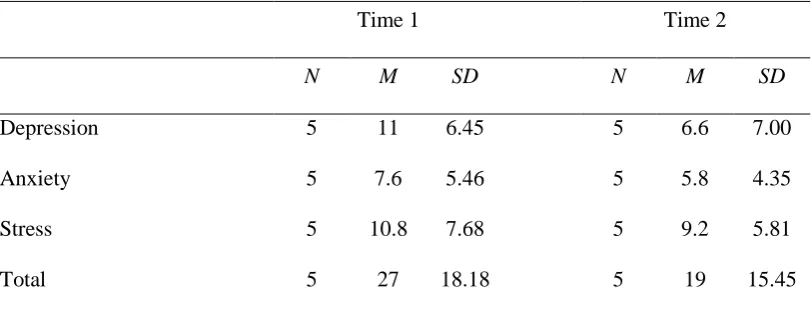
standard deviations for the DASS at Time 1 and Time 2. For comparison, Antony et al. (1998) administered the DASS-21 to anon-clinical population and reported their scores for depression (M = 1.06, SD = 1.89), anxiety (M = 0.16, SD = 0.89), and stress (M = 1.75, SD = 1.89).
Table 1
Means and standard deviations for Depression Anxiety Stress Scale (DASS) at Time 1 and Time 2
Time 1 Time 2
N M SD N M SD
Depression 5 11 6.45 5 6.6 7.00
Anxiety 5 7.6 5.46 5 5.8 4.35
Stress 5 10.8 7.68 5 9.2 5.81
Total 5 27 18.18 5 19 15.45
Note. Maximum score on each subscale is 21.
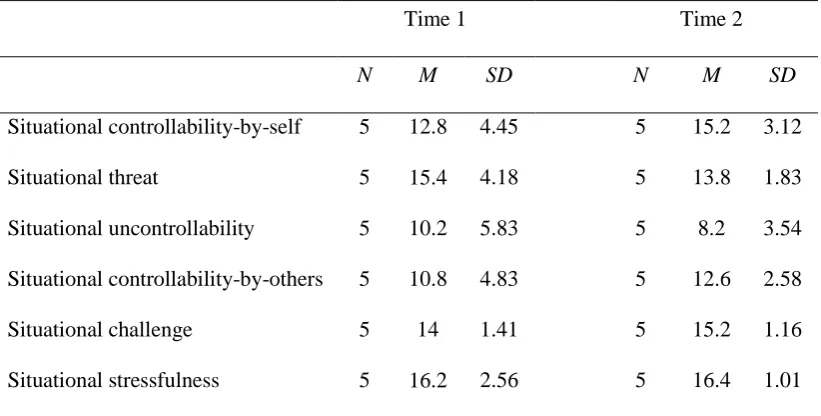
Means of the scores collected on the SAM before the workshop (Time 1) are evidence that participants appraised their situation with parental alienation to be moderately controllable by themselves (M = 12.8, SD = 4.45), considerably
stressful (M = 16.4, SD = 1.02). Table 2 shows the means scores and standard deviations for the SAM at Time 1 and Time 2.
Table 2
Means and standard deviations for Stress Appraisal Measure (SAM) at Time 1 and Time 2
Time 1 Time 2
N M SD N M SD
Situational controllability-by-self 5 12.8 4.45 5 15.2 3.12
Situational threat 5 15.4 4.18 5 13.8 1.83
Situational uncontrollability 5 10.2 5.83 5 8.2 3.54 Situational controllability-by-others 5 10.8 4.83 5 12.6 2.58
Situational challenge 5 14 1.41 5 15.2 1.16
Situational stressfulness 5 16.2 2.56 5 16.4 1.01
Note. Maximum score on each subscale is 20. Reliable change index
The Cronbach alphas and standard deviations used to calculate reliable change were taken from the literature published by the authors of the DASS and the SAM (Lovibond & Lovibond, 1995; Peacock & Wong, 1990).
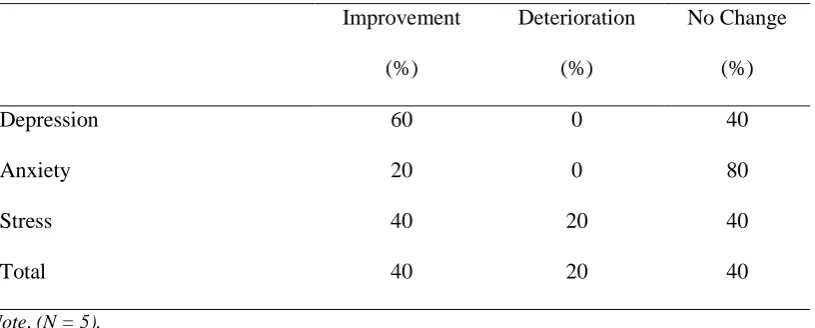
For DASS scores, improvement was seen in all subscales, with 60% of participants reporting a reduction in symptoms of depression compared to 40% reporting no change. Regarding the anxiety subscale, 40% of participants reported a reduction in symptoms, compared to 60% reporting no change. For the stress subscale 40% reported a reduction of symptoms of stress, 40% reported no change and 20% reported an increase. Table 3 shows the reliable change indices between Time 1 and Time 2 for the DASS.
Table 3
Reliable Change Index Improvement (%) Deterioration (%) No Change (%)
Depression 60 0 40
Anxiety 40 0 60
Stress 40 20 40
Total 40 20 40
Note. (N = 5).
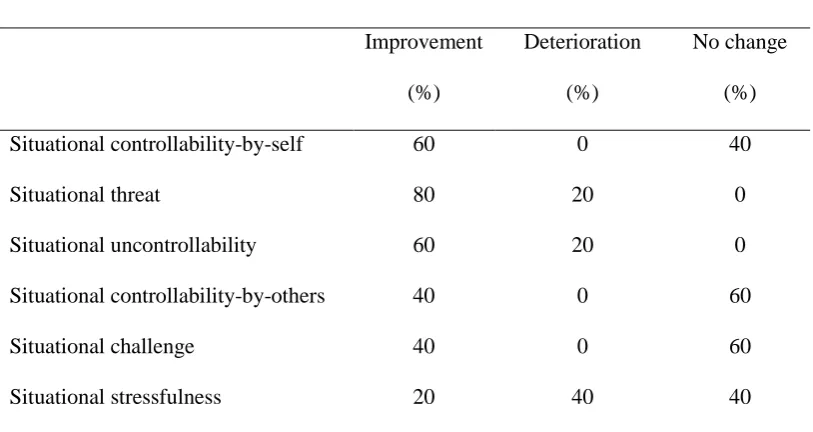
[image:23.595.114.521.453.669.2]Using Cronbach alphas and standard deviations from Peacock and Wong (1990) proved to create a sensitive and unhelpful index for the SAM results in which almost any change seen in the participants could be deemed reliable. Table 4 shows these results.
Table 4
Reliable Change Indices between Time 1 and Time 2 for SAM scales
Reliable Change Index
Improvement (%) Deterioration (%) No change (%) Situational controllability-by-self 60 0 40
Situational threat 80 20 0
Situational uncontrollability 60 20 0
Situational controllability-by-others 40 0 60
Situational challenge 40 0 60
Situational stressfulness 20 40 40
Note. (N = 5).
and was therefore considered to be representative of the participants that attended the workshop. Using Cronbach alphas and standard deviations from Balmer et al. (2017) compared to those found in Lovibond and Lovibond (1995), similar results were seen in DASS results. Improvement was seen in all subscales with 60% of participants reporting a reduction in symptoms of depression compared to 40% reporting no change. Regarding the anxiety subscale, 20% of participants reported a reduction in symptoms, compared to 80% reporting no change. For the stress subscale 40% reported a reduction of symptoms of stress, 40% reported no change and 20% reported an increase. Table 5 shows the reliable change indices between Time 1 and Time 2 for the DASS.
Table 5
Reliable Change Indices between Time 1 and Time 2 for DASS scales
Reliable Change Index
Improvement (%)
Deterioration (%)
No Change (%)
Depression 60 0 40
Anxiety 20 0 80
Stress 40 20 40
Total 40 20 40
Note. (N = 5).
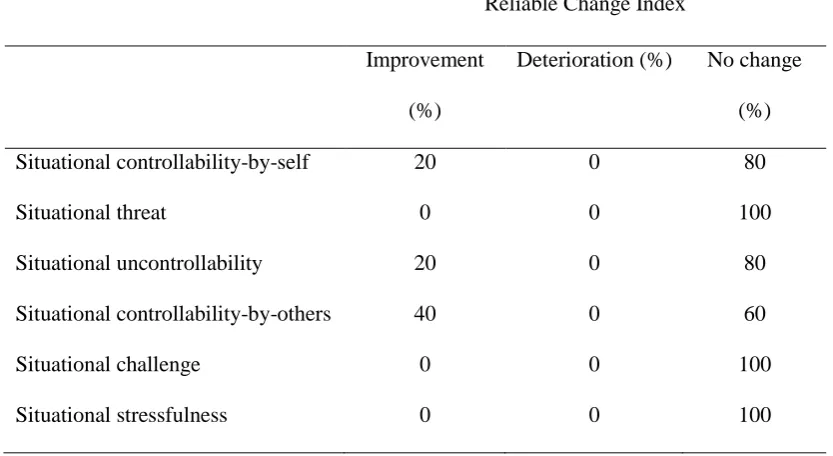
For participant SAM scores, improvement was seen in some subscales, the largest in magnitude being the controllability-by-others subscale in which 40% of participants reported an increase, compared to 60% reporting no change. Regarding the controllability-by-self subscale, 20% of participants reported an increase compared to 80% reporting no change. Similarly, regarding the
80% reporting no change. For the remaining subscales, 100% of the participants reported no change. Table 6 shows the reliable change indices between Time 1 and Time 2 for the SAM.
Table 6
Reliable Change Indices between Time 1 and Time 2 for SAM scales
Reliable Change Index
Improvement (%)
Deterioration (%) No change (%) Situational controllability-by-self 20 0 80
Situational threat 0 0 100
Situational uncontrollability 20 0 80
Situational controllability-by-others 40 0 60
Situational challenge 0 0 100
Situational stressfulness 0 0 100
Note. (N = 5).
Clinically significant change
For the purpose of this study clinically significant change was considered to have occurred if a participant reliably moved from having DASS scores in the range of a targeted parent as per Balmer et al. (2017), to having DASS scores in the range of a non-clinical population. Of the participants, 60% of them reported levels of depression, anxiety and stress that fell in the range for targeted parents found in Balmer et al. (2017) prior to undertaking the workshop. After the workshop the percentage of ‘recovered’ participants was 20% in regard to reported level of
depression, and no clinically significant change was observed in terms of reported levels of anxiety and stress.
On average participants responded that the workshop was very helpful (M = 3.3, SD = .66)and that they were very satisfied (M = 3.5, SD = .5) with it.
Several themes were identified in the responses to open ended questions. In regard to the helpfulness of the workshop, participants felt that they benefited from the normalisation of their experiences by hearing that others were experiencing similar difficulties.
It was so valuable listening to other people's stories and realising that there
are others experiencing the same difficulties.
Meeting people in the same (or in my case, far more extreme circumstances)
and hearing their tales made my own experience feel better in the knowledge
that I wasn’t alone.
Participants expressed that they had benefited from receiving information relevant to their situation that was grounded in research. Two reasons for this were cited by participants; firstly, the knowledge helped them to gain a better understanding of their situation.
Everything, from the knowledge and understanding gained concerning
parental alienation to the definition of the narcissist’s behaviour.
Understanding that there have been studies and people working on the problem
for a long time and the work is continuing and becoming more focused
reinforced that the situation isn’t hopeless.
Lastly, participants expressed that they had benefited from learning about strategies they might use to cope with their distress and their situation.
It was most valuable to learn strategies to deal with issues.
Regarding what was the least helpful and what could be improved about the workshop, participants expressed that more opportunity to hear the stories of others may improve the workshop.
People not participating or sharing experiences or strategies.
A number of participants also noted experiencing negative emotions in relations to the content of the workshop.
The actual topic, it’s very painful.
I did find the reunification sad and thought it might have been a better outcome
and faster for the alienated parent. Hopefully when this becomes known by
more people it can be 'called out' for what it is and it can be dealt with more
Discussion
The aim of the current study was to evaluate a pilot workshop designed to address issues specific to targeted parents in their experience of parental alienation. After long standing oversight in the literature, there is emerging research from the targeted parent’s perspective, to suggest they experience much hardship and negative impact to their emotional wellbeing, including feeling that their situation is
somewhat hopeless (Balmer et al., 2017; Templer et al., 2017). Some authors offer theoretical guidelines in how to support targeted parents and posit a validating, non-blaming, cognitive behavioural therapy approach might help them cope (Baker & Andre, 2008; Ellis, 2005), however, interventions for targeted parents remain
unresearched, lacking, unsuitable or ill–equipped (Poustie et al., 2018; Templer et al., 2017). The current study did not test any hypotheses.
Recent research has begun to clarify the experiences of targeted parents and the findings of this study fit with the emerging picture. Targeted parents that attended the workshop reported similar experiences to those identified by Balmer et al. (2017) and Poustie et al. (2018), including appraisals of their situation as threating, stressful, and uncontrollable by themselves, others and anyone, and mental health
Indeed, targeted parents stand to benefit from an intervention tailored to their experiences, and current findings illuminate aspects of intervention that show
promise in achieving this. Following their attendance to the workshop, participants most commonly reported a decrease in their level of depression, and less commonly a decrease in their level of anxiety and stress. Certainly, in support of the suggestions made by Baker and Andre (2005), the cognitive behavioural components of the workshop may have helped participants cope with the distressing thoughts and feelings that are a part of their experience. In other words, much may be out of the control of a target parent, however, the way they respond to their thoughts and feelings and how they choose to behave, is not.
occurs to others and is beyond their fault, such that their level of depression was reduced.
The workshop also had an impact on the way some of the participants appraised their situation. Most commonly reported was an increase in feeling like their situation was controllable by others, that there were people ‘out there’ to help. It is understandable that attending a workshop tailored for targeted parents is a stark contrast to their previous experiences in which they may have felt disillusioned with a system lacking in support and the limited knowledge of those assigned to support them (Poustie et al., 2018). Moreover, participants also reported an increase in feeling like their situation was controllable by the self. It is possible the
psychoeducation components of the workshop helped participants understand elements of their situation that they may have some influence over. The qualitative findings confirm this as some participants cited that they gained a deeper
understanding of the alienating parent in terms of potential borderline or narcissistic vulnerabilities, and strategies for interacting more effectively with them.
Furthermore, in line with these changes to participant appraisals regarding more controllability by the self and others, some participants reported a decreased sense that the situation is in general uncontrollable.
Clinical Implications
how other people were going through a similar experience. Certainly, a group
workshop format presents as an apt way to facilitate the normalisation of the targeted parent experience for participants, and the inclusion of conditions that encourage interaction between group members such as small group size and unstructured time for discussion should be considered when developing a group workshop.
On the other hand, group work may not suit some targeted parents as one participant reported an increase in stress following their participation in the
workshop. Perhaps their experience of parental alienation had only recently emerged and through hearing the stories of others became aware of how severe their situation could potentially get. Alternatively, at any stage, actively considering the topic of parental alienation itself may be enough to cause distress in a participant. Either way, the targeted parent experience is complex and may span decades, therefore care should be taken to understand how intervention may impact a targeted parent regarding the point they occupy in their journey and their readiness or suitability to participate in group work.
In the absence of group work, a therapist conducting individual therapy with a targeted parent, may find that their client benefits from a specific focus on the normalisation of the experience of parental alienation, in combination with psychoeducation and CBT.
Limitations and future research
what outcomes targeted parents in general may experience as a result of attending such a workshop. For this reason, future research that uses larger sample sizes will be helpful in identifying potential therapeutic outcomes targeted parents might gain from different types of interventions.
Secondly, the design of the current study was such that it cannot be discerned which aspect of the workshop participants benefited from or benefited from the most. There was no control group or alternative therapy group used, therefore it is unclear whether this intervention has benefits over other interventions that may be
Conclusion
References
An, J. S., & Cooney, T. M. (2006). Psychological well-being in mid to late life: The role of generativity development and parent–child relationships across the lifespan. International Journal of Behavioral Development, 30(5), 410-421. Andrews, B., & Hunter, E. (1997). Shame, early abuse, and course of depression in a
clinical sample: A preliminary study. Cognition & Emotion, 11(4), 373-381. Andrews, B., Qian, M., & Valentine, J. D. (2002). Predicting depressive symptoms
with a new measure of shame: The experience of shame scale. British Journal of Clinical Psychology, 41(1), 29-42.
Antoni, M. H., Lehman, J. M., Kilbourn, K. M., Boyers, A. E., Culver, J. L., Alferi, S. M., Harris, S. D. (2001). Cognitive-behavioral stress management
intervention decreases the prevalence of depression and enhances benefit finding among women under treatment for early-stage breast cancer. Health Psychology, 20(1), 20.
Antony, M. M., Bieling, P. J., Cox, B. J., Enns, M. W., & Swinson, R. P. (1998). Psychometric properties of the 42-item and 21-item versions of the
Depression Anxiety Stress Scales in clinical groups and a community sample. Psychological Assessment, 10(2), 176.
Bagby, R. M., Nicholson, R. A., Buis, T., Radovanovic, H., & Fidler, B. J. (1999). Defensive responding on the MMPI-2 in family custody and access
evaluations. Psychological Assessment, 11(1), 24.
Baker, A. J., & Andre, K. (2008). Working with alienated children & their targeted parents: suggestions for sound practices for mental health professionals. Annals of the American Psychotherapy Association, 11(2), 10-18.
Baker, A. J., & Darnall, D. (2006). Behaviors and strategies employed in parental alienation: A survey of parental experiences. Journal of Divorce &
Remarriage, 45(1-2), 97-124.
Balmer, S., Matthewson, M., & Haines, J. (2017). Parental alienation: Targeted parent perspective. Australian Journal of Psychology.
Bathurst, K., Gottfried, A. W., & Gottfried, A. E. (1997). Normative data for the MMPI-2 in child custody litigation. Psychological Assessment, 9(3), 205. Bender, D. S., & Skodol, A. E. (2007). Borderline personality as a self-other
representational disturbance. Journal of personality disorders, 21(5), 500-517.
Bernet, W., von Boch-Galhau, W., Baker, A. J., & Morrison, S. L. (2010). Parental alienation, dsm-v, and icd-11. The American Journal of Family Therapy, 38(2), 76-187.
Bond, R. (2007). The Lingering Debate Over the Parental Alienation Syndrome Phenomenon, 37.
Childress, C. (2015). An attachment-based model of parental alienation: Foundations. Claremont. In: CA: Oaksong Press.
Cuijpers, P., Berking, M., Andersson, G., Quigley, L., Kleiboer, A., & Dobson, K. S. (2013). A meta-analysis of cognitive-behavioural therapy for adult
Cuijpers, P., van Straten, A., Andersson, G., & van Oppen, P. (2008). Psychotherapy for depression in adults: a meta-analysis of comparative outcome studies. Journal of Consulting and Clinical Psychology, 76(6), 909.
Darnall, D. (2011). The psychosocial treatment of parental alienation. Child and Adolescent Psychiatric Clinics, 20(3), 479-494.
Dimidjian, S., Hollon, S. D., Dobson, K. S., Schmaling, K. B., Kohlenberg, R. J., Addis, M. E., Gollan, J. K. (2006). Randomized trial of behavioral activation, cognitive therapy, and antidepressant medication in the acute treatment of adults with major depression. Journal of Consulting and Clinical Psychology, 74(4), 658.
Dozier, M., Stovall-McClough, K. C., & Albus, K. E. (2008). Attachment and psychopathology in adulthood.
Duarte, P. S., Miyazaki, M. C., Blay, S. L., & Sesso, R. (2009). Cognitive– behavioral group therapy is an effective treatment for major depression in hemodialysis patients. Kidney international, 76(4), 414-421.
Ellis, E. M. (2005). Help for the alienated parent. The American Journal of Family Therapy, 33(5), 415-426.
Ellis, E. M., & Boyan, S. (2010). Intervention strategies for parent coordinators in parental alienation cases. The American Journal of Family Therapy, 38(3), 218-236.
Everett, C. A. (2006). Family therapy for parental alienation syndrome:
Friedman, M. (2004). The so-called high-conflict couple: A closer look. The American Journal of Family Therapy, 32(2), 101-117.
Gallagher, S. K., & Gerstel, N. (2001). Connections and constraints: The effects of children on caregiving. Journal of Marriage and Family, 63(1), 265-275. Gallagher-Thompson, D. (2000). Impact of psychoeducational interventions on
distressed family caregivers. Journal of Clinical Geropsychology, 6(2), 91-110. doi:10.1023/A:1009584427018
Gallagher-Thompson, D., Gray, H. L., Dupart, T., Jimenez, D., & Thompson, L. W. (2008). Effectiveness of cognitive/behavioral small group intervention for reduction of depression and stress in non-Hispanic white and Hispanic/Latino women dementia family caregivers: Outcomes and mediators of change. Journal of Rational-Emotive & Cognitive-Behavior Therapy, 26(4), 286. Garber, B. D. (2011). Parental alienation and the dynamics of the enmeshed parent–
child dyad: Adultification, parentification, and infantilization. Family Court Review, 49(2), 322-335.
Gardner, R. A. (1998). Recommendations for dealing with parents who induce a parental alienation syndrome in their children. Journal of Divorce & Remarriage, 28(3-4), 1-23.
Gardner, R. A. (2002). Parental Alienation Syndrome vs. parental alienation: Which diagnosis should evaluators use in child-custody disputes? American Journal of Family Therapy, 30(2), 93-115.
Gardner, R. A. (2004). Commentary on Kelly and Johnston's “The alienated child: A reformulation of parental alienation syndrome”. Family Court Review, 42(4),
Glass, L. A., Ryan, J. J., Bartels, J. M., & Morris, J. (2008). Estimating WISC‐IV indexes: Proration versus linear scaling. Journal of clinical psychology, 64(10), 1175-1180.
Gordon, R. M., Stoffey, R., & Bottinelli, J. (2008). MMPI-2 Findings of Primitive Defenses in Alienating Parents. American Journal of Family Therapy, 36(3), 211-228. doi:10.1080/01926180701643313
Hofmann, S. G., & Smits, J. A. (2008). Cognitive-behavioral therapy for adult anxiety disorders: a meta-analysis of randomized placebo-controlled trials. The Journal of clinical psychiatry, 69(4), 621.
Jacobson, N. S., & Truax, P. (1991). Clinical significance: a statistical approach to defining meaningful change in psychotherapy research. Journal of Consulting and Clinical Psychology, 59(1), 12.
Johnston, J. R. (2003). Parental alignments and rejection: An empirical study of alienation in children of divorce. Journal of the American Academy of Psychiatry and the Law, 31(2), 158-170.
Kelly, J. B., & Johnston, J. R. (2001). The alienated child: A reformulation of parental alienation syndrome. Family Court Review, 39(3), 249-266. Kim, S., Thibodeau, R., & Jorgensen, R. S. (2011). Shame, guilt, and depressive
symptoms: A meta-analytic review. Psychological bulletin, 137(1), 68. Lovibond, S. H., & Lovibond, P. F. (1995). Manual for the depression anxiety stress
scales. Sydney, N.S.W.: Psychology Foundation of Australia.
Mason PT, Kreger R. 2010. Stop Walking on Eggshells, 2nd Edition. Oakland, CA, Untied States: New Harbinger Publications.
Morley, S., & Dowzer, C. (2014). Manual for the Leeds Reliable Change Indicator: Simple Excel® applications for the analysis of individual patient and group data. Leeds, UK: University of Leeds.
Nomaguchi, K. M. (2012). Parenthood and psychological well-being: Clarifying the role of child age and parent–child relationship quality. Social Science
Research, 41(2), 489-498.
doi:https://doi.org/10.1016/j.ssresearch.2011.08.001
Nomaguchi, K. M., & Milkie, M. A. (2003). Costs and Rewards of Children: The Effects of Becoming a Parent on Adults' Lives. Journal of Marriage & Family, 65(2), 356-374.
Orth, U., Berking, M., & Burkhardt, S. (2006). Self-conscious emotions and depression: Rumination explains why shame but not guilt is maladaptive. Personality and Social Psychology Bulletin, 32(12), 1608-1619.
Peacock, E. J., & Wong, P. T. (1990). The stress appraisal measure (SAM): A multidimensional approach to cognitive appraisal. Stress and Health, 6(3), 227-236.
Pincus, A. L., & Lukowitsky, M. R. (2010). Pathological narcissism and narcissistic personality disorder. Annual review of clinical psychology, 6, 421-446. Poustie, C., Matthewson, M., & Balmer, S. (2018). The Forgotten Parent: The
Targeted Parent Perspective of Parental Alienation. Journal of Family Issues, 0192513X18777867.
Richardson, K. M., & Rothstein, H. R. (2008). Effects of occupational stress
Rubin, A., & Yu, M. (2017). Within-Group Effect Size Benchmarks for Cognitive– Behavioral Therapy in the Treatment of Adult Depression. Social Work Research, 41(3), 135-144.
Siegel, J. C., & Langford, J. S. (1998). MMPI-2 validity scales and suspected parental alienation syndrome. American Journal of Forensic Psychology, 16(4), 5-14.
Sheehan, D. V., Lecrubier, Y., Sheehan, K. H., Amorim, P., Janavs, J., Weiller, E., . . . Dunbar, G. C. (1998). The Mini-International Neuropsychiatric Interview (M.I.N.I): The development and validation of a structured diagnostic psychiatric interview for DSM-IV and ICD-10. The Journal of clinical psychiatry, 59(Suppl 20), 22-33.
Sullivan, M. J., Ward, P. A., & Deutsch, R. M. (2010). Overcoming barriers family camp: A program for high conflict divorced families where a child is resisting contact with a parent. Family Court Review, 48(1), 116-135.
Tangney, J. P. (1999). The self-conscious emotions: Shame, guilt, embarrassment and pride. In T. Dalgleish & M. J. Power (Eds.), Handbook of cognition and emotion (pp. 541–568). Chichester, England: Wiley.
Templer, K., Matthewson, M., Haines, J., & Cox, G. (2017). Recommendations for best practice in response to parental alienation: findings from a systematic review. Journal of Family Therapy, 39(1), 103-122.
Tracy, J. L., & Robins, R. W. (2006). Appraisal Antecedents of Shame and Guilt: Support for a Theoretical Model. Personality and Social Psychology Bulletin, 32(10), 1339-1351. doi:10.1177/0146167206290212
Warshak, R. A. (2001). Current controversies regarding parental alienation syndrome. American Journal of Forensic Psychology, 19(3), 29-60.
Warshak, R. A. (2003). Bringing sense to parental alienation: A look at the disputes and the evidence. Family Law Quarterly, 37(2), 273-301.
Appendix A
Workshop Ready Screening Interview
To make sure that now is the right time to take part in the workshop I need to ask you some questions. Some of these questions are straightforward and some of them might seem a little unusual.
Your answers to these questions are confidential unless you tell me that you’re going to seriously hurt yourself or someone else. If you tell me that then I will need to speak to someone else in order to keep you or others safe.
Parental alienation is not viewed as a form of family violence or child abuse under current law, but if you do tell me about instances of child abuse or family violence were others are still at risk of serious harm, I will also need to speak to someone else.
If any of the questions are difficult to answer or are upsetting, please let me know.
Firstly, do you have any questions about what I’ve just said?
Group ready questions
How did you hear about the workshop for alienated parents?
What led to your decision to want to be part of the workshop?
What would you like to get from being part of the workshop?
With a simple yes or no, please tell me if you are experiencing any crisis at this time that might make it hard for you to take part in the group (apart from being alienated from your child(ren))?
Is there anything else we should know that might make it hard for you to take part in the workshop?
Are you seeing a psychologist or counsellor at the moment? If so, are they aware of you wanting to participate in this workshop?
Major Depressive Episode
2. In the past two weeks were you much less interested in most things or much less able to enjoy things you normally enjoy most of the time? If yes, ask if they are having difficulty with the following:
- Sleeping
- Irritability or trouble sitting still
- Concentrating, thinking, making decisions
- An increase or decrease in appetite that is out of the ordinary
- Feeling worthless almost every day
Suicidality
3. In the last 2 weeks have you ever felt so depressed that you thought life wasn’t worth living? If no, ask question 4. If yes, ask the following:
- Do you plan or intend to hurt yourself?
- If you plan or intend to hurt yourself, how, when and where do you plan to do it?
- Do you have access to the means mentioned in their plan?
- Have you attempted suicide in the past? If yes, how?
- Where are you now? Who are you with or who is close by?
- Who are the important people in your life right now that you can call upon for support?
- Who is your emergency contact?
Manic and Hypomanic Episodes
4. Do you have any family history of manic-depressive illness or bipolar disorder?
5. Have you ever had a period of time when you were feeling ‘up’ or ‘high’ or ‘hyper’ and so full of energy that other people were not your usual self or that you got into trouble? (do not consider times when you were intoxicated on alcohol or drugs).
6. Are you currently feeling like this?
7. Have you ever felt persistently irritable for several days so that you had arguments or fights with other people? Obtain details.
8. Are you currently feeling like this? Obtain details.
9. Have you ever believed that someone was reading your mind or could hear your thoughts, or that you could read someone else’s mind and hear their thoughts? If yes, do they currently believe these things?
10. Have you ever believed that someone or some outside force was putting thoughts into your mind that were not your own or made you act in a way that was not your usual self? If yes, do you currently believe these things?
11. Have you ever believed that you were being sent special messages through the TV, radio, internet, newspapers or books? If yes, do you currently believe these things?
12. Have you ever heard things other people couldn’t hear such as voices? If yes, do you still hear these voices?
13. Have you ever had visions when you were awake or have you seen things other people could see? If yes, are you still seeing these things?
Thank you for your time
If the parent is eligible for the intervention, provide them with further details.
If the person is experiencing a major depressive episode, manic or hypomanic episode, psychotic episode or is suicidal, provide appropriate
Appendix B
Exposure to Parental Alienation Checklist
Please indicate whether you have experienced any of the following:
1. Has the other parent of your child(ren) denigrated you to you and others?
☐ Yes ☐ No
2. Has the other parent of your child(ren) vilified you? (for example, has the other parent alleged that you are dangerous in some way without any evidence to support these allegations)
☐ Yes ☐ No
3. Has the other parent interfered with your time with your child(ren)? (for example, made plans that directly disrupted contact with your child(ren)) ☐ Yes ☐ No
4. Has the other parent attempted to eradicate you from your child(ren)’s life? (for example, deliberately failed to pass on messages, birthday cards, gifts, etc. from you to your child(ren))
☐ Yes ☐ No
5. Has the other parent controlled the information you receive about your child(ren)? (for example, the other parent has failed to inform you of important school events or medical appointments)
☐ Yes ☐ No
6. Are you aware of instances when the other parent has interrogated your child(ren) about time they have spent with you? (for example, the other parent has wanted to know, in detail, what happens while they were with you)
☐ Yes ☐ No
7. Has the other parent deliberately tried to damage the loving connection between you and your child(ren) (for example, told your child untrue stories to make them question their relationship with you)
☐ Yes ☐ No
8. Are you aware of the other parent telling your child(ren) inappropriate negative information about you? (for example, disclosing negative information about you with the intention of portraying you as flawed) ☐ Yes ☐ No
9. Are you aware of the other parent actively encouraging your child(ren) to defy you? (for example, encouraging your child(ren) to confront or resist you)
☐ Yes ☐ No
10. Are you aware of instances where the other parent has emotionally manipulated your child(ren)? (for example, the other parent withdrawing affection if your child(ren) speak positively about you)
☐ Yes ☐ No
11. Are you aware of instances where the other parent encourages your child(ren) to choose between you and them? (for example, the other parent making it clear that they were not willing to tolerate your child(ren) having a relationship with both their parents)
☐ Yes ☐ No
12. Are you aware of instances where the other parent has encouraged your child(ren) to be excessively dependent on them? (for example, the other parent leading your child(ren) to believe that they are the only one who can look after them properly)
☐ Yes ☐ No
13. Does the other parent use outside forces to facilitate the separation of you and your child(ren)? (for example, making false allegations about you to child protective services, police, lawyers, mental health
professionals etc) ☐ Yes ☐ No
Appendix D
Parental Alienation Workshop: A pilot program for
targeted parents (evaluation study information)
You are invited to participate in an evaluation of a workshop for targeted parents of parental alienation.
The research is being conducted as part of a collaboration between the University of Tasmania, and the Eeny Meeny Miney Mo Foundation.
Dr Matthewson is a researcher at the University of Tasmania. She is also on the Eeny Meeny Miney Mo Foundation board of directors and is a clinical psychologist in private practice. Dr Matthewson is conducting the workshop as part of her role at the University of Tasmania. Ms Lee Maturana is a researcher at the University of Tasmania and has worked as a psychologist in Chile.
The research evaluation of the intervention is being conducted by Dr Mandy Matthewson, Ms Lee Maturana and Dr Kimberley Norris who is a researcher at the University of Tasmania.
What is the purpose of the evaluation study?
The aim of the research is to evaluate the efficacy of the pilot intervention program for targeted parents of parental alienation.
Who can participate in the evaluation study?
You have been invited to participate in the evaluation study because you have agreed to take part in the workshop for targeted parents of parental alienation.
Participation in the evaluation study is voluntary. While your participation is appreciated, your right to decline this invitation is respected and this decision will have no consequences. Importantly, deciding not to participate in the evaluation study does not mean you cannot take part in the workshop.
Additionally, you can decide to withdraw your consent to participate in the evaluation study at any stage. You may do so without providing an
explanation and without any consequences to you. For example, you can decide to withdraw from the evaluation study at any time while still
participating in the workshop.
What will I be asked to do?
If you decide to participate in the evaluation study you will be asked to complete an anonymous 30- minute survey online at three different time points. You will be asked questions about your mood and how you are coping. You will be asked to answer these questions on a scale such as ranging from 0 = strongly agree to 4= strongly disagree, or 0 = never to 4 = always.
You will not be asked to provide any identifying information in the survey. Instead, you will be asked to generate and provide a code for the purpose of matching data collected at the different time points. You will need to
remember this code so it can be used each time you complete the survey. Once the data are matched, the codes will be removed from the database.
It is important you understand that your involvement in the research is voluntary. While we would be pleased to have you participate, we respect your right to decline. There will be no consequences to you if you decide not to participate and you may do so without providing an explanation. Declining to participate in the research will not prevent you from participating the intervention.
All information collected throughout the research project will be treated in a confidential manner. All of the research will be kept on a password-protected computer in School of Medicine at the University of Tasmania, Sandy Bay.
Importantly, Dr Matthewson and Ms Lee Maturana will not know whether or not you participate in the evaluation study and they will not access the information you provide until after the all of the evaluation study data has been collected.
Are there any possible benefits from participation in the evaluation study?
If you decide to participate in the evaluation study you will have an opportunity to provide feedback about the workshop and therefore, have some input into the design of future workshops and intervention programs. You will also have an opportunity to be actively involved in research devoted to parental alienation.
Are there any possible risks from participation in the evaluation study? There are no specific risks associated with participating in the evaluation study. However, if you do become concerned or stressed while completing the survey, please contact us on [email protected]
We will provide you with information about free counselling services that may assist you or you can contact the free counselling services listed below:
Lifeline (Crisis Counselling) - Ph: 13 11 14
Family Violence Counselling and Support - Ph: 1800 608 122
Beyond Blue - Ph: 1300 22 4636
What if I change my mind during or after the study?
You are free to withdraw from the evaluation study at any time, and if you decide to do so, you may do this without providing an explanation. Also, you can withdraw any evaluation study information you provide to us up to three months after completing the survey (by 31st December, 2016). After this time
your self-generated code will be removed from the data and we will not be able to identify your information.
What will happen to the information when this study is over?
The data from the evaluation study will be stored on a secure computer database. The data will be destroyed five years after the publication associated with this study (November, 2021). The data will be kept in a confidential manner and only the researchers involved in this research will have access to the data. Dr Matthewson and Ms Lee Maturana will not have access to the data during the data collection phase.
How will the results of the study be published?
Following completion, this study will be accessible on the University of Tasmania website (www.utas.edu.au), and will be produced as a publication in a journal. Participants will be non-identifiable in the publication of results. It is anticipated that results will be available by the end of 2017.
What if I have questions about this study?
Please direct any questions or concerns about the workshop to Dr Mandy Matthewson: [email protected]
Please direct any questions or concerns about the evaluation study to:
Appendix E
Parental Alienation Workshop: A pilot program for
targeted parents (evaluation study information)
Evaluation Study Consent Form for Individuals:
1. I have read and understood the Information Sheet.
2. The nature and possible effects of the evaluation study have been explained to me.
3. I understand that the evaluation study involves competing a 30-minute survey about my mood and coping.
4. I understand that participation in the evaluation study is voluntary and any information I provide will be will kept confidential.
5. I agree to be contacted by a researcher not involved in delivering the workshop when it is time to complete follow-up surveys.
6. I understand that participation is voluntary and that I may withdraw at any time without any effect. I understand that I can withdraw any information I provide to the researchers up to three months after participation (by 31st
December, 2016)
7. I understand that if I choose to withdraw from the evaluation study, my involvement in the workshop will not be effected.
8. Any questions that I have asked have been answered to my satisfaction.
9. I agree to participate.
Participant’s name:
_______________________________________________________
Participant’s signature:
____________________________________________________
Date: ________________________
I have explained the project and the implications of participation in it to this volunteer and I believe that the consent is informed and that he/she understands the implications of participation.
If the Investigator has not had an opportunity to talk to participants prior to them participating, the following must be ticked.
The participant has received the Information Sheet where my details have been provided so participants have had the opportunity to contact me prior to consenting to participate in this project.
Investigator’s name:
_______________________________________________________
Investigator’s signature:
____________________________________________________
Appendix F
Parental Alienation Workshop: A pilot program for targeted parents
Summary of modules
Module 1 – Introduction
Welcome, introductions, confidentiality and its limits
Discuss the goals of the workshop
Module 2 – What is parental alienation?
Discuss what is parental alienation and why it is difficult to define and detect Briefly discuss the history of parental alienation including why parental
alienation is no longer considered a syndrome or psychological disorder Describe and discuss Childress’ view of parental alienation
Module 3 – Coping with parental alienation
Describe the grieving process as it applies to parental alienation
Discuss ways the group has tried to cope with parental alienation (keeping the
focus on helpful and active coping strategies) Teach a variety of other coping skills such as:
- Positive activity scheduling
- Relaxation strategies
- Enhancing social support network
- Helpful and unhelpful ways of thinking
- Re-investing in life despite grieving
Module 4 – Interacting with the alienating parent
Review Childress’ view of parental alienation focusing on how it can help with
understanding the behaviours and characteristics of the alienating parent Communicating with the alienating parent
Discuss assertive communication skills and boundary setting
Module 5 – Your child and preparing for reunification
Watch a video clip of an adult who was a targeted child. In this clip the targeted
child experience is described and an explanation of why they rejected their targeted parents will be given. The aim of this clip is to demonstrate to workshop participants that the targeted parent-child attachment bond is not severed by the alienation, it is suppressed.
Discussion of how to appropriately connect with your child to counteract the
effects of the attachment suppression. During this discussion parents will be advised to ensure they adhere to parenting orders that are in place.
Preparing yourself for future reunification.