Lesli Hokanson BA, BPsych
Statement of Originality
I declare that this thesis is my own work and that, to the best of knowledge and belief, it does not contain material from published sources without proper acknowledgement, nor does it contain material which has been accepted for the award of any other higher degree or graduate diploma in any university .
Acknowledgements
Table of Contents
Formal Title Page ... .i
Statement of Originality ... ii
Acknowledgements ... iii
Table of Contents ... iv
List ofTables ... v
List of Figures ... vi
Title Page ... vii
Abstract ... 1
Introduction ... 2
Method ... 10
Results ... 11
Discussion ... 22
References ... 30
Appendix A: Summary of studies excluded from the review ... 40
Appendix B: References for excluded studies ... 59
List of Tables
Table 1
Summary of Cross-sectional Descriptive Studies of Caregiver Functioning ... 19
Table 2
List of Figures
A Systematic Review of Indigenous Caregiver Functioning and Interventions
Abstract
The global population is aging with concomitant and exponential growth in chronic, degenerative illnesses that require long-term intervention and support. The majority of these support needs are met by informal family caregivers. While there have been three decades of research focusing on caregivers generally, the extent to which research has focused on indigenous caregivers is unclear. Worldwide, indigenous peoples face severe economic and health disadvantages that may make them even more vulnerable to the negative aspects of informal caregiving. The current
Public health concerns are often focused on the effect of disease and disability on sufferers; however, there are also substantial impacts on those who provide unpaid assistance to people with a disability, chronic condition, terminal or mental illness or difficulties associated with old age (ABS & AIHW, 2008; Cummins et al., 2007). The global population is aging and this has been accompanied by a shift in the burden of disease from acute, communicable diseases to chronic, degenerative illnesses that require long-term intervention and support (World Health
Organization, 201 la). The majority of these support needs are met by informal family caregivers, particularly in the absence of established and affordable long-term care infrastructure, but also in countries with relatively well-developed systems of formal support (WHO, 2011 b ). While informal caregiving represents a considerable economic saving for society (AARP, 2007; Access Economics, 2012), it often comes at a cost for caregivers. It is associated with various negative outcomes in terms of diminishing caregivers' physical and psychological health, restricting their ability to participate in social and economic activities, and reducing their capacity to attend to their own health needs (Cummins et al., 2007; Pinquart & Sorensen, 2003). Among the general population, these effects are generally worse when caregivers have pre-existing poorer health and fewer economic resources (Pinquart & Sorensen, 2005). In this regard, certain groups, such as indigenous carergivers, may be particularly susceptible to the negative effects associated with caregiving.
Indigenous peoples are culturally distinct groups that form a non-dominant sector of society and have historical continuity with pre-invasion and pre-colonial ancestral roots and lands (Behrendt, 2009). Worldwide, indigenous people have lower life expectancy, poorer health, lower participation in education and
Lawrence, Guimond, & Beavon, 2007; Freemantle, Officer, McAullay, & Anderson, 2007; Office for Disability Issues and Statistics New Zealand, 2010). While the disparity in life expectancy between indigenous and non-indigenous peoples has decreased over the past 20 years, increased longevity has been accompanied by a greater burden of disease and disability (Cooke et al., 2007; Cotter, Anderson, &
Smith, 2007; Hayward & Heron, 1999; Indian Health Service, 2013; Office for Disability Issues and Statistics New Zealand, 2010; Zhao, Condon, Guthridge, &
You, 2010). However, compared to non-indigenous carers, indigenous caregivers face the growing disease burden from a more vulnerable position, with poorer health and fewer resources available to support them in their roles (Edwards, Gray, Baxter,
& Hunter, 2009).
The economic and health disparities between indigenous peoples and the general population appear to be worse among people with caregiving
responsibilities (ABS & AIHW, 2008). Being a caregiver is also associated with differences in employment capacity, with more caregivers than non-caregivers being employed in part-time instead of full-time work (44% and 37% respectively). In this context, the disability and carer's pension may constitute an essential contribution to indigenous household incomes (Bums, 2012; Hill et al., 2011 ). Thus, indigenous caregivers may experience double jeopardy, faced with the disadvantages, stressors and difficulties associated with being both indigenous and a caregiver.
In countries such as Australia, the last three decades has brought an increased governmental focus on the needs of caregivers in general ( e.g., the National Respite for Carers Program and the Aged Care Act 1997); however there remains a distinct lack of information about the needs and outcomes of indigenous caregivers. In the last five years there have been two narrative reviews about carers' adjustment that have included indigenous carers in the scope of their report. In 2007, the Australian Department of Health and Aging (DOHA) commissioned a report intended to identify the needs of Australian caregivers (Eagar et al.; Williams & Owen, 2009). This report involved 230 Australian and international sources of information. The authors reported that in the interest of capturing all of the available knowledge, the report was not a systematic review, and therefore included diverse information derived from practice literature, opinion pieces, surveys, summaries of secondary source material, anecdotal accounts and policy documents. This approach
carers and specific types of care recipients" (Eagar et al., 2007, p. iv) the authors noted only a single study that focused on indigenous carers. However, they acknowledge that the study examined the need for services, rather than the
effectiveness of any particular intervention. The inclusion of such a broad scope of information source, combined with the unclear reporting and minimal critique of the material, does little to elucidate indigenous caregiver functioning and support needs.
Carers Australia (the peak national body representing carers) recently also produced a literature review. Unlike the DOHA report, the Carers Australia review focused solely on indigenous carers and aimed to redress the lack of knowledge about the experiences and outcomes for Indigenous Australian caregivers (Taylor, 2013). The author suggests Indigenous Australian caregivers experience
in the results (Campbell, Piaggio, Elbourne, & Altman, 2012). This is problematic as it limits the confidence that can be placed in the review's conclusions.
In the last seven years there have been a number of qualitative studies undertaken with indigenous carers. Studies include sample sizes that range from 3 to 33 and have been conducted with indigenous peoples of Canada, United States of America, New Zealand and Australia. The findings indicate that indigenous caregiving may be accompanied by psychological distress (Corbett, Francis, &
Chapman, 2006; Dyall, Feigin, & Brown, 2008; Emden, Kowanko, de Crespigny, &
Murray, 2005; McGrath, 2008; Smith et al., 2011; Ward, Jowsey, Haora, Aspin, &
Yen, 2011 ). In a study that included 19 Australian Aboriginal caregivers, McGrath (2008) found that exhaustion and frustration were experienced by those providing informal care. Similarly, Ward et al. (2011) found reports of emotional exhaustion amongst the three Aboriginal and Torres Strait Islander caregivers they interviewed. There have been very few studies that have compared distress in indigenous
caregivers across cultures. Anngela-Cole & Busch (2011) conducted a qualitative study that compared caregiver functioning across four cultural groups (14 European Americans, 13 Chinese Americans, 17 Japanese Americans and 12 Native
Hawaiians). They found that European American caregivers reported high levels of stress relative to the other three groups. The researchers speculated that the reasons for the lower levels of relative distress reported by the other three groups were related to cultural expectancies. While the Chinese and Japanese American
conceptualised as an obligation enforced by fear of social shame. In contrast,
Anngela-Cole and Busch (2011) concluded that the Native Hawaiian caregivers were socialised to perceive caregiving in a more positive light and as a normal and
commonplace part of life. In summary, there seem to be few studies that have attempted to compare cultural groups. The presence of objective stressors, such as personal care assistance, medication management, transportation, and inadequate caregiver knowledge seem to be common across all caregiver groups (Anngela-Cole
& Busch, 2011; McGrath, 2008). Beyond these factors however, the findings from
Anngela-Cole and Busch (2011) tentatively suggest there may be heterogeneity in levels and causes of distress across culturally diverse indigenous groups. Future research should attempt to understand cross-cultural differences in the genesis of these issues as this has direct implications for interventions that are culturally appropriate.
Indian caregivers. Further, in a sample of 32 Australian Aboriginal caregivers, Smith et al. (2011) found that older people were seen as providing a valuable connection and link with pre-colonial cultural knowledge, such as language. In addition, among 22 American Indian caregivers, caregiving was described as an affirmation of their role within their cultural group (Evans-Campbell et al., 2005). Therefore, for indigenous people, caregiving is also satisfying and viewed as an important way of expressing and maintaining cultural identity (Crosato et al., 2007; Evans-Campbell et al., 2005; Hennessy & John, 1995).
One possible distinguishing factor for those who do experience caregiver stress is the burden of on-going and multiple caregiving responsibilities (Emden et al., 2005; Hennessy & John, 1995; Smith et al., 2011). In a sample that included an unspecified number of Australian Aboriginal caregivers, Emden et al. (2005) noted feelings of overburden and reduced well-being were associated with constant carergiver responsibilities. For some, this involves caring for more than one person with disease or disability, but also includes care responsibilities for children or grandchildren (Smith et al., 2011). Professional care workers may be particularly vulnerable to the challenges of constant care responsibilities, facing demands both at work and home (Emden et al., 2005). The caregiving stress associated with
numerous caregiving demands may be linked to the degree to which the load can be shared among family members (Crosato et al., 2007; Hennessy & John, 1995, 1996; Hennessy, John, & Anderson, 1999; Smith et al., 2011). For example, Hennessy and John (1996) reported that caregiver functioning appeared linked to success in
Lack of respite for the primary caregiver is another salient feature of those reporting distress (Hennessy & John, 1996; McGrath et al., 2006; Smith et al., 2011 ). There are a number of reasons that indigenous caregivers do not get reprieve from caregiving responsibilities including a strong sense of empathy for the care recipient's desire to stay at home (Hennessy & John, 1995; Smith et al., 2011); a belief that the obligation to the care recipient must override personal needs (Ward et al., 2011); belief that service providers cannot provide appropriate care (Crosato et al., 2007); and general lack of access to respite services (McGrath et al., 2006), particularly ones that are deemed cultural safe (McGrath, 2008). Without respite from caregiving, indigenous caregivers can become disconnected from the
economic, social and cultural activities that might sustain them in their role (Corbett et al., 2006; Dyall et al., 2008). For example, Corbett et al. (2006) reported that the three Maori caregivers in their study experienced frustrations associated with their limited ability to participate in the life of the Maori community due to caregiving responsibilities. In another sample of eight Maori caregivers, the duties of informal caregiving were linked with restricted participation in school and community activities (Dyall et al., 2008)
While qualitative data provides a rich and meaningful description of
Psychological Society, 2010; Merlin et al., 2009). Thus, the aim of the present investigation was to address the limitations of previous research and reviews and provide a rigorous examination of the quantitative evidence regarding indigenous caregiver functioning and the interventions that are used to support this population.
Method
Included studies had to employ quantitative methods, and be either assessment or intervention studies. The inclusion criteria for the review were studies that
i) focused solely on Indigenous caregivers, or reported outcomes specific to this subgroup;
ii) were peer-reviewed and included a validated outcome measure for some aspect of caregiver functioning ( e.g., caregiver burden);
iii) were published in English.
Exclusion criteria were studies that
i) involved caregiver samples who were either the natural or foster parents of children, where the caregiving experiences consisted of typical parenting demands;
ii) exclusively used service providers' or other non -carer informants' reports;
iii) only used caregiver reports to inform the care recipient or patient expenence;
iv) did not report data from Indigenous participants separate from non-Indigenous carers' data;
An electronic search was conducted of the major psychological, medical and indigenous databases: Psych!NFO, PubMed, Web of Knowledge, Scopus, Informit, Google Scholar. Key word searches using the following terms were employed: indigenous or aborigin* or "torres strait" or native* or "first nations" and carer* or caregiv*.The reference sections of articles meeting the inclusion criteria were searched and followed up to ensure that no relevant studies were missed. References in the grey literature (informally published written material) including reports and conference proceedings were also searched for relevant studies. Where necessary, authors were contacted directly to enquire about the existence of full-text reports of studies that may or may not have been published. The results from the search of electronic databases and other sources were imported to Endnote XS bibliographic software.
The titles and/or abstracts were read to determine potential eligibility.
Following this screening process, the full text of the remaining studies were read and checked against the inclusion and exclusion criteria. Those studies meeting the inclusion criteria were examined against the CONSORT guidelines for RCTs (Moher et al., 2010), TREND guidelines for non-randomized designs (Des Jarlais, Lyles, & Crepaz, 2004), and Kelley et al. 's (2003) good practice in reporting survey research.
Results
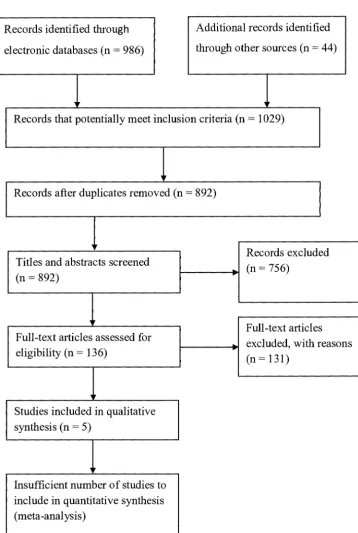
met the inclusion criteria. This screening process resulted in the exclusion of 756 studies.
Records identified through Additional records identified electronic databases (n = 986) through other sources (n = 44)
' '
Records that potentially meet inclusion criteria (n = 1029)
,Ir
Records after duplicates removed (n = 892)
,1,
Records excluded Titles and abstracts screened
(n = 756)
-(n = 892) ~
111'
Full-text articles Full-text articles assessed for
excluded, with reasons
-eligibility (n = 136)
(n=131)
..
Studies included in qualitative synthesis (n = 5)
'
[image:19.605.91.450.150.684.2]Insufficient number of studies to include in quantitative synthesis (meta-analysis)
Figure 1. Flowchart of study selection. Adapted from (Moher, Liberati, Tetzlaff, &
A large proportion were excluded due to a focus on indigenous foster carers, and indigenous caregiver reports on child health, child development issues and patient health. Full-text review of the remaining 136 studies that appeared to meet the inclusion criteria resulted in 62 being excluded because the studies did not report any outcomes for caregiver functioning. A further 22 articles were excluded because they contained general commentary of indigenous caregiver issues rather than reported the findings of a study. Twenty-two studies did not have indigenous participants or did not report separate data for the indigenous participants in the sample. Eleven studies were project reports and had not been subjected to a peer-review process required for journal publication. Three studies were conference proceedings and no full-text publication existed. Eleven studies about indigenous caregiver functioning used solely qualitative methods. This left four studies that met inclusion criteria; three of which were descriptive studies and one which was an intervention study. Given the small number of quantitative studies located it was not feasible to conduct a meta-analysis. A full list of articles that were excluded after full-text reading, and reasons for their exclusion, can be found in Appendix A.
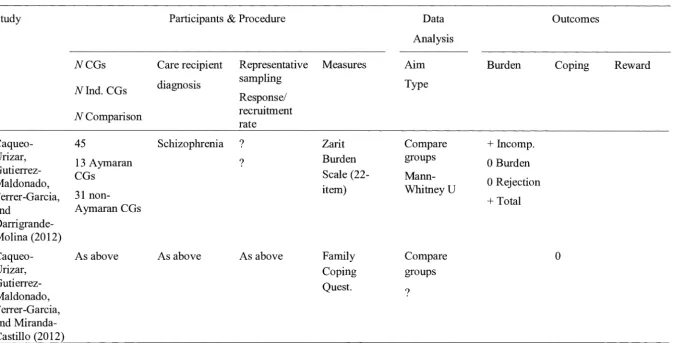
Table 1 summarises the characteristics of the three studies employing quantitative methods to explore indigenous caregiver functioning. Two publications were located that reported on data from the same cross-sectional study of 13
Aymaran (one of the indigenous peoples of Chile) caregivers, in relation to their caregiver burden (Caqueo-Urizar, Gutierrez-Maldonado, Ferrer-Garcia, & Darrigrande-Molina, 2012) and coping (Caqueo-Urizar, Gutierrez-Maldonado, Ferrer-Garcia, & Miranda-Castillo, 2012). The use of a non-indigenous comparison group (n = 31) allowed for discrimination of the potential factors related to
the authors did not provide sufficient detail about the sampling procedure to assess for the external validity of the findings. Specifically, there was no mention of a random sampling technique, nor was there an indication of the response rate or any exploration of the potential differences between respondents and non-respondents. In the report on caregiver burden, the data analysis was not specified and it is unclear whether a single or multiple analyses were conducted. This means it is difficult to make a judgement about the control of Type 1 error rates. The report on caregiver coping provided details on the Family Coping Questionnaire (FCQ) that are inconsistent with the version of the FCQ that is referenced in the report, with no description or justification of version that was employed in the study. Further, the authors drew unsupported conclusions from the results of the statistical analysis, claiming that a result of p = .06 is sufficient to assert a statistically significant
difference in the use of a particular coping strategy. The methodological problems of the study and published reports undermine the reliability of the study's findings that Aymaran caregivers experience significantly more overall burden and feelings of incompetence than non-Aymaran caregivers, and use a similar range of coping strategies.
possible that the caregivers of care recipients who gave permission could vary in important ways from those who did not give permission. The authors did compare the cognitive functioning of care recipients' with a participating caregiver and those without, and found no significant differences. This controls for an important source of bias as the negative effects of caregiving are generally worse amongst those caring for people with dementia compared to those caring for a nondemented older adult (Pinquart & Sorensen, 2003). Two standardised assessment instruments were used to measure caregiver burden and caregiving reward (Zarit Burden Inventory and Positive Aspects of Caregiving, respectively). The authors omitted summary statistics of these measures that would facilitate comparisons with other samples or groups. The authors reported that they chose a sample size of 20 and noted that this was an insufficient size to conduct significance testing. This approach circumscribes the usefulness of the quantitative data in elucidating the factors that contribute to caregiver stress or satisfaction. The authors' descriptions of the data suggest that the indigenous caregivers in their sample experienced low levels of burden and stress. The only frequently endorsed burden-related items pertained to thoughts and feelings that the caregiver could do more or do a better job at caregiving. The high
data suggest that the satisfaction with caregiving is associated with an exchange in which the caregiver's assistance is met with the emotional reward of being
appreciated. The quality of the relationships may help explain the potency of this exchange: several caregivers reported genuinely enjoying the company of older people and feeling emotionally close to them.
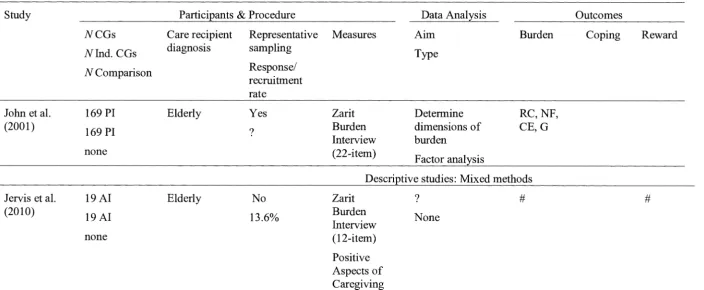
The dimensions of caregiver burden among an indigenous population were explored quantitatively through factor analysis by John, Hagan Hennessy, Dyeson, and Garrett (2001 ). This cross-sectional study involved a large sample of 169 Pueblo Indian caregivers that was expected to be representative of the indigenous
expectations may not encourage honest reporting of negative feelings about
caregiving responsibilities. Caregiver efficacy measures the self-assessed capacity to provide adequate care and is often reflective of crisis in the caregiving situation. Guilt refers to caregivers' feelings of inadequacy regarding the extent and
effectiveness of their caregiving. Across all burden items the indigenous caregivers in this sample reported substantial levels of perceived burden. The authors did not provide summary statistics about the level of each dimension of burden in their sample, which limits comparisons with other samples.
Only one intervention study for indigenous caregiver distress was found and it is summarised in Table 2. Korn et al., (2009) examined the efficacy of polarity therapy compared to an enhanced respite control condition in a sample of 38 Native Indian and Alaskan Native caregivers. Polarity therapy, as described by the authors, is a type ofbiofield touch therapy, which involves applying manual pressure on soft tissue points, against vertebral areas and on opposing left-right locations
conducted on potentially highly correlated variables. While stress and depression were assessed with independent measures, the other three significant outcome variables, bodily pain, vitality and general health are subscales of the Short Form (SF)-36. This Type I error risk can be controlled by using a correlation matrix to check for multicollinearity and running a MANCOV A for highly correlated
Table 1
Summary of cross-sectional descriptive studies of indigenous caregiver fimctioning
Study Participants & Procedure Data Outcomes
Analysis
NCGs Care recipient Representative Measures Aim Burden Coping Reward
diagnosis sampling Type
Nlnd. CGs
Response/
N Comparison recruitment
rate
Caqueo- 45 Schizophrenia ? Zarit Compare
+
Incomp.Urizar,
13 Ayrnaran ? Burden groups O Burden
Gutierrez-CGs Scale (22-
Mann-Maldonado,
item) WhitneyU O Rejection
Ferrer-Garcia, 31 non-
+
Totaland Ayrnaran CGs
Darrigrande-Molina (2012)
Caqueo- As above As above As above Family Compare 0
Urizar, Coping groups
Gutierrez- Quest.
Maldonado, ?
Ferrer-Garcia, and Miranda-Castillo (2012)
[image:26.848.82.763.130.473.2]Table 1
Summary of Cross-sectional Descriptive Studies of Indigenous Caregiver Functioning (continued)
Study Participants & Procedure Data Analysis Outcomes
NCGs Care recipient Representative Measures Aim Burden Coping Reward
Nlnd. CGs diagnosis sampling Type
N Comparison Response/
recruitment rate
John et al. 169 PI Elderly Yes Zarit Determine RC,NF,
(2001)
169 PI ? Burden dimensions of CE,G
Interview burden
none (22-item)
Factor analysis
Descriptive studies: Mixed methods - - - · - · -· - - -
-Jervis et al. 19 AI Elderly No Zarit ? # #
(2010)
19 AI 13.6% Burden None
Interview
none (12-item)
Positive Aspects of Caregivi_n_g
Note. CGs, caregivers; Ind., Indigenous; PI, Pueblo Indian; AI, American Indian; RC, Role conflict; NF, Negative feelings; CE, Caregiver efficacy; G, Guilt; +, significant differences between indigenous group and control; 0, no significant difference between indigenous group and control condition; blank spaces indicate outcomes not measured; ?, indicates not specified;#, reported at the item-level only.
N
[image:27.848.72.776.123.413.2]Table 2
Summary of Intervention Studies to Improve Indigenous Caregiver Functioning
Study Participants & Design Treatment Outcomes
N N Care F/up Sessions Format Stress Depression Sleep QoL Worry
CGs recipient end No., Components
Cond. diagnosis point
length (Duration)
Randomised Control-Trials
Korn et al. 38 AI 1 INT Dementia Post. 8 x 50min Caregiver-
+
+
0 0 0(2009) &AN
1 ERC (?) only
CGs PT
Note. AI, American Indian; AN, Alaskan Native; CG, caregiver; INT, intervention; ERC, enhanced respite control; Post., post-treatment; PT, Polarity Therapy; QoL, quality oflife; +, significant differences between intervention and control; X, significant difference between conditions at initial follow-up, but not maintained to final assessment; 0, no significant difference between intervention and control condition; blank spaces indicate outcomes not measured;#, indicates control group patients improved across follow-ups; ?, indicates not specified.
N
In summary, the quality and strength of the studies into indigenous caregiver functioning is weak. There was an absence of guiding theoretical frameworks. All of the studies used cross-sectional designs and most failed to examine differences between potential subjects who eventually participated and those who did not. Further, use of standardised assessment tools was weakened by missing summary descriptive statistics in two studies, and four of the five publications either
inadequately conducted or under-reported appropriate statistical analysis. There is some evidence that indigenous caregivers experience caregiver burden in areas of role conflict, negative emotions about the situation, concern about their capacity to provide care and guilt about not doing enough. Only one intervention study was found and several methodological concerns warrant caution in interpreting the reported treatment effects of significant, but small, improvements in stress, depression, bodily pain vitality and general health.
Discussion
The aim of this systematic literature review was to investigate indigenous caregivers' functioning and examine the evidence regarding interventions for this caregiver group. A secondary aim was to provide a detailed critique of the quantitative literature to help inform future research with indigenous caregivers. Recent grey literature (Eagar et al., 2007; Taylor, 2013) suggested that there would be a dearth of academic literature in this area. This was borne out by the current finding of only three studies examining some aspect of indigenous caregiver functioning and one randomised control trial for an intervention to alleviate indigenous caregiver stress.
Gutierrez-Maldonado, Ferrer-Garcia, & Darrigrande-Molina, 2012; Caqueo-Urizar, Gutierrez-Maldonado, Ferrer-Garcia, & Miranda-Castillo, 2012; Jervis et al., 2010; Korn et al., 2009). Despite the availability of stress and coping models that incorporate
race/culture into explanations of caregiver functioning ( e.g., Hilgeman et al., 2009; Knight, Silverstein, McCallum, & Fox, 2000; Pinquart & Sorensen, 2005) there was a marked absence of theoretical frameworks to help guide research questions and specific hypotheses. The studies used standardised assessment tools, but only one study (John et al., 2001) reported making specific cultural adaptations, and then tested to explore the conceptualisation of caregiver burden amongst an indigenous population. Limitations in sampling were due either to a lack of clear reporting of how the sample was selected (Caqueo-Urizar, Gutierrez-Maldonado, Ferrer-Garcia,
& Darrigrande-Molina, 2012; Caqueo-Urizar, Gutierrez-Maldonado, Ferrer-Garcia,
& Miranda-Castillo, 2012), or an insufficient exploration of potential bias arising
from differences between respondents and non-respondents at different phases of the sample selection (Jervis et al., 2010; Korn et al., 2009). While most studies provided a range of socio-demographic data for the sample, the possible influence of these factors upon the variables of interest (e.g., caregiver burden, coping and reward) were not fully explored. Summary descriptive statistics were missing in two studies (Jervis et al., 2010; John et al., 2001); while a third study lacked a coherent account and justification for which inferential statistics were employed (Caqueo-Urizar, Gutierrez-Maldonado, Ferrer-Garcia, & Darrigrande-Molina, 2012; Caqueo-Urizar, Gutierrez-Maldonado, Ferrer-Garcia, & Miranda-Castillo, 2012). The sole
poor quality of the evidence base in this area has implications for future research, clinical practice and public policy.
While there are some qualitative findings that indicate the presence of psychological distress within the indigenous caregiving experience, the
conceptualisation and prevalence of this distress requires much more investigation. Future studies need to include samples that are representative and of sufficient size. In addition, studies need to conduct adequate investigation into the potential sources of bias throughout the recruitment and selection of the sample, and ensure this is clearly reported. Despite the use of standardised measures in the studies included in this review, the appropriate use of assessment tools with indigenous samples can also be improved. More work is needed to test the cultural validity of assessment tools, as well as further exploration of the conceptualisation of key constructs, such as
caregiver burden, within indigenous populations, building on the work of John et al. (2001). In addition, more sophisticated statistical analyses, including multivariate analyses and structural equation modelling, are needed to explicate the key factors and their relative contributions to caregiver distress and satisfaction. Future RCTs and non-randomised evaluations will benefit from use of research guidelines such as CONSORT (Moher et al., 2010) and TREND (Des Jarlais et al., 2004) to ensure methodological rigour and clear reporting of scientific standards. While there is already a growing consensus regarding the need for clear research and reporting standards (Kelley et al., 2003; NCDDR, 2005), what remains contentious is how this applies to cultural groups with a historical antagonism toward anglocentric agendas and methods (Rickwood, Dudgeon, & Gridley, 2010; Tuhiwai Smith, 1999).
other colonised-settler countries, psychological research has played an important part in relations between indigenous and non-indigenous populations (Rickwood et al., 201 O; Tuhiwai Smith, 1999). For example, early forms of cognitive testing in
Australia were predicated on the assumption that Indigenous Australians represented a less evolved human race, and deviations from average scores attained by non-Indigenous people were taken as confirmation of this racial inferiority (Rickwood et al., 2010). Though such overt racist agendas may no longer be pursued through scientific processes, it has been argued by theorists across several disciplines including, education, epidemiology and cross-cultural studies, that many
contemporary research practices continue to replicate and perpetuate the colonising process (Tuhiwai Smith, 1999; Barnhardt & Kawagley, 2005; Wright, 2012).
However, some attempts to avoid research practices that disadvantage, ignore or violate indigenous values and worldviews may have other problems, including a failure to adhere to the standards of high quality research. This category can include surveys of indigenous people's unmet needs ( e.g., Hepburn, 2005), evaluations of community-driven programs and models (e.g., Carroll et al., 2010; LoGiudice et al., 2012) and, literature reviews that draw on unscientific and unrepresentative
information sources to make recommendations for interventions and policy (e.g., Taylor, 2013 ). Non-adherence to scientific methods is often implicitly justified in these studies, partly by a strong desire to privilege indigenous people's interests and voices over those of the ( often non-indigenous or external) researcher ( e.g., Hepburn, 2005). However, it also disregards the strong rationale for developing an empirical evidence base: the need to establish cause-and-effect relationships between
interventions and recovery. Increasingly, health researchers are calling for
Alcantara, 2007; Sanson-Fisher, Campbell, Perkins, Blunden, & B.B., 2006; Stewart, Sanson-Fisher, Eades, & Mealing, 2010).
The nature of the research in this field to date is consistent with the
prescience phase of scientific knowledge (Kuhn, 2012; Popper, 1973). Indicative of this phase is the proliferation of qualitative and speculative studies that aid in the conceptualisation of key phenomena and relationships (Kuhn, 2012). In addition, research among the majority culture population tends to precede studies that focus on minority groups. In Australia, the primary focus on caregivers in general is only about three decades old (Eagar et al., 2007), so predictably the state of the field for indigenous caregivers is behind. A report of NHMRC funding from 2000/01 to 2012/13 indicates that only one study with a specific focus on Indigenous Australian caregivers was awarded funding during this period (National Health and Medical Research Council, 2012). In fact, despite the steady increase in expenditure on indigenous health research over the last 13 years, approximately only 10% of the indigenous health projects funded from 2000/01 to 2012/13 had a psychosocial focus. Further, given that it is well-established that Indigenous Australians have a holistic view of health and wellbeing, incorporating physical, mental, social, cultural, spiritual, and community (Purdie, Dudgeon, & Walker, 2010) there may be
incongruence between what is being researched and how that research translates to meaningful outcomes for the health and well-being of indigenous people (Tsey et al., 2007).
experience psychological distress, this distress remains largely unspecified both in nature and relative intensity. In the mainstream, non-indigenous caregiver literature, depression and burden are key psychological variables of interest (Pinquart &
2007; Hennessy & John, 1996). Indigenous caregivers may therefore be more susceptible to experiencing guilt due to being unable to fulfil the caregiving responsibilities prescribed by cultural norms (John et al., 2001).
The social context of indigenous populations in general, and Indigenous Australians in particular, also gives rise to a number of unique stressors. Factors such as lack of culturally accessible support services, distance from services, premature mortality and morbidity, individual-, institutional- and cultural-racism, generally poor health and AOD issues constitute pervasive stressors for the majority of
Indigenous Australians, contributing to a weakening of the kinship networks that can share the caregiving load (Emden et al., 2005). These stressors are likely to be compounded for those who do take on the caregiver role (Wright, 2012) and then face multiple and constant caregiving responsibilities and a lack of adequate resources including power and transport (Smith et al., 2011 ). These social
determinants of caregiver health are also in need of strategic intervention at the level of public policy; however, the lack of evidence about what is driving indigenous caregiver stress remains a limiting factor in the development of effective policies.
The current review involved a primary assessor, with counter-checking from a second researcher, in the search, selection and data extraction of studies. To strengthen the methodology, future reviews should use independent data extraction by two reviewers as recommended by the PRISMA guidelines (Liberati et al., 2009). Furthermore, due to the nature of the studies included in the review, another
peoples, it will be possible to look at the factors that contribute to differences in the indigenous caregiving experience.
With increases in the aging population and chronic diseases apparent
worldwide, the role of informal caregivers is likely to remain an important source of support for elderly, ill and disabled people. This review has revealed that there is extremely limited evidence about the functioning of indigenous caregivers and what interventions are effective in alleviating their distress. The few quantitative studies that have been done in this area have lacked methodological rigour, thus
undermining the reliability and credibility of their findings. The lack of knowledge about indigenous caregiver functioning and how to support it is concerning,
References
AARP. (2007). Valuing the invaluable: A new look at state estimates of the economic value of family caregiving (data update). Washington: Author.
ABS, & AIHW. (2008). The Health and Welfare of Australia's Aboriginal and Torres Strait Islander Peoples. (ABS Cat. No. 4704.0, AIHW Cat. No. IHW 21 ). Canberra: Australian Bureau of Statistics.
Anngela-Cole, L., & Busch, M. (2011). Stress and grief among family caregivers of older adults with cancer: a multicultural comparison from Hawai'i. Journal of social work in end-of-life &palliative care, 7(4), 318-337. doi:
10.1080/15524256.2011.623460
Anngela-Cole, L., & Hilton, J. M. (2009). The role of attitudes and culture in family caregiving for older adults. Home health care services quarterly, 28, 59-83. doi: 10.1080/0162140903014790
Australian Psychological Society. (2010). Evidence-based psychological
interventions in the treatment of mental disorders: A literature review (Third edition). Retrieved from
Barnhardt, R., & Kawagley, A. 0. (2005). Indigenous knowledge systems and Alaska Native ways of knowing. Anthropology and Education Quarterly,
36(1), 8-23.
Behrendt, L. (2009). Indigenous peoples. Hot Topics: Legal Issues in Plain Language, 68, 1-36.
Burns, J. (2012). Department of Families, Housing, Community Services and
Campbell, M. K., Piaggio, G., Elboume, D.R., & Altman, D. G. (2012). Consort
2010 statement: extension to cluster randomised trials. BMJ, 345(e5661).
Retrieved from doi:10.l 136/bmj.e5661
Caqueo-Urizar, A., Gutierrez-Maldonado, J., Ferrer-Garcia, M., &
Darrigrande-Molina, P. (2012). Burden of care in Aymara caregivers of patients with
schizophrenia. Revista De Psiquiatria Y Salud Mental, 5(3), 191-196. doi:
10.1016/j.rpsm.2011.07.001
Caqueo-Urizar, A., Gutierrez-Maldonado, J., Ferrer-Garcia, M., & Miranda-Castillo,
C. (2012). Coping Strategies in Aymara Caregivers of Patients with
Schizophrenia. Journal of Immigrant and Minority Health, 14(3), 497-501.
doi: 10.1007/s10903-011-9563-5
Carroll, E., Smith, K., Flicker, L., LoGiudice, D., Shadforth, G., Ralph, N., ...
Lautenschlager, N. (2010). Indigenous services study: Lungurra Ngoora
community care final report.
Cooke, M., Mitrou, F., Lawrence, D., Guimond, E., & Beavon, D. (2007).
Indigenous well-being in four countries: An application of the UNDP's
Human Development Index to Indigenous Peoples in Australia, Canada, New
Zealand, and the United States. BMC International Health and Human
Rights, 7(9). doi: doi:10.1186/1472-698X-7-9
Corbett, A., Francis, K., & Chapman, Y. (2006). The experience of whanau caring
for members disabled from the effects of a cerebra-vascular accident.
Cotter, P., Anderson, I., & Smith, L. R. (2007). Indigenous Australians. In A. Borowski, S. Encel & E. Ozanne (Eds.), Longevity and social change in Australia (pp. 65). Sydney: UNSW Press.
Crosato, K. E., Ward-Griffin, C., & Leipert, B. (2007). Aboriginal women caregivers of the elderly in geographically isolated communities. Rural and Remote Health, 7( 4), 796.
Cummins, R. A., Hughes, J., Tomyn, A., Gibson, A., Woerner, J., & Lai, L. (2007). The Wellbeing of Australians: Carer Health and Wellbeing Australian Unity
Wellbeing Index Survey 17.1: Deakin University & Carers Australia.
Des Jarlais, D. C., Lyles, C., & Crepaz, N. (2004). Improving the reporting quality of non-randomized evaluations of behavioral and public health interventions. The TREND statement. American Journal of Public Health, 94, 360-366. Dyall, L., Feigin, V., & Brown, P. (2008). Stroke: A picture of health disparities in
New Zealand. [Article]. Social Policy Journal of New Zealand(33), 178-191. Eagar, K., Owen, A., Williams, K., Westera, A., Marosszeky, N., England, R., &
Morris, D. (2007). Effective Caring: a synthesis of the international evidence on carer needs and interventions (Vol. 1, pp. 27): Centre for Health Service Development-CHSD.
Edwards, B., Gray, M., Baxter, J., & Hunter, B. (2009). The Tyranny of Distance: Commonwealth of Australia & Carers Australia.
Emden, C., Kowanko, I., de Crespigny, C., & Murray, H. (2005). Better medication management for Indigenous Australians: findings from the field. Australian Journal of Primary Health, 11(1), 80-90. doi:
Evans-Campbell, T., Fredriksen-Goldsen, K. I., Walters, K. L., & Stately, A. (2005). Caregiving experiences among American Indian two-spirit men and women: Contemporary and historical roles. Journal of Gay & Lesbian Social
Services: Issues in Practice, Policy & Research, 18(3-4), 75-92. doi: http://dx.doi.org/10.1300/J041 vl 8n03 05
Freemantle, J., Officer, K., McAullay, D., & Anderson, I. (2007). Australian Indigenous Health: Within an International Context. Darwin: Cooperative Research Centre for Aboriginal Health.
Gone, J.P., & Alcantara, C. (2007). Identifying effective mental health interventions for American Indians and Alaskan Natives: A review of the literature.
Cultural Diversity and Ethnic Minority Psychology, 13(4), 356-363. doi: 10.103 7/1099-9809.13.4.356
Hayward, M. D., & Heron, M. (1999). Racial inequality in active life among adult Americans. Demography, 36(1), 77-91.
Hennessy, C.H., & John, R. (1995). The interpretation of burden among Pueblo-Indian caregivers. Journal of Aging Studies, 9(3), 215-229. doi:
10.1016/0890-4065(95)90003-9
Hennessy, C.H., & John, R. (1996). American Indian Family Caregivers' Perceptions of Burden and Needed Support Services. Journal of Applied Gerontology, 15(3), 275-293. doi: 10.1177/073346489601500301
Hennessy, C.H., John, R., & Anderson, L.A. (1999). Diabetes Education Needs of Family Members Caring for American Indian Elders. The Diabetes Educator,
Hilgeman, M. M., Durkin, D. W., Sun, F., DeCoster, J., Allen, R. S.,
Gallagher-Thompson, D., & Burgio, L. D. (2009). Testing a theoretical model of the
stress process in Alzheimer's caregivers with race as a moderator. The
Gerontologist, 49(2), 248-261. doi: 10.1093/geront/gnp015
Hill, P., Thomson, C., & Cass, B. (2011). The costs of caring and the living standards of carers: Department of Families, Housing, Community Services and
Indigenous Affairs.
Indian Health Service. (2013). Indian Health Disparities. Retrieved from
http://www.ihs.gov/newsroom/includes/themes/newihstheme/display objects/
documents/factsheets/Disparities 2013. pdf.
Jervis, L. L., Boland, M. E., & Fickenscher, A. (2010). American Indian family
caregivers' experiences with helping elders. Journal of cross-cultural
gerontology, 25(4), 355-369. doi: http://dx.doi.org/10.1007/s10823-010-9131-9
John, R., Hagan Hennessy, C., Dyeson, T. B., & Garrett, M. D. (2001). Toward the
conceptualization and measurement of caregiver burden among Pueblo Indian
family caregivers. The Gerontologist, 41(2), 210-219.
Kelley, K., Clark, B., Brown, V., & Sitzia, J. (2003). Good practice in the conduct
and reporting of survey research. International Journal for Quality in Health
Care, 15(3), 261-266. doi: 10.1093/intqhc/mzg031
Knight, B. G., Silverstein, M., McCallum, T. J., & Fox, L. S. (2000). A sociocultural
stress and coping model for mental health outcomes among African
American caregivers in Souther California. Journal of Gerontology:
Korn, L., Logsdon, R. G., Polissar, N. L., Gomez-Beloz, A., Waters, T., & Ryser, R. (2009). A Randomized Trial of a CAM Therapy for Stress Reduction in
American Indian and Alaskan Native Family Caregivers. Gerontologist,
49(3), 368-377. doi: 10.1093/geront/gnp032
Kuhn, T. S. (2012). The strncture of scientific revolutions. 50th anniversary.
Chicago: University of Chicago Press.
Liberati, A., Altman, D. G., Tetzlaff, J., Mulrow, C., Gotzsche, P. C., Ioannidis, J. P.
A., ... Moher, D. (2009). The PRISMA statement for reporting systematic
reviews and meta-analyses of studies that evaluate health care interventions:
Explanation and elaboration. PloS Medicine, 6(7). Retrieved from
doi: 10.1371/joumal.pmed.1000100
LoGiudice, D. C., Smith, K., Shadforth, G., Lindeman, M., Carroll, E., Atkinson, D.,
... Flicker, L. (2012). Lungurra Ngoora--a pilot model of care for aged and
disabled in a remote Aboriginal community--can it work? Rural and Remote
Health, 12, 2078-2078.
McGrath, P. (2008). Family care giving for Aboriginal peoples during end-of-life:
findings from the Northern Territory. Journal of Rural and Tropical Public
Health, 7, 1-10.
McGrath, P., Patton, M. A., McGrath, Z., Olgivie, K., Rayner, R., & Holewa, H.
(2006). 'It's very difficult to get respite out here at the moment': Australian
findings on end-of-life care for Indigenous people. Health & Social Care in the Community, 14(2), 147-155. doi: 10.1111/j.1365-2524.2006.00604.x Merlin, T., Weston, A., & Tooher, R. (2009). Extending an evidence hierarchy to
BMC Medical Research Methodology, 9(34). Retrieved from
http://www.biomedcentral.com/1471-2288/9/34 doi: 1 O. l l 86/1471-2288-9-34 Moher, D., Hopewell, S., Schulz, K. F., Montori, V., G0tzsche, P. C., Devereaux, P.
J., ... Altman, D. G. (2010). CONSORT 2010 Explanation and elaboration: updated guidelines for reporting parallel group randomised trials. BMJ, 340. Retrieved from doi: 10. l l 36/bmj.c869
Moher, D., Liberati, A., Tetzlaff, J., & Altman, D. G. (2009). Preferred reporting items for systematic review and meta-analyses: The PRlSMA statement. PLOS Medicine, 6(6), e1000097. doi: doi:10.1371/journal.pmed1000097 National Health and Medical Research Council. (2012). NHMRC funding for
research into Aboriginal and Torres Strait Islander health issues 2000/01 to 2012/13
NCDDR. (2005). What are the standards for quality research? FOCUS: Technical Briefs. Retrieved from http://ncddr.org/kt/products/focus/focus9/
NHMRC. (2000a). How to review the evidence: Systematic identification and review of the scientific literature. Canberra: National Health and Medical Research Council.
NHMRC. (2000b ). How to use the evidence: Assessment and application of scientific evidence. Canberra: National Health and Medical Research Council.
Office for Disability Issues and Statistics New Zealand. (2010). Disability and Maori in New Zealand in 2006: Results from the New Zealand Disability Survey. Wellington: Statistics New Zealand.
Pinquart, M., & Sorensen, S. (2003). Differences between caregivers and
Pinquart, M., & Sorensen, S. (2005). Ethnic differences in stressors, resources, and psychological outcomes of family caregiving: A meta-analysis. The
Gerontologist, 45(1), 90-106.
Popper, K. R. (1973). Objective knowledge: an evolutionary approach. Oxford: Clarendon Press.
Purdie, N., Dudgeon, P., & Walker, R. (2010). Working together: Aboriginal and Torres Strait Islander mental health and wellbeing principles and practice. Canberra: Office of Aboriginal and Torres Strait Islander Health, Department of Ageing.
Rickwood, D., Dudgeon, P., & Gridley, H. (2010). A history of psychology in Aboriginal and Torres Strait Islander mental health. In N. Purdie, P. Dudgeon
& R. Walker (Eds.), Working together: Aboriginal and Torres Strait Islander
mental health and wellbeing principles and practice (pp. 13-24). Canberra: Office of Aboriginal and Torres Strait Islander Health, Department of Ageing.
Sanson-Fisher, R. W., Campbell, M. K., Perkins, J. J., Blunden, S. V., & B.B., D. (2006). Indigenous health research: a critical review of outputs over time. Medical Journal of Australia, 184(10), 502-505.
Smith, K., Flicker, L., Shadforth, G., Carroll, E., Ralph, N., Atkinson, D., ... LoGiudice, D. (2011). 'Gotta be sit down and worked out together': views of Aboriginal caregivers and service providers on ways to improve dementia care for Aboriginal Australians. Rural and Remote Health, 11 (2 ), 1650. Stewart, J. M., Sanson-Fisher, R. W., Eades, S. J., & Mealing, N. M. (2010).
Torres Strait Islander health: Views of leading researchers. Medical Journal of Australia, 192(10), 612-615.
Taylor, J. (2013). Practical ways to overcome isolation for Aboriginal and Torres
Strait Islander Carers: Literature Review. Deakin, ACT.
Tsey, K., Wilson, A., Haswell-Elkins, M., Whiteside, M., McCalman, J.,
Cadet-James, Y., & Wenitong, M. (2007). Empowerment-based research methods: a
10-year approach to enhancing Indigenous social and emotional wellbeing.
Australiasian Psychiatry, 15 Supplement, S34-S38. doi: 10.1080/10398560701701163
Tuhiwai Smith, L. (1999). Decolonizing Methodologies: Research and indigenous
peoples. London: Zed Books Ltd.
Ward, N. J., Jowsey, T., Haora, P. J., Aspin, C., & Yen, L. E. (2011). With good
intentions: complexity in unsolicited informal support for Aboriginal and
Torres Strait Islander peoples. A qualitative study. BMC Public Health, 11,
686. doi: 10.l 186/1471-2458-11-686
Williams, K., & Owen, A. (2009). A contribution to research and development in the
carer support sector. Family Matters, 82.
World Health Organization. (201 la). Global health and aging: Briefreport.
Wright, M. (2012). Giving and receiving care: Reframing the work of Aboriginal
care-giving. In B. F. McCoy, P. Stewart & N. Poroch (Eds.), Urban Health: Strengthening our voice, culture and partnerships (pp. 105). Canberra: Australian Institute of Aboriginal and Torres Strait Islander Studies.
Zhao, Y., Condon, J. R., Guthridge, S., & You, J. (2010). Living longer with a greater health burden - changes in the burden of disease and injury in the
Appendix A
Study ID Publication type Study design Country Reason for exclusion
1 Cotter, Chapter in edited book Commentary drawing on Australia Not a study. Small section on
Anderson, and data from ABS and AIHW carers makes general comments
Smith (2007) drawn from the literature with no
direct references.
2 Aboriginal Unpublished report Qualitative -community Australia Focus on care recipients (ATSI
Disability consultation people with a disability). Brief
Network (2007) mention made regarding carers.
3 Aspin, Brown, Journal article Qualitative Australia Focus on care recipients (ATSI
Jowsey, Yen, people with chronic illness).
and Leeder (2012)
4 Bentelspacher, Journal article Mixed methods - qual & Singapore Not indigenous.
Chi tran, and quant
Rahman ( 1994)
5 Blume (2008) Abstract Quantitative - SEM & United States Abstract only - insufficient
intervention? information to include.
Author contacted for full-text publication information. Response: study not published.
6 Boss, Kaplan, Abstract Qualitative United States Abstract only - insufficient
and Gordon information to include.
(1994) Author contacted for full-text
publication information. Response:
directed to book chapter (see next ~
7 Boss, Kaplan, and Gordon (1995) 8 Boss (1999)
9 Brodaty and Cumming (2010)
10 Bruce, Paley, Underwood, Roberts, and Steed (2002)
11 Butterworth, Pymont, Rodgers, Windsor, and Anstey (2010) 12 Cass, Smith,
Hill, Blaxland, and Hamilton (2009)
Article Qualitative United States Excluded as not peer-reviewed:
published in the local journal. Book Commentary/clinical United States Not a study; briefly and anecdotally
op1mon refers to data collected in previous
reference.
Commentary Commentary Australia Commentary about dementia
services in Australia. Brief mention of the importance of family
caregivers and the gaps in knowledge & service for
· indigenous people with dementia and their carers.
Journal article Qualitative Australia Indigenous status not reported.
Journal article Quantitative Australia Indigenous status not reported.
Social Policy Paper Quantitative -descriptive Australia Quantitative: describes numbers of
& Qualitative-focus ATSI young carers. Qual: one brief
groups mention of a respite camp for ATSI
young carers.
Repeated calls for the need for more research into this group.
13 Cass, Y eandle, and Policy (2009) 14 Castleden,
Crooks, Hanlon, and Schuurman (2010)
15 Creswell (2012)
16 de Crespigny, Kowanko, Murray, Emden, and Wilson (2005)
17 Edwards, Higgins, Gray, Zmijewski, and Kingston (2008) 18 Forbes and Edge
(2009) 19 Frerichs,
Schumacher, Watanabe-Galloway, &
Conference paper Commentary/analysis Australia & Does not provide data on outcomes United for carers. Focus is on policy. Kingdom
Journal article Qualitative Canada Does not provide data on outcomes for carers.
Submission for Commentary Australia Nearly all references contained in
government green this document are part of the
paper current review.
Journal article Overview of research Australia Small section on carers in this project (lit review, article does not contain sufficient qualitative research & detail to include in the review.
survey data) Overview makes reference to
details of project in various publications. Those deemed potentially eligible have been located and added to search. Research report Quantitative Australia Carers outcomes not reported
according to Indigenous status
Journal article/policy Commentary Canada No data regarding carer outcomes. analysis
Journal Descriptive program United States No carer outcomes. article/pro gram development
development
.j::,.
Duran (2012) 20 Frizzell &
Chamberlain (2006) 21 Garrett et al.
(2010) 22 Goins et al.
(2011)
23 Carers Australia
24 The Echidna Group (2009)
25 Habjan, Prince,
& Kelley (2012)
26 Hancock, Jarvis,
& L'Veena, (2006)
Report Commentary/policy and Australia No carer outcomes.
funding analysis
Journal article Quantitative- secondary United States No carer outcomes. data analysis
Journal article Quantitative United States Examines links between culture and caregiving among Native Americans; but does not report any outcomes.
Book/intervention n/a Australia Not a study. It is actually an
resource intervention/resource for A TSI
carers. Will make detailed
description of it; need to locate an evaluation of it.
Feasibility report Qualitative Australia No outcomes for carers: focus on the issues associated with model of respite care and recommendations for an alternative model
Journal article/study Qualitative
us
No outcomes for carers specified. Journal article/study Qualitative Australia Not indigenous. Only 2 out of 62carer participants were of A TSI background. As it is a qualitative analysis, this small proportion means that the overall themes may not be reflective of the A TSI perspective/experience. The author
27 Hancock, Jarvis, &L'Veena, (2007) 28 Harris et al.,
(2004) 29 Henderson,
(2009)
30 Hill, Smyth, Thomson& Cass (2009)
31 Hill, Thomson & Cass (2011) 32 Hill, Thomson & Cass (2010)
33 Jenkins & Seith, (2004)
34 Jeon, Essue, Jan, Wells, &
Whitworth, (2009)
acknowledges that the program was not inclusive of ATSI carers. Journal article/study Mixed methods Australia Not indigenous. See previous
reference.
Journal article/study Qualitative Australia No indigenous participants identified.
Abstract Case study United States Abstract only.
Author contacted for additional full-text publication information. Response: no response.
Report Analysis of census data Australia Some background context for
and the Survey of indigenous young carers (gender,
Disability Aging and age, education, employment) but no
carers (SDAC) & outcomes.
qualitative
Report Analysis of survey data Australia Focus on economic outcomes. Presentation Theoretical discourse Australia A generic model for
conceptualising care; authors note it would need further development to apply to A TSI population. Report Background policy paper Australia Not a study; draws on evidence that
I have as primary sources. Journal article/study Qualitative Australia No carer outcomes.
-+'"
35 Jervis &
Manson, (2002) 36 Jones, Lee, &
Zhang (2011)
37 Jorm, Walter, Lujic, Byles, & Kendig (2010) 38 J owsey, Yen,
Wells & Leeder (2011)
39 Kane& Houston-Vega (2004)
40 Kelly et al., (2009)
41 Kowanko, De Crespigny, & Murray (2003) 42 Lanting,
Crossley, Morgan, & Camm er (2011) 43 LoGiudice et al.
(2012) 44 Maddocks &
Journal article Commentary/ discursive United States Not a study. paper
Journal article/study Quantitative United States Scale development for values toward caregiving among different cultural groups rather than
measured outcomes.
Journal article/study Quantitative Australia Analysis of linked datasets; does not distinguish data for care recipients and providers. Journal article/study Qualitative Australia Brief mention of carers but not
specifically indigenous.
Journal Commentary United States Uses data from sources that I have.
article/commentary Compares different cultural groups
including Native Americans. Journal Qualitative United States No outcomes for caregivers, focus
article/commentary is on care recipient.
Report/study Mixed methods- lit Australia No outcomes for carers. review, qualitative
interviews, analysis if hospital separation stats.
Journal article/study Qualitative Canada No specific outcomes for carers.
Journal article/study Quantitative - basic Australia Evaluation of a model of care but program evaluation no carer specific outcomes reported
Journal Commentary Australia Not a study. A brief commentary
.j::..
Rayner (2003) 45 Marr, Neale,
Wolfe, & Kitzes, (2012)
46 Martin & Paki, (2012)
47 McCallion, Janicki, & Grant-Griffin (1997)
48 McGrath (2007)
49 McGuire, Okoro, Goins, & Anderson (2008) 50 McLeod, Nolan,
&Dewing (2012) 51 McMahon&
Hardy
52 Monahan & Twining (2006)
article/commentary about palliative care.
Journal article/study Quantitative United States No outcomes for carers reported.
Journal article/case Commentary/case study New Zealand No outcomes for carers. study
Journal article/study Qualitative United States No outcomes for carers reported. Tries to locate relevant issues across various cultures that influence service use etc.
Journal article/study Qualitative Australia No carer outcomes; focus on care recipient's needs/preferences for dying.
Journal article/for the Commentary United States Not a research study; commentary
patient describing some research in lay
terms.
Journal Descriptive commentary Australia Not a research study article/program
description
Report Mixed methods- lit Australia No outcomes for carers but in depth review, policy analysis, analysis of problems associated qualitative focus groups. with people identifying as carers.
Small reference to particular difficulties for ATSI population in this regard.
Practice guidelines Practice guidelines: Australia Detailed guidelines for working
descriptive with indigenous carers: no
evaluation of this approach.
.j:::..
53 Nagel, Robinson, Condon, &
Trauer (2009) 54 Carers NSW
(2010)
55 Hancock &
Jarvis (2005)
56 Palliative Care Australia (2004)
57 Parrack &
Joseph (2007) 58 Pearce (2000) 59 Pelling et al.
(2006)
Journal article/study Quantitative - RCT Australia No carer outcomes.
Resource manual Resource manual Australia Non-academic resource providing background and guidelines for providing support to Indigenous carers. No evaluation or reference to evaluation.
Journal article/study Quantitative ----descriptive Australia Does not include outcomes for survey no inferential stats carers generally, or ATSI carers
specifically, despite identifying this as an aim of the program in the introduction.
Provides good history of development of carer focus in policy and legislation.
Report Literature review and Australia No clearly identified indigenous
qualitative data carer outcomes; except for
( submissions from carers submissions from service providers and service providers) regarding the needs of this 'special'
group.
Journal Commentary/discursive Canada Not a research study
article/commentary review
Journal Opinion piece Australia Not a research study. An opinion
article/commentary piece from a male A TSI carer.
Study Quantitative survey Australia No indigenous specific outcomes. .j;:.
60 Pollitt 1997)
61 Poroch, Manion, &Manion (2012)
62 Ramanathan & Dunn (1998) 63 Ramsay, Samsa,
Owen,
Stevermuer, & Eagar (2007)
64 Rehman, Reading, & Unruh (2009)
65 Scharlach et al. (2006)
Journal Commentary Australia No carer outcomes; care recipient
article/commentary focus, despite mentioning carers in
abstract, introduction and conclusion.
Journal Commentary/program Australia Does not detail carer outcomes, and
article/commentary description is not a research study as such.
More of a descriptive commentary on a program adaptation. Provides a lot of detail on some aspects of Aboriginal cultures.
Journal article/study Qualitative Australia No carer outcomes. Research report is quite informal.
Report Mixed methods? Australia No carer outcomes included.
Assessment tool Describes the development of a
development carer needs assessment tool. Does
include consultations with relevant stakeholders on adapting the tool to A TSI populations.
Journal article/study Qualitative Canada Not indigenous. Mixed sample of caregivers, including aboriginal women, but does not clearly identify their data except for two quotes at the start. Part of a larger study.
Journal article/study Qualitative -focus groups United States Not indigenous. Excluded because although it includes a focus group of Native American caregivers, the report synthesizes findings across 8
.j::.
66 Schulz (1997)
67 Smith (1996)
68 Smith, Grundy, & Nelson (2010)
cultural groups and therefore results are not specific to Native Americans but rather specific to minority cultures compared to majority culture. Also, not a real focus on carer outcomes ( small mention of experience of
caregiving) so much as reasons for caregiving, barriers to service.
Thesis Qualitative Canada Excluded; no clearly articulated
carer outcomes. Carer experiences are entangled with parental
expenences.
Journal article/review Critical review Cross-cultural; No carer outcomes specifically no countries discussed; not a research study. specified
Journal article Case study Australia No carer specific outcomes, however highlights that the conceptual distinction between formal and informal caregiving may not be appropriate in indigenous settings. Details the development of a model for working with older care recipients in which family are the workers. Does not actually talk about impact on carers, informal or otherwise so cannot be included.
69 Smyer & Clark, (2011)
70 Smyth, Blaxland, &
Cass (2011) 71 St.
Pierre-Hansen, Kelly, Linkewich, Cromarty, &
Walker (2010)
72 Stewart, Lohoar,
& Higgins (2011) 73 Stopher &
D'Antoine (2008)
74 Sullivan, Blignault, Aunt Shirley, & Lisa Jackson (2007) 75 Taylor,
Lindeman, Stothers, Piper,
& Kuipers (2012)
76 ARTD
Journal Review /commentary United States Commentary, no original data on
article/commentary carer outcomes.
Journal article/study Qualitative Australia Brief mention of Indigenous population but no carer outcomes. Journal article Descriptive program United States No carer outcomes.
development
Government resource Review Australia Not a research study; no carer
sheet outcomes.
Report? Report/review Australia Not a research study; does briefly
mention some caregiver experience drawing on data from an
unpublished report. Journal article Program description Australia Not a study.
Journal Qualitative resource Australia No carer outcomes.
article/resource evaluation evaluation
Report Mixed methods Australia No carer outcomes.
v,
Consultancy Team et al. 77 Tomita et al.
(2010) 78 Tripp (1993) 79 Disability Policy
Research Working Group (2011)
80 Turner &
Findlay (2012) 81 Vlahos (2005) 82 Warmington,
Haynes, Chong,
& Schneider
(2005) 83 Williams &
Owen (2009)
84 Yap & Biddle
(2012)
85 Holm & Ziguras (2003)
86 Orcher ( 1995)
intervention evaluation
Journal article/study Quantitative Cross-cultural: No indigenous-specific data United States, reported.
Taiwan, & India
Journal article Personal story/opinion Australia Not a research study Green paper? Policy research paper Australia No carer outcomes
Journal article Quantitative Canada No indigenous specific data.
Thesis Qualitative Canada No carer outcomes.
Conference paper Program description Australia Not a study-no evaluation.
Journal article/review Published article of Eagar Australia ( and Not a research study with original et al., 2007 review international) data.
Report Quantitative Australia No carer outcomes.
Journal Program description & Australia No indigenous outcomes reported article/pro gram qualitative evaluation despite reference to the model
description ( satisfaction) being aimed at meeting 'Koori'
needs.
Report Qualitative/survey - Australia No carer outcomes reported; focus