i
An examination of the relationship between depression,
autobiographical memory specificity and executive function
Catherine Malone BSc (Hons), MSc, PhD
Submitted in partial fulfilment for the degree of Doctor of Clinical Psychology
Under the supervision of Dr J. Reilly and Professor M. L. Howe
The University of Liverpool
ii Acknowledgements
My deepest gratitude goes to the participants who volunteered to take part in the research included in this thesis and to my supervisors; James Reilly for his encouragement and guidance and for Mark Howe for inspiring my interest in this area. Finally, I would like to thank all my wonderful friends and family for their unfaltering support. I would not be the person I am without you all.
A good writer possesses not only his own spirit but
iii
Contents
Thesis abstract 1
Overall introduction 2
Chapter 1: Depression and autobiographical memory specificity: A systematic
review of the role of executive functioning 6
C 1 Abstract 7
C 1 Introduction 8
Depression 9
Effects of depression on general cognitive processes 11
Executive functioning 12
Autobiographical memory specificity 12
Explanations for reduced specificity in depression 13
Executive functioning and autobiographical memory 17
Objective and review questions 18
C 1 Method 19
Literature search 19
Quality assessment 19
Data synthesis 20
Data identification 20
C 1 Results 22
Participants 22
Empirical focus 22
General findings 22
Role of executive functioning 23
C 1 Discussion 30
Implications for practice/therapy 34
Limitations and implications for research 40
iv
C 1 References 42
Chapter 2: Empirical paper – Depression, autobiographical memory
specificity and executive functioning 51
C 2 Abstract 52
C 2 Introduction 54
C 2 Hypotheses 59
C 2 Method 60
Design 60
Participants 60
Procedure 61
Materials and measures 62
Ethics 66
C 2 Results 66
Overall 67
Specific autobiographical memories 67
General autobiographical memories 68
Word type valence 68
Executive functioning 71
C 2 Discussion 74
Limitations and future research 77
Summary 78
C 2 References 80
Chapter 3: Empirical study extensions 83
v
C 3: Dissemination material 92
C 3: Research proposal 93
Aims 93
General background and relevant literature 93
Hypotheses 95
Design 95
Clinical relevance 97
References 98
Overall introduction and extended discussion references 100
Figures and tables
C 1: Figure 1 - Flow chart of publication selection for review 21 C 1: Table 1 - Summary of studies investigating autobiographical memory
specificity in depression and executive functioning 26 C 1: Figure 2 - Depression stepped model of care CG90 Depression in adults:
NICE guidance (2009, updated 2013) 36
C 2: Table 1 - Participant demographics 61
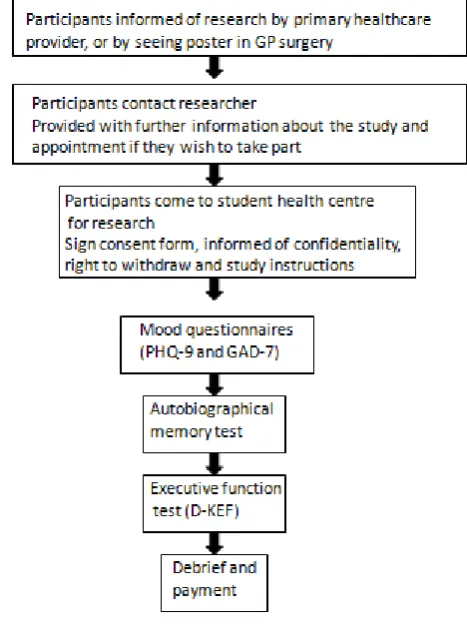
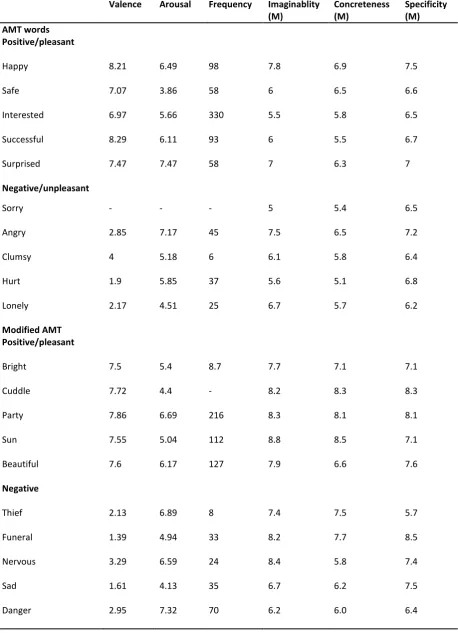
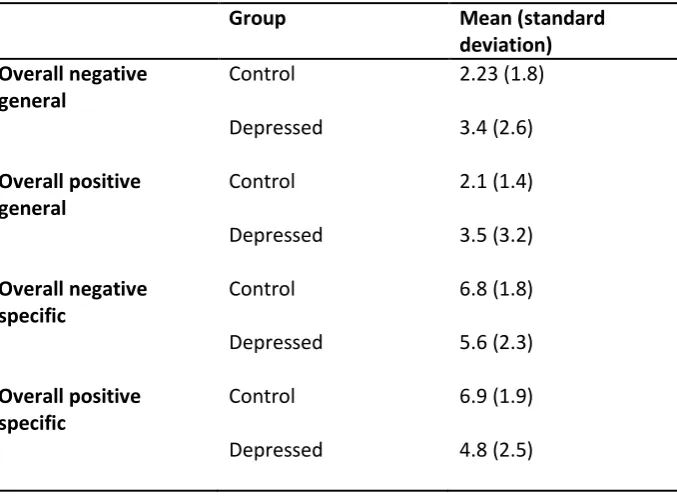
C 2: Figure 1- Participant flow-chart describing process through research 62 C 2: Table 2 - Norms for all words used on autobiographical memory test 64 C 2: Table 3 - Mean and standard deviation for positive and negative memories overall 69 C 2: Table 4 -Mean/standard deviation of all word/list types for group diagnosed with
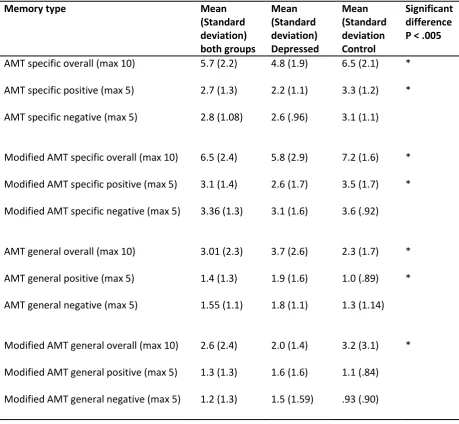
depression and matched control 71
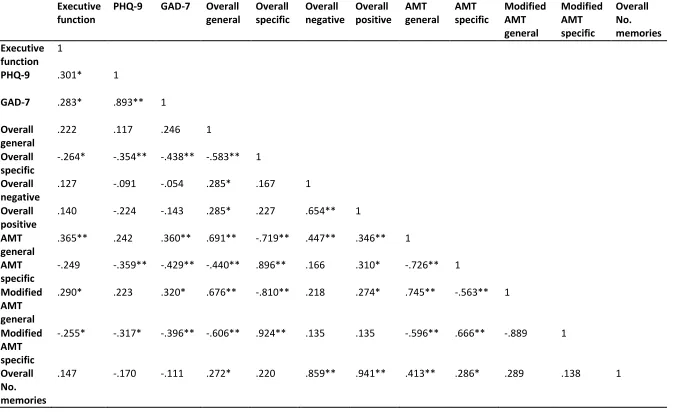
C 2: Table 5 - Correlation table 73
Appendices
Appendix A: Empirical paper participant information sheet 102
1 Abstract
This thesis is submitted in partial fulfilment of a Doctorate in Clinical Psychology at the University of Liverpool. It focuses on the frequently reported finding of reduced specificity of autobiographical memory in participants diagnosed with depression (Williams & Broadbent; 1986, van Vreeswijk & de Wilde; 2004). That is, difficulty recalling the who, what, where and when, of a remembered event. The focus of investigation particularly within the thesis is that of executive functioning; a term describing a range of higher order cognitive functions that control and integrate other activities such as planning, sequencing, initiation. It is examined in relation to depression. The thesis is presented in paper form; Chapter 1 contains a systematic review of 9 research studies related to executive function in the memory specificity of participants with a diagnosis of depression. While executive functioning does appear to be related to reduced specificity the findings in the literature are not consistent highlighting the need for further research. The original empirical paper presented in Chapter 2 tests out hypotheses related to the claims of reduced specificity and executive functioning in participants with a diagnosis of depression (Burt, Zembar, & Niederehe, 1995). These hypotheses are based on the conclusions drawn from the review paper in Chapter 1. It concludes that while overall participants with a diagnosis of depression produce fewer memories overall, and particularly fewer specific memories, this difference can be reduced with modified materials which are more concrete and imaginable. These modified materials can also produce more specific memories
2 Overall introduction
The thesis consists of three chapters. Chapter 1 contains a systematic review investigating the role of depression and executive functioning in studies researching autobiographical memory. Chapter 2 introduces a research study which explores the relationship empirically with a modified test of autobiographical memory, designed to elicit greater specificity in participants. Chapter 3 contains an extended discussion of the empirical study exploring the findings in the therapeutic context and in terms relation to models of memory. Dissemination produced for participants of the experiment is presented in addition to a proposal for future research developed from the study from Chapter 2.
All sections of the thesis explore the theme of autobiographical memory in participants with a diagnosis of depression. Autobiographical memory describes the recall of past events of a person’s life that contribute to their sense of self (Conway, 2005). A widespread research finding in
participants with a diagnosis of depression is a reduction in producing rich information about the who, what, where and when of a remembered event known as reduced specificity of
autobiographical memory in depression (Williams & Broadbent, 1986; van Vreeswijk & de Wilde, 2004). One cognitive process that has been implicated in this reduction is executive functioning. This term describes higher order cognitive structures and processes responsible for integrating and controlling other cognitive activities such as sequencing, planning and initiation.
3 The systematic review in Chapter 1 focuses on the role of executive functioning in studies which investigate reduced specificity of autobiographical memory in depression. The over-arching aim of the review was to explore whether executive functioning was implicated in the literature relating to reduced specificity of autobiographical memory and depression, and if this was the case to explore the explanations given for this relationship. In addition, the review examines the
implications for psychological assessment, formulation, intervention and future research. The review used three electronic data bases (PsychINFO, Scopus and Web of Knowledge) to identify 191 articles. Of this initial figure, 9 studies met the inclusion criteria and were included in the systematic review. The findings demonstrated three important points: 1) the importance of executive functioning in the depression/reduced specificity relationship, 2) executive functioning appears to be important in the maintenance and course of depression, and 3) executive functioning has implications for
vulnerability to future episodes of depression. The review explored these relationships and discusses them in terms of a) the importance for future research b) psychological assessment, formulation and intervention and c) theory/models of memory. The systematic review concludes therefore that that executive functioning plays an important role in the oft reported finding of reduced specificity of autobiographical memory in depression. However it is still not clear how executive functioning interacts with other factors to create reduced specificity and the mechanisms by which it leads to reduced specificity. Continued research is called for based on the findings which expands the range of executive functioning tests used, utilising participants with a current diagnosis of depression in order to further investigate specificity, mood and executive functioning. These recommendations were implemented in the empirical paper in Chapter 2.
4 Broadbent (1986) was given to participants in order that it could be compared with the modified test. The study thus aimed to elicit more specificity with the modified AMT in participants and explore the relationship between specificity and executive functioning. The results using the modified AMT demonstrated that participants with a diagnosis of depression recalled significantly fewer specific autobiographical memories than matched controls, a replication of previous literature. When executive functioning was run as a covariate this effect was still present on the traditional AMT but disappeared with the modified test demonstrating the importance of executive functioning and that greater specificity can be elicited. Participants with a diagnosis of depression also recalled more over-general memories than matched controls on the traditional AMT however there was no difference in number of general memories recalled on the new modified AMT. For both the traditional and modified AMT there was a mood congruence effect. Participants with current low mood recalled fewer positive specific autobiographical memories. Correlations between various measures taken and executive functioning were also explored and discussed. The findings are discussed in terms of theoretical implications and the clinical issues in terms of assessment, formulation, relationships with other processes. Clinical psychologists may integrate these findings into their practice for example methods of enhancing executive functioning in order to encourage recovery from depression and also to reduce future vulnerability.
6
Chapter 1: Depression and autobiographical memory specificity: A
7 Abstract
The role of executive functioning was reviewed in studies investigating reduced specificity of autobiographical memory in depression. Autobiographical memory refers to the remembered past events of a person’s life (Conway, 2005). A finding often reported in the literature is reduced specificity of autobiographical memory in depression (van Vreeswijk & de Wilde, 2004) that is a reduction in producing rich information about the who, what, where and when of a remembered event. One cognitive process that has been implicated in this reduction is executive functioning. The aim of the current review was to explore whether executive functioning was implicated in the literature relating to reduced specificity of autobiographical memory and depression, and if so what explanations were given for this relationship. In addition, the review examined the implications for psychological assessment, formulation, intervention and future research. In order to investigate this, three electronic data bases (PsychINFO, Scopus and Web of Knowledge) were systematically
8 Autobiographical memory specificity and depression: A systematic review of the role of executive
functioning
Depression is a disorder which has huge detrimental costs to both the individuals who are experiencing symptoms and on wider society economically and socially (Moussavi et al., 2007). Therefore depression justifies thorough and extensive research investigating all the parameters of its presentation in order to evidence and explain the aetiology, course and maintenance of the
disorder. This section looks at the background work on depression and autiobiographical memory specificity, before looking at work that links cognitive deficit in general and executive functioning in particular. This clarifies the objectives of the review. Continued research investigating the memory capabilities of individuals with a diagnosis of depression has several aims. It helps us to ascertain whether autobiographical memory specificity contributes to the onset of depression in people previously not depressed, whether specificity contributes to the onset of a new episode in previously depressed individuals and whether depression could be implicated in the onset of memory
problems. In addition, research can investigate whether over-general memories seen in individuals with a diagnosis of depression act as a maintaining feature associated with the persistence of depression.
The review synthesises empirical research that has investigated the role of executive
9 research investigating memory processes as well as grounded in evidenced based techniques. Indeed, empirical research investigating memory processes has much to offer the implementation of interventions.
Knowledge about the cognitive vulnerabilities of clients is crucial in enabling clinicians to undertake a thorough assessment. This knowledge can form the foundation of the factors involved in precipitating or maintaining low mood. It is imperative that interventions are driven and informed with a broad range of factors about a person’s functioning both practically, emotionally, cognitively and structurally. Reduced specificity is related to delayed recovery from episodes of depression (Brittlebank, Scott, Williams, & Ferrier, 1993; Dalgleish, Spinks, Yiend & Kuyken, 2001). Research with participants with a history of depression who are currently in episode has also demonstrated
reduced specificity (Mackinger, Loschin & Leibetseder, 2000). In addition reduced specificity has been related to a disruption in the ability to plan and imagine specific future events (Williams et al, 1996). This demonstrates the pervasive and potentially long term relationship between depression and functioning and the importance of conducting empirical research investigating a wide range of cognitive factors that can be used to inform assessment, formulation and intervention for people experiencing low mood.
Depression
10 diagnosis of MDD is not made if the symptoms meet the criteria for a mixed episode with both manic and depressive episodes occurring concurrently. A diagnosis is not made if the symptoms can be accounted for by bereavement (if symptoms do not persist beyond two months). This factor is changing with the DSM-5, however until it is published recent bereavement is an exclusion factor. This latest modification remains controversial. The psychological effects of a substance or a general medical condition are also exclusion factors. The episode is specified as either mild, moderate, severe without psychotic features, severe with psychotic features, in partial remission, or in full remission, and it is noted whether the episode is recurrent, or a first episode.
Much of the research investigating depression uses this DSM-IV criterion. However clinicians within the National Health Service (NHS) in the United Kingdom use the ICD–10 Classification of Mental and Behavioural Disorders (ICD–10) (WHO, 1992). The ICD-10 outlines 10 symptoms of depression with the number of symptoms defining the degree of depression. The identified symptoms are; persistent sadness or low mood; loss of interest or pleasure; fatigue/low energy; disturbed sleep; poor concentration; low self-confidence; poor or increased appetite; suicidal thoughts or acts; agitation or slowing of movements; guilt or self-blame. Mild depression represents four symptoms, moderate five to six symptoms and severe depression seven or more. There is a large amount of overlap between the two diagnostic frameworks. For the purpose of this review paper the term ‘depression’ is used to describe the cluster of clinical symptoms outlined in the DSM-IV as this is most widely used in research.
First episode depression occurs most commonly in the mid-twenties (Fava & Kendler, 2000) with average episode length from 4-6 months. Relapse rates are high with depression; 50% will go on to have future episodes and following a third episode the relapse rate rises to 90% (Kupfer, 1991). People with onset before age 20 and depression occurring in older adults have a greater vulnerability to relapse (Mitchell & Subramanim, 2005). Depression is reported as the major cause of disability across the world (NICE, 2010). Murray, Lopez and Jamison. (1994) report that
11 depressive illness and Moussavi et al. (2007) highlight that the impact on physical health is greater in depressive illness than angina, arthritis, diabetes and asthma. This leads to a reduction in social and occupational functioning that has a detrimental effect on an individual’s ability to work, leading to loss of employment, relationship difficulties and a worsening of depressive symptoms. Individuals with a diagnosis of depression are four times more at risk of suicide than the general population (Bostwick & Pankratz, 2000). The range of lifetime prevalence rates worldwide is between 4-10% (Waraich et al., 2004). Thomas and Morris (2003) estimated that the direct treatments costs of treating depression in the UK in 2000 was £370 million, morbidity costs a further £8 billion, and mortality costs £562 million. McCrone et al (2008) have predicted that in 2026 total cost of services for depression in the UK will stand at £3 billion and loss of employment due to depression will be £12.2 billion. Given these hugely detrimental effects of depression outlined, research investigating the structural cognitive processes involved is invaluable in informing assessment and formulation and then providing appropriate interventions that can support individuals to gain relief of the symptoms of depression and reduce vulnerability to future relapses.
Effects of depression on general cognitive processes
12 depression. Specifically they point out that many psychometric tests utilise a range of cognitive domains (memory attention, planning etc) making it difficult to isolate the specific mechanisms which might be influencing outcomes or differences based on mood. They point out that this is particularly salient for tests of executive functioning where the psychological construct is still understood at a relatively basic level.
Executive functioning
Executive functioning describes a series of cognitive processes and sub-processes such as planning, sequencing, task-switching, decision making (Elliot, 2003). The description does not represent a unitary concept but rather describes a series of higher order cognitive capabilities that require behaviour modification in the light of new information, sequencing complex action or generating complex strategies. Funahashi (2001) summarised executive function as a product of the co-ordination of various cognitive processes to accomplish a particular goal flexibly. In essence, executive functioning represents accomplishment of specific goals by flexibly co-ordinating sub-processes.
If the control, co-ordination or goal orientation focus of these systems breaks down at any point then behaviour becomes dis-inhibited, disjointed and poorly controlled. For example, individuals with damage to the prefrontal cortex, or with disruption to fronto-subcortical
connectivity can show deficits in decision-making, organisation, planning and can exhibit impaired judgment. Individuals can remain unimpaired in focused tasks which rely on one function only, however the deficits can become apparent when co-ordination of a number of different higher order (executive) functions is required.
Autobiographical memory specificity
13 al., 2007). Autobiographical memory is a form of episodic memory which is hierarchically organised in three levels; lifetime periods, general events and event specific knowledge (Conway & Pleydell-Pearce, 2000). A phenomenon often reported in the depression literature is reduced specificity of autobiographical memories (autobiographical memory specificity; AMS) in participants currently diagnosed with depression (Williams & Broadbent, 1986, van Vreeswijk & de Wilde, 2004, Williams et al., 2007). This describes the finding of difficulties in producing memories that include exact episodic experiences involving the who, what, where, and when of the remembered event. Instead, the literature reports that participants with depression produce overgeneral accounts of experiences (Williams et al., 2007). A standard way of investigating autobiographical memory empirically is to administer the autobiographical memory test (AMT, Williams and Broadbent, 1986). In this test participants are provided with a range of words and asked to produce specific events related to the words. The events must have lasted for a day or less and can either be a trivial or important event to the participant. A specific memory related to the cue word happy would be “I really enjoyed my birthday in Venice last month and felt really happy” whereas a general memory to this cue word would be “It’s nice when I feel happy”. The current review examines how autobiographical memory specificity has been investigated and particularly what role executive functioning has played in the process.
Explanations for reduced specificity in depression
14 generative retrieval. The production of overgeneral memories occurs due to dysfacilitation (Conway & Pleydell-Pearce, 2000) in the hierarchical retrieval process, which occurs before specific memories are created. This dysfacilitation occurs in participants with depression as the depressive illness disrupts the cognitive resources required to rapidly respond to cues required within the AMT.
A further theory - the affect regulation hypothesis (Williams, Styles & Shapiro, 1999) has been proposed to account for reduced specificity in individuals exposed to trauma. This proposes that an avoidant memory style is adopted in order that cognitions and thoughts related to trauma material can be avoided in attempt to reduce distress. Unfortunately this initially beneficial
cognitive strategy of avoidance is then related to the development of post-traumatic stress disorder (Elhers & Clarke, 2000). This avoidant style however can be generalised beyond trauma related memories to broader domains leading to reduced specificity overall on tests such as the AMT. There are high rates of comorbidity between depression and trauma exposure (Breslau, Davis, Peterson, & Schultz, 2000) thus this is an important theoretical conceptualisation of reduced specificity.
15 Beck, Rush, Shaw, & Emery 1979; Segal, 1988) and when activated on tests such as the AMT rather than helping the search process, such activation leads to individuals with a depressive thinking style to become ‘captured’ within the search process leading to the generation of general rather than specific memories. Functional avoidance proposes that participants avoid specific recollection as a protective mechanism to avoid affective disturbance. These two factors, in addition to reduced executive functioning influence the specificity of our memories by influencing behaviour and cognition either individually or in combination to affect autobiographical memory.
The theory explains the emergence of over-general memory in participants with a diagnosis of depression, however it could be argued that the theory has been overextended to such an extent that it has become a catch-all theory. In addition, while this account does provide a plausible account, the role of reduced specificity in depression in still not clearly understood. For example, Sumner, Griffith, and Mineka (2010) performed a meta-analysis to investigate how autobiographical memory specificity predicted the course of depression. They found that overall there was only a small relationship between reduced specificity and the course of depression (r = -.1) and reduced specificity and depression severity (r = .13). In addition, clinical status was not a significant
moderator of the (very small non-significant) depression/specificity correlation. They did discover that fewer specific and more general/categorical memories did predict higher levels of
symtomatology at follow up. The meta-analysis was only performed on 15 articles, however it does demonstrate that there is not a consistent picture emerging from the main body of research. In addition, Boritz, Angus, Monette and Hollis-Walker (2008) investigated the nature of
16 relationship as the client and practitioner get to know each other. That is, over the course of
therapy, clients open up and recall more specific and less generic memories due to a shift in the therapeutic relationship rather than a shift in depression status. This has important implications for research as often studies are conducted in one off testing sessions where there no importance placed on building the type of rapport one would build within a therapeutic relationship.
The lack of consistent findings in the autobiographical memory/specificity association may also be related co-morbid factors such as trauma, grief, and rumination. There is reasonable evidence to suggest that we should investigate the specific causes of depression and not claim globally that depression is exclusively related to reduced specificity. For example, Boelen, Huntjens, van Dursen, and van den Hout (2010) looked at autobiographical memory specificity and
complicated grief. Complicated grief is a disorder of grief that causes functional impairment characterised by preoccupation with the lost person, yearning, and intrusive images/thoughts (see Prigerson et al. 2009). They found no significant associations between measures of depression and autobiographical memory specificity. However, complicated grief was significantly associated with reduced specificity. In addition, Deeber, Hermans, and Raes (2009) discovered that brooding and rumination were related to reduced specificity, but not depression measures. Thus, they argue that rumination may act as a mediator in the AMS effect.
17 (Dalgleish et al., 2003). They also underscore the finding that individuals with depression tend to recall specific memories when they are cued with negative words. Overall, there is considerable evidence that depression does not inevitably lead to the inaccessibility of specific, autobiographical memories. Indeed, individuals with depression may have all too specific recollections, ones they perhaps unsuccessfully try to avoid.
Executive functioning and autobiographical memory
18 from other stages of the memory hierarchy is necessary. Roberts, Carlos and Kashdan (2006) have also demonstrated that participants with low mood were more likely to produce overgeneral memories in the latter half of a testing session suggesting that fatigue may be related to reduced executive functioning. Developmental studies have been consistent with the Conway Pleydell-Pearce Model with specific retrieval developing in the third or fourth year once more higher level
conceptual categories have begun to develop (Fivush & Nelson, 2004). In addition studies investigating older adults with impaired working memory capacity display difficulties generating specific memories (Winthorpe & Rabbitt, 1988). Williams et al. (2006, 2007) suggest that research highlighting the role of executive functioning can help to pinpoint the sub process within generative retrieval that may be implicated in the phenomena of reduced specificity of individuals with a diagnosis of depression.
Objective and review questions
The main objective of the current review was to investigate the literature relating to depression, autobiographical memory specificity and executive functioning. The purpose was therefore to synthesise the literature relating to EF and to investigate more thoroughly how it is implicated in autobiographical memory specificity and depression. To evaluate this, those articles which investigated differences in executive functioning in relation to depressed mood and autobiographical memory were reviewed.
In particular the following 4 questions were posed of these articles;
1) Is executive functioning implicated in the often reported finding of reduced specificity of autobiographical memory in depression?
2) What explanations are offered for the relationship?
19 4) What are the implications for future research?
Investigating memographical phenomena such as reduced specificity can aid our
understanding of depression both theoretically in terms of structures and processes involved as well as clinically in terms of our approach to assessment, formulation and therapeutic interventions. Understanding the maintaining features of such phenomena can help us devise interventions that can reduce vulnerability to future episodes (Raes, Hermans & Williams, 2009).
Method
Literature search
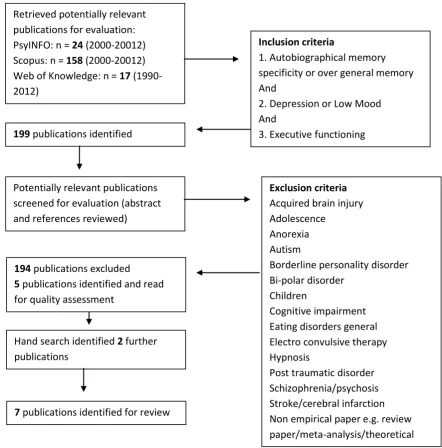
Publications used in the review were extracted from PsyINFO and Scopus (2000-20012) and Web of Knowledge (1990-2012) using the key words ‘autobiographical memory specificity’, ‘over general memory’, ‘depression’ ,‘ low mood’ and ‘executive function’. Following retrieval of potential publications the abstracts, method section and references were reviewed in order to apply the exclusion criterion. Publications were excluded if the content focused specifically on any of the following; acquired brain injury, adolescence , anorexia , autism, borderline personality disorders, bi-polar disorder, children, cognitive impairment, eating disorders general, electro convulsive therapy, hypnosis, post traumatic disorder, schizophrenia/psychosis or stroke/cerebral infarction. The author was not blind to author name, journal or institution. The review also excluded non empirical papers such as review papers, meta analyses and theoretical papers. Figure 1 demonstrates the search strategy used to select publications for the review.
Quality assessment
Studies selected based on the above methods and criteria were evaluated for
20 in this area of research in the future due to the theoretical rather than applied nature of the
research. This type of research attracts funding from an educational viewpoint but does not attract the level of funding required to conduct RCT’s. Studies that represented a sound experimental design with the use of high degree of study controls, lengthy efforts to reduce extraneous variables and reliable and valid measures were deemed to be of good quality. Studies were further quality assessed by using the criterion developed by Kmet, Lee and Cook (2004) for evaluating primary research papers in a variety of fields. This is a 14-item checklist which provides a replicable,
systematic and quantitative way of assessing the quality of research over a broad range of domains. It enables researchers to identify papers for systematic reviews that are of high quality representing sound empirical research. It evaluates studies based on description of objectives, study design, participant descriptive, allocation description, measure description, appropriateness of sample size and description of analytic methods, the presence of reported variance results, evidence of control for confounding variables, sufficiently reported results and finally evidence that conclusions are based on results. All the papers selected for inclusion in the current review paper met the above criterions sufficiently to be deemed of good quality.
Data synthesis
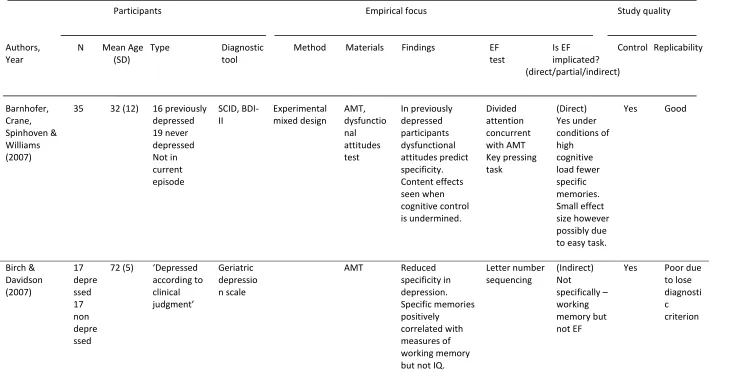
Quantitative analysis was not performed on the effect sizes in the publications due to the heterogeneity of the study population however systematic methods were applied to the identified papers. The information was synthesised and is presented in table 1.
Data identification
21 Retrieved potentially relevant
publications for evaluation: PsyINFO: n = 24 (2000-20012) Scopus: n = 158 (2000-20012) Web of Knowledge: n = 17 (1990-2012)
Inclusion criteria
1. Autobiographical memory specificity or over general memory And
2. Depression or Low Mood And
3. Executive functioning
199 publications identified
Potentially relevant publications screened for evaluation (abstract and references reviewed)
Exclusion criteria
Acquired brain injury Adolescence
Anorexia Autism
Borderline personality disorder Bi-polar disorder
Children
Cognitive impairment Eating disorders general Electro convulsive therapy Hypnosis
Post traumatic disorder Schizophrenia/psychosis Stroke/cerebral infarction Non empirical paper e.g. review paper/meta-analysis/theoretical
194 publications excluded
5 publications identified and read for quality assessment
Hand search identified 2 further publications
7 publications identified for review
[image:26.595.87.530.226.675.2]which studies 2, 3 and 7 were relevant to AMS, depression and EF thus these studies are reported separately in the review. A further two papers were identified via hand search of related and relevant papers: Birch and Davidson; 2007, Holland, Ridout, Walford and Geraghty; 2012. Thus nine studies were systematically reviewed.
22 Results
Participants
Across all studies there were 421 participants in total, including controls. Participant numbers ranged from 23-159. In four of the studies participants were recruited from non-clinical samples, three studies used participants described as previously depressed, one with participants ‘depressed according to clinical judgment’ and one with participants who met the criterion for MDD. The SCID was used as a diagnostic tool in three studies, the other six studies used measures to indicate mood rather than for diagnostic purpose. The BDI was used in six studies; the HRSD was used in one study, the geriatric depression scale used in one study and the HADS used in one study. Six studies used just one mood indicator, three studies used two or more tools.
Empirical focus
All studies adopted an experimental methodology with a range of within/between factors. Eight studies used the AMT as a primary outcome measure to measure specificity. One study (Yamamoto & Shimada, 2012) used the Ray auditory and verbal learning task and its empirical focus was overall memory performance not autobiographical memory. It was included however due to its empirical focus on mood, memory and executive functioning.
General findings
See Table 1 for a summary of the main findings. Barnhofer, Crane, Spinhoven and Williams (2007) reported that in previously depressed participants specificity of autobiographical memory could be predicted by dysfunctional attitudes related to need for approval and performance evaluation (see also Beck 1967, 1976). They also discovered that the content of the material used was particularly relevant when cognitive control was undermined.
23 Conversely, in a non-clinical sample, Dalgleish et al. (2007, study 2) found that specificity was not correlated with any of the measures of executive control used in their study. However in study 3 they discovered that on a different test of executive functioning (number generation task) specificity was reduced. Study 7 in the Dalgleish et al. paper reported an association between reduced
specificity and depressed mood particularly under conditions of high cognitive load, measured via a digit span recall task.
Holland, Ridout, Walford and Geraghty (2012) found that for neutral cues (not positive or negative) younger adults recall more specific memories than older adults. They also identified a tendency for older adults to focus more on positive material that was not influenced by age related variance in executive functioning.
Raes et al. (2006) identified a relationship between poor working memory/central executive functioning and source memory and concluded that rumination was related to both. They also highlight the link between voluntary retrieval of specific memories and central executive processes.
Spinhoven, Bockting, Schene, Koeter,Wekking and Williams (2006) replicated previous studies that have identified reduced specificity of autobiographical memories in participants with a history of depression. They argue that this provides support for the presence of a global cognitive impairment, but one which does not necessarily lead to future vulnerabilities. However, given that relapse rates are so high it could be a factor.
The final study by Yamamoto and Shimada (2012) did not specifically address
autobiographical memory, however linked impairment on both general memory tests to previous history of depression.
Role of executive functioning
24 (WAIS-III), Stroop colour-word task, trail making test (D-KEFS), task management, planning and monitoring (BADS).
Five studies concluded that executive functioning is implicated in the study findings, two an indirect relationship and two a partial relationship. Barnhofer, Crane, Spinhoven and Williams (2007) conclude that under conditions of high cognitive load participants recall fewer specific memories. In addition, in previously depressed participants when cognitive control was undermined dysfunctional attitudes predicted specificity. Dalgleish et al. (2007) study 3 also found that executive functioning was related to reduced specificity of autobiographical memory in a non-depressed non clinical population. Study 7 by Dalgleish et al. reported that increasing cognitive load was associated with fewer specific memories. Although the study was conducted with a non-clinical sample mood was assessed and a relationship discovered between mood and increasing cognitive load which further added to reduced specificity. Raes et al. also discovered a relationship between poor executive functioning and reduced specificity of autobiographical memory. This was with a sample who met the criterion for MDD, however they did not use a comparison control group so it is difficult to ascertain the specific role of depression. Yamamoto and Shimada (2012) concluded that in participants previously diagnosed with a MDE, this experience may have a persistent negative influence on a range of cognitive functions including executive functioning.
26 Table 1. Summary of studies investigating autobiographical memory specificity in depression and executive functioning
Participants Empirical focus Study quality
Authors, N Mean Age Type Diagnostic Method Materials Findings EF Is EF Control Replicability
Year (SD) tool test implicated?
(direct/partial/indirect) Barnhofer, Crane, Spinhoven & Williams (2007)
35 32 (12) 16 previously depressed 19 never depressed Not in current episode SCID, BDI-II Experimental mixed design AMT, dysfunctio nal attitudes test In previously depressed participants dysfunctional attitudes predict specificity. Content effects seen when cognitive control is undermined. Divided attention concurrent with AMT Key pressing task (Direct) Yes under conditions of high cognitive load fewer specific memories. Small effect size however possibly due to easy task.
Yes Good
Birch & Davidson (2007) 17 depre ssed 17 non depre ssed
72 (5) ‘Depressed according to clinical judgment’ Geriatric depressio n scale
AMT Reduced specificity in depression. Specific memories positively correlated with measures of working memory but not IQ.
Letter number sequencing (Indirect) Not specifically – working memory but not EF
27 Dalgleish et
al. (2007) Study 2
24 40 (9) Non depressed
BDI Experimental within participant
AMT AMS did not correlate with any of the measure of executive control Verbal fluency, design fluency, block design test, Porteus maze test (Partial) Error rate implicates executive functioning
No good
Dalgleish et al. (2007) Study 3
24 35(11) Non depressed
BDI Experimental within participant
AMT Reduced specificity was associated with more errors on the number task.
Number generation task (Direct) Breakdown in inhibition on EF task related to reduced specificity
No Good
Dalgleish et al. (2007) Study 7
23 34(14) Non clinical sample self reported mood
BDI Experimental within participant
AMT Depressed mood related to reduced specificity particularly under conditions of high cognitive load. WAIS-III digit span (Direct) Increasing cognitive load led participants to produce fewer specific autographical memories.
28 Holland, Ridout, Walford & Geraghty (2012) 25 young adults 21 older adults 21 (5) 70 (11) Non clinical sample
HADS Experimental between participant
AMT Younger adults retrieved more specific memories than older adults for neutral cues only. Emotional processing of positive material is not influenced by age-related variance in executive control. Random number generation task (Indirect) Younger adults performed better on the NGT and produced more specific memories. Implies age rather than EF directly. Yes But not mood No
Raes at al. (2006)
26 39 (10) Meet criterion for MDD
SCID, HRSD
Experimental AMT (extended)
Reduced
specificity related to poor working memory (central executive functioning) and poor source memory. Rumination also related to both.
Forward digit span & letter-number sequencing (from WAIS-III), verbal fluency, auditory verbal learning (Direct) Fewer specific memories related to poor executive functioning
No Good
Spinhoven, Bockting, Schene, Koeter,Wekki ng & Williams (2006). 122 MDD 37 contr ol
44 (9) Have met criterion for MDD, 2 episodes in last 5 years but not currently in episode SCID-I, MINI, HRSD, BDI, Experimental between participant plus longitudinal pre-post therapy analysis
AMT Reduced specificity in previously depressed participants. Also associated with age and education. Suggest it may reflect a global cognitive impairment but not a future vulnerability. Stroop colour-word task, digit span. (Partial) No correlation between stroop task and specificity
29 Yamamoto &
Shimada (2012)
50 22 (5) 17 previously diagnosed with MDE, not currently in episode
BDI-II Ray
auditory verbal learning task (vernal learning and memory) Not specifically autobiogra phical memory Previously depressed participant impaired on memory tasks generally, specifically divided attention but not tests of executive functioning. No finding in relation to autobiographical memory specificity. Verbal fluency test trail making test, task management, planning and monitoring from BADS. (Indirect) Experiencing MDE may have a persistent negative influence of cognitive functions such as divided attention which requires executive functioning.
30 Discussion
The current review aimed to investigate: 1) whether and how executive functioning is implicated in the often reported finding of reduced specificity of autobiographical memory in depression, 2) explanations offered for the relationship, 3) implications for psychological
assessment, formulation, interventions in reducing future vulnerability to depressive episodes, and 4) implications for future research. To explore these points, nine studies were identified and selected for inclusion. This is a relatively small number of studies. The number would have been vastly larger if the focus was on the broader topic of autobiographical memory specificity. There has been a huge increase in the investigation of cognitive processes involved in memory and in particular autobiographical memory. However the scope of the review was to explore the relationship
between executive functioning and the production of specific autobiographical memories which led to a much smaller number of papers fulfilling the inclusion criteria.
The literature reviewed demonstrated a relationship between executive functioning and autobiographical memory specificity in several ways. Five of the studies concluded that executive functioning was directly implicated, two indirectly and partial links were found in two others.
Barnhofer et al. discovered that reducing executive capacity by introducing a secondary task increases retrieval failures. They argue that executive capacity affects autobiographical memory specificity via two mechanisms. Firstly reducing executive capacity undermines general performance leading to increased random error. In addition the impact of interference leads to latent
vulnerability factors such as dysfunctional attitudes influencing memory retrieval. They claim that dysfunctional attitudes that influence depressed mood lead individuals to interpret their own autobiographical memories as more self-discrepant. In order to maintain self-coherence therefore individuals with a depressive thinking style produce more thematically related and general
31 content effects such as mood congruence. This explanation is consistent with Dalgleish et al. (2007). They summarise that cognitive control plays an important role in the characteristic memory deficits often seen in depression in that reduced executive functioning may interact with schemata. They also argue that this may be implicated in the maintenance and reoccurrence of depressed mood. It is important to note however that participants in the Barnhofer et al. study were not in a current mood episode but had been previously depressed. This may indicate a link with relapse.
Birch and Davisson (2007) concluded that greater working memory capacity led to increased specificity of autobiographical memory. However they also discuss decreased working memory capacity does not fully account for reduced specificity. They argue that there may be other factors that are under more conscious awareness such as efforts to avoid material that is distressing to them that may account for a degree of specificity. A great limitation of the study was the lack of formal diagnosis of participants so all conclusions about the relationships with depression must be made with this consideration.
32 2004). In this explanation, participants may have unsuccessful attempts at controlled processing so learn to adopt automatic processing in cognitively difficult tasks which leads to over general memories. Again, specific memories are not inaccessible however a protective cognitive strategy is adopted based on prior learning which leads to reduced specificity. Clinically, if executive functioning of clients is compromised, their ability to engage in therapies such as cognitive behavioural therapy may be compromised. This is not a counter indication for CBT, however clinicians need to be aware that clients may have deficits in this area and make allowances accordingly. For example clinicians can decrease the cognitive load of tasks by providing clear step by step instructions, not overloading clients with information, and being repetitive, pacing the intervention appropriately, reviewing regularly, summarising the sessions for the client and asking for feedback. In addition, psycho education about the relationships between mood and executive functioning would be useful in enabling clients to understand the processes occurring and the effect it can have on their mood.
Dalgleish et al. discuss the reasons why depression might lead to lowered executive functioning in the first place. They suggest that task irrelevant thoughts and ruminative processes interfere with controlled attention. Watkins and Teasdale’s 2001 study demonstrating that experimentally manipulated rumination can lead to reduced specificity supports this proposal.
Holland, Ridout, Walford and Geraghty (2012) conclude that there are age related differences in autobiographical specificity. That is, they found that younger adults were able to produce more specific autobiographical memories than older adults. This was also related to decreased executive functioning. However they found that this effect was not present for positive material in older adults, thus they concluded that emotional processing may act as a buffer against the detrimental effects of poor executive functioning on autobiographical memory specificity.
33 memory. This indicates that over-general autobiographical memory is not merely a linear
relationship related to depression but that executive functioning is an important issue to factor into the relationship. As with Dalgleish et al. they propose that rumination may be an influencing factor (Rampone, Barnard & Nimmo-Smith 2004). They argue that the verbally based thinking style in rumination leads to disruption to a search hierarchy leading to the memory search being blocked at an intermediate stage before specific memories are retrieved. Correlation analysis of the data was performed however so interpretation must be done in terms of a relationships rather than assuming causality. This is consistent with the CaRAFAX model (Williams, 2006).
The Spinhoven et al. (2006) study afforded the opportunity to study autobiographical memory specificity in a population of participants who had previously been depressed but were not currently in episode. This means that cognitive processes can be investigated without concurrent symptomatology. They discovered that between episodes reduced specificity could also be identified in previously depressed participants. They claim therefore that reduced specificity is not specific to a depressed state and is a characteristic of remission too. They also demonstrated that age and education were important factors in autobiographical memory specificity thus highlighting the importance of matching controls on these facts when conducting empirical research. When age and education were accounted for they still identified a relationship between executive functioning deficit and reduced specificity of autobiographical memory. While Spinhoven et al. did find correlations between autobiographical memory specificity and tests of immediate and delayed recall, they did not discover any positive associations between specificity and the Stroop task or the digit span forwards/backwards tasks. This suggests that more in-depth studies are necessary
investigating different parameters of executive functioning with other tests, and in particular its role in relapse.
34 functioning and the period of remission following a major depressive episode. They discovered that of the range of assessments used, deficits in tests of divided attention were more marked in previously depressed participants compared to controls. This effect was seen even after age, medication status and mood characteristics were accounted for. Tests of divided attention require higher order cognitive functions to be engaged and may explain some of the difficulties in organising and planning everyday life that people with a history of depression can experience. Somewhat contradictorily to previous research Yamamoto and Shimada found no differences in tests
specifically tapping executive functioning, although tests of divided attention do require executive functioning. They explain this contradictory finding in terms of age differences between their clinical sample and comparable studies as their participants were much younger. One major limitation of this study is the lack of information on education of participants as previous studies have
demonstrated the importance of intelligence on higher level cognitive functions such as executive functioning.
Although not investigating autobiographical memory specificity, Castaneda et al. (2008) discovered that a sample of young adults diagnosed with depression were only mildly impaired on a verbal learning task (the California Verbal Learning Test, or CVLT; Delis, Kramer, Kaplan, & Ober, 1987). They concluded that the earlier the age of onset of depression, the higher the level of
cognitive impairment. Importantly, it may not be the age of onset that is the key. Rather, it may be the length of time the individual has been depressed for.
Implications for practice/therapy
35 The findings of the Barnhofer et al. (2007) study indicate that reduced executive control may be implicated in the maintenance and reoccurrence of depression. Thus they argue that
interventions should focus not only on challenging dysfunctional attitudes but also on increasing executive capacities and educating individuals about how lapses of executive control may lead to cognitive patterns and schemata that lead to over generalisation which in turn can maintain
depressive thinking styles. Psychoeducation about the impact of depressive thinking style therefore can help clients understand some of the factors maintaining low mood.
Dalgleish et al. (2007) explain further that executive functioning may interact with
depressive schemata. Therefore interventions should encourage clients to reduce distractions that would increase cognitive load when completing tasks. In addition identifying the depressive schemata and understanding that when cognitive load is compromised this might lead to over general accounts can help clients to begin to spot when they might be vulnerable. In addition, Dalgleish et al. discuss how clients with a diagnosis of depression may have difficult in inhibiting distracting information due to reduced executive functioning further evidence for the beneficial effects of reducing distractions and providing practical ways to lessen cognitive load.
Holland et al. (2012) suggest that interventions that focus on encouraging older adults to engage in greater emotional processing may be beneficial in depressed mood. In addition they highlight the importance of the valence of the material. Clients can be provided with information about mood congruence; the potential vulnerability for people with low mood to process negative information differently from participants without low mood and the role this plays in maintaining depression.
36 depressed individuals but also for those with a history of it in order to attempt to minimise future episodes.
Yamamota and Shimada (2012) suggest that using measures of executive functioning as part of a full assessment may be a useful tool to evaluate cognitive impairment and vulnerability to future depressive episodes. As with other studies, they suggest that conversely using strategies to develop cognitive and executive functioning may serve as a useful intervention in depressed mood. The finding of difficulties in tests of divided attention in previously depressed participants
(Yamamoto & Shimada, 2012) has implication on therapies such as meta-cognitive therapy (Wells and Matthews, 1994) as deficiencies in higher level cognitive processes will impact on clients ability to engage in metacognition.
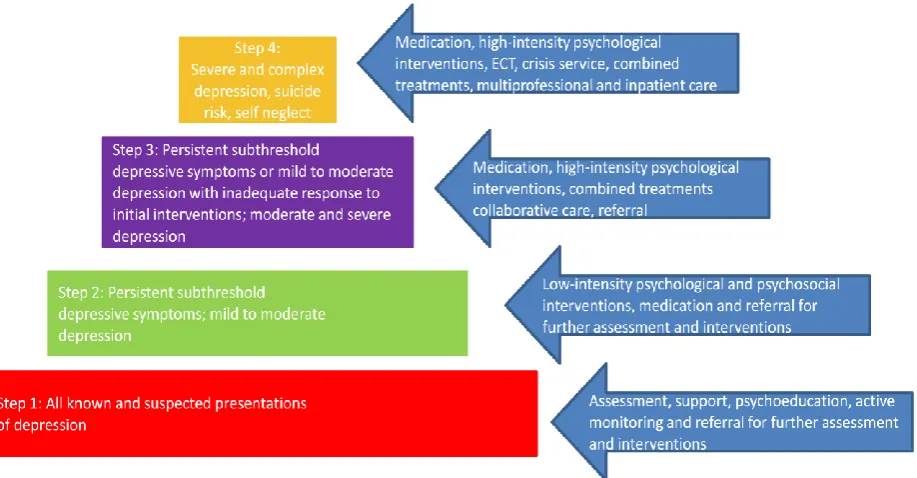
[image:41.595.81.540.527.766.2]There are specific examples of how this body of literature can contribute to the implementation of specific therapy modalities for clinical psychologists. In the UK the National Health Service works within a stepped model of care providing National Institute of Clinical Excellence (NICE) recommended services and interventions. See figure 2 for the stepped model of care pathway for depression
37 As can be seen in figure 2 the first step in addressing depressive symptoms is assessment. Based on the literature reviewed in this paper, there is good evidence to suggest that executive functioning could be an extra assessment tool within the depression battery. This would provide rich information about people’s capacity to encode information and an indicator of their general level of cognitive functioning. In addition as tests for executive functioning do not specifically address symptomatology it could be a more subtle and implicit way to measure broader difficulties related to depression. This would also provide information about the level at which to pitch
psychoeducation at step 1, particularly if executive functioning has been compromised, and how to pace low intensity interventions at step 2. For example clients may not remember the details of information provided about sleep hygiene therefore step by step instruction on how to create better conditions for sleep would be sufficient to reduced cognitive load (Espie, 2006). Low intensity CBT (individual, group and computerised) can also be provided in a way which reduces cognitive load and can provide information about a) the potential effects of depression on cognitive functioning and b) the specificity of memory recall and how it may act as a vulnerability factor for future episodes. Physical activity programmes provided at step 2 can also benefit from knowledge surrounding the potential effects of depression on cognitive functioning and break instructions down into more simple steps. Small successes can begin to improve mood, however as inability to follow instructions can also feed negative maintenance cycles thus maximising the chance of success can have a very positive effect on depression (Carr & McNulty, 2010). Severity of depression appears to be related to decreased executive functioning (Burt, Zembar & Niederehe, 1995). Thus as clients move up the stepped care model, clinicians need to be more vigilant to the effects of reduced executive
functioning.
38 therefore is to allow clients to monitor their mood changes and link these mood shifts to situations and automatic thoughts activated by the situation. Clients can then develop more realistic and positive appraisals of events and check the validity and reality of their negative automatic thoughts and schema. Over time this process enables mood to lift and for clients to see themselves as worthy worthwhile individuals in control of their own mood state. Various strategies are utilised in order for clients to get to this place, where they have mastery over their low mood. All of these strategies can benefit from the knowledge of the link between executive functioning and mood as all the
homework and activities in CBT (scheduling pleasant events, cognitive restructuring, self-monitoring, modifying negative cognitions, etc) require focused attention and higher order cognitive processing. If cognitive functioning is impaired then ability to engage in these activities will be compromised. Again, clear descriptive instructions that increase the level of processing for clients will help to counter effects of reduced functioning and allow clients to engage with the material that will help to break their depressive maintenance cycles and lift their mood. In addition, information to clients about the vulnerability to produce over-general memories can help protect against the effects of this.
IPT is the most validated form of psychodynamic therapy (Weissman, Markowitz & Klerman, 2000) and is based on the work of Sullivan (1953). The theory recognises that there are a range of different factors that lead to depression, but argue that interpersonal difficulties are central in the development and maintenance of low mood. The theory argues that relational issues are related to depression due to four interpersonal difficulties, grief, role disputes, role transition and
interpersonal deficits. In order to address these problem areas strategies such as exploratory
techniques, clarification, communication analysis, use of the therapeutic relationships, techniques to change behaviour and encouraging effect are used. As with the strategies employed in CBT,
39 techniques made. At steps 3 and 4, psychologists offer high-intensity psychological interventions which can benefit in all the same ways as above.
Third wave therapies (see Haynes, 2004) such as mindfulness based CBT (MBCBT) and compassion based therapies (Gilbert, 2010) can also benefit from the impact of executive functioning on depression. MBCBT is derivative of Jon Kabat-Zinn’s mindfulness based stress reduction programme (1990, 1994, 1998) developed by Segal, Williams and Teasdale (2003). The goal in MBCBT is for clients to become aware of their negative thoughts and feelings in order to develop ways of responding to these thoughts and feelings and to disentangle these thoughts from ruminative depressive processing (Teasdale et al, 2000). In CBT the focus is on changing negative thought processes, however in MBCBT the goal is to change the relationship to, and awareness of the content of these thoughts. Mindfulness practices are the main tool by which clients are taught to become more aware of their thought processes and feelings and to then view them from a
40 Limitations and implications for research
It is important to emphasise that the papers discussed in the current review represent a very small selection of articles relating to executive functioning of the wider literature investigating autobiographical memory and depression. Any conclusions drawn must therefore take this into account. Due to the heterogeneity of the study population, quantitative analysis was not performed on the effect sizes of the publications used in the systematic review. If the study focus had been wider than executive functioning then there would have been scope for quantitative analysis. This should be considered for future review papers.
Dalgleish et al. point out that their comprehensive study was conducted with a subclinical population. They therefore call for research to be conducted with a wider range of mood conditions and to investigate more fully which aspects of executive functioning are more or less affected by depressed mood. In addition, there were a range of different tools used to ascertain depressive symptoms across the different studies. It will be important for researchers to come to a consensus about the most appropriate tool to use in order that research papers are not reporting findings based on inconsistent measures.
Yamamoto and Shimada (2012) discovered a contradictory finding where they were able to identify no differences in tests of executive functioning between participants with and without a history of depression. They explained this in terms of their sample being much younger than in previous studies suggesting an age/executive functioning interactions. This certainly calls for more research to be conducted with a younger sample of participants.
Summary
The current review has demonstrated that executive functioning plays an important role in the depression and reduced specificity relationship. However it is still not clear how widespread this is and how executive functioning interacts with other factors to create reduced specificity.
42 Systematic review references
Papers used to review denoted with *
APA – American Psychiatric Association (1994). Diagnostic and Statistical Manual of Mental Disorders (4th edn) (DSM–IV). Washington, DC: APA.
APA – American Psychiatric Association (2000c) Diagnostic and Statistical Manual of Mental Disorders (4th edn Text Revision) (DSM–IV-TR). Washington, DC: APA.
Austin, M, P., Mitchell, P., & Goodwin, G. M. (2001). Cognitive deficits in depression. Possible implications for functional neuropathology. British Journal of Psychiatry, 178, 200-206.
*Barnhofer, T., Crane, C., Spinhoven, P., & Williams, J. M. G. (2007). Failures to retrieve specific memories in previously depressed individuals: Random errors of content related? Behaviour research and Therapy, 45, 1859-1869.
Barret, L. S., Tugade, M. M., & Engle, R. W. (2004). Individual differences in working memory capacity and duel-process theories of the mind. Psychological Bulletin, 130(4), 553-573.
Beats, B. C., Sahakian, B. J., & Levy, R. (1996) Cognitive performance in tests sensitive to frontal lobe dysfunction in the elderly depressed. Psychological Medicine, 26, 591 -603.
Beck, A. T. (1993). Cognitive therapy: Past, present and future. Journal of counselling
and Clinical Psychology, 61, 194-198.
Beck, A. T., Rush, A. J., Shaw, B. F., & Emery, G. (1979). Cognitive therapy of depression. New York: Guilford Press.
43 Bolelen, P. A., Huntjens, R. J. C., van Deursen, D. S., & van den Hout, M. A. ( 2010).
Autobiographical memory specificity and symptoms of complicated grief, depression and posttraumatic stress disorder following loss. Journal of Behaviour Therapy & Experimental Psychiatry, 41, 331-337
Boritz, T. Z., Angus, L., Monette, G., & Hollis-Walker. (2008). An empirical analysis of
autobiographical memory specificity subtypes in brief emotion-focused and client-centred treatments of depression. Psychotherapy Research, 18, 584-593.
Bostwick, J. M., & Pankratz, V. S. (2000) Affective disorders and suicide risk: a reexamination. American Journal of Psychiatry, 157 1925–1932.
Breslau, N., Davis, G., Peterson, E., & Schultz, L. (2000). A second look at comorbidity in victims of trauma: The posttraumaticstress disorder-major depression connection. Biological Psychiatry, 48, 902-909.
Brewin, C. R. (2006). Understanding cognitive behaviour therapy; A retrieval completion account. Behaviour Research and Therapy, 44, 765-784.
Brittlebank, A. D., Scott, J., Williams, J. M. G., & Ferrier, I. N. (1993). Autobiographical memory in depression: State or trait marker? British Journal of Psychiatry, 162, 118-121.
Burt, D. B., Zembar, M. J., & Niederehe, G. (1995). Depression and memory impairment: A meta-analysis of the association, its pattern, and specificity. Psychological Bulletin, 117, 285-305.
Carr, A, & McNulty, M (2010). Depression. In A. Carr & M. McNulty (eds.), The handbook of adult clinical psychology: An evidence-based practice approach (291-325). London: Routledge.
Castaneda AE, Tuulio-Henriksson A, Marttunen M, Suvisaari J, Lönnqvist J. (2008). A review of
cognitive impairments in depressive and anxiety disorders with a focus on young adults.
44 Conway, M. A. (2005).Memory and the self. Journal of Memory and Language, 53, 594-628.
Conway, M. A., & Pleydell-Pearce. C. W. (2000). The construction of autobiographical memories in the Self-Memory System. Psychological Review, 107, 261-288.
*Dalgleish, T., Spinks, H., Yiend, J., & Kuyken, W. (2001). Autobiographical memory style in seasonal affective disorder and its relationship to future symptom remission. Journal of Abnormal Psychology, 110, 335–340.
Dalgleish, T., Tchanturia, K., Serpell, L., Hems, S., Yiend, J., de Silva, P., et al. (2003). Self-reported parental abuse relates to autobiographical memory style in patients with eating disorders. Emotion, 3, 211-222.
Dalgleish, T., Williams, J. M. G., Golden, A. J., Perkins, N., Fieldman-Barret, L., Barnard, P. J., Au Yeung, C., Murphy, V., Elward, R., Tchanturia, K., & Watkins, E. (2007). Reduced specificity of autobiographical memory and depression: The role of executive control. Journal of
Experimental Psychology: General, 136, 23-42.
Deeber, E., Hermans, D., Raes, F. (2009). Associations between components of rumination and autobiographical memory specificity as measured by a Minimal Instructions Autobiographical Memory Test. Memory, 17, 892-903.
Delis, D.C., Kramer, J.H., Kaplan, E., & Ober, B.A. (1987). The California Verbal Learning Test.
New York: The Psychological Corporation.
Ehlers A., & Clark D. M. (2000). A cognitive model of posttraumatic stress disorder. Behaviour Research and Therapy, 38, 319–345.
Elliot, R. (3003). Executive functions and their disorders. British Medical Bulletin, 65: 49-59.
45 states on memory. In J. Forgas (Ed.). Affect, cognition, and social behavior (pp. 25-43).Toronto, Ontario, Canada: Hogregfe.
Erickson, K, Drevets, W. C,. Clark, L, Cannon, D. M,. Bain, E. E, Zarate,. C. A Jr, Charney,. D. S, Sahakian,. B. J (2005). Mood-congruent bias in affective go/no-go performance of unmedicated patients with major depressive disorder. American Journal of Psychiatry 162(11):2171-3
Espie, C.A. (2006) Overcoming Insomnia: A Self-Help Guide Using Cognitive Behavioural Therapy. Robinson, London, UK. ISBN 9781845290702
Favel, M., & Kendler, K (2000). Major depressive disorder. Neuron, 28, 335-341.
Fivush, R., & Nelson, K. (2004). Culture and language in the emergence of autobiographical memory. Psychological Science, 15, 573–577.
Funahashi (2001). Neuronal mechanisms of executive control by the prefrontal cortex. Neuroscience
Research, 39: 147-65
Gilbert, P. (2010). The compassionate mind. London: Constable.
Haynes, S. C. (2004). Acceptance and commitment therapy, relational frame theory and the third wave of behavioural and cognitive therapies. Behaviour Therapies, 35, 639-665.
Hertel P. T., & Hardin T. S. (1990). Remembering with and without awareness in a depressed mood: Evidence of deficits in initiative. Journal of Experimental Psychology: General, 119, 45–59.
*Holland, C. A., Ridout, N., Walford, E., & Geraghty. (2012). Executive function and emotional focus in autobiographical memory specificity in older adults. Memory, 20(8). 779-793.
46 psychopathology. In D. Ciccchetti & D. Cohen (Eds.), Developmental psychopathology (2nd Ed.). Vol. 2: Developmental neuroscience (pp. 629-655). New York: Wiley.
Kabat-Zinn, J. (1990). Full Catastrophe Living: Using the Wisdom of Your Body and Mind to Face Stress, Pain, and Illness. New York: Bantam Dell.
Kabat-Zinn, J. (1994). Wherever you go there you are. New York: Hyperion.
Kabat-Zinn, J., Wheeler, E., Light, T., Skillings, A., Scharf, M., Cropley, T., et al. (1998). Influence of a mindfulness meditation-based stress reduction intervention on rates of skin clearing in patients with moderate to severe psoriasis undergoing phototherapy (UVB) and photochemotherapy (PUVA). Psychosomatic Medicine, 60, 625-632.
Kmet, L. M., Lee., R. C., Cook., L. S. (2004). Standard quality assessment criteria for evaluating primary research papers for a variety of fields. HTA Initiative, Alberta Heritage Foundation for Medical Research, Alberta, Canada.
Kupfer, D. J. (1991) Long-term treatment of depression. Journal of Clinical Psychiatry, 52 (Suppl. 5), 28–34.
McCrone, P., Dhanasiri, S., Patel, A., et al. (2008). Paying the Price: The Cost of Mental Health Care in England to 2026. London: King’s Fund.
Mackinger H. F., Loschin G. G., & Leibetseder M. M. (2000). Prediction of postnatal affective changes by autobiographical memories. European Psychologist, 5, 52–61.
Mitchell, A. J., & Subramaniam, H. (2005) Prognosis of depression in old age compared to middle age: a systematic review of comparative studies. American Journal of Psychiatry, 162, 1588–