Exploring future GP referral to
Fit for Work
Liverpool on behalf of the Department for Work and Pensions
© Crown copyright 2014.
You may re-use this information (not including logos) free of charge in any format or medium, under the terms of the Open Government Licence.
To view this licence, visit http://www.nationalarchives.gov.uk/doc/open-government-licence/ or write to the Information Policy Team, The National Archives, Kew, London TW9 4DU, or email: [email protected].
This document/publication is also available on our website at:
https://www.gov.uk/government/organisations/department-for-work-pensions/about/ research#research-publications
If you would like to know more about DWP research, please email: [email protected]
First published 2014.
ISBN 978 1 910219 45 4
Summary
A new Fit for Work service (FFW, previously known as Health and Work Service) will be established in 2014 to provide health and work advice and support for employees, employers and General Practitioners (GPs) to help people with a health condition to stay in or return to work. The aim of this study was to provide an estimate of the likely rate of referral by GPs to the assessment element of the new service, and identify the factors affecting referrals. One of the main ways in which employees will be able to contact the new service is by being referred by their GP. The research is based on data collected from fit notes issued by GPs in a selection of practices between the end of October 2013 and the end of January 2014, supplemented by additional information collected from the GPs involved.
The GPs in this study generally had a positive approach to the health benefits associated with working, in line with previous research. They were also broadly supportive of the new service. It is estimated that GPs are likely to refer 36 per cent of their eligible patients (ie patients absent, or at risk of an absence, from work for four weeks or more) to the new service. Depending on estimates for the size of the eligible population in England and Wales this proportion would generate a potential 310,000 to 450,000 referrals a year.
However, the proportion of referrals varied considerably between practices (from 11 per cent to 72 per cent) and GPs did not consider all their nominally eligible1 patients to be suitable for the service. GPs will be able to exercise their clinical judgement in deciding whether to refer to the service because some patients may meet the eligibility criteria of the service but have a condition that means a referral would not be appropriate at that time. Also, although they were briefed on the criteria, GPs appeared to have interpreted eligibility for the new service in different ways. Across the sample as a whole only 63 per cent of all nominally eligible patients were deemed suitable for referral by GPs. GPs then said they would refer only a proportion of those whom they had deemed suitable (54 per cent). Conversely, they wanted to refer some non-eligible (e.g. unemployed) patients. Again there was considerable variation between practices.
GPs were more likely to say they would make a referral for patients with a mental health or musculoskeletal health problem and for patients with longer fit notes. The referral rates of GPs with a positive attitude to health and work were higher than those with a less positive attitude. GPs also reported that they would be more likely to refer patients to the new service if it was open to a wide range of patients, e.g. not just employed people, and if they had a good understanding of what the service offered and evidence that it would be beneficial. GPs would be generally less likely to make referrals where they thought the level of service was poor and, for example, the service was not easily accessible or the referral process was too complicated and/or they felt the type of service provided would not help their patient. GPs were less likely to refer patients who had a clear recovery path and were likely to return to work in due course ‘under their own steam’, patients with a low motivation to return to work, and patients who were already receiving help from their employers’ occupational health service.
Contents
Acknowledgements ... 6
The Authors ... 7
List of abbreviations... 8
Executive summary ... 9
1 Introduction ... 13
1.1 Method ... 13
1.1.1 Participating practices ... 14
1.1.2 Fit note level data... 15
1.1.3 Patient-level data ... 16
1.1.4 GP on-line survey ... 20
2 Referrals to FFW ... 21
2.1 Non-employed referrals ... 23
2.2 Patient diagnoses and potential referral to FFW ... 23
2.3 Other factors associated with the likelihood of referral ... 24
3 Factors affecting referrals ... 25
3.1 Reasons for making a referral ... 25
3.2 Reasons for not making a referral ... 26
3.3 GPs views of health and work and the new service ... 26
3.4 Factors affecting referral rates ... 28
3.4.1 Factors affecting GPs’ inclination to refer a patient to the service ... 28
3.4.2 Factors affecting GPs’ inclination not to refer a patient to the service .... 30
3.4.3 What would encourage eligible patients to take up the service ... 31
3.5 Predictors of referral to FFW ... 32
4 Estimating the level of referrals to FFW ... 33
4.1 Eligible population ... 33
4.2 Referral rate ... 35
5 Conclusions ... 37
Appendix A GP briefing ... 38
Appendix B GP online survey ... 40
Appendix C Factors associated with the likelihood of being referred to FFW ...44
Appendix D GP’s attitudes to health and work... 45
List of tables
Table 1.1 Sample of participating practices ... 14Table 1.2 Comparison of practices in present study and the previous fit note evaluation ... 15
Table 1.3 Comparison of fit note data in present and previous fit note studies ... 16
Table 1.4 Characteristics of patients receiving one or more fit notes in the data collection period ... 17
Table 1.5 Comparison of patient group in present study and previous fit note evaluation ... 19
Table 2.1 Indicative referrals to FFW by GPs ... 22
Table 2.2 Categories of main patient health problem, length of certified sickness, employment status and potential eligibility and referral to FFW ... 24
Table 3.1 Reasons for referring employed patients with certified sickness of three weeks or more, considered suitable by GP... 25
Table 3.2 Reasons for NOT referring employed patients with certified sickness of three weeks or more, considered eligible by GP ... 26
Table 3.3 GPs’ attitudes to health and work ... 27
Table 3.4 GPs’ attitudes to FFW ... 27
Table 3.5 Factors taken into account when potentially referring eligible patients to the new service. ... 28
Table 4.1 Estimate of number of fit note recipients (England and Wales) ... 34
Table 4.2 Eligible FFW service population, based on fit notes of three weeks or more (England and Wales) ... 34
Table 4.3 Potential number of referrals to FFW England and Wales ... 35
Acknowledgements
This research was commissioned by the Department for Work and Pensions (DWP) and the authors are extremely grateful for the helpful comments and support they received from Maxine Willitts, Julia Oliveira and their colleagues in the Health, Disability and Employment Directorate at the DWP.
The Authors
Jim Hillage is Director of Research at the Institute for Employment Studies.
Gill Brown is a Research Administrator at the Institute for Employment Studies.
Chris Shiels is a Researcher at the Division of Health Services Research at the University of Liverpool.
List of abbreviations
DWP Department for Work and PensionsFFW Fit for Work
GP General Practitioner
LFS Labour Force Survey
Executive summary
As part of its response to the Sickness Absence Review2, the Government announced the establishment of a new Health and Work Service, now known as Fit for Work (FFW), to provide health and work advice and support for employees, employers and General Practitioners (GPs) to help people with a health condition to stay in or return to work. The FFW will be introduced in late 2014 and will offer two services: advice and assessment, the latter being aimed at employees who have reached, or are expected to reach, four weeks of sickness absence. The intention is that employees would consent to a referral by their GP for an assessment by an occupational health professional, who would look at all the issues preventing the employee from returning to work and draw up a return to work plan.
The aim of this study was to provide an estimate of the likely proportion of eligible employees that GPs would refer to FFW for assessment, to inform the project’s communication and engagement activity, identify the type of patients that GPs were most likely to refer and the factors affecting variation in GPs’ willingness to refer employees.
Method
A selection of GP practices involved in a previous study of fit notes3 and which still issued paper-based sickness certificates were invited to take part in the study and those that agreed were given adapted fit note pads which included:
• a carbonised fit note – with the copy retained by the practice; and
• a short questionnaire attached to each fit note for the GP to complete at the end of their patient consultation with a fit note recipient. This questionnaire asked GPs whether the patient was employed, whether the GP would refer them to the new service and if so why and if not, why not.
The data were entered onto a database in the GP practices and anonymised and transferred to the research team. Thirteen practices agreed to take part, with around 72 partners and salaried GPs (plus some sessional GPs) from five different areas of Great Britain, and data were collected from 3,000 fit notes from October 2013 to January 2014. Compared with the data from the previous study the patients in the current study were more likely to be male, younger, live in a less deprived neighbourhood and have a mental health diagnosis on their fit note.
In addition, a brief on-line survey of participating GPs was also conducted asking questions about their attitudes to health and work, and to the new service. A total of 32 GPs responded (a response rate of approximately 45 per cent), with at least one response from every practice.
2 DWP (2013). Fitness for work: the Government response to ‘Health at work – an independent review of sickness absence’, London: TSO.
Main findings
Referral rates
The assessment element of FFW is designed for people who are employed, but on long-term sick leave and who are referred by their GP. However, GPs will be able to exercise their clinical judgement in deciding whether to refer to the service because some patients may meet the eligibility criteria of the service but have a condition that means a referral would not be appropriate at that time. The data collected for this study show that:
• just over 70 per cent of all the patients receiving fit notes in the sample were reported as being employed, with considerable variation in the employment rates between the practices, from 42 per cent to over 90 per cent;
• around half (53 per cent) of the employed patients (39 per cent of all patients) in the sample had a fit note lasting for three or more weeks and were therefore on long-term sickness absence and nominally eligible4 for the service (Chapter 2);
• GPssaid they would refer 36 per cent of these nominally eligible patients to the new service, varying between practices from 11 per cent to 72 per cent;
• despite being briefed on the eligibility criteria for the new service, GPs appeared to have interpreted the criteria in different ways. Across the sample as a whole only 63 per cent of all nominally eligible patients were deemed suitable for referral by GPs. GPs then said they would refer only a proportion of those they deemed suitable (54 per cent). Again, there was considerable variation between practices.
GPs also said they would (like to) refer 16 per cent of non-employed patients with a three week or longer fit note (Section 2.1). Further data from GPs indicate that this probably reflected a view among some GPs that the service should be available to unemployed as well as employed patients (Chapter 3).
There were few significant differences between those nominally eligible patients who were referred and those who were not, other than:
• patients with longer fit notes were more likely to be deemed suitable for referral and referred by GPs than those with shorter (six weeks or less) fit notes;
• patients in mid-sized practices (with more than 5,000 and under 10,000 patients) were more likely to be thought suitable and referred than those from larger or smaller practices. Nominally eligible patients with a mental health problem or a back problem or other
musculoskeletal disorder were more likely than average to be referred to the service (with referral rates of 39 per cent, 47 per cent and 44 per cent respectively). Those with below average referral rates included patients diagnosed with neoplasm (29 per cent), bone fracture (29 per cent) or in post-operative recovery (26 per cent) (Section 2.2).
4 The term ‘nominally eligible’ refers to employed patients with a three week or longer fit note.
Factors affecting referral rates
The main reasons why the GPs in the study would refer patients to the new service were that they felt their patient either needed support to cope with their health condition at work and/or were keen to return to work. GPs said they would not refer patients if they believed the patient was already receiving the support they required. Other reasons for not referring patients mainly related to the patient’s condition and whether they were already on a pathway to getting back to work (Sections 3.1 and 3.2).
GPs generally thought that work was beneficial for people’s health, but were a little less clear about whether it was their role to get people back to work and whether patients needed to have fully recovered before they recommended a return. GPs were also generally positive about the prospect of the new service. Two-thirds of GPs agreed that the new service would be helpful to their patients. Referral rates were higher among GPs with the most positive attitudes to work and health (Section 3.3).
Most GPs (59 per cent) felt that the service should be open to all patients, whether employed or not and only half said they understood why it was reserved for employed people. Also, while most (62 per cent) thought it made sense to focus the service on the long-term sick, most GPs also thought the service should be open to all patients, not just those at risk of a long-term sickness absence. A significant proportion of GPs (44 per cent) were unsure whether patients would need the service if they had access to an occupational health service through their work.
The key factors affecting GPs’ propensity to refer a patient to the new service included: • service-level factors – to do with the nature or level of service, including whether it was
open to all patients (not just the employed) and the efficiency of the referral process, length of waiting times, etc;
• patient-level factors – including, the nature of their health problem, their motivation to get back to work, and whether the support they were already receiving was thought to be sufficient (Section 3.4).
Detailed analysis of the fit note data indicated that patients with a mental health or any musculoskeletal diagnosis were more likely than average to be referred. Also, referral rates rose with the number of fit notes patients received, suggesting that GPs were more likely to refer patients the longer they were absent from work (Section 3.5).
In the on-line survey, and in comments on the fit note questionnaire, GPs indicated that the factors affecting a patient’s inclination to take up the service included the ease by which they could access the service and the quality of the service they received, their awareness of the benefits the service could offer and the trust they had in the service to look after their interests (Section 3.4.3).
GPs also said they were more likely to make referrals if they had a good understanding of what the service offered and had evidence that it would be beneficial.
Estimating levels of referrals
The number of patients accessing the new service will depend on:
• the referral rate – ie the proportion of the eligible population who are referred to the service by their GP;
• the attendance rate – ie the proportion of patients referred who agree to attend the service, or at least an initial assessment.
There are no confirmed data on the number of long-term sickness absentees nominally eligible for the service. Rough estimates can be made from either the number of people who are certified sick who are employed, or, vice versa, the number of employees who are absent from work due to ill-health. Based on data from the present and previous fit note study there is an estimated 1,260,000 people in England and Wales who meet the criteria of being employed and on a four-week period of absence (ie those with a fit note for three weeks or more) in any one year. An alternative estimate using data from the Labour Force Survey (LFS)5 indicates that there are around 865,000 absences from work lasting four weeks or more due to sickness or ill-health a year in England and Wales (Chapter 4).
This study estimates that GPs would refer around 36 per cent of nominally eligible patients therefore, depending on which population estimate is used, suggesting a volume of referral by GPs of between 310,000 and 450,000 (Chapter 4).
The study also suggests that referral rates may be lower in the early years of the service as GPs and patients build up their knowledge of, and confidence in, what the service can offer. Findings from the study could be used to help the design and marketing of the new service at local or national level. They underline the need to have clearly understood and accepted eligibility criteria, a clear specification of the services on offer, an easily accessible service with high service standards and available evidence of the benefits that patients could enjoy from using the service (Chapter 5).
1 Introduction
Although the rate of sickness absence has fallen in recent years, 131 million days were lost due to sickness absences in the United Kingdom (UK) in 20136. In 2010 the Government asked Dame Carol Black and David Frost CBE to carry out an independent review of sickness absence, which reported in 20117. As part of its response8 to the review, the Government announced the establishment of a new Health and Work Service, now known as Fit for Work (FFW), to provide health and work advice and support for employees, employers and General Practitioners (GPs) to help people with a health condition to stay in or return to work.
The new service will be introduced in late 2014 and is aimed at employees who have reached, or are expected to reach, four weeks of sickness absence. The intention is that eligible employees would normally be referred by their GP for an assessment by an occupational health professional, who will look at all the issues preventing the employee from returning to work. GPs will be able to exercise their clinical judgement in deciding whether to refer to the service because some patients may meet the eligibility criteria of the service but have a condition that means a referral would not be appropriate at that time, and attendance by patients referred would be consent based. Following the assessment, employees would receive a return to work plan with recommendations to help them to return to work more quickly and information on how to get appropriate help and advice. In addition, employers, employees, GPs and others will be able to access general health and work advice through a phone line and website.
In October 2013, the Department for Work and Pensions (DWP) commissioned the Institute for Employment Studies and the University of Liverpool to estimate the expected level of interest in the service among GPs and the likely proportion of patients that might be referred. To investigate likely referrals from GPs, the research team adopted an approach which involved collecting data from GPs at the point where they provide patients with a medical statement, known as a fit note, supplemented by an on-line survey of GPs involved with the study about their attitudes to health and work, and considerations around making referrals to FFW and its design.
In the rest of this chapter we briefly explain the approach adopted in more detail and provide background information on the data collected. The rest of the report presents our findings about the proportion of patients who would be referred to the new service by GPs and the factors that appear to influence the level of referral.
1.1 Method
The aim of the study was to provide an estimate of the likely proportion of eligible employees that GPs would refer to FFW. In addition the research aimed to identify:
• the characteristics of employees who GPs felt were eligible for referral and who would benefit from such a service, and why (or why not);
6 ONS (2014). Sickness Absence in the Labour Market, February 2014.
7 Black and Frost (2011). Health at work – an independent review of sickness absence, London: TSO.
• the point during an employee’s sickness absence at which referral to the service is likely to be made;
• the factors affecting variation in GPs’ willingness to refer employees.
A selection of GP practices involved in a previous study of fit notes and which had not moved onto the new system of issuing fit notes electronically were asked to take part in the new study9. It was not possible to collect fit note data from those practices which had adopted electronic fit notes due to technical and contractual reasons. However, in the practices still issuing paper-based notes, these were replaced by specially adapted fit notes. Adapted fit note pads were distributed to 17 practices in October 2013 which included:
• a carbonised fit note – with the copy retained by the practice; and
• a short questionnaire attached to each fit note for the GP to complete at the end of their patient consultation with a fit note recipient. This questionnaire asked GPs whether the patient was employed, whether the GP would refer them to the new service and if so why, and if not, why not.
Each GP was sent a one-page briefing about the new service (see Appendix A). Data from the fit note and the questionnaire were entered onto a spreadsheet by practice administrators, anonymised and transferred securely to the research team.
1.1.1 Participating practices
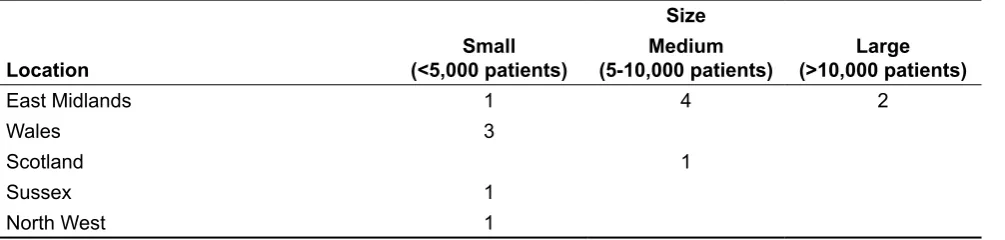
[image:14.595.52.555.548.668.2]Seventeen practices originally signed up to the study, and of these, 14 actually started collecting data. Three practices dropped out mainly due to their GPs feeling that they did not have enough time to complete the questionnaire during a 10-minute consultation. One small practice had only transferred data from 15 fit notes by the time data collection finished and this practice was excluded from the analysis. Another ceased data collection at the end of December 2013, but the data transferred (for November and December) have been included. Of the 13 fully participating practices, most were in the East Midlands (see Table 1.1).
Table 1.1 Sample of participating practices
Size
Location (<5,000 patients)Small (5-10,000 patients)Medium (>10,000 patients)Large
East Midlands 1 4 2
Wales 3
Scotland 1
Sussex 1
North West 1
Source: IES/University of Liverpool fit note/GP survey, 2014.
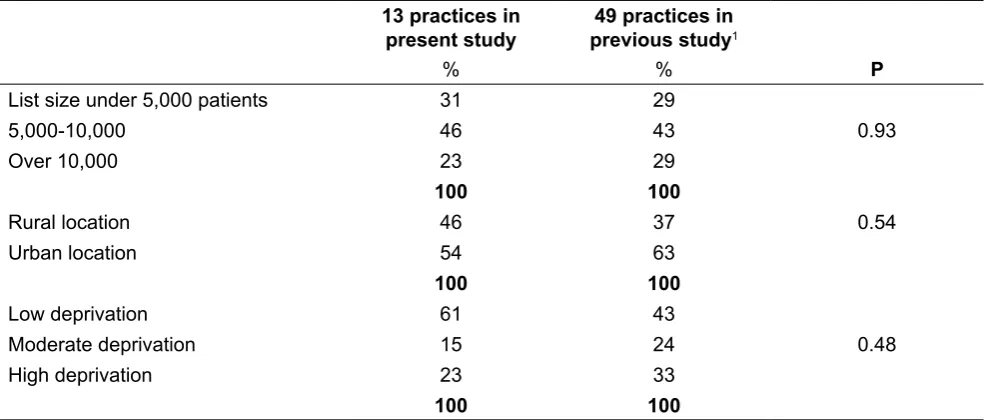
The practices involved in this study have been compared with all those in the previous study10 and the results are presented in Table 1.2. There were no significant differences in terms of size, location and deprivation status of practices, which indicates that the two samples are comparable.
Table 1.2 Comparison of practices in present study and the previous fit note evaluation
13 practices in present study
%
49 practices in previous study1
% P
List size under 5,000 patients 31 29
0.93
5,000-10,000 46 43
Over 10,000 23 29
100 100
0.54
Rural location 46 37
Urban location 54 63
100 100
Low deprivation 61 43
0.48
Moderate deprivation 15 24
High deprivation 23 33
100 100
1 Shiels, C. et al. (2013).
Source: IES/University of Liverpool fit note/GP survey, 2014.
1.1.2 Fit note level data
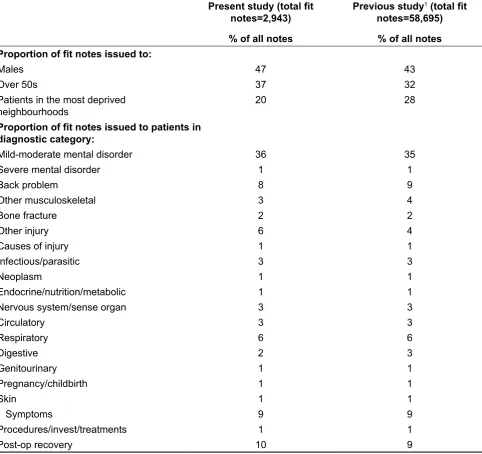
Fit note data were collected for three months, from late October/early November 2013 to the end of January 2014. When the data collection was finished we had information from almost 3,000 fit notes. A comparison between the data collected in the present study and the previous fit note study is presented in Table 1.3. It shows that the new sample of fit notes appears to have a slightly higher proportion of notes from men and from older people, and fewer notes from patients from a deprived neighbourhood than the population as a whole. However, the profile of diagnoses on fit notes looks broadly similar.
Table 1.3 Comparison of fit note data in present and previous fit note studies
Present study (total fit notes=2,943) % of all notes
Previous study1 (total fit
notes=58,695) % of all notes Proportion of fit notes issued to:
Males 47 43
Over 50s 37 32
Patients in the most deprived
neighbourhoods 20 28
Proportion of fit notes issued to patients in diagnostic category:
Mild-moderate mental disorder 36 35
Severe mental disorder 1 1
Back problem 8 9
Other musculoskeletal 3 4
Bone fracture 2 2
Other injury 6 4
Causes of injury 1 1
Infectious/parasitic 3 3
Neoplasm 1 1
Endocrine/nutrition/metabolic 1 1
Nervous system/sense organ 3 3
Circulatory 3 3
Respiratory 6 6
Digestive 2 3
Genitourinary 1 1
Pregnancy/childbirth 1 1
Skin 1 1
Symptoms 9 9
Procedures/invest/treatments 1 1
Post-op recovery 10 9
1 Shiels, C. et al. (2013).
Source: IES/University of Liverpool fit note/GP survey, 2014.
1.1.3 Patient-level data
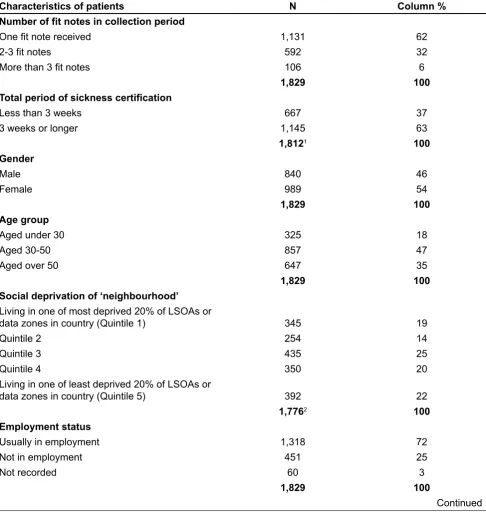
The fit note data comes from 1,829 separate patients (Table 1.4). Sixty-two per cent of patients received only one fit note in the collection period and 63 per cent had a period of sickness certification totalling three weeks or more.
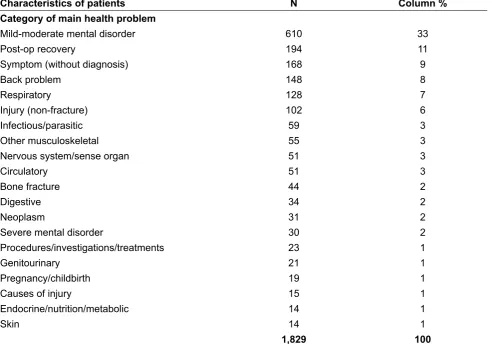
One-third of patients had a mild to moderate mental health disorder (usually depression, anxiety or stress) recorded as the main health problem leading to their sickness certification. Eleven per cent of patients presented with a back-related or other musculoskeletal problem, with a similar proportion being issued with a fit note(s) to assist with recovery from a recent surgical operation.
Table 1.4 Characteristics of patients receiving one or more fit notes in the data collection period
Characteristics of patients N Column % Number of fit notes in collection period
One fit note received 1,131 62
2-3 fit notes 592 32
More than 3 fit notes 106 6
1,829 100 Total period of sickness certification
Less than 3 weeks 667 37
3 weeks or longer 1,145 63
1,8121 100
Gender
Male 840 46
Female 989 54
1,829 100 Age group
Aged under 30 325 18
Aged 30-50 857 47
Aged over 50 647 35
1,829 100 Social deprivation of ‘neighbourhood’
Living in one of most deprived 20% of LSOAs or
data zones in country (Quintile 1) 345 19
Quintile 2 254 14
Quintile 3 435 25
Quintile 4 350 20
Living in one of least deprived 20% of LSOAs or
data zones in country (Quintile 5) 392 22
1,7762 100
Employment status
Usually in employment 1,318 72
Not in employment 451 25
Not recorded 60 3
1,829 100
Table 1.4 Continued
Characteristics of patients N Column % Category of main health problem
Mild-moderate mental disorder 610 33
Post-op recovery 194 11
Symptom (without diagnosis) 168 9
Back problem 148 8
Respiratory 128 7
Injury (non-fracture) 102 6
Infectious/parasitic 59 3
Other musculoskeletal 55 3
Nervous system/sense organ 51 3
Circulatory 51 3
Bone fracture 44 2
Digestive 34 2
Neoplasm 31 2
Severe mental disorder 30 2
Procedures/investigations/treatments 23 1
Genitourinary 21 1
Pregnancy/childbirth 19 1
Causes of injury 15 1
Endocrine/nutrition/metabolic 14 1
Skin 14 1
1,829 100
1 Period of sickness certification not computed for 17 patients. 2 Deprivation score not computed for 53 patients.
Source: IES/University of Liverpool fit note/GP survey, 2014.
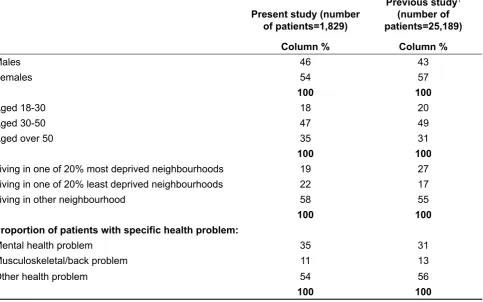
Table 1.5 Comparison of patient group in present study and previous fit note evaluation
Present study (number of patients=1,829)
Column %
Previous study1
(number of patients=25,189)
Column %
Males 46 43
Females 54 57
100 100
Aged 18-30 18 20
Aged 30-50 47 49
Aged over 50 35 31
100 100
Living in one of 20% most deprived neighbourhoods 19 27 Living in one of 20% least deprived neighbourhoods 22 17
Living in other neighbourhood 58 55
100 100 Proportion of patients with specific health problem:
Mental health problem 35 31
Musculoskeletal/back problem 11 13
Other health problem 54 56
100 100
1 Shiels, C. et al. (2013).
Source: IES/University of Liverpool fit note/GP survey, 2014.
In the rest of the report we focus on patient-level data. It will be people who will be referred to the service and constitute the potential level of demand.
Analysis of the fit note data
Each time they wrote out a fit note, GPs were asked to indicate whether the patient was employed, whether they thought the patient was suitable for referral to the service and whether they would refer them or not. The responses have been aggregated for each practice and across the sample, and analysed against other data collected from the fit note and patient records (e.g. employment status, age diagnosis).
In addition, multivariate regression analyses were conducted to identify the factors affecting a GP’s likelihood to refer a nominally eligible11 patient.
Any differences highlighted in the report are statistically significant at a 95 per cent confidence level.
1.1.4 GP on-line survey
2 Referrals to FFW
In this chapter we examine the data from the fit notes and accompanying General
Practitioner (GP) questionnaire, and estimate the proportion of fit note recipients that GPs thought they would refer to the new service.
Patients in paid employment, who have been absent from work due to sickness for a minimum period of four weeks (including one week of self-certification before the first fit note), or at risk of a four-week or longer absence will be able to be referred by GPs to the new service. Just over 70 per cent of all the patients receiving fit notes in the sample were reported as being employed.
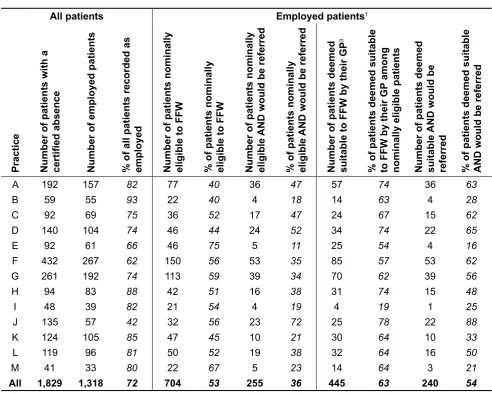
Table 2.1 is divided into three sections. The first section reports the proportion of employed patients in each of the practices in the study. It shows considerable variation in the
employment rates between the practices, from 42 per cent to over 90 per cent.
The middle section of the table shows that just over half (53 per cent) of the employed patients (39 per cent of all patients for whom there are full data) in the sample had a fit note lasting for three or more weeks and were therefore nominally eligible for the service
The middle section also shows the numbers of these nominally eligible patients that GPs said they would refer to the service and expresses this number as a percentage of the eligible total. Across all the practices, GPs said they would refer 36 per cent of their employed patients on long-term sickness absence for an assessment. Again, the variation between practices was marked – ranging from 11 per cent in Practice E to 72 per cent in Practice J. One of the reasons there was considerable differences between practices was that despite being briefed on the eligibility criteria for the new service, GPs interpreted the criteria in different ways.
Table 2.1 Indicative referrals to FFW by GPs
All patients Employed patients1
Practice Number of patients with a certified absence Number of employed patients % of all patients recorded as employed Number of patients nominally eligible to FFW % of patients nominally eligible to FFW Number of patients nominally eligible
AND would
be
refer
red
% of patients nominally eligible
AND would
be
refer
red
Number of patients deemed suitable to FFW by their GP
3
% of patients deemed suitable to FFW by their GP
among
nominally eligible patients Number of patients deemed suitable
AND would be
referred % of patients deemed suitable AND would be referred
A 192 157 82 77 40 36 47 57 74 36 63
B 59 55 93 22 40 4 18 14 63 4 28
C 92 69 75 36 52 17 47 24 67 15 62
D 140 104 74 46 44 24 52 34 74 22 65
E 92 61 66 46 75 5 11 25 54 4 16
F 432 267 62 150 56 53 35 85 57 53 62
G 261 192 74 113 59 39 34 70 62 39 56
H 94 83 88 42 51 16 38 31 74 15 48
I 48 39 82 21 54 4 19 4 19 1 25
J 135 57 42 32 56 23 72 25 78 22 88
K 124 105 85 47 45 10 21 30 64 10 33
L 119 96 81 50 52 19 38 32 64 16 50
M 41 33 80 22 67 5 23 14 64 3 21
All 1,829 1,318 72 704 53 255 36 445 63 240 54
Notes:
1 Total certified sickness not calculated for 17 patients. 1,812 included in analysis.
2 Patients nominally eligible are: employed patients with total certified sickness of three weeks or
more.
3 Patients deemed suitable are: nominally eligible (i.e. employed patients with total certified
sickness of three weeks or more) AND deemed suitable for referral by their GP as a result of their interpretation of the eligibility criteria.
Source: IES/University of Liverpool fit note/GP survey, 2014.
The differences between those nominally eligible patients who were referred for an assessment and those who were not have been analysed and no statistically significant differences emerged other than:
• patients with longer fit notes were more likely to be deemed suitable for referral and referred by GPs than those with shorter (six weeks or less) fit notes;
2.1 Non-employed referrals
A number of GPs also said they would refer some non-employed patients for an assessment (who by definition were not nominally eligible for the service). Across the sample GPs said they would (like to) refer 16 per cent of non-employed patients with a three week or longer fit note. Further data from GPs indicate that this probably reflected a view among some GPs that the service should be available to unemployed as well as employed patients (see Chapter 3).
2.2 Patient diagnoses and potential referral to FFW
GP referral to Fit for Work (FFW) varied according to the main health problem causing the patient’s long-term sickness certification (Table 2.2).Nominally eligible patients with a mental health problem or a back problem or other
Table 2.2 Categories of main patient health problem, length of certified sickness, employment status and potential eligibility and referral to FFW
Total number (%) of patients
with certified
sickness ≥ 3
weeks Number of employed patients with certified sickness
≥ 3 weeks
(nominally
eligible) Number would be referred
% of patients nominally eligible that
would be referred
Mild-moderate mental disorder 464 (76) 238 94 39
Severe mental disorder 28 (93) 7 2 28
Back problem 86 (59) 53 25 47
Other musculoskeletal 41 (74) 25 11 44
Bone fracture 34 (77) 28 8 29
Other injury 59 (58) 47 18 38
Causes of injury 4 (27) 2 1 50
Infectious/parasitic 17 (29) 15 8 53
Neoplasm 27 (93) 21 6 29
Endocrine/nutrition/metabolic 7 (54) 5 1 20
Haematology 2 (50) 1 1 100
Nervous system/sense organ 27 (53) 19 8 42
Circulatory 40 (80) 27 9 33
Respiratory 20 (16) 11 4 36
Digestive 15 (44) 12 6 50
Genitourinary 7 (35) 6 2 33
Pregnancy/childbirth 9 (47) 5 -
-Skin 6 (43) 3 2 67
Congenital 10 (100) 2 0
-Symptom (without diagnosis) 95 (56) 64 21 33
Procedures/invest/ treatments 20 (87) 15 3 20
Post-op recovery 125 (66) 98 25 26
No diagnosis recorded 2 (50) 0 -
-Total 1,145 (63) 704 240 36
Note: Total certified sickness not calculated for 17 patients. 1,812 included in analysis. Source: IES/University of Liverpool fit note/GP survey, 2014.
2.3 Other factors associated with the likelihood
of referral
3 Factors affecting referrals
In this chapter we examine the reasons why General Practitioners (GPs) said they would, or would not, refer a patient for an assessment by the new service and the factors affecting their propensity to make a referral, based on two sources of information. The first two sections report the data provided by the 75 or so GPs who completed the questionnaires accompanying the 3,000 or so fit notes they issued. The next sections examine the responses from the on-line survey completed by 32 of these GPs. Finally, the results of more detailed analysis of the data from the fit notes and the factors affecting the rate of referral are reported.
3.1 Reasons for making a referral
[image:25.595.69.541.479.613.2]When GPs indicated that they thought that they would refer a patient to the service, they were asked to provide a reason why, either by ticking one or more options on the mini questionnaire or writing in an answer. Table 3.1 summarises the reasons indicated by the GP for employed patients with three or more weeks certified sickness absence who they considered suitable for referral and who they would have referred to Fit for Work (FFW). Fifty-six per cent of patients would have been referred to FFW because their GP felt that they needed support to cope with their health condition at work. For 44 per cent of referred patients, the GP indicated that the patients themselves were keen to return to work. In 15 per cent of patient cases, both these reasons for referring were indicated by the GP.
Table 3.1 Reasons for referring employed patients with certified sickness of three weeks or more, considered suitable by GP
Reason GP would be willing to refer patient to FFW % of notes with box ticked N
Patient needs support to cope with their health condition at work 56 135
Patient is keen to get back to work 44 106
Patient needs support with non-health problems at work 5 13 Patient needs support with non-health problems elsewhere 5 12
Other (comment) 4 10
No reason given 6 14
240
Percentages total more than 100. GPs could indicate more than one reason for referring an eligible patient to FFW.
3.2 Reasons for not making a referral
[image:26.595.54.548.265.419.2]Disappointingly, there was no indication made by the certifying GP of the reason(s) for their decision not to refer for nearly 23 per cent of the nominally eligible patients that would not have been referred to FFW (Table 3.2). For nearly 40 per cent of the eligible patients not considered for referral, GPs indicated that they believed the patient was already receiving the support they required. Other reasons for not referring patients mainly related to the patient’s condition or other circumstances.
Table 3.2 Reasons for NOT referring employed patients with certified sickness of three weeks or more, considered eligible by GP
Reason GP would not be willing to refer patient to FFW % of notes with box ticked N
Patient is getting the support they need, e.g. occupational health 39 81 Patient has a long-term health condition that restricts their ability
to work 13 27
Patient is not interested in getting back to work 3 7
Not GP role to help patients back to work – 0
Other (including short-term condition, receiving employer support
(other than occupational health), condition still under investigation) 25 51
No reason given 23 47
207
Percentages total more than 100. GPs could indicate more than one reason for not referring an eligible patient to FFW.
Source: IES/University of Liverpool fit note/GP survey, 2014.
3.3 GPs views of health and work and the
new service
In addition to the data collected when filling out a fit note, we asked GPs from the practices taking part in the study to complete a short on-line survey. A total of 32 GPs responded (which is a response rate of approximately 45 per cent). It is important to recognise the limitations of such a small sample in drawing wider conclusions from these data, although the views expressed in this survey are broadly in line with a recent national survey of GPs12. GPs generally agreed that work was beneficial for people’s health, but were a little less clear about whether it was their role to get people back to work and whether patients needed to have fully recovered before they recommended a return (Table 3.3).
Table 3.3 GPs’ attitudes to health and work
Strongly agree
(%) Agree (%)
Neither agree nor
disagree
(%) Disagree (%)
Strongly disagree
(%)
Work is generally beneficial for people’s
health 56 44
Helping patients to stay in or return to
work is an important part of a GP’s role 25 66 9 3
Staying in or returning to work is an important indicator of success in the
clinical management of patients 22 56 12 9
A patient has to have recovered fully from their condition before I recommend a
return to work 22 66 12
N = 32
Source: IES/University of Liverpool GP online survey 2014.
In general our sample of GPs was broadly supportive of the new FFW service (Table 3.4).
Table 3.4 GPs’ attitudes to FFW
Strongly agree
(%) Agree (%)
Neither agree nor
disagree
(%) Disagree (%)
Strongly disagree
(%)
FFW would be helpful for my patients 6 59 31 3
I understand why the service is reserved
for employed people 50 22 25 3
It would be better if the service was open to all patients regardless of whether they
are employed or not 6 53 34 6
It makes sense to focus referral to the service on patients who have been absent (or are at risk of being absent) from work
for four weeks 3 59 31 6
Patients won’t need such a service if they have access to an occupational health
service through their work 41 44 16
The service should be open to all patients not just those at risk of a long-term
sickness absence 9 44 31 16
N = 32
[image:27.595.57.541.419.685.2]The survey results show that:
• two-thirds of GPs agreed that the new service would be helpful to their patients. The remaining third did not feel able to agree perhaps because they felt that its capability had not been demonstrated yet;
• most GPs (59 per cent) felt that the service should be open to all patients, whether employed or not and only half said they understood why it was reserved for employed people;
• while most (62 per cent) thought it made sense to focus the service on the long-term sick, most GPs also thought the service should be open to all patients not just those at risk of a long-term sickness absence;
• a significant proportion of GPs (44 per cent) were unsure whether patients would need the service if they had access to an occupational health service through their work.
We also asked GPs about the factors they took into account when potentially referring patients to the new service. The results indicate that, at least to some extent, GPs thought about
[image:28.595.62.543.398.508.2]whether the patient would take up the referral and the adequacy of any health support they were receiving already, either from an occupational health department or elsewhere (Table 3.5).
Table 3.5 Factors taken into account when potentially referring eligible patients to the new service.
A large extent (%)
A little extent
(%) No extent (%)
The adequacy of any support they receive at the
moment from other health support agencies 47 50 3
The adequacy of any support they receive at the
moment from occupational health 50 44 6
Whether the patient is likely to take-up the referral 37 44 19
N = 32
Source: IES/University of Liverpool GP online survey 2014.
3.4 Factors affecting referral rates
3.4.1 Factors affecting GPs’ inclination to refer a patient to the
service
In the on-line survey GPs were asked what would make them more likely to refer patients to the new service and respondents were given space to write in their answers. There were a number of themes underpinning their responses:
• The precise specification of the service.
• The willingness or interest of the patient in getting back to work.
• Whether the GP thought it would benefit the patient in their particular circumstances. • Having a better understanding of what the service offered and evidence that it
would be beneficial.
Service specification
A number of GPs said that their attitude to referrals was dependent on the nature of the service offered and, in particular, some were keen that it was offered universally, and not just to employed patients and/or after four weeks sickness absence. They were also keen that it would operate efficiently and effectively. For example, one said they would be more likely to refer if they thought it was a:
‘Supportive service which is able to provide additional services and is accessible to all ie local.’
Willingness of patients to return to work
Some GPs indicated that their response to the service would depend on the attitude of their patient and the extent to which they were motivated to return to work and/or had a specific problem with which the service might help. Example comments included:
‘Patient is enthusiastic and willing to take part.’
Patient needed specific support
Some GPs specified areas in which they thought their patients could particularly benefit from support potentially offered by the new service. Examples included:
‘Support negotiating/agreeing graduated returns.’
‘Changes at work to be made that would facilitate return to work.’
‘If they don’t have good occupational health support from their employer … If they don’t have the confidence to return to work before being 100 per cent.’
In some cases this was also linked to the patients’ willingness to return to work ‘If patient was agreeable. If I was having difficulty negotiating return to work.’
One GP on the other hand, felt the service could be most helpful where patients were not keen to return to work and employers were not being co-operative:
‘Poor employer support. Lack of enthusiasm to return to work.’
Clearer understanding of the service offer and its benefits
Finally another set of comments suggested that the more that GPs knew about the service and the more convinced they were that it would benefit their patients, the more likely they would be to make a referral.
‘Having a clearer understanding of who was eligible, and what it would do.’
3.4.2 Factors affecting GPs’ inclination not to refer a patient to
the service
The on-line survey also asked about what would make GPs less likely to refer patients to the new service. Their responses generally fell under one of two headings:
• Service-level factors – to do with the nature or level of service.
• Patient-level factors, such as the support they were already receiving and whether they were likely to return to work anyway or, conversely, were uninterested in returning to work.
Poor level of service
Some GPs would be less likely to refer their patients to the new service if they were unhappy with either the type of support being offered or the efficiency of the service. For instance some GPs said they would be less likely to make a referral if:
‘… the evidence was negative.’
Others were more concerned about ‘delays in service’, the absence of ‘local facilities’ or the ‘duplication’ of existing services.
Patient circumstances
A number of responses referred to the circumstances of the individual patient and, for
example, the level of support they were already receiving from their employer’s occupational health service. Thus GPs would be less likely to make a referral if patients had access to:
‘… good occupational health support and supportive employers with whom they have had a dialogue about returning to work.’
Another set of comments referred to those patients who were likely to get back to work under their own steam and in good time and not needing further support:
‘Patient … has a short term illness e.g. an infection or have had an operation with no complications from which they will make a recovery in a predetermined time,
e.g. hysterectomy, gall bladder surgery.’
‘If they have confidence that they will be returning to work as soon as their health has improved enough and that improvement is obvious.’
At the other end of the scale, GPs were reluctant to refer patients who were not interested in a quick return to work and/or would resist a referral:
‘If obviously not interested in getting back to work, alcoholic/drug misuse as unlikely to take up offer.’
Finally there were some patients, off work due to a specific health condition, who the GP felt could not be helped by the service:
‘If terminal diagnosis or poor prognosis and sick notes likely to continue whilst treatment undertaken, e.g. Radiotherapy.’
3.4.3 What would encourage eligible patients to take up the
service
GPs were also asked what they thought would encourage referred patients to contact and participate with the service. Responses centred on the quality of the service and whether the patient could see the benefit from getting involved.
Quality of service
GPs thought their patients would be particularly interested in being able to access the service easily (one suggested free travel and local availability) and that it gave a quick response. One added that:
‘I think patients should be able to self-refer to show their motivation to return to work. I do not see why referral should be the job of the GP – we should simply be expected to signpost to the service. We are busy enough without having to get involved in referral and chasing up of occupational medicine.’
Others referred to the type of service offered, such as:
‘Helpful, friendly staff with lots of information. Asking patient what they want and how they feel they can be helped. Awareness that not every patient can return to work.’
‘Non-judgemental service, easily accessible, with good liaison with employers.’
‘Easy to use, perceived as beneficial and supportive and not ‘get back to work at all costs’.’
Awareness and benefits
A number of GPs felt that good publicity for the service would encourage patients to get involved, as would clearly seeing that they could benefit from attending:
‘If they felt it would make their chances of future work more successful.’
‘If they felt they would receive support in dealing with difficult employers. If they had enough information about the service and could see that it would benefit them as much as their employers – they don’t want to feel that it is yet another government backed ‘stick’ to force them to work when they aren’t well enough. If they felt that there are practical things that can be done to help them – examples of the type of help available may encourage them to take up the service.’
Trust
As indicated in the previous comment, a few GPs felt it was important that patients felt they could trust the service to help them. Others added:
Incentives
Finally a few GPs thought patients might need incentivising to attend, while some clearly meant a positive incentive, one preferred a ‘stick’ approach:
‘Cut their benefits both from employer and state unless they showed some willingness to engage. Likewise cut state support to employer unless they also engage in the process.’
3.5 Predictors of referral to FFW
Another way of identifying the factors that appeared to influence GPs’ willingness to refer patients is to further analyse the fit note data to see whether there was any association between the characteristics of the patient, the nature of the health problem causing sickness absence and the GP’s consideration of eligibility and willingness to refer.
When taking all the possible variables into account in a complex analysis there was no statistically significant variation by age, gender or social deprivation. However, compared to post-operative recovery, patients were 2.05 times more likely to be referred when the reason for sickness absence was a mental health problem or 2.73 times more likely when musculoskeletal diagnosis. The number of fit notes received by the patient was also a
statistically significant factor. Patients receiving more than three notes were 5.56 times more likely to be judged eligible and referable, compared to patients only receiving one note in the collection period (see Appendix C).
GPs’ attitudes to health and work
4 Estimating the level of
referrals to FFW
The number of potential people contacting the service for assessment will depend on a number of factors:
• the eligible population – ie the number of people who are eligible to be referred to the service in a given year (ie on leave of absence from their employer due to ill-health for four weeks, or at risk of such an absence). The size of this group will depend on the precise definition of eligibility and also on the General Practitioners (GP’s) understanding and interpretation of the eligibility rules;
• the referral rate – ie the proportion of the eligible population who are referred to the service by their GP. This rate will in turn depend on a range of factors such as: the GP’s knowledge and understanding of the service and whom it might benefit and how; the GP’s attitudes to health and work; the GP’s assessment of the patient; and whether the patient would benefit or be interested in attending such a service;
• the attendance rate – ie the proportion of patients referred who agree to attend the service, or at least an initial assessment. This will depend on their knowledge and
understanding of the service, their motivations for returning to work and their assessment of the extent to which the service might help them to do so.
The data in this report can be used to roughly estimate the eligible population and the referral rate and provide some insights as to the possible attendance rate.
4.1 Eligible population
We have identified two possible approaches for estimating the eligible population:
• estimating the number of employed patients with certified sickness absence of at least three weeks from the data collected from fit notes;
• estimating the number of employed people absent for over four weeks from the Labour Force Survey (LFS).
The overall size of the ‘fit note recipient population’ can be estimated by calculating the average number of fit note recipients per practice in a year and grossing up by the total number of practices. In the previous fit note study13 the average number of fit notes issued per practice was 514. However, the average size of the practices (measured in terms of the patients per practice) in that study (8,290) was significantly larger than the average for the country (Great Britain) as a whole (6,10014) and so the average number of fit notes issued is likely to be an overestimate for the overall population. We can adjust for this by factoring down the average number of fit notes proportionally to 379. If we multiply this figure by the number of practices in England and Wales (8,562)15 a figure for the overall number of fit note recipients of around 3.25 million is obtained (Table 4.1).
13 Shiels C. et al. (2013), Evaluation of the Statement of Fitness for Work (fit note): quantitative survey of fit notes, Research Report No. 841, DWP.
Table 4.1 Estimate of number of fit note recipients (England and Wales)
Fit note recipients per practice (Shiels et al. 2013) 514 Re-weight due to oversized practices in Shiels et al. 2013 379
Total no. practice in E&W (BMA) 8,562
Overall fit note population 3,245,956
Source: IES/University of Liverpool, 2014.
This population includes the recipients of any fit note whether employed or not and regardless of the length of their certificated absence. In the present study around 39 per cent of patients objectively met the criteria of being employed and on a four-week period of absence (ie those with a fit note for three weeks or more) – this equates to a total of around 1,260,000 people (Table 4.2).
Table 4.2 Eligible FFW population, based on fit notes of three weeks or more (England and Wales)
Percentage of fit note recipients in employment with fit note
of 3 weeks or more (current survey) 38.9%
Eligible FFW population 1,261,122
Source: IES/University of Liverpool, 2014.
The alternative way is to use data from the LFS, which was the approach adopted in the Sickness Absence Review16. Estimates based on an analysis of the LFS from October 2010 to September 201317 indicate that there were around 865,000 absences from work lasting four weeks or more due to sickness or ill-health a year in England and Wales.
The two estimates of the total Fit for Work (FFW) population come from very difference sources. The first takes the number of people who are sick (and have a fit note) from a sample of GP practices, applies an estimate of the proportion employed and is then grossed up to England and Wales as a whole. The second starts with a UK national retrospective survey of employees and calculates the proportion who are on long-term sick leave by applying the ratio of long-term sickness absences to the total days of sickness absence from a second survey18 and the numbers allocated proportionally to England and Wales. Both approaches rely on a number of assumptions and are liable to sampling error. The results should therefore be treated with a degree of caution, but taken together can be used to provide rough estimates of the potential number of people eligible to be referred to the service.
However, it should also be noted that although GPs in this study were briefed about the eligibility criteria for the service, there appeared to be some confusion about how they were applied. In some cases GPs said they would refer patients who were not employed. While this may have been as a result of a misunderstanding of the eligibility criteria, it may also
16 DWP (2013). Fitness for work: the Government response to ‘Health at work – an independent review of sickness absence’, paragraph 147, London: TSO.
17 Long-term absence in the UK. DWP, February 2014.
reflect the fact that, according to the responses to our on-line survey, a number of GPs felt the service should not be restricted to just employed people and should, for instance, be available to people who could not get work because of ill-health. We also found that in only about 60 per cent of cases where fit notes for longer than three weeks were issued to employed people did the GP consider them suitable for referral to the service (whereas in theory nearly all these cases should have been eligible).
The implications of these findings are that eligibility and referral criteria, and the rationale behind them, need to be very clearly communicated and reinforced to GPs. Even then GPs may want to refer people who they think could benefit from a service to which they may not be eligible or not refer people who would be eligible.
4.2 Referral rate
According to the data we have collected for this study, GPs say they would refer just over a third (36 per cent) of nominally eligible patients to the service (Table 2.1).This figure can be applied to our estimates of the eligible population to produce estimates for the number of referrals (Table 4.3).
Table 4.3 Potential number of referrals to FFW England and Wales
Eligible FFW population
Number of referrals based on 3-week referral
rate (36%)
Three-week fit note based eligibility 1,261,122 454,004
LFS-based eligibility 865,000 311,400
Source: IES/University of Liverpool, 2014.
Depending on which population estimate is used we obtain estimates of between 310,000 and 450,000 in England and Wales. In our judgement, the likely number of referrals is likely to be at the bottom end or even below this range, especially in the first few years of the service. The data we have collected from GPs suggest that GPs may adopt a fairly conservative approach to referrals, especially in the early years of the service and that some GPs would want to be confident that the service could help their patient before making a referral and would wait to see evidence of benefits before suggesting it to them.
Referral point
Most GPs thought that it made sense to focus referral to the service on patients who have been absent (or are at risk of being absent) from work for four weeks. While some indicated that they would prefer a lower threshold, the fit note data suggest that some GPs were more likely to refer patients with longer certificated absences.
Also it should be borne in mind that when the service starts, there will be a stock of long-term sickness absentees who may be referred to the service and who may have different characteristics to the regular flow of referrals (see the previous fit note evaluation19 for an examination of the characteristic of people, for example, with fit note episodes of 12 weeks or more).
4.3 Attendance rate
5 Conclusions
The aim of the study was to provide an estimate of the likely proportion of eligible employees that General Practitioners (GPs) will refer to Fit for Work (FFW) and the factors affecting GPs’ willingness to refer employees.
GPs said they would refer around 36 per cent of nominally eligible employees (ie patients absent, or at risk of an absence, from work for four weeks or more). Patients with a clear recovery path and who were likely to return to work in due course under their own steam were less likely to be referred, while patients with common mental health problems and in particular back and musculoskeletal disorders were most likely to be referred.
GPs identified a number of factors that could make them more likely to refer patients to FFW and which could be built into the design and marketing of the new service at local or national level.
These include:
• the precise specification of the service and in particular some GPs would be more inclined to make referrals if the service was open to a wider range of patients, not just employed people. There is a possibility that some GPs will refer some ineligible (e.g. unemployed) patients, at least until the referral criteria become well established and accepted;
• the GP’s assessment of the willingness or interest of the patient in getting back to work; • whether the GP thought it would benefit the patient in their particular circumstances; • having a good understanding of what the service offered and evidence that it
would be beneficial.
GPs indicated that they would be less likely to make a referral where they thought the level of service was poor and, for example, the service was not easily accessible or the referral process was too complicated. They said they would also be less likely to refer patients who were either already receiving good support and/or likely to return to work anyway or, conversely, were uninterested in returning to work.
Detailed analysis of the fit note data also indicated that the referral rates among GPs with a positive attitude to health and work were higher than those with a less positive attitude. The data also show that some GPs were more likely to refer patients with longer certified absences and when the service starts, there will be a stock of long-term sickness absentees who may be referred to the service and who may have different characteristics to the regular flow of referrals.
The findings from this study therefore underline the need to have:
• clearly understood and accepted eligibility criteria, so that GPs know whom to refer and why;
• a clear specification of the services on offer, so GPs can see to whom it would apply and patients can understand what they may be signing up to;
• an easily accessible service, with low or no waiting times; • high service standards; and
Appendix A
GP briefing
The Health and Work Service (now known as Fit for
Work)
20The Health and Work Service (HWS) will make independent expert health and work advice more widely available to General Practitioners (GPs), employees, and employers. It is expected to launch in 2014.
The intent is to help employees who have been absent from work for around 4 weeks due to sickness to return to work; give GPs access to work-related health support for their patients; and support employers regardless of size to better manage sickness absence.
Plans are still being finalised but it is expected that there will be two elements to the service.
1. Assessment
• Eligibility – the person must:
– be employed (irrespective of if claiming benefits), but not self-employed; and
– have reached, or be expected to reach, four weeks of sickness absence (including the seven days covered by self-certification). [Note: referral is possible before four weeks’ sickness absence is reached, if it is expected that the four-week point will be reached in due course].
• Referral for assessment:
– Referral is made by the GP (or, subsequently, an employer). Employees will not be able to self-refer.
– Referral is voluntary – GPs may judge if referral is appropriate; and the employee must consent to referral.
– Details of the referral process (e.g. electronic or paper) are to be confirmed. • Purpose and output of assessment:
– The assessment will identify all the obstacles preventing a return to work, and any measures, steps or interventions that would facilitate a return to work.
– Obstacles can be health-related, work-related, or non-health/non-work-related.
– Recommendations for these will be included within a ‘return to work plan’ that will be shared with the employee, employer and GP for consideration.