LEARNING MOBILITY IN PROFESSIONAL PRACTICE:
TRANSFORMING WORKPLACE LEARNING IN HIGHER
EDUCATION
A thesis submitted by
Maxine Mitchell, MOEd (USQ), GCHE (Griffith),
PostGCMgt (USQ), BBus (UQ)
For the award of
Doctor of Philosophy
Abstract
This study investigates how educators as adult learners learn within the higher
education sector and how to design for effective professional learning, from the perspective
of the educator. The researcher had observed, and the educational literature suggests, that
professional development activities are often perceived by educators as frustrating, irrelevant
and time consuming, resulting in resistance to taking part in such events and perpetuating the
status quo of professional learning practice in higher education. To add new thinking and new
evidence to create a shift in the perception of professional learning, the researcher targeted
higher education teachers who may have found professional learning frustrating but had
navigated a pathway through the complexities to grow and develop their professional practice
in ways that are personally meaningful to them. Such educators demonstrated a natural
motivation to engage in professional learning.
The central argument of this thesis is that designing for effective professional learning
needs to take a bottom-up, inside-out approach. This approach recognises that personally
meaningful professional learning that challenges and changes how educators learn needs to
start from the inside by exploring the educator’s inner belief system, ever-changing identity
and developing sense of self.However, when investigating how educators learn, attention is
also given to the complex, strongly connected relationship between the individual and the
institution. Within this study, a way of making sense of the relational nature of the educator
and the institution is by using the metaphor of the higher education ecosystem to represent the
inextricably linked system of humans and their environment.
Four key concepts are introduced and developed as the thesis progresses and matures to
the point that the concepts themselves evolve in an inter-connected, inter-related manner.
First, the researcher introduces, builds and applies the concept of learning mobility to
challenge the status quo of professional learning in higher education. The researcher’s
concept of learning mobility is the educator’s choice to learn, work, communicate,
collaborate and connect in any configuration, across learning contexts and boundaries for
continuous professional learning and personal growth. Building on the idea of the educator’s
learning mobility is the second concept of the wholeness of professional learning, which is
concerned with how educators come to the learning, how educators learn, and what educators
do with the learning, to bring about personally meaningful change in professional practice.
alternative approach to the design of effective professional learning as it shifts the focus
towards understanding how individuals experience learning continuously across and within
their inner (internal, personal) and outer (external, professional) worlds. Exploring and
maturing a deeper understanding of these three concepts throughout the thesis contributed to
theory building about how educators learn.
Finally, this evidence-based theory building introduces the abstract concept of the third
space, which was identified after considering the rationalities of the head space and the
irrationalities of the heart space, and their powerful influences on the learning process. The
third space of professional learning mobility represents the educator’s own growth and
development that transcends the complexities of institutional structures, conditions and
policies that are outside the educator’s control. The third space represents the educator’s
emotional and mental resilience to respond to the disruptive nature of being human as we
become conscious of who we are on the inside. This space is conceived as a transformative
space that offers a sense of wholeness, giving individuals the inner motivation and courage to
connect to themselves and others. A united revelation emerges across the four concepts to
discern that it is the mobility of the learner and the learning which becomes significant to
address the educator as adult learner’s natural human desire for growth, development and
freedom.
From the study, the “7Cs” design principles were derived in order to foster the
educator’s professional learning mobility: context, control, connection, complexity, courage,
continuity, and creativity. The “7Cs of professional learning mobility” are used to design
dynamic learning environments that take into account the educator’s inner and outer worlds
and their need for choice, autonomy and freedom to authentically engage in their learning.
The 7Cs, framed within a conceptual model that encompasses the head space, heart space,
and third space provide an opportunity to theorise the educator’s learning mobility in
professional practice that could be used to transform professional learning in the higher
education workplace. Overall, this study represents an evidence-based approach to contribute
to theory in adult learning to support a shift in the practice status quo of professional learning
Certification Page
This thesis is entirely the work of Maxine Mitchell except where
otherwise acknowledged. The work is original and has not previously
been submitted for any other award, except where acknowledged.
Acknowledgements
My heartfelt thanks go to Associate Professor Shirley Reushle, my doctoral supervisor,
my 24/7 support network, and most importantly a friend for life. At the outset of my doctoral
studies Shirley told me “not to fish from the shore.” A blessing and a curse thanks Shirley!
As a transformative adult educator, Shirley planted the seed of change, then stood by me
every step of the way.
To the research participants, 25 academics in higher education who very generously
gave of their time, and invited me into their world – without their openness, this study would
not have been possible.
To Xiang Ren who played a supportive role as a critical friend in the final stages of my
doctoral journey.
To my family, particularly my sisters who, more importantly than buying into my
drama of being a PhD student, treated me as normal and my life as normal – just a different
normal. They kept me focused on the bigger picture of life. To my mum, who, through
circumstances had a limited education but is wise beyond her own realisation. She recognised
the importance of education as a means for mobility – geographical, social, financial, and
most importantly the mobility to harness the opportunities that life’s serendipitous moments
grant us without us truly recognising them in our consciousness. Mum would call it “being
happy and grateful with what you’ve got to create a lucky life.” Thanks for creating an
environment for my lucky life to prosper, Mum.
To my self-study of the philosophy, principles, and practice of yoga. Like a lot of my
life decisions, it chose me. I feel blessed to be surrounded by a network of yogis on and off
the mat.
And possibly an unconventional acknowledgement; in appreciation to my thesis
examiners for giving of their time, energy, knowledge and insight, guided by their own
Table of Contents
Abstract ... ii
Certification Page... iv
Acknowledgements ... v
Table of Contents ... vi
List of Figures ... xi
List of Tables ... xi
Chapter 1 Introduction ... 1
1.1 Background to the Study ... 1
1.1.1 Personal Statement ... 3
1.2 Scope of the Study ... 4
1.3 The Knowledge Gap, and Research Problem and Questions ... 5
1.4 Research Design... 6
1.5 Significance of the Study ... 7
1.6 Boundaries, Assertions and Limitations ... 8
1.6.1 Boundaries ... 8
1.6.2 Assertions ... 9
Assertion 1: Learning mobility. ... 9
Assertion 2: Professional development and academic development. ... 9
Assertion 3: Professional development and professional learning. ... 9
Assertion 4: Learning-centred focus. ... 10
Assertion 5: The reciprocal nature of learning and teaching. ... 10
Assertion 6: self and the Self. ... 10
1.6.3 Limitations ... 11
1. 7 Arrangement of Chapters ... 13
Chapter 2 Literature Review ... 15
Using metaphors. ... 16
2.1 The Higher Education Ecosystem ... 19
2.1.1 Changing Nature of Higher Education ... 19
Workplace learning in Higher Education. ... 25
2.1.2 The Educator’s Learning Ecology ... 27
Understanding professional identity. ... 28
Changing nature of professional practice. ... 30
2.1.3 Summary ... 34
2.2 Educators as Adult Learners ... 36
2.2.1 Contemporary Theories of Learning ... 36
Social constructivist orientation. ... 39
Learning-centred focus. ... 42
2.2.2 The Foundations of Adult Learning ... 44
Adult learning in theory. ... 44
Adult learning in practice. ... 47
2.2.3 Summary ... 51
2.3 The Practice of Transformative Learning ... 53
2.3.1 Transformative Learning Theory ... 53
Transformative learning process. ... 54
A unified theory of transformative learning. ... 55
2.3.2 Rational and Extrarational Processes of Transformative Learning ... 57
Rational process of perspective transformation. ... 57
Extrarational process of transformative learning: A Jungian perspective. ... 61
2.3.3 Nature of Learning Transformations ... 62
Power of learning transformations. ... 65
Knowledge and transformative learning... 70
Change and transformative learning. ... 72
2.3.4 Summary ... 73
2.4: Personalising Professional Learning ... 74
2.4.1 Rethinking Professional Development as Professional Learning ... 74
A new paradigm of workplace learning. ... 77
2.4.2 Introducing Learning Mobility ... 78
Learning mobility: The wholeness of learning. ... 79
2.4.3 Summary ... 81
2.5 Process to Identifying the Knowledge Gaps ... 82
2.5.2 Research Questions for this Study ... 87
2.5.3 The Conceptual Framework: A Pragmatic Approach ... 88
2.5.4 Summary ... 93
2.6 Concluding Remarks ... 94
Chapter 3 Research Design ... 97
3.1 Paradigms and Methodology ... 99
3.1.1 Pragmatic Paradigm of Inquiry ... 99
3.1.2 Design-based Research (DBR)... 102
Design-based research and action research. ... 105
Design-based research: In theory. ... 106
Design-based research: In practice. ... 107
Design principles. ... 111
3.1.3 Summary ... 112
3.2 Methods and Procedures ... 112
3.2.1 Data Collection Methods ... 112
3.2.2 Research Participants ... 113
Rationale for selection of research participants. ... 113
Research participant samples: Scholarly communities. ... 115
Selecting the research participant sample. ... 116
Approach to connecting with the sample of research participants. ... 117
Coding research participants. ... 118
3.2.3 Pre-interview Questionnaire ... 119
Rationale for the pre-interview questionnaire. ... 119
Latent (hidden) themes. ... 121
Procedures for administering the pre-interview questionnaire. ... 122
3.2.4 Structured Interview ... 122
Rationale for the structured interview. ... 123
Procedures for administering the structured interview ... 128
3.2.5 Researcher as Reflective Transformative Learning Practitioner. ... 136
Being a qualitative researcher... 136
Being a reflective practitioner. ... 140
3.3 Data Analysis Procedures ... 143
3.3.1 Qualitative Analysis ... 143
Rationale for thematic analysis... 144
Thematic analysis procedures. ... 146
3.3.2 Summary ... 155
3.4 Concluding Remarks ... 155
Chapter 4 Analysis and Findings ... 157
4.1 Analysis... 160
Phase 1: Designing for Understanding ... 160
Phase 2: Designing for Engagement ... 162
Phase 3: Designing for Change ... 164
Phase 4: Designing for Transformation ... 165
4.2 Findings... 166
Phase 1: Understanding Themes ... 167
Demographic attributes... 167
Professional practice. ... 168
Learning mobility. ... 172
Summary points. ... 176
Phase 2: Engagement Themes ... 178
Structuring the learning context. ... 179
Balance of control. ... 183
Personalising professional learning. ... 185
Intrinsic motivation... 188
Summary points. ... 190
Phase 3: Change Themes ... 192
Power to act. ... 192
Learning in the flow. ... 194
Continuity of connection. ... 196
Summary points. ... 198
Phase 4: Transformation Themes ... 199
Knowing one’s self. ... 200
Knowing one’s identity. ... 202
Perspective transformation. ... 205
Summary points. ... 211
4.3 Interpretation ... 212
Chapter 5 Discussion and Conclusions ... 216
5.1 Theorising the Educator’s Learning Mobility ... 217
5.1.1 Theoretical Underpinning of the Third Space of Learning Mobility ... 217
The third space of learning mobility: Liberating the spirit. ... 219
The power of learning in the third space: Authentic union of the head, the heart, the spirit. ... 222
5.1.2 The Practice of Third Space Learning Mobility ... 224
5.2 Principles for Designing Professional Learning Mobility ... 230
5.2.1 The 7Cs of Designing for Professional Learning Mobility ... 236
Design principle 1: Context. ... 237
Design principle 2: Control. ... 238
Design principle 3: Connection. ... 239
Design principle 4: Complexity. ... 241
Design principle 5: Courage. ... 242
Design principle 6: Continuity. ... 242
Design Principle 7: Creativity. ... 243
5.2.2 Challenge to Designing for Professional Learning Mobility ... 244
Implementing professional learning mobility: Addressing resistance to outer change and inner transformation. ... 246
5.3 Contribution to Theory Building: A Conceptual Model ... 248
5.3.1 The Head Space: Being Open ... 251
5.3.2 The Heart Space: Being Visible ... 251
5.3.3 The Third Space: Being an Activist ... 252
5.4 Concluding Remarks ... 252
5.5 Future Research Opportunities ... 255
References ... 258
Appendix A: Overview of Key Communication with Research Participants ... 271
Appendix B: Example of the Initial Email Sent to Research Participants ... 272
Appendix E: Pre-interview Questionnaire (PIQ) Personal Foundation of Experiences
Classifications ... 279
Appendix F: Mind maps ... 282
Appendix G: Theme Development: Four Phases of Design ... 289
Appendix H: Interview Transcript Excerpt ... 293
Appendix I: Theme Development: Coding Interview Transcripts ... 294
Appendix J: The Cyclic Nature of the Structured Interviews ... 296
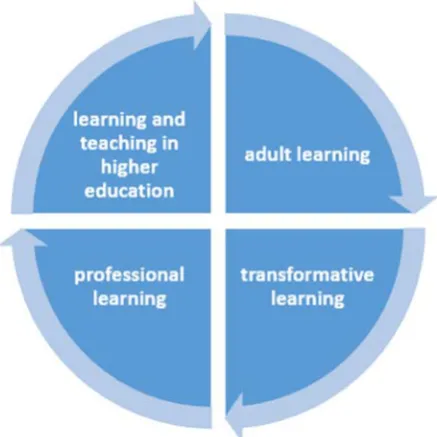
List of Figures Figure 2.1.Conceptual map of the bodies of literature... 16
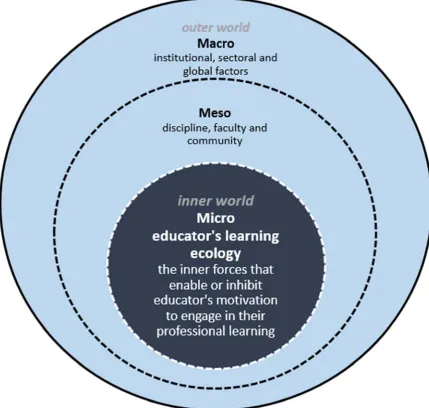
Figure 2.2. The higher education ecosystem. ... 18
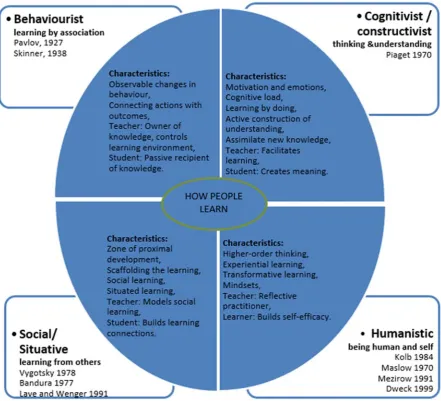
Figure 2.3. Overview of contemporary theories of learning. ... 37
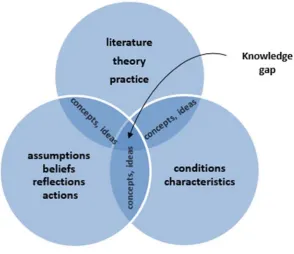
Figure 2.4. The knowledge gap... 89
Figure 2.5. The wholeness of professional learning. ... 92
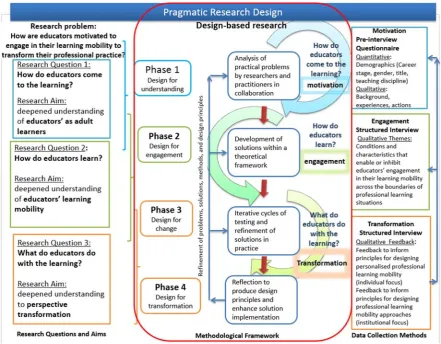
Figure 3.1. The pragmatic research design.. ... 98
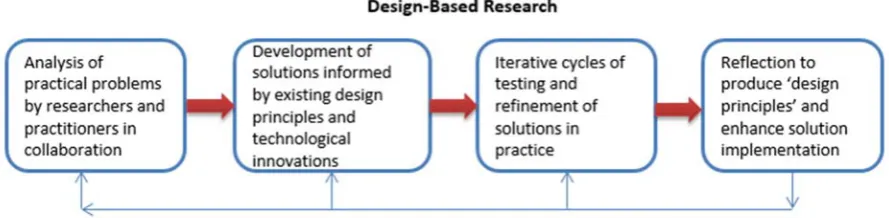
Figure 3.2. Design-based research. ... 106
Figure 3.3. Pre-interview questionnaire. ... 120
Figure 3.4. Structured interview. ... 126
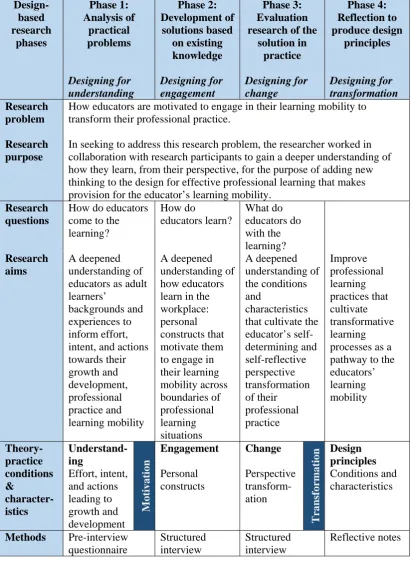
Figure 4.1.Phases of designing for the wholeness of learning. ... 159
Figure 4.2. P2's perspective transformation. ... 207
Figure 4.3. P3's perspective transformation. ... 208
Figure 5.1. The third space of learning mobility. ... 221
Figure 5.2. The educator's professional learning mobility: Inner transformation of the Self. ... 223
Figure 5.3. Symbolising the continuous nature of professional learning. ... 249
Figure 5.4. Conceptual model: Continuous journey of the wholeness of professional learning mobility. ... 250
List of Tables Table 2.1. Characteristics of adult learners...46
Table 3.2. Research participants' reflections on the structured interview process………….124
Table 3.3. Administering the structured interview……….128
Table 3.4. Structured interview: Advantages and considerations………..134
Table 3.5. Stages of thematic analysis………...148
Table 4.1. Design for understanding themes………..162
Table 4.2. Mentoring peers……….170
Table 4.3. Personal change mindset………...174
Table 4.4. Structure: Research participants’ descriptions of informal-formal personal constructs………179
Table 5.1. Connecting design themes from the participants' inner narratives of "Who am I becoming."………..225
Chapter 1 Introduction
1.1 Background to the Study
The genesis of this research study was grounded in my observations, as an
adult educator and an adult learner, of how people learn, specifically where some
people have a natural human desire for self-knowledge, growth and development.
I have worked in the higher education sector for 18 years across a number of
central units responsible for the strategic direction, management, development,
implementation and evaluation of learning and teaching. My personal and
professional focus gravitated to technology enhanced learning (in its many evolving
forms) and the associated institutional-level professional development initiatives to
foster quality changes in teaching practices to enhance the student learning
experience. Paralleling this 18 year period, I taught in a range of higher education
contexts from large first year undergraduate foundational courses to professional
learning courses and workshops for academic and academic support staff. My
current role as an academic developer and adult educator responsible for planning,
designing, facilitating, and evaluating professional learning events for academics has
stimulated my curiosity, fascination, observations, and reflections on my lived
experience of how people learn in adulthood.
A problem that I have pondered throughout my career as a university-based
adult educator is that formal institutional level professional development often has a
limiting rather than enabling influence on the educator’s growth and development of
their professional practice. While institutions invest funds into resourcing
professional development programs to address strategic priorities and quality
assurance requirements to advance the educator’s capacity for innovative
pedagogical approaches (Dede, Ketelhut, Whitehouse, Breit, & McCloskey, 2009;
Fraser & Ryan, 2012), often educators’ perceptions are that the programs do not
meet their learning needs (Bates, 2015; Norton, 2009).
A significant, personal transformative moment was re-reading Biggs and
Tang’s Teaching for Quality Learning at University (2007) while, in 2012,
re-designing the Foundations of University Teaching curriculum, assessment and
such thing as an unmotivated student: All students not in a coma want to do
something” (Biggs & Tang, 2007, p. 32 [original emphasis]) was a personal
awakening. As an adult educator and an adult learner, this statement triggered a
powerful shift in my perspective. The way the higher education sector designs
professional development that seems to overlook the fundamentals of a
learning-centred approach took on new meaning for me. Professional development has tended
to focus on teacher preparatory programs that place emphasis on the students’
learning experience with little thought for the needs of educators as adult learners
(King, 2005; Weimer, 2012). The outcome has been a limited change in individual
and institutional professional learning and teaching practices (Biggs & Tang, 2007;
Boud & Brew, 2012; Webster-Wright, 2009).
Despite these tensions, I had observed that some educators exhibited a natural
motivation to navigate their own pathways through the complexities inherent in
institutional structures, policies and conditions. This enabled them to grow and
develop their professional identity that sustained their personal learning needs whilst
contributing to institutional expectations. Educators demonstrating these qualities
took control of their learning, engaged in reflective practice to make informed
choices, built a sense of personal efficacy, and were open to transforming their
professional practice. Their inner belief system seemed resilient to the complexities
of working in higher education.
This research study started with repurposing Biggs and Tang’s (2007)
influential view of the learner and added new thinking to the literature by proposing
that there is no such thing as an unmotivated educator, and all educators not in a
coma want to do something. I took a bottom-up approach to investigate how
educators learn from the perspective of the educator as adult learner within the
broader context of higher education. A design-based research (DBR) methodological
framework influenced the bottom-up approach as it supported the collaborative
relationship between myself and educators as learners in this study. Such an
approach acknowledged the synergistic, and often problematic, relationship between
1.1.1 Personal Statement
My personal statement reflects the reciprocity of my roles as a learner and a
teacher. The reciprocal nature of being a learner and being a teacher in any given
moment in the social act of learning requires a pragmatic, open view to negotiate
meaning, challenge perspectives and possibly transform our views of the world to
become aware of a more authentic sense of self.
Transformative learning, at the most fundamental level, is becoming conscious
of the inner sense of self (Cranton, 2006; Lawrence & Cranton, 2015; Mezirow,
2000). I continuously experience transformative learning as an adult learner, an adult
educator, and as an educational researcher. In my practice of teaching about and
fostering transformative learning experiences within professional learning contexts, I
have deepened my understanding of the theory and practice by engaging in the
transformative learning journey with my peers. As they challenge their meaning
structures and perspectives of self, I “try on” (Mezirow, 2000, p. 12) their (moving)
view of the world to challenge, affirm or re-calibrate my own world view. To be a
transformative learning practitioner is to know that learning, like life, is a continuous
journey of self-study. Therefore, learning, like life, is about reciprocity. Liberating
our inner sense of self is being conscious that in any moment we are a learner and a
teacher. Applying the idea of transformative learning to our ongoing growth and
development suggests a learning mobility towards a deeper sense of self.
Learning mobility is central to this study. The researcher’s concept of learning
mobility is the choice to learn, work, communicate, collaborate and connect in any
configuration, across learning contexts and boundaries for continuous professional
learning and personal growth. The idea of learning mobility is an abstract concept
and is therefore best developed within the context and investigation of the literature
in Chapter 2.
Travelling through the experience of my doctoral study was equivalent to
harnessing everything I had come to know, think, feel, act and be in my life’s
journey so far to navigate the amorphous nature of my doctoral liminalspace. The
concept of liminal space refers to a gateway where new understanding needs to be
integrated and, significantly, prior conceptions surrendered (Land, 2012). Jung
([1921] 1971) terms this space as liminality – the boundary or threshold of emotional
life (Meyer & Land, 2013). Discerning who I am becoming whilst being in the
perplexing liminal space of being a doctoral student was the essence of experiencing
a PhD. Within the traditions of academe, completion of a doctorate is grounded in
the apprenticeship model of research training within a specific discipline. In a
transformative liminal space, this becomes secondary to becoming conscious of my
inner dialogue, my subjective sense of self that served to enable or inhibit my growth
and development to “forge new identities by embracing who [I am] along the way”
(Lawrence & Cranton, 2015, p. 73). A liminal space is confronting, confusing and
overwhelmingly personal. As humans we have two choices when finding ourselves
in a liminal space: we can get stuck or we can move. Learning mobility is becoming
conscious of our inner sense of self to move, even when the easier option may be to
stay stuck.
1.2 Scope of the Study
The scope of the study includes the purpose, goals and the research context.
The purpose of this study was to gain a deeper understanding of how educators as
adult learners learn in order to add new thinking to the design of effective
professional learning that makes provision for the educator’s learning mobility. The
centrality of this study was investigating how educators learn, with a particular focus
on their perspectives and their experiences of the activity of learning. However, due
attention was given to the multi-faceted nature of the educator’s learning
environment, both internal and external, that might enable or inhibit the educator’s
motivation to engage in their professional practice.
To address the purpose of the study, the goals were to:
1. Seek a deeper understanding of how educators learn, from their perspective;
2. Identify the conditions and characteristics that enable or inhibit the educator’s
motivation to engage in their professional practice;
3. Investigate perspectives of the design for effective professional learning as a
function of professional practice;
4. Investigate transformative learning processes as a practical approach to designing
for effective professional learning that is personally meaningful to the educator;
5. Present the idea of the educator’s learning mobility as a new paradigm for
workplace learning.
The research study is situated within the higher education sector. The research
participants were practising educators who were intentionally identified based on
their active engagement in their professional practice. This is not seen as a bias.
Rather, to add new thinking and new evidence to revitalise professional learning that
is personally meaningful to educators, the researcher needed to interrogate educators
who take responsibility and control of their own learning as scholarly practitioners
actively engaged in their professional practice. The rationale was that the educators
who are actively engaged, self-directed, and self-determined in taking control of
their professional learning to advance their professional practice are valuable sources
of knowledge in rethinking the design for effective professional learning. Asking
educators who did not actively engage in professional learning initiatives limited the
researcher’s ability to discover and understand the deeper tensions and practical
issues of how educators learn as such educators had not navigated the complexities
of taking control of their professional learning.
1.3 The Knowledge Gap, and Research Problem and Questions An enduring educational paradigm is the focus on how people learn. An
emerging knowledge gap was informed by scholarly evidence at the individual
(educator) level that existing professional learning initiatives were often perceived
by educators as not meaningful and as ineffective (Hart, 2014b; Norton, 2009). At
the institution level, evidence from the literature indicated that the formal, structured,
linear, didactic characteristics normally associated with institution-led professional
development (Bates, 2015; Boud & Brew, 2012) resulted in educators’ resistance to,
rather than engagement in, professional learning opportunities (Holley & Oliver,
2010; Poole, 2009). The emerging gap in knowledge reflected the need to understand
more about how educators continue to learn through their working lives in order to
guide the design of effective, meaningful professional learning (Billett, 2010;
Webster-Wright, 2009). The idea of learning continuously throughout life suggested
it was the mobility of the learner and learning that was of significance to this
Furthermore, from an educational research perspective, scholars (Billett, 2010;
Boud & Brew, 2012; Kek & Hammer, 2015) claimed that irrespective of decades of
research and theorising about how educators learn as part of their professional
practice, the field of professional learning remained under-theorised, poorly
understood and ambiguous to scholars and practitioners alike. The contribution of
this research study to the gap in knowledge was to investigate the concept of the
educator’s learning mobility as a means to create a shift in the theory and practice of
professional learning to bring about change in the design for effective professional
learning.
The research problem of how educators are motivated to engage in their
learning mobility to transform their professional practice was formulated from this
knowledge gap. To address the research problem, the research questions were:
1. How do educators come to the learning?
2. How do educators learn?
3. What do educators do with the learning?
1.4 Research Design
The research study was primarily qualitative in nature which is appropriate in
naturally occurring research settings that seek a richer, deeper understanding of the
perspective of the person(s) being researched (Norton, 2009). The research design
reflected a pragmatic paradigm of inquiry to enable the researcher to work in
collaboration with research participants (educators) to resolve the real-world
question of how educators as adult learners learn. Design-based research (DBR) was
the methodological framework used as it offered a systematic but flexible structure
to address the complexities of how educators learn within their real-world
professional learning contexts. The iterative, generative nature of DBR guided the
collaborative partnership between the researcher and research participants in the
process of refining the problem, developing and testing solutions, and designing
principles to resolve the research problem (Reeves, 2006; Wang & Hannafin, 2005).
Thematic analysis, a widely used qualitative analysis method, was employed to
identify, analyse and report patterns (themes) across a dataset to address the research
framework for investigating the complexities inherent in the subjective realities of
how educators learn. The data collection methods included a pre-interview
questionnaire, structured interview, and researcher observations and reflections.
These methods were used to gain a deeper, richer understanding of the research
participants’ perceptions, judgements, thoughts, feelings and views of self when
investigating how educators come to the learning, how educators learn, and what
educators do with the learning.
1.5 Significance of the Study
This research study was concerned with how educators learn and was based on
the key tenet that educators are learners (Cranton, 1996, 2006). Positioning educators
as adult learners applies a learning-centred theoretical approach to examine
professional learning practices in higher education. Learning centred approaches,
characterised as offering learners choice and freedom whilst making them more
responsible for learning autonomously, cultivates a greater level of personal
accountability in models of professional learning (King, 2003; Weimer, 2012).
Rethinking approaches to professional learning that are learning-centred and
transformative in nature has significance at the individual and institutional levels. At
the individual level, adult learning theory (Knowles, 1975, 1980) affirms that
learning in adulthood is characterised by a readiness to learn, a responsiveness to
learning-centred teaching and learning, and a developing self-concept that takes
responsibility for self-directed learning. In practice, educators as adult learners can
be resistant to learning-centred approaches that espouse transformative learning
processes and, by the very nature of these theoretical orientations, it questions an
educator’s taken-for-granted assumptions embedded within their self-concept
(Mezirow, 2000). This may be interpreted by educators as challenging their
professional identity (Elliott, 2011). A challenge for institutions that do recognise the
strategic importance of innovative pedagogies, and therefore offer institution-led
professional development initiatives to advance innovative teaching, is those
educators who often do not participate in learning opportunities available to them
(Johnson, Adams Becker, Estrada, & Freeman, 2015; Poole, 2009). This study adds new thinking to the educational research by taking a
learning in higher education. Within the context of this study, the significance of
challenging current thinking and adding new thinking to designing for effective
professional learning that is personally meaningful to the educator, is to harness the
potential for learning mobility. The researcher’s idea of learning mobility is that
professional learning opportunities occur continuously within, between and outside
institutional structures to meet the increasing need of educators for more
personalised, pragmatic, self-directed and informal learning contexts (Bersin, 2012a;
Boud & Brew, 2012; Garrison & Kanuka, 2004; King, 2003, 2005; Marsick &
Watkins, 2001). The originality of this study offers new perspectives when designing
for professional learning that is responsive to the educator’s learning needs and
informs new ways of thinking about professional learning initiatives at the
institutional level.
1.6 Boundaries, Assertions and Limitations
1.6.1 Boundaries
This research study is primarily located within the Australian higher education
sector. However an international perspective has been taken as university educators,
and higher education institutions, work in the global context. Furthermore, I believe
the research study has application in western higher education sectors, and to some
extent can be generalised to a global understanding of higher education. The reasons
for this include:
The evidence-based scholarly discourse informing the literature review drew on
research beyond Australia to include the United Kingdom, the United States of
America, Canada, and to a lesser extent, mainland Europe;
The research participants informing the data collection were from the Australian
and USA higher education sectors; and
The research study explored the conditions, characteristics and practices of how educators learn that added evidence to inform rethinking professional learning in
higher education.
Professional learning was investigated from the perspective of how educators
practice. The research study did not extend to a critique of particular professional
learning events or activities such as the range of professional development programs
and initiatives often discussed in the higher education literature.
1.6.2 Assertions
Assertion 1: Learning mobility.
The researcher’s concept of learning mobility as the educator’s choice to learn,
work, communicate, collaborate and connect in any configuration, across learning
contexts and boundaries for continuous professional learning and personal growth
had a deeper conceptual meaning when located within the educational discourse. The
concept of learning mobility was a pragmatic approach to rethinking professional
learning that was concerned with educators’ ongoing growth and development as
they come to learn, and possibly transform, who they are. In essence, the idea of
learning mobility evolved as the research study developed and matured in the
process of resolving the research problem.
Assertion 2: Professional development and academic development. For the purpose of this research study, the terms academic, professional and
faculty development are treated as synonymous as are the terms academic,
professional and faculty developer. In this study, the term professional development
and academic developer are used. Professional development refers to the
organisation led developmental activities informed by the discipline of learning and
teaching in higher education. The role of an academic developer typically involves
working in dedicated professional development positions and engaging in
professional development work (Ling, 2009).
Assertion 3: Professional development and professional learning.
For the purpose of this research study, institution-led professional development
refers to centrally controlled, formal, structured activities to engage educators in the
educational discourse for the purpose of enhancing the student learning experience
(Bates, 2015; Boud & Brew, 2012; Marsick & Watkins, 2001; Reushle, 2005).
Professional learning shifts the focus from purely formal, structured, periodic events
educators as they continue to learn through their working lives (Billett, 2010; Boud
& Brew, 2012; Webster-Wright, 2009). Furthermore, when conceiving of alternative
perspectives to how educators learn, the terms continuing professional learning and
continuous (professional) learning are used interchangeably as a representation of
the continuity of learning across boundaries of time, space, convention and activity.
Assertion 4: Learning-centred focus.
It is not the purpose of this research study to debate the meaning of the terms
learning-centred and learner-centred as Weimer (2012) confirms the terms are used
interchangeably in the educational discourse. Nor is it is the purpose of this
investigation to critique the evolutionary elements that underpin the discourse of
teacher-centred and learner-centred. Therefore, in this research study, the term
learning-centred is used as a pedagogical approach to rethinking professional
learning that illuminates the activity of learning, where educators as adult learners
feel empowered to take responsibility for their professional learning.
Assertion 5: The reciprocal nature of learning and teaching. The word pedagogy embraces a crucial dialogue between teaching and
learning. This is particularly important in the context of educational discourse where
the two terms (teaching and learning) have come to be used in tension, and often, in
opposition to one another (Beetham & Sharpe, 2008). At the same time, educational
scholars have used the term scholarship of teaching (see Section 2.1.2) as a
theoretical framework to unite the two terms. This is evidenced by Boyer’s (1990)
model of scholarship in which a key characteristic is the recognition that teachers
are also learners, therefore emphasising the reciprocal nature of being a learner and a
teacher in any learning context (Morgan, 2014). This research study takes the
scholarly position of the reciprocal nature of learning and teaching, and therefore
uses the terms teaching and learning, and learning and teaching interchangeably.
Assertion 6: self and the Self.
The terms self and the Self are relational in nature rather than interchangeable.
inwardly as the Self and outwardly to the world as ways of knowing, acting and
being (Boyd, 1991; Cranton, 2006; Dirkx, 2012; Palmer, 1998). The term self is used
in relation to emancipatory knowledge for transformative learning, such as
self-determined, self-reflective, self-regulated, self-directed, and self-aware (Cranton,
2006; Habermas, 1984; King, 2003; Mezirow, 2000). Developing a sense of self
within the context of this study relates to developing a deeper understanding of how
educators learn as part their developing self-concept; their ways of feeling and acting
in adulthood that act as filters for interpreting meaning of the learning experience,
making judgement on those experiences and taking action. The educator’s inner
journey towards their self-concept (sense of self) is a manifestation of the Self.
1.6.3 Limitations
Targeting those educators who have a natural motivation to engage in
professional learning activities is a limitation of the study. However, the educational
research also suggests that professional development activities are often perceived as
frustrating, irrelevant and time consuming, creating resistance to attending such
events. Asking those educators who do not attend creates a circular argument.
Educators who do not participate in professional learning would provide a narrow
view of the world as their judgements are based on limited experience. To ask
educators who may have found professional learning frustrating but also navigated a
pathway through the complexities of professional learning to continuously grow and
develop their professional practice in ways that are personally meaningful to them
may add new thinking and new evidence to the body of knowledge.
A criticism of design-based research (DBR) relates to the researcher’s intimate
involvement in the conceptualisation, design, development and implementation of
the pedagogical approach or intervention. Ensuring the researcher can make credible,
unbiased, and trustworthy assertions is a challenge (T. Anderson & Shattuck, 2012).
However, this challenge is common to many forms of qualitative research where
none of the methods can or do make claim that researcher bias is completely
removed from the research process (T. Anderson & Shattuck, 2012; Creswell, 2012).
The researcher employed triangulation as a way of strengthening the validity of
findings and conclusions. Triangulation enabled the researcher to determine the
qualitative, subjective measurements (Creswell, 2012; Phillips, McNaught, &
Kennedy, 2011). Furthermore, the social science researcher Kothari (2009)
emphasises that the aim of qualitative research is to acknowledge that the assessment
of perceptions, attitudes, opinions and behaviours of research participants is the
function of the researcher’s insights and impressions.
In Chapter 4, the category of scholarly leadership activities was used to gain
insight into the research participants’ backgrounds and experiences. The category
served as evidence to address Research Question 1, How do educators come to the
learning? The educational literature has a wealth of research on academic
leadership. A possible limitation of this study is that discussion of scholarly
leadership was identified based on the core fields of knowledge informing this study,
which included contemporary theories of learning, adult education, transformative
learning theory and professional learning in higher education. The breadth of
literature on contemporary theories of leadership inclusive of theories, models,
principles and styles used and applied within the higher education context was not
investigated. Therefore discussion on scholarly leadership does not fully represent
the broader body of knowledge on academic leadership.
The scholarly communities identified within the sample of research
participants were discipline-based in recognition that educators often feel a sense of
academic connection and belonging, and an established professional identity and
values within their disciplinary homes. There is a body of literature that contends the
disciplines develop discipline-specific teaching practices, norms and tacit, often
unspoken practices that can limit pedagogical innovations. It was outside the scope
of this research study to profile the possible homogeneity and epistemology of the
discipline-based scholarly communities.
Another limitation could be the degree of granularity of data analysis.
However, it was outside the scope of the research goals and outcomes to investigate
possible relationships between such variables as career stage and inner belief system,
academic position and inner belief system, and discipline and inner belief system, or
to conduct a comparison across institutions and/or countries (Australia and United
1. 7 Arrangement of Chapters
In this study, where design-based research (DBR) provided an iterative,
pragmatic methodological framework to address the research problem, I worked in
collaboration with educators (higher education teachers) to gain insight into how
educators learn, from their perspective, in order to rethink the design for effective
professional learning. There are four chapters to follow this introductory chapter.
In Chapter 2, literature appropriate for this study is reviewed. An overview of
the changing nature of the higher education system provides insight into the
challenges and complexities facing the university sector and university educators.
With a specific focus of educators as adult learners, the fields of knowledge critiqued
include contemporary theories of learning, adult learning, transformative learning
and professional learning in higher education.
In Chapter 3, the research design, methodological framework, methods and
procedures are discussed. The rationale for the methodological framework is
provided, followed by how research participants were selected. This chapter presents
the pragmatic paradigm of inquiry including the appropriateness of the approach
taken and the rationale for the data collection methods (pre-interview questionnaire
and structured interview). The chapter includes the researcher’s statement on being a
reflective transformative learning practitioner within the research context of this
study. The chapter concludes with the data analysis procedures including the
rationale for thematic analysis.
The data analysis and findings across the four phases of design in this study:
Phase 1 Design for Understanding, Phase 2 Design for Engagement, Phase 3 Design
for Change, and Phase 4 Design for Transformation are described in Chapter 4.
Themes (patterns in the data) were generated based on an exploration of the research
participants’ backgrounds and experiences collected in the pre-interview
questionnaire, and on their rich narrative descriptions and personal constructs
elicited from the structured interview. The qualitative data collected from the
interview process meant that developing themes could be explored, interrogated and
refined across the cycle of interviews supporting the generative nature of
Chapter 5 articulates the design principles for effective professional learning
mobility. As the final chapter, a conceptual model for theory building is presented
that is responsive to the educator’s learning needs whilst informing new ways of
thinking about professional learning initiatives at the institutional level. A new
perspective on professional learning practices that cultivates transformative learning
processes as a pathway for the educator’s learning mobility is given. Future
considerations, applications and contexts relating to the idea of the educator’s
learning mobility in professional practice and opportunities for further research are
also proposed in Chapter 5.
Chapter 2 Literature Review
My original contribution to the field of professional learning in higher
education is concerned with how educators, as adult learners, learn in the evolving
educational landscape. This landscape is being challenged by the disruptive and
transformative nature of digital technologies and pressure for innovative approaches
to pedagogy. It is also challenged by globalisation, greater social mobility for
growing segments of the population, and the widening participation agenda, coupled
with deregulation of higher education (Altbach, Reisberg, & Rumbley, 2009; Barber,
Donnelly, & Rizvi, 2013; Marginson, 2013).
Within these external forces of change, I investigate the higher education
sector from the perspective of the inherent complexities of human nature that enable
or inhibit an individual educator’s motivation to engage in their professional
learning. I take a bottom-up approach to add new thinking to the body of knowledge
and educational discourse on the design for effective professional learning. A
bottom-up approach investigates the research problem from the individual educator’s
perspective within the broader context of higher education. Such an approach
recognises the synergistic, often problematic, relationship between individual and
organisational learning.
The purpose of this study was to gain a deeper understanding of how educators
as adult learners learn in order to add new thinking to the design of effective
professional learning that is meaningful to the educator. The literature which informs
this research is firmly located within the theories and practices of adult learning,
transformative learning, professional learning, and learning and teaching in higher
education, as illustrated in Figure 2.1.An overview of the changing nature of higher
education from the contributing disciplines is presented first in this chapter, followed
by a review of contemporary theories of learning through a social constructivist lens
and a learning-centred theoretical approach. With the focus on educators as adult
learners, a review of the theoretical concepts and practical applications of adult
education and transformative learning are progressed. Next, the nature of
professional learning in higher education is critically investigated, with a particular
Figure 2.1.Conceptual map of the bodies of literature.
This figure illustrates the literature base informing the research study.
The chapter concludes with a synthesis of key themes from the literature and
emerging issues which reveals knowledge gaps (outlined in Section 2.5.1) and
particular challenges for the researcher relating to the design for effective
professional learning that addresses the learning needs of educators. A wholeness of
professional learning conceptual framework is presented towards the end of Chapter
2 that consolidates and integrates the relevant research literature, the key theories,
concepts and assumptions investigated in the chapter. The conceptual framework
also serves to address the research problem, supports the research questions, and
informs the research design presented in Chapter 3.
Using metaphors.
To help make sense of the relationship between the individual and the
organisation when investigating how educators learn, I have used the metaphors of
the higher education ecosystem and the educator’s learning ecology. These terms are
used in Section 2.1to provide order and structure to the investigation within the
complex landscape of higher education. Furthermore, the use of these terms reflects
a frame of reference used by other educational researchers to conceptualise the
& Moravec, 2011; Facer, 2011; Jewitt, 2009; Luckin, 2010; Monti, 2011; Siemens,
2006; Staley & Trinkle, 2011; Weller & Anderson, 2013).
An organisational ecosystem in its biological sense is about systems thinking,
and is a complex, adaptive, strongly connected system of humans and their
environment (Walker & Salt, 2006). Reid (2006) characterises an ecosystem as being
extremely dynamic, and constantly confronted with “surprise” events. When applied
to academic institutions, Walker and Salt (2006) warn that resilience thinking, “the
capacity of a system to absorb disturbance and still retain its basic function and
structure” (2006, p. 1), is virtually absent from higher education management
practices.
When considering the complexities of the higher education ecosystem, the
educator’s learning ecology refers to the ways the educator acts and interacts with
their experiences, from their perspective, within a multi-faceted, dynamic learning
and teaching environment. In Section 2.1,the current issues relating to teacher
professional identity and the changing nature of scholarly teaching is explored. In
Section 2.2,Section 2.3, and Section 2.4, thefocus is on the investigation on how
educators learn within the body of knowledge and discourse on contemporary
theories of learning, adult education, transformative learning, and professional
learning in higher education respectively.
Therefore, examining the educator’s capacity to grow, develop, and
potentially change, regarded as the milestones of lifelong learning (Bates, 2015;
Beetham & Sharpe, 2008), in a complex system that is non-linear and unpredictable
in nature, requires systems thinking. A systems thinking approach, employing a
micro-, meso- and macro-level framework (Fanghanel, 2007; Norton, 2009), is used
to conceptualise the elements within each level of the higher education ecosystem (as
illustrated in Figure 2.2). Furthermore, social science researchers such as Blackstone
(2015) and educational researchers (Bryant, Coombs, & Pazio, 2014; Fanghanel,
2007; Norton, 2009; Vavoula & Sharples, 2009) find value in the three-level unit of
analysis framework as a mechanism to express the relational nature of the elements
at play. This research study is essentially concerned with the micro-level, that is, the
educator’s inner world that enables or inhibits their motivation to engage in their
professional learning. However, systems thinking recognises that we all live and
& Salt, 2006). For this reason, attention needs to be given to the educator’s outer
world existing in the meso- and macro-levels that interact, influence and impact their
inner world (micro-level). As illustrated in Figure 2.2,the meso-level has such
external filters as discipline, faculty, and community, whereas the macro-level
consists of such external filters as institutional, sectoral and global forces
(Fanghanel, 2007; Norton, 2009). Furthermore, educational researchers (Fanghanel,
2007; Norton, 2009) recognise that the meso-level is often discussed in conjunction
[image:30.595.120.550.252.660.2]with the macro-level, as both levels are external to the educator’s inner world.
Figure 2.2. The higher education ecosystem.
2.1 The Higher Education Ecosystem
One fundamental purpose of educational research is to explore how people
learn. From the seminal work of Dewey’s Democracy and Education (1916) to
contemporary theories of learning, to educationalists concerned with contributing to
advancing the discourse of learning and teaching in higher education (Bates, 2015;
Biggs & Tang, 2007; Dirkx, 2012; Garrison & Vaughan, 2011; King, 2005;
Laurillard, 1993; Mezirow, 2000; Phillips et al., 2011; Ramsden, 2003; Siemens,
2004 to name a few within the context of this study), the conception of how people
learn is the enduring paradigm through the ages.
The higher education ecosystem on a global scale is endeavouring to address
the fast paced innovation for learning and teaching whilst trying to accommodate
new ways of learning that challenge traditional ways of thinking and doing (Salmon,
2014). Policy makers, administrators, and educators are being told that they need to
transform models of education to adapt to the learners’ needs for a global knowledge
economy (Facer, 2011). Siemens (2012) warns that socio-technical change will
continue to exert pressure on the sector, challenging the capacity of higher education
to be resilient, responsive, and adaptive to sustain the well-being of the linked
system of people and nature, referred to by Walker and Salt (2006) as the ecology of
society.
2.1.1 Changing Nature of Higher Education
Digital technologies continue to transform much of society and are becoming
the defining transformative and disruptive innovation for higher education in the 21st
Century (Christensen, 2006; Garrison, 2011; Garrison & Kanuka, 2004; Laurillard,
2008). In this review of the literature, the complexities of the changing nature of
higher education are explored at the macro-, meso- and micro-levels. As noted by
Fanghanel (2007), the meso-level (faculty/discipline) is often subsumed into the
macro-level (institution). At this point in the review, the meso- and macro-levels
have been combined in order to consider the structures, conditions and functions at
Higher education challenges. Macro-level and meso-level.
Four broad challenges that relate to the changing nature of higher education at
the macro- and meso- levels include:
1. Consumerisation of learning
The Internet provides access to free or low-cost, high-quality content offering
widespread opportunities for formal and informal learning, raising fears this may
reduce the appeal of traditional higher education degrees and institutions
(Johnson, Adams Becker, Estrada, et al., 2015). MOOCs (Massive Open Online
Courses) are a case in point, disrupting traditional models of education. Hart
(2014a) refers to this learning trend as the consumerisation of learning, as it
enables individuals to customise and personalise their learning (Conway, 2011).
Individuals and teams are self-provisioning their learning, increasingly using
digital tools and social networks to build trusted personal learning networks of
like-minded people to solve their problems, and address their own learning and
performance needs (Bexley, James, & Arkoudis, 2011; Bozarth, 2011);
2. Democracy of education
The rising costs of private and public university tuition coupled with the
diversification of student cohorts is compounding the challenges facing the higher
education ecosystem. The emergence of new models of education that offer
students the opportunity to save money and progress faster through degree
programs is resulting in students, across the globe, rethinking the value of a
traditional university education (Johnson, Adams Becker, Estrada, et al., 2015).
Digital technologies provide promise for greater reach, and more and easier
access to education outside formal learning contexts (Pachler, Bachmair, & Cook,
2010). Democratisation not only invests in education as a commodity but changes
social and behavioural patterns. Learners are challenging the idea that educators
are in charge of designing learning by expecting to learn (and work), and study
whenever and wherever they want, increasingly in collaborative ways (Garrison,
2011). This suggests learners are becoming more discerning of their own learning
3. Pace of change
The pervasiveness of digital technologies through many aspects of society has
resulted in a two-speed pace of change between the higher education system and
its surrounding environment (Barber et al., 2013). The pace of change and
learning cycles of the higher education ecosystem have traditionally been long
and slow to react. In contrast, the learning cycles of the immediate environment,
consisting of youth culture, digital technology, knowledge generation,
employment demands and the changing nature of work, are short and changing
more rapidly (Barber et al., 2013; Bates, 2015; Bryant et al., 2014; Laurillard,
2008). The higher education sector’s slowness to react is particularly evident
when capitalising on the integration of new technologies to design innovative
educational experiences (Johnson et al., 2013; Johnson, Adams Becker, Estrada,
et al., 2015); and
4. Globalised workforce
The workforce demands skills from university graduates that are more often
acquired from digitally mediated informal learning experiences, yet our university
organisational structures are not set up to promote innovations in teaching
(Johnson, Adams Becker, Estrada, et al., 2015). Factors contributing to this
include:
The long-held belief that organisational promotion structures reward research
rather than innovation and improvements in learning and teaching, resulting in
a fear of risks associated with the possible failure of teaching innovations. This
leaves little room for experimentation and creativity in innovative teaching
practices (Bates, 2015; Johnson, Adams Becker, Estrada, et al., 2015); and Despite the widespread importance of digital literacy (for teachers and learners
in a knowledge society), training in supporting these skills and techniques is
rare to non-existent in the preparation of educators (King, 2003, 2005; Weller
& Anderson, 2013). Digital literacy is defined as one’s ability to locate,
organise, understand, evaluate, analyse, and create information using
technology (iNACOL, 2011).
The challenge to institutions that recognise the strategic importance of
development initiatives to advance innovative teaching, is that they are often faced
with educators who do not participate in the learning opportunities available to them
(Johnson, Adams Becker, Estrada, et al., 2015; Poole, 2009).
Micro-level.
A number of factors contribute to an educator’s resistance to institutional level
initiatives to foster pedagogical change including a lack of time and a lack of
expectation that they should participate, apprehensiveness about working with new
technologies, and fear that tools and devices have diluted the focus on teaching.
However, much resistance to change is simply due to comfort with the status quo,
presenting a much more challenging and complex landscape as it requires an
institutional cultural shift to mainstream innovative organisational technology and
pedagogy. This requires major shifts in the attitudes of educators as much as it does
institutional structures and policies (Bryant et al., 2014; Johnson et al., 2013;
Johnson, Adams Becker, Estrada, et al., 2015).
Changing nature of academic work.
The essence of higher education academic work has been captured by
Debowski (2012) as “one of the most rewarding yet frustrating and challenging roles
anyone could undertake. It is complex, dynamic and rapidly evolving to
accommodate the expectations of its many stakeholders” (p. 3). However, Debowski
(2012) and Coates (2014) concur that there is much still not known about higher
education academic work. Bexley (2013) believes that globalisation and
casualisation of the academic workforce, amongst other macro-level forces, is
fragmenting the sector to the point that it is inhibiting sustainable growth. As
academic work gets more complex and informal learning emerges as an essential
part of work, Boud and Brew (2012) emphasise a pragmatic approach where
academic work is viewed as a social process occurring within the context of
professional practice.
The changing nature of academic work is now investigated at the institutional
(macro), faculty (meso) and individual (micro) levels.
Macro-level.
undergoing its own challenges unprecedented in scope and diversity, resulting in
claims that the Australian academic profession is in transition (Bexley et al., 2011).
The impact of globalisation coupled with the casualisation of the academic
workforce has resulted in a mobility within the academic profession (Coates, 2014).
Mobility, in this context, is reported by Bexley et al. (2011) as the academics feeling
the need to move cross-institutionally (domestically and abroad) seeking academic
identity, higher salaries and job security. Furthermore, the profession has lost much
of its academic autonomy with accountability and authority in higher education
swinging from academics to managers and policy makers (Altbach et al., 2009).
Therefore, educational scholars suggest that at the macro-level of the higher
education ecosystem, the complex, dynamic and rapidly evolving expectations of the
university’s many stakeholders is resulting in new tasks, new technologies, new
accountabilities and bureaucratic procedures added to the traditional academic
responsibilities (Altbach et al., 2009; D. Anderson, Johnson, & Saha, 2002).
Meso-level.
Matthew and Pritchard (2009) claim it would be hard to imagine a university
today that was not organised by disciplines and some arrangement of schools,
faculties and departments. In the context of the higher education ecosystem, the
meso-level is situated at the level of discipline, department, school, and community.
Poole (2009) suggests that academics refer to this level as their “academic home”.
Furthermore, most academics enter higher education because they are motivated by
interest in their discipline (Land, 2012), with a deep commitment to the professional
values and scholarship within that discipline (Bexley et al., 2011). Wenger (1998)
affirms that the motivation for most professional learning is the desire to enter and be
accepted by a specific community of practice and to adopt and practise its ways,
behaviours, values and norms. However, in terms of shaping academic and
professional identities, Poole (2009) suggests disciplines, as powerful examples of
communities of practice, can be as much a “barricade” as a “home”.
Therefore evidence from the literature suggests that the meso-level can act as a
positive space to foster professional identity, opportunities for mutual support and
collaboration, and generative sources of ideas (Poole, 2009). Conversely, the
meso-level could serve to limit perspective, and operate as a place to defend territories and
Academic homes offer security and can create disciplinary silos. Venturing outside,
that is, leaving one’s discipline to teach or learn in another, requires considerable
negotiation regarding the legitimacy of pedagogy, curriculum, discourse, cognition,
and student and peer behaviour (Poole, 2009). Paradoxically, disciplines appear to
help make sense of our academic worlds while at the same time limiting our ability
to do so. Significantly, when considering the relationship between the meso- and
macro- layers of academic work, Poole (2009) clarifies that “disciplinary affiliations
trump institutional affiliations, sometimes to the chagrin of university
administrators” (p.51).
Micro-level.
In a higher education ecosystem that features complexity and uncertainty, it is
important not to lose the perspective that educators are the heartbeat of the institution
(Debowski, 2012), and the single most important learning resource available to most
students (Villar & Alegre, 2007). Research conducted into the core professional
values that draw people to academic work reports deep commitment and intrinsic
appeal to scholarship, the opportunity for intellectually stimulating work, and a
genuine passion for a field of study. Also reported are the opportunity to contribute
to new knowledge, the potential to act as an agent of change, and most critically, a
love of learning and a desire to share that with others (Bexley et al., 2011; Debowski,
2012). This altruistic perspective of academic work does not factor in the six main
external forces inhibiting educators’ motivation to engage in their academic work
reported by Bexley et al. (2011) as: high stress jobs, insufficient funding and
resources, work overload, poor management practice, job insecurity, and insufficient
recognition and reward. High stress jobs are characterised as those combining high
demands with low control or autonomy (Kain & Jex, 2010).
As the micro-level is concerned with the educator’s inner motivations,
Debowski’s (2012) lived experience of being a long-standing academic affirms that
agility and adaptability are the key traits asked of today’s educator operating in a
rapidly changing higher education context. This means taking the focus away from
extrinsic rewards (or barriers), often the seed of stress, such as workloads, tenure and
promotion, and resetting the focus on self-awareness and a more anchored sense of