University of Southern Queensland | Document title 1
Murray Darling Basin Regional
Economic Diversification Program
A review of equity capital investment in the
development of high value horticulture
University of Southern Queensland | A review of equity capital investment in the development of
high value horticulture 1
Contents
Executive Summary ... 2
1. Introduction and Objectives ... 5
2. Methodology ... 8
3. The Australian Horticulture Industry ... 11
4. Queensland Murray Darling Basin Horticulture Producer Overview ... 16
5. Farm and Agribusiness Financing in Australia ... 20
5.1 Types of Debt and Equity Capital ... 20
5.2 The Investment Environment ... 22
5.3 External Equity Models ... 23
5.4 Barriers to Investment ... 29
6. Insights from Interviews ... 32
6.1 Comparison of Grower and Investor Perspectives ... 32
6.2 Producer Experiences with External Equity ... 40
7. Investment Roadmap: Development of Horticulture in the QMDB ... 47
7.1 The Horticulture Opportunity ... 47
7.2 Who will Drive Development? ... 49
7.3 Options for QMDB Producers ... 50
7.4 Key Indicators in the Decision Making Process ... 52
7.5 Being Investment Ready ... 55
8. Conclusions and Recommendations ... 62
References ... 64
Appendix 1 Vegetable and fruit crop potential suitability in the QMDB area ... 69
Appendix 2 Investment Advisors ... 75
Agricultural Value Chains and Food Systems
Australian Centre for Sustainable Business and Development University of Southern Queensland, Toowoomba, 4350, Australia
Report authors: Julie Cotter, Jean-Francois Rochecouste and Mohd Mohsin Contact: Professor Julie Cotter; [email protected]; +61 7 4631 2020
University of Southern Queensland | A review of equity capital investment in the development of
high value horticulture 2
Executive Summary
This report is part of the Murray Darling Basin Regional Economic Diversification Program - Queensland. The Agricultural Value Chains and Food Systems group at the University of Southern Queensland was commissioned by Queensland
Department of Agriculture and Fisheries to review capital investment for the development of high value horticulture in the Queensland Murray Darling Basin (QMDB).
The research has three objectives:
- To better understand the capital needs of Queensland Murray Darling horticultural producers in supporting their expansion, diversification or infrastructure development plans;
- To provide information relevant to QMDB producers on partnering with investors; and
- To overview investment opportunities for the QMDB region and how economic diversification of the region might be progressed through investment of capital from outside of the region.
The methodology used for this report involves a qualitative ‘multi-stakeholder analysis’ using in-depth interviews with stakeholders across the horticulture investment chain.
First, we interviewed producers in the Murray-Darling region involved in
establishing new ventures for their views on capital raising. The producers were established horticultural producers or other crop growers (e.g. cotton) looking to diversify into horticulture or new horticultural crops. The region’s main attribute is a secure water supply and dry sub-tropical climate. Suitable infrastructure for cold storage, packing and/or processing of horticulture produce is limited.
These interviews indicated that the region’s producers are interested in capital raising beyond bank loans, but they had little to no understanding of the process and the requirements involved. Most had made a start at a new venture but were still some time away from production supply to a market.
Second, we interviewed agricultural investment professionals as well as
producers from other regions that have had positive and negative experiences in equity capital raising. Our results indicate that there are substantial differences in the perspectives of producers and investors. Cultural change is needed for producers and investors to work together. Agricultural investment professionals have an important role to play in educating both parties about the other and bringing them together.
University of Southern Queensland | A review of equity capital investment in the development of
high value horticulture 3
investors such as family offices and high net worth individuals, and corporate investors seeking access to supply of produce for their business.
Investment in horticulture to date has focused on perennials where risks can be more easily mitigated compared to annual crops that are subject to weather, volatile markets and rapid changes in supply. Investment in other horticulture products is evolving and may be linked to export market opportunities.
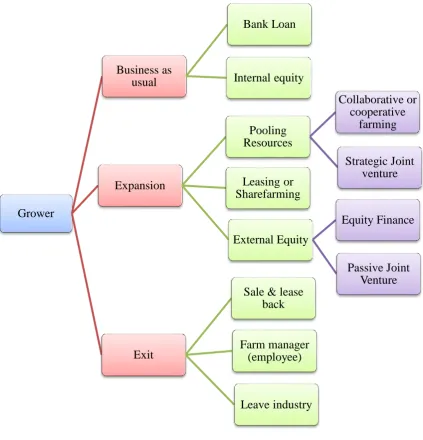
Producer options include:
Expansion - Entering into an agreement with an external equity investor, pooling resources with strategically aligned businesses or leasing
additional land
Exit - Selling the farm and possibly staying on as a manager or in a lease-back arrangement
Business as usual or steady growth/diversification utilising traditional sources of finance
Some investors are interested in the first option (investing and becoming a business partner) as well as buying farms outright. Sometimes multiple farms are purchased by investors and aggregated into a large farming enterprise. Investors interested in sharing in an existing business look for large, profitable farming enterprises; skilled and experienced farm management; access to a secure water supply; business and financial proficiency of the owners; a
comprehensive business plan outlining future growth strategies; and a good fit with their needs and motivations – the right partner.
The main reason to consider taking an equity investor is to enable a growth strategy. This could involve overcoming constraints associated with bank finance or partnering with a strategic investor to add value to both businesses. However, the process of becoming ‘investment ready’ is a long road and likely to be many years in development. It will require some rethinking of the way the business is operated and presented, which would generally benefit from some professional advice. There is a need to help producers to build the required finance and business skills.
Producers wishing to introduce external equity capital into their farming
enterprise need to have a clear business plan for the future and a strategy for how to achieve it. They need to understand what they want from an investor and what they will need to give in return. Potential impacts of taking external equity investment include dilution of returns, potential loss of control and the
complexity associated with dealing with a third party. In most cases operational control of the business remains with the producer while the investor is involved in strategic decisions, regardless of whether the investor owns more or less than 50% of the business.
University of Southern Queensland | A review of equity capital investment in the development of
high value horticulture 4
period of time. Investment from outside the region will be needed to drive the majority of development. Investment is needed to develop and increase the scale of high value horticulture production and related infrastructure such as storage, packing and processing facilities.
University of Southern Queensland | A review of equity capital investment in the development of
high value horticulture 5
1.
Introduction and Objectives
Australian horticulture represents a high value industry estimated to be around $8.9billion in 2013-14 with significant potential for export earnings and the delivery of a return to investors (ANZ 2015). In order to realise this opportunity, the industry will require increased investment for development of production and infrastructure.
Australia has a number of regions capable of high volumes of horticultural production for the export market, including south western Queensland. This report examines how the development of high value horticulture in the Murray Darling Basin region might be progressed through investment of additional capital from outside the region.
This report is part of a series of reports prepared on the Murray Darling Basin Regional Economic Diversification Program. Queensland’s Murray Darling Basin extends from St George in the west through to Inglewood in the east and has significant irrigated cropping areas that are producing a variety of cotton, grain and horticulture crops (Map 1). The recent opening of an international freight capable airport at Toowoomba further enhances the region’s potential to derive economic benefit from exports of high value horticulture products to Asia.
University of Southern Queensland | A review of equity capital investment in the development of
high value horticulture 6
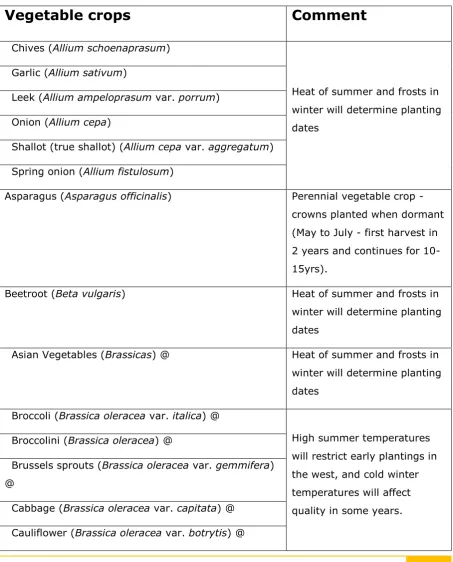
A range of vegetable and fruit crops can potentially be grown in the region, and these are overviewed in Appendix 1. The horticultural crops that are currently grown include grapes for table and wine usage, onions, pumpkins, olives,
lavender and stone fruit. In addition, there are a number of crops that are being developed in the area and these include limes, mandarins, garlic and blueberries. Suitable infrastructure for cold storage, packing and/or processing of horticulture produce is limited.
An expansion of production scale and infrastructure will require a substantial injection of capital. There is an opportunity for some of the region’s growers to participate in this development through partnering with investors from outside the region. Other growers will choose to sell their land and water assets to investors that see an opportunity to make a profit from developing horticultural production and infrastructure.
The primary focus of this report is to provide relevant information to those existing growers wishing to participate in the development of high value
horticulture in the region through external equity investment. It is important to note that this option is not available or indeed desirable for everyone.
Report Objectives
Objective 1
The first objective for the research is to better understand the capital needs of Queensland Murray Darling horticultural producers in supporting their expansion, diversification or infrastructure development plans.
Objective 2
Second, the report will provide information relevant to QMDB producers on partnering with investors including:
University of Southern Queensland | A review of equity capital investment in the development of
high value horticulture 7
2. What would be the impact of taking external equity investment on the business (advantages and disadvantages, including experiences of producers who have gone down this track);
3. What would producers need to do to become investable/investment ready?
Objective 3
The third objective is to overview investment opportunities for the QMDB region and how economic diversification of the region might be progressed through investment of capital from outside of the region.
Scope of the Research
This report explores the opportunities for alternative capital raising aside from that of traditional debt finance offered by banks. It compares the needs of growers and potential investors in the horticulture industry. It summarises investor requirements, and draws on the experiences of growers that have partnered with investors to finance an expansion of production.
The report will not cover small unregulated investments such as ‘crowd-funding’ or debt finance (bank loans). Interviews with a sample of QMDB producers confirmed that they already have sufficient information about bank loans but were interested in learning more about equity capital.
While collaborative business models such as co-operatives, collaborative family farms and strategic joint ventures are mentioned in this report, an in depth investigation of these business models is beyond its scope.
Contents of the Report
University of Southern Queensland | A review of equity capital investment in the development of
high value horticulture 8
2.
Methodology
The horticultural industry is complex with multiple driving factors including production options, market demand, resource requirements, risk profiles and management systems. The financial system is also complex, making the
interaction of these two systems and how people work in them quite difficult to interpret and understand. There are many potential problems and many potential solutions. This research aims to make sense of this complex mesh of systems. The methodology used for this report involves a qualitative ‘multi-stakeholder analysis’ using in-depth interviews with stakeholders across the horticulture investment chain (Woodhead et al. 2000). We have specifically sought to
encourage open discussion of their experiences and views about capital raising. This type of analysis helps us to understand and bring together the perceptions of horticulture and finance industry stakeholders (Woodhead et al. 2000;
Woodhead et al. 2009).
Phase 1 - Research Context
The research was conducted in three phases. The first phase involved gaining an understanding of the research context through:
- A literature review of relevant information from published reports and websites;
- Interviews with QMDB producers that have started new ventures. Seven QMDB producers were interviewed, including some of the organisations that received funding through the MDB Regional Economic Diversification Program. The focus of the interviews was to determine:
1. What are the needs of QMDB producers in regards to their options for expansion or diversification?
a. What are their views on capital raising aside from debt capital? b. What is their capacity for finding external equity capital?
c. How prepared are they for taking on external equity capital? 2. What are the differences in regards to their plans for exit, growth or
University of Southern Queensland | A review of equity capital investment in the development of
high value horticulture 9
3. What information are they looking for in regards to capital raising, including whether they require information on debt capital as well as equity investment?
The results of phase 1 of the research informed phases 2 and 3.
Phase 2 – Understanding the Investment Environment and Equity
Co-Investment
The focus for this phase of the research was to understand: 1. Who are the potential types of investors?
a. What is their perspective? b. Where does their interest lie?
2. What are the gaps between investor and grower requirements and perspectives?
3. What would be the impact for a producer to take an external equity investor into the business?
4. What would producers need to do to be investment ready?
Two groups of stakeholders were interviewed for this phase of the research: - Investment professionals (13)
- Producers from other regions that have experience with raising equity capital or commenced the journey towards it (5)
The 13 investment professionals included 4 specialist agricultural investment advisors, 3 agricultural specialists from accounting or consulting firms, 2 farm management groups, 1 agribusiness banker, 2 agricultural fund managers and 1 finance manager of a business involved in supply chain investment. One of the specialist agricultural investment advisors and the supply chain investor are involved solely in horticulture, while the remainder of the sample have broader agricultural expertise including horticulture.
University of Southern Queensland | A review of equity capital investment in the development of
high value horticulture 10
Thematic Analysis was used in the examination of transcripts of recorded interviews using key word searches. The topic areas were coded based on the research objectives and the issues emerging from the interviews. This approach emphasizes the participants' perceptions as well as the knowledge that they have accumulated from working in agricultural finance. It compares investor and
grower perspectives to determine substantial differences. The perception of growers and investors (including the investment professional as intermediaries) are grouped across the following themes:
1. Business goals
2. Governance & reporting 3. Scale of operation
4. Investment in horticulture 5. Roles and cultural fit
6. Investment readiness and expected impacts
Phase 3 –Development of Horticulture in the QMDB
In this final phase of the research, the insights gained from phases 1 and 2 were applied to the QMDB setting to reach conclusions about avenues for progressing opportunities for the development of horticulture in the QMDB.
University of Southern Queensland | A review of equity capital investment in the development of
high value horticulture 11
3.
The Australian Horticulture Industry
Horticulture is a high input and complex industry with potentially good return on investment for key markets in the Asia-Pacific (ANZ 2015). According to Christy et al. (2009) financial services is considered one of the ‘key enablers’, amongst nine others for the development of agricultural industries. The high input
requirements of horticulture in particular demands significant capital investment to establish or expand a production system. In some cases, such as with tree crops, there may be a 10-year window to achieving maximum production capacity. The growing demand for food and fibre is why banks and investors consider the farming and agribusiness sector a key investment portfolio (IFC, 2012). However due to farm production risk not always being clearly understood by external investors, the farm and agribusiness sectors have sometimes
struggled in the search for a sustainable financing model to suit its complex business arrangement and financing needs (Johnson et al. 2009).
This section of the report considers the current state of the Australian horticultural industry, its challenges in regards to capital raising and the horticulture crops currently on the investment radar.
Why Invest in the Australian Horticulture Industry?
Horticulture is the third largest agricultural sector in Australia producing an
approximated gross value of production (GVP) of $8.9 billion in the year 2013-14 (ANZ, 2015). Australia’s horticulture industry is recognised as highly reputable at national and international level for its product and processing quality across all stages of the supply chain, from farm to consumer (HIA, Consultation paper, 2015). The Australian industry has seen significant growth over the past five years with a 20% growth in the fruit and nut segment, 12.9% in the vegetable segment and 11.6% in the grape segment (ANZ 2015). Much of the current production is targeted for the domestic market with potential to significantly grow the export market having an advantage in counter seasonal availability and food safety.
University of Southern Queensland | A review of equity capital investment in the development of
high value horticulture 12
Investing in the consolidation of smaller farms through acquisitions Investing in the development of new production regions (e.g.
Queensland’s Murray Darling Basin Region)
Investing in production systems to minimise climate risk and ensure continuity of supply for domestic and export markets
Investing in developing ‘convenience’ products to capture value and minimise wastage
Investing in local production to replace imports of high-value products Investing in the export of high-value fresh products to affluent Asian
markets
Investing in technologies to reduce processing costs and improve export capability
Challenges in Australian Horticulture
According to the ANZ Australian Horticulture Industry report, sustainable profitability is still a major challenge requiring investment that will lead to improved productivity and strategic growth (ANZ 2015). The Australian Bureau of Agricultural Resource Economic and Sciences (ABARES) report that from 2006 to 2013 the total ratio of receipts to cost for the vegetable industry has declined from 1.5 to 1.2, with the best performers being the larger farms (>70 hectares) in terms of cash income. The Australian Horticultural Exporters Association has recommended that the industry should pay closer attention to sourcing private capital. This would require finance specialists with horticulture knowledge to assist the industry with establishing alternative business structures for farm ownership.
University of Southern Queensland | A review of equity capital investment in the development of
[image:14.595.110.506.79.364.2]high value horticulture 13
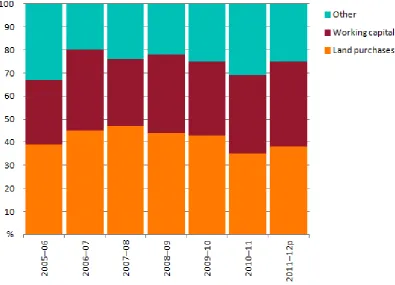
Figure 1: Composition of farm debt, source ABARES, Australian vegetable growing farms and economic survey, 2012-13
Due to a trend of poor cash incomes at farm level, the loan repayment capacity of producers has declined over time which has forced farms to increase their working capital debt over the period 2006-2013. In addition, HIA (2015) has suggested the reasons that horticultural farms have not been able to access external capital investment are related to:
Aging grower population Small size of operation Impacts of price volatility Supply volatility
University of Southern Queensland | A review of equity capital investment in the development of
high value horticulture 14
Horticultural Crops on the Export Radar
Currently at the top of the list of interest to investors are berries and tree nuts, rather than the staple vegetables. Various other fruits are also on the radar of investors, but they might need a point of differentiation and careful attention should be paid to market demand.
Tree nut production in Australia is currently dominated in scale by almonds and macadamias, with these two crops accounting for more than 50% of the total tonnage produced. Macadamia being 30% of tonnage produced. The crop is forecast to increase by about 44% by 2025, based on current plantings.
Other tree nuts such as hazelnuts are also about to become part of mainstream production with 5,000% growth predicted over the next decade. Walnuts,
already on a growth trajectory and pistachios will more than double in output; whilst chestnuts and almonds are expecting increases of more than 30%. Overall, the farm-gate value of Australian tree nuts is forecast to increase by 82% by 2025. This is largely driven by external demand and the industry is expected to surpass $1billion in export sales before 2025 (Australian Nut Industry Council 2014).
Similarly, the area under blueberry production in Australia has more than doubled since 2007 to 1100 hectares based on the market demand for healthy blueberries, newer varieties and improved production techniques. There is increasing global demand for blueberries which is likely to support investment. Australia is well placed supplier having built a reputation on its clean, green, high quality and safe food image.
Other potential exports are things like pomegranate which is still little known but worldwide there is a certain amount of research being undertaken into the health benefits protecting against a range of diseases. A major breakthrough in health interest could quickly create significant demand. Globally the market is
expanding and it is anticipated that Australia will follow this trend. India
University of Southern Queensland | A review of equity capital investment in the development of
high value horticulture 15
potential for Australia is largely based on our counter-seasonal ability to supply a market that is already consuming 2M tonnes.
University of Southern Queensland | A review of equity capital investment in the development of
high value horticulture 16
4.
Queensland Murray Darling Basin
Horticulture Producer Overview
We interviewed producers establishing new ventures in the Murray-Darling region for their views in regards to capital raising. The producers were established
horticultural or other crop growers (e.g. cotton) looking to diversify into
horticulture or new horticultural crops. Most had made a start at a new venture but were still some time away from production supply to a market. The region’s main attribute is a secure water supply and dry sub-tropical climate. On the negative side for the region is the distance from market and a lack of a well-established and versatile transport infrastructure.
Grower Views on Capital Raising and Sharing Equity in the
Business
Most of the producers we interviewed did not have sufficient capital available to significantly invest in the new production venture they were trialling. All
producers we interviewed except for a corporate family farm indicated that they were familiar with debt finance from banks, but had little knowledge about other forms of capital. Nearly all producers were keen to explore other means of
raising capital. They wanted to know how external equity investment models would fit into a family farm model.
Very few producers were accepting of sharing the equity in their farm in order to raise the required capital. They spoke of their concerns about the loss of control and the potential of them being sold up in the event of a business failure. They did not want to lose the farm, which for producers is considered more than a means of income but more in the way of a home.
Others were more concerned about inter-generational transfer and saw themselves as close to retirement and not wishing to take on any new
challenges. They were not contemplating expansion unless it was of interest to the farm’s next generation.
University of Southern Queensland | A review of equity capital investment in the development of
high value horticulture 17
the land was seen by producers as a preferred option to leasing as most did not believe that leasing provided sufficient returns.
Assessment of Current Preparedness
It was hard to determine how much market research the producers had done in the consideration of their new venture. One interviewee had directly indicated that they had no knowledge of the next step if early trials proved successful. Their knowledge was based around production rather than markets. Some producers were approached directly by corporate investors to test products on their behalf with a view to participate in later expansion, while others had
indicated they had little knowledge of the market beyond the point of production. Many indicated a preference for local markets based on its familiarity and
simplicity. The requirement to meet export certification seemed too daunting and export was preferably left to someone else in the supply chain. This lack of
personal knowledge about post farm gate supply chains was a source of concern to producers in regards to trusting external advisers.
Grower Views on Investors & Investment Professionals
All the producers we interviewed had little knowledge about investors in the market place, and consequently had no knowledge of their requirements or where to find them. They were more familiar with someone coming to them with a proposal, rather than them having to draft the proposal to attract investors. Most of the interviewees professed they did not have the means to put such a project prospectus together.
Although the producers were familiar with crop consultants, they were less familiar with agribusiness investment professionals and were unaware of how to contact them. Some indicated concern over past failures of horticultural ventures and as such they were likely to take a very conservative stance in terms of
accepting any significant investment.
University of Southern Queensland | A review of equity capital investment in the development of
high value horticulture 18
number of the producers interviewed have worked with other producers in cooperatives they had not worked as a team jointly sharing responsibility over a business unless it was with family members.
The potential for the formation of grower collectives in the QMDB area is still rudimentary with only ad hoc discussions occurring and almost no real structured plans in place to market products. It is possible that such groups may form in response to the needs of investment.
Points of Difference
The most marked point of difference between the interviewees in the region was generational variation in perspective. Younger producers were far more
interested in considering external investment; they were also more flexible in wanting to meet the expectation of investors. They indicated that they were unlikely to meet bank expectations of sufficient equity to qualify for required borrowings to operate a commercial farm. They had a belief in their own skills but felt limited by a lack of available capital.
Older producers were far more risk adverse in regards to external equity. Some did not see value in the effort associated with expansion, preferring to aim for a niche market as a diversification strategy. They had concerns about
inter-generational equity and would require the support of the next generation to be involved in any major expansion.
Corporate family farms were also markedly different in their outlook, being more open to future ventures that met their business goals. They have accepted the concept that in a large operation “you cannot be everything”. They could more easily meet the requirements for strategic joint ventures.
Summary
University of Southern Queensland | A review of equity capital investment in the development of
high value horticulture 19
University of Southern Queensland | A review of equity capital investment in the development of
high value horticulture 20
5.
Farm and Agribusiness Financing in
Australia
This section overviews farm and agribusiness financing in Australia and how external equity has operated to date, including the different types of investors and their motivations. Several investment models are described and compared, with an emphasis on equity finance and joint ventures. Barriers to investment, including important difference between producers and investors are considered. The information presented in this chapter is based on prior research as well as insights gained from interviews with agribusiness investment professionals.
5.1
Types of Debt and Equity Capital
Capital to finance the farm business generally comprises a combination of debt and equity.
Debt Capital from Banks and Trade Finance
The banking industry has been a critical component of the agriculture sector since the late 1800s, working with producers and farming businesses in rural and regional Australia (Australian Bankers’ Association, ABA, 2014). A recent Farm Finance Forum has proposed building the financial resilience of Australian farm businesses by diversifying financing options to include equity as well as debt finance (NFF, 2014). Bank finance has limitations when it comes to funding large scale expansion of the farm business, and these are determined by the ratio of debt to internal equity. That is, there is a ceiling on the amount of bank debt that can be obtained which is calculated as a percentage of the internal equity of the business.
Trade finance is similar to bank debt, used for agricultural commodities in
international trading, typically at pre- export stage (Advisors, 2015). In Australia trade finance is primarily provided by suppliers, such as those selling farm inputs and machinery (e.g. Elders or Landmark), with limited involvement from buyers of production (KPMG, 2013).
University of Southern Queensland | A review of equity capital investment in the development of
high value horticulture 21
Internal Equity
This constitutes the capital from the pockets of owners and family equity. It is grown through a combination of asset appreciation and retained earnings (KPMG, 2015). A scenario might be that various members of the family invest their
equity share in the farm but do not actually work in the business. They would still have a stake in the profit and any potential capital gain. Having multiple family shareholders requires a very considered business structure and reporting systems to ensure harmony. The risk is that an individual family shareholder may wish to sell their share for investment elsewhere but other members of the family are not in a position to buy them out without limiting the business with an increased debt burden (Hicks et al. 2012). Internal equity is principally about maintaining the status quo and is usually insufficient to really extend the business to a level where it can capitalise on new opportunities.
External Equity Finance
External equity is capital that originates from investors external to the family farming business (Wang et al, 2002). It involves an equity arrangement between the internal (family) equity of the farm and an outside investor. Traditional
sources of external equity as proposed by Warlick (2012) include high net worth individuals (private investors), superannuation funds and agricultural investment funds. Institutional investors are entities that have large amounts capital to invest, such as mutual funds, insurance companies, superannuation funds, investment banks, and endowment funds (Fernando, Schneible et al. 2014).
The Operation of External Equity Finance in Agriculture
It is usual in every economic setting, including agriculture, that a familyUniversity of Southern Queensland | A review of equity capital investment in the development of
high value horticulture 22
equity considerably extends the opportunities for the business to expand the size of their operation. This is currently a small but growing sector in financing
Australian agribusinesses.
External equity, which is relatively infinite in supply, offers the greatest potential for new funding and investment in agriculture (KPMG, 2013). Food and
agribusiness assets have been gaining recent attention by institutional investors due to their strong fundamentals (Advisors 2015).
5.2
The Investment Environment
There are three main types of investors in Australian agriculture:
- Institutional investors such as superannuation, agricultural or private equity funds
- Private investors including high net worth individuals and family offices - Strategic or corporate investors interested in securing supply
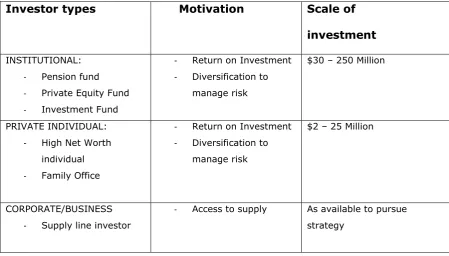
[image:23.595.71.521.451.707.2]The investment motivation and scale sought by these different types of investors are summarised below (Table 1).
Table 1: Investor Types and their Characteristics
Investor types Motivation Scale of
investment
INSTITUTIONAL:
- Pension fund - Private Equity Fund - Investment Fund
- Return on Investment - Diversification to
manage risk
$30 – 250 Million
PRIVATE INDIVIDUAL:
- High Net Worth
individual
- Family Office
- Return on Investment - Diversification to
manage risk
$2 – 25 Million
CORPORATE/BUSINESS
- Supply line investor
- Access to supply As available to pursue
strategy
University of Southern Queensland | A review of equity capital investment in the development of
high value horticulture 23
investments ranges from $3-25 million for private investors, through to $250 million or more for large institutional investments. The process of matching investors to farms is managed by agricultural investment professionals who hold knowledge of both groups of stakeholders.
Private equity funds tend to invest for periods of between four and seven years. Superannuation funds and private individuals are likely to invest for longer terms. Investment by private individuals is often referred to as direct
investment, while investment through a fund is indirect since the fund manages the monies of many individual investors and these investors do not have any direct involvement with the farm business.
5.3
External Equity Models
There are several forms that the investment can take including:
- Acquisition – where the investor purchases the property outright and the grower either exits the business, leases it back for a fee and continues operating it, or stays on as an employed farm manager working for the new owner; or
- External equity investment. Two of the major models are:
o Equity finance – an arrangement between the existing owners and investors where control and ownership of the farming enterprise is shared between both parties working together for mutual gain; and o Joint venture – a business arrangement in which the grower and
one or more parties agree to pool their resources for the purpose of accomplishing a specific project or any other business activity.
University of Southern Queensland | A review of equity capital investment in the development of
[image:25.595.72.527.105.684.2]high value horticulture 24
Table 2: Common corporate farming models (Source: Adapted from Agrifood Skills Australia 2015)
Model Overview Current Trends
1. Listed company Agricultural companies listed on the stock exchange.
Contracting in number after PrimeAg was wound up in late 2013 and the majority of its assets sold to US pension fund TIAA-CREF. Listed agriculture companies in Australia and internationally are likely to remain a very small proportion of overall listed enterprises.
2. Managed investment schemes (MIS)
A variety of structures based on collective investment in a common enterprise.
Decreasing in popularity after the scandals associated the collapse in 2009 of Timbercorp and Great Southern – the two of the biggest listed MIS companies in Australia - as well as the ATO ruling in 2007 that impacted horticulture.
3. Equity finance An equity investor, such as a superannuation scheme or a private equity fund, invests in corporate farming operations either directly or as a
partnership.
Increasing in popularity but primarily among large farm businesses – still not very common.
4. Equity partnership or joint venture
A joint venture between related or nonrelated individuals who have come together to pool their capital and possibly skills to enable the partners to obtain revenue and growth from their
investment.
Yet to gain the same levels of popularity as in New Zealand despite several predictions over the past five years to the contrary.
University of Southern Queensland | A review of equity capital investment in the development of
high value horticulture 25
Producers should make themselves aware of the pros and cons of each external equity structure. External equity structures such as leasing are common,
relatively standardized and understood by industry stakeholders; however, most structures are not (KPMG, 2013).
Equity Finance
Equity finance in the family farming context represents a private agreement between the producer and investor and involves selling shares in a private company for an agreed price rather than a public company whose shares are listed and sold on a stock exchange.
Equity finance is a source of investment capital from high net worth individuals or institutions for the purpose of investing and acquiring equity ownership in companies. Institutions include superannuation funds, agricultural investment funds and private equity firms. Private equity firms raise funds and manage these monies to yield favourable returns for their shareholder clients, typically with an investment horizon between four and seven years.
To raise equity finance an agribusiness creates a corporate or stapled (trust plus company) structure and issues new shares which are sold to an institutional or private investor for cash (Cameron 2016). The new share owners become part-owners of the company and share in the risks and rewards of the company’s business. A shareholder agreement is used to formalise the arrangements and should specify all important aspects including how the company will be funded, governed and managed.
University of Southern Queensland | A review of equity capital investment in the development of
high value horticulture 26
Joint Venture
A joint venture describes the relationship between multiple parties (two or more individuals, companies or registered bodies) who come to an agreement to achieve specific strategic goals. The parties to the agreement remain separate entities who come to the contract to magnify their individual gain rather than mutual gain. Though the parties to the contract have a specific business goal, their contributions to the contract are usually different in terms of cash or in-kind, its degrees or timing (Clayton Utz, 2014).
A recent agribusiness survey (Allen, 2014) reported that 41% of Australian investors and 48% of foreign investors prefer the joint venture model to invest their capital in Australian agribusiness.
Main Strengths of the joint venture model:
It aligns and combines the interests of Australian farms and agro focused investors (Allen, 2014);
Farms contribute farming expertise and local industry knowledge (Allen, 2014);
Investors contribute: patient capital, good governance frameworks, off-farm expertise, networking and marketing channels for the products (Allen, 2014);
Removes the Australian farms’ capital constraints but retains the families as owner;
No direct regulation (DPI, Victoria); Very flexible in application (DPI, Vitoria);
Co-venturers are taxed separately (DPI, Victoria); and
Joint venturers are not responsible for the acts of co-venturers.
Disadvantages of joint ventures:
Off-farm investors want joint decision making authority (Allen, 2014); Farms are required to comply with the investors’ complex reporting and
governance requirements (Allen, 2014);
Investors always need to rely on and believe all the production information generated by farms (Allen, 2014);
University of Southern Queensland | A review of equity capital investment in the development of
high value horticulture 27
Limited liability can only be achieved if the parties to the joint venture have limited liability (DPI, Victoria).
Joint ventures with a passive investor such as a high net worth individual or institutional investor that does not have a strategic business goal other than to achieve a good return on investment are similar to equity finance.
Comparison of Equity Finance and Joint Venture Models
An important difference between equity finance and joint venture structures is the agribusiness joint venture does not own the assets of the business. Title to the land remains with the farmer. The parties in a joint venture retain individual ownership of assets (land, buildings, machinery and livestock) but contribute the use of the assets to the joint venture through a lease or other arrangement. A company structure is often used to facilitate the joint venture. Key aspects of the relationship are generally formalised using a joint venture or shareholder
agreement.
An investor forming a joint venture with a family farming enterprise may be either a passive or strategic investor and can include institutional investors as well as individuals or corporates. Passive investment via a joint venture is similar to equity finance in that it provides a structure for external equity to join with an existing farm business to facilitate expansion. Joint ventures are a more flexible structure than simple corporate structures and investment professionals have used this structure to develop innovative financing models that facilitate the introduction of external equity into family farms.
For example, equity partnerships are a form of joint venture that have been widely used in New Zealand. Equity partnerships are usually structured as a private company with shares issued to each member according to the amount of money each investor subscribes. The equity partnership owns the land, plant and any stock. The equity partnership model never really took off in Australia
University of Southern Queensland | A review of equity capital investment in the development of
high value horticulture 28
Another innovative joint venture model has been pioneered in Australia more recently to allow the best and most profitable producers to farm more land. In this model, the investor buys large amounts of land close to an existing farm business, with the producer’s and investor’s land being pooled for form a large scale farming enterprise. An operating company is established, with the producer and investors holding shares in the operating company in proportion to the
assets that they contribute to the joint venture. The producer manages the farm and is paid a base salary plus a percentage of profits earned by the new, bigger entity. Title to the land contributed remains with the joint venture partners. That is, the producer does not lose title to his land.
Models that Pool Resources
Strategic joint ventures differ from passive joint ventures in that they represent a pooling of assets more akin to a business partnership. Strategic joint ventures can be used to grow the scale of a business by pooling the assets of businesses with similar production, thus achieving economies of scale. They can also be used to develop vertical integration within the business such as adding processing or packing to farming operations, and/or to providing access new markets and distribution channels.
Other structures that can be used to facilitate expansion through pooling of resources include cooperatives and collaborative farming structures. As with strategic joint ventures, each family farm retains ownership of its own assets and business yet has the opportunity to benefit from economies of scale, access to markets and/or processing its product, and improved management and
governance (KPMG 2015).
Leasing or Share Farming
Leasing and share farming additional land offer alternatives to buying land and provide opportunities for business expansion (GRDC 2014). Leasing land can provide a steady income to the landowner and offers greater scale and
associated efficiencies of production to the lessee without incurring the additional debt needed to purchase the land. A risk of leasing land that a producer no
University of Southern Queensland | A review of equity capital investment in the development of
high value horticulture 29
Share farming is a sharing of risks between the share farmer and land owner. Whoever has the greater share of costs takes the greater risk as well as a greater share of income. A formal share farming agreement should be used to protect the interests of each party and formalise agreements on the detail of responsibilities for management and costs.
The primary focus for the remainder of this report is on external equity including equity finance and passive joint ventures.
5.4
Barriers to Investment
The main issues acting as barriers to investment include:
Equity Aversion
Equity aversion refers to the attitude of producers who view the process of external equity investment as surrendering their ownership or giving away the control of their business (Hutchinson, 1995; Howorth, 2001; Oakey, 2007). In Australia, external equity investment in agribusiness has not been common due to a conservative attitude related to the ownership retention of agribusiness farms by the family (MGI Australia, 2006); however, it has gained popularity more recently.
Poor Investability
‘Investability’ refers to attributes (in this case shortcomings) between the investor and the farm business for which the goodness of fit in an investment project is lacking (Feeney et al., 1999). Shortcomings of the farm business
owners include poor management team, poor profit potential for the level of risk; undercapitalisation and insufficient recorded information.
Presentational Failing
University of Southern Queensland | A review of equity capital investment in the development of
high value horticulture 30
Investment Readiness
‘Investor readiness’ of producers includes a range of issues from the investor’s perspective regarding the business’ capacity to provide financial confidence in return for the required capital. The issues include: skills of the firms’
management, firms’ clarity in defining the investment business case, the business model, route to market, governance arrangements and presentation (Shepherd, 1999; Mason & Kwok, 2010). According to KPMG (2015), most Australian farm businesses are not ‘investment ready’ and face challenges in attracting external equity due to a lack of financial or management skills to operate under more professional management structures required by external equity investors.
Gaps between Investors and Farm Businesses
Previous research has identified three categories of differences between producers and investors. In order for investors and farm enterprises to
successfully operate they must have a clear understanding of each other’s needs and minimise these gaps.
Finance Gap
University of Southern Queensland | A review of equity capital investment in the development of
high value horticulture 31
Knowledge Gap
A knowledge gap happens due to the lack of proper understanding by the producers about investor financing tools, investment criteria and the finance industry generally (Graves 2010). Some notable Australian research in equity investment (Lindhe, 2007; KPMG, 2006; and Emerson, 2006) found that poor presentation of knowledge about the business to investors is a common problem that creates barriers to equity investment.
Trust (Empathy) Gap
This gap captures differences in goals, motivations and understanding between producers and investors. It originates from the negative attitude towards
institutional finance by family business owners (Gallo & Villaseca, 1996, Upton & Petty, 2000) and the dispersion between sources of capital and personal,
business or family goals (Gasson, 1999). The empathy gap arises from a poor level of trust between producers and investors (Poutziuoris, 2001). The
producers tend to have a poor level of experience with equity investment and thus do not feel at ease approaching investors. On the other hand, the investors also have a poor understanding about the family farm business, its goals and functional needs. The different motivations between investors and farm
University of Southern Queensland | A review of equity capital investment in the development of
high value horticulture 32
6.
Insights from Interviews
This section summarises the results of interviews with investment professionals and producers that have had positive and negative experiences in equity capital raising. The interview responses within each group, while quite varied,
highlighted several consistent messages.
6.1
Comparison of Grower and Investor Perspectives
Investment professionals work as intermediaries matching investors with farming enterprises. They need to have a strong understanding of both groups to perform their role. Perceptions derived from interviews with investment professionals have been used to gain an understanding of the current Australian external equity investment context as well as the needs of both investors and producers. The interviews provided insights into the finance, knowledge and trust gaps between Australian producers and potential investors for their businesses. Our interviews with the investment sector have clearly identified a knowledge gap by the farming community in regards to the aims of investors. The feeling is that a number of myths and suppositions have created concern about the
motives of investors, particularly foreign investors.
Investment professionals have also indicated that a lot of investors simply do not understand agriculture despite wanting to invest in the sector. They have to educate their investor clients in terms of commodity markets and all the surrounding risks associated with farming. This disparity in understanding between the two sectors has the potential for significant miscommunication, which could result in failure of any joint enterprise. It is important that both parties have a clear understanding of each other’s goals and values before any investment takes place.
We have grouped the responses into themes.
Business Goals
University of Southern Queensland | A review of equity capital investment in the development of
high value horticulture 33
investment professionals, the majority of producers are usually about owning and handing over the farm to the next generation. They have relied on the
capital gain value of the land to realise wealth growth. In terms of financial goals investment professionals suggest that many Australian producers are
traditionally more tax driven than profit driven, in that they will usually increase debt to increase their interest and thereby offset their tax payments. Essentially farms don’t operate the same way as many other businesses and this can lead to a degree of misunderstanding with investors.
“Agriculture doesn’t really have any reliable benchmarking. I mean there are sectors within it and the sort of information within it that provides benchmarking but it’s not in the public domain and the industries do not collect good information on themselves. So this is a whole other issue that underpins the problems that we have attracting capital”
Investors by contrast have clear business goals, they are looking for a profitable return on their investment. They can be quite patient about this and may be willing to look over a 10-year time frame to gain a return. Investors are often seeking to diversify their portfolio by adding some Australian agricultural investments to their investments in other sectors and/or countries. Like the grower they are looking for a return on capital that is commensurate with the risk, and unlike banks that producers traditionally use, equity investors will have a stake in the profit and can also accept a loss on the venture. Essentially they will have “skin in the game”. One investor indicated what they were looking for as follows;
“It is basically focussing on targeted assets instead of just a deal ….
Focussing on geographically right assets with the right people ..”
University of Southern Queensland | A review of equity capital investment in the development of
high value horticulture 34
investment portfolio. Like producers they are after increasing their land values possibly around 5-7% and receiving a 4-5% cash return. Private investors are sometimes prepared to accept a lower level of return than institutional investors. Other investors may have different business goals such as securing a supply line to their profitable overseas business operations. These investors may be
prepared to accept a lower return on investment since it satisfies a strategic objective.
As the goals between investors and producers can vary in their priority, there is a requirement for clear communication as to the agreed common goals of any venture; and investment professionals see themselves as playing a key role in not only bringing the parties together, but helping the parties to understand each other’s needs. All investment professionals are agreed that having a clear
understanding of the goals of the partnership as absolutely crucial to the long term success of the venture.
Governance and Reporting
According to investment professionals another point of contention that has been identified from this research is the importance that investors attach to
governance and reporting. The investors are rarely on site so they are very reliant on the reporting process as a means of keeping up to date with how their investment is tracking. For reporting to be of value it is necessary that there is a good governance structure that will ensure transparency. For investors financial transparency is very important, both prior to investment and during the
investment phase. Investment managers are often investing money on behalf of others and they are required to operate with due diligence on behalf of their client.
Although producers will clearly understand their financial operations; according to investment professionals they often lack the knowledge of good financial reporting. There are usually insufficient details on operational expenditure and poor record history. Their chart of accounts can often be mixed with other
University of Southern Queensland | A review of equity capital investment in the development of
high value horticulture 35
Investors want to be sure that the grower is working in the best interests of the business and is a high performing farm manager. A preferred strategy for some investors is to identify the best performing farm businesses and invest in those operators with a view to increasing scale.
Scalability
The scale of the investment is also a very important consideration for investors. As a general rule, investors rarely see small investment as worth the effort required to undertake due diligence and set up the deal.
However, what is seen as a small investment differs between private, institutional and strategic investors. Private investors tend to invest $3-20
million, while smaller institutional investors have a minimum investment range of $25-50 million. Large institutions generally want to invest a minimum of $100-$150 million and this may be for a single property or an aggregation across several properties.
As one investment advisor put it:
“A lot of people are not going to invest in a business worth $5 million. That is a sad reality”.
University of Southern Queensland | A review of equity capital investment in the development of
high value horticulture 36
The traditional way that agricultural investment is perceived is that it is a low margin, high risk business. Therefore, what is presented to investors should either be considering reducing business risk or increasing the profit potential. An exception might be specific high net-worth individuals who are looking at
developing a mix portfolio of investment to reduce their risk. So they might invest in a range of smaller properties or production types. The other scenario is where an investment fund is looking to buy the same type of production units across a range of soils and climate as a risk strategy. Usually the aggregation process is done by an independent investment professional who will charge for their services so they will have specific expectations about what the investment will need to look like.
Another exception relates to a new ‘greenfield’ venture that has a high profit potential and can be readily scaled up to suits a new market. In this case the investor would be relying on low scale investment to begin with but the opportunity to increase scale based on a high potential profit scenario.
Horticulture as a Sector
Australian horticulture is very diverse and investment in Australian horticulture has its major drawbacks in the scale of production it can offer, the products perishability and the high cost of labour. Its advantage is that it has a small footprint requirement which can be mechanised to some extent and in the right market can deliver better profits, given Australia’s high reputation for quality and safety. One particular concern for some investors is that horticulture investment has a long history of failed ventures dating back to the 1980s. There were a number of horticultural projects over time that failed due to lack of markets. These include large scale melon projects, avocadoes, broccoli and olives. It can take time to scale up horticulture and given the volatility of the market and low barrier to entry, it often means that the market place can quickly become saturated. As a consequence of the risk and poor history some investors will be looking carefully at the business plan and projected assumptions when
considering investing in horticulture.
University of Southern Queensland | A review of equity capital investment in the development of
high value horticulture 37
expanding their operations. If it can be sustained over time, this would be an encouraging outcome that might entice investors into horticulture.
Strongly tied to horticultural investment is access to market. Due to the requirement for a complex cold chain delivery system, moving horticultural products to market is expensive. The limited shelf life of horticultural products requires the need for a well-established market connection. There are certain types of investors who have the distribution network and are looking for vertical integration by securing a direct supply line for their established horticultural market. The advantage of these types of investors is that they have an existing knowledge of consumer demand and can forecast required volumes of product required. Having their own farms or farm joint venture guarantees the retailer direct product access instead of having to compete in the open market for
horticultural goods. It should be noted that most investors are not producers and would want their farms managed by skilled farm managers. For example, an interviewee indicated that a number of the investors buying up macadamia farms are foreign buyers who are not onsite and rely on his operation to act as on-farm management.
Which Crops do Investors Prefer?
The overall view of investment professionals interviewed was that it is more important to have a profitable business with top quality on-farm management and marketing than to focus on particular agricultural sectors or types of
horticultural produce. Any annual crop areas with good soil and access to water are sought after by investors.
However, ability to mitigate risks associated with the crops is a consideration for investors. For example, table grapes are seen as volatile because they are
dependent on markets and weather, while almonds are perceived to be easier to grow and highly mechanised with a medium term outlook.
University of Southern Queensland | A review of equity capital investment in the development of
high value horticulture 38
Strategic investors are driven by their investment objectives, for example
seeking to export a supply of particular horticulture products back to their home market.
Roles and Cultural Fit
Investors are looking for return on investment or strategic ventures to
complement an existing business. They are generally inexperienced with farming operations. They require the specialist skills of producers to grow and supply the product to a quality standard. They want to support the investment with
whatever resources is required to ensure success. The producer can be either an employee or a partner depending on the strategy of the investor and the mutual agreement reached between them.
Currently the most common scenario in Australia is an outright purchase of a folio of properties operated by employed farm managers. This has resulted
primarily from the problems of finding producers willing to share the equity in the land. Consideration is being increasingly given to equity finance or a joint
venture where the investor is looking to partner with professional farm operations. This match between producers and investors has been slow as investors are looking for a strong professional business presentation with the types of governance that meet their internal requirements. Mostly investment professionals who are brokering the arrangements find that reporting procedures and transparency lacking from farm enterprises. They want to see farm books that can clearly demonstrate the long term viability of the enterprise. As one broker put it to us there is a disparity in business goals between producers and investors:
“This is the biggest issue we found in relation to Australian agriculture.
Their reporting is focused either to minimize tax or to meeting the bank governance. But neither of those is attractive to investors.”
University of Southern Queensland | A review of equity capital investment in the development of
high value horticulture 39
“… to be attractive to them (investors), you need to have proper
reporting. And the reporting needs to be focused on profitability and the business must be focused on profitability.”
Investment professionals have also suggested that although producers are very good at planning over the short term for example what is going to happen in the next 6 months. They suggest that they need to able to predict what is going to happen over the next 10 years and it needs to be a thorough analysis. This is because investors are looking to invest $100 million or more in an enterprise (or aggregate of enterprises), so to be comfortable to do that, they need to check the existing financials have been done properly, proving that the business can actually deliver profit or an Internal Rate of Return that will deliver on target over 10 years. What investment professionals are suggesting is that producers need to put more consideration into being investment ready if they want to be involved in this opportunity. Differences between investor and grower
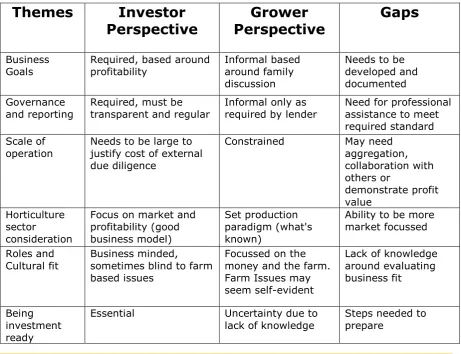
[image:40.595.71.533.412.766.2]perspectives are summarised below (Table 3).
Table 3: Differences between Investor and Grower Perspectives
Themes
Investor
Perspective
Perspective
Grower
Gaps
Business
Goals Required, based around profitability Informal based around family discussion
Needs to be developed and documented Governance
and reporting
Required, must be transparent and regular
Informal only as required by lender
Need for professional assistance to meet required standard Scale of
operation Needs to be large to justify cost of external due diligence
Constrained May need aggregation, collaboration with others or demonstrate profit value Horticulture sector consideration
Focus on market and profitability (good business model)
Set production paradigm (what's known)
Ability to be more market focussed
Roles and
Cultural fit Business minded, sometimes blind to farm based issues
Focussed on the money and the farm. Farm Issues may seem self-evident
Lack of knowledge around evaluating business fit
Being investment ready
Essential Uncertainty due to
University of Southern Queensland | A review of equity capital investment in the development of
high value horticulture 40
6.2
Producer Experiences with External Equity
We interviewed 5 farm businesses that have pursued equity co-investment for capital raising. The interviews revealed certain similarities in terms of their experiences on this journey. We have explored the lessons that they have learnt along the way and summarised them as part of this report. Given the low
number of participants in this space to date in Australia, and some reluctance to be interviewed for the research, we have drawn from experience of the
agricultural industry in general rather than simply focussing on the horticultural sector.
Why they Considered External Equity Investment
The major reason given by our interviewees was that their expansion plans were being constrained by limited debt to equity ratio. In other words, banks were not prepared to lend beyond a certain amount so the proponents saw opportunities that were limited by a lack of available capital.
“… maybe we could have borrowed incrementally more debt capital here and there, but ultimately could not have borrowed the sorts of volumes of capital we wanted to actually build a business that would actually benefit from introducing more capital”
Outside of the limitation of debt finance, another reason given by interviewees was the idea of looking for investors who were interested in a strategic
partnership that could add value to both businesses. The new partner would either have certain skills or capacity that aligned with the farm’s business. This could be in end processing, market access or strategic supplies that would in some way complement the strategic fit of both businesses to increase scalability. It was suggested as important that the ‘strategic’ fit also had a ‘cultural’ fit in that the investor had some understanding of the potential and limitations of agriculture.
University of Southern Queensland | A review of equity capital investment in the development of
high value horticulture 41
The Need for a Business Mindset
The key message from those who are well into this journey is the absolute need for a different mindset. They had to change their paradigm from ‘farming mode’ to ‘business mode’; they had to understand the corporate perspective. They suggested that 50% of their grower colleagues were more into farming as a lifestyle choice, in that they were satisfied to produce goods and deliver it to the farm gate for a profit. For those looking for investment it was about the bigger picture of where their farm sat in the food and fibre supply chain and where were the opportunities for growth into the future. They admit that in the past they had been mostly focussed on the engineering of farming but had only a rudimentary knowledge of business finance and how it applied to their farm. They realised that this mentality would have to change.
“There is no way someone is going to raise capital of significant value unless they have good financial control, absolute 101.”
This was something that the investment professionals had also indicated from our interviews that in their assessment of farm books for investment by their clients; that it was very hard to determine the actual profitability of the farm business. The key message from producers that have gone down this path of seeking investment is that number one, they recommend to their colleagues to get serious about the way they intend to present their financials. They suggested that producers needed to change their mindset and get on board with financial reporting.
Financial Reporting
Fundamental to raising external capital is a need to clearly understand and be able to communicate the financials of the farm. Interviewees have all indicated that it was very important to have the farm’s financials separated from any other business interest or potential conflicting family use. They want to understand the underlying profitability of the business over time and some idea of the profit outlook.
University of Southern Queensland | A review of equity capital investme