Int. J. Electrochem. Sci., 7 (2012) 5420 - 5428
International Journal of
ELECTROCHEMICAL
SCIENCE
www.electrochemsci.org
Nanostructured Titanium Oxide Platform for Application to
Ascorbic Acid Detection
P.M. Chavhan, Venu Reddy, CheolGi Kim*
Center for nano-BioEngineering and SpinTronics (nBEST), Department of Materials Science and Engineering, Chungnam National University, 220 Gungdong, Yuseong Gu, Daejeon 305-764, Republic of Korea
*
E-mail: [email protected]
Received: 8 November 2011 / Accepted: 2 May 2011 / Published: 1 June 2012
Nanostructured TiO2 films have been deposited onto indium tin oxide (ITO) films by sol–gel technique
to immobilize ascorbate oxidase (AsOx) onto nanostructured TiO2 films. The TiO2/ITO matrix,
AsOx/Nano-TiO2/ITO bioelectrodes have been characterized using spectroscopic techniques and used
to fabricate ascorbic acid biosensor. Nanostructured TiO2 based ascorbic acid biosensor has a response
time about 20 s, an apparent Km ( value of 30.80mg/dL (1.75 mM) and can be used to estimate
ascorbic acid concentration up to 200 mg dL−1. The AsOx/Nano-TiO2/ITO bioelectrodes have a
detection limit of 50 mg dL−1 with sensitivity of 0.212 mA/mg dL cm2. The enzyme films were found to be thermally stable up to 40 °C and have a shelf-life of about 4 weeks when stored at 4 °C.
Keywords: Sol–gel; Nano-TiO2; Ascorbate oxidase; Ascorbic acid; Electrochemical biosensor
1. INTRODUCTION
Electrochemical analysis has attracted considerable attention because of sensitivity may be further improved by several strategies including use of nanoporous metal oxide matrix, enzymes, redox couple mediator and catalysts [6–14]. Matos et al. [15] had measured in beers, soda, natural fruits and commercial vitamin C tablets with a palladium modified gold electrode. Aoki et al. fabricated a micro multi-band electrode and measured its response to ascorbic acid [16]. M. G. Hosseini et al. have electroanalytically determined ascorbic acid concentration in pharmaceutical tablets using titanium oxide nanotube films containing gold nanoparticles [17].
Nanoporous metal oxide nanoparticles such as titanium oxide (TiO2), cerium oxide (CeO2),
zinc oxide (ZnO), tin oxide (SnO2), and zirconium oxide (ZrO2) have recently been used for
fabrication of enzyme-based biosensors. Sol–gel derived nanostructured metal oxides such as TiO2
[18,19], CeO2 [20–21], ZnO [22,23], SnO2 [24] and ZrO2 [25] due to their interesting properties such
as better thermal stability, low cost, biocompatibility, non-toxicity and low temperature of processing, etc. have aroused much interest for immobilization of desired biomolecules. Among these, TiO2
nanoparticles have attracted much interest owing to their unique properties including high mechanical strength, oxygen ion conductivity, wide band gap (3.2 eV), biocompatibility and retention of biological activities [18,19]. A. Curulli et al. have reported that nanoporous TiO2 electrodes has been employed
for electron transfer mechanisms of H2O2, and many interesting biological molecules, such as
3,4-dihydroxyphenylacetic acid, ascorbic acid, guanine, l-tyrosine and acetaminophen, in order to assemble a new generation of chemical sensors and biosensors. [26]
In the present manuscript, we report results relating to the immobilization of ascorbate oxidase (AsOx) onto sol–gel derived nanoporous TiO2 film deposited on ITO glass for electrochemical
ascorbic acid detection.
2. MATERIALS AND METHODS
2.1. Reagents
Ascorbic acid (Purity 98.5%) and Titanium n-tetrabutoxide (Purity 99%) were procured from Sigma-Aldrich, USA. All other chemicals were used of analytical grade. Ascorbate oxidase from cucurbita species were procured from Sigma-Aldrich USA. Ascorbate oxidase solution (1 mg/ml) was freshly prepared in phosphate buffer (50mM, pH=7.0) prior to being immobilized. The ascorbic acid solution (500mg/dL) prepared in DI water, was stored at room temperature (25ºC). This standard solution was further diluted to make different ascorbic acid concentrations.
2.2. Preparation of Nano-TiO2/ITO electrode and AsOx/Nano-TiO2/ITO bioelectrode
Sol–gel derived nanostructured TiO2 film was fabricated onto ITO coated glass plate using sol–
gel dip-coating technique. For TiO2 coating, the sol–gel solution (4 wt.%) was prepared using titanium
n-tetrabutoxide and 2-methoxy ethanol as precursor materials. The dip coated TiO2 films was initially
air atmosphere. The proposed reactions involved in the syntheses of TiO2 films fabrication onto ITO
substrate using sol–gel technique are shown in Eq. 1.
These films have been utilized for immobilization of ascorbate oxidase via electrostatic interactions at pH 7.0 due to difference in IEP of TiO2 matrix and ascorbic acid. For ascorbate oxidase
immobilization, 50 µl solution of ascorbate oxidase (1 mg/ml) prepared in PBS (pH 7.0, 50mM, 0.9% NaCl) was dropped onto 0.25cm2 area of TiO2 electrode surface and the immobilized electrode was
kept overnight at maintained temperature of 4ºC. Prior to being used, the AsOx/Nano-TiO2/ITO
bioelectrode were rinsed with buffer solution to remove any unbound or loosely bound enzyme molecules. The electrode was then dried under nitrogen flow and kept at 4ºC when not in use.
Titania gel Amorphous Gel TiO Ti(OH) O H x . CH -O -CH -CH -HO x . ] [Ti(OH) Sol OH H C 2 (OH) ) H Ti(OC O H CH -O -CH -CH -HO ) H Ti(OC 2 C 450 4 C 110 2 3 2 2 4 sation Polyconden 9 4 2 2 9 4 Hydrolysis , HNO 2 3 2 2 4 9 4 3 ---(1) 2.3. Instrumentation
The Nano-TiO2/ITO electrode and AsOx/nano-TiO2/ITO bioelectrode have been characterized
using X-ray diffractometer (CuKα radiation, Rigaku)), Atomic force microscopy (AFM,) and cyclic
voltammetric studies. Indium–tin-oxide (ITO) coated glass plates (sheet resistance: 20 Ohm/square) were used as a substrate for deposition of nanoporous TiO2 films. Electrochemical analysis has
conducted on an Autolab Potentiostat/Galvanostat (Eco Chemie, Netherlands) using a three-electrode system with ITO as working electrode, platinum (Pt) sheet as the auxiliary electrode and Ag/AgCl as reference electrode in phosphate buffer saline (PBS, 50mM, pH7, 0.9%NaCl) containing 5mM [Fe(CN)6]3−/4− as redox probe.
3. RESULTS AND DISCUSSION
3.1. X-ray diffraction analysis
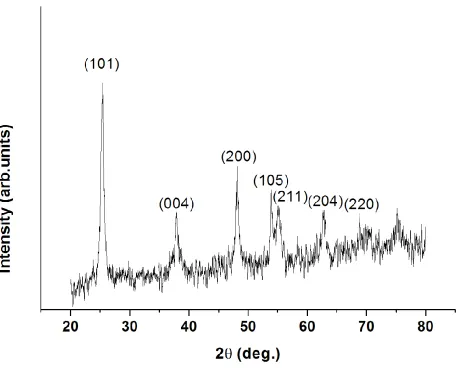
Fig. 1 shows results of X-ray diffraction pattern of sol–gel derived TiO2 film deposited onto
ITO coated glass substrate via dip-coating technique. X-ray diffraction pattern of TiO2 film shows
typical diffraction peaks at 2θ= 37.94, 48.12, 53.97, 55.15, 62.64, 68.94 corresponding to 101, 004, 200, 105, 211, 204, 220 reflection plane, respectively confirming tetragonal crystal planes of anatase phase of TiO2 [27]. The average crystallite size of the film obtained by Scherrer’s formula (D=kλ/
Figure 1. X-ray diffraction pattern of Nano-TiO2/ITO electrode
3.2. AsOx immobilization studies
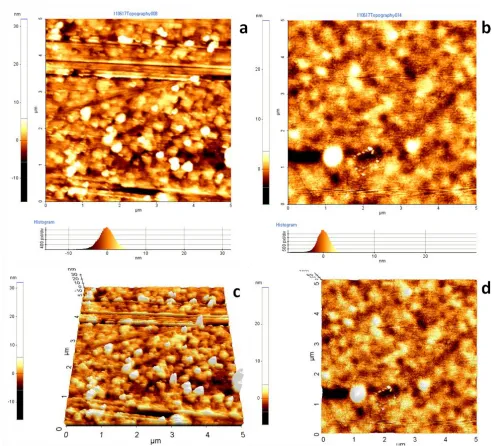
Atomic force microscopy (AFM) has been used to investigate surface morphologies of the Nano-TiO2/ITO electrode (Fig. 2, image a,c) and AsOx/Nano-TiO2/ITO bioelectrode (Fig. 2, image
b,d), respectively. The AFM image of Nano-TiO2/ITO electrode exhibits nanoporous granular
morphology with average grain size in the range of about 100–150 nm.
The granular and porous morphology of Nano-TiO2/ITO electrode changes into well-arranged
regular smooth morphology after immobilization of AsOx onto Nano-TiO2 electrode surface reveal
uniform immobilization of AsOx onto Nano-TiO2/ITO electrode.
It may be mentioned that appearance of hill-valley like naoporous topography of Nano-TiO2/ITO electrode is less predominant due to immobilization of enzymes onto Nano-TiO2/ITO
electrode via electrostatic interactions. Nanostructured TiO2 matrix perhaps may provide nanoporous
Figure 2. AFM (2D) and (3D) images of Nano-TiO2/ITO electrode (a,c); AsOx/Nano-TiO2/ITO
bioelectrode (b,d), respectively
3.3. Electrochemical studies
Cyclic voltammetric (CV) studies (Fig. 3A) of Nano-TiO2/ITO electrode (curve b) and
AsOx/Nano-TiO2/ITO bioelectrode (curve c) have been carried out in PBS (50mM, pH 7, 0.9% NaCl)
containing 5mM [Fe(CN)6]3−/4− at scan rate of 50 mV/s. It has been observed that the current
magnitude response of Nano-TiO2/ITO electrode is lowered than that of bare ITO (curve a) electrode
revealing that hindrance of electron transport between ITO and the Nano-TiO2 electrode interface.
However, magnitude of the current response increases after immobilization of ascorbate oxidase onto Nano-TiO2/ITO electrode (curve b). This may perhaps be due to that Nano-TiO2 film provides
[image:5.596.48.543.65.511.2]
current response. Moreover, sol–gel derived Nano-TiO2 matrix provides a three-dimensional structure
in ordered orientations which may also favors direct and faster electron communication between ascorbate oxidase and the electrode surface. These results indicate the immobilization ascorbate oxidase on to the Nano-TiO2/ITO electrode surface (Fig. 3A).
Figure 3. Cyclic voltammogram of (A) bare ITO electrode (a); Nano-TiO2/ITO electrode (b);
AsOx/Nano-TiO2/ITO bioelectrode (c) at 50 mV/s in PBS containing 50mM Fe[(CN)6]3−/4−
buffer; (B) CV of AsOx/Nano-TiO2/ITO bioelectrode at different scan rate (10–100 mV/s),
[image:6.596.124.472.175.695.2]
Fig. 3 B exhibits results of the CV studies of AsOx/Nano-TiO2/ITO bioelectrode as a function
of scan rate in the range of 10 to100 mV/s carried out in PBS (50 mM, pH =7.0, 0.9% NaCl). It is observed that magnitudes of both anodic and cathodic peak currents response of AsOx/Nano-TiO2/ITO
bioelectrode increase linearly with the increasing scan rate (inset, Fig. 3B) suggesting that electrochemical reaction is a diffusion-controlled process. Moreover, cathodic and anodic peak potentials separation also increases linearly indicating facile charge transfer kinetics in the 10–100 mV/s range of scan rates. These results reveal that sol–gel derived Nano-TiO2/ITO electrode provides
a suitable microenvironment for immobilization of ascorbate oxidase, which perhaps may accelerates electrons transport between electrode and electrolyte medium.
3.4. Electrochemical response studies
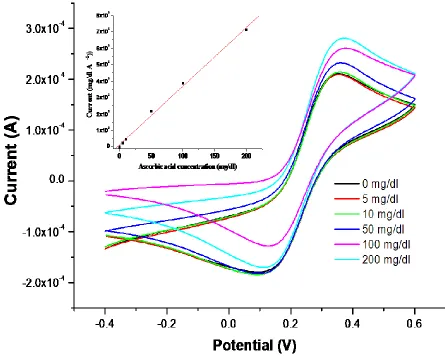
Figure 4. Electrochemical response studies of AsOx/Nano-TiO2/ITO bioelectrode as function of
ascorbic acid concentration using CV, Inset: calibration curve between magnitude of concentration/current and ascorbic acid concentration (5–200 mg/dL).
The electrochemical response of the AsOx/Nano-TiO2/ITO bioelectrode has been investigated
[image:7.596.76.521.280.638.2]
(Fig. 4) in PBS (50mM, pH 7, 0.9% NaCl) containing 5mM [Fe(CN)6]3−/4−. During response studies of
the AsOx/Nano-TiO2/ITO bioelectrode, it has been observed that magnitude of the response current
increases with increasing concentration of ascorbic acid. The increase in electrochemical current response can be attributed to pH sensitive behavior of the AsOx/Nano-TiO2/ITO. It may be noted that
during biochemical reaction mild ascorbic acid undergoes oxidation and release proton in presence of immobilized ascorbate oxidase. This generated protons decrease pH of buffer medium resulting in change of the electrochemical signal of the AsOx/Nano-TiO2/ITO bioelectrode with increasing
concentration of ascorbic acid. Inset in Fig. 4 shows that variation of peak response current with ascorbic acid concentration (linear range as 50–200 mg/dL) follows the linear regression with the value of correlation coefficient as 0.981. This bioelectrode shows fast response time (20 s), high sensitivity (0.212 mA/mg dL cm2) and low detection limit as 50 mg/dL. J.C.B. Fernandes et al. [28] reported fabrication of a potentiometric biosensor for L-ascorbic acid based on ascorbate oxidase where enzyme is immobilized in a graphite/epoxy electrode by occlusion in a poly(ethyleneco-vinyl acetate) matrix. The comparative lower detection limit value is about 73.9 mg/dL.
In order to confirm affinity of enzyme (ascorbate oxidase) for the substrate (Ascorbic acid), enzyme substrate kinetics parameters have been estimated. The value of apparent Michaelis–Menten constant ( ) for the AsOx/Nano-TiO2/ITO bioelectrode, estimated by Hanes plot (Fig. 4, inset) has
been found to be 30.80 mg/dL (1.75 mM). The low value of indicates enhanced affinity of ascorbate oxidase from the ascorbic acid.
The shelf life of the AsOx/Nano-TiO2/ITO bioelectrode has been investigated by measuring
electrochemical current response with regular interval of 1week. It is observed that AsOx/Nano-TiO2/ITO bioelectrode preserve ~ 78% of the ascorbate oxidase activity even after 28 days when
stored in refrigerated conditions (4ºC) and thereafter the current response decreases.
4. CONCLUSIONS
In the present work, sol–gel derived Nano-TiO2 film has been utilized to immobilize ascorbate
oxidase from Cucurbita species by physiosorption for ascorbic acid detection. The AsOx/Nano-TiO2/ITO bioelectrode shows improved biosensing performance like linearity as 50–200mg/dL, low
detection limit of 50 mg/dL, response time of 20 s, shelf life of 4 weeks, and sensitivity of 0.212 mA/mg dL cm2 with linear regression coefficient as 0.981. The low value of obtained as 30.80mg/dL (1.75 mM) indicates high affinity of AsOx/Nano-TiO2/ITO bioelectrode for ascorbic acid.
It should be encouraging to utilize this electrode for detection of other biomarkers such as lipoproteins and uric acid in serum samples.
ACKNOWLEDGMENTS
We gratefully acknowledge our colleagues for useful discussions during the preparation of the manuscript.
References
1. N.J. Temple, Nutr. Res., 20 (2000) 449
2. A.G. Frenich, M.E.H. Torres, A.B. Vega, J. Agri. Food Chem., 53 (2005) 7371 3. F.O. Silva, Food Contl., 16 (2005) 55
4. M.J.R. Lima, I.V. Toth, A.O.S.S. Rangel, Talanta, 68 (2005) 207 5. M. Noroozifar, M. Khorasani-Motlagh, Talanta, 61 (2003) 173
6. M. Matsumiya,W. Shin, N. Izu, N.Murayama, Sens. Actuator B Chem., 93 (2003) 309
7. P. Waszczuk, T.M. Barnard, C. Rice, R.I. Masel, A. Wieckowski, Electrochem. Commun., 4 (2003) 599
8. M.J. Schoning, R. Krause, K. Block, M. Musahmeh, A. Mulchandani, J. Wang, Sens. Actuators B Chem,. 95 (2003) 291
9. R. Baronas, F. Ivanauskas, J. Kulys, Sensors, 3 (2003) 248
10.T. Osaka, S. Komaba, A. Amano, Y. Fujino, H. Mori, Sens. Actuators B Chem., 65 (2000) 58 11.D.R. Shankaran, S.S. Narayanan, Sens. Actuator B Chem., 86 (2002) 180
12.S.L. Mu, D. Shan, Y.F. Yang, Y.F. Li, Synth. Met., 135 (2003) 199
13.J.J. Wang, N.V. Myung, M.H. Yun, H.G. Monbouquette, J. Electroanal. Chem., 575 (2005) 139 14.G.S. Attard, P.N. Bartlett, N.R.B. Coleman, J.M. Elliott, J.R. Owen, J.H. Wang, Science, 278
(1997) 838
15.R.C. Matos, M.A. Augelli, J.J. Pedrotti, C.L. Lago, L. Angnes, Electroanalysis, 10 (1998) 887 16.A.Aoki, T. Matsue, I. Uchida, Anal. Chem., 64 (1992) 44
17.M.G. Hosseini, M. Faraji, M.M. Momeni, Thin Solid Films, 519 (2011) 3457 18.J. Yu, H. Ju, Anal. Chem., 74 (2002) 3579
19.Q. Li, G. Luo, J. Feng, Q. Zhou, L. Zhang, Y. Zhu, Electroanalysis, 13 (2001) 413
20.A.A. Ansari, A. Kaushik, P.R. Solanki, B.D. Malhotra, Electrochem. Commun., 10 (2008) 1246 21.A.A. Ansari, P.R. Solanki, B.D. Malhotra, Appl. Phys. Lett., 92 (2008) 263901
22.J.X. Wang, X.W. Sun, A. Wei, Y. Lei, X.P. Cai, C.M. Li, Z.L. Dong, Appl. Phys. Lett., 88 (2006) 233106
23.A.Wei, X.W. Sun, J.X. Wang, Y. Lei, X.P. Cai, C.M. Li, Z.L. Dong, W. Huang, Appl. Phys. Lett., 89 (2006) 123902
24.N. Jia, Q. Zhou, L. Liu, M.M. Yan, Z.Y. Jiang, J. Electroanal. Chem., 580 (2005) 213
25.H.J. Kim, S.H. Yoon, H.N. Choi, Y.K. Lyu,W.Y. Lee, Bull. Korean Chem. Soc., 27 (2006) 65 26.A.Curulli, Sensors and Actuators, B 111–112 (2005) 441
27.P.K. Khanna, N. Singh, S. Charan, Mat. Lett., 61 (2007) 4725
28.J.C. B. Fernandes, L.T. Kubota, G. O. Netob, Anal .Chim. Acta, 385 (1999) 3
![Figure 3. Cyclic voltammogram of (A) bare ITO electrode (a); Nano-TiO2/ITO electrode (b); AsOx/Nano-TiO2/ITO bioelectrode (c) at 50 mV/s in PBS containing 50mM Fe[(CN)6]3−/4− buffer; (B) CV of AsOx/Nano-TiO2/ITO bioelectrode at different scan rate (10–1](https://thumb-us.123doks.com/thumbv2/123dok_us/1924228.151642/6.596.124.472.175.695/cyclic-voltammogram-electrode-electrode-bioelectrode-containing-bioelectrode-different.webp)