0022-538X/91/084153-07$02.00/0
Copyright © 1991, American Societyfor Microbiology
Generation and
Analysis of
Nonhomologous RNA-RNA
Recombinants in
Brome
Mosaic Virus: Sequence
Complementarities
at
Crossover Sites
JOZEF J. BUJARSKI* ANDALEKSANDRA M. DZIANOTT Plant MolecularBiology Center and Department of Biological Sciences,
NorthernIllinois
University,
DeKalb,
Illinois 60115-2861 Received 8 January 1991/Accepted 20 April 1991All three single-stranded RNAs of the brome mosaic virus (BMV) genome contain a highly conserved,
193-base 3' noncoding region. To study the recombination betweenindividualBMV RNAcomponents,barley plantswereinfectedwithamixtureofin vitro-transcribed wild-type BMV RNAs 1 and 2 andanRNA3mutant thatcarriedadeletionnearthe3'end. This generatedapopulationof both homologous and nonhomologous
3' recombinant BMV RNA3 variants. Sequencing revealed that these recombinants were derived byeither
singleordoublecrossoverswith BMV RNA1orRNA2. Theprimarysequencesatrecombinantjunctions did not show any similarity. However, they could be aligned to form double-stranded heteroduplexes. This suggested thatlocalhybridizations amongBMVRNAsmay supportintermolecularexchanges.
As in DNA-based organisms, genetic recombination in RNA viruses provides a means for their well-known rapid evolution and adaptation (20, 34). Natural RNA
rearrange-ments have been identified in the genomes ofseveral plant RNA virusgroups,including beet necrotic yellow vein virus (7), tombusviruses (15), tobamoviruses (33), and tobravi-ruses(30). In addition, the recombination has been induced experimentally. For example, atemperature-sensitive muta-tionintheRNA3componentof alfalfa mosaic virus acquired a 5'-terminal fragment from the RNA1 component during infection (16). An insertion mutantof tobacco mosaic virus easily lost one of its duplicate coat protein cistrons (12). Cascone et al. have detected a recombination between the satellite and defective interfering RNAs of turnip crinkle virus(TCV) (11).
One ofthe mostusefulexperimental systems with which to study recombination in plant viruses is bromoviruses. Brome mosaic virus (BMV) isa tripartitepositive-stranded RNA virus whose RNA components share a highly struc-tured 3' noncoding region of nearly 200 nucleotides (2). Previously, Bujarski and Kaesberg (10) found thata biolog-ically active deletionmutantof BMV RNA3(designated M4; Fig. 1) was efficiently repaired by recombination between M4 and thenoncodingsequencesofwild-type (wt)RNA1or RNA2, in either homologous or nonhomologous fashions. Rao et al. (28) confirmed these results by studying the recombinational repair of 3' deletion mutations in BMV RNA2. Incowpeachlorotic mottle virus, another bromovi-rus,Allisonetal. (3) havedemonstrated the regeneration of afunctional RNA3moleculeby recombinationbetweentwo overlappinginternaldeletionmutants. Because themajority of all these identified bromovirusrecombinantswere homol-ogous, the sequences at crossover sites were unrecogniz-able. Thisseriouslylimitedourunderstandingof the
recom-bination mechanism in these viruses.
Many more data about RNA-RNA recombination are availablefor animal RNAviruses, especiallypicornaviruses and coronaviruses (19, 21, 25). Kirkegaard and Baltimore
*Corresponding author.
have demonstrated that intertypic homologous recombina-tion between two poliovirus types occurred via a copy choice mechanism during negative-strand synthesis (22). Other studies implied that certain RNA structures may
facilitate recombination crossings. For instance, both Kirkegaard and Baltimore (22)andTolskayaetal.(35)found that crossovers among poliovirus types were restricted to certain virus RNA segments. The latter group found that these RNA segments had the potential toform secondary structures (31). Based on this observation, the authors suggested that the formation of intermolecular duplexes induced the intermolecular replicase switches. Ina modifi-cation of this model, Kuge et al.(23) proposed that poliovi-rusdefectiveinterferingRNAsweregenerated bya
looping-outprocessatthetwoRNAsites that have beenjuxtaposed by another complementary RNA molecule. In coronavi-ruses, recombinational exchanges were also limited to se-lected RNAlocations (5).
Inanattempt toadvanceourinsightinto the mechanism of RNA recombination in plant viruses, we characterized a number ofnonhomologous BMV RNA3 recombinants that wereobtained after infection with theM4 RNA3 mutant. A comparison ofsequences at the nonhomologous junctions has shown that thecrossoverstookplacewithin thepotential double-strandedregions.This inferredthat,asinpoliovirus, local hybridizations can provide an environment for the RNAexchanges.
MATERIALS ANDMETHODS
Materials. Plasmids pB1TP3, pB2TP5, and pB3TP7 (a
generous giftfrom Paul Ahlquist, UniversityofWisconsin, Madison), containing full-length cDNA copies ofwt BMV RNA components 1, 2, and 3, were used to synthesize infectious BMVtranscripts. Apreviouslyconstructed deriv-ative ofpB3TP7 (8) was used to synthesize the M4 RNA3 transcript(Fig. 1).
Avian myeloblastosis virus (AMV) reverse transcriptase wasobtainedfromLifeSciences, Inc., St. Petersburg, Fla.; the Sequenase kit was from United States Biochemicals, Cleveland, Ohio; restriction enzymes were from Bethesda
4153
on November 10, 2019 by guest
http://jvi.asm.org/
4154 BUJARSKI AND DZIANOTT
/ u
lior--U--A-
ruCCAG
Jyu
qyycU.A
GAGAGU'AAAGAGACCA
A
GGGGUUC
UI20
A'0 OHarm D 80GC
GG5CI3o
U8UAA .Gc A'
GC
UCA
G.A1W20
GU 40UA GU
CG-60 C
70-UA A UG AA A
CAA
A-A G GA-U70U
-AU-arm C arm B
FIG. 1. Schematic representation of the tRNA-like conformation formed at the 3'-terminal noncoding region in BMV RNA3 accord-ingto Rietveld et al. (29). The location of the 20-nucleotide deletion (deletionM4)isindicated by an open box. The construction of the M4BMV RNA3 deletion mutant wasdescribed previously (8).
incubation at 100°C for 3 min and then a graduate decreaseto roomtemperature over 40min. Subsequently, 0.5 mM each of fourdeoxynucleoside triphosphates and 3 mM dithiothre-itol (final concentrations) were added, and the resulting mixture was incubated with 10 U ofKlenow DNA
polymer-ase atroom temperature for 2 h in afinal volume of 30
RIl.
The resulting double-stranded cDNA product was digested at theXbaIrestriction site (present within the 20-merprimer)and ligated between the SmaI and XbaI restriction sites of thepGEM3-zf(+) cloning vector(Promega Corp.).
Selection and sequencing of cDNAclones. Approximately 1 pg of minilysate DNA preparations (32) of each cDNA library was digested with EcoRI and XbaI restriction en-zymes, and the size of inserted cDNA fragments was esti-matedelectrophoretically in 1% agarose gels. Thirty insert-containing clones from each library were sequenced with the
Sequenase kit according to the manufacturer's specifica-tions, initially with a single-nucleotide reaction ("A" track), andthereafter, those with different patterns were sequenced completely.
Computer-assisted analysis of RNA sequences. Sequences were aligned andfolded by using the programs BESTFIT, FOLD, and GAP of the University of Wisconsin Genetics
ComputerGroup sequence analysis package.
Research Laboratories, Gaithersburg, Md.; T7 RNA poly-merase was from Promega Corp., Madison, Wis. All radio-active chemicals were from Amersham Corp., Arlington Heights, Ill. Deoxyoligonucleotides were synthesized in an
Applied Biochemicals DNA synthesizeratNorthern Illinois University.
Generation of BMVvariants containing RNA3 recombinant molecules. The wt BMV RNAs 1 and 2 as well as the M4 RNA3 were synthesized separately by transcription from4 ,ug of the correspondingEcoRI-linearized plasmids by using T7 RNA polymerase,asdescribedelsewhere(18).A mixture of theabovetranscriptswasinoculatedoneight 5-day barley seedlings, exactlyasdescribed by Allisonetal. (3).Tendays following inoculation, the progeny viral RNAs were ex-tracted from 0.2 g of infected leaves (24) and analyzed electrophoretically in 1% agarose gels with Tris-borate buffer (32). The progeny virus, isolated from one BMV-infected barley plant that contained the heterogeneous RNA3 component, was mechanically reinoculated on eight newbarley seedlings, and the viruswasextracted separately from 0.2 g of each plant 10 days after inoculation. After isolation from virions, each RNApreparation wasanalyzed electrophoretically in 1% agarose gels and subsequently usedas thetemplateto obtain cDNA libraries.
Generationof cDNA libraries. cDNA libraries for recom-binantRNA3 moleculeswereobtained by amodification of the procedure described by Bujarski and Kaesberg (10). BMVRNA (20 ,ug) washybridizedto 1 ,ug of the deoxyoli-gonucleotide d(TGGTCTCTTTTAGAGA), whichwas
com-plementaryto the last 16nucleotides ofthree BMV RNAs. Subsequently, this primerwasextended withAMVreverse
transcriptase asdescribed elsewhere (14). The RNA strand was removed by RNase A digestion, and the resulting single-stranded (ss) cDNA waspurified on aSephadex G50
(Pharmacia) column (0.3 by 2 cm) inTE buffer (32). Then, 100ngof the RNA3-specific second-strand synthesis primer [a 20-mer, d(GTTGTACATCTAGAAGTTGA), complemen-tarybetween nucleotides1752 and 1771 of thewtRNA3]was
hybridized tothe sscDNAina20-,ul mixture containing 10 mM Tris (pH 7.5), 10 mM MgCl2, and 50 mM NaCl by
RESULTS
Derivation of nonhomologous RNA3 recombinants.In order togeneratenonhomologous RNA3 recombinants, eight bar-ley seedlings were inoculated with the mixture of wt RNAs 1 and 2 and the M4 RNA3. This caused infection in three plants. The low infectivity (compared with the infectivity of thewtBMVRNAtranscripts [18]) was probably caused by increased instability of the M4 RNA3 mutant or by alteration
A Al A2 A3 A4 A5 A6 A7 A8 WT
A BMV RNA
[image:2.612.72.306.70.247.2]
-1~~~~~~~~~~-WT A6/1A2/1lA8/1Al/i M N
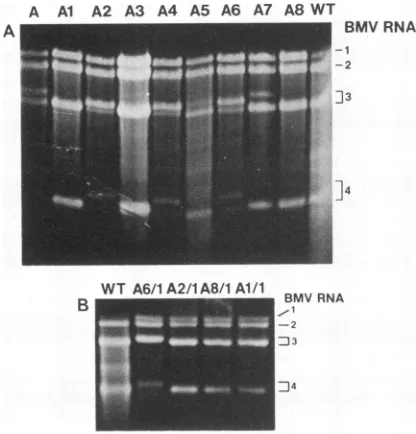
FIG. 2. Electrophoreticanalysis (in 1% agarosegel) of progeny virion RNA isolated from BMV-infected barley leaves. (A) BMV RNAsextracted frominitiallyinoculatedplantA(laneA)and after first passage(lanesAltoA8). (B)BMV RNAsisolated aftersecond passagefromplants
Al/i,
A2/1, A6/1,andA8/1.ThemissingRNA1 band in the wt lane isprobablydue todegradationduring electro-phoresis.J. VIROL.
on November 10, 2019 by guest
http://jvi.asm.org/
[image:2.612.345.553.432.649.2]TABLE 1. Distributionof RNA3 recombinants in BMV-infectedbarley plants'
Recom- Recombinant content(%)in plant:
binant A Al A2 A3 A4 A5 A6 A7
1 19.8 6.6
1' 3.3
2 3.3 83.4 6.6
3 73.6
4 10.0 83.5 56.1
5 6.6
6 6.6
7 10.0 43.9 19.8 90.1
8 33.8 96.7 86.8 10.0
9 19.8 3.3 16.5 6.6 3.3
a The table showsthe percentageof variousRNA3 recombinants found in cDNAlibraries obtained for theprogeny BMV RNA extracted fromprimarily inoculatedplant A and from seven plants(Alto A7) infected with the virus
inoculum fromplant A. Plant A8 has not been analyzed. See Fig. 2 for the
plantnames.Thepercentage wascalculated afterthe sequencing of 30 clones
from each cDNA library (see Materials and Methods), i.e., one clone
correspondsto3.3%.The structuresof recombinants1 to 8 are shown in Fig. 4.Variant9 represents theunrepairedM4 RNA3.
plant A6/1, was surprising, especially since the wt-like (legitimate) recombinantswereavailable forselection inthe originally infected plant A (Table 1). All the prevalent illegitimate recombinants carried an unmodified 3' tRNA-like structure (Fig. 3), the region known to serve as the replication promoter(1, 26). Therefore, one may speculate that they replicated witharatesimilartothatofthewt-like recombinants and thus both typeshad comparable chances for selection.
Collectively, these results demonstrated that both legiti-mate and illegitimate BMV RNA variants readily emerged after infection. Most of the recombinants appeared in the originally inoculated plant A (Table 1), and subsequent
passagescaused further selection rather thangeneratingnew recombinants. This indicated that the M4 RNA3 was less genetically stable than the progeny illegitimate
recombi-nants. Onefeature thatmayfunction against the endurance of the M4mutantininfection is itshigher-than-wt replication rate (8). This maydisturb the appropriate balance between BMV RNA components ininfection.
Cloning and sequencing of recombinants. To characterize the recombinant RNA3 molecules, 30 cDNA clones were
of theinteractionswithsomevirusand/or host factor. While
progeny BMV RNA3 from two plants comigrated electro-phoretically withthe wt BMVRNA3 (datanot shown), the one from a third plant (designated plant A) revealed two majorbandsattheregion of RNA3 (lane A in Fig. 2A). This suggested thatanextensively altered RNA componentwas
presentin theprogeny virus.
To induce higher diversity among the RNA3 molecules, the virus isolated from plant A was reinoculated on eight newbarley seedlings. An electrophoretic analysis (Fig. 2A, lanes Al toA8) revealed that for three plants (lanes Al, A3, and A8), only one band was present at the RNA3 region, whereas in plants A2 and A4,twobandswere visible in this area. The concentration ofupperbandswashigher than with the wt. In two other plants (AS and A6), RNA3 was also composed of two bands, but the higher bands contained slightly larger RNA than those ofplants A2 and A4. The RNAfromplantA7looked similartothatfrom plant A, but theupperRNA3 bandwasless intense. All this suggesteda rapid generation of the illegitimate RNA3 molecules.
[image:3.612.316.552.315.609.2]To examine whether the RNA3 profiles would undergo furtherchanges, the viruses obtained after the first reinocu-lationwerepassagedonthenewbarley plants. As shown in Fig. 2B, double bands present in the region of RNA3 migrationinplants A2 and A6werereplaced by single bands in plants A2/1 and A6/1. While in plant A2/1, the RNA3 entity comigrated with thewtRNA3,inplantA6/1, themore slowly migrating RNA3 band became predominant. Thewt RNA3 profiles of plants Al and A8 wereretained in plants Al/landA8/1.
Theheterogeneity ofRNA4populationsinplants A2, A4, andA6correspondedtothat of RNA3(Fig. 2A).Inplants A, A5, and A7, however, only one band of RNA4 could be found, while two bands were observed in the region of RNA3. Thismightbebecause plants A,A5, and A7 contain larger RNA3 versions than plants A2, A4, and A6, rendering thecorrespondingRNA4versions toobigtobe copackaged with the RNA3 components in the icosahedral virions. Alternatively, certain recombinant RNA3 molecules may have failed to serve as templates to generate subgenomic RNA4.
Thepredominanceof the illegitimate variants, like that in
wt
100
RNA3
RNA3
I I 1
200 300 400 500 nt
236 RNAI
7
RNA3 235 RNAI
Li t .
RNA3 s2i RNA2
175
RNA3 4273 RNA2
171
RNA3 4295 RNA2
195
RNA3 243 RNAI RNA2
5 u4 .
- v7
12 1
RNA3 RNAI
131
RNAX
.42 176 83
RNA3 4131 RNA I
17
RNA3 *lOO RNA2
8
RNA3 mm RNA2
269
FIG. 3. Schematic representation of the BMV RNA3
recombi-nants (numbered 1 to 8) found in the infected barley plants (see Table 1). Thefigureshows the 3'noncoding regionof BMV RNA3 downstreamofthecoatprotein cistron (solidboxontheleft),with the original RNA3 sequences shown asopen boxes and acquired RNAl or RNA2 sequences shown as cross-hatched boxes. The positionof theunrepairedM4deletion is shownbyasmall vertical rectangularopenbox. Thelocationof eachrecombinantjunctionis identified bythe sequencecoordinates, numberedfrom the 3' end. Theregionswherehomologous recombinationevents occurredare enclosed in dotted open boxes. RNA X in the recombinant6line indicates that,dueto sequenceidentity, the3'-terminalregioncan be derivedby crossingsbetween any of the BMV RNAs.
l
on November 10, 2019 by guest
http://jvi.asm.org/
4156 BUJARSKI AND DZIANOTT
RECOMBINANTS1,1-, 5( 1) RECOMBINANT 5(2)
xAt;' A
UG cUu C'4A c c G A C C
5
GIt1LgA \SA
G( C CUG1/UX;4C U A GA G U U 3:,'GCCUGU GGUA CGUUUGG CAAG RNAI
ACAGAGA CUCU ~~ V~ CCAU GUAAAUU GUUC RNA3
3'A
tA UK AA7UG1flG GC 0 CC 5*3 AAAjAA
G;A
D G GCUAU
ARMAA ACG
RECOMBINANTS2.3
'I
A
C u AC 3
5' U C c A C A AuGC CUU UAAG ULU_jSjGGAULAWIlC U UG-AU AU UAAGCU
GAA AUUC ,A 2.ACV JCIrGUAGU AUG UA UGA
3' C U-7G,'JtAt AA ACI 5'
ACAG
RNA2 RNA3
RECOMBINANT4 UC C G
GU U m
C
C AG AG A I'M C.. UIFA
GGCUA UCAGUU UUGUG
j
ARNA2jUAAGCAG X 3'CU-GAU4A_QgA AAC4fIEAAGG jib 6CAGGAUG RNA3
3- U 'GAj UU H UCA 5'
UG
A
GLW
AC GA ,A, G-C AU
GtC' U U AG C
C C G C CA C A G C A 3
UG UCUCUU UUASJJD AUAG GU UU GGUGC GUAC GUGUU
3
AN--
)UAA UGUC CA AA UUGUGCAUGUGUGG3't
'LCF A A A AG A C 5RNA 2 RNA1
RECOMBINANT 6
C A A
AG A C
5' UG A G UA A,G C U AU 3
GUUCG
CAU-G_CIUQQ-AU
GCAA UCUEUQ-G ..OICCUAAGGUU-GAA GUAAA RNA3UGGGC-GUA--V,CUAUA- ACU1&QUACG i AU- CAACUU CGUUU RNAI
Al A GUt G \"GCUC
3' GA AGUC
A
RECOMBINANT A
GA
G U U AU
5' CG ACJAU GA UA U A AC U G A 3
CUUUGCUUNA[FCUGU %ACU02AGCCC-UC UCUGAG GGU CUAU UAUGAACC RNA 2
GAGAUGG GUU i>ACA-CUGAAA-U_U6 AG AGGc CCGGUAUAUUUGG RNA3
3 CAU T uc u G C 5'
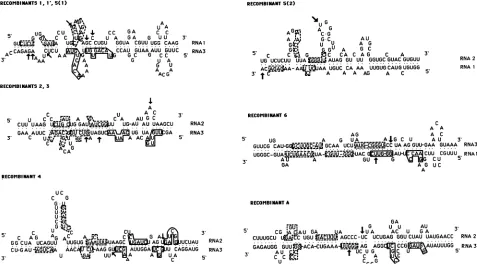
FIG. 4. Complementary sequences between pairs of positive strands of BMV RNA components(indicated on the right), as hybridized in opposite orientationsnearrecombination sites (shownby arrows) andleadingtotheformation oftherecombinants shown in Fig. 3. Each recombinantcontains the top-strandsequences up to the arrow and then continues with the bottom-strand sequences5'of the bottom-strand arrow. The base-pairings are represented by dots. The numbers 5(1) and 5(2) name two different nonhomologous crossovers found in recombinant 5. Hairpin stems that canfold inputative recombination intermediates (after partialunwinding by the replicase of the hybridized duplexes)areindicated by open boxes,whereasthose that mayfurtherdestabilize hybridized parts of the intermediates are within dotted-line boxes.Statistical values ofthesealignments (in SD) and the free energies ofthe heteroduplexes and ofthe sum of intramolecular foldings for both strands(in parentheses)were asfollows: recombinants 1and1', 1.4 SD, -22.4 (-25.9) kcal/mol;recombinants2 and 3, 1.9 SD, -34.1 (-20.2) kcal/mol;recombinant4,2.2SD, -30.7(-16.3) kcal/mol;recombinant5(1),1.5 SD, -23.8(-33.4)kcal/mol;recombinant5(2), 3.1 SD, -20.2(-28.1)kcal/mol; recombinant6, 1.7SD,-27.0(-40.5)kcal/mol; recombinantA, 1.7SD, -48.3 (-28.5)kcal/mol. Free energies ofthealignments were calculated according to Jacobson et al. (17), whereas those of intermolecular foldings were estimated by using the programFOLD(36).
sequenced from each progeny BMV RNA library. Among the identified 3' recombinants shown in Fig. 3, two
recom-binants
(variants 7 and 8)originated by homologousrecom-bination with corresponding sequences from RNA1 and RNA2, respectively. Of seven illegitimate recombinants,
variants1 and 1' contained 3' end sequences of the last 236 and 235 nucleotides, respectively, fromRNA1connected at similarpositions near the 3' end of the unrepaired M4 RNA3.
Recombinants2, 3,and 4contained almost the entire RNA2 noncoding region connected at various points in the middle
of the RNA3 noncoding region. Variants 5 and 6 were derived by double crossover events. Specifically, variant 5 contained a mosaic of RNA1 and RNA2 3' noncoding sequencesjoined just 12 bases upstream from the 3' end of the M4RNA3 molecule. RNA1and RNA2 sequences were arranged in such a way that 75 3'-terminal nucleotides from RNA2 were ligated to the very 3'-terminal nucleotide of a 243-base-long 3'-end RNA1 sequence. In variant 6, the RNA1 insert was connected downstream to the RNA3 sequence so that it produced a 42-base deletion within the tRNA-like structure. Upstream, thisRNA1 insert was
legit-imately ligatedto RNA3sequences. Recombinant A had the 308-base 3' sequence from RNA2 ligated to RNA3 near the coatproteintermination codon (10).
Characterization of sequences at recombinant junctions. To
learn whetherspecificRNA sequencescontrol the
recombi-nant crosses, sequences flanking the illegitimate junctions were examined. Initial comparisons revealed no obvious
similarity between primary sequences. Also, thejunctions
occurred between different nucleotides. Thissuggested that
primary structures did not directly determine the
recombi-nation.
Analyzingotherfactors,we usedthe computer programs BESTFIT and GAP toinvestigatecomplementarities among the RNA substrates. Pairs ofBMVRNAscomprising
nucle-otides from-50to+50, both ofpositive polarity,werelined
up in opposite orientations toform the heteroduplex struc-tures. The best-hybridizing duplexes are shown in Fig. 4. Thestatistical values for thesepairings,based ona meanof 25 randomized (shuffled) comparisons, ranged between 1.4 and3.1 standarddeviations (SD).Ascoreof3.0SDor more is considered todemonstratean authentic relationship(13). Therefore,atleast theduplex 5(2) can beconsidered
statis-tically significant. Although other heteroduplexes were
sta-tisticallyless probable, they may still be valid because the viruses cannot randomize their RNA sequences.
Sincethenumber of RNA arrangements that have similar
energies may belarge, otherconfigurations in the recombi-nation regions were possible. Certainly intramolecular
sec-ondary elements may competewith the intermolecular hy-J. VIROL.
on November 10, 2019 by guest
http://jvi.asm.org/
[image:4.612.81.558.80.344.2]B.
RNAAI
11111114....
3. () 5.
Cleavage
RNAA
RNAB
3' cleavage
IULgabon
RNA A *3'5 RNA A
RNAB %f RNAB
C.
Cleavage 4,
RNA - -O
RNABa
b 3
b
3.
Cleavage
Ligation
RNAA
a I
Ligation
RNAB RNA B4>.
b 3' 51 a f
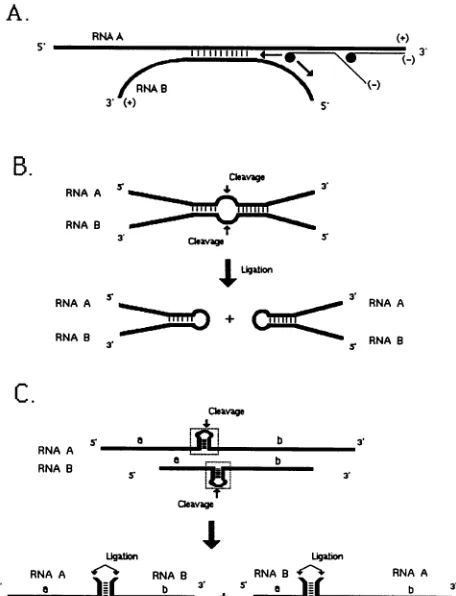
FIG. 5. Schematicillustration of the potential role ofsequence
complementarities in copy choice (A) and breakage-and-religation
(B and C) models of recombination. (A) This continuous copy
choicemodel involvestemporaryformation ofalocalheteroduplex
between two RNAs of the same polarity. When the viral RNA
polymerase reaches this region, it may continue daughter strand
synthesis onthe primary templateA ormay switchtotemplateB.
(B)Inthebreakage-and-religationmodel,twoRNAmolecules form
a local heteroduplex structure(as in panel A) thatcan be cleaved
within a loop region, and subsequently the already-hybridized
fragments can be religated. (C) The discontinuous version of the
breakage-and-religation mechanism involves separate cleavagesof
twoviral RNAs withinhomologous hairpins(enclosedin the dotted
openbox)andareligationreactionamongthetwopartially
hybrid-izedfragments (depicted bythelowercase lettersaand b).
bridizations. Toassesssuchapossibility,thefreeenergiesof
theheteroduplexes werecomparedwith the sumof minimal
energy foldings of the corresponding ssRNA regions. As
shown in the legend to Fig. 4, these values ranged within a
similar order of magnitude, with some of the heteroduplex
energies exceeding those for thecorresponding
intramolec-ularfoldings. This indicated that hybridizations ofparental
BMV RNAs atthecrossingsites were energetically
permis-sible.
In addition to the hybridizations at the illegitimate
junc-tions,associations amongtheaccuratelyjuxtaposed3' BMV
RNA sequences were possible. Wefound that, owing to a
closehomology between the highlystructured 3' noncoding
sequences, such interactions were more perfect and
ex-tended over longer regions than those of Fig. 4 (data not
shown).Thereplicaseswitches atsuchduplexesmayleadto
theformation of thelegitimaterecombinants observed in this work.
DISCUSSION
The lackofcommon primary sequences on both sides of
the BMV recombinant crossing points is in contrast to the data of Cascone et al. (11) on recombination in TCV.
Apparently, aconsensus motif, similar among the terminal
sequencesof thegenomic,satellite,and defectiveinterfering
TCV RNAs, could be located onthe right sides of the TCV recombinants. Based on that, theauthors proposeda
repli-case-driven mechanismbywhich the TCV RNApolymerase
initiates minus-strand synthesisateither terminalorinternal
replicase recognition sequences. In some respects, this
model is similar to the mechanism of recombination
pro-posedforcoronaviruses, inwhichacommonleader initiates
RNA synthesisat different internal sites (4).
In BMV, theheteroduplex structures at both sides of the
junctions (Fig. 4) suggest that, as in poliovirus (31), local
hybridizations, rather than primary sequences, may assist
the RNA polymerase to switch among the BMV RNA
templates (Fig. 5A). Since the detachment of the
poly-merase-nascent strand complex is not required in this
con-tinuouscopychoicemodel,it should bekineticallyfavorable
over alternative discontinuous copy choice processes. The modelexplains equallywell theformation of bothlegitimate
and illegitimate3' recombinants.
Adetailed molecular mechanism for thetemplate
switch-ings byBMV replicaseisnotobvious. Onecommonfeature
of thehybridizations showninFig.4is that thejunctionsfor the downstream(donor)RNAsequenceswere located more
towards the 3' side than those for the upstream (acceptor)
RNAsequences. This asymmetrymay reflect the
configura-tion of the putative recombination intermediates. That is, when theupcomingBMVpolymerase partially unwinds the intermolecular duplex, the released parts can form intra-strand secondary elements (boxed sequences in Fig. 4). Also,the remaining duplex structures can be further
short-ened byfoldinginto hairpins. Allthese foldings may
estab-lisha special configuration that brings thecrossing sites on
both RNA strands closer to each other. Moreover, it is known that the secondary-structure elements tend to
weakenpolymerase-RNA template interactions. Therefore,
as postulated by Cascone et al. (11) and Romanova et al.
(31),theupstream hairpinscandetach thereplicasefrom the
primary template, thus facilitating RNA switches. The
strand-separating activity of BMV replicase was shown
before by demonstration of its ability to copy through
partially double-strandedregions (1).
The identified illegitimate recombinants were essentially
oftwo kinds: those resulting from crossovers between two internal 3' noncoding portions(recombinants 2, 3, 4, 6, and A)and thoseresultingfromcrossesbetweenaninternalpart of one RNA and the 3' terminus of the second RNA (recombinants 1, 1', and 5). The heteroduplexes in Fig. 4
explain the internal copy choice events, but they do not
justify the proximal-end strand switchings. This is because
the upcoming RNA polymerase would separate all of the
paired region before a copy choice event could occur.
Therefore, it ispossiblethatadditional mechanisms, suchas a third-RNA-mediated copy choice (23) or breaking and
religation (see below), may contribute to the generation of
BMVrecombinants.
Theoretically, the RNA recombinants may constitute at
the levelof eitherplus-orminus-strand synthesis.However, since the concentration ofpositive strands greatly exceeds
thatofnegative strands, the plus strands are more likely to
interact, and thus theexchanges occurduring minus-strand
A.
i
on November 10, 2019 by guest
http://jvi.asm.org/
[image:5.612.58.286.78.376.2]4158 BUJARSKI AND DZIANOTT
synthesis. Indeed,Rao and Hall (27) have demonstratedthat a nonreplicating BMV RNA2 mutant recovered its replica-tion abilities in protoplast infecreplica-tions. Also, we have found thata3'-truncated (thus nonreplicating) BMV RNA3 mole-cule acquired its missingsequencesfrom the wt(replicating) RNA1 or RNA2 in whole-plant infections (26a). If a copy choice mechanismoperates, such arepair was possible only during minus-strand synthesis, when the RNA polymerase, upon initiation on the wt RNA1 or RNA2, could switch to the 3'-truncated inputRNA3.
Breakage-and-religation mechanisms are also possible
(Fig. 5). In model B, two RNA molecules form a local
heteroduplex structure (as in model A), but instead of
template switching by the replicase, both RNA strands are cleaved at unhybridized nucleotides and religated.
Alterna-tively, theRNA fragments, pregenerated by cleavages atthe
homologous hairpin-loop structures, can be rehybridized
within the complementary terminal regions and religated
(model
C). Since model C requires defined cleavages within theRNase-resistant3' noncoding regions of BMV RNAs (6), this mechanism isless probable.ACKNOWLEDGMENTS
We thank Paul Ahlquist for providing infectious transcribable cDNAclonesof wtBMV RNAcomponents and for communication of cowpea chlorotic mottle virus recombination results prior to publication. Wearegrateful toMitchell Altschuler, Stan Flasinski, GabrielHolbrook,Peter Nagy,JavierRomero, and Tom Zinnen for critically reading the manuscript.
This work was supported by Public Health Service grants A126769-01A2andBRSGS07RR07116(awarded by the Biomedical ResearchGrant Program) from theInstitute of Infectious Diseases and by the Plant Molecular Biology Center at Northern Illinois University.
REFERENCES
1. Ahlquist, P., J. J. Bujarski, P.Kaesberg, and T. C. Hall. 1984. Localization of the replicase recognition site within brome mosaic virus RNA by hybrid-arrested RNA synthesis. Plant Mol.Biol. 3:37-44.
2. Ahlquist,P., R.Dasgupta, and P.Kaesberg. 1981. Near identity of 3' RNAsecondary structure in bromoviruses and cucumber mosaic virus. Cell23:183-189.
3. Allison, R., C. Thompson, and P.Ahlquist. 1990. Regeneration ofafunctional RNA virus genome by recombination between deletion mutants and requirement for cowpea chlorotic mottle virus3aand coatgenesforsystemicinfection. Proc. Natl. Acad. Sci. USA87:1820-1824.
4. Baker,S. C.,and M. M. C. Lai.1990. Aninvitrosystem for the leader-primed transcription ofcoronavirus mRNAs. EMBO J. 9:4173-4179.
5. Banner, L. R., J. G.Keck, and M.M.C.Lai. 1990. A clustering ofRNArecombinationsites adjacent toa hypervariable region of thepeplomer geneofmurinecoronavirus. Virology 175:548-555.
6. Bastin, M., R. Dasgupta, T. C. Hall, and P. Kaesberg. 1976. Similarity instructure and function of the 3'-terminal region of thefourbrome mosaic virus RNAs. J. Mol. Biol. 103:737-745. 7. Bouzoubaa, S., U. Niesbach-Klosgen, I. Jupin, H. Guilley, K. Richards, and G.Jonard. 1991. Shortenedforms of beet necrotic yellow vein virus RNA-3 and -4: internal deletions and subge-nomicRNA. J. Gen. Virol. 72:259-266.
8. Bujarski, J. J., P. Ahlquist, T. C. Hall, T. W. Dreher, and P. Kaesberg. 1986. Modulationofreplication, aminoacylation and adenylation in vitro and infectivity in vivo of BMV RNAs containingdeletions withinthe multifunctional 3' end. EMBO J. 5:1769-1774.
9. Bujarski,J.J., T. W.Dreher,and T. C. Hall. 1985. Deletions in the3'-terminal tRNA-like structureof brome mosaic virus RNA differentially affect aminoacylation and replication in vitro.
Proc. Natl. Acad. Sci. USA82:5636-5640.
10. Bujarski, J. J., and P. Kaesberg. 1986. Genetic recombinationin amultipartite plant virus. Nature (London) 321:528-531. 11. Cascone, P.J., C. D. Carpenter, X. H.Li, and A. Simon. 1990.
Recombination betweensatellite RNAs of
turnip
crinklevirus. EMBO J. 9:1709-1715.12. Dawson, W.
O.,
D. J. Lewandowski, M. E. Hilf, P. Bubrick, A. J. Raffo, J. J.Shaw, G.L.Grantham, and P. R. Desjardins. 1989. A tobacco mosaic virus-hybrid expresses and loses anadded gene. Virology 172:285-292.
13. Doolittle, R. F. 1981. Similar amino acid sequences: chance or commonancestry? Science 214:149-159.
14. Fields, S., and G. Winter. 1982. Nucleotide sequences of
influ-enzavirus segments 1 and 3 reveal mosaic structure ofasmall viral RNA segment. Cell 28:303-313.
15. Hillman, B. I., J. C. Carrington, and T. J. Morris. 1987. A defectiveinterfering RNA that contains amosaic ofaplant virus genome. Cell 51:427-433.
16. Huisman, M. J., B. J. C. Cornelissen, C. F. M. Groenendijk, J. F. Bol, and L. van
Vloten-Doting.
1989. Alfalfamosaicvirus temperature-sensitive mutants. V. The nucleotide sequenceof TBS 7 RNA 3 shows limited nucleotide changesand evidence for heterologous recombination. Virology 171:409-416. 17. Jacobson, A. B., L. Good, J. Simonetti, and M. Zuker. 1984.Some simple computational methods toimprovethe folding of large RNAs. Nucleic Acids Res. 12:45-52.
18. Janda, M., R. French, and P.
Ahlquist.
1987. HighefficiencyT7 polymerase synthesis of infectious RNA from cloned brome mosaic virus cDNA and effects of 5' extensions of transcript infectivity. Virology 158:259-262.19. Keck, J. G., S. A.
Stohlman,
S. Soe, S. Makino, and M. M. C. Lai. 1987. Multiple recombination sites atthe 5' end ofmurine coronavirus RNA.Virology 156:331-334.20. King, A. M. Q. 1988. Genetic recombination inpositive strand RNAviruses, p. 149-165. In E. Domingo, J. J.Holland, andP. Ahlquist (ed.), RNA genetics, vol. 2. CRC Press, Boca Raton, Fla.
21. King, A. M. Q., D. McCahon, W. R. Slade, and J. W. I. Newman. 1982. Recombination in RNA. Cell 29:921-928. 22. Kirkegaard, K., and D. Baltimore. 1986. The mechanism of
RNA recombination in poliovirus. Cell 47:433-443.
23. Kuge, S., N. Kawamura, and A. Nomoto. 1989. Geneticvariation occurring on the genome of an in vitro insertion mutant of poliovirus type 1. J. Virol. 63:1069-1075.
24. Lane, L. 1986. Propagation and purification of RNA plant viruses. Methods Enzymol. 118:687-696.
25. McCahon, D., A. M. Q. King, D. S. Roe, W. R. Slade, and J. W.I. Newman. 1985. Isolation and biochemical characteriza-tion of intertypic recombinants of foot-and-mouth diseasevirus. Virus Res. 3:87-100.
26. Miller, W. A., J. J. Bujarski, T. W. Dreher, and T. C. Hall. 1986. Minus strand initiation by brome mosaic virus replicase within the 3' tRNA-like structure of native and modified RNA templates. J. Mol. Biol. 187:537-546.
26a.Nagy, P., and J. Bujarski. Unpublished data.
27. Rao, A. L. N., and T. C. Hall. 1990. Requirement for a viral trans-acting factor encoded by brome mosaic virus RNA-2 provides strong selection in vivo for functional recombinants. J. Virol. 64:2437-2441.
28. Rao, A. L. N., B. P. Sullivan, and T. C. Hall. 1990. Use of Chenopodium hybridum facilitates isolation of brome mosaic virus RNA recombinants. J. Gen. Virol. 71:1403-1407. 29. Rietveld, K., C. W. A. Pleij, and L. Bosch. 1983.
Three-dimensional models of the tRNA-like 3' termini of some plant viral RNAs. EMBO J. 2:1079-1085.
30. Robinson, D. J., W. D. 0.Hamilton, B. D. Harrison, and D. C. Baulcombe. 1987. Two anomalous tobravirus isolates: evidence for RNA recombination in nature. J. Gen. Virol. 68:2551-2561. 31. Romanova, L. I., V. M. Blinov, E. A. Tolskaya, E. G. Viktorova, M. S. Kolesnikowa, E. A. Guseva, and V.
I.
Agol. 1986. The primary structure of crossover regions of intertypic poliovirus recombinants: a model of recombination between RNA ge-nomes. Virology 155:202-213.J. VIROL.
on November 10, 2019 by guest
http://jvi.asm.org/
32. Sambrook, J.,E. F. Fritsch, and T. Maniatis. 1989. Molecular cloning: a laboratory manual, 2nd ed. Cold Spring Harbor Laboratory, Cold Spring Harbor, N.Y.
33. Shirako, Y., and M. K. Brakke. 1984. Spontaneous deletion mutation ofsoil-borne wheat mosaic virus. II. J. Gen. Virol. 65:855-858.
34. Smith, D. B., and S. C. Inglis. 1987. The mutation rate and variability of eucaryotic viruses: ananalytical review. J. Gen.
Virol. 68:2729-2740.
35. Tolskaya,E. A.,L. A.Romanova,V.M.Blinow,E. G.
Viktor-ova, A.N.Sinyakov, M. S.Kolesnikova, andV.I.Agol. 1988. Studiesontherecombination between RNAgenomesof polio-virus: the primary structure and nonrandom distribution of
crossoverregionsinthegenomesofintertypic poliovirus
recom-binants.Virology 161:54-61.
36. Zucker,M.,and P.Stiegler.1981. Optimalcomputerfoldingof large RNA sequences using thermodynamics and auxiliary information. Nucleic Acids Res. 9:133-148.