Evaluation of the
Family Learning
Intervention
Programme (FLIP)
Research report
March 2017
Contents
List of figures 5
List of tables 6
Glossary 8
Executive Summary 10
Overview of FLIP 10
Key findings 10
Implementation of the innovation 10
Impact on outcomes 11
Value for money 13
Implications and recommendations for policy and practice 13
Overview of FLIP 16
What does FLIP intend to achieve (outcomes)? 16
What was FLIP intending to do to achieve these outcomes? 16
The FLIP pathway 16
Changes to FLIP’s intended outcomes or activities 18 The context within which FLIP has been taking place 19
Existing research relating to FLIP 19
Overview of the evaluation 22
Evaluation questions 22
Methodology 22
Analytical approach 24
Changes to the methodology 25
Key findings 26
How far has FLIP achieved its intended outcomes? 26 For children and adolescents on the edge of care 26 For siblings at risk of becoming edge of care adolescents 31 For parents and carers of adolescents on the edge of care 33
For practitioners 34
For the Hackney social care system 35
Target cohort 36
The FLIP pathway 37
Engagement and communication 39
Governance, leadership and programme management 40
Programme accountability 40
Evidence of FLIP’s impact on the Innovation Programme’s objectives and areas of
focus 41
Value for money across children’s social care 41
Improved life chances for children receiving help from the social care system 43 Professional practices and methods in social care 44 Organisational and workforce culture in social care 45 The lives of children, young people and families 45 The perception of children, young people and families of service quality 45 Local leadership and governance, including systems and processes in children’s
social care 46
Lessons learned about the barriers to FLIP 46
Lessons learned about the facilitators to FLIP 46
Limitations of the evaluation and future evaluation 48
Limitations of the evaluation and key findings 48
The appropriateness of the evaluative approach for FLIP 49 Capacity for future evaluation and the sustainability of the evaluation 49
Plans for further evaluation by FLIP 50
Implications and Recommendations for Policy and Practice 51 Evaluative evidence for capacity and sustainability of FLIP 51
Conditions necessary for FLIP to be embedded 51
Considerations of future development of FLIP 52
Recommendations for FLIP 52
Recommendations for the Innovation Programme 54
Appendix 1 – Theory of change 55
Appendix 2 – Existing research evidence for principles of the FLIP model 63
Appendix 3 – Evaluation framework 64
Case study: Intervention A 76
Case study: Intervention B 77
Case study: Intervention C 78
Case study: Intervention E 80
Case study: Intervention G 82
Case study: Intervention H 84
Case study: Intervention N 86
Internal cost benefit analysis 87
Appendix 5 - Family impact tool analysis 89
Summary tables 90
Appendix 6 - FLIP eligibility criteria 94
Existing eligibility criteria 94
Appendix 7 – Example of a FLIP intervention plan 95
Appendix 8 – Profile of professionals interviewed 98
Appendix 9 – Summary of identifying letters 99
Appendix 10 – FLIP participants interviewed 100
List of figures
Figure 1: FLIP family referral process ... 17 Figure 2: Summary of times at which impact tools have been administered ... 23
Figure 3: Practitioner impact tool data - % of respondents who agree or strongly agree, T1, T2 and T3 ... 35
Figure 4: Practitioner impact tool data - % of respondents who agree or strongly agree, T1, T2 and T3 ... 44
Figure 5: Example of a FLIP intervention plan ... 96
List of tables
Table 1: Summary of cost benefit analysis case studies 41 Table 2: Comparison of costs between matched pairs 43
Table 3: Summary of FLIP's intended impacts and outcomes 60
Table 4: Summary of FLIP's intended activities 61
Table 5: Summary of cost benefit analysis case studies 73
Table 6: Comparison of costs between matched pairs 74
Table 7: Estimated cost of individual interventions 74
Table 8: Estimated staffing costs 75
Table 9: Cost benefit analysis of Intervention A 76
Table 10: Cost benefit analysis of Intervention B 77
Table 11: Cost benefit analysis of Intervention C 78
Table 12: Cost benefit analysis of Intervention E 80
Table 13: Cost benefit analysis of Intervention G 82
Table 14: Cost benefit analysis of Intervention H 84
Table 15: Cost benefit analysis of Intervention N 86
Table 16: The number of families for which cost savings or no savings were achieved at the 3 and 6 month stage based on FLIP's projected cost tracking 88
Table 17: Average placement cost savings for all families based on FLIP's cost projection
tracking tool 88
Table 18: Description of impact and outcome measures 89 Table 19: Changes in C-PRS scores for subject children/adolescents 90
Table 20: Changes in likelihood of subject children/adolescents remaining in family home 91
Table 21: Changes in subject children/adolescent’s SDQ categories 91
Table 23: Changes in likelihood of siblings of subject children/adolescents remaining in
family home 93
Table 24: Changes in sibling’s SDQ categories 93
Table 25: Profile of professional interviewees 98
Table 26: Summary of identifying letters for each family 99
Glossary
Term Definition
Adolescents In line with the DfE Social Care Innovation Fund definition, we use the term
‘adolescents’ to refer to those aged 11 – 18 years old.
Children In line with the DfE Social Care Innovation Fund definition, we use the term ‘children’ to refer to those aged under 11 years old. Connected person ‘Connected persons’ are carers for
children and adolescents who are family friends or relatives, other than a child’s biological or adoptive carers.
CSE Child sexual exploitation
Emerging evidence The term ‘emerging evidence’ has been used in relation to findings where the balance of evidence appears to point in a particular direction of travel, but that this is inconclusive.
FLIP Family Learning Intervention Programme
LAC Looked after child
MGM Maternal grandmother
PGM Paternal grandmother
Practitioners The term ‘practitioners’ has been used in this report to refer to wider practitioners partially involved in, or connected to, FLIP in Hackney, apart from FLIP staff. The profile of practitioners consulted is summarised in Appendix 8.
Staff The term ‘staff’ has been used in this
report to refer to FLIP staff, meaning those directly involved in the design and delivery of FLIP on a full-time basis.
Subject child/adolescent The subject child/adolescent is the child or adolescent in a family who is the primary target of FLIP, as many families involved include more than one child/adolescent. FLIP seeks to bring about positive change for the siblings of subject children and adolescents, but they are not FLIP’s primary target cohort.
Term Definition
which the FLIP team carry out to assess the eligibility of children, adolescents and families for FLIP, and to identify the level and nature of risks associated with particular families.
Executive Summary
Overview of FLIP
The Family Learning Intervention Programme (FLIP) is described as ‘an innovative model for the delivery of edge of care interventions’ which focuses on ‘working with families to strengthen their long-term resilience, raise aspiration, and empower and enable parents to parent effectively’1. The overall ambition behind FLIP is to improve outcomes for
adolescents on the edge of care, through supporting them to remain with their families or within a stable foster placement. It is important to note that FLIP is an innovative
programme that has only been in operation since August 2015. During the period of this evaluation it has been operating as an interim model, rather than as that outlined in its original business case. FLIP has faced some significant barriers in moving towards its full implementation including delays in identifying and purchasing an appropriate property to act as the residential setting for interventions; delays in securing appropriate planning permission for the residential setting; and negative media coverage and local opposition relating to the residential setting. As of September 2016, a FLIP House manager was in place, and senior FLIP staff have indicated that the residential setting may accept its first cohort of families by the end of 2016.
Key findings
Implementation of the innovation
It is still too early to reach any firm conclusions regarding the effectiveness of FLIP. However, the evidence in this evaluation of the interim FLIP model shows that
• adequate referral, assessment and planning procedures have been established, though it was suggested that these took some time to embed
• staff and stakeholders identified a need for more ongoing support to be provided to
families following the residential intervention; FLIP has been communicating effectively with and engaging practitioners
• staff and practitioners were largely positive about the governance and leadership of FLIP, with particular praise emerging for the accessibility of the leadership team for any questions which practitioners may have
Impact on outcomes
Assessing the impact of FLIP on its desired outcomes for children and adolescents, siblings, parents/carers and practitioners is challenging for a range of reasons. Challenges include:
• attribution, meaning that a range of services operate across Hackney that work with young people and families and these may also be seeking to improve outcomes that FLIP aims to address, isolating the impact of FLIP in comparison to these other services is difficult
• the range of outcomes that FLIP aims to address are not consistent across all
participants, meaning FLIP aims to address different outcomes with different adolescents, siblings and parents/carers: it aims to offer bespoke support to participants
• fourteen families have received support from FLIP so far, which combined with the point above makes judgements concerning the success of FLIP across outcomes challenging due to small size of the population that has received support.
It should also be remembered that the groups FLIP is working with are amongst the most vulnerable in society and this should be considered when interpreting the findings,
meaning that it is challenging for a 5 day residential intervention (which is how the FLIP interim model is currently working) on its own to achieve and sustain the outcomes that FLIP intends. The cohort consists of very vulnerable families and individuals, and so success for the innovation may be reducing or preventing negative change in indicators, as opposed to causing positive changes, and this should be considered when evaluating the impact of the innovation.
This evaluation has used mixed methods in order to provide as robust a picture as possible of the emerging evidence base. However, the evaluation would need to be extended over a longer time period, with more follow-up of FLIP participants at later points in time, to see whether any of the positive impacts reported below have been sustained. FLIP would need to extend this evaluation over a number of years to build a sample size of participants large enough, in terms of families, before we could confidently judge that FLIP is consistently having a positive impact, or otherwise, on the range of outcomes that it aims to address.
For some children and adolescents who have participated in FLIP there is emerging evidence that the programme has had a positive effect on outcomes. However, it should be noted there are differences within cases concerning the impact of FLIP on indicators: meaning that for some children and adolescents only one or 2 of these outcomes
indicators may have improved; for others, more may have been improved (this is the same for siblings and parents and carers as well). Indicators that FLIP may have had a positive effect on children and adolescents include improved family relationships reduced chance of a breakdown in care; prevention of children/adolescents leaving the family setting and avoiding care admissions; increased emotional wellbeing in subject children and adolescents; prevention concerning a deterioration in educational outcomes among children/young people; reduction in youth criminal offending gang involvement, and risk of CSE; and prevention of an increase in frequency of missing episodes.
For some siblingsof subject participants there is emerging evidence that FLIP is having a positive impact on indicators including: improved family relationships, improved
educational engagement, improved emotional wellbeing and reduced youth criminal offending.
For parents and carersof subject participants, there is emerging evidence in some cases to suggest that participation in FLIP may: increase parenting confidence and family aspiration, and increase parent/carer resilience following the FLIP intervention.
However, it should be noted that the above impact is not reported in all cases, or that FLIP was consistently improving these outcomes for all children and adolescents,
siblings and parents and carers. Rather, the evidence suggests that, for some vulnerable families out of the 14 for which evidence is available, FLIP has had a positive impact across some indicators. Indeed, in some cases FLIP did not have a positive outcome, for example, the case where there was no improvement in the relationship between the foster carer and the young person, and, as a result, the young person has been missing since the intervention, and a residential placement is planned once they have returned. In summary, there are some emerging signs that, for some participants FLIP may be having a positive impact. However, it is too early to say whether these impacts would be
expected in future cases, or whether the impact will be sustained.
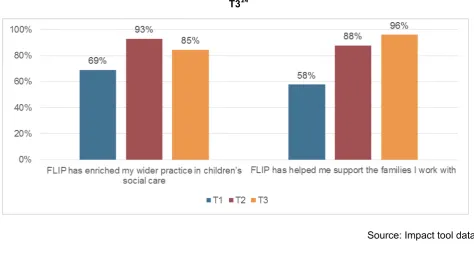
For FLIP practitioners, there is emerging evidence that working with FLIP is: increasing practitioners’ knowledge, skills, understanding and confidence of working with
adolescents on the edge of care; contributing to challenging and developing the culture of social work in Hackney; and encouraging increased evidence-based practice amongst practitioners.
interview data suggests that FLIP’s interim model is placing additional levels of demand on some social workers in terms of additional paperwork.
Value for money
In terms of value for money, the evaluation shows the following:
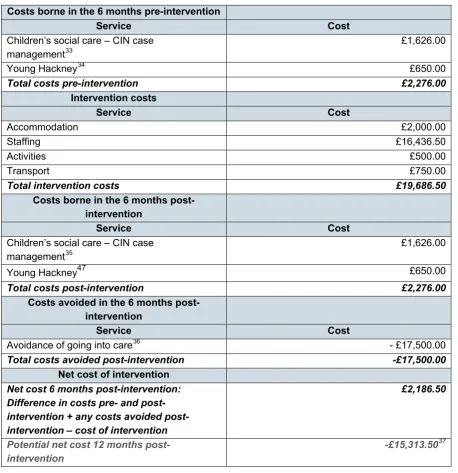
• an average spend per intervention of £19,686.50, based on total spend and the number of interventions which have taken place in the first 12 months of the interim model’s operation. However, it should be expected that this figure will fall following the establishment of a permanent FLIP residential setting and the implementation of the full, intended FLIP model
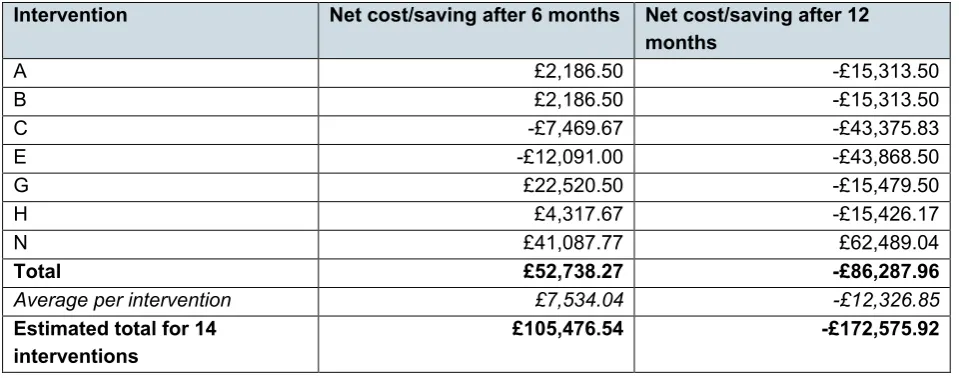
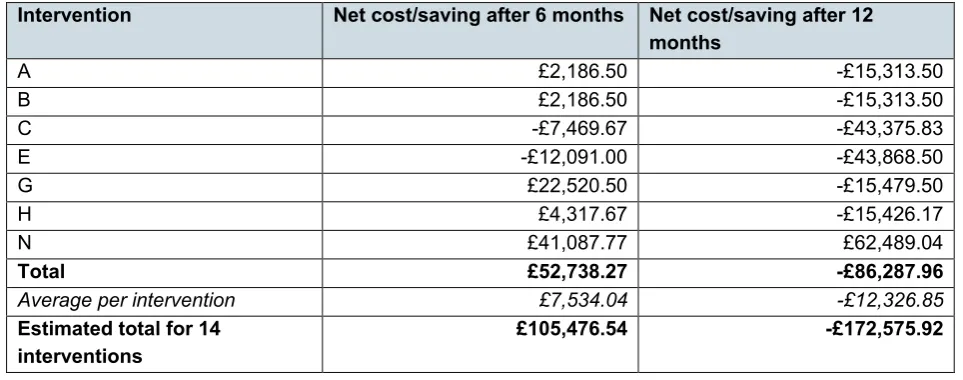
• analysis (see Appendix 4 of the full report) shows that, based on observed outcomes 5-6 months following participation in a FLIP intervention for 7 cases where data is available, the programme has an average net cost of £7,534 per intervention. Scaled up across all 14 interventions, this would amount to an estimated net additional cost of £105,477. However, if the outcomes observed 6 months following the FLIP
intervention are assumed to be maintained for a further 6 months, the interventions result in an estimated average net saving of £12,327 per intervention. Scaled up across all 14 interventions, this would amount to an estimated net saving of £172,576. This is based on the assumption, rather than the evidence, that outcomes observed 6 months following the intervention are maintained, and so should be treated with caution
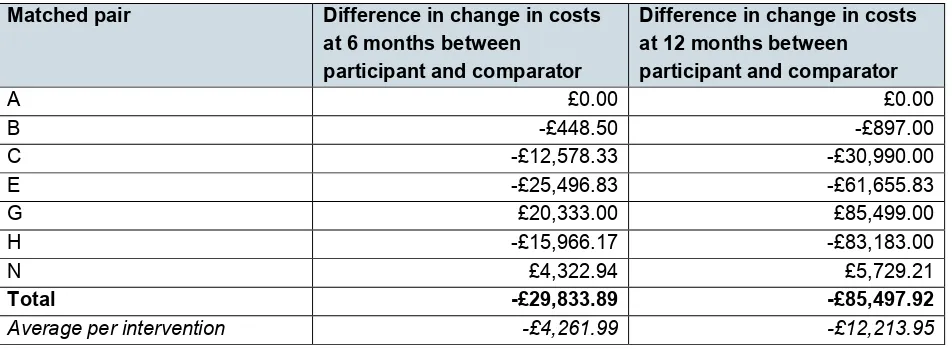
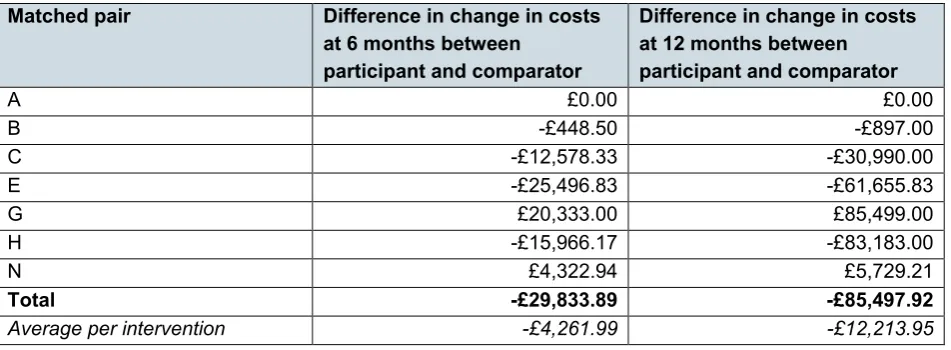
• compared with a comparator matched pair group of young people with similar
characteristics, FLIP participants incurred costs on average £4,262 less than
comparator young people who did not participate in FLIP (see Appendix 4 in the full report). Scaled up across all 14 interventions, this would amount to an estimated reduction in incurred costs of £59,668. This comparison should be treated with caution because of a small sample size, and as, whilst every effort has been made to ensure matched pairs have similar characteristics, there are differences between pairs
Implications and recommendations for policy and practice
Based on the findings of this evaluation, the following recommendations for the future development of FLIP are proposed:
• a focus on strengthening family relationships. It is recommended that FLIP consider refining its theory of change to place a greater focus on strengthening family
relationships. Whilst it is acknowledged that improved family relationships can have an impact on wider outcomes, including a young person’s vulnerability to gang
families where family relationships can be strengthened as the primary impact of FLIP, the innovation can hope to both ensure its impact can be better measured, and that its target cohort can be refined to increase likelihood of success
• ensure referrals are edge of care due to internal factors within the family system. Building on the above recommendation, it is recommended that FLIP ensure it recruits families where the primary factors causing a child/adolescent to be considered edge of care are internal factors within the family system, as opposed to external factors. This will ensure that the innovation is focusing on working with cases where improvements in family relationships is likely to lead to a reduced chance of a breakdown in care and positive impacts on a range of other outcomes in its theory of change/logic model. This is not to suggest that young people presenting with external risk factors should be excluded from participation in FLIP. Rather, the FLIP team should ensure that in cases where a young person is presenting with these factors, it is confident that it is family relationships, as opposed to other factors, which are likely to lead to a
breakdown in care without the FLIP intervention
• continue to focus future interventions on ‘adolescents on the edge of care’. Continuing to focus future interventions on adolescents as opposed to children will help to ensure that FLIP’s activities are aligned with its intended outcomes. For example, FLIP and other staff are less likely to develop expertise, skills and knowledge working with
adolescents on the edge of care, if children on the edge of care are also accepted as subject participants of FLIP
• ensure that FLIP focuses on recruiting families who present a good opportunity for FLIP to result in cost avoidance and reduction. For example, FLIP should target families who have adolescents who are on the edge of care where it is likely that FLIP can make a significant difference in reducing the risk or actuality of the child/young person being in care or being in residential care, or of a breakdown in foster care placement leading to a new foster care placement being required. If it is likely that the child/young person is likely to exit, or avoid, care independent of experiencing FLIP, this may not be the best allocation for the programme
• continue to ensure that a focus on outcomes improvement is embedded throughout
the FLIP process.It is important for the success of FLIP that both practitioners and families involved in FLIP are clear about the reasons for the intervention and the outcomes that it is aiming to address. This clarity should feed into all aspects of the FLIP intervention, that is through, for example, referral, assessment, agreeing the intervention plan and the process after families have received the FLIP intervention
• review paperwork levels and ensure importance is communicated to practitioners. It is
communicated to all practitioners to ensure compliance. This includes the completion of impact tools to enable ongoing evaluation of the innovation
• review FLIP lines of accountability. This particularly relates to feedback that suggests practitioners are not aware of who they are accountable to, particularly during the residential interventions. Practitioners also need to be aware of the member of the senior team who should be contacted in the event of either health and safety or safeguarding issues
• review plans for ongoing support following participation in FLIP. It is recommended that FLIP review procedures for planning and implementing ongoing support following participation. The evaluation found that some staff and stakeholders reported impacts not being sustained following the residential intervention as a result of a lack of
ongoing support
• ensuring that evaluation is embedded into FLIP especially when it starts to operate a
model more closely in keeping with its original business case. We collaboratively designed this evaluation to help Hackney ensure that evaluation practice is embedded, meaning the use of time 1, 2 and 3 impact tools for adolescents experiencing FLIP. We recommend embedding these or similar into FLIP to ensure that it is having the positive impact on outcomes which it desires
• provide both innovations and their evaluations with longer timescales to demonstrate
impact. This evaluation has evaluated an interim FLIP model as opposed to the actual model which aimed to operate out of a bespoke residential unit. Innovations take time to implement and evaluations should be commissioned that reflect the practical
Overview of FLIP
FLIP is described as ‘an innovative model for the delivery of edge of care interventions’ which focuses on ‘working with families to strengthen their long-term resilience, raise aspiration, and empower and enable parents to parent effectively’2.
What does FLIP intend to achieve (outcomes)?
The overall ambition behind FLIP is to improve outcomes for adolescents on the edge of care, through supporting them to remain with their families, or within a stable foster placement. The programme’s intended impacts and outcomes are detailed in its logic model which was refined collaboratively as part of the evaluation process. The logic model is presented in Appendix 1, along with a summary of FLIP’s intended impacts and outcomes (Table 3).
What was FLIP intending to do to achieve these outcomes?
The programme’s intended activities, through which it seeks to achieve its intended impacts and outcomes, are detailed in the theory of change, which is presented in Appendix 1, along with a summary of FLIP’s intended activities (Table 4). It should be noted that the Foster Carer training and the Centre of Learning have yet to be
implemented. In addition, a summary of FLIP’s proposed staffing model, once it is operating from the residence (that is, the intended model is implemented), is provided in Appendix 11.
The FLIP pathway
A family’s involvement with FLIP prior to participating in a residential intervention is outlined in Figure 1:
Figure 1: FLIP family referral process
Source: FLIP – Information & Referrals, provided by the FLIP team to Hackney Council’s CYPS
The process detailed above shows how cases are referred to and assessed by the FLIP team, to determine their suitability for participation in an intervention. If deemed suitable, the planning process for the residential intervention begins, which is undertaken in
collaboration between the FLIP team, the family, and the relevant social work unit. For each family, an intervention plan is produced. An example of an intervention plan is given in Appendix 7.
Following the residential intervention, FLIP may continue to work directly with the family, or with wider practitioners who support the family, to deliver aftercare. This is discussed and agreed upon, either towards the end of the 5 day residential intervention, or at a further meeting following the end of the intervention and the family’s return home.
Changes to FLIP’s intended outcomes or activities
Progress is being made in relation to establishing the FLIP residential setting. However, due to challenges around purchasing and planning permission, it has not yet been established. FLIP has been operating an interim delivery model. As a result, it has not been possible to evaluate the full intended model. Rather, this report presents an
evaluation of an interim delivery model which is intended to precede the full FLIP model. Partly because of this, there have been several key changes to the way that FLIP has been delivered, in comparison with its theory of change and initial programme
documentation. These changes are summarised below:
• the FLIP team has focused on developing the residential strand of activities in its first
12 months of operation and there has been limited delivery regarding the training of foster carers and the centre of learning
• it has been delivered from existing residential leisure settings, suitable for families, rather than in a tailored residential setting
• interventions have been delivered for periods of around 5 days, rather than 1-6 weeks as intended
As a result of these changes, it should be noted that FLIP may not have been able to achieve the same intended impacts and outcomes as initially outlined in its theory of change. In addition, the interim model has limited capacity to work with families, due to a smaller staff team and the cost of temporary residential accommodation, and so 14 families have participated in interventions in the 12 months from August 2015. Senior members of the FLIP team report that with a permanent residential setting, FLIP will be able to work with up to 3 families simultaneously, significantly increasing its capacity to support families with adolescents on the edge of care. Based on an average length of intervention of 4 weeks, this would enable FLIP to work with approximately 18 families in the first 6 months of the implementation of the permanent residential setting.
The intended target cohort of FLIP was ‘adolescents on the edge of care’, in line with the DfE Social Care Innovation Fund ‘Rethinking support for adolescents in or on the edge of care’ focus area3. Most families who have participated have included an ‘adolescent on
the edge of care’. However, initially there were 2 families who participated with children on the edge of care, meaning those under the age of 11, because FLIP was seeking to test the implementation of the model. However, Hackney now intends to focus
specifically on adolescents on the edge of care, although, if they have young siblings, they will be involved in the residential intervention.
The context within which FLIP has been taking place
Hackney Council’s original proposal for FLIP to the DfE Social Innovation Fund outlined the council’s perception of the context for the FLIP model4:
• existing services within the current care economy do not meet the particular needs of
adolescents on the edge of care in Hackney
• in Hackney, since 2011, there has been an increasing number of young people aged
between 10 and 15 entering care each year. In 2014, 35% of all entrants to care were from this age group. This cohort is most likely to have multiple placement moves which both increases the risk of a range of poor outcomes, and is a drain on resources. This is also the most likely age group to be flagged as at risk of child sexual exploitation, gang involvement and criminal activity: 11 of the 21 children in residential placements in Hackney in 2014/15 were linked to risks from gangs and/or sexual exploitation
• while nationally, residential care forms a significant part of the current model of care for adolescents, with 23% of adolescent entrants to care in 2013 placed in residential settings, there is a lack of high quality residential placements in Hackney which can meet the needs of young people. This means Hackney has fewer young people in residential care than the national average
• there are a number of barriers to effectively supporting edge of care adolescents in
Hackney, including: negative influences, such as gangs and criminal networks; perverse incentives for struggling families to put children under the care of the Local Authority; dividing families, which can disempower parents; statutory processes and timescales which do not provide the space for tailored and engaging responses for individual families; insufficient foster care capacity to meet the needs of adolescents; and a residential system that is financially disincentivised towards rehabilitation, for example the need to provide additional educational resources
In this context, FLIP aims to break down the barriers to effectively supporting and meeting the needs of adolescents on the edge of care in Hackney through preventative work, tailored intensive interventions, training for foster carers and identified extended family members and sharing learning and expertise.
Existing research relating to FLIP
FLIP is a new, innovative model based on Hackney CYPS’s established approach to social care delivery incorporating a clinical base, targeted therapeutic work, parenting programmes and family support services. While there is a limited evidence base of
related existing research, Hackney CYPS has a history of designing and implementing innovative children’s social care services, for example, the trial of a single assessment process with no fixed completion timescales and flexibility on the timing of the first core group meeting following a Child Protection Conference5.
Whilst there is substantial evidence regarding general intervention programmes relevant to children on the edge of care, such as intensive interventions projects (IIPs) and
intensive family support projects (IFSPs), evidence regarding the impact of residential programmes similar to FLIP are somewhat limited, due to its innovative nature.
However, FLIP have outlined the existing research evidence which informed and
underpinned a number of the key design principles of the model, outlined in Appendix 2. In addition, other research includes:
• a review observing the effectiveness of residential treatments for adolescents in the
US6 found that, whilst non-residential alternatives overall provide more desirable outcomes, certain types of therapeutic group care, such as utilising the family-like environment, appear to be associated with positive outcomes7
• a 2-year evaluation of 6 Intensive Family Support Projects (IFSPs), aimed at
pioneering a new way of working to support anti-social behaviour (ASB) perpetrators to change their behaviour, provided limited evidence of positive impacts of residential interventions. Whilst data was limited, qualitative data found that, following the project, adult family members felt happier, stronger and more confident. Further, they believed that they would be able to avoid difficulties in the future and their parenting skills had improved following the project. However, 3 of the 11 families were either evicted or left core accommodation during the project. Overall, project managers involved in this project considered that this type of unit should not be seen as a generic requirement for all family support projects8
The Tri-Borough Alternative Provision Trust (TBAP), funded by the DfE Social Innovation Fund, has taken a similar approach to FLIP through supporting young people on the edge of care or in the youth justice system by developing a rural, residential therapeutic and educational residence. Young people, and on some occasions their family, accessed personalised programmes which ranged from a series of short-term respite packages to longer-term crisis placements. The TBAP residence intended to maximise the
opportunities for vulnerable young people who were in a cycle of temporary care
5 Source: LB Hackney’s original proposal to the DfE Social Innovation Fund.
6 Park-Lee, E., Caffrey, C., Sengupta, M., Moss, A. J., Rosenoff, E., & Harris-Kojetin, L. D. (2011). Residential care facilities: a key sector in the spectrum of long-term care providers in the United States.
NCHS data brief, (78), 1-8.
7 Lee, B. R., & Thompson, R. (2008). Comparing outcomes for youth in treatment foster care and family-style group care. Children and Youth Services Review, 30(7), 746-757.
8 Nixon, J., Parr, S., & Sanderson, D. (2006). Anti-social behaviour intensive family support projects: An
Overview of the evaluation
Evaluation questions
This evaluation is focused on answering evaluation questions established in the evaluation framework, as shown in Appendix 3.
As well as assessing the extent to which progress has been made in achieving intended impacts and outcomes, as outlined in the evaluation framework, we have also evaluated the implementation of FLIP in terms of the extent to which the following aspects of implementation are being delivered appropriately and successfully:
• set-up and delivery of FLIP
• engagement and communication
• governance, leadership and programme management
• programme monitoring and accountability
Methodology
The methodology, outlined in the evaluation framework, was agreed in advance with Hackney Council, the Rees Centre at the University of Oxford and the Department for Education, in line with Cordis Bright’s collaborative approach. All research tools were agreed with Hackney Council in advance of use in the field. The following methodologies were used to conduct the evaluation of FLIP:
• analysis of strategic and operational documentation and performance management
information relating to the FLIP programme. This included: the programme proposal, explanatory information for practitioners, parents and carers, and children and
adolescents; proposed staffing models; budget information; financial reports; intervention models; case summaries; intervention schedules, and viability assessments
• impact tools administered at 3 points in time to children and adolescents, parents and
carers, and practitioners taking part in FLIP. Tools were administered at T1 (on entry to the FLIP residential intervention), T2 (on exit from the FLIP residential intervention) and T3 (3 months after exiting the FLIP residential intervention), as summarised in Figure 2 below9. These tools included both bespoke and validated measures in
relation to the intended impact and outcomes of FLIP. Details of the number of impact tools completed can be found in Appendix 5. As well as being developed to provide evidence for the independent evaluation, these tools were designed so that they could continue to be used by Hackney to monitor the effectiveness of FLIP on an ongoing basis
Figure 2: Summary of times at which impact tools have been administered
• face-to-face interviews with families: qualitative data was collected through
retrospective face-to-face interviews with children, adolescents, and parents and carers who participated in FLIP. These were undertaken at one point in time at T2, meaning on exit from the FLIP residential intervention. A total of 30 children, adolescents, parents and carers participated in an interview, as summarised in Appendix 10
• 11 participant case file reviews: reviews of the social care and, where applicable,
Youth Offending Team (YOT), case files of children and adolescents who have
participated in FLIP as the subject participant10 were conducted. This was to profile the outcomes and use of services of the child or adolescents before and after FLIP, to ascertain whether any changes have been observed
• 11 comparator matched pair group case file reviews: reviews of matched pair
comparator children and adolescents were conducted, each of whom was matched to a FLIP participant. Each matched pair case was selected by the FLIP team based on: a) similar characteristics and risk factors11 to the matched pair FLIP participant child or young person, and b) their suitability for FLIP, had it existed or had sufficient capacity at the appropriate time. The matched pair group was developed in order to allow us to analyse the trajectory of FLIP participants in comparison with similar children and
intervention. It is suggested that FLIP staff, who have been responsible for the administration of all impact tools, including T3 tools, ensure that completion of these tools is embedded into follow-up planning, to ensure continued monitoring and evaluation of the innovation can be carried out.
10 Many of the families who participated in FLIP included more than one child or young person. In most cases, FLIP focused on one child or young person (the ‘subject participant’) in the family, to improve their chances of staying with their family or moving out of care, whilst also working with and aiming to improve outcomes for their sibling(s) too.
adolescents who did not participate, to assess whether any changes or continuities identified among the FLIP cohort would have been likely to happen if they had not participated in. The ‘before’ period for this group is before they would have been referred to FLIP and the ‘after’ period is after they would have been referred
• cost benefit analysis: data from case file reviews of 7 children and adolescent participants12 and comparator matched pairs were used to compare the cost of the
intervention with the benefits or costs incurred in relation to the child/young person after FLIP. A range of tariffs were used to estimate connected costs, including: FLIP financial information and the Manchester New Economy unit cost database13. All tariffs
used are detailed as part of the cost benefit analysis. The limitations of this cost benefit analysis are outlined in Appendix 4
• telephone interviews were conducted with practitioners who worked on FLIP or with
subject families. Interviews were conducted at 2 points in time: January 2016, and July 2016, because changes in the original methodology resulted in the capacity that had been planned for interviews with foster carers was instead used to conduct additional interviews with programme staff and practitioners. A total of 72 practitioners were identified for interview by the FLIP team and their details provided to us. Email invitations and reminder emails were sent out, and telephone interviews were
arranged and conducted with 57 of these. An overview of these participants is given in Appendix 8
• case file reviews of 15 cases of children and adolescents who have become LAC since August 2015 who did not participate in FLIP. This was intended to identify whether there were any similarities or differences from the FLIP cohort in order to support refinement of the FLIP eligibility criteria, as shown in Appendix 6
In order to protect the anonymity of those who have participated in FLIP, each
intervention or family and family member has been randomly assigned an identifying letter which will be used to refer to it throughout the report, as shown in Appendix 9.
Analytical approach
Throughout the analysis, the term ‘emerging evidence’ is used in relation to findings where the balance of evidence appears to indicate a particular impact on outcomes. However, this evidence should be seen within the limitations of the evaluation, taking into account areas of missing data, and can only be applied to the FLIP interim operating model, as the full FLIP operating model is not yet in place.
12 Cost benefit analyses were only conducted for those case file reviews for which data on outcomes was available at least 5 months following the intervention. Therefore, due to the timings of interventions and case file reviews, cost benefit analyses were only conducted for 7 of the 11 case file reviews.
Due to missing impact tool data, it has not always been possible to make comparisons between T1 and T3. In such cases, comparisons have been made been T1 and T2. However, it should be noted that such evidence cannot be used to indicate sustained impacts of the FLIP intervention.
Changes to the methodology
Because fewer families participated in FLIP than originally anticipated, as it operated as an interim model, it was agreed that the evaluation timescale would be extended to increase the number of families included in the evaluation.
In addition, the original evaluation methodology included impact tools and interviews with foster carers who were due to participate in FLIP training. However, due to the lack of a permanent residential setting, FLIP has focused on the residential strand of activities, and so direct training with foster carers has not yet occurred. As a result, no foster carers have participated in FLIP training and so the intended impact tools have not been administered and interviews have not been conducted.
Because of the extension in the evaluation timescale, it was agreed that Cordis Bright would provide Hackney Council with an interim formative evaluation report, which was delivered in March 2016.
As a result of the above changes, the additional evaluation capacity was used to conduct further interviews with programme staff and practitioners at a second point in time. This enabled us to conduct a total of 57 interviews with staff and practitioners, as opposed to the 40 that had originally been planned. As well as allowing us to include a greater number of stakeholders’ views in the evaluation, this also enabled the evaluation to assess any change over time by comparing interview responses between the 2 points in time. Additional capacity was also used to review additional strategic and operational documentation and performance management information relating to the FLIP
Key findings
It is important to note that FLIP is an innovative programme that has only been in
operation since August 2015 and that it has been operating an interim model, rather than being based at a tailored and permanent residential location. This section, therefore, provides an initial evaluation of the interim model, not the full FLIP model as originally proposed. Due to the differences between these models, it is strongly suggested that, on the implementation of the full FLIP model, a further evaluation is conducted, and that the findings in this section are taken as an initial indication of progress against intended impacts and outcomes. It is still too early to reach any firm conclusions regarding the effectiveness of FLIP, as the intended model has yet to be implemented.
How far has FLIP achieved its intended outcomes?
The evaluation had initially been envisaged to be based on a sample of 25 families participating in FLIP. However, due to the restrictions of the interim model, the
evaluation has instead been based on 14 families, representing all of those who have participated in FLIP (that is a whole population, rather than a sample). As a result, the data obtained is representative of families accessing FLIP.
The following section presents evidence relating to implementation, impact and outcomes of the FLIP interim model. It shows that a mixed picture emerges in terms of how far the interim model has achieved FLIP’s intended outcomes.
For children and adolescents on the edge of care
Improved relationshipsThere is emerging evidence to suggest that FLIP interventions are resulting in improved relationships within some of the families participating. This is demonstrated by interview responses, positive changes in existing dysfunctional family relationships, and impact tool data.
There was positive evidence from family interviews regarding improved family
relationships as a result of FLIP. Children and adolescents interviewed spoke positively about spending time with their family whilst on the intervention, with one adolescent commenting that “family bonding was the most positive thing”about their time away. The majority of children and adolescents interviewed reported that their relationship with family members had improved since attending FLIP, with only one adolescent reporting a relationship that had deteriorated. When interviewed about what they had learnt during the intervention, 2 subject children/adolescents stated that they had learnt how to communicate better and 2 that they had learnt to be nicer to their family members.
children/adolescents and their siblings. A practitioner reported that in one case that the adolescent stated that the intervention had “greatly helped his relationship with his mother”.
Evidence from the case file reviews shows that of the 11 participants reviewed, 5 had a positive change in dysfunctional family relationships, and 2 saw a negative change. The comparator group saw no positive change and one negative change. Impact tool data relating to child-parent relationships shows emerging evidence to suggest improvements in parent-child closeness, and reductions in conflict, following participation in FLIP. There was emerging evidence from impact tool data of increased long-term resilience,
measured using the Ohio Brief Resilience Scale (BRS). Where T1, T2 and T3 data was available both interventions showed higher levels of resilience at T3 compared to T1. When only T1 and T2 data was available 6 cases showed a positive change in levels of resilience, 3 cases showed a negative change and 2 cases showed no change in levels of resilience at T2 compared to T1.
More cared for in a family setting
For some children and adolescents there has been a reduced chance of a breakdown in care, preventing children/adolescents leaving the family setting and avoiding care
admissions.
Impact tool data on living arrangements showed emerging positive evidence, with the majority of subject children/adolescents’ living arrangements remaining stable before and after the interventions, and positive evidence of increased likelihood of subject
children/adolescents living at home in 6 months’ time.
The case file review analysis also presents emerging evidence to suggest that
participation in FLIP may increase a child/adolescent’s likelihood of remaining in a family setting, with 7 of the 11 case studies showing the child/adolescent either remaining in the care of a family member, or leaving foster care and moving into the care of a family member. However, other cases were less positive: for example, in one case there was no improvement in the relationship between the foster carer and the young person, and, as a result, the young person went missing after the intervention, and a residential
placement is planned once they have returned. This compares to 4 of the 11 comparator children/adolescents, and in one of these 4 cases, care proceedings have been initiated. Improved emotional wellbeing
Some FLIP participants reported increased emotional wellbeing.
by practitioners showed in one case that the intervention had assisted the
children/adolescents in being to assess and communicate their emotions more easily. .
The Strengths and Difficulties Questionnaire (SDQ)14 was used to assess changes in
total difficulties (including emotional problems, conduct problems, hyperactivity and peer problems) and prosocial scores. It shows that in 6 cases there was an improvement in total difficulties score (indicating overall positive improvements in areas of emotional problems, conduct problems, hyperactivity and peer problems) based on either child/adolescent or parent/carer impact tools before and after participation in the residential intervention. In one case there was negative change.
Prosocial scores show that 6 cases saw improvements following participation in the residential intervention, whilst one showed negative change and 3 showed contrasting change between parent/carer and child/adolescent impact tools, with one showing positive change and the other showing negative change in each case. Again, this indicates emerging evidence for positive improvements in subject children/adolescents’ prosocial skills following participation in FLIP.
However, the separate Pro-Social Value Scale15, which measured prosocial values in the
child or adolescent over the time period, showed no evidence of change in children/adolescent’s prosocial values following participation in FLIP.
Case file review analysis shows improvements in emotional and mental health outcomes for 2 of the 6 FLIP participants for whom it was an indicator and no negative outcomes, compared to no positive improvements and 3 negative outcomes for the 5 comparators for whom it was an indicator.
Educational attendance, engagement and achievement
There is little evidence of changes in NEET (not in education, employment or training) status following participation in FLIP. However, there is emerging evidence, in some cases, to suggest that participation in FLIP may prevent a deterioration in educational outcomes for subject children/adolescents.
Impact tool data from parents/carers showed no change in the child/adolescent being in continuous full-time education, employment or training. There was one exception, which showed a positive improvement.
Case file review analysis shows emerging positive evidence regarding educational attendance outcomes. Of the 7 subject children/adolescents for whom it was an
indicator, 2 showed a positive change in educational outcomes and 2 showed a negative
14Strengths and Difficulties Questionnaire.
15 Source: Urban, L. (2009). Identifying “Deterrable” Offenders in a Sample of Active Juvenile Offenders.
change. However, of the 6 comparator children/adolescents for whom it was an indicator, none showed a positive change and 4 showed a negative change. This suggests that participation in FLIP may prevent a deterioration in educational outcomes for subject children/adolescents.
There is also emerging qualitative evidence regarding increased aspiration in children and adolescents. When thinking about the future, the majority of children and
adolescents reported there was no change in their feelings about the future compared with before their involvement in FLIP. However, in interviews, children/adolescents reported looking forward to returning to school, and in one case a parent stated that their child/adolescent was more settled in school since returning from FLIP.
The FLIP interventions and the activities undertaken during the interventions have
focused on strengthening family relationships, and not directly on increasing adolescents’ engagement with education. Accordingly, it is only in those cases where an adolescent’s educational engagement has been affected by a poor family relationship that the FLIP interim delivery model could be expected to lead to positive outcomes in this aspect.
Reduced youth criminal offending
In some cases there was emerging evidence regarding reduced youth criminal offending in subject children and adolescents.
Impact tool data at T1 showed that 2 children/adolescents had been convicted of
committing a criminal offence in the preceding 12 months. Data was only available at T3 for one of these children/adolescents, who had not been convicted of committing a criminal offence since T1. Of the 12 children/adolescents who had not been convicted of a criminal offence in the 12 months preceding T1, one had committed an offence by T3.
This was mainly consistent with impact tool data from parent/carers. However,
parents/carers reported 3 children/adolescents who had been convicted of committing a criminal offence in the 12 months preceding T1 and one of these had also committed a criminal offence at T3.
There was mixed evidence of reduced negative behaviours in the subject child or adolescent as a result of the interventions. This was measured through the
child/adolescent impact tool, which collected data regarding frequency of negative behaviours at different time periods16. There was only one case where data was available at T1 and T3, which showed no change in frequency of negative behaviour between T1 and T3. Where data was available at T1 and T2 most cases showed no change in frequency of negative behaviour, with 2 showing an increase and 2 showing a reduction in negative behaviour.
Parent/carer impact tool data showed little change or no change in involvement in negative behaviours, between either T1 and T2, or T1 and T3, depending on availability of data.
Case file review analysis shows mixed evidence regarding reductions in criminal
offending outcomes. For the 5 subject children/adolescents for whom it was an indicator, one showed positive change and 3 showed negative change following the FLIP
intervention. Of the 6 comparator children/adolescents, none showed positive change and 4 showed negative change.
Gang involvement
In a small number of cases FLIP may have reduced gang involvement amongst subject children/adolescents.
Impact tool data showed emerging evidence of reduced gang involvement since the intervention. In all 3 cases for which data was available where the subject
child/adolescent was reported to have been involved with a gang in the month proceeding T1, no gang involvement was reported at either T2, or T317.
Case file review analysis also shows some emerging evidence of positive outcomes regarding gang involvement. Of the 7 subject children/adolescents for whom it was an indicator, 2 showed positive improvements in the degree of gang involvement following the FLIP intervention, and none showed a negative change. Of the 5 comparator
children/adolescents for whom it was an indicator, one showed a positive change, and 3 showed a negative change.
Child sexual exploitation
There is emerging evidence to suggest that FLIP may have had a positive impact on reducing risk of CSE amongst some subject children/adolescents.
There was emerging evidence of reduced risk of CSE from impact tool data. For the 2 subject children/adolescents for whom impact tool data was available at T1, T2 and T3, one remained as being at no risk of CSE whilst the second had their risk reduced from high risk to low risk. For those where only T1 and T2 data was available, there was no evidence of increased risk of CSE.
Case file review analysis shows limited evidence of the impact on the risk of CSE. Of the 3 subject children/adolescents for whom it was an indicator, none saw either positive or negative change following participation in FLIP. Of the 5 comparator
children/adolescents for whom it was an indicator, 2 saw a negative change whilst the other 3 saw no change.
Going missing
Participation in FLIP may have an impact in preventing an increase in frequency of missing episodes in some cases. In other cases, it does not appear to have had an impact.
There were only 2 cases where impact tool data was available at T1, T2 and T3. In one case the child/adolescent had consistently not been reported missing over the time period, whilst in the other case the child/adolescent had been reported missing in the 12 months previous to T1, but had not by T3, showing a positive improvement in this
outcome following the FLIP intervention.
Case file review analysis shows mixed evidence of the impact on reducing missing episodes. Of the 5 subject children/adolescents for whom it was an indicator, one
showed positive change, and 2 showed negative change following participation in FLIP. Of the 6 comparator children/adolescents for whom it was an indicator, none showed positive change and 4 showed negative change. This suggests that participation in FLIP may help to prevent a deterioration in frequency of missing episodes.
For siblings at risk of becoming edge of care adolescents
As well as improving impacts and outcomes for subject children and adolescents, FLIP also intended to improve outcomes for their siblings who may also be at risk of becoming edge of care.
Improved relationships
There was emerging evidence of improved family relationships and reduced risk of family breakdown, in some cases, as a result of FLIP.
The majority of siblings interviewed reported that they and their families had learnt
something positive, and noticed positive changes in their behaviour whilst attending FLIP. Further, the majority of siblings interviewed commented positively on spending time as a family. A practitioner stated in one case that the FLIP intervention had enabled the sibling to appreciate time spent with the family more, as well as assisting them with developing levels of empathy.
The Child-Parent Relationship Scale18 showed improved closeness between siblings and
parents/carers for 4 of the 7 siblings for whom data was available, and reductions in conflict for 2 of the 7 siblings. However, 3 cases showed increased conflict following participation in the FLIP residential intervention.
There is some emerging evidence regarding increased long-term resilience, measured using the Ohio Brief Resilience Scale (BRS)19. Of the 5 siblings for whom data was
available, 3 showed a positive change in resilience levels following participation in FLIP. One case showed no change and one case showed negative change.
More cared for in a family setting
In some cases there is emerging evidence of increases in likelihood of remaining in the family home for siblings.
Child/adolescent impact tool data on the likelihood of living at home in 6 months’ time for siblings was very limited. There was data at T1 and T2 available for 5 siblings, and at T3 for 4 siblings. The data shows that siblings were deemed slightly more likely to be still living at home 6 months’ after the FLIP intervention, in the majority of cases.
Educational attendance, engagement and achievement
In one case participation in FLIP may have resulted in a positive change in NEET status. In all other cases for which impact tool data was available, no change was recorded.
Improved emotional wellbeing
In one case participation in FLIP may have resulted in improved emotional wellbeing for siblings of subject children/adolescents.
The Strengths and Difficulties Questionnaire (SDQ) shows that in one of the 7 siblings for whom data was available, total difficulties scores improved following participation in FLIP, whilst one showed negative change, and the remainder no change. However, prosocial scores only improved for one sibling (for whom total difficulties score showed no change), whilst worsening for 2.
Reduced youth criminal offending
There was some emerging evidence of reduced negative behaviours in siblings in some cases as a result of FLIP, measured through data collected with the impact tool relating to the frequency of negative behaviours at different time periods.
Impact tool data regarding frequency of negative behaviour for 5 siblings showed a reduction in frequency of negative behaviours for 2 siblings following participation in a FLIP intervention. 2 siblings showed an increase in frequency of negative behaviours and one showed no change.
Gang involvement
No sibling involvement with gangs was reported at T1, T2 or T3, so FLIP had neither a positive, nor negative, impact.
Child sexual exploitation
There was insufficient data available to determine any impact on risk of CSE amongst siblings of subject children/adolescents.
Going missing
There was insufficient data available to determine any impact on missing episodes amongst siblings of subject children/adolescents
For parents and carers of adolescents on the edge of care
There is emerging evidence to suggest that participation in FLIP may increase parenting confidence and family aspiration in some cases. There was also some emerging
evidence in some cases regarding increased parent/carer resilience following the FLIP intervention.
Parents and carers interviewed reported, in the majority of cases (8), that they had learnt something during their time with FLIP. Frequent themes relating to learning included openness and sharing feelings; patience, and learning about themselves and their family. In one case a parent indicated that they already knew a lot of the skills outlined, but stated that they “needed a refresher and reminder to stay on top of it”. Furthermore, parents/carers reported that some of the interventions were take-away activities that could be used outside of FLIP, such as making family photo collages. In two cases, parents/carers took away specific activities back to their homes: for example, weekly family meetings to discuss rules and expectations.
Interviews with parents and carers suggested an increase in parenting confidence, with the majority (7) of parents and carers reporting that they felt more equipped to take care of their child as a result of working with FLIP. In one case, a parent highlighted a specific effective approach to confrontation used at home. However, in another case, a parent stated that being shown additional parenting approaches did not address what they perceived as the main reason for their lack of parenting confidence, which was a lack of time and money to carry out these activities as a family.
Impact tool data measured through the Ohio Brief Resilience Scale, for which increased scores indicate increased resilience levels, showed that for the 5 interventions where T1, T2 and T3 data was available, 2 saw a reduction in brief resilience score, 2 showed no change and one increased. Where T1 and T2 data was available, 8 parents/carers showed an increase in resilience score, with 5 showing a reduction and 2 showing no change.
For practitioners
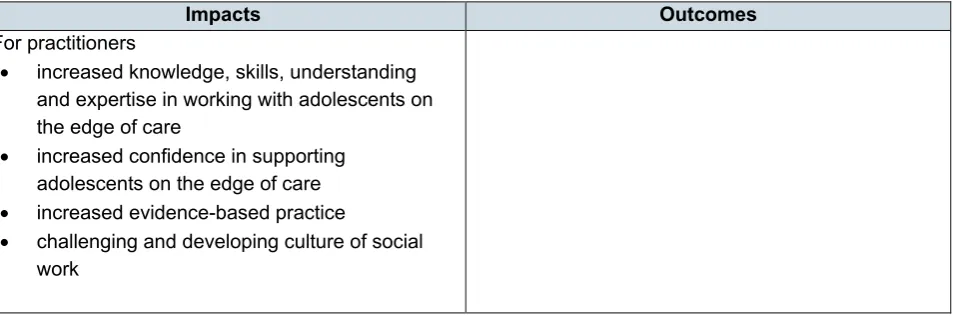
There is emerging evidence that working with FLIP is increasing practitioners’
knowledge, skills, understanding and confidence of working with adolescents on the edge of care, and contributing to challenging and developing the culture of social work in
Hackney. There is also some emerging evidence to suggest that FLIP is encouraging increased evidence-based practice amongst practitioners.
In interviews, practitioners referred to the FLIP toolbox of interventions and activities, with one stakeholder commenting that there is evidence that professionals have been using this since being in contact with FLIP. Practitioners also stated that the intervention provided them with a welcome opportunity to spend an extended period of time doing direct work with families, thus allowing them to gain a better understanding of family dynamics, risks and opportunities.
Similar evidence was seen when considering practitioners’ confidence in supporting adolescents on the edge of care, with the majority of practitioners interviewed agreeing that working with FLIP had increased their confidence in working with this group.
The majority of practitioners and stakeholders interviewed felt that FLIP was contributing to a developing and challenging culture of social work. Practitioners and stakeholders reported that FLIP allows social workers and other professionals to use a different
approach in their practice, and think creatively about their approaches to social work, with one practitioner commenting that it “creates opportunities to think differently about
families on the edge of care”. Furthermore, a number of practitioners and stakeholders reported that FLIP is breaking down barriers between social workers and families, which allows the family to be more positive about the support provided to them.
Practitioners frequently mentioned, in qualitative consultation, that activities or
interventions offered during the intervention were tailored to the family’s needs or used to address specific difficulties experienced within the family. Despite this, only the minority of practitioners and stakeholders interviewed suggested that the interventions used during FLIP were evidence-based. One stakeholder commented that FLIP have been “lacking in [their] use of evidence-based practice within FLIP interventions”.
wider practitioners, regarding the use of evidence-based interventions, could be improved, which may in turn improve wider practitioners’ understanding of and commitment to the innovation.
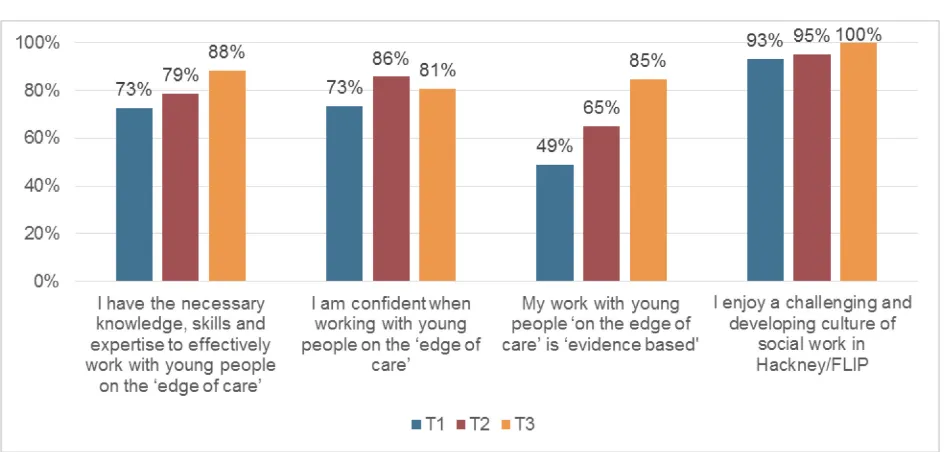
[image:35.595.57.530.237.463.2]Practitioner impact tool data is displayed in Figure 3. It shows that following involvement with FLIP, practitioners were more likely to agree, or strongly agree, that they have the necessary knowledge, skills, and confidence when working with young people on the edge of care, that their work with young people on the edge of care is evidence based, and that they enjoy a challenging and developing culture of social work in Hackney.
Figure 3: Practitioner impact tool data - % of respondents who agree or strongly agree, T1, T2 and T320
Source: Impact tool data
For the Hackney social care system
There was no available evidence to suggest any reduction in demand placed on social workers in Hackney Children’s Services attributable to FLIP, not least because there have only been 14 residential interventions so far. Some qualitative interview data suggests that FLIP’s interim model is placing additional levels of demand on some practitioners.
Practitioners considered that participating in the FLIP intervention was very intense for workers who were involved for the full week. Additionally, practitioners reported the high volume of paperwork that had to be completed as a result of FLIP. Following the
establishment of the full FLIP model, senior FLIP stakeholders reported that practitioners
will be required to complete a similar level of paperwork. However, it is intended that this process will be streamlined and built into Hackney’s digital social care recording system, to become part of practitioners’ standard recording practice.
There were also reports from members of staff that participating in the FLIP residential interventions actually created a higher level of demand upon them, because, for
example, they returned from the residential intervention to a back-log of work which required catching up on. There were also wider concerns regarding the ongoing staffing of the programme, with several practitioners questioning the viability of operating FLIP in the long-term without a larger base of permanent staff to take part in residential
interventions.
In addition, practitioners reported concerns about the capacity and willingness of some practitioners to take time away from their professional and personal lives in Hackney to spend time at the residential intervention. It is likely that the delivery of FLIP from the permanent residential venue, with a fuller permanent FLIP staff team and provision to back-fill posts, will help to overcome these challenges. This proposed staffing model is detailed in Appendix 11.
Implementation of the innovation
In addition to its impact, the evaluation also explored the process of FLIP’s
implementation. The following findings are based on evidence from interviews with programme staff and stakeholders, and our review of strategic documentation relating to the programme and its implementation.
Target cohort
Information on the intended target cohort of FLIP is outlined in Appendix 6.
The majority of practitioners reported that FLIP was targeted at families where there was a risk of family breakdown or a possibility of reunification, although a minority suggested that the target cohort needed to be more focused in terms of age group and level of risk/need. Staff and stakeholders were in agreement that FLIP’s intended target cohort was appropriate and that those young people and families that it had worked with largely reflected this intended target cohort. Whilst some of the interventions involved families with children on the edge of care, rather than adolescents, this was early on in the delivery of FLIP’s interim model, and later families have more closely matched the intended target cohort.
FLIP’s referral criteria may need to be further refined in order to place greater emphasis on a participant family’s capacity to improve family relationships. In addition, case file review evidence indicates that 4 of the 11 young people for whom data is available have either left, or not returned to the family setting following the FLIP intervention. This further suggests that the families worked with to date have, in some cases, been too close to the edge of care, because family relationships have broken down to the extent that the intervention had little hope of being able to lead to an improvement. Further refinement of FLIP's referral criteria would ensure that FLIP continues to work with young people on the edge of care, but focuses on those for whom an intensive family
relationship-based approach has the greatest chance of preventing a deterioration in care status.
The FLIP pathway
The process of a family’s involvement with FLIP prior to participating in a residential intervention is outlined in Figure 1 above.
Before the residential intervention
Practitioners were positive regarding the referral process. They reported that the FLIP team had provided information on how referrals could be made to all social work units within Hackney Council. It was also reported that information regarding FLIP and the referral process was now a part of the induction process for new staff.
There was evidence from programme documentation of adequate assessment following referral to the FLIP team. This included a screening and selection tracker, and viability assessments which were completed for each family, and which included an assessment of risk.
Evidence suggests that FLIP interventions have been increasingly well set-up and delivered. The majority of staff and practitioners reported that, initially, the programme appeared rushed, with insufficient planning and preparation prior to residential
interventions. For example, the staffing provision for one of the interventions was unstable and necessitated other members of staff stepping in at the last minute.
However, most staff and practitioners agreed that this has since been addressed and initial challenges learnt from. For example, families are now more involved with the development of their intervention plan, including discussing and agreeing specified intended outcomes, prior to leaving for the residential experience. Practitioners reported that investment in planning the residential timetable carefully, and tailoring them to each family, is working well and helping to engage families during the residential intervention. Documentation shows that an intervention plan is produced for each family, which
During the residential intervention
Staff and practitioners reported a mixed understanding and appraisal of the activities and interventions undertaken during a FLIP residential intervention.
The majority were aware of the FLIP toolbox and reported that it was a useful resource for FLIP and practitioners more widely. Staff, practitioners and families tended to report positively about the provision of therapeutic interventions during the residential week away. For example, several families reported that they felt that activities such as salt jars, family shield and photo montage, had helped them to communicate and build their
relationships with each other. The majority of families interviewed reported that a key strength of the intervention, in their experience, was the inter-personal