Newly Qualified Social
Worker Programme
Evaluation Report on the Second Year
Newly Qualified Social Worker Programme Evaluation Report on the Second Year
(2009 to 2010)
Prof. John Carpenter, Dr. Demi Patsios, Marsha Wood, Prof. Steven Shardlow, James Blewett, Dr Dendy Platt, Helen Scholar, Carole Haines,
Prof Jane Tunstill, Carmen Wong
This research was commissioned before the new UK government took office on 11 May 2010. As a result the content may not reflect current government policy. The views expressed in this report are those of the authors and do not necessarily reflect those of the Children’s Workforce Development Council.
Table of contents
Executive Summary ... i
Introduction to the programme... i
The Evaluation... i
Policy and Practice Context ... ii
Newly Qualified Social Workers’ participation in the programme...iii
Newly Qualified Social Workers’ experiences of the programme ...iii
Senior managers’ and team managers’ views ...iii
Implementation of the programme ... iv
Outcomes ... v
1. Introduction ... 1
1.1. The NQSW programme and the aims of this report ... 1
1.2. Policy and practice context ... 2
1.2.1 Policy ... 2
1.2.2 Policy – indirect ... 2
1.2.3 Delivery... 3
1.2.4 General election ... 4
1.3 Roles and responsibilities in implementing the NQSW programme ... 5
1.4 Programme evaluation ... 6
1.5 Methodology... 6
1.5.1 Quantitative study and samples... 7
1.5.1.1 Newly qualified social workers ... 7
1.5.1.2 Programme coordinators... 9
1.5.1.3 Supervisors ... 9
1.5.2 Qualitative study and samples... 10
1.5.3 Implementation of the Programme ... 12
1.6 Outcomes for NQSWs... 13
1.7 Recruitment and retention ... 14
1.7.1 Surveys of NQSWs... 14
1.7.2 Surveys of employers ... 14
1.8.1 Qualitative Data Analysis... 14
1.8.2 Quantitative data analysis... 15
2 Findings ... 15
2.1 Implementation of the programme ... 15
2.1.1 Participation in the programme... 15
2.1.1.1 Reasons for withdrawals ... 15
2.1.2 NQSWs’ experiences overall experiences and expectations... 16
2.1.2.1 Satisfaction with NQSW programme... 16
2.1.2.2 Benefits of the programme... 18
2.1.3 Managers’ opinions on overall effectiveness of the programme and confidence in NQSWs ... 20
2.1.3.1 Senior managers... 20
2.1.3.2 Supervisors and team managers ... 20
2.1.4 Programme coordinators’ perspectives on implementation ... 21
2.1.5 NQSWs’ caseloads... 24
2.1.6 Managers’ commitment – programme coordinators’ views... 25
2.1.7 Supervision: case management and reflective supervision ... 26
2.1.7.1 Frequency of supervision ... 27
2.1.8 Peer group and team support ... 29
2.1.9 Training... 29
2.1.10 The supervisors’ views of the programme overall ... 30
2.1.11 Integration with post qualifying [PQ] awards and universities... 30
2.1.12 Evidencing Achievement: Portfolio / Record of Achievement ... 31
2.1.13 Making the programme work ... 32
2.1.14 Support from CWDC ... 33
2.1.15 Support advisors ... 34
3 Outcomes of the Programme ... 35
3.1 Managers’ and programme coordinators’ confidence in NQSWs at T2... 35
3.1.1 Supervisors... 35
3.1.2 Programme coordinators ... 35
3.2 Outcomes for NQSWs at three month review and the end of the year... 36
3.2.1.1 Overall increase in self-efficacy ... 37
3.2.1.2 Changes in self-efficacy for individual outcome statements... 40
3.2.1.3 Changes in individual self efficacy scores ... 42
3.2.1.4 What predicts self-efficacy at T2? ... 43
3.2.1.5 Comparison of Supervisors’ versus NQSWs’ ratings (T2)... 44
3.2.2 Role clarity... 44
3.2.2.1 Changes in role clarity for individual outcome statements ... 45
3.2.2.2 Changes in individual role clarity scores ... 47
3.2.3 Role conflict ... 48
3.2.3.1 Changes in role conflict for individual outcome statements... 49
3.2.3.2 Changes in individual role conflict scores ... 51
3.2.4 Job satisfaction – Intrinsic... 51
3.2.4.1 Intrinsic job satisfaction for individual outcome statements... 52
3.2.4.2 Changes in individual intrinsic job satisfaction scores... 53
3.2.4.3 What predicts intrinsic job satisfaction at T2? ... 54
3.2.5 Job satisfaction – Extrinsic ... 55
3.2.5.1 Extrinsic job satisfaction for individual outcome statements... 56
3.2.5.2 Changes in individual extrinsic job satisfaction scores... 57
3.2.5.3 What predicts extrinsic job satisfaction at T2? ... 58
3.2.5.4 Public respect for social work... 59
3.2.6 Stress ... 60
4 Retention/intention to leave ... 61
4.1 Likelihood of looking for a new job ... 61
4.2 What predicts intention to leave at T2? ... 62
4.3 Recruitment and Retention Survey ... 63
5 Summary of key outcomes for NQSWs and comparison with previous cohort (2008-09)... 65
6 Conclusions... 66
i
Executive Summary
Introduction to the programme
The Newly Qualified Social Worker Programme was established in 2008 as a three year project involving CWDC working with employers to deliver a comprehensive programme of support to newly qualified social workers (NQSWs). The programme was designed to ensure that NQSWs receive consistent, high quality support and that those supervising them are confident in their skills to provide support. It aims to contribute to increasing the number of people who continue their long-term career within social work with children and families (CWDC, 2008).
It has the specific objectives of:
• helping NQSWs improve their skills, competence and confidence as children’s social workers in a systematic manner during their first year of practice
• enabling employers to provide focused supervision, support and guidance
• contributing towards NQSWs’ post-registration training and learning
• improving job satisfaction and promoting retention within the children’s social worker workforce.
The Evaluation
This report on the second year of the programme (2009-10) has been compiled by an independent evaluation team from Bristol and Salford universities and King’s College London. The evaluation is monitoring three annual intakes to the programme. This report tracks the second intake of social workers participating in the NQSW programme. It employs longitudinal online surveys of NQSWs, their supervisors and programme coordinators in the participating employer organisations. In addition, the implementation of the programme has been investigated using interviews and focus groups in fourteen organisations and through detailed organisational case studies in a further four local authorities.
A report on Year 1 was published in August 20101. Readers may wish to refer to this for further details of the methodology and previous findings.
The aims of this second year report are to present:
• An analysis of the policy and practice context of the NQSW programme and,
• Findings on participation in the programme, its implementation and the outcomes for NQSWs, making comparisons with Year 1 where appropriate.
1
ii
Policy and Practice Context
The NQSW Pilot Programme was launched in 2008 as a response to a growing concern that the transition from social work student to post qualified practice was, in many
instances problematic for both agencies and individual practitioners. This has
particularly been the case in children’s services where a combination of a high demand for services and high thresholds meant that newly qualified staff were often carrying large complex caseloads.
In September 2009 the programme was expanded so that it was available to all NQSWs entering children and families social work. Despite the challenging economic
environment in which services are being delivered there has been continuing
government investment in the programme in 2010-11 and 2011-12 with the programme so far having supported over 5,000 NQSWs working for 152 employers2.
The NQSW programme has been implemented in the context of wider process of social work reform, including the work of the Social Work Task Force, the Social Work Reform Board (SWRB) and the Munro Review. The Task Force report argued that there should be clearer standards around supervision and workload for NQSWs. It also recognised that managers themselves needed more robust support if they are to deliver both a more managed workload and higher quality supervision. These aspects were already key elements of the NQSW programme. A further recommendation was that the NQSW programme should be superseded by a more formal assessed supported year in
employment (ASYE). This has been endorsed by the SWRB. Although the Munro Review makes no specific reference to NQSWs, the analysis and recommendations in the report is consistent with the recommendations with regard to NQSWs made by the SWRB.
The last two years have seen a substantial increase in demands for children’s social care services, particularly child protection. At the same time, high vacancy rates and retention problems have been reported by employers. The Coalition government has stated that services should be focused on the most vulnerable families; budget
reductions have impacted on support services. The government is reviewing the current legislative framework for local authorities. The implications for social work in general and NQSWs in particular is that this is not a period when the sector can expect large scale national programmes with prescribed, target driven detailed procedures. Instead the government is expected to set out a framework within which local policy makers and managers will be expected to implement using their own judgement as to what fits local circumstances most appropriately; a less procedural system which will make greater demands in terms of social workers using their discretion and judgement.
2
iii
Newly Qualified Social Workers’ participation in the programme
A total of 2,020 social workers were initially registered by their employers in the second year of the programme. During the course of the year, 104 NQSWs (five per cent of those initially registered) were withdrawn by their employers and eight had a delayed start to the programme. This represents a near doubling of registrants compared to the initial pilot year 2008-09 (1,035 NQSWs) and a much lower withdrawal rate (five per cent compared with 22 per cent).
Newly Qualified Social Workers’ experiences of the programme
The response rate to the baseline survey (24 per cent) was noticeably lower for the early cohort of registrants on the second year of the programme than for the late cohort (55 per cent), giving a combined baseline response rate of 38 per cent in 2009-10, compared with 51 per cent in 2008-09. The responses to the follow up survey at the end of the year were very similar (32 per cent compared to 33 per cent in the previous year). These response rates should be borne in mind when reflecting on the findings. Overall, three quarters of NQSWs who responded at baseline reported that they were satisfied with the overall package of work, support and training they were receiving from their employer. This had reduced to 68 per cent at the end of the year, but this
proportion is still substantially higher than the 58 per cent of satisfied respondents to the end of Year 1 survey.
Satisfied respondents highlighted supportive managers and being given time to focus on the NQSW programme. They particularly appreciated the opportunity for structured reflective supervision (ranked most important by 35 per cent of respondents). Having a reduced caseload was rated most important by 31 per cent at baseline, reducing to 26 per cent at follow up. Peer support meetings were most highly rated by 22 per cent of respondents at follow up, increasing from 13 per cent at baseline.
A quarter of baseline respondents (n=175) were dissatisfied, increasing to nearly a third (n=180) at follow up. The primary causes of dissatisfaction were poor management of the programme in their organisation, unsupportive managers and a perceived lack of caseload reduction. There was a tendency for these respondents to be employees of an organisation participating in the programme for the first time, but this was not a simple correlation.
Senior managers’ and team managers’ views
iv
Team managers believed that the programme was effective in raising the profile of supervision and of continued learning and development. In addition, it was considered helpful in increasing awareness of the NQSWs’ needs for support in the crucial first year.
Implementation of the programme
There was evidence from the case study sites that the implementation of the
programme had been smoother for the second year than for the first year. Particular improvements commented upon were: an increase in flexibility and autonomy given to the NQSWs to develop their own programme and better management of the NQSWs’ workload as the needs of the NQSWs on the programme were more clearly understood by their supervisors and team managers. Those coordinators that were positive had a strong sense of being supported by the senior management and the team managers. Where these factors applied the coordinators commented that the programme was gradually being embedded within the organisation.
Difficulties were most apparent in relation to NQSWs’ caseloads, and managers’ interest and support (still considered to be a large barrier by one in five programme coordinators at the end of the programme).
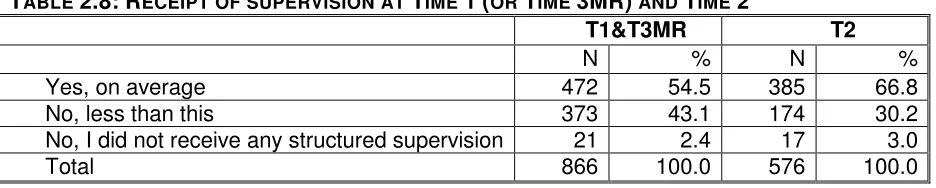
Reflective supervision was considered by programme coordinators and managers to be to be the core of the programme. At baseline, over half the NQSWs reported receiving their full entitlement to supervision and this increased to over two thirds by the end of the year. However, there was significant dissatisfaction concerning the availability and frequency of supervision for around one in five respondents.
NQSWs expressed broad satisfaction with the training they were receiving through the programme, particularly when it covered material which they had not had the
opportunity to consider on their degree course.
Fewer programme coordinators complained about a lack of integration between the NQSW programme and the Postqualifying (PQ) Award than in the previous year,
generally because they had taken initiatives to link the two. However, this matter was a significant source of frustration to a small proportion who believed that CWDC should give a lead rather than encouraging local flexibility. Similarly, there was evidence from programme coordinators that guidance on the completion of a portfolio was much better understood. Nevertheless, the large majority of NQSWs remained negative about the requirement to complete, considering it repetitive of their degree work and an
unnecessary burden3.
In the end of year survey, the majority of programme coordinators was satisfied with the support they had received from CWDC, considering staff to have been accessible and helpful. This was an improvement on the first year, although there remained room for
3
v
improvement, notably in the presentation of materials and the timeliness of their delivery. Opinion regarding the support advisors was variable.
Outcomes
At the end of the programme, supervisors and programme coordinators rated the efficacy of the NQSWs and also made retrospective ratings of their efficacy at the beginning. Ratings were much higher at the end of the programme than at the beginning of the programme.
In general, self-rated outcomes for NQSWs in terms of self-efficacy (confidence) were very similar to findings from Year 1 where substantial gains were reported. For
example, the proportion reporting ‘high confidence’ in relation to the outcome
statements on referral and assessment doubled from around a third to two thirds. There was a highly statistically significant increase in the summary self-efficacy ratings from the beginning to the end of the programme, with a large effect size.
Findings in relation to role clarity were mixed: there was an overall increase, but the pattern of responses suggested that around three in ten had actually become less clear about some aspects of their work. As in Year 1, there was a statistically significant increase in mean role conflict scores. For example, at the end of the year 43 per cent indicated that they “have to do things that should be done differently” compared to 31 per cent at baseline.
Job satisfaction was generally very high and remained so throughout the year. Perhaps not surprisingly in the current economic climate, the proportion satisfied with their job security fell from 86 per cent to 73 per cent. Dissatisfaction with public respect for social work, at around two thirds, remained almost as high as in the previous year, in spite of government-funded publicity campaigns.
As in Year one, there was a statistically significant increase (from 31 per cent to 36 per cent) in the proportion of NQSWs exceeding the self-reported threshold for stress. The end of year figure is somewhat lower than that for respondents in Year 1 (43 per cent). At the end of the programme, 44 per cent of NQSWs indicated it was ‘fairly likely’ or
‘very likely’ that they would be looking for a new job in a year’s time, compared with 47 per cent at the same stage in Year 1. Intention to leave was, not surprisingly associated with higher levels of stress and lower extrinsic job satisfaction. However, the
1. Introduction
1.1. The NQSW programme and the aims of this report
The Newly Qualified Social Worker [NQSW) Programme was established in 2008 as a three year project involving CWDC working with employers to deliver a comprehensive programme of support to newly qualified social workers (NQSWs). The programme was designed to ensure that NQSWs receive consistent, high quality support and that those supervising them are confident in their skills to provide support. It aims to contribute to increasing the number of people who continue their long-term career within social work with children and families (CWDC, 2008).
It has the specific objectives of:
• helping NQSWs improve their skills, competence and confidence as children’s social workers in a systematic manner during their first year of practice
• enabling employers to provide focused supervision, support and guidance
• contributing towards NQSWs’ post-registration training and learning
• improving job satisfaction and promoting retention within the children’s social worker workforce4.
This report presents findings from the evaluation of the second year of the programme. A report on Year 1 was published in August 20105. Readers may wish to refer to this for further details of the methodology and previous findings.
The aims of this report are to present:
• an analysis of the policy and practice context of the NQSW programme
• findings on participation in the programme, its implementation and the outcomes for NQSWs, making comparisons with Year 1 where appropriate.
A detailed comparison of the findings from the qualitative components across year one and year two has not been possible in this second year report due to some difficulties (extraneous to the evaluation) in the data collection phase. This left insufficient time for the year on year
comparison. These difficulties are detailed below in the account of the qualitative component of the evaluation.
The final report, due in March 2012, will incorporate data from further online surveys of NQSWs in the third year of the programme, their supervisors and local programme coordinators. It will also include findings from a series of interviews with senior managers in children’s services and the analysis of a number of organisational case studies. The report will integrate findings from across the three years of the evaluation on the implementation and outcomes of the programme and seek to identify lessons for the future support of NQSWs in children’s services.
4
www.cwdcouncil.org.uk/social-work/nqsw 5
1.2. Policy and practice context 1.2.1 Policy
The Newly Qualified Social Work programme was launched as a response to a growing concern that the transition from social work student to post qualified practice was, in many instances, problematic for both agencies and individual practitioners. This has particularly been the case in children’s services where a combination of a high demand for services, particularly in relation to child protection concerns, and high thresholds meant that newly qualified staff were often
carrying large complex caseloads.
The NQSW programme was therefore an initiative that sought to facilitate a more managed and graduated transition for the first year after the point of qualification with a programme of support that included enhanced supervision and protected time for professional development. In its first year the programme was a pilot with 1035 NQSWs participating in 87 local authorities and one voluntary agency. In September 2009 the programme was expanded so that it was available to all NQSWs entering children and families’ social work.
Despite the challenging economic environment in which services are being delivered there has been continuing government investment in the programme in 2010-11 and 2011-12, with the programme so far having supported over 5,000 NQSWs working for 152 employers6.
1.2.2 Policy – indirect
The NQSW Programme has been implemented in the context of wider process of social work reform. The Social Work Task Force [SWTF] was established by the last government with all party support in January 2009 with a remit of identifying ways that the social work profession could be strengthened and made more effective, presenting its final report in December 20097. The Taskforce, which drew together stakeholders from across both the sector and social work profession, reported on the very challenging environment for social work practice. It highlighted the high demand for services and that many practitioners felt that they were operating in a highly bureaucratised system that limited their opportunities for working directly with children, young people and their families.
The report argued that:
…the current mix of practical and professional support to frontline social workers is
inconsistent and sometimes inadequate. To be effective, social workers need appropriate technology and equipment, secure access to supervision and robust sources of research and information – and enough time to make good use of all of these resources. (SWTF, 2009: 4)
The Taskforce raised questions to how well social work students were being prepared for
practice, highlighting the lack of suitable statutory placements on some qualifying programmes,
6
http://www.cwdcouncil.org.uk/social-work/nqsw 7
…new social workers are often not properly prepared for the demands of the job. The education system does not effectively support on-going development and specialisation. (SWTF, 2009: 2).
The report of the Task Force identified the role that frontline managers play in improving the quality of support for practitioners in general, and NQSWs in particular, which is also a feature of the NQSW Programme. The report argued that there should be clearer standards around supervision and workload for NQSWs. However it also recognised that managers themselves needed more robust support if they are to deliver both a more managed workload and higher quality supervision. A further recommendation was that the NQSW programme should be superseded by a more formal Assessed Supported Year in Employment (ASYE) which, if successfully negotiated, would enable NQSWs to attain a licence to practice.
The recommendations of the Social Work Task Force were broadly welcomed by the last government and the Social Work Reform Board was established in December 2009 to take forward its work. The Coalition Government, following the election in May 2010 reiterated its support for the SWRB and has continued to express commitment for its desire to promote reform of the social work workforce.
The Reform Board has developed the SWTF’s recommendations in a number of important ways. The proposal of most relevance to this project is bringing forward the introduction of the ASYE from 2016 to as early as 2012. At the time of writing discussions as to the final model that will be adopted for the ASYE are continuing but may, among other factors, be informed by the experiences of the NQSW Programme.
The most recent and in many ways most significant recent policy development has been the publication of the Review of Child Protection undertaken by Professor Eileen Munro8. Her final report is the last of three reports she has authored in which she has analysed the child
protection system in England. While she was given a remit of looking at inter-agency child protection processes she was specifically asked to focus on how social workers’ confidence and expertise can be promoted. Using a systems approach, her critique of the children’s social care system was that it was risk averse, over-proceduralised and undermining of individual expertise. This analysis is congruent with the analysis of the SWRB and thus potentially any measure that comes out of either of these initiatives should complement one another. While Munro makes no specific reference to NQSWs the “direction of travel” she has taken in the reports is consistent with the recommendations with regard to NQSWs made by the SWRB.
1.2.3 Delivery
The last two years have, particularly since the inquiry into the death of Peter Connelly seen a substantial increase in demands for social work services. The Association of Directors of Children’s Services (April 2010) Safeguarding Pressures Project9reported in a survey of 86 authorities an increase of 21 per cent in the numbers of Section 47 enquiries in the two years Oct-Dec 2007 to Oct-Dec 2009 (p.10). This has also been reflected in the number of children subject of child protection plans, which rose from 26,400 in 2006 to 39,100 in March 201010.
8
http://www.education.gov.uk/munroreview/downloads/Munrointerimreport.pdf 9
www.adcs.org.uk/download/news/adcs-sg-pressures-p2-report-final.pdf 10
Given the tightening labour market due to budgetary pressures it might be expected that the high vacancy rates amongst social workers that have been a rising concern over the last
decade might ease. This may well be in the case in time but in the period covered by this report there is an indication that social work vacancy rates in England rose slightly from 10.9 per cent in 2009 to 11.3 per cent in 201011. As a consequence, almost three quarters of local authorities (72 per cent) had recruitment difficulties for children and families social workers in 2009, up from 64 per cent in 2008, and three fifths (60 per cent) reported retention difficulties (up from 39 per cent in 2008)12.
It is in this context that CWDC launched the Early Professional Development (EPD)
programme13 with a view to providing on-going support and development beyond the first year in employment and into next stage of practitioners’ careers. However, the organisational context remains challenging in many agencies with significant organisational restructuring in local
authorities taking place in 2010-11 in response to and in preparation for, budget reductions. In some areas this has included the merging of teams within local authorities.
1.2.4 General election
The second year of this evaluation has taken place against the backdrop of the election of a new Coalition Government. This Government has stated its commitment to social work reform and has both continued existing and embarked on new initiatives to take this process forward. The Government’s wider agenda has had a significant impact on the policy environment in which the NQSW Programme has been implemented. The Coalition Government has made the elimination of the budget deficit within the life span of this Parliament its primary economic objective. This has led to a challenging comprehensive spending review (CSR) and financial settlement for local government and in turn for their voluntary sector partners. Furthermore in order to ensure these financial targets are realised the budget reductions have been front loaded into the first two years of the parliament and so the years 2010-12 promise to be the most challenging.
The government however has wider policy ambitions than simply overseeing budget cuts. There has in its first year been the promotion of the idea of localism and its associated idea of the “big society”. The belief underlying much of new policy development has been that greater power needs to be devolved to local government and indeed to frontline practice. It is proposed that there be less regulation and prescription from central government and a relaxation of the
performance management culture. Alongside the Localism Bill 14 there is a review of the current legislative framework for local authorities. Already the requirement for Children’s Plans has been removed as well as prescribed organisational structures such as Children’s Trusts. This vision reflects many of the themes of the Munro review with a greater emphasis on professional discretion and judgement and local decision making. This theme is also reflected in the Health and Social Care Bill15, currently under review, which has proposed far reaching changes to health care commissioning.
11
www.communitycare.co.uk/Articles/2010/08/25/115153/one-in-10-social-work-posts-vacant.htm 12
www.cwdcouncil.org.uk/workforce-data/state-of-the-young-peoples-workforce-report 13
www.cwdcouncil.org.uk/social-work/epd 14
www.communities.gov.uk/localgovernment/decentralisation/localismbill/ 15
The implications for social work in general and NQSWs, in particular, is that this is not a period when the sector can expect large scale national programmes with prescribed, target driven detailed procedures. Instead we can expect government to set out a framework within which local policy makers and managers will be expected to implement, using their own judgement as to what fits local circumstances most appropriately.
This approach is reflected in five coordinated policy reviews of which the Munro Review is only one. Together these five reviews represent an important part of the process of realising the Coalition’s vision for child welfare. The other reviews are in relation to early intervention (Allen)16, Poverty (Field)17, early years (Tickell)18 and family justice Norgrove)19. While the reviews are at different stages of the reporting process, and while they are not all directly relevant to children and families social work, they do begin to suggest that social workers may well be working in a changing organisational and professional environment in the coming years. That is, a less procedural system which will make greater demands in terms of social workers using their discretion and judgement.
1.3 Roles and responsibilities in implementing the NQSW programme
As described above, the NQSW programme was designed by CWDC to help employers give participants in the programme structured and systematic support. CWDC’s intention is that it allows employers to use existing processes and arrangements to deliver this support and to select an approach that best meets the needs of participants in the NQSW programme. To enable employers to meet their commitments to the programme, CWDC provides:
• funding to employers;20
• training, support and advice for individuals nominated by employers to co-ordinate the programme in their organisation (programme co-ordinators);
• a set of written guidance materials for all participants in the NQSW programme and their supervisors; and
• training for those supervising participants in the NQSW programme, to help them in this role.
The key features of the NQSW programme can be found in the NQSW handbook for employers and social workers.21 The handbook sets out the programme structures, explains who is
eligible, sets out key roles and responsibilities and summarises the support provided by CWDC.
16
http://media.education.gov.uk/assets/files/pdf/g/graham%20allens%20review%20of%20early%20intervention.pdf 17
http://webarchive.nationalarchives.gov.uk/20110120090128/http://povertyreview.independent.gov.uk/media/2025 4/poverty-report.pdf
18
http://media.education.gov.uk/MediaFiles/B/1/5/%7BB15EFF0D-A4DF-4294-93A1-1E1B88C13F68%7DTickell%20review.pdf
19
http://www.justice.gov.uk/downloads/publications/policy/moj/family-justice-review-interim-rep.pdf 20
Funding consists of: £4,000 for each newly qualified social worker; an average of £15,000 per employer to contribute to the support and development of supervisors; £10,000 capacity funding for employers who support 10 or more newly qualified social workers per annum.
21
The NQSW handbook for employers and social workers can be accessed via the CWDC website:
In terms of the guidance supplied by CWDC for the programme the main change, as identified above, was that the requirements for a portfolio were clarified and it was not as prescriptive22 (indeed in the current 2010-11 guidance material there is no explicit reference to portfolio, only to the record of achievement and the “notepad”, a tool for NQSWs to use (usually with others) in order to promote reflection.
1.4 Programme evaluation
The programme is being independently evaluated by a consortium of three universities, Salford, Bristol and King’s College London, over three years. The purpose is to assess the impact of the programme on the social workers participating in the NQSW programme and their supervisors and to advise CWDC and the Department for Education on the extent to which the programme is sustainable and ‘fit for purpose’.
The evaluation is being supported by a research advisory group comprising social workers and managers from the field, independent academics and representatives of CWDC research and social work sections, the Department for Education (DfE), the Social Care Institute for
Excellence (SCIE) and the General Social Care Council (GSCC). The advisory group also reviews and comments on the research reports.
1.5 Methodology
The evaluation methodology has combined quantitative and qualitative social research methods to address the following topics:
• implementation of the programme;
• outcomes of the programme for newly qualified social workers and supervisors; • retention and recruitment of children’s social workers.
The methodology is summarised in the box below and described in more detail in the relevant sections which follow. It was reviewed and approved by the University of Salford Research Ethics Committee, the then Department for Children, Schools and Families (DCSF) and CWDC, who also reviewed the quantitative and qualitative research instruments.
22
Summary of Evaluation Methods
1.5.1 Quantitative study and samples
NQSWs were expected to participate in the evaluation of the programme. This was stated in their handbook. Online surveys were sent to all participants in the NQSW programme on three occasions: at the start of the programme (T1), at the time of the three month review (T3MR) and at the end of the programme (T2), nine months later
(see Appendices 6-8). All programme coordinators were surveyed at the beginning (T1) and end of the year (T2) (see Appendices 10 and 11). Supervisors of participants in the NQSW programme were only surveyed at the end (T2) of the programme (see Appendix 9).
1.5.1.1 Newly qualified social workers
The survey was sent to NQSWs on three occasions (T1, T3MR and T2), to two groups (or cohorts) of participants, ‘early starters’ (who had registered by 01 December 2009) and ‘late starters’ (who had registered between 01 December 2009 and 31 March 2010). There were no important statistically significant differences in the demographic profiles of these two groups and results have been combined in this report.
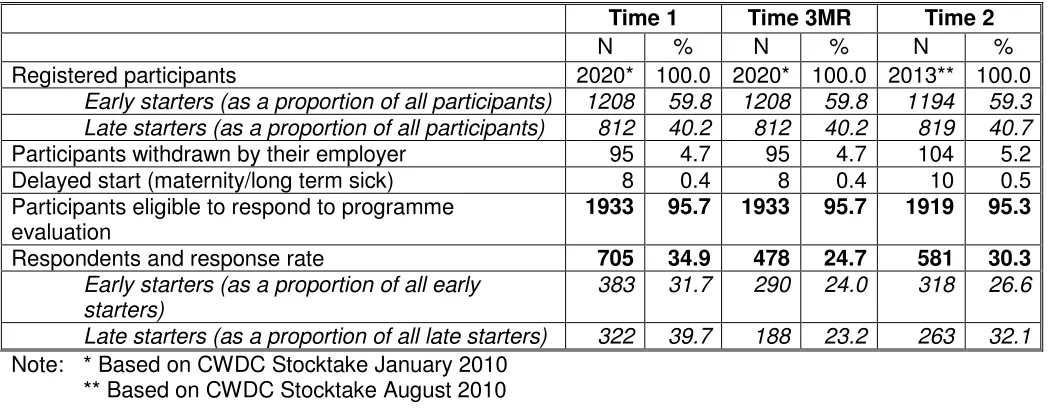
The number of eligible respondents and the response rates for the three survey points are presented in Table 1.1 below. A total of 2,020 NQSWs were initially registered with CWDC for participation in the programme in 2009-10. Some registered participants were withdrawn from the programme by their employers before the first survey was distributed; the reasons were not recorded. In accordance with data protection regulations, the first survey was sent out by CWDC to the remaining 1,933 NQSWs participating in the programme.
TABLE 1.1:PARTICIPANTS IN THE NQSW PROGRAMME AND RESPONSE RATES FOR THE NQSW
EVALUATION SURVEY IN YEAR 2(2009-10)
• Online surveys of social workers participating in the programmes, their supervisors, and the local programme coordinators. The surveys explore the social workers’ job satisfaction, role clarity, confidence, stress, and their views of the implementation of the pilot programme. Supervisors are being asked about their self-confidence in providing high quality supervision and their experience of the specialist training provided as part of the programme. They are also asked to assess the effectiveness of the social workers they supervise. Programme coordinators are asked to identify barriers and facilitators to the implementation of the programme. The surveys asked for demographic information and use a combination of standardised measures and open questions about their experience of the programme.
• Focus groups and interviews with social workers, supervisors and managers in a sample of 20 participating local authorities and voluntary organisations.
• Detailed organisational case studies of the implementation and impact of the programmes over three years in selected local authorities in different parts of the country.
Time 1 Time 3MR Time 2
N % N % N %
Registered participants 2020* 100.0 2020* 100.0 2013** 100.0
Early starters (as a proportion of all participants) 1208 59.8 1208 59.8 1194 59.3 Late starters (as a proportion of all participants) 812 40.2 812 40.2 819 40.7
Participants withdrawn by their employer 95 4.7 95 4.7 104 5.2
Delayed start (maternity/long term sick) 8 0.4 8 0.4 10 0.5
Participants eligible to respond to programme evaluation
1933 95.7 1933 95.7 1919 95.3
Respondents and response rate 705 34.9 478 24.7 581 30.3
Early starters (as a proportion of all early starters)
383 31.7 290 24.0 318 26.6 Late starters (as a proportion of all late starters) 322 39.7 188 23.2 263 32.1
Note: * Based on CWDC Stocktake January 2010 ** Based on CWDC Stocktake August 2010
Discounting the participants in the NQSW programme whose start was delayed (eight
NQSWs), 35 per cent of the NQSWs who had started the programme responded to the baseline survey (Table 1.1)23, compared with 51 per cent of those in the Year 1 cohort. At T3MR
participants in the NQSW programme were invited to provide demographic information if they had not done so previously and also to complete the baseline measures of role clarity/conflict, job satisfaction and stress.
The response rate at T2 dropped to 30 per cent, which was slightly lower than in the Year 1 cohort (33 per cent.) The findings need to be considered in the light of these response rates. It is not possible to say whether the responses of those who completed the survey were
representative of the NQSWs as a whole.
In total, over 1,200 of the 1,933 eligible programme participants (61 per cent) responded to the survey on at least one occasion. Of these 1,187 (93 per cent) provided full demographic information.
[image:18.595.37.564.71.275.2]The demographic profiles of the NQSWs at the different times in Year 2 of the NQSW programme to date are shown in Table A13.1 (Appendix 13). The percentages in the table relate to the total number of NQSWs for which demographic data are available in Year 224. Table A13.2 (Appendix 13) shows the demographic profiles of respondents completing surveys at mutually exclusive time points. There were only two statistically significant differences in the proportions of respondents by group: white respondents were more likely than BME
respondents to respond at all three time points; and those from the South West were more likely to respond at all three survey time points than respondents form other regions. However, since the numbers involved were small and also because the analysis involved multiple comparisons, these results should be treated with caution. Overall, we can conclude that the respondents at each time point were representative of the respondents as a whole.
23
As previously noted in the Baseline Report, the response rate was much lower for the early starters than for the late starters. The reasons for this are not known. There was no difference in the way in which the survey was administered.
24
1.5.1.2 Programme coordinators
Each participating employer was required to appoint a programme coordinator. These received training from CWDC designed to enable them to oversee the implementation of the programme in their organisation. The responsibilities included developing an overarching training and development programme for their organisation, monitoring the NQSWs’ individual training and development plans and checking that they are receiving supervision and a reduced caseload. Programme coordinators liaised with the support advisors commissioned by CWDC to assist employers in the delivery of the programme and with CWDC itself to register NQSWs and arrange training for supervisors. They also monitored NQSWs’ progress towards the outcome statements as evidenced in portfolios and the production of records of achievement.
Programme coordinators were surveyed in February 2010 (Time 1) and again in February 2011 (Time 2). Unlike in the first year of the NQSW programme where CWDC sent the survey link to programme coordinators, in Year 2 the evaluation team sent programme coordinators an email invitation to complete the online surveys at both time points.25
Programme coordinators were asked to rate possible barriers to the implementation of the programme using a standardised measure, the five-point barriers to implementation scale. They were invited, in a series of open questions, to identify and comment on further barriers and facilitators to the implementation of the programme.
As Table 1.2 shows, the baseline survey was completed by 49 of the 104 programme coordinators in the local authorities (47 per cent). At Time 2, one year later, 63 programme coordinators replied (57 per cent). Only 16 programme coordinators (17 per cent) completed both surveys. The findings from these surveys are presented below.
TABLE 1.2:PROGRAMME COORDINATORS IN THE NQSW PROGRAMME AND RESPONSE RATES FOR THE
NQSW EVALUATION SURVEYS IN 2009-10
Time 1 Time 2
N % N %
Programme coordinators eligible to respond to programme evaluation 104* 100 110** 100.0
Programme coordinators responding to weblink invitation/email invite and response rate
49 47.1 63 57.3
Note: * 56 new sites entered NQSW programme in Year 2 plus 48 sites from Year 1 changed programme coordinator.
** 12 new programme coordinators began their role by the end of Year 2 of the NQSW programme.
1.5.1.3 Supervisors
Those staff that were understood by CWDC to be the supervisors of NQSWs were invited to complete an online questionnaire. In addition to demographic information, the supervisors were asked to rate their own confidence in providing supervision using a set of statements derived from the CWDC/Skills for Care guide to supervision26. They were asked whether they had participated in the CWDC training programme for supervisors and, if not, whether they planned
25
The change in approach was deemed to be a more efficient less time consuming method to establish contact both for CWDC and the evaluation team and less confusing for the organisations sampled.
26
CWDC and Skills for Care (2007) Providing effective supervision workforce development guide. [online].
to do so in future. They were invited to give their views on the supervision training and on the programme as a whole. They were also asked to rate the NQSWs they were supervising. An invitation email was sent by the evaluation team to supervisors identified by the CWDC. This contrasted with the first year of the NQSW programme in which CWDC sent out a survey link to supervisors.
Supervisors of social workers participating in Year 2 of the NQSW programme were scheduled to be surveyed in April 2010, but this had to be cancelled because of Cabinet Office restrictions on contact with local government employees during the pre-general election period27.
Consequently they were only surveyed at Time 2, in February 2011. Although 62 supervisors out of a possible 279 accessed the online survey, only 50 provided answers to all the questions (see Table 1.3 below). The findings from this survey are presented below.
TABLE 1.3:SUPERVISORS OF NQSW SOCIAL WORKERS IN THE NQSW PROGRAMME AND RESPONSE
RATES FOR THE NQSW EVALUATION SURVEYS 2008-09 AND 2009-10
Time 1 Time 2
N % N %
Supervisors of NQSW social workers eligible to respond to programme evaluation
NA* - 279 100.0
Supervisors of NQSW social workers responding to weblink invitation/email invite and response rate
NA* - 62** 22.2
Note: * Supervisors survey not carried out at Time 1 of Year 2 of the NQSW programme. ** Incomplete data for 12 supervisors, final N=50.
1.5.2 Qualitative study and samples
In the qualitative component of the evaluation, data were collected from fourteen organisations across England, all local authorities28.
In each organisation a member of the evaluation team, using agreed schedules (Appendices 2-5), conducted the following:
1. an individual face to face interview with the programme coordinator;
2. an individual face to face interview with the senior manager responsible for the programme, usually the assistant director of children’s services, (where face to face meetings could not be arranged the interview was conducted by telephone);
3. a focus group to which all NQSWs in the organisation were invited;
4. focus groups to which all of supervisors of NQSWs in the organisation were invited (this included both line-managers and, in some organisations, senior practitioners or freelance supervisors; in this report the views of line-managers and supervisors have not been separated).
Participating organisations were designated as one of two types (Table 1.4):
27
www.parliament.uk/documents/commons/lib/research/briefings/snpc-05262.pdf
28
1. “case studies” which were selected to represent the different types of organisations that provided social work services to children and families (county, unitary, metropolitan, London borough and voluntary organisations) across the different regions of England.
2. “organisational studies”, in which additional data were collected from individual NQSWs and their supervisors. In the final report (Spring 2012) these organisational studies will be used as examples to show how the NQSW programme was implemented and developed locally over the first three years; they are not reported separately here.
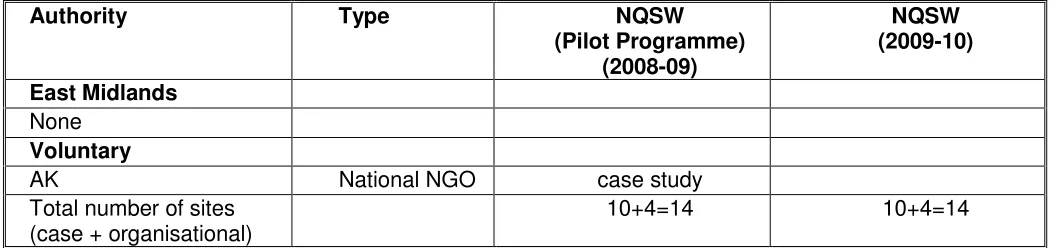
Table 1.4: Qualitative study sample by NQSW programme year29
Authority Type NQSW
(Pilot Programme) (2008-09)
NQSW (2009-10)
London Boroughs
A Borough organisational study organisational study
B Borough case study
C Borough case study
South East
E County case study case study
F Unitary case study
South West
J Unitary organisational study organisational study
K County case study
L County case study
North East
M Metropolitan case study case study
O County case study
R Metropolitan case study
Yorkshire
T Metropolitan case study
U Metropolitan organisational study
North West
V Metropolitan organisational study
W Metropolitan case study case study
Z County case study
West Midlands
AB County organisational study
AC Metropolitan case study
AD County organisational study
East
AF County case study
AG County case study
AH Unitary case study
29
Authority Type NQSW (Pilot Programme) (2008-09) NQSW (2009-10) East Midlands None Voluntary
AK National NGO case study
Total number of sites (case + organisational)
10+4=14 10+4=14
Following the initial pilot (2008-9), the NQSW programme was extended to all organisations employing children’s social workers. With this in mind, it was planned to increase the number of case studies from ten to fourteen and the number of organisational studies from four to six. This would enable an analysis of implementation in organisations which were new to the programme. However, while additional organisations were identified and agreed in principle to participate, it proved impractical to collect data. Changes in the organisational climate arising from financial restructuring, staffing changes and re-organisation led to a decision by some of the selected organisations to withdraw late in the data collection period. This made it impossible to arrange suitable substitute organisations. In other cases staff who had agreed to take part in focus group meetings or interviews were unable to attend because of pressure of work, court attendance, participation in case conferences or absence for sickness. Since there was no requirement for organisations or staff to participate in this component of the evaluation, the research team was unable to make progress.
[image:22.595.35.561.72.196.2] [image:22.595.41.558.473.632.2]The numbers of staff interviewed individually or participating in focus groups are detailed in Table 1.5.
Table 1.5: Numbers and designations of staff participating in the case and organisational studies by organisational type Type of employer and number NQSWs Team leader Other Supervisor Programme coordinator Senior Manager Total County Council
(4) 23 (107) 19 2 8 5 57
London Borough
(3) 15 (35) 1 3 2 1 22
Metropolitan (6) 15 (40) 5 0 3 0 23
Unitary (3) 17 (42) 2 0 2 2 23
Voluntary (1) 0 0 0 0 0 0
Total (17) 70 27 5 15 8 125
Note: the total numbers of NQSWs in the organisations at the time of data collection are given in brackets
1.5.3 Implementation of the Programme
At the end of year, all NQSWs were surveyed about their experiences of the programme,
including questions on the extent to which they considered they had received the core elements of the programme. These questions were included as part of a series of online surveys
Programme coordinators in the participating organisations were appointed as a requirement of funding by CWDC. All programme coordinators were invited to respond to online surveys at the beginning of the programme and, again, one year later. The survey used a standardised scale to assess ‘barriers to implementation’ and invited open comments on barriers and facilitators. In addition, programme coordinators were interviewed as part of case studies.
The case studies focused on the implementation of the programme and experiences of the participants. The assistant director of children’s services or equivalent was interviewed, as well as the programme coordinator. NQSWs and their supervisors and team managers participated in separate focus groups.
In the organisational case studies, as well as the focus groups and interviews mentioned above, individual interviews were undertaken with NQSWs, senior managers and supervisors. Detailed information was collected about each authority’s organisation and policies concerning children’s social workers. These organisational studies will continue into the third year of the programme and will be presented in the final report.
1.6 Outcomes for NQSWs
As noted in the introduction, the intended outcomes of the programme for NQSWs included increased skills, competence, confidence and job satisfaction. These outcomes are being assessed through online surveys of all participating NQSWs at three time points. The baseline survey (T1) used standardised self-report measures to assess the social workers’ job
satisfaction, role clarity and role conflict, and stress.
A self-efficacy scale was developed and tested especially for the evaluation. This was inspired by the work of Holden (2002)30, who has developed an approach to measuring self-efficacy based on Bandura’s social cognition theory. Holden has explained that:
Self-efficacy is more than a self-perception of competency. It is an individual’s assessment of his or her confidence in their ability (to) execute specific skills in a particular set of
circumstances and thereby achieve a successful outcome. (Holden et al., 2002, p. 116)
Because self-efficacy might be related to organisational constraints on social workers carrying out their role, a measure of role conflict was included in the survey. Multivariate analysis was used to investigate whether there was a relationship between self-efficacy and the experience of role conflict, with other variables being held constant.
The measure developed for this study assesses, using a ten-point scale, the NQSWs’
confidence in their ability to accomplish the tasks set out in 11 NQSW “outcome statements”31 (see Appendix 1). The outcome statements stipulate what children’s social workers are
expected to be able to know, understand and do by the end of their first year in practice32. They cover three key areas: direct work with children, young people, their families and carers;
working with others to provide co-ordinated services; and professional development.
NQSWs were asked to complete this measure at baseline and again after three months (T3MR) when the NQSWs and their supervisors are expected to undertake a review of progress. At this
30
Holden, G., Meenaghan, T., Anastas, J. and Mtrey, G. (2002) Outcomes of social work education: The case for
social work self-efficacy, Journal of Social Work Education, 38, 115–33.
31
Because outcome statement 11 covers two discrete areas, accountability and professional development, these were represented with separate scale items. The self-efficacy scale therefore contains 12 rating scales.
32
point, they were also asked to include a retrospective rating of their baseline self-efficacy (“If you knew then what you know now…”). This rating was introduced because it was anticipated that some NQSWs may, with the benefit of experience, reflect that they may have
overestimated their self-efficacy at baseline. Finally, at the end of the programme (T2), they repeated the ratings.
1.7 Recruitment and retention 1.7.1 Surveys of NQSWs
As part of the online surveys at T1 and T2, NQSWs are asked about the likelihood of their leaving their present job in the next 12 months. Previous research has shown that expressed ‘intention to leave’ is a reliable indicator33. NQSWs were asked to indicate, if they were planning to leave, whether this would be for another job within children’s social work, or not.
1.7.2 Surveys of employers
The employers participating in the case and organisational studies were asked to provide retrospective data on recruitment and retention plus vacancy and turnover rates for NQSWs participating in the programme in 2009-10.
1.8 Data Analysis
1.8.1 Qualitative Data Analysis
The interviews and focus groups followed structured formats (see Appendices 2-5) which were used by all members of the research team who took responsibility for data collection in the study sites. All focus groups and interviews were digitally recorded. The team then met for a day to code the data and review the main and subsidiary themes arising in the data from the
different research sites. Given the structured nature of the data collection, the thematic content reflected the research topics and questions. Themes were identified and elaborated and a detailed framework for analysis developed. This framework was later transferred to an interactive Excel spreadsheet into which team members were able independently to add quotations, discussion points and observations based on their own review of the data which they had collected. Where necessary, the framework was developed through the introduction of new cells to encompass new subsidiary or contrasting themes. This data set was then added to the qualitative data analysis programme (NVivo) and analysed thematically.
The analysis was further developed through using the constant comparative method. That is, the focus was on similarities and differences between the data and how these could be
understood in terms of the key dimensions of the study. One of these dimensions is ‘time’ and in the final report the evaluation team will provide an analysis of how organisational and individual experiences change as the programme developed from the piloting stage34.
33
Tham, P. (2007) Why are they leaving? Factors affecting intention to leave among social workers in child
welfare. British Journal of Social Work, 37, 1225-1246.
34
Note: because it was not possible for the evaluation team to have any contact with the local authorities during the General Election period, the timetable for data collection had to be amended and the data collection was
1.8.2 Quantitative data analysis
Quantitative data analysis began with descriptive statistics and cross-tabulation of demographic variables and responses to the outcome measures. The NQSW Year 2 baseline report35
described in detail the profiles and experience of NQSWs and their baseline ratings on the outcome measures according to the region and type of authority in which they were employed.
The second stage of the analysis reported in detail below employed these variables in a comparative analysis of outcomes (measured as the difference in T2 versus T1 scores). Analysis of variance was used to explore differences in outcomes between groups (e.g. in different regions, different types of authority and different baseline characteristics of the
participating NQSWs, such as educational background and previous experience). Multivariate regression analyses, controlling for baseline scores, were employed to explore the statistical predictors of the various outcomes.
2 Findings
2.1 Implementation of the programme
2.1.1 Participation in the programme
As noted above, 2,020 social workers were initially registered by their employers in the second year of the programme. During the course of the year, 104 NQSWs (five per cent of those initially registered) were withdrawn by their employers and eight had a delayed start to the programme.
[image:25.595.34.561.470.556.2]For comparison, in 2008-09, 253 NQSWs (22 per cent of those initially registered) were withdrawn from the programme in the first year (35 of whom had a delayed start)36.
Table 2.1: Participants in Year 1 and Year 2 of NQSW programme
NQSW Year 1 (2008-09) NQSW Year 2 (2009-10) Time 1 Time 3MR Time 2 Time 1 Time 3MR Time 2
Registrants 1035 1000 1000 2020 2020 1925
Withdrew NA 162 95 9
Delayed start 35 8 6 2
2.1.1.1 Reasons for withdrawals
Programme coordinators provided CWDC with reasons for the withdrawal of 96 (92 per cent) of the 104 social workers (see Table 2.2). More than a quarter (n=26) left their post for a different social work position and less than a quarter (n=20) declined to participate in the NQSW
programme for personal reasons.
35
Baseline Report to CWDC October 2010 (unpublished).
36
TABLE 2.2:REASONS FOR WITHDRAWALS AND DELAYED STARTS IN YEAR 2 OF THE NQSW PROGRAMME (N=94)
REASON Number
Left for a different social work position 26
Declined to participate for personal reasons 20
Registered but never started 12
Left social work post to other/unknown job 11
Registered in error 11
Contract was terminated by employer 7
Other reason 7
Employer organisation withdrew 0
Total 94*
Note: *Reasons for withdrawal and delayed starts not provided for eight registered participants.
2.1.2 NQSWs’ experiences overall experiences and expectations
2.1.2.1 Satisfaction with NQSW programme
Three quarters of respondents at Time 1 were satisfied with the overall package of work, support and training they received from their employer (see Table 2.3 below).
TABLE 2.3:SATISFACTION WITH OVERALL PACKAGE OF WORK, SUPPORT AND TRAINING AT THE THREE SURVEY TIME POINTS
T1 T3MR T2
N % N % N %
Satisfied 519 74.8 134 69.8 389 68.4
Not satisfied 175 25.2 58 30.2 180 31.6
Total 694 100.0 192 100.0 569 100.0
Fifteen NQSWs responding to the T3MR survey, and 153 NQSWs responding to the Time 2 survey provided written comments on their experience of the NQSW programme. Around a third of these commented positively. Positive comments were associated with those who had
supportive managers and were given adequate time to focus on the NQSW programme:
I feel that this course has given me the opportunity to consider my practice and reflect more effectively on my own professional development. Having the time to consider through the use of practice supervision has been a wonderful way to be critical of my practice in a safe environment without fear of it impacting on my employment and being able to voice, analyse and consider realistic ways of improving both my practice and confidence. (NQSW Time 3 month review survey)
Further, this satisfaction was associated by the following respondent with retention in her post:
I am more than happy and feel that this has kept me in the post. (NQSW Time 2 survey)
It is important to note that those who were dissatisfied were much more likely to write about their experiences than those who were satisfied. At the end of the programme, just over 100 NQSWs (18 per cent of the respondents overall) wrote expressing dissatisfaction with the support they were receiving.
A quarter of the NQSWs who commented negatively in the Time 2 survey reported
dissatisfaction with poor management of the programme within local authorities . For example:
I have only just been given appropriate advice on my portfolio. I have had had no training that was identified in my training plan, no support, no reduction in case load and just more work to do!! (NQSW Time 3 month review survey)
The other most common cause for complaint was that team managers were unsupportive. A fifth of the NQSWs that commented negatively in the Time 2 survey stated that this was an issue, for example:
I was not supported by my line manager, I was not allowed to have a protected case load, nor was she helpful when it came to the portfolio. I had difficulty getting my study days off work and did not receive all my entitlement. (NQSW Time 2 survey)
I think there has been a lack of awareness about the newly qualified social work programme in its initial year. There has been an expectation that we up our workload and complexity of workload much quicker than the programme intends... it leaves workers with insufficient time for reflection, outside reading and completion of the academic parts of the programme. Thus, I feel… that the course is tokenistic (sic), which is a real shame, as I feel that the ideas behind the course are excellent and should be followed through. (NQSW Time 2 survey)
In common with the previous year, the pressure of work on some teams was clearly an impediment, as one NQSW explained ruefully:
Not all teams are able to give protected caseloads and allocated time for training and development to NQSWs. Where this happens NQSWs end up having same caseload as experienced workers, no protected time, extra demands from NQSW programme, and less pay. Not a winning combination. (NQSW Time 2 survey)
2.1.2.2 Benefits of the programme
Participants in the NQSW programme were asked to rank (from greatest to least) the benefits to them as social workers of participating in the programme (see Table 2.4 below). In the first two surveys (T1 and T3MR) respondents were asked to rate the potential benefits on the grounds that it was probably too early for them to make an informed judgement. At the follow up survey (T2) they were asked to rate the actual benefits which they had experienced.
TABLE 2.4:POTENTIAL/ACTUAL BENEFITS OF THE NQSW PROGRAMME AT TIME 1(OR TIME 3MR) AND TIME 2
T1&T3MR T2
Benefit Potential Actual
N % N %
Ranked 1st 258 30.8 144 26.2
2 212 25.3 86 15.6
3 129 15.4 101 18.4
4 104 12.4 73 13.3
Ranked 5th 134 16.0 146 26.5
Reduced (90%) caseload
Total 837 100.0 550 100.0
Ranked 1st 300 35.8 193 35.2
2 250 29.8 145 26.5
3 135 16.1 96 17.5
4 108 12.9 73 13.3
Ranked 5th 46 5.5 41 7.5
Regular, structured supervision
Total 839 100.0 548 100.0
Ranked 1st 110 13.1 119 21.7
2 146 17.4 129 23.5
3 196 23.4 124 22.6
4 206 24.6 99 18.0
Ranked 5th 180 21.5 78 14.2
Peer support
Total 838 100.0 549 100.0
Ranked 1st 78 9.3 29 5.3
2 156 18.6 117 21.3
3 294 35.0 183 33.3
4 228 27.2 166 30.2
Ranked 5th 83 9.9 55 10.0
Allocation of 10% workload for training
Total 839 100.0 550 100.0
Ranked 1st 81 9.7 43 7.8
2 71 8.5 65 11.8
3 118 14.1 101 18.4
4 181 21.6 107 19.5
Ranked 5th 386 46.1 233 42.4
Additional funds for training and development
Total 837 100.0 549 100.0
By the end of the programme, a significantly higher proportion of NQSWs valued peer support as most important (up from 13 per cent to 22 per cent.) As one commented:
I did enjoy the opportunity to network with other NQSWs. (NQSW Time 2 survey)
But there was a drop in the proportion ranking a reduced caseload as the most important element. For example, one respondent who had given low ratings regarding the actual benefits of caseload reduction and time for training commented at the end of the programme:
It should have been valuable, but it didn’t happen. I do not feel I have had a reduced caseload or had 10% time for training and development. (NQSW Time 2 survey)
rated anticipated or realised benefit. Seven commented that it was difficult to obtain the additional funding, or that they were not aware of the additional funding. However, those who had received funding were appreciative:
I have had a NQSW training programme and NQSW funds available from my employer, and have attempted to make best use of these. (NQSW Time 2 survey)
2.1.3 Managers’ opinions on overall effectiveness of the programme and confidence in NQSWs
2.1.3.1 Senior managers
Seven of the twelve senior managers interviewed commented on the impacts of the
programme. Two of them were strongly supportive of the programme and the other five were moderately supportive. Those who made specific reference to benefits of the programme mentioned improvement in recruitment and retention, an increase in the quality of applications for NQSW posts, NQSWs having a better idea of their career expectations and organisations being able to consolidate good practice37. These views are detailed summarised in Table 2.5.
TABLE 2.5: SUMMARY OF MANAGERS’ OPINIONS (INTERVIEWS)
Comments on Effectiveness of NQSW programme Senior Managers
Team managers
Improvement in recruitment & retention 2/7 4/10
Increase in the quality of staff applications for NQSW posts 2/7
NQSWs having a better idea of their career expectations and future planning
1/7 4/10
Organizations being better able to consolidate good practice and to promote the development of staff
2/7
Provided NQSW with support and opportunities to continue their learning in a protected environment
6/10
NQSWs received higher quality of support from peers and across the organization
1/10
Supervisors/ TMs are better able to understand the needs and expectations of NQSWs
2/10
Negative impacts, e.g. costs, stress 3/14
2.1.3.2 Supervisors and team managers
In the data gathered through the case and organisational studies, supervisors/team managers in ten out of 14 focus groups were positive about the impact and effectiveness of the
programme. Nearly half of these expressed a consensus view that the programme had had a positive impact on recruitment, while others expressed the view that it was premature to
comment. Supervisors/team managers in three of the 14 sites expressed negative views about the programme; one focus group was concerned about the cost of the programme, another was
37