Zwitterionic Ion Chromatography
by
Helmy Alicia Cook
B App Sc (Hons)Submitted in fulfilment of the
requirements for the Degree of
Doctor of Philosophy .
UNIVERSITY
To the best of my knowledge and belief, this thesis contains no material which has been
accepted for a degree or diploma by the University or any other institution, nor material
previously published or written by another person except where due reference is made
in the text of the thesis.
Helmy A. Cook
December 2002
This thesis may be available for loan and limited copying in
accordance with the Copyright Act 1968.
Acknowledgments
Many thanks go to Professor Paul Haddad, my supervisor and main source of focus, direction and help with this project. Thanks also to Dr Greg "Dicko" Dicinoski for his
assistance and good-natured ability to give as good as he gets; also Dr Wenzhi Hu,
Professor Jim Fritz and Dr Tetsuo Okada for valuable discussions and input.
I would like to thank all members of ACROSS, past and present, as well as members of
the School of Chemistry, for their help, time and friendship, especially Dr Matthew
Shaw, John O'Reilly, Cameron Johns, Philip Zalcaria, Joe Hutchinson, Dr Emily Hilder, Dr Michael Breadmore, Dr Kai Ling Ng, Dr Philip Doble, Dr Mirek Macka, Dr
Ana Brandao, Grant Shepherdson, Dr Peter Trail!, Dr Alison Featherstone, Dr Georgia
Pass and Melanie Denney.
A scholarship from the University of Tasmania, as well as support from Dionex
Corporation and CERI, is gratefully acknowledged.
Special thanks go to Phil, Cam, Joe, Andy, Dave, Mel, Chisato and especially Matt for
yaps, soccer, beers, coffees and making sure there was something fun to look forward
to nearly every day.
Thank you to my family for their support, especially my parents, and Jac, Pat and
Mason for providing me with a haven in the last weeks of writing up.
Type of Publication Number Reference
Papers 4 1-4
Oral Presentations 2 5, 6
Posters 3 7-9
1 Cook HA., Hu W., Fritz J.S. and Haddad P.R. A Mechanism of Separation in
Electrostatic Ion Chromatography. Anal. Chem., 2001, 73 (13) 3022-3027.
(Chapter 3)
2 Cook, H.A., Dicinoski, G.W. and Haddad P.R. Mechanistic Studies on the
Separation of Cations in Zwitterionic Ion Chromatography. I Chromatogr. A., in
press. (Chapter 4)
Hu W., Haddad P.R., Cook H., Yamamoto H., Hasebe K., Tanaka K. and Fritz J.S. Manipulation of Separation Selectivity of Inorganic Anions in Electrostatic Ion
Chromatography by the use of Mixed Cationic-Zwitterionic Micelles as the Column
Coating Solution. J. Chromatogr. A., 2001, 920, 95-100. (Chapter 5)
4 Hu W.Z., Haddad P.R., Hasebe K., Cook H. and Fritz J.S. Analysis of Inorganic Anions by Electrostatic Ion Chromatography using Zwitterionic/Cationic Mixed
Cook H., Haddad P.R., Hu W., and Fritz J.S. A New Mechanism of Separation in
Electrostatic Ion Chromatography.
Proc. International Ion ChromatographySymposium, 2001,
Chicago, U.S.A., oral presentation No. 64.
6 Cook H.A., Haddad P.R., Hu W. and Fritz J.S. The Effect of the Eluent Anion and
Cation Species on Retention in Electrostatic Ion Chromatography.
Proc.International Ion Chromatography Symposium, 2000,
Nice, France, oral
presentation No. 5.
7 Cook H.A., Okada T. and Haddad P.R. Modelling of Retention in Zwitterion Ion
Chromatography.
Proc. Interact 2002, 2002,Sydney, Australia, poster
presentation, p. 241.
8 Haddad P.R., Cook H.A., Hu W., Yamamoto H., Hasebe K., Tanaka K. and Fritz
J.S. Electrostatic Ion Chromatography Using Mixed Micelles of Zwitterionic and
Cationic Surfactants as the Stationary Phase.
Proc. International IonChromatography Symposium, 2000,
Nice, France, poster presentation No. 75.
9 Cook H.A
1
, Doble P.A. and Haddad P.R. Electrostatic Ion Chromatography.
Proc.Australian International Symposium of Analytical Science, 1999,
Melbourne,
This work presents a comprehensive study on Zwitterionic Ion Chromatography (ZIC)
for the separation of inorganic ions.
The elution characteristics of anions on a sulfobetaine-type stationary phase are
examined and it is shown that the Hofineister series could be used to predict the elution
order, with retention increasing with increasing polarisability, as well as the effect of the mobile-phase anion on retention of anions. A mobile-phase anion with a greater
polarisability than the analyte anion reduced retention, and vice versa. An increase in
anion retention was also observed in changing the mobile-phase cation from Na+ to
Mg2+ to Ce3± .
Electro-osmotic flow measurements in an analogous capillary electrophoresis system
revealed a zeta potential on the stationary phase that could be modulated from positive
(+40.2 mV for CeC13) to negative (-53.4 mV for NaC104) depending on the mobile-phase anion and cation. Thus the zwitterionic stationary mobile-phase is only neutral for
mobile phases where the mobile-phase anion and cation equally shield the charges on
the stationary phase.
A new retention mechanism for ZIC was developed, based the ability of an analyte to
penetrate the repulsion effects of a Donnan membrane (established by the zeta
system, and an analogous mechanism was proposed for a cation system that utilised a
phosphocholine-type stationary phase, where a systematic study of the elution effects
of this system was found to mirror that of the anion system.
Manipulation of the separation selectivity of inorganic anions in ZIC was achieved by controlling the ratio of cationic and zwitterionic surfactants in the stationary phase
coating solution. Even at a ratio of 2:8 cationic:zwitterionic surfactant, a large contribution of an ion-exchange mechanism from the cationic surfactant occurred, in
particular for small, highly-charged analytes. This was evident in the slopes of log k'
versus log [mobile phase] plots. For example, the slope for the analyte SO42" changed from 0.23 to —1.22 when the ratio was changed from 1:10 to 2:8.
Hard and soft mathematical models were investigated to quantitatively describe the mechanism of ZIC. The non-stoichiometric hard model was successful in describing
general experimental trends, but further work is required to achieve accurate
predictions of retention factors. The experimental data obtained for the anion system were used successfully to train an artificial neural network capable of predicting
retention factors for a wide range of mobile phases. Plots of calculated versus
CHAPTER 1 INTRODUCTION AND LITERATURE REVIEW 1
1.1 Introduction 1
1.2 Ion Chromatography 2
1.2.1 Ion-Exchange Chromatography 3
1.2.2 Ion-Interaction Chromatography 6
1.3 Bi-Functional Stationary Phases in Ion Chromatography 7 1.3.1 Ion-Exchangers with Continuous Distribution of Opposite Charges
Throughout the Stationary Phase 8
1.3.2 Pellicular Ion-Exchange Bi-Functional Stationary Phases 8 1.3.3 Polyampholyte Polymer Ion-Exchange Stationary Phases 10 1.3.4 Bi-Functional Ion-Exchange Stationary Phases with Separately
Distributed Charges 10
1.3.5 Zwitterionic Surfactants in the Mobile Phase 13
1.4 Zwitterion Ion Chromatography 14
1.4.1 Stationary Phase 15
1.4.1.1 Nature of the Zwitterionic Molecule 15 1.4.1.2 General Ion Uptake Properties of Zwitterions 21 1.4.1.3 Dynamic Stationary Phases in ZIC 23 1.4.1.4 Permanent Stationary Phases in ZIC 25
1.4.2 Effect of the Mobile Phase 27
1.4.2.1 Water Mobile Phase 27
1.4.2.2 Electrolyte in the Mobile Phase 29
1.4.3 Applications 31
1.4.4 Proposed Mechanisms 38
1.5 Aim of the Project 43
CHAPTER 2 EXPERIMENTAL 55
2.1 Instrumentation 55
2.2 Reagents and Solutions 55
2.3 Production of Ce(C103)3 58
2.4 Column Coating Procedure 58
2.5 References 59
CHAPTER 3 THE BEHAVIOUR OF ANIONS ON A SULFOBETAINE- TYPE
STATIONARY PHASE 60
3.1 Introduction 60
3.2 Experimental 62
3.2.1 Instrumentation 62
3.2.2 Column Coating Procedure 62
3.2.3 Determination of the EOF 63
3.3 Results and Discussion 65
3.3.1 Modulation of the Surface Charge 65
3.3.2 Ability of the Mobile Phase Ion to Completely Mask the Surface
Charge 68
3.3.3 Elution Effects 71
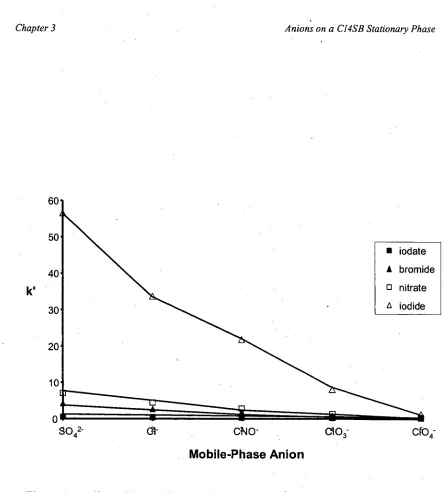
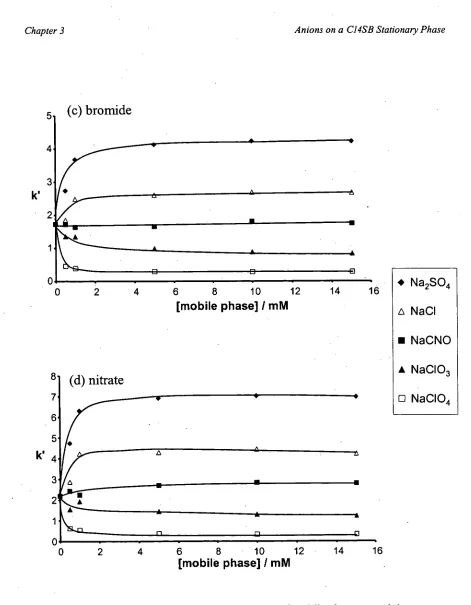
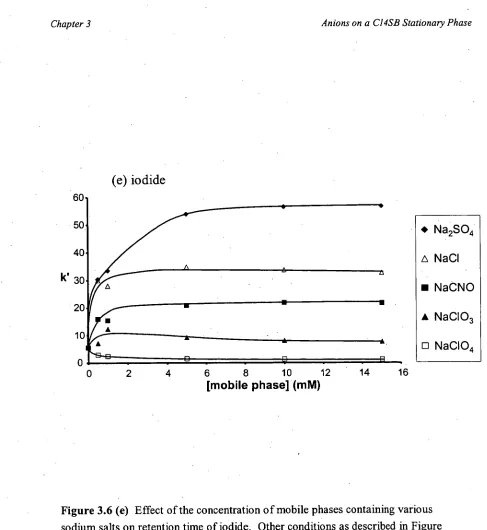
3.3.3.1 Effect of the Mobile-Phase Anion and Cation on Anion Retention 71 3.3.3.2 Effect of the Zeta Potential on Retention 77 3.3.3.3 Effect of the Mobile Phase Concentration on Retention 79 3.3.3.4 Interpretation of Log k' Versus Log [Mobile Phase] Plots 91
3.3.4 Mechanism of Separation 98
3.4 Conclusions 104
4.1 Introduction 106
4.2 Experimental 108
4.2.1 Apparatus 108
4.2.2 Reagents 109
4.3 Results and Discussion 109
4.3.1 Proposed Mechanism 109
4.3.2 Elution Effects of Analyte Anions 113
4.3.3 Zeta Potential Data 115
4.3.4 Elution Effects of Analyte Cations 116
4.4 Conclusions 126
4.5 References 128
CHAPTER 5 MANIPULATION OF ANAL YTE SELECTIVITY IN ZIC 130
5.1 Introduction 130
5.2 Experimental 133
5.2.1 Apparatus 133
5.2.2 Reagents 133
5.3 Results and Discussion 134
5.3.1 Manipulation of Analyte Selectivity 134 5.3.2 Application to the Analysis of Tap Water 139 5.3.3 Log k' Versus Log [Mobile Phase] Plots 142
5.3.4 The Mechanism 145
5.4 Conclusions 147
CHAPTER 6 MATHEMATICAL MODELLING OF THE SEPARATION
MECHANISM 150
6.1 Introduction 150
6.2 Experimental 152
6.2.1 Hard Model 152
6.2.2 Soft Model 153
6.3 Results and Discussion 153
6.3.1 Hard Model Approach 153
6.3.1.1 Derivation of the Model 154
6.3.1.2 Modelling Trends of the Zeta Potential 160
6.3.1.3 Calculation of k' and the Zeta Potential 167
6.3.2 Soft Model Approach — Artificial Neural Network 174
6.3.2.1 Modelling 174
6.3.2.2 Accuracy of the Model 179
6.4 Conclusions 181
6.5 References 182
Introduction and Literature Review
1.1 Introduction
Inorganic ion analysis is important in a broad range of areas, as illustrated in a review
by L6pez-Ruiz [1]. Applications include the study of biogeochemical processes
involving the elucidation of N, P and S cycles, requiring the speciation analysis of these
elements. Drinking water quality treatment results in the by-production of Br0
3
",
which is said to be a carcinogen and must be monitored to keep concentrations less
than the 10 lig 1,
4
limit allowed by the US Environmental Protection Agency (US
EPA). Cl" and Br" are important indicators of groundwater salinity, while 1
2
is an
important micronutrient for many organisms in seawater, monitored through the
determination of I" and 10
3
. I" also has clinical and epidemiological importance and
must therefore be monitored in serum and urine. NO2" and NO3" are toxic, with NO2
-
forming carcinogenic nitrosamines in food products, and NO3" forming NO
2
" via
Chapter 1 Introduction and Literature Review
The applications listed above are just a few of many, but already it can be seen that the
sample matrices vary widely. Although some samples may contain ions at similar concentrations, a great many involve the determination of a small concentration of ions
of interest among a high concentration of matrix ions. This is still a major challenge to
ion analysis.
Techniques such as neutron activation analysis, automated electrochemical procedures
and cathodic stripping square wave voltammetry have been applied to such problems,
but are time-consuming, hence there has been a turn towards ion chromatography [4],
the focus of this thesis.
This review provides an overview of ion chromatographic theory and developments, introducing the technique of Electrostatic Ion Chromatography, or Zwitterionic Ion
Chromatography (ZIC), and indicates its niche among other ion chromatographic
techniques.
1.2 Ion Chromatography
The development of Ion Chromatography (IC) was driven by a need for automated
systems to determine ionic species from a variety of samples quickly and effectively,
introduced a new, extremely efficient, type of stationary phase and overcame the background conductance by introducing a stripper, later termed a suppressor, column.
This laid the foundation for the great success and development of IC.
IC is now loosely defined as column liquid chromatographic techniques that are used for the determination of inorganic anions and cations (not including neutral metal
chelates), low molecular weight carboxylic acids, organic bases and ionic
organometallic compounds [6]. Types of ion chromatography include: ion-exchange
chromatography; ion-interaction chromatography; ion-exclusion chromatography;
reversed-phase liquid chromatography; the use of chelating stationary phases; and others.
1.2.1 Ion-Exchange Chromatography
The new and extremely efficient stationary phase developed by Small et al. [5] was a
pellicular, agglomerated resin with an outer layer of positive charges, NI+, for the
separation of anions, or negative charges for the separation of cations (see Section 1.3.2). Counter-ions, E, in the mobile phase maintain electroneutrality on the surface.
Sample anions, A-, may stoichiometrically displace, or exchange with, these ions,
which is described as an ion-exchange mechanism, expressed by the following
Chapter] Introduction and Literature Review
The extent of retention of an analyte ion on an ion-exchange resin is determined by its
ability to displace E and the strength of its attraction to M+, which is described by the
selectivity coefficient:
• K
=
[A:]Y x- ■ ■ - X[Am ]
where subscripts r and m denote the species in the resin and mobile phases, and x and y
are the charges on the analyte and eluent ion, respectively.
Retention models based on this theory are termed stoichiometric models, whereby a series of equilibrium equations are manipulated to reach a final retention equation.
Although stoichiometric models may give good agreement with experiment, it has been argued that this does not imply the model is satisfactory from a physical point of view
[7]. Non-stoichiometric models are not based on the formation of these complexes at
equilibrium, but instead on the build up of an electrical double layer at the surface charge into which analytes may partition. The electrical surface potential is found by
solving the Poisson-Boltzmann equation (see Chapter 6), and models of this type
generally involve more complex mathematical equations compared with stoichiometric
models [8].
tertiary, etc.). The substrate may be silica, polymer-coated silica, a synthetic polymeric
resin or a hydrous oxide [6], with new packing technology still being explored [9,10].
The ion-exchange capacity, or number of functional groups per unit weight of the resin,
is an important property in determining the retention of analytes (increased capacity
leads to increased retention), as well as the strength of the eluting mobile-phase ion.
Selectivity in ion-exchange on a strong acid (-S03
-
) cation-exchanger follows the order
[6]:
Li + <H < Na
+
< NH4
+
<K < Rb
+
< Ag
+
< Mg
2+
< Ca
2+
< Ba
2+
« Al
3+
«Pu
4+
(1.3)
and on a strong base (-R3N
+
) anion-exchanger the order is [6]:
Off < F
-
< 103
-
< HCO3
-
<
cr < NO2- <Br
-
<NO3 < HPO4
2-
<SO4
2-
< F < SCN
-
<
CI04
-
< citrate (1.4)
Chapter 1 Introduction and Literature Review
1.2.2 Ion-Interaction Chromatography
Ion-.interaction chromatography (also known as pair chromatography, dynamic
ion-exchange chromatography, hetaeric chromatography and soap chromatography [13]) is a simple means of separating inorganic ions by reversed-phase liquid chromatography,
which otherwise shows little or no affinity for ions. This is achieved by adding a
lipophilic species of opposite charge to the analytes of interest, called the ion-pair, or
ion-interaction reagent (IIR) to the mobile phase [6]. IIRs may be inorganic [14-17] or organic ions (whereby hydrophobic and ion-exchange effects will determine retention)
[18]. Much attention has been given to modelling retention in ion-interaction
chromatography [13,19-23]. Theories include the formation of an ion-pair in solution between the DR and the analyte, which is thus neutral and able to adsorb onto the
hydrophobic stationary phase. Alternatively, the dynamic ion-exchange approach [24]
assumes the IIR adsorbs onto the stationary phase with the charges exposed to the surface, creating an ion-exchange stationary phase. The ion-interaction model,
supported by Bartha and Stahlberg [22], is a combination of both, with the IIR in equilibrium between the mobile and stationary phase, forming an electrical double
layer at the surface that allows partition of analytes [6]. It is generally observed that retention of analytes of the same charge as the IIR decreases on addition of the IIR,
while that for ions of opposite charge increases, and neutral molecules are relatively
understanding the behaviour of neutral solutes in ion-interaction chromatography [25-
28].
If the RR, such as tetrabutylammonium, is contained in the mobile phase during
separation it is said to form a dynamic coating on the stationary phase. If an extremely hydrophobic IIR is passed through the column prior to separation and not included in
the mobile phase during separation, the column is said to be 'permanently coated'. This effectively constitutes an ion-exchanger that has advantages over fixed site
exchangers in that the ion-exchange capacity can be easily varied and the column can
be stripped and recoated as either an anion- or cation-exchanger.
Parameters influencing retention include the nature (type and chain length) of the IIR
[29,30], the co-anion species, the solvent, the added inert electrolyte, and pH [18].
1.3 Bi-Functional Stationary Phases in Ion Chromatography
Bi-functional stationary phases may contain opposite charges distributed evenly
throughout the stationary phase, have one charge contained inside a core particle with a
layer of opposite charge on the surface of the particle, or have positive and negative
charges contained on an individual molecule, somehow bonded to the stationary phase. Nesterenko and Haddad recently reviewed zwitterionic ion-exchangers in liquid
Chapter 1 Introduction and Literature Review
1.3.1 Ion-Exchangers with Continuous Distribution of Opposite Charges Throughout the Stationary Phase
There are two types of stationary phases containing opposite charges distributed
throughout the packing particles. Firstly, polyampholyte resins, with alternating sequences of anion and cation-exchange groups, such as polysulfobetaines and
polycaboxybetaines, have gained renewed interest since their earlier use [32,33].
Secondly, the so-called retardion, or snake cage type, resins are formed by
polymerising a cation-exchange monomer (the snake) inside a commercial
anion-exchange material (the cage) [34]. The Retardion 11A8 columns, commercially available since 1957 [35], can be used with a water mobile phase as ions are held rather
weakly due to the near neutral stationary phase. This column has a low affinity for
SO42 , compared to that of CH3C00", which is opposite to that seen for ion-exchange, but the elution order for cations is similar with divalent anions being more highly
retained than monovalent ions [31]. This type of stationary phase has been used for the
desalting of proteins [34] and the analysis of ionic and non-ionic analytes [36], including metals [37-39].
1.3.2 Pellicular Ion-Exchange Bi-Functional Stationary Phases
functionalised core [5,6,40] are effectively bi-functional. However, those that are
bound with an outer layer of aminated latex are generally suitable only for the ion-exchange separation of anions, and those bound with sulfonated latex particles are
generally suitable only for the separation of cations. These types of resins are stable
and very efficient with excellent mass-transfer characteristics due to the repulsion an analyte feels from the like-charged inner core, disallowing its partition into the particle,
and have gained widespread use [41-45] with many resins available commercially [6].
This type of stationary phase has also been exploited for its ability to separate anions
and cations simultaneously due to its bi-functionality, despite the outer functional groups clearly having a much stronger interaction with mobile phase ions than the inner
functional groups. "Anion-exchange" columns have been applied to the separation of
inorganic cations [46] as well as Cr(III) and chromate [46], while "cation-exchange" columns have been shown to successfully separate inorganic anions, NO3-, NO2- from NH 4+ [41] and HGe03- from Sn2+ [48].
Bi-functional stationary phases of the pellicular type have also been produced by adsorbing a positive and negative polymer onto an uncharged solid inner core particle
[49]. Three layers result — the inner core particle (e.g. ODS bonded to silica), adsorbed
negatively-charged molecules and electrostatically bonded positively-charged
Chapter 1 Introduction and Literature Review
of the surface layer could be controlled [50,51]. The stationary phase may be left predominantly as an anion-exchanger, cation-exchanger or zwitterionic phase
depending on sulfonation conditions.
Mixed-bed ion-exchangers produced by mixing anion- and cation-exchange resins before packing into a column have been shown to be successful in the simultaneous
separation of anions and cations [52].
1.3.3 Polyampholyte Polymer Ion-Exchange Stationary Phases
Proteins, such as bovine serum albumin, adsorbed onto a silica substrate provide a stationary phase that can be modulated between a cation, anion and zwitterionic
exchanger, by careful control of the pH. Such columns are commercially available
with a variety of proteins used as the stationary phase [53]. They have found application to the separation of inorganic anions [53-55], inorganic cations [56,57] and
enantiomers [58,59]. Other polymers have been used, such as chondroitin sulfate-C
[60], with one approach crosslinking the polymer after adsorption [61].
1.3.4 Bi-Functional Ion-Exchange Stationary Phases with Separately Distributed Charges
cations on a single column. As the pH increases the retention of cations increases and
the retention of anions decreases [62]. At low pH, the stationary phase acts as an
anion-exchanger, although the retention order observed is the opposite of that seen with a quaternary ammonium stationary phase [63]. This was thought to be a result of
complexation of halide ions with aluminium atoms [31]. Other amphoteric oxides have been examined for their application to chromatography, including silica, titania,
zirconia and an aluminosilicate (MCM-41 [64]) [65]. Brown and Pietrzyk [66] mixed
alumina and silica to create a mixed-bed ion-exchange column for the separation of
anions and cations at pH 5.
Similarly, amino acids immobilised onto a silica surface have been used for the simultaneous separation of inorganic anions and cations [67,68]. Separation
characteristics were dependent on the structure of the amino acid, with for example,
glutamic acid exhibiting ion-exchange and complex forming characteristics [69], and of course, pH.
A synthesised zwitterionic stationary phase was achieved by adding an s-triazine
derivative, introducing sulfonate and amino groups to the already aminated silica gel [70]. The resultant stationary phase (shown in Figure 1.1) was used for the separation
of organic acids and bases as well as amino acids. A similar technique was used by
Chapter 1 Introduction and Literature Review
0— Si(CH2)3NH(CH2)2NH 3+
0— Si(CH 2)3NH(CH 2)2NH —KON
—c
NH-
SO;Dynamic bi-functional coatings have been produced by hydrophobically adsorbing a
mixture of anionic and cationic surfactants onto a reversed-phase column [72]. Due to the different adsorbing properties of the anionic and cationic surfactants, the ratios of
each in the coating mixture must be varied until a stationary phase is obtained that
contains equal amounts of both types of surfactant, such that the surface is effectively
neutral. Such stationary phases have been shown to be effective in the separation of neutral, positively and negatively-charged platinum(II) complexes, allowing the
determination of cisplatin purity and understanding the reactions of platinum(II)
complexes in solution [72].
1.3.5 Zwitterionic Surfactants in the Mobile Phase
Zwitterion-Pair Chromatography is the name given to reversed-phase liquid chromatography where a zwitterionic pairing agent is added to the mobile phase [73].
It has been applied to the separation of zwitterionic analytes, including nucleotides,
tryptophan and lysergic acid, via the formation of quadrupolar ion pairs [74]. Zwitterionic pairing agents used include 11-aminoundecanoic acid and
L-leucyl-L-leucyl-L-leucine [75].
Zwitterions, such as (N-morpholino)ethanesulfonic acid (MES), have also been used in
Chapter 1 Introduction and Literature Review
suppressible NaOH eluent without detrimental effect to the efficient silica bonded
columns [76].
Sulfobetaine-type zwitterionic surfactants in the mobile phase have been used with
reversed-phase [77,78] and ion-exchange columns [79,80], which has been termed
zwitterionic micellar chromatography. The former took advantage of an extra partitioning contribution to the retention of benzene derivatives, while the latter
allowed the direct injection of biological fluids for the analysis of inorganic ions, as the
zwitterionic micelles solubilised proteins in the sample.
These types of zwitterionic surfactants have also found application as additives in the
buffers and dynamic coatings of capillaries in capillary electrophoresis [81-88].
1.4 Zwitterionic Ion Chromatography
The term Electrostatic Ion Chromatography (EIC), was introduced by Hu et al. [89], to
describe the form of ion chromatography that utilises a bi-functional stationary phase where the opposite charges on the same molecule are in close proximity. The opposite
charges may have just 3 carbon atoms separating them, so that they exert a significant
influence on each other and this characteristic distinguishes them from other
Zwitterionic Ion Chromatography (ZIC) will be used in place of ETC throughout this
thesis.
1.4.1 Stationary Phase
1.4.1.1 Nature of the Zwitterionic Molecule
Ionic surfactants are true salts in that they consist of an electrically neutral set of two or
more formally-charged ions, whereas zwitterionic surfactants are non-ionic, consist of a single neutral molecule and do not form salts with other ions. They do not conduct
electricity, contribute to electrophoretic mobility or contribute to ionic strength [90].
However, due to their formal charges, their properties are markedly different from other neutral molecules [91]. They should also be distinguished from amphoteric
compounds, such as alumina, which are referred to as semipolar [91] and are only
zwitterionic depending on the pH [6]. Hu and Haraguchi [92] first used the taurine-conjugated bile salts sodium taurodeoxycholate (NaTDC) and sodium taurocholate
(NaTC), whose properties are summarised in Table 1.1 and structures are given in
Figure 1.2. At pH 4.5 they consisted of a weak positive amino group and a strong
negative sulfonate group.
Subsequently, zwitterionic surfactants used in ZIC consisted of a long hydrophobic
Chapter 1 Introduction and Literature Review
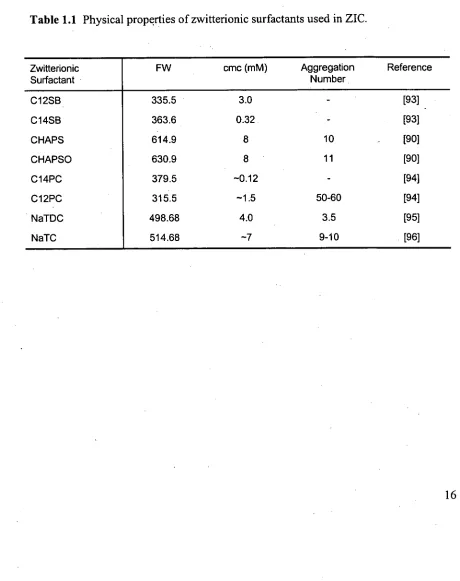
Table 1.1
Physical properties of zwitterionic surfactants used in ZIC.
Zwitterionic FW cmc (mM) Aggregation Reference
Surfactant Number
C12SB 335.5 3.0 [93] .
C14SB 363.6 0.32 [93]
CHAPS 614.9 8 10 [90]
CHAPSO 630.9 8 11 [90]
C14PC 379.5 —0.12 [94]
C12PC 315.5 —1.5 50-60 [94]
NaTDC 498.68 4.0 3.5 [95]
NaTC
(Sodium Taurocholate)
NaTDC
(Sodium Taurodeoxycholate)
I 11
CHAPS
(3-[(3-cholamidopropyl)
Chapter 1 Introduction and Literature Review
S-0-
11 OH 0
CHAPSO
(3-[(3-cholamidopropyl)
dimethylammonio]-2-hydroxy-1- propanesulphonate)
Ammonium sulfobetaine-3
(1\113-acety1-3-(sulfopropyl)aminopropyli-N,N-dimethyldodecanaminium hydroxide)
oxv
Ammonium sulfobetaine-1
Cl4SB
3-(N-tetradecyl-N,N-dimethylammonio)propanesulfonate
Cl4PC
N-tetradecylphosphocholine
Chapter 1 Introduction and Literature Review
separated by a three methylene group bridge. The structures of the commonly used
zwitterionic surfactants: 3-(N-tetradecyl-N,N-dimethylammonio)propanesulfonate
(C14 SB); N43-acety1-3-(sulfopropypaminopropyl]-N,N-dimethyldodecanaminium hydroxide (ammonium sulfobetaine-3);
Nt2-acety1(3-sulfopropyl)amino]ethyl]-N,N-dimethyldodecanaminium hydroxide (ammonium sulfobetaine-1); 3-[(3-
cholamidopropyl)dimethylammonio]-1-propanesulfonate (CHAPS); 3-[(3- cholamidopropyl)dimethylammonio]-2-hydroxy-l-prop anesulphonate (CHAP S 0); and
N-tetradecylphosphocholine (C14PC), are given in Figure 1.2, with their
physicochemical properties listed in Table 1.1. It can be seen that the length of the
chain affects the critical micelle concentration (cmc), whereby longer-chained surfactants generally have a lower cmc and the bulkier CHAPS and CHAPSO have a higher cmc. Weers et al. [97] stated that the cmc for sulfobetaines decreases by
approximately one order of magnitude for each addition of two carbons to the
surfactant tail group. The aggregation number is dependent on the surfactant
concentration and ionic strength, except where the system contains only spherically-shaped micelles [98].
Cl2SB and C 14SB are linear surfactants while CHAPS and CHAPSO are steroidal,
forming linear and reversed helices similar to bile salt micelles, respectively [89,90].
Hu et al. [89] observed no reversed-phase activity with a CHAPS-micelle coated
1.4.1.2 General Ion Uptake Properties of Zwitterions
Despite the neutral nature. of the zwitterionic surfactants described, and their relative
indifference to ionic strength [90], they do have the ability to bind electrolyte ions, shown unambiguously by the results of several studies using methods including
radioactive tracer self-diffusion and fluorescence-quenching [99-104]. Kamenka et al.
[100] found that anions bind more strongly than cations to zwitterionic surfactants with
an inner positive and outer negative charge, with cation binding being relatively weak and non-specific [105]. Chevalier et al. [106] observed that although the zwitterionic
micelles became charged in the presence of NaCl due to the different binding constants
for Na+ compared with Cl-, interactions between micelles were negligible. For a
C 12SB surfactant, binding constants for Nal- and Cl- were found to be 0.43 and 0.56 M-1, respectively [100]. Zwitterionic surfactants where the head group was -000-
instead of -S03- were found to bind anions more strongly [100], possibly due to the -
C00- being weakly charged and therefore less repellent of anions.
Ion binding to zwitterionic micelles has been thought to be purely electrostatic, but
these electrostatic effects are extremely short range [100]. The strength of binding of
anions to long chain zwitterionic micelles was found to increase across the sequence
Chapter 1 Introduction and Literature Review
combining the two surfactants on the stationary phase has been explored [109]. The
greater distance between opposite charges on ammonium sulfobetaine-1 also resulted in a lower affinity for highly polarisable ions compared with C 1 4SB [110]. This is
contrary to that found by Kamenka et al. [100], who found that ion binding increased with an increasing number of carbons between the opposite charges. However, they
studied surfactants with a C00- end group, with charges spaced by up to 10 carbons. Thus eventually, particularly with a weak negative charge, the surfactant would behave
more like cationic surfactants, which are known to give long retention times for anions
[12].
As stated above, the zwitterionic surfactants with an outer negative and an inner
positive charge showed a greater affinity for anions over cations, with cations only
being able to be separated into charge groups [105,111]. Alternatively, a phosphocholine-type surfactant (N-tetradecylphosphocholine (C14PC)) was
investigated to create the stationary phase [112-114]. This surfactant is analogous to
Cl4SB used for the analysis of anions, but the charge positions are reversed to give the surfactant a negative inner charge (phosphonate group) and a positive outer charge
(quaternary ammonium). It was found that while the C14SB showed a higher
selectivity for anions, the C14PC displayed a high selectivity for cations. Also, addition of electrolyte to the mobile phase diminished the selectivity of the C14PC for
The difference between anion and cation uptake by the zwitterionic surfactants has been investigated by measuring the zeta potential. The use of zwitterionic surfactants
as electro-osmotic flow (EOF) modifiers in capillary electrophoresis (CE) has revealed
that the zeta potential arising on a zwitterionic-coated capillary could be modulated by the addition of different anions in the electrolyte [811 It was suggested that different
electrolyte anions became incorporated to different extents into the zwitterionic layer
and this in turn altered the zeta potential and hence the EOF. The existence of such a zeta potential has also been suggested by the calculations of Patil and Okada [116] and
experimental data of Iso and Okada [117-119]. Such processes of anion incorporation
into the zwitterion in CE are similar to those governing retention in ZIC, thus measurements of the zeta potential can give further information about the ZIC retention
mechanism. Jiang and Irgum [120] measured the zeta potential of a covalently-bound
zwitterionic stationary phases by photon correlation spectroscopy where similar trends were seen. However, these results were not clear due to the imbalance in the number of
positive and negative charges on the stationary phase.
1.4.1.3 Dynamic Stationary Phases in ZIC
The most common preparation of the stationary phase in ZIC is the hydrophobic
adsorption of a zwitterionic surfactant to a hydrophobic column, such as a C18
Chapter 1 Introduction and Literature Review
The adsorption process of various zwitterionic surfactants used in ZIC has been
studied, with similar characteristics observed for all [121]. It has been proposed that
the breakthrough of micelles did not occur until the stationary phase had become
saturated with monomers, and although a micellar coating solution may have been used, only monomers were adsorbed [121]. It was proposed that as monomers are
adsorbed the micelles break up (keeping the monomer concentration constant), forming more monomers that will adsorb until the stationary phase is saturated. The properties
of the stationary phase were dependent on the total amount of surfactant adsorbed, not
the concentration of the coating solution, nor whether it was micellar or not. However, those surfactants with a low cmc were found to be more readily adsorbed onto the
column, and the bulkiness of CHAPS and CHAPSO compared with that of C12SB and
C14SB contributed to lower adsorption ability [121].
Adsorption was observed to be less for the linear alkyl betaines than for CHAPS and CHAPSO and the amount of surfactant adsorbed varied considerably, with 461, 480,
777 and 1045 ,umol-column-I adsorbed for CHAPS, CHAPSO, C12SB and C14SB,
respectively. The best separations of inorganic anions were achieved on the C 14SB
stationary phase [121]. Ammonium sulfobetaine-1 was found to have a similar
adsorption rate to C12SB, adsorbing 768 and 771 pmol.column-I, respectively [110].
amount (-0.1%) is added to all rinses and mobile phases to maintain a saturated
stationary phase [122].
The surface charge density resulting from the adsorption of zwitterionic surfactants is
much higher than that found with singly-charged surfactants in ion-interaction chromatography, due to the lower repulsion between surfactant molecules [111].
However, as interactions of analytes with a zwitterionic stationary phase are weak, it is
necessary to have a high capacity for efficient separations to be achieved.
A similar stability and reproducibility to the sulfobetaine-coated stationary phases was
found for phosphocholine-coated column [112], while double-chained surfactants have been shown to form a coating with a stability similar to permanent coatings. However
when compared with single-chained surfactants, double-chained surfactants are more
likely to form bilayers rather than spherical micelles [86]. This may be a useful alternative to the single-chained surfactants used in the dynamic coating method in ZIC
to date.
1.4.1.4 Permanent Stationary Phases in ZIC
There have been relatively few attempts at producing chemically-bonded stationary phases for ZIC [120,123-126], with problems occurring in the ability to achieve a
Chapter 1 Introduction and Literature Review
stationary phase was pH dependent, behaving as a cation-exchanger at pH values less than 4.5, and as an anion-exchanger above pH 7, while in between these values the
stationary phase was zwitterionic. Jiang and Irgum [120,125] utilised various reaction
schemes to obtain covalently-bound zwitterionic stationary phases, all based on the attachment of zwitterionic (sulfobetaine) monomers to a 2-hydroxyethyl methacrylate
(HEMA) base. The first attempt [125] was hindered by a side reaction resulting in a
percentage of weak anion-exchange groups. Although later attempts [120] resulted in the ability to separate anions with ZIC selectivity, and also cations, there were still
difficulties in characterising the material and obtaining an exact charge balance ratio
between positive and negative charges. Nevertheless, these stationary phases still offer
unique selectivities and retention patterns that differ from ion-exchange.
A commercial covalently-bonded ZIC sulfobetaine stationary phase has recently
become available [127] that is marketed for the separation and purification of proteins and peptides, taking advantage of the relatively weak electrostatic effects of the
stationary phase and pH independence. This stationary phase has a polymethacrylate
backbone with covalently bonded functional groups, allowing the use of a solvent
mobile phase, unlike the dynamic, hydrophobically-bonded stationary phases used in ZIC, which have been shown to• desorb with mobile phases containing >13%
1.4.2 Effect of the Mobile Phase
1.4.2.1 Water Mobile Phase
The opposite charges on the stationary phase exert an effect on both anions and cations
in a sample, although interaction is stronger for anions with sulfobetaine-type
surfactants [1111 There is no need for an eluting ion in the mobile phase with this technique because the electrostatic effect of this type of stationary phase is low
compared to a singly-charged stationary phase. Also, the analyte anion is attracted to
the positive charge, but feels simultaneous repulsion from the negative charge [89].
Hence it is possible to use a pure water mobile phase, which has the major advantage of decreased baseline noise and lower detection limits [129]. However, as with the crown
ether stationary phases [130], to maintain electroneutrality each analyte anion must be accompanied by a counterion and with no cations in the mobile phase, these
counterions must come from the sample. Thus, if there are two anion and two cation
species present in the sample, there is the possibility of four peaks in the chromatogram, one for each possible combination of "ion-pairing-like" forms [89].
However, it was found that not all combinations were observed, and that the formation
of eluted "ion-pairs" could be predicted by referring to the molal energies (AG) of the
cations and anions [109]. The most stable "ion-pairing-like" forms are those with the
Chapter I Introduction and Literature Review
i.e. the most unstable pairs. Hence, the most prolific are the medium-stable "ion-pairs".
The medium stable "ion-pairs" are combinations of the AG min for the cation and AGmax
for the anion and vice versa, and these are the peaks observed with the greatest area in
the chromatogram.
The retention of an anion with a water mobile phase is therefore dependent not only on its own interaction with the stationary phase, but also how much interaction its
counter-cation has with the stationary phase. Thus, a Cl" ion paired with a Na+ ion has a shorter
retention than one paired with a Mg2+ ion. As sulfobetaine-type stationary phases only
separate cations into charge groups, "ion-pairs" of Na+-Br" and K+-Br" are eluted together [131].
In a sample containing many anions and cations, there are many possible "ion-pair"
combinations, and even if some are not seen, the chromatogram may still be quite complex and elucidation has required a combination of conductivity and photodiode
array UV detection [109], or ICP-AES [131-134].
The pairing of ions can be controlled by the addition of a specific salt to the sample, i.e.
NaNO3 or MgSO4, that is in excess compared with other ions in the solution [134,135].
this technique is that a large peak is seen for the added ion, which is in excess, and this could be detrimental to the chromatographic analysis [136]. An alternative approach to
the problem is the use of a small pre-column to convert the counter-cation of the sample anions to a single common species [133,137].
The partitioning effect seen for anions on the betaine-type coated columns was also
observed for cations on a phosphocholine-type stationary phase [112], with each cation
eluted in more than one peak, depending on the number of anions in the solution. Again, this could be overcome by adding an excess of a particular anion to the sample, for example, SCI\I" [112].
Utilisation of the greater sensitivity provided by a water mobile phase also had the disadvantage of peak splitting at trace analysis level [129,138,139]. This was proposed
to be due to analyte ions having a shorter retention time in the diffuse layer compared
with the Stern layer, which is not seen in conventional ion-exchange due to the large number of eluting ions in the mobile phase.
1.4.2.2 Electrolyte in the Mobile Phase
Hu and Haraguchi [140] found the use of a phosphate buffer in the mobile phase improved the separation coefficient of both inorganic ions and organic zwitterions
Chapter] Introduction and Literature Review
assumed that interaction with the charges occurred more easily in an ionic environment
• compared with pure water. Above a certain concentration, there was little further effect
on retention [136].
Mobile phases containing electrolytes suitable for suppressed conductivity detection
(e.g. NaHCO3 and NaB407) were found to maintain a sensitivity similar to a water mobile phase, without the formation of a complex set of peaks. Each anionic analyte
was eluted with the mobile-phase cation, as seen in conventional ion-exchange
[136,141]. Na2SO4 and Na3PO4 were also investigated as mobile phases and showed selectivities and retention times which were similar to that of NaHCO3 [136].
Hydroxide was utilised as a suppressible mobile phase for this system [142], although like NaHCO3, it should be used with a polystyrene/divinylbenzene substrate column
since silica-based columns should not be operated above pH 8. Na+, Li, Ba2+ and Ca2+ hydroxide mobile phases were utilised and it was found that the divalent mobile-phase cations resulted in a better separation and longer retention than the monovalent
variants.
Acidic mobile phases selectively retained NO2- over other ions, which was thought to be due to the formation of HNO2 [143,144]. The slopes of log k' versus log [mobile phase] plots in this case were much more negative in comparison to other mobile
An ampholytic mobile phase (histidine at pH = pI) was able to buffer the system as
well as provide counterions to the anions and cations in the sample [145].
Matrix elimination, a technique common in ion chromatography whereby the mobile-phase ions are matched to the matrix ions such that they are unretained on the
stationary phase, was applied to ZIC and was found to be suitable for the analysis of
seawater. Increasing the concentration of the mobile phase used (containing Na+, K+,
Mg2+, Ca 2 ,
a
and SO42-) resulted in a decrease in retention of analytes [146]. This is similar to that seen for the increase in C104- concentration [125]. Patil and Okada [116] stated that the stationary phase can be modulated between one that acts as acation-exchanger by adding a large and poorly-hydrated anion to the mobile phase (such as
C104-) or as an anion-exchanger by adding small and well-hydrated anions to the
mobile phase (such as
CL).
The addition of electrolyte to the mobile phase resulted in a diminished retention of cations on the sulfobetaine-type stationary phase [107,135,147] and a similar reduction
of anion retention on a phosphocholine-type stationary phase [112].
1.4.3 Applications
Chapter 1 Introduction and Literature Review
The taurine-conjugated bile salts, sodium taurodeoxycholate (NaTDC) and sodium
taurocholate (NaTC), were found to be suitable for the simultaneous separation of
inorganic anions and cations [92]. With an aqueous CuSO4 mobile phase the highly
polarisable ions F and SCN- were eluted in less than 10 minutes. A mixed coating of CHAPS and NaTDC eliminated the need to control the pH for the simultaneous
separation of anions and cations, with the CHAPS moiety effectively separating the
anions, and cations were separated via an ion-exchange mechanism with the anionic
NaTDC [148].
CHAPS-coated stationary phases have been shown to be suitable for relatively rapid
elution of the highly polarisable 1- and SCN- ions [109]. The C14SB stationary phase displayed a high affinity for these ions resulting in impracticably long retention times
with a water mobile phase, and had the advantage over CHAPS in that baseline
separation of NO2-, Br- and NO3- could be achieved in a reasonable time (-5 minutes). A stationary phase consisting of both CHAPS and Cl4SB was utilised to combine the
advantages of each and produced a better separation of NO2-, Br- and NO3- with a water mobile phase than CHAPS alone, and could simultaneously separate a standard
solution of all analytes, from 5042- to SCN-, in a reasonable run time (<15 minutes). This stationary phase was applied to the determination of inorganic ions at sub-ppb
SCI\I-, compared with C 1 4SB [110]. Interestingly, a SO4 2- mobile phase resulted in a
lower k' than a Cl - mobile-phase, with the k' for r being approximately 16 and 12, respectively. Additionally, slopes of log k' versus log [eluent] plots were slightly
positive for C12SB, but were negative for ammonium sulfobetaine-1. This suggested
that the charges became increasingly independent of each other as the distance between
them increased, resulting in a shift from a ZIC mechanism to that of ion-exchange.
ZIC has been shown to be useful for the analysis of high ionic strength samples, due to
the lack of effect of higher mobile phase concentrations on retention, allowing the
analysis of Br-, NO3- and I- in saline matrices [136,144,146,149].
Biological samples have also received attention, including human blood serum for theophylline and caffeine [150] and human saliva for inorganic ions and amino acids
[140]. Direct injection was possible due to the hydrophilic outer layer of the
zwitterionic stationary phase preventing proteins from entering the internal hydrophobic region. These stationary phases eliminated the need for solvent in the
mobile phase in reversed-phase liquid chromatography of organic analytes, due to the decreased hydrophobicity of the surface. The presence of the zwitterionic functional
groups resulted in a decrease in the retention of nucleosides and their bases, and an
Chapter 1 Introduction and Literature Review
were investigated. Transition metal ions were separated as anionic complexes on this
stationary phase with a mobile phase containing 0.1 M NaC104 and 20mM tartaric acid [116], but for direct separation of cations, _stationary phases were investigated with
various positions, spacing or acid-base strength of the charged functional groups on the
zwitterion [129]. Altering the acid-base strength of the functional groups [92] or utilising a mixture of anionic and zwitterionic surfactants on the stationary phase [152]
allowed the separation of cations, but this was attributed to additional ion-exchange interactions introduced into the separation. In an alternative approach,
phosphocholine-type surfactants with an inner negative phosphonate group and an outer quaternary
ammonium group exhibited a greater affinity for cations over anions [112]. Separation
of inorganic divalent cations was achievable with this surfactant and a water mobile phase. The elution order was found to be Ba2+ < Mg2+ < Ca2+, which differs to the
selectivity observed in ion-exchange (Mg2+ < Ca 2+ < Ba2+ [6]). Poor peaks and
reproducibility were found for Mn2+ and Zn2÷, which were separated from Cu2+ in the order Cu2+ < Mn2 < Zn2±. This type of stationary phase was also used for the analysis
of inorganic acids with a water mobile phase [153].
Solutes (min) Sample Column Coating Eluent Detection Ref Matrix
F (-27) Artificial CERI ODS L-column CHAPS and Dilute electrolyte Direct UV at 210 [136]
seawater 250 x 4.6 mm ID C14SB two- nm
(0.6M NaC1) step coating
SO42- (-2), Cl- Snow and As above Cl4SB 10 rnM Na2B407 Suppressed [141]
(-3), NO2-(-5), rainwater conductivity
Br- (-11), NO3 - (-17)
Br- (-4), NO3-
(-6), F(--30)
Br- (4.3)
cu2
+, Pb2
+,zn
2+ , Ni2+, Co2+, Cd2+,Wakosil 5C8 150 x C12SB 4.6 mm ID
2mM Cl2SB, PAR post- [116] 20mM tartaric column reaction
Seawater As above Cl4SB 20-fold-diluted UV at 210nm [146] artificial seawater
Seawater As above C14SB water conductivity [149]
[image:46.833.125.783.78.531.2]cytosine (-2.5), guanine (-3.5), adenine DRNA from salmon spermary
As Above C14SB water UV at 210 nm [128]
(-4.5), deoxyadenosin e (8.5) Theophylline (-9), caffeine Human blood serum
As above CHAPS 0.2 mM
Na2HPO4, pH 7.4
UV at 273 nm [150]
(-16)
Na+ (-5), Ca2+ Tap water As above CHAPS water conductivity [109] (-6), Cl- (-5),
NO3- (-6.8), SO42" (-4.5)
cytosine (-2.5), guanine (-3.5), adenine DRNA from salmon spermary
As Above C14SB water UV at 210 nm [128]
(-4), NO3 (-5), I- (-8),
SCN- (-13)
NO2- (-11), Br- Seawater As Above C18SB 20 mM HC1
(-5), NO3-
(-6.5)
I- (-4), SCN- Human Nomura Chemical CHAPS water
(-6) saliva Develosil ODS-5 150
x 0.35.mm ID
Inorganic acids Aerosols CERI ODS L-column C14PC water
(N0x, S0x, 250 x 4.6 mm ID
HC1)
H+, Ba2+, Ca 2+
mg2+ Hot-spring water As Above C16PC water
UV at 210nm [144]
UV at 230 nm [89]
conductivity [153]
conductivity [114]
d)17
li
tIV tlOp
011p
an
Chapter 1 Introduction and Literature Review
1.4.4 Proposed Mechanisms
There have been several explanations offered for the ZIC retention mechanism. These
have involved a number of concepts, including: simultaneous electrostatic attraction and
repulsion of analyte ions from the two oppositely-charged functional groups of the
zwitterion [89]; the formation of "ion-pairs" between oppositely-charged ions in solution
[131] (see Figure 1.3); and the establishment of a binary electrical double layer
comprising the accumulation of oppositely charged ions (from the mobile-phase
electrolyte) around the charge centres of the zwitterion [129]. Other possible
contributors to the mechanism are ion-exclusion effects, induced ion-exchange, and
complex formation.
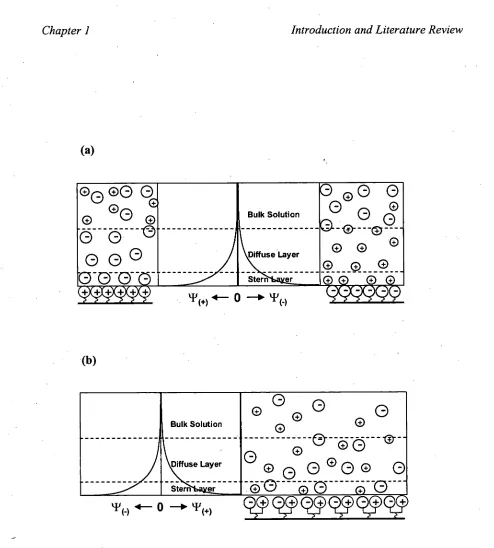
The binary electrical double layer (binary-EDL) mechanism was based on the
Gouy-Chapman double layer model and is illustrated in Figure 1.4a for anion and
cation-exchange systems [113,146,155]. A depiction of the potential proposed for the
zvvitterionic stationary phase is shown in Figure 1.4b. According to this model, ZIC
differs from ion-exchange in that the stationary phase is neutral and mobile-phase
counterions are not required to maintain electroneutrality. Thus, the mobile-phase
anions and cations are counterions to each other whereby the number of cations in the
cation-EDL must equal the number of anions in the anion-EDL (illustrated in Figure
Zwitterion
ODS
0
Stern er
(a)
Bulk Solution
Diffuse Layer
0
0
0 00
0 ®
0
e
e
0
0
®
00
0
e a) 0
0
Bulk Solution
Diffuse Layer Stern er
TO 1— 0 —• T(+)
Chapter] Introduction and Literature Review
[image:51.562.28.522.31.579.2](b)
e Get)
.
o
8
[image:52.562.52.519.55.590.2]Stationary Phase(ODS)
Chapter I Introduction and Literature Review
The large number of ions in each EDL was explained by the extremely strong and
long-ranging nature of the electrostatic force.
In the case of a zwitterionic stationary phase in which the negative functional group is
outermost (such as the sulfobetaine-type, C14SB), the EDL surrounding the negative functional group and comprising cations repels analyte cations, hence their lack of
retention with this stationary phase. It allows the partition of analyte anions, as they
form "temporary ion-pairs" with cations in the cation-EDL [89]. As the formation of these "ion-pairs" is in equilibrium, ions feel repulsion from the anion-EDL (surrounding
the cationic functional group of the zwitterion) as they dissociate. Those analyte anions
with a high propensity for forming neutral ion-pairs show strong retention, while those
with a low propensity are expelled due to repulsion from the anion-EDL. Hence the following retention order for ZIC is explained in terms of increasing propensity for
ion-pair formation [89], and for anions is [111]:
F- 103" S032- SO42 CH3C00- <S2032 <
cr <
N0j< Br- < NO3- <C103 < F <SCN- < C104" (1.5)
and for cations is:
K+ Na+ < 4 < Li+ < Tl+ < Ag+ < Ba2+ = Sr2+ < Co" < Ca2+ < Cu2+ < Cd2+ < Zn2+ <
This selectivity follows the Hofmeister (chaotropic or lyotropic) series [156,157], which
arranges ions in order of their effects (eg. salting-out effects) on the solubility of proteins. The term "chaotropic" refers to an increase in entropy resulting from
disruption of the water structure surrounding these ions in solution. Chaotropic anions
have a large number of electrons spread over an appreciable volume such that the electrons are not tightly held by the nucleus and can induce dipoles in water molecules,
disrupting their structure. Hence, highly chaotropic ions have a great ability to interact
and form ion-pairs.
The increase in retention with increasing mobile phase concentration was proposed to be due to an increase in the thickness of the double layers [142], and above a certain
threshold concentration of electrolyte the binary-EDL becomes saturated resulting in no
further change in retention [136,146]. This model suggests that analyte ions interact with ions in a double layer, meaning that another double-layer should form at the first
double layer. The possibility of ions forming strong interactions with other free ions in
solution is questionable.
Okada et al. [116,158,159] proposed a mechanism based on an ion-pair model describing the retention of small, largely-hydrated ions and a partition model describing
retention of large and poorly-hydrated ions and attempted to apply a mathematical
Chapter I Introduction and Literature Review
1.5 Aim of the Project
Despite the previous studies discussed above, the lack of a systematic and comprehensive set of analyte retention data covering a wide range of mobile phase
compositions and analytes has made it difficult to fully characterise ZIC and to develop
a mechanism which applies under all conditions. The detailed effects of the mobile-phase cation and anion on the retention of analyte anions are not well known and the
nature of the stationary phase has not yet been examined fully. The aim of this research
was to address the deficiencies in the existing retention data and knowledge of the
system, and to develop a physically acceptable mechanistic model that explains all
1.6 References
(1) B. Lopez-Ruiz, J. Chromatogr. 881 (2000) 607-627.
(2) M.J. Shaw. University of Plymouth, PhD Thesis, 2000.
(3) R.P. Singh, S.A. Smesko, N.M. Abbas, J. Chromatogr. A 774 (1997) 21-35.
(4) K. Ito, Anal. Chem. 69 (1997) 3628-3632.
(5) H. Small, T.S. Stevens, W.C. Bauman, Anal. Chem. 47 (1975) 1801-1809.
(6) P.R. Haddad, P.E. Jackson. Ion Chromatography: Principals and Applications.,
Elsevier, Amsterdam: 1990.
(7) J. Stahlberg, Anal. Chem. 66 (1994) 440-449.
(8) J. Stahlberg, J. Chromatogr. A. 855 (1999) 3-55.
(9) L.M. Nair, R. Saari-Nordhaus, R.M. Montgomery, J. Chromatogr. A 789 (1997)
127-134.
(10) A. Klingenberg, A. Seubert, J. Chromatogr. A 946 (2002) 91-97.
(11) R.E. Barron, J.S. Fritz, J. Chromatogr. 316 (1984) 201-210.
(12) R.E. Barron, J.S. Fritz, J. Chromatogr. 284 (1984) 13-25.
(13) T. Cecchi, F. Pucciarelli, P. Passamonti, Anal. Chem. 73 (2001) 2632-2639.
(14) Z. Iskandarani, D.J. Pietrzyk, Anal. Chem. 54 (1982) 2427-2431.
(15) T. Takeuchi, E.S. Yeung, J. Chromatogr. 370 (1986) 83-92.
(16) D. Connolly, B. Paull, J. Chromatogr. , A 917 (2001) 353-359.
Chapter 1 Introduction and Literature Review
(19) J. Stahlberg, A. Bartha, J. Chromatogr. A 456 (1988) 253-265.
(20) A. Bartha, J. Stahlberg, J. Chromatogr. 535 (1990) 181-187. (21) J. Narkiewicz-Michalek, Chromatographia 35 (1993) 527-538.
(22) A. Bartha, J. Stahlberg, J. Chromatogr. 668 (1994) 255-284.
(23) J.G. Chen, S.G. Weber, L.L. Glavina, F.F. Cantwell, J.Chromatogr. A. 656 (1993) 579-576.
(24) C.P. Terweij-groen, S. Heemstra, J.C. Kraak, J. Chromatogr. 161 (1978) 69-82.
(25) T. Cecchi, F. Pucciarelli, P. Passamonti, Chromatographia 53 (2001) 27-34.
(26) T. Cecchi, F. Pucciarelli, P. Passamonti, J. Liq. Chromatogr. & Rel. Tech. 22
(1999) 969-979.
(27) T. Cecchi, F. Pucciarelli, P. Passamonti, J. Liq. Chromatogr. & Rel. •Tech. 21 (1998) 2423-2433.
(28) T. Cecchi, F. Pucciarelli, P. Passamonti, J. Liq. Chrom. Rel. Technol. 24 (2001)
291-302.
(29) A. Bartha, G. Vigh, H.A.H. Billiet, L. De Galan, J. Chromatogr. 303 (1984) 29-38.
(30) Y. Michigami, K. Fujii, K. Ueda, J. Chromatogr. A 664 (1994) 117-122.
(31) P.N. Nesterenko, Haddad P.R., Anal. Sci. 16 (2000) 565-574.
(32) A.B. Davankov, N.E. Ogneva, V.M. Laufer, Khimicheskaya Promyshlennost (Chemical Industry) N11 (1951) 16.
(33) E.E. Kathmann, C.L. McCormick, J. Polym. Sci. 35 (1996) 243-253.
(36) M. Goto, N. Hayashi, S. Goto, Sep. Sci. Tech. 18 (1983) 475-484.
(37) S.S. Aldabbagh, R. Dybczynski, J. Radioanal. Nucl. Chem. 92 (1985) 37-50. (38) R. Dybczynski, S.S. Aldabbagh, Analyst 112 (1987) 449-753.
(39) A. Samczynslci, R. Dybczynski, J. Chromatogr. A 789 (1997) 157-167. (40) H. Small, US Patent 4 (1978) 460.
(41) S. Mou, W. Huitong, Q. Sun, J. Chromatogr. A 640 (1993) 161-165.
(42) G. Revesz, P. Hajos, H. Csiszar, J. Chromatogr. A 753 (1996) 253-260.
.(43) M.C. Bruzzoniti, E. Mentasti, C. Sarzanini, S. Cavalli, Chromatographia 46 (1997) 49-56.
(44) G.E. Taylor, J. Chromatogr. A 770 (1997) 261-271.
(45) E.F. Hilder, C.W. Klampfl, P.R. Haddad, J. Chromatogr. A 890 (2000) 337-345. (46) D. Pietrzyk, S.M. Senne, D.M. Brown, J. Chromatogr. A 546 (1991) 101-110.
(47) H.G. Beere, P. Jones, Anal. Chim. Acta 293 (1994) 237-243.
(48) Q. Sun, H. Wang, S. Mou, J. Chromatogr. A 708 (1995) 99-104.
(49) O.V. Krolchin, A.D. Smolenkov, N.V. Svintosa, O.N. Obrezkov, O.A. Shpigun, J.
Chromatogr. A 706 (1995) 93-98.
(50) A.M. Dolgonosov, J. Chromatogr. A 671 (1994) 33-41.
(51) A.M. Dolgonosov, A.N. Krachak, J. Chromatogr. A 640 (1993) 351-353.
(52) D.J. Pietrzyk and D.M. Brown, Anal. Chem. 58 (1986) 2554-2557.
Chapter 1 Introduction and Literature Review
(56) W. Hu, H. Haraguchi, Anal. Chim. Acta 289 (1994) 231-236.
(57) W. Hu, T. Takeuchi, H. Haraguchi, Anal. Chim Acta. 267 (1992) 141-146. (58) W. Hu, T. Takeuchi, H. Haraguchi, Chromatographia 33 (1992) 63-66.
(59) W. Hu, H. Haraguchi, Bull. Chem. Soc. Jpn. 66 (1993) 1967-1970.
(60) T. Takeuchi, Safni, T. Miwa, J. Chromatogr. A 789 (1997) 201-206. (61) W. Kopaciewicz, F.E. Regnier, J. Chromatogr. A 358 (1986) 107-117.
(62) T. Takeuchi, E. Suzuki, D. Ishii, Chromatographia 25 (1988) 480-482.
(63) G.L. Schmitt and D.J. Pietrzyk, Anal. Chem. 57 (1985) 2247-2253.
(64) C.T. Kresge, M.E. Leonowicz, W.J. Roth, J.C. Vartuli, J.S. Beck, Nature 359 (1992) 710-712.
(65) •M. Gruen, A.A. Kurganov, S. Schacht, F. Schueth, K.K. Unger, J. Chromatogr. A 740 (1996) 1-9.
(66) D.M. Brown and D.J. Pietrzyk, J. Chromatogr. 466 (1989) 291-300.
(67) P.N. Nesterenko, A.I. Elefterov, D.A. Tarasenko, O.A. Shpigun, J. Chromatogr. A. 706 (1995) 59-68.
(68) M.G. Kiseleva, P.A. Kebets, P.N. Nesterenko, Analyst 126 (2001) 2119-2123.
(69) A.I. Elefterov, M.G. Kolpachnikova, P.N. Nesterenko, O.A. Schpigun, J.
Chromatogr. A 769 (1997) 179-188.
(70) T.Y. Chou, M.H. Yang, J. Liq. Chrom. Rel. Technol. 19 (1996) 2985-2996.
(71) M.H. Yang, K.C. Chang, J.Y. Lin, J. Chromatogr. A 722 (1996) 87-96.
(74) J.H. Knox, J. Jurand, J. Chromatogr. 218 (1981) 355-363.
(75) J.H. Knox, J. Jurand, J. Chromatogr. 218 (1981) 341-354.
(76) J.P. Ivey, J. Chromatogr. 287 (1984) 128-132.
(77) M.H. Guermouche, D. Habel, S. Guermouche, Fluid Phase Equilib. 147 (1998)
301-307.
(78) S.A. Zibas, L.J.C. Love, Anal. Chim. Acta. 299 (1994) 17-27.
(79) W. Hu, H. Matsukami, A. Iles, K. Hasebe, S. Cao, K. Tanaka, Fres. J. Anal. Chem.
370 (2001) 426-428.
(80) W. Hu, K. Hasebe, K. Tanaka, Fres. J. Anal. Chem. 367 (2000) 56-59.
(81) N.E. Baryla, C.A. Lucy, Anal. Chem. 72 (2000) 2280-2284.
(82) M. Mori, K. Kodama, W. Hu, S. Tanaka, J. Liq. Chromatogr. & Rel. Tech. 22
(1999) 3139-3150.
(83) K.K.C. Yeung, C.A. Lucy, Anal. Chem. 69 (1997) 3435-3441.
(84) M. Mori, W. Hu, J.S. Fritz, T. Hirohito, T. Kaneta, S. Tanaka, Fres. J. Anal. Chem.
370 (2001) 429-433.
(85) M.A. Woodland, C.A. Lucy, Analyst 126 (2001) 28-32.
(86) J.E. Melanson, N.E. Baryla, C.A. Lucy, Anal. Chem. 72 (2000) 4110-4114.
(87) M. Mori, W. Hu, P.R. Haddad, J.S. Fritz, K. Tanaka, H. Tsue, S. Tanaka, Anal.
Bioanal. Chem. 372 (2002) 181-186.
Chapter 1 Introduction and Literature Review
(90) L.M. Hjelmeland, Anal. Biochem. 130 (1983) 72. (91) R.G. Laughlin, Langmuir 7 (1991) 842-847.
(92) W. Hu, H. Haraguchi, Anal. Chem. 66 (1994) 765-767.
(93) J. Zajac, C. Chorro, M. Lindheimer, S. Partyka, Langmuir 13 (1997) 1486-1495.
(94) Anatrace Inc. Catalogue, 3rd ed. 2002/2003.
(95) J.P. Kratohvil, W.P. Hsu, D.I. Kwok, Langmuir 2 (1986) 256-258.
(96) H. Naganuma, C.-L. Liu, U.K. Jain, Y. Adachi, W.I. Higuchi, J. Colloid & Interface Sci. 189 (1997) 17-22.
(97) J.G. Weers, J.F. Rathman, F.U. Axe, C.A. Crichlow, L.D. Foland, D.R. Scheuing, R.J. Wiersema, A.G. Zielske, Langmuir 7 (1991) 854-867.
(98) K.J. Mysels and L.H. Princen, J. Phys. Chem. 63 (1959) 1696. (99) N. Kamenka, Y. Chevalier, R. Zana, Langmuir 11 (1995) 3351-3355. (100)N. Kamenka, Y. Chevalier, R. Zana, Langmuir 11 (1995) 4234-4240.
(101) C.A. Bunton, M.M. Mhala, J.R. Mottatt, J. Phys. Chem. 93 (1989) 854-858.
(102) M.S. Baptista, M.J. Politi, J. Phys. Chem. 95 (1991) 5936-5942.
(103) S. Brochsztein, P.B. Filho, V.G. Toscano, H. Chaimovich, M.J. Politi, J. Phys. Chem. 94 (1990) 6781-6785.
(104) D.J. Hodge, R.G. Laughlin, R.H. Ottewill, A.R. Rennie, Langmuir 7 (1991) 878-
884.
(105) C.A. Bunton, M.M. Mhala, J.R. Moffatt, J. Org . Chem. 52 (1987) 3832.



![Table 3.2 Slopes of plots of log k' versus log [mobile phase] for various surfactants](https://thumb-us.123doks.com/thumbv2/123dok_us/8453446.336799/81.565.50.523.293.817/table-slopes-plots-versus-mobile-phase-various-surfactants.webp)