Int. J. Electrochem. Sci., 13 (2018) 9481 – 9492, doi: 10.20964/2018.10.42
International Journal of
ELECTROCHEMICAL
SCIENCE
www.electrochemsci.org
Development of Thiocyanate-Selective Membrane Electrodes
by the Sol–Gel Method
Na Gyeom Kwon and Sung Bae Park*
Department of Chemistry and Research Institute of Basic Sciences, Inje University, Kimhae 50834, Korea
*
E-mail: [email protected]
Received: 8 January 2018 / Accepted: 8 August 2018 / Published: 1 September 2018
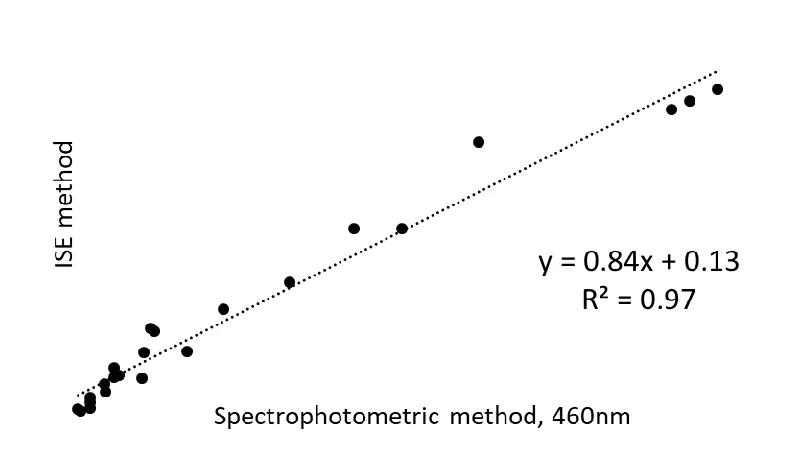
To prepare thiocyanate-selective chemical sensors, a sol–gel-based matrix was employed as a host membrane for the encapsulation of a sensing material. Tricaprylylmethylammonium thiocyanate (Aliquat336-SCN) was used as the dissociated ion-exchanger type sensing ionophore. Both 3-isocyanatopropyl-triethoxysilane and 1,4-butanediol were used for appropriate precursor preparation. Under acidic conditions, the sol precursor slowly gelled to yield a film in which the thiocyanate ionophore, Aliquat336-SCN, was encapsulated. Electrochemical responses of the potentiometric sensors were compared to those of traditional poly(vinyl chloride) (PVC) membrane electrodes prepared using the same ionophore. On the 7th working day, the average response slope toward thiocyanate was approximately 56.3 mV decade-1 in the concentration range 10-4.5 M to 5 × 10⁻¹ M at 20°C. Selectivity toward thiocyanate over lipophilic anions such as perchlorate and salicylate was considerably improved. The results exhibit a clear tendency that deviates from the Hofmeister selectivity pattern which would be observed in a membrane electrode made of Aliquat336-SCN type salt. The potentiometric selectivity coefficients, as measured in a 0.05 M 2-morpholinoethanesulfonic acid monohydrate buffer, pH 5.5, were log kpotthiocyanate, chloride = − 2.3, log kpotthiocyanate, salicylate = − 0.6, and log kpotthiocyanate, perchlorate = − 0.1. The optimized membrane sensors were employed for the flow-injection measurement of thiocyanate levels in saliva samples from both smokers and nonsmokers. The membrane sensors exhibited a fairly good correlation with the traditional colorimetric method (n = 23; sensors = 0.84 (colorimetric) + 0.13: R2 = 0.97).
Keywords: Thiocyanate-selective electrode, Aliquat336-SCN, Sol–gel encapsulation, Saliva
1. INTRODUCTION
Rhodanase has been well known to catalyze this enzymatic detoxification pathway [1] and vegetables, seeds, and other causes such as exposure to tobacco can trigger such processes [2]. Indeed, thiocyanate levels in serum can range from 50 to 500 μM depending on smoking status and consumption [3,4]. Interesting data on thiocyanate levels in stratal waters have also been reported [5].
Thiocyanate is typically measured by the spectrophotometric method [6,7], which is based on the formation of red complex in an acidic medium upon the addition of an iron(III) salt. However, this well-established colorimetric method has inherent limitations, when applied to colored samples such as whole blood. On the other hand, approaches using ion chromatography have been established [8], despite shortcomings in the sensitivity of conventional conductivity detectors. Various high-performance liquid chromatography and gas chromatography - mass spectrometric tandem methods have also been reported [9].
Potentiometric membrane electrode systems have been implemented in many diagnostic analyzers, due to their low cost, simplicity, and ease of microfabrication [10,11]. Moreover, they are not affected by sample color or turbidity. Among different types of systems, several polymer membrane-based potentiometric sensors have been exploited in the analysis of anions [12,13]. Quaternary ammonium salts have been exploited as a suitable ionophore in conjunction with PVC and plasticizers such as 2-nitrophenyl octyl ether (NPOE). The applications of such sensors in blood thiocyanate measurements, however, can lead to considerable errors due to the presence of lipophilic anions such as salicylate or heparin [14]. This phenomenon is explained partly by the so-called Hofmeister selectivity pattern. In an effort to overcome the Hofmeister pattern-related limitations with ammonium salts, Meyerhoff’s group has assessed the feasibility of using a manganese(III) porphyrin to determine thiocyanate levels in saliva [15].
Here, we aimed to replace the traditional PVC membrane matrix with a lipophilic sol–gel-based polymer while employing a typical ion-exchanger type anion sensing material, Aliquat336-SCN. Previous reports can be referred to for the concrete sol–gel process [16]. The slow reaction process, including hydrolysis, condensation, and drying/aging at relatively low temperatures with host materials encapsulated inside has been analyzed in applications of photoelectronic and composite materials as well as biosensors [17]. These applications are closely related to the resulting gel’s biocompatibility, extensive porosity, and encapsulation capabilities for active species such as enzymes [18]. The encapsulation procedure was applied in the present study for the matrix of thiocyanate-sensitive potentiometric sensors. Their analytical behaviors were compared to those of PVC-based electrodes. A flow-injection analysis (FIA) was then performed in their application with saliva samples.
2. EXPERIMENTAL SECTION
2.1. Reagents and Apparatus:
cyclohexane-2-propanol. A 0.25 M aqueous sodium thiocyanate solution was then employed for extraction (five times). Between each extraction, 7 mL of fresh 2-propanol was added to maintain the solvent composition. After repeated equilibrations, the organic solvents were removed using a rotary evaporator. The resulting product was washed twice with cyclohexane. The compounds, before and after extraction, were identified with a Scimitar series Varian 1000 FT-IR spectrophotometer. Tetrahydrofuran (THF) from Aldrich was purified over sodium, while 1,4-butanediol was employed as received with no further purification. A buffer solution of 0.05 M MES was prepared with sodium hydroxide and was used throughout the batch and flow-injection mode experiments. Deionized water of 18 Mcm resistivity was used for the preparation of buffer and standard solutions.
2.2. Polymer Films and Electrodes:
1,4-butanediol and 3-isocyanatopropyltriethoxysilane (molar ratio NCO/OH = 1) were dissolved in THF. The mixture was refluxed for 24 h under a nitrogen atmosphere, which yielded viscous sol-state precursor (1,4-precursor). After solvent evaporation, the precursor was dissolved in N,N-dimethylformamide (DMF) with Aliquat336-SCN following the ratios listed in Table 1. Fifteen microliters of 0.072 M HCl were then added after 1 min. of vigorous shaking. Before the mixture started to solidify, it was briefly shaken and poured onto a PET boat (1.4 × 1.4 cm). The gel reaction proceeded at 40°C for 48 h to yield a transparent membrane in which Aliquat336-SCN was homogeneously encapsulated. To ensure thorough aging, it was further vacuum-dried at the same temperature for another 48 h. The polymerization and drying processes were performed in a Fisher Scientific oven (model 280A) with and without vacuum setting (48 mmHg), respectively. PVC-based membranes were cast following the previous report [15]. The PVC and gel films were cut into 5.5-mm-diameter disks with a no.2 cork cutter, which were mounted on top of electrode bodies (ISE-561, Phillips Glasblaserei Möller, Switzerland). An aqueous solution of 0.01 M NaSCN/0.1 M NaCl was employed as an internal solution. The remaining 1,4-precursor was refrigerated when not in use.
2.3. Batch Mode EMF Measurements:
2.4 Flow Injection Analysis (FIA) Mode data Acquisition:
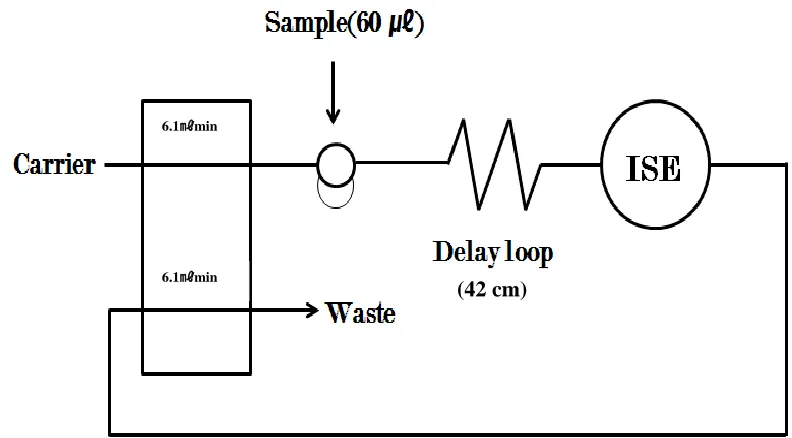
Figure 1 describes the experimental setup for the FIA in which the PVC- or sol–gel-based membrane electrode acts as a detector. A wall-jet type flow-through cap was employed to fit the Philips electrode body. The sample and carrier streams were controlled using a Rheodyne four-way rotary Teflon valve (Model 7125) as well as a peristaltic pump (Ismatech SA, Zürich). The size of the sample loop (0.012 in. teflon tubing) was typically 60 µL. The same buffer used in the static mode was used as the carrier stream. The previously used reference electrode was connected to complete the circuit. Two hertz data acquisitions were carried out to observe delicate changes in the electromotive forces.
2.5 FIA and Colorimetric Measurements of Thiocyanate in Real Samples:
[image:4.596.102.498.525.744.2]Saliva samples were kindly provided by 10 smokers and 10 nonsmokers at the Inje University and were further employed for the real sample measurement of thiocyanate. Five milliliters of each sample were placed in a centrifuge (Hanil Science Industrial Co., MICRO 17TR, Korea) and treated at 18,000 g for 10 min. [15]. This eases the manipulation of the supernatant by settling protein materials. For the flow-injection measurements described previously, the supernatants were diluted 20 times with 0.05M MES buffer, pH 5.5. A linear regression fit, ΔE (mV) vs. log [SCN], was obtained for thiocyanate standards and was further employed to determine thiocyanate levels for the diluted saliva samples. These diluted saliva samples were further used for the recovery study; three different amounts of thiocyanate standards were added to 1-mL aliquots. A correlation study was further carried out in conjunction with the reference method, UV-VIS spectrophotometry. Each mixture of 0.1 mL of supernatant and 0.1 mL of 0.77 M ferric nitrate in 4 M nitric acid was diluted with deionized water (3.5 mL) prior to absorbance measurements at 460 nm with a Mega-V600 spectrophotometer. (Scinco Inc., Seoul, Korea).
Figure 1. Schematic of FIA equipped with the thiocyanate-selective electrode as a detector 6.1㎖/min
6.1㎖/min
3. RESULTS AND DISCUSSION
Although previously reported precursors such as tetraethylorthosilicate (TEOS) and tetramethylorthosilicate (TMOS) were able to undergo a sol–gel reaction [21], the resulting inorganic/glassy membranes were too brittle to be placed on top of electrode bodies such as a Phillips electrode body, ISE561 that used in this study. In addition, they seem to be inadequate to encapsulate most lipophilic ionophores. In this report, the 1,4-precursor, based organic and inorganic moieties, was found to overcome these obstacles, resulting in an appropriate host for Aliquat336 salts. Related precursors were identified by their FTIR and 1H NMR spectra [16]. Characteristic sharp bands of thiocyanate appeared near 2053 cm-1 and 749 cm-1 in the extracted product, Aliquat336-SCN (Figure 2) [22].
1000 2000
3000 4000
0 10 20 30 40 50 60
Wave number (cm-1)
%
T
ra
n
sm
itt
a
n
[image:5.596.90.512.267.608.2]ce
Figure 2. IR spectra of Aliquat336-Cl, before (----) and after (—) sodium thiocyanate treatment
tributylphosphate (TBP) and our ionophore, Aliquat336-SCN. TBP, which was selected out of more than 90 plasticizers,
helped our gel membranes stay more flexible without cracking. It was also quite compatible with the ionophore candidate Aliquat336-SCN. Enhanced compatibility was confirmed by the transparency of the membrane, as well as homogeneity without leakage of components. Other plasticizers such as NPOE, a typical plasticizer for PVC, resulted in either turbidity or segregation. Polymerization was performed at 40°C. Although a hotter reaction condition would be preferred for the hydrolysis and condensation reactions to proceed quickly, this may cause the resulting gel to crack easily. In addition, aging of the resulting gel membranes was required for the water and ethanol condensation reactions to complete. In the present work, the membranes were simply set to dry for another 48 h at a pressure of 48 mmHg (40°C) for the aging step. 29Si magic-angle spinning (MAS) NMR and solid-state 1H NMR spectra of similar membranes can be found elsewhere [16].
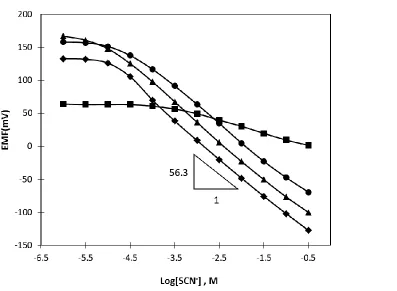
Electrochemical responses were tested using the resulting membranes, which had a thickness and density of 0.15 mm and 1.24 g/cm3, respectively. Gel membranes prepared in different ionophore/matrix ratios (G1 to G3 in Table 1) had different characteristics. The G1 membranes, without any plasticizer, exhibited less flexibility. However, all other membranes including the PVC one were cut with the cork cutter relatively easily, allowing the membranes to be implemented readily on Philips electrode bodies. Calibration curves were plotted using the membranes in Table 1. Among different anions, G2, G3 and P1-based membrane sensors gave comparable responses toward thiocyanate in the range of 0-500 mM (Figure 3). Of the sol–gel membranes, G1 had a gentler slope and poorer physical robustness. This led us to use the aforementioned plasticizer, TBP. Higher amounts of TBP resulted in a slightly improved slope. However, membranes with TBP contents higher than that of G3 did not show further advantages in response behavior, and instead became overly soft. Therefore, electrodes based on G3 and P1 were tested throughout the following studies. In the batch mode, both membrane electrodes showed an almost similar and consistent response behavior even after 7 working days, with 56.3 mV decade-1 (average of three determinations) in the concentration range 10-4.5 to 5 × 10⁻¹ M at 20°C. The G3 matrix-based electrode also gave a slightly lower detection limit of 6.3 × 10⁻³ mM.
Table 1. Formulation of the sol–gel- and PVC-based membranes
membrane ID*
Aliquat336 -SCN
(mg)
Plasticizer (mg)
Matrix (mg)
solvent
G1 10.5 TBP 0.0 95.2 0.4 mL DMF
G2 10.5 TBP 5.6 95.2 0.4 mL DMF
G3 10.5 TBP 55.4 95.2 0.4 mL DMF
P1 10.5 NPOE 108.6 50.0 1.0 mL THF
Figure 3. Calibration curves of electrodes prepared with () P1; (■) G1; (●) G2; (▲) G3.
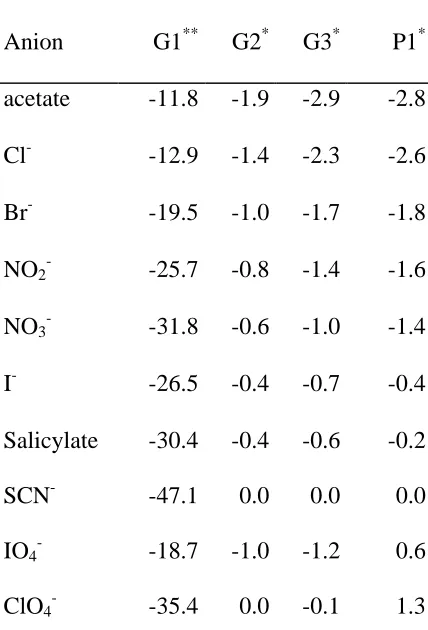
The equilibrium selectivity coefficients of the Aliquat336-SCN-based gel- and PVC- membrane electrodes for different anionic species relative to thiocyanate are listed in Table 2. The coefficients were evaluated in a pH 5.5 MES buffer at an anionic concentration of 10 mM. Although the gel membranes showed comparable selectivities toward thiocyanate over hydrophilic anions such as acetate, they exhibited significantly improved behavior over less hydrophilic anions such as salicylate and perchlorate, deviating from the Hofmeister pattern which was observed in the PVC electrode (P1). Notably, the gel membranes exhibited a selectivity improvement over salicylate of more than 2.5 times that of the PVC membrane. More interestingly, G3-based electrodes gave greater response toward thiocyanate than periodate or perchlorate.
Table 2. Equilibrium potentiometric selectivity coefficients* (log kpotthiocyanate/y) and overall anion responses (mV)** of Aliquat336-SCN-based electrodes made of PVC- and gel- based membranes (average of three determinations).
Anion G1** G2* G3* P1* acetate -11.8 -1.9 -2.9 -2.8 Cl- -12.9 -1.4 -2.3 -2.6 Br- -19.5 -1.0 -1.7 -1.8 NO2- -25.7 -0.8 -1.4 -1.6 NO3- -31.8 -0.6 -1.0 -1.4 I- -26.5 -0.4 -0.7 -0.4 Salicylate
SCN- IO4- ClO4
--30.4 -47.1 -18.7 -35.4
-0.4 0.0 -1.0 0.0
-0.6 0.0 -1.2 -0.1
-0.2 0.0 0.6 1.3 .
[image:8.596.191.405.130.445.2]
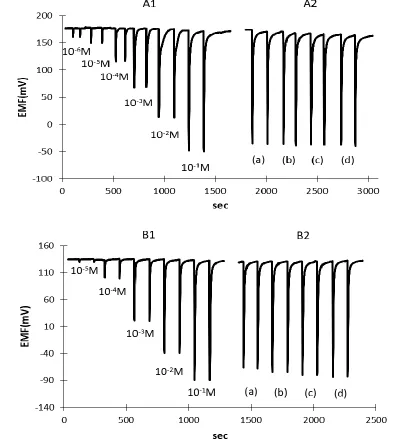
Figure 4. (A1) FIA chart for double injections of sodium thiocyanate standard solutions with a typical gel membrane (G3) electrode detector; (A2) FIA chart for double injections of 50 mM sodium thiocyanate with (a) 0, (b) 0.5, (c) 1, and (d) 2 mM sodium salicylate. (B1, B2) FIA chart obtained with a typical PVC membrane (P1) electrode detector. Procedures are the same as for G3.
nonsmokers = 0.46 mM, mean values obtained by the reference procedure) [24] despite potential differences in the amount the subjects smoke and other elements such as diet.
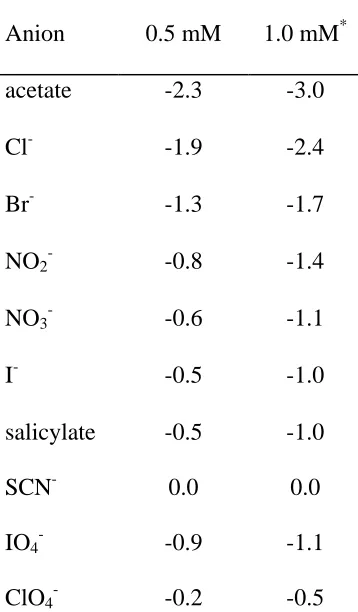
Table 3. Non-equilibrium FIA mode potentiometric selectivity coefficients (log kpotthiocyanate/y) evaluated by the matched potential method.
Anion 0.5 mM 1.0 mM*
acetate -2.3 -3.0
Cl- -1.9 -2.4
Br- -1.3 -1.7
NO2- -0.8 -1.4
NO3- -0.6 -1.1
I- -0.5 -1.0
salicylate SCN- IO4- ClO4
--0.5 0.0 -0.9 -0.2
[image:10.596.208.387.182.488.2]-1.0 0.0 -1.1 -0.5
Table 4. Recovery data for thiocyanate spiked to a pooled saliva as measured by the FIA-membrane
electrode system*
added (mM)
found
(mM) % recovered
0.0 0.061 -
0.051 0.111 98.04
0.054 0.114 98.15
0.056 0.118 101.79
[image:10.596.79.521.556.665.2]
Figure 5. Correlation between the new FIA method and the colorimetric method by a Scinco spectrophotometer
The reasoning behind why the gel membranes exhibit better selectivity toward more hydrophilic anions seems to relate to the chemical properties of the membranes themselves. Like gels synthesized by TEOS, which are known to be relatively hydrophilic, our organic–inorganic precursor-based membranes might also be less lipophilic than PVC-precursor-based ones. During hydrolysis of the sol–gel process, some portion of terminal alkoxides may generate unreacted hydroxyl moieties resulting in hydrogen bonding with aqueous adsorbates at the membrane surface. In addition, the gel matrix has urethane (NHCOO) and silicate (Si–O–Si) functional groups, enhancing its hydrophilicity. However, despite the lower lipophilicity of the gel membranes, their three-dimensional structure supports the highly lipophilic quaternary ammonium salt. The plasticizer (TBP) seems to give physical flexibility to the membrane as well as mobility to our ion sensing species, Aliquat336-SCN.
Although the sol–gel encapsulation method seems to be broadly applicable in chemical sensors, there are limitations. For example, commercially available chloride ionophores (Fluka selectophore 24901 and 24894) are either insoluble in DMF or not compatible with the gel. These limitations make it challenging to apply the sol–gel concept to various ionophores. Efforts aimed at overcoming these obstacles are being implemented currently.
4. CONCLUSIONS
[image:11.596.93.494.95.330.2]
based membrane electrode with the same ionophore. The electrode system was successfully implemented in FIA mode to analyze thiocyanate levels in human saliva samples.
ACKNOWLEDGEMENT
The authors gratefully acknowledge scholarship support for NGK from Inje University (2017–2018).
References
1. S.L. Youso, G.A. Rockwood and B.A. Louge, J. Anal. Toxicol., 36 (2012) 265. 2. A. Bendtsen and E. Hansen, Analyst, 116 (1991) 647.
3. R. Zil and M.A. Rahman, J. Pak. Med. Assoc., 56 (2006) 323.
4. F.J. Baud, P. Barriot, V. Toffis, B. Riou, E. Vicaut, Y. Lecarpentier, R. Bourdon, A. Astier, C. Bismuth, New. Eng. J. Med., 325 (1991) 1761.
5. E.M. Basova, V.M. Ivanov and O.K. Apendeeva, Mos. Univ. Chem. Bull., 69 (2014) 12. 6. Standard Test Method for thiocyanate in water, ASTM D4193-08 (2013) e1.
7. Y.G. Shin, H. Meijering, F.H. van Heuveln, J. Wieling, J. Halladay, S. Sahasranaman and E.C.A. Hop, Transl. Clin. Pharmacol., 23 (2015) 59.
8. B.C. Blount and L. Valentin-Blasini, Anal. Chim. Acta, 567 (2006) 87. 9. X. Liu and Z. Yun, J. Chromatogr., 653 (1993) 348.
10. M. C. Frost and M. E. Meyerhoff, Ann. Rev. Anal. Chem., 8 (2015) 171.
11. A. Moya, X. Illa, I. Gimenez, Y. Lazo-Fernandez, R. Villa, A. Errachid and G. Gabriel, Sens. Actuators B, 255 (2018) 2861.
12. N. Pankratova, M. Cuartero, L. Jowett, E. Howe, P. Gale, E. Bakker and G. Crespo, Biosens. Bioelectr., 99 (2018) 70.
13. S. Yang and M.E. Meyerhoff, Electroanalysis, 25 (2013) 2579.
14. S.B. Park, W. Matuszewski, M.E. Meyerhoff, Y.H. Liu and K.M. Kadish, Electroanalysis, 3 (1991) 909.
15. D.V. Brown, N. Chaniotakis, I.H. Lee, S.C. Ma, S.B. Park, M.E. Meyerhoff, R.J. Nick and J.T. Groves, Electroanalysis, 1 (1989) 477.
16. B. H. Lee, Y. Shim and S.B. Park, Anal. Chem., 76 (2004) 6150.
17. K. Johnson, S. Gakhar, Y. Deng, K. Fong, S.H. Risbud and M.L. Longo, ACS Appl. Mater. Interfaces, 9 (2017) 35664.
18. G. Gallon, V. Lapinte and A. Pouessel, ACS Sustainable Chem. Eng., 5 (2017) 4311. 19. M.E. Meyerhoff, E. Pretsch, D. Welti and W. Simon, Anal. Chem., 59 (1987) 144.
20. Y. Umezawa, Handbook of ion-selective electrodes: Selectivity coefficients, CRC Press, Boca Raton (1990) 5.
21. A.C. Pierre (Ed), Introduction to sol-gel processing, Kluwer Academic Publishers, Boston (1998) 57.
22. L.H. Jones, J. Chem. Phys., 25 (1956) 1069.
23. G. Majetich, A. Caseras, D. Chapman and M. Behnke, J. Org. Chem., 51 (1986) 1745. 24. T. Matsueda, Bunseki Kagaku, 33 (1984) E389.