Black Children’s
Achievement
Programme Evaluation
Research Report DCSF-RR177
Uvanney Maylor, Sarah Smart, Kuyok Abol Kuyok and
Alistair Ross
Research Report No
DCSF-RR177
Black Children’s Achievement
Programme Evaluation
Uvanney Maylor, Sarah Smart, Kuyok Abol Kuyok and
Alistair Ross
Institute for Policy Studies in Education
London Metropolitan University
The views expressed in this report are the authors’ and do not necessarily reflect those of the Department for Children, Schools and Families.
© London Metropolitan University 2009
ISBN 978 1 84775 566 7
Acknowledgements
We would like to express our thanks to all those who have in some way contributed to this evaluation. Our greatest thanks goes out to all the children, parents, school and local authority staff without whom this evaluation would not have been possible. We would also like to thank the steering group and the DCSF Project managers (Tammy Campbell, and Geoff Brown) for guiding this evaluation.
The research team would like to thank colleagues in the Institute for Policy Studies in Education, London Metropolitan University: Ayo Mansaray who undertook data analysis; Merryn Hutchings, who had a role in ensuring the quality of the evaluation research; and Lindsay Melling and Andrew Craven who were responsible for the administration of the project. The research team would also like to acknowledge the work of Barbara Read and Nicola Rollock, formerly members of staff at IPSE, who made a valuable contribution to this evaluation in its early stages’.
Contents
Executive summary 1
Introduction 7
Chapter 1: Overview of the BCA Programme 8
Chapter 2: Literature review 12
Chapter 3: Evaluation methodology 28
Chapter 4: Local authorities and schools in the BCA Programme 36
Chapter 5: Case study local authorities and schools 42
Chapter 6: Children’s experiences of school and engagement with learning 64
Chapter 7: Parents perceptions of their children’s schooling 79
Chapter 8: School awareness of the BCA Programme and changes in understanding and practice
85
Chapter 9: Partnerships between case study local authorities, schools and National
Strategies 92
Chapter 10: Effective implementation of the BCA Programme in case study schools
and local authorities 96
Chapter 11: Impact of the BCA Programme at local authority and school level and sustainability of the BCA Programme
115
Chapter 12: Conclusion 119
Chapter 13: Recommendations 122
References 124
Appendix 130
iii
Key to abbreviations
BCA Programme - Black Children’s Achievement Programme
CPD - Continuing professional development
FSM - Free school meals
EAL - English as an Additional Language
EMA - Ethnic minority achievement
LA - Local authority
PDMs - Professional development modules / meetings
RA - Regional Adviser
RAPs - Raising Achievement Plans
SEN - Special educational needs
Executive summary
The Institute for Policy Studies in Education (IPSE) at London Metropolitan University was commissioned in 2007 by The Department for Children Schools and Families (DCSF) to conduct a small-scale two-year evaluation of the Primary Black Children’s Achievement (BCA) Programme. The evaluation sought to identify effective practice (at school and local authority level) that could usefully be adopted by a wider range of schools and local authorities.
Overview of the BCA Programme
The BCA Programme was set up to target Black primary aged children across England and consisted of two phases. Phase 1 began in 2005 as the African-Caribbean Achievement test-bed pilot with five local authorities and 22 schools. The pilot local authorities were identified in late 2004 to begin working in January 2005.
Phase 1 focused on the achievement of African-Caribbean children because national attainment data for African-Caribbean heritage primary school children had pointed to an achievement gap between these children and the wider school population.
Following the commencement of Phase 1 it became apparent that a focus solely on the achievement of African-Caribbean children was not sustainable. This led to the successor programme, which encompassed all Black groups, being rolled out in Phase 2 as the Black Children’s Achievement (BCA) Programme. This renaming was considered essential if the achievement needs of all Black (i.e. Black African, Black Caribbean, Mixed White and Black Caribbean, Mixed White and Black African, and Black Other) children were to be met.
Phase 2 formally launched in November 2006 with the addition of 15 further authorities. This resulted in over 100 schools taking part in the BCA Programme (including the 22 involved in Phase I). Phase 2 was intended to be a two year programme with funding provided to
participating local authorities to divide between schools participating in the BCA Programme.
The BCA Programme offered participating schools flexibility in their implementation of the programme; that is in the type of activities / approaches introduced, and also in the number of children that schools worked with. In 2006 schools were advised by the BCA Programme Director to work with a group of between 10 and 20 children who were to be identified on the basis of school analysis of their attainment data. This would enable approaches which were tried out to be tracked efficiently.
Schools participating in the BCA Programme were supported in raising Black children’s achievement by local authority consultants with an understanding of and expertise in developing Black children’s achievement, who helped schools to audit their practice and compile RAPs, and delivered professional development in the areas of identified need, and other support deemed necessary. Alongside consultant support, National Strategies
Regional Advisers had responsibility for providing an additional layer of support to the BCA schools as well as supporting local authorities and enhancing their understanding and practice.
Methodology
Semi-structured interviews and focus groups were used to collect data from seven case study schools and four local authorities over two years (2007-2008). In Year 1 school data collection concentrated on Black children in Years 2 and 5. In Year 2 of the evaluation, children who were interviewed in Years 2 and 5 were interviewed again in Years 3 and 6.
Across both years of the evaluation a total of 80 school staff, 194 children, 38 parent / carers and 14 local authority staff participated in the evaluation research.
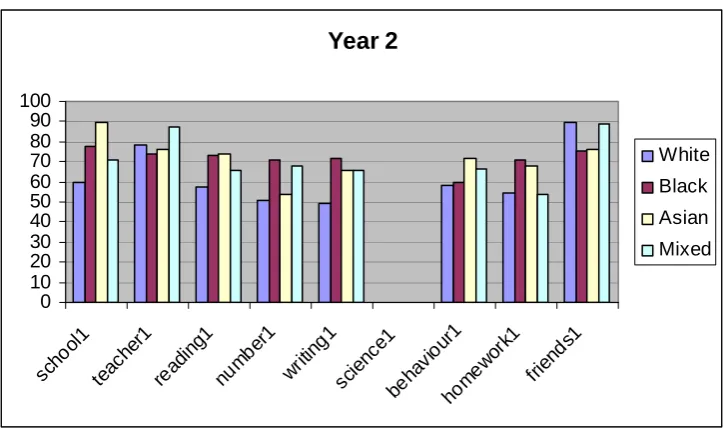
A short class questionnaire was distributed to whole class groups in Years 2 and Year 5
(not just Black children) to ascertain children’s attitudes to school work / learning and school culture / ethos, and their perceptions of their behaviour. The intention was to compare the whole class responses with those obtained from Black children who participated in the focus
groups. The questionnaire was completed by 416 (218 Year 2 and 198 Year 5) children.
Classroom observations were also conducted. These aimed to develop an understanding of how schools/teachers recognised and valued diverse cultures / heritages and how children responded to lessons where this occurred. The observations focused on interactions between teachers and majority and minority ethnic children, and interactions between diverse groups of children.
Key findings
The case study schools and local authorities identified a number of areas within the BCA Programme that would enable them to make a difference to Black children’s achievement. These include:
• The allocation of finances specifically targeting Black achievement;
• The flexibility to choose the area of focus most suited to individual school need;
• Better analysis / monitoring of ethnicity achievement data;
• Staff having the time and space to prioritise Black children’ achievement through
appropriate school reflection/professional development, targeting, monitoring and implementation of creative initiatives (including a culturally relevant curriculum);
• Developing a culture / ethos of achievement in school;
• Consultant and Regional adviser support which has helped to develop staff knowledge,
confidence and practice in planning lessons and challenging understanding / expectations about Black children’s achievement.
Some of the challenges to implementing the BCA Programme identified include:
• Lack of awareness or concern among staff about Black children’s underachievement
and the need to address it;
• Institutional factors/processes including negative teacher attitudes / expectations and
stereotypical thinking about the ability of Black children serves to undermine teacher ability to raise Black children’s attainment at an individual and group level. It also hinders their ability to view raising Black children’s attainment either as essential or a key aspect of race equality;
• Difficulties in challenging negative attitudes and prejudice among school staff;
• The labour intensive nature of the BCA Programme (e.g. conducting the audits,
analysing achievement data, completing paperwork, writing reports);
• School staffing capacity;
• Lack of commitment from school leadership and management;
• Where the BCA Programme is not viewed within schools as part of a whole school
strategy of raising children’s achievement, and wider school improvement.
Other case study findings were:
• The evaluation indicates that the BCA Programme was necessarily targeted at schools
and Black children who would benefit most from the Programme’s aims and objectives. However, without a school leadership commitment, staff understanding of the BCA Programme’s goals and why Black children are the target group is likely to be less clear.
• Participation in the BCA Programme enabled some of the case study schools to develop
effective strategies in, for example, raising Black children’s self esteem, improving their reading and writing skills and delivering a culturally relevant curriculum which could be utilised with children from other ethnic groups.
• The case study data suggests that staff awareness about Black children’s achievement
was more likely to be elevated and changes made in practice where staff were closely linked to the BCA Programme and/or had some prior knowledge and understanding, whereas the staff who were new to the area were the ones where greater ‘resistance’ and/or fewer changes in practice were observed.
• The BCA Programme enabled schools (both new to and experienced in raising Black
children’s achievement) to develop their understanding and implement more effective strategies in addressing Black underachievement. Some of the case study schools experienced in raising Black children’s achievement regarded the BCA Programme as ‘building on’ what they were doing well before they commenced their participation in the BCA Programme. Nonetheless, they suggest their involvement helped them to look more specifically at their school’s ethnic diversity and achievement profile, and how to engage Black children in their learning and subsequently, raise their achievement.
• Despite having targeted children as part of the BCA Programme, some teachers
remained convinced that the targeted Black children were receiving support because they were Black, rather than because they had specific attainment needs to be
addressed, which suggests there is a need for a higher profiling of the BCA Programme in schools and new understandings developed.
• Some of the case study schools found targeting and concentrating support on Black
children as a group to be problematic. Thus the tendency was to include children from diverse ethnicities in the activities they implemented.
• In some schools the strategy of targeting underachieving Black children was not well
explained to schools and teachers, many of whom seemed to believe that equality can be achieved by treating everyone identically. There was a lack of awareness and understanding that different strategies might need to be applied to meet the needs of different groups of children, which points to the need for some continuing professional development and awareness-raising around issues relating to race equality, diversity, inclusion and raising achievement.
• The BCA consultant / school relationship is important if schools are to understand how
to raise Black children’s achievement, develop new insights and strategies, and to remain focused on the task.
• Professional development modules delivered by BCA consultants were found to be most effective where they were tailored to the school context, fed straight into planning that was used immediately and where the delivery offered the possibility of being reviewed with further staff input.
• The case study data suggests that some teaching staff hold negative views about Black
children. Case study data also suggests that while schools might be representations of inclusive environments and most Black children have positive relationships with children and teachers from different ethnic groups, some Black children feel that they are treated differently by White teachers because of their skin colour, and where this differential treatment occurs this is likely to impact on Black children’s experience of school and approach to learning, and raising their attainment. The evaluation therefore suggests there is a need for race equality training in schools and continuing professional
development which helps school staff understand how issues pertaining to institutional racism, and some teacher attitudes, can negatively impact on Black children’s
attainment.
Conclusions
The evaluation found that in some schools (both multiethnic and predominantly White) the strategy of targeting underachieving Black children was not well explained to schools and teachers, many of whom seemed to believe that ensuring equality can be achieved by treating everyone identically. There was a lack of awareness and understanding in the case study schools that different strategies might need to be applied to meet the needs of different groups of children.
The case study schools identified the flexibility they were given in implementing the BCA Programme as a major strength. Nonetheless, the level of flexibility in the schools and the activities / practices implemented meant that it was hard to see which children were being consistently supported over the evaluation period.
The case study data revealed that staff awareness about Black children’s achievement was more likely to be elevated, and changes made in practice, where staff were closely linked to the BCA Programme, whereas those who were new to the area or saw it as less important were the ones where greater ‘resistance’ and/or fewer changes in practice were observed. The evaluation findings suggest that the case study schools with previous experience of successfully raising Black children’s achievement (prior to their participation in the BCA Programme) were less likely to regard the BCA Programme as offering additional strategies for enhancing Black children’s achievement. Despite this, there was evidence to suggest that even previously successful schools welcomed the opportunity to take part in the BCA
Programme because as well as assessing areas for improvement, the BCA Programme enabled them to consider ‘what is working well’ (Headteacher) and how such practice can be consolidated.
Through their involvement in the BCA Programme, the case study schools monitoring of attainment and use of ethnicity data has improved. Besides this, the BCA Programme has allowed school leadership to be much more explicit about teachers incorporating Black children’s heritage in their teaching and learning.
Although case study schools found the BCA Programme time consuming and requiring a lot of effort and staff commitment, they considered it to be essential in helping to cultivate a different perception of Black achievement through its long term approach.
It has also begun to foster an understanding amongst school staff that ‘just because the child is from that culture that there’s no reason they can’t achieve’ (TA).
The BCA Programme appears to have worked best in the case study schools where there was a good relationship between the school and the BCA consultant, and both parties were able to work together to the benefit of Black children.
The case study data suggests that some teaching staff hold negative views about Black children, and that negative perceptions about projects targeting Black children are not
confined to White school staff. The views held by both White and Black staff in some schools served to undermine their ability to raise Black children’s achievements. Case study data also suggests that while schools might be representations of inclusive environments and most Black children have positive relationships with children and teachers from different ethnic groups, some Black children feel that they are treated differently by White teachers because of their skin colour, and where this differential treatment occurs, this is likely to impact on Black children’ experiences of school, their approaches to learning, and on efforts to raise their attainment. The negative experiences recounted by some children would seem to support the contention by one local authority that an inclusive school culture and ethos is ‘difficult to measure’ because demonstration of inclusion (e.g. displays) does not necessarily reflect classroom practice or staff / pupil relationships / experiences. Moreover, while some case study schools felt they had made progress on making the school curriculum more culturally relevant and inclusive, the children interviewed did not necessarily experience the curriculum in this way.
.
Recommendations
• There is a need for a clearer understanding within schools and local authorities as to the
main aims of the BCA Programme, and particularly about why it specifically targets Black children and what is ‘different’ about the BCA Programme. This is needed to avoid the implementation of the BCA Programme being undermined by school / staff
perceptions that the BCA Programme does not do anything different from what schools did before. This would also help to prevent schools / teachers from seeing the BCA Programme as unnecessarily taking away teacher time and resources that they feel could be better spent on other ethnic groups perceived to be in need of greater support.
• In order for schools and teachers to take seriously the importance of raising Black
children’s achievement and promoting a social justice agenda in schools, there is a need for headteachers to be at the forefront of driving the aims and objectives of the BCA Programme forward. Alongside this, headteachers and teachers in post would need to access continuing professional development which covers issues of ‘race’ equality, diversity and inclusion. The courses would seek to break down barriers to raising Black children’s achievement by exploring sensitive issues such as the meaning of ‘Black’, together with institutional racism and teacher attitudes / expectations (e.g. teacher perceptions, stereotyped assumptions / myths and expectations of children from different ethnic groups) that can affect Black children’s achievement. Exploring Black children’s achievement at a school, local and national level, would help school staff to comprehend their legal duties with regard to diversity, inclusion and equal opportunities and how it is possible to foster Black children’s achievement.
• Although exploring teacher attitudes was not a key aspect of this evaluation it emerged
as a salient issue. In developing more conducive staff attitudes to raising Black children’s achievement, there needs to be better understanding amongst school staff (both Black and White) that enhancing Black children’s achievement and ultimately closing the attainment gap across ethnic groups might require different strategies. The monitoring of staff attitudes by Ofsted as part of their monitoring of schools’ compliance with the Race Relations (Amendment) Act 2000 and the race equality duty and also their compliance with the community cohesion duty may encourage teachers to develop more appropriate attitudes to facilitating the achievement of Black children.
• While the BCA Programme has been implemented in both multiethnic and
predominantly White areas (e.g. in schools where Black children are in the minority), it is nevertheless salient to consider ways in which understanding can be developed within schools where there are only two or three Black children, and their commitment to meeting the needs of a small number of Black children can be maintained.
• Finally, if the BCA Programme is to become more embedded in schools and the
practice of local authorities there is a need for ongoing governmental support. This will necessitate that financial and consultant resources would need to be provided per school not per LA (if an LA has lots of schools that need the programme, then they all need to be properly resourced). Although schools with the greatest attainment needs were previously identified further steps need to be taken to ensure that the schools where the attainment gap is greatest are identified and targeted with appropriate
support. Ways of introducing the BCA Programme in schools where Black achievement is not viewed as a key priority will need to be identified. In relation to school strategies, the BCA Programme should continue to discourage schools from withdrawing Black children from the classroom, and creating all-Black groups. Ensuring that school staff understand the rationale for the BCA Programme is absolutely central to such
understanding developing and the ultimate success of the BCA Programme.
Introduction
The Institute for Policy Studies in Education (IPSE) at London Metropolitan University was commissioned in 2007 by The Department for Children Schools and Families (DCSF) to conduct a small-scale two-year evaluation of the Primary Black Children’s Achievement (BCA) Programme. The evaluation sought to identify effective practice (at school and local authority level) that could usefully be adopted by a wider range of schools and local authorities.
In March 2007 there were 1081 schools participating in the BCA Programme across 20 local
authorities. The report provides an in-depth insight into how the BCA Programme was experienced by seven case study schools and four local authorities that participated in the evaluation research; paying particular attention to perceived changes in policy and school, and staff understanding and practice in the case study schools, and perceived impact at local authority level. The culture and ethos of the BCA Programme schools with regard to raising Black children’s achievement is explored together with Black children’s awareness of their heritage and identity, and their engagement with learning. Attention is drawn to aspects of the BCA Programme that were considered challenging in delivering the BCA Programme, and those which were viewed as sustainable by case study schools and local authorities. The chapters that follow address these key aspects and provide an indication of how the BCA Programme was evaluated by the various participants and stakeholders, and any lessons that have been derived as a consequence.
Importantly, any conclusions drawn from this report pertaining to impact and effective
practice would be limited by the number of the BCA Programme schools and local authorities included in the evaluation, and the time period (2006-2008) which the evaluation research covered.
1
This number was derived from school lists held by National Strategies and information provided by the case study local authorities. It should be noted that in two of the case study LAs the number of schools they identified as participating in the BCA Programme differed to the list held by National Strategies which may account for differences in the number perceived to be participating at any one time.
Chapter 1 - Overview of the Black Children’s Achievement
Programme
This chapter provides an overview of the key aims and objectives of the BCA Programme and when it was established.
The BCA Programme was set up to target Black primary aged children across England and consisted of two phases. Phase 1 began in 2005 as the African-Caribbean Achievement test-bed pilot with five local authorities and 22 schools.
The pilot local authorities were identified in November/December 2004 to begin working in January 2005, from a standing start without a specialist Regional Adviser (RA) appointment being made.
Phase 1 focused on the achievement of African-Caribbean children because national attainment data for African-Caribbean heritage primary school children had pointed to an achievement gap between African-Caribbean children and the wider school population. In 2004 and 2005 the results for African-Caribbean children were below the national average on all 13 scales of the Foundation Stage Profile, and at every subject at Key Stages 1 and 2. Even after background characteristics such as prior attainment, deprivation (as proxied by free school meals (FSM); see chapter 2 for further discussion), and special educational needs (SEN) status were taken into account, African-Caribbean children made less progress across primary schools compared with other children with the same prior attainment and background characteristics. There was an identified need for a programme of work to raise the achievement of African-Caribbean children in primary schools through the existing National Strategies.
Phase 1 was informed by three key perspectives:
1 There is no inherent reason why African-Caribbean children should not achieve as well
as the majority of others.
2 Improvements to African-Caribbean children’s achievement will occur through the
combined efforts of school, child and home.
3 High quality teaching and assessment plus necessary specialist interventions,
thoroughly supported by school leaders, are key factors in improving the achievement of African-Caribbean children, as a group and as individuals.
Following the commencement of Phase 1 it became clear that a focus solely on the achievement of African-Caribbean children was not sustainable. In Spring 2006 the then Department for Education and Skills (DfES) made a proposal which was agreed by National Strategies that the successor programme to be rolled out in Phase 2 should include all Black groups. Consequently, the full programme was renamed the Black Children’s Achievement (BCA) Programme. This renaming was essential in recognising the ‘broader reach of the work’ (National Strategies Director) and if the achievement needs of all Black (i.e. Black African, Black Caribbean, Mixed White and Black Caribbean, Mixed White and Black African, and Black Other) children were to be met.
As a pilot, Phase 1 was meant to develop the work into a programme which would support specialist local authority CPD, develop materials to assist the programme while also securing improvements in Black children’s achievement. This work continued in Phase 2 which was formally launched in November 2006 with the addition of 15 further authorities. This resulted in over 100 schools taking part in the BCA Programme (including the 22 involved in Phase I).
Phase 2 was intended to be a two year programme. The profile of Phase 1 and 2 local authorities and schools are examined in chapter 4.
The BCA Programme was innovative in its approach as it allowed participating schools flexibility in their implementation of the programme; that is in the type of activities /
approaches introduced, and also in the number of children that schools worked with. In 2006 schools were advised by the BCA Programme Director to work with a group of between 10 and 20 children who were to be identified on the basis of school analysis of their attainment data. This would enable approaches which were tried out to be tracked efficiently.
Although the BCA Programme was not prescriptive, there was a stipulation that participating schools would need to have the capacity (including staff resources) to effect change in school understanding and practice, and attainment. Furthermore, there was an expectation that the BCA Programme would be delivered in schools from the headteacher down. That is, the headteacher would have a key role / responsibility in driving the BCA Programme
forward, and ensuring its implementation within school. There was also an expectation that the attainment levels of Black children in the participating schools would show an increase locally (at a school level) and nationally (in national assessment tests). Through the BCA Programme, increased Black children’s attainment was expected to emerge through schools analysing/monitoring children’s achievement data, identifying attainment needs and
weaknesses in school approaches (through an audit2 conducted by schools) and
developing/revising raising achievement plans (RAPs)3. Fostering a school ethos within
which Black children’s identity is valued, their self-esteem enhanced and racism and bullying is challenged within the wider school were also expected key features of the BCA
Programme.
At the end of each term participating schools were expected to submit progress reports to their local authority, who in turn would compile a local authority report for National Strategies.
Consultant / National Strategies support
There was an expectation that schools participating in the BCA Programme would be supported in raising Black children’s achievement by local authority consultants with an understanding of and expertise in developing Black children’s achievement, who would help schools to audit their practice and compile RAPs, and deliver professional development in the areas of identified need, and other support deemed necessary (e.g. bringing in culturally relevant resources, attend parent meetings etc). In short the BCA consultants were tasked to aid school improvement by assisting schools to identify strengths and weaknesses and how their practice could be enhanced to better support the attainment of Black children.
National Strategies Regional Advisers had responsibility for providing an additional layer of support to the BCA schools as well as supporting local authorities and enhancing their understanding and practice. This was accomplished through a programme of support which was made available to local authorities by National Strategies through face to face visits, a series of one day workshops / developmental meetings (held in Leeds and London), newsletters, telephone and e-mail contact.
2
Schools were expected to conduct an audit of their attainment, staff practice, teaching and learning and policies. There was an expectation that staff, pupils, parents and governors would contribute to the audit.
3
The raising achievement plans were initially based on identified need from the school audit and were expected to be revised at the end of the first year, and a new plan developed.
Funding
To enable the designated 204 local authorities deliver the BCA Programme, each local
authority received £20,000 (from the DCSF Standards fund) which was to be divided between schools taking part in the BCA Programme. In some instances, however, the distributed funds were costed and linked to individual school RAPs so the amounts some schools received varied. In addition to the sum of £20,000 local authorities were given £4,000 towards their central administrative costs.
Given the level of supporting funding available, local authorities were advised by National Strategies to work with a maximum of five schools. It was however, apparent that some local authorities worked with a larger number (see chapter 4).
Expected outcomes
The expected outcomes for the BCA Programme were:
1 At pupil level:
- greater progress, higher achievement and attainment - positive awareness of their own heritage and identity - engagement as partners in their own learning.
2 At school level:
Securing an appropriate whole school context:
A culture and ethos within which the following features are demonstrable:
- everyone feels safe and valued
- whole school commitment to tackling underachievement and achieving high standards for all
- whole school recognition and celebration of cultural and ethnic diversity - proactive partnership with parents, carers and the wider community.
Leadership and management which demonstrates:
- a strong and determined lead on race equality - evaluation led improvement
- analysis of data and rigorous pupil tracking by ethnicity and gender - ambitious targets for attainment and achievement
- effective deployment of resources to support the progress of all children
- attention to the development of a professional learning community which recognises the benefits of collaboration and is focused on school priorities for improvement.
An approach to learning and teaching which demonstrates:
- a curriculum which is broad, rich and relevant
- high reliability in quality of teaching in the core subjects including a range of interactive teaching styles
- effective use of assessment for learning
- effective partnerships within and beyond the classroom.
4
In addition to the 20 funded local authorities a number of ‘Associate’ local authorities participated in the BCA Programme but these were not funded to do so. This evaluation is concerned only with the funded local authorities.
3 At local authority level:
- partnership in school improvement across Ethnic Minority Achievement, Primary National Strategy and School Improvement Teams with a recognition of the benefits of collaboration
- models of effective focus for the work of EMA and PNS consultants
- increased capacity for schools to develop and sustain improvement in the attainment of children of Black African, Black Caribbean, Mixed White and Black Caribbean, Mixed White and Black African, and Black Other heritage at the end of Key Stage 2.
4 At National level:
- raised aspirations and standards of achievement for children of Black African, Black Caribbean, Mixed Black Caribbean and White and Mixed Black African and White heritage
- innovative ‘blueprints’ for working within and across local authorities with a recognition of the benefits of collaboration.
The case study data (outlined from chapter 5 onwards) provides an insight into the ways in which local authorities and schools sought to achieve the expected outcomes.
Chapter 2 - Literature review
Method
In developing the literature review discussed below, the academic educational databases (e.g. the Education Resources Information Center and the British Education Index) were searched to identify relevant literature covering the period from the 1980s to the present. Relevant literature identified by this search included academic articles, books and research reports (including government). We also used our knowledge of the field to supplement the literature searched with key texts (e.g. Coard, 1971; Swann, 1985). In identifying relevant sources in the electronic databases mentioned above the following keywords were searched: achievement, underachievement, Black achievement, achievement by free school meals, ethnicity, gender, social class, teacher expectations, English as an additional language, school, curriculum, setting / streaming, institutional racism, school exclusion, pupil mobility, parental involvement and initiatives which contribute to raising attainment.
The literature search provided a database of 130 publications on which this review and analysis is based. After an initial mapping of the key issues the sources were coded and analysed.
Introduction
This literature review is concerned with developing an understanding of Black children’s attainment in compulsory education and some of the factors that have impacted on their attainment in different ways and at varying levels.
The educational attainment of Black (notably Black Caribbean) children in compulsory education in England has been a major concern over the past four decades. During this period many academic studies and government reports have been produced about the lower attainment of Black children and the impact that such attainment or lack of has on their future prospects (e.g. Coard, 1971; Bagley, 1979; Rampton, 1981; Troyna, 1984; Swann, 1985; Wright, 1992; Gillborn and Gipps, 1996; Macpherson, 1999; Gillborn and Mirza, 2000; Majors, 2001; Ofsted, 2002a, b; Tomlinson, 2003; LDA, 2004; Christian, 2005; Richardson, 2005; DfES, 2006a, b; Cabinet Office, 2007; Gillborn, 2008; DCSF, 2008b). These
documents reflect widespread concerns within the government, academia and, in particular, the Black community (Mamon, 2004; Abbott, 2005) that a disproportionate number of Black children tend to underperform in public examinations in comparison to their White peers.
Indeed an edited collection by Richardson (2005) discusses at length ‘How Our Schools Fail
Black Children’. The lower attainment of Black boys (especially Black Caribbean) has been
such a concern that arguments have been put forward for the introduction of a national role model programme for Black boys (REACH, 2007) along with mentoring support. This
contention is supported by findings such as those by Demie (2005) whose research showed that the performance of Black children improved with the extensive use of teacher role models and learning mentors in schools. Despite these findings, matching teacher role models by ethnicity and gender is problematic as, according to Maylor (2009), it is based on flawed assumptions about Black teachers and Black children. Various other initiatives have been introduced in schools to improve Black attainment and success (see e.g. Aiming High - see DfES, 2004b; Tikly et al., 2005). Personalised learning is also considered key to raising attainment as it provides opportunities for teachers to be flexible in their teaching, and enables the educational provision children (from all backgrounds) receive to be tailored to their specific learning needs (DfES 2005). Notwithstanding, the longstanding nature of Black children’s underachievement has reinforced continued calls for the underlying factors that seem to hinder Black children’s performance to be addressed (Pilkington, 1999; Gillborn and Youdell, 2000; Crozier, 2005; Majors, 2001; DfES, 2006a, b; Gillborn, 2008). Identifying the
causes of educational inequalities is an essential ingredient in raising Black children’s attainment because research evidence has shown that intervention from local authorities (LAs) and schools can help raise the achievement of Black children (Gillborn and Youdell, 2000; Rhamie, 2007). In this chapter, we therefore conclude by highlighting some of the approaches that schools and local authorities have used to raise Black children’s
achievement; some of which the Black Children’s Achievement Programme draws on.
This literature review aims to identify the main aspects which have been identified as affecting Black attainment and to also examine some of the complexity surrounding Black children’s achievement and in particular, that no single factor underscores Black
achievement. But before continuing, it is important to indicate that for the purposes of this literature review the generic term ‘Black’ is used to refer to the composite group of children from Black African, Black Caribbean, Black Other, Mixed White and Black African, and Mixed White and Black Caribbean heritage (Tikly et al, 2006, DCSF, 2008b). This is in line with the definition employed in the Black Children’s Achievement Programme. However, within the Black group as a whole there are variations in terms of educational attainment such as between different Black and Mixed Black groups. For example, use of the Extended Ethnic Background categories reveals differences within the Black African category, with Black Ghanaian and Black Nigerian children having higher attainment than Black Somali children (DfES, 2006). This suggests that the generic term ‘Black’ might mask differences between different Black groups and is one of the reasons why Cline et al. (2002) and Tikly et al. (2004) called for the needs of ‘Mixed’ heritage children to be recognised and addressed. As there is a danger that the inclusive term ‘Black’ could lead to simplistic and at the same time the wrong conclusions being drawn about Black children’s achievement, it is important that any attainment differentials within the Black group are identified and explored in greater detail.
Achievement / underachievement / attainment
In order to further contextualise the discussion below it is useful also to define the terms ‘achievement’ and ‘underachievement’. Although the terms ‘achievement’ and
‘underachievement’ are often used in educational discourse, there is little consensus among researchers as to what they mean. The concept of ‘underachievement’ as defined by Thorndike (1963 - see Smith, 2003:577) is usually described in terms of ‘achievement falling below what would be forecast from our most informed and accurate prediction, based on a team of predictor variables’. The phrase ‘achieving below’ in this definition is fundamental because it denotes a particular set of standards; performing below suggests failure or
underachievement. Gorard and Smith (2004) simply note that the term ‘underachievement’ is used to refer to achievement relative to another group, whilst Gillborn and Gripps (1996:1) suggest it is a ‘relatively crude term relating to differences in group averages’. For Demie (2003: 233) underachievement is a ‘stereotype’ which is ‘sometimes wrongly related to an outdated older concept’. But nevertheless is used to stereotype the attainment of particular Black groups, namely Black Caribbean. Smith (2003: 585) asserts that ‘applying the
‘underachievement’ label to a diverse group of individuals is incorrect’ and suggests instead that a ‘more apposite term might be ‘low achievement’ or, more generally, ‘differential achievement’ (Smith, 2003: 576).
Although ‘underachievement’ has been linked with low aspirations and goals (e.g. Demack et al., 2000), ‘underachievement’ appears to be strongly influenced by ethnicity, gender and class (Archer and Francis, 2007). Teachers have increasingly used the term to describe boys’ performance rather than girls’ (e.g. Jones and Myhill, 2004; Abbott, 2005) and for that matter Black boys (LDA, 2004). The relative underperformance of boys in comparison to girls has led to the prevalent portrayal of boys in schools as failing or underperforming (Epstein et al., 1998; Francis and Skelton, 2005; Cassen and Kingdon, 2007). Furthermore, it seems that teachers’ perceptions of the social class backgrounds of children and their parents
influence their conceptualization of underachievement (Gazeley and Dunne, 2005). For example, the concept of ‘underachievement’ is often used in educational discourses to differentiate educational outcomes among different ethnic groups (Gillborn and Mirza, 2000, p.7). However, research evidence has found a dissonance between teachers’ expectations and children’s actual performances:
…teachers' judgments about which pupils are underachieving do not necessarily relate to high or low levels of prior attainment but to teachers' perceptions of potential
attainment (Gazeley and Dunne, 2005:8).
‘Attainment’ is another term used to describe the achievement of children. It usually refers to measured attainment as illustrated, for example, by key stage national assessment test results. A significant proportion of Black children consistently perform below the national average across all key stages, and at GCSE and equivalent and Post-16 in comparison to their White British colleagues (ONS, 2006; DfES, 2006a). For example, in the Key Stage 2 results in 2005 of pupils who obtained level 4 and above, the passing grades show variations in performance between the different ethnic groups (DfES, 2006a). The average proportion of Black children achieving the expected level in English was 70%, maths 62%, and 76% in science respectively. Contrastingly, corresponding percentages for White British pupils were 80 % for English, 76% for maths and 88% in science. Examination results published in the
Statistical First Release National Curriculum Assessment (DCSF in March 2007a) show the
percentage of Black children that obtained five good GCSEs had increased from 2003-2007, with the proportion of Black African and Black Caribbean pupils getting five good GCSEs having increased by 4.6 percentage points from 51.0% to 55.6%, and 4.2 percentage points from 44.9% to 49.1% respectively. In 2007, 49.1% of Black Caribbean pupils achieved
5+A-C* compared to 32.9% in 2003 (DCSF, 2007). Tikly et al’s (2006:5) Evaluation of Aiming
High: African Caribbean Achievement Project found that between 2003 and 2005 in Aiming
High schools the percentage of Black African-Caribbean boys who achieved level 5 and
above in Key Stage 3 considerably improved by 12 percentage points in English, 13 percentage points in mathematics and 3.5 percentage points in science. Similarly, Black Caribbean boys who took GCSE examinations improved their attainment. Notwithstanding they are still achieving at a lower level than other groups of pupils.
Overall, it appears that Black African pupils have made steady progress with 55.6% achieving five good GCSEs compared to 40.7% in 2003 (DCSF, 2007). This indicates that Black children can improve their attainment. Gillborn and Mirza (2000:10) report findings of an extensive survey about attainment in 32 LAs which found that Black children were performing well in one in ten LAs. Furthermore, research in schools in the London Borough of Lambeth has shown that Black children’s achievement can be raised considerably; in some schools, examination results show that Black children (e.g. African-Caribbean) (Demie, 2005) and Black Africans (Demie, Lewis, and McLean, 2006) respectively, outperformed their White peers in GCSE examinations. Research also indicates that Somali children in some London schools equally achieved high results as a group (Demie, McLean and Lewis, 2007).
Despite recent improvements in Black GCSE examination results and claims of the ethnic achievement ‘gap’ significantly narrowing (DCSF, 2007), the ‘gap’ remains wide (Demack, Drew, and Grimsley, 2000; Equalities Review - see Cabinet Office, 2007). The extent of the ‘gap’ led the Equalities Review (Cabinet Office, 2007) to argue that closing the gap will take almost half a century. Findings such as these exemplify the need for suitable measures to be found to address disparities in Black children’s achievement. Evidence of differential
attainment (both higher and lower) amongst Black children additionally suggests that conclusions about Black children being low attainers can be misleading, and illustrates the need for a wider understanding to be developed about Black children’s attainment and some of the factors contributing to differential outcomes.
Demographic factors
The attainment data presented above highlights some of the complexity surrounding Black children’s attainment. Children’s education is principally influenced by a variety of factors, broadly categorised as demographic and school based factors. The demographic factors would include, for example, Sewell’s (1997, 2009), identification of the absence of Black fathers and Black boys’ negative perceptions of schooling. However, this review is primarily concerned with the most widely cited demographic characteristics such as; gender, ethnicity and class which have often been used in educational research to explain variations in children’s attainment (e.g. Demack, Drew, and Grimsley, 2000; Mamon, 2004; Archer, and Francis, 2007). These variables are drawn on here to explore Black children’s attainment in greater detail.
Gender
Gender is a significant indicator of attainment among school children, but it is not the strongest (DfES, 2007; Archer and Francis, 2007). Nevertheless, studies that have used quantitative data have shown that even when you hold constant the effect of other factors such as deprivation or socio-economic status (SES), gender impact is increasingly profound. Examining attainment data by gender suggests that girls outperform boys in major
examinations such as Key Stage 2 and GCSEs (Demack, Drew, and Grimsley, 2000; Archer and Francis, 2007). A recent study by Cassen and Kingdon (2007) produced identical
conclusions. It shows that overall more boys failed to obtain five good GCSEs or more than girls. This broader gender achievement disparity is also evident within the Black groups:
The gender gap at GCSE does seem to vary by ethnic group with Black Caribbean and Black Other pupils having wider gender gaps than other ethnic groups. In particular, Black Caribbean and Black Other boys are the least likely of any ethnic group to achieve 5+ A*-C passes, but Black Caribbean and Black Other girls are not disadvantaged to the same extent. (DfES, 2007:4)
GCSE examination results show that the gender ‘gap’ between Black boys and Black girls is wide. For example, in 2005, 33.3 % of Black Caribbean boys achieved five or more grades A*-C at GCSE and equivalent compared to 49.4 % of girls - a difference of 16.1 percentage points, compared to a difference nationally of 10.1 percentage points (ONS, 2006). The attainment of children of Mixed White and Black African heritage and Mixed White and Black Caribbean heritage is similarly illustrative of a gender ‘gap’ (DfES, 2005, 2006, 2007).
Whilst gender seems to play an important role in some Black children’s attainment,
nonetheless, some studies appear to relegate its significance as a predictor of attainment on Black children’s performance. Bhattacharyya, Ison and Blair (2003), for instance, raise doubts about the consistency of the claim that gender impacts on Black children’s
performance. Smith’s (2003: 581) study which examined the role of differential factors in Key Stage 3 tests ranked gender seventh in the order of significance in children’s performance as it only explained ‘0.8% of the variance in academic achievement at Key Stage 3’. Smith (2003) appears to suggest that other factors play a more detrimental role than gender in pupils’ attainment. Smith’s (2003) thesis appears to be confirmed by other studies. For example, Connolly’s (2006) findings about GCSE examination results for 1997,1999 and 2001 respectively found that boys from middle class backgrounds were more likely to achieve better than girls from disadvantaged backgrounds. He concluded that social class and ethnicity were more significant than gender. In contrast with the general pattern of girls outperforming boys, Demie, Lewis, and McLean’s (2007) study about Somali children’s performance in London local authorities noted that in one London authority, which analysed Somali children’s attainment by gender, Somali girls were underperforming in comparison to Somali boys.
Furthermore, evidence from Blair’s (2001a:31-32) research undermines the widely held assumption that Black girls relatively performed better than Black boys and White girls respectively. Her findings depict a complex situation whereby in some schools Black Caribbean children do better than the other groups, while in others Black African children underperform (see also Blair et al. 1998). Blair and Connelly’s studies, therefore, indicate that in public examinations not all girls would do well and not all boys would underperform either. Connolly therefore warns against making comparisons between boys and girls. He regards this as simplistic. It seems that Smith (2003), Connolly (2006) and others have raised some important questions about the significance educational research should attach to gender when investigating Black children’s attainment. Demie, Lewis, and McLean’s (2007) work, in particular, represents a stark reminder to educational authorities and schools that the widely held assumption that Black girls outperform Black boys could be misleading, and that schools must equally keep an eye on Black girls’ performance as well.
Ethnicity
The significance of ethnicity in Black children’s achievement has been clearly highlighted in Connolly’s (2006: 9; see also Archer and Francis, 2007 for further discussion) study which reported that ‘68.9% of Chinese respondents gained five or more GCSE grades A*-C compared to just 35.7% of Black respondents’. He believes therefore that membership of particular ethnic groups has a much greater effect on a respondent’s chances of having gained the required five or more GCSE passes than their gender. However, it seems that the term ‘Black’ masks some important disparities along the lines of ethnicities within the
different Black groups. This is especially, evident amongst African-Caribbean heritage children who Gillborn and Mirza (2000:14) argue have ‘drawn the least benefit from rising levels of attainment’. Black children’s GCSE results highlight variations in achievement between African-Caribbean and Black African students (DfES, 2006a). There are also significant disparities within the African group itself. For example, a DfES report (2006a: 55)
Ethnicity and Education: The Evidence on Minority Ethnic Pupils aged 5-16, London, notes
that some Black African groups, particularly the Nigerians (54% achieving 5+A*-C GCSEs in 2003 and 56% in 2005) and Ghanaians (46% achieving 5+A*-C in 2003 and 53% in 2005) respectively, are likely to do well in GCSE examinations. Contrastingly, during a similar period only 22 % and 29 % of Somali children achieved 5A*-C Gases. Interestingly, while Somali pupils underachieve nationally this is not necessarily true at a local level. Demie et al. (2007) found that in 23 local authorities no Somali children achieved five GCSEs at grades C whereas in five other London authorities 52% to 69% of Somali children achieved 5 A*-C GA*-CSEs. This suggests that differential attainment by ethnicity identified at a local level warrants further investigation. This is pertinent because even with the various measures and strategies put in place to address racial inequalities in education (see below), research evidence suggests that the attainment ‘gap’ associated with ethnicity, and in particular between Black and White children, is large (Archer and Francis, 2007; Gillborn, 2008; Strand, 2007, 2008). Indeed the ‘gap’ at Key Stage 3 (Strand 2007) is equivalent to a whole year of progress in terms of National Curriculum levels.
English as an Additional Language (EAL)
As with ethnicity, English as an Additional language (EAL) is a key identity and attainment indicator. In 2004 it was estimated that there were about 658,670 (9.7%) pupils in England for whom English is an additional language (Demie, Taplin and Butler, 2003; DfES, 2004a: 4; St Claire Hoare and Taylor, 2005), speaking over 200 different languages, most of whom are children of Black origin. According to the DfES (2005, 2006a) children for whom English is an additional language have lower attainment than children whose first language is English, and EAL has been identified as a key variable influencing the attainment particularly of Somali children (DCSF, 2008a). Rutter (2006: 189) found that Somali pupils’ English oral
competencies ‘were not matched by [their] reading and writing skills’ which were deemed to
be below the expected level. This has implications for their academic work. Clearly, English language fluency, particularly written language skills, for some Black children for whom English is an additional language could be particularly problematic where these skills are absent (Demie, Lewis and McLean, 2007). However, some Black children for whom English is an additional language are also known to do very well in school (Demie, Taplin and Butler, 2003), but in attaining, targeted interventions in English are sometimes required to enable them to attain the right linguistic level (DfES, 2004a). As many children (for whom English is an additional language) appear to require continuous support with academic writing even when they have achieved oral fluency (DfES, 2004a), the impact of linguistic ability on attainment is especially acute in schools where there is no provision for language intervention beyond the initial stages (Cline et al., 2002).
Socio-economic status (SES)
Children’s social class background has also been identified in the research as a significant determinant of achievement. For example, in 2007, GCSE results showed that 62.8% of children from high socio-economic backgrounds obtained five or more A* to C grade GCSEs, compared with 35.5% pupils from socially disadvantaged backgrounds. The ‘social class attainment gap at Key Stage 4 (as measured by percentage point difference in attainment between those eligible and not eligible for free school meals) is three times as wide as the gender gap’ with Black Caribbean free school meals boys doing ‘significantly less well than the national average at GCSE’ (DfES, 2007:4-5). Yet evidence suggests that while Black children from low SES backgrounds make strong progress during Key Stage 4, Black African and Black Caribbean boys underachieve, which indicates that Black children’s attainment inequalities are less well explained in terms of social class background (Gillborn and Mirza, 2000; Demack, Drew, and Grimsley, 2000). Indeed Strand’s (2008) analysis of minority ethnic attainment data from a longitudinal study found little class effect for Black African children or Black Caribbean girls. This supports Weekes and Wright’s (1998: 21) contention that ‘social class factors do not override the influence of ethnic inequality’. Most significantly, Gillborn and Mirza (2000) show that African-Caribbean pupils from middle class backgrounds are the lowest attaining of the middle class groups. In some cases they are barely matching the attainments of working class pupils in other ethnic groups (Gillborn and Mirza, 2000; Archer and Francis, 2007). The fact that educational inequalities are not reduced even for Black children from middle class backgrounds (DfES 2007; Strand 2007) led Gillborn (2008: 53) to conclude that ‘an exclusive focus on inequalities associated with class profile is of most benefit to White students where class inequalities are most pronounced’ (see also Archer and Francis, 2007).
Deprivation and Free school meals
Like socio-economic status, deprivation along with the take-up of free school meals (FSM) is
considered a key predictor of attainment5. Educational research (e.g. Gazeley and Dunne,
2005)
has consistently identified deprivation as one of the main reasons that contributes to low attainment: ‘If your family is poor, your educational potential is less likely to be realised’ (Cabinet Office, 2007:15). The DCSF (2009: 25) note that ‘disadvantaged pupils are more likely to be concentrated in primary schools with high FSM’. Thus, children from low income families are most likely to underachieve in schools. Many indices of economic disadvantage indicate that a disproportionate number of Black and minority ethnic families are mostly likely to be economically disadvantaged (Bhattacharyya, Ison and Blair (2003, p.21). According to5
Eligibility for FSM is ‘a proxy measure of deprivation’ and is ‘based on family income, and area based measures notably the Income Deprivation Children Index’ (DCSF 2009:39). The number of pupils eligible for FSM is a factor in setting a school’s budget as it seen to be an indicator of the level of deprivation in a school. The race equality assessment impact of the Higher Standards Better Schools for All White Paper and the Education Bill 2006, found that ‘pupils not eligible for FSM out perform FSM eligible pupils at each Key Stage’
(www.dfes.gov.uk/publications/educationandinspectionbill/docs/raceequalityimpact assesspdf)
the DfES (2006a), economic deprivation appears to be widely prevalent among Black groups with 27% of Black children living in a low income household (DfES, 2005; see also
Bhattacharyya, Ison and Blair, 2003). Many Black children are further disadvantaged by the fact that they are likely to attend under-resourced (Foster, 1992) and less successful schools (Weekes-Bernard, 2007). Cassen and Kingdon (2007) also suggest that where schools have opportunities to select children, this operates to the detriment of economically disadvantaged Black children.
The pervasiveness of deprivation among this group of children is evident, for example, in the disproportionate number of Black children eligible for FSM which is above average (DfES, 2006a:16). Black children eligible for FSM tend to perform less well in GCSE examinations than those not entitled to FSM (DfES, 2005). Levels of deprivation appear to be more acute among some Black groups than others such as children of Somali origin where between 80% and 90% of Somali children, claim FSM (Demie, Lewis, and McLean, 2007). Low-income levels are compounded by inadequate housing accommodation with many Somali children living in overcrowded accommodation (Diriye, 2006). Thus, for some children there is little privacy to study or do their homework. Inadequate housing also accounts for some Somali families moving house several times which also means that there is high pupil mobility as Somali pupils often change schools when they move house (Power, Whitty and Youdell, 1998 - see also discussion below).
As with gender and ethnicity, the impact of deprivation on attainment appears to vary across different ethnic groups. For example, Strand (2008) found that that whilst 15% of White working-class boys and 20 % White working class girls finished compulsory education with basic skills in reading, writing and arithmetic, for Black boys from similar backgrounds, the figure is 22%, while it is 29% for Asian boys and 52% for Chinese boys.
While the identity variables of ethnicity, social class and gender were examined above separately, it is salient to consider these variables as intersecting and interacting in various ways on the attainment of Black children (Gillborn and Mirza, 2000; Strand, 2008).
Pupil mobility
Pupil mobility is defined as ‘movement between or changes of school, either once or on repeated occasions, at times other than the normal age at which children start or finish their education at a school’ (Strand and Demie, 2007:313). More primary pupils are likely to be mobile than secondary (Strand and Demie, 2007). Pupil mobility has a detrimental effect on the achievement of children from ‘mobile groups’ (Bhattacharyya, Ison and Blair, 2003; Demie, Lewis and Taplin, 2005; DfES, 2006a; Strand and Demie, 2007) particularly at Key Stage 4. Pupil mobility is a factor which affects the achievement of Black immigrant children. It therefore has implications for how schools are able to meet the needs of this group of children within their overall raising achievement strategies.
Black children’s aspirations
According to Strand (2008), the largest influences on minority ethnic childrens’ attainment are:
• pupils’ educational aspirations and parents’ educational aspirations for their child;
• pupils’ academic self concept; and
• frequency of completion of homework.
This analysis suggests that Black children and their parents should be largely responsible for raising individual Black attainment. However, even where Black children have high
aspirations and a positive academic self-concept, Strand (2008) found that they often still do not achieve as well as White British pupils, which points towards the need for a wider
understanding of the school factors affecting Black children’s achievement. Importantly, in a recent presentation of findings from his 2008 study, Strand challenged policy makers and researchers to come up with more nuanced interpretations which might explain differential attainment within and between Black groups; such as, why do Black Caribbean and Black African children (particularly boys) from high socio-economic status backgrounds
underachieve relative to their high aspirations and high academic self-concept? In answering this challenge, attention is now turned to consideration of in-school processes, which might help to explain different performances amongst Black children.
School based factors
Evidence suggests that the educational achievement of Black children is fundamentally shaped and structured by school factors. Smith and Tomlinson (1989) found that minority ethnic pupils performed better in some schools than others. An Ofsted (2002a:3) survey of 129 schools with 10% or more Black Caribbean pupils showed that Black Caribbean pupils ‘do well in good schools’. But how does the concentration of Black children in schools with large numbers of children facing disadvantage impact on their attainment? It is evident that Black Caribbean pupils do well at primary school (up to Key Stage 2 - Ofsted, 2002a; Ofsted, 1999) and that once in secondary schools, their attainment declines and they appear to fare worst of all the groups (Ofsted, 2002a; Gillborn and Mirza, 2000). Cline et al. (2002) also found that geographical location (combined with individual schools) negatively impacted on minority ethnic attainment. They point out that the attainments of minority ethnic pupils are ‘often described in terms of stereotyped expectations that a group whose members tend to do well or badly in one geographical area will tend to achieve similar results elsewhere’ (Cline et al., 2002:21). Similarly, Gillborn and Mirza (2000:11) found in their review of the statistical returns for the Ethnic Minority Achievement Grant from 118 LAs that there are ‘significant and consistent inequalities of attainment’ for minority ethnic children across local authorities. Such differential attainments are further indicative of variations in attainment within and between groups which are affected by school location, type and processes within.
Other school factors that are considered to have played a role in the attainment of Black children include: the National Curriculum, low teacher expectations / negative attitudes, setting/streaming and pupil exclusion.
National Curriculum
Maintained schools are required to meet their statutory obligations under the Race Relations (Amendment) Act 2000 to tackle underachievement among Black (and other minority ethnic) children by addressing problems within pedagogical practices including the National
Curriculum (Ofsted, 2002b, 2005) i.e. the National Curriculum should reflect ethnic and cultural diversity. A culturally inclusive curriculum (to address issues of cultural diversity and race equality) is considered essential (see e.g. Osler, 1997, Parekh, 2000; Ofsted, 2002a) to facilitating learning opportunities for Black children and motivating Black children to learn by exciting their interest in the various subject matter. Delivering a culturally relevant and
inclusive curriculum is a statutory requirement (DfES, 1999). However, Maylor and Read et
al’s (2007) research review of diversity in the curriculum demonstrated that not all schools adhere to this provision or are aware of flexibility within the National Curriculum to make the curriculum more culturally relevant and inclusive (see also Ajegbo, Kiwan and Sharma, 2007). Indeed some schools actively pursue a mono-ethnic curriculum. A group that appear to be particularly excluded from the curriculum are Mixed heritage pupils (Cline et al., 2002; Tikly et al., 2004). McFarlane (2005) also drew attention to the absence of Black people in
the curriculum and especially, the contributions of Black scholars in disciplines such as science. The Commission on African and Asian (2005) heritage has similarly bemoaned the continued provision in some schools of a monolithic and Eurocentric curriculum.
Institutional racism
Most writers concur that one of the main issues that appears to impede Black children’s performance is institutional racism (Troyna, 1984; Macpherson, 1999; Parekh, 2000; Graham and Robinson, 2004; DfES, 2006b), which is revealed for example in teachers’ differential treatment of Black children vis-à-vis other groups in terms of school exclusion, low teacher expectations, setting / streaming and in assessments made about the abilities of Black children. Moreover, it has been argued that teachers’ sometimes ‘conscious or unconscious stereotypes and assumptions about minority groups can impact negatively on pupils’
achievements’ (Archer and Francis, 2007:42; see also LDA, 2004). Cline et al. (2002) found that staff in majority White schools stereotyped minority ethnic groups in relation to physical prowess. So, for example, Black Caribbean children were perceived to make good netball players and or good athletes. Consequently, less attention was paid to these children’s academic ability or how it might be fostered.
As well as providing an insight into institutional and teacher stereotyping, institutional racism is also considered to:
offer important insights into how African Caribbean students can attend schools which appear to have developed and be implementing equal opportunities policies and still be significantly more likely to be excluded (suspended or expelled) and less likely to attain benchmark educational outcomes than their counterparts from other racial or ethnic groups. (Youdell, 2003:5 - original emphasis)
The issue of Black exclusion is discussed in more detail below. Arguably, the significance of the existence of institutional racism in schools is reflected in the fact that four of the
recommendations made by Macpherson (1999) were concerned with addressing institutional racism in education, because, if allowed to go unchallenged, inequalities of educational experiences and outcomes for Black children will persist.
Low teacher expectations
School practices, particularly teachers’ expectations, have been cited by many researchers as contributing to low attainment amongst Black children (e.g. Nehual, 1996; Gillborn and Youdell, 2000; Crozier, 2005; Maylor et al., 2006; Rhamie, 2007; Rutter, 2006; Archer and Francis, 2007; DCSF, 2008b). There is evidence to suggest that despite policy expectations (e.g. DfES, 2005) that teachers should hold high expectations for all children, that some teachers continue to have lower expectations for Black (especially Caribbean) children and what they will attain (e.g. Swann, 1985; Archer and Francis, 2007:42) and as such, it is argued that Black children receive less support from their teachers (Rhamie, 2007). Low teacher expectations appear to be influenced by racism which contributes to Black children being expected to experience some problems that will interfere with their performance
(Gillborn, 1997; Gillborn and Youdell, 2000), whereas White children are expected to have no such problems (Archer and Francis, 2007). In fact Gillborn and Gipps (1996) suggest that the relative better performance of some Asian students over their Black peers could be explained by the differential teachers’ expectations of Black children’s academic ability. Arguably, this phenomenon partly explains the low performance of mixed Black and White heritage children as well (Cline, et al, 2002; Haynes, Tikly and Caballero, 2006). Tikly et al. (2006:9) argue that some Black children are aware of their teachers’ low expectations of their work and because of this some are more likely to ‘live up to’ the perceived lower academic expectations held by their teachers, which affects their school performance. This finding supports earlier research
by Mac an Ghaill (1988), Wright (1992), Sewell (1997) and Connolly (1998) among others. Gore (1996) also found that in some schools teacher perceptions and low achievement expectations of African-Caribbean children, influenced how they prepared (or did not prepare) such children for examinations, and the type of careers advice that was given (i.e. to acquire practical rather than academic skills because they were not perceived as having academic potential). More recently, Strand (2008) found that teachers under-estimate the abilities of Black children in mathematics and science which results in White children being far more likely than Black children to be entered for higher tiered Key Stage 3 papers in these subjects.
Exclusion
In contrast to some of the findings identified above, Sewell (1997) contended that the difficulties Black children (especially Black Caribbean boys) have in attaining highly relate to their behaviour rather than teacher attitudes / expectations. However, a key factor influencing the attainment of Black children is the extent to which they are excluded from school and learning opportunities. Black children are most likely to be excluded from school (DfES, 2006a, b) and represent the most excluded grou