“EFFICACY OF NECK STABILIZATION EXERCISES IN
THE IMPROVEMENT OF MUSCLE ENDURANCE &
FUNCTION IN SUBJECTS WITH CHRONIC NECK PAIN”
A DISSERTATION SUBMITTED TO THE TAMILNADU
Dr. M.G.R MEDICALUNIVERSITY, CHENNAI, AS PARTIAL
FULFILLMENT OF THE MASTER OF
PHYSIOTHERAPY DEGREE
CERTIFICATE
Certified that this is the bonafide work of Mr. SARANRAJ. P of K.G. College of Physiotherapy, Coimbatore, Submitted in partial fulfillment of the requirements for the Master of Physiotherapy Degree course from the Tamil Nadu Dr.M.G.R. Medical University under the Registration No: 27102205 for the April 2012 Examination.
Date: Principal
Place : Coimbatore
“EFFICACY OF NECK STABILIZATION EXERCISES IN THE
IMPROVEMENT OF MUSCLE ENDURANCE & FUNCTION IN
SUBJECTS WITH CHRONIC NECK PAIN”
Under the guidance of,
Principal: ………...
Prof. S. Ramesh, MPT,
Principal,
K.G.College of Physiotherapy,
K.G.Hospital, Coimbatore - 641035.
Guide: ………
Prof. B. Arun , MPT, CMPT,
Vice principal,
K.G. College of Physiotherapy,
K.G.Hospital, Coimbatore - 641035.
A DISSERTATION SUBMITTED TO THE TAMILNADU
Dr. M.G.R MEDICAL UNIVERSITY, CHENNAI,
AS PARTIAL FULFILLMENT OF THE
MASTER OF PHYSIOTHERAPY DEGREE,
A Dissertation on
“EFFICACY OF NECK STABILIZATION EXERCISES IN
THE IMPROVEMENT OF MUSCLE ENDURANCE &
FUNCTION IN SUBJECTS WITH CHRONIC NECK PAIN”
Has been submitted in partial fulfillment for the requirement of the Master of Physiotherapy degree
April 2012
________________ ________________
Internal Examiner External Examiner
ACKNOWLEDGEMENT
It is my privilege to thank God, the Almighty for showering his blessings and who has always been my source of strength and inspiration and has guided me in all endeavours leading to the completion of this project
With great awe, I would like to express my sincere thanks to
Padmashree. Dr. G. Bakthavathsalam, Chairman, K.G. Hospital for providing a wonderful environment and the necessary infrastructure to cultivate knowledge.
With sincere gratitude, I would like to thank Mrs. Vaijayanthi Mohandas, Director of education, K.G. College of health science for her enthusiasm and concern for the well being of the students.
My sincere and developed thanks to Prof. S. RAMESH MPT.,
Principal, K.G. College of Physiotherapy for his constant and unwavering encouragement devotion and support.
I am of course indebted to all the Faculty Members of K.G. College of Physiotherapy and Physiotherapists in the Department of Physiotherapy,
K.G. Hospital and for their priceless contribution in cultivating education and special skills in me which stands significant for my career.
I whole hearted thank Mr. Kathirvadivelu, Librarian for providing me with needed reference materials.
I am obliged to offer my sincere thanks to all My Subjects for having consented to participate in this study forgoing all suffering.
My deep humble sense of gratefulness to My Dad, Mom, Sister, Brother and my uncle for their everlasting and external love they have given me.
CONTENTS
S.NO CHAPTER PAGE NO
I. INTRODUCTION 1
1.1 Need for the study 3
1.2 Purpose of the study 4
1.3 Objectives 4
1.4 Hypothesis 5
II. REVIEW OF LITERATURE 6
III. METHODOLOGY 16
3.1 Study design 16
3.2 Study setting 16
3.3 Study population 16
3.4 Study duration 16
3.5 Selection of Samples 16
3.6 Criteria for selection 17
3.7 Variables 18
3.8 Operational tools 18
3.9 Parameters for measurements 18
3.10 Procedure 19
3.11 Statistical tools 23
IV. DATA ANALYSIS AND INTERPRETATION 25
V. RESULTS 42
VI. DISCUSSION 44
VII. SUMMARY AND CONCLUSION 51
VIII. LIMITATIONS AND RECOMMENDATIONS 53
IX. BIBLIOGRAPHY 54
LIST OF TABLES
S.NO LIST OF TABLES PAGE
1. Demographic data 22
2. Pre and post test values of Group A (NECK DISABILITY INDEX)
23
3. Pre and post test values of Group B (NECK DISABILITY INDEX)
25
4. Pre and post test values of Group A (PRESSURE BIOFEEDBACK UNIT)
27
5. Pre and post test values of Group B (PRESSURE BIOFEEDBACK UNIT)
29
6. Pre test values of Group A&B (NECK DISABILITY INDEX)
31
7. Post test values of Group A&B (NECK DISABILITY INDEX)
33
8. Pre test values of Group A&B (PRESSURE BIOFEEDBACK UNIT)
35
9. Post test values of Group A&B (PRESSURE BIOFEEDBACK UNIT)
LIST OF FIGURES
S.NO LIST OF FIGURES PAGE
1. Age group classification 22
2. Pre and post test values of Group A (NECK DISABILITY INDEX)
24
3. Pre and post test values of Group B (NECK DISABILITY INDEX)
26
3. Pre and post test values of Group A ( PRESSURE BIOFEEDBACK UNIT )
28
5. Pre and post test values of Group B (PRESSURE BIOFEEDBACK UNIT)
30
6. Pre test values of Group A&B (NECK DISABILITY INDEX)
32
7. Post test values of Group A&B (NECK DISABILITY INDEX)
34
8. Pre test values of Group A&B (PRESSURE BIOFEEDBACK UNIT)
36
9. Post test values of Group A&B (PRESSURE BIOFEEDBACK UNIT)
1
I INTRODUCTION
Neck disorders remain a common problem in modern, industrialized countries. Neck pain is common ailment occurring in all age groups affecting 50-70% people prevalence of neck pain are diagnosed and is common for women 45% than men 38%. Neck pain is the most common among computer professionals. Neck disorders are common and costly problem in the community, affecting 70% of people at some point in their life. Literature shows there is strong relationship between the cervical posture and neck pain.
Neck pain accounts 25% of disability, In work related injuries neck pain is major musculoskeletal health problem in modern society occurring in many different occupational groups mainly software professionals. Forward head posture is one of the type of poor head posture seen in patients with neck disorders. Forward head posture is one of the common abnormal postures seen in 90% of computer professionals. As head moves forward centre of gravity shifts, to compensate this shift upper body drift backward and hip tilt forward. Likewise excessive use of computer, the head forward position for long period of time leads to pain and disability.
2
Muscular sleeve formed by longus colli muscle anteriorly, semispinalis cervicis and cervical multifidus muscle posteriorly.
Deep cervical muscle activity was required in synergy with superficial muscle activity to stabilize the cervical segments, especially in functional mid-range of the cervical spine.
Recent studies had identified that there is impaired activation of the deep cervical flexor muscles, the longus colli and longus capitis, in people with neck pain. ( Falla DL et al., 2004). Given the role of the deep cervical flexor muscles in postural support and the knowledge of impaired activation of these muscles in people with neck pain, it is likely that patient population would display deficits in the postural endurance of these muscles. Indeed, evidence is emerging that suggest people with neck pain drift into a more forward head position when distracted.
3
the upright neutral posture when distracted by the computer professionals. The deep neck muscle training increases the activation of deep cervical flexor muscle during movement and improves activity to maintain upright posture of cervical spine.
At present there is no consensus as to the best method of training Craniocervical flexor muscle performance. Jull et al., 2004, endorse a specific Craniocervical flexion exercises.
1.1 NEED FOR STUDY:
Evidences for many of the standard treatment approaches to neck pain is lacking, (Aker PD et al., 1996), Conservative management of neck disorders includes both passive and active therapies. Neither of which is shown to be effective. However these treatments are widely prescribed by physicians. (Gross AR et al., 1996).
4
Recent studies had identified that impaired activation of the deep cervical flexor muscles in people with neck pain. Maintenance of upright posture of neck needs strong muscles, exercises shown to be beneficial in it. Conventional neck exercises are helpful for reducing pain, but the literatures suggest that Craniocervical flexion exercises are found to be more effective in reducing disability. So this study aims to find out the efficacy of both exercises.
1.2 PURPOSE OF THE STUDY:
The purpose of study is to find the efficacy of neck stabilization exercises in the improvement of muscle endurance and function in subjects with chronic neck pain.
1.3 OBJECTIVE OF THE STUDY:
¾ To find out the effect of Conventional neck exercises in the improvement of muscle endurance and function in subjects with chronic neck pain.
¾ To find out the effect of Craniocervical flexion exercises in the improvement of muscle endurance and function in subjects with chronic neck pain.
5 1.4 HYPOTHESIS:
NULL HYPOTHESIS:
There is no significant difference between Conventional neck exercises and Craniocervical flexion exercises in improving muscle endurance and function in subjects with chronic neck pain.
ALTERNATE HYPOTHESIS:
6
II REVIEW OF LITERATURE
Poland C.A et al., (1984)
They conducted a study in chronic neck pain patients with neck disability index as a tool to measure the disability in activities of daily living. On the basis of study findings they concluded that neck disability index is a valid tool in assessing neck pain and disability.
Jull G et al., (1999)
They conducted a study to determine the ability to perform craniocervical flexion test in neck pain patients. They used air filled pressure biofeedback unit to assess the endurance of deep cervical flexors muscles. Results showed that there was a reduction in holding time of deep cervical flexor muscle in neck pain patients and there is a linear co - relation between neck pain and deep cervical flexor muscle.
Croft et al., (2001)
7 Ackelman. B.H et al., (2002)
They conducted a study to assess the reliability of modern version of the neck disability index in chronic neck pain patients. The results concluded that neck disability index had a high inter-rater reliability in subjects with neck pain.
Jari Ylinen et al., (2003)
They conducted a study to evaluate the effects of isometric neck strength training and lighter endurance training in reducing pain and disability in women with non specific neck pain. 180 subjects were allotted into 3 groups and trained for a period of 12 months duration. The neck pain disability index, pain intensity and range of motion were measured. On the basis of study findings they concluded that both the exercise training are effective methods for improving the range of motion, reducing pain and disability .There was no significant difference between the 3 groups.
Gwendolen Jull et al., (2003)
8 Trevore Russell et al., (2003)
They conducted a study to compare the effects of craniocervical flexion training and endurance strength training of cervical flexor muscle in subjects with neck pain during distracting type of computer tasks. 58 subjects were allotted into 2 groups by random sampling method. They measured the cervical and thoracic posture by digital photographic method during tasks. They concluded that craniocervical flexor training group had a significant improvement in maintaining neutral cervical posture during distracting type of computer task.
Deborah L Falla (2003)
9 Shaun P. O’leary et al., (2003)
They conducted a study to evaluate effects of the craniocervical flexion test in assessment of deep cervical flexor muscle endurance. The pressurized biofeedback unit was used to analyze the neck muscle endurance. On the basis of the results they concluded that the pressure biofeedback unit is a reliable tool used for assessing the deep cervical muscle endurance.
Campbell CD (2003)
He conducted a study for analyzing cervical and thoracic posture during craniocervical flexion test in neck pain subjects. A digital photographic analyzer was used to analyze the posture during test. On the basis of the study findings he concluded that the digital photographic analyzer was a reliable tool for quantifying changes in cervical angle.
Fall D et al., (2004)
10 Jari Ylinen (2004)
He conducted a study to evaluate the neck flexion, extension and rotation strength in women with neck pain compared with healthy controls and to evaluate the repeatability of peak isometric neck strength measurements in patients with neck pain and he found that the group with neck pain had a lower neck strength in all the directions tested than the control group.
Thomas T.W et al., (2004)
They conducted a study to evaluate the reliability of neck disability index in assessing the reduction of pain and disability in subjects with neck pain. On the basis of the study findings the author concludes that the neck disability index had a combined effect of assessing pain reduction and disability in activities of daily living.
Chiutt Lawey et al., (2005)
11 Kevin D Haris et al., (2005)
They conducted a study to determine the inter and intra - rater reliability in subjects with or without neck pain and also to determine whether there was a difference in neck flexor endurance between the two groups. On the basis of the results they found that, the inter-rater reliability was good to excellent for the group without neck pain and intra-rater reliability was moderate to good for the same group. For the group with neck pain the inter-rater reliability was moderate.
Law E Y et al., (2005)
They conducted a study to compare the performance of the deep cervical flexor muscle by craniocervial flexion test in subjects with or without neck pain. The craniocervical flexion test was performed by pressure biofeedback unit which was considered a reliable device for assessing the craniocervical flexor muscle in neck pain subjects.
Chiu et al., (2005)
12 Hodges PW et al., (2006)
They conducted a study to assess the effects of craniocervical flexion exercise and cervical flexion exercise training in neck pain subjects during rest, activity and immediately after training. In this training 47 females were allotted into 2 groups and the intensity of pain was measured. On the basis of the results they concluded that there was immediate local pain relief occurred after the craniocervical flexion training. But the duration of the effect was unknown.
Lee E Olson et al., (2006)
They studied the endurance deficiencies of the deep cervical flexors and suggested that they are associated with pain, increased lordosis, and headache and also found that the subjects without neck pain showed good cervical flexor endurance than in subjects with neck pain. The results showed that the neck pain caused muscle weakness which in turn resulted in reduction of muscle endurance.
Gwendolen Jull et al., (2006)
13
craniocervical flexor muscle performance in low, moderate and maximal contractile intensity.
Julia Treleaven et al., (2006)
They conducted a study to compare the effects of conventional proprioceptive training and craniocervical flexion training on cervical joint position error (JPE) in people with persistent neck pain. 64 subjects were divided into two groups by random sampling method. They measured the cervical joint position error, pain intensity and disability. Subjects were trained for about a period of 6 weeks duration. On the basis of the results they concluded that the proprioceptive acuity following intervention with both the exercise protocols occurred through an improved quality of cervical afferent input or by addressing inputs through the direct training of relocation sense.
Math.J.Nykanenet al., (2006)
They conducted a study to evaluate the effects of progressive strength training and stretching exercises in chronic neck pain patients. On the basis of the results they concluded that the neck muscle strength improved following the progressive strength training.
Leon M Straker et al., (2007)
14 Cook et al., (2007)
They conducted a study to evaluate the incidence of neck pain in office workers. On the basis of the study findings they concluded that the complaints of work related neck pain are becoming increasingly prevalent especially among the intensive computer workers. In twelve months of period of study, 45.5% of 512 office workers reported pain in the neck region.
O’leary S et al., (2007)
They conducted a study to evaluate the effects of a craniocervical flexion exercise program to that of a conventional craniocervical flexion exercise program in training isometric cervical flexor muscle performance. 50 subjects were randomized into 2 groups and the training was given for a period of 6 weeks. The muscle performance was recorded pre and post training by isometric dynamometer. On the basis of the results they concluded that both the exercise interventions significantly improved the isometric craniocervical flexor muscle performance. There were no significant differences observed in improvement of muscle performance between the 2 exercise interventions.
Vicenzino B et al., (2009)
15
flexion exercises has increased amplitude in deep cervical flexor and decreased amplitude in the strenocleidomastoid muscle and the anterior scalene muscle during various stages of craniocervical flexion test. There was a significant change in the spatial and temporal characters of deep cervical flexor muscle following low load craniocervical flexion exercise training.
Cathrin Griffiths et al., (2009)
They conducted a study to determine the effects of specific neck stabilization exercise with general neck exercise and advice is better than general neck exercise alone. 74 subjects were allotted into two groups and were trained for a period of 6 months duration. The neck pain disability scale and pain intensity was measured in pre and post training sessions. On the basis of the study findings they concluded that there was no significant difference between the groups. But the specific neck exercise group had less pain relieving medication than the other groups.
Duncelli et al., (2009)
16
III METHODOLOGY
3.1 STUDY DESIGN
Randomized control trail with one experimental group and one control group.
3.2 STUDY SETTING
K.G. Information system (P) Limited (KGISL) and Outpatient department- K.G College of physiotherapy, K.G Hospital, Coimbatore.
3.3 STUDY POPULATION
Subjects with neck pain in KGISL were selected for the study after due consideration of inclusion and exclusion criteria. Who are working in medical transcription division of KGISL.
3.4 STUDY DURATION
The study was conducted for a duration of 8 weeks.
3.5 SELECTION OF SAMPLES
17 3.6 CRITERIA FOR SELECTION
INCLUSION CRITERIA:
9 Age – 25 -35 yrs
9 Sex – Both sex
9 Mechanical Neck pain with duration more than 6 months
9 Subjects had not underwent any treatment for the past 4 months
9 Desk job workers with work duration of more than 8 hours a day
9 Neck Disability Index Score greater than 15
9 Willing to participate
EXCLUSION CRITERIA:
9 Fractures around Neck
9 Neck pain following Trauma
9 Radiating pain
9 Subjects with cardiovascular complaints
9 Neck Disability Index Score less than 15
18 3.7 VARIABLES
¾ Independent variables
• Conventional neck exercises • Craniocervical flexion exercises ¾ Dependent variables
• Muscle endurance • Disability
3.8 OPERATION TOOLS
¾ Pressure biofeedback unit ¾ Neck Disability Index
3.9 PARAMETERS FOR MEASUREMENT
19 3.10 PROCEDURE
Subjects who are visiting the Outpatient department- K.G College of physiotherapy, K.G.Hospital and subjects who were coming to the Physiotherapy Outpatient Department with chronic neck pain were assessed. Patients who are meeting the inclusion and exclusion criteria were selected for this study. A clear explanation of the study was given to the selected patients and those who agreed to participate were given up with an informed consent. After obtaining consent form, all subjects then completed a thorough physical examination by senior therapist.
Following the examination a self-report questionnaire was given to the patient to collect data about participant’s details, work details, Pressure bio feedback unit and Neck Disability Index (NDI).
40 subjects with chronic neck pain were selected and all the subjects were divided into 2 groups, the subjects randomly assigned into two equal groups, 20 subjects in each group.
Regardless of treatment group, all patients were scheduled for the first treatment session within 3 days of the baseline examination.
20 GROUP A
20 subjects in this group underwent Conventional neck exercises for duration of 30 minutes followed with moist heat was applied for 10 minutes. This reduces the muscle soreness following the exercises. Conventional neck exercises were described in Appendix.
GROUP B
20 subjects in this group underwent Craniocervical flexion exercises for duration of 30 minutes followed by moist heat was applied for 10 minutes. This reduces the muscle soreness following the exercises. Craniocervical flexion neck exercises were described in Appendix.
All these exercises are demonstrated to the patients individually and brochures were given. Exercises explained in Appendix.
21
CONVENTIONAL NECK EXERCISES
ISOMETRIC NECK FLEXION
22
CRANIOCERVICAL FLEXION EXERCISES
AGAINST WALL
23 3.11 STATISTICAL TOOL
Paired ‘t’ test
The following statistical tool was used to compare pre test and post test values within the groups.
Formula: Paired t-test
s
=1 )
( 2
2
− −
∑
∑
n n
d d
s
n
d
t
=
Where,
d = difference between the pre test versus post test
d = mean difference
24 Unpaired ‘t’ test:
The unpaired‘t’ test was used to compare the pre test and post test values between the two groups.
Formula: Unpaired t-test
(
) (
)
2 1 2 1 2 1 2 1 2 2 2 2 2 12
n
n
n
n
S
X
X
t
n
n
X
X
X
X
S
+
−
=
−
+
−
∑
+
−
∑
=
Where, 1x = Mean of Group A
2
x = Mean of Group B ∑ = sum of the value
n1 = number of subjects in Group A
n1 = number of subjects in Group B
S = standard deviation
25
[image:34.612.100.513.219.642.2]IV DATA ANALYSIS AND INTERPRETATION
TABLE-I
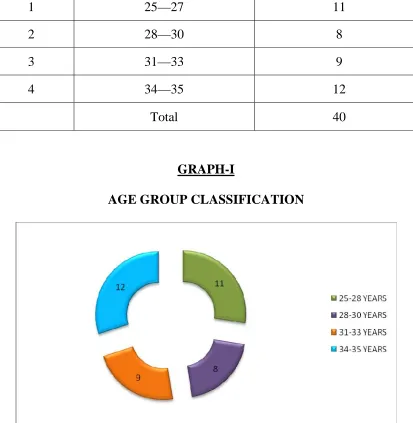
DEMOGRAPHIC DATA
S.NO AGE GROUP
CLASSIFICATION No of subjects
1 25—27 11
2 28—30 8
3 31—33 9
4 34—35 12
Total 40
GRAPH-I
26 TABLE-II
PAIRED ‘t’ TEST
PRE TEST AND POST TEST VALUES OF GROUP A
GROUP A – CONVENTIONAL NECK EXERCISES
NECK DISABILITY INDEX
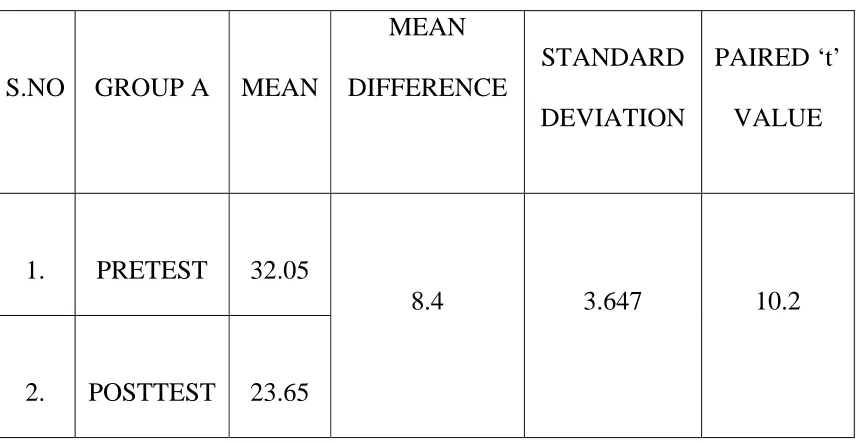
The comparative mean values, mean differences, standard deviation and Paired ‘t’ test values of Group A who were treated with Conventional Neck Exercises.
S.NO GROUP A MEAN
MEAN DIFFERENCE
STANDARD DEVIATION
PAIRED ‘t’ VALUE
1. PRETEST 32.05
8.4 3.647 10.2
2. POSTTEST 23.65
27 GRAPH-II
GRAPHICAL REPRESENTATION OF PRE TEST AND POST TEST
28 TABLE-III
PAIRED ‘t’ TEST
PRE TEST AND POST TEST VALUES OF GROUP B
GROUP B – CRANIOCERVICAL FLEXION EXERCISES
NECK DISABILITY INDEX
The comparative mean values, mean differences, standard deviation and Paired ‘t’ test values of Group B who were treated with Craniocervical flexion exercises.
S.NO GROUP B MEAN
MEAN DIFFERENCE
STANDARD DEVIATION
PAIRED ‘t’ VALUE
1. PRETEST 31.85
20.95 2.962 29.71
2. POSTTEST 10.9
29
GRAPH-III
GRAPHICAL REPRESENTATION OF PRE TEST AND POST TEST
30 TABLE-IV
PAIRED ‘t’ TEST
PRE TEST AND POST TEST VALUES OF GROUP A
GROUP A – CONVENTIONAL NECK EXERCISES
PRESSURE BIOFEEDBACK UNIT
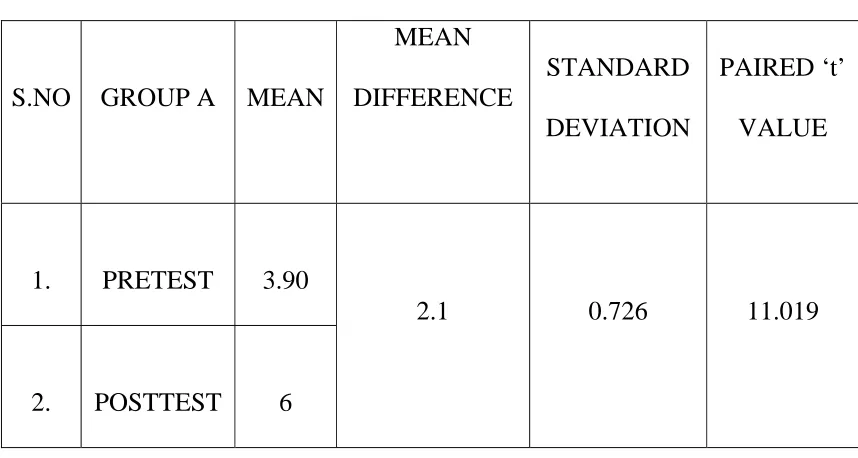
The comparative mean values, mean differences, standard deviation and Paired ‘t’ test values of Group A who were treated with Conventional Neck Exercises.
S.NO GROUP A MEAN
MEAN DIFFERENCE
STANDARD DEVIATION
PAIRED ‘t’ VALUE
1. PRETEST 3.90
2.1 0.726 11.019
2. POSTTEST 6
31 GRAPH-IV
GRAPHICAL REPRESENTATION OF PRE TEST AND POST TEST
32 TABLE-V
PAIRED ‘t’ TEST
PRE TEST AND POST TEST VALUES OF GROUP B
GROUP B – CRANIOCERVICAL FLEXION EXERCISES
PRESSURE BIOFEEDBACK UNIT
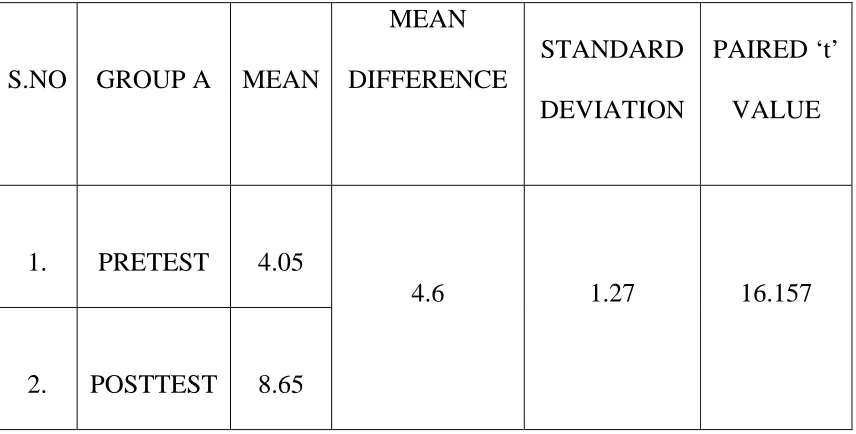
The comparative mean values, mean differences, standard deviation and Paired ‘t’ test values of Group B who were treated with Craniocervical flexion exercises.
S.NO GROUP A MEAN
MEAN DIFFERENCE
STANDARD DEVIATION
PAIRED ‘t’ VALUE
1. PRETEST 4.05
4.6 1.27 16.157
2. POSTTEST 8.65
33 GRAPH-V
GRAPHICAL REPRESENTATION OF PRE TEST AND POST TEST
34 TABLE-VI
UNPAIRED‘t’ TEST
COMPARISON BETWEEN THE PRE TEST VALUES OF GROUP A
AND GROUP B
NECK DISABILITY INDEX
The comparative mean values, mean differences, standard deviation and Unpaired ‘t’ test values of Group A and Group B who were treated with Conventional neck exercises and craniocervical flexion exercises.
S.NO GROUPS MEAN
MEAN DIFFERENCE
STANDARD DEVIATION
PAIRED ‘t’ VALUE
1. GROUP A 32.05
0.2 1.97 0.318
2. GROUP B 31.85
35 GRAPH-VI
GRAPHICAL REPRESENTATION OF PRE TEST VALUES FOR
36 TABLE-VII
UNPAIRED ‘t’ TEST
COMPARISON BETWEEN THE POST TEST VALUES OF GROUP A
AND GROUP B
NECK DISABILITY INDEX
The comparative mean values, mean differences, standard deviation and Unpaired ‘t’ test values of Group A and Group B who were treated with Conventional neck exercises and craniocervical flexion exercises.
S.NO GROUPS MEAN
MEAN DIFFERENCE
STANDARD DEVIATION
PAIRED ‘t’ VALUE
1. GROUP A 23.65
12.75 2.35 17.13
2. GROUP B 10.9
37 GRAPH-VII
GRAPHICAL REPRESENTATION OF POST TEST VALUES FOR
38 TABLE-VIII
UNPAIRED‘t’ TEST
COMPARISON BETWEEN THE PRE TEST VALUES OF GROUP A
AND GROUP B
PRESSURE BIOFEEDBACK UNIT
The comparative mean values, mean differences, standard deviation and Unpaired ‘t’ test values of Group A and Group B who were treated with Conventional neck exercises and craniocervical flexion exercises.
S.NO GROUPS MEAN
MEAN DIFFERENCE
STANDARD DEVIATION
PAIRED ‘t’ VALUE
1. GROUP A 3.9
0.15 0.85 0.565
2. GROUP B 4.05
39 GRAPH-VIII
GRAPHICAL REPRESENTATION OF PRE TEST VALUES FOR
40 TABLE-IX
UNPAIRED ‘t’ TEST
COMPARISON BETWEEN THE POST TEST VALUES OF GROUP A
AND GROUP B
PRESSURE BIOFEEDBACK UNIT
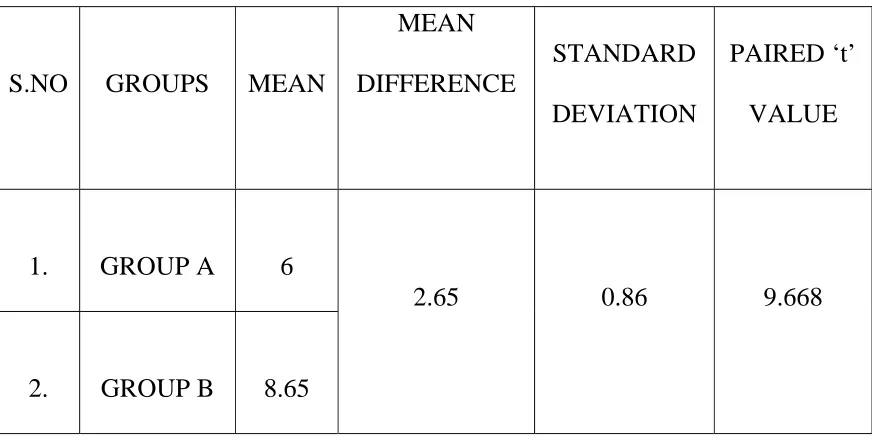
The comparative mean values, mean differences, standard deviation and Unpaired ‘t’ test values of Group A and Group B who were treated with Conventional neck exercises and craniocervical flexion exercises.
S.NO GROUPS MEAN
MEAN DIFFERENCE
STANDARD DEVIATION
PAIRED ‘t’ VALUE
1. GROUP A 6
2.65 0.86 9.668
2. GROUP B 8.65
41 GRAPH-IX
GRAPHICAL REPRESENTATION OF POST TEST VALUES FOR
42
V RESULTS
The demographic representations of the groups are given in table I. Treatment duration was not analyzed since all underwent same duration. Age group of the participants varies from 25 years to 35 years and about 30 % from 34—35 years, 27.5% from 25—27 years, 22.5% from 31—33 years and 20% from 28—30 years.
The Paired ‘t’ test analyses for the pre test and post test variable for the Neck disability index for measuring disability in chronic neck pain which is shown in table II and III. Both the groups shows a significant difference between the pre test and post test values. The ‘t’ value for the Group A is 10.2, the ‘t’ value for the Group B is 29.71.
The unpaired ‘t’ test analysis for the Post test variables for Both groups for the Neck disability index for measuring disability in chronic neck pain is shown in the table VII. There was a significant difference shown between the Groups. Group B subjects show superior to that of Group A. The ‘t’ value for the post test variables for both groups is 17.13.
43
44
VI DISCUSSION
The purpose of the study is is to find the efficacy of neck stabilization exercises in the improvement of muscle endurance and function in subjects with chronic neck pain. 40 subjects with chronic neck pain were selected for the study and divided into two equal groups. 20 subjects in each group. Group A subjects underwent Conventional neck exercises where as Group B subjects underwent Craniocervical flexion exercises. The study was done for duration of 8 weeks, following that the disability and the neck muscle endurance were found.
The most recent population-based data on chronic neck pain list lifetime prevalence at around 13% to 14%. In general, work involving repetitive and forceful movements, as well as awkward postures of the head and neck, particularly when found in combination, is associated with the development of a musculoskeletal neck disorder, with odd ratios ranging from 1.5 to 5.7.
45
A sustained forward flexion posture of the spine has been associated with increased cervical compressive loading and a creep response in the connective tissue. It would not be unreasonable to consider that a sustained forward head posture associated with prolonged sitting could aggravate, if not initiate, neck pain. There is some evidence that has linked prolonged static posture with increased muscle loading and subsequent risk for the development of symptoms in the upper body.
A reduced ability to maintain an upright posture of the cervical spine when distracted during sitting might be considered as a measure of impairment in the postural supporting muscles during a functional task, an outcome that can be easily replicated clinically.
Overall studies indicate that compared to normal subjects patients suffering from neck-related disorders present with significant reduction in cervical muscle strength, whereas women are weaker than men by about 40%. Evaluation of the strength of neck musculature is an important component of the total assessment of the neck-injured patient. Neurological deficits, pain, disuse, trauma, apprehension, and joint dysfunction can contribute strength deficits of various muscles in neck-injured patients. (Dvir Z, Prushansky T. 2008).
46
The results of the present study suggest that rehabilitation in cases of chronic neck pain should aim at raising tolerance to mechanical strain. (Ylinen J, et al., 2004).
Group A subjects underwent conventional neck exercises which shown a mild improvement. Paired ‘t’ test shown a greater improvement between the Pre test and Post test variables.
Exercise therapy is a widely used treatment for neck pain. There appears to be a role for exercises in the treatment of neck pain. There is limited evidence of benefit for stretching and strengthening exercises for neck disorder with headache. There is limited evidence of benefit for active range-of-motion exercises or a home exercise program for acute mechanical neck disorder including whiplash associated disorder. (Kay TM et al., 2005).
Exercise to improve the performance of the cervical spine muscles has been shown to be an effective means of alleviating chronic neck pain (O'Leary S et al., 2009, Sterling M et al., 2003). Although weakness of anterior cervical muscles is postulated to contribute to persistent neck pain in patients with mechanical neck pain, quantization of weakness has never been reported. (Silverman JL, et al., 1991).
47
clear consensus in the literature. Chronic neck pain may be linked to reduced cervicocephalic kinesthetic sensibility and postural balance (Michaelson P et al., 2003, Treleaven J et al., 2005).
From a general functional perspective the role of the neck muscles can be seen as a means by which the head moves and maintains a variety of positions allowing efficient use of the heads sensory systems. It has been argued that the demands placed on the neck muscles to achieve this function are best replicated by exercises that facilitate precision and endurance at low and moderate contraction intensities (O'Leary et al 2009).
Group B subjects underwent Cranio cervical flexion exercises has shown a mild improvement. Paired ‘t’ test shows a greater improvement between the Pre test and Post test variables. The results suggest that improved proprioceptive acuity following intervention with the exercise protocol which may occur through an improved quality of cervical afferent input or by addressing input through direct training of relocation sense. (Gwendolen Jull et al., 2007).
48
Cervicocephalic kinesthetic sensibility is week in patients with chronic cervical pain compared to healthy subjects. (Haughie L, et al.,1998). This finding justifies the use of exercises in aiming to improve the proprioception of neck in rehabilitation program for cervicalgic patients. (Koskimies K et al., 2000). There is evidence to support that there is a significant relation between neck pain and cervical mobility, consequently, it will influence the functional activity, mood and work state.
The exercise program intended to improve postural control, strength, muscle length as well as kinesthetic accuracy. Harms-Ringdahl and Ekholm1986 have shown that they held the head between full flexion and upright, leading to overuse of cervical erector spinae to maintain head in position. This constant contraction of erector spinae accompanied by weakness of anterior cervical flexor muscles leading to chronic neck pain. (Silverman JL, 1981, Richard LA: 1999, Falla D 2003). So strengthening of weak muscles and stretching of extensors improved both pain and cervical mobility. (Gross AR, et al., 2000, Goodman R et al., 2000).
49
Adaptations of the neuromuscular system to training appear to be related specifically to the characteristics of the exercise, referred to as “specificity of training.”. (Jull G, et al., 2002). Changes in muscle performance may be specific to exercise characteristics, such as movement pattern, velocity of contraction, type of contraction, and joint angle. (Kanehisa H et al., 1983, Lindh M 1979.)
Craniocervical Flexors Endurance Training is effective in improving pain and disability in patients with cervical spondylosis. The effect of conventional Isometric Exercises cannot be neglected. It is suggested that these can be integrated into the rehabilitation regimen once there is reestablishment of muscular balance between the deep segmental and superficial cervical flexor muscles.(Gupta Shweta et al., 2010).
Study showed that people with chronic neck pain demonstrate a reduced ability to maintain an upright posture when distracted. Following intervention with an exercise program targeted at training the craniocervical flexor muscles, subjects with neck pain demonstrated an improved ability to maintain a neutral cervical posture during prolonged sitting. ( Deborah Falla et al., 2007).
50
and exercise parameters to facilitate the return of optimal motor control has yet to be reached.
Falla et al., 2003 recently demonstrated that the deep neck flexors are increasingly active during craniocervical flexion (chin tuck). Endurance deficiencies of the deep cervical flexors are associated with pain, increased lordosis, and headache. The deep neck flexors muscles are small stabilizing muscles located on the anterior and anterolateral surfaces of the cervical spine deep to Sternocleidomastoid muscles. The location of the deep neck flexors suggests that they potentially play an important role in stabilizing the cervical spine.
51
VII SUMMARY AND CONCLUSION
The purpose of the study is to find the efficacy of neck stabilization exercises in the improvement of muscle endurance and function in subjects with chronic neck pain. 40 subjects with chronic neck pain were selected for the study and divided into two equal groups. The subjects were selected using simple random sampling method. All the subjects selected were divided into two equal groups, 20 subjects in each. Group A subjects underwent conventional neck exercises where as Group B subjects underwent Cranio cervical flexion exercises. The study was done for duration of 8 weeks, treatment was applied for thrice weekly, a clear exercise schedule was given to every individual participants.
Outcome measured used in the study are Disability and Muscle endurance. The tools used are neck disability index and pressure bio feedback.
The pre test of the outcome was measured before the initiation of the therapy, and the post test outcomes were measured after 8 weeks. The student ‘t’ test was used to find out the significant difference in the improvements of the treatment.
52 Conclusion:
1. There is a significant improvement in muscular endurance in both the groups.
2. There is a significant reduction in neck disability in both the groups. 3. When compared with Group A (Control group), Group B showed a
marked improvement on muscle endurance.
4. When compared with Group A ( Control group), Group B showed a marked Reduction of neck disability as measured with neck disability index.
53
VIII LIMITATIONS AND RECOMMENDATIONS
LIMITATION OF THE STUDY
¾ The study was done for a short duration, long-term study need for further explorations.
¾ Intra rater and Inter rater reliability is not tested.
¾ No standard protocol of treatment was used for this study. ¾ Long term effect of exercises was not found.
¾ Certain factors like climate conditions, nutrition, time of testing, psychological factors, regular activities of daily living could not be controlled during the testing period.
¾ Only desk top workers are focused in this study.
FUTURE RECOMMENDATIONS
9Other work related musculoskeletal injuries can be considered in future. 9Study recommends comparison of various manual techniques in treatment
of low back pain.
9Long term effect of ergonomic exercises and work station modification has to be analyzed in future.
9Similar study can be done for neck pain
54
IX BIBLIOGRAPHY
1. Alund M.Larsson S, and Lewin T; Work-related persistent neck impairment; a study on former steelwork grinders, Ergonomics,37:1253-60, 1994.
2. Ariens GAM, van Mechelen WV, Bongers PM, Bouter LM, van der Wal G. Physical risk factors for neck pain. Scand J Work Environ Health 2000;26: 7—19.
3. B.D Chauracia’s Human Anatomy regional and applied volume three head, neck and brain 3rd edition 2002 CBS publishers and distributors; pp 169.
4. Bernard B. Musculoskeletal disorders and workplace factors. A critical review of epidemiologic evidence for work-related musculoskeletal disorders of the neck, upper extremity, and low back. Cincinnati (OH): United States Department of Health and Human Sciences, National Institute for Occupational Health and Safety, 1997:2.1—2.90.
5. Bill Vicenzino . Cranio-cervical flexor muscle impairment at maximal, moderate, and low loads is a feature of neck pain. Man Ther. 2007 Jun 12: Epub ahead of print.
55
7. Brossoeau L.Tugwell P, Wells G. Robinson V, Graham I, Mcgowan J and Peterson J,: Guidelines selected rehabilitation intervenstions for neck pain, Phys. Ther, 81 (10):1701-12, 2001.
8. C R Kothari. Research methodology methods and techniques. New age international publishers 2nd edition; pp 31-35.
9. Campbell CD, Fagan AE, et al. Relationship between cranio-cervical flexion range of motion and pressure change during the cranio-cervical flexion test.Man Ther. 2003;8:92–96.
10.Carolyn kisner, Lynn Allen Colby. Therapeutic Exercise foundation and technique. 4th edition 2003 jaypee Brothers; pp 61.
11.Chiutt Lawey Chiuth. Performance of the craniocervical flexion test in subjects with and without chronic neck pain. Journal of orthopaedic sports physical therapy. 2005:9; 35:567-571.
12.Chris Cho Ting Yip et al. The relationship between the head posture and severity and disability of patients with neck pain, manual therapy 2008 pp 148-154.
13.Conley MS, Stone MH, Nimmons M, Dudley GA. Specificity of resistance training responses in neck muscle size and strength. Eur J Appl Physiol Occup Physiol. 1997;75:443-448.
56
15.David J Dandy. Essential Orthopaedics & trauma, 3rd edition Churchill Livingston 1998; pp 431-435.
16.David L. Hamblen. Adam’s outline of orthopaedics 14th edition, Churchill Livingston, 2010;184.
17.Deborah L. Falla et al. Relationship between craniocervical flexion range of motion and pressure change during the craniocervical flexion test manual therapy 2003:8:2; 92-96.
18.Deborah L. Falla et al., Patient with neck pain demonstrate reduced EMG activity of the deep cervical flexor muscles during performance of the cranio cervical flexion test. Spine 2004 volume 29, Number 19 pp 2108-2114.
19.Donatelli Wooden. Orthopaedic physical therapy 3rd edition Churchill Livingston 2001; pp 554
20.Falla D, Jull G, Alba P, Rainoldi A, and Merletti R; An electrmyographic analysis of the deep cervical flexor muscles in performance of craniocervical flexion, Phys Ther. 83 (10):899-906, 2003.
21.Falla D. Unravelling the complexity of musculo impairment in chronic neck pain. Journal of manual therapy 2004:9; pp 125-133
57
23.Flor H. Schugens MM, and Birbaurner N.; Discrimination of muscle tension in chronic neck pain patients and healthy controls, Biofeedback self regular, 27,196-201, 2001.
24.Goodman R and Frew LJ; Effectiveness of progressive strength resistance training for whiplash: A pilot study, physiother, Canada, (Summer) 211-14, 2000.
25.Gross AR, Aker PD, Goldsmith CH, and peloso P; conservative management of mechanical neck disorders, On Line J Curr Clin, 200-2, 2000.
26.Gupta Shweta, Sharma Shallu, Kataria Chitra, Craniocervical flexors endurance training: Treatment approach for cervical spondylosis. Indian Journal of Physiotherapy and Occupational Therapy Year : 2010, Volume : 4, Issue : 2
27.Gwendolen Jull et al. An electromyographic analysis of the deep cervical flexor muscles during craniocervical flexion. Phys Ther. 2003;83:899– 906
28.Gwendolen Jull et al. Further evaluation of an EMG technique for assessment of the deep cervical flexor muscles. J Electromyogr Kinesiol. 2006;16:621–628.
58
30.Hagberg M, Silverstein B, Wells R, Smith MJ, Hendrick HW, Crayon P, et al. Work-related musculoskeletal disorders (WMSDs): a reference book for prevention. Basingstoke: Taylor & Francis Ltd, 1995.
31.Hagberg M, Wegman DH. Prevalence rates and odds ratios of shoulder-neck diseases in different occupational groups. of shoulder-shoulder-neck diseases in different occupational groups. Br J Ind Med 1987;44:602—10.
32.Harms-Ringdahl K, and Ekholm J; Intensity and character of pain and muscular activity levels elecited by maintained extreme flexion position of the lower cervical-upper thoracic spine, Scand J Rehabil Med, 18: 19-26, 1986.
33.Haughie L, Fiebertl, and Roach K; Relationship of forward head posture and cervical backward bending to neck pain, J .Manual Ther, 6:96-100., 1998.
34.Hodges PW et al. Forward activity of the cervical flexor muscles during voluntary arm movements is delayed in chronic neck pain. 2006;157:43– 48.
35.Jari Ylinen MD et al. Decreased isometric neck strength in women with chronic neck pain and the repeatability of the neck strength measurements, Arch physical medicine rehabilitation august 2004:85; 1303-1308.
59
37.John Ebnezar. Essentials of orthopaedics for physiotherapists 2nd edition Jaypee Brothers Medical Publishers (P) limited 2011; pp 219-220.
38.Jull G, Trott P, Potter H, Zito G, Niere K, Shirley D, Emberson J, Marschner I and Richardson C (2002): A randomized controlled trial of exercise and manipulative therapy for cervical headache. Spine 27: 1835-1843.
39.Kanehisa H, Miyashita M. Specificity of velocity in strength training. Eur J Appl Physiol Occup Physiol. 1983;52:104-106.
40.Kay TM, Gross A, Goldsmith C, Santaguida PL, Hoving J, Bronfort G, Cervical Overview Group. Exercises for mechanical neck disorders. Cochrane Database of Systematic Reviews 2005, Issue 3.
41.Kevin D Haris et al. Reliability of the measurement of the neck flexors muscle endurance. Journal of Physical therapy 2005:12:85:1349-135. 42.Klucinec B, Scheidler M, Dengar C, Domholdt E and Burgess S,
transmissivity of coupling agents used to deliver ultrasound through indirect methods, J orthop sports phys. Ther, 30 (5): 263-69, 2000.
43.Koskimies K, Sutinen P, and Aalto H.; Postural stability, neck proprioception and tension neck, J. Acta Otolaryngal Suppl, 596; 59-65, 2000.
60
45.Lee E Oslon et al. Reliability of a clinical test for deep cervical flexors endurance. Journal of manipulative physical therapy 2006; 29:134-138. 46.Lehmann JF. And Delateur A; therapeutic heat In: Lehman J ed,
therapeutic heat and cold, 5th ed, Baltimore M, Williams and Willkins, 1994.
47.Leon M Straker et al. A field comparison of neck and shoulder postures in symptomatic and asymptomatic office workers. Appl Ergon. 2007; 33:75–84.
48.Lindh M. Increase of muscle strength from isometric quadriceps exercises at different knee angles. Scand J Rehabil Med. 1979;11:33-36.
49.Mäkelä M, Heliövaara M, Sievers K, Impivaara O, Knekt P, Aromaa A. Prevalence, determinants, and consequences of chronic neck pain in Finland. Am J Epidemiol 1991;134:1356—67.
50.Math J Nykanen et al. Active neck muscle training in the treatment of chronic neck pain in women: a randomized controlled trial. JAMA.
2006;289:2509–2516.
51.Mayilvahanan Natarajan. Text book of Orthopaedics. 1st edition 2005; pp 153-155.
61
53.O’ Leary s. Jull G et al. Specificity of retraining craniocervical flexor muscle performance. Journal orthopaedic sports physical therapy.2007 jan; 37(1): 3-9.
54.O'Leary S, Falla D, Elliott J and Jull G (2009): Muscle dysfunction in cervical spine pain: Implications for assessment and management. Journal of Orthopaedic & Sports physical Therapy 39 (5): 324-333.
55.Olsen LS,Ocoimer PD. Binrningham G,Broman P, and Herrera L Tender point sensitivity, Range of motion and perceived disability in subjects with neck pain, J, Orthop. Sports Phys.Ther, 30 (1); 13-20, 2000.
56.Prentice WE; Therapeutic ultrasound, In: prentice WE; Theraputic modalities in sports medicine, St Louis, Mo: Mosby year Book. Inc, 1999. 57.PSS Sundar Rao. An Introduction to Biostatistics. 3rd edition, Pentice
Hall of India P limited 1997; pp 56-57.
58.Rajesh Malhotra & Surya Bhan. Text book of orthopaedics 1st edition, CBS publishers and distributors 2004; pp 155-165.
59.Rene Cailliet. Soft tissue pain & disability, 2nd edition, Jaypee Brothers Medical Publishers (P) limited; pp 123-158.
60.Richard LA: Necle pain, Phys Sport Med, 42:279-89, 1999.
62
62.Roebrock M, Dekker J and Costendorp RB: the use of therapeutic ultra sound by physical therapist in Duch primary health care, phys ther, 78 (5): 470-77, 1999.
63.Ronald MaRae. Clinical orthopaedic examination, 4th edition Churchill Livingston,1997; pp 27-40.
64.Russell TG et al. Can the Internet be used as a medium to evaluate knee angle? Man Ther. 2003;8:242–246.
65.Silverman JL, Rodrique Z A and James C; Quantitative cervical flexor strength in healthy subjects and in subjects with mechanical neck pain, Arch Phys Med Rehabil, 72:679-81, 1991.
66.Sterling M, Jull G, Vicenzino B, Kenardy J and Darnell R (2003): Development of motor system dysfunction following whiplash injury. Pain 103: 65-73
67.Treleaven J, et al. A therapeutic exercise approach for cervical disorders. In: Boyling JD, Jull G, eds. Grieve’s Modern Manual Therapy: The Vertebral Column. 3rd ed. Edinburgh, United Kingdom:Elsevier; 2006. 68.Treleaven J, Jull G. Cervical musculoskeletal dysfunction in post
conclusion head ache. Cephalalgia 1994; 14:273-279.
63
70.Veer Bala Rastogi. Fundamentals of Biostatistics Ane’s student publication; pp 221-224.
71.Vernon H. The Neck Disability Index: patient assessment outcome monitoring in whiplash. J Musculoskeletal pain. 1996; 4:95-104.
72.Vicenzino B et al. An endurance-strength training regime is effective in reducing myoelectric manifestations of cervical flexor muscle fatigue in females with chronic neck pain. Clin Neurophysiol.2009;117:828–837. 73.Ylinen J et al. Active neck muscle training in the treatment of chronic
neck pain in women: a randomized controlled trial. JAMA 2003;289:2509-2516
64
X.APPENDIX
APPENDIX-I
NECK DISABILITY INDEX
The Neck disability index is an instruct to assess the neck pain complaints. It was developed from oswestry index for back pain disability index. The authors are from the Canadian memorial chiropractic college in Toronto, Canada.
The NDI has become a standard instrument for measuring self-rated disability due to neck pain and is used by clinicians and researchers alike.
Each of the 10 items is scored from 0 - 5. The maximum score is therefore 50. The obtained score can be multiplied by 2 to produce a percentage score. Occasionally, a respondent will not complete one question or another. The average of all other items is then added to the completed items.
Pain instructions:
65
QUESTION 1: Pain Intensity
• A. I have no pain at the moment. (0 pts)
• B. The pain is mild at the moment. (1 pt)
• C. The pain comes & goes & is moderate. (2 pts)
• D. The pain is moderate & does not very much. (3 pts)
• E. The pain is severe but comes & goes. (4 pts)
• F. The pain is severe & does not very much. (5 pts)
QUESTION 2: Personal Care (Washing, Dressing etc.)
• A. I can look after myself without causing extra pain. (0 pts)
• B. I can look after myself normally but it causes extra pain. (1 pts)
• C. It is painful to look after myself and I am slow & careful. (2 pts)
• D. I need some help but manage most of my personal care. (3 pts)
• E. I need help every day in most aspects of self-care. (4 pts)
• F. I do not get dressed; I wash with difficulty and stay in bed. (5 pts)
QUESTION 3: Lifting
• A. I can lift heavy weights without extra pain. (0 pts)
• B. I can lift heavy weights, but it causes extra pain. (1 pt)
66
• D. Pain prevents me from lifting heavy weights, but I can manage light to medium weights if they are conveniently positioned. (3 pts)
• E. I can only lift very light weights. (4 pts)
• F. I cannot lift or carry anything at all. (5 pts)
QUESTION 4: Reading
• A. I can read as much as I want to with no pain in my neck. (0 pts)
• B. I can read as much as I want with slight pain in my neck. (1 pts)
• C. I can read as much as I want with moderate pain in my neck. (2 pts)
• D. I cannot read as much as I want because of moderate pain in my neck. (3 pts)
• E. I cannot read as much as I want because of severe pain in my neck. (4pts)
• F. I cannot read at all because of neck pain. (5 pts)
QUESTION 5: Headache
• A. I have no headaches at all. (0 pts)
• B. I have slight headaches that come infrequently. (1 pt)
• C. I have moderate headaches that come in-frequently. (2 pts)
• D. I have moderate headaches that come frequently. (3 pts)
• E. I have severe headaches that come frequently. (4 pts)
67 QUESTION 6: Concentration
• A. I can concentrate fully when I want to with no difficulty. (0 pts)
• B. I can concentrate fully when I want to with slight difficulty. (1 pts)
• C. I have a fair degree of difficulty in concentrating when I want to. (2pts)
• D. I have a lot of difficulty in concentrating when I want to. (3 pts)
• E. I have a great deal of difficulty in concentrating when I want to. (4 pts)
• F. I cannot concentrate at all. (5 pts)
QUESTION 7: Work
• A. I can do as much work as I want to. (0 pts)
• B. I can only do my usual work but no more. (1 pt)
• C. I can do most of my usual work but no more. (2 pts)
• D. I cannot do my usual work. (3 pts)
• E. I can hardly do any work at all. (4 pts)
• F. I cannot do any work at all. (5 pts)
QUESTION 8: Driving
• A. I can drive my car without neck pain. (0 pts)
• B. I can drive my car as long as I want with slight pain in my neck. (1 pt)
68
• D. I cannot drive my car as long as I want because of moderate pain in my neck. (3 pts)
• E. I can hardly drive my car at all because of severe pain in my neck. (4pts)
• F. I cannot drive my car at all. (5 pts)
QUESTION 9: Sleeping
• A. I have no trouble sleeping. (0 pts)
• B. My sleep is slightly disturbed (less than 1 hour sleepless). (1 pt)
• C. My sleep is mildly disturbed (1-2 hours sleepless). (2 pts)
• D. My sleep is moderately disturbed (2-3 hours sleepless). (3 pts)
• E. My sleep is greatly disturbed (3-5 hours sleepless). (4 pts)
• F. My sleep is completely disturbed (5-7 hours sleepless). (5 pts)
QUESTION 10: Recreation
• A. I am able to engage in all recreational activities with no pain in my neck at all. (0 pts)
• B. A am able to engage in all recreational activities with some pain in my neck. (1 pt)
69
• D. I am able to engage in only a few of my usual recreational activities because of pain in my neck. (3 pts)
• E. I can hardly do any recreational activities because of pain in my neck. (4 pts)
• F. I cannot do any recreational activities at all. (5 pts)
Simply add the score from your answers to the questions above and check the sum against the score.
Raw score Level of disability
0-4 No disability
5-14 Mild disability
15-24 Moderate disability
25-34 Severe disability
70
APPENDIX II
PRESSURE BIO FEEDBACK UNIT
Pressure Bio feedback unit consist of an inelastic, three section air filled bag, which is inflated to fill the space between the target body area and a firm surface, and a pressure dial for monitoring the pressure in the bag for feedback on position. The bag inflated to an appropriate level for the purpose and the pressure recor\ded. Quite simply, movement of the Neck off the bag results in a decrease in pressure, while movement of the Neck onto the bag results in an increase in pressure. (Chattanooga Group, a Division of Encore Medical, 2002).
71
APPENDIX-III
CRANIOCERVICAL FLEXION EXERCISES
The craniocervical flexion exercises targets the deep cervical flexor muscles of the upper cervical region, the longus colli and longus capitus muscles, rather than superficial flexors muscles, the sternocleidomastiod and anterior scalene, which flex the neck but not the head.
PROCEDURE:
IN SUPINE POSITION:
Craniocervical flexion exercises are done both supine and sitting position. In supine position patients are instructed to tuck their chin and lift the head off the table. Ask the patients to maintain this position. The exercises can be done 10 repetitions with maximum ability. Over activity of the SCM and scalene muscles should be avoided. (Multiple repetitions do without fatigue and head shaking).
IN SITTING POSITION:
72
ability. If over activity of the SCM and scalene muscles should be avoided. (Multiple repetitions do without fatigue and head shaking).
IN AGAINST THE WALL:
73
APPENDIX IV
CONVENTIONAL NECK EXERCISES
A conventional neck exercises consists of a progressive resisted exercise program for the neck flexors. Isometric neck exercises are given to improve the strength of the neck muscles.
NECK FLEXORS:
¾ Sit on the chair with comfortable positions.
¾ Hold both hands against the front of your head such as it covers frontal area.
¾ Use your hand to resist the flexion of the neck and hold it near neutral maintain isometric contraction for 10-15 seconds.
¾ Repeat for 10 times.
NECK EXTENSORS:
¾ Sit on the chair with comfortable positions.
¾ Hold both hands against the back of your head such as it covers occiput area.
¾ Use your hand to resist the extension of the neck and hold it near neutral maintain isometric contraction for 10-15 seconds.
74
NECK LATERAL FLEXORS:
¾ Sit on the chair with comfortable positions.
¾ Hold both hands against the side of your head such as it covers temporal area.
¾ Use your hand to resist the side flexion of the neck and hold it near neutral maintain isometric contraction for 10-15 seconds.
¾ Repeat for 10 times.
75
APPENDIX V
NECK DISABILITY INDEX
GROUP A
TEST VALUES
S.NO PRE POST
1 32 25
2 33 23
3 33 26
4 28 25
5 32 21
6 30 25
7 31 27
8 32 22
9 35 23
10 35 23
11 33 19
12 35 25
13 32 26
14 28 26
15 33 25
16 30 27
17 31 21
18 34 20
19 33 24
76
NECK DISABILITY INDEX
GROUP B
TEST VALUES
S.NO PRE POST
1 27 14
2 33 10
3 31 16
4 33 11
5 33 10
6 33 11
7 34 10
8 29 7
9 31 9
10 32 6
11 35 10
12 32 10
13 31 10
14 31 12
15 33 13
16 31 12
17 29 12
18 32 11
19 34 13
77
PRESSURE BIO FEEDBACK UNIT
GROUP A
TEST VALUES
S.NO PRE POST
1 4 7
2 5 7
3 6 7
4 5 8
5 4 6
6 3 5
7 4 6
8 3 6
9 2 6
10 3 5
11 4 6
12 3 6
13 5 6
14 4 6
15 4 5
16 3 5
17 4 6
18 5 6
19 4 5
78
PRESSURE BIO FEEDBACK UNIT
GROUP B
TEST VALUES
S.NO PRE POST
1 4 10
2 5 9
3 5 8
4 4 8
5 3 10
6 4 9
7 5 9
8 4 9
9 3 10
10 4 9
11 5 8
12 4 8
13 3 9
14 4 10
15 4 8
16 4 9
17 4 7
18 5 8
19 4 8
79
APPENDIX VI
CONSENT FORM
This is to certify that I ____________________________ freely and voluntarily agree to participate in the study “EFFICACY OF NECK STABILIZATION EXERCISES IN THE IMPROVEMENT OF MUSCLE
ENDURANCE AND FUNCTION IN SUBJECTS WITH CHRONIC
NECK PAIN”.
I have been explained about the procedures and the risks that would occur during the study.
Participant:
Witness:
Date:
I have explained and defined the procedure to which the subject has consented to participate.
Researcher: