Microbial catabolic pathways for complex aromatics
Ph.D. Thesis
This thesis is dedicated to my parents
Malan Bee and Ramulu and my wife Keerthi
A thesis submitted for the degree of Doctor of Philosophy of
The Australian National University
Microbial catabolic pathways for complex aromatics
Shannu Palamuru
Research School of Chemistry, Australian National University
Canberra, Australia
and
Commonwealth Scientific and Industrial Research Organization
Land and Water flagship
Canberra, Australia
Declaration
I Shannu Palamuru hereby declare that this submission is my own work and that, to the
best of my knowledge and belief, it contains no material previously published or written
by another person nor material which to a substantial extent has been accepted for the
award of any other degree or diploma at the Australian National University or any other
educational institution, except where due acknowledgement is made in the thesis.
Name: Shannu Palamuru
Sign:
Acknowledgments
First and foremost I would like to thank my wonderful parents, wife, brothers
and friends for supporting me through my university years.
It is a pleasure for me to express my particular gratitude to my supervisor Dr
John Oakeshott for his guidance and encouragement throughout my PhD studies.
Without his guidance and support this dissertation would not have been possible. He
has also looked out for me more broadly through my time in Canberra.
I am also very grateful to my other CSIRO supervisor Dr Gunjan Pandey, and Prof.
Jim Spain of Georgia Institute of Technology, for all their support and guidance. Likewise
my ANU supervisor Professor Chris Easton for all his input, particularly in respect of the
reaction chemistry of my enzymes.
Additionally I thank Dr Nikki Dellas (CSIRO) for all her advice and practical
assistance in my lignin dehydrogenase work. Specifically she cloned and purified some
of the dehydrogenases (2550, 1498, 2705, 3344, 474, and 724) from the SG61-1L
bacterium and led the phylogenetic analysis of the dehydrogenases.
I am most grateful to Dr Tekle Tafese Fida and Professor Jim Spain (Georgia
Institute of Technology) who provided me with the 2,4-dinitroanisole degrading
bacterium Nocardioides sp. strain JS1661 that they had previously isolated and who
carried out the growth and cell free extract experiments on this bacterium.
I am also most grateful to: Professor Eiji Masai (Nagaoka University of
Technology, Japan) for providing the guaiacylglycerol-β-guaiacyl ether (GGE)
Jian-Wei Liu and Dr Chris Coppin (CSIRO) for technical advice throughout my PhD; Dr
Matt Taylor for assistance with analytical techniques; Dr Lars Jermiin (CSIRO) for
assistance with the generation of protein sequence alignments and phylogenetic tree
construction; Dr Peter Campbell (CSIRO) for assistance with tryptic digestion and protein
identification; Stuart Kewish and Catherine Reid at the Australian Paper Mill for
providing sewage samples; Dr Jung-Woo Park (Australian National University) for the
IC-PMS analysis of metal in the DNAN O-demethylase enzyme; Dr Stephen Pearce for
assisting with bioinformatics; and Alison Scott for supporting me with ANU
administration.
I have also found many fantastic colleagues and friends at CSIRO and wish to
thank them for their friendship here. I particularly acknowledge Robyn Russell, Peter
List of Abbreviations
ABTS = 2,2′-Azinobis-(3-ethylbenzthiazoline-6-sulfonate)
ACN = Acetonitrile
ADH = Alcohol dehydrogenase
AMS = Ammonium sulphate
ANAN = 2-Amino-4-nitroanisole
ANU = Australian National University
BCA = Bicinchoninic acid assay
BSA = Bovine Serum Albumin
BTEX = Benzene, toluene, ethylbenzene and xylene
ChE = Cholinesterase
DMSO = Dimethylsulfoxide
DNA = Deoxyribonucleic acid
DNAN = 2,4-Dinitroanisole
dnH1 = DNAN hydrolase α-subunit
dnH2 = DNAN hydrolase β-subunit
DNP = 2,4-Dinitrophenol
EDTA = Ethylenediaminetetraacetic acid
GGE = Guaiacylglycerol-β-guaiacyl Ether
GH = Glycoside hydrolase
GS-HPV = α-Glutathionyl-β-hydroxypropiovanillone
GST = Glutathione S-transferases
HAA = 3-Hyroxyanthranilic acid
HBT = 1-Hydroxybenzotriazole
HEPES = 2 -[4-(2-hydroxyethyl)piperazin-1-yl] Ethanesulfonic acid
HLADH = Horse liver alcohol dehydrogenase
HMX = Cyclotetramethylenetetranitramine
HNB = Hexanitrostilbene
HPLC = High pressure liquid chromatography
HPV = Hydroxypropiovanillone
ICP-MS = Inductively coupled plasma mass spectrometry
IPA = Isopropylamine
IPTG = Isopropyl β-D-1-thiogalactopyranoside
kcat = Turnover number
kcat/KM = Catalytic efficiency
kDa = Kilo Dalton
KM = Michaelis constant
LC/MS = Liquid chromatography/mass spectrometry
LiP = Lignin peroxidase
M/Z = Molecular Ion
MeOH = Methanol
MM = Minimal Medium
MMA = 4-Methoxymandelic Acid
MnP = Manganese peroxidases
MPHPV = α-(2-methoxyphenoxy)-β-Hydroxypropiovanillone
NA = Nutrient agar
NAC = Nitroaromatic compounds
NAD = Nicotinamide adenine dinucleotide
NADP = Nicotinamide adenine dinucleotide phosphate
NB = Nutrient broth
NMR = Nuclear magnetic resonance
OD600 = Optical density at 600 nm
ORF = Open reading frame
PAH = Polyaromatic hydrocarbons
PCR = Polymerase chain reaction
PDB = Protein data bank
POP = Persistent organic pollutant
PVDF = Polyvinylidene fluoride
RAST = Rapid Annotation using Subsystem Technology
RDX = Cyclotrimethylenetrinitramine
RT = Retention time
SADH = Saccharomyces cerevisiae alcohol dehydrogenase
SDR = Short-chain alcohol dehydrogenases/reductases
SDS-PAGE = Sodium dodecyl sulphate polyacrylamide gel electrophoresis
SEC = Size exclusion chromatography
TFA = Trifluoroacetic acid
THF = Tetrahydrofolate
TNT = 2,4,6-trinitrotoluene
TOF = Agilent 1200 Infinity Series Time Of Flight
TSB = Trypticase soy broth
VA = Veratryl alcohol
Table of contents
Declaration ... I
Acknowledgments ... II
List of Abbreviations ... IV
Table of contents ... VIII
Abstract ... 1
Chapter 1 Literature review ... 3
1.1 Foreword ... 3
1.2 Aromatic compounds and aromaticity ... 6
Natural and synthetic aromatic compounds ... 8
1.3 Lignin ... 10
Current physicochemical processing of lignin ... 14
Lignin degradation by bacterial enzymes... 24
1.4 Nitroaromatic compounds ... 31
Chemistry of the nitroaromatics ... 32
Synthetic and natural nitroaromatics ... 33
Biodegradation of nitroaromatics ... 35
1.5 Thesis outline... 37
Chapter 2 Phylogenetic and kinetic characterization of a suite of dehydrogenases from a newly isolated bacterium that catalyse the turnover of guaiacylglycerol-β-guaiacyl ether stereoisomers ... 39
2.1 Introduction ... 39
2.2 Materials and Methods ... 41
Materials ... 41
Media and growth conditions ... 42
Instrumentation and analytical methods ... 42
Isolation of GGE-degrading bacteria ... 45
Dye decolorizing experiments ... 46
Growth and resting cell experiments ... 47
Protein purification ... 51
Enzymatic transformation of GGE to MPHPV ... 51
Enzyme kinetics ... 52
Phylogenetic Analysis ... 52
2.3 Results ... 53
Isolation of a novel GGE-degrading bacterium ... 53
Dye decolorization screening ... 56
Comparison of GGE degradation rates in SG61-1L and SYK-6 ... 56
Identification and characterization of GGE dehydrogenase candidates ... 61
Phylogenic relationships between dehydrogenases from various organisms ... 69
2.4 Discussion ... 71
Chapter 3 Aerobic biodegradation of 2,4-dinitroanisole (DNAN) by a novel hydrolase from Nocardioides sp. JS1661 ... 76
3.1 Introduction ... 76
3.2 Experimental ... 77
Materials ... 77
Isolation of DNAN-degrading bacteria ... 78
Growth of DNAN-degrading isolates ... 78
Enzyme assays ... 79
Analytical methods ... 81
Nucleotide sequence accession numbers ... 82
Purification of DNAN hydrolase ... 82
DNAN hydrolase mass estimation and gene identification ... 83
Determination of optimum temperature and pH ... 85
Determination of kinetic constants ... 86
3.3 Results ... 86
Isolation and identification of DNAN-degrading strains ... 86
Growth of JS1661 ... 87
Enzyme assays ... 88
Genes encoding DNAN hydrolase ... 91
Genes encoding 2,4-DNP catabolic pathways ... 95
DNAN hydrolase characterization ... 97
Substrate specificity and kinetic analysis ... 98
Discussion ... 99
4.1 The lignin dehydrogenases ... 102
4.2 DNAN demethylase ... 110
References ... 123
Abstract
This thesis concerns the microbial degradation of recalcitrant aromatic compounds, and the enzymes responsible for that degradation. The two foci are guaiacylglycerol-β-guaiacyl ether (GGE), which is a model compound representing a key intermediate in the deconstruction of lignin, and 2,4-dinitroanisole (DNAN), which is a widely used component of explosives. The degradation of these compounds is of interest both because of the insights it provides into the evolution of catabolic pathways and because of the potential uses of the microbes and enzymes involved in chemical manufacturing and environmental bioremediation.
Chapter 1 reviews the existing literature on the microbial degradation of lignin and nitroaromatic explosives such as DNAN, including consideration of their potential industrial applications.
Chapter 2 describes the isolation and characterization of the GGE degrading Erythrobacter sp. SG61-1L strain and compares it with the GGE degradation activity of the previously isolated Sphingomonas sp. SYK-6. SG61-1L was found to degrade GGE significantly more rapidly than SYK-6, although the same pathway appeared to operate in both strains. The first step in GGE degradation by SYK-6 had previously been shown to be catalysed by four stereospecific dehydrogenases and I found seven homologous genes in the SG61-1L genome. These thirteen genes were heterologously expressed in E. coli and the activities of their products were studied with the four stereoisomers of GGE. Two of the SG61-1L enzymes in particular had higher activities for the four GGE isomers than any of the four SYK-6 enzymes. A phylogenetic analysis showed that the GGE dehydrogenase activity of the two strains was mainly confined to a particular subclade of classical short chain dehydrogenases but two enzymes from other clades of these dehydrogenases were also found to have significant GGE activity.
mineralized via a well-established catabolic pathway. The demethylase enzyme was purified to more than 90 % purity, revealing two distinctive bands on SDS-PAGE. Tryptic digestion and peptide sequencing of these bands identified two overlapping genes in
the genome of this bacterium. The two genes, named dnH1 and dnH2, had 40.5 %
nucleotide and 21.3 % amino acid sequence similarity to one another. Their closest known relatives were beta lactamase proteins which had 37 % and 55 % amino acid sequence similarity to dnH1 and dnH2 respectively. Only one set of homologues was found, from Nocardia testacea, which are co-translated via cognate stop-start codons in the same way as dnH1 and dnH2.
Chapter 1
Literature review
1.1
Foreword
Biocatalysts, be they microbes or isolated enzymes, hold great potential for
deployment in both sustainable chemical manufacturing processes and the
bioremediation of recalcitrant residues of synthetic chemicals in the environment. This
is because they can replace energy-intensive physicochemical catalysts, carry out the
reactions with much greater specificity, and often efficiency, and open up the possibility
of many new transformations previously beyond the capabilities of these industries.
The potential for biocatalysts to reduce the carbon footprint of chemical
manufacturing can be seen through the effects of a single example, the production of
ammonia, which is currently carried out using the Haber process. This process relies on
high temperature and pressure catalysis that alone is estimated to contribute 3 to 5 %
of total global CO2 emissions annually [139, 284]. An effective biocatalytic method for
reacting hydrogen and nitrogen to produce ammonia could therefore alone reduce
global CO2 emissions significantly [179, 221]. Biocatalysts also have the potential to
replace petrochemical feedstocks with renewable resources that have previously been
beyond the scope of the physicochemical processes currently available for chemical
manufacturing. Lignocellulosic biomass is a case in point – it is estimated that 50 million
tons of such biomass could be used in place of petrochemical feedstocks if only
commercially viable ways could be developed to systematically deconstruct it into
Both microbial and enzymatic products and processes are now being developed
for the bioremediation of toxic compounds in the environment. Microbial
bioremediation is finding applications in the clean-up of contaminated soils [136, 216].
Both biostimulation (the stimulation of endogenous microbial activity by the addition of
nutrients [50, 216, 259, 279]) and bioaugmentation (inoculation with live microbial
communities optimised for the degradation of particular compounds of concern [50,
259, 279]) prove more cost-effective than traditional physicochemical methods in many
situations. Enzymatic bioremediation, which relies on enzymes specifically developed to
degrade particular compounds [120], is particularly suited to the clean-up of
contaminated waters or wettable surfaces (eg. commodities), where there is a premium
on rapid remediation and/or where the use of live microbes might be considered
inappropriate.
Aromatic compounds are major targets for biocatalytic processing in both
chemical manufacturing and bioremediation. Plants, animals and microbes all produce
a wide array of aromatic secondary compounds, the lignin mentioned above being one
very abundant example of a complex plant polyaromatic compound. Highly substituted
aromatics are also a major component of the chemical manufacturing business, with
applications ranging from bulk commodity compounds like many pesticides (eg.
organophosphates, pyrethroids) [180] through to higher value fine chemicals (eg.
vanillin, syringaldehyde and phenolic oligomers) [101] and pharmaceuticals (eg.
phenacetin, acetanilide) [114]. The fundamental benzene ring building blocks and a
number of difficult linkages between the rings make many natural and synthetic
vast evolutionary timescales in which to develop pathways that would break abundant
aromatics down into useful sources of carbon and energy. However effective
breakdown of lignin apparently remains beyond all but a few soil microbes (notably
white rot fungi and certain Actinomycetes and Rhodococcus). Many synthetic aromatics
and polyaromatics may be inherently more susceptible to break down than lignin at
least, but soil microbes have had much less time to evolve effective pathways for this,
and many of the compounds therefore remain formally classified as persistent organic
pollutants (POPs) in the environment [93, 115].
The goals of this thesis are to elucidate the pathways which certain soil bacteria
have evolved to deconstruct and utilise two particular sets of aromatics. One set
involves a naturally occurring polyaromatic whose deconstruction would provide a new
feedstock for the chemical industry. The second set involves a relatively recently
developed synthetic aromatic which is becoming an increasing priority for
bioremediation. More specifically, in the first case the goal is to identify and characterise
microorganisms and the enzymes within them which may have potential for the
systematic deconstruction of lignin into components that could be used by the chemical
industry. The particular focus is on the most abundant inter-subunit β-O-4 (β-aryl ether)
linkages between the aromatic rings in lignin. In the second case, the goal is to find and
characterise microbes for the breakdown of a nitroaromatic compound,
2,4-dinitroanisole (DNAN), which is becoming the explosive of choice in many resource
extraction and military circumstances. The particular challenge here is the combination
of ortho and para nitro groups and a methoxy group attached to the benzene ring. The
is thermodynamically unfavourable, so DNAN has proven relatively resistant to
metabolically useful microbial attack up to now.
The remainder of this chapter will review the chemistry of the two sets of target
compounds and the microbiological and enzymatic issues surrounding their
degradation. The second chapter describes my isolation and characterisation of a
bacterium that can degrade the β-O-4 linkages in model lignin dimers, and a detailed
investigation of the enzymes involved in the first step in this pathway. The third chapter
then describes the isolation and characterisation of a bacterium and its enzyme that is
responsible for the initial hydrolytic breakdown of DNAN. The general discussion in
chapter 4 considers the findings described in the two previous chapters in both an
evolutionary context and in respect of the potential applications in chemical
manufacturing and bioremediation.
1.2
Aromatic compounds and aromaticity
Aromatic compounds, also known as arenes, are chemical compounds that
contain conjugated planar ring systems with delocalized π-electron clouds instead of
discrete alternating single and double bonds. One typical aromatic compound is
benzene [237]. Benzene has high thermodynamic and chemical stability, which are due
to its delocalization of π-electrons and consequent resonance stabilization. Benzene has
two resonance structures which are represented, together with a resonance hybrid, in
Figure 1-1A [31, 237].
Benzene has six electrons in its resonance structures, and all its carbons are sp2
a large loop orbital, which provides the unusual stabilization to the molecule (Figure
1-1B). This key feature of aromatic molecules is known as aromaticity and the energy
required to break its resonance stabilization is known as resonance energy. The unusual
resonance stability of benzene and substituted benzene allows them to undergo
nucleophilic addition reactions, but generally not electrophilic substitutions [31, 237].
The electrophilic substitution reaction requires the π-electrons to split and form two σ
-bonds. Therefore, it is chemically and thermodynamically difficult to break the
aromaticity or resonance. However, some microbes have otherwise unusual high redox
potential enzymes which can break the aromatic compounds and allow the microbes to
use them as sources of nutrient and energy [31, 237].
Natural and synthetic aromatic compounds
Aromatic compounds play important roles in the biochemistry of living
organisms. They include diverse complex molecules such as lignin, tannins and several
other recalcitrant secondary metabolites, various essential amino acids, and
nucleotides. Many of the more complex aromatics are primarily formed from three of
the amino acids, phenylalanine, tyrosine and tryptophan. Plants and animals have
limited capacity to metabolize many aromatic compounds [57, 117] but many microbes
are able to degrade a range of aromatics and their derivatives. Over millions of years
they have evolved complex operons for the efficient expression of pathways of enzymes
and other proteins involved in the metabolism of various naturally occurring aromatics.
Aromatic molecules with one hetero atom (i.e. other than carbon) in the ring are
identified as hetero-aromatics. Some hetero-aromatics are produced naturally as
pigments, nucleotides, antibiotics and vitamins [117]. Synthetic hetero-aromatics
include various plastics, drugs, dyes and pesticides. They include thiophene, furan,
4,5-dihydrofuran, pyrrole and pyridine [117].
Polyaromatic hydrocarbons (PAHs) contain multiple aromatic rings fused
together. They have generally been produced from fossil hydrocarbons under low
oxygen concentrations or through to the incomplete combustion of organic matter.
Example of natural PAHs include, phenanthrene, 3-nitrobiphenyl and 1- and
2-nitronaphthalene. Synthetic PAHs are also used in dyes, plastics, pesticides and drugs.
A set of four aromatics known as BTEX (benzene, toluene, ethylbenzene and
xylene) is very widely used as starting material by many chemical manufacturing
industries. About 35 million tonnes of BTEX are used worldwide every year, much of it
for the production of derivatives such as substituted, heterocyclic and polyaromatic
hydrocarbons with diverse uses [41, 117, 238]. Until now, BTEX has been largely sourced
from fossil hydrocarbons.
Nitroaromatics are an important class of substituted aromatics which are widely
used as pesticides, explosives and antibiotics. Some nitroaromatics are produced by
plants and fungi but most are synthesized by the chemical industry. Examples of
synthetic nitro-aromatics are carbofuran, 2,4,6-trinitrotoluene (TNT) and
2,4-dinitroanisole (DNAN).
Many synthetic aromatics have become persistent organic pollutants when
released into the environment. A few microbes have been reported to slowly degrade
some of these synthetic xenobiotics, often those which are relatively similar to natural
organic compounds, through adaptations of previously developed catabolic pathways
for related natural aromatics. Often the xenobiotic compounds are recalcitrant to
individual microbes but a community of microbes may be able to degrade them
collectively. The microbes may use oxic and/or anoxic strategies to assimilate or
breakdown these compounds but in either case the process generally involves
transformation of the compound into simpler intermediates, followed by ring fission to
produce chemicals that can be incorporated into one or other of the central metabolic
pathways. Often these initial transformation reactions and subsequent ring fissions are
1.3
Lignin
Lignocellulosic biomass could contribute significantly to climate change
mitigation by providing a renewable source of transport fuel, electrical energy and
commodity chemicals while also recycling atmospheric carbon dioxide. Worldwide,
lignocellulosic biomass is the largest source of renewable carbon. The European Union
already obtains 66 % of its renewable energy from biomass and the United States
Department of Energy aims to have 20 % of its transport fuels and 25 % of its commodity
chemicals derived from biomass by 2030 [193]. Geosciences Australia has estimated
that as much as 500,000 km2 of arable land in Australia could be suited to the
sustainable production of various forms of ‘second generation’ (non-food) plant
biomass [71, 80, 147, 193, 251, 273].
Lignocelluloses are comprised of cellulose, hemicellulose and lignin. Cellulose
and hemicellulose are sugars and can be processed by fermentation with microbes into
first generation biofuels, such as bioethanol, biodiesel and biogas, which have gained
some market shares in countries such as Brazil, the US and China [273]. However, the
production of these first generation biofuels has to compete with food and forage
production and biodiversity conservation. Therefore, much interest has turned to the
development of second generation plant biomass. Lignin could be the critical resource
for the latter because, unlike the cellulose and hemicellulose, it has little food and forage
value. Indeed it is a waste stream in many primary industry production chains [66, 193,
273].
Lignin is a complex aromatic polymer [34, 263] which does not have a precise
range from 10 to 30 % of the biomass in vascular plants [263, 278]. Lignin helps maintain
the mechanical strength of plant structures, acts as a barrier against microbial attack,
and helps in water transport by protecting the soluble cellulose and hemicellulose
polymers [26, 89, 263]. It is largely derived from three aromatic alcohols (coumaryl,
syringyl and coniferyl alcohol) which are formed through a well-established
phenylalanine pathway, with the phenylalanine generated through the shikimate
biosynthetic pathway [70, 89, 263]. The three primary aromatic alcohols undergo a
dehydrogenative polymerization to form a complex in which they become the
corresponding p-hydroxyphenyl (H), guaiacyl (G) and syringyl (S) monolignol structures
(Figure 1-2). This polymerization step is catalysed by enzymes such as laccases,
peroxidases and several other oxidases [116, 263, 277]. Gymnosperms (softwoods) have
more G and fewer H units whereas angiosperms (hardwoods) have more G and S units
and fewer H units [70, 150, 263]. Monocots such as grasses have relatively more H units
Figure 1-2. Monolignols and their aromatic residues in the lignin polymer [277]
The dehydrogenative polymerization above actually occurs through several
steps, the first of which involves electron shuffling of the aromatic alcohols to generate
radical monomers which have electron deficient β-carbons. Radical coupling reactions
amongst these, and with other downstream molecules, then form various lignin dimers,
trimers and tetramers. The linkages among the component units may be phenylpropane
β-aryl ether (β-O-4), α-aryl ether (α-O-4), phenylcoumaran (β-5), biphenyl (5-5),
dibenzodioxocin and β-β-linked structures [116, 261, 263] (Figures 1-3 and 1-4). A typical
lignin comprises ̴70-85 % β-O-4 linkages but its monomer composition is influenced by
several environmental factors such as light, soil and temperature, as well as its location
in the cell wall and the developmental stages of the tissue with which it is associated.
The structure of the lignin is made more complex by the chiral nature of several of the
linkages [98, 205]. The paper and pulp industries use the cellulose from plant biomass
Figure 1-3. Examples of lignin structures, highlighted with key linkages [281]
Figure 1-4. Some major dimer structures [102].
[image:26.595.114.529.403.674.2]Current physicochemical processing of lignin
Plant biomass is one of the few renewable resources produced in amounts
sufficient to substitute for worthwhile proportions of the fossil carbon used in industrial
processes. Globally, about 50 million tons of lignin waste is generated per annum from
pulping and other processes [61]. Currently however only about 1.1 million tons of this
is used in chemical manufacturing because of the problems of cost efficient and
systematic decomposition of the lignin [61]. About 1 million tons of the 1.1 tons is
subject to acid sulphite processing and the remaining 100,000 tons is subject to the Kraft
process [30, 61, 282]. The high temperature and reactive chemicals (NaHSO3,
Mg(HSO3)2, CaCO3) in these processes convert the lignin to soluble forms which are then
[image:27.595.114.538.417.612.2]separated from the cellulose and hemicellulose.
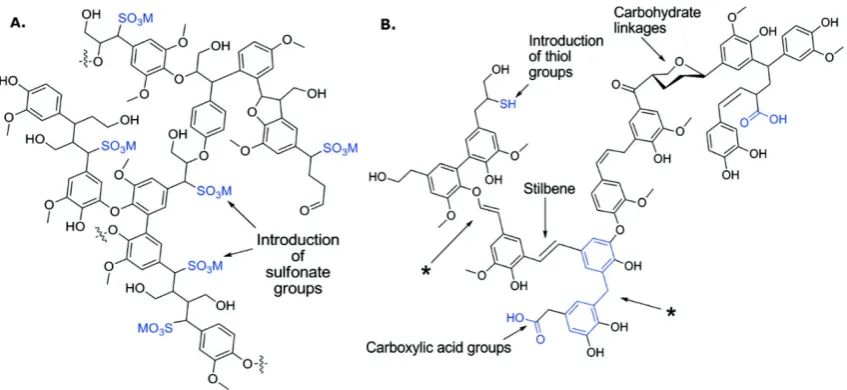
Figure 1-5. (A) An example of sulphonated lignin produced by acid sulphite processing. (B) An example of Kraft lignin showing the addition of various carboxylic and thiol groups produced by the Kraft process.
In the sulphite process, the side chains of the lignin are sulphonated by
sulphurous salts such as sulphites and bisulphites at high temperature (140-170 °C) in
digesters, which makes the lignin hydrophilic (Figure 1-5A) [281]. This process not only
dissolves the lignin but also hydrolyses the hemicelluloses, retaining the cellulose for
use in pulp and paper making. The sulphonation mostly occurs at α-carbons in the lignin,
cleaving most of the C-O-C linkages [13, 53, 131, 281]. The non-cellulose fraction, usually
known as brown liquor, is then treated with metal or ammonium salts to separate the
hemicellulose and sulphonated lignin from unreacted sulphites. The highly sulphonated
lignin obtained is soluble in a wide range of solvents. It is generally used for products of
relatively low commercial value such as dye dispersants, binders, animal feed pellets
and concrete admixtures [281].
The Kraft process yields better quality pulp than sulphite processing and also has
advantages in the treatment of resin-rich pine wood. In Kraft processing, an aqueous
solution of sodium hydroxide and sodium sulphide (white liquor) is used to cook wood
chips in digesters at high temperature (170 °C) for approximately 2 hrs [40], which
depolymerizes a proportion of the lignin to smaller, more soluble subunits (Figure 1-5B).
Subsequent concentration of this black liquor produces a solid called Kraft lignin, most
of which is burnt to generate electricity and a little of which is used for producing
commodities such as dyes, agrochemicals, asphalt emulsifiers and autoxidizing agents
[281].
Lignin degradation can also be achieved by several other thermochemical
techniques such as pyrolysis, gasification, oxidation and hydrogenolysis [193]. However
processes present economic and ecological problems and they are not currently used at
significant scales commercially [193].
In pyrolysis, the lignin biomass is treated at moderate temperatures
(200-760 °C) in the absence of oxygen and with or without catalysts in large chambers
to convert the lignin biomass to biofuels and other industrial products. The pyrolysis
treatment initiates several radical reactions, rearrangements and eliminations in the
lignin molecule, breaking it into several smaller subunits [10, 281].
In gasification, the lignin biomass is treated at extremely high temperatures (450
– 1650 °C) under limited oxygen and steam in huge chambers to generate useful gaseous
products such as hydrogen and carbon monoxide. However, some other gases such as
carbon dioxide, methane, sulphur and nitrogen are also produced in the process, which
are then treated with special catalysts to convert them into more useful products. The
resultant syngas can be condensed and liquefied to transport fuels or industrial
precursors and can also be used to generate electricity [10, 104, 281].
In the hydrogenolysis process, the lignin biomass is treated with hydrogen gas in
the presence of chemical catalysts to lyse the C-C and C-O-C bonds through
hydrogenation. The resulting breakdown products can subsequently be transformed to
valuable products. The hydrogenation also forms gases such as H2S, which is
de-sulphurised and H2 gas is harvested.
In the oxidation process the lignin biomass is treated with oxidising agents such
the lignin to useful renewable resources such as vanillin, phenols, syngas products and
various other hydrocarbons [130, 254, 281].
As noted earlier, all of the above processes are essentially non-systematic, in so
much as they break lignin non-specifically into a wide range of products, each with
relatively low product yield and only a few of which are useful in chemical
manufacturing industries. Some of the products can also be at least as recalcitrant to
further chemical processing as lignin [10, 88, 104, 148]. By contrast, biocatalytic
degradation of lignin could potentially be an inexpensive, energy-efficient and well
controlled process that breaks down the lignin systematically and efficiently to a
specified set of more useful products. Several fungi and bacteria with potential in this
respect have indeed been identified and, in a few cases, their enzymes were
characterized for their potential uses in industrial lignin degradation [51, 145, 278].
A key prerequisite for lignin degradation is substrate accessibility/availability to
the microbial (extra or intracellular) enzymes. Intracellular enzymes are less likely to be
involved in preliminary lignin degradation, but extracellular enzymes have been
identified as primary invaders of the lignin polymer in previous studies [44, 59]. The
intracellular enzymes are generally very specific for particular lignin-derived monomeric
and dimeric compounds [44, 59].
Lignin degrading enzymes are widely distributed in various species of fungi,
including aerobic ascomycetes (Trichoderma reesei), basidiomycetes species
(Phanerochaete chrysosporium), and a few anaerobes (Orpinomyces sp). However, by
comparison, only a few well characterized lignin degrading enzymes have been
enzymes might be key to the effective transformation of lignocellulosic biomass to
commodities. Most of the lignin degrading enzymes discovered and studied so far have
been from aerobic microbes, which use oxic conditions to attack the lignin [29, 33, 44].
Lignin has also been reported to be degraded under low oxic and anoxic
conditions with various anaerobic and microaerophilic microbes. Some examples
include anaerobic incubations of swamp sediments with 14C lignocellulose softwood
derived from the herbaceous plant Spartina alterniflora, hardwood from Rhizophora
mangle and 14C synthetic lignin, where slow degradation of up to 16 % of the
lignocellulose to 14C02 and 14CH4 has been found after up to 294 days. Similarly, plant
biomass incubated in a closed bioreactor with a micro-oxic to anaoxic gradient for a year
at 30° C resulted in partial lignin degradation, but no individual microbes potentially
responsible for this were identified or characterized further [18, 262].
On other hand several individual anoxic bacterial isolates have been isolated,
albeit the relevant enzymes not yet characterized, using lignin model substrates such as
benzoic acid, ferulic acid, gallate and other lignin monomeric substrates. Some examples
include the isolation of Eubacterium oxidoreducens sp. nov. from the rumen of a
hay-fed steer which was able to degrade gallate, pyrogallol, phloroglucinol and quercetin in
the presence of electron acceptors such as H2 or formate [132]. Likewise, cell-free
extracts of Syntrophococcus sucromultans were able to metabolize several lignin
derivatives in the presence of formate or vanillate, although again, none of the enzymes
responsible were characterized [20, 60].
The research in this thesis is concerned with oxidative lignin degradation so the
1.3.1.1 Lignin degradation by fungal enzymes
Certain so-called white rot fungi, in particular Trametes versicolor,
Heterobasidium annosum and Irpex lacteus, have been found to degrade lignin
efficiently via a combination of extracellular peroxidases and laccases with high redox
potential. These fungi preferentially degrade the lignin in the plant cell wall, retaining
the enriched cellulose as white mottled regions called white rots. The so called brown
rot fungi by comparison prefer degrading cellulose and hemicellulose, thereby retaining
the brownish lignin [100, 163, 190, 278].
The extracellular peroxidases produced by white rot fungi have been classified
into three families of class II peroxidases, namely lignin peroxidases (LiPs; EC 1.11.1.14),
manganese peroxidases (MnPs; EC 1.11.1.13) and versatile peroxidases (VPs; EC
1.11.1.16). The enzymes in all these families exist in several isoforms. Several low
molecular weight compounds such as veratryl alcohol, Mn+3, oxalate,
2,2'-azino-bis(3-ethylbenzothiazoline-6-sulphonic acid) (ABTS) and 4-hydroxybenzoic acid also act as
redox mediators for the peroxidases, getting oxidised at the enzyme active site and then
diffusing into the polymer to break the substrate. Apart from the extracellular
peroxidases, several intracellular enzymes such as glyoxal oxidase, veratryl alcohol
oxidase, quinone reductase, cellobiose dehydrogenase and pyranose 2-oxidase can also
play a role in lignin degradation [112, 190, 278].
1.3.1.2 Lignin peroxidase
Lignin peroxidases (LiPs) are 38-46 kDa metalloenzymes, specifically
chrysosporium, a basidiomycete white rot fungus [100, 112, 163, 190, 278]. LiPs catalyse
the H2O2 and veratryl alcohol dependent oxidation of various electron rich aromatic
substrates, including phenolics. The veratryl alcohol (VA) is a natural substrate for LiPs,
acting as a redox mediator between the enzyme and the lignin. LIPs oxidise VA to a
VA-cation radical which then diffuses into the lignin polymer and oxidises it. A typical
reaction can be represented in simplified form as 1,2-bis
(3,4-dimethoxyphenyl)propane-1,3-diol + H202 3,4-dimethoxybenzaldehyde +
1-(3,4-dimethoxyphenyl)ethane-1,2diol + H2O. The ability of LiPs to oxidise phenolic as well as
non-phenolic substrates is due to their high redox potentials [100, 112, 163, 190, 278].
As with other haem peroxidases, the catalytic cycle of LiPs is actually
considerably more complex than the simple representation above. As shown below, the
first step is an oxidation involving two electrons (one from Fe (III) and another from the
porphyrin π-electron system of the haem group) of native ferric ions with H2O2 to
produce H2O and compound I, which is a ferric porphyrin radical cation ([Fe(IV)=O•+]).
Compound I is then reduced to native ferric ion by two successive one electron
reductions where the electrons are gained from veratryl alcohol (VA). In the first
reduction, compound I is reduced by VA to compound II, which is an oxyferryl complex,
[Fe (IV) =O]. Compound II is then further reduced by another reduction step [100, 163,
274, 278] (Figure 1-6A). The overall reaction is represented as
Native ferric enzyme + H2O2 Compound I ([Fe (IV )= O•+]) + H2O
Compound I ([Fe (IV) = O•+]) + VA Compound II ([Fe (IV) = O]) + VA•+
(Note that in the absence of donor substrate and the presence of excess H2O2,
compound II can be further oxidised to compound III, a ferric-superoxide complex
[Fe(III)O•ˉ] which is spontaneously reduced to native enzyme by VA [163, 274, 278].
The LiPs have very broad substrate specificity, because the phenolic radicals (donor
substrates) generated during the reduction reactions diffuse into the lignin polymers
and attack them non-specifically, producing various ring opening, rearrangement and
other intramolecular reactions. These reactions have been studied with model lignin
compounds, in particular β-1′ (eg.
1-(3′,4′-diethoxyphenyl)-1,3-dihydroxy-2-(4′'-methoxyphenyl)-propane) and β-O-4 compounds (eg. guaiacylglycerol-β-guaiacyl
ether), where the oxidation of VA to veratraldehyde can be measured
spectrophotometrically by an increase in absorbance at 310 nm [100, 163, 278].
1.3.1.3 Manganese and versatile peroxidases
Manganese peroxidases (MnP) are also haem-glycoproteins, in this case of
38-62.5 kDa, again with a very low pH optimum (3.0-4.0) but with a slightly lower redox
potential of 0.8-0.9 V. A MnP was first identified in P. chrysosporium but others have
subsequently been found in species belonging to the Meruliaceae, Coriolaceae,
Polyporaceae, Strophariaceae and Tricholomataceae [100, 163]. Eleven different
isoforms of MnP have been identified in Ceriporiopsis subvervispora [100, 163]. The
catalytic cycle of the MnPs is similar to that of the LiPs, except that Mn+2 acts as the
redox mediator instead of veratryl alcohol. The principle MnP reaction is oxidation of
Mn+2 to Mn+3, which then diffuses and oxidises monomeric and dimeric phenolic
substrates through the formation of phenoxy radicals. The highly reactive Mn+3 also
malaonate and 2-hydroxybutyrate to efficiently oxidise those substrates (Figure 1-6B).
The overall redox reaction is represented as
Native MnP + H2O2 MnP-I + H2O
MnP + Mn+2 MnP-II + Mn+3
MnP II + Mn+2 Native MnP + Mn+3.
MnPs cannot degrade as many non-phenolic compounds as LiPs, but they are
able to oxidize some, such as veratryl alcohol, anisyl alcohol, and benzyl alcohol, in the
presence of thiols. The Mn+3 oxidises thiols to thiyl radicals which can then extract
protons from such substrates. Interestingly there appears to be some overlap in the
regulation of MnP and LiP production; MnP production in Bjerkandera sp. increases in
the presence of diffuser oxidants, and excess MnP production also inhibits VA
[image:35.595.115.536.483.653.2]production, which in turn diminishes LiP production [100, 163, 190, 278].
Another type of peroxidase called versatile peroxidase (VP) has been identified
in the genera Pleurotus, Bjerkandera and Lepista. VP has a hybrid structure with various
oxidising sites connected to a haem co-factor and it has a mix of LiP and MnP
characteristics, including efficient oxidation of a broad range of phenolic and
non-phenolic compounds in the presence of mediators [190, 278]. The hybrid nature of
versatile peroxide was demonstrated in a series of site-directed mutagenesis
experiments to create a MnP activity in the LiP of P. chrysosporium, and vice versa. For
example introduction of a mutation at Ser168-Trp mutation in MnP made it capable of
degrading a wide range of LiP substrates whilst retaining its natural MnP activities [100,
112, 278].
1.3.1.4 Laccases
Laccases are another class of enzymes reported to catalase lignin degradation.
Laccases are 50 to 110 kDa multinuclear copper (Cu) oxidase enzymes with redox
potentials of 0.6 to 0.9 V [278]. Examples include ascorbic oxidase (EC 1.10.3.3), nitrite
reductase (EC 1.7.2.1) and ceruloplasmin (EC 1.16.3.1). They are found in plants, insects
and microorganisms. In plants laccases play a role in lignin polymerization whereas in
bacteria and fungi they are involved in lignin degradation [167]. Laccases have four
copper atoms and they carry out one electron oxidations of four reducing substrates,
with the four electrons stored in a fully reduced state of the enzyme. The four electrons
in the reduced state of the enzyme can then reduce dioxygen to water. The redox
The four copper ions (T1Cu, T2Cu and two T3Cu) in the enzyme are distributed
in three domains. The T1Cu site is an electron abstracting site, which process also gives
rise to the blue color of the enzyme. Electrons abstracted at that site are then
transferred to the T2 and T3Cu sites, where they are stored in a fully reduced state
capable of reducing dioxygen to H2O [278]. The principle reaction of laccases is the
oxidation of low molecular weight compounds to form the respective radicals, which
then act as redox mediators and initiate rearrangement and ring opening reactions on
molecules such as lignin [278]. For example the fungus Pycnoporus cinnabarinus is
capable of degrading phenolic and non-phenolic compounds very efficiently by
laccase-mediated redox mediators such as 2,2′-azinobis-(3-ethylbenzthiazoline-6-sulfonate)
(ABTS), 1-hydroxybenzotriazole (HBT), and 3-hyroxyanthranilic acid (HAA) [112], which
are oxidised to radical cations to cleave various C-C and C-O-C bonds in the substrates
[278].
Lignin degradation by bacterial enzymes
Lignin degradation has been much less studied in bacteria than fungi and the
work to date suggests bacteria generally have less activity against lignin [34].
Nevertheless several bacteria, generally Actinomycetes, have been shown to grow on
different types of lignin, including Kraft lignin (Novosphingobium sp. B-7), 14C-labelled
lignin (Nocardia and Streptomyces species) and native lignin (Pseudomonas and
Flavobacterium species and Streptomyces viridosporus sp. T7A). Several other bacteria
have also been isolated on the basis of their growth on model lignin β-O-4 compounds.
These bacteria have been obtained from plantation soils (Bacillus sp., Ochrobactrum sp.
xenobiotic contaminated soils (Rhodococcus jostii sp. RHA1). The latter two bacteria
have been functionally characterized quite thoroughly with respect to their metabolism
of the model β-O-4 compound guaiacylglycerol-β-guaiacyl ether (GGE) [4, 33].
Otherwise however, there has been little biochemical characterization of the lignin
degrading enzymes themselves. On the other hand several convenient phenotypic and
colorimetric assays have now been developed which could facilitate such work.
Moreover recent advances in DNA sequencing technology now make whole genome
sequencing of lignin degrading bacteria relatively straightforward and candidate
oxidative genes found in the genome can then be expressed heterologously and tested
for lignin activity using the assays above. Such an approach has recently been applied
successfully to the lignin degrading Actinomycete Amycolatopsis sp. 75iv2, which
expresses many peroxidases ([29, 34, 44, 48, 49, 161, 203, 236, 256] and see below).
1.3.2.1 Bacterial peroxidases
The first bacterial lignin peroxidase (ALiP-P3) to be reported was from
Streptomyces viridosporus T7A [29, 34, 49, 206]. This Actinomycete secretes ALiP-P3,
which can degrade wheat straw lignin [49] into smaller aromatic subunits, with
acid-precipitable, polyphenolic, polymeric lignin (APPL) also accumulating as an intermediate
[282]. The enzyme was found to have activity against several model β-1 (diarylpropane)
and β-O-4 (GGE) compounds, but was not as efficient in these reactions as the fungal
LiPs above. Little is known about the structure or reaction mechanism of ALiP-P3 [206],
but similar oxidation reactions of these substrates have been reported for four
stereospecific dehydrogenase enzymes isolated from Sphingomonas paucimobilis
The first detailed characterization of a bacterial lignin degrading enzyme
involved Rhodococcus jostii RHA1, a gram positive bacterium isolated from
polychlorinated biphenyl contaminated soil (Figure 1-7). A comparison of the R. jostii
RHA1 genome with other lignin degrading microbes revealed the existence of two
previously unannotated dye-decolorizing type peroxidases (Dyps) which were then
annotated as DypA and DypB peroxidases [212]. The DypA has 41 % and 36 % similarity
with the dye-decolorizing peroxidase of Bacteroides thetaiotaomicron (strain VPI-5482)
(BtDyp) and the encapsulin protein of the fungus Thermotoga maritime, respectively.
DypB has 27-35 % similarity to the iron acquisition proteins EfeB, EfeO and EfeU of E.
coli K-12 [212]. Heterologous expression of DypA and DypB showed both to be active
against classical peroxidase substrates such as Mn+2, pyrogallol and anthraquinone dyes,
ABTS and Reactive Black [29, 212]. DypA has relatively higher specificity for ABTS
pyrogallol and Reactive Black 4, and DypB is relatively more active on Mn+2 and ABTS.
DypB has been further characterized in detailed kinetic and crystallographic studies
[212], with several lines of evidence showing that it behaves like the fungal peroxidases.
It produces the same products, including the intermediate compounds I and II (Figure
Figure 1-7. Catalytic mechanism of DypB peroxidase enzyme from R. jostii RHA1, showing rate constants for β-aryl ether turnover, the formation of vanillin and the reaction with Mn+2 [4].
Note: Adapted with permission (see Appendix 2) from Ahmad M, Roberts JN, Hardiman EM, Singh R, Eltis LD, Bugg TDH: Identification of DypB from Rhodococcus jostii RHA1 as a lignin peroxidase. Biochemistry 2011, 50(23):5096-5107.
Recent bioinformatic analysis of the genome of the biomass degrader
Amycolatopsis sp. 75iv2 mentioned above has also revealed the presence of three Dyps
(Dyp1 to 3) [29]. Dyp1 and Dyp2 belong to the C-clade of Dyps which is more closely
related to the fungal peroxidases, while Dyp3 is grouped with other bacterial enzymes,
such as the lignin degrading enzymes from R. jostii RHA1 [29, 212, 282]. Dyp2 is
characterized as an unusual C-type dye-decolorising peroxidase in the haem peroxidase
family [212]. Heterologously expressed Dyp2 is active against Mn+2, Reactive Black 5 and
ABTS dyes and it is highly active against phenolic substrates as measured in
compounds, perhaps because it has relatively low redox potential sites. The high kcat/KM
values of Dyp2 against its good substrates are close to those of the MnP from
Phanerochaete chrysosporium and the versatile peroxidase of Pleurotus eryngii for
those substrates [212]. Dyp2 can also catalyse the oxidative decarboxylation of
4-methoxymandelic acid (MMA) in the presence of both Mn+2 and O2, reminiscent of the
MMA oxidation seen for the LiP of P. chrysosporium in the presence of veratryl alcohol
and H2O2 [49, 282]. Given the extent of its activities, further studies on Dyp2 would
clearly be worthwhile.
1.3.2.2 Bacterial laccases
Laccases have been tentatively identified in several bacterial genera,
predominantly Bacillus, but none have yet been thoroughly characterized at a functional
level. The most promising evidence comes from Bacillus atrophaeus and Bacillus
pumilus, which were originally isolated in a screen for growth on the laccase substrate
ABTS. B. atrophaeus was also found to grow on guaiacylglycerol-β-guaiacyl ether (GGE)
and Kraft lignin, albeit neither of these compounds were completely mineralised by this
bacterium. Further studies will be required to confirm the laccase activity in these two
strains [107, 205].
1.3.2.3 Non-peroxidase bacterial enzymes
Several intracellular bacterial enzymes with lignin degrading activity have been
identified from various genera. Of these, the enzymes from the gram negative
bacterium Sphingomonas paucimobilis SYK-6 are the most extensively characterized.
reductive mechanism. The pathway for this has been elucidated and is shown in Figure
1-9. Initially, GGE is oxidised by NAD dependent, short chain Cα-dehydrogenase enzymes
(LigD, LigL, LigN and LigO) to α-(2-methoxyphenoxy)-β-hydroxypropiovanillone (MPHPV)
[218], which in turn is a carbonyl substrate for glutathione S-transferases (GSTs) (ligF
and ligE and ligP) [158, 212]. The MPHPV is then reductively cleaved at C-O-C linkages
( ̴ 80 % lignin has C-O-C linkages) by β-etherases (ligF and ligE and ligP), which adds a
hydrogen to generate α-glutathionyl-β-hydroxypropiovanillone (GS-HPV) and guaiacol.
The glutathione attached to the HPV is then removed by a glutathione lyase enzyme
(ligG) [4, 158]. Both the dehydrogenases and the GSTs show stereoselectivity among the
four GGE and two MPHPV enantiomers respectively (Figure 1-8). The stereoselectivities
were elucidated with an end-point assay using heterologously expressed E. coli crude
[image:42.595.149.438.443.677.2]cell extracts [158, 164, 218, 248].
Figure 1-9. Catabolic pathway for GGE in Sphingobium sp. strain SYK-6. The enzymes ligD, ligL, ligN and ligO are dehydrogenases which convert GGE to MPHPV. The MPHPV is then cleaved by the ligE, ligF and ligP GST enzymes to give GS-HPV and guaiacol. The glutathione attached to HPV is cleaved by ligG, a GST lyase enzyme. Abbreviations: GS−, reduced glutathione; GSSG, oxidized glutathione; GS-HPV, α-glutathionyl-β-hydroxypropiovanillone; HPV, β-hydroxypropiovanillone [218].
Interestingly the fungal strain Chaetomium sp. 2BW-1 is also known to have a
GST enzyme which is involved in the GGE degradation, but it does not act on MPHPV as
above [177].
Streptomyces sp. SirexAA-E is a cellulolytic bacterium known to have an aromatic
ring dioxygenase (SACTE_2871) fused with a carbohydrate binding domain (CBM 5/12).
SACTE_2871 binds to lignin compounds through the CBM 5/12 domain and catalyses
the O2 dependent intra-diol cleavage of various non-methoxylated subunits of lignin and
other compounds [29, 205].
Several other enzymes such as dehydrogenases, hydrolases, demethylases and
peroxidases of bacteria and fungi are known to synergistically enhance lignin
degradation [59]. For example a cellulobiose dehydrogense from the fungus
Schizophyllum commune enhances lignin degradation in the presence of the MnP of
(LIPs and MnPs) and laccases and when they are co-cultivated they show enhanced rates
of enzyme production and lignin degradation [59]. The fungus Rigidoporus lignosus
secretes a laccase and a MnP which do not solubilize 14C lignin individually but do so
when combined together [85].
1.4
Nitroaromatic compounds
Nitroaromatic compounds (NACs) are organic compounds containing one or
more nitro (-NO2) groups on a benzene ring (Figure 1-10). They are comparatively rare
in nature (some of them being antibiotics) but many synthetic NACs are used in the
production of explosives, pesticides, herbicides, pharmaceuticals and several speciality
chemicals [11, 90, 156, 239]. NACs are synthesized via nitration reactions with nitric and
sulphuric acids, the nitronium ions (NO+2) generated being added to the benzene ring
via electrophilic substitution reactions. The simplest NACs synthesized are
nitrobenzene, nitrotoluene and various nitrophenols, which are precursors for a wide
range of products [238]. The nitration reactions can be controlled to allow substitution
of the nitro group onto the ortho, para and meta positions of the benzene ring, as well
as for replacing the halogens in halogenated aromatics (Zinke nitration) [99]. Multiple
nitro group compounds such as trinitrobenzene, 2,4,6-trinitrotoluene and
1,3,5-trinitrophenol can also be synthesized by Wolffenstein-Boters reactions (concurrent
oxidation and nitration of simple aromatics to nitrophenols with higher oxides such as
nitric acids in the presence of catalysts such as mercury salt) [99]. The unusual
substitution or addition reactions to the benzene ring make NACs recalcitrant to
Chemistry of the nitroaromatics
The distinctive chemistry of the NACs gives them distinctive redox properties.
The nitrogen bonded to two oxygen atoms, which have more electronegativity than the
nitrogen, and the resultant nitrogen-oxygen bond polarization (electronegativity
difference 0.5) cause the nitrogen to carry a partial positive charge, which therfore acts
as a strong electrophile. This and the presence of the oxygen make the nitro group a
strong oxidising agent. Furthermore, once this group is reduced the ring becomes
activated and susceptible to oxidation. Overall, three functions combine to make some
nitroaromatics explosives; the oxidising potential of the nitro groups, the abundant
availability of oxidisable carbon in the activated ring, and the fact that the latter reaction
[image:45.595.116.487.424.702.2]produces both heat and gaseous nitrogen and carbon monoxide [11, 90, 156, 239, 240].
Synthetic and natural nitroaromatics
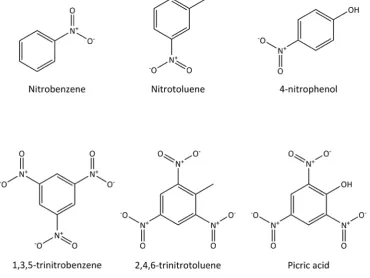
Synthetic NACs such as picric acid (2,4,6-trinitrophenol), 2,4,6-trinitrotoluene
(TNT), cyclotrimethylenetrinitramine (RDX), cyclotetramethylenetetranitramine (HMX)
and 2,4-dinitroanisole (DNAN) have been commonly used as the explosive ingredients
in munitions [156, 238] (Figures 1-10 and 1-11). Picric acid was the first to be used for
this purpose but its reaction with the metal in casting shells forms picric salts, making it
more shock sensitive and susceptible to incomplete detonation [99, 204, 241, 268]. The
TNT that was developed next is more stable and less sensitive to inadvertent
detonation, but also less powerful compared to picric acid [137, 241]. However TNT also
had other uses, as a starting material for the manufacture of several other industrially
important heterocyclic aromatic compounds such as hexanitrostilbene (HNB) and
1,3,5-trinitrobenzene (TNB) [239]. Problems with its presence in the environment and the
recent availability of other NACs which are more powerful have seen TNT use in
munitions decline, although it is still used as a minor component of some munitions
together with newer NACs such as RDX and HMX. The latter are bigger molecules with
more nitrogen bonds and they therefore release more energy when exploded [5, 47,
137, 241, 257]. DNAN is now finding increasing use, its greater shock friction and
thermal stability giving it important advantages in terms of safety during manufacture,
transport and handling [62, 73, 84, 146, 192].
As noted, in addition to their use as explosives, many NACs are also used in
making various herbicides, insecticides, ovicides and fungicides [11, 90, 240].
Derivatives of nitrobenzenes, nitrotoluenes and nitrophenols are used as the starting
synthesis of carbofuran, parathion, fluorodifen, nitrofen, and bifenox [90, 238], while
di-nitro compounds are used to make 2,5-dinitro-o-cresol, dinoseb, and binapacryl.
Reduced NACs form amines such as aniline and some major pharmaceuticals such as
[image:47.595.159.403.241.444.2]paracetamol are also made from NAC feedstocks [156, 238].
Figure 1-11. Further examples of nitroaromatic explosives [117].
Some complex NACs are also made by biotic or abiotic processes in the
environment. Some of the abiotic processes start from incomplete combustion of fossil
fuels, generating hydrocarbons which can react with atmospheric nitrogen dioxide to
form simple nitroaromatic compounds such as nitrobenzenes and nitrotoluenes, as well
as various nitro-polyaromatic hydrocarbons (nitro-PAHs) such as nitronaphthalenes and
nitrobiphenyls [117, 240]. In aqueous environments, sunlight can also catalyse the
nitration of dissolved hydrocarbons [117, 240]. Plants, fungi and bacteria can also
produce a limited range of nitroaromatic compounds. In particular Streptomyces species
from Streptomyces venezuelae and aureothin from Streptomyces thioluteus are perhaps
the best known but several others such as neoaureothin, thaxtomin, azomycin,
rufomycins and dioxapyrrolomycin are also produced by various Streptomyces. Gram
negative bacteria from the genera Pseudomonas, Enterobacter, Corallococcus and
Burkholderia are also known to produce the antifungal compound pyrrolnitrin [117],
while pyrrolomycins A, B, and E, which are anti-fungal and anti-bacterial, are produced
by the gram positive Actinosporangium vitaminophilum [117]. Several other bioactive
NACs such as the siderophores (iron chelating compounds) are also produced by
Streptomyces species [117, 156, 210, 238, 239].
Biodegradation of nitroaromatics
Many of the properties of NACs which make them useful also make them
hazardous to human health and the environment. Many are toxic, mutagenic and
carcinogenic. Moreover many are very stable and persistent in the environment.
Accordingly several are listed in the U.S. Environmental Protection Agency’s list of
priority pollutants [117, 156, 240].
Details of their mutagenic and carcinogenic effects are influenced by the type of
nitroaromatic and the attached functional groups [146, 182, 186, 199, 201]. However,
in general terms, studies on Salmonella, E. coli and mammalian cell lines have shown
that mono-, poly- and, heterocyclic NACs can all cause transversions and frameshift
mutations in genetic material [54, 117, 156]. Various oxidation and reduction products
and other derivatives of NACs can also interfere with DNA synthesis. NACs are also
known to cause methaemoglobinaemia, neurotoxicity, nephrotoxicity and several other
into the environment through fossil fuel (petrol and diesel) spills, agricultural uses of
many pesticides, insecticides and fungicides, and several munitions-related activities,
mostly through the use and disposal of explosives and in training operations [209].
Industrial accidents have also released high concentrations of NACs into the
environment; for example, an explosion in a China National Petroleum plant in Jilin City
in 2005 released approximately 100 tons of benzene and nitrobenzene into nearby
rivers and eventually the Pacific Ocean [135].
Thermochemical treatments are available to remediate many NAC
contaminated environments relatively efficiently but they are energy-intensive and
expensive and not suitable for treating broad scale contamination. There is therefore
considerable interest in developing biological methods for their decontamination [156].
There are practical challenges here, such as bioavailability, and, given that many NACs
have been relatively rare in nature, microorganisms have generally had little reason to
develop catabolic pathways for them. Some microbes can degrade some of the simpler
NACs such as nitrobenzoate and nitrophenols via well-established oxidative and
reductive pathways, but many of the more complex NACs such as TNT and
2,4-dinitroanisole have proven relatively refractory to microbial degradation [94, 156].
To date, several bacteria belonging to the genera Pseudomonas, Burkholderia,
Comamonas, Arthrobacter, Acidovorax and Rhodococcus have been isolated for their
ability to degrade a range of relatively simple NACs such as nitrobenzenes, nitrotoluenes
and nitrophenols [8, 239]. In aerobic conditions the oxidation of such NACs is initiated
by mono- or dioxygenase enzymes, which involves introduction of hydroxyl groups by
degradation of 2-, 3- and 4-nitrophenols. In Pseudomonas putida B2 the 2-nitrophenol
is oxidised by a NADH-dependent monooxygenases enzyme while a
dioxygenase-catalysed reaction was observed in Alcaligenes eutrophus JMP222 against
2,6-dinitrophenols. However some NACs can be catalysed via reduction, due to the
electrophilic nature of the nitro groups. In P. putida TW3, the metabolism of
3-nitrobenzoate is catalysed by a NADPH-dependent reductase to
4-hydroxylaminobenzoate, which is further metabolized by subsequent deamination
reactions. In some Rhodococcus and Nocardioides species the NACs are reduced by
forming a hydride-Meisenheimer complex with a NADPH-dependent reductase also
containing cofactor F420 [65, 117].
1.5
Thesis outline
This thesis describes the degradation of two very different complex aromatics,
lignin and 2,4-dinitroanisole (DNAN), by newly isolated bacteria, and key enzymes
therein. While the breakdown of both is chemically challenging, the lignin is potentially
an abundant source of carbon to support microbial growth and the DNAN can provide
both carbon and nitrogen. Unlike the lignin, the DNAN is also toxic unless broken down,
putting further selective pressure on the evolution of effective catabolic pathways. In
the case of lignin, evolution has had vast timeframes in which to develop useful
pathways but for DNAN the timeframe has been relatively short, even for organisms like
bacteria and archaea which have comparatively shorter generation times, large
population sizes and considerable capacity for horizontal gene transfer. My goals are to
explore the biochemical options that have evolved under the two scenarios and to
effectively in chemical manufacturing or decontaminate toxic NACs effectively in the
environment.
Chapter 2 describes a bacterium isolated from paper mill samples which can
oxidize the major lignin substructure GGE. This includes the annotation of candidate
dehydrogenase genes identified in its genome sequence. The purification of the cognate
enzymes and their biochemical characterization are then described, along with a
phylogenetic consideration of their functions.
Chapter 3 describes another bacterium isolated from an activated sludge sample
from the Holston Army Ammunition Plant in the US on the basis of its ability to
mineralize DNAN. The first step of DNAN mineralization is shown to be hydrolytic
removal of a methyl group to methanol and 2,4-dinitrophenol (2,4-DNP). The latter is
mineralized through a well-established catabolic pathway [73]. The purification and
characterization of the novel demethylase are then described.
Chapter 4 is a general discussion of the findings described in the two preceding
chapters in the contexts of both the broad evolutionary questions raised above and
Chapter 2
Phylogenetic and kinetic characterization
of a suite of dehydrogenases from a newly
isolated bacterium that catalyse the
turnover of guaiacylglycerol-β-guaiacyl
ether stereoisomers
2.1
Introduction
The lignin polymer, representing 15-40 % of plant-derived biomass, is a potential
renewable alternative to petrochemical feedstocks for chemical manufacturing
industries, particularly with regard to aromatic compounds [202]. One of the major
hurdles for the utilization of lignin in this way is its recalcitrance; the polymeric structure
of lignin coupled with the nature of its chemical bonds renders it highly resistant to
chemical or biological degradation. Chemical degradation of lignin has been utilized by
some industries but it usually involves non-selective destruction of lignin via burning or
treatment under highly alkaline conditions, which renders it less useful or of lower value
to many downstream applications [101]. The biological depolymerization of lignin
should be a more selective and energy-efficient process, and therefore potentially a cost
effective and environmentally sustainable alternative to the chemical processes
currently employed [101]. However, to date, the identification of suitable biocatalysts
involved in lignin depolymerization has proven difficult.
Lignin has a polyaromatic structure with more than five different types of
inter-monomer linkages [275]; the β-O-4 linkage (also known as the β-aryl ether linkage)
![Figure 1-2. Monolignols and their aromatic residues in the lignin polymer [277]](https://thumb-us.123doks.com/thumbv2/123dok_us/7918300.191228/25.595.207.447.73.288/figure-monolignols-aromatic-residues-lignin-polymer.webp)
![Figure 1-3. Examples of lignin structures, highlighted with key linkages [281]](https://thumb-us.123doks.com/thumbv2/123dok_us/7918300.191228/26.595.114.529.403.674/figure-examples-lignin-structures-highlighted-key-linkages.webp)

![Figure 1-7. Catalytic mechanism of DypB peroxidase enzyme from rate constants for R. jostii RHA1, showing β-aryl ether turnover, the formation of vanillin and the reaction with Mn+2 [4]](https://thumb-us.123doks.com/thumbv2/123dok_us/7918300.191228/40.595.220.471.74.351/catalytic-mechanism-peroxidase-constants-turnover-formation-vanillin-reaction.webp)

![Figure 1-11. Further examples of nitroaromatic explosives [117].](https://thumb-us.123doks.com/thumbv2/123dok_us/7918300.191228/47.595.159.403.241.444/figure-examples-nitroaromatic-explosives.webp)