Everyday World Heritage: disengagement, lost
opportunities and business as usual in the Greater Blue
Mountains World Heritage Area
Kristal Lara Coe December 2016
A thesis submitted for the degree of Doctor of Philosophy of The Australian National University.
Candidate’s Declaration
This thesis contains no material which has been accepted for the award of any other degree or diploma in any university. To the best of the author’s knowledge, it contains no material previously published or written by another person, except where due reference is made in the text.
Acknowledgements
This thesis would not have been possible without the support of an Australian Postgraduate Award scholarship from the Australian Government. I have been fortunate to be a student of the Fenner School of Environment and Society, which provided me with all the practical necessities of conducting PhD research, and generously supported my travel and an office in Darwin. Thank you to the staff at the North Australian Research Unit (NARU) in Darwin, for what will likely be the loveliest office and surrounds I will ever have.
Thank you to my supervisor Richard Baker, and advisors Steve Dovers, Natasha Stacey and Stephen Garnett. Generosity with your time, judgement and feedback has been invaluable.
I am most grateful to the people of the Greater Blue Mountains World Heritage Area, who were involved in this research. They generously invited me into their homes, workplaces and community, and responded good-naturedly to my attempts to weed and play Ping-Pong. Particular thanks go to Vanyo, Peter, Jacq, Glenn, Joan and the Bullaburra Township Committee, and John and Marie and the Megalong Valley Landowner’s Association. Thank you to the Valley of the Waters and Braeside Bushcare groups for letting me tag along. Thank you Herdis and Mark for making sure a shocked and confused student had money and a train ticket home after the burglary and a special acknowledgement to the woman who contacted me after finding my backpack in her recycle bin. Your act of kindness saved my PhD.
My extended family has constantly enquired on my progress and provided encouragement. I owe a special debt of gratitude to Julie and Bob for babysitting in the final weeks and, Julie, thank you for bravely taking on the role of proof-reader.
Nath, I could not have finished this thesis without you. Thank you for your love, support, time and encouragement. You are the rock in this little family and Ash and I appreciate all that you have done to help me finish. I hope I will be just as patient when you write the next great Australian novel.
Ash, you’re too little to remember the many weekends Mum spent working on this thesis and I know, right now, it cannot compete with The Very Cranky Bear. You were my inspiration and, it’s my greatest hope, that I’ve inspired you to follow your dreams.
This thesis is dedicated to the memory of my mum and dad
Abstract
The World Heritage Convention is currently implemented in over 1,000 cultural, natural and mixed heritage sites around the world including Australia. Motivations for World Heritage nomination are varied and though these reasons often affect the way World Heritage is implemented, there is little contemporary, ethnographic, site-specific research on what happens at sites after World Heritage inscription.
Acknowledging traditional sociology’s environmental ‘blind spot’ this thesis investigates the effects of ‘natural’ World Heritage implementation through practicing a ‘sociology of associations’. By using the analytical tools of Actor-network theory (ANT) it traces these associations between actors in the Greater Blue Mountains World Heritage Area; a ‘natural’ World Heritage site in Australia. This thesis exposes the effects of World Heritage implementation by ‘following the actors’, human and non-human, and gathering empirical evidence through interviews, observations and documentary analysis. The ‘post-humanist’ tenets of ANT allow the researcher to shift the locus of power and analytical primacy to reimagine the ordering of actors in the World Heritage area.
World Heritage is reimagined not as a fixed concept or homogeneous unit of analysis but as a heterogeneous assemblage of actors whose narratives constitute a World Heritage network. The three narratives that emerged in this research, of disengagement, lost opportunities and business as usual, provide a powerful insight into the effects of World Heritage implementation and the associations and ordering of actors that negotiate and configure a specific translation of World Heritage.
implementation is strongly influenced by corporate exigencies, and shrinking resources.
Table of contents
Candidate’s Declaration ... ii
Acknowledgements ... iii
Abstract ... v
Table of contents ... vii
Tables ... xi
Figures... xi
Boxes... xi
Introduction ... 1
Part One: Research context ... 11
Chapter 1: World Heritage ... 12
The Convention ... 13
World Heritage Committee ... 16
The List ... 17
Nomination and Outstanding universal value ... 18
Advisory bodies... 22
Site Monitoring ... 22
List of World Heritage Sites in Danger ... 24
Research on populated World Heritage sites ... 25
World Heritage Themes ... 30
Australia and World Heritage ... 41
Conclusion... 53
Chapter 2: Sociology and researching society and the environment ... 55
Sociology and the non-social ... 56
The old paradigm ... 56
The new paradigm - environmental sociology: ... 60
Persistent problems in Environmental Sociology ... 63
Human ecology ... 65
Cultural geography and the production of nature and agency ... 66
Introducing a second dichotomy and Actor-network theory ... 70
Following the Actors ... 76
Analytical symmetry ... 78
Redefining power ... 79
Conclusion ... 81
Chapter 3: Research design ... 83
Qualitative research ... 84
Methodologies ... 86
Sociology ... 86
Human Geography ... 86
Actor-network theory (ANT) ... 87
Research methods ... 91
Grounded theory ... 91
Case study ... 92
The Greater Blue Mountains World Heritage Area ... 94
Interviews and observation: ... 95
Observation ... 98
Data analysis ... 99
Researcher role ...101
Challenges and limitations ...102
Conclusion ...104
Chapter 4: Greater Blue Mountains World Heritage Area case study ... 106
The Greater Blue Mountains World Heritage Area ...108
Inscription ... 110
Outstanding universal value ... 112
Other values ...113
Geodiversity ... 113
History... 114
Indigenous connection... 116
Recreation and tourism ... 116
Artistic inspiration ... 117
Management ...118
Blue Mountains National Park ...120
The Residents ...125
Towns Surveyed ...127
Katoomba ... 127
Bullaburra... 128
Megalong Valley ... 129
Local Government ...130
Conclusion ...133
Part Two: World Heritage Narratives ... 134
Vignette: An afternoon at Echo Point ... 136
ANT analysis of Echo Point ... 138
Outstanding universal value... 144
Outstanding Local Value ... 152
‘It was the worst cup of coffee in the mountains, but the views were spectacular' ... 152
‘It’s heritage, blah blah blah’ ... 153
‘What would you expect to see? The bush isn’t going to change’. ... 155
Megalong Valley Case study ... 161
Conclusion... 167
Chapter 6: A narrative of lost opportunities ... 169
Local Government and environmental responsibility ... 171
A “City within a World Heritage Area National Park” ... 175
Conservationists ... 182
Bushcare - Bringing back the bush ... 186
Vignette: A morning with Valley of the Waters Bushcare group ... 188
Tourism ... 196
The Great Western Highway ... 202
Conclusion... 206
Chapter 7: A narrative of business as usual ... 208
Introducing ‘business as usual’ ... 210
NSW National Parks and Wildlife Service Katoomba Regional Office ... 211
Day-to-day work ... 211
‘A long and proud history in natural and cultural heritage conservation’... 214
Wither World Heritage? ... 219
Negotiations and local networks ... 221
World Heritage Unit ... 223
Vignette: Prince Henry Cliff Walk, June 2011 ... 229
Vignette: Fishkill ... 233
Communicating World Heritage values ... 235
Residential areas ... 239
Conclusion... 247
Chapter 8: Discussion and Conclusion ... 249
The network of narratives ... 250
Disengagement ... 250
Lost opportunities... 252
Business as usual ... 253
Translating World Heritage ... 254
Closing the ‘Great Divide’: the society/nature dichotomy ...267
Conclusion ...271
Bibliography ... 275
Appendix 1: prompting questions for resident interviews. ... 305
Appendix 2: example Contact Summary Form ... 306
Appendix 3: participant information sheet and consent form ... 308
Appendix 4: interview schedule ... 310
Tables
Table 1.1 World Heritage Convention implementation: strengths, weaknesses,
opportunities and threats………... 28
Table 1.2 Australian World Heritage sites……… 43
Table 1.3 Management arrangements of Australia’s World Heritage properties……… 44
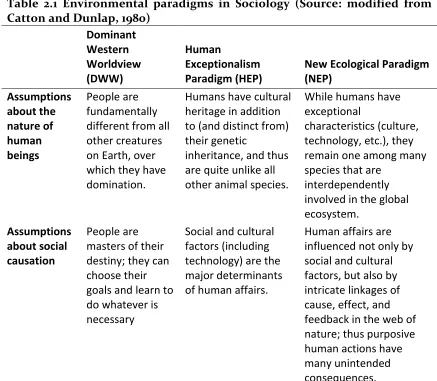
Table 2.1 Environmental paradigms in Sociology modified from Catton and Dunlap (1980)………... 61
Table 7.1 NPWS Mission/Vision evolution……….. 218
Figures
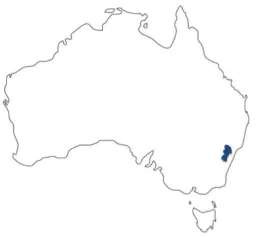
Figure 3.1 Example of first level coding using HyperResearch……… 91Figure 4.1 Location of the GBMWHA within Australia………. 107
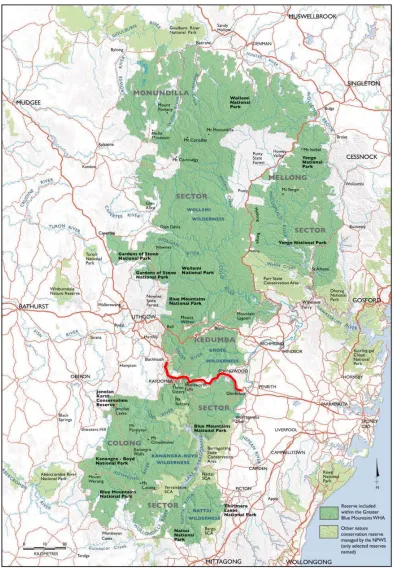
Figure 4.2 Map of the Greater Blue Mountains World Heritage Area……… 108
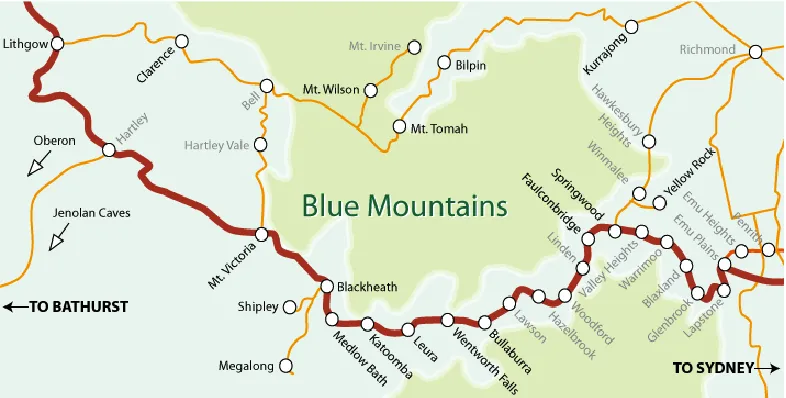
Figure 4.3 Blue Mountains towns……….. 125
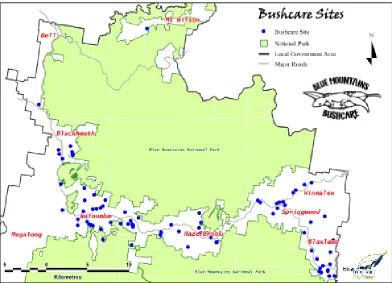
Figure 6.1 Bushcare sites in the Blue Mountains……… 187
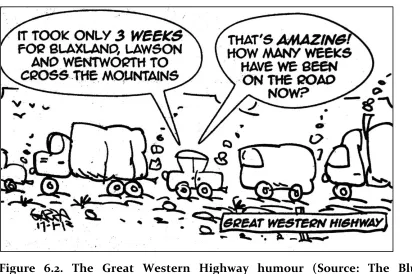
Figure 6.2. The Great Western Highway humour……… 202
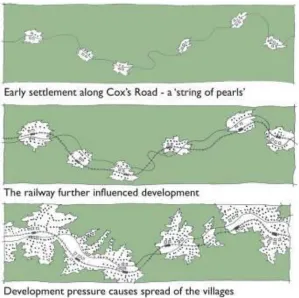
Figure 6.3 Transformation of the Blue Mountains City………. 203
Introduction
Walking through the labyrinthine streets of the Fez Medina in Morocco, North Africa I knew nothing about World Heritage yet something seemed strange about what I was seeing. There was construction going on everywhere, in the name of World Heritage conservation, yet the residents and merchants seemed to be going about their daily affairs without any pause. They did not seem particularly moved by their World Heritage status. While being pushed aside by strings of passing donkeys with overloaded packsaddles or pulling carts of dung, the smells and sights and crush of people and animals threatened to overwhelm my, wholly Australian, views on personal space. Feeling simultaneously delighted, disgusted, scared and totally captivated by the chaos of stalls crammed with spices, silks, slippers, amber and turquoise jewellery, tooled leather and meat I noticed the people going about their ordinary, everyday business in their remarkable environment.
In 2004 during my visit, parts of the Medina were being restored. Buildings were clad in scaffolding and building materials were being carted in and out by donkeys or mules, causing havoc in the already constricted spaces. Laneways were closed barring access to shops and houses. The residents of the Medina carried on around the disruption though it was clear that some had needed to vacate their homes and shops and set up elsewhere - wherever they could find the space. At the main entrance to the Medina was a sign that declared the area a UNESCO Cultural World Heritage site. It explained that the Medina, thanks to World Heritage inscription, was now under a ‘rehabilitation program’ which included the restoration of monuments and buildings as well as the improvement of drainage and widening of access-ways. The program had only just begun and was already causing disruptions for Medina residents.
observable, from a distance. On the ground, inside the Medina I was enthralled by the crowds of men, women and children talking, yelling, and bartering in the souks. The unfamiliar sound of the muezzin calling Muslims to prayer, workers ankle and knee-deep in dye at the tanneries, the exquisitely embroidered clothing and butchered camel’s heads hanging from hooks had occupied my attention. I had not noticed the architecture or monuments at all. I had visited World Heritage sites before my visit to Fez but this was the first time I really thought about the effects of World Heritage.
While the Medina was inscribed for its outstanding cultural value, the residents of the walled city seemed to be, not only less important than the cultural objects, but also a threat to their integrity. It would seem that World Heritage status had brought funding and expertise to restore the cultural objects, but I wondered what World Heritage had brought to the residents of the Medina. Did UNESCO take the same lofty, remote view of culture in the Fez Medina that I had from my hotel rooftop and fail to notice the people? I couldn’t help but wonder if World Heritage meant the same thing to all the people I saw in the Medina. Were residents, UNESCO workers, tourists, architects and other experts working toward the same goal? And what about the non-humans, such as the donkeys, the trader’s wares and the buildings and other materials? What role did they play in the conservation of World Heritage? Did all of these human actors in the Medina have a similar understanding of World Heritage? Was universal consensus even possible and did it really matter? In a nutshell, I wondered what the effects of World Heritage were. Over a decade later, as I write this thesis, I am grateful to this place that inspired so many questions that have intellectually sustained me for seven years.
What are the effects of World Heritage implementation? Since visiting the Fez
Medina 12 years ago, I now know that this is a deceptively simple question that, as this research progressed, multiplied into more questions. Even with the benefit of a case study in my home country, this PhD ‘journey’ was not dissimilar to unpacking a set of Russian dolls. Every question seemed to lead to another, equally intractable question.
This proliferation of questions demonstrates a fundamental characteristic of World Heritage: it is bureaucratically, temporally, spatially, and philosophically
complex. This complexity makes World Heritage a challenging and exciting
research subject and, at the same time, one that is in critical need of investigation. The World Heritage Convention is the most widely ratified international heritage conservation instrument in the world. Universal by its very nature, the World Heritage Convention was established in order to unify the international community in the safeguarding and transmitting of heritage of outstanding universal value (OUV) to future generations (UNESCO World Heritage Centre 2007).
The World Heritage Convention is being implemented in over 1,000 World Heritage sites all over the world and this number increases every year. Aside from representing places of OUV, World Heritage sites have innumerable other values and uses and many are places where people live, work and play. This 'human factor' (Thorsell & Sigaty 1998), along with natural disasters, poses the biggest and most problematic threat to the OUV of world heritage sites. It is people that are at the heart of efforts to preserve World Heritage sites (Millar 2006) yet there has been little research about what it means for people to live in a World Heritage site and how their lives are directly and indirectly affected by the
implementation of the World Heritage Convention (Hall 2006; Smith 2002).
There is considerable research on these aspects of World Heritage1. The scale and
complexity of World Heritage processes allows for a certain plasticity in how World Heritage is interpreted and subsequently implemented and it is how this
interpretation occurs that is less studied (notable exceptions are Hall 2006;
Hølleland 2013; Ronström 2014; Turk 2005 and Van der Aa 2005). However, generalising about the implementation of World Heritage is difficult. Countries desire site inscription for many reasons. There is often a lack of base-line information prior to inscription and there is a large number and variation of World Heritage sites globally. These variables and the growing number of World Heritage sites signify a need for specific, detailed and descriptive studies on World Heritage sites and the effects of implementation.
Inspired by my Moroccan World Heritage encounter and guided by the need for comprehensive research on World Heritage processes and practice, this thesis addresses some of this complexity. Specifically, it aims to investigate the effects of World Heritage and provide critical insights on World Heritage implementation in Australia where the effects of implementation are relatively understudied.
Australia, with 19 World Heritage sites, is no exception to the problems discussed in the broader literature. Competing interests, controversy, conflict, divided communities and politicking (Bentrupperbäumer and Reser 2006) have been recorded in several sites in Australia, such as Tasmania's Wilderness (Russell and Jambrecina 2002), Uluru Kata Tjuta National Park and Queensland's Wet Tropics (Hall 2006; Pannell 2006), Willandra Lakes Region (Sullivan 2004) and Kakadu National Park (Aplin 2004; Maswood 2000). These controversies in Australian sites demonstrate the potential volatility of heritage conservation. If we consider heritage as a ‘multilayered performance … that embodies acts of remembrance and commemoration while negotiating and constructing a sense of place,
belonging and understanding in the present’ (Smith 2006: 3), it is easy to see how World Heritage implementation can struggle to please everyone. The elements of past, present, different knowledges, sense-making and belonging can lead to a World Heritage that is conceptually cluttered, subject to numerous, sometimes conflicting, interpretations and, subsequently, various implementations.
In order to investigate the effects of World Heritage, the empirical basis for this research is a case study of a natural World Heritage site in Australia – the Greater Blue Mountains World Heritage Area (GBMWHA). The GBMWHA consists of more than one million hectares of sandstone plateaux, escarpments and gorges dominated by temperate eucalypt forest. It was inscribed as a World Heritage area in 2000, under natural criteria, as an outstanding example representing evolution and adaptability in Australia’s post-Gondwana isolation and represents important and significant natural habitats, in the form of endemic eucalyptus habitats (UNESCO World Heritage Centre 2000). The GBMWHA is one of 19 World Heritage sites in Australia and the only natural site located next to a major Australian city. There are two major urban corridors running through the World Heritage area which accommodates a population of 80,000. As a result, the GBMWHA is under considerable pressure from adjacent land use, including water flow from catchments originating outside the area and impacts from invasive species, agri-industry, coal mining, tourism and urban development. Neighbouring rural and semi-rural land is under pressure to urbanise, and councils are under pressure to allow more subdivision. The empirical basis for this thesis is drawn from interviews and observation undertaken when I ‘lived’ in the Blue Mountains for three months in June-August 2011 and two additional short field trips in January and August 2012.
Catton 1994; Dunlap and Catton 2002) or what Murdoch terms sociology’s environmental ‘blind spot’ (2001: 111). Instead it looks at society and nature as an actor-network with associations as the unit of analysis. Through these associations we can explore the hybridity of society/nature as something other than social or natural (Latour 2005). ANT allows us to ‘reimagine’ society/nature (Castree and McMillan 2001: 210) as something completely distinct, and in the reimagining World Heritage too becomes a distinct hybrid that is natural, cultural, concept and object. The outcome is that this thesis advances the current knowledge in expressing the contemporary World Heritage site as a site of sociological investigation.
ANT is the ideal companion to investigate the effects of World Heritage in a populated ‘natural’ World Heritage area through its ability to give both humans and non-humans a voice in the research. Critical to determining the effects of World Heritage is exploring and determining how World Heritage has been
translated (Callon 1986). In the World Heritage literature, discussed in Chapter 1,
there are constant tensions between conservation and development as well as outstanding universal value and local values. The contradictory meta-narrative is that people are at the heart of heritage conservation, yet they remain the biggest threat to site integrity. This thesis, through tracing the unexpected ways humans and non-humans intervene in the process of translation, reveals a network of relationships that provide a more nuanced and intricate picture of World Heritage implementation. The three narratives that emerged in this research, of disengagement, lost opportunities and business as usual, provide a powerful insight into the effects of World Heritage implementation and the associations and ordering of actors that negotiate and configure a specific translation of World Heritage.
has been home to at least six Aboriginal language groups for between 14,000-20,000 years and the area remains important to contemporary Aboriginal groups (DECC 2009), they mostly live outside the GBMWHA in Sydney or other surrounding towns (Taçon, Hooper, Brennan, et al. 2007). Consequently, I did not knowingly come across any Indigenous actors or their traces to ‘follow’. For this reason, rather than attempt to synthetically insert Indigenous issues into the thesis, I have focused on the stories of contemporary non-indigenous people.
This choice provides an opportunity for this thesis to contribute to an understudied area of World Heritage sites. As has been noted elsewhere the World Heritage literature, both internationally and in Australia, on Aboriginal heritage values and connection to ‘natural’ heritage places is substantial (Harrington 2004). Comparatively, the literature on contemporary non-indigenous people’s values and attachments to ‘natural’ World Heritage is negligible (see for example Russell and Jambrecina 2002 and Harrington 2004). The GBMWHA is no exception. Although there is ongoing research into contemporary Indigenous heritage values in the area, albeit sporadic and underdeveloped, there has been even less research on contemporary non-indigenous heritage values since World Heritage inscription in 2000. It is for this reason that, while fully acknowledging Indigenous heritage connections to the GBMWHA, I have made a deliberate methodological choice to emphasise non-indigenous relationships. By adding to the small literature on non-non-indigenous relationships to ‘natural’ heritage places, I hope to uncover fresh cultural expressions and social importance of ‘natural’ heritage within a World Heritage context in contemporary non-indigenous Australia.
explores an alternate approach. It then explores the network of human and non-humans in the GBMWHA. Discovering that a visible World Heritage presence is largely missing from the GBMWHA, it interrogates the less-visible processes that reveal how World Heritage is translated in the GBMWHA. It probes these translations, or narratives, to determine the effects of World Heritage implementation, and concludes that they are something specific to and contingent on the actor-network.
To logically organise these sub-topics, this thesis is divided into two parts. Part one provides a context for this study consisting of four chapters. Fundamentally, the question of what effects World Heritage has cannot be answered without first taking a closer look at the World Heritage system and its application in World Heritage sites. Thus, Chapter 1 looks at World Heritage as a process and an aspirational concept designed to safeguard the world’s outstanding natural and cultural heritage. It introduces the World Heritage Convention and the process for nomination and inscription. The second half of the chapter looks at how World Heritage has been implemented by thematically organising the World Heritage literature on how World Heritage is understood and practiced. The chapter concludes with an introduction to the, somewhat impoverished, World Heritage literature in Australia.
World Heritage area. It describes the methods used in conducting this study. It introduces the case study method and a suitable case study. This Australian case study, the Greater Blue Mountains World Heritage Area, is then discussed in detail in Chapter 4.
Part two of the thesis draws on the background information introduced in Part one to move towards an understanding of the effects of World Heritage implementation. Part two consists of three results chapters and provides a discussion/conclusion to the thesis. Chapters 5, 6 and 7 discuss the major findings of this research, the effects of World Heritage implementation, presented as three narratives. Chapter 5, a narrative of disengagement, is mainly based on interviews with Blue Mountains residents. While residents appreciated their World Heritage surroundings, they were largely unaware, or interested, in the reasons for inscription or plans for implementation. This narrative of disengagement points to the broader consequences of the World Heritage processes when residents have little involvement in nomination, inscription and implementation.
Nevertheless, some residents were involved, more or less, in the nomination and many of them expressed disappointment in the implementation of World Heritage in the GBMWHA. This disappointment is discussed in Chapter 6, as a narrative of lost opportunities. The chapter is based on interviews with a range of actors who were implicated in enthusiasm for the prospect of World Heritage, but frustrated or dissatisfied, in some way, by the outcome. The ‘outcome’ of World Heritage implementation in the GBMWHA is, to a large extent, the responsibility of the managers. Chapter 7 discusses the approach to managing the GBMWHA as a narrative of business as usual. The chapter is based on interviews with the managers of the World Heritage area whose approach reflects the broader bureaucratic and economic limitations of national parks management.
Source: Coe 2012
Chapter 1: World Heritage
The cultural and natural World Heritage is among the priceless and
irreplaceable assets, not only of each nation, but of humanity as a
whole. The loss, through deterioration or disappearance, of any of
these most prized assets constitutes an impoverishment of the
heritage of all the peoples of the world. Parts of that heritage,
because of their exceptional qualities, can be considered to be of
“outstanding universal value” and as such worthy of special
protection against the dangers which increasingly threaten them
(UNESCO World Heritage Convention 1972, section 1.B (4)).
The 1972 UNESCO Convention concerning the Protection of the World Cultural
and Natural Heritage was established to safeguard cultural and natural heritage
of ‘outstanding universal value’ for future generations (UNESCO World Heritage Centre 2007). The Convention is the most widely accepted international legal instrument in the field of heritage conservation, having been ratified by 192 countries in over 1,000 World Heritage sites with new sites added to the list every year (UNESCO World Heritage Centre 2016). This thesis examines the effects of World Heritage in an Australian case study after inscription. However, in order to understand how World Heritage comes to be and how it is conceived and implemented, it is necessary to first understand the processes of World Heritage. Thus, this chapter begins with an overview of these World Heritage processes, including the Convention concerning the Protection of the World Cultural and
Natural Heritage, overseeing committee and advisory bodies, how properties are
inscribed on the list, required reporting and sites in danger.
the World Heritage establishment regularly takes stock of its most fundamental
processes of World Heritage nomination and inscription. What happens after
inscription, although there are UNESCO/World Heritage publications on this matter, is largely the focus of academic literature to which this chapter subsequently turns. It specifically examines the body of literature that focuses on World Heritage sites, especially, relationships between site conservation and people who live within or adjacent to sites. It then provides a thematic synthesis of the academic World Heritage literature that demonstrates the various ways World Heritage is conceptually interpreted as well as practiced. The chapter concludes with an introduction to World Heritage in Australia, including a list of the current 19 properties inscribed with World Heritage status and research on these sites to date.
The Convention
The foundation of the World Heritage system is the Convention for the Protection
of the World’s Cultural and Natural Heritage (referred to as the World Heritage
By signing the Convention, States Parties agree to several obligations regarding how the World Heritage sites are managed. First and foremost, they must not damage the heritage site and develop methods to counteract potential threats and take the appropriate legal, scientific, technical, administrative and financial measures necessary for the site’s protection. The Convention requires that States Parties adopt a general policy which aims to give the cultural and natural heritage a function in the life of the community and to integrate the protection of that heritage into comprehensive planning (World Heritage Convention 1972, articles 4, 5 and 6). Additionally, States Parties are expected to make bi-annual financial contributions, as well as encouraged to make voluntary contributions, to the World Heritage Committee thereby also contributing to the World Heritage Fund used to provide advice and technical assistance to States Parties in the form of International Assistance. This International Assistance is aimed primarily to assist ratified developing countries. However, there is some scepticism about the benefit of these funds in practical terms.2
The Convention is, intentionally, rather vague on the specifics of World Heritage processes.3 A nearly universal ratification hinges on the ability of the Convention
to appeal to a wide philosophical spectrum. A certain level of abstraction is necessary in this case and so the specifics or the ‘rules’ of World Heritage are
2 In 2010 there were 186 requests, around US$3 million, for specific assistance to help prepare nomination files yet only 62 requests (representing around US1 million) led to a successful inscription or extension of an existing property (Rao 2010: 165). Rao’s concern, aside from the obvious waste of time and money, is that these sites that do not make it to the nomination stage are contributing to the unbalanced nature of the World Heritage List, a concern further discussed below.
3 For example, when referring to States Parties’ obligation the Convention contains qualifying phrases like a State Party ‘will do all it can ... to the utmost of its own resources' (Article 4) and each State Party 'shall endeavour, in so far as possible, and as appropriate for each country' (Article 5). The flexibility of these obligations is a potential loophole that Australian Commonwealth and state governments have tried to wriggle through on more than one occasion. See the Report by the House of Representatives Committee (1996) Managing Australia’s World
Heritage for examples of High Court rulings over the Tasmanian government’s flexible
spelled out in the Operational Guidelines which serves as the working document for the Convention. The principles of the Convention are implemented through provisions in the Guidelines (UNESCO World Heritage Centre 2015). Specifically the Guidelines provide procedures for:
a) the inscription of properties on the World Heritage List and the List of World Heritage in Danger;
b) the protection and conservation of World Heritage properties;
c) the granting of International Assistance under the World Heritage Fund; and
d) the mobilization of national and international support in favour of the
Convention.
While the Convention may be vague, being a widely ratified legal instrument, the text in the document is, essentially, ironclad. Thus, the processes, procedures, concepts and definitions of World Heritage that are subject to ‘integration and evolution’ are listed in the Operational Guidelines (Badman, Dingwall, and Bomhard 2008: 2). Unlike the Convention, the Guidelines text is revised and updated regularly. To say it has grown since its first iteration in 1977 would be an understatement. The first Guidelines was a modest document of 16 pages and 28 paragraphs (provisions). By comparison, 26 iterations later, the current 2015 version is 175 pages and 290 paragraphs. This growth reflects the conceptual evolution of World Heritage since its inception in 1972.4 While the World
Heritage concept has evolved, its processes are essentially unchanged. The World
Heritage Convention depends on administration, primarily through the World Heritage Committee, as well as the unique components at the heart of the Convention, including the List, nomination and inscription, advisory bodies, site monitoring, World Heritage in danger and outstanding universal value.
World Heritage Committee
The Intergovernmental Committee for the Protection of the Cultural and Natural Heritage of Outstanding Universal Value (also known as the World Heritage Committee or the Committee) administers the World Heritage Convention. The Committee is composed of 21 States Parties which meet in yearly sessions, as well as extraordinary sessions when required. Committee members have six-year terms and are elected by the General Assembly of States Parties which meets every two years. The Committee’s day-to-day work is managed by the World Heritage Bureau and World Heritage Centre, located in Paris, provides secretariat support.5 The Centre manages the activities related to the Convention and
implements the decisions of the World Heritage Committee. As well as implementing the World Heritage Convention, the Committee allocates International Assistance from the World Heritage Fund. The Committee examines reports on the state of conservation of inscribed sites and decides on any actions that need to be taken by States Parties. It decides on the inscription or removal of sites on the List of World Heritage in Danger and ultimately decides which properties to inscribe on the World Heritage List. The Committee ostensibly makes its decisions based on the recommendations of Advisory Bodies (discussed below). However the Committee can, and does, inscribe properties against Advisory Body recommendations. There has been an increase in the number of properties inscribed in this manner, bringing into question the scientific and technical rigour of the decision-making process (UNESCO World Heritage Centre 2011). It has been argued that the basis of these decisions has shifted, since the early years of the Committee, from technical facts to diplomacy and politics (Cameron and Rössler 2013) ‘which leads to the suspicion that [Committee] work may be sometimes ruled by political trade-offs, rather than by
professional judgement’ (Von Droste 2012: 37). This shift constitutes a ‘very worrying evolution for the credibility of the [World Heritage] List (UNESCO World Heritage Centre 2011: 38). Nevertheless, compared to other World Heritage documents, it is arguably the List that most powerfully embodies the popular conception of World Heritage.
The List
However, the official purpose of the World Heritage list is nobler than its common perception as a list of ‘must-see’ tourist sites. According to UNESCO, the World Heritage List acts as a kind of trust whereby World Heritage sites are kept safe in order to pass them on to ‘generations of the future as their rightful inheritance’ (UNESCO World Heritage Centre 2005: 5). Once a country becomes a State Party to the Convention, they are eligible to nominate sites for inclusion in the World Heritage List. There are currently over 1,000 sites on the List, the composition of which has been the subject of much discussion. The List is intended to be a collection of properties that balance natural, cultural and mixed categories, as well as being representative of the diversity of States Parties. However, the List has evolved with large regional and categorical gaps. Almost half the World Heritage properties are located in Europe and there are 814 cultural sites compared to 203 natural and 35 mixed. The World Heritage Committee has adopted several strategies to address these gaps, most notably the Global Strategy for a Representative, Balanced and Credible World Heritage List, however there are doubts as to how successful these strategies have been (Labadi 2013; Steiner and Frey 2012). While some regional areas, such as Africa and Asia, are gaining greater representation on the list (Cameron and Rössler 2013) it has been suggested that attention should shift away from further expanding the List to the more urgent matters of protecting sites already inscribed (UNESCO World Heritage Centre 2011).
World Heritage. The purpose of the Tentative List is to provide the World Heritage Committee with an idea of future nominations so they can determine gaps in representation and make comparative analyses of ‘themes, regions, geo-cultural groupings and bio-geographic provinces’ (UNESCO World Heritage Centre 2005: 51). A main issue with the Tentative List, as precursor to a more balanced list, is that the geographical and categorical composition of the Tentative List differs little to the properties already inscribed (ICOMOS 2004). In other words, the regions and categories under-represented on the World Heritage list are also under-represented on the Tentative List. Without identifying unrepresented regions and categories, it is impossible to identify properties for future nomination that may fill the gaps in representation. In any case, the Tentative List is only the first step in a lengthy and costly process towards getting a property inscribed on the World Heritage list.
Nomination and Outstanding universal value
Once a property is included on a State Party’s Tentative List, they can then nominate that property for World Heritage status, subject to a strict timetable set by the World Heritage Centre. Nomination documents follow a prescribed format that requires comprehensive site information including:
the identification and description of the Property including the boundaries and buffer zone and history and development of the site; justification for inscription including the relevant World Heritage criteria,
statements of OUV, authenticity and integrity of the site, and a comparative analysis of comparable sites;
State of conservation and factors affecting the property including its physical condition and possible threats; protection and management including legislative, regulatory, contractual, planning, institutional and/ or traditional measures relating to the protection of the site with a detailed analysis of how these protection mechanisms operate as well as a detailed management plan;
Based on reports from the Advisory Bodies, the World Heritage Committee may decide to inscribe the property, refer it back to the States Parties for further information, defer it for more in-depth study or decline the nomination. Declined properties will only be accepted for re-nomination in exceptional circumstances (UNESCO World Heritage Centre 2007).
The information in nomination files is used to evaluate the nominated site against a set of criteria to determine a site’s outstanding universal value (OUV). Although OUV is the cornerstone of the Convention, it is the Operational Guidelines that contains its definition. OUV, as outlined in the Operational Guidelines, is defined as:
[C]ultural and/or natural significance which is so exceptional as to
transcend national boundaries and to be of common importance for
present and future generations of all humanity. As such, the
permanent protection of this heritage is of the highest importance to
the international community as a whole (UNESCO World Heritage
Centre 2015: 11, paragraph 50).
capable of withstanding the diversity of universal and local heritage values and significance (Titchen 1995).
Up until 2003 there were two separate lists for judging the OUV of natural and cultural properties. Following discussions to take a more holistic view toward the representation of natural and cultural heritage and open up possibilities for properties not previously nominated or properties with both natural and cultural elements there is now a single list of 10 criteria. To be eligible for World Heritage inscription, nominated properties must meet at least one of the following:
1. represent a masterpiece of human creative genius;
2. exhibit an important interchange of human values, over a span of time or within a cultural area of the world, on developments in architecture or technology, monumental arts, town-planning or landscape design;
3. bear a unique or at least exceptional testimony to a cultural tradition or to a civilization which is living or which has disappeared;
4. be an outstanding example of a type of building, architectural or technological ensemble or landscape which illustrates (a) significant stage(s) in human history;
5. be an outstanding example of a traditional human settlement, land-use, or sea-use which is representative of a culture (or cultures), or human interaction with the environment especially when it has become vulnerable under the impact of irreversible change;
6. be directly or tangibly associated with events or living traditions, with ideas, or with beliefs, with artistic and literary works of outstanding universal significance. (The Committee considers that this criterion should preferably be used in conjunction with other criteria)
7. to contain superlative natural phenomena or areas of exceptional natural beauty and aesthetic importance;
9. to be outstanding examples representing significant on-going ecological and biological processes in the evolution and development of terrestrial, fresh water, coastal and marine ecosystems and communities of plants and animals;
10. to contain the most important and significant natural habitats for in-situ conservation of biological diversity, including those containing threatened species of outstanding universal value from the point of view of science or conservation (UNESCO World Heritage Centre 2008: 14).
Compiling nomination dossiers requires the coordination and cooperation of several organisations and a ‘strong multi-disciplinary team’ with specialist, technical and scientific skills and, preferably, an understanding of the World Heritage process (Badman, Dingwall, and Bomhard 2008: 19). Collecting and compiling information on the site and producing a complete nomination dossier takes considerable time and resources. The process of assessing the nomination takes, on average, 18 months, assuming there are no major revisions that may require the State Party to resubmit the following year. The high standards of the nomination dossier is clearly challenging, especially for developing countries who may struggle to pull together the needed resources and expertise. Many dossiers are considered incomplete by the World Heritage Committee or fail their evaluation of OUV by the Advisory Bodies. Somewhat surprisingly, the Advisory Bodies, who have the expertise and experience necessary to compile a successful nomination, cannot assist States Parties with their nominations due to a perceived conflict of interest (Rao 2010).6 Despite this ‘arms length’ approach of
the Advisory Bodies, they provide a critical role in the World Heritage process.
Advisory bodies
The Convention identifies three Advisory Bodies - International Union for the Conservation of Nature (IUCN), the International Council on Monuments and Sites (ICOMOS) and the International Centre for the Study of the Preservation and Restoration of Cultural Property (ICCROM). IUCN and ICOMOS, among other undertakings, are charged with the responsibility of evaluating sites nominated for inscription and reporting to the Committee, as well as monitoring the state of conservation of existing World Heritage sites and reviewing applications for international assistance.7 As mentioned above, in most cases the
World Heritage Committee observes these recommendations, however, it can and does inscribe properties not recommended by the Advisory Bodies. The specific role of ICCROM, in relation to the Convention, includes being the priority partner in training for cultural heritage, monitoring the state of conservation of cultural World Heritage properties, reviewing requests for International Assistance submitted by States Parties, and providing input and support for capacity-building activities (ICCROM 2012). The Advisory Bodies also play a significant role in assessing the state of conservation of World Heritage properties through their involvement in site monitoring.
Site Monitoring
The World Heritage Committee requests that States Parties prepare Periodic Reports in cycles of every six years according to a phased timetable that is categorised by region. The first phase of periodic reporting began in 2000 and
was completed in 2006. States Parties are encouraged to use the Periodic Reports to record changes to the sites and forecast any potential threats to the conservation of sites. The Periodic Reporting on the application of the World Heritage Convention is intended to serve four main purposes:
1) to provide an assessment of the application of the World Heritage Convention by the State Party;
2) to provide an assessment as to whether the World Heritage values of the properties inscribed on the World Heritage List are being maintained over time;
3) to provide up-dated information about the World Heritage properties to record the changing circumstances and state of conservation of the properties;
4) to provide a mechanism for regional co-operation and exchange of information and experiences between States Parties concerning the implementation of the Convention and World Heritage conservation (UNESCO World Heritage Centre 2005: 85).
The World Heritage Committee uses Periodic Reports to compile information on the state of conservation of specific sites and across regional areas, as well as make decisions regarding measures to maintain the OUV of sites, or inscribe sites on the List of World Heritage in Danger. Reports are also presented in the World Heritage Committee report to the General Conference of UNESCO. At the request of the Committee, IUCN and ICOMOS, together with UNESCO, may undertake site assessments to monitor the state of conservation. These Reactive Monitoring missions report on the state of conservation of specific World Heritage sites under threat.
The World Heritage Centre describes the two reporting systems as:
‘tools [that] perform different, albeit complementary functions:
Reactive Monitoring is a policy guidance tool, aimed to provide
benchmarks, orientations and deadlines to the actions of the States
policies and capacities to ensure site conservation’ (UNESCO World
Heritage Centre 2007: 20).
However, UNESCO has noted that there are flaws in the current reporting system. Both reporting mechanisms are complex and expensive and there is no clear functioning relationship between the two (one reporting tool does not necessarily inform the other), particularly where properties have no formal management plan that includes monitoring and evaluation procedures (UNESCO World Heritage Centre 2007, Hockings et al. 2008). The Committee, once alerted to the imminent loss of OUV, integrity or authenticity, are able to consider all possible corrective measures to save the property (UNESCO World Heritage Centre 2005).
List of World Heritage Sites in Danger
Ideally, when problems are identified, Reactive Monitoring is used as a measure to prevent sites from being inscribed on the List of World Heritage in Danger. However, in some cases, the World Heritage Committee, acting under the World Heritage Convention inscribes a property on this list. This action is rarely taken and only if the property is ‘threatened by serious and specific danger’, where ‘major operations are necessary for the conservation of the property’, or where assistance has been requested by the States Party (UNESCO World Heritage Centre 2005: 80). A property may be placed on this list because of ascertained danger, such as ‘serious deterioration of materials’ or ‘important loss of cultural significance, as well as potential danger, such as the ‘threatening effects of town planning projects’ or the ‘gradual changes to geological, climatic or other environmental factors’ (UNESCO World Heritage Centre 2005: 80).
as a kind of sanction or dishonour. Conversely, some States Parties consider the list to be an expedient way to save a property (UNESCO World Heritage Centre 2008: 17). International financial aid is prioritised to properties under threat and so States Parties may be able to garner the resources they need to implement corrective measures. Currently, there are 55 sites (out of 1,052) on the World Heritage List in Danger and two sites, Germany’s Dresden Elbe Valley and Oman’s Arabian Oryx Sanctuary, have been deleted from the World Heritage List.
While the World Heritage Convention sets out the obligations of States Parties and embodies the spirit of World Heritage, it is clear that, in its entirety, World Heritage is more than the Convention. It is a complex process that, along with the Convention, depends on the Operational Guidelines, World Heritage Committee, States Parties, The Lists and Advisory Bodies in order to function. It depends on a system to categorise, create and implement procedures and facilitate reports and monitoring. Not least of all, it depends on heritage sites with the potential for outstanding universal value. This section has provided a brief overview of these major elements of the World Heritage process, and associated difficulties, that deal primarily with nominating and inscribing heritage sites, along with their associated deficits. Having established an understanding of World Heritage at the international level and the relevant processes, this chapter turns to the literature that focuses on World Heritage
after inscription at the national, regional or local level.
Research on populated World Heritage sites
When all is said and done, conservation is about people. It is about
the balance that must be struck between humans and nature and
between generations (UNESCO World Heritage Centre 2004: 24).
Australian sites. This section is brief, reflecting the small body of publications specific to contemporary World Heritage issues in Australian sites. It is important to note that I make a distinction between literature that focuses on any range of issues present in World Heritage sites and literature on World Heritage sites. That is to say, the literature that focuses on issues that happen to exist within a World Heritage area (like coral bleaching in the Great Barrier Reef) is not included here. This thesis is interested only in the literature that identifies and discusses issues specific to World Heritage implementation. I have also omitted much of the literature that merely describes the characteristics of World Heritage sites without providing any deeper analysis. Or, in other words, I have included literature based on primary research and excluded research that relies on secondary sources or desk reviews. Many UNESCO publications fall under this descriptive category.8 To begin, this section takes a closer look at the
consequences of World Heritage implementation in populated World Heritage sites. Internationally, the literature indicates tensions in World Heritage sites between aims to conserve the sites and the people who live in or near the site (see for example Bianchi 2002; Black and Wall 2001; Evans 2002; Smith 2006). Australian research, too, tends to be the subject of conflicts over resources (see Aplin and Masswood 2000) or indigenous people and heritage values (see Smith 2006; Harris 2012) and frequently it tends to be a mixture of both.910
8 Some exceptions are Witcomb 2012; Harris 2012; Sullivan 2004.
9 The controversial events in Kakadu National Park have been well documented (Aplin 2004; Maswood 2000). Put simply, a proposed uranium mine within the World Heritage area almost put Kakadu on the World Heritage in Danger List. Australia eventually retracted the proposal, but the protracted and expensive negotiations designated Kakadu as possibly the most controversial World Heritage site of all (Aplin 2004). It is in the wake of such controversy over World Heritage
sites that we see what effect World Heritage can have on people. This particular controversy had a
Contrary to popular belief,, World Heritage lacks enforcement capacity and despite the spirit of universal trusteeship over the protection of sites the protection that World Heritage affords can best be regarded as theoretical (Pressouyre 1996). The onus falls on the nominating country to implement the Convention, and in practice, to ensure the site's preservation. This resultant miscellaneous mix of management strategies across 1,052 sites makes it difficult to generalise about how World Heritage sites are managed, how the Convention is being implemented or what effects it has on site residents. Like any universal convention, World Heritage is not a perfect system (see table 1.1 for a summary of the Convention’s strengths and weaknesses). Arguably, its most notable impact has been its influence on standardising heritage values and conservation strategies, not only for World Heritage sites but also for heritage in general. It has ‘contributed to an extraordinary international dialogue on heritage matters, fostering a new understanding of heritage theory and practice’ (Cameron and Rössler 2013: 221). Framing a universal understanding of heritage is the Convention’s strength, and, controversially, one of its biggest weaknesses. The conception and consequences of an all-inclusive ‘world’ heritage is the subject of much discussion, reflection, and revision by World Heritage supporters and critics.
Table 1.1 World Heritage Convention implementation: strengths, weaknesses, opportunities and threats. Source: UNESCO World Heritage Centre (2011)
Strengths Weaknesses
An intergovernmental agreement/strong consensus
Near universal membership
Wide range of members from developing and developed countries
40 years of operation Part of the UN family
Budget limitations especially given increasing demands
Differing local interpretations of OUV and management standards
Limits of administrative oversights Slow to enact change
Few mechanisms for industry and private sector engagement
Opportunities Threats
Use better structures, plans and practices for business
Increase civil society support Strengthen relationships with other international instruments
Room to grow diversity of properties
Emphasis on inscription as an end in itself rather than conservation
Increasing politicisation of functions Increasing Committee, secretariat and Advisory Body workload
Number of new competing
organisations/lists and brand confusion
can ultimately lead to economic and social benefits and a sense of local stewardship.
It is clear that UNESCO is promoting World Heritage as something more than a tool for conserving heritage sites. At its most aspirational, it is a tool for sustainable, community development. However, it was not always considered in this way. Indeed, the original 1972 Convention deliberately omitted the involvement of communities in the nomination process, as a means to avoid embarrassment, should the States Parties’ nomination fail to gain World Heritage status (Rössler 2012). However successful the Convention may seem to appear, in the 44 years since coming into force ways of thinking and doing heritage conservation have undoubtedly changed. The global popularity of the Convention raises complex and continual challenges for making the Convention both flexible enough to be implemented universally, while maintaining its credibility (Turtinen 2000).
These challenges are reflected in a number of changes to the Operational Guidelines over the last four decades that trace the path of a World Heritage striving to become socially, culturally and environmentally ethical. This ethical heritage was publically declared in the theme chosen for the 40th anniversary
There are, however, many other reasons that motivate a nomination for World Heritage, or inscribe a property on the List, as the following will discuss.
World Heritage Themes
There is, really, no such thing as heritage (Smith 2006: 11)
Through my unsuccessful attempts to find a single definition of a populated World Heritage site in the literature I have discovered that World Heritage sites consist of a complex of factors and phenomena, some of which are common across all populated sites. This view of heritage as a 'multilayered performance' must take into account the various ways heritage is created, used and managed across time and space (Smith 2006: 3). Narrowing down this complexity to one defining explanation is neither possible nor appropriate, though I have identified nine broad themes of authority, sustainable regional development, conflicting values, resentment and resistance, revitalisation, ideologies, museumification, power, and commoditisation. These themes are by no means exhaustive, nor are they mutually exclusive. They are interconnected and aspects of some categories may be present in others. Moreover, some categories which I have chosen to keep separate, like power and resentment/resistance, could be considered analogous or conflicting concepts depending on one's perspective. The act of taking information from the literature and grouping it in orderly, synthetic categories is purely an exercise in abstractive interpretation and presentation for the purposes of this thesis, although I do feel that the categories are useful in demonstrating both the variability and consistency of themes across World Heritage literature. I have neglected to include politics as a separate category, as all of my nine categories are inherently political.
Authority
documents are often developed by outside 'experts'. These documents, as well as many generic heritage management guidelines, embody a specialised lingua
franca for the way heritage is understood and managed. Over time, this language
becomes 'scripted' or 'regulated' (Smith 2006: 79) and thus intrinsically exclusive of all but heritage experts. This exclusive interpretation of heritage (not only World Heritage) becomes the dominant discourse, or what Smith (2006) has coined the ‘Authorised Heritage Discourse’, which is institutionalised and regulated. This institutionalisation can even apply to competing discourses (Smith 2006) over time where it is the discordance between both that becomes established to the point where the differences are no longer 'examined, evaluated, or criticised' (Innes 1995: 186). Although there are attempts to make the heritage management process more inclusive (Johnston and Buckley 2001), this 'discursive construction', particularly of key heritage conservation documents, undermines these innovations (Waterton, Smith and Campbell 2006: 351). The constituted discursiveness of heritage lends rigidity to how heritage is known and understood and also to how it is managed. It muffles the various other perceptions, knowledges, stories and interpretations of heritage and obstructs attempts to keep discussions about the meaning of heritage ongoing and accessible.
Sustainable Regional Development
utility of World Heritage sites in stating that ‘each State Party to the Convention shall endeavour … to adopt a general policy which aims to give the cultural and natural heritage a function in the life of the community’ (Article 5).
This 'function' in the life of the community has been elaborated in the Budapest Declaration adopted by the World Heritage Committee at its 26th session in 2002 which states that the Committee will:
‘[S]eek to ensure an appropriate and equitable balance between
conservation, sustainability and development, so that World
Heritage properties can be protected through appropriate activities
contributing to the social and economic development and the quality
of life of … communities and will seek to ensure the active
involvement of … local communities at all levels in the identification,
protection and management of … World Heritage properties’ (2002,
3c).
Difficulties in implementing this ideal use of World Heritage properties arise when site planning is still firmly entrenched in traditional planning systems. Community involvement in World Heritage becomes difficult when technical or scientific experts (often from outside the site) control much of what is selected as being ‘heritage’ and when the management of the site ultimately involves the compliance of local people to these externally imposed rules and regulations (Wall and Black 2004). Possibilities of promoting sustainable regional development at the same time as conserving the site are questionable too, when, in practice, the impacts of World Heritage listing on a site’s preservation are limited. The extent of site preservation mainly depends on the efforts of national and local activities (Van der Aa 2005) and, such efforts notwithstanding, the direct local economic benefits from investing in heritage are often exaggerated or simply unattainable (Bowitz and Ibenholt 2009).
Wiesmann, Liechti and Rist 2005; UNESCO World Heritage Centre 2004; Loulanski 2006). In particular, discussions of heritage tourism development feature prominently in the cultural heritage literature (Hampton 2005; Wall and Black 2004; Su and Teo 2008; Pedersen 2002). Wojno (1991) claims that historic preservation, in particular, is a developmental strategy and cultural landscapes are directly linked to sustainable regional development (Wojno 1991; see also Pedersen 2002). The World Heritage Convention is considered to represent 'best practice of the UN's efforts to support … sustainable development' (UNESCO World Heritage Centre 2007: 9) and World Heritage sites are often the receivers of international funding from donors and development banks (Van der Aa 2005), most notably the World Bank (see Cernea 2001). Nuryanti (1996: 257) argues that for developing countries the problems of heritage conservation (community relocation, compensation and disruption) 'are fundamentally the problems of development'.
Conflicting Values
World Heritage area in the Swiss Alps, Wiesmann et al. (2005) found that residents expected increased conservation and revenue reflecting their values, both as custodians and potential beneficiaries of the site.
Much has been written on the values of heritage. Some suggest that conservation strategies should work to foster and integrate diverse values in order to more accurately reflect the reality and complexity of people’s lives (Allendorf 2007). Others focus more on conflicting values where village architecture may be seen as the major valuable attribute by one party, yet traditional forms of hospitality may epitomise what is valuable to those who live in the village (Allerton 2003). Yet others provide accounts of how neglecting to incorporate local knowledge and values may result in resentment (Sanz and Sullivan 2008) or outright acts of hostility (Bianchi 2002). Mason (2002) suggests that heritage values are typically either sidelined by one predominant value or all values are condensed into one notion of significance. Heritage value typologies have also been developed as a practical tool for managing heritage sites (see Mason 2002 and Labadi 2007 for a summary of these typologies) including Australia's Burra Charter (ICOMOS 2013: 2) which lists aesthetic, historic, scientific, social and spiritual values. On examination of 106 World Heritage nomination dossiers, Labadi (2007) found that the prevalent values for nomination were history and potential development of the properties, as well as the description of their architectural and aesthetic characteristics. Less than a quarter of the nominations mentioned the active involvement of local communities.