This is a repository copy of Living with Nuclear Power in Britain : A Mixed-methods Study.
White Rose Research Online URL for this paper: http://eprints.whiterose.ac.uk/82894/
Version: Submitted Version
Monograph:
Pidgeon, Nick F., Henwood, Karen, Parkhill, Karen Anne orcid.org/0000-0002-9655-7414 et al. (2 more authors) (2008) Living with Nuclear Power in Britain : A Mixed-methods Study. Working Paper. Cardiff University
Reuse
Items deposited in White Rose Research Online are protected by copyright, with all rights reserved unless indicated otherwise. They may be downloaded and/or printed for private study, or other acts as permitted by national copyright laws. The publisher or other rights holders may allow further reproduction and re-use of the full text version. This is indicated by the licence information on the White Rose Research Online record for the item.
Takedown
If you consider content in White Rose Research Online to be in breach of UK law, please notify us by
Living with Nuclear Power
in Britain: A Mixed-methods
Study.
Nick Pidgeon, Karen Henwood, Karen Parkhill, Dan
Venables and Peter Simmons.
Cardiff University and the University of East Anglia.
Summary Findings Report: 30
thSeptember 2008
Copies of the report can be downloaded from the SCARR website:
CONTENTS
PART A: PROJECT BACKGROUND INFORMATION ...5
Section 1: Introduction ... 6
1.1 Project funding ... 6
1.2 Project team members...6
1.3 Project background: previous nuclear power research and findings ...6
1.4 Project rationale... 8
1.5 Project research aims...9
Section 2: Case Study Areas Overview... 9
2.1 Case study area 1: Oldbury ... 9
2.2 Case study area 2: Bradwell ... 9
2.3 Case study area 3: Hinkley Point ... 10
PART B: EMPIRICAL STAGES (METHODS & RESU LTS)...11
Section 3: The narrative interviews... 12
3.1 Rationale... 12
3.2 Design and procedure ... 13
3.3 Analysis... ... ... ... 14
3.4 Results... 15
3.4.1 Meta-theme 1: Making risk ordinary ... 15
3.4.1a Familiarisation ... 15
3.4.1b Making risk normal ... 17
3.4.1c Conclusion to meta-theme 1... 18
3.5 Meta-theme 2: Noticing the extraordinary – risk, threat and anxiety as part of everyday life ... 19
3.5.1 Intersection of risk and biography ... ... ... 20
3.5.2 Living with anxiety ... 22
3.5.3 Laughing it off: an exploration of the multiple roles of humour... 23
3.5.4 Examining why anxiety remains... 24
3.6 Reflecting on using the narrative approach ... 25
3.7 Conclusion to the narrative interviews ... 27
Section 4: The Q-sorts at Bradwell and Oldbury... 28
4.1 Q-Method rationale... ... ... ... 28
4.2 Introducing the Q-method approach ... 28
4.3 Q participants ... 28
4.4 Design and procedure ... 29
4.5 Analysis... ... ... ... 30
4.6 Results... 30
4.6.1 Point of View 1: Beneficial and safe ... 31
4.6.2 Point of View 2: Threat and distrust ... 31
4.6.3 Point of view 3: Reluctant acceptance... 32
4.6.4 Point of View 4: There’s no point worrying... ... 32
4.7 Q-method conclusion... 33
Section 5: The survey: Oldbury and Hinkley Point ... 35
5.1 Rationale... 35
5.3 Analysis and results ... 36
5.3.1 Survey sample ... 36
5.3.2 Response rates ... 37
5.3.3 Comparisons of Oldbury/Hinkley survey with 2005 national survey ... 37
5.3.4 General environmental concern ... 38
5.3.4a Nuclear power... 38
5.3.4b Radioactive waste ... 38
5.3.4c Climate change ... ... ... 38
5.3.5 Energy policy attitudes ... 39
5.3.5a Tackling climate change... 39
5.3.5b Increasing energy security in the UK ... 39
5.3.5c Scepticism about Government policy and ‘imposition’... 39
5.3.6 Judgements of risks and benefits... 39
5.3.6a ‘There are risks from having nuclear power stations in the UK’ ... 39
5.3.6b ‘There are benefits from having nuclear power stations in the UK’ ... 40
5.3.6c ‘How would assess the benefits and risks of nuclear power in general?’ ... 40
5.3.7 New build ... 40
5.3.7a ‘In the UK’ ... ... ... ... 40
5.3.7b Locally versus ‘In the UK’ ... 40
5.3.8 Q-Perspectives: relative proportions and characteristics... 40
5.3.9 Trust... 41
5.3.10 Place attachment ... 41
5.3.11 Predictors of support for local new build ... 42
5.3.12 Involvement in siting decisions ... 42
5.4 Conclusions to survey ... 42
PART C: CONCLUSION ...45
Section 6: Conclusions... 46
6.1 Summary of conclusions from the empirical stages... 46
6.2 Implications for future research ... 50
BIBLIOGRAPHY & APPENDICES...51
7.1 Bibliography... 52
7.2 (4.6) Appendix 1: Table 2: Highest and lowest ranked statements for the Q factors ... 58
7.3 Appendix 2: Tables from Survey Section ... ... ... 59
(5.3.4) General environmental concern... 59
[image:4.596.90.501.97.697.2]Table 6: Nuclear power ... 59
Table 7: Radioactive waste... 59
Table 8: Climate change ... 59
(5.3.5) Energy policy attitudes... 59
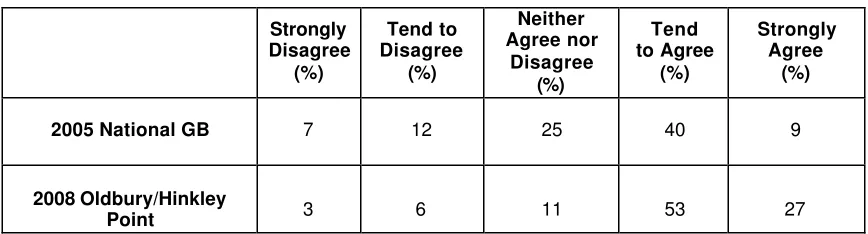
Table 9: Question: “I am willing to accept the building of new nuclear power stations if it would help to tackle climate change” ... 59
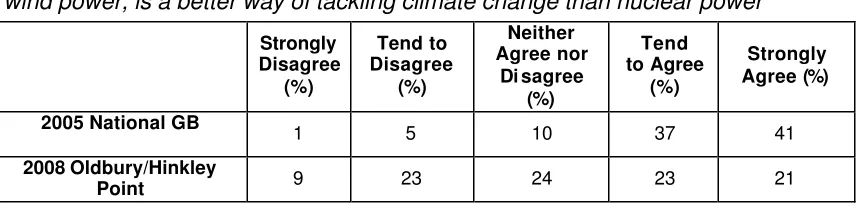
Table 10: Question: “Promoting renewable energy sources, such as solar and wind power, is a better way of tackling climate change than nuclear power” ... 60
Table 11: Question: “Britain needs a mix of energy sources to ensure a reliable supply of electricity, including nuclear power and renewable energy sources” ... 60
Table 12: Question: “It doesn’t matter what we think about nuclear power. Nuclear power stations will be built anyway”... 60
(5.3.6) Judgements of risks and benefits ... 60
[image:4.596.99.504.105.385.2]Table 14: Question: “There are benefits from having nuclear power stations in the UK” . 61 Table 15: Question: “How would assess the benefits and risks of nuclear power in
general?” (%) ... 61
(5.3.7) New Build ... 61
Question: Please indicate the extent to which you would support or oppose the following: ... 61
Table 16: The building of new nuclear power stations in the UK ... 61
Table 17: The building of a new nuclear power station at Oldbury/Hinkley Point vs. ‘In the UK’ ... 61
(5.3.8) Q Perspectives ... 62
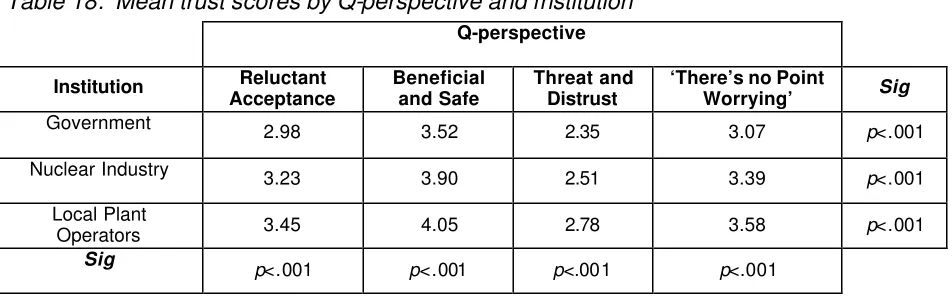
Table 18: Mean trust scores by Q-perspective and institution... ... 62
Table 19: Mean acceptability (risks vs. benefits of nuclear power stations in the UK) scores by Q-perspective (Point of view) ... ... ... 62
(5.3.11) Predictors of support for local new build ... 62
Table 20: Predictors of support for new build locally ... 62
(5.3.12) Involvement in siting decisions ... 63
Table 21: Question: “The Government and nuclear industry should fully involve local people in any decisions about siting a new nuclear power station here” ... 63
Appendix 3: Additional tables from the survey ... 64
Table 22: Perceived risks: ‘There are risks…’... 64
Table 23: Perceived benefits: ‘There are benefits…’... 64
Table 24: Risk/Benefit judgements (acceptability) ... 64
This report should be cited as:
Pidgeon, N. F., Henwood, K. L., Parkhill, K. A., Venables, D. and Simmons, P. (2008) Living with Nuclear Power in Britain: A Mixed Methods Study. School of Psychology, Cardiff University.
Part A: Project
Section 1: Introduction
1.1 Project funding
This project (Living with Socio-Technical Risk: A Mixed-methods Study) is a 5 year project (2003-2008) funded primarily by the Social Contexts and Responses to Risk (SCARR) priority network of the Economic and Social Research Council (ESRC). The ESRC has provided core support of £2.8 million (GBP) to nine projects in the SCARR network under grant no. RES-336-25-0001. The SCARR network is comprised of 14 Higher Education Institutions (UK) investigating multiple typologies and aspects of risk1. For the third empirical phase (survey) a small contribution towards survey administration was provided by the Leverhulme Trust under grant no. F/00 407/AG to the Understanding Risk research group.
1.2 Project team members
Our research is a collaborative interdisciplinary project (between Cardiff University and the University of East Anglia), directed by Professor Nick Pidgeon (social psychologist in the School of Psychology, Cardiff University). The other team members are:
o Co-Principal Investigator: Dr Karen Henwood (Reader in social psychology in the School of Social Sciences, Cardiff University).
o Co-Principal Investigator: Mr Peter Simmons (Senior Lecturer in environmental science in the School of Environmental Sciences, University of East Anglia)
o Research Associate: Dr Karen Parkhill (human geographer with expertise in qualitative research methods, in the School of Psychology, Cardiff University)
o Research Associate: Mr Dan Venables (social psychologist with expertise in quantitative research methods, in the School of Psychology, Cardiff University)
We are all members of the Understanding Risk research group2.
1.3 Project background: previous nuclear power research and findings
Nuclear power is generally thought of as a uniquely worrying technology capable of generating intense emotiona l states such as fear and dread, due to the largely invisible and long -lasting effects it is presumed to have in the event of something going wrong, concerns about radioactive waste, and a historic association with atomic weaponry (see for example, Weart, 1988: Slovic et al., 1991; Joffe, 2003). In particular, national surveys have shown that dread of nuclear power stems
1 For more information on the SCARR priority network and individual projects involved, please go to
www.kent.ac.uk/scarr/index
2
from continued fears regarding potential contamination from radioactive material, health fears (such as developing cancer), and the Chernobyl and Three Mile Island accidents (Slovic, 1987; 1993; Slovic et al, 1991; also see Masco, 2006). National surveys also show that, in recent years, there have been decreasing levels of opposition to nuclear power (Knight, 2005), although i n research conducted in 2005 it was found that, on balance, more people in Britain are still against nuclear power than support it (Pidgeon et al., 2008). It has also been consistently found in survey research, that the acceptability of nuclear power and radioactive waste is closely related to levels of institutional trust.
Research which has focused on communities li ving in very close proximity to nuclear facilities, has found that proximity is associated with somewhat higher levels of support for nuclear power (Eiser et al., 1995). A commonly voiced explanation is that acceptance of, or refusal to overtly criticise, nuclear power by those living close to an existing nuclear facility, stems from the perceived economic benefits it brings to a host community, in particular where a community is otherwise economically marginalised (Blowers and Leroy, 1994; Wynne et al., 2007 [1993]). However, qualitative research on local communities living in very close proximity to the nuclear reprocessing plants at Sellafield and Cap le Hague suggests that even where support and acceptance is expressed, this can be highly qualified with a degree of underlying unease always present (Macgill, 1987; Zonabend, 1993).
The complexities of understanding local communities’ thoughts, feelings and perceptions of living close to such industrial developments have also been explored extensively in research on other major socio-technical and environment hazards. Within such work, there are again a number of assertions made about the perceived impacts such developments have on local communities in close proximity. First, local people may feel that their area is geographically stigmatised due to the presence of a hazardous facility and that they by association are also stigmatised by people outside the area (Edelstein, 1987; Bush et al, 2001; Flynn et al., 2001). Second, local people may reject suffering any negative effects of living close to a socio-technical or environmental hazard , in an effort to prevent being stigmatised, leading to the creation of a so called “halo effect” (Bickerstaff and Walker, 2001). Finally, whilst the apparent negative features of a local place such as an industrial development, may be striking to those who live outside the area, for those living there it may just be seen as a ‘part of the local experience’ (Burningham and Thrush, 2004).
living in close proximity to such hazards (cf. Bickerstaff, 2004; Bickerstaff and Walker, 2001; Masuda and Garvin, 2006; also see Burningham and Thrush, 2004; Howel et al., 2002). Such studies reflect an emerging interpretive perspective within socio-cultural risk research more generally (see Pidgeon et al., 2006).
Eyles et al. (1993) neatly tie the importance of place to risk and studies of risk perception by stating:
“Risk is now widely recognised to be socially constructed; appraisal and management [of risk] are determined by people’s place in the world and how they see and act in the world. All ideas about the world are in fact rooted in experience and different forms of social organization and their underlying value systems will influence risk perceptions” (pp. 282).
Clearly, while social, cultural and political factors represent important aspects of risk perception, also pertinent is the role of the individual. Inherent in the above quote by Eyles et al. (1993) is the notion that perceptions of risk are sedimented through individuals’ life experiences. As such, perceptions of risks and associated social constructions of socio-technical and environmental hazards cannot be seen as divorced from the values people develop, as well as processes of identity formation. Emphasised in risk research is the importance of grounding risk perceptions in everyday life and, as such, visualising people as “risk subjects ”, necessitating the examination of people’s “risk biographies” (Tulloch and Lupton, 2003; Hollway, and Jefferson, 1997a). Intrinsic to such notions, is that risk perceptions are subjective and subject to change in ways that are mediated by social, cultural, political, geographical and psychological processes. Thus when examining risk perceptions, research also needs to be open to and allow for, reflexive discussion by risk subjects, so that further grounding of risk subjectivities can occur not only in place, but also through time.
1.4 Project rationale
ways in which people currently living with nuclear power stations view this technology will be important for understanding the unfolding dynamics of risk perception around this issue , as well as the possibilities for constructive engagement between varied other stakeholders to the nuclear debate and such communities.
1.5 Project research aims
The theoretical, empirical and policy interests described in the previous sections led to the development of a broad research question and aim:
1. How do people residing in close proximity to a major socio-technical hazard/site (nuclear power plant) ‘live with risk’ in their everyday lives?
To address this primary aim, we have complete d three empirical phases (narrative interviews, Q-method sort and survey) across three case study areas. In addition, the initial phase of the project (narrative interviews) had the methodological objective to investigate whether eliciting people’s biographical narratives – their storied identities – can contribute to an understanding of living with risk.
Section 2: Case Study Areas Overview
2.1 Case study area 1: Oldbury
Oldbury nuclear power station is located in South Gloucestershire, England, on the southern bank of the Severn Estuary. Oldbury-on-Severn itself is a small, rural village (population approx 708)3. The nearest towns are Thornbury (population approx 12500), about 4 miles from the power station, and Chepstow (population approx 11000), which is on the opposite bank of the Severn. The site is relatively close to the M4 motorway, the Severn Bridge crossings, and the major conurbation of Bristol (population approximately 400,000). In addition, there is significant industrial activity, primarily petrochemicals and shipping, within 10 miles further down the estuary. The power station itself consists of two Magnox gas-cooled reactors, and began generating in 1968. We identified no major local incidents or past instances of major organised opposition; although a ‘Stop Hinkley, Close Oldbury’ campaign has existed since 2000. This emerged as an expansion of a long -established campaign opposing the Hinkley Point power station some 40 miles further down the Severn Estuary, rather than originating in the community local to Oldbury. At the time of data collection the plant was operational, with decommissioning due to start at the end of 2008.
2.2 Case study area 2: Bradwell
Bradwell-on-Sea is a small village in Essex, England, with a population of approximately 550 adults. The main towns in the district are Maldon (population approx 13,000), Heybridge (approx 6,500) and Burnham-on-Crouch (approx
7,500), all about 9 miles from the power station. There is also a small town about 2.5 miles away across the Blackwater Estuary at West Mersea from which the power station is highly visible (population approx 6500). However, most people adjacent live in small rural villages, many of which originally drew their livelihoods from the coastal or agricultural economy. Although just under 50 miles from the centre of London the area, being on a peninsula, remains quite isolated, with poor transport links. Opened in 1962, the Bradwell nuclear power station is a very early example of the Magnox type. The initial siting proposal was contested at a short public inquiry held in 1956 (Welsh, 2000), and subsequent industry efforts to investigate the feasibility of a repository for low and intermediate level waste adjacent to the Bradwell site prompted intense local opposition in the mid-1980s, but this was not directed at the local power station. The reactors were shut down in March 2002, and the lengthy decommissioning process is ongoing
2.3 Case study area 3: Hinkley Point
Section 3: The narrative interviews
3.1 Rationale
The rationale for following a narrative approach in the initial interview phase stems from three adjacent literatures in relation to : environmental values; biographical risk research; and, qualitative methodology (narratives), and each of these will now be briefly discussed.
Our initial interest in the use of narrative was stimulated by the insightful and thought provoking work on narrative elicitation techniques by Terre Satterfield (2001). Satterfield, an anthropologist unhappy with techniques for direct measurement of individuals’ environmental values (for example, surveys or contingent valuation methods4), sought to deve lop a method which would be sensitive to the importance of intangible meanings and values. She advocated the use of “narrative elicitation methods” for examining such judgement and decision-making processes, including people’s values and subjective preferences, embedded in meaningful, contextually and morally rich, value laden and affectively charged stories about risk5.
Previous contextual risk research had tended to rely upon either quantitative survey or group discussion methods, with little attention to the benefits that narrative approaches might bring. The search for innovative methods also stemmed from critiques of the theoretical sociological work under the broad conceptual umbrella of the Risk Society (Beck, 1992; 1994; 1998; Giddens, 1998; 1999; also see the edited texts by Franklin, 1998; and, Adam et al.: 2000). A prevalent argument here is that theorising around Risk Society has become divorced from empirical research, and is accordingly in danger of overstating the significance of risk in everyday life. In particular, Tulloch and Lupton (2003) suggest that people’s risk discourses need to be examined in the context of their everyday lives, with the study of “risk biographies” a key strategy (see also Hollway and Jefferson, 1997a; 1997b). At the core of risk biography is the idea that people’s thoughts, feelings, perceptions (and so forth) of risk, should not be detached from their everyday lived realities: how people experience their lives, their local (and other) social identities and values, and spatial and temporal relationships all matter to the processes involved in the formation and construction of risk – processes that, in turn, can make risk salient and meaningful to people and demand that they engage with it as an issue (or not) in their lives. Risk biographies, whilst not synonymous with narratives, are nonetheless inherently and intimately linked.
4 Contingent Valuation is a technique within environmental economics, by which people indicate their
preference by stating the amount they are willing to pay for environmental ‘goods’ (see for example, Fischhoff and Furby, 1988).
The more generic social sciences methods literature also held some compelling reasons for adopting a narrative approach to the in-depth interviews. Firstly, by using a narrative approach, which echoes the conventions of ‘normal’ conversation, interviewees will be more at ease, thus reducing (but not necessarily eliminating) incidents of conversational reluctance, and prompting greater disclosure. Secondly, through the active, interpretive process of producing narratives, everyday lived realities can be made intelligible (Czarniawska, 2004). Thirdly, using a narrative approach can prevent the artificial fragmentation of interviewees’ experiences (Elliott, 2005). Finally, a narrative approach does not necessarily mean using a single question to elicit a holistic life narrative; narrative approaches can be combined with more focused questions to avoid the use and production of bland assessments by the narrator to produce more succinct “episodic” narratives (Flick, 2006).
It is for all of these reasons, that we deemed a narrative approach to be most capable of fulfilling the aims and objectives of the first phase of the research. Our approach (design) and procedure for the interviews will now be briefly discussed.
3.2 Design and procedure
In the development of our interview schedule, it was a key aim to investigate people’s narrations about risk in ways that seemed appropriate to them, as lived in specific cultural and social contexts. Accordingly, in the development of our interview schedule, we aligned ourselves within the field of interpretive qualitative inquiry (Lincoln and Guba, 1985; Denzin, 1989). By this we mean that we kept central to our research, the aim of attending to our participants’ ways of representing their experiences to themselves and others, by following their ways of narrating about it. Therefore, whilst we used an adapted version of the “episodic” narrative approach endorsed by Flick (2006), as outlined above, our schedule remained flexible and adaptive to the emergence of new fields of inquiry revealed in the production of narratives by the interviewee and responsive to the conventions of normal conversations. As such, it was less a schedule and more of a guide.
To elicit narratives which encompassed all of our research aims, objectives and interests, we developed three broad types of question, designed to draw out shorter, more focused, yet experientially relevant (to the interviewee) stories about their experiences of living near to a nuclear power station. The first broad type of question aimed to elicit everyday narratives about the power station, and prompt reflexivity about the role it played and had played previously, in their lives/area6. The second broad type aimed to introduce life journey, biographical
6
choices narratives, to firmly put their risk perceptions in context7. The fina l broad type of question prompted for experientially relevant narratives surrounding possible sources of risk issues and focused inquiry around specific events. Such events included: localised sources of possible controversy (for example, in Bradwell the late 1980’s NIREX proposals to identify a nuclear waste storage facility; anecdotal health studies proposing a link between nuclear power and cancer/leukaemia levels); national issues of interest (for example, the potential for new nuclear power stations); and, international issues (for example, climate change).
The Bradwell interviews8 took place in late 2004 and early 2005. In 2007 we returned to as many of the original interviewees as possible for the Q-sort stage (see the following section). After completing the Q sort, Bradwell interviewees were briefly asked to update us on their views. New Q participants were also asked for background information relating to their views on the local power station, nuclear power and their area. The Oldbury interviews took place in 2007. In total 83 participants (Bradwell n=43, Oldbury n=39; total n=82) took part across 61 in-depth narrative interviews (Bradwell n=30, Oldbury n=31; total n=61) in the two case study areas. For the majority of the Oldbury interviews, the Q-sort preceded the interview. All of the interviews took place in participants’ homes. All (with the permission of the interviewees) were recorded using audio equipment. All of the interviews were then professionally transcribed, ready for qualitative analysis. Subsequent to transcription, all original names and identities were exchanged for pseudonyms within the interview transcripts. The form of qualitative analysis will now be briefly discussed.
3.3 Analysis
To analyse the interviews, we have used the well established technique of interpretive thematic analysis, in which we organised and subsequently interrogated data for themes and patterns within and between the interview transcripts (Miles and Huberman, 1994). For this a coding framework was created. The codes were created, as is usual (see Coffey and Atkinson, 1996), from a number of different sources: first from theoretical literatures pertinent to our research; second from our own research aims and interests; and third, from the transcripts themselves. The coding framework was refined through an iterative process that involved applying the three sources of the coding framework to the data, to ensure that the codes used remained congruent and responsive to the data throughout (Henwood and Pidgeon, 2003). Coding and data management utilised the CAQDAS (Computer Aided Qualitative Data Analysis Software) NVivo™ (version 2). Whilst use of a computer package in qualitative analysis does not inherently ensure greater rigour (Fielding, 2002), it does facilitate, particularly with a very large data-set such as this, rapid and systematic retrieval of data according to particular themes or demographic
7
For example: What are your thoughts and feelings about living in the area generally? How does living here compare with other places you have lived?
categories. The application of the codes was evaluated through intensive group discussions within the research team, to ensure that “blanket coding” had not occurred (Fielding, 2002).
Other forms of analysis were utilised as required, including narrative approaches for understanding biographical material and discourse analysis of certain aspects of the language used by participants. The latter was particularly important in relation to the section below (Meta-theme 2), in which careful attention was paid to how participants talked about affectively charged states; a practice suggested by Macgill (1987). For the former, careful attention was paid to “emplotted narratives” (P olkinghorne, 1995), enabling the structure, plot developments and characterisations used by our interviewees to be examined in some depth.
3.4 Results
After extensive analysis of the data corpus, we identified two broad meta-themes associated with living with (nuclear) risk in everyday life . This section will examine these themes (and the sub -themes within) more closely, before concluding with reflections on using a narrative approach. However, before exploring our results, we would like to make an initial observation. Despite extensive development of a narrative-based approach collecting such data was not unproblematic. At times, our interviewees did not necessarily feel directly engaged with (elements of) the research topic and therefore there were periods where the discussion of ‘risk’ occurred less as a result of biographical accounting, but rather through prompts supplied by the interviewer.
3.4.1 Meta-theme 1: Making risk o rdinary
In contrast to the generic assumption that nuclear power is the archetypal dread and feared technology (Weart, 1988), our interviewees often expressed sentiments which denied the uniqueness of living close to a nuclear power station. Indeed, the ordinariness of living close to either a nuclear power station, or any anothe r socio-technical ‘risky’ development for that matter, was present in the majority of the interviewees’ narrations. The process of making the power station ordinary, or perhaps more accurately articulating a lack of noteworthiness of the presence of the power station, was revealed in two sub-themes; familiarisation and making risk normal.
3.4.1a Familiarisation
Within this sub-theme, ordinariness is apparent in the interviewees’ familiarity with the nuclear station over the period of their life in the area, as well as the longevity of the presence of the power station. There is a clear contrast between the findings emerging from research on proposed and new socio-technical
“…it used to be a pleasant sight if you were at sea, you had a bit of a rotten voyage, you could see that power station and [think/say] ‘thank god we‘re
developments (such as the siting of wind farms; see for example, Woods, 2003; Devine-Wright, 2005; Parkhill, 2007) and those (such as ours) which focus on
existing developments already hosted by communities for a significant period. Critical to this sub-theme is the emphasis placed by our interviewees on the physicality of the nuclear power station fading into the background and simply becoming part of the landscape; it is seen frequently, and through its prolonged relationship with residents and place has become an unremarkable feature of the area. For a small number of our interviewees who had moved to the area as a child or had been born in the area, familiarity was engendered through ‘growing-up’ with the power station; it was something that had always been there and had been (physically at least) part of their everyday li ves.
Some of the interviewees also suggested functions which for them constructed the power station as a benign entity. One such example is the power station being used as a navigational aid, for sailors returning home on the Blackwater Estuary (Bradwell) and the Severn Estuary (Oldbury) . Such constructions of the power station go beyond the functionality of being a navigation aid, as in some accounts the power station becomes representative of home, a significant symbolism given the often cited (yet not wholly undisputed) belief that home is a “haven and refuge” (Mallett, 2004: 70).
Being used to the presence of the power station in terms of its physical presence was not the only source of familiarisation to which our interviewees pointed. It was also the case that the familiarity, and ordinariness, of the power station were reinforced through social networks. For some this came from direct experience of working at the power station. For others, it was through having a family member, a friend, a neighbour or even knowing a more casual acquaintance who worked at the power station. Thus interviewees could express a sense of having insight into how the power station worked, or of those who make the power station work, enabling a judgement that it must also be safe.
A furthe r source of social familiarity, accrued from processes of imaginary positioning (Wetherell and Edley, 1999), by which we mean that even if the interviewee did not have direct contact, however infrequent or brief, with any power station workers, they could imagine how such workers think and feel. Inherent to such insights, was the demystification of the power station as a distant institutional organisation. Through such social networks, social trust was built and the power station workers seen as ordinary people and not “others”. Intrinsic to this “de-othering” (a term borrowed and adapted from Buller and Morris, 2003 who study human-animal relations), is our interviewees’ assertions that power station workers have the same or similar value systems or moral ordering as they have themselves.
interviewees intimated that they had some insight into the working practices of the power station due to their knowledge of health and safety, and work practices, in adjacent industries. Such knowledge, led them to once again de-other the practices of the power station and see it as just ande-other industry, rather than a unique development.
In all of the above forms of ‘familiarisation’ and ‘ordinariness’ was the notion that the power station is a taken-for-granted part of everyday life, with very little, if any, engagement with issues of risk.
3.4.1b Making risk normal
In contrast to the previous sub-theme, in making risk normal the power station is no longer an entirely benign presence. Interviewees, who set about normalising the risk the power station represented to themselves and others, did so not by denying that risks exist, but by attenuating risk (Pidgeon et al., 2003). It is as
Simmons (2003: 13) suggests; “to enact a safe, ‘normal’
environment...[one]...cannot, therefore, avoid enacting a risky[...] environment”.
A particular emphasis was that living in close proximity to a nuclear power station did not represent a unique risk. Rather, living with risk was part of everyday life in the sense that risk is everywhere and a possibility in everything that we do. So to these interviewees the risk that the power station represents is no more a threat than (for example) using a mobile phone, driving a car or living near to another industrial development.
Even particular threats the power station is alleged to hold were normalised. Take for example, the possibility of developing cancer. Many of our interviewees were aware of the contested claims of associations between nuclear power and cancer incidences. Even if awareness of such alleged (and highly contested) associations were a product of our interview, they suggested that such illnesses are simply part of everyday life.
As well as being normalised our interviewees used “strategies of normification” (Bush et al., 2001: 54) to stress the ordinariness of living close to a nuclear power station. Bush et al. (2001) assert that strategies of normification consists of the disassociation from risk via two elements; invocations of differences and
sameness.
In normification strategies of differences, interviewees narrated their experiences or imaginings of living near to other developments, or being involved in other activities to assert that there are far more risky endeavours than the power
“I think we just knew that there's not really very many places that haven’t got an element of risk particularl y now we're faced with risk everywhere”
station, or that the threat of the power station as being a far less risky possibility. Two such examples were, living near to other socio-technical developments such as coal-fired power stations or chemical works. Such developments were suggested to be more detrimental to one’s wellbeing (social, physical and mental) than the nuclear power station. Making comparisons continued to be an important element in the strategies of difference. Biographical narratives particularly around their own (former) work practices demonstrated how other activities and industries are comparatively riskier than the nuclear power station, and once again reiterated that risk is a part, and has been a part, of their everyday lives.
Even radiation – the aspect of nuclear power most heavily attributed with anxiety - was both normalised and normified (through strategies of differences). First in normalisation, radiation was depicted as being a natural phenomenon, with levels being present everywhere. Second, through strategies of difference, exposure to radiation was suggested by some as being not unusual due to air travel, x-rays and (by one) volcanoes. Implicit in these, is once again the idea that nuclear power and its by-products are not unusual, and that the technology is interwoven into everyday lived experiences and not unique to individual geographical locations.
In expressing sameness, participants accepted the nuclear power station as a potential threat but denied this was limited to areas in close proximity to the power station itself. An example of this was the claim that, in the event of some sort of large explosion resulting in the leakage of radioactive material (however unlikely this was deemed to be), the consequences would not be limited to local communities, that radioactive clouds do not respect geographical and political boundaries. The Chernobyl disaster was called upon (at times) to illustrate this. This is reminiscent of the “democratisation” of risk issues discussed by Beck (1992). Indeed, in the event of such an incident some interviewees suggested that being in very close proximity may actually be advantageous, as they envisioned that they would be killed in the initial blast, while those living further away would suffer more unbearable consequences.
Closely allied to such discourses were beliefs about the proximity of other
nuclear power risks. In particular, France was constructed as a nation with a number of nuclear power stations in relatively close proximity to Britain (and thus the interviewees). As such, their local areas are already ‘at risk’ from nuclear power, and the particular threat of ‘their’ power station is rendered less material.
3.4.1c Conclusion to m eta-theme 1
ordinary could be viewed as being the dominant discourse articulating normative beliefs, assumptions and values, and facilitating the uninterrupted flow of daily life. As Tulloch and Lupton (2003) also found, our interviewees clearly have a heightened awareness of risk, as is particularly clear from the Making risk normal
sub-theme, but in general the nuclear power station was seen as one of many
sources of threat - routinely encountered and seen as not personally or socially disabling. However, the interviews also contained important interruptions to the dominant or normative discourses.
3.5 Meta -theme 2: Noticing the e xtraordinary – risk, threat and anxiety as part of everyday life
Let us first begin by stating we are not using a clinical definition of anxiety. When we use the term anxiety, this refers to occasions when our interviewees have either explicitly or implicitly indicated that they are worried about (a facet of) the nuclear power station. In this respect our use of the term anxiety is closer to the notion of risk as feeling or affect which has recently been extensively discussed in the risk literature (cf. Slovic et al, 2004). Explicit uses of the noun anxiety were rare in our data corpus . It was more often the case tha t people used adjectives describing some degree of apprehension, unease, nervousness or agitation. Therefore, this meta-theme was analysed via both interpretive thematic analysis, and discourse analysis. Careful attention was paid not only to what issues or circumstances induced threat, but also the language used by our interviewees. This is important as “the language that people use (or have at their disposal) reflects, conditions, and reveals the terms in which they (are able to) think about things” (Macgill, 1987: 53). Thus whilst language is not an exclusive indicator of perceptions of risk, threat or riskiness, it is nevertheless a powerful one (ibid.). Key terms as used by our interviewees were “worried”, “horrified”, “concerned”; all indicative of affectively charged framings and moments of fear, distress or indeed frustration (however fleeting).
Other language tropes also implied and revealed sources of apprehension. This included metaphors revealed in narratives and more dramatic story telling of incidents . It was also the case that through risk biographies, our interviewees made known through small stories how anxiety may not be felt in the present, but as a past emotional state (or vice-versa). Finally, imaginary positions were envisaged to indicate that if their biographical circumstances were different (for example, being a parent), then they might be more reflexive about the risk the power station represents.
“No not about the area but I have thought many times you know when there were terrorist bombs in London and other places, I have thought the most obvious place for a nuclear, for a terrorist attack would be a nuclear power
However, key to all of the language tropes used was how it was, in a certain set of circumstances rendered in place, time and biography, that the nuclear power station was socially reconstructed from being ordinary to extraordinary. It is these extraordinary moments which we will now discuss in more detail.
3.5.1 Intersection of risk and biography
Moments of reconstruction of the power station as risky and threatening do not occur outside of a biographical and temporal vacuum. Irwin (2001: 175) asserts:
“Environmental problems do not sit apart from everyday life (as if they were discrete from other issues and concerns) but instead are accommodated within (and help share) the social construction of local reality”.
The present empirical analysis suggests that it is when events or symbols of risk and threat intersect with interviewees’ everyday lives that discourses of anxiety can arise.
We would argue that a threat or risk becomes salient when the interviewee deems it to be relevant to their circumstances and lives. We call this process the
intersection of risk and biography as a way of emphasising the role that temporal and other forms of context play in recognition of the extraordinariness of the power station. Intrinsic to this, is that whilst non-specific ‘dread’ and fear was indeed articulated by some of our interviewees, it was far more common for highly specific, often very concrete risk issues to be associated with affectively charged language, thoughts and feelings. There were four main issues which were narrated as primers of anxiety, specifically:
• terrorism;
• large explosions or Chernobyl-like events;
• health threats;
• and local experientially relevant threat issues.
“Years ago when it was first built and for the first few years, well up until probably ten years ago, they used to come round here, always on a Sunday,
whether they got paid overtime I don’t know to do all these checks, but the worrying thing was they’d park outside here and they’d all get out in their white
suits, like a space suit, helmet and everything to do all the testing, well there we were sort of just ordinary…”
Other risks and threats were articulated by the interviewees, spanning a plethora of different issues (including contamination, proposed nuclear waste facility siting, proposed new nuclear power stations, the legacy of nuclear power and even more anecdotally, aesthetic, decommissioning and stigma concerns). However, these four held the most prevalent and pervasive associations with anxiety discourse within the data.
The four risk issues depicted above fell into two categories through which they intersected the biographies of our interviewees. First, terrorism, large explosions and knowledge of certain health issues appear to be primarily mediated risk issues. That is, interviewees articulated that they had been made aware of such issues via either the mass media, or from their social networks (for example, a family member/friend/neighbour) recounting a threatening experience. The preoccupation in both Oldbury and Bradwell with large explosions/Chernobyl type events and terrorist incidents is particularly interesting . With the one exception of the 1957 Windscale fire, no major reactor accident has occurred in the UK. Equally, a terrorist attack has never (to our knowledge) taken place at a nuclear power station. This seemed to be irrelevant, as the threat had been experienced vicariously through witnessing or hearing about the events of Chernobyl, 9/11(the attack on the twin towers in New York, USA) and July 7th (the London bombings in 2005). What this reveals is how risk framings and sources of anxiety and concern are dynamic entities, often constructed through reference to external events (nuclear and non-nuclear) in ways which appear to disrupt the usual (ordinary) framings of risk.
nuclear power station, was the practice of testing in areas adjacent to the power station. Through the use of imagery, some interviewees described how power station workers would come dressed in white “space suits” to conduct tests on or near their land. It was the incongruity of the use of such safety gear juxtaposed with the interviewees wearing simple everyday clothing that made temporarily salient the extraordinariness of the power station’s presence.
It is beyond the scope of this report to discuss every such example. However, what was common was that both mediated and direct experiences of threat occurred spontaneously and were situated in time, space and biography. It would be misleading for us to say that our interviewees were in a constant state of anxiety, or that such incidents always led to the permanent re-conceptualisation of the powe r station as threatening (although this did sometimes occur). Instead it is more accurate to state that such incidents were largely moments of anxiety, which bubbled to the surface and led, however temporarily, to the power station being viewed as a risk, until such a time as the risk was deemed no longer a threat, or the anxiety was in some way resolved.
3.5.2 Living with anxiety
In Social Representations Theory (SRT) the concept of “anchoring” is used to show how people incorporate ideas, meanings and framings from past events to understand present day unknown risks. Through this process, the unknowable is made more knowable, and uncertainty is reduced:
“As a consequence of anchoring, when a new event must be understood, its integration is accomplished by moulding it in a way that it appears continuous with existing ideas (Moscovici, 1984b)” (Joffe, 2003 :63).
“Anchoring is not purely an intrapersonal process of assimilation. Rather, the ideas, images and language shared within groups steer the direction in which members come to terms with the unfamiliar. This makes the alien event imaginable. However, it removes from the new event both its specificity and its potentially threatening quality” (Joffe, 2003: 63).
Whilst Joffe and others who engage with SRT clearly indicate anchoring can be a mechanism to reduce uncertainty and risk, our data shows that anchoring can also be a source of anxiety and threat. That is, by anchoring current knowledge in what is known of past risky events, risk and threat are made salient. Yet as was discussed in the first meta-theme, the power station is viewed by many as ordinary and unremarkable. If this is the case, then how do people continue to
“…it's like living with a bit of a birthmark. You know it's there, you get used to it, you don't take any notice of it and then something will focus your mind if there's
enact the ordinariness of the power station and live with risk whe n faced with such pervasive and sometimes powerful moments of anxiety?
Zonabend (1993: 124) suggests that anxiety is “furtive”, “muted” and repressed but always under the surface of people’s discourses and “is not difficult to detect when you are talking to the people of la Hague”. She further suggests that this repression of anxiety is “a hidden suffering on a modest yet real scale, indicating the stubborn persistence of a sickness in our civilisation” (Zonabend, 1993: 124). Our analysis here is congruent with that of Zonabend, in that ‘being anxious ’ appears not to be a constantly felt state , but one which ebbs and flows: that it is an undercurrent. Our interviewees voiced a number of responses to the presence of anxiety, for some they “bracketed” (Wynne et al., 2007 [1993]) it off by refusing to think about it; pushing it to the back of their minds. For others, the particular issue of threat was eventually deemed as irrelevant due to either distancing through time passing, or through another biographical risk issue taking precedence, and thus superseding, the previous issue (this could be a nuclear, or non-nuclear event, including personal issues). Third, there was also some indication that whilst the threat issue and anxiety might remain, this was an accepted state. That is, some of our interviewees became reconciled to its existence and simply moved on. Yet another possibility, indicated through our interviewees, was that anxiety and threat were coped with via the use of humour.
3.5.3 Laughing it off: an exploration of the multiple roles of humour
Where humour is discussed in risk research, it tends to be limited to that of ‘black (macabre) humour’, or focussing on the absurd, and considered as a distancing technique, to prevent the build-up of anxiety (see for example, Zonabend, 1993; Irwin et al., 1999; Wynne et al. 2007). Whilst this is certainly present within our data (mostly centred on the consequences of a large explosion or Chernobyl-type incident), this is just one way that humour is evidently utilised by our interviewees. Among our interviewees humour appeared to be a means of disclosing difficult to reveal matters and (at times) to divert conversation away from what was perceived as being too much of a morose subject.
However, interpreting humour simply as a distancing technique does not seem to do it justice. Our data shows that whilst humour may act as a personal coping mechanism, it can also, as Brannagan (2007) suggests (albeit in relation to environmental protest groups) , through the use of irony, highlight discrepancies between concepts and reality, and with underlying serious meanings (also see
“… we have the warning system, which can be a bit scary because unfortunately they haven’t got it quite right; it starts off by telling you there’s a major problem and then saying it’s just a test, I’d prefer it to do it the other way
round [laughs] scariest thing there is that, ‘run for your lives, actually it’s just a test’ [laughs]”
Szersynski, 2007). For example, two of our interviewees used flippancy and satirical imagery to describe how a proposed wind farm might be able to blow a radioactive cloud from the power station (in the event of such a release), revealing a sense of futility and powerlessness, not only about the consequence of such an event (their inability to protect themselves from an indiscriminating radioactive cloud ), but also the proposition of an unwanted wind farm. Yet another interviewee told an ironic story of the rigid adherence to safety regulations resulting in a greater number of people being put ‘at risk’ when nuclear waste was transported. It is beyond this report to fully explore and theorise the use of humour in the context of risk. However, we do suggest that while the role of humour has been typically unexplored in risk (perception) research, it can be an important aspect of people’s risk subjectivities and biographies.
3.5.4 Examining why anxiety remains
Risk subjects are complex beings and risk subjectivities are not static. Our interviewees (as has been shown) do not rely on technical “probability” risk assessments in their evaluation of what risk the nuclear power station represents to them or their communities. Neither are evaluations of threats and the risk reliant solely on issues related to nuclear power. Just as Chernobyl, the archetypal industrial disaster, is “deployed on a number of occasions to reinforce an argum ent about the risks associated [with other industries]” (Irwin et al., 1999: 1315), so too are adjacent publicised non-nuclear risk issues (for example, terrorism) incorporated into our interviewees’ social constructions of the power station. Therefore risk is constantly being socially constructed and what constitutes a threat to and by the power station is constantly being re-negotiated.
Other reasons for the persistence of anxiety are found in our interviewees’ perceptions of the institutional bodies involved in the regulation of the power stations. In particular, our interviewees at times articulated distrust of Government and Government bodies. Sometimes this was based on generic
“…There is this little history of Bradwell people you know, actually, not wanting things to be steam-rollered through. I think lots and lots of people
living here, don’t like people, don’t like feeling people in authority like, you know the Government agencies actually think we’re “local yocals” and don’t know what the hell is going on in the world and that we don’t need to be taken
notice of, but in fact there’s lots of very wealthy people who live round here, lots who’ve worked in the city and dealt with things, and they’ve come out here for an easy life or they still commute in and you know, as I say lots of quite vocal people. So what would happen if we had another power station proposal I don’t know, no doubt there would be people who would oppose it
as well. It would depend on how it was sort of, how the proposal was delivered as well I think.”
sentiments: notions of not being able to trust politicians, the civil service and other Government bodies because of disenfranchisement. However, particularly in Bradwell, previous specific (and unfavourable) dealings with Government bodies were pointed to as a source of distrust. Once again, even specific incidents were not necessarily related to the power station per sé: Bradwell interviewees pointed to a proposed wetland flooding plan and a wind farm, as well as a proposed nuclear waste incinerator and nuclear waste repository. These proposals were perceived unfavourably not only due to the perceived flaws of the proposals themselves, but also through the way they had been presented to the community. It was felt by some Bradwell interviewees that these proposals were presented as a “done deal” rather that through any desire on the behalf of Government to meaningfully engage local residents. When this occurred, interviewees expressed feelings of being under-valued both as citizens and community members. Other (non-local) failings of Government also formed a basis for distrust, includ ing the BSE (mad cow) crisis and the more recent outbreaks of Foot and Mouth disease.
In general, particularly surrounding issues of health, our interviewees expressed uncertainty about who they could trust to give impartial information and advice. Once again Government was distrusted and was perceived by some as being self-serving and incapable of objectivity, or as being focused only on the possible economic benefits nuclear power might bring, rather than on the safety and wellbeing of people. Thus Government, in particular, was seen as being unwilling to reveal ‘the truths’ about nuclear power. The nuclear industry was also distrusted, although here there seemed to be an absence of the betrayal that was present in discourses of distrust of Government. Problems of epidemiology were also discussed as reasons why any denial (or claim) of a link between cancer incidences and nuclear power could not be wholly believed.
The final explanation for the perseverance of anxiety and possibility that the power station could be a threat was due to the very composition of such socio-technical systems. For some interviewees, once humans enter a system it becomes fallible: short-cuts would be taken and the morals and values of some involved (the nuclear industry and Government) would be questionable. For others, stories of their own mistakes and fallibility served not as a source of accusation of human error, but to suggest that anyone is capable of making an honest mistake.
3.6 Reflecting on using the narrative approach
making probabilistic assessments involving more or less rational judgements about risk stimuli , based on whether they are in possession of, or lack, objective (technical) sources of risk knowledge.
Other researchers, focussing on people and communities living close to large scale socio-technical and environmental hazard sites, as our work does, have established the need to “locate research within a more multifaceted discussion” of interviewees’ lives within place (Irwin et al., 1999: 1314). Our narrative approach has done this, resulting in an account highlighting, among other things, how:
• dominant discourses circulating within communities can provide ways of framing issues as risky or not;
• biographical experiences, dynamically unfolding in and through space and time, are interrupted by risk events (mediated and direct, real and symbolic) to disrupt the us ually taken for granted normality surrounding a power station’s presence in a particular locality;
• people’s assessments and judgements as risk subjects can be made ‘reflexively’, that is, by taking up positions contingently based on what they know and imagine about the risk issue and the actions and motives of other people and regulatory regimes;
• risk subjects dynamically use language and linguistic techniques such as conversational tropes (for example, analogies and metaphors) and humour to indicate issues considered, intermittently, to be troubling.
As a result of our narrative inquiries, discourses of the ordinariness of the nuclear power stations have been identified as a central part of people’s ways of orienting to their lives and worlds. Without taking such an approach in our study, these discourses might have been omitted in their entirety. The initial, meta theme, of everyday ordinariness and unremarkability of the power station, within our data, provided a further context for our observation about the perceived extraordinariness of risk and threat. In this way, it has furthered our understanding of how risk and threat operates within a temporally defined, spatial context, establishing the ebbs of flows of issues and risk as a constructed feature of the power station.
3.7 Conclusion to the narrative interviews
A central two -part question which we aimed to answer throughout this empirical stage is: how do people living in close proximity to a nuclear power station live with risk, and can studying the ways in which people narrate about their experiences biographically, and dynamically through time contribute to such understandings? Through this empirical phase we have examined how people relate and represent their experiences of risk in their everyday lives, as ‘risk subjects’. As was depicted in the above section, we have found that a narrative approach to interviews has proven useful in focussing attention on specific processes involved in the formation and constitution of the meanings of risk associated with the nuclear power station. Our interviewees have revealed a dynamic intersection between risk, time and biography, and our approach has also avoided ‘flattening out’ rich seams of emotion which occur from time to time in people’s accounts through attending to participants’ conceptualisations of the nuclear power station through language use and humour.
Section 4: The Q -sorts at Bradwell and Oldbury
4.1 Q-Method rationale
It is clear from the detailed analysis of the interviews that there were a multitude of ways in which individuals could perceive and live with the two nuclear power stations at Bradwell and Oldbury. The interviews were well placed to reveal the qualitative complexities and intricacies involved in how people construct the local power station as ‘risky’ or not and how this had featured in their everyday lives and over time. However, although analysis of the narrative interviews highlights the obvious complexities involved, it is not able to easily reflect how individual conceptualisations might lead to distinct configurations in understandings across broader social groupings. Stage 2 therefore utilised a method which retains a degree of qualitative flexibility and contextual sensitivity but is also capable of exploring such configurations, alongside an exploration of issues which might be key in any overall evaluations of the power station (and nuclear power in general). Q-method approach is a technique through which people’s opinions can be examined through a more structured medium, and enables a wide variety of expressed opinions and value positions to be condensed into a simplified form. In essence, Q allows us to gain an understanding of which aspects of living close to a nuclear power station were most important, and which were least, as well as a means through which we could ‘summarise’ main configurations of belief (or points of view) amongst the participants. The Q stage also represents a point of departure from the initial methodological objectives of the project, to explore the usefulness of narrative, as well as a move from a more retrospective (i.e. as viewed in the past, biographical) consideration of living alongside Oldbury and Bradwell stations to a more prospective consideration of past, present and the future.
4.2 Introducing the Q-method a pproach
The Q-method approach (also referred to as Q-methodology), is a long-established technique for identifying and differentiating between shared viewpoints amongst a given group of individuals (Brown, 1980; McKeown and Thomas, 1988). Participants in a Q-study are required to sort a set of predefined statements (the Q-sort) with respect to the issue at hand, which are then subjected to statistical analysis and further interpretation by the researcher. Q-method is particularly well suited to the study of the complexities and distinct configurations in understandings common to sub -sets of participants within well-defined populations or expert communities, and has recently been utilised in a range of risk studies (see Simmons and Walker, 1999; Niemeyer et al., 1995; Tuler et al., 2005; Chess and Johnson, 2006).
4.3 Q participants
project in 2004-5, and were re-contacted for the present stage. Most other participants, particularly at Oldbury, were identified using professional recruitment agencies which used local press advertising, canvassing (door to door and at local events), and social networking to construct a sample of local people. The final samples were designed to represent an approximate cross section of gender, age group and length of residence at both locations, and comprised 84 participants; a total of 42 from each location (Table 1).
To reflect the local population, individuals with specific affiliations to the local nuclear power station, such as past or present employment, were explicitly included in the sample (n=16). Individuals who described themselves as having had past or present involvement with organised anti-nuclear groups were also included in the sample (n=4, Bradwell) although we were unable to identify any such participants during recruitment in the Oldbury area.
4.4 Design and procedure
[image:30.596.93.491.315.526.2]Statements for the Q-sort were drawn initially from an inspection of the transcripts of the 30 biographical interviewees with people living close to Bradwell nuclear power station (see the previous section for more information) collected in 2004/5. The interviews were mined for an initial sample of statements reflecting as wide a diversity of views on the power stations as possible, generating an initial corpus of 400 statements also known as the ‘concourse’. Selection of the final concourse ended when no new insights or perspectives could be identified in the statements being generated (i.e. theoretical saturation was reached). Examination of the main themes within the selected statements enabled a sub -sample of statements (the ‘Q-sample’) to be identified which reflected the overall concourse. A small number of additional statements were then added by the research team, to reflect national policy and
Table 1: Demographical Information of Q Participants
Characteristic Category Oldbury n (%) Bradwell n (%) Total (%)
Gender
Male 23 (55%) 19 (45%) 42 (50%)
Female 19 (45%) 23 (55%) 42 (50%)
Age group
18-29 6 (14%) 2 (5%) 8 (10%)
30-39 8 (19%) 8 (19%) 16 (19%)
40-49 8 (19%) 8 (19%) 16 (19%)
50-59 8 (19%) 10 (24%) 18 (21%)
60+ 12 (29%) 14 (33%) 26 (31%)
Affiliation
Power Station
7 (17%) 9 (21%) 16 (19%)
NGO 0 (0%) 4 (10%) 4 (5%)
other developments, leading to a final Q-sample of 62 statements. The study was then conducted primarily at participants’ own homes and was administered according to procedures described by McKeown and Thomas (1988). The statements were printed on cards and participants sorted these onto a grid, graded from ‘Least-’ to ‘Most like my point of view’.
4.5 Analysis
Data were analysed using PQmethod version 2.11, and were subjected to principal components analysis with Varimax rotation. This revealed four factors, or ‘Points of View’ in the sample. Prototypic sorts were then generated for each factor.
4.6 Results
Factor meanings were interpreted from the prototypic sorts, with additional reference to interview transcripts and individual sorts of people who loaded highly on each factor. The highest (+5 and +4) and lowest (-5 and -4) ranked statements for each factor (or ‘Point of View’) are also presented in Table 2 at the end of this report (Appendix 1), representing items that were most strongly endorsed or rejected within a particular point of view. As the factor solutions from both the Oldbury and Bradwell sorts were broadly similar, the two sets of data have been pooled in the analysis we present. We describe each point of view in turn, and the four factors are also summarised in the Text Box 1 below.
Text Box 1: Factors (Points of View) Arising from the Q-Study at Bradwell and Oldbury
Factor 1: Beneficial and Safe
o Emphasised the local and national benefits of nuclear power
o Felt that we should increase the UK’s energy security through nuclear power
o Felt confident that we could trust the local power station operators to keep us safe
Factor 2: Threat and Distrust
o Emphasised the risks of nuclear power
o Felt that nuclear power was not ‘clean’
o Did not trust the nuclear indus try, and to a lesser extent Government
o Considered that we should stop using nuclear power, and switch to renewable forms of energy production as soon as possible
Factor 3: Reluctant Acceptance
o Gave conditional support to nuclear power. Regarded nuclear power as having drawbacks, but accepted that it may be necessary to address climate change and national energy security
o Unsure about who to trust
o Would reluctantly accept new build locally on the basis of a sense of ‘civic duty’: The idea that ‘we should all do our bit’
Factor 4: “There’s No Point Worrying”
o Regarded the power station as ‘just part of the landscape’
o Critical of Government, nuclear industry and regulators
o Felt that the media exaggerate risks and blow small nuclear incidents out of proportion
4.6.1 Point of View 1: Beneficial and safe
This point of view was characterised by two main constructs: the benefits that nuclear power brought both locally and nationally, and safety associated with relatively high levels of trust in the competence of the power station operatives and moderate confidence in the regulators. Supplementary questions regarding attitudes to nuclear power indicated that almost all participants flagged on this factor were positive about nuclear power in general, with 30 (81%) indicating that they would support the building of a new nuclear power station on the existing nuclear site.
Nuclear power was regarded as both safe and clean in this point of view, and respondents were also emphatic (ranking +5; Table 2) that they would rather live near to a nuclear power station than a coal fired one or by a dirty industrial site. Nuclear power was considered necessary for the UK’s energy security, although the need for renewable sources of energy production running alongside nuclear was not dismissed. At a local level the nuclear power station was regarded as an asset which brought benefits to the community, and people with this perspective did not feel that the area would be contaminated and stigmatised by its presence. Trust within this perspective was placed primarily in the competence of the power station operatives to ensure nuclear safety. These were regarded as ‘ordinary people just like us’ who could be relied on not to cut corners or take chances, whilst fear amongst the public was regarded by these participants as ‘irrational’ and borne of a lack of understanding about nuclear power. Interestingly, although clearly a perspective that views nuclear power as highly beneficial, the highest ranked statement (ranked +5; Table 2) nevertheless expresses a degree of
ambivalence, acknowledging that while nuclear power is not perfect and has
drawbacks it is the best option available.
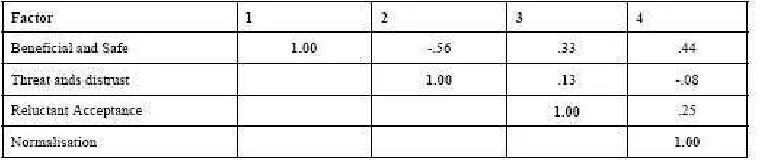
4.6.2 Point of View 2: Threat and distrust
[image:32.596.100.480.636.717.2]This point of view was based strongly on themes of threat, distrust and, to a lesser degree, social mobilisation. There was also a negative correlation with point of view 1 of moderate strength (-.56; Table 3). This factor produced the most unequivocal sort pattern overall, and as such represented a clear anti-nuclear stance, with 24 of 29 (i.e. 86%) of the grouped respondents indicating that they were opposed to nuclear power in general, and 28 (96%) indicating that they were opposed to the building of a new nuclear power station locally, on the general attitude measures.