Theses Thesis/Dissertation Collections
8-2016
A Comparative Study of Twitter Sentiment
Analysis Methods for Live Applications
Angel Cambero
Follow this and additional works at:http://scholarworks.rit.edu/theses
This Thesis is brought to you for free and open access by the Thesis/Dissertation Collections at RIT Scholar Works. It has been accepted for inclusion in Theses by an authorized administrator of RIT Scholar Works. For more information, please [email protected].
Recommended Citation
A Comparative Study of Twitter
Sentiment Analysis
Methods for Live Applications
by
Angel Cambero
A Thesis Submitted in
Partial Fulfillment of the Requirements for the Degree
of Master of Science in
Computer Science
Thesis Advisor
Dr. Joe Geigel
Department of Computer Science
B. Thomas Golisano College of Computing and Information Sciences
Rochester Institute of Technology
Rochester, New York
The thesis “A Comparative Study of Twitter Sentiment Analysis Methods for Live Applications” by Angel Cambero has been examined and approved by the following Examination Committee:
________________________________ Dr. Joe Geigel
Thesis Committee Chair
________________________________ Dr. Reynold Bailey
Reader
________________________________ Dr. Leon Reznik
Observer
B. THOMAS GOLISANO COLLEGE OF COMPUTING AND INFORMATION SCIENCES
Dedication
Acknowledgements
Firstly, I would like to express my deepest thanks to Dr. Joe Geigel, my thesis advisor, for his support and guidance this past year and during my Master’s studies at RIT. His patience, inspiration, and passion helped me immensely throughout this process and I could not have asked for a better advisor to help me complete my thesis.
I would also like to thank the rest of my thesis committee, Dr. Reynold Bailey and Dr. Leon Reznik, as well as Dr. Hans-Peter Bischof, for their encouragement. A huge thanks to my advisors Rebecca O’Connor and Cindy Wolfer, for helping me acquire relevant information and services available to me, and helping me make responsible decisions consistent with my interests, goals, abilities, and degree requirements.
My sincere thanks also goes to the whole Social Product Development & Experiences Team at Intuit for offering me internships and jobs opportunities, and especially to Joy Caro for guiding me, allowing me to work on diverse, exciting projects, and helping me to reach my educational and career goals.
I would like to thank the Ministry of Higher Education, Science and Technology (MESCyT) of the Dominican Republic for the financial support for my graduate studies, and the great support I received from Professor Pedro Ureña, Professor Jose Solís, Sam Little and Gabriela Henriquez during the application process.
I would also like to thank all my friends from Instituto Evangelico, IPISA and PUCMM for their encouragement and my fellow classmates from RIT for the late nights we stayed up working together to make deadlines, and for all the fun we had. In particular, I would like to thank Marisa Palacio for believing in me and standing by me.
Last but not least, for my family’s continued confidence and belief in me, I thank them.
Abstract
A Comparative Study of Twitter Sentiment Analysis
Methods for Live Applications
Angel Cambero
Supervising Professor: Dr. Joe Geigel
Table of Contents
Dedication ... iii
Acknowledgements ... iv
Abstract ... v
1 Background ... 1
1.1 Introduction ... 1
1.2 What is Sentiment? ... 1
1.2.1 Sentiment Analysis ... 2
1.2.2 Sentiment Analysis on Twitter ... 3
1.3 Sentiment Analysis Classification ... 3
1.3.1 Sentiment Analysis Classification: Levels ... 4
1.3.2 Sentiment Analysis Classification: Techniques ... 5
1.4 Hypothesis... 9
1.5 Roadmap ... 10
2 Framework Design ... 10
2.1 Stage 1 – Building Webservice with Real-time Twitter API Searching Capabilities Using an External Sentiment Analysis Library ... 11
2.1.1 Subjects ... 12
2.1.2 Materials ... 12
2.1.3 Data Collection ... 12
2.1.4 Experimental Procedure ... 13
2.2 Stage 2 – Integrating Sentiment Analysis Framework with an External System ... 14
2.2.1 Subjects ... 14
2.2.2 Materials ... 15
2.2.3 Data Collection ... 15
2.2.4 Experimental Procedure ... 15
3 System Implementation ... 17
3.1 Approaches to Building Lexicon-Based Method ... 17
3.2 Approaches to Building Learning-Based Method ... 19
3.3 Technologies Used ... 21
4 Analysis ... 22
4.1 Combining Lexicon-Based and Learning-Based Methods ... 22
4.2 Data ... 26
5 Conclusions ... 28
5.1 Summary of Conclusions ... 28
5.2 Future Directions ... 29
References ... 30
List of Figures
Figure 1. Sentiment Classification Techniques ... 4
Figure 2. Overview of Stage 1: Architecture for the Test in the Exhibition ... 11
Figure 3. Graphic Representing an Introverted Personality using “Projections ... 13
Figure 4. Overview of Stage 2: Architecture for the Integration with MarketersPro ... 14
Figure 5. Graphic Representing a Real-Time Search on MarketersPro with ... 16
Figure 6. Lexicon-Based Approach based on AFINN-111 ... 17
Figure 7. Lexicon-Based Approach based on AFINN-111 ... 18
Figure 8. Lexicon-Based Approach based on SentiWordnet ... 19
Figure 9. Lexicon-Based Approach using VADER Sentiment Lexicon ... 19
Figure 10. Learning-Based Approach Architecture ... 20
Figure 11. One of the Initial Architectural Overview Variations: SA Methods ... 23
Figure 12. One of the Initial Architectural Overview Variations: SA Methods order ... 24
Figure 13. Final Architectural Overview: SA Methods order changes dynamically ... 25
Figure 14. Graph Depicting the Percent of Tweets in Each Dataset ... 26
Figure 15. Format Used to Organize Tweets in the Created Datasets ... 27
1 Background
1.1 Introduction
This thesis intends to test whether the combination of SA methods could enhance the accuracy of the analysis in a real-time environment. Processing and analyzing existent opinionated data using Sentiment Analysis is an attractive field of research, especially because of the amount of free and available existent information that could be extracted. We are going to test with two different approaches, the Lexicon-based and the Machine Learning approach. For the former will be used a Dictionary-based approach and a Naïve Bayes Classifier for the latter. The main three experiments are to test the integration of the Twitter API with an external Sentiment Analysis tool (see 3.2), to test the accuracy of my Sentiment Analysis implementation (see 3.1) and to test my Sentiment Analysis method in a real-time scenario (see 3.2).
Once completed, the contributions of the thesis include the comparison and combination of different methods in an attempt to increase the accuracy. This thesis also contributes with the code itself, which will be released under an open source license. The first experiment will be used in ImagineRIT and the latter one, if successful, will be integrated in an Intuit’s product (see 4.3).
These experiments are relevant to the computer science community because Sentiment Analysis is a field growing expeditiously, and we will contribute with a study related with the Hybrid approach, which represents only the 6.97% of the different methods articles by 2013 [6]. Although, in this study we focused in Twitter and in two specific methods, future experiments can be done to other social networks and combining other methods.
1.2 What is Sentiment?
what they are about [8]. Generally speaking, sentiments are the same as feelings, and they are focused mainly on opinions and attitudes rather than facts; this is why sentiments are really subjective. However, some sources refer to “feeling” as a natural response to attraction, pleasure, pain or repulsion [37] while sentiment implies an emotion motivated by a perception or opinion [37].
There are a multitude of emotions which psychologists have attempted to organize into six different categories: love, joy, surprise, anger, sadness and fear [38]. Emotions like joy and sadness are commonsense emotions that we experience every day in different degrees [39] and these two are what we are going to target throughout the next sections. Sentiment Analysis is mainly concerned with detecting postive or negative opinions [6]. This helps to avoid more complexity since it is also highly impractical to consider more emotions considering the size of the datasets [40].
The greatest significance of sentiments is that nobody has to try to have feelings; this is an ingrained part of us as human beings. This means that every person is a potential opinion generator for the sentiment analysis tools.
1.2.1 Sentiment Analysis
Sentiment analysis is basically the automation of the analysis of a given text in order to determine the feelings conveyed in it. Sentiment analysis and opinion mining have become known as interchangeable terms.
Sentiment analysis is defined by Subhabrata Mukherjee [9] as a “Natural Language Processing and Information Extraction task that aims to obtain writer’s feelings expressed in positive or negative comments, questions and requests, by analyzing a large numbers of documents”. In other words, sentiment analysis intends to define the feelings of the writer regarding a particular topic based on the writer’s opinion.
subjective, there is no doubt that processing and analyzing existent opinionated data has only just begun. Even when social media monitoring tools such as Trackur and Mention claim that their Sentiment Analysis accuracy is over 70 percent [19], most of the information found, such as [10], claim that anyone who says that they are getting more than 70 percent accuracy is lying. This is in agreement with [15], which states that human raters typically only agree 79 percent of the time, making this really difficult to automate systems to achieve high accuracy.
1.2.2 Sentiment Analysis on Twitter
Sentiment Analysis is a field that is growing fairly rapidly. 81 percent of Internet users (or 60 percent of Americans) have done online research on a product at least once [5], meaning every year there are more articles targeting different text domains over years, where the reviews represent around the 49.12% of the articles [6]. One would not always want to apply sentiment to product reviews; there are too many other fields. One good example of this that has been experimented [7] is the comparison of Twitter sentiment versus Gallup polls of consumer confidence. The results yielded were positive and the correlation was 0.804, inferring that we can use Twitter to measure public opinion. This is precisely what we are going to use Twitter for during this experiment: to extract opinions from it and determinate the tweets’ polarity in real-time.
1.3 Sentiment Analysis Classification
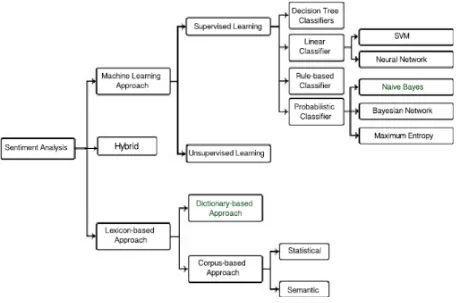
Depending on the perspective, Sentiment Analysis can be classified in different ways; one of them is based on the sentiment classification technique used. This type of classification is divided in two different approaches (see Figure 1): the machine learning approach and lexicon-based approach. We can also include a third classification [13], the hybrid approach.
document, and aspect levels. The last of the most common Sentiment Analysis classifications is based off of the rating level. These sentiment orientations, also known as opinion polarities [14], are positive, negative, and neutral. None of these classifications are exclusive
Figure 1. Sentiment Classification Techniques
1.3.1 Sentiment Analysis Classification: Levels
The main three levels are the document level, aspect level and the sentence level [23]. The classification depends on the different levels of analysis.
for texts with entities comparison or evaluating more than one entity.
The other two classifications are the sentence level and the aspect level. The sentence level is very similar to the document level, but with the main difference that in this case each sentence is analyzed individually to see if it expresses a negative, neutral or positive opinion. This level adds more flexibility than the document level because it is able to distinguish the objective sentences from the subjective sentences, and this can be used as a first fitler [24]. However, we have to mention that there are objective sentences expressing opinion and subjective sentences not transmitting any sentiment.
The most fine-grained analysis is the aspect level, previously known as the feature level. Unlike the sentence and document levels, the aspect level discovers what each opinion is about [23]. The main difference is that this analysis finds a target for each opinion, instead of focusing on language units, like sentences, documents or paragraphs. The goal of this level is to identify the opinion or sentiment on entities and their different aspects. The majority of real-time sentiment analysis systems are based on this level [23].
1.3.2 Sentiment Analysis Classification: Techniques
1.3.2.1 Machine Learning Approach
The Machine Learning approach relies on treating the Sentiment Analysis as a text classification problem. Text classification is normally used to automate a business decision that requires processing text [25]. It uses a set of training records to train a model that is used later on to predict new records without a label. Each record is labeled to a class. When a new unlabeled record is given, the model is used to predict its label class [14]. These classes are positive, negative and neutral, however, most of the time the research papers do not refer to the neutral class. In the Machine Learning Approach we can distinguish two different sub-approaches based on the learning method used, the supervised and the unsupervised learning.
The supervised learning uses a supervised classifier, which learns from labeled training documents. The labeled training documents have topic-related words known as key features. The opinion words express a negative or a positive opinion. We are going to briefly mention the sub-classifications of the Supervised Learning method: Decision Tree, Linear, Rule Based and Probabilistic Classifier.
Decision Trees are used for prediction; they can easily be used for classification. Given a record with an unknown class label, this record is tested against the decision tree, and the path is traced from the root to the node that then determines the class prediction for the record [26]. These are popular because its construction does not require settings or any domain expertise [26]. ID3 and C5 are widely used packages for decision tree implementations in text classification problems [32].
The Rule Based Classifier is similar to the decision tree classifier because both encode rules on the feature space. The only difference is that the decision tree classifier uses the hierarchical approach [6], while the rule-based classifier allows for overlap in the decision space [32]. Multiple studies [30] [14] show different ways to convert from decision tree classifier to a rule-based classifier. In the rule-based classifier, the training phase generates the rules based on different criteria; the two most popular are support and confidence [33].
The last but not least Supervised Learning Method sub-classification is the Probabilistic Classifier, also known as the generative classifiers because they generate a model of each class [34]. They use mixture models, which assumes that each class is a component of the model [6]. The most famous probabilistic classifier and one of the most used is the Naïve Bayes Classifier, which is one of the simplest classifiers to be coded in every programming language because of the simple mathematics involved [35]. The model works with a bag-of-words, which is an unordered set of words. The frequency of each word is kept, but not the position. Given a document D, the Naïve Bayes returns the class with the maximum probability out of all the classes [34]. This classifier uses the Bayes Theorem to determine the label that a given feature set belongs to [6].
On the contrary, the Unsupervised Learning Method is used mainly when creating the class-labeled training documents is too difficult. In that case, we would collect the unlabeled documents and implement the unsupervised learning. This approach is widely used for document clustering analysis because it does not rely on predefined class-labeled training documents.
1.3.2.2 Lexicon-Based Approach
Lexicon-based method is another unsupervised approach, but in this case it could use a dictionary with antonyms and synonyms of opinionated words and phrases with their respective sentiment orientation. The two automated approaches more commonly used to collect the sentiment word list are the dictionary-based and the corpus-based.
The Dictionary-Based approach has a main strategy to manually collect a small set of opinion words and then grow this set by searching in large collection of texts such as WordNet [22][38]. The new words are then added to the first set of opinion words and the cycle is repeated until there are no more words remaining to be found. The biggest downside of this method is that it relies completely on corpora and we will not always have a large collection of opinion words with a domain available. It is important to mention that not all of the words in a lexicon express a positive or negative opinion regarding an entity [14]. The Corpus-Based approach is mainly used in two situations: to discover new sentiment words from a domain corpus using a given list of known opinion words and to create a sentiment lexicon from another one [14]. This approach by itself is not as effective as the dictionary-based approach because it would need a corpus with all the English words [6]. The corpus-based is divided in the statically and the semantic approach depending on the technique used.
1.3.2.3 Hybrid Approach
There are studies that use both approaches, like one presented by Hermida et al. [42], which is a method based on Emotinet. They proved that the method presented was effective to identify emotion from a text with or without less affect-related words in it. To achieve this goal they also used the Support Vector Machine Algorithm, which as we mentioned in the section 2.2.2.1 is the most popular linear, whose main principle is to find the linear separator with the best separation between the classes [6]. Our approach does not rely on an emotion corpus to store commonsense knowledge.
Lexicon-based approach, first using lexicon-based and then a chi-square test to identify new tweets. Our work uses a lexicon-based approach mixed with a rule-based approach, and it uses Bayes Naïve Classifier as the learning algorithm. There are other similar approaches, but using manually labeled sets, in other words, supervised learning. The approach presented by Barbosa et al [43] classifies in subjective and objective then discarded the objective tweets and classified the first group as positive or negative.
1.4 Hypothesis
The aim for this study is to propose a technique to achieve high sentiment analysis accuracy for tweets in a real-time environment. In order to do this, we are proposing to combine two different approaches: the Lexicon-Based approach and the Machine Learning approach. We are going to compare the methods from each approach and then we will integrate them in an effort to achieve our goal. To measure the overall accuracy, we will divide the number of correct classifications by the total number of classifications. For the Machine Learning Approach, we will focus on the training datasets since those are vital to building an effective predictive model. The datasets were split into two sets: the training set and the test set. The training set is used to train the NB Classifier, and the test set is used to measure the performance of the predictive model. We will create our own datasets and will use existent ones as well. For the Lexicon-Based approach, we will focus on the performance of different possible implementations, taking into consideration that Lexicon is a system designed specifically for Twitter.
mathematics involved [35]. In addition, the Dictionary-based approached will be used because, according to [44], it has more consistency and reliability with completely unseen data across different domains.
1.5 Roadmap
In this thesis, we experiment with two sentiment analysis methods: the Lexicon-based approach using the VADER Lexicon and rule-based sentiment analysis technique, and the Machine Learning approach using the Naïve Bayes classifier. In our experiments, we manually created datasets to train models and to test our implementations, and then performed extensive tests in an effort to achieve high accuracy. Chapter 2 starts with a high level analysis of the intended system, showing how the framework was separated into two different stages for more modular development and testing. Chapter 3 presents details of the system implementation using different experiments. Chapter 4 provides a detailed analysis about the combination of the methods and different obstacles that we faced. Finally, Chapter 5 concludes with the current status of the study and proposes future work to be done.
2 Framework Design
2.1 Stage 1 – Building Webservice with Real-time Twitter API Searching
Capabilities Using an External Sentiment Analysis Library
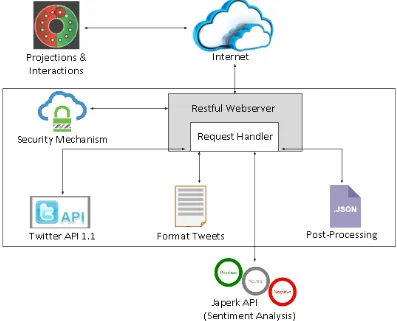
Figure 2. Overview of Stage 1: Architecture for the Test in the Exhibition “Projections and Interactions” at ImagineRIT 2016
This first test was conducted using “Projections and Interactions” [4], an independent system that was exhibited at ImagineRIT 2016. With the creation of the RESTful server, it was very simple for them to consume our API. To access and read Twitter data, we need to use Twitter API. Because this study is focused on making a more modular real-time implementation, we needed to create a webserver that receives a tweet and outputs its polarity: either positive or negative.
tweets. These tweets were collected in real-time and an overall percentage of their polarity was calculated. This information was used then by “Projections and Interactions” to generate visuals representing the personality of the audience at the performance.
2.1.1 Subjects
The subjects for this study were volunteers who attended to the ImagineRIT festival in May 2016. It was fairly easy to gather a significant amount of volunteers thanks to the platforms provided by Rochester Institute of Technology for this festival.
2.1.2 Materials
We used Twitter API to pull the data we needed to analyze from the volunteers in real-time. The principle behind Twitter API’s design is to provide a single method for accessing the Twitter API [11]. Our current server is hosted in an Amazon EC2 instance. The cloud hosting provided by AWS provides us with dynamically resizable servers [12], which is ideal for these tests where the number of users of our service is unlimited. This experiment was implemented using NodeJs based on Restify
2.1.3 Data Collection
2.1.4 Experimental Procedure
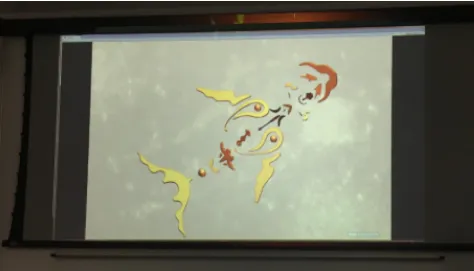
[image:21.612.73.547.377.648.2]“Projections and Interactions” [4] is a game that interacts with a group by posing questions related to how they would react in social situations. Based on their answers, a graphic is generated which is meant to represent the group's personality. Our implementation allows “Projections and Interactions” to achieve a higher level of customization as it reads the mood of those posting on Twitter, commenting on the project, or perhaps about ImagineRIT in general and creates the environment in which the generated graphic representing the group personality is created (Figure 3). The background will shift depending on if the overall mood of the crowd is happy, sad, or even closer to neutral. This helps make every experience unique and links it further to the group that is participating. It was really exciting for the families who attended to this exhibit to see a representation of all the family members personality in together in one graphic.
2.2 Stage 2 – Integrating Sentiment Analysis Framework with an External
System
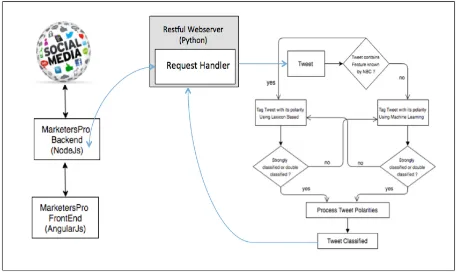
Figure 4. Overview of Stage 2: Architecture for the Integration with MarketersPro
In the first stage, we focused on testing only a certain part of our solution, but in this second stage we tested the rest of our implementation. In other words, we tested how our sentiment analysis technique performs classifying tweets in a real-time environment. For this we integrated our framework with MarketersPro, an internal tool currently used at Intuit by content moderators and marketers to get real-time organic content from social networks, including Twitter. A graphical representation of the second stage experiment is presented in Figure 4.
2.2.1 Subjects
2.2.2 Materials
MarketersPro is based on searching for social media content in real-time, thus our system has to intercept the search responses to tag each tweet with its polarity. In order to do this, we needed to modify their system in both the backend and frontend. Also, It’s worth it to mention that In this stage, we were forced to change our implementation from NodeJs to Python; in Chapter 4 this will be explained in more detail.
2.2.3 Data Collection
The first training data set we used is hosted by University of Michigan [47]. This data set contains 7,086 sentences labeled with 0 or 1 depending on its polarity, and since the sentences were shorter than 160 characters and they were extracted from social media, we used them as tweets. In addition, we also included the Sentiment140 Dataset [46], which consist in 160,000 processed tweets.
Even when we had enough data to train our predictive model, we were able to increase the accuracy by creating our own datasets in our specific domain. The result was that by using Twitter Search API we gathered and manually classified two more datasets; one for ImagineRIT, as we mentioned in Section 2.1.3, and another dataset with the word domain “TurboTax”. The latter consists of a collection of 2,702 tweets. From these tweets, 697 were removed because they were tweets directly from the TurboTax account, and another 234 tweets were removed because they were retweeted. The remaining 1,771 tweets were used to train and test our model.
2.2.4 Experimental Procedure
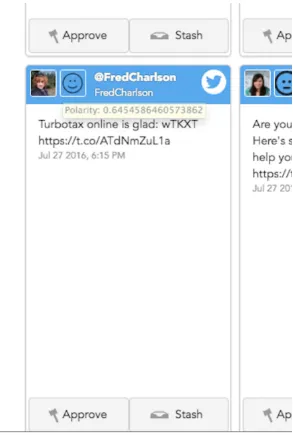
relevant, positive social media posts about TurboTax. MarketersPro allows the marketers to search from social media channels, approve tweets, and create widgets with this organic content that later will be integrated into different TurboTax landing pages. My implementation will apply sentiment analysis to Twitter searches; this will help the marketers save time in identifying positive reviews. For this experiment we have to integrate our solution with their back-end and do some light changes in their front-end to show the class and the valence on-hover as we can see in the Figure 5.
3 System Implementation
In the previous chapter we showed how we separated our implementation into two different stages. This helped us to achieve a more modular development and testing. Also, we showed how we successfully integrated our framework in each phase with external applications. In this chapter, we will focus mainly on the second phase because this is where the core functionality of the system was developed.
3.1 Approaches to Building Lexicon-Based Method
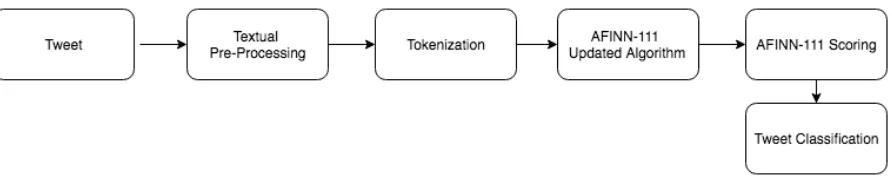
[image:25.612.80.534.415.460.2]Figure 6 shows our first approach, using AFINN-111, which is an effective lexicon that contains 2,477 words and phrases rated with an integer from minus five to plus five, depending on its polarity. Using AFINN-111 Sentiment Lexicon, we can assign a score to each of the words in the tweet and then sum all the word scores to determine the tweet classification.
Figure 6. Lexicon-Based Approach based on AFINN-111
After multiple tests, we focused on trying to increase the accuracy of this method, so we implemented our own algorithm in an effort to dynamically grow AFINN-111 as the Figure 7 shows.
this means that the word was present more than ten times in tweets with that positive or negative classification. This allows us to assume that this word has that same positive or negative classification and we can then save that word as such in AFINN-111, expanding it dynamically.
Figure 7. Lexicon-Based Approach based on AFINN-111 with Custom AFINN-111 Updater Algorithm
Even though we achieved slight improvement, we were still not satisfied with its performance. The biggest shortcoming was that it would require a large amount of tweets to be classified before the lexicon would start assigning correct classification to new words. The speed performance was also significantly affected, which for our purpose was unacceptable as we are creating a solution for use in a real-time environment.
Figure 8. Lexicon-Based Approach based on SentiWordnet
The biggest weakness of this method is that we were not considering other factors like punctuation, capitalization, intensifiers, constrastive conjunctions and tri-gram examination [46]. For example, an exclamation point increases the intensity of a word, an uppercase word could emphasize a sentiment, adverbs before an adjective also could increase or decrease the sentiment intensity, or even a simple “but” or negation could completely invert a sentiment’s polarity.
Figure 9. Lexicon-Based Approach using VADER Sentiment Lexicon
In an effort to improve the previous solution, we incorporated the main concept from the rule-based approach, defining five rules as Figure 9 shows. A rule-based sentiment classification system basically follows a list of detailed rules; these rules are created from observation of the convention of natural languages. With the introduction of these heuristic rules we were able obtain a higher classification accuracy.
3.2 Approaches to Building Learning-Based Method
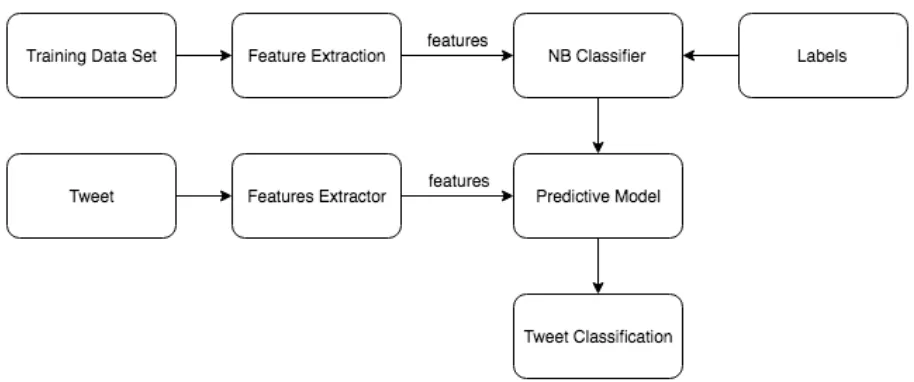
[image:27.612.71.544.392.483.2]models, which assume that each class is a component of the model [6]. The NBC is the most famous probabilistic classifier and which was clear when reasearching about its implementation since it’s almost standard. This is one of the most used classifiers mainly because of its simplicity to be coded due to the simple mathematics involved [35].
[image:28.612.78.535.424.615.2]The model works with a bag-of-words, which is an un-ordered set of words. The frequency of each word is kept, but not the position. Vectorization is used to transform the set of tweets into numerical feature vectors. The vectorization involves three main steps: tokenizing, counting and normalizing the tweet. The Bayes’ theorem describes the probability of the occurrence of an event based on an associate event [48]. Following the same principle, the Naïve Bayes Classifier takes the decisions of determining the class of a feature. In our implementation the features of each tweet are obtained using the module sklearn.feature_extraction module from the class sklearn of Scikit-learn [49]. Figure 10 presents an overview of the implementation of our Naïve Bayes Classifier.
Figure 10. Learning-Based Approach Architecture
classifier. In other words, we use the training set to tune the classifier and the testing set to assess its performance.
We began by initially testing our approach with a dataset hosted by University of Michigan [47], and then with the Sentiment140 Dataset [46]. Although we had a decent performance with general tweets, we knew we could increase the accuracy if we trained our model with data strictly realted to our topic, “turbotax”. We then trained our predictive model with the turbotax dataset that we manually created, with a total of 1,771 tweets after being filtered.
3.3 Technologies Used
Since the MarketersPro project is based on AngularJs and NodeJs, we were initially trying to develop the SA methods in Javascript, but after trying many different libraries we concluded that one of the best platforms for this was Natural Language Toolkit (NLTK). We opted to implement the SA methods in Python and created a web service to integrate it with MarketersPro. Our python server runs on an EC2 instance in Amazon Web Services (AWS), using Ubuntu.
To integrate the sentiment classification to Marketers Pro we had to modify both the backend and frontend of their system, the former is built using mainly NodeJs (Gulp, RequireJs, etc) and the latter one uses AngularJs (Bower, jQuery, Less, CSS3, HTML, etc). In the backend, we intercept the reply from Twitter and in real-time classify the tweet and tag it with its polarity. In the front-end we show an emoticon representing the positive (more than 0.6), negative (less than 0.4) or neutral classification (between 0.5 and 0.6), and we also show the polarity index for each respective tweet’s search (Figure 5).
4 Analysis
In this research, we are studying the combination of two different approaches, the Lexicon-Based and the Machine Learning, specifically the Naïve Bayes. In this Chapter, we are going to present some of the different ideas that we went through in the process of finding our final architecture.
4.1 Combining Lexicon-Based and Learning-Based Methods
One of the first approaches was to classify each tweet through both classifiers and then calculate the average polarity, but after measuring the accuracy and speed, the results were not favorable. We were not performing any better and the speed decreased significantly. We needed to create a system fast enough to be “real-time” and also increased in accuracy.
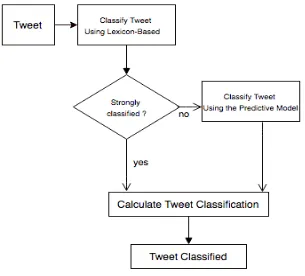
the process by a considerable amount. For example, in the Turbotax dataset, 281 tweets out of 1,771 were found with a polarity between 0.4 and 0.6. Because the majority of the time the VADER Lexicon and Rule-Based Sentiment Analysis technique was performing better than the Naïve-Bayes, the architecture in Figure 11 was created, where the tweet would be first analyzed by the Lexicon-Based technique and if it was not “strongly classified” then it would be analyzed by the Naïve-Bayes classifer, and an average of both polarities would determine the tweet classification.
Figure 11. One of the Initial Architectural Overview Variations: SA Methods Order is Predetermined
a dataset where all the tweets contained the word “TurboTax”, a word that we called the “main feature” of the dataset. The first experiment was to train the Naïve Bayes predictive model using 90% of the dataset created during ImagineRIT, and then using the other 10% to test NBC accuracy. We also tested it using the the VADER Sentiment Lexicon and the results showed that the NBC performed better. At this point we gathered, filtered and manually classified 1,771 tweets containing the hashtag Turbotax.
[image:32.612.145.466.210.553.2]
Figure 12. One of the Initial Architectural Overview Variations: SA Methods order changes dynamically depending on the tweet’s content.
feature”, then it would go through the lLexicon-based approach first. Independent of which method(s) was/were used, the polarity of the tweet is finally calculated and the tweet classification is obtained. Since the architecture gives preference to the sentiment analysis techinique that will perform better depending on the tweet, we can achieve an increased accuracy. However, we found a way to slightly increase the accuracy more as we can see in Figure 13.
Figure 13. Final Architectural Overview: SA Methods order changes dynamically depending on the tweet’s content, and Lexicon-Based trains NBC.
correctly is still enough to slighty increase the overall accuracy. Depending on how performs the lexicon-based classifier, using the tweets that are classified as “strong classified” to train the Naïve Bayes Classifier could slightly outperform the previous implementation. However, a potential weakness is that if the VADER Lexicon Sentiment Analysis decreases its accuracy in the “strong classified” tweets, it will automatically make the NBC decrease its accuracy as well because this latter one
4.2 Data
[image:34.612.102.507.440.678.2]It is evident that the supervised learning classifiers’ success depends not only on the approach or algorithm used, but also on the efficient utilization of the datasets. Our datasets are fundamentally collections of data saved in a JSON format and grouped depending on the criteria used to find them, in this case the data. We used three existing datasets and created two datasets using Twitter Search API. The data sets were created to encompass tweets related with an event and a brand, ImagineRIT and TurboTax respectively.
Figure 14. Graph Depicting the Percent of Tweets in Each Dataset
To train the probabilistic classifier, we utilized two existing datasets: one hosted by [CATEGORY
NAME] 4.2%
[CATEGORY NAME]
94.5%
[CATEGORY NAME]
1.04% [CATEGORY
University of Michigan [47], containing 7,086 sentences (used as tweets) labeled with 0 or 1 depending on its sentiment polarity. The second dataset, Sentiment140, contains 160,000 tweets, each classified based on the emoticons found within each tweet. Of the two datasets that were created, the first was made of 394 tweets containing the word “ImagineRIT”, and the second contained 1,771 tweets with the word “Turbotax”. Figure 14 depicts the distribution of tweets from each dataset used to train the model. Even though the created datasets are considerably smaller, the performance increases dramatically when a tweet containing one of the mentioned words is classified. These tweets that were manually classified follow the JSON format, shown in Figure 15.
Figure 15. Format Used to Organize Tweets in the Created Datasets
significant if we are applying sentiment analysis to tweets specifically related to the ImagineRIT event. The University of Michigan Dataset and the Sentiment140 Dataset do not contain any neutral tweets, so we are focusing on the two classes that are consistent in all four datasets, positive and negative.
Figure 16. Dataset Class Distribution Representation in Percent
5 Conclusions
5.1 Summary of Conclusions
Our initial goal was to develop a technique to combine two different sentiment analysis methods that yielded an accurate sentiment analysis classification in a real-time environment using Twitter as the source of content. Such a method woud be very useful for systems that need to classify tweets in real-time mainly from a specific domain, but not limited to that. Our system, depending on the tweet’s content, would be able to delegate, to one of the methods, the responsibility of classifying and would use the second method for double validation and in some cases for training.
0 10 20 30 40 50 60 70 80 90
University of Michigan
Dataset
Sentiment140
Dataset Turbotax Dataset ImagineRIT Dataset
Per
cent %
Dataset
Positive Negative
Our solution implements two different sentiment analysis approaches, Lexicon-Based and Machine Learning, and it is able to dynamically organize the architecture depending on which method should be used first based on the tweet received. It was fascinating to see how the lexicons and the training datasets are probably the most important piece in a sentiment analysis system.
Delimiting our research to one specific social media, in this case Twitter, was extremely important since the implementations vary excessively depending on the type of data that a sentiment analysis system system has to classify. We provided a solution that fulfilled the hypothesis of combining different methods to achieve a higher accuracy, however, there are a lot of situations with room for improvement, such as increasing the accuracy for those questions that contain opinion words, but do not express any sentiment, or those sarcastic sentences, especially in the TurboTax dataset, where independently from the presence of sentiment words, it is difficult to deal with because the opinion words implies the inverse of its usual meaning.
5.2 Future Directions
We visualize a number of future directions for this study. We mainly concentrated efforts on classifying positive, negative or neutral correctly, but it would be interesting to distinguish between subjective and objective tweets, since this would be a great initial filter. Also, in our approach we handle the topic of classification for tweets based on the presence or absence of a keyword that we called “main feature”, but a more elaborated method could be developed where the context or even synonyms are taken into consideration.
References
[1] Prosser, Jim. Twitter Reports First Quarter 2015 Results. Lowers Full-Year 2015 Expectations. TwitterInc. San Francisco, California. May 2, 2015.
[2] Whittaker, Zack. Between the Lines. Twitter turns six. March 21, 2012.
[3] Agrafioti, F. Hatzinakos, D. and Anderson, A.K. Ecg pattern analysis for emotion detection. IEEE Transactions on Affective Computing (Volume:3 , Issue: 1). August 25, 2011.
[4] Alfke, Natalie. 3D Digital Design. Rochester Institute of Technology. Rochester. May 2016.
[5] Lee, Lillian and Pang, Bo. Opinion mining and sentiment analysis. Foundations and Trends in Information Retrieval Vol. 2, Nos. 1–2 (2008) 1–135. 2008.
[6] Medhat, W., Hassan, A., & Korashy, H. Sentiment Analysis algorithms and applications: A survey. AinShams Engineering Journal, 5(4), 1093-1113. 2014.
[7] O’Connor, B, Balasubramanyan, R, Routledge, B.R. and Smith, N.A. From Tweets to Polls: Linking Text Sentiment to Public Opinion Time Series. Center for Applied Research in Technology at the Tepper School of Business, and the Berkman Faculty Development Fund at Carnegie Mellon University. 2010.
[8] Dr. Metz, M. Understanding Feelings. Michigan. 2011.
[9] Mukherjee, S. Sentiment Analysis: A Literature Survey. Roll No: 10305061. Bombay, India. June, 2012
[10] Burn-Murdoch, J. Social media analytics: are we nearly there yet?. The Guardian. 2013.
[11] Geduldig, Jonas. Twitter API Documentation. Release 2.3. May 22, 2015.
[12] Amazon Web Services, Inc. and/or its affiliates. Amazon Elastic Compute Cloud: User Guide for Linux Instances. 2016.
international conference on the semantic web, ESWC’11; 2011. p. 88–99. 2011. [14] Liu, B. Sentiment Analysis and Opinion Mining. Morgan & Claypool Publishers.
California. May 2012.
[15] Ogneva, M. "How Companies Can Use Sentiment Analysis to Improve Their Business". Mashable. Retrieved 2012-12-13.
[16] Guang, Q., Liu, B., Bu, J. and Chen, C. Expanding domain sentiment lexicon through double propagation. International Joint Conference on Artificial Intelligence (IJCAI-2009). 2009.
[17] Qu, L., Georgiana I., and Gerhard W. The Bag-of-Opinions Method for Review Rating Prediction from Sparse Text Patterns. International Conference on Computational Linguistics (COLING-2010). 2010.
[18] A Study and Comparison of Sentiment Analysis Methods for Reputation Evaluation. Collomb, A., Costea, C., Joyeux, D., Hasan, O. & Brunie, L. University of Lyon, INSA-Lyon, F-69621 Villeurbanne, France
[19] Li, Q. Examining the accuracy of sentiment analysis by brand monitoring companies. 5th IBA Bachelor Thesis Conference. Enschede, The Netherlands. July 2, 2015
[20] Microsoft. Binary Classification: Twitter sentiment analysis. September 2, 2014.
[21] On the Combination of “Off-The-Shelf” Sentiment Analysis Methods. Pollyanna Goncalves, P., Hasan D., Costa, H., Goncalves, M., & Benevenuto F. ACM 978-1-4503-3739. Pisa, Italy. April 4, 2016.
[22] Kim, S., Hovy, E. Determining the sentiment of opinions. International conference on Computational Linguistics (COLING’04). 2004.
[23] Liu, B., University of Illinois at Chicago. Sentiment Analysis: Mining Opinions, Sentiments, and Emotions. Cambridge University Press. June 2015.
[25] Wiebe, R., and O'Hara, T. Development and use of a gold standard data set for subjectivity classifications. In Proc. 37th Annual Meeting of the Assoc. for Computational Linguistics (ACL-99), pages 246-253. June 1999.
[26] Miner, G., Elde, J., Fast, A., Hill T., Nisbet R., & Dursun, D. Practical Text Mining and Statistical Analysis for Non-structured Text Data Applications. January 25, 2012.
[27] Data Mining, Southeast Asia Edition: Edition 2. April 6, 2006. Jiawei Han, Jian Pei, Micheline Kamber & Morgan Kaufmann
[28] Quinlan, J. Induction of decision trees. Machine Learn. Volume 1, Issue 1, pp 81-106. March 1986.
[29] Li, Y. H. and Jain, A. K. Classification of Text Documents. The Computer Journal (1998), pp 537-546. 1998.
[30] Liu, B., Wynne, H. and Yiming, M. Integrating classification and association rule mining. Presented at the ACM KDD Conference. 1998.
[31] Jurafsky, D. and Martin, J. Speech and Language Processing. Chapter 7 - Classification: Naive Bayes, Logistic Regression. 2015.
[32] Machine Learning Tutorial: The Naive Bayes Text Classifier. October 2013. Vasilis Vryniotis
[33] Pietquin, O. A framework for unsupervised learning of dialogue strategies. Presses univ. de Louvain. 2004.
[34] Yang, J. and Leskovec, J. Temporal Variation in Online Media. ACM International Conference on Web Search and Data Mining (WSDM '11). Hong Kong. February 9-12, 2011.
[35] Minging, H. and Bing, L. Mining and summarizing customer reviews. Proceedings of ACM SIGKDD international conference on Knowledge Discovery and Data Mining (KDD’04). Pages 168-177. August 22, 2004.
[37] Merriam, G. and Merriam, C. World Heritage Encyclopedia. Merriam-Webster Dictionary. Merriam-Webster, Incorporated.
Appendix A
User Manual
To run the project, make sure to install its dependencies:
Package Name Version
Backports-abc 0.4
NLTK 3.2.1
Numpy 1.11.1
Scikit-learn 0.17.1
Scipy 0.17.1
Textblob 0.11.1
Tornado 4.4
Once you fork/clone the repository from GitHub, you will find the following folders structure:
Folder Name Description
classifiers This folder contains all the classifiers
(NaiveBayes classifiers) and vectorizers trained on different datasets. Each one of these files for the classifier and vectorizer will follow the formats: {DATASET}-classifier.p and
{DATASET}-vectorizer.p to indicate the dataset where the data was trained on.
datasets_for_testing Contains all the datasets to test the sentiment extractor models. This file are in JSON format and contains a list of tweets objects with the fields 'text', which is the text content of the tweet and, 'sentiment' that is the sentiment polarity.
Also, the following python scripts which we describe in details:
general.py This script file contains general purpose functions such as
loading and storing datasets, classifiers, and vectorizers. settings.py This script file contains the settings of the project.
sentiment_extractos.py Contains all the built sentiment extractors. A sentiment extractor is an object that takes as an input a text
corresponding to a tweet and outputs a number indicating the sentiment of the given tweet.
process_sentiment_140_dataset.py This script processes the raw data for the dataset sentiment 140
process_json_raw_datasets.py This script processes the json raw datasets.
evaluate_sentiment_extractors.py Evaluates the sentiment extractors (Lexicon based, machine learning based, and improved hybrid) on all the datasets. train_naive_bayes_classifier.py This script contains the functionality to train a naive bayes
classifier on a given dataset.
test_naive_bayes_classifier.py This script contains the functionality to test a naive bayes classifier on a given dataset.
tweets_server.py This script contains the API server for sentiment analysis of tweets.
Finally, we are going to explain how to use the scripts:
§ To start the tweets API server run the following command (for example): python3 tweets_server.py --port 12345
§ To process the raw data for the sentiment 140 dataset run the command: python3 process_sentiment_140_dataset.py
§ Use settings.py this script to define and change the settings values used by other scripts
§ In order to evaluate all the built sentiment extractors on all the testing datasets, simply have to run the command: python3 evaluate_sentiment_extractors.py, As metric classification accuracty is going to be used. This is going to be printed out on the screen.
§ To train a classifier simply run the following command: python3
train_naive_bayes_sentiment_classifier.py --dataset={NAMES} --prefix={PREFIX}
§ To test a classifier simply run the following command: python3