The Psychological Record, 2010, 60, 227–248
UniqUe OUtcOme expectatiOns
as a training and pedagOgical tOOl
Leh Woon Mok
Nanyang Technological University, Singapore Angeles F. Estevez
Universidad de Almeria, Almeria, Spain J. Bruce Overmier
University of Minnesota, Twin Cities, USA
The learning of the relations between discriminative stimuli, choice actions, and their outcomes can be characterized as conditional discriminative choice learning. Research shows that the technique of presenting unique outcomes for specific cued choices leads to faster and more accurate learning of such rela-tions and has great potential to be developed into a training and pedagogi-cal tool to help individuals with and without learning challenges better learn complex discrimination problems. We present a brief historical account of this technique, a theoretical and empirical analysis, and specific examples of the application of this training technique in everyday discrimination problems and in several traditional school subject areas. We conclude with the iteration that cognitive scientists and educational researchers need not overlook basic asso-ciative mechanisms that may be fundamental in subserving complex learning and memory processes.
Key words: differential outcomes, outcome expectations, discrimination learning, stimulus equivalence, training, pedagogical tool
In everyday life, many of our behaviors are learned and reinforced through the availability of rewarding consequences. We work to be rewarded with desirable outcomes, and different people work for different rewards. Many of us have fond memories of our favorite teacher sticking a fancy star on an assignment well done and of how we would look forward to these stickers.
A key aspect of real life is that we are constantly challenged with decisions to make and, almost without exception, every choice comes with a consequence. Very often, such consequences are unique to the particular choices we have made given the presenting problems. For example, when we want specialty coffee, we learn that we can get some at Starbucks. But
when we want pizza, we learn that we should go to Pizza Hut instead. That is, many of our everyday behaviors are actually learned through the availability of not just (rewarding) outcomes in general but outcomes that are unique to the choices we make conditionally based on the presenting problems. In a training or classroom setting, we can view the presenting challenges as two different types of questions or problems to be solved and the correct choices as strategies or answers in multiple-choice questions. But, in the standard classroom, the outcomes of choices—and the teacher’s “recognition” given to correct choices—are often not unique to the particular overt choice. In fact, the standard teaching procedure is usually to reward correct choices with a common outcome, such as verbal praise (e.g., “good”), or to randomly reward with, say, stars or stickers. That is, no conscious effort is made to provide unique outcomes that correlate with correct responses to specific problems. Does this matter?
To model such life-choice behaviors that are conditional on the presenting problems and how successful behaviors are followed by specific outcomes, laboratory psychologists have devised the conditional discrimination choice task. This task takes the general form of two contrasting discriminative stimuli, S1 and S2, and two or more choice alternatives. In the presence of S1, the correct choice from among alternatives is R1; in the presence of S2, the correct choice is R2. In the standard training procedure, all correct conditional discriminative choices are followed by either a single, common outcome (the common outcome procedure) or an outcome randomly selected from two possible outcomes (the nondifferential outcomes procedure). In contrast, in a procedure relatively new to practitioners working with human clients that we herein advocate, the training condition involves unique response outcomes. Correct responses to the conditiona l relation S1-R1 a re followed by the unique outcome O1, whereas correct responses to the conditional relation S2-R2 are followed by the unique outcome O2; all incorrect responses are not followed by any outcome and terminate the particular learning trial. This training procedure is termed the differential outcomes (DO) procedure.
To anticipate, when the differential outcomes procedure is applied, learning is faster, more accurate, and remembered longer than when the common outcome procedure is used (see Goeters, Blakely, & Poling, 1992; Urcuioli, 2005). This effect is termed the differential outcomes effect (DOE), and it is now a robust and reliable learning phenomenon documented in the traditional learning literature. The main aim of this article is to describe in more detail the DOE, provide broad experimental evidence for it, underline the behavioral and cognitive processes underlying it, and then illustrate specific examples of how this differential outcomes technique can be developed into a training and pedagogical tool to be applied to enhance learning and memory.
of these two familiar forms of learning and then describe how they overlap to give rise to the DOE. Essentially, embedded in an instrumental conditional discriminative choice operation is a classically conditioned outcome expectancy that is specific to the particular outcome that follows the particular successful behavior. We then describe (a) the theoretical basis of how such outcome-specific expectancies guide successful choice behaviors and (b) how mediation by mental representations of such outcome-specific expectancies can form the basis of a memory process that would be useful in enhancing learning and memory.
Two Major Types of Learning: A Little Bit of History
In classical conditioning, an initially neutral stimulus (NS) such as a l ight or tone, a fter occ u r r i ng i n a sig na l i ng relat ion w it h a second stimulus such as food (US) that reliably and unconditionally elicits a response such as salivation (UR), acquires the ability to elicit anticipatory salivation from the organism in the absence of the US. This initially neutral stimulus that does not originally elicit a UR is said to have become a conditioned stimulus (CS), and the anticipatory salivation response that it elicits is termed the conditioned response (CR). This form of learning describes the simplest mechanism whereby an organism learns about relations between environmental events and how such knowledge about the environment affects behavior. First studied systematically in the 1900s by Pavlov, but almost abandoned in midcentury, this classical or Pavlovian conditioning has in recent decades become a reemerging focus of research interest—especially as to how it relates to modulation of instrumental behavior.
desired behaviors through intermittent reinforcement schedules could be successfully implemented in the real-life classroom to achieve more desirable learning outcomes (Ormrod, 2004). Over the last century, positive reinforcement approaches have had substantial influences on educational practices.
These two types of learning involve the learning of associations between either two environmental stimuli (as in classical conditioning) or a discriminative cue and a response that is reinforced by a response outcome (as in instrumental conditioning). They are, therefore, also known as associative learning.
The Differential Outcomes Effect
and the Concept of Outcome Expectancies
In examining instrumental learning, the traditional view, as stated in Thorndike’s (1914) law of effect, is that the nature of the reward does not matter. The stimulus-response (S-R) association is merely “stamped in” by the reward, and the reward only serves to catalyze the S-R association and is not part of the association. However, the advent of the two-process theory of learning (e.g., Mowrer, 1947; Rescorla & Solomon, 1967; Spence, 1956) introduced a different view. Apart from the resulting S-R association, it was argued that there is another association that forms between the stimulus and the reward/outcome (O), that is, the S-O association, and this S-O association was thought to motivate the instrumental response. Later, Trapold and Overmier (1972) extended this view by proposing that what is learned is not just the simple observable CR within the classically conditioned relationship (S-O) but also specific knowledge about the qualitative properties of the response outcome (i.e., the discriminative properties of whether they are the same or not). This second learning process is independent of the response itself. Such knowledge about the response outcome can be viewed in cognitive terms as what constitutes a learned internal representation of the outcome (MacCorquodale & Meehl, 1953; Tolman, 1932), or rather, an outcome expectancy (Trapold & Overmier, 1972), as it is known in the learning literature.
provide an even more salient source of discriminative information in guiding subsequent choice behavior (e.g., Urcuioli, 1990).
Interestingly, a neurochemical double dissociation has been found with laboratory animals between the memory/cognitive processes theorized to underlie the DOE in conditional discrimination when rewarding outcomes are used. The memory process thought to be required for solving the discrimination task under the common outcome/nondifferential outcomes procedure—retrospective recall of the discriminative stimulus—appears more cholinergic dependent but less glutaminergic dependent, whereas the process based on reward expectancies thought to be relied upon under the differential outcomes procedure appears more glutaminergic dependent but less cholinergic dependent (Savage, 2001). Generally, processes of retrospective recall versus expectation are subserved by dissociable neural substrates (Mok, Thomas, Lungu, & Overmier, 2009). Taken together, such behavioral and neurological evidence suggests that the differential outcomes procedure results in increased success over other training and teaching methods because it draws upon a neurologically different expectancy-based memory process.
Experimental Evidence in Humans
To date, the DOE has been reliably and extensively demonstrated in animals, such as rats (Trapold, 1970), pigeons (e.g., Brodigan & Peterson, 1976), dogs (Overmier, Bull, & Trapold, 1971), and even horses (Miyashita, Nakajima, & Imada, 2000; see Goeters et al., 1992, and Urcuioli, 2005, for a review). But does it appear in humans? The answer is a resounding yes. As it pertains to conditional discrimination, this effect has been established in individuals with a range of learning difficulties and/or developmental disorders, for exa mple, i n nonverba l ch i ldren w ith autism (L itt & Schreibman, 1981), adults with mental retardation (Malanga & Poling, 1992), and individuals with Down syndrome (Estevez, Fuentes, Overmier, & Gonzalez, 2003). In adults with Korsakoff syndrome, performance on the identity matching of face stimuli also benefited from differential outcomes training (Hochhalter, Sweeney, Bakke, Holub, & Overmier, 2000). In typically developing individuals, Maki, Overmier, Delos, and Gutmann (1995) demonstrated the DOE among children at an average age of 5 years. Estevez, Fuentes, Mari-Beffa, Gonzalez, and Alvarez (2001) found that the DOE could also be obtained in older children (around 8 years of age), but only when the discrimination task was more challenging.
Apart from discrimination training, the differential outcomes procedure has also been successfully applied to training equivalence classes by associating each stimulus class with a specific response outcome, based on the theoretical framework developed by Sidman and colleagues (Sidman et al., 1982; Sidman & Tailby, 1982). Positive results have been yielded in such diverse populations as youngsters with mental retardation (ages 13–21 years; Dube & McIlvane, 1995), adults with Prader-Willi syndrome (Joseph, Overmier, & Thompson, 1997), typical preschool children (Goyos, 2000; Schenk, 1994), and, more recently, typical young adults as well (Minster, Jones, Elliffe, & Muthukumaraswamy, 2006).
Typically, conditional discrimination procedures are used to establish equivalence stimulus classes (Sidman & Tailby, 1982). In this context, it is useful to differentiate the conditional response (R), defined earlier when the general form of the conditional discrimination choice task was introduced, into a matching choice stimulus (C) that can serve as a discriminative stimulus for the matching choice action itself (e.g., selection or pointing; resp). This gives a four-term unit of analysis (Sidman, 1986) in terms of the initial discriminative cue stimulus (S), the matching correct choice stimulus (C), and the matching choice action (resp), which is followed by the programmed outcome stimulus (O). One common variant of the training technique is to first expose participants to identity-matching training trials, in which selecting the choice stimulus Ax in the presence of the initial cue stimulus Ax is followed by a unique outcome stimulus Ox, and similarly for the respective stimulus sets Bx, Cx, and Dx, where x is a numeric descriptor denoting all possible classes. For our present example, let us assume x to be equal to 1 or 2. Participants are then taught the conditional discriminations of Ax-Bx and Bx-Cx. On such arbitrary-matching training trials, each correct occurrence of the conditional relations Ax-Bx or Bx-Cx is followed by the unique outcome Ox. Studies have demonstrated the emergence of new, arbitrary stimulus-stimulus equivalence relations that expanded to encompass the class-specific outcome stimuli. In our present example, the training arrangement should result in the emergence of two stimulus classes: A1-B1-C1-D1-O1 and A2-B2-C2-D2-O2. The Dx stimuli never appear on arbitrary-matching training trials. Their inclusion in the respective equivalence classes can, thus, only be based on their associations with the class-specific outcomes Ox during the identity-matching training (Goyos, 2000). In other words, stimulus-outcome relations seem sufficient to give rise to equivalence class formation (Minster et al., 2006). See Joseph et al. (1997) in Table 1 for the results of a direct comparison between the effects of DO versus NDO training on the establishment of equivalent stimulus classes.
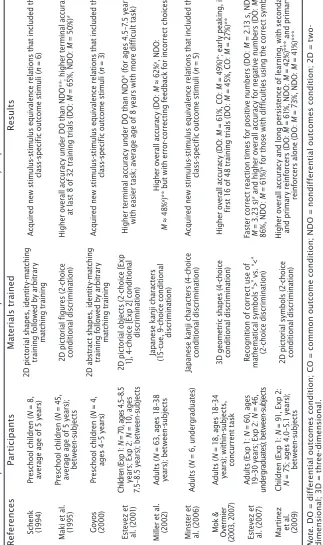
Table 1
Demonstration of the DOE in Individuals with Developmental Disabilities and/ or Memory Impairments
References Participants Materials trained Results
Litt & Schreibman
(1981)
5 nonverbal boys with autism (ages
5–13 years)
Receptive (verbal) label acquisition
(2-choice discrimination)
Fewer trials to reach criterion level of responding under DO than either NDO or CO (a salient, desirable
reinforcer)*
Malanga & Poling (1992)
4 adults with mental retardation (ages
29–57 years)
Sign language letter recognition
(2-choice conditional discrimination)
Higher terminal accuracy (DO: M = 84%,
NDO: M = 57%)***
Dube & McIlvane
(1995)
8 individuals with mental retardation (ages
13–21 years)
2D common items (e.g., house, dog), identity-matching
followed by arbitrary matching
Acquired new stimulus-stimulus equivalence relations that included
the class-specific outcome stimuli (n = 4)
Joseph et al. (1997)
5 adults with Prader-Willi syndrome (ages
22–39 years)
2D pictorial figures (4-choice
conditional discrimination)
Acquired new stimulus-stimulus equivalence relations that included
the class-specific outcome stimuli: Higher
correct transitive choices under DO (M = 81%) than NDO
(M = 57%)*
Hochhalter et al. (2000)
4 adults with Korsakoff syndrome (ages
64–86 years)
Face recognition (2-choice identity
matching)
Higher accuracy (n = 3), especially with a 5-sec
delay (DO: M = 90%, NDO: M = 60%)*
Estevez et al. (2003)
24 children and adults with Down
syndrome (6–37 years);
between-subjects
2D pictorial objects (2-choice
conditional discrimination)
Higher overall accuracy (DO: M = 84%, NDO:
M = 54%)***
Lopez-Crespo et al.
(2009)
24 adults with age-related memory deficits
(average age of 62 years); between-subjects
Face recognition (6-choice identity
matching)
Higher accuracy (DO: M = 94%, NDO:
M = 80%)** and faster
correct reaction times (DO: M = 3.06 s, NDO:
M = 3.28 s)** at 30-s
delay
Note. DO = differential outcomes condition; CO = common outcome condition; NDO = nondifferential outcomes condition; 2D = two-dimensional.
Ta b le 2 D em on st ra ti on o f t h e D O E i n In d iv id u a ls W it h ou t D ev el op m en ta l D is a bi lit ie s o r M em or y I m p a ir m en ts R ef er en ce s Pa rt ic ip an ts M at er ia ls t ra in ed R esu lt s Sc he nk (19 94 ) Pr es ch oo l c hi ld re n ( N = 8 , av er ag e a ge o
f 5 y
ea rs ) 2D pi ct or ia l s ha pe s, id en ti ty -m at ch in g tr ai ni ng f ol lo w ed b y a rb it ra ry m at ch in g t ra in in g A cq ui re d n ew s tim ul us -s tim ul us e qu iv al en ce r el at io ns t ha t i nc lu de d t he cl as s-sp ec if ic o ut co m e s tim ul i (
n = 6
) M ak i e t a l. (19 95 ) Pr es ch oo l c hi ld re n ( N = 4 5, av er ag e a ge o
f 5 y
ea rs ); be tw ee n-su bj ec ts 2D p ic to ri al f ig ur es ( 2-ch oi ce co ndi ti on al dis cr im in at io n) H ig he r o ve ra ll a cc ur ac y u nd er D O t ha n N D O ** ; h ig he r t er m in al a cc ur ac y at l as
t 8 o
f 3 2 t ra in in g t ri al s ( D O : M = 6 5% , N D O : M = 5 0 % )* G oy os (2 00 0) Pr es ch oo l c hi ld re n ( N = 4 , ag es 4 –5 y ea rs ) 2D a bs tr ac t s ha pe s, i de nt it y-m at ch in g tr ai ni ng f ol lo w ed b y a rb it ra ry m at ch in g t ra in in g A cq ui re d n ew s tim ul us -s tim ul us e qu iv al en ce r el at io ns t ha t i nc lu de d t he cl as s-sp ec if ic o ut co m e s tim ul i (
n = 3
) Es te ve z e t al . ( 20 01 ) Ch ild re n ( Ex p 1 : N = 7 0, a ge s 4 .5 –8 .5 ye ar s; E xp 2 : N = 1 0, a ge s 7. 5– 8. 5 ye ar s) ; b et w een -s ub je ct s 2D p ic to ri al o bj ec ts ( 2-ch oi ce [ Ex p 1] , 4 -c ho ice [ Ex p 2 ] c on di ti on al dis cr im in at io n) H ig he r t er m in al a cc ur ac y u nd er D O t ha n N D O * ( fo r a ge s 4 .5 –7 .5 y ea rs w it h e as ie r t as k; a ve ra ge a ge o
f 8 y
ea rs w it h m or e d if fi cu lt t as k) M ill er e t a l. (2 00 2) A du lt s ( N = 6 3, a ge s 1 8– 38 ye ar s) ; b et w ee n-su bj ec ts Ja pa ne se k an ji c ha ra ct er s (1 5-cu e, 9 -c ho ice c on di ti on al dis cr im in at io n) H ig he r o ve ra ll a cc ur ac y ( D O : M ≈ 6 2%
a, N
D O : M ≈ 4 8% a)* * b ut w it h e rr or -c or re ct in g f ee db ac k f or i nc or re ct c ho ice s M in st er e t al . ( 20 06 ) A du lt s ( N = 6 , u nd er gr ad ua te s) Ja pa ne se k an ji c ha ra ct er s ( 4 -c ho ice co ndi ti on al dis cr im in at io n) A cq ui re d n ew s tim ul us -s tim ul us e qu iv al en ce r el at io ns t ha t i nc lu de d t he cl as s-sp ec if ic o ut co m e s tim ul i (
n = 5
) M ok & O ve rm ie r (2 00 3, 2 00 7) A du lt s ( N = 1 8, a ge s 1 8– 34 ye ar s) ; w it hi n-su bj ec ts, co nc ur re nt t as k 3D g eo m et ri c s ha pe s ( 4 -c ho ice co ndi ti on al dis cr im in at io n) H ig he r o ve ra ll a cc ur ac y ( D O : M = 6 1% , C O : M = 4 9 % )* ; e ar ly p ea ki ng , i n fi rs t 1 6 o f 4 8 t ra in in g t ri al s ( D O : M = 4 5% , C O : M = 2 7 % )* * Es te ve z e t al . ( 20 07 ) A du lts ( Ex p 1 : N = 6 0, a ge s 19 –3 0 y ea rs ; E xp 2 : N = 4 6, un de rg ra du at es ); be tw ee n-su bj ec ts Re co gn it io n o f c or re ct us e o f m at he m at ic al s ym bo ls “ >” v s. “ <” (2 -c ho ice d is cr im in at io n) Fa st er c or re ct r ea ct io n t im es f or p os it iv e n um be rs ( D O : M = 2 .1
3 s, N
D O : M = 3 .2 3 s )* a nd h ig he r o ve ra ll a cc ur ac y f or n eg at iv e n um be rs ( D O : M = 86 % , N D O : M = 6 1% )* f or t ho se w it h d if fi cu lt ie s us in g t he c or re ct s ym bo l M ar tin ez et a l. (2 00 9) C hi ld re n ( Ex p 1 : N = 9 1, E xp 2 : N = 7 5; a ge s 4 .0 –5 .1 y ea rs ); be tw ee n-su bj ec ts 2D p ic to ri al s ym bo ls ( 2-ch oi ce co ndi ti on al dis cr im in at io n) H ig he r ov er al l a cc ur ac y an d lo ng pe rs is te nce of le ar ni ng , w it h se co nd ar y an d p ri m ar y r ei nf or ce rs ( D O : M = 6 1% , N D O : M = 4 2% )* ** a nd p ri m ar y re in fo rc ers a lo ne (D O : M = 7 3% , N D O : M = 4 1% )* ** N ote . D
O = d
if fe re n ti al o u tc o m es c o n d it io n ; C
O = c
o m m o n o u tc o m e c o n d it io n ; N D
O = n
o n d if fe re n ti al o u tc o m es c o n d it io n ; 2
D = t
w o -d im en si o n al ; 3
D = t
h re e -d im en si o n al . aM e an v al u es a re e st im at e d f ro m F ig u
re 1 i
[image:8.432.42.365.68.613.2]The DO Procedure as a Training and Pedagogical Tool
The ability to make a correct/appropriate response that is conditional upon the presenting discrimination problem is important for many real-life encounters and situations, even to the extent of maintaining healthy relationships with our family, friends, and acquaintances. For example, the ability to correctly and promptly produce the name of a familiar face is generally regarded as basic courtesy across many cultures and social contexts. Unfortunately, more often than not, older or demented individuals with failing memory find themselves in awkward situations in which they have difficulties producing the names of even their own grandchildren or other loved ones. Sometimes, the embarrassment and frustration of the situation may even escalate to unnecessary misunderstandings or emotional outbursts. In this respect, the differential outcomes training procedure has been effectively applied to improve face recognition among adult patients suffering from alcohol dementia (Hochhalter et al., 2000; see Table 1). More recently, this training benefit was extended to older adults with age-related memory deficits (Lopez-Crespo, Plaza, Fuentes, & Estevez, 2009; see Table 1).
In addition, the ability to discriminate, that is, to determine the degree of similarity or difference between two or more entities, is important for many high-level cognitive processes, such as concept attainment and the learning of symbolic relations, as in human language. A large part of concept attainment involves the organization of complex materials into categories according to how similar or different object attributes/features are. For example, animate objects share one set of attributes, whereas inanimate objects share another set of attributes, although according to contemporary theories of concept formation, the boundary between the two sets of attributes is not always clear. In fact, research on concept attainment typically investigates how individuals learn to solve complex discriminations.
Particularly relevant to our present discussion is Sidman, Kirk, and Wilson-Morris’s (1985) reasoning that the phenomenon of acquired stimulus equivalence in behavioral research is basically a type of conceptual category learning. For example, the spoken word “three,” the written word three, the Roman numeral III, and the number 3 are different symbols that constitute an equivalence set. That is, they mean the same thing and can be used interchangeably by a mature English speaker and reader. Earlier, we discussed that, to date, several studies have demonstrated the effectiveness of the differential outcomes training procedure in facilitating the acquisition of equivalence stimulus relations across different individuals, ranging from individuals with mental retardation (e.g., Dube & McIlvane, 1995) to typical young adults (Minster et al., 2006; see Tables 1 and 2).
training of arbitrary, symbolic relations has also been shown to benefit a considerably wide range of individuals, not just individuals diagnosed with developmental disabilities (e.g., Malanga & Poling, 1992) but typical children (e.g., Estevez et al., 2001) and typical young adults as well (e.g., Mok & Overmier, 2003, 2007). Given existing empirical results, the evidence is convincing for the universality of the differential outcomes training technique and encouraging for its potential usefulness in educational and therapeutic practices.
In the following section, we present specific examples of difficult discriminations, be they purely perceptual or conceptual, that students may face in traditional school subject areas. The examples attempt to illustrate to the interested teacher how one can structure learning situations and even traditional multiple-choice questions into problems suitable for training using the differential outcomes procedure. We first present a specific teaching plan as it pertains to Chinese character discrimination and then offer specific examples in various traditional school subject areas such as mathematics, English, geography, chemistry, and art.
A Specific Teaching Plan with Chinese Materials
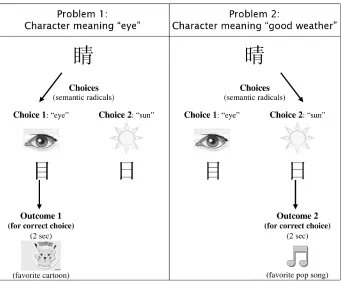
Traditionally, Chinese teachers have been faced with the challenge of helping students discriminate between characters that are very visually similar to each other, such as (eye; pronounced “jīng”) and (good weather; pronounced “qíng”), or polyphonic characters such as , which can be pronounced as “háng” or “xíng” and means different things when pronounced differently. A polyphonic character should probably be trained in the context of the bicharacter (bimorphemic) compound words in which it frequently occurs. There is an anecdotal account of an expatriate in China making the observation that Chinese seem to be fond of putting up encouraging slogans such as “ABC (Company) is very good” in front of their office buildings, especially in the business district. As it turns out, he actually misread (bank; pronounced “yín háng”) for (very good; pronounced “hěn xíng”). The slogans were actually the names of particular banks (e.g., ABC ).
choose the option (sun) to the question (good weather), their response can be uniquely followed by a short excerpt (2 sec) of a favorite popular song, Mambo No. 5 (Outcome 2). Nonhedonic outcomes (sensory-perceptual stimuli alone such as moving pictures vs. a musical excerpt), instead of traditionally hedonic outcomes, can serve effectively as differential outcomes (Mok & Overmier, 2003, 2007).
Figure 1. Example materials for teaching the visual discrimination between a pair of Chinese characters: (eye) versus (good weather).
For more advanced students, two distractors matched with the former two radicals for difficulty and visual complexity can also be added as choice alternatives. The distractors can be (myself; pronounced “zì”) and (white; pronounced “bái”). That is, the student would be presented with four choices for every question: , , , and .
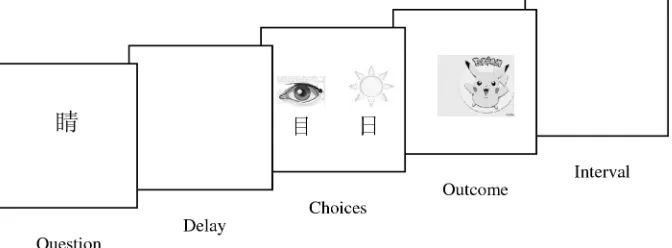
[image:11.432.56.398.122.404.2]in the absence of feedback. Instead, silence and a blank screen of the same duration as an outcome will be presented, and the learning trial will be terminated.
Figure 2. Schematic illustration of the sequence of a typical question or learning trial (Interval = interquestion interval).
If it is more desirable to conduct differential outcomes training without the use of computers, teachers can also systematically arrange to manually deliver unique outcomes for each type of correct response. Optimal training results can be achieved by using the differential outcomes training methodology to augment other more traditional teaching methods.
Discrimination Training in Other School Subject Areas
Mathematics. Estevez et al. (2007) successfully used the differential outcomes training procedure as a tool to help college students (ages 19–30 years) discriminate whether the mathematical symbols “>” and “<” had been used correctly. Their main focus was on individuals who showed difficulties in using the correct symbol. Performance of such challenged participants was improved—faster correct response times in Experiment 1 for positive numbers and h igher overall accuracy in E xperiment 2 for negative numbers—when differential outcomes (hearing “GREAT!” vs. a brief melody) were employed in training as compared to nondifferential outcomes.
Conceptual discrimination between categories of mathematical equations, for example, y = x2 + c versus y = −x2 + c, and their match to corresponding
graph forms and visual discrimination between statistical symbols, for example, s2 (sample variance) versus σ2 (population variance), and their match
to corresponding concepts of sample versus population statistics can also potentially be enhanced using the differential outcomes procedure.
[image:12.432.42.378.99.223.2]Our ideas here are consistent with educational researcher De Corte’s (2004), who emphasized systematic instructional designs in mathematics education that are conducive to the gradual attainment of competence.
Languages. In teaching English, we may want to enhance students’ ability to discriminate between parts of speech (nouns, verbs, etc.), visually similar letters (e.g., u vs. v and e vs. c), and phonetically similar sounds (e.g., /th/ vs. /f/, /m/ vs. /n/ and /l/ vs. /r/). Conceptual discrimination between tense usage can also be trained by presenting, as the discriminative questions, a short story about something in the past versus something in the present. Following the story, when the past tense is correctly used, the student can be presented with a faded black-and-white photo of some historic event or monument; when the present tense is correctly used, a brightly colored photo of a present-day event or monument can be presented.
I n add it ion, resea rchers such as de Rose a nd col leag ues have successfully employed the stimulus equivalence paradigm in teaching routines as complex as reading among typical preschoolers, typical and reading-challenged first graders, special education first graders with global developmental delay, and nonreading adults who were typically functioning but received either no schooling or less than 6 months of schooling as children (e.g., de Rose, de Souza, & Hanna, 1996; Melchiori, de Souza, & de Rose, 2000). In these studies, the target language was Portuguese, the participants’ native language. The general procedure was to train participants to match pictures (A) and printed words (B) to dictated words (C) and to construct by copying the printed word with letter tiles. Posttraining testing revealed the formation of A-B-C equivalence classes. In regard to teaching spelling in English to individuals with mental retardation and hearing impairments, Stromer, Mackay, Howell, McVay, and Flusser (1996) were also successful in achieving improvements through the establishment of equivalence stimulus classes involving pictures, objects, and printed words. Therefore, the teaching of more complex repertoires such as reading and spelling could also potentially take advantage of the facilitative effects of arranging for class-specific response outcomes.
Geography. Geography teachers often find matching geographical areas on the map with their linguistic labels to be challenging for students. Thus, discriminative questions can consist of pairs of map locations that are difficult to discriminate, and choice alternatives can be their associated names. Each type of correct answer can be followed by a unique feedback such as the flag or a short excerpt of the national anthem of the country correctly identified or a picture of the state bird or flower.
Science. In chemistry, associating elements of the periodic table with their scientific names or associating outcomes of a chemical test with the identity of the unknown substance present in quantitative analysis has often proved challenging for students. Discrimination training between pairs of similar elements or chemical substances can be structured as a conditional discriminative choice problem. Each correct association can be uniquely followed by the delivery of a small sample (for solids or liquids) or the sounded name (for gases) of the element or substance in question.
can be focused on the discrimination between different degrees of realistic representation or the use of figural qualities, both of which influence the art student’s ability to ascertain the specific style to which an artwork belongs. Correct associations can be uniquely followed by differential outcomes of a representative picture of the appropriate style versus the sounding of the name of a representative artist of that style.
The above are but some brief examples. In each academic discipline, one can aim to eventually design sets of test items with differing difficulty to achieve further systematic training.
A Summary of Recommendations
To summarize, the facilitative effects of differential outcomes on learning and memory may be most pronounced in individuals with developmental disabilities and/or memory impairments, especially those with specific deficits in short-term/working memory, explicit-type memory acquisition, or both (Savage, 2001) and those who do not readily acquire complex discriminations and novel conditional relations. In children, the results are also generally good. For example, in individuals with Down syndrome (Estevez et al., 2003) and preschool children (Maki et al., 1995), it was almost impossible for the participants to learn symbolic relations, which involved two-dimensional pictorial symbols/objects presented in a two-choice task, beyond chance levels (in the number of trials allowed) when response outcomes were nondifferential. When differential outcomes were arranged, Estevez et al. reported quite dramatic improvements in choice performance, with an overall mean accuracy of 84% versus 54% with nondifferential outcomes (p < .001; see Tables 1 and 2). Maki et al. also found considerable improvements when differential outcomes were applied; by the last 8 of 32 training trials, mean terminal accuracy with nondifferential outcomes still hovered around chance level of 50% versus 65% with differential outcomes (p < .05; see Tables 1 and 2).
Likewise, equivalence stimulus class formation, typically established using conditional discrim ination procedures, can benefit from the arrangement of class-specific response outcomes. Positive results have been obtained in both learning-challenged and nonchallenged individuals and across children and adults (see Tables 1 and 2). Acquiring stimulus equivalence is directly relevant to learning about conceptual categories.
With respect to the type of materials that can serve as effective differential outcomes, in individuals with learning difficulties and/or developmental disorders and in children in general, secondary reinforcers that are uniquely paired with primary reinforcers are particularly useful (e.g., red tokens in exchange for food vs. green tokens in exchange for toys in children; Estevez et al., 2001). A version of this found to be effective in both young adults (Miller et al., 2002) and elderly adults (Lopez-Crespo et al., 2009) is to follow each type of correct choice with an immediate unique outcome (e.g., photographs), whereby each delivery of this immediate outcome earns an entry into a lottery for unique prizes. Results of the lottery are announced at the end of training. In another variant of this, Schenk (1994) effectively used blue versus red beads in preschool children; when earned beads of the same color reached a specific amount, they could be exchanged for a preselected picture.
Immediate response outcomes alone, verbal or nonverbal, are also effective, for example, food (pieces of dried or fresh fruit) versus a verbal praise (“That is very good”) in children (Maki et al., 1995); chocolates versus stickers in children (Martinez, Estevez, Fuentes, & Overmier, 2009); a drink (a sip of coffee) versus food (a cheese cracker) in youngsters with mental retardation (Dube & McIlvane, 1995); nickels versus points in elderly adults suffering from Korsakoff syndrome (Hochhalter et al., 2000); and colored pictures of movie tickets, cash, or chocolates in typically functioning adults (Minster et al., 2006).
Immediate response outcomes need not necessarily involve hedonic stimuli with obvious motivational value. Sensory-perceptual outcome events alone (visual vs. auditory) have been reported to be effective in typical adults (Mok & Overmier, 2003, 2007). This can be adapted for younger individuals to involve an animated segment featuring their favorite cartoon character versus a segment of their favorite song (see Figure 1). Such visual versus auditory outcome stimuli can be easily programmed and automatically delivered using a laptop computer, which makes the training procedure highly portable and convenient. Moreover, capitalizing on modern digital media technologies to design differential outcomes may allow us to structure the entire training procedure into an entertaining and fun computer game that aims to motivate and capture the interest of the learner, thereby further enhancing learning outcomes. Previously in children, Goyos (2000) successfully used as differential outcomes yellow tokens in exchange for video cartoons versus red tokens in exchange for small toys.
technological tools. Additionally, we earlier suggested that it will be helpful to employ unique outcomes that are directly related to the subject matter being taught. This gives content-based outcomes. Our preceding examples illustrate that there is considerable flexibility in the teacher’s choice of unique content-based outcomes to present, depending on the student’s proficiency in the subject matter and teaching goals. In order for the feedback to be effectively unique, attention should be paid to one’s existing knowledge realm and what may be perceived to be unique. The use of content-based outcome stimuli can further facilitate the acquisition of desired stimulus relations, especially if the teacher also aims to establish stimulus equivalence.
As lea r n i ng prog resses, from a pedagog ica l poi nt of v iew t he discriminability between choice alternatives can progress from the pairing of an already-learned item with a to-be-learned item to having items that are comparable in difficulty and complexity. To increase the difficulty of a task, the number of choice alternatives can be gradually increased. Alternatively, as suggested in Figure 1, the recognition of choice alternatives can be guided by first providing pictorial representational aids and then gradually removing these visual aids as performance improves to criterion levels.
In sum, the facilitative effects of differential outcomes on learning and memory should be most useful in bringing individuals with learning challenges closer to nominal standards in the particular materials trained. This should be most helpful in accelerating or bringing up to par students’ performances in certain more critical aspects of a larger training program at particular stages of learning. Teachers can systematically identify those critical areas that could benefit from additional differential outcomes training and tailor or adjust the training according to the students’ learning profiles. The goal is to enable those who may have some particular difficulties to progress alongside their peers on other scheduled components of a preexisting syllabus. Given the considerable flexibility in structuring a differential outcomes training procedure, there is indeed a lot of room for the teacher to be creative in making the learning session as interesting and engaging as possible while achieving learning objectives.
Conclusion
The application of the differential outcomes procedure in the classroom provides a good example of a direct application to real-life problems of findings obtained in basic research. The transition from the laboratory to the classroom has not always been smooth. However, the differential outcomes procedure offers exciting potential for such a transition to occur. In attempting to bridge the gap between research and practice, Klahr, Chen, and Toth (2001) have suggested a useful framework. First, we should recognize that the transition may require a considerable degree of translation, adaptation, and enrichment of our laboratory procedures. Additionally, a variety of assessment procedures may be needed to both enhance student learning and inform us about the relative effectiveness of our training procedure. Essentially, both the similarities and the differences between the laboratory setting and the classroom should be evaluated, bearing in mind instructional objectives, pragmatic constraints, and assessment methods. Our preceding illustrations abide by these principles.
As we have illustrated, the first step in defining our training objec-tives is to identify important discrimination problems upon which to con-centrate our training efforts. For this purpose, the input of subject mat-ter experts, usually teachers in the various subject areas, is required. It is also important to determine the age group and population type to which training will be applied. The success of these efforts will depend largely on the magnitude of the resulting performance enhancement, the generalizabil-ity of training, and the persistence of learning effects (Hochhalter & Joseph, 2001). The study details presented in Tables 1 and 2 provide some clear an-swers to these issues, which will surely benefit from continued efforts at practical applications and further empirical investigations. As is the case with any intervention, the degree of benefit is moderated by a combination of task-, context-, and person-related factors that can only become increas-ingly specified with repeated attempts at application.
Next, a convenient way to deliver the differential outcomes training would be through computer-aided instruction. This would provide the required one-on-one attention and structured learning environment, while at the same time cater to the larger student–teacher ratio in the classroom. Bostow, Kritch, and Tompkins (1995) also advocated the use of computer-program med instruction. They arg ued that w ith our current better understanding of the contingency of reinforcement, it is appropriate that we fully explore the potential of the computer as a teaching tool. Nevertheless, where manual delivery of differential outcomes training is more appropriate, it can always be easily arranged. Furthermore, the manner in which the differential outcomes training method is to be incorporated into the curriculum can be left flexible and tailored to the specific requirements of each classroom according to the subject matter, students' proficiency level, instructor’s teaching style, and available classroom resources. This high degree of flexibility is a key advantage of the differential outcomes methodology.
In turn, findings from the authentic and complex classroom setting can be returned to the laboratory for further controlled study. In the words of Klahr et al. (2001), laboratory research and educational and therapeutic practice need not necessarily be ships that pass in the night. They can, instead, be mutually illuminating. Both individuals with learning challenges and those who are typically functioning—from children to adults—can potentially benefit from differential outcomes training. Importantly, the success of the differential outcomes training methodology underlines the notion that modern cognitive scientists and educational researchers need not overlook basic associative mechanisms that are embedded in complex learning and memory processes.
References
BOSTOW, D. E., KRITCH, K. M., & TOMPKINS, B. F. (1995). Computers and pedagogy: Replacing telling with interactive computer-programmed instruction. Behavior Research Methods, Instruments & Computers, 27, 297–300.
BRODIGAN, D. L., & PETERSON, G. B. (1976). Two-choice conditional discrimination performance of pigeons as a function of reward expectancy, prechoice delay, and domesticity. Animal Learning & Behavior, 4, 121–124.
CLARKE, J. I. (1999). Time-in: When time-out doesn’t work. Seattle, WA: Parenting Press.
DE CORTE, E. (2004). Mainstreams and perspectives in research on learning (mathematics) from instruction. Applied Psychology: An International Review, 53, 279–310.
DE ROSE, J. C., DE SOUzA, D. G., & HANNA, E. S. (1996). Teaching reading and spelling: Stimulus equivalence and generalization. Journal of Applied Behavior Analysis, 29, 451–469.
DUBE, W. V., & MCILVANE, W. J. (1995). Stimulus-reinforcer relations and emergent matching-to-sample. The Psychological Record, 45, 591–612.
ESTEVEz, A. F., FUENTES, L. J., MARI-BEFFA, P., GONzALEz, C., & ALVAREz, D. (2001). The differential outcome effect as a useful tool to improve conditional discrimination learning in children. Learning and Motivation, 32, 48–64.
ESTEVEz, A. F., FUENTES, L. J., OVERMIER, J. B., & GONzALEz, C. (2003). Differential outcomes effect in children and adults with Down syndrome. American Journal on Mental Retardation, 108, 108–116. ESTEVEz, A. F., VIVAS, A. B., ALONSO, D., MARI-BEFFA, P., FUENTES, L. J., &
OVERMIER, J. B. (2007). Enhancing challenged students’ recognition of mathematical relations through differential outcomes training. The Quarterly Journal of Experimental Psychology, 60, 571–580.
GOETERS, S., BLAKELy, E., & POLING, A. (1992). The differential outcomes effect. The Psychological Record, 42, 389–411.
GOyOS, C. (2000). Equivalence class formation via common reinforcers among preschool children. The Psychological Record, 50, 629–654. HOCHHALTER, A. K., & JOSEPH, B. (2001). Differential outcomes training
facilitates memory in people with Korsakoff and Prader-Willi
HOCHHALTER, A. K., SWEENEy, W. A., BAKKE, B. L., HOLUB, R. J., &
OVERMIER, J. B. (2000). Improving face recognition in alcohol dementia. Clinical Gerontologist, 22, 3–18.
JOHNSON, A. N. (1985). The role of discrimination and mediation in concept formation in art. Visual Arts Research, 11, 31–39.
JOSEPH, B., OVERMIER, J. B., & THOMPSON, T. (1997). Food- and nonfood-related differential outcomes in equivalence learning by adults with Prader-Willi syndrome. American Journal on Mental Retardation, 101, 374–386.
KLAHR, D., CHEN, z., & TOTH, E. E. (2001). Cognitive development and science education: Ships that pass in the night or beacons of mutual illumination? In S. M. Carver & D. Klahr (Eds.), Cognition and instruction: Twenty-five years of progress (pp. 75–118). Mahwah, NJ: Lawrence
Erlbaum Associates.
KRUSE, J. M., OVERMIER, J. B., KONz, W. A., & ROKKE, E. (1983). Pavlovian CS effects upon instrumental choice behavior are reinforcer specific. Learning & Motivation, 14, 165–181.
LITT, M. D., & SCHREIBMAN, L. (1981). Stimulus-specific reinforcement in the acquisition of receptive labels by autistic children. Analysis and Intervention in Developmental Disabilities, 1, 171–186.
LOPEz-CRESPO, G., PLAzA, V., FUENTES, L. J., & ESTEVEz, A. F. (2009). Improvement of age-related memory deficits by differential outcomes. International Psychogeriatrics, 21, 503–510.
MACCORQUODALE, K., & MEEHL, P. E. (1953). Preliminary suggestions as to a formalization of expectancy theory. Psychological Review, 60, 55–63. MAKI, P., OVERMIER, J. B., DELOS, S., & GUTMANN, A. J. (1995). Expectancies
as factors influencing conditional discrimination performance of children. The Psychological Record, 45, 45–71.
MALANGA, P., & POLING, A. (1992). Letter recognition by adults with mental retardation: Improving performance through differential outcomes. Developmental Disabilities Bulletin, 20, 39–48.
MELCHIORI, L. E., DE SOUzA, D. G., & DE ROSE, J. C. (2000). Reading, equivalence, and recombination of units: A replication with students with different learning histories. Journal of Applied Behavior Analysis, 33, 97–100.
MARTINEz, L., ESTEVEz, A. F., FUENTES, L. J., & OVERMIER, J. B. (2009). Improving conditional discrimination learning in five-year-old children: DOE using different types of reinforcement. The Quarterly Journal of Experimental Psychology, 62, 1617–1630.
MILLER, O. T., WAUGH, K. M., & CHAMBERS, K. (2002). Differential outcomes effect: Increased accuracy in adults learning kanji with stimulus specific rewards. The Psychological Record, 52, 315–324.
MINSTER, S. T., JONES, M., ELLIFFE, D., & MUTHUKUMARASWAMy, S. D. (2006). Stimulus equivalence: Testing Sidman’s (2000) theory. Journal of the Experimental Analysis of Behavior, 85, 371–391.
MIyASHITA, y., NAKAJIMA, S., & IMADA, H. (2000). Differential outcome effect in the horse. Journal of the Experimental Analysis of Behavior, 74, 245–253.
MOK, L. W., & OVERMIER, J. B. (2007). The differential outcomes effect in normal human adults using a concurrent-task within-subjects design and sensory outcomes. The Psychological Record, 57, 187–200.
MOK, L. W., THOMAS, K. M., LUNGU, O. V., & OVERMIER, J. B. (2009). Neural correlates of cue-unique outcome expectations under differential outcomes training: An fMRI study. Brain Research, 1265, 111–127. MOWRER, O. H. (1947). On the dual nature of learning: A reinterpretation of
“conditioning” and “problem-solving.” Harvard Educational Review, 17, 102–148.
NINNESS, C., RUMPH, R., MCCULLER, G., HARRISON, C., FORD, A. M., & NINNESS, S. K. (2005). A functional analytic approach to computer-interactive mathematics. Journal of Applied Behavior Analysis, 38, 1–22. NINNESS, S., BARNES-HOLMES, D., RUMPH, R., MCCULLER, G., FORD, A. M.,
PAyNE, R., ET AL. (2006). Transformations of mathematical and stimulus functions. Journal of Applied Behavior Analysis, 39, 299–321.
ORMROD, J. E. (2004). Human learning (4th ed.). Upper Saddle River, NJ: Pearson Prentice Hall.
OVERMIER, J. B., BULL, J. A., & TRAPOLD, M. A. (1971). Discriminative cue properties of different fears and their role in response selection in dogs. Journal of Comparative and Physiological Psychology, 76, 478–482.
PETERSON, G. B., & TRAPOLD, M. A. (1980). Effects of altering outcome expectancies on pigeons’ delayed conditional discrimination performance. Learning and Motivation, 11, 267–288.
PETERSON, G. B., WHEELER, R. L., & ARMSTRONG, G. D. (1978). Expectancies as mediators in the differential-reward conditional discrimination performance of pigeons. Animal Learning and Behavior, 6, 279–285. RESCORLA, R. A., & SOLOMON, R. L. (1967). Two-process learning theory:
Relationships between Pavlovian conditioning and instrumental learning. Psychological Review, 13, 3–17.
SAVAGE, L. M. (2001). In search of the neurobiological underpinnings of the differential outcomes effect. Integrative Physiological & Behavioral Science, 36, 182–195.
SCHENK, J. L. (1994). Emergent relations of equivalence generated by outcome-specific consequences in conditional discrimination. The Psychological Record, 44, 537–558.
SIDMAN, M. (1986). Functional analysis of emergent verbal classes. In T. Thompson & M. D. zeiler (Eds.), Analysis and integration of behavioral units (pp. 213–245). Hillsdale, NJ: Erlbaum.
SIDMAN, M., KIRK, B., & WILSON-MORRIS, M. (1985). Six-member stimulus classes generated by conditional-discrimination procedures. Journal of the Experimental Analysis of Behavior, 43, 21–42.
SIDMAN, M., RAUzIN, R., LAzAR, R., CUNNINGHAM, S., TAILBy, W., & CARRIGAN, P. (1982). A search for symmetry in the conditional discriminations of rhesus monkeys, baboons, and children. Journal of the Experimental Analysis of Behavior, 37, 23–44.
SIDMAN, M., & TAILBy, W. (1982). Conditional discrimination vs. matching to sample: An expansion of the testing paradigm. Journal of the Experimental Analysis of Behavior, 37, 5–22.
SKINNER, B. F. (1974). About behaviorism. New york, Ny: Random House. SPENCE, K. W. (1956). Behavior theory and conditioning. New Haven, CT: yale
STEELSMITH, S. (2000). Go to your room! Consequences that teach. Seattle, WA: Parenting Press.
STROMER, R., MACKAy, H. A., HOWELL, S. R., MCVAy, A. A., & FLUSSER, D. (1996). Teaching computer-based spelling to individuals with developmental and hearing disabilities: Transfer of stimulus control to writing tasks. Journal of Applied Behavior Analysis, 29, 25–42.
THORNDIKE, E. L. (1914). Educational psychology: Briefer course. New york, Ny: Columbia University, Teachers College.
TOLMAN, E. C. (1932). Purposive behavior in animals and men. New york, Ny: Appleton-Century.
TRAPOLD, M. A. (1970). Are expectancies based upon different positive reinforcing events discriminably different? Learning and Motivation, 1, 129–140.
TRAPOLD, M. A., & OVERMIER, J. B. (1972). The second learning process in instrumental learning. In A. H. Black & W. F. Prokasy (Eds.), Classical conditioning: II. Current theory and research (pp. 427–452). New york, Ny: Appleton-Century-Crofts.
URCUIOLI, P. J. (1990). Some relationships between outcome expectancies and sample stimuli in pigeons’ delayed matching. Animal Learning and Behavior, 18, 302–314.
European Journal of
Behavior Analysis
http://www.ejoba.org
The European Journal of Behavior Analysis (EJOBA; ISSN 1502-1149) is primarily for the original publication of experimental reports and theoretical/conceptual papers relevant to the analysis of the behavior of individual organisms. Review articles will also be considered for publication. In addition, we will print discussion articles, to which readers are invited to respond in the next issue of the journal.
The journal is published twice a year by the Norwegian Association for Behavior Analysis.
Selected articles from the current issue
(Experimental Anaysis of Behavior Group 2009 special issue)
Michael Beverly, J. Carl Hughes, and Richard P. Hastings
What’s the Propapbility of That? Using SAFMEDS to Increase Undergraduate Success with Statistical Concepts
Christoffer Eilifsen and Erik Arntzen
On the Role of Trial Types in Tests for Stimulus Equivalence
Asle Fagerstrom, Erik Arntzen, and Gordon Foxall
Use of MediaLab ™ in Experimental Behavioral Research: The Case of Consumer Decision Making
Lanny Fields
The Synthesis of Complex Categories from Perceptual and Equivalence Classes
Per Holth, Monica Vandbakk, Jonny Finstad, Else Marie Gronnerud, and Janne Mari Akselsen Sorensen
An Operant Analysis of Joint Attention and the Establishment of Conditioned Social Reinforcers
M. Jackson Marr
The Natural Selection: Behavior Analysis as a Natural Science
Erik Arntzen [email protected]
Editorial Troika
Per Holth
[email protected]@psykologi.uio.noArne Brekstad
Please visit the European Journal of Behavior Analysis at http://www.ejoba.org
to obtain a subscription or to purchase individual issues.
Aleksander Vie Christoffer Eilifsen Thor Jonny Eriksen
Editorial Manager Editorial Assistant Business Manager
European Journal of
Behavior Analysis
http://www.ejoba.org
The European Journal of Behavior Analysis (EJOBA; ISSN 1502-1149) is primarily for the original publication of experimental reports and theoretical/conceptual papers relevant to the analysis of the behavior of individual organisms. Review articles will also be considered for publication. In addition, we will print discussion articles, to which readers are invited to respond in the next issue of the journal.
The journal is published twice a year by the Norwegian Association for Behavior Analysis.
Selected articles from the current issue
(Experimental Anaysis of Behavior Group 2009 special issue)
Michael Beverly, J. Carl Hughes, and Richard P. Hastings
What’s the Propapbility of That? Using SAFMEDS to Increase Undergraduate Success with Statistical Concepts
Christoffer Eilifsen and Erik Arntzen
On the Role of Trial Types in Tests for Stimulus Equivalence
Asle Fagerstrom, Erik Arntzen, and Gordon Foxall
Use of MediaLab ™ in Experimental Behavioral Research: The Case of Consumer Decision Making
Lanny Fields
The Synthesis of Complex Categories from Perceptual and Equivalence Classes
Per Holth, Monica Vandbakk, Jonny Finstad, Else Marie Gronnerud, and Janne Mari Akselsen Sorensen
An Operant Analysis of Joint Attention and the Establishment of Conditioned Social Reinforcers
M. Jackson Marr
The Natural Selection: Behavior Analysis as a Natural Science
Erik Arntzen [email protected]
Editorial Troika
Per Holth
[email protected]@psykologi.uio.noArne Brekstad
Please visit the European Journal of Behavior Analysis at http://www.ejoba.org
to obtain a subscription or to purchase individual issues.
Aleksander Vie Christoffer Eilifsen Thor Jonny Eriksen
Editorial Manager Editorial Assistant Business Manager
European Journal of
Behavior Analysis
http://www.ejoba.org
The European Journal of Behavior Analysis (EJOBA; ISSN 1502-1149) is primarily for the original publication of experimental reports and theoretical/conceptual papers relevant to the analysis of the behavior of individual organisms. Review articles will also be considered for publication. In addition, we will print discussion articles, to which readers are invited to respond in the next issue of the journal.
The journal is published twice a year by the Norwegian Association for Behavior Analysis.
Selected articles from the current issue
(Experimental Anaysis of Behavior Group 2009 special issue)
Michael Beverly, J. Carl Hughes, and Richard P. Hastings
What’s the Propapbility of That? Using SAFMEDS to Increase Undergraduate Success with Statistical Concepts
Christoffer Eilifsen and Erik Arntzen
On the Role of Trial Types in Tests for Stimulus Equivalence
Asle Fagerstrom, Erik Arntzen, and Gordon Foxall
Use of MediaLab ™ in Experimental Behavioral Research: The Case of Consumer Decision Making
Lanny Fields
The Synthesis of Complex Categories from Perceptual and Equivalence Classes
Per Holth, Monica Vandbakk, Jonny Finstad, Else Marie Gronnerud, and Janne Mari Akselsen Sorensen
An Operant Analysis of Joint Attention and the Establishment of Conditioned Social Reinforcers
M. Jackson Marr
The Natural Selection: Behavior Analysis as a Natural Science
Erik Arntzen [email protected]
Editorial Troika
Per Holth
[email protected]@psykologi.uio.noArne Brekstad
Please visit the European Journal of Behavior Analysis at http://www.ejoba.org
to obtain a subscription or to purchase individual issues.
Aleksander Vie Christoffer Eilifsen Thor Jonny Eriksen