University of Southampton Research Repository
ePrints Soton
Copyright © and Moral Rights for this thesis are retained by the author and/or other copyright owners. A copy can be downloaded for personal non-commercial
research or study, without prior permission or charge. This thesis cannot be
reproduced or quoted extensively from without first obtaining permission in writing from the copyright holder/s. The content must not be changed in any way or sold commercially in any format or medium without the formal permission of the
copyright holders.
When referring to this work, full bibliographic details including the author, title, awarding institution and date of the thesis must be given e.g.
THE UNIVERSITY OF HULL
An Evaluation of the Development of Clinical Reasoning skills in a cohort
of Occupational Therapy students in Hong Kong: Implications for
Curriculum Design
Being a dissertation submitted to the University of Hull for the Degree
of
Doctor of Philosophy
By
Bhoomiah Dharmiah Dasari
DipOT(Bom), PGRehab(Bom), FETC (Jordanhill), TDipCOT (UK), MSc(Southampton), DBA(Newport)
Abstract
The aim of the study was to evaluate how Hong Kong Occupational Therapy
students develop their clinical reasoning abilities and progress through the stages of
their undergraduate curriculum. The study examines a range of factors that may affect
their development of clinical reasoning.
The student cohort was composed of a class of 80 BSc (Honours) occupational
therapy students at the Hong Kong Polytechnic University. The study was
predominantly quantitative; however, focus group interviews were included among a
range of methodologies. Validated test instruments were administered during the four
instances of pre- and post-clinical education intervention. The Study Process
Questionnaire (Biggs, 1987c) assessed approaches to learning. The Moore & Fitch
Inventory of Learning Preferences (cited in Woods, 1994) was administered to
determine whether or not changes in students’ learning preferences and attitudes
affected clinical reasoning skills. The Self-Assessment of Clinical Reflection and
Reasoning (Royeen et al, 1994) was administered as a pre- and post-clinical education
intervention to evaluate students’ level of clinical reflection and reasoning skills. A
focus group interview was designed to probe students’ understanding and application of
clinical reasoning processes.
The study’s findings enhance our understanding of the progressive development
of students’ clinical reasoning skills through novice to expert continuum. Extrapolating
into the undergraduate domain, this study highlighted the difficulties students face when
trying to reason through, integrate and synthesize their theoretical learning in both
academic and clinical education settings. An outcome of this study identified that
clinical reasoning is multifaceted and complex in its application.
The major conclusions suggest ways in which the development of Hong Kong
culturally influenced learning styles. As clinical reasoning does not occur in isolation,
students need to develop these skills, establish the connection between theory and
Acknowledgement
I would like to express my grateful thanks to all the people who have supported
me during the completion of this thesis. In particular, I deeply acknowledge and
sincerely thank to all my students who have participated in this study so willingly and
without whom this study would not have been completed. I would like to gratefully
acknowledge the continued gentle, persevering wisdom and guidance of my supervisor,
Mr. Nigel Wright, School of Education, University of Hull, whose expertise and advice
has been invaluable.
I am grateful to all my colleagues at the Department of Rehabilitation Sciences,
The Hong Kong Polytechnic University, in particular Kit Sinclair for her consistent
comments, Peggo Lam and Karen Liu for their statistical advice. A big thank to all my
academic colleagues at the Robert Gordon University and the University of
Southampton with whom I enjoyed the lively discussions which provided me with
much fruit for thought with their advice on the interpretation of results during the
development of this project.
And finally to my family (Jaya, Kishore, Pallavi, Kanti and Kavit) without their
love and encouragement I would not have been able to complete this thesis and thank
you from the bottom of my heart for believing in me and putting up with my
preoccupation with this project over such a long time. You supported me during the
moments of despair as well as keeping my feet on the ground during the moment of
Table of Contents
Page
Abstract ...i
Acknowledgement...iii
Table of Contents ... iv
List of Tables...xii
List of Figures ...xiii
List of Appendices ...xiii
CHAPTER 1 INTRODUCTION... 1-19 1.1 Introduction... 1
1.2 Setting the Scene... 6
1.3 Significance and Scope of the Study... 9
1.4 The study... 16
1.4.1 Context of the Study ... 16
1.4.2 Aim of the Study ... 17
1.5 Organization of Thesis ... 17
1.6 Summary ... 18
CHAPTER 2 OCCUPATIONAL THERAPY: A CLIENT-CENTRED PROFESSION ... 20-38 2.1 Introduction... 20
2.2 Occupational Therapy: A Client-centred Profession ... 21
2.2.1 Occupation as a Therapeutic Agent ...23
2.2.2 What is Purposeful Activity? ... 23
2.2.3 Goals of Occupational Therapy...25
2.3 Conceptual Models of Occupational Therapy... 25
2.4 Philosophical Base of Occupational Therapy ... 26
2.5 Occupational Therapy Definition... 28
2.6 Relevance of Philosophical base to Occupational Therapy Education... 29
2.7 The Core Component of Occupational Therapy ... 30
2.8 Occupational Therapy: Principles and Practice ... 31
2.8.1 Model of Occupational Performance ... 33
2.8.2 Occupational Therapy: Assessment and Intervention... 35
CHAPTER 3
BACHELOR OF SCIENCE DEGREE (HONOURS) IN OCCUPATIONAL THERAPY STRUCTURE AND CURRICULUM... 39-63
3.1 Introduction... 39
3.2 Context of the Study ... 40
3.3 Aims and Objectives of the BScOT (Hons) Programme ... 43
3.4 Philosophy of Clinical Education ... 44
3.4.1 What is Clinical Education?... 44
3.4.2 Overall Aims and Objectives of Clinical Education... 45
3.4.3 Organisation of Clinical Education... 46
3.5 Integration of Theory and Practice... 48
3.5.1 Learning Outcomes-Development of Competence... 48
3.6 Educational Philosophy for Clinical Education ... 51
3.6.1 Levels of the Integration Process ... 52
3.6.2 Integration between Academic Subjects and Clinical Studies... 53
3.6.2.1 Level I Subjects... 53
3.6.2.2 Clinical Education I... 53
3.6.2.3 Level II Subjects ... 54
3.6.2.4 Clinical Education II ... 54
3.6.2.5 Level III Subjects ... 54
3.6.2.6 Clinical Education III & IV... 55
3.6.3 Mechanism to enhance Integration of Theory and Practice... 55
3.7 Clinical Education Assessment ... 56
3.7.1 Grading of Clinical Education ... 58
3.7.2 Use of SOLO taxonomy to grade Student Learning ... 59
3.8 Summary ... 62
CHAPTER 4 CLINICAL REASONING IN OCCUPATIONAL THERAPY... 64-95 4.1 Introduction... 64
4.2 What is reasoning? ... 65
4.2.1 Information-processing Approach to Reasoning ... 65
4.2.2 What is Clinical Reasoning? ... 67
4.3 Models of Clinical Reasoning Skills... 68
4.3.1 Clinical Reasoning Research... 68
4.4 Influence on Clinical Reasoning ... 73
4.4.1 Knowledge ... 73
4.4.2 Theory Context and Client Context ... 74
4.4.3 Development of Cognitive Skills... 75
4.5 Clinical Reasoning in Occupational Therapy Assessment... 76
4.6 The Process of Clinical Reasoning ... 79
4.6.1 Procedural reasoning... 79
4.6.2 Interactive reasoning ... 81
4.6.3 Conditional reasoning ... 82
4.6.4 Pragmatic reasoning... 82
4.6.5 Scientific reasoning... 83
4.6.6 Diagnostic reasoning... 84
4.6.8 Ethical reasoning... 85
4.7 Teaching strategies for the Development of Clinical reasoning ... 86
4.7.1 Curriculum Framework and Design... 87
4.7.2 The Learning Environment ... 88
4.7.2 Teaching and Learning Activities ... 89
4.7.2.1 Experiential Learning... 89
4.7.2.2 Peer Group Teaching... 89
4.7.2.3 Cognitive Mapping ... 90
4.7.2.4 The Logs ... 90
4.7.3 Evaluation and Feedback ... 90
4.8 Clinical Reasoning: Ethics, Science and Art... 91
4.9 Summary ... 92
CHAPTER 5 DEVELOPMENT OF CLINICAL REASONING SKILLS IN OCCUPATIONAL THERAPY, PHYSIOTHERAPY AND NURSING PROFESSIONS... 96-110 5.1 Introduction... 96
5.2 Reasoning Strategies...97
5.3 The Dreyfus Model of Skill Acquisition... 98
5.3.1 Occupational Therapy and Nursing ... 100
5.3.1.1 Stage 1: Novice ... .101
5.3.1.2 Stage 2: Advanced Beginner... 101
5.3.1.3 Stage 3: Competent ... 102
5.3.1.4 Stage 4: Proficient... 103
5.3.1.5 Stage 5: Expert ... 103
5.4 Physiotherapy, Occupational Therapy and Nursing...104
5.4.1 Student or Novice... 104
5.4.2 Experienced or Expert... 105
5.5 Fostering Clinical Reasoning skills... 106
5.5.1 Occupational Therapy and Nursing ... 106
5.5.2 Physiotherapy, Occupational Therapy and Nursing... 108
5.6 Summary ... 109
CHAPTER 6 EXPERT AND NOVICE DIFFERENCES: THE DREYFUS MODEL OF SKILL ACQUISITION ... 111-136 6.1 Introduction... 111
6.2 Dreyfus Model of Skill Acquisition... 112
6.2.1 Novice-Expert Continuum ... 113
6.2.2.1 Stage 1: Novice ... 114
6.2.2.2 Stage 2: Advanced beginner... 115
6.2.2.3 Stage 3: Competent ... 117
6.2.2.4 Stage 4: Proficient... 118
6.2.2.5 Stage 5: Expert ... 119
6.3 Novice and Expert Differences ... 121
6.3.1 Development of Competence and Expertise ... 122
6.3.2 The Nature of Professional Competence – What is expected of an Expert? ... 124
6.3.3 Development of Schemata and pattern Recognition... 126
6.4 Clinical Decision-making: How Expert Clinicians use Intuition?... 129
6.4.1 Pattern recognition ... 131
6.4.2 Similarity recognition... 131
6.4.3 Commonsense understanding ... 132
6.4.4 Skilled Know-How ... 132
6.4.5 Sense of salience ... 132
6.4.6 Deliberate rationality... 133
6.5 Summary ... 134
CHAPTER 7 CLINICAL REASONING: IMPLICATIONS FOR CURRICULUM FRAMEWORK AND DESIGN... 137-160 7.1 Introduction... 137
7.2 Educational Philosophy for Curriculum Design ... 138
7.3 Which Model is appropriate to teach clinical reasoning? ... 138
7.4 Explicit and Implicit Curriculum ... 140
7.4.1 Teach All Models of Reasoning... 140
7.4.2 Teach a Narrative approach to Patient Evaluation... 141
7.5 Teaching Strategies for the Development of Clinical reasoning ... 142
7.5.1 Narrative reasoning ... 144
7.5.2 Interactive reasoning ... 144
7.5.3 Procedural reasoning... 145
7.5.4 Pragmatic reasoning... 146
7.5.5 Conditional reasoning ... 146
7.6 Teaching Clinical Reasoning: a Case Study Approach ... 146
7.6.1 The Paper cases... 148
7.6.2 The Videotape cases... 148
7.6.3 The Simulated client cases ... 148
7.6.4 The Real client ... 149
7.6.5 The Computer simulations ... 149
7.6.6 Future research... 149
7.7 Clinical reasoning: Implications for Curriculum Design... 150
7.7.1 Clinical Education Context ... 151
7.7.2 Duration and Position of Placements ... 152
7.7.3 Assessment... 153
7.7.4 Models of Fieldwork Placements... 154
7.7.5 Common Reasoning Errors and the Role of the Tutor... 156
CHAPTER 8
STUDENTS’ APPROACHES TO LEARNING ... 161-192
8.1 Introduction... 161
8.2 Approaches to Learning ... 161
8.3 Some Common Approaches to Learning: Historical Background... 163
8.4 Influence of Contextual and Personal Factors on Students’ Approaches to Learning ... 164
8.4.1 Hong Kong Students ... 164
8.4.2 Occupational Therapy Students ... 166
8.4.2.1 The Teaching Context... 167
8.4.2.2 The Language Context ... 168
8.4.2.3 The Motivational Context ... 169
8.5 Approaches to Learning: Levels of Understanding ... 170
8.5.1 3P Model ... 173
8.5.2 Conceptions of Learning: Memorisation and Understanding ... 175
8.5.3 The Impact of Teaching Beliefs on Students’ Approaches to Learning . 176 8.6 Assessing Approaches to Learning and Learning Environment: Measuring Instruments... 179
8.6.1 The Study Process Questionnaire (SPQ)... 179
8.6.2 The Inventory of Learning Preferences (ILP)... 180
8.6.3 Application of the SPQ to Teaching and Learning ... 181
8.6.4 Evaluating Teaching Effectiveness ... 182
8.6.4.1 University-wide level-Longitudinal study ... 183
8.6.4.2 Program/Course Level ... 183
8.6.4.3 Language Instruction... 183
8.7 Assessing Approaches to Learning: Cross -Cultural Comparisons ... 184
8.7.1 The Study Process Questionnaire: A Cross-Cultural Perceptive ... 184
8.7.2 Approaches to Learning: Non-Western Cultures (Asian)... 185
8.7.2.1 Chinese Learner (Hong Kong and China)... 185
8.7.2.2 Non-Western Cultures (Nigerian/Nepalese Students) ... 186
8.7.2.3 Nepalese Students ... 186
8.8 Relating Learning Approaches to Clinical reasoning ... 187
8.9 Summary ... 190
CHAPTER 9 RESEARCH METHODOLOGY AND DESIGN OF STUDY ... 193-227 9.1 Introduction... 193
9.2 Paradigms of Educational Research: Qualitative and Quantitative Approaches... 195
9.2.1 Quantitative Research and Qualitative Research Approaches... 196
9.2.1.1 Quantitative Research Approach... 197
9.2.1.2 Qualitative Research Approach... 198
9.2.1.3 Quantitative versus Qualitative Research: Debate... 200
9.3 Research Design... 202
9.3.1 Longitudinal Study... 204
9.3.3 Selection of Participants for Focus Group Interview... 206
9.3.4 Ethical Considerations ... 207
9.3.4.1 Informed consent... 208
9.3.4.2 Confidentiality ... 208
9.4 Test Instruments... 209
9.4.1 The Study Process Questionnaire ((SPQ) ... 210
9.4.1.1 Process of Item Construction ... 210
9.4.1.2 Validity of SPQ Conceptual Equivalence... 211
9.4.1.3 Within-Construct Validity of SPQ ... 211
9.4.1.4 SPQ/LPQ: Correlation with other Learning Questionnaires... 212
9.4.1.5 Between-construct validity with SPQ ... 212
9.4.1.6 Reliability of SPQ ... 213
9.4.2 The Moore & Fitch Inventory of Learning Preferences (ILP)... 213
9.4.3 The Self-Assessment of Clinical Reflection and Reasoning (SACRR).. 214
9.4.3.1 Reliability of SACRR ... 215
9.4.4 The Focus Group Interview ... 217
9.4.4.1 Selection of Participants... 218
9.4.4.2 Interview Protocol... 218
9.4.4.3 Structure of the Focus Group Interview... 219
9.4.4.4 Schedule for Focus Group Interview ... 220
9.4.4.5 Preparing for the Focus Group Interview ... 221
9.4.4.6 Role of the Researcher ... 222
9.4.4.7 Procedures of Data Collection and Data Analysis ... 222
9.4.4.8 Method of Analysing Interview Transcripts in Qualitative Research ... 223
9.4.8.9 Validity of the Focus Group Interview ... 225
9.5 Time Frame ... 226
9.6 Summary ... 226
CHAPTER 10 RESULTS ………228-281 10.1 Introduction... 228
10.2 Sample population... 228
10.2.1 Demographic profile ... 229
10.2.2 Educational background... 230
10.3 Students’ Approaches to Learning... 232
10.3.1 Learning Approaches of the Student Population ... 232
10.3.2 Comparisons of Mean scores of the Population by Sex and Age ... 233
10.3.3 Reliability of the Study Process Questionnaire (SPQ) Scales and Subscales... 235
10.3.4 Comparisons of the Hong Kong Polytechnic University students from other courses and Hong Kong nursing students with students of this study ... 237
10.3.5 Summary ... 240
10.4 The Moore & Fitch Inventory of Learning Preferences (ILP)... 241
10.4.1 Analysis of Inventory of Learning Preferences (ILP) Data ... 243
10.4.3 Students’ Attitudes to Learning Environments Pre-and Post Inventory
of Learning Preferences Questionnaire... 244
10.4.4 Inventory of Learning Preferences (ILP) data and its relationship to the Study Process Questionnaire (SPQ)... 248
10.4.5 Summary ... 252
10.5 Evaluation of Clinical Reflection and Reasoning using Self-Assessment of Clinical Reflection and Reasoning (SACRR) instrument and its relationship to GPA and SPQ data ... 253
10.5.1 SACRR Results of Factor Analysis ... 254
10.5.2 Comparisons of Subscale Scores of SACRR Data ... 259
10.5.3 Correlations between SACRR Subscales, Approaches to Learning (SPQ) and Grade Point Average (GPA)... 262
10.5.3.1 Correlations between students’ GPA results and SACRR subscale results ... 263
10.5.3.2 Correlations between Students’ GPA results and their Approaches to Learning (SPQ) scores ... 265
10.5.3.3 Correlations between the scores of SPQ and SACRR Subscale scores... 266
10.5.4 Summary ... 269
10.6 Focus Group Interview... 270
10.6.1 Compilation of initial themes (codes)... 271
10.6.2 Summary ... 278
CHAPTER 11 DISCUSSION ... 282-305 11.1 Introduction... 282
11.2 Influence of Demographic Variables on Approaches to Learning... 283
11.3 Cross-Cultural Differences in Students’ Approach to Learning ... 285
11.4 Students’ Learning Approaches and Attitude toward Learning Environment... 288
11.5 Summary ... 291
11.6 Development of Clinical Reflection and Reasoning in Fieldwork Education ... 293
11.6.1 Development of Clinical Reasoning: Novice-Expert Continuum... 293
11.6.1.1 Knowledge/Theory Application... 294
11.6.1.2 Decision Making based on Experience and Evidence ... 297
11.6.1.3 Dealing with Uncertainty ... 299
11.6.1.4 Self-Reflection and Reasoning... 300
CHAPTER 12
CONCLUSIONS AND RECOMMENDATIONS... 306-328
12.1 Introduction... 306
12.2 Key issues arising from the research... 307
12.2.1 Demographic Profile of Study Population ... 307
12.2.2 Students’ Learning Approaches and Attitude toward Learning Environment... 308
12.2.2.1 Student’s Learning Styles and Preferences ... 311
12.2.3 Development of Clinical reasoning skills: Expert-Novice differences….312 12.2.3.1 Knowledge and Theory Application ... 313
12.2.3.2 Decision –making based on Experience and Evidence... 313
12.2.3.3 Dealing with uncertainty………314
12.2.3.4 Self-reflection and Reasoning... 314
12.2.4 Predictors of Occupational Therapy students’ Clinical Performance ... 314
12.2.5 Implications for Teaching and Learning of clinical reasoning ... 315
12.3 Curriculum Design and framework... 319
12.4 Limitation of the study... 320
12.5 Recommendations... 323
12.6 Further research... 324
12.7 Personal reflection…this is only beginning ... 327
List of Tables
Chapter 2
Table 2.4 Philosophical Base of Occupational Therapy ... 28
Chapter 3 Table 3.7 Clinical Education Assessment Methods ... 58
Table 3.7.2 Comparison of SOLO with aspects of Performance Assessment in BScOT (Hons) Programme... 61
Chapter 4 Table 4.6.1 Four-Phase Strategy in Procedural Reasoning... 80
Chapter 5 Table 5.3 Dreyfus Model of Skill Acquisition... 100
Chapter 6 Table 6.2.1 Novice-Expert Continuum (Dreyfus Model of Skill Acquisition).... 114
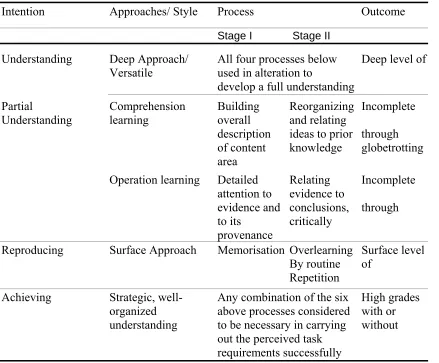
Chapter 8 Table 8.5a Approaches to Learning and Levels of Understanding... 171
Table 8.5b Approaches, Processes and Outcomes of Learning ... 172
Chapter 9 Table 9.4.1.1 Description of Subscales with corresponding item numbers of SPQ ... 211
Table 9.4.1.6 Internal consistency reliability coefficient alpha for SPQ scales... 213
Table 9.4.3.1 Investigation of Reliability of SACRR instrument ... 216
Table 9.4.4.4 Schedule of questions for Focus Group interview ... 221
Chapter 10 Table 10.2.1 Demographic Profile of sample at the beginning of the study... 229
Table 10.2.2 Educational Background ... 230
Table 10.3.1 Comparison of Learning Approaches of the Sample Population... 232
Table 10.3.2a Mean scores of Study Process Questionnaire (SPQ) for Sample... 233
Table 10.3.2b Mean scores of Study Process Questionnaire (SPQ) by Sex ... 234
Table 10.3.2c Mean scores of Study Process Questionnaire (SPQ) by Age... 235
Table 10.3.3 Internal Consistency Reliability Coefficient Alpha of SPQ Scales and Subscales... 236
Table 10.3.4 Comparison of Mean scores of SPQ between Hong Kong Polytechnic University students and Hong Kong Nursing Students... 238
Table10.4 Item Numbers of Inventory of Learning Preferences (ILP) and Corresponding categories... 242
Table 10.4.1 Paired Sample T-Test for Pre and Post-Course Mean scores of ILP... 243
Table 10.4.2 Frequency of items with each category of Learning Environment Selected by students in the pre-and Post-Course ILP Questionnaire ... 244
Table 10.4.4 Most preferred vs. Least Preferred Learning Environments
Selected in Pre- and Post Course by students ... 249
Table 10.5.1a Factor loading of the 26 items of Self-Assessment of Clinical Reflection and Reasoning (SACRR) items ... 255
Table10.5.1b Factor Analysis Groupings of SACRR items and Internal Consistency coefficients ... 256
Table 10.5.2 Comparison of Subscale scores of SACRR in four instances of Clinical Education placements... 259
Table 10.5.3.1 Correlation between the subscales of SACRR and GPA results ... 263
Table 10.5.3.2 Correlation between approaches to learning (SPQ) data and academic results (GPA)... 265
Table 10.5.3.3 Correlation between the scores of approaches to learning (SPQ) and Self-Assessment of Clinical Reflection and Reasoning (SACRR) subscales... 267
Table 10.6.1 Construction of Initial Themes from the Focus Group Transcripts .. 272
List of Figures
Figure 2.8.1 The Model of Occupational Performance ... 34Figure 3.2 BScOT (Hons) Curriculum Structure ... 42
Figure 3.4.3 Organization of Academic and Clinical Education... 47
Figure 3.5.1 SOLO (Structure of the Observed Learning Outcome) Taxonomy.... 50
Figure 4.3.1a Elements in Clinical Reasoning ... 71
Figure 4.3.1b Model for Clinical Reasoning ... 72
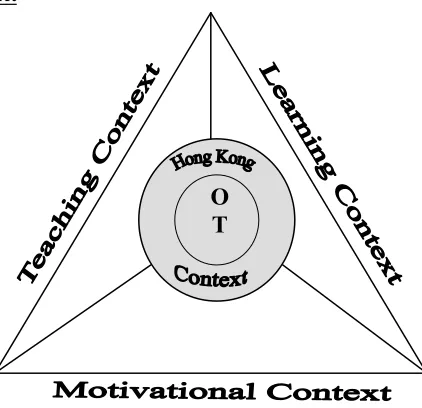
Figure 8.4 The Hong Kong Context ... 165
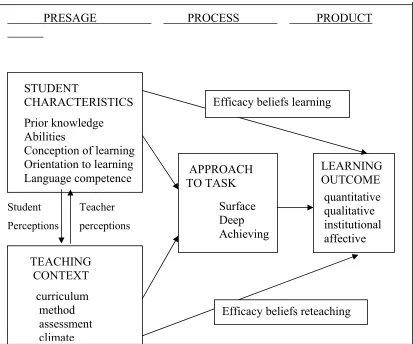
Figure 8.5.1 3P Model (Presage, Process and Product in Student Learning ... 174
Figure 10.5.1 Scree-Plot of 26 items of Self-Assessment of Clinical Reflection and Reasoning (SACRR) ... 256
Figure 10.5.2 Trend Analysis Method to show comparison of SACRR Subscales across Four Instances of Clinical Education placements . 261
List of Appendices
3.4.3 BSc OT (Hons) Clinical Education Calendar 1999/2001 ... 3623.4.3a Aims of Clinical Education... 363
3.4.3b Objectives of Clinical Education ... 364
9.3.4.1 Informed consent from participants ... 365
9.4.1 The Study Process Questionnaire (SPQ) instrument ... 366
9.4.2 The Moore & Fitch Inventory of Learning Preferences (ILP)... 374
9.4.3 Self-Assessment of Reflection and Reasoning (SACRR) instrument .... 377
Chapter one Introduction
Chapter 1
INTRODUCTION
1.1 Introduction
This chapter sets the scene by introducing the reader to the significance and the
scope of study. It begins with the background and justification of the study and a
statement of purpose that outlines the main research objectives. It also provides a
rationale for the development of reasoning skills from a novice to an expert therapist
including the learning strategies that underlie successful development of clinical
expertise.
Occupational therapy, as a practice-based profession with a service-oriented
nature, is undergoing evolution, particularly in recent years. There has been move from
institutional care to community-based care with growing emphasis on a client-centred
approach. Occupational therapy service provision has extended from medically based
institutions to a variety of community, educational, social service agencies, and private
practice (Law & Mills, 1998; McColl, 1998; Chan et al, 1999; DH, 2000; Ranka, &
Chapparo, 2000). As the health and social care system is adopting a client-centred
approach, the provision of health and social care services should be geared towards a
client’s individual needs. The client-centred approach involves valuing the individual,
understanding a client’s occupational needs and their health and social care experiences
(Cohn & Crist, 1995; Law & Mills, 1998; Ranka & Chapparo, 2000; Scaffa, 2001).
As a result of the rapid changes in the health care and social environment,
occupational therapy practice is now facing new challenges. Demands of consumer
groups, expectation of documentation, and the need for accountability of services and
government intervention in service delivery have made an impact on every therapist.
Within this context occupational therapists have a mandate to develop and implement
Chapter one Introduction
and optimal quality of life. The process of occupational therapy in this context consists
of problem solving under conditions of uncertainty and change (Rogers & Masagatani,
1982; Mattingly & Fleming, 1994; Sadlo, 1997; Vroman & MacRae, 1999; Martin,
2000).
Changes in the direction of health and social care also contributed to the interest
and development of occupational therapy services in emerging new settings. The
re-emergence of an occupational focus for the profession is changing the basis of practice
from a medical model to a socio-political (community) model, which emerges the client
in the process of care (Scaffa, 2001; Baum, 2002). As a result of these developments,
fieldwork educators are now questioning the academic leaders to “ provide practical
(fieldwork) experiences addressing these emerging issues such as quality of life, client
self-determination, advocacy, health promotion, (and) disease prevention” in order to
prepare students for the movement of health care services into the community (Cohn &
Crist, 1995, p104).
Clinical reasoning, the thought processes that clinicians use during evaluation
and treatment, is central to practice (Mattingly & Fleming, 1994; Dutton, 1995;
Neistadt, 1998). Teaching clinical reasoning is therefore vital to the professional
preparation of occupational therapy students (Royeen, 1995; Martin, 2000). The types
of clinical reasoning that have been identified in the occupational therapy literature
include narrative reasoning, interactive reasoning, procedural reasoning, pragmatic
reasoning, and conditional reasoning (Neistadt, 1996, 1998; Liu, Chan, & Hui-Chan,
2000; Ranka & Chapparo, 2000).
Narrative reasoning focuses on the client’s occupational story which reflects the
activities and roles that the client values (Clark, 1993; Neistadt, 1996; Ranka &
Chapparo, 2000). Interactive reasoning focuses on the client as a person and examines
Chapter one Introduction
on identifying occupational therapy problems and treatment on the basis of the client’s
disease or disability (Fleming, 1991a; Mattingly & Fleming, 1994). Pragmatic reasoning
considers the treatment environment and the possibilities of treatment within a given
setting as well as the therapist’s level of skill and experience (Schell & Cervero, 1993;
Creighton et al, 1995). Conditional reasoning focuses on continuous modification of
treatment to enable the person to function in the future (Fleming, 1991a). By using these
different types of clinical reasoning, therapists view their clients not only as individuals
with physical ailments, but also as social individuals within a context of family,
environment, and culture (Fleming, 1991b).
The development of clinical reasoning follows a continuum from novice to
expert with the accumulation of the clinical experience (Benner, 1984; Dreyfus &
Dreyfus, 1986; Slater & Cohn, 1991; Dutton, 1995; Strong et al, 1995; Neistadt, 1996;
Unsworth, 2001; Mitchell & Unsworth, 2005). According to Dutton (1995), a novice
student is less flexible in applying the rules and principles learnt in school without
considering the circumstances of the particular case when compared with the expert
counterpart. Expert therapists seem to be able to organise their approach more in line
with clients’ cues than from preconceived plans of treatment. They are able to recognise
clients’ problems and potential by relating past and present experiences to set realistic
goals with their clients. It is a normal development process for newly graduated
therapists to move from being novices to experts and to develop competence in using
appropriate clinical reasoning styles with different clients. However, other studies
showed that this process could be facilitated when novice therapists went through a
curriculum that prepared them with the awareness of the types of reasoning and their
practice (Benner; 1984; Neistadt, 1996; Liu, Chan, & Hui-Chan, 2000; Ranka &
Chapter one Introduction
Occupational therapists work with a multitude of problems, many of which can
be characterised by complexity, uniqueness and ambiguity. The goal of occupational
therapists is wise action, which means making the best judgements in a specific context.
The ability to treat the person’s problem with professional and expert knowledge, and
the ability to interact with the patient, as a person is important in occupational therapy.
The degree to which therapists possess these skills seems to vary with the experience,
personal traits, and points of view of individual therapists. The development of
procedural expertise can probably be accounted for by education and experience.
Studies, such as those conducted by Dreyfus (1972), Dreyfus & Dreyfus (1986), Benner
(1984), and Benner & Tanner (1987), postulate a continuum of learning and skill that
practitioners acquire through experience.
The above studies have begun to enlighten our understanding of how new
procedural expertise evolves and develop. The question of how interactive skill and
interactive reasoning evolve and develop in practitioners is not yet sufficiently
addressed in the professional development or clinical-reasoning literature (Mattingly &
Fleming, 1994). We know that experience is necessary, but certainly not sufficient,
condition for expertise. In addition, we still know little about the process of how
expertise is acquired, even though much research has been done on expert-novice
differences, particularly in problem-solving or reasoning (Benner, 1984; Dreyfus &
Dreyfus, 1986; Sadlo, Piper, & Agnew, 1994; Robertson, 1996; Vroman & MacRae,
1999; Unsworth, 2001; Mitchell & Unsworth, 2005).
Most efforts in promoting occupational therapists’ problem solving and
reasoning skills are based on the assumption that these skills are largely dependent on a
set of generalised processes. The Occupational Therapy faculty has referred to theories
and models, which illustrate the general properties of clinical reasoning, as well as the
Chapter one Introduction
in itself involves complex processes, and skills are not easily developed by this direct,
step-wise protocol (Royeen & Salvatori, 1997; Sadlo, 1997; Vroman & MacRae, 1999;
Martin, 2000). As a result, a line of examining the nature of clinical problem solving
prevails. Furthermore, although clinical reasoning has been defined as one of the critical
elements of occupational therapy education, there is an unresolved question whether
clinical reasoning ability is generic or inherently related to the skills and dispositions of
a clinical problem-solving process. And to what extent clinical reasoning skills can be
taught to the occupational therapy students if this ability can be learned is still unclear.
There are a number of aspects of clinical reasoning, which require further
research. These include further exploration of the nature of the reasoning process, the
direct applicability of the hypothetico-deductive reasoning process to occupational
therapy and the complex interaction between knowledge and reasoning. Contemporary
researchers were dissatisfied with the representation of hypothetico-deductive reasoning
and heuristics in explaining the occupational therapists’ clinical decision making
(Barrows et, 1978; Elstein, Shulman & Sparfka, 1978; Feltovich et al, 1984). In view of
the assumption that most occupational therapy educators hold, the variables most
commonly associated with the hypothetico-deductive model did not prove adequate in
differentiating strong from weak problem solvers (Bordage & Lemieux, 1991). Instead
credence was given to information-processing approach (Newell & Simon, 1972), with
a presumption that it is generalised to solve all problems across the occupational therapy
field provided the practitioners employ each proposed strategy or process in dealing
with any clinical problem (Cohn & Crist, 1995; Bonello, 2000; Hocking & Rigby,
2002).
From a critical examination of literature, there is clear evidence, which supports
speculations that the failure of occupational therapy students’ skills in clinical problem
Chapter one Introduction
poses a challenge to both occupational therapy education and occupational therapy
practice in providing opportunities and resources for practising problem solving skills
(Sadlo, Piper, & Agnew, 1994; Vroman & MacRae, 1999; Liu, Chan, & Hui-Chan,
2000; Martin, 2000). Occupational therapy education, on the other hand, is confronted
with the challenge of determining the content, curricular strategies and opportunities
that describe, explore and develop clinical skills. The essence of this study is that there
is no single way to look at clinical reasoning – rather it is multifaceted and complex.
Further research therefore, is needed to determine whether or not expert clinicians
produce different and more effective patient outcomes than do novice clinicians.
1.2 Setting the Scene
There is a notion that individuals are regarded as effective problem solvers with
reasoning abilities if they pass the written examination designed to assess the essential
knowledge that is related to the clinical problem-solving context. However, only little
evidence (for example, Robertson, 1996; Higgs & Jones,2000; Martin, 2000; Ranka &
Chapparo, 2000) is available to support the view that students can transfer their
knowledge and adopt specific cognitive strategies in understanding the situation while
trying to solve the problem. In fact, most occupational therapy teachers believe that
students need to be helped to understand how therapists make sense of clinical problem
situations and how they decide on the progress of the therapy.
Clinical reasoning has been studied since the early 1980s and its types, styles
and process of reasoning are well discussed in the occupational therapy literature
(Schell & Cervero, 1993; Crabtree, 1998). In the absence of sound clinical reasoning,
clinical practice becomes a technical operation requiring direction from a
decision-maker (Higgs & Jones, 2000). Among many descriptions, clinical reasoning can also be
described as the types of inquiry or thinking that a therapist does to understand clients
Chapter one Introduction
that uses thinking and sometimes talking (narrative) to facilitate effective problem
solving and decision making (Reed & Sanderson, 1999). It provides a language that
may assist therapists to articulate their reasoning to others.
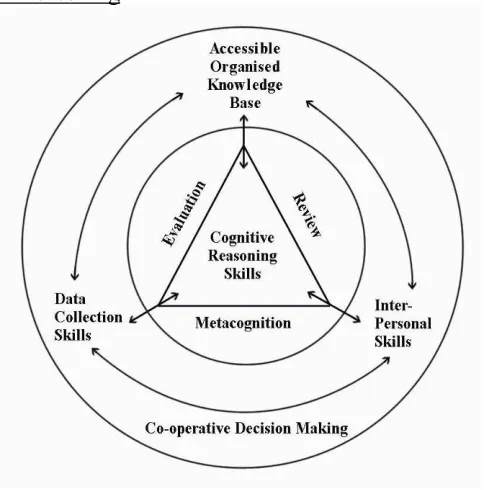
According to Higgs & Jones (2000), three core elements are essential to skilled
clinical reasoning; use of knowledge, the act of cognition or thinking and the process of
metacognition. Knowledge is essential for reasoning and decision-making, which are
central to professional practice. In the health professions, clinical reasoning provides the
vehicle for knowledge use in clinical practice as well as for knowledge generation
(Bordage & Limieux, 1986; Grant & Marsden, 1987; Higgs & Titchen, 2000).
Metacognition, on the other hand is reflective self-awareness. It is thinking, which is
over and above normal conscious thinking (cognition). It refers to having knowledge,
and examining one’s own cognitive processes (Higgs, 1992). Metacognitive skills can
be thought of as cognitive skills that are necessary for the management of knowledge
and other cognitive skills (Biggs & Telfer, 1987; Biggs, 1988).
Knowledge and thinking are interdependent, since the development of
knowledge requires thinking, and thinking can be defined as the ability to apply
knowledge. The importance of domain-specific knowledge in problem-solving expertise
is widely supported (Bordage & Lemieux, 1991; Grant & Marsden, 1987). On the issue
of domain-specific knowledge, Baron & Sternberg (1987, p8) argue that ‘although
domain-specific knowledge is essential to good thinking within a domain, it is not
sufficient to assure good thinking will occur’. One possible explanation for this
observation was that only a minor trend of occupational therapy researchers (See for
example, Rogers & Holm, 1991; Slater & Cohn, 1991; Schell & Cervero, 1993;
Creighton et al, 1995) were adopting information-processing theory in examining
clinical problem-solving, thus generalisations were quite difficult to achieve. It was
Chapter one Introduction
studies in occupational therapy, researchers did not take into consideration the role(s) of
domain-specific knowledge in all aspects of student learning.
In medicine, research has shown that clinical reasoning is not a separate skill
acquired independently of clinical knowledge and other diagnostic skills, but they go
hand in hand (See Schmidt & Boshuizen, 1992; Schmidt, Boshuizen, & Norman, 1992;
Boshuizen & Schmidt, 2000). This was further supported by Elstein and his colleagues
(1990) in their earlier work in that a clinician’s clinical reasoning performance varied
greatly across cases, implying that it is dependent on the clinician’s organisation of
knowledge in a particular area.
Evidence is also accumulating in the literature that expert and novice problem
solvers differ in their use of problem-solving strategies, such as chunking (Feltovich,
1983). Experts chunk data into larger information units than novices do. The novice’s
memory structures, on the other hand, arise from features more peripheral to functional
use. The novice relies on conceptual principles to retrieve things out of memory. The
expert however retrieves knowledge on the basis of both situational cues and conceptual
stimuli. As the reasoning process unfolds, experts monitor their own thinking and
understanding, which enables them to curtail errors and omissions (Rogers, 1983). In
other words, expert clinicians are those who are competent in action and,
simultaneously reflect on this action to learn (Schön, 1983).
With reference to expert-novice differences, van der Vleuten & Newble (1995)
suggested that the way the expert differs from the novice is strongly connected to
knowledge and how the knowledge is stored, retrieved, and used. Thomas, Wearing, &
Bennett (1991) proposes that novice problem-solving is search-driven – looking for
relevant information, where as experts are schema-driven – using stored chunks and
patterns of information action. According to Hagedorn (1996), experts have the ability
Chapter one Introduction
problem space, whereas novices are less able to think quickly through a situation than
the experts (Schmidt, Norman, & Boshhuizen 1990; Robertson, 1996; Unsworth, 2001;
Mitchell & Unsworth, 2005).
There is much to learn about occupational therapy practice and the evolution
from novice to an expert clinician. There is also a greater need to learn much more
about the characteristics and actions of experienced clinicians in a variety of patient care
settings. Other professions like teaching, nursing, physiotherapy, and medicine are
looking at models of expertise (Benner, 1984; Benner, 1994). The review of literature
revealed a variety of concepts but limited formal research on clinical reasoning skill
development in occupational therapy, physiotherapy and nursing professions. What are
the stages of development for occupational therapy expertise? There was a need for
longitudinal studies to help uncover the process of change from novice to competent
and expert clinician. This paved way to a new line of examining the nature of clinical
reasoning skill development in novice students, which will be the basis of the research
for this study.
1.3 Significance and Scope of the Study
Occupational therapists are knowledge workers. Knowledge work is a
prerequisite for effective clinical reasoning. Students learn the knowledge base
relatively easily. The framework for decision making, or clinical reasoning skill, is less
easily acquired. Mattingly (1991a) stated that the beginner therapist does not know
much more than what he/she can state. The performance of the new therapist is
characterised by starts and stops; he/she must stop to think at every stuck point. The
expert therapist on the other hand demonstrates fluidity of performance; because he/she
knows much more than can be articulated (“highly tacit and embodied knowledge,”
(Mattingly, 1991a, p979) and can access that knowledge while “in action”. “The expert
Chapter one Introduction
particular patient” (Mattingly, 1991a, p985) through the use of explicit or intuitive
clinical reasoning strategies.
Although clinical reasoning has been studied in different ways for the past 35
years, it is only in the past 10 years that it has become more widely heard of and
understood. Educators, clinicians and students are finding that it is being increasingly
referred to in the literature or being spoken of; it cannot be ignored. Although much
research remains to be developed, the existing knowledge from research studies can be
put into useful practice in many innovative ways. Educators need to understand how
clinical reasoning can be developed and how this can be taught and facilitated (Neistadt
& Atkin, 1996; Neistadt, 1998; Neistadt, Wright, & Mulligan, 1998; Bonello, 2000; Liu,
Chan, & Hui-Chan, 2000; Hocking & Rigby, 2002).
Although a great deal of literature on clinical reasoning exists, the majority of
that literature focuses on “what” and “how to” questions. As reported earlier, Schell &
Cervero (1993) summarised previous literature on clinical reasoning as “to either
describe clinical reasoning or prescribe approaches to improve it” (p605). Clearly,
research studies are necessary in other dimensions of clinical reasoning to gain a
thorough understanding of it.
Clinical reasoning is recognised as the core of occupational therapy practice and
clinical decisions are an integral part of this (Mattingly & Fleming, 1994; Dutton, 1995;
Neistadt, 1996, 1998). Many studies have been conducted to investigate how
occupational therapists use knowledge to make a particular clinical decision. Each time
an occupational therapist meets a new patient he or she must attempt to make sense of
the case, decide what action to take and decide what to do first. This process is usually
referred to as clinical decision-making and utilises a number of forms of clinical
reasoning, which have been studied and described (for example, Crepeau, 1991;
Chapter one Introduction
It is unclear from critical examination of the literature whether therapists use
distinctly different types of reasoning that translate into mutually exclusive forms of
thinking, or whether the different styles of reasoning which have been identified in each
separate research are images of thinking that have been constructed through the
process of attempting to put words to a largely internal, tacit phenomenon (Ranka &
Chapparo, 2000). It seems that descriptions of the different clinical reasoning processes
that exist may actually be a reflection of the influence of the knowledge base of various
researchers (Crepeau, 1991; Fleming, 1991a; Rogers & Holm, 1991; Clark, 1993;
Mattingly & Fleming, 1994; Dutton, 1995; Neistadt, 1996; Bridge & Twible, 1997).
Both the knowledge and cognitive processes are required to explore the
solutions in clinical situations. As a phenomenon for study, clinical reasoning’s
contribution lies in describing the diversity, commonalties and complexities of
therapists’ thinking (Ranka & Chapparo, 2000). According to Jones (1997), clinical
reasoning is influenced by the therapist’s needs and goals, values and beliefs,
knowledge, cognitive, interpersonal and technical skills, the patient’s values and beliefs,
individual physical, psychological, social and cultural presentation, and the
environmental factors such as resources, time, funding, and any externally imposed
requirements. All these influences may be considered a source of knowledge and
motivation for decision-making (Ranka & Chapparo, 2000).
One area of notable omission is the development of ways to evaluate clinical
reflection and reasoning. To evaluate the effectiveness of different teaching strategies
for clinical reflection and reasoning, we need various ways to measure and evaluate the
development and improvement of clinical reasoning skills (Royeen et al, 1994; Allison
& Turpin, 2004; Tan, Meredith, & McKenna, 2004; Thomas, Penman, & Williamson,
Chapter one Introduction
Problems with assessing clinical reasoning of occupational therapy students are
a major concern of educators, both in occupational therapy and other related disciplines,
and there has long been a question of how to achieve more objective assessments of
students’ clinical performance (Cross & Hicks, 1997). Evidence from educational
research into the nature and breadth of criteria used by educators to assess students’
clinical performance, although often inconsistent suggests that judgements are
frequently inaccurate. The capacity of assessors to understand what they are actually
judging in students’ performance, what importance is attached to various attributes, or
the extent to which evidence, personal values and assumptions contribute to decision
making is not clearly understood. In a study of clinical supervisors in occupational
therapy Ilott (1990) demonstrated how infrequently supervisors used their behaviourally
based clinical objectives and accompanying guideline to help them in reaching
assessment decisions.
The search for varied ways to help students see connections between theory and
clinical practice is an ongoing one in occupational therapy education (Chung &
Spelberg, 1982; Pressler, 1983; Schwartz, 1984; Mann & Banasiak, 1985; Sabari,
1985). The ideal setting to enhance clinical reasoning is the fieldwork education and
this is one of the best ways to help students transfer their academic skills to clinical
settings in order to teach them the clinical reasoning process. Rogers’ model (1983) for
teaching clinical reasoning appears to be an effective way to connect classroom theory
to clinical practice and is well worth the extra educator effort it involves. Further
research is needed to examine the actual clinical carryover of this teaching approach in
comparison with other models.
Researchers agree that novice and experienced clinicians maintain noticeably
different clinical reasoning skills (Dutton, 1995). To teach students and novice
Chapter one Introduction
and educators have begun to explore ways to teach and improve clinical reasoning skills
(Schwartz, 1991; Royeen, 1995; VanLeit, 1995; Neistadt, 1996). In developing clinical
reasoning skills, it is crucial for students to master the knowledge base and establish
their competence in integrating their knowledge into practice. The clinical education
subjects provide the opportunity for students to apply what they had learnt in terms of
theories, clinical and technical knowledge and professional practice to actual case
management. The fieldwork practicum therefore is regarded as the major channel
through which occupational therapy students integrate knowledge into practice. To
enhance the transfer of knowledge, both teachers and clinical educators must develop a
clear framework. A well-designed fieldwork practice better prepares novice therapists to
choose their appropriate clinical reasoning styles to match with clients’ needs (Duke,
2004; Martin et al, 2004; Lysaght & Bent, 2005; Thomas, Penman, & Williamson,
2005; Johnson et al, 2006).
We are entering a period in which health science curricula worldwide are
undergoing dramatic transformations and experiencing significant structural changes.
These changes are likely to shape the practice of the health sciences for decades to
come. The role of a curriculum design is one of the focal issues in this transformation
(Liu, Chan, & Hui-Chan, 2000; Patel & Kaufman, 2000; Ranka & Chapparo, 2000).
The occupational therapy curriculum is also changing its structure to cope with today’s
need for client-centred practice-ready graduates. Therefore, practice-related and
contextual problem-based learning is an approach that appeals to today’s occupational
therapy education (Vroman & MacRae, 1999; Martin, 2000; Sadlo & Richarson, 2003).
These lifelong and self-directed learning skills enable students to attain high level of
clinical competence. As reported in the literature, the definition of problem-based
learning varies from programme to programme. According to Vroman & MacRae
Chapter one Introduction
synthesize knowledge for practice in the occupational worlds of their clients, influenced
by the level of impairment and handicap. This helps students to choose the appropriate
clinical reasoning that matches well with clients’ needs.
An individual’s knowledge base is unique. Recent research places an increasing
emphasis on the essential interconnection between knowledge and clinical reasoning.
According to Higgs & Titchen (2000), “Knowledge is essential for reasoning and
decision making which are central to professional practice” (p23). This comprises of
practical, theoretical and research knowledge as well as personal knowledge, which
results from attempting to make sense of the individual’s own experiences and the
opinions and experiences of others. A well-organised knowledge base therefore is an
essential requirement along with well-trained social, perceptual and psychomotor skills
(Schmidt, Boshhuizen, & Norman, 1992; Merri’nboer, 1997; Boshuizen & Schmidt,
2000).
It is not reasonable to expect occupational therapy students to graduate as
competent, proficient, or expert therapists. To reach the level of a competent, proficient,
or an expert therapist, requires years of clinical experience and continuing education.
However, it is possible for students to enter practice as novices or advanced beginners
who are capable of progressing to higher levels of clinical reasoning if their academic
preparation for higher level fieldwork has given them as awareness of the types of
reasoning they will be using in practice. This awareness of clinical reasoning concepts
can help students to learn about their thinking and doing clinical practice
simultaneously, intensifying the learning derived from clinical experience.
As noted earlier, educators, academics and clinicians in many parts of the world
are only recently becoming aware of the importance of clinical reasoning, so its
importance has not yet been fully realised. There is an enormous potential for discovery
Chapter one Introduction
the difficulties that newly qualified therapists have when they begin to work, and this
hypothesis would probably hold true for other health care practitioners. (See for
example, Barrows, et al, 1978; Elstein, Shulman, & Sprafka, 1978; Schell & Cervero,
1993; Mattingly & Fleming, 1994; Dutton, 1995; Neistadt & Crepeau, 1998; Ranka &
Chapparo, 2000). The lack of understanding of the learning of clinical reasoning
processes among occupational therapists led to growing interest among researchers in
exploring representations of knowledge and processes separately. What are the
processes involved? Do occupational therapists examine the construction process while
making clinical decisions? What is the relevant knowledge content used to organise the
information about the problem context? Answers to these questions may give hints to
the different types of discourses used for clinical problem solving by health care
practitioners (Bordage & Lemieux, 1991).
The essence of the proposed study is that there is no single way to look at
clinical reasoning – rather it is multifaceted and complex. However, with a heightened
understanding of the processes involved in clinical reasoning, clinicians, fieldwork
educators, academics and students can be better helped to develop into sensitive,
knowledgeable, artistic practitioners and researchers. This research was based on a
two-year longitudinal study of a cohort of student occupational therapists, which provided
insights into the phenomena of how one moves from the chaotic world which the novice
clinician struggles to make sense of to the apparently more organised world of the adept
expert clinician, who is able to make more sense out of the chaos. For example, how
and when does one learn the importance of teaching as a clinical skill, and when does
one learn how to elicit and use rich patient-specific illness data?
The findings from this research study add to the understanding of the
development of clinical reasoning skills and could inform the design and content of
Chapter one Introduction
undergraduate domain, this study may highlight the tremendous difficulties students
may face when trying to reason through, integrate and synthesise their theoretical
learning in both academic and clinical settings.
1.4 The Study
This study examined implications for curriculum design resulting from a
two-year longitudinal study of a cohort of 80 occupational therapy students, which explored
their development of learning from novice to beginning therapist.
1.4.1 Context of the Study
A cohort of 80 occupational therapy students who followed a course of Bachelor
of Science (Honours) Degree in occupational Therapy at the Hong Kong Polytechnic
University from 1998 to 2001 provided the context of this study.
The Bachelor of Science (Honours) degree in occupational therapy programme
offered by the Hong Kong Polytechnic University has been in operation for more than 20
years and is the only occupational therapy programme in Mainland China. The BSc
(Honours) in Occupational Therapy is a three-year, full-time (or equivalent) programme
comprising 104 credits for the academic component and 24 credits for the clinical
education component, which occurs in major clinical settings in Hong Kong (See Chapter 3 for details on BSc (Hons) Occupational Therapy Curriculum structure). The programme is structured to allow for alternating periods of academic and clinical studies so that
knowledge and skills acquired in the Hong Kong Polytechnic University will be applied
and evaluated in tandem with the development of skills in practice. The relationship
between clinical studies and academic work is based on a cyclic series of theoretical and
practical exposure. Students have clinical placements in clinical education settings, which
are spread across the academic terms and over the vacation period to achieve the
Chapter one Introduction
1.4.2 Aim of the Study
To develop a programme of initial training and education using a range of measures
and show what evidence is there for the progressive development of clinical reasoning
skills in trainee occupational therapy students of the Hong Kong Polytechnic
University?
(For main research questions developed from the aim of the study, refer to Chapter (9) on Research Methodology and Design of Study).
1.5 Organisation of Thesis
The thesis is organised as follows:
Chapter 1 Sets the scene by introducing the research objectives, the significance
and scope of the study.
Chapter 2 Presents review on Occupational Therapy as a client-centred profession.
The review includes occupational therapy philosophy, conceptual framework and a brief introduction to clinical reasoning.
Chapter 3 Introduces briefly the BSc (Hons) Degree in Occupational Therapy
programme structure & curriculum followed by the study cohort.
Chapter 4 Reviews the updated literature of the types and models of clinical
reasoning. The review also presents the development of cognitive skills and various teaching strategies for the development of clinical reasoning skills.
Chapter 5 Presents an overview of the development of clinical reasoning in three
disciplines – Occupational Therapy, Physiotherapy and Nursing including novice-expert differences among occupational therapy, physiotherapy and nursing professions.
Chapter 6 Reviews the Dreyfus & Dreyfus model of skill acquisition as an
organised framework to distinguish novice-expert continuum. The review also includes the nature of competence and qualities of an expert.
Chapter 7 Covers the pertinent literature on the educational philosophy of
occupational therapy in the pursuit of a curriculum framework covering curriculum evaluation leading to a curriculum reform design.
Chapter 8 Presents relevant literature on students’ approaches to learning and its implication for teaching and learning activities.
Chapter 9 Focuses on the methodology model used for this study. This chapter is
Chapter one Introduction
(ILP) and Self Assessment of Clinical Reflection and Reasoning (SACRR) and the second phase explains the focus group interviews. Discussion also involves the data collection and analyses procedures. Concerns of validity and reliability and the ethical issues involved are also presented.
Chapter 10 Offers a detailed presentation and interpretation of the findings according to the main research objectives.
Chapter 11 Discusses the major findings of the research study. This chapter will
explore the appropriateness of the research approach used and seek to describe how the study answered the research questions.
Chapter 12 This chapter closes the discussion in the form of drawing conclusions
and making recommendations for present and future research.
1.6 Summary
The main focus of this chapter was to set the scene by providing the reader with
the background and justification of the study. This research was based on a two-year
longitudinal study of a cohort of student occupational therapists, which provided
insights into the phenomena of how novice and experienced clinicians maintain
noticeably different clinical reasoning skills.
In this study, clinical reasoning is examined from several perspectives. First, the
practical nature of clinical reasoning will be described, along with the relationship
between formal theory and clinical reasoning. Second, an understanding of the
development of clinical-reasoning skills and related implications for teaching of these
skills will be presented. Next the expert-novice comparisons of students’ clinical
reasoning skills and application of Dreyfus & Dreyfus (1986) model of skills
acquisition as an organised framework to occupational therapy practice will be
developed. Furthermore, it is hoped that this study might form a framework for the
development of reasoning skills from a novice to a beginning therapist including
personal and contextual elements, content and process of clinical reasoning of
occupational therapy students and provide insights into their learning strategies that
Chapter one Introduction
Developing quality health care services depends on technological advances and
organizational improvements in the way occupational therapists relate to their clients in
an effort to make better health care decisions. The next chapter is based on the belief
that client-centred decision-making is likely to result in better clinical decisions. Based
on this, it makes an attempt to give an overview of occupational therapy as a
client-centred profession including its philosophy, conceptual models of practice, evaluation
of occupational performance and occupational therapy process and its relationship to
Chapter two OT: A client-centred profession
Chapter 2
OCCUPATIONAL THERAPY: A CLIENT-CENTRED
PROFESSION
2.1 Introduction
This chapter presents an overview on occupational therapy as a client-centered
profession. The knowledge presented will form a basis for understanding the
development of clinical reasoning skills along a novice-expert continuum. It also
explains occupational therapy philosophy, conceptual models of practice and models of
occupational performance and provides a framework for the development of clinical
reasoning skills with a particular emphasis on the significance of a client-centered
approach to clinical reasoning (CAOT, 1997; Law, 1998; Sumsion, 2000; Sumsion &
Smyth, 2000; Unsworth, 2004).
Occupational therapy has emerged and continues to exist because it has an
implicit social contract to address the problems of those members of society who have
limited capacity to perform in their everyday occupations. Occupational therapists
provide specialized services that enhance the ability of individuals to perform and to
achieve satisfaction in their daily occupations. This practice requires the application of
occupational therapy knowledge that defines and guides the decisions, actions, and
techniques of therapists. Without the force of that conceptual foundation, which
explains and justifies the service, the pragmatic work of therapists would have little
value for society.
Society’s health needs are rapidly changing and, accordingly, the health care
system is being rapidly altered. This change will bring occupational therapy
unprecedented challenges and opportunities. The refocusing of health care goals is
creating new opportunities for occupational therapy. As the opportunities for the
Chapter two OT: A client-centred profession
proportionately. With the transformation of health care services, occupational therapy
practice will also change. Because of this change, occupational therapy service
provision has extended from hospital-based to a variety of community situations, and
the therapist will be working less in hospital settings and more in educational and social
service agencies which include schools, home health agencies, private practice,
industry, and other community facilities (Luban-Plozza, 1995; Law & Mills, 1998;
McColl, 1998; DH, 2000; COT, 2003).
In view of the rapid changes in health and social care systems, occupational
therapy practice is undergoing evolution, particularly in recent years. In line with this,
the nature of occupational therapy practice will shift from the application of a limited
number of known clinical solutions to the use of increasingly complex, autonomous
decision-making and problem solving in multifactoral situations. The process of
occupational therapy in this context consists of problem solving under conditions of
uncertainty and change (Rogers & Masagatani, 1982; Mattingly & Fleming, 1994;
Vroman & MacRae, 1997; Sadlo, 1997). The, therapist must, therefore, be a critical
thinker, capable of evaluating and synthesizing information from a variety of sources
about a wide range of phenomena.
2.2. Occupational Therapy: A Client-Centered Profession
Occupational therapy is a client-centred profession; it values the individual
needs and rights and understands clients’ illness pattern and health care experiences. A
Client-centred approach may involve patients’ participation in determining appropriate
treatment goals. It is assumed that most patients’ want and benefit from the treatment by
taking an active role in the clinical decision-making process. Although patient-centered
decision-making is likely to result in better clinical decisions, there may be difficulties
in achieving concordance with the care plan, which may impact on clinical
Chapter two OT: A client-centred profession
Clinical reasoning and clinical decision-making has long been inherent in the
field of occupational therapy. However, it is only in recent years that the metacognitive
concepts of clinical reasoning have been operationalised and articulated in occupational
therapy literature (Biggs & Telfer, 1987; Carnevali, 1995; Neistadt, 1996) and curricula.
In the context of this chapter, clinical reasoning refers to the ‘‘thinking and decision
making processes which are integral to clinical practice’’ (Higgs & Jones, 2000, pxiv).
Based on this, fundamental questions may be asked about the role that patient/client can
play in the clinical reasoning processes. Since client-centered care involves valuing the
client needs and rights, understanding clients’ illness pattern, family and social
background and health care needs, it is necessary to embrace them with effective
relationships in order to enable them to participate effectively in the clinical reasoning
process. Concepts of patient choice, participation, empowerment and working in
partnership are being widely examined, advocated and challenged within the
professional literature (Luban-Plozza, 1995; Law & Mills, 1998; Higgs & Jones, 2000;
Sumsion, 2000; Scaffa, 2001). There is no doubt; active participation by patients in the
decision-making process is likely to result in better clinical decisions which in turn
result in achieving clinical effectiveness.
There is evidence in the literature that a level of participation the in treatment
process may contribute to the patient’s sense of control and positively affect
psychological well-being, physical recovery and satisfaction resulting in patients
accepting greater responsibility for their health (Cahill, 1996; Chan et al, 1999). Since,
client-centred care is fundamentally about the process of care, broader perspectives are
needed to understand the complexities of the issues to develop a collective
understanding and vision of what a patient-centred care might be and to discover how
different professionals, including occupational therapists, can provide explanations and