Int. J. Electrochem. Sci., 13 (2018) 6870 – 6879, doi: 10.20964/2018.07.38
International Journal of
ELECTROCHEMICAL
SCIENCE
www.electrochemsci.org
Exploring the Application of Hexagonal SnS2 Nanoplates
Covered with a 3D Graphene Network for Lithium Sulfur
Batteries
Baohai Liu, Wenxu Wang, Honglei Li, Zhixu Jian, Yalan Xing, Shichao Zhang*
School of Materials Science and Engineering, Beihang University, Beijing 100191, PR China *E-mail: [email protected]
Received: 17 March 2018 / Accepted: 7 May 2018 / Published: 5 June 2018
With its high specific capacity, the lithium sulfur battery is seen by many as the battery of the future. However, the Li–S battery still faces a host of problems, mainly connected to its poor cycling performance due to the “shuttle effect”. As they show strong chemical absorption and are reaction sites to polysulfide species, sulfiphilic hosts are used in cathode material. For this paper, tin sulfide (SnS2) nanoplates were incorporated with a 3D graphene network using a simple hydrothermal method and a reduction process. After the infiltration of sulfur, the S/rGO-SnS2 exhibited a high initial discharge capacity of 1150.1 mAh g−1 and excellent stability after 100 cycles (844.6 mAh g−1). The superior stability and reversibility is due to the synergy between the high-active sulfiphilic SnS2 and high-conductivity 3D graphene network. This result shows a potential approach to the application of Li–S batteries.
Keywords: lithium sulfur batteries, SnS2, graphene, sulfiphilic host
1. INTRODUCTION
The increasing demand for energy storage systems has stimulated the rapid development of battery technology. Over the past decade, lithium-ion batteries have been widely used in portable electronic devices and electric vehicles, but their future will be problematic without further improvement of their higher energy density and a longer useful life. The lithium sulfur battery, a promising candidate for future battery systems, exhibits a high specific capacity of 1675 mAh g-1 and energy density of 2600 Wh kg-1 [1,2]. In addition, the natural abundance of sulfur elements can reduce costs, suggesting the lithium sulfur battery is a superior replacement for today’s batteries [3].
electrically insulating nature of sulfur and its reduced product, lithium sulfide, as this affects the rate performance of the batteries [5]. The second issue concerns the high solubility of the polysulfide intermediates in the electrolyte during the cycling process, specifically the long chain polysulfide (Li2S8 to Li2S4), which is the main reason the batteries lose capacity [6,7]. The third issue is related to the large volume change during the charge/discharge process, which results in the structural destruction of the electrode material [8].
To solve these issues, carbonaceous materials are frequently chosen as a host for the sulfur, on account of their enhanced conductivity and the physical capsulation capacity of polysulfide species. These carbonaceous materials include 1D carbon nanotubes [9,10], 2D graphene [11,12], micro/mesoporous carbon [13,14], and hollow carbon spheres [15,16]. However, due to non-polar C-C bonding, the interaction between the polar polysulfide and carbon is inherently weak [17]. As a result, the dissolution of polysulfide is still inevitable when a carbon host material is used. Another attractive approach beyond physical confinement is to use inorganic polar host materials [18], generally metal oxides, nitrides, and sulfides, because they have a stronger chemical affinity with polysulfide species. In other research, different inorganic materials, such as Mg0.6Ni0.4O [19], TiO2 [20], MnO2 [21], VN [22], CoS2 [23] and Al2O3 [24], have been found to improve cycling performance when used as cathode host material in lithium sulfur batteries. Recent studies have shown that tin sulfide (SnS2) exhibits a promising trapping effect with polysulfide species [25]. However, the intrinsic low electric conductivity of SnS2 restricts its further application as a host material for lithium sulfur batteries [26].
For this paper, hexagonal SnS2 nanoplates covered with a graphene composite were prepared using a simple hydrothermal method followed by a reduction process. The resulting composite was further applied as an effective polysulfide immobilizer for the preparation of the sulfur cathode. It is noteworthy that the hexagonal SnS2 nanoplates provided more active sites to anchor the polysulfide, and that the graphene proved an effective network for rapid electronic transfer.
2. EXPERIMENTAL SECTION
2.1. Materials synthesis
[image:3.596.56.525.121.240.2]
weight ratio of 3:7 and sealed in a glass tube container with argon gas. The container was then heated in an oven at 155 ℃ for 24 h to obtain the product.
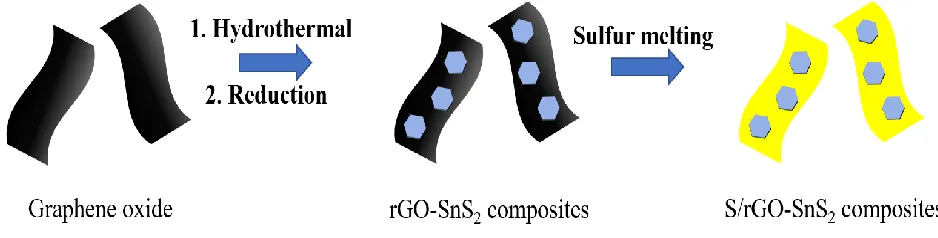
Figure 1. Schematic of the preparation of S/rGO-SnS2 composite
2.2. Characterization
Field-emission scanning electron microscopy (Hitachi S-4800), transmission electron microscopy (JEM-2100F), and high-resolution transmission electron microscopy (FEI, Tecnai G2 F20) were used to characterize the morphology and microstructure of the as-prepared samples. The atomic information of the samples was also investigated using an energy dispersive X-ray spectrometer (EDS) which was attached to SEM. X-ray diffraction (XRD, Rigaku D/Max-2400) was conducted from 10° to 80° at a scan rate of 0.5° min−1 to analyze the crystal structures of the samples. Thermal gravimetric analysis (TGA) was carried out on a thermogravimetric analyzer (STA-449C, NETZSCH) at a heating rate of 10 ℃ min-1 from room temperature to 500 ℃ in an Argon atmosphere.
2.3. Electrochemical measurement
3. RESULTS AND DISCUSSION
As shown in Figure 1, the preparation of rGO-SnS2 used the hydrothermal method followed by chemical reduction. During the process of mixture, Sn4+ ions were first absorbed by the hydroxyl, carboxyl, and epoxy groups, these being the abundant functional groups of GO [28]. Then H2S was released by decomposing thiourea during the hydrothermal treatment, which served as a sulfur provider to form SnS2 nuclei. Finally, it was further reduced by l-ascorbic at a mild temperature compared with other reducing agents [29]. Due to the presence of graphene, SnS2 grew on the surface, in close contact with GO sheets. This structure ensured an effective electron transfer rate and yielded a sufficient surface area to anchor the polysulfide.
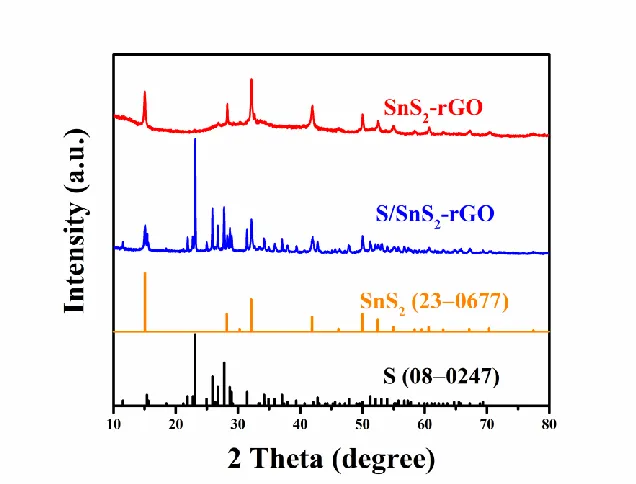
Figure 2. The XRD pattern of the as-prepared rGO-SnS2 and S/rGO-SnS2
[image:4.596.139.457.249.491.2]
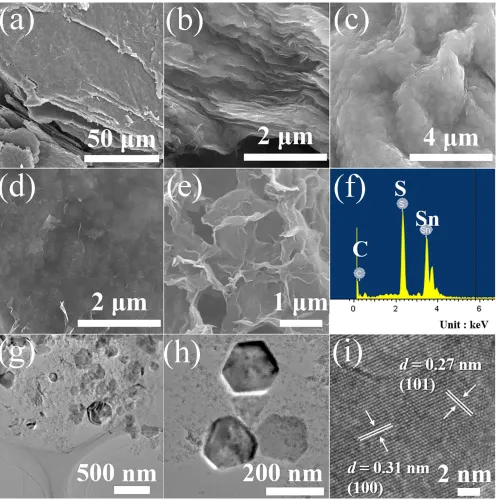
Figure 3. Micro structures of rGO-SnS2: SEM image (a) at low magnification, (b) of side face, (c)(d) of front side at high magnification, (e) pure graphene; (f) EDS results; TEM images (g) at low magnification, (h) at high magnification; (i) HRTEM image
[image:6.596.127.471.276.538.2]
conductive framework, implying great potential for effective Li–S battery host material. Fig. 3f shows the EDS result collected on the area in Fig. 3g, and further confirms the existence of Sn, S and C. The element O was not detected, verifying the success of the deoxidation of graphene oxide. Transmission electron microscopy (TEM) analysis was used to detect the microstructure of rGO-SnS2 composite. As presented in Fig. 3f, the SnS2 nanoplates are well-distributed on the thin graphene sheet. In addition, the rGO-SnS2 composite possesses a face-to-face structure which strengthens the contact between the SnS2 nanoplates and the graphene. Most of the hexagonal SnS2 nanoplates have an average diameter of ~150 nm, as shown in Figure 3h, an enlarged TEM image. HRTEM was also employed to characterize nanocrystal in Fig. 3i; the lattice fringes of SnS2 display interplanar spacings of 0.31 and 0.27 nm, which are consistent with those of the (100) and (101) planes of SnS2, respectively [32]. The result also closely corresponds with the above XRD results.
Figure 4. The weight loss curve of S/rGO-SnS2 composite by TGA
A thermogravimetry analysis (TGA) of the S/rGO-SnS2 composite was taken to determine the sulfur content. As the curve in Figure 4 shows, major weight loss appears in the temperature range of 200 to 350℃. This weight loss can be attributed to the sublimation of sulfur in the composite [11]. The sulfur content was measured to be 70.8 wt%.
[image:7.596.54.546.119.495.2]
reduction to the final product Li2S. The continuous anodic peaks are located at 2.4–2.5 V, which corresponds to the reverse oxidization reaction from Li2S to elemental sulfur [33].
Figure 5. The electrochemical performance of Li–S batteries with S/rGO-SnS2 cathode: (a) CV curves between 1.7–2.8 V; (b) charge/discharge profiles; (c) cycling performances at 0.2C; (d) rate performances.
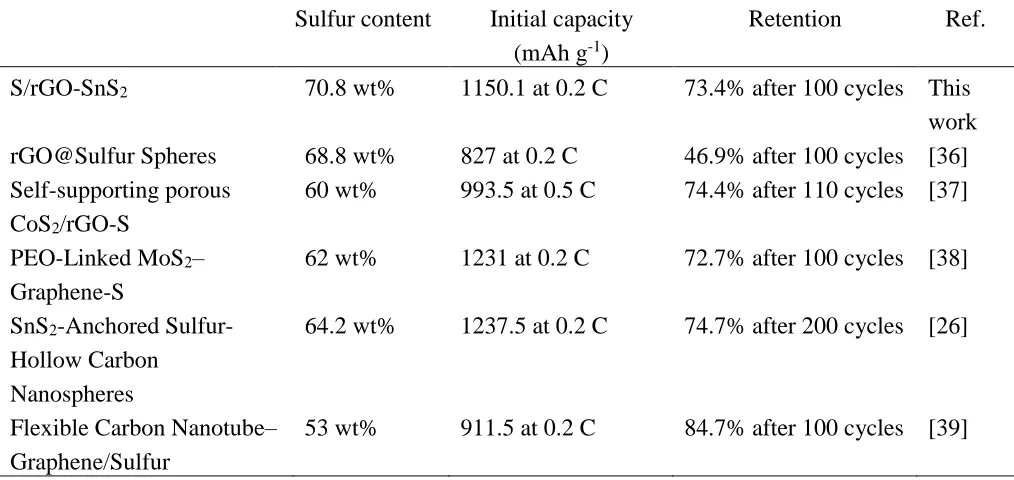
species, with the result that its dissolution is reduced in the electrolyte and prevents a severe shuttle effect [23,34,35]. The comparison results of cycling performance between the S/rGO-SnS2 cathode and other similar Li-S cathodes are presented in Table 1. Even with the highest sulfur content among these cathode materials, the initial capacity and retention after cycling are still remarkable for S/rGO-SnS2, proving its outstanding cycling performance.Furthermore, as shown in Fig. 5d, the rate performance of S/rGO-SnS2 electrode, after testing at different current rates of 0.1 C, 0.2 C, 0.5 C and 1 C, delivers specific capacities of 1150.8, 969.6, 821.9, and 633.9 mAh g−1. More importantly, with the return of current density to the initial value of 0.1 C, discharge capacity still regains 970 mAh g−1. From the fact of the high maintenance of specific capacity after cycling at high rate, it can be concluded that S/rGO-SnS2 has excellent reversibility and reliability at various rates.
Table 1. Performances comparison of S/rGO-SnS2 with some other similar Li–S cathode materials Sulfur content Initial capacity
(mAh g-1)
Retention Ref.
S/rGO-SnS2 70.8 wt% 1150.1 at 0.2 C 73.4% after 100 cycles This work rGO@Sulfur Spheres 68.8 wt% 827 at 0.2 C 46.9% after 100 cycles [36] Self-supporting porous
CoS2/rGO-S
60 wt% 993.5 at 0.5 C 74.4% after 110 cycles [37] PEO-Linked MoS2–
Graphene-S
62 wt% 1231 at 0.2 C 72.7% after 100 cycles [38] SnS2-Anchored
Sulfur-Hollow Carbon Nanospheres
64.2 wt% 1237.5 at 0.2 C 74.7% after 200 cycles [26]
Flexible Carbon Nanotube– Graphene/Sulfur
53 wt% 911.5 at 0.2 C 84.7% after 100 cycles [39]
[image:8.596.45.552.299.539.2]
4. CONCLUSION
In summary, the rGO-SnS2 composite was successfully synthesized via a hydrothermal method following by a reduction process. The composite was stacked by layered graphene in a 3D-connected structure. The hexagonal SnS2 nanoplate was evenly covered over the surface of the graphene. This structure provides a stable and sufficient space for sulfur infiltration and a conductive network. As a result, S/rGO-SnS2 delivers a high initial specific capacity of 1150.1 mAh g−1 and remains at 844.6 mAh g−1 after 100 cycles as a cathode for Li-S batteries. This work verifies the synergy between application of sulfiphilic SnS2 and a 3D conductive graphene network, which suggests a promising orientation for the energy storage domain.
ACKNOWLEDGEMENTS
This work was supported by National Natural Science Foundation of China (51575030 and 51774017), Beijing Natural Science Foundation (2174075), Key Program of Equipment Pre-Research Foundation of China (6140721020103) and Scientific Research Foundation of SGCC (52170217000L).
References
1. H.-J. Peng, J.-Q. Huang, X.-B. Cheng and Q. Zhang, Adv. Energy Mater., 7 (2017) 1700260. 2. Z. W. Seh, Y. Sun, Q. Zhang and Y. Cui, Chemical Society reviews, 45 (2016) 5605.
3. A. Manthiram, Y. Fu, S.-H. Chung, C. Zu and Y.-S. Su, Chemical reviews, 114 (2014) 11751. 4. M. Liu, D. Zhou, Y.-B. He, Y. Fu, X. Qin, C. Miao, H. Du, B. Li, Q.-H. Yang, Z. Lin, T. S. Zhao
and F. Kang, Nano Energy, 22 (2016) 278.
5. Y. Cui, M. Wu, C. Scott, J. Xie and Y. Fu, RSC Adv., 6 (2016) 52642.
6. Q. Pang, X. Liang, C. Y. Kwok, J. Kulisch and L. F. Nazar, Adv. Energy Mater., 7 (2017) 1601630. 7. B. Yan, X. Li, Z. Bai, X. Song, D. Xiong, M. Zhao, D. Li and S. Lu, Journal of Power Sources, 338
(2017) 34.
8. Z. Zhang, L.-L. Kong, S. Liu, G.-R. Li and X.-P. Gao, Adv. Energy Mater., 7 (2017) 1602543. 9. M. Li, R. Carter, A. Douglas, L. Oakes and C. L. Pint, ACS nano, 11 (2017) 4877.
10. Y. Mao, G. Li, Y. Guo, Z. Li, C. Liang, X. Peng and Z. Lin, Nature communications, 8 (2017) 14628.
11. B. Li, S. Li, J. Liu, B. Wang and S. Yang, Nano letters, 15 (2015) 3073. 12. S. Lu, Y. Chen, X. Wu, Z. Wang and Y. Li, Scientific reports, 4 (2014) 4629.
13. Z. Li, L. Yuan, Z. Yi, Y. Sun, Y. Liu, Y. Jiang, Y. Shen, Y. Xin, Z. Zhang and Y. Huang, Adv. Energy Mater., 4 (2014) 1301473.
14. H.-J. Peng, J.-Q. Huang, M.-Q. Zhao, Q. Zhang, X.-B. Cheng, X.-Y. Liu, W.-Z. Qian and F. Wei, Adv. Funct. Mater., 24 (2014) 2772.
15. J. Zang, T. An, Y. Dong, X. Fang, M. Zheng, Q. Dong and N. Zheng, Nano Res., 8 (2015) 2663. 16. Q. Sun, B. He, X.-Q. Zhang and A.-H. Lu, ACS nano, 9 (2015) 8504.
17. H. Shi, W. Lv, C. Zhang, D.-W. Wang, G. Ling, Y. He, F. Kang and Q.-H. Yang, Adv. Funct. Mater., 28 (2018) 1800508.
18. Q. Pang, D. Kundu, M. Cuisinier and L. F. Nazar, Nature communications, 5 (2014) 4759.
19. H. Tang, S. Yao, M. Jing, X. Wu, J. Hou, X. Qian, D. Rao, X. Shen, X. Xi and K. Xiao, Journal of Alloys and Compounds, 650 (2015) 351.
20. Z. Wei Seh, W. Li, J. J. Cha, G. Zheng, Y. Yang, M. T. McDowell, P.-C. Hsu and Y. Cui, Nature communications, 4 (2013) 1331.
22. Z. Sun, J. Zhang, L. Yin, G. Hu, R. Fang, H.-M. Cheng and F. Li, Nature communications, 8 (2017) 14627.
23. Z. Yuan, H.-J. Peng, T.-Z. Hou, J.-Q. Huang, C.-M. Chen, D.-W. Wang, X.-B. Cheng, F. Wei and Q. Zhang, Nano letters, 16 (2016) 519.
24. Z. Zhang, Y. Lai, Z. Zhang, K. Zhang and J. Li, Electrochimica Acta, 129 (2014) 55.
25. X. Li, Y. Lu, Z. Hou, W. Zhang, Y. Zhu, Y. Qian and J. Liang, ACS applied materials & interfaces, 8 (2016) 19550.
26. X. Li, L. Chu, Y. Wang and L. Pan, Materials Science and Engineering: B, 205 (2016) 46. 27. J. Ye, L. Qi, B. Liu and C. Xu, Journal of colloid and interface science, 513 (2017) 188.
28. H. Wang, L.-F. Cui, Y. Yang, H. Sanchez Casalongue, J. T. Robinson, Y. Liang, Y. Cui and H. Dai, Journal of the American Chemical Society, 132 (2010) 13978.
29. J. Ye, Q. Hao, B. Liu, Y. Li and C. Xu, Chemical Engineering Journal, 315 (2017) 115.
30. H. Tang, X. Qi, W. Han, L. Ren, Y. Liu, X. Wang and J. Zhong, Applied Surface Science, 355 (2015) 7.
31. Y. Chang, J. Li, B. Wang, H. Luo, H. He, Q. Song and L. Zhi, J. Mater. Chem. A, 1 (2013) 14658. 32. Y. Zhang, P. Zhu, L. Huang, J. Xie, S. Zhang, G. Cao and X. Zhao, Adv. Funct. Mater., 25 (2015)
481.
33. Y. An, Q. Zhu, L. Hu, S. Yu, Q. Zhao and B. Xu, J. Mater. Chem. A, 4 (2016) 15605.
34. M. Li, J. Zhou, J. Zhou, C. Guo, Y. Han, Y. Zhu, G. Wang and Y. Qian, Materials Research Bulletin, 96 (2017) 509.
35. G. Zhou, H. Tian, Y. Jin, X. Tao, B. Liu, R. Zhang, Z. W. Seh, D. Zhuo, Y. Liu, J. Sun, J. Zhao, C. Zu, D. S. Wu, Q. Zhang and Y. Cui, Proceedings of the National Academy of Sciences of the United States of America, 114 (2017) 840
36. F. Liu, J. Liang, C. Zhang, L. Yu, J. Zhao, C. Liu, Q. Lan, S. Chen, Y.-C. Cao and G. Zheng, Results in Physics, 7 (2017) 250.
37. X. Hong, S. Li, X. Tang, Z. Sun and F. Li, Journal of Alloys and Compounds, 749 (2018) 586. 38. X. Li, C. Yin, Z. Yue, L. Zhou, Y. Li and J. Shi, ACS Sustainable Chem. Eng., 6 (2017) 974. 39. Y. Chen, S. Lu, X. Wu and J. Liu, J. Phys. Chem. C, 119 (2015) 10288.