Rochester Institute of Technology
RIT Scholar Works
Theses
Thesis/Dissertation Collections
5-29-2013
Sobject
Warren III Lloyd
Follow this and additional works at:
http://scholarworks.rit.edu/theses
This Thesis is brought to you for free and open access by the Thesis/Dissertation Collections at RIT Scholar Works. It has been accepted for inclusion in Theses by an authorized administrator of RIT Scholar Works. For more information, please [email protected].
Recommended Citation
1
ROCHESTER INSTITUTE OF TECHNOLOGY
A Thesis Submitted to the Faculty of
The College of Imaging Arts and Sciences
School of Art
In Candidacy for the Degree of
MASTER OF FINE ARTS
May 29 2013
sobject
By
Warren William Lloyd III
Thesis Committee
Professor Carol Woodlock
Dr. Thomas Lightfoot
Dr. Timothy Engstöm
2 Abstract
Attempting to find a solution to the problem of how to make art that is both critical yet participatory,
sobject explores subject/object relations within the development of the medical gaze in the history of
medico-clinical perception and Modern Art. Sobject works both analytically, tracing these apparently
parallel developments, and synthetically as it forms a methodological approach from the interpolating
spaces of each. It locates and analyzes histories of objective instrumentation between subjects and
objects, then works to open and redistribute these into new possibilities. It does this by developing an
artistic practice that engages with contemporary forms of institutionalized instrumentation, image,
artifice and objectivity. The development of this historical and artistic methodology is considered in
relation to the production of three installations: epluribusunum, Vivarium and sobject. Through an
analysis of the critico-participatory problems occurring in epluribusunum and Vivarium, sobject is able to
arrive at a solution.
Working to uncouple subjectivity from a constituency with determinative and idealistic ends of Modern
mediation, sobject works from the premise that all form is empirical and all objects
extra-objective. Attempting to (un)capitalize the disunity and diffuse nature of subjective experience, sobject
proposes that in order for artistic production and its subsequent reception to occur critically, without
participating with the same institutional and instrumental structures with which it critically engages,
reception must take place in the multiplicity of aesthetic participation. This practice can best emerge
from, and within, the context of institutional and instrumental analysis, critique and collaboration.
Conditioned by a culture of surveillance and visibility, sobject’s conclusions are really premises in which
visibility, artifice and image are often imbued with non-reciprocated interests. These aestheticized forms
traffic under objectivity on their way to public fact. Sobject asserts that it is subjective participation and
3 Contents
1 Conclusion(S): A Prologue of Sorts 4
2 Adorno, Benjamin and Kant:
The Development of a Creative Methodology 11
Kant: The Determinative Constituency of Subjectivity and the Object 12
Adorno: Uncoupling the Constituencies 13
Benjamin: Subjectively Uncoupled History 16
3 Modern Mediation and the Early Structuring of Visual Perception:
Historical Process as Artistic Material 22
Intuition 23
Enactment (Experimentation) 24
Conclusion 25
Grids, Clouds and Milk 27
Art and Objecthood: A personal genealogy 33
4 Vivarium(s):
And the Work of Lisa Cartwright 36
5 FACS: Facial Action Coding System 42
6 sobject 47
Order to Perform Alternative Service (OPAS) 61
7 Introduction 78
Acknowledgments 81
8 Sources 82
4
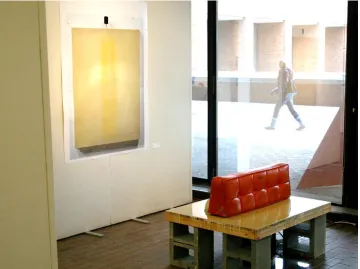
Figure A: sobject; Installation View
sobject
A Thesis for Master of Fine Arts
Submitted By: Warren W. Lloyd III
Conclusion(S): A Prologue of Sorts
In the process of producing any object—whether physically constructed, through the act of writing, in
the timbre of speech, or conceptualized internally in an object of thought—one comes to that process
already conditioned by an array of premises and conclusions. So in essence, every beginning is already a
consortium, of sorts, between sets of seemingly determinative ends and undetermined sobjective
potential. I begin with a conclusion, of sorts, to highlight this systemic process, always already at work,
not only in our divided, bio-powered paths through society, but also charged and imbued in the images
5 ends and open beginnings, to re ‘cord’ ports and reshape ‘re-cords’. In sobjectivity, conclusions are a
beginning.
Sitting down to write about my thesis project reanimates some of the central tensions the constructed
work sought to exhibit, those connected to the labor of constructing, locating, distributing, packaging,
marketing, reifying and sublating a historical experience, in the context of a technologically produced
and consumed culture. My present challenge, the writing of this thesis and the historicizing of the multi
valiant influences involved, brings into immediate focus two questions I attempted to address in sobject,
the final exhibition.
The first of which is a query into the impact language and text, and through them certain types of
means-end logic, have on experience and more specifically, in the context of the cultural institution of
an art school, the impact they have on aesthetic experience. What follows is my humble attempt to
merge the apparent binary between something like performative writing, on one side, and descriptive
writing on the other. While at times this document critically engages with scientific objectivity and its
instrumentation, sobject is less a criticism of science and its images and procedures, and more a form
through which to bring scientific objectivity and artistic practice together. As the research for this
project will show, both science and art are inspired and subjective in their own ways. Not only does
sobject seek scientific research as collaborative material, but it is equally motivated by raising the
theoretical and scientific practice of art. In this way, sobject is both historically analytic and
contemporaneously synthetic. It attempts to locate historical genealogies and their objective
instrumentations, and then begins to open and redistribute these into new possibilities, through a
process of engaging the contemporary, which by nature of its newness and complexity, exceeds
genealogical analysis alone.
Sobject’s point of departure begins at a logical and material opposition, which existed in the historical
movement of the Avant-Garde and in Modernist art theory, in the mid-twentieth century. This polarity
was between theories of autonomy and the possible social purpose of art and artistic practice. This was
perhaps most visibly evident in the simultaneous development of Pop-Art, high-abstraction and the
subsequent development of Minimalism in New York.1 In addition to this art-historical splintering,
6 classical Critical Theory; these debates still exist today, connected to differing notions about subjective
capacity, aesthetic reception and the immediacy of experience.2
Of course, the aesthetics of Modernism, in which theories of autonomy, social praxis, and the
Avant-Garde exist, has been being revised, reconsidered, critically challenged and opposed, for at least
forty-years prior to my entering RIT. Many have been attempting to construct a crime scene for the murder of
Modernism for quite some time. However, and in spite of some skepticism for an ‘institutionalized’
Relational Aesthetics, I agree with Nicolas Bourriard when he writes: “It is not Modernism that is dead,
but its idealistic and teleological version.”3 Through my research into Critical Theory, Post-Structuralism,
the History of Ideas and Cultural Studies, and the ways they overlap, discontinue, negate and
cross-pollinate, I was able to focus my work on how these cross-pollinations, negations, negotiations and
hybridizations occurred, in order to critically engage with structures that mediated and perpetuated
both autonomy and social use in art and science. I developed sobject across and between the permeated
borders of apparent modernist binaries, and their subsequent postmodern tensions, between objective
science and art, subjective expression, language and experience, sameness and difference, politics and
culture. In so doing, I continued to find myself focused on two sets of relationships. The first is the
seemingly simple but vastly general and incredibly complex relationship between subjects and objects,
and the second, exists between artistic criticality and participation.
Before I could create, mediate and structure, artistic practice and content in the environment of a
culturally institutionalized and technologically structured art school, I was compelled to first analyze the
questions posed and the concerns that arose through the process of attempting to produce content
about the structures and discourses which dictate, mediate and perpetuate content itself. This is what I
mean moving forward when I refer to aesthetic criticality. However, I should take a moment to clarify
that I do not mean aesthetic criticality to be associated with a specific form of emancipation, nor do I
assume that anything like symmetry exists between artistic intention and aesthetic reception. On the
contrary, it is my intention to vigorously search for new forms and positions of subjective activity
through a process of critically engaging current modes of cultural, artistic, political and corporate
mediation, as informed by their historical genealogies. I see this in direct contrast to what has been aptly
identified by Johanna Drucker as an institutionalized critical theory which, without the proper
self-criticality, can easily nestle into artistic prescriptions that can work against a dynamic and productive
7 continually reassessing its critical assumptions. Sobject is compelled by the decision to make rigorous
and continual analysis of the modes through which it is mediated, and thus, participates with, in an
effort to create new modes of subjective activity, interaction and sociality.
Sobject, then, is a thesis about my attempts to develop new possibilities for aesthetic criticality despite,
and in spite of, an inevitable complicity between the institution of art and its economy of cultural
industry. It tries to take into account the historicized fields of each by attempting to understand the
currencies and purchases already existent in the self- perpetuating processes of that history and by
creating divergent forms of aesthetic participation, developing unforeseen sobjective positions, fusings,
groupings and activities.5
Aesthetic theory, artistic practice and aesthetic reception have developed historically, and continue to
develop contemporarily, within oscillating spaces between subjects and objects. This is the reason, or
unreason, why it is at the structure(s) of these nodes that sobject is focused. One cannot imagine, not to
mention produce, a piece of artwork without first coming to a set of decisions with regard to both the
subject and object of the potential creation, notwithstanding developing some insight into the modes
that such decisions themselves are made in a world of ubiquitous traffic between objects and subjects.6
My goal is to explore ways to build critical inquiry into aesthetic production, so that its reception can
begin with, and develop through, historically structured assumptions about mediation and agency.
One premise that sobject begins with is that all experience is both mediated and yet mediates. Like the
people in whom it exists, it consumes while being produced. However, unlike orthodox aesthetic
reflection, it assumes that those being produced are producing themselves and have the ability and
subjective power to do more than just reflect their economic, ideological or social conditions. In
sobject(s) they have the subjective capability to express them, to express in them. In this historical
process, people have always possessed the ability to shake-free from, change and reinvent what Adorno
has referred to as constitutive subjectivity, connected to theories of the hegemonic, institutional, or
ideological structures that have sometimes been assumed to over-determine subjectivity. In sobject(s),
the concept of reflection itself, is not so much socially, institutionally or even economically determined,
but has the ability to become instrumentally, and thus, logically over-determined, by concepts of
8
sobjects: plural, can redefine, mutate, undetermine and reconfigure the cultural, social and the
economic.
In sobjectsexpression is the reformation and dissemination of subjective activity, even in the
appropriative act of something once theorized as passive consumptionor in the active distance of
contemplative protest.
However, to work under the pretenses of art toward the production of something like art or aesthetics
requires an examination of those pretenses, as they are the contemporary material that aesthetics and
thus subjective activity create. Work, play, innovation, collaboration and spontaneity within and
between the structures of both objective and subjective production can help to avoid the common
pitfalls of either epistemological purity on the one hand, or idealism and ideology on the other. Both
have to do with mediations of sobjective space within and of experience. However, sobject is not an
imposition, it seeks no pedagogical telos, no determinative message, theory or ideology; but it does seek
to build from an inherent condition in which theorized divisions between subjects and objects,
emancipation and oppression, knowledge and ignorance are no more prescient than the active and
imaginative choices people make or can make, and no more unsurpassable than the enlightenment was
successful at suppressing human subjectivity. While it would be naïve to imply that politics could be
absent from any social interaction between objects and subjects, in a public sphere or otherwise, it is
better to leave those politics for the other side of reception, in the multiplicity of reception, in the aura
of that impenetrability. To paraphrase Jacques Ranciere, it is not the function of knowledge to create
possibilities for equality among people, but only recognition of an ever-existing equality among people
that can ever create anything like a representative knowledge. In sobjects, art can and does produce
knowledge.
*************************************************************************************
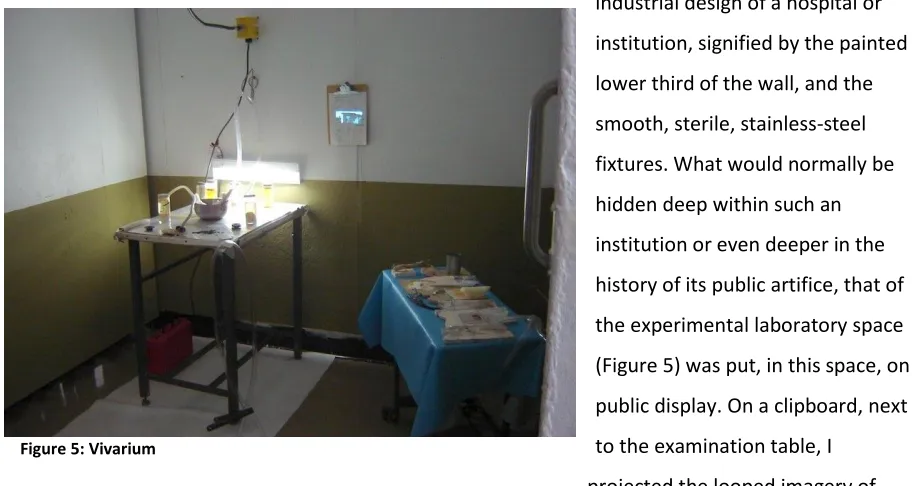
The ostensible subject matter of my artistic production while working toward sobject at RIT, such as the
medical gaze, instrumental institutionalization, grids, surveillance culture, history, language or poetics,
was always guided by the particular challenge posed by attempting to produce content about, and
inevitably within, the structures and discourses which mediate, negate and or perpetuate content itself.
This focus on the structures of mediation was equated with my choice of subject-matter. Through this
rhetorical-material process I was recreating sobject-matter. The areas of cultural inquiry into which I
9 and the ways that they merged to create forms of apparent semblance, artifice and image, trafficking
under fact, on their way to public truth. To leave the structures of discursive and sobjective mediation
un-analyzed, even in an era of spectacular apparitions against which some have assumed we have little
chance at our own subjective realities, would be to advocate and reify a classic route outlined by
Nietzsche and identified by Benjamin, as the eternal return to the same, not to mention help to confirm
the thesis of The Society of the Spectacle.7This central conceptual thrust for sobject acted productively
as a first question to tackle in my own artistic practice. From the working-through of this practice, the
development of an aesthetic strategy worked heuristically as its receptive form took shape(s).
How one approaches what has been identified by Robert Kaufman as the ‘crisis-question’ of whether
and how, critical thought and agency are still possible has to do with the way one theorizes subjective
mediation.8 In a critical tradition one should automatically be suspicious of the premise. Critical thought
and agency have always been possible and quite active, even when critical thought and agency were
theorized as modes of redemptive knowledge for people who were already actively engaged in their
own modes of redemption, never considering, never-the-less accepting, something like complete
structural determination by roles of class or labor, always more conscious of what was taking place than
some restrictively imagined. A focus on the inevitability of mediated perpetuity between subjects and
objects—sobjects, takes on a particularly important role considering the pervasiveness of, and the
complexity by which, technology does not just mediate, but through cyclical processes of
instrumentation, division, incorporation and thus, excorporation—it structures, develops, mutates,
distorts, decomposes and perpetuates —in essence it recomposes certain modes of vision, perception
and cognition. These structures of perception loop continuously back into themselves and inevitability
form the interpolated forms of ideology and politics, pleasure, pain, success, failure and health, drawing
lines of access and isolation, constructed-autonomy and social praxis.
In what follows I will attempt to link the integrated development of my critical methodology and my
artistic practice.
Subjectivity as an un-constrainable, malleable and resistant, yet central element in any structural
development was an idea with which I approached all of my research and any material form I set to
create in the studio. In addition to this general idea about the power of subjectivity, Adorno’s work on
10 artistic production. Walter Benjamin’s concepts of Aura and the ‘now of a particular recognizability’
proved central to both my approach to history and, perhaps more importantly, how I structured the
working process in my studio.
After establishing the development of my methodology and artistic practice, sobject, the thesis
document, moves into and through an analysis of specific artwork I created while at RIT. In each of these
instances, I attempt to outline both my research concerns and how they worked together to create the
material of each piece. The work of Michel Foucault and Lisa Cartwright proved fundamental to the
development of all of my work at RIT; however, both the conceptual framework and the outward
content of the installations epluripusunum, Vivarium and sobject, are closely connected to this historical
research. Through descriptive analysis of each piece—the research insights, the material decisions, the
metaphorical content, and a consideration of each of their constructed outcomes—this thesis document
will hopefully develop a range of possible meanings.
In addition to the research and my working process, and how I dealt with both in relation to each other
and an imagined space of reception, I also attempt to seize upon and describe the ways I dealt with one
of the most important concerns of sobject: the issue of participation. The problem that animated the
creation of each piece and which I attempted to solve in sobject was: how to make work that both
critically engaged with historical and contemporary structures of subjective mediation and enacted an
environment in which the development of new, unplanned, spontaneous, and subjective positions, were
11 1: Adorno, Benjamin and
Kant: The Development of a
Creative Methodology
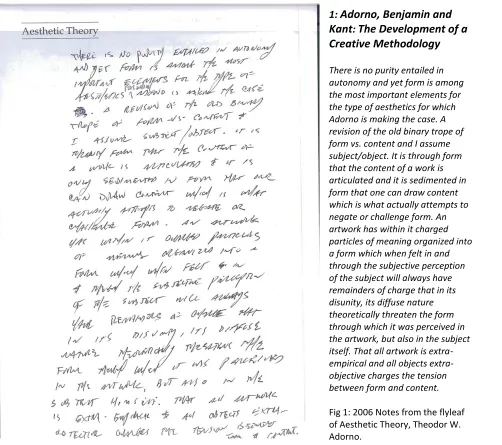
[image:12.612.66.568.146.591.2]There is no purity entailed in autonomy and yet form is among the most important elements for the type of aesthetics for which Adorno is making the case. A revision of the old binary trope of form vs. content and I assume subject/object. It is through form that the content of a work is articulated and it is sedimented in form that one can draw content which is what actually attempts to negate or challenge form. An artwork has within it charged particles of meaning organized into a form which when felt in and through the subjective perception of the subject will always have remainders of charge that in its disunity, its diffuse nature theoretically threaten the form through which it was perceived in the artwork, but also in the subject itself. That all artwork is empirical and all objects extra-objective charges the tension between form and content.
12 Kant: The Determinative Constituency of Subjectivity and the Object
In his famous Critique of Judgment, the manifold book linking the Critique of Pure Reason and the
Critique of Practical Reason in an organic systemization toward the development of morality, Immanuel
Kant theorized an inversion of object and subject. Rather than make attempts to form human
knowledge by the structures and objects that exist without: “We must therefore make trial whether we
may not have more success in the tasks of metaphysics, if we suppose that objects must conform to our
knowledge.”9 Theorizing that the subject is central to determining the relationship between the
objective world and subjectivity and or experience, Kant conceptualizes judgment as an interplay
between subject and object. By seeking to solve the antinomy of taste —a logical contradiction brought
about by the query into the ways in which one can make subjective claims about objects which by virtue
of their empirical reality should hold true universally, Kant makes a critical distinction between
determinative judgments, which subsume a universal under a particular i.e. This is flower, and reflective
judgments (this is beautiful). For Kant, determinate judgments have purpose and act directly as
conceptual categories, whereas reflective judgments activate what Kant identifies as ‘purposiveness’ or
the subjective process of searching for a category. Purpose and determination interplay with
purposiveness and the indeterminate. Subjective, reflective judgments are the natural activity of man’s
subjective search for what exists outside or beyond the (immediately perceived) empirical and
determined judgments and are thus the nature that unifies the heterogeneous. Aesthetic delight, Kant
asserts, is the recognition of man’s movement toward determined reason mirrored or seen in the
immediacy of the determined object. His subjective action, the purposiveness of his judgments, though
particular and subjective, in the extra-conceptual, is thus universal in its heterogeneity.10
Like the word ‘unity’ itself—a function of signification representing a dissonant and indeterminate
excess—unity or universality is put here to parenthetical or elliptical use as a marker, an active
recognition of an indeterminate space, determined by variations of distance and location, for that which
extends beyond the determinate and immediate perception of a concept —the structure for a subjective
space of moving toward the possibility of objectified subjectivity.
The attempt of Kant and through him the thrust of the enlightenment, which put generally, had as one
of its goals to emancipate the human animal from the vagaries of nature through the creation of, and
13 categorization of heterogeneity with a theorized unity (homogeneity) of a subjective process contains in
it a logical solution for Kant’s system (and any total system for that matter) because it tidily shelves the
immense collective power of human subjectivity with determinative—means-end—reason. However it
also possesses a paradox to which much contemporary aesthetic theory, philosophical, historical and
cultural debate can be genealogically connected. In addition to the logical paradox which theorizes
subjectivity as a unified heterogeneity working toward objectified determination in human judgment, it
brackets subjective origin singularly without much reference to societal, institutional and historical
structures and force. However, whether put to use toward the development of determinative objectivity
or toward the development of archetypical identity or not (genius), looking at Kant’s attempt to bracket
heterogeneous subjectivity as a homogeneous unity can be seen, productively, as a rhetorical symbol for
an impossible problem. If anything, it points immediately to the difficulty of using totalizing theory or
logic to constrain subjectivity, and it points to the inevitability of always existent subjective remainders
in all conceptualized objects. In this way, subjectivity can be seen as constitutively coupled with
determinative reason. However, if one wanted to un-determine certain notions of determination,
certain moralities, political or religious dictates, or even aesthetic decrees, for instance, it would have to
occur through a subaltern uncoupling underway(s) in the modern era.
Adorno:
Uncoupling the Constituencies
Working against Kant’s attempt to systematize subjectivity into an objective, determinative and thus a
developing, constitutive ontology, Theodor Adorno sought an aesthetic theory aimed at utilizing the
subjective remainders inherent in all aesthetic and conceptual objects.
Adorno’s paradoxical and deliberate difficulty is often the result of his aesthetic project. He
systematically attempts to unravel the categorizations of classical aesthetics in an attempt to textually
perform his aesthetic theory. Even quoting him can be a dangerous affair because removing his writing
from the aesthetic context of its construction can threaten the thrust of his ideas.11 This is due primarily
to Adorno’s performative prose, made to purposely obfuscate the logic of its own autonomous
structure, which is purposefully imbued and subjectively charged with elements that negate or at least
are not completely contained in its own structures—in its own way performing the impossibility of
autonomy. His writing gestures toward the apodictic as it attempts to materially perform through
14 conclusion.12 This choice for Adorno was the implementation of an aesthetic strategy toward the
practice of aesthetic theory(s), an attempt to rewrite aesthetic theory from the inside of traditional
aesthetic categories, rather than try to explain non-instrumental reason with instrumental, means-end
reason. This is connected to what Max Horkheimer and Adorno had attempted to discern as the logical
failings of the enlightenment.13 Against the backdrop of Fascism, the goal of human emancipation from
natural necessity and the second nature of human constraint had failed because the domination of
nature could only happen at the expense of subjectivity. Adorno’s complex and seemingly non-social
theory of autonomy rests in a belief that concepts developed by means-end reason, because of the
impossibility of dominating nature (subjectivity being a main element), are actually artifacts molded by
the territory over which the enlightenment was never able to effect its full dominion.14 From the
perspective(s) of non-determined subjectivity new perspectives can be given forms. From autonomy,
subjectively charged by non-instrumental reason, one can discern in what Adorno describes as a flash—
the double-shock of autonomy—which is the immediate critical explication of that which is
extra-conceptual and non-intentional in the object. This aesthetic activity can be seen as a process through
which to logically uncouple subjectivity from determinative logic, or at least seen as a process to open
up, multiply and reconfigure both.
While generalizations about, Adorno’s theoretical developments of autonomy and abstraction and their
connection to Greenbergian art-historical theories of autonomy, abstraction and flatness, make quick
business of the instrumental reason from which Adorno sought his whole life to release constitutive
subjectivity, they do no justice to the power of subjective remainders, always extra-conceptual and
extra-empirical. It is of course paradoxical, from the contemporary vantage point, that theories
developed by ideas of social equality and access could have developed into a theory of autonomy that
has since come to be known as esoteric, if not elitist, and from which divisions between myths of high
art and low art have been formed. Some of this may be explained by Adorno’s exasperation about
society’s seeming lack of sophistication and awareness of the forces at work behind and through its
products. This viewpoint too is possessed by totalizing theoretical pretensions that assume things like
passivity in aesthetic reception of popular culture and suppose something like a unified agency, or lack
thereof, could exist in something conceived of as the masses.
Although his work is often relegated to modernist guises of autonomy, Adorno’s work is as active as ever
15 which much contemporary art would be impossible.15 To connect unabashed criticality with Adornoian
theory or totalized negativity ignores the double negative implied by negative dialectics. I was interested
in the areas in Adorno, which in their difficult and paradoxical ways, seek to multiply, interrogate,
uncover and change the classical affirmative process implied by a dialectics, negating some for the
affirmation of others. Adorno’s work at the sobjective spillages and formal seepages of the permeability
of semblance in processes associated with subordinating human subjectivity to the determined
structures of efficiency and unitary access was (non) instrumental to the creation(s) of sobject. In certain
areas and in certain objects throughout the work I produced leading up to and eventually comprising
sobject: the exhibition, autonomy is often a piece of its theoretical and material semblance and thus
part of its sobject-matter. While there are layers of art-historical opposition and affirmation connected
to this inevitable semiotics, it is this niche in Adorno in which I have taken some refuge. Autonomy: a
non-space, a fundamental non- space, for the un-shielding of artistic activity where non-instrumental
subjectivity can work toward non-determined ends and thus beginnings, and start to complicate,
multiply and break up certain types of constituent subjectivity. Art-institutional buzz-words like
subversion and transgression stop short at the notion of the double negative in negative dialectics
without reference to the other side of the dialectic, which in this turn is multiple, divergent,
discontinuous and enacts the truth of semblance as the construction of an artifice— porous and charged
for human intersubjectivity.
This paradox is a deliberate and continual attempt to emphasize and activate subjective remainders that
are inherently extra-conceptual and resist full containment in any form. In spite of Adorno’s diligent
practice and prescriptions for autonomy and form in the arts, it is non-constitutive subjectivity: affirmed
through paradox and contradiction, a sieve-like dialectic process at work, on the material and in the
material of semblance and artifice, that interested me most in Adorno’s project. Sobjects develop from
these versions of this process which have helped to make up the methodological work of sobject.
While my creative methodology was developed by reimagining autonomy, through paradoxes in Kant
and practices of Adorno, as a personally subjective refuge in which to dislodge, reorder and defer
constitutive subjectivity, this is a general and abstract way to consider much of anything. As with
everyday life, there were several layers of development taking place, somewhat simultaneously, to
16 In many ways, my artistic practices were also informed by an active process of historical inquiry which
comes from a speculative and idiosyncratic reading of Benjamin’s concepts of the Aura and history. It
was Walter Benjamin and his assessment of and creative methodological approach to history, together
with his enactment of fragment, allegory and an interest in popular forms of culture, followed by
Foucault’s historical genealogy, and finally the work of Lisa Cartwright that all blended into the
development of my own artistic methodology.
Benjamin: Subjectively Uncoupled History
Walter Benjamin, in his famous 1938 essay The Work of Art in the Age of Mechanical Reproducibility
describes Aura in terms of distance and loss. Aura is a “unique apparition of a distance, however near it
may be.”16 It is impenetrable; it contains, displays and hides fragments of history lost forever. He does
not so much as assert that technological reproduction completely evacuates historical and practical
reality from the objects of its work, but points to a crisis in early twentieth century perception which
was being conditioned by production for the sake of reproduction itself. Benjamin suggests that this
drastic alteration of experience marks the loss of authenticity and historical reality.
The loss of Aura, he speculates, rests on two things: “The desire for the present day masses to get closer
to things spatially and humanly, and their equally passionate concern for overcoming each other’s
uniqueness by assimilating it as a reproduction.” 17
From this Modern crisis in perception in which Aura is being lost and with it certain histories and
subjectivities at the expense of a quicksilver reification of the Modernist myth of sameness and
progress, two integrally linked though seemingly opposed strategies of aesthetic production develop
and can be connected to Adornoian and Benjaminian theoretical production: developments in genre
occurring in the parallel movements of Pop Art and Abstract Expressionism and the subsequent
development of Minimalism.
Both Adorno’s and Benjamin’s differing relationship to economic theory, and the faith placed in the
agency of the subjective potential of creation and reception are central to the direction each theory
developed for aesthetic production—apparent differences that still fuel debates and define strategies of
aesthetic production today.18 Benjamin either did not believe or was purposely obtuse about whether
17 Instead, he theorized what he called phantasmagoria where orthodox economic theory theorized
commodity fetishism. It is not that Benjamin did not agree that commodity fetishism existed, but he
theorized something like a reconfiguration of the determining factors within superstructure and
infrastructure. Marx would have “ rejected the notion that a commodity-producing culture might be
able to abstract from the fact that it produces commodities in any other way than to cease to produce
commodities in the transition to a higher social formation.”19 Benjamin, however, focused on a major
logical flaw in the theory of reflection itself, through which one can theorize that the subjective
awareness of those commodity-producers could, in fact, abstract from their (not –completely)
economically determined commodity producing realities and subjectively express, rather than
objectively reflect the social realities of life.20 The relationship between the superstructure of culture
and the base of the economy, because Marx suggested that reflection occurred in a false and distorted
manner, meant that there could be, and in fact, must be potential to express, rather than simply reflect,
reciprocally and thus possibly change economic forces from within culture. If ideologies reflect in a
distorted and false manner, this dichotomy in Marxist theory could act productively in culture.21
What has been called Benjamin’s miss-comprehension of economic theory of aesthetic reflection can
easily be read as a productive and strategic entrance point for ‘less-than-completely’ alienated labor, or
the surplus value of subjectivity, which can produce an opportunity of inclusion and effect from the
bottom up. If one is to view the work of art, or the object of material culture—the superstructure,
through the lens of orthodox Marxist theory as a mere reflection or symptom of an economic system,
the infrastructure—then all potential for transfiguration from within is incapacitated from the start,
essentially giving way to a dangerous determinism that only radical revolution and violence could
eventually effect and as history has shown, has already effected.
The artistic methodology that I drew from Benjamin was a process by which to refunction cultural
objects and reproductions—the material of modern life—into constellative spaces, subjectively charged
and historically concrete, where the new can take place in relation to difference rather than the rational
myth of sameness. A historian who realizes that just because history develops by virtue of causation
does not mean that any given cause is necessarily historical by virtue of its being a cause. A historian
who realizes that history has become historical by events that may be separated by events that have
18 …stops telling the sequence of events like the beads of a rosary. Instead, he grasps the
constellation which his own era has formed with a definite earlier one. Thus he establishes a conception of the present as the “time of the now” …22
Through this process certain mythological veils of modernism, spun by the new from appropriations and
fragments of sameness, reproductive reification, autonomous art and economic class divisions, will
become frayed—and the fraying, netted grid-work of the veil can come into view as what it is and its
function as a-sembled artifice would cease to separate and fall away as just another artifice, another
material piece of everyday life. This process, one can speculate, brings true history into view. The
objects and subjects of history can be seen contemporaneously with their true historically concrete
realities made evident in the now or what Benjamin termed the ‘now of recognizability’. In this “now of
a particular recognizability,”where, following Rolf Teideman’s deft analysis that “truth is charged to the
bursting point with time,” stasis functions like a momentary, yet permanent, capture, “where time itself
is condensed into a differential.” 23 Thus in time (stopped temporarily), somehow contained in the
detail, a monad is not possessed of the Whole, but rather a whole, which is to say a fragment whose
whole truth is more real, more historically concrete, than the myth of modern progress, or economic
totality for that matter. A whole, rather than the Whole forms the basis of “a now of a particular
recognizability” in sobject.24
To imbue an object with the historical specificity of the material of life and through that process, endear
it with a specific subjective energy unguided by instrumental, means-end reason is to recreate history in
the now of a particular recognizability, in an era of increasing auratic loss. This in turn constellates the
dialectical veil of history and makes it available to the present. In this contextual process, an object can
be the inversion of a symbol or revision of a metaphor made historically concrete by its
contextualization in the historical present. This process of refunctioning both classical symbolism and
allegory by multiplying, complicating and inverting culturally new objects by recontextualizing them
historically in the web-work of their constellative construction, creates a mode through which to bring
history forward, which simultaneously refigures the contemporary moment with an unforeseen,
historically concrete truth. This stands in direct contradistinction to a history that seeks to transport one
back and places an emphasis on a subjective agency strong enough to wrench objects from their current
alienating function. History is the activation of the historical in the now of its particular recognizability. It
was this reading of Benjamin—my own sobjectively received and non-instrumentally imagined
19 Where Benjamin was concerned with the images and products of culture and their ontological charge
and possible purchase, Adorno’s concerns focused over time more on the teleology of reason and thus
on a central element in the project of the enlightenment, mentioned above, which he saw as its failure.
Where Benjamin can be seen as planting the seeds for an active engagement with, and open
manipulation of cultural objects (linguistic, cognitive and material), Adorno further developed a
theoretical and social space that had been developing for artistic production since art lost its ritualistic
function in the Middle Ages—the space of autonomy. Adorno’s theory of autonomy is one that
developed over time—time that Benjamin was never able to witness. However, if by some chance of
fate he were able to read Adorno’s late work, he would recognize his own influence. For instance,
Adorno’s theorization of Force Field theory, or the Constellation, has roots in Benjamin’s Now of a
Particular Recognizability:
The artwork is both the result of the process and the process itself at a standstill. It is what at its apogee rationalist metaphysics proclaimed as the principle of the universe, a monad: at once a force field and a thing. 25
While forming a nexus around the idea of monadic constellative aesthetics, Adorno and Benjamin
diverge in the material access to such a monad. For Benjaminian theory, objects of popular culture can
mingle in ambiguity with timeless, yet historically concrete allegory and fragment, while Adorno’s
monad is one of high art where the objects of popular culture can only reflect the alienation of
commodity fetishism of bourgeoisie society (kitsch), whereas in social and artistic autonomy,
high-artists and their art somehow supersede the means-end utility fundamental to the failures of the
enlightenment: That of the emancipatory project of humanity from the necessity of nature.
While a certain didacticism has come to be associated with art-institutional formulations of the critical
tradition genealogically taking root in Adorno and Benjamin, the fundamental significance they placed
on, and the highly creative and historically concrete ways in which both developed, what can be
theoretically described as subjective remainders, played a central role in the development of sobject.
They can be seen in many ways as the foundation on which, and thrust behind, the methodological
20 one’s theoretical inclinations, can be seen as the enactment of force field theory being practiced from
the inside out as opposed to the opposite. I am referring to non-linear conceptions of art-history
performed both temporally, but also with relation to persistent themes which take root in critical theory
but have developed by looking at culture as a permeable, discontinuous, interchangeable and
participatory process, rather than as a structure of stasis or totality. Subjectivity is considered in terms
of position, space, continuously developing through interaction and interpolation, where objects are
assessed by their cultural and historical ontological charges.
The constructed polarity between autonomy, flatness and abstraction on the one side and social praxis,
popular culture and realism on the other is as much an institutionalized instrument of Modernism as it is
a real and distinct polarity. However, these distinctions still persist, particularly in the current activity
and art-historical development of art to such an extent, that there are ways in which artistic success or
failure can be measured against opposition or complicity. I use these concepts as symbolic and semiotic
material in my artistic practice and thus attempt to refunction them in the context of practical and
concrete intellectual query. I imagine my artistic practice and process as a reconstruction and
refunctioning of what Benjamin so aptly described as the ‘now of a particular recognizability.’
For Benjamin this space was defined as phantasmagoria or the dream-wish of society and the way he
conceives of breaking with and reconfiguring history. For Adorno it was the fundamental significance he
placed on the subjective remainders within autonomy and form which negate the structures by which
they were originally set to be dominated. It is from these overlapping and interpolating theoretical
moments in both Adorno and Benjamin and how they have disseminated into cultural studies and
art-historical theory, that I have produced an aesthetic methodology of critical inquiry and artistic
production.
One cannot create historically within a field without reference to the historicization of that field. Sobject
and its development make direct semiotic, allegorical and metaphorical use of the material of its own
21 However, as I mentioned in the opening of this thesis, I have also chosen to investigate seemingly
separate structures of perception with parallel developments in society exhibiting unlikely unities,
dissonances, and surprising similarities—all of which come together at different points in time to create
the artifice, spectacle and semblance of objectivity. Some of the reasoning behind why I wound up
involved with genealogical studies of science and some of their medico-institutional structures had to do
with the compelling historical genealogies of Michel Foucault which, in many idiosyncratic ways, can be
linked to my interest in Benjaminian history. However, beyond these historical and methodological
affinities and oppositions (geneticist vs. monadic or force field), I was equally interested in the ways in
which objectivity was developed through the development and dissemination of images and image and
in how image and images became and become embodied.
From the time I matriculated at RIT my work dealt with investigations into the history of empirical
observation and surveillance within medical and institutional industrial complexes. The primary modes
of my aesthetic inquiry and presentation have always been informed by these investigations and my
material choices and systemic processes have always been structured by ideas that developed from this
22
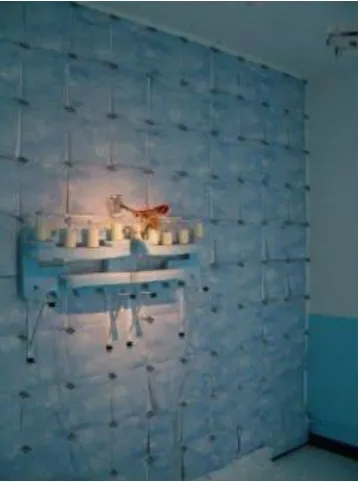
Figure 1: epluribusunum; Installation View
2: Modern Mediation and the Early Structuring of Visual Perception: Historical Process as Artistic Material
The Body is an inscribed surface of events (traced by language and dissolved by ideas), the locus of a dissociated self (adopting the illusion of a substantial unity), and a volume in perpetual disintegration. Genealogy, as an analysis of descent, is thus situated within the articulation of the body and history. Its task is to expose a body totally imprinted by history’s destruction of the body. 26
During the development of epluribusunum, my artistic production was informed by a query into the
history of medical perception and its development of and by visual instrumentation, and was thus an
attempt to work within and through the historical and cultural inter-weavings and constructions of the
qualitative metrics of perception of objective health, positivism and unity in both the institution of art
23 When I began work on epluribusunum, I was interested in an aesthetic query into the ways that
unstable, subjective and often arbitrary representations are often structured by the rules and limits of
instrumentality. Of even more significance to this work was the ways in which these representations
came together and structured public images and notions of objectivity and developed into embodied
structures of perception.
Michel Foucault’s concise research into the history of medical perception and the development of what
he calls the medical gaze quickly arrives at concrete examples in which language, sight, space and death
are integrally linked.27 Through highly specific historic genealogies beginning in the mid-eighteenth
century, Foucault’s research tracks the birth of medical perception through the privileged, subjective
loci of doctor’s and clinician’s writings and analysis, in which specific medical cases become viewed,
separated and compared; in which new homologies are abstracted from the individual, then reinvested
into the individual as a “portrait of a disease,” then inscribed, spliced and written onto other bodies;
through which classes and species are institutionalized together in a process of dynamic hybridization,
the specificity and subjectivity of which having long since disappeared by the force of the modes and
instruments of analysis itself, which become generalized constructions of perception and visibility,
eventually writing sight into the constructions of political consciousness.
Intuition
This begins through a process of the temporal and spatial flattening of the body of the patient. In
primary configuration space is flattened.28 By prioritizing positive analysis of disease, its location, its
visibility and how it compares to other images of analyzed disease, the individual body becomes negated
by language and analysis—by analysis itself. Time is abolished in favor of an image of a disease’s
projection on the surface of a body. Essences of diseases can subjectively, and often erroneously, be
deduced through analogy and similarity. When through classificatory disease methodology, time is
suspended in the name of similarity, an array of kinships or approximations develop into their own
identities. Comparison and analysis become their own identities as the identity of the individual recedes.
These identities have nothing to do with truth, much in the way that language develops and defines
itself, in relation to itself, erasing as it produces. However, it doesn’t take long before causality is
24 Through what Foucault names secondary spatialization, a relationship of causality replaces identities of
kinships and the patient-doctor, doctor-family relationship morphs into a hermeneutics of pathological
facts. Here collective subjectivity based on privately collected statistics multiplies.29 And an emphasis on
the individual is first reemphasized as the medium through which to find, view and render symptoms
and disease. The body is used here as the material through which to prove already abstracted analogies
and speculative pathologies. The individual is used as a pallet from which the doctor paints. In this
process, the individual patient quickly disappears. This reversal of interest from the private concerns of
the real patient to the negation of the patient in favor of homologies, abstract analogy and totalizing
structures is an underlying paradox in secondary spatialization and the medical experience in general.
This movement in the eighteenth century, whereby doctors, scientists and clinicians were abstracting,
dividing, negating and splicing individuals, diseases and illness—under a larger project of emancipation
or enlightenment —was, in fact, constructing the concept of Humanity with these fusions and
hybridizations of negation, abstraction and sometimes death. Without positing a direct correlation, it is
enough to suggest that as I worked toward sobject, through epluribusunum, I was drawn to the
constellative overlap between some of the conceptual logic, force, purposiveness and utility of
subjectivity as it worked toward its own objects in secondary spatialization. There are interesting
similarities between secondary spatialization and theories of autonomy, flatness, purity and their
institutionalized structures in the development of Modern art and the Avant-Garde.
Enactment-Experimentation
It is then through tertiary spatialization where both primary configuration and secondary spatialization
are preserved and where the distribution, isolation, divisions and privileged regions and where the
whole corpus of primary and secondary spatialization confront social forms.30 To continue the historical
constellative metaphor it would be, here, in tertiary spatialization, where an allegory of autonomy and
social praxis clash, here the autonomously constructed becomes witnessed, interacted with and where
participation with its concepts would take place. It is a “locus of dialectics, of heterogeneous figures
where time lags and politics struggle, it is a space of demands and utopias, economic and social
confrontations.”31 It is where specialization develops its political consciousness. In tertiary spatialization
interests guide the embodiment of disease through the actual body of the individual patient and into
the organization of the embodiment of illness on the socius. Ordered in the hospitals and in the clinics of
specialization, diseases are brought together to mutate into more complex entities. Diseases no longer
25 through the proliferation of specialization in a way that no longer has curing as its goal. Hospitals and
clinics become the place of maintenance and spread, and the sites of social, epistemic, and
observational privilege for managing the body-politic.
Conclusion
The shift from tertiary spatialization to political consciousness logically occurs next in the perceptive
construction of the medical gaze. In an ever-increasing political consciousness still evident in our time,
the power of medically perceived knowledge constitutes itself outside of the center of its own
development and enters into a collective space of totalization at the expense of the individual, in order
to achieve the geography of a history and of a state, developing from a science of negation and
abstraction into a positive science akin to the binary between the normal and the pathological.32
The institutional organizations that have developed around the forms of epidemic, mark the beginnings
of an overt political consciousness at the end of the eighteenth century. This consciousness was
developed around the inevitable policing of epidemics. In order to deal with the spread of morbid events
one must study and police the potential manifestations of morbidity. This takes a highly developed
perception within the medical gaze along with very detailed descriptions and localizations, an ever
increasing system of cross checking and comparison, and an ever increasing amount of finance. It
becomes in the interest of states to protect and police the spread of morbidity in the name of health.
The polarities of the morbid/health relationship developed into an increasing need for moralized ideals
to be spread.
This process describing the historically concrete ways in which medical perception developed a positive
science by virtue of its own logic of subjective analysis, instrumentation, abstraction, and
institutionalization through a continual mutation, negation, and eventual splicing and splintering into
hybridizations of disease and illness and moved rapidly into a public/political consciousness, may seem
unrelated to aesthetic development. However, it is through similar processes that we make the work
and the leisure of our continually monitored, separated, driven, patronized, marketed and earned lives.
In fact, the logical process that moves from primary configuration through political consciousness can
easily be detected in a certain ‘now of a particular recognizabilty’ evident in the billions of
interchangeable, bio-powered fluxuations of a common process in which we have always been in the
26 (political consciousness)—thus is our socially constructed state of constitutive life. In particular, it is the
way in which these processes, now much more microscopic and effectively bio-powered, are packed
into images, artifice and semblance that is of considerable significance in our moment. Because of this,
coupled with my position in an institution of art and the way these processes overlapped with the
historical development of the field of Modern Art, my interest was drawn to work toward sobject
through epluribusunum. I recognized certain constellative points, forces and overlaps between Modern
Art and its institutionalization and modes of objective semblance in science and medicine. Both are
refunctioned and reified into the structures of popular perception and closely resemble each other in
the ways in which aesthetic production has developed and continues to work. The flattening of space,
movements toward abstraction, purity of genres and medium (instrumentation), formulaic
methodologies of each, mediated by career success and corporate sponsorship. In short, both have
become disciplines.33 The primary configuration here is that of the institutionalized artifice.
The process by which modern mediation grows from developed structures of perception stemming from
the body observed and oscillates back onto and into the body unobserved, structured both my artistic
practice and literally structured the form of my work.
I was motivated to make a self-referential system, structured as an institution coded with signifiers that,
depending on one’s location in space and reading of that particular space, would reference the
institution of medical perception while simultaneously referencing specific areas within the institution of
art. With Benjamin’s allegorical, fragmentary historical methodology coupled with Foucault’s deft
historical genealogies in mind, I chose ubiquitous, mass-produced visual material which I attempted to
charge metaphorically to employ in what I imagined at the time as an institutional allegory about the
27
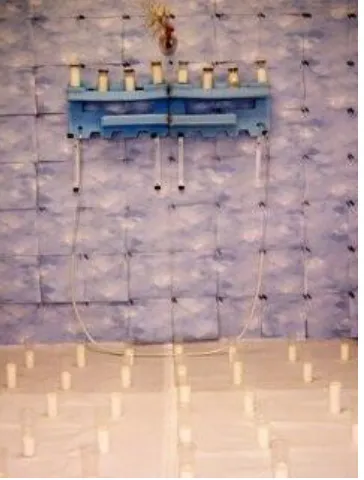
Figure 2: epluribusunum; Close-up of Razors
Grids, Clouds and Milk
Like the doctors and clinicians in the eighteenth century, I viva-sectioned the mass-produced cloud
wallpaper of epluribusunum into a workable grid of spatialization and classification (Figure 1 and 2), first
eliminating its function as a unifying visual apparatus, then refunctioning the wallpaper through a
process punctuated by the material and metaphor of the razor-blade. I used these razor-blades as a
double-negative proposition and metaphor. They doubled as both a signified object of reason and,
through their functionality, simultaneously signified that which instrumentation often negates, cuts and
slashes—its own object. Each cloud panel is both held together by a physical razor-blade and
simultaneously separated by the purpose of the razor blade’s common use.
The grid has been a ubiquitous instrument in the history of art since the Renaissance through its use
structuring frescoes, its utility in the development of perspective, and its architectural integration.
However, it wasn’t until 1960’s and 1970’s in America that the grid as an instrument, in itself, was made
an object and subject of art. Most notably, the work of Agnes Martin and Ad Reinhardt each deals with
grids.
Rosalind Krauss has referred to the grid as “…the absolute autonomy of the realm of art, flattened,
28 back on nature. In the flatness that results from its
coordinates, the grid is the means of crowding out
the dimensions of the real and replacing them with
the lateral spread of a single surface. In the over-all
regularity of its organization, it is the result not of
imitation, but of aesthetic decree.”34 Krauss’s
decidedly critical analysis of the grid certainly has its
merits when held, as it was, against the antagonist of
an institutionalized Modernism. While there are
undeniable elements of Krauss’s criticism behind my use of the grid, I was interested in trying to work
with the grid in an ultimately productive way. 35
Depending on one’s historical or theoretical entrance point and whether or not one refers to a
centrifugal (open) or centripetal (closed) grid will, of course, dictates one’s construction of meaning. It
was this instrumental doubling that interested me when I began structuring epluribusunum.
Grids work like language, they serve a double function. They connect as they produce fissures; they
structure a place beyond while they are inherently structured by a limit. For some, they move toward
transcendence and a relationship with the Divine, while for others, they negate hope and faith, incised
by the razored inscriptions of reason.
I used the grid as both an overt visual reference in epluribusunum, but also as a less obvious mode
through which to structure the physical space of the installation and thus, similar to primary and
secondary spatialization in the work of Foucault, as a way to mediate bodies and structure movement in
the space. In addition to the clouds, both split apart and refunctioned, in the form of a grid on the
central wall of the installation (Figure 1), plastic baby-bottle liners were filled at various volumes and
placed on points or nodes on an invisible grid on the floor of the space (Figure 3). I organized these with
specific attention to the body so that one could physically maneuver between and through them.
However, one would need a heightened sense of space and movement of both self and others in the
grid in order to negotiate the space without spilling the precariously balanced bottle-liners of milk—
balanced as they were, by the weight of their own volume (Figure 1/3). I imagined this structured
process by which organically unstable objects, balanced by their own volumetric weight on points of an
29 invisible grid, as an allegorical process through which the artifice of objectivity develops by attempts to
alter, constrain and mutate individual bodies for collective objectification. I imagined that the necessary
negotiations I was attempting to instill, by the precariously balanced milk, would produce a mode of
participation that could, in-turn, mutate, alter and change the structure of the institutional artifice—in
essence, creating a process by which participation and interaction were essential to the developing form
of the installation. Connected to the Foucaultian process which moves from tertiary spatialization to
political consciousness, this process multiplied into social
significance in this way: if sobjects chose to negotiate the
unstable and precarious mediations of epluribusunum’s
modernist, art-historical structure, they would then become
quite literally unstable organic structures themselves, trying to
negotiate and stay balanced within the unstable organic
structures that are formed by and through the modern symbol of
flatness, classification and comparison—the grid. If one failed to
balance or negotiate the space ‘correctly’, the true instability of
the liquid and the form in which it was contained would be
exposed more acutely—the milk would spill and the telos of the
grid would become exposed as a more or less arbitrary mode
through which to mediate subjects, spaces, and
organic processes.
In an effort to heighten the structural instability of
the State-Brand Powdered Milk which literally
mediated the space of epluribusunum, I created a
display-shelf on which to evenly distribute closed
containers of the same milk (Figure 1/4). The
displayed and shelved milk had to be closed as it
represented a certain type of objectified artifice and
semblance. The contained milk on display was put
through variously different processes in which the milk began to color, separate, rot and harden (Figure
4). A common visual theme to each container of separated organic instability was connected to romantic
landscape painting, as each container when examined closely formally resembled miniature Casper
[image:30.612.48.239.204.401.2]Figure 4: Contained Milk
30 David Friedrich paintings or William Turner seascapes. Beyond these indirect visual reference points,
however, I imagined these containers metaphorically charged by their literal description: an organic
process of immediacy brought to view in a process determined by its own instrumentation and visibility.
I chose the milk because it worked visibly and invisibly as an organic substance in a process of constant
disintegration made more pronounced and potentially quickened by the instrumentation of display
itself. However, I chose State Brand Powdered Milk, in particular for its metaphorical connection to the
Foucaultian process outlined above from tertiary spatialization into political consciousness in which
health and normalcy was equated with the State and geography of nations. However, I also chose State
Brand Powdered Milk because it was powdered—and thus for the literal process it entailed. In order to
make State Brand Powdered Milk one has to quite literally mix billions of dried particles with water,
literally making one substance from many—epluribusunum.
Like the grid which works both centripetally and centrifugally, epluribusunum utilized both open
containers of milk, structured on a grid in space, but also closed and contained milk on display. I chose
the shelving on the center wall of the installation for its multiplicity of potential meaning, but
paradoxically concrete connections to the processes taking place in the literal system implied by the
neologism epluribusunum, created by fusing the three separate Latin words e pluribus unum, again
making one from many, or in this case, a few. The shelves are literally Styrofoam packaging material. I
was interested in the way that literal packaging material designed to protect technology against the
duration of time and space could also act as a stable and
permanent symbol in a technology of display. The overt synthetic
materiality of the Styrofoam played against and negated any
potential naturalistic effect the clouds may have produced. This
emphasized the literal mass-produced plasticity of the cloud
wall-paper.
Above the synthetic shelving unit and centered symmetrically,
was a plastic oxygen mask out of which protruded dead roses and
baby’s breath(Figure 3). Out of each corner of the shelving unit
ran a plastic hospital tube which fed back into a symmetrical hole
in the shelves’ opposite side, signifying an endless process of
[image:31.612.54.236.483.723.2]31 referentiality and autonomy (Figure 1a). This reference to autonomy connected to the privileged space
of autonomy in the development of the arts and in particular painting, but it also connected with the
parallel development of modern structures of medicine’s visual culture.36 This closed autonomous and
symbolic space was metaphorically multiplied by the roses that fill, or close, the only opening on the
wall. The roses registered a myriad of art-historical significance. However it was their material
significance as a marker for both an entropic process (the roses are dried and flaking away) and a
metaphor for death and disintegration that most kept my interest.
The bright blue coloring of the packaging shelves was an
industrial blue often used in such material and also commonly
used on the walls of hospitals and modern institutions in
general. To strengthen this connection I painted the walls of
the installation space using bright blue paint. This is often
used to serve a double function: to produce an illusion of
brightness, happiness, and cheer, but also and perhaps more
importantly, to simultaneously protect the structure of the
institute itself, namely the surface of its walls (Figure 4). This
can be deduced from the location of such paint. Walls are
often painted in these industrially happy, yet decidedly drab
colors, in even strips that wrap endlessly around corners and
through wings of hospitals and institutions. They generally
reach from the floor to approximately four-feet in height. This
is where feet leave their marks and scuffles between technicians and patients leave their human imprint
and where gurneys scrape the edges and corners of the institutional structure.
Clouds are a common backdrop of everyday life. They make windows in institutions important. In them
we dream, escape and create—they persist for everyone no matter the circumstances. Clouds, like all
the material in my artistic practice, were chosen for the specificity of how they signify, yet also for their
capacity to develop multiple meanings—for their rare facility to be both general and particular. Like
Kant’s purposiveness, Adorno’s constituent subjective uncoupling, or Benjamin’s phantasmagoric
dream-wish, clouds represent the heterogeneity of subjectivity working. In them, however, determinate
[image:32.612.73.253.233.474.2]ends can be deferred, ignored, changed and altered. Additionally, they offer a common backdrop to