Children’s Social Care Innovation Programme Research Report 08
North London Children’s
Efficiency Programme (NLCEP)
residential innovation project:
partnership evaluation
Research report
June 2016
2
Contents
Executive Summary 4
Brief contextual summary of project and evaluation 4
Key findings 4
Summary of implications and recommendations for policy and practice 6
Overview of the project 7
Rationale for the wider NLCEP programme 7
Approach to achieve intended outcomes 8
Changes to the intended outcomes or project activities 9
Context of the innovation 9
Overview of Evaluation 13
Aims 13
Evaluation questions 13
Methodology 14
Changes to the evaluation methodology 15
Key Findings 17
Main findings 17
Evidence of impact on the Innovation Programme’s objectives and areas of focus 24
Barriers to this innovation 25
Facilitators to this innovation 26
Limitations of the evaluation and future evaluation 27
Limitations of the evaluation and key findings 27
Appropriateness of evaluation approach 27
Capacity built for future evaluation and sustainability of the evaluation 27
Implications for policy and practice 28
Conditions necessary for this innovation to be embedded 28
Consideration of future development of the innovation and wider application 28
References 31
3
List of Figures
Figure 1: Theory of Change Model 8
Figure 2: Children looked after: rate per 10,000 10
Figure 3: % LAC 20m+ from home 11
Figure 4: 10-17 year olds: receiving a conviction rate per 1,000 11
List of Tables
4
Executive Summary
Brief contextual summary of project and evaluation
The Department for Education, under the Innovation Fund in Children’s Social Care, funded the North London Children’s Efficiency Programme (NLCEP) to provide a residential unit model for children in, or on the edge of, care and their families. As part of the innovation, the five north London boroughs of Camden, Enfield, Hackney, Haringey and Islington collaborated with the aim of developing a model of care and intervention that allows young people entering care to remain in the local area rather than being placed far away from home, as is often the case for looked after young people in London. A rationale for the partnership working is improving outcomes for young people on the edge of care by offering support to families and avoiding long term residential care placements. Reducing long term out of area care placements would also support cost-saving through pooling of resources, as well as providing existing add-on services (such as social work, education and Child and Adolescent Mental Health Services or CAHMS) from each local authority.
Ipsos MORI was commissioned to conduct an independent evaluation of the project in order to provide evidence of the partnership’s functioning. The aim of the evaluation was to document the partnership’s development; scrutinise processes, structures and communications, and provide feedback helping local authorities identifying pathways for better collaboration. The evaluation was designed to capture the full and ongoing process of the partnership set-up and collaboration, identifying selection criteria, common referral processes and selecting a third party residential facility provider to deliver the assessment facility.
The method employed was a qualitative approach exploring 10 key themes which have proved essential in partnership working, by observing monthly project board meetings as well conducting interviews with project board members from each of the 5 boroughs at 3 time points between September 2015 and April 2016. The evaluation plan was further designed to inform a future evaluation of the residential unit once it was open.
Key findings
The overarching observation, impacting on the functioning of the partnership, was with regard to each partner’s commitment to the partnership demonstrated by attendance at monthly project team meetings and completing tasks as agreed. Although there was a high level of commitment by 3 local authorities, the other 2 struggled, due to
5
negative consequences such as slowing down decision making and causing a certain amount of frustration to other partners.
There was general consensus among most project team members that the partnership was founded on common values, which all members subscribed to. To many, this was one of the biggest advantages of this partnership. Project team members were
conscious of putting partnership needs ahead of individual local authority needs. This was the case even when project team members had opposing views regarding certain decisions.
Overall, there appeared to be clarity of purpose and objectives with regard to the partnership, not least due to previous partnership working between the boroughs. Throughout the evaluation period, the partners collaborated in reviewing existing services and designing an approach based on the gaps in existing services and needs of local looked after children’s populations. Mutual respect was evident among project team members, especially during monthly meetings. Good communication appeared to be evident within the partnership, with team members sharing relevant information in order to support the planning and management of the project.
There was some level of uncertainty regarding team members’ understanding of roles and responsibilities. Inconsistency in attending meetings made it difficult to hold members accountable for not carrying out tasks, or making a contribution. As a result, many tasks were completed by the project lead, or one particular team member. Many suggested that greater clarification about expectations from each participating
borough from the start would have been beneficial in order to ensure that all tasks were shared out equally. Some team members suggested that better use could have been made of staff resources if the most suitable individuals had been selected by the partnering boroughs to attend monthly meetings.
While the partnership collaborated well in parts, the inconsistency in project team members resulted in significant delays to the completion of certain tasks. Although the partnership was able to develop a specification for the residential unit, there still
remained important outputs to be achieved, such as establishing referral criteria and selecting a provider to run the unit.
Potential risks were put forward in the original proposal to the Innovation Fund, including partnership engagement not being sustained; inability to align the
requirements of the five boroughs, and turnover of staff resulting in a loss of focus on project delivery. Despite having a risk register in place, no discussion took place about the development or implementation of a risk register during monthly meetings, and team members seemed to be unsure about the existence of a risk register for the project.
6
project. One of the most significant was the inconsistency of project team members, as well as the lack of administrative support for the project lead.
Up until April 2016, the evaluation team had been able to observe the ongoing collaboration of the partnership in identifying the type of residential unit required, as well as identifying selection criteria. As of April 2016, the partnership was in the process of designing a common referral process, collaborating with a social finance organisation to identify a funding model as well as selecting a facility provider.
Summary of implications and recommendations for policy
and practice
The partnership benefitted from prior collaboration between the boroughs regarding services for looked after children, as well as another collaboration under the
Innovation Fund. Both were important, strategic projects which meant that knowledge, systems and resources were already shared between boroughs.
Even though the partnership did not manage to open the residential unit by April 2016, important set-up work had been thoroughly prepared.
Transferability of findings to other local areas or partnerships has to be considered within the context of a number of existing strategic partnerships in these boroughs; the particular local circumstances of high rates of looked after children, many of whom are placed more than 20 miles from home, and on the understanding that commitment to collaboration is a key criterion for successful outcomes.
Recommendations for similar partnerships are particularly concerned with the consistency of the most appropriate staff members participating in the partnership delivery. Further, without stifling the innovative nature of the programme, decision should be made and adhered to as soon as possible in order to produce a
7
Overview of the project
Rationale for the wider NLCEP programme
The NLCEP is a strategic partnership whose members include the London Boroughs of Camden, Enfield, Hackney, Haringey and Islington. This partnership works together to promote collaboration across children’s services, to ensure best practice and
service quality improvements, while making the most efficient use of their resources.
According to the proposal to the Innovation Fund, one of the main challenges faced by the 5 boroughs was the undersupply of good quality specialist residential care
placements within their areas. They also identify the difficulty associated with local boroughs opening a new provision within the M25, due to the associated high property and labour costs. With this in mind, local boroughs find it very difficult to place young people within borough boundaries, often resulting in placing young people in care over 20 miles from home. This creates various challenges for young people and local
authorities. For young people, placements in residential settings at distance from home can sever links to their local communities and can make leaving care and establishing themselves in adulthood difficult. Links to local authority services such as education and family support are also lost and close monitoring of services provided in the young person’s new area is made more challenging due to distances involved.
In addition to the above, the partnership also stresses the importance of both stable and sustainable services once a young person has entered care. The partnership emphasises the importance of building families into the child’s intervention plan, not only to support the child, but to ensure parents or carers retain their parental authority. With limited good quality specialist residential care places within their areas, family relationships tend to suffer because of this shortage in supply.
In response to the above issues, the NLCEP partners proposed to provide a specialist 5 bedded short term unit, for adolescent children (aged 12-14) who have been
identified as being on the edge of care, or those in foster care at risk of experiencing placement breakdown. The plans for the unit were designed to work with children and families for up to 12 weeks, to ensure children are not separated from their parents for an extended period of time. Additionally, the partnership planned on locating the unit within one of 5 partnering boroughs or in a neighbouring borough, keeping young people close to their families and local services, to work on improving family
8
Approach to achieve intended outcomes
In the original funding proposal, the project team suggested the intended outcomes would be achieved by:
• Holding service design workshops
• Engaging with providers and develop a fair procurement process to select a provider
• Collaborating on a comprehensive demand mapping
• Developing a predictive tool to successfully identify the cohort of young people
• Establishing referral criteria
• Developing a financial risk sharing model.
The proposal offered a detailed timeline, as well as a list of tasks and actions that needed to be completed to achieve these outcomes. Monthly meetings would be held by the project team to ensure these tasks were discussed and carried out.
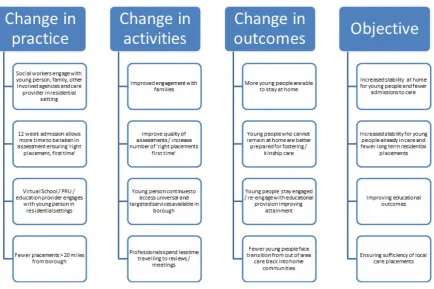
[image:8.595.77.512.421.710.2]In addition, a theory of change model (Figure 1) was established to set out how each objective would be met through changes in practice, activities and outcomes. This was re-visited at a theory of change workshop with the Spring Consortium coach in March 2016, with general agreement that the model was still relevant.
9
Changes to the intended outcomes or project activities
The evaluation was designed to capture the full and ongoing process of the
partnership set-up and collaboration, identifying selection criteria, common referral processes and selecting a third party residential facility provider in delivering the residential unit by March 2016. Up until April 2016, the evaluation team had been able to observe the ongoing collaboration of the project team in identifying the type of residential unit required, as well as identifying selection criteria. As of April 2016, the partnership is in the process of designing a common referral process,
collaborating with a social finance organisation to identify a funding model as well as selecting a facility provider.
Although the project team has been able to produce a specification, a number of outputs remain outstanding, such as the procurement process to select a provider for the unit.
The project team originally anticipated that decisions would be made at monthly meetings, with representation from each borough. However, this was not always possible as representatives had other commitments and were therefore unable to attend all monthly meetings and there were staff changes throughout the evaluation period.
Context of the innovation
The NLCEP is a partnership working together to promote collaboration across Children’s Services. The 5 London boroughs making up the partnership are geographically close but their populations of looked after children differ.
The Index of Multiple Deprivation (2010) shows above average scores for all
boroughs, and all boroughs rank in the top 40 boroughs for eligibility for free school meals in primary schools (including nurseries) in 2015, with Islington ranking first in England and Hackney third.
10
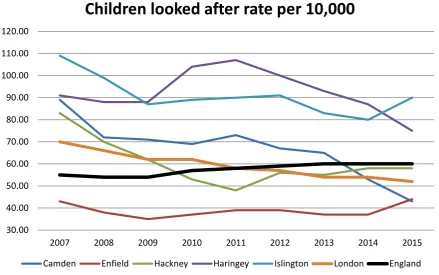
Figure 2: Children looked after: rate per 10,000
A high percentage of LAC from Camden, Enfield, Haringey and Islington, compared with the average for England (although in line with the average for London), are
placed more than 20 miles away from home (see Figure 3). Placements far away from home (apart from for reasons of safety) are associated with a number of negative consequences, such as reduced contact between the child and birth family, as well as high costs for local authorities. For local placements, the five boroughs all use a standard London Care Services contract, meaning that the rate paid to providers for comparable care places are identical.
30.00 40.00 50.00 60.00 70.00 80.00 90.00 100.00 110.00 120.00
2007 2008 2009 2010 2011 2012 2013 2014 2015
Children looked after rate per 10,000
11
Figure 3: % LAC 20m+ from home
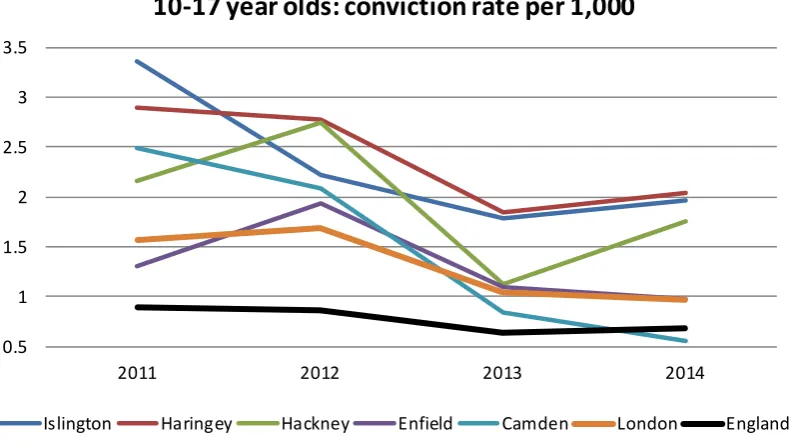
All partnering boroughs, apart from Camden have conviction rates for 10-17 years olds above the English average (see Figure 4). Camden has seen a drastic decline in convictions in recent years, dropping from 2.5 per 1,000 10-17 years olds in 2011 to 0.6 in 2014. Haringey (2 per 1,000), Islington (2 per 1,000) and Hackney (1,8 per 1,000) had rates above the average for England and London in 2014.
Figure 4: 10-17 year olds: conviction rate per 1,000
5 10 15 20 25 30
2008 2009 2010 2011 2012 2013 2014
% LAC 20m+ from home
Camden Enfield Hackney Haringey Islington London England
0.5 1 1.5 2 2.5 3 3.5
2011 2012 2013 2014
10-17 year olds: conviction rate per 1,000
[image:11.595.69.465.484.707.2]12
Some of the partners also collaborate on the St Christopher’s Fellowship programme under the DfE Innovation Fund in Children’s Social Care, and are able to apply learnings from that project to the NLCEP partnership.
Since 2014 the 5 boroughs have been part of a partnership of 10 London Boroughs working to deliver a joint procurement for Independent Fostering Agency placements, which is currently on track to deliver £1m savings.
The transferability of this innovation needs to be considered in the context outlined above, especially with regard to the high rate of LAC and the higher number of
13
Overview of Evaluation
Aims
The primary aim of the evaluation was to ascertain and provide evidence of the functioning of the partnership between the 5 London boroughs in designing an intervention model and setting up a local residential children’s home. The evaluation was designed to capture the full and on-going process of the partnership set-up and collaboration, identifying selection criteria, common referral processes and selecting a third party residential unit provider in delivering the assessment unit. An additional part of the evaluation was to prepare an on-going evaluation framework for the unit once it opened, to assist the partnership (or an independent evaluation team) with the
evaluation of its functioning.
Evaluation questions
The evaluation questions set out in the evaluation plan are as follows:
1. Local context and mutual understanding
• Are partnership local authorities aware of the varying local context and do they have a mutual understanding of how differences can be overcome?
2. Commitment to partnership working
• Is there a strong and ongoing commitment to partnership working?
3. Clarity of purpose and objectives
• Is there clarity of purpose and objectives with regard to the partnership?
• Is there a clearly agreed commissioning framework to select the service provider for the unit?
• Do local partners understand the process of reviewing, designing and improving services?
• Are clinical experts and stakeholders consulted and involved in the selection process for the service provider?
4. Mutual trust and respect
• Is there mutual trust and respect between partners and between Boroughs?
5. Clarity of roles and responsibilities
14
• Is there a clear and democratic process of how the roles and responsibilities are allocated and shared?
6. Structures and processes
• Are secure inter-agency governance arrangements in place, and an agreement over the scope of the service areas to be addressed in the partnership process?
• Are there clear structures and processes in place to deliver the project on an ongoing basis?
7. Identify and manage risk
• Are risks appropriately identified and managed?
• Has a financial risk-sharing model been developed?
• To whom will the unit provider be accountable?
8. Monitoring and evaluation
• Are the partnership processes monitored and evaluated?
9. Effective communication
• Is there effective communication between the local authorities at all levels?
• Is there an information sharing protocol between agencies to allow for the sharing of certain detailed health and social service information which would not normally be shared between local authorities?
10. Resources
• Are adequate resources secured and ring-fenced with a long-term vision in each Borough?
• Are resources secured, pooled, fairly and evenly supplied and distributed in an agreement clearly outlining which parts of the projects will be funded by which means?
Methodology
15
Monthly phone conversations between the evaluation team and the project lead took place between project team meetings. These conversations were useful in ensuring the evaluation team was kept up to date with any new developments or documentation that might have become available.
In addition to the original evaluation plan, the team attended monthly project team meetings. These meetings brought together the project team members and the project lead, who chaired the meeting. Discussions were observed with focus on the 10
evaluation topics.
Further, the evaluation team attended various workshops held over the course of the project, including an Intervention Model Workshop, which aimed to establish the
theoretical approach which the unit would be based on. The objective of this workshop was to bring together project team members, the project lead, professionals and directors from each borough, to design an intervention model for the unit that focused on the processes and likely impacts of the residential unit on young people on the edge of care and their families. Following the Intervention Model Workshop, the
partnership also held smaller Service Design Workshops, with practitioners from social work, education, health, youth offending, and service commissioning. These additional sessions focussed on how local borough services could help deliver the services around the unit, within the structure as agreed on at the Intervention Model Workshop.
Changes to the evaluation methodology
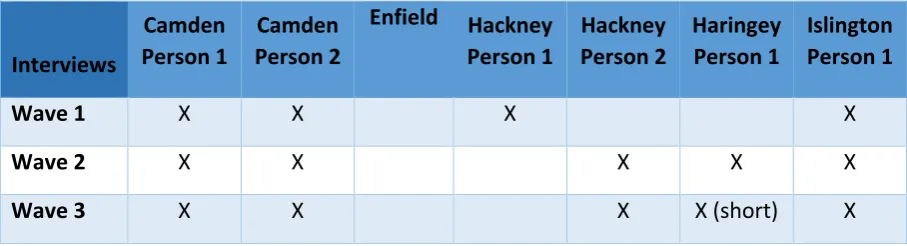
As outlined in the evaluation plan, the team intended to conduct monthly interviews with each of the Borough representatives, to understand the partnership’s
16
Table 1: Completed interviews by borough and wave
Interviews
Camden Person 1
Camden Person 2
Enfield Hackney
Person 1
Hackney Person 2
Haringey Person 1
Islington Person 1
Wave 1 X X X X
Wave 2 X X X X X
Wave 3 X X X X (short) X
The evaluation plan also proposed conducting consultations with young people who have experienced living in residential care from the 5 boroughs to inform the
17
Key Findings
This section focuses on the key findings about the partnership’s progress with regard to the 10 main evaluation topics.
Main findings
Local context and mutual understanding
There was general consensus that the partnership was founded on the same values, which all members subscribed to. This opinion remained unchanged throughout the course of the evaluation.
Most board members displayed a good level of understanding of their specific local borough needs. One board member mentioned that “we use feedback from our local community, a lot of the children that need placements are known to the police, or have undergone child exploitation", which could have been potential focal points for the residential unit.
Although in some instances members tried to align the objectives of the unit more closely with their own local needs, more generally, they acknowledged the importance of working as a partnership to incorporate the needs of all partners and their
communities. On the whole, project team members understood the need to meet common goals, and displayed a willingness to compromise on certain issues to ensure agreements were reached. An example of this was the decision about the age group of the young people who would attend the unit. This was discussed over a number of weeks and agreement was eventually reached based on what worked best for most partners.
This willingness to compromise remained unchanged throughout the course of the project but some members suggested this had improved over time, especially towards the end of the evaluation period.
Commitment to partnership working
In one of the early monthly meetings, it was highlighted that the partnership would need to be a long-term commitment between partnering boroughs, “regardless of the people around the table” as one board member said.
18
attendance. The remaining 2 boroughs, although fairly inconsistent in the beginning, both eventually attended every meeting1.
The reported impacts of inconsistent attendance included the project lead having to recap discussions and decisions from previous meetings for the benefit of new joiners which resulted in a fair amount of time being spent discussing past decisions rather than moving the project forward. This could have been mitigated had the Chair
insisted that minutes of previous meetings had already been read. The first item of the agenda should then have been clarification of minutes. This also meant that tasks would take longer to complete than originally anticipated. Also, short-term
replacements were generally seen as less engaged. However, it was felt that consistency and commitment levels improved towards the end of the evaluation period.
Many project team members acknowledged that much of the necessary work to drive the project forward fell to either the project lead, or one particularly engaged team member. According to a large number of team members, the very high level of commitment demonstrated by the project lead was one of the main reasons
underpinning this project’s progress. Some board members expressed regret about the inability to have progressed further in the given timeframe.
Clarity of purpose and objectives
Overall, there appeared to be clarity of purpose and objectives with regard to the partnership, especially during the evaluation period. Throughout the evaluation period, the partners collaborated in reviewing existing services and designing an approach based on the gaps in existing services and the needs of local LAC populations.
More specifically, there was a lack of clarity among some of the project team regarding specific milestones and tasks setting up the unit. However, all members were clear on the long-term vision of the partnership. While some elements were clear to some members, such as the unit being a 5 bedded establishment, other members were not so clear and partners were still unsure about details such as the age group and gender of young people the unit would be designed for. Although these decisions were later agreed on, team members suggested such features should have been agreed much sooner and quicker.
Interviews with partners suggested that objectives became much clearer at a later stage, in particular after the drafting of the specification. Project team members also highlighted the usefulness of the workshops to clarify a number of uncertainties.
19
In the long-term, however, it was mentioned by a team member that "there needs to be a plan for the next five years in place, covering the remit of services being
commissioned over the five-year period, as well as detailed methodology on what needs to be done and by who". A commissioning framework to select the service provider for the unit has not yet been established by the partnership, however, the specification lays out details of what will be expected from the provider.
Mutual trust and respect
Mutual respect was evident among board members, especially during monthly board meetings. Team members were careful to listen and acknowledge all points being made, and show support to defend certain suggestions, contested by others. There was an isolated instance when a discussion turned into an argument when a number of previously agreed elements about the unit were revisited by one member (who had missed a previous session). While another member suggested no more time should be spent discussing givens, the first partner wanted to thoroughly understand why such features had been agreed. For the purpose of the meeting, the project lead suggested partners should avoid revisiting the givens to ensure the team got through the agenda for that specific meeting.
All team members felt mutual trust existed between partners and this has remained unchanged throughout the evaluation period. For some team members this was assisted by having existing relationships that preceded this project.
Clarity of roles and responsibilities
Interviews suggested some lack of clarity about the roles and responsibilities of each partner. Inconsistency in meeting attendance made it difficult to hold members
accountable for not carrying out tasks, or making a contribution. As a result, many tasks were completed by the project lead, or one particular team member.
Many suggested that greater clarification about expectations from each participating borough from the start would have been beneficial and would have helped to ensure that all tasks were shared out equally. As one team member commented "clear lines of accountability and communication only exist sometimes, because of the lack of continuity.”
20
Structures and processes
For some team members, flexibility was one of the most important features of the partnership’s structure. For these members, flexibility gave the partnership the opportunity to think through the best methods to achieve intended outcomes of the unit, weighing up all options. For others, having too much flexibility was seen as unhelpful, as this resulted in members not valuing attendance and contribution highly enough.
Generally, from previous collaborations, inter-agency governance arrangements had already been in place between the partner boroughs. Specific to this project, team members seemed to be more comfortable with the processes the partnership had in place once the workshops had been implemented; the focus of the unit had become clearer, and the services that were going to be delivered to achieve the intended outcomes of the unit had been agreed. Therefore, the scope of the service areas was agreed during the evaluation period but more slowly than anticipated.
Finally, interviews with project team members suggested they were happier with the partnership’s processes towards the end of the project’s lifecycle, once the
specification was close to being finalised. The specification offered partners a detailed summary of what needed to be achieved and how, although referral forms are yet to be produced. As of April 2016, the structures and processes to deliver the project on an ongoing basis were being elaborated.
Identify and manage risk
Potential risks likely to arise were first detailed in the risk register developed by the partnership in the original proposal to the Innovation Fund. Three main risks were identified: partnership engagement not being sustained, inability to align the
requirements of 5 boroughs, and the turnover of staff resulting in a loss of focus on project delivery. How such risks could be avoided was also detailed, as were the risk owners and the likely impacts. The risk of aligning the requirements of the 5 boroughs was addressed in each monthly meeting, and the needs of all partners accounted for in the final specification.
Despite having a risk register in place, little or no discussion took place around its development or implementation during the monthly team meetings, and team
members seemed to be unsure about the existence of a risk register for the project: as 2 partners said: " I haven't seen a financial risk sharing model, but that's not to
21
seemed to be at the heart of this issue, as a risk register evidently existed but was not being shared and discussed.
According to a large number of the team members, the biggest risks likely to occur were those associated with partners not taking on full responsibility for specific tasks they were allocated, due to limited levels of accountability. It was suggested that if partnership roles and responsibilities were made clearer, this risk could be mitigated against.
Some members believed the financial position of the partnership was being monitored and reported at a director level but was not being communicated to the project team.
Monitoring and evaluation
The main concern highlighted by many team members throughout the evaluation period related to performance management, including not having clearly outlined milestones, outcomes and delivery dates. While some members assumed this information was available, they were unsure how it could be accessed. This was not discussed at meetings.
Team members generally found it difficult to make predictions about the likely
outcomes of the partnership, and whether the partnership was able to add value to the sector. Nevertheless, they were optimistic about the possible outcomes the
partnership could achieve through this unit, primarily because they had collaborated previously in the delivery of the Fostering Agency Placements, and the St
Christopher’s Fellowship project.
Effective communication
Good communication appeared to be evident among the partnership. Some examples of information sharing among the partnership were needs analysis reports from each of the partnering boroughs, and contact details for practitioners from education, health care, social care, and young offenders’ services in each borough.
22
The general consensus among the partnership was that a supportive atmosphere existed, in which ideas, suggestions, and challenges could be discussed and
addressed, with one member saying "we have a comfortable support circle, allowing us to say openly what we believe without feeling attacked or challenged".
Nevertheless, there was one instance in which a member said they were made to feel very uncomfortable for expressing a conflicting view which resulted in a heated
debate, as mentioned earlier. Generally, however, members were happy with
communications and discussions between the partners. Interviews suggested that the communication improved over time, especially towards the end of the evaluation period.
Financial and staff resources
Monthly team meetings were held in one of the borough’s offices. Other partners offered to host some of the thematic workshops and a few of these workshops took place in other offices.
At one stage during the process of finding a suitable existing building to host the residential unit, one local borough offered a potential site which was likely to become available. However, for a number of reasons, this building was not a feasible option.
Some team members suggested that better use could have been made of staff resources had the most suitable individuals (with regard to ability to attending
meetings rather than expertise or seniority) been selected by the partnering boroughs.
Partnership achievements:
To monitor what the partnership has achieved in more detail, the following outlines 7 main assessment categories as per the original evaluation plan:
1. The appropriate aligning of roles, structures and responsibilities between the local authorities to deliver the project:
Interviews with project team members suggested that roles and responsibilities of certain members were not sufficiently clear, particularly in the beginning, improving towards the later stage of the evaluation period. Much of the work fell into the hands of project lead or one team member. It is important to note that all members contributed; however, the level of input was inconsistent across the partnership.
2. Agreement on selection criteria for unit use and common referral process and paperwork
23
members, this process took a lot longer than necessary, especially with regard to the age of the young people to use the services and the length of their stay in the unit. The partnership is yet to produce referral processes and referral form to be used by all partners.
3. Partner satisfaction with partnership
Satisfaction with the partnership varied across the life cycle of the project. The beginning of the project saw the project team members uncertain about a number of aspects associated with the partnership such as the likely outcomes of the project, commitment levels across the members, as well as how tasks were planned to be carried out. Satisfaction levels with the partnership improved at later stages, when certain aspects of the unit had been agreed.
4. Written long-term financial agreement in place and signed by all partners This original funding proposal outlined that the cost of sustaining the service would be funded through savings made to the placement budgets of the 5 participating
authorities. The partners are yet to produce a long-term financial agreement that details all costs associated with running the unit. As of April 2016, the project lead is in conversation with potential funding partners.
5. Risks are appropriately identified and managed
The partnership first identified a number of potential risks in the funding proposal to the Innovation Fund. Risks included partnership engagement not being sustained, inability to align requirements of 5 boroughs, and turnover of staff resulting in a loss of focus on project delivery. The document detailed the possibility of these risks and the mitigation processes to follow. While the partnership did ensure that the requirements of the 5 boroughs were all aligned, sustainability of partnership engagement as well as continuity arrangements in the event of staff turnover could have been improved. This feedback has since been given to the Directors as a major area of risk to the
partnership work and Directors have suggested a number of mitigating strategies including more regular feedback from the project lead to Directors in order to ensure that they are able to make staff resources more readily available.
6. The securing of a contractor to staff and run the unit
The partnership is yet to secure a provider that will take responsibility for the running of the unit. However, the specification outlines provider requirements and the
standards of care expected.
24
According to the original proposal for this unit it was anticipated to be open by April 2016, which has not been achieved. A number of important steps remain outstanding to achieve this goal.
Evidence of impact on the Innovation Programme’s
objectives and areas of focus
The following section describes the ways in which the partnership evaluation informs the Innovation Programme’s objectives and areas of focus.
Value for money across children’s social care
A rationale for the partnership is cost-saving through pooling of resources, as well as providing existing add-on services, such as social work, education and CAHMS from each borough.
A number of prior collaborations between some of the boroughs provide cost- and resource-saving examples. By pooling resources across boroughs, the partnership is able to provide a service that one borough would otherwise be unable to develop and implement independently.
Moreover, one of the primary purposes of this residential unit is to improve outcomes for young people by reducing the numbers being placed in long term care and by allowing young people from London to stay closer to home rather than moving into placement further away. Keeping young people close to home, especially if there is a continuity of services (such as the young person continuing to attend the same school), can provide cost savings with regard to the service provision itself as well as staff time to arrange the use of new services.
As of April 2016, there was no evidence of costs savings as the residential unit was not yet open.
Professional practice and methods in social care and Organisational
workforce culture
25
family (where it is safe to do so). Therefore, the young person and their family may have improved outcomes.
The residential unit, as designed in the specification, would also imply changes to the social care workforce culture, as service providers would need to adapt to a new way of collaborating across boroughs in providing wrap-around services to a new model of intervention in children’s residential care. There is still strong commitment from the boroughs to achieve this goal.
Local leadership and governance including systems and processes
in children’s social care
The partnership brings together directors and team members who are leaders in the local area within children’s social care and systems around looked after children. Through a local partnership, local services as well as knowledge across the partners can be shared to improve processes in children’s social care. With shared values and objectives, these local partnerships can add value that would otherwise be
unattainable by a single local authority.
Stronger incentives and mechanisms for innovation,
experimentation and replication of successful new approaches
The partnership’s aim to open an innovative residential unit in North London
recognises an unmet need for a facility that would allow adolescents in, or on the edge of, care to stay near London. The partnership has recognised that an intensive
intervention with young people and their families over a short period of time could reduce the likelihood of a longer term admission to residential care. Moreover, it maximises service use by enabling services to continue working with the young people with whom they have developed relationships over time. Although the residential facility has not yet been opened, making it impossible to postulate its effects, the groundwork laid suggests the utility of such an approach. Once the facility opens, a full evaluation should be sought and if the model is found to be effective, replication in other areas, whether through partnerships or not, may be desirable.
Barriers to this innovation
A number of barriers to the progress of the project were observed which provide learning for other partnership collaborations. The main barrier to the progress of the project was attendance and practical contributions to the advancement of the project.
26
and others. Further, lack of administrative support meant that staff resources,
especially those of the project lead, were not made use of in the most efficient ways.
It is recommended that:
The partnership be more rigorous in identifying individuals at the beginning of the project and then formally recording any changes, rather than allowing project team members to pass the baton in an informal way by suggesting substitutes during the project lifecycle
Minutes be circulated after each meeting that team members are expected to have read before the next meeting; only spend a minimal amount of time on discussing these
Once a debate on a particular area has been concluded, and a decision reached, this should not be revisited, without stifling the innovative aspect of the collaboration
Conversations not be skewed towards the views of those regularly attending, as should be agreed in Terms of Reference at the project commencement;
A specification document be produced as early as possible within the partnership working, confirming decisions that have been made at an early stage
A project-based, rather than wider partnership level, risk register be produced, circulated and regularly reviewed.
Facilitators to this innovation
The main facilitator to the partnership working appeared to be previous collaboration of the partners on other projects in children’s social care. Previous collaboration meant that there were shared processes in place across boroughs and that team members already knew each other and the issues of other boroughs, and did not need to spend time familiarising with each other and well as the needs of other boroughs.
More specifically, the project lead’s organisation of and mediation during meetings ensured that the project moved forward in a positive manner. According to some partners, the absence of such a role would have risked the completion of many of tasks, and thus compromised the partnership’s achievements. Nevertheless, the lack of support to the project lead may have stifled the rate of progress.
27
Limitations of the evaluation and future evaluation
Limitations of the evaluation and key findings
The regular changes in staff contributed to the difficulty of tracking views over time as different (or no) staff members would represent certain boroughs during interview rounds. Even when new members to the partnership were later interviewed, their contributions (at least for the first interview) were limited by their short-term involvement. Despite this, the evaluation team was able to gather a considerable amount of qualitative data from interviews and observations.
Another limitation of the evaluation was the inability to conduct consultations with children from the local Children in Care Councils (CiCC) who had experienced living in a residential children’s home. As outlined in the evaluation plan, information collated from this was to inform the partnerships’ understanding of what young people in care like and dislike about residential care, and thus feed into the design of the unit.
Appropriateness of evaluation approach
The evaluation plan was thoroughly prepared to ensure all aspects of the partnership working were taken into account. The approach allowed the evaluation team to
understand the process from the perspective of partners as well as observe month-on-month partnership progress across the 10 evaluation topics as well as the 7
assessment criteria. It was, therefore, appropriate in evaluating the partnership’s collaboration, providing breadth and depth to findings.
Capacity built for future evaluation and sustainability of the
evaluation
The findings outlined are informative for any collaborative partnerships planning on working together. Further, the partnership can use the measures employed by the evaluation team to continuously monitor partnership working. The approach taken in this evaluation has provided useful insight into staffing and organisational issues, as well as the working arrangements of the project team.
28
Implications for policy and practice
If the project achieves its intended outcomes, young people on the edge of care and their families will have better life chances, which is both beneficial to them as well as their local boroughs and the state as a whole. Further it will lead to long-term cost-saving across children’s services.
Conditions necessary for this innovation to be embedded
A number of conditions are necessary for this innovation to continue and become embedded in the partnering local authorities. A continued shared vision in children’s services, in particular with regard to this innovation, will be needed to maintain the momentum to open the residential unit and support its vision in the settling-in stages. As the partnership requires a long-term investment to achieve its intended outcomes, staff as well as financial commitment is necessary for the innovation to become
embedded. This is so even before positive changes may be observed in young people and their families; therefore, continued commitment is required through periods of uncertainty.
Consideration of future development of the innovation and
wider application
In order to ascertain whether the residential unit achieves its intended outcomes once it has been commissioned and is in operation, a long-term evaluation is suggested, tracking the outcomes of young people who enter the unit (intervention group)
compared with young people on the edge of care whose profile would make them also eligible to enter the unit (comparison group 1). It may also be of interest to compare outcomes with those of young people already in residential care who would have been eligible before their first residential children’s home placement (comparison group 2). However, outcome data (such as case notes) for these young people may be difficult to obtain unless local authorities are willing to closely collaborate with the evaluation team. The methodology outlined below provides a recommended approach to
undertake this evaluation:
Primary outcomes
Intended primary outcomes for young people and their families as part of the intervention are:
• Successful and sustained re-unification with birth family
29
The primary outcomes for the partnering boroughs are cost-saving across all services associated with children entering care for the first time, or placement change for young people in long-term foster care. Further, the innovation is intended to reduce costs to boroughs of edge of care services once the family is successfully re-united.
Secondary outcomes
Secondary outcomes are likely to be influenced by primary outcomes and include:
• Sustained education of young people in the programme by remaining in the local area, coupled with improved education outcomes in the long-term
• Reduced involvement with youth offending teams of young people in the programme
• Reduced need for CAMHS for young people in the programme
• Improved life chances and positive transition into adulthood.
Quantitative measures
Short-term (during the intervention period)
• Monthly survey to be completed by unit staff with regard to young people’s days missing from care, days in education, involvement with youth offending services and other relevant measures
• Strength and Difficulties Questionnaire (SDQ) completed by case worker or social worker upon entering and leaving the unit, as well as for eligible young people in the comparison group(s)
• Parenting Scale completed by parents or carers upon young person entering and leaving the unit.
Medium-term (immediately after the intervention period)
• Placement stability as measured by successful and sustained return to birth family or positive, planned and sustained placement into residential or foster care, compared with placement stability of control group cohort
• SDQ at 3 months follow up for intervention and control group young people
• Stability of educational placement
• Reduced or no involvement with youth offending teams.
Long-term (sustained changes)
• Placement stability
• SDQ at six and twelve months follow-up
• Stability of educational placement
• Reduced or no involvement with youth offending teams;
30
Qualitative measures
• Interviews with young people while living at the residential unit
• Interviews with families
• Interviews with unit staff
• Interviews with social workers, youth offending teams, education, CAMHS.
Cost-effectiveness analysis
A cost-effectiveness analysis would be necessary to ascertain whether the unit provides good value for money for the partnering boroughs. This would include cost-savings across a range of services, measured by the costs of providing the residential unit compared with costs associated with services and outcomes of young people in the comparison group(s). This should be based on a baseline assessment of cost under the current system in order to track progress over time. The suggested
31
References
Department for Education (2015). Local Authority Interactive Tool. Crown Copyright; Department for Education: London; Available here.
Department for Education (2014). Local Authority Interactive Tool. Crown Copyright; Department for Education: London; Available here.
32
Appendix
Appendix A: NLCEP – Looked After Children (LAC) Leads
Group – Terms of Reference
Purpose of the Group
The group will be responsible for overseeing and supporting the areas of the North London Strategic Alliance (NLSA) Children’s Efficiencies Programme which relate to services for children and young people who are Looked After (LAC). In summary, the purpose of the project is to enable the NLCEP boroughs to deliver improved outcomes for children and young people and efficiencies in the provision of placements for
children through:
• Collaborative strategic planning
• Analysis of data on demand and supply
• Improved forecasting of need
• Development of the provider market
• Shared negotiation with providers in order to deliver cashable and non-cashable savings
• Development of local specialist provision
Membership
The group will be made up of the lead officers with responsibility for Looked After Children from the London Boroughs of Camden, Enfield, Hackney, Haringey and Islington and the Senior LAC/SEN Category Manager from NLSA.
Members of the group may nominate substitutes to attend meetings: however, nominees should be fully briefed and have the authority to actively participate in
meetings, commit resources and respond to requests in order to achieve the aims and outcomes of the work programme.
Additional Members
Specific projects may require additional expertise from central services such as procurement, finance or legal services. Equally, projects may identify a need to engage wider children’s service input from edge of care, health, education and youth services. Members of the LAC Leads Group will have a responsibility to identify and engage with officers within their boroughs to assist in accessing their expertise. They will be supported in this by the NLCEP Board.
Responsibilities of Members
33
• Be open and honest with exchange of information
• Provide information, when required by the group, in a timely manner
• Ensure that all stakeholders are fully engaged within their respective authority and that communication is ongoing
• Ensure that necessary internal processes are adhered to
• Ensure that they comply with all relevant timescales for any decision making processes
• When required, endeavour to provide appropriate advice, guidance, resources and support to help the working group achieve it required outcomes
• Attend, wherever possible, all group meetings
• Give sufficient notice if unable to make any group meetings
• Arrange for a deputy to attend in substitute if unable to attend any group meetings
• Respect the confidentiality of information and data where members have identified that it must not be shared outside of the NLCEP partners.
Meeting Frequency
The group will continue to meet on a monthly basis. The frequency of meetings will be reviewed on an ongoing basis to ensure continued delivery against the work
programme.
Governance
The work programme is agreed by the NLCEP Board which is made up of Directors of Children’s Services of the 5 NLCEP member boroughs or their agreed delegates.
34 © Department for Education 2016
Reference: DFE-RR529
ISBN: 978-1-78105-586-1
The views expressed in this report are the authors’ and do not necessarily reflect those of the Department for Education.
Any enquiries regarding this publication should be sent to us at:
[email protected] or www.education.gov.uk/contactus