Abstract: Biometric is an automated detection of the characteristics of an individual on the basis of the biological and social features. Detection of the uni-modal biometric system is based on the biometric data of an individual. Some issue of distortion level spoofing threats are more accessible to biometric data. Some of the issues overcome by multimodal biometric scheme in which signature of the biometric data are determine for better security of the data. Multimodal biometric is used on variety of the application areas which are human computer interface, detection of the sensor through unique method. The physical and social characteristics are used for the identification of an individual using multimodal biometric system. Multi-model biometric system applications are security system developed in banking sectors, business phase and Industry (MNC) companies. In existing work, using ESVM method to recognize the biometric traits and problem occurs in existing phase is distortion and degrades the image quality present and reduces the recognition rate and high error rates. In proposed research, determined the biometric features finger print, face and iris through CASIA dataset. Then, distortion rate is recognised through salt and pepper method and removal of interference using filtration technique. After that, discrete wavelet transformation is used for the extraction of the features of the biometric system through face, fingerprint and eye that determine the graphical features. Along with that, feed forward neural network algorithm developed for classification and recognition of multi modal biometric behaviour characteristics. The Encrypted NN method conducts simulation work on the metrics like as a recognition rate, true positive rate and computation time. The experimental results demonstrate that Encrypted NN method is able to enhance the image quality, recognition rate and TPR and reduces the computational time of Multi-model Biometric System when compared with existing work and simulation tool used MATLAB 2016a.
Index Terms: Biometric, Multimodal biometric, Feed Forward Neural Network and discrete wavelet transform.
I. INTRODUCTION
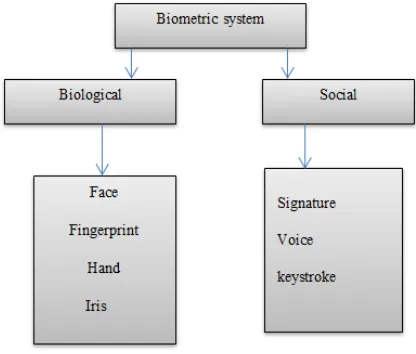
Biometric scheme is an automated detection of the characteristics of an individual like as face, fingerprint, iris and so forth [1]. Biometric scheme are classified on the detection of the biological and social characteristics of a person [2][3].
Revised Manuscript Received on July 05, 2019.
Monica Rani, Research scholar, Department of Computer Science & Engineering, Sachdeva Engineering College For Girls,Gharuan (Mohali)
Dr. Rakesh Kumar, Principal, Department of Computer Science & Engineering, Sachdeva Engineering College For Girls,Gharuan (Mohali)
Harinder Kaur, Assistant Professor, Department of Computer Science & Engineering, Sachdeva Engineering College For Girls,Gharuan (Mohali)
The method of the training of related features of person in biometric system and refers to the physiological
[image:1.595.314.522.377.554.2]properties like as attributes of person (face, finger impression, hand, sign, speech, keystroke).Multimodal Biometric system is the method of the identification of the multiple biometric traits of a person[4] [5] . Multimodal Biometric system is more consistent than single biometric due to presence of the possible features of biometric modal. A high security and accuracy is observed in multimodal biometrics compared to uni-modal biometric [6] . Various applications areas such as artificial intelligence, illegal, public, edge security, identification and so forth. During the fraud attempts in some applications, multi-modal biometrics helps in delivering higher security whenever required [7] [8].
Figure 1. Multi-model Biometric System
Multi modal biometric system based on biometric traits has various kinds which are described as [10]:
i) Uni-biometric Feature: - Multiple devices are utilised for similar biometric feature in which the information from association of feature and score level based features helps to increase the security of the system [9].
ii)Numerous Features: - several biometric features like as finger impression, face and iris. Various devices are utilised for every characteristics. Viable traits used for essential improvement in the biometric system [11] .
iii)Several devices, uni- biometric feature:- More than fingers of the individual utilised as characteristic which is not expensive but improve the performance of the system. Multiple devices are used along with matched modal. E.g.: Iris recognition system [12].
Transformed Secure Feed Forward Supervised
Learning Method for Authentication in
Multi-Model Biometric System
Published By: iv) Numerous pictures of single characteristics:-In similar
biometric recognition one or more illustration is utilised for detection. For example: similar finger with numerous fingerprints [13] [14].
In base paper, some issues take place due to the higher detection value. A method based on kernel mapping method based on support vector machine was developed through multimodal detection. Proposed approach used for detection of biometric features like as face, finger print, iris lead to enhance the accuracy level. In addition, pre-processing occurs for the removal of the noise level . Then, extraction of features was done through kernel mapping method along with Gabor wavelet transformation technique. The detection value was increased using Support vector machine classifier in multimodal biometric method. Experimental results lead to decrease in computation time and enhancement in accuracy level of detection rate of multi modal biometric scheme. In proposed research, to analyse the use of classification algorithm to matching feature to recognize the multi-model biometric system (Face, Finger and Iris – CASIA datasets) and Collect Dataset from the UCI Machine Learning Repository. Extraction of the feature using Haar wavelet Generation using Discrete Wavelet Transformation and classify the feature using Encryption- FFNN Algorithm. Research work, an evaluation and comparison with existing performance parameters of Recognition Rate, FAR and FRR. Section is described as follows: Section I explained an overview of multi modal biometric system. Section 2 described the literature survey. Section 3 presented the proposed methodology. Section 4 explained the results and discussions. Section 5 illuminated the Conclusion and Future Scope.
II. RELATEDWORK
Raja, J., Gunasekaran, K. and Pitchai, R. et al.,
(2018)[16] proposed a research on the detection rates, During
research by some researchers, some problems were occurred like as complex nature and high computation time. In this research, support vector machine based on kernel mapped technique was developed . Pre-processing was done for reduction of the noise and improvement of the superiority of the picture. In addition, extraction of the biometric features was done using support vector machine- kernel mapped method. In order to improve the accuracy and reduce calculation time, support vector machine method was used with higher accuracy value. Yeong Gon Kim,et al., (2012) [17] checked on a few multi-biometric procedures alongside combination of biometrics and a few achievable situations. Biometrics become most promising advancements in past couple of years that used physiological highlights like face, voice, unique mark, iris, and so forth for individual recognizable proof. Blend of at least 2 systems outfits better exhibitions contrasted with unimodal. D. Jagadiswary, et al., (2016) [18]proposed a Combined Multimodal framework that has different advantages regarding uni-biometric structure like improved check precision, greater space to organize with more subjects. Biometric are augmentation of example acknowledgment system. As of late, optical sensors, for example, examining gadgets and cameras used to record pictures and special highlights. Biometric structure for the most part use biometrics to make one of a kind personality that expands the FAR (False Acknowledgment Rate)and
non-all-inclusiveness limits GAR (Certified
Acknowledgment Rate).The proposed and improved multimodal affirmation system rely on highlight extraction by utilizing retina, unique mark, and so on and key age. MATLAB was utilized to assess and outline the significance of updated structure. The exhibitions of structure improved with RSA have certified acknowledgment Rate of 95.3% and false acknowledgment rate of 0.01%. Safaa S. Omran, et al., (2014) [19] presented a research on the finger impression and palm detection. Finger print detection used for the creation Delaney triangulation framework in which neighbouring triangles were compared among stored template and input. The related filtration was done on the iris through distribution technique. That technique was engaged to low portion of iris that was influenced by distortion. Multimodal technique enhances the accuracy and decrease the error rate.
Concluded the various paper studied fused Multimodal system that has various benefits with respect to uni-biometric framework like improved verification accuracy, bigger space to coordinate with more subjects. Biometric are extension of pattern recognition framework. Recently, optical sensors such as scanning devices and cameras used to record images and unique features. Biometric framework generally use biometrics to create unique identity that maximizes the FAR (False Acceptance Rate)and non-universality minimizes GAR (Genuine Acceptance Rate).The proposed and improved multimodal confirmation framework depend upon feature extraction by using retina, fingerprint, etc. and key generation. MATLAB was used to evaluate and illustrate the importance of upgraded framework. The performance of framework improved with RSA have genuine acceptance Rate of 95.3% and false acceptance rate of 0.01%.
III. RESEARCHMETHODOLOGY
In this research work, will make a discrete wavelets Transformation Algorithm used for removal of electric interference from the signals. In DWT, basically two sets of functions to deal with are the scaling functions and wavelets functions. Unlike Fourier transform, a variety of real and complex wavelets are used for signal analysis. Choice of particular wavelets depends on the type of application in hand. The simplest of the family of wavelets is the Haar wavelet function and scaling function. DWT remove the noise and extract the features i.e unique properties. In proposed algorithm, to classify the multi-model biometric traits using Encryption with FFNN algorithm. In this research work, novel approach to enhance the performance metrics and enhance the security factors. In Encryption-FFNN generate the three keys :- (i) Public Key (ii) Secret Key and (iii) Private Key.
Authenticate process, to secure the pwd (biometric traits) and classify the original pwd (Public Phase). Encryption – FFNN algorithm used the three layers :-
i. Input Layer ii. Hidden Layer and iii. Output Layer.
In these layers proposed algorithm used to classify the secure information and training sample generation and testing phase to check the performance.
Define the biometric category i.e; Fingerprint, Face and Iris (CASIA) from the UCI repository Dataset. The multi-modal biometric system used to convert the original image to Gray scale image. In pre-processing process, implement to identify the noise level i.e Salt and Pepper form and filtration methods used to remove the interference in the Fingerprint, Face and Iris images and detect the RGB components of the original Image. In feature extraction method using Discrete wavelet transformation to extract facial, iris and finger print features. Face is one of the popular biometric traits used for humans to recognize each other. The face feature represents the front part of a head from chin to the forehead. Iris is another biometric traits used for humans recognition which represents ring-shaped behind the cornea of eye. A fingerprint feature is employed as biometric traits for recognition which represents graphical patterns of ridges and valleys on surface of fingertips. Each person has unique biometric traits from any other person. Encryption – FFNN algorithm implemented to classify and recognized the multimodal biometric traits. Evaluate and Comparison the performance parameters like Recognition Rate.
Figure 2. Proposal Work
IV. RESULTDISCUSSIONS
[image:3.595.70.272.295.573.2]In this section, described that the multi-model biometric system recognition in a minimum computation time and high True Positive Rate.
Figure 3. Biometric Samples
Analysis the performance, proposed Encrypted – NN method is developed in MATLAB 2016a simulator using CASIA biometric dataset. In this section to authenticate the efficiency and robustness of the proposed method (ENN) method, we quantitatively and qualitatively compute high Recognition rate shown in Fig 3.
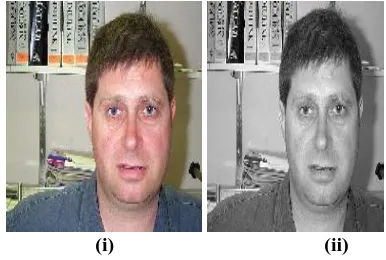
(i) (ii) Figure 4 (i) Real Image (ii) Gray scale Image
Above Fig 4 (i) defined that the upload the original image from the training folder in the face dataset. 4(ii) to convert the original image to grayscale image with reduce the dimensionality of the given image.
Figure 5 (i) Distorted Image (ii) Smooth image and (iii) Region Image
Fig 5 (i) Representes the distorted image means noises presented in the uploaded image. 5(ii) shows that the filtered image means to remove the interference in Noisy image and output produces the smooth image. 5(iii) Region calcualated by Sobel method and maixmum values fetch in the smooth image.
Figure 6 (i) Transformation Image (ii) Band Calculated by LL, LH, Hl and HH.
Above 6 (i) and (ii) defined the Discrete Wavelet Transformation method used to extract the effective features. After, that determined Wavelet face, iris and fingerprint features with the help of convolution procedure of wavelet with input image. Normally, the transformed of Wavelets are used for extracting the features or properties from the image. Features are chosen to
represent distinctive
[image:3.595.309.545.329.433.2] [image:3.595.317.536.547.646.2] [image:3.595.75.265.656.775.2]Published By: for efficient human recognition rate. In ENN used for
[image:4.595.60.277.121.267.2]authentication process identified the three month database in the face , fingerprint and iris system in biometric. In ENN method to encrypted classify the verification or authentication has been completed and image belongs to 3 months category in the iris, face and fingerprint.
Figure 7 Comparison - Computation Time (sec)
[image:4.595.51.286.362.528.2]Above figure 7 defines that the comparison between proposed and existing work in computation time in milisec. It defines that the impact of computation time for feature extraction vs number of human biometric images in the 50-50 samples three methods.
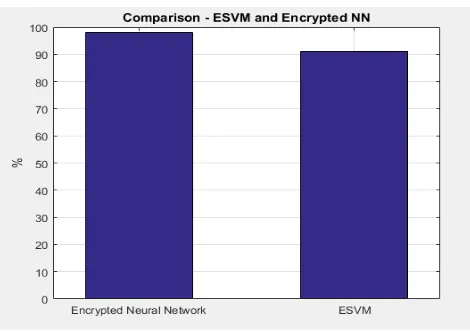
Figure 8 Comparison – Recognition Rate (%)
Figure 8 shows that the comparison between proposed and
existing works in recognition rate
(%). In ENN methods, recognition rate is defined as the ratio of number_of_images are correctly and incorrectly recognized to the total number of images taken as input. The RR is calculated in term of per cent.
Figure 9 Comparison – True Positive Rate (%)
Above figure 9 shows that the TPR comparison between proposed and existing work is defined as the ratio of num_of_images given input samples. The TPR is calculated in terms of percentage. It states the consequence analysis of TPR depend on varied number of human biometric samples in the range of 50- 50 using three methods.
Table 1: Comparison between proposed and existing work (Encrypted –NN and ESVM) method
Parameters Encrypted NN ESVM
Computation Times (milisec)
20.4 60.20 Recognition Rate (%) 98.13 91.2 True Positive Rate (%) 90.99 ~ 91 90.24
Table 1 defines that the comparative analysis with proposed and existing parameters. In existing work high computation time, less recognition rate and True Positive Rate. But ENN implemented to reduce the computation time and increase the TPR and RR (Recognition Rate) with 50-50 sample images.
V.CONCLUSIONANDFUTURESCOPE In conclusion, Multimodal biometric recognition is the desired result determined that recognise the multiple biometric traits of an individual. Multimodal biometric system is more consistent than uni-modal system due to presence of various modules of biometric scheme. An essential application multimodal biometric system is improved accuracy and security of biometric detection method. Biometric trait like as face, finger print, and pattern are determined through multimodal biometric system. The proposed research, determined the recognition rate of multi-modal biometric system. Firstly, categorise the biometric features in CASIA database like as fingerprint, face and iris. Converting actual image in to gray scale pictures. In pre-processing method noise is identified through salt and pepper and interference in the Fingerprint, Face and Iris images are removed using filtration method. Detect the RGB components of the original Image. In addition, biometric features are extracted using discrete wavelet transformation (DWT). Face is one of the popular biometric traits used for humans to recognize each other. The face feature represents the front part of a head from chin to the forehead. Iris is another biometric traits used for humans recognition which represents ring-shaped behind the cornea of eye. A fingerprint feature is engaged as biometric traits for recognition which represents graphical patterns of ridges and valleys on surface of fingertips. Every individual has unique biometric traits from any another individual. Feed forward neural network algorithm (encryption method) used for classification and detection of the multi biometric features. Experimental Result determines the improvement in an accuracy rate is 98.13% and Existing accuracy rate 91.2 %.
In Future Scope, focused on the improvement in the detection rate and recognition rate with more than one algorithm. Various algorithms are required to be developed for the cryptographic and classification and detection on the basis of the biometric traits and for removal of distortion and interference level.
[image:4.595.65.269.640.791.2]REFERENCES
1. Reid, D. A., Samangooei, S., Chen, C., Nixon, M. S., & Ross, A.
(2013). Soft biometrics for surveillance: an overview. In Handbook of
statistics (Vol. 31, pp. 327-352).
2. Elsevier. Tome, P., Fierrez, J., Vera-Rodriguez, R., & Nixon, M. S. (2014). Soft biometrics and their application in person recognition at a
distance. IEEE Transactions on information forensics and
security, 9(3), 464-475.
3. Almudhahka, N., Nixon, M., & Hare, J. (2016, February). Human face
identification via comparative soft biometrics. In 2016 IEEE
International Conference on Identity, Security and Behavior Analysis (ISBA) (pp. 1-6). IEEE.
4. Jain, A., Nandakumar, K., & Ross, A. (2005). Score normalization in
multimodal biometric systems. Pattern recognition, 38(12),
2270-2285.
5. Chellin, G. (2009). Performance analysis of multimodal biometric
system authentication.
6. Ross, A., & Jain, A. K. (2004, September). Multimodal Biometrics: an
overview. In 2004 12th European Signal Processing Conference (pp.
1221-1224). IEEE.
7. Veeramachaneni, K., Osadciw, L. A., & Varshney, P. K. (2005). An
adaptive multimodal biometric management algorithm. IEEE
Transactions on Systems, Man, and Cybernetics, Part C (Applications and Reviews), 35(3), 344-356.
8. Conti, V., Milici, G., Ribino, P., Sorbello, F., & Vitabile, S. (2007, September). Fuzzy fusion in multimodal biometric systems. In International Conference on Knowledge-Based and Intelligent Information and Engineering Systems (pp. 108-115). Springer, Berlin, Heidelberg.
9. Rodrigues, R. N., Kamat, N., & Govindaraju, V. (2010, September).
Evaluation of biometric spoofing in a multimodal system. In 2010 Fourth IEEE International Conference on Biometrics: Theory, Applications and Systems (BTAS) (pp. 1-5). IEEE.
10. Monwar, M. M., & Gavrilova, M. L. (2009). Multimodal biometric
system using rank-level fusion approach. IEEE Transactions on
Systems, Man, and Cybernetics, Part B (Cybernetics), 39(4), 867-878.
11. Subbarayudu, V. C., & Prasad, M. V. (2008, July). Multimodal
biometric system. In 2008 First International Conference on
Emerging Trends in Engineering and Technology (pp. 635-640). IEEE.
12. Nageshkumar, M., Mahesh, P. K., & Swamy, M. S. (2009). An
efficient secure multimodal biometric fusion using palmprint and face
image. arXiv preprint arXiv:0909.2373.
13. Liau, H. F., & Isa, D. (2011). Feature selection for support vector
machine-based face-iris multimodal biometric system. Expert Systems
with Applications, 38(9), 11105-11111.
14. Ko, T. (2005, December). Multimodal biometric identification for
large user population using fingerprint, face and iris recognition. In 34th Applied Imagery and Pattern Recognition Workshop (AIPR'05) (pp. 6-pp). IEEE.
15. Zhang, T., Li, X., Tao, D., & Yang, J. (2008). Multimodal biometrics
using geometry preserving projections. Pattern Recognition, 41(3), 805-813.
16. Raja, J., Gunasekaran, K., & Pitchai, R. (2018). Prognostic evaluation
of multimodal biometric traits recognition based human face, finger
print and iris images using ensembled SVM classifier. Cluster
Computing, 1-14.
17. Kim, Y. G. and Kwang Y. S.et al. (2012), Multimodal Biometric Systems and Its Application in Smart TV. Computer Applications for Database, Education, and Ubiquitous Computing, pp. 219-226. 18. Jagadiswary D. and Saraswady D. (2016),Biometric Authentication
Using Fused Multimodal Biometric, Procedia Computer Science 85, pp. 109-116
19. Omran, S. S. and Maryam A. S. (2014), Design and Implementation of Multi-Model Biometric Identification System. International Journal of Computer Applications, Vol. 99, no. 15, pp.14-21.
AUTHORSPROFILE
Monica Rani is an M.tech student at department of C.S.E,Sachdeva Engineering College for Girls,Gharuan(Mohali) Punjab ,India.She has received her B.Tech degree in Computer Science and Engineering Form Sachdeva Engineering College for Girls, Gharuan (Mohali) in the year of 2017 and she is pursuing M.Tech from SECG,Gharuan presently.She is doing her research
in the field of Digital image processing and artificial intelligence as " Transformed secure feed forward supervised learning method for Authentication in multi-model Biometric system".Beside their,her other research interests include information security, network security and artificial intelligence.She has research publication in UGC also.