International Journal of Innovative Technology and Exploring Engineering (IJITEE) ISSN: 2278-3075,Volume-8 Issue-12, October 2019
Abstract: Plant leaf diseases and ruinous insects are an important concern in the agricultural sector. The agriculture is dependent on the agricultural productivity by the country, the better is the agricultural productivity, the better is the economy, and hence better is the GDP. The most common and useful way of boosting this economy for any country is the identification of these diseases in the plant and agricultural product that has been obtained. Developments in Deep Learning have facilitated researchers to improve the performance and in exacting systems for object detection and recognition. In this paper, we propose an image processing and Convolutional Neural Network based approach to detect the diseases affecting plants. Our goal is to develop an Android application with a suitable algorithm that will help automate the process of monitoring and detecting plant health. The proposed android application can effectively detect and identify various types of diseases with the ability to handle complex plant-area scenarios.
Keywords: Android application, CNN, Detection, Diseases.
I. INTRODUCTION
This Agriculture and its burgeoning play an essential part in the economy of a country. The agriculture is dependent on the agricultural productivity by the country, the better is the agricultural productivity, the better is the economy, and hence better is the GDP. The most common and useful way of boosting this economy for any country is the identification of these diseases in the plant and agricultural product that has been obtained. The loss in the yield has to be minimized and the quality is to be improved. Agricultural productivity is an important aspect of financial income and is also a major source of energy. There are enormous benefits if a healthy production of plants and leaves. It also helps in solving major crisis that lead to global warming. Nowadays, due to the worst affected climatic conditions, the result can be easily seen on the plants and animals as they are always present in the environment. By looking at plants and their visual appearance, it can be easily seen if there are any abnormalities in the plant. Revised Manuscript Received on October 05, 2019.
Anbarasi M., Assistant Professor – Senior, Department of CSE, Vellore Institute of Technology, Vellore, India Email:[email protected]
Kartik Garg, Department of CSE, Vellore Institute of Technology, Vellore, India. Email: [email protected]
Sakshi Darpan Garg, Student, Department of CSE, Vellore Institute of Technology, Vellore, India. Email: sakshigarg1602@gmail,com
Yogesh Babu S, Assistant Professor(Selection Grade), Department of CSE, Vellore Institute of Technology, Vellore, India Email:[email protected]
Saleem Durai M.A., Associate Professor, Department of CSE, Vellore Institute of Technology, Vellore, India Email:[email protected]
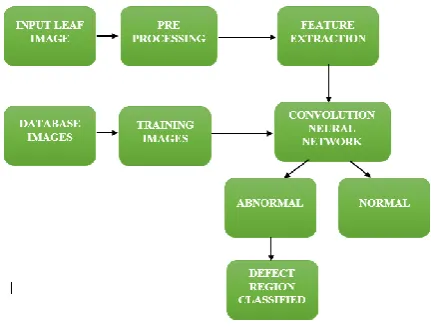
Extensive studies have shown that these abnormalities are nothing but different kinds of diseases caught by plants due to factors such as no proper manure being provided, less amount of water is given, defect in the seeds etc. This can also be caused by the presence of another affected plant. Once the disease spreads across the plants, it is easy to detect and treat them but manual observation is nearly impossible in the early stages. The time and amount of hard work that manual observation requires is extensive and does not offer complete accuracy. The main idea of the paper aims at creating an android application for detecting the diseases in the plants. The solution to this problem lies in detection of plant diseases with the help of image processing. The detection and thus, removal of such plants from an area is the most important task, not just because the crop will be wasted, but the major reason is that it could affect the nearby plants as well. Monitoring and detection of disease in plants play a crucial role in maintaining agriculture. Though manual detection is possible, on a bigger scale, checking each and every leaf of the plant on a daily basis is nearly impossible for a task to perform. The basic steps that are included are image acquisition, in which image from the source is acquired and it is made sure that the image is of the required quality, if not then the algorithm is used to improve the image quality. The very next step is pre-processing of the image; the image is pre-processed. i.e. all the abnormalities in the image are removed and a clear image is obtained on which further processing can be done. The next step is image segmentation, the process aims at diving the image into different segments and then these segments are individually used for further processing. Once the segmented image is obtained, image feature extraction is applied. The features that need to be extracted, like in this case, all the abnormalities in the plant are taken and then these features are taken out in a separate image in order to use them later for distinguishing the features in the image. The final step is classification, once the features are extracted they are used for image classification. Based on different classes of the features to be extracted, the image classifier, identifies the image and hence classifies it into an appropriate class.
II. RELATEDWORK
This section presents the recent trends in architectures of CNN and Deep Learning used for agricultural development applications. Image processing and machine learning techniques were used before advances in deep learning for the classification of several plant diseases [4].
An Android Application for Plant Leaf Disease
Detection using Convolution Neural Network
Most of these systems follow the following steps:
The digital images are first gathered. Then image processing techniques, such as enhancement of image, colour space conversion, segmentation, and filtering, are used for making the images suitable for the next step. After this, the necessary features are extracted from the image and are used as an input for the classifier [2].
The overall accuracy of classification is therefore dependent on image processing and feature extraction techniques being used. However, recent studies show that the state of art performance can be acquired using generic data for training networks.
CNNs can extract features automatically from datasets as they are multi-layered supervised networks. Past few years, CNNs have attained state-of-the-art performance in all the classification tasks. Classification and feature extraction can be performed under the same architecture [5].
CNN is applied to a variety of pattern recognition problems as it is a special kind of neural network. Such as speech recognition, computer vision, etc. CNN is based on the human visual system, which is inspired by [11] and it is constantly
implemented by several researchers.
CNNs mix 3 discipline concepts to make sure a point of shift, scale, and distortion invariance: native receptive fields, shared weights and abstraction or temporal
subsampling [14]. numerous CNN architectures
were planned to be used for beholding eg. LeNet, AlexNet, GoogLeNet etc.
The LeNet design is the first CNN presented by LeCun et al. to perceive manually written digits [14]. It comprises of two convolutional layers and two subsampling layers pursued by a completely associated MLP.
Scarcely any specialists proposed the utilization of CNN for leaf acknowledgment and plant illness arrangement. [5] planned a convolutional neural system engineering to distinguish plants dependent on leaf pictures. The proposed engineering comprises five layers. After each convolutional layer, a Rectified Linear Unit (ReLU) or Exponential Linear Unit (ELU) initiation capacity is utilized and for each pooling layer, MaxPooling approach is applied. The proposed framework is applied on Flavia [24] and Swedish [21] leaf datasets containing 32 plant species ¨ with 1907 examples and 15 species with 1125 examples individually. The pictures in the dataset are photos of a solitary leaf taken at uniform foundation. All the info pictures are 160x160 pixel grayscale pictures. The model accomplished an order precision of 97.24% and 99.11% exactness for each dataset. The outcomes demonstrated that the proposed engineering for CNN-based leaf arrangement is intently rivaling the most recent broad methodologies on conceiving leaf highlights and classifiers. A deep learning method was used by Angie K. Reyes [18], where the learning of the complete system took place without hand-engineered components. The designed system consists of 5 Convolution layers after which there are 2 fully connected layers. A fine-tuning strategy was used by CNN to train to move learned capabilities to recognize the challenge of plant identification tasks from general domains. It also used 1.8 million images from ILSVRC 2012 dataset 1 to be trained. The dataset, consisting of both images of a plant and part of a
[image:2.595.317.533.237.400.2]plant, is taken in a controlled environment and in a natural environment. An average precision of 0.486 was obtained. According to Sharada P. Mohanty et al [16], the existing CNN architectures, ´ i.e AlexNet [22] and GoogLeNet [23] were used to identify plant diseases. CNN underwent training to pick out 14 crop species and 26 diseases. This was done by using a public dataset of 54,306 images, where the images were of both diseased and healthy plants, all collected under controlled conditions. Using this model a 99.35% accuracy was achieved. However, when the tests were performed on different images, from different environments, the accuracy of the model dropped to 31.4%. Therefore, we can say that the test shows that deep CNN is feasible for plant disease classification.
Figure 1: Work Flow Diagram
III. PROPOSEDMETHODOLOGY
Diseases and pests constitute a major threat to farming. Abnormalities are nothing but different kinds of diseases caught by plants due to factors such as no proper manure being provided, less amount of water being given, defect in the seeds, etc. This can also be caused by the presence of another affected plant. Different diseases along with plants can affect different types of plants differently, such as changes in color, shape, etc. due to similarity in patterns, it becomes difficult to detect the above changes, making their recognition a challenge, early detection of diseases and treatment can prevent multiple losses throughout the plant.
International Journal of Innovative Technology and Exploring Engineering (IJITEE) ISSN: 2278-3075,Volume-8 Issue-12, October 2019
In this paper, for identification and classification of illness affecting several crops, we use Convolution Neural Networks (CNN).
A. Dataset
The dataset consists of several images in different plants consisting of multiple diseases. Some of the commercial/cash crops, cereal crops, vegetable crops and fruit plants such as sugarcane, cotton, carrot, chilly, brinjal, rice, wheat, banana and guava are considered in the system. Diseased leaves, healthy leaves were all gathered from those above plants from various sources such as taking photos using any camera equipment or from specialists who have pictures of various diseases detected in plant leaves.
B. Image Pre-Processing
The images when first taken as an input, the quality of the image is first examined. If the image does not have the required image quality, then an algorithm is implemented to increase the quality of the image. The image is then segmented into various sections and the image is then transformed into a grey scaled image. Then this grey picture is fed into CNN. CNN then compares it with the dataset. CNN with the help of previously supplied datasets processes each segment. Then each segment is given a result which states whether the area is affected by any disease or not.
C. The proposed CNN model
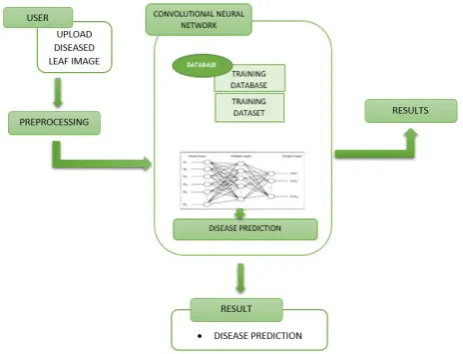
[image:3.595.54.286.575.752.2]CNN architectures can vary according to the type of problem they are being used for. The suggested CNN model comprises of three convolution layers each, rows by one layer of max pooling. MLP is completely linked to the final layer. The activation function of ReLu is applied to each convolution layer's output and fully linked layer. With 32 kernels of size 3x3, the first convolution layer filters the input picture. The yield is provided as an input for the sec after max-pooling is applied. The output is provided as an input for the second convolution layer with 64 kernels of 4x4 size after max-pooling is applied. The last convolution layer has 128 sizes of 1x1 kernels accompanied by a fully linked 512 neuron layer. This layer's output is provided to the soft-max function that generates the four output classes ' likelihood distribution.
Figure 2: System Architecture
IV. TECHNOLOGIESUSEDTOBUILDTHE APPLICATION
A. ANDROID STUDIO - compilation
For devices that support Android as its operating system, the application has been produced. Using Android studio, the application was made from scratch. The mobile app is fully compatible with 100% of Android phones. JAVA and XML were the primary programming languages used. XML was used to implement the Frontend of the application and JAVA was used to implement the Backend of the mobile application.
B. JAVA – Backend
Java was used to implement all the backend functionalities of the project. The initialization of al the inputs and feeding these inputs to the correct system was all done using java. The final result was also given out using java.
C. XML – Frontend
All the frontend functionalities were developed using XML. It made the application user-friendly and appropriate. All the design features of the application were developed using XML.
V. ALGORITHM
Step 1: Create a dataset. Step 2: Choose an input image
Step 3: Check whether the quality of the image matches the level of the required quality.
Step 4: If the quality is not as good as required, the image quality is enhanced and the image is used afterward.
Step 5: The image is divided into various segments and then it is converted to a greyscale image.
Step 6: The greyscale image is fed into CNN.
Step 7: The CNN then using the previously fed datasets processes each segment.
Step 8: The result for each segment is given out which states whether the area is affected by any disease or not. Step 9: The segment that is stated diseases is further
processed.
Step 10: Every segment with the diseased image is fetched using artificial networks to examine whether there are high deviations between the pixels of its neighboring units.
VI. RESULTSANDDISCUSSIONS
Sr. No.
INPUT IMAGE OUTPUT IMAGE
1.
2.
[image:4.595.51.309.48.349.2]3.
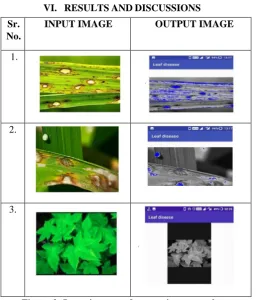
Figure 3: Input image and output image result The input images from Sr no. 1 and 2 of Figure 3 are images of leaves from a lawn. The input images were first segmented using image processing techniques on the basis of differences in color on the leaf. Then they were converted to a greyscale image which is given as an input to the convolutional neural network that is used for classification and detection. After the classification and detection, the output images are provided. In the output images, the affected areas are highlighted blue which helps signify the diseased segments of the plant leaf.
The input image of Sr. no. 3 from Figure 3. is an image of leaves from a lawn. The input image was first segmented using image processing techniques on the basis of difference in color on the leaf. Then they were converted to a greyscale image which is then given as an input to the convolutional neural network that is used for classification and detection. After the classification and detection, the output image was provided. In the output image the affected areas are highlighted blue which helps signify the diseased segments of the plant leaf. In this case since the leaves are healthy, the output image does not have any segments of the leaf highlighted. The dataset consists of two types of leaf images diseased and healthy. The training dataset consisted of 2000 images while the testing dataset consisted of 1203 images. The accuracy obtained after training was 92% whereas the accuracy of testing was 94%.
VII. CONCLUSION
Protecting Organic farms is Extremely difficult but highly important. Monitoring and detecting these plant illnesses need comprehensive understanding of how to grow a specific crop and its portable pests, pathogens, and weeds. The network was trained using multiple images with and without different diseases from different plants. This shows
CNN's ability to extract the essential features required for plant disease classification in the natural environment. Our experimental findings with CNN as the detector showed how CNN can identify and classify various illnesses effectively. The Android application that was developed showed an accuracy of 92% after training and 94% after testing. This paper brings these technologies into the field and bridge the gap between the application of experimentation and real life. We hope our proposed system will contribute to agriculture in a suggestive way.
REFERENCES
1. Al Bashish, Dheeb, Malik Braik, and Sulieman Bani-Ahmad. "Detection
and classification of leaf diseases using K-means-based segmentation and." Information Technology Journal 10.2 (2011): 267-275.
2. Al-Hiary, Heba, et al. "Fast and accurate detection and classification of plant diseases." International Journal of Computer Applications 17.1 (2011): 31-38.
3. Barbedo, Jayme Garcia Arnal. "Digital image processing techniques for
detecting, quantifying and classifying plant diseases." SpringerPlus 2.1 (2013): 660.
4. Camargo, A., and J. S. Smith. "Image pattern classification for the identification of disease causing agents in plants." Computers and Electronics in Agriculture 66.2 (2009): 121-125.
5. Dalal, Navneet, and Bill Triggs. "Histograms of oriented gradients for human detection." 2005.
6. Hanson, A. M. G. J., et al. "Plant leaf disease detection using deep learning and convolutional neural network." International Journal of Engineering Science 5324 (2017).
7. Huang, Chen, et al. "Learning deep representation for imbalanced classification." Proceedings of the IEEE conference on computer vision and pattern recognition. 2016.
8. Hubel, David H., and Torsten N. Wiesel. "Receptive fields, binocular interaction and functional architecture in the cat's visual cortex." The Journal of physiology 160.1 (1962): 106-154.
9. Hughes, David, and Marcel Salathé. "An open access repository of images on plant health to enable the development of mobile disease diagnostics." arXiv preprint arXiv:1511.08060 (2015).
10. Krizhevsky, Alex, Ilya Sutskever, and Geoffrey E. Hinton. "Imagenet classification with deep convolutional neural networks." Advances in neural information processing systems. 2012.
11. LeCun, Yann, et al. "Gradient-based learning applied to document recognition." Proceedings of the IEEE 86.11 (1998): 2278-2324.
12. Lowe, David G. "Distinctive image features from scale-invariant
keypoints." International journal of computer vision 60.2 (2004): 91-110.
13. Mohanty, Sharada P., David P. Hughes, and Marcel Salathé. "Using deep learning for image-based plant disease detection." Frontiers in plant science 7 (2016): 1419.
14. Pydipati, R., T. F. Burks, and W. S. Lee. "Statistical and neural network
classifiers for citrus disease detection using machine
vision." Transactions of the ASAE 48.5 (2005): 2007-2014.
15. Reyes, Angie K., Juan C. Caicedo, and Jorge E. Camargo. "Fine-tuning
Deep Convolutional Networks for Plant Recognition." CLEF (Working Notes) 1391 (2015).
16. Rumpf, T., et al. "Early detection and classification of plant diseases
with support vector machines based on hyperspectral
reflectance." Computers and electronics in agriculture 74.1 (2010): 91-99.
17. Sankaran, Sindhuja, et al. "A review of advanced techniques for
detecting plant diseases." Computers and Electronics in
Agriculture 72.1 (2010): 1-13.
18. Söderkvist, Oskar. "Computer vision classification of leaves from swedish trees." (2001).
19. Srivastava, Nitish, et al. "Dropout: a simple way to prevent neural networks from overfitting." The journal of machine learning research 15.1 (2014): 1929-1958.
20. Szegedy, Christian, et al. "Going deeper with
International Journal of Innovative Technology and Exploring Engineering (IJITEE) ISSN: 2278-3075,Volume-8 Issue-12, October 2019
21. Wu, Stephen Gang, et al. "A leaf recognition algorithm for plant classification using a probabilistic neural network." 2007 IEEE international symposium on signal processing and information technology. IEEE, 2007.
22. Yin, Zhijian, et al. "A deep normalization and convolutional neural network for image smoke detection." Ieee Access 5 (2017):
18429-18438.
AUTHORSPROFILE
Anbarasi Masilamani, is currently working as an Assistant Professor (Senior) in the School of Computer Science and Engineering (SCOPE) at Vellore Institute of Technology, Vellore. She has currently around fifteen years of experience since 2004 in academics and her research interest includes data mining, soft computing, bioinformatics, and learning algorithms. She has authored and co-authored around ten research papers in peer-reviewed journals.
Karthik Garg, is a Cybersecurity profession working at Visa Inc., Bangalore. He completed his Bachelor of Technology in Computer Science and Engineering from Vellore Institute of Technology in 2018. He works on data and risk analysis for vulnerabilities in systems and further creating visualization from the data. He automates tedious tasks by using Machine Learning to reduce human efforts.
.
Sakshi Garg, is an undergraduate student at the Vellore Institute of Technology, Vellore. She is currently pursuing her bachelor's in Computer Science and Engineering. Her interests largely lie in three fields Data Analysis, Data Visualization, and software development. Being an avid Software Development enthusiast, she has worked on various projects and an internship.
Yokesh Babu Sundaresan, is currently working as an Assistant Professor (Selection Grade) in School of Computer Science and Engineering (SCOPE) at Vellore Institute of Technology, Vellore. He had around six years of industrial experience since 2005 on hardware and application domain viz., mobile application prototype development, digital set box overlay ad streaming and health monitoring, Mobile platform sensor validation etc., He has currently around seven years of experience since 2010 in academics and his research interest includes digital circuit design, heterogeneous reconfigurable architectures, assembly programming and low cost, power-efficient intelligent systems. He has authored and co-authored over ten hardware prototype papers in peer-reviewed journals.