Ym ch w il g y m d eit h aso l
So cial r esear ch
Nu m b er :
School Uniform and Other Costs
of Schooling: views and
1
School Uniform and Other Costs of Schooling: views and
experiences in Wales
Final Report
Contractor: BMG Research
Author: Karen Kellard, Mary Costello and David Godfrey
Views expressed in this report are those of the researcher and not necessarily those
of the Welsh Assembly Government
For further information please contact:
Julie Owens
Research and Evaluation Branch
Department of the First Minister and Cabinet
Welsh Assembly Government
Llandudno Junction
Conwy
LL31 9RZ
Tel: 0300 062 5484
Email: [email protected]
Welsh Assembly Government Social Research, year
ISBN
Table of Contents
Glossary of acronyms ... 3
Executive Summary ... 4
1 Introduction ... 13
2 Context ... 21
3 Parents‟ views on school uniform and other school costs ... 35
4 Schools‟ views ... 86
5 Overview and Recommendations ... 112
6 References ... 121
3
Glossary of acronyms
List of Abbreviations and Acronyms
CAB Citizens Advice Bureaux
DCELLS Department for Children Education Lifelong Learning and Skills
DCSF Department for Children Schools and Families
DWP Department for Work and Pensions
FE Further Education
ICT Information Communication Technology
JSA Job Seekers Allowance
LA Local Authority
LEA Local Education Authority
OFT Office for Fair Trading
PE Physical Education
PTA Parents and Teachers Association
4
Executive Summary
BMG Research was commissioned in the autumn of 2009 by the Department for
Children Education, Lifelong Learning Skills (DCELLS) of the Welsh Assembly
Government to undertake research of views of parent/carers in Wales on school
uniforms and the wider costs of schooling.
It is recognised that whilst a school uniform policy can be beneficial to schools, its
pupils and their parents (if correctly implemented), there can be a risk of
marginalisation or disadvantage to some groups because of, for example, the cost of
the required items, perceptions and views on what is mandatory and what is
voluntary and the availability of financial support for the cost of school uniform items.
The Welsh Assembly Government is keen to understand these and other related
issues in more detail to provide a sound evidence base on which to develop
subsequent policy and practice around school uniform, to remove stigmatisation and
to contribute to the wider target of the eradication of child poverty and disadvantage.
Research aim and objectives
The overall aim of the research was therefore to explore the views of parents/carers
and young people in Wales on the validity, usefulness and benefits of having school
uniforms and their experiences and views on the cost and availability of buying
uniforms, and to explore how the wider costs of schooling impacts on children,
families and schools. The research objectives thus relate to exploration and
identification of the following:
children and young people‟s views and experiences of school uniforms;
how many schools have specific school uniform requirements/retailers
or whether they are more widely available (and parental views);
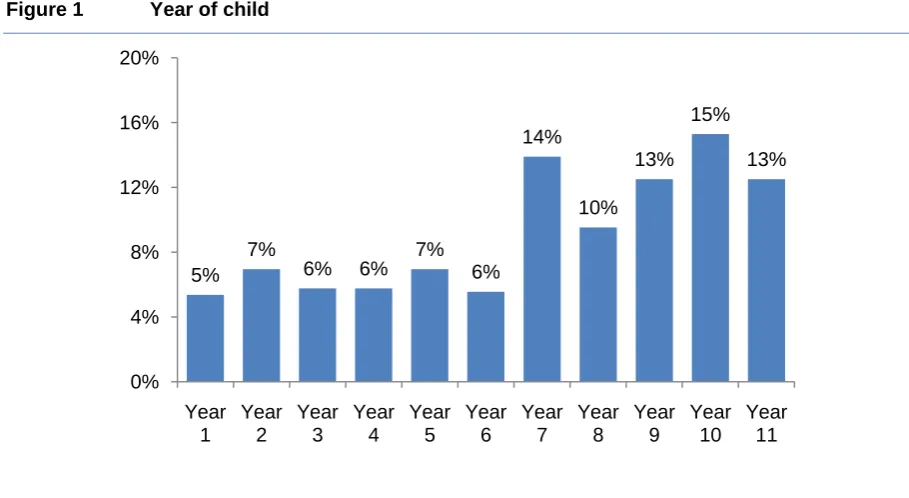
views of the cost of school uniforms, and the extent to which this can
place some families at a disadvantage or feeling discriminated;
the extent to which there is consultation with/consideration of parents‟
views in developing a school uniform policy;
wider costs of schooling and how this impacts on different families or
5
availability and role of financial support (grants, free school meals etc) – and parental awareness.
Research method
The study commenced with an inception phase, followed by:
desk based research;
stakeholder consultations;
a telephone survey with parents and carers of school age children;
postal survey of all schools; and
qualitative case studies with schools and families.
Findings
School Uniform Costs
School uniform requirements were evident in virtually all schools, with only one per cent of respondents reporting that there was no school uniform requirement at their child‟s school. School uniform requirements tended to be for jumpers, fleeces and/or cardigans, skirts or trousers, shoes, school bags, socks and coats.
For the main items that were required, four fifths of tops needed to be badged or logoed and about half of shirts needed to be badged or logoed.
Although blazers were only required by about a fifth of pupils (mostly in secondary schools), it was this item that was mostly likely to be only available from one specialist retailer.
Ties and tops (fleeces, sweatshirts etc) were also only available from one specialist retailer in the majority of cases.
Overall, 42 per cent reported experiencing some level of financial difficulty when buying their child‟s school uniform. Such difficulties were far more likely to be reported among families with a household income of less than £25,000. However, even among those with household incomes above £25,000, a fifth reported financial difficulties when buying their child‟s school uniform. The items that caused the most difficulty were jumpers/sweatshirts/tops.
Costs of these (with logos) were said to be in the region of £12 to £15 per top. Sixteen percent of respondents reported that the financial difficulties had
6 item because of the cost – this was more likely to be the case among
households with a lower income. The most common consequence of such difficulties was having to make an adjustment elsewhere in the household budget.
Although the majority of respondents reported that they were happy with the costs of school uniform, 26 per cent said that they were not – unsurprisingly this was more likely to be the case among low income households. Similar figures were evident for the costs of PE/sports kit.
In terms of PE and sports kit requirements, 86 per cent of parents indicated that there were such requirements for their child – mostly shorts, shirt and trainers.
In the majority of cases, PE/sports kit items were not required to be badged or logoed – the exception to this was t-shirts/tops where in around half of cases a logoed version was required.
No specific sports equipment was required in 70 per cent of cases–where there was a requirement it was mostly related to shin pads, a gum shield or hockey stick.
A minority of parents (10 per cent) said that they had not bought an item of PE/sports kit because of cost – again this was much more likely to be reported among the lower household income group.
School trips, activities and equipment
A third of parents were asked to pay for 1 or 2 school trips for their
child.
Around three quarters of parents were happy with the amount of school
trips they were asked to contribute towards, but around a quarter were
not happy. Although those in the lower household income groups were
slightly more likely to be unhappy about this, respondents in both
groups expressed concern.
One in 10 parents had not sent their child on a school day trip because
of the cost, and one in 5 had not sent their child on a residential trip
because of the cost. The likelihood of this increased among the lower
income households (and particularly among those reliant on benefits as
their main source of income), but remained an issue for both lower and
7
Respondents whose main household income was from both
employment and benefits were more likely than those whose main
income was either just benefits or just employment not to send their
child on a residential trip because of cost.
Over half of the sample reported that they were not invited to discuss
any difficulties in paying for school trips with the teacher, although 27
per cent said they were always invited to discuss such difficulties.
That said, around two thirds of parents said that they were broadly
happy with the costs associated with school trips for their child, with
more parents from lower income household groups likely to express
they were unhappy
Around half of respondents felt pressurised into contributing to the cost
of school trips.
Contributions to a wide range of other school related costs were also
apparent, including contributions to cookery lessons, design and
technology equipment, art materials, charitable donations, contributions
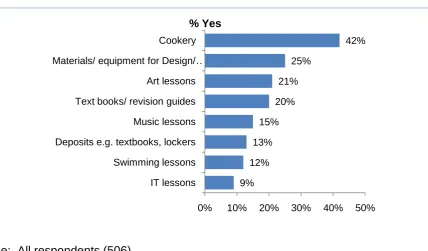
to school fetes/raffles and cake stalls or similar. Qualitative evidence indicates that the cost of some of these activities can be significant –
for example cooking ingredients can be £3 or £4 a week.
Over half of parents said that they purchased a school photo of their
child during the last year; in the large majority of cases this cost was
more than £10.
Over two fifths of the sample also paid for additional activities for their
child such as a school disco, school play costs or other hobbies at
school.
Support with costs of schooling
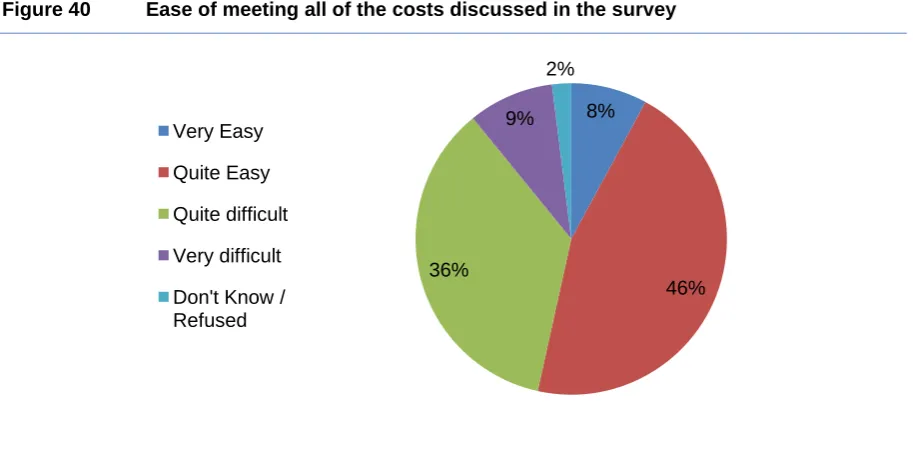
Overall 45 per cent of the sample found it difficult to meet all of the
schooling costs discussed in the survey. Low income households and
larger families were much more likely to report difficulties than others,
8
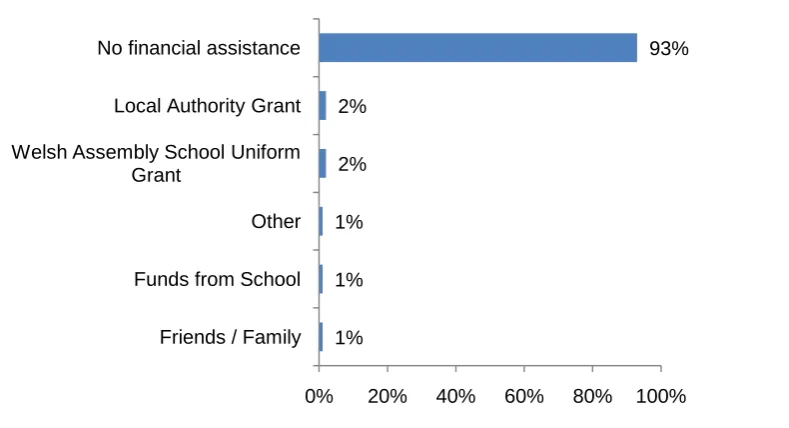
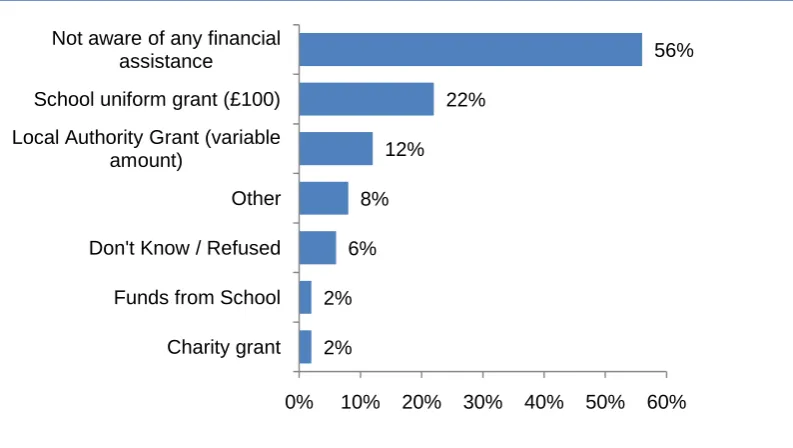
However, there appeared to be a lack of awareness about support that
might be available to families, particularly for those on benefits who
could access some support with the cost of residential trips or support
by way of school uniform grants.
The majority of parents also indicated that there were no opportunities to purchase second hand uniform items at their school (66 per cent) –
although evidence from the schools themselves indicated that a higher
proportion did indeed have such a facility.
Qualitative evidence from schools suggests that efforts are made to
ensure that children are not excluded or marginalised because of not
being able to afford school uniform items or to go on school trips (for
example, by discretely offering support). However, according to parents
there was some reluctance to seek help, and a general lack of
awareness of what help was available.
Overview
This research has provided an evidence base on school uniform policies and
practices in Wales, as well as parents‟ and schools‟ views on the implementation of
such policies and the extent to which they have an impact on families. This has been
achieved through adopting a range of research approaches, including a survey of parents‟ views and experiences, a survey of schools practices and policies and
qualitative case studies with families and schools, as well as a brief review of
existing evidence. The scope of the research was also informed by early stakeholder
consultations with representatives from the Welsh Assembly Government and the
Child Poverty Expert Group.
In the main, although families clearly feel the financial strain of providing school
uniform and other school costs for their children, they are supportive of school
uniforms. Evidence of financial difficulties in paying for school costs is,
unsurprisingly, concentrated among lower income families - although this applies to
both those families reliant on benefits as their main source of income as well as
families in low paid work. These difficulties increase as the number of children
9
greater number of financial demands for school items (eg, sports kit, cooking
ingredients) and school trips.
Thus, a persistent core of around 1 in 10 of families appear to experience significant
difficulties in terms of affordability for school uniforms and school trips. From the
case study work, it appears as though some schools have found ways of managing the difficulties that some families can face, through knowing their schools‟ families
and by providing support in a discrete non-stigmatising manner (for example, waiving
the cost for some items, or allowing the family to pay for trips in instalments).
Generally, however, it appears as though schools tend to play down support that they are able to offer, amid a fear of opening „floodgates‟ of demand for financial help
(perhaps in some cases from families who may not particularly need it). Furthermore,
families may not always be aware of the support available and/or may be reluctant to
seek help.
Recommendations
Overall, there was overwhelming support for school uniform per se from parents,
pupils and the schools themselves. However, a number of recommendations have
emerged from the evidence, relating to both policy and practice.
Recommendations for policy – issues to be considered by the Welsh Assembly
Government
Review the provision of board and lodging costs (for residential trips)
for those eligible for free school meals and who should meet this cost
to avoid placing considerable strain on the finances of schools
(particularly those schools that have a high concentration of potential
eligibility).
Continue to provide guidance for schools on developing and
implementing a school uniform policy (including examples of good
practice), whilst ensuring that schools are still able to develop their policies according to their school‟s specific requirements. If possible,
alignment with primary school requirements could be taken into
10
sports equipment or basic school uniform items) could continue to be
used at secondary schools.
Consider extending support for school uniform costs to those on low
incomes (for example, in receipt of a high rate of tax credits) as
currently they are ineligible for any financial support but can face
significant difficulties in paying for required items.
Ensure that the Welsh Assembly Government one off grant (£100
payable at Year 7) is not replacing any LEA provision.
Ensure that LEA provision is consistently available across all LEAs
Consider the feasibility of capping the annual or individual cost of residential trips – perhaps in consultation with schools and parents.
Ensure that there is appropriate policy guidance for schools in offering
financial assistance to families to help them meet the costs of school
trips. Currently, it appears as though some parents are unaware of the
availability of support and others feel reluctant to seek it out.
Offer guidance for schools wishing to set up their own school uniform shop, which would enable them to deal directly with „mail order‟
suppliers.
Review outcomes from the One Wales Laptop pilot to assess whether
this approach needs to be applied to secondary schools in addition to
primary schools.
Recommendations for practice – issues to be considered by schools
Consideration of access to school uniform suppliers – some families
(particularly those without a car) could find it difficult to access
suppliers. As noted above, one option may be for the school to host a
school uniform shop, making access easier, keeping the cost down for
parents and enabling any profits to be fed directly into school funds. It
may also be possible for parents to access school uniform supplies
online (assuming they have access to the internet).
Explore the feasibility of establishing a direct relationship with a school
11
through mail order) – in some cases suppliers may be happy to provide
a small proportion of income from orders placed by parents to go
directly into a school fund.
The requirement for compulsory logoed items needs to be carefully
considered by schools when they are developing their uniform policies;
and schools should endeavour to have an appropriate balance of
having its own distinct identity, whilst also ensuring that uniform items
are widely available and affordable. Schools should therefore review
the need for logoed items, or limiting them to just one or two
(reasonably priced) items of clothing.
Schools should explore the feasibility of being able to sew badges or
logos on to school items to enable parents to have the flexibility and
choice to buy items from a range of suppliers which can then have the
school logo added.
Encourage greater „ownership „ of school uniform policy among pupils and parents – where there is input from these groups into school
uniform policy there is likely to be a greater acceptance and hence
compliance.
Ensure that pupils on lower incomes do not feel marginalised in any
way (for example, by sitting in a different part of the dining hall to eat
packed lunches or by it being easy to identify who does not go on a
school trip or residential break).
Consider the use of a school uniform loan or donation scheme for
those in extreme hardship.
Schools need to communicate with all parents in advising them about
the different types of uniform support that are available (loan of spare
items, availability of second hand uniform and so on) since some
families do not wish to draw attention to their own financial
circumstances.
Promote and encourage school second hand uniform shops.
Consider setting up a resource room at schools where pupils can loan
items in a non-stigmatising way (for example, by utilising the room for
12
Consider the introduction of a staged payment scheme for school
residential trips, enabling payments by instalments (extending after the
school trip if needed).
Staggering the timings of school trips or running them on several
occasions so it is not readily apparent who has been unable to go
because of affordability.
To give due consideration to families who may have limited access to
the internet/broadband at home, and ensure that the children are not
disadvantaged in any way because of this.
Schools should undertake ongoing consultation with young people
(possibly through school councils) to ensure that there is awareness
and understanding of the impacts of costs of uniform and other
associated costs.
Recommendations for practice – issues to be considered by schools and voluntary
sector organisations
Encourage partnership working between schools and organisations
working with families on low incomes so that schools can refer parents
to these organisations for help and advice with budgeting and claim
support that they are eligible for such as free school meals.
Promote head teachers‟ attendance at training and awareness raising
sessions run by organisations with expertise in child poverty so that
they can learn about the issues that low income families encounter and
13
1 Introduction
1. BMG Research was commissioned in the autumn of 2009 by the Department
for Children Education, Lifelong Learning Skills (DCELLS) of the Welsh
Assembly Government to undertake research of views of parent/carers in
Wales on school uniforms and the wider costs of schooling. It is recognised
that whilst a school uniform policy can be beneficial to schools, its pupils and
their parents (if correctly implemented), there can be a risk of marginalisation
or disadvantage to some groups because of, for example, the cost of the
required items, perceptions and views on what is mandatory and what is
voluntary and the availability of financial support for the cost of school uniform
items. The Welsh Assembly Government is keen to understand these and
other related issues in more detail to provide a sound evidence base on which
to develop subsequent policy and practice around school uniform, to remove
stigmatisation and to contribute to the wider target of the eradication of child
poverty and disadvantage.
Background to the research
2. There is no education legislation specifically covering the wearing of school
uniform or other aspects of appearance such as hair colour and style, and the
wearing of jewellery and makeup. However, section 21 of the Education Act
2002 places the conduct of a maintained school under the direction of the school‟s governing body. The governing body is required to conduct the school
with a view to promoting high standards of educational achievement and can
specify a uniform which pupils are required to wear and other rules relating to
appearance. Secondary schools in Wales almost invariably specify a uniform
for pupils to age 16 although many do not specify uniform for sixth formers.
The position in primary schools is more mixed.
3. The Welsh Assembly Government strongly encourages governing bodies to
have a school uniform policy which is drawn up after consultation with parents,
pupils and relevant local or faith communities. The general consensus in
government is that a school uniform policy which is properly developed and
14
providing a sense of identity and cohesion within the school and instils
pride in its achievements;
supporting positive behaviour and school discipline;
ensuring pupils dress appropriately for learning activity;
removing peer pressure to dress in designer fashions;
enabling pupils of all backgrounds to share in a common identity which
embraces their particular requirements;
helping to reduce inequalities between pupils and some triggers for
bullying;
helping to identify truants;
assisting in the identification of strangers on school premises; and
supporting and promoting the ethos of the school.
4. Guidance issued by the Welsh Assembly Government focuses on many issues
relating to school uniform policies including equality issues, cost;
considerations involved in introducing or changing school uniform policies; and
consultation with parents and pupils over school uniform policies.
Cost of Uniforms
5. In relation to cost, the Welsh Assembly Government expects governing bodies
to give high priority to cost considerations when introducing a school uniform
policy and/or considering changes to uniform requirements and to ensure that
uniform items are widely available for parents to buy. The Welsh Assembly
Government guidance provides a number of suggestions of how to keep
school uniform costs to a minimum, such as:
only stipulate basic items and colours but not styles so that items can
be bought from retail chains at reasonable prices and not just from one
supplier;
avoid high cost items such as blazers and caps;
school logos – requiring logos on polo shirts, jumpers, blazers and PE
15
avoid variation in colours and style for different year groups – this is
expensive for parents and limits the scope for second-hand sale or
handing on to siblings;
have easily washable items: dry clean only items should be avoided;
limit the frequency of uniform changes as this can be costly for parents
and again limits the scope for re-sale or handing on to other pupils;
consider the cost and availability of non-standard sizes;
if there is a change to a school uniform policy, introduce a transitional
period so that old uniform can be worn for at least a year before a total
changeover to a new uniform and to consider if elements of the old
uniform can be retained in the new policy; and
take a flexible approach to basic uniform requirements during hot
weather as opposed to having separate uniforms for winter and
summer.
6. The guidance also sets out the current position in Wales regarding financial
assistance for parents towards the cost of purchasing school uniform. This
includes the Welsh Assembly Government School Uniform Grant Scheme
which provides a grant (which is £100 in 2009/10) to pupils entering year 7 of
maintained secondary school in Wales who are eligible for free school meals,
and pupils in special schools, special needs resource bases and pupil referral
units in Wales who are aged 11 at the start of the school year and who are
eligible for free school meals. In addition to this, many local authorities across
Wales offer financial assistance towards the cost of school uniform; the
amount varies from around £28 to £155.
Concerns Raised About School Uniforms
7. Concerns have been raised to the Welsh Assembly Government with regard to
certain aspects of school uniforms, including:
parents having no choice other than to buy school uniform items
directly from the school, school Parent Teacher Association, or a small
16
schools insistence on pupils wearing logo-ed items of clothing which
are more costly than non logo-ed items;
schools insistence on garments being unusual colours/patterns and
therefore are not readily available in a wide choice of retailers;
different uniforms for boys and girls which can lead to differences in
cost and/or quality of garments; and
schools providing a lengthy list of garments and equipment for sports
and games, often with insistence that they are in specific colours or
logo-ed.
8. Such situations reported can have an effect on some families, and thus a
central aim of the research was to explore these and other issues in more
depth to find out the scope of these concerns.
9. In addition to the costs involved with school uniforms a range of additional
financial costs can place burdens on families. Such financial costs will
sometimes place significant burdens on poorer families, and there is evidence
to suggest that the range of events and items is increasing (the increase in
prevalence of school end of year proms is such an example). This may have a
significant impact on the pledge to eradicate child poverty by 2020.
Research aim and objectives
10. The overall aim of the research was to explore the views of parents/carers and
young people in Wales on the validity, usefulness and benefits of having
school uniforms and their experiences and views on the cost and availability of
buying uniforms, and to explore how the wider costs of schooling impacts on
children, families and schools. The research objectives therefore relate to
exploration and identification of the following:
children and young people‟s views and experiences of school uniforms;
how many schools have specific school uniform requirements/retailers
or whether they are more widely available (and parental views);
views of the cost of school uniforms, and the extent to which this can
17
the extent to which there is consultation with/consideration of parents‟
views in developing a school uniform policy;
wider costs of schooling and how this impacts on different families or
leads to the marginalization or disengagement of some; and
availability and role of financial support (grants, free school meals etc) – and parental awareness.
Research method
11. The study commenced with an inception phase, followed by:
desk based research;
stakeholder consultations;
a telephone survey with parents and carers of school age children;
postal survey of all schools; and
qualitative case studies with schools and families.
12. Each is described in more detail below.
Desk based research and stakeholder consultations
13. A brief contextual review was undertaken of existing evidence with regard to
the cost of schooling (including LEA provision), along with consultations with
stakeholders including:
representatives of the Welsh Assembly Government (Department for
Social Justice and Local Government, Department for Children,
Education, Lifelong Learning and Skills), and
academics, lobby group representatives and network members in the
field of child poverty.
Telephone survey with parents
14. In order to obtain quantitative data on parental attitudes towards, and
experiences of, school uniform policy and practice, a telephone survey was
18
telephone survey was approximately 15 minutes long and covered the
following key issues:
whether their child‟s school has a school uniform policy, and how
prescriptive it is (specialist retailers, specific requirements etc);
parents‟ views on school uniform policy and the benefits of school
uniform;
views on the cost of school uniform;
whether this cost is prohibitive in any way or causes any difficulties;
whether parents have ever been consulted about their child‟s school
uniform policy;
wider costs of schooling and how this impacts on parents/families; and
awareness and use of financial support for school uniform costs (and
other support such as grants, free school meals etc).
15. The survey included an „opt-in‟ question for further research on this subject,
which then enabled the research team to purposively select a small sample of
respondents for the case study qualitative work with parents/carers (see below). The telephone survey was conducted by interviewers at BMG‟s call
centre, and took place in December 2009. A copy of the questionnaire is
available in a separate technical report.
Postal census of schools
16. A postal self-completion questionnaire was distributed in December 2009 to all
primary, secondary and special schools in Wales (a total of approximately
1,800 schools with over 30 pupils). The survey covered:
how many schools have specific school uniform requirements – what
elements are mandatory and what elements are optional;
how many schools have specific school uniform outlets/retailers;
whether/how parents and pupils are consulted on matters relating to
school uniform policy;
19
whether there have been any recent changes in school uniform policy –
and if so what and why; and
whether the school would be willing, in principle, to take part in further
qualitative work (enabling us to select six schools in which to conduct
qualitative work with young people and with the head teacher as appropriate – see below).
17. A copy of the postal questionnaire is available in a separate technical report.
Qualitative research with families and schools
18. Six qualitative „case studies‟ with families of children with primary and/or
secondary age school children were conducted. Respondents were selected
from the earlier telephone survey of parents, based on responses to questions
about the extent to which the cost of school uniform can/has caused difficulties
or placed them at a potential disadvantage or at risk of stigma (and consent to
be recontacted). Areas for exploration during the discussions (which were
conducted face-to-face with parents and children where possible) included:
parents‟ views on school uniform policy and the benefits/disadvantages
for their child(ren);
children and young people‟s perspectives on school uniforms;
availability of school uniform and related equipment/items – cost, retail outlets, specialist stores etc – and parental views on this;
whether there are any detrimental effects or stigma associated with the
costs of schooling, and why;
awareness/take-up of support for costs – and whether this is sufficient;
and
opportunities for consultation/dialogue with the schools about these
issues.
19. From the schools survey, six schools were selected for follow-up qualitative
work, which included discussions with the head teacher (or nominated deputy) about the school‟s uniform policy as well as some small focus groups or paired
interview discussions with pupils about their experiences. Copies of topic
20
20. Qualitative finding from the families and schools case studies are included in
Sections 3 and 4 of the report, with individual case study write-ups provided at
21
2 Context
21. This section provides further background and context for the research, by
providing a brief overview of existing research evidence around the costs of
schooling, and the views of stakeholders.
Desk based review
22. Families are required to finance a range of requirements for their school age
children and a number of studies have investigated the impact of these costs
on budgeting, particularly on low income families. A brief review of some of the
research undertaken across England and Wales in recent years around the
costs of schooling, particularly its impacts on lower income families is outlined
below.
The costs of schooling
23. The following Items and events that have been identified as requiring parental
support across a range of studies and documents:
school uniforms and sports kits;
school meals;
transportation to and from school;
classroom materials for activities such as cookery, IT, art and craft;
music lessons;
costs of curriculum related activities and school trips;
costs of activities such as charity events and school photos;
transition events and school proms; and
access to ICT equipment and the internet at home.
24. Studies have sought to estimate the costs of schooling with a Department for
Children, Schools and Families (DCSF) study finding that the average annual
cost associated with sending a child to a state school in England in 2007 was
£563.15 for primary pupils and £948.11 for secondary pupils (BMRB
Research, 2009). This study examined a range of costs including school
meals and school uniforms and found that 40 per cent of parents and carers
22
undertaken by the Citizens Advice Bureau (CAB, 2007) which reviewed costs
for school uniforms, school trips and additional costs found that 72 per cent of primary school respondents reported finding it „quite difficult‟ or „very difficult‟
to meet the costs, as did 79 per cent of secondary school respondents.
Costs of school uniform
25. The costs of school uniform have been a source of particular concern, with a
number of bodies and charities undertaking research on this matter. The
Office for Fair Trading (OFT) undertook a study across the UK in 2006 (OFT,
2006) following complaints from parents regarding lack of choice and high
prices / poor quality when schools restrict the supply of uniform to particular
retailers through exclusive contracts, as well as from other retailers claiming
that these arrangements foreclose the market to them. Self-supply of uniforms
by schools had also provoked similar complaints.
26. The OFT study surveyed a sample of schools across the UK as well as
undertaking mystery shopping activities with suppliers. Evidence gathered
from this research showed that some schools required parents to purchase
school uniforms from particular suppliers or the school itself, with exclusive retailers‟ prices being 23 per cent more expensive that school uniform retailers
generally and 150 per cent more expensive than supermarkets. The OFT
therefore recommended that governing bodies should end exclusive school
uniform contracts and make uniforms more widely available. The Welsh
Assembly Government supported these findings and recommended that
governing bodies should bear these in mind.
27. School uniform costs have been a particular area of concern for Citizens
Advice Bureaux (CAB) throughout England and Wales, with the organisation
undertaking numerous studies and campaigns about problems faced by
parents on a low income financing school clothing for their children. The CAB
expressed concern that school uniform costs normally occur as a lump sum;
parents on low wages or benefits can experience difficulties to find this
amount of money in one go, at the start of the autumn term or when their child
joins a new school. Research undertaken by the CAB with parents about the
23
school children and two thirds of parents of primary school children found it
difficult to meet the costs of school uniform. The study also reported that
parents were broadly positive about the benefits of school uniforms, stating
that they limited requirements and costs for a wide range of clothing for their
children. However, parents also expressed concern that these benefits could be undermined by the specific nature of schools‟ uniform policies. These
included restricting the supplier and customising the uniform with badges and
logos.
Impact of the costs of schooling on low income families
28. Despite a reduction in the levels of child poverty in recent years, around one
in four children (180,000 children) in Wales continue to live in poverty (WAG, 2009). Although education is free, there has been concern that the „hidden‟
additional cost of education and schooling affects poor children and families
by using a proportionately higher percentage of their incomes to supplement
their attendance at school.
29. One of the Welsh Assembly Government‟s seven core aims for children and
young people is to ensure that no child is disadvantaged by poverty. Being
able to participate in all aspects of schooling is an important part of this, and
access to education is one of the well-being indicators monitored by the Welsh Assembly‟s Wellbeing Monitor.
30. The End Child Poverty Cymru reported that schools provide an environment which should „protect children from poverty by providing them with the
opportunity to learn, make friends and participate in a range of events and activities, regardless of family background, income and other defining factors‟
(End Child Poverty Cymru, 2006). However, it also expressed concern that
costs for school uniforms, trips, activities, transitional events, meals and
classroom materials were increasing and possibly creating barriers to the full
participation of children in schools, and even potentially stigmatise them.
Supporting families with schooling costs
31. In 2005, the Welsh Assembly Government introduced an all Wales school
24
school uniform for their children. The scheme is targeted at pupils entering
secondary school as this is the time when parents face the biggest cost of
school uniform in one go.
32. The grant is available to pupils in year 7 of maintained schools in Wales who
are eligible for free school meals, and to pupils in special schools, special
needs resource bases and pupil referral units who are aged 11 at the start of
the school year and who are eligible for free school meals.
33. The grant scheme provided eligible pupils with a grant of £85 in 2005/06; £95
in 2006/07; £97.50 in 2007/08; and £100 in 2008/09.
34. Apart from 2005-06 where uptake was lower than expected (this was partly
due to the grant scheme bedding in), uptake of the grant has been high:
2005-06 – 6,181 pupils claimed the grant (88 per cent) from an
estimated number of 6,985;
2006-07 – 6,275 pupils claimed the grant (96 per cent) from an
estimated number of 6,500;
2007-08 – 5,993 pupils claimed the grant (94 per cent) from an
estimated number of 6,331;
2008-09 – 6,374 pupils claimed the grant (99.6 per cent) from an
estimated number of 6,399; and
2009-10 – 6,621 pupils claimed the grant (103 per cent) from an estimated number of 6,413 (source – Welsh Assembly Government
data).
35. The introduction of the Welsh Assembly Government School Uniform Grant
has been highlighted as good practice by the Citizens Advice Bureau in
providing families with financial assistance towards the costs of school
uniforms. However, the Bevan Foundation stated that many families miss out
on this support since the proportion of children living in poverty in Wales, (29
per cent) (DWP, 2006/07)exceeds the proportion eligible for free school
meals (16 per cent) and consequently many low income families miss out on
this support. Additionally, both the Bevan Foundation and the CAB reported
25
following the introduction of the grant (CAB, 2007). Evidence of provision as at
October 2009 (provided by the Welsh Assembly Government) indicates that 9
local authorities do not provide a discretionary grant at all. Of the remaining 13
local authorities, the amount provided ranges from £28 to £155. Practice appears to vary considerably – for example, in some local authorities grants
may be paid to pupils in one particular year group and in other local
authorities, grants are available to pupils in a range of year groups from 7 to
11. Some authorities pay a cheque to recipients, others offer vouchers
redeemable in local shops that supply school uniform. In one area schools
use the fund to provide uniform packs. In the majority of cases, eligibility is
based on the same criteria as free school meal eligibility (ie, in receipt of qualifying benefits such as Income Support or Income Based Jobseeker‟s
Allowance). In light of these developments, the CAB recommended that
DCELLS should review and monitor the provision of grants on an annual basis
by Welsh local authorities and to introduce safeguards to ensure that they are
not using the introduction of the Welsh Assembly grant as an opportunity to
reduce their own provision.
36. A good practice guide for schools (End Child Poverty Network Cymru and
Children in Wales, 2006)detailing how the costs of schooling can be limited
has been produced by End Child Poverty Network Cymru. It advised that
schools should consider the financial impact of choosing a particular school uniform and to refer to the Welsh Assembly Government‟s guidelines in ensuring that it has simple colour schemes and is universal across a school‟s
population rather than having variations for individual year groups. This guide
also recommended that schools should find non-stigmatising ways to
subsidise the cost of trips, activities and essential equipment and that all
requests must make it clear that they would be voluntary. This
recommendation was echoed by the CAB, which advised that DCELLS should
produce a model charging policy for schools, outlining good practice in
charging for trips and all costs associated with schooling, and that this should
include standardised wording for letters home to parents regarding voluntary
26
37. Further recommendations for alleviating the impact of schools costs on
families have also been identified, including increasing the levels of
awareness amongst head teachers, classroom teachers and school governors
of the effects of income poverty. Developing strategies to address the impact
of poverty on children to overcome the disadvantages and stigma pupils from
low income families face has also been identified as being pivotal to tackling
the issues (The Bevan Foundation, 2009). The development of partnerships
by schools with agencies who can provide free, confidential advice to help
families with financial problems has also been recommended by Child Poverty
Network Cymru and the CAB to provide practical support to families.
38. The Welsh Assembly Government has also sought to improve access to ICT
for disadvantaged families through the introduction of the One Wales Laptop
pilot which was launched in March 2010. This pilot comprises of a network of
local projects across Wales providing laptops for up to 1,200 children aged ten
to eleven, from selected schools in Communities First and Flying Start areas.
Each project will have a strong focus on learning as well as supporting digital
inclusion.
Stakeholder perceptions
39. Discussions were undertaken with six stakeholders to explore their
experiences and perceptions about issues relating to school uniforms and the
wider costs associated with schooling. Stakeholders were drawn from:
the Welsh Assembly Government (Department for Children Education
Lifelong Learning and Skills and the Department for Social Justice and
Local Government), and
Child Poverty Expert Group members including representatives of
Children in Wales and Barnardos.
Impact of school uniform policy
40. Having a school uniform in place was widely acknowledged as being a
positive aspect of school life by stakeholders. School uniforms were identified
as having a number of positive outcomes for schools and for children and
27
schools and ensuring that pupils are not competing with each other to have
the most up-to-date styles and designer brands, thus ensuring equality and
limiting costs for parents. Nevertheless, stakeholders did express concerns
about how schools are applying school uniform policies, which can result in
significant financial burdens for some families, particularly those on low
incomes.
Adherence to Welsh Assembly Government guidance
41. Stakeholders advised that there was minimal consistent evidence at a national
or local level to assess the extent to which schools are following the Welsh Assembly Government‟s (WAG) guidance on school uniform policies.
However, stakeholders did report that there has been much discussion about
the costs of school uniform nationally, with concerns being raised about
escalating costs of school uniforms and its availability being restricted to
selected suppliers by some schools consequently limiting parental choice.
These concerns have been raised by parents either directly to DCELLS, or
through third sector organisations working with families experiencing financial
difficulties and hardship.
42. There were also concerns that many schools are not following the guidelines
when developing and implementing their school uniform policy. Secondary
schools were felt to be more likely to deviate from the guidance rather than
primary schools. This was due to a number of factors including the
requirement for a wider range of clothing items, for example the need for
blazers and sports kits, plus a greater likelihood by secondary schools to
require logos on items of clothing. Additionally secondary schools were
identified as being more likely to stipulate items of clothing requiring school
specific distinct designs and trims such as coloured collars on pullovers or
stripes on socks that are only available at specialist retailers or through the
school. These specific requirements were identified as being particularly restrictive in limiting parents‟ ability to buy items from cheaper suppliers such
as supermarkets.
43. School uniform policies requiring parents to buy substantial numbers of items
28
significant financial burdens on many families, not just those receiving welfare
benefits. It was reported that some schools did not appear to be considering
the financial impacts of school uniform requirements on families, and that
these schools were not referring to the guidelines when developing their
policies. The fact that there is no scope for DCELLS to enforce the current policy guidance was stated by some as being a barrier in raising schools‟
awareness to the need to have affordable school uniform policies.
Furthermore, it was felt that Local Authorities could be taking a lead role in
ensuring that schools were implementing fair and inclusive school uniform
policies.
School awareness of families’ financial circumstances
44. Involving parents and pupils in the development of school uniform policies
was identified by most stakeholders as reflecting best practice in ensuring that schools developed a good understanding of families‟ circumstances to enable
them to adopt a fair and appropriate school uniform policy. There was limited
knowledge of the extent to which schools consulted with parents and pupils
about school uniforms, and it was anticipated that the findings from this study
would hopefully provide an insight into how and whether schools use
consultation to inform the development of their policies.
45. Schools based in Communities First areas were generally perceived as
having a greater awareness of the financial circumstances of families and
impact of the costs of school uniforms. These schools were also thought to be
more likely to apply flexible school uniform policies requiring a minimal
number of items to need logos, or allowing logos to be optional, thus enabling
parents to buy uniforms from a wide range of stockists. It was also perceived
that primary schools in general were often more aware of family incomes and
adapted their uniform policies accordingly.
Transition to secondary school
46. The transition from primary school to secondary school was identified by
respondents as being a particularly problematic time for families, in terms of
29
additional items were required. Stakeholders questioned the need for many of
the items stipulated in secondary school uniform lists provided to families,
since some had reported that not all items were required or worn once the
young person had started school (a view that was echoed by some in the
qualitative case study work).
47. Respondents also noted that because secondary schools have wider
catchment areas than primary schools (which is especially true for rural and
Welsh language schools), this could mean that there can be extreme
differentials in families‟ incomes within the one school. It was felt that this can result in a lack of awareness and understanding about families‟ financial
circumstances by secondary schools leading to extensive and costly uniform
requirements.
48. The availability of the Welsh Assembly Uniform Grant for young people from
low income families starting secondary school was felt by stakeholders to be
very helpful for eligible families, since uptake has been almost universal.
However, it was widely felt that the assistance provided through the grant was
limited since it does not cover all of the costs of the uniform and it is a one-off
payment (payable at the Year 7 transition to secondary school). Additionally, it
was also felt that some LAs had ceased providing support with the costs for
school uniforms when the grant became available thus reducing their
involvement in school uniform issues.
Recommended good practice
49. Stakeholders identified a range of good practice measures that schools
should consider and apply when developing their school uniform policies
including:
consulting with pupils and families;
limiting the requirement for items of clothing to have logos;
where logos are required, sew on badges should be available to be fixed
onto items bought;
30
avoiding the requirement for school specific designs and colours that are
not widely available or only available at specialist retailers.
Wider costs of schooling
50. A vast range of additional costs associated with schooling that families need
to meet was identified by stakeholders, such as school meals costs and
paying for school nativity play costumes. Stakeholders strongly perceived that
these wider costs have increased significantly over recent years with more
demands being placed on families to make financial contributions to an ever
growing list of school related activities plus additional equipment and learning
resource materials.
School trips
51. School trips were identified by stakeholders as being a significant expense for
many families to consider, especially for families with children in secondary
schools since there are more residential and overseas visits that pupils are
invited to participate in. Stakeholders questioned the extent to which schools
evaluate the educational benefits of school trips, with some perceiving that
these are not always assessed adequately. Assessing whether learning
outcomes could be achieved through undertaking trips locally or less
frequently was recommended by some stakeholders.
52. Concerns about schools‟ understanding and application of voluntary
contributions for school trips were also raised by stakeholders, who discussed how this appeared to be a „grey area‟ with schools not always being clear that
contributions to school trips are voluntary. Approaches and mechanisms for
subsidising school trips for pupils from low income families were also felt to
lack clarity. Stakeholders identified that a few schools had a good awareness
of charitable trusts and foundations that could offer funding support for some
school trips, but that the level of support available through these channels was
very limited and applying for support required a lot of administration time.
Guidance on the funding of school trips and funding support from Local
Authorities was also felt to be lacking, especially in terms of providing support
31
53. The impact on pupils not being able to participate in school trips due to
financial constraints was felt to be extensive for a number of reasons.
Stakeholders reported that these pupils would possibly feel stigmatised for not
being able to participate, since they perceived that young people have an
acute awareness about which families experiencing financial hardship. This, it
was felt, could lead to some young people possibly being excluded from
friendship groups that have formed during school trips (a concern that was
echoed among parents interviewed for the case studies). It was also felt that
many young people from low income families seek to alleviate stress on their
families and may not always mention some trips (especially overseas and
residential trips) to their parents to avoid placing any additional financial
burdens or worries on their families. There is evidence to support this from the
qualitative case studies (from both pupils and teachers). For example, one
teacher advised that if they have not received a signed parental consent form
for a trip, pupils are quietly asked if there is an issue about costs and will endeavour to support the learner‟s attendance from school funds.
Costs for additional equipment and learning materials
54. Stakeholders reported that there has been an increase in the additional
equipment and study aid requirements for pupils, particularly those in
secondary school. For example, they reported that some schools require
pupils to purchase separate aprons for food technology and design
technology when the same apron could suffice for both classes. Additionally
the requirement for pupils to purchase protective goggles for some lessons
was also questioned, since it was felt that in the past these had been
purchased by the schools and shared amongst pupils.
55. The requirement for pupils to purchase revision guides was also raised by
stakeholders, with many reporting that this was something that parents were very keen to do since it would support their children‟s academic achievement.
However, these were seen as imposing an additional expense on low income
families, amid a concern that not purchasing such items could adversely affect pupils‟ attainment, and entrench social exclusion. Additionally, stakeholders
32
by families to support pupils to gain the best grades possible. This was identified as having a negative impact on low income families‟ ability to engage and participate in activities to raise pupils‟ achievement and future
educational outcomes.
56. Access and availability of ICT equipment and the internet at home were also
identified as recent additions to schooling costs that families are expected to
meet as a matter of course. (Findings from the 2008 Living in Wales Study)
identified that 67 per cent of households had at least one personal computer
at home in 2008, however, only 38 per cent of households with an income of
less than £10,399 reported having access to a computer. The study also
found that 60 per cent of homes have access to the Internet (WAG, 2008).
57. Stakeholders advised that many families on low incomes do not have landline
telephones since they prefer to be able to manage their telephone costs
through having pay-as-you-go mobile telephones. Therefore, these families do
not have access to the internet which can make it difficult for pupils from these
families to complete their homework and self learning assignments. Evidence
from the qualitative case studies indicated that some families do indeed cut
back on areas such as broadband access in times of financial hardship, which
can cause difficulties for children who require internet access for school work.
The use of the local library was mentioned, although both availability and use
were said to be restricted. Whilst schools offered the use of the internet at
school during school hours, children could be reluctant to use this for fear of
being labelled or teased.
Participation in extra curricular and after school activities
58. Stakeholders discussed how many schools provide a range of after school
activities particularly as they move towards a more community focused model
of operation. These activities include homework clubs, additional lessons in
subjects and music lessons. It was felt that participation in these activities by
pupils from low income families may be limited due to issues around
transportation from these activities, particularly where families do not have
33
particularly true for pupils in rural and Welsh Medium schools who often travel
significant distances and are reliant on school bus services.
School and charity events
59. The emphasis on school events including; book fairs, proms and transition
days was observed by stakeholders to have increased significantly in recent
years. It was felt that some of these events could require substantial financial
input from families, with limited demonstrable educational outcomes, and that
this was particularly true of proms where the pressure to have expensive
outfits was particularly high. For example, anecdotally, some stakeholders
reported that families in areas of deprivation were taking out loans to finance
prom attendance. The high cost of buying outfits for these types of events was
also noted by parents in the qualitative case studies.
60. Additionally contributions and participation in activities to raise funds for
charity, including school funds, were also identified as placing further financial
demands on families. Frequent non-uniform days were identified as placing a
dual burden on families, with young people experiencing peer pressure to
wear fashionable and expensive clothing plus the requirement to make a
monetary donation.
School meals
61. Whilst the cost of school meals was not within the scope of this study, it is of
note that stakeholders discussed how this was a significant financial outgoing
for many families that needs to be examined alongside the other costs. Some
stakeholders raised concerns that not all families who are eligible for free
school meals claimed them. Issues relating to the management and delivery
of free school meals which were felt to stigmatise young people (by making it
apparent who was in receipt of free school meals) were also raised by
stakeholders, such as evidently having separate queues in dining halls for
pupils eligible for free school meals to manage cashless payment systems.
Stakeholders were therefore keen to advise that all issues and impacts
around the costs of schooling need to be examined and addressed holistically
34
Recommended good practice
62. Stakeholders recommended a range of factors that schools should consider in
attempting to minimise the financial burdens on families and reduce the
exclusion (and associated stigma) of young people from school related
activities. These included:
whole school planning of school trips to ensure there are not too many
within the school year and that they have sound educational benefits;
providing families with adequate notice about school trips and outings
so these can be budgeted for in advance;
ensuring free school meals are administered without stigmatising those
receiving them; and
35
3
Parents’ views on school uniform and other school costs
63. This section of the report presents the findings of a telephone survey of
parents in Wales about school uniform and other school costs. Evidence is
also included from six qualitative case studies with families who participated in
the survey and subsequently agreed to take part in more in-depth discussions.
Research method
64. In order to obtain quantitative data on parental attitudes towards, and
experiences of, school uniform policy and practice and the wider costs of
schooling, a telephone survey was conducted with parents of primary and
secondary school age children. It was agreed with the Welsh Assembly
Government that as the proposed sample was relatively small (500) and a
primary area of interest was on the experiences of parents on lower incomes,
the sample should over-represent those from lower income households. As
such, the sample was stratified by region, based on deprivation rankings for
Wales, to ensure that there was a sufficient representation of areas with
relatively low rankings. All local authorities were covered.
65. The telephone survey was conducted by telephone interviewers based at BMG‟s contact centre in Birmingham. Interviewees were offered an interview
in Welsh (although no respondents took up this offer).
The survey sample
66. A sample of parents with school aged children was provided to BMG by a
database provider. The sample covered a random selection of parents with a
range of household incomes across all 22 local authorities in Wales. From this
sample, parents were selected randomly for a telephone interview. Monitoring
quotas were set to ensure that there was appropriate coverage of the key
groups (including primary and secondary school age children) and across the
different local authorities.
67. At the point of initial contact if any of the respondents stated that they had
more than one child of school age, one child was randomly selected. In order
36
recent birthday. All further questions asked in the survey then related to that
child.
68. It was decided at the outset that the views of parents from both primary and
secondary schools were important, although due to the anticipated increase in
schooling costs at secondary level, a higher emphasis was placed on this type
of school, and quotas were set to ensure that primary school children
represented no more than two thirds of the overall sample.
Final response rate
69. The response rate for the contacted sample was 32 per cent (taking into
account unobtainable numbers, telephone calls that went to answer machine,
unanswered telephone calls and families falling outside of the population of
interest - no children aged between 5 and 16, etc).
The case studies
70. Six case study families were purposively selected, based on their survey
responses, to take part in follow-up qualitative work. The families included:
a two parent household (both parents out of work at the time of the
interview), with six children (five of school age);
a two parent household (both parents in work) with twins (secondary
school age);
a two parent household (one parent in part-time work) with two primary
school age children and one secondary school age child;
a two parent household (both parents out of work) with two children in
secondary school;
a two parent household (one parent in full time work) with one child in
secondary school and one child at FE college; and
a one parent household (parent in part time work) with two children in
secondary school.
71. Each family has been written up as a case study (see Annex A). However,
37
parents and children) has been included in this section, to provide further
depth to the quantitative findings.
Respondent profile
72. In total, 506 parents across Wales were interviewed by telephone. This
section of the report outlines the demographic characteristics of the sample. A
total of 64 per cent parents answered questions about a secondary school
age child, and 36 per cent answered questions about a primary school age
child.
73. In terms of gender, an even split of male and female children was covered in
the project. Fifty one percent of respondents answered the questionnaire
based on a female child, and 49 per cent answered a question based on a
male child.
74. All years between primary and secondary school were eligible for the survey
(years 1 to 11). The percentage of respondents representing primary school
children (years 1 to 6) varied between 5 per cent and 7 per cent, while those
representing secondary schools (years 7 to 11) ranged from 10 per cent to 15
[image:38.595.69.524.463.712.2]per cent.
Figure 1 Year of child
Base: All respondents (506) 5%
7%
6% 6% 7% 6%
38
75. The respondents were asked to provide the economic status of the main
household earner, and 64 per cent stated that the main household earner was
employed full-time. Smaller proportions of 12 per cent and 8 per cent said that
the main household earner was employed part-time and self-employed
respectively, meaning a total of 84 per cent of respondent households were in
employment at the time of the survey.
Figure 2 Economic status of main household earner
Base: All respondents (506)
76. The respondents were asked to provide details of their total annual household
income (before tax), and 30 per cent of respondents stated that their
household income was between £15,000 and £24,999, while 22 per cent said
that their total household income was between £25,000 and £34,999. A
smaller proportion (16 per cent) said that the total household income was
between £10,000 and £14,999. The average household income data for
Wales (based on CACI data for 2007) is just over £30,000, suggesting that
this sample is slightly skewed towards low income households (which was the
primary group of interest for this research).
0% 2%
3% 3%
7% 8%
12%
64%
0% 10% 20% 30% 40% 50% 60% 70%
39 Figure 3 Total household income (before tax)
Base: All respondents (506)
77. When asked about household income, 56 per cent stated that it was mostly
made up of pay or income from employment and 34 per cent said that their
household income comprised of a mixture of income from employment and
tax credits or benefits. Household income consisted mainly of benefits and tax
credits in 11 per cent of cases.
78. Out of the total sample, 10 per cent reported that they were entitled to free
school meals. This compares to a national average of around 15 per cent.
Although 10 per cent of the sample were entitled to free school meals, those
actually taking up the entitlement may differ.
School uniform requirements
79. One of the first questions asked related to the requirement for a school
uniform in the respondents‟ child‟s school. Only 1 per cent of respondents said that their child‟s school did not have a school uniform policy. In terms of
school type, it was reported that school uniform is not a requirement in 2 per
cent of primary schools and there was no school uniform policy in 1 per cent
of secondary schools.
80. If a school uniform policy was present at the respondent‟s child‟s school, a
question was asked regarding the items required. Almost all of the
respondents said that their child needed to have a jumper/ sweatshirt/ fleece