Retrospective Theses and Dissertations Iowa State University Capstones, Theses and Dissertations
1-1-1998
Simulation of the primate motor cortex and free
arm movements in three-dimensional space : a
robotic arm system controlled by an artificial neural
network
Lisa Marie Dauffenbach
Iowa State UniversityFollow this and additional works at:https://lib.dr.iastate.edu/rtd Part of theEngineering Commons
This Thesis is brought to you for free and open access by the Iowa State University Capstones, Theses and Dissertations at Iowa State University Digital Repository. It has been accepted for inclusion in Retrospective Theses and Dissertations by an authorized administrator of Iowa State University Digital Repository. For more information, please [email protected].
Recommended Citation
Dauffenbach, Lisa Marie, "Simulation of the primate motor cortex and free arm movements in three-dimensional space : a robotic arm system controlled by an artificial neural network" (1998).Retrospective Theses and Dissertations. 17866.
movements in three-dimensional space: A robotic arm
system controlled by an artificial neural network
/
J
.:?
t
by('
I
Lisa Marie Dauffenbach
A thesis submitted to the graduate faculty in partial fulfillment of the requirements for degree of
MASTER OF SCIENCE
Major: Biomedical Engineering Major Professor: Patrick
E.
PattersonIowa State University Ames, Iowa
ii
Graduate College
Iowa State University
This is to certify that the Master's thesis of Lisa Marie Dauffenbach
has met the thesis requirements of Iowa State University
TABLE OF CONTENTS
CHAPTER 1. INTRODUCTION
Anatomy and Physiology of the Motor Cortex Motor Cortex and Control of Movement Motor Cortex in Behaving Monkeys Poisson Spike Trains
Simulated Actuator Purpose
CHAPTER 2. THREE-DIMENSIONAL REACHING: PRIMATE NEUROPHYSIOLOGICAL STUDIES
Materials and Methods
Animals and behavioral apparatus Training Neuronal recordings Data Analysis Epochs Regression model Population coding Weighting function
Neuronal population vectors
Rasters and peristimulus time histograms Cumulative sum technique
Sequential significant testing Results
Database
iv
CHAPTER 3. ARTIFICIAL NEURAL NETWORK MODEL
Background Model
Poisson process Input layer Hidden layer Weight matrices
CHAPTER4.ROBOTSYSTEM
PUMA Robot
Neural Network Connection
CHAPTER 5. SYSTEM PERFORMANCE
Final Remarks Future Research
REFERENCES CITED
32
32
35
35
42
4344
47
47
5152
54
58
CHAPTER 1. INTRODUCTION
Anatomy and Physiology of the Motor Cortex
The motor cortex was first identified by Gustav Fritsch and Eduard Hitzig in
1870 (Fritsch and Hitzig 1870) when a distinct area of the brain produced muscle
contraction on the contralateral side of the body from electrical stimulation
experiments in dogs. Soon after, David Ferrier (Ferrier 1875) provided strong
experimental evidence supporting Fritsch by stimulating a particular area of the
motor cortex that leads to movements of specific body regions.
It has been shown that the cortical surface of the monkey contains a motor
map of the body in an orderly, somatotopic pattern (Woolsey 1952). That is, the
distal hind limb is represented on the medial surface of the cortex and the proximal
hind limb is represented at the crown of the hemisphere, then the trunk, forelimb,
and face are represented progressively laterally. A similar motor map of the human
brain was also represented through neurosurgical procedures (Penfield and Baldrey
1937).
The motor cortex refers to cortical areas 4 and 6 in a region of the frontal
lobe. The primary motor cortex, also known as cortical area 4, is concerned with the
control of voluntary movement. It is an agranular type cortex, there is no granular
2
the primary motor cortex contains a population of Betz cells, giant pyramidal
neurons, whose large fibers terminate on spinal anterior gray matter and form
synapses on spinal interneurons (Shinoda, Yokota et al. 1981 ). Stimulation of
cortical area 6, anterior to the primary motor cortex, also produces motor effects and
is considered to be the premotor area. Axons project to the primary motor cortex,
subcortical structures, and to the spinal cord. The two principal premotor areas are
the supplementary motor area (SMA) and the premotor cortex.
Motor Cortex and Control of Movement
The brain communicates with the motor neurons of the spinal cord via axons
descending through the spinal cord along the lateral pathway and the ventromedial
pathway. The lateral pathway influences control of the distal musculature in the
extremities used in reaching and manipulation movements with the fingers and
hand. The ventromedial pathway influences motor neurons innervating axial and
proximal musculature that maintain balance and posture.
The lateral pathway consists of the corticospinal tract and the rubrospinal
tract. Approximately two thirds of the axons in the corticospinal tract originate in the
motor cortex, evenly dispersed between the primary motor cortex and premotor
areas. These axons leave the cortex and pass through the telencephalon and
thalamus via an internal capsule, through the midbrain and the pons, and collect at
pyramid-shaped bulge running down the ventral surface of the medulla. At the
junction of the medulla and the spinal cord, three-quarters of the corticospinal fibers
decussate across the mid line where the right motor cortex controls movement of the
left side of the body and the left motor cortex controls movement of the right side of
the body. Corticospinal axons influence motor activity directly on motor neurons and
interneurons and indirectly through the descending brain stem pathways. The
rubrospinal tract axons originates in the red nucleus of the midbrain and decussate
in the pons to join the corticospinal tract in the lateral column.
The ventromedial pathway tracts originate in the brainstem and terminate
among the spinal interneurons controlling proximal and axial muscles. The four
tracts consist of the vestibulospinal tract, functioning at the reflex control of balance
and posture of the head and neck, ensuring that the eyes are stable as the body
moves, the tectospinal tract, functioning at coordinating the head and eye
movements to an appropriate point in space, the pontine tract, facilitating extensors
of the upper and lower limb, and the medullary reticulospinal tracts controlling the
antigravity muscles of the limbs.
Motor Cortex in Behaving Monkeys
Edward Evarts was first to investigate the initiation or control of the motor
cortex in behaving monkeys. He recorded from individual pyramidal tract neurons in
4
simple task of wrist flexion and extension movements with varying extensor and
flexor loads (Evarts 1968). It was discovered that different populations of neurons
were active during flexion and during extension. Furthermore, the onset of their
activity occurred before the contraction of relevant muscles. Evarts then determined
that the firing rate of each neuron increased with load.
As the primary motor cortex influences multiple muscles, how the direction of
multijoint movement is encoded became of interest. Specifically, it was found that
motor cortical cells in behaving monkeys are broadly tuned with respect to the
direction of movement in two-dimensional (2-D) space (Georgopoulos, Kalaska et al.
1982) and later, to 30 space (Georgopoulos, Schwartz et al. 1986; Schwartz,
Kettner et al. 1988). A population of such neurons code accurately this direction.
Both the directional tuning and the population coding have been found to hold for
many motor structures (see Georgopoulos, Taira et al. 1993 for a review).
Together, they demonstrate that movement-related brain signals can be
successfully interpreted for the specification of a desired movement. It is noteworthy
that the amplitude of movement is coded additively in the discharge of motor cortical
cells, so that the directional tuning remains invariant for a range of movement
amplitudes (Fu, Suarez et al. 1993).
The variation of the activity of motor cortical cells related to proximal arm
reaching movements in the shoulder area of the motor cortex has been studied
(Georgopoulos, Kalaska et al. 1982; Georgopoulos, Kalaska et al. 1984; Schwartz,
intensity taking the form of a tuning curve represented by a cosine function. Uniform
representation of the sample population revealed that different cells fired in different
preferred directions such that many cells with different levels of activity throughout
the preferred direction spectrum were recruited into the active population. It was
then concluded that information about a particular movement could only be derived
from the entire active population (Georgopoulos, Kettner et al. 1988).
The main assumptions derived from these are collectively termed the
population vector hypothesis: (1) Each cell makes a contribution in its preferred
direction to the output of the entire ensemble; (2) The contribution strength is
determined by the cell activity in the direction of interest; (3) The vectorial
summation of all cells produce the ensemble output, known as the neuronal
population vector and points at or near the direction of movement. It can be said
that each cell "votes" in the direction of its preferred direction and the population
vector combines the votes into a weighted directional outcome. Each neuron
contributes only part of the information whereas the entire population determines the
direction of movement uniquely.
Poisson Spike Trains
It has been shown that actual motor cortical cell activity has similar firing
characteristics as a Poisson distribution. The Poisson spike train distribution,
6
modulation in relation to behavior. This analysis compares the number of spikes
that occur within a given time interval, the interspike interval (ISi), in an actual spike
train to the number of spikes predicted to occur in that time interval during a random
Poisson occurrence using the same mean discharge rate of the cell. In the actual
spike train, if the spikes occur non-randomly, the Poisson spike train analysis
determines significant changes in neuronal activity. The Poisson distribution serves
as a good null hypothesis because interspike intervals are distributed in an
approximately Poisson fashion (Rodieck, Kiang et al. 1962).
The similarities between Poisson generated spike trains compared with
actual spike trains recorded from a behaving monkey allows artificial simulation of
brain activity that is attained with a randomly selected Poisson distribution (Legendy
and Salcman 1985).
Simulated Actuator
The greatest potential from this research is in the design of prosthetic
devices. Understanding how cortical neurons work and what their activity describes,
it is possible to transmit the pattern of predictable activity in a language that makes
sense to an artificial arm and tell it to do what was initially intended. Researchers
began to implement this idea in the form of a computerized simulation (Lukashin,
Amirikian et al. 1996a). The central nervous system translates commands encoded
motor output that can be applied to the design of an adaptive system. This system
transforms neuronal activity from the motor cortex into a preferred motor output of a
multi-joint prosthetic limb.
Previous neurophysiological studies have shown that the population vector of
directionally tuned cells in the motor cortex can be used to predict future movements
in the arm. It was then conceived that the cortical neuronal signals could drive an
artificial actuator such that motor output would directly correspond to actual
performance. An extension of this study observed forces exerted by the arm
against an immovable object (Georgopoulos, Ashe et al. 1992). A model was
developed to simulate the mechanisms that produce an exertion of force based on
the neuronal signals that converge on the spinal cord (Lukashin, Amirikian et al.
1996a). Specific connection patterns between the populations of supraspinal
neurons and spinal cord interneurons were predicted such that the weights of the
network are based on the directional preferences of the interconnected units. The
idea was to train an artificial neural network such that reproducible experimental
data were achieved for stiffness characteristics of the human arm.
The experiment tested isometric force data in the presence of a constant bias
force over 8 directions in 2-D space (explained in Georgopoulos, Ashe et al. 1992).
A monkey was trained to grasp a handle with its hand pronated and exert a postural,
static force, P, that compensated the given bias force, B, and hold for a period of
time. A cue instructed an exertion of force, S, such that the force applied to the
8
dynamic force, I. Organization of the forces is explained by (Lukashin, Amirikian et
al. 1996a).
Impulse activity was recorded in the arm area of the motor cortex during 3
trials over 8 directions, hence 24 spike trains per cell. Directional tuning was
observed in approximately 56% of the cells recorded and was preserved across the
force biases. Cell activity varied with dynamic force but not with subject force.
Thus, the postural and incremental signals converge in the spinal cord and produce
an integrated signal to the motoneuronal pools (hypothesized in Georgopoulos,
Ashe et al. 1992).
Experimentally measured impulse activity from the motor cortex was used as
a time-varying input to the upper layer of a three-layered, feedforward, artificial
neural network. An intermediate layer, consisting of four model units, was
connected to a variable number of neurons in the upper layer, weighted with
corresponding strengths of synaptic connections. In accordance with the
connectivity between the upper and lower layers, the intermediate layer produces a
pattern of activity to six output units, in turn producing a time-varying pattern of
output activity that generates contractions of a simulated actuator muscle.
The three-layered artificial neural network obtains command signals from
actual neuronal activity obtained from recordings in the motor cortex of monkeys
performing the force task. Cell activity is recoded into motor actions of a simulated
actuator. The ANN is trained such that the synaptic connections between the three
al. 1996b). It was demonstrated that the generated force of summated neural
signals nearly equaled the summation of forces generated by each independent
signal. Moreover, it was shown that motor output was achieved with as few as 15
motor cortical cells. This important finding that a small ensemble of cortical cells
can reliably control complex motor output suggests that chronically recorded
command signals for artificially designed prostheses are feasible.
Purpose
Physiologically useful motor output requires multiple degrees of freedom
distributed over artificial limbs. The question of how motor cortical neurons
successfully move an artificial actuator has been addressed in computer simulation.
The time is ripe to apply this knowledge to the output of a robotic system that
corresponds to the performance of a real limb.
The research proposed consists of three components: (1) Simulate motor
cortical cell activity of behaving monkeys during a 30 behavioral task in the form of
a Poisson distribution; 2) Train a three layered feedforward artificial neural network
based on the directional preferences of the interconnected units; (3) Control a
robotic arm system off-line with the output generated by the ANN.
The spike activity of motor cortical cells in behaving monkeys performing a
30 task will be simulated as described in (Schwartz, Kettner et al. 1988) using a
10
neural network controller will receive the impulse activity of many cells fed as a
time-varying input to the upper layer of the network and transformed into an analog
command to be fed to the actuator. Each neuron at the intermediate layer will be
connected to all neurons at the upper layer. Intermediate neurons receive the input
signals as the sum of spikes from all upper neurons weighted with corresponding
strengths of synaptic connections. These inputs are accumulated over time and
transformed into activities of intermediate neurons using the sigmoid activation
function. At each instance of time, the collective activity of the intermediate layer will
produce a pattern of activity at the output layer in accordance with the connectivity
between these two layers. The output activity will then be transformed into analog
commands appropriate for the given actuator to produce off-line similar motor output
as that of the monkey. The feasibility of this approach has been documented in
studies using off-line neural recording and a modeled actuator (Lukashin, Amirikian
et al. 1996a). In summary, Poisson distributed cell activity will be used as real-time
CHAPTER 2. THREE-DIMENSIONAL REACHING:
PRIMATE NEUROPHYSIOLOGICAL STUDIES
Materials and Methods
Animals and behavioral apparatus
Two male rhesus monkeys (4-6 kg body weight) were used for this task and
described in detail in (Schwartz, Kettner et al. 1988). The animal sat in a small
Plexiglas chair secured inside a cubical enclosure. Movement was limited with Plexiglas waist and neck plates and a left arm restraint. This allowed controlled
movement with the animal's right arm. A 30 apparatus consisted of a cubical enclosure with a back metal plate that contained a 19 by 25 array of holes. Hollow
stainless steel rods, 45 cm-long, were threaded through the back plate for lateral
positioning located 15 cm away from the animal at shoulder level in the midsagittal
plane. These stimulus-response elements housed red buttons, 16 mm in diameter,
that illuminated from behind by a red light emitting diode (LED). Microswitches
detected depression with a force of approximately 200 g. The lights could be turned
on or off and dimmed in any combination as controlled by the computer program.
The center light was located directly in front of the monkey at right shoulder level
-- - - -- -- - - -- - -- ---.
12
Training
The animals were trained to reach with their right index finger from the center
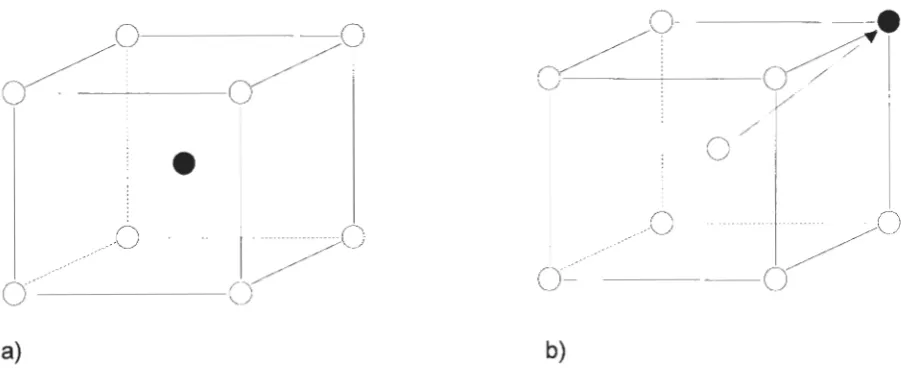
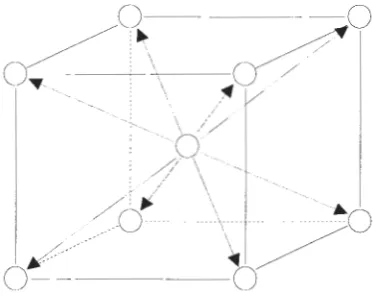
light to 1 of 8 peripheral lighted targets (Figure 2.1 ). The equal distances between
the center and targets allowed 30 sampling at equal angular intervals. There were
no restrictions imposed on movement trajectories, allowing the animal to see his
arm throughout the entire experiment.
~c
--
~-o
i f
~0----_-
_
...
-·
/
~
-
__ ..
-/-
·
i
~/
/
•
_.0-
--
---
-
-
---0
o-·
---
~
0
---0
0---~
a) b)
Figure 2.1. The monkey was trained to reach for the center light (a) and then one of eight peripheral lights (b).
A trial started when the center light appeared. The animal was required to
reach for the center light and depress the switch for a variable period of time, the
control time (CT), until the center light then turned off and one of the peripheral
buttons became lighted. The time interval between the occurrence of the target
[image:17.582.74.525.275.464.2]then moved to capture the peripheral light, the movement time (MT), and depress
the switch for another variable period of time, the target hold time (THT), after which
he received a liquid reward. An intertrial interval (ITI) of 2 sec intervened between
successive trials (Figure 2.2).
CL
CT
TL
RT
MT
[image:18.583.120.480.222.416.2]n
THT TETFigure 2.2. A schematic outline of the behavioral task: CL (center light on,
-800 msec), CT (control time, -500 msec), TL (target light on, -1000 msec), RT (reaction time, -300 msec), MT (movement time, -500 msec), THT (target hold time, -200 msec), and TET (total experimental time, RT + MT).
The first step in training was to familiarize the animal with the apparatus such
that targets were captured as they were lighted. In the beginning, a juice reward
was given for merely touching the light as it was turned on. For all trials during the
training period, the light appeared first in the center and then in one of 8 targets.
This task of moving in directions away from the common starting position is called
14
animal learned to move from the center light to the peripheral light, the conditions of
juice reward timing changed such that holding the center light was not sufficient,
rather for moving towards the peripheral light and holding it for a period of time.
Initially, the CT was short, but as training became more defined, the time increased.
Similarly, the THT was also increased.
Figure 2.3. Center-> out task.
Prior to beginning a trial, all variables were set. The minimum CT was set to
0.5 sec and the minimum THT was set to 0.15 sec to receive a liquid reward. An
upper limit of 1 sec was set for both the reaction and movement times. In
subsequent trials, different targets were lit such that all 8 targets were presented in
a random sequence, or randomized block design. Each training session consisted
[image:19.583.206.393.250.398.2]Neuronal recordings
Neuronal activity of single cells in the motor cortex were recorded
extracellularly during the 30 task using standard cell recording techniques
(Schwartz, Kettner et al. 1988). Recently, a seven microelectrode matrix recording
system (U Thomas Recording, Germany) (Adapted by Mountcastle, Reitboeck et al.
1991) and described in detail in (Reitboeck 1983) and (Reitboeck 1983)) was used
to record extracellular activity (Georgopoulos and colleagues, unpublished data) .
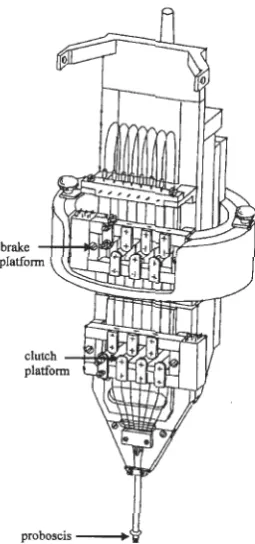
This assembly (Figure 2.4) consisted of a moveable clutch platform that drove the
microelectrodes in 2 µm steps by a stepping motor and a stationary brake platform
that held them firmly in place. Seven multi-segmented electrode guide tubes were
aligned between the movable clutch and the stationary brake. Manipulation of
individual electrode depth occurred through the microdrive's independent control of
both platforms such that any electrode may be fixed to the movable platform and
freed from the fixed platform in a clutch-brake action. This allowed several
electrodes to be arranged in a choice of spatial patterns. As they were driven out of
the matrix, electrode spacing was managed by the various configurations of the
proboscis (see Figure 2.4). The direction, forward or backward, and movement
speeds were operator controlled.
The microelectrodes (U Thomas Recording, Germany) were made of flexible
quartz fibers with a platinum/tungsten core having an outer diameter of 80 µm and a
core diameter of 15 to 30 µm. A high-temperature electrode tip puller (Modell EL-1,
16
desired slope and size. They were ground mechanically with a precision diamond
grinding disk (Tip Grinding Maschine, Model DI-LU, U Thomas Recording) to a
tapered tip of -14 µm, and an impedence of -2 Mn. The quartz glass fiber
electrodes were stiff enough to transit the dura without breaking, yet fine enough to
produce action potential amplitudes unaffected by behavioral movements. Minimal
neuronal damage occurred due to electrode flexibility and smoothness (Mountcastle,
Reitboeck et al. 1991 ).
proboscis
[image:21.583.245.373.320.593.2]A recording chamber with an internal diameter of 18 mm was stabilized to the
animal's head over the arm area of the motor cortex. The chamber was fluid-filled
and hydraulically sealed. The cranial cavity was cleaned of bone, filled with
gentamicin sulfate and closed with a sterile acrylic cap. A metal halo was positioned
on the skull to immobilize the head during the experiment and secured with dental
acrylic to cement the devices to small anchoring screws inserted into the skull.
On the day of recording, the animal's head was immobilized to the primate
chair and the mechanical microdrive was attached to the recording chamber. The
proboscis of the matrix was lowered directly above the dura. Positioning of the
microdrive allowed microelectrode penetration within a 14 mm diameter circle and
forward motion control to the 1-µm level. Advancement of the microelectrodes into
the cortex occurred one at a time, until signs of neural activity were encountered.
The electrical signals of single neurons in the motor cortex were recorded
extracellularly. Action potentials were identified (Mountcastle, Talbot et al. 1969),
amplified and displayed on oscilloscopes. Differential amplitude discriminators
separated the action potentials based on the amplitude of the potential. Initially
negative-going potentials were selected, indicating an undamaged neuron, however
upon entry into the white matter of the cortex, the negative-going potentials turned
to purely positive spikes. Some penetrations were made in which to pass current at
the electrode tip for marking purposes (3-4 µA for 3 sec). Once a neuron was
isolated, only arm-related cells were selected for further study. This eliminated
18
The neuronal population consisted of 475 directionally tuned cells out of 568
isolated cells (Schwartz, Kettner et al. 1988).
Data Analysis
Epochs
The data were evaluated according to standard statistical techniques
(Snedecor and Cochran 1989 and Draper, 1981 #13) and display techniques
(rasters, histograms, etc .... ). Four epochs were calculated for each trial: (1) the
control time (CT), the period in which the center light was pressed by the animal
until the peripheral light turned on; (2) the reaction time (RT), the period from the
appearance of target stimulus to the onset of movement; (3) the movement time
(MT), the period of movement from the center light to the peripheral light; and (4) the
target hold time (THT), the period in which the target light was pressed to receive a
liquid reward. The total experimental time (TET) is the combined RT and MT
epochs (see Figure 2.2). An analysis of variance (ANOVA) was performed to test
the differences in mean cell activity for each direction of movement.
Regression model
Multiple linear regression (Draper and Smith 1981) was used to further
analyze the cell activity. This related the cell discharge rate to motor parameters,
system, XYZ positive axes, with origin at the center light was used. A vector, M,
represented the movement direction in 30 space with unit length. This vector uses
angles,
x.
\Jf and ro with positive axes XYZ, respectively, and was broken into threeMy =cos \Jf, (2.1)
and
~M
2 +M2 +M2=
1x y z (2.2)
It has been determined previously (Schwartz, Kettner et al. 1988) that the cell
activity in relation to the direction of movement may be quantified in the following
equation:
(2.3)
The rate of cell activity is d(M) and bx, by, bz are cell varying coefficients determined
by multiple linear regression techniques. The direction of movement, vector C,
where the cell activity is highest is known as the cell's preferred direction. The
and
20
bz
C=-
z kEquations (2.4) are substituted into the rate of cell activity equation, (2.3):
A dot product relationship is used for vectors, C and M:
where /C/ and
IMI
are the lengths of vectors C andM,
respectively, ande
cM isformed between the preferred direction, C, and the direction of movement, M.
Equation (2.6) is rewritten:
(2.4)
(2.5)
(2.6)
Also,
d(M)
=
b+k(CxMx +CyMy +CzMz)=
b+k(C•M)=
b + klCllMJ cos 8 CM/
Ci= !Mi= 1
since vectors C and M are of unit length and are substituted into equation (2.8): (2.8)
(2.9)
d(M)
=
b + kcos8 cM (2.10)Equation (2.10) has been referred to as the directional tuning function (Schwartz,
Kettner et al. 1988). This function implies that the rate of cell activity will be highest
when the movement in 30 space is in the cell's preferred direction. This
coincidence of movement occurs when vectors C and M correspond. The rate of
cell activity allows only values greater than or equal to zero. Thus, in the case of a
negative value, the rate is set to zero.
A randomized block design was used and discharge rates were averaged
over the 5 - 8 repetitions. The variability of the preferred direction among the
22
s·
=
_
(n_-R_)
n
'
0 s Rs n,o
s
s
·
s
1 (2.11)The number of directions, one for each repetition, is n and the length of the resultant
is R. A spherical variance value near 1 indicates that the preferred directions
among the repetitions have a high variability, whereas a value near O indicates low
variability.
An index of directional modulation was used to normalize the depth of
directional tuning among the peak-to-peak sinusoidal preferred directions:
(b
>0)
(2.12)Population coding
It is assumed that the i1h neuron makes a vectorial contribution in a preferred
direction, Ci, with a magnitude of wi(M). Also, the contributions taken from all eight
movements sum to yield a neuronal population vector:
N
P(M) =
L
W;(M)c
i (2.13)i=1
where N is the number of neurons in the population vector summation and wi(M) is
selectivity of single cells, weighs vectorial contributions on the basis of change in
cell activity and produces a unique output. Once the population vector is
determined, it can be compared to the movement vector for congruence. Further
analysis of equation (2.13) included a spherical correlation, p, between the
population vector and the movement vector and the angle between them.
Weighting function
The i1h cell in a population vector has a preferred direction, C, that is the same
for different movements. The magnitude of the vector, wi(M), is based on the
discharge rate of the neuron, D~, during the movement vector, M. Consider that n
is equal to the number of repetitions of movement in each of the 8 directions and
that d'i(Mi,k) is the discharge rate of the i1h neuron during a TET, total experimental
time, epoch of the k1h repetition in the j1h direction. In one movement direction, the
discharge rate is observed as the summation over all repetitions:
Observation is done for all movement directions:
_ , 1 8 '
Dij =-L.Dr
n j=1 ~
(2.14)
24
Using the directional tuning function in equation (2.10), the discharge rate can be
rewritten:
(2.16)
wheree cM is the angle between the cell's preferred direction vector and movement
vector. Various weighting functions were tested. In essence, the movement
direction is regarded as the weighted sum of vectorial contributions such that each
neuron "votes" in its preferred direction. The vote is weighted according to the
change in cell activity during a particular movement and the population vector points
towards the direction of reaching.
Neuronal population vectors
The direction of movement represented by a population of cells has a unique
orientation such that it is broadly tuned. Essentially, cell activity is most profound for
a movement in a particular direction and decreases progressively for movements
farther away from the preferred direction. Each vector represents a contribution of a
single neuron in its preferred direction and its length is associated with the change
in activity according to the actual direction of movement. The neuronal population
vector is the weighted vector sum consisting of only directionally tuned cells and
conveys a directional signal with as few as 100 to 150 cells (Schwartz, Kettner et al.
including motion from different origins (Caminiti, Johnson et al. 1991 and Kettner,
1988 #16), and isometric force pulses (Georgopoulos, Ashe et al. 1992).
Rasters and peristimulus time histograms
Graphical representation of single-cell activity is displayed in the form of a
raster. The spike train for each trial is aligned to the time of a behavioral event,
such as the presentation of a stimulus or onset of movement. Each row of activity
(y-axis) represents a trial and each spike represents an action potential over time
(x-axis). If there is no or little spike train activity, the raster will appear blank and the
cell is excluded from data analysis. The raster is divided into bins (pre-determined
sets of time) that are averaged and normalized to create a qualitative assessment of
the neural activity in the form of a peristimulus time histogram.
Peristimulus time histograms (PSTHs) are used extensively in
neurophysiology to investigate the behavior of neurons from the available
extracellularly recorded action potentials. As the action potentials discharge a
number of impulses, in the form of a raster, a histogram is formed from the sum of
all trials. Spike trials were summed using a pre-determined bin length of 20 msec.
The mean value of activity was determined by dividing the number of spikes by the
number of trials. Time was normalized by multiplying the mean value by the number
of bin lengths in one second (for example, a 20 msec bin length would give 50 bins).
Thus, the histogram height is a function of spike rate and the length is determined
--~ --- - - -
-26
Cumulative sum technique
The cumulative sum technique (CUSUM) (Ellaway 1978) is a simple
statistical method that analyzes peristimulus time histograms by detecting changes
in single-cell activity. This technique has the advantage of smoothing the activity of
the data without distorting the original data as well as providing an immediate visual
impact. Change is detected by changes in the value of the slope, which is the
difference between the mean level of a particular period of time and that of the
reference level. In this experiment, these changes were observed 500 msec before
the onset of the target light.
A peristimulus time histogram was first constructed for each of the 8
directions of movement. The standard deviation, cr, was calculated for the 25
control bins (500 msec I 20 msec bin length) to test the significance of spike rate
over time. The CUSUM technique takes the difference between the mean control
rate of the 25 control bins and successive bin rates, or reference level, starting at
the time of target onset. A new series of points were formed by adding up the
differences consecutively and plotting on a cumulative sum chart. When the
reference level rates do not differ from the control rates such that they are equally
effective, the CUSUM value is zero. This is known as a null hypothesis.
Fluctuations occur by chance above and below zero producing a probability of
change, a1 and a2 (Armitage 1975). It is customary to add the two probabilities for a
two-sided test at the 2a significance level. To specify the sensitivity, it is important
probability of type II error. Thus, it is necessary to test the statistical significance of
a particular deviation using a sequential significance test.
Sequential significant testing
Upon visualizing a change in slope on a cumulative sum plot, it is necessary
to question the significance of the change. There is a higher probability of finding a
significant difference purely by chance when the test of significance is performed
repeatedly (Armitage 1975).
In this experiment, upper (positive) and lower (negative) boundaries were
established to determine a significant increase or decrease, respectively, of the data
set. There are three factors contributing to the calculation of the boundaries: (1) It
was assumed that the variability of the differences between the mean control rates
and the successive bin rates were not different from control period observations,
thus the standard deviation, cr, was used. (2) The pre-determined boundaries that
segregate significance expand as the bin number increases as a result of repeated
performances of significant testing. (3) The statistical plan involved was closed and
restricted in effect of the repeated testing for a regulated amount of time. A
two-sided level of significance was desired. Equations for the upper and lower
boundaries were determined (Armitage 1975, p. 97):
U: y
=
acr + bcr nL: y
=
- acr -ban(2.17)
28
where cr is the standard deviation as described and n is the bin number that is
incremented with onset of the target light. The constants, a and b, relate to a
closed, restricted plan and were determined from (Armitage 1975 Table 5.3, p. 101 ).
Given that 2a = 0.033, 1-P = 0.95 (power), 81 = 0.7 (indicating the magnitude of
difference between probabilities that are detected with high power) and the
maximum number of testing (N) = 36, it is determined that a = 5.2 and b = 0.35.
The pre-determined bin length was 20 msec and the average THT was 730 msec,
thus N
=
36 would give 720 msec worth of sequential significant testing. The newequations for the upper and lower boundaries are:
U: y
=
5.2cr+
0.35crnL: y
=
-5.2cr - 0.35crn(2.19)
(2.20)
To stop the trial, strong evidence must be displayed for statistical difference.
Thus, one of the following events must occur: (1) On the cumulative sum plot, either
boundary was crossed by a CUSUM value. To measure the consistency of change,
two of the resultant bins must also produce a significant change in the same
direction. (2) The animal released the target light and the trial ended before change
occurred. (3) N = 36 consecutive tests were performed and the CUSUM value did
not cross either boundary. It may be possible that a change will occur in
A cumulative sum plot using the sequential significance technique is
described in (Schwartz, Kettner et al. 1988). Movements in two different directions
in 30 space are plotted using spike trains from 8 repetitions. The CUSUM crossed
either boundary on the 7th bin (20 msec x 7 bins
=
140 msec of increase in cellactivity). To stop the test, 2 subsequent bins must also show a significant change in
the same direction, therefore a change in activity was detected 140 msec after the
onset of the target light.
Results
Database
In order to determine significant variation of cell discharge with respect to the
direction of movement, an ANOVA was performed. Next, multiple linear correlated
the discharge rate described by the tuning function. Three types of cells were
encountered. Four hundred seventy-five (83.6%, TET epoch) cells were shown to
possess significant changes in activity with respect to movement direction with a
good fit of the directional tuning function and were considered directionally tuned.
Thirty-one (5.5%, TET epoch) cells were shown to present significant changes in
activity with respect to direction but did not fit the directional tuning function and
were considered irregular. Finally, 62 (10.9%, TET epoch) cells were shown to
exhibit activity during the task though did not significantly differ among the task
30
Neuronal population coding
It follows from the directional tuning function (equation 2.10) that motor
cortical cells are active with movements in many directions and that a movement in
a specific direction recruits many neurons. Thus, the entire active population is
involved in the generation of reaching movements. It can be assumed that each
neuron represents a vector; each vector represents the directional influence along
the axis of the neuron's preferred direction. The length of each vector is
proportional to the change in the neuron's discharge rate from a particular point.
Representation from all neuronal vectors in the active population come
together as a neuronal ensemble such that the combine directional outcome is in
the form of a population vector, the weighted vector sum of individual neurons. It
can be said that each cell "votes" in the direction of its preferred direction and the
population vector combines the votes into a weighted directional outcome. Each
neuron in the population vector contributes only part of the information, whereas the
entire neuronal population determines the direction of reaching uniquely. The
population vector does not depend exclusively on a particular cell and can be
calculated from smaller samples of cells randomly selected from the original
ensemble. Thus, a population size of 150 to 200 cells sufficiently estimates the
direction of the population vector within 10 to 15 degrees (Georgopoulos, Kettner et
al. 1988). The direction of the population vector is very close to the direction of
movement vector (Georgopoulos, Schwartz et al. 1986, fig.4) and is therefore an
Planned movement
The information represented by the population vector is assumed to be about
direction. The involvement of the motor cortex under various behavioral conditions
was documented such that the population vector was calculated every 10 or 20
msec during the reaction time (Georgopoulos, Kettner et al. 1988), delay periods
(Georgopoulos, Crutcher et al. 1989) and memorized delay periods (Smyrnis, Taira
et al. 1992). In the presence or absence of immediate motor output, the directional
information was kept in memory and the representation of intended movement was
displayed in the form of a population vector. Essentially, the vector pointed in the
direction of planned movement.
In the 30 reaching task, approximately 300 msec intervened between the
onset of the target stimuli and movement. The cell activity in the motor cortex
precedes the onset of movement on the average by 160-180 msec (Georgopoulos,
Kalaska et al. 1982), but does it predict the direction of the upcoming movement
during the reaction time? It was shown that the population vector does indeed point
in the direction of movement 160 msec before the onset of movement
32
CHAPTER 3. ARTIFICIAL NEURAL NETWORK MODEL
Background
Computational paradigms that implement simplified models from their
biological counterparts are considered to be artificial neural networks (ANNs). They
represent the massive interconnections between simple neurons which are typically
modeled by a sigmoid function. The abstraction of the nervous system architecture
forms the basis behind ANNs in that computing units are joined together by
connections, modeled from neurons and their synapses, respectively. Dynamic
network models provide useful tools for simulating neural mechanisms that generate
patterns of activity in motor systems (Fetz and Shupe 1990).
There are several advantages for using neural network models. The most
attractive feature is their ability to learn and perform computation based on similarity.
This ability comes forth through straightforward synaptic connections modified
accordingly. As computational systems, they exhibit graceful degradation known as
a toleration to imperfect input or corruption of the internal performance. An
important property of networks is pattern completion, whereby taking an incomplete
input pattern, sufficiently similar to trained inputs and lead to a behavior extracted
the input pattern is linked with the "correct" output through a set of connections with appropriate weights (Barnden 1994 ).
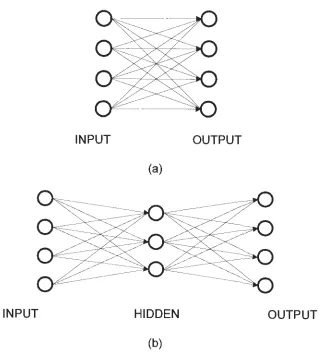
The need to control complex systems has led to new methods for developing neural network models. In the most common feedforward neural network, there may be a single set of modifiable connections in between the input and output layers or multiple layers of connections (Figure 3.1). In this paper, ANNs having a three-layered, feedforward architecture will be considered.
INPUT OUTPUT (a)
INPUT HIDDEN OUTPUT
[image:38.584.145.469.286.644.2](b)
Figure 3.1. Feedforward artificial neural network without hidden layers (a)
34
To make associations between the input and output patterns, a set of
connections that link the two patterns form a matrix of connection weights. In
general, ANNs have a training rule such that connection weights are adjusted on the
basis of data to improve performance. They learn from examples and are capable
of generalizations beyond the training set. Weight values are usually assigned from
a fixed, off-line algorithm or adjusted during the learning process. This learning
process adjusts the weights step by step and stores the best values as the final
connection strengths.
The ANN allows never before presented examples of data to be correctly
recognized based on a standard learning protocol. The trained network generalizes
information from a restricted number of teaching examples, the training set, and
uses it to identify new examples of the same data (Amirikian and Nishimura 1994 ).
Having learned associations from the training set, the network has the ability to
generate a correct output to a new set of input patterns.
The initial training set of input patterns have a known set of desired output
patterns. An input pattern from the training set is selected and given to the network
to generate an actual output. Comparison of the desired output pattern to the actual
output pattern produces an error signal, whereby weight connections are adjusted to
Model
A general description of the paradigm is graphically represented in Figure
3.1. Essentially, spike train data is simulated with a Poisson process from actual
data recorded from behaving monkeys performing a 30 reaching task in each of
eight directions around a cube. The spike trains are fed into the upper layer of the
ANN at each bin length to produce three output units corresponding to x, y, and z
coordinates as robot end-points that directly correspond to the original movement
trajectory.
Poisson process
The basic elements of the network are neurons with similar firing
characteristics as compared to single motor cortical neurons during 30 reaching in
behaving monkeys. It has been determined that the time series of spikes fired by a
single cortical neuron could be well approximated by a Poisson process (Rodieck,
Kiang et al. 1962). In the framework of this approximation, the probability of n
spikes occurring in the time interval Tis given by:
36
where a is the firing rate (number of spikes fired during a unit time). The probability
density distribution of interspike intervals is given by:
where t1 is a time interval between two adjacent spikes. The Poisson process is
simulated by generating consecutive ISls according to the following expression:
-1
t1 = -log(1-RND)
a
where RND is a randomly generated number between 0 and 1.
(3.2)
(3.3)
A histogram of the generated IS ls compared to P(t1) is shown in Figure 3.2.
As the total time T increases, distribution of ISls obtained from the generated spike
train approaches the true Poisson distribution. The purpose for this comparison is to
test that the generated spike trains indeed have the Poisson distribution. A
distinctive feature of the Poisson distribution is that the mean of t1 is equal to its
standard deviation.
The movement vectors correspond to the eight movements of the monkey
performing the 30 reaching task as described by (Schwartz, Kettner et al. 1988).
The coordinates of the cube ranging from -1 to 1 in all dimensions (Figure 3.3) and
>.
:!::::
:0 co
..c
0
....
a..
0.4
0.35
0.3 -·
-0.25 --P(t)
•
Generated Poisson (1 sec)0.2 - -• - -Generated Poisson (100 sec)
0.15
0.1
0.05
0
0 0.05 0.1 0.15 0.2 0.25 0.3
[image:42.583.79.660.55.460.2]Bin Length (sec)
Figure 3.2. Comparison of generated Poisson spike trains to the Poisson probability distribution at T=1 sec and T=100 sec.
(J.)
M1
=
(-1,1,1)M2
=
M3
=
M4
=
M5
=
Ms
=
M7
=
Ma
=
..
~ a N
...
'(-1,-1, 1)
(-1,-1,-1)
(-1, 1,-1)
(1,1,1)
(1,-1,1)
( 1,-1,-1)
(1,1,-1)
38
0
[image:43.583.88.442.361.592.2]Y-Axis
Preferred directions of the input neurons are uniformly distributed in 30 space
according to the probability density distribution:
1 .
F( 8,cp)
=
4n sine (3.4)where angles 8 and cp determine the location of the unit vector in 30 space (Figure
3.4).
Each input neuron was assigned a preferred direction vector given by the
following pair of angles:
8
=
arccos{1-2RND)(3.5)
and
cp
=
2nRND(3
.
6)
Equations
(3.5
and3
.
6)
ensured that preferred directions were distributeduniformly in 30 space.
Let \J' be the angle between the movement vector M and the preferred
40
z
e
y
[image:45.584.79.525.59.562.2]x
where {Mx, My, Mz} and {PDx, PDY, PDz} are x, y, and z components of the
vectors Mand PD, respectively. The transformation from polar to Cartesian
coordinates is given by:
PDx =sine coscp
PDY =sine sincp
(3.7)
(3.8)
(3.9)
PDx =case (3.10)
The units at the input layer receive signals from motor cortical neurons.
Neurophysiological studies demonstrated that their activity is directionally tuned
(Georgopoulos, Schwartz et al. 1986; Schwartz, Kettner et al. 1988). Namely, there
is a simple relationship between the mean firing rate of the cell and the angle \J'
between its preferred and movement directions:
42
where band k are defined by the maximum, Amax, and minimum, Amin, firing rates of the cell:
Amax +Amin
b=- -
-2
Amax -Amin
k= - -
-2
(3.12)
(3.13)
Note that the cell fires at its maximum rate when movement is made in its preferred direction (\J' = 0°) and it fires at its minimum rate when the movement is
made opposite to its preferred direction (\J' = 180°).
Input layer
The network receives generated Poisson spike trains as a time varying input
and transforms them into a time-varying output. Each input unit receives a spike
train corresponding to one neuron. An input unit accumulates spikes over time in
are accumulated and given a number, the number of spikes in that bin. All spikes in
the second bin, 20 msec to 40 msec, are accumulated and given a number added to
the number in the previous bin. This calculation continues until the end of the spike
train is reached. The hidden layer receives information, one bin at a time, starting
with the first bin.
Hidden layer
The hidden layer units are assigned preferred directions which are uniformly
distributed in 30 space with angular deviations nearly equally spaced from one
vector to another. To fulfill this requirement, the following procedure was adopted.
A value of parameter k was fixed which could be any non-negative whole number (0,
1, 2 ... ). The number of vectors generated monotonically increased the function of k.
Second, a set of angles
e
i
were defined byi
=
1,2, ... ,2k + 1 (3.14)For each
e
i
its complementary angle is defined as follows:44
where
The operator
L-J
designates the taking of an integer part. The total number ofunit vectors generated by this procedure is equal to:
(3.16)
Equation (3.16) adds two additional vectors that point to the north and south
poles of the unit sphere in Figure 3.4. The polar coordinates of each preferred
direction vector are converted to Cartesian coordinates using the standard
transformation equations (3.8 - 3.10).
The number of cells at the hidden layer is equal to N101• In routine simulations,
k
=
0, which gives N101(0)=
6 hidden units.Weight matrices
The weight matrices are calculated according to the preferred direction
vectors at the connection units. In the case of the three layered feedforward ANN,
hidden layers and the other connection between the hidden and output layers. In general, the strength of connection from neuron j to neuron
i
is given by thefollowing equation:
(3.17)
where \f'ii is the angle between the preferred direction vectors of connected units, a
is a variable used for adjustment of the performance of the model, and Nin is the
number of input units. The connections between the input and hidden layer were
assigned in the following manner. The preferred directions of the hidden units have been determined according to the procedure described in the previous section using
equations (3.14 - 3.16). The preferred direction of the input units were drawn from
random uniform distribution as described in equations (3.5 - 3.7).
The cosine of the angle \f'ii between preferred direction vectors of unit i at the
hidden layer and unitj at the input layer is given by a dot product of the vectors:
(3.18)
where {
lj,
I~,
lj}
and {H~,
Hi,
H~}
are the Cartesian coordinates of the preferreddirection vector corresponding to the input and hidden units, respectively. The
46
W!i
=:.
cos(1jHf +
l~Hr
+ l}Hn
m
(3.19)
The weight matrix describing connections between the hidden and output layers was defined in a similar way. The output layer contains three units, x, y and z
which specify end-point positions of the robot arm in a Cartesian coordinate system.
The preferred direction vectors assigned to the three output units simply correspond
to unit vectors in the positive direction of the x, y and z axes.
01 = (1, 0 ,0)
02
=
(0, 1, 0)03 = (0, 0, 1)
The connections between the hidden and output layers are then given by:
W!i
=:.
cos(ojHf
+O)Hr+O}Hn
m(3.20)
where {
Oj,
0),Oj}
are x, y, and z components of the preferred direction vector atCHAPTER 4. ROBOTIC SYSTEM
PUMA Robot
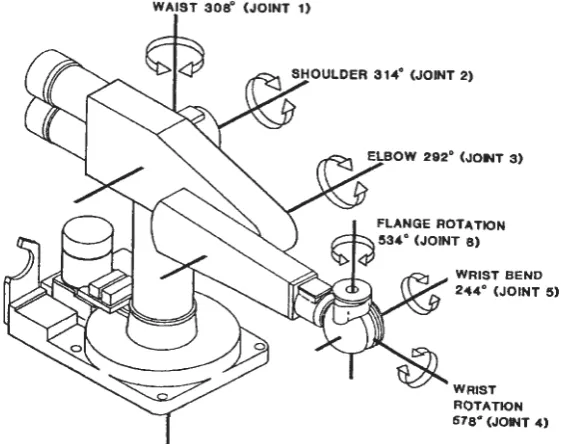
The Unimate PUMA Mark II, 200 Series Robot is a computer controlled robot
arm system manufactured by Unimation Incorporated of Danbury, Connecticut. Six
degrees of freedom provide flexibility and design to adapt to a wide range of
applications. Each member of the robot arm rotates around one or more axes and
is connected to another member at a joint, similar to a human arm. The members
include the trunk, shoulder, upper arm, lower arm, wrist, and gripper (Figure 4.1).
WAIST 308° (JOINT 1)
WRIST BEND 244° (JOINT 5)
WRIST ROTATION 578° (JOINT 4)
[image:52.585.154.437.436.658.2]48
An initializing procedure must be performed each time the system is powered
up preparatory to running. Position is measured relative to an absolute position, the
nest position. After performing this calibration procedure, the PUMA system is
ready for teaching or running a software program.
The basic units of the PUMA system include a teach pendant, software,
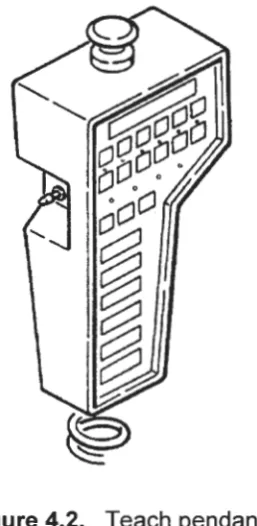
controller, peripherals, and the robot arm. Positioning of the robot may occur by
[image:53.583.241.370.289.553.2]manipulating the joints via the microprocessor based teach pendant (Figure 4.2).
Figure 4.2. Teach pendant.
Several teach modes provide flexibility and control via an LED display. The
Comp mode allows the control to switch back to the computer. The Tool mode
preconditions the X, Y, and Z pushbuttons to move the robot along the tool
coordinate system, defined by the tool transformation (for example, pressing one
linear motion of the tool along its own axis). Whereas, the World mode
preconditions the X, Y, and Z pushbuttons to move along the world coordinate
system, fixed to the base of the arm. The Joint mode preconditions motion to move
a single joint in either a positive or negative direction. Only one motion may be
driven at one time. Finally, the Free mode allows direct manual movement of the
arm. The appropriate joint is selected to be released and is positioned by the
operator in any desired configuration.
The PUMA system comes equipped with a personal programming language
developed for assembly. Programming is accomplished with the teach pendant or
by keyboard entry. Points that are taught to the robot are stored as transformations
and referenced to a coordinate system fixed relative to the stationary robot base.
The controller is the main component of the PUMA system (Figure 4.3). All
signals to and from the robot pass through the controller and perform real-time
calculations to control arm movement and position. Each joint of the PUMA arm is
driven by a permanent magnet servomotor through a gear train, a motor that drives
movement around a joint. A servomotor is a DC permanent magnet motor that
reacts quickly and smoothly to changing drive level inputs. One is used to drive
each joint on the robot. Servomotors incorporate incremental encoders that send
information about arm position and velocity to the controller providing feedback for a
50
Unimation Inc.
ELAPSED TIME
c I I I I I J AUTO START
0
0AR"' POWER OH
POWER ON HALT
®
RESTART ~RUNUNIMATE
~
ARM POWEROFFCOMPUTER/CONTROLLER
0
0
MANUAL CONTROL
Figure 4.3. Controller.
The peripheral components receive information. A terminal contains a video
unit and keyboard to communicate with the controller by teaching or editing software
programs.
There are two procedures that may be used to teach the robot. The teach
pendant manually directs the movements of the robot arm through each step of the
task while the coordinates are recorded and stored in computer memory. The
second method is to write a software program that incorporates position data into
memory through the peripheral terminal keyboard or through the teach pendant. In
[image:55.585.98.507.71.304.2]Neural Network Connection
An interface from the ANN to the assembly language of the PUMA robot was
created to send the output generated by the ANN. At each time bin, three output
units yield the Cartesian x, y, and z components of the robot's end-point position.
This information, encoded in nine bytes, is transmitted to the robot. Each coordinate
of the vector is given three bytes per axes for a total of nine bytes through the serial
port. The assembly language routine stores the information in buffer memory until it
is accessed by the robot. A program was written in the assembly language to read
the buffer memory and send the coordinates to the robot via the controller. Scaling
of the robotic coordinate system was necessary to create movement of the robot
arm, of desired amplitude and speed was adjusted to achieve trajectories similar to
52
CHAPTER 5. SYSTEM PERFORMANCE
The actual trajectory generated by the network was compared to a desired
trajectory to determine the performance of the system. The performance was
assessed as a robot-mean-square error between the desired and actual trajectories
for all eight movement directions:
(5.1)
where the radius vectors
R1(tj)
andRf (t
j
)
show the corresponding pointsbetween the desired trajectory
i
and the actual trajectory generated by the system attime bin
tj
andNr
is the total number of time bins.The trajectory error was averaged over 100 trials and represented in Figure
5.1 as a function of the number of cells at the input layer. Direction and amplitude of
the error signal was normalized to 1. It is seen that 100 to 150 cells are sufficient to
reliably generate desired trajectories and is consistent with previous findings
54
A three-dimensional view of the generated and desired trajectories are
displayed in Figures 5.2 - 5.4. As the number of input neurons increases, the
generated trajectories more closely resemble the desired trajectories.
Final Remarks
The purpose of this experiment will be evaluated in light of the results of this
investigation.
To simulate motor cortical cell activity of behaving monkeys during
a
30behavioral task in the form of a Poisson distribution. Motor cortical cell activity from
behaving monkeys performing a 30 task was simulated according to the Poisson
distribution function and randomly generated interspike intervals were similar to
actual data. Accumulated interspike intervals created a simulated spike train that
was used as one input neuron into the upper layer of an artificial neural network.
To train
a
three layered feedforward artificial neural network based on thedirectional preferences of the interconnected units. A three layered artificial neural
network with 150 input unit neurons, 6 hidden layer units and 3 output units was
created to use the simulated spike train data for each input neuron and generate a
Cartesian coordinate as output. Weighted connections between each layer were
assigned from a fixed, off-line algorithm based on directional preferences of the
interconnected units. The generated output trajectories of the artificial neural
en
~
0I N
~ I
-1
\',
0
Y-Axis
~
..
1
0
[image:60.583.90.664.85.445.2]X·Ms
Figure 5.2. Example trajectories generated by 50 input neurons.
Actual Trajectory
Desired Trajectory
T"'"
"'
~
Ia
N
T"'"
I
-1
0
1
X·Ms [image:61.582.89.666.86.452.2]Y-Axis
Figure 5.3. Example trajectories generated by 100 input neurons.
Actual Trajectory
Desired Trajectory
01
C/J
~
0I
N
"t""
I
·1
0
1
X·MsY·Axis
Figure 5.4. Example trajectories generated by 150 input neurons.
Actual Trajectory
Desired Trajectory
[image:62.583.90.668.88.457.2]58
as the number of input unit neurons increased. Approximately 100 - 150 input
neurons were sufficient to produce an actual trajectory similar to the desired
trajectory.
To control a robotic arm system off-line with the output generated by the
ANN. A robotic arm system with six degrees of freedom was used to visually
represent the actual trajectories generated by the artificial neural network.
Cartesian coordinates were sent through a serial port to the assembly language of
the robotic arm system and stored in buffer memory. The workspace of the robotic
arm was scaled and speed was adjusted to create movement of similar to an actual
arm. Successfully, the robotic arm system accessed the Cartesian coordinates in
buffer memory through its own assembly language and moved in the actual
trajectories created by the artificial neural network.
Future Research
Time constraints prevented further training of the ANN in order to decrease
the trajectory error. The next step in this project is to utilize the hidden layer such
that actual trajectories more closely resemble desired trajectories.
It has been demonstrated that Poisson spike trains that model spiking activity
of directionally tuned motor cortical cells with preferred directions randomly