ADVANCED PROGRAMMING
LANGUAGE DESIGN
Raphael A. Finkel
❖
UNIVERSITY OF KENTUCKY
▼▼
▲
Addison-Wesley Publishing Company
Menlo Park, California • Reading, Massachusetts
New York • Don Mills, Ontario • Harlow, U.K. • Amsterdam
Bonn • Paris • Milan • Madrid • Sydney • Singapore • Tokyo
Seoul • Taipei • Mexico City • San Juan, Puerto Rico
hhhhhhhhhhhhhhhhhhhhhhhhhhhhhhhhhhhh
Senior Production Editor: Teri Holden Copy Editor: Nick Murray
Manufacturing Coordinator: Janet Weaver
Film Preparation: Lazer Touch, Inc. Cover Designer: Yvo Riezebos
Printer: The Maple-Vail Book Manufacturing Group Composition and Film Coordinator: Vivian McDougal
Copyright1996 by Addison-Wesley Publishing Company
All rights reserved. No part of this publication may be reproduced, stored in a retrieval system, or transmitted in any form or by any means, electronic, mechanical, photocopying, recording, or any other media embodiments now known, or hereafter to become known, without the prior written permission of the publisher. Manufactured in the United States of America. Published simultane-ously in Canada.
Many of the designations used by manufacturers and sellers to distinguish their products are claimed as trademarks. Where these designations appear in this book, and the publisher was aware of a trademark claim, the designations have been printed in initial caps or all caps.
The programs and the applications presented in this book have been included for their instruc-tional value. They have been tested with care but are not guaranteed for any particular purpose. The publisher does not offer any warranties or representations, nor does it accept any liabilities with respect to the programs or applications.
Library of Congress Cataloging-in-Publication Data
Finkel, Raphael A.
Advanced programming languages / Raphael A. Finkel. p. cm.
Includes index. ISBN 0-8053-1191-2
1. Programming languages (Electronic computers) I. Title.
QA76.7.F56 1995 95-36693
005.13--dc20 CIP
1 2 3 4 5 6 7 8 9—MA—99 98 97 96 95
▼▼
▲
Addison-Wesley Publishing Company, Inc. 2725 Sand Hill Road
Finkel, who first tickled my interest in
Preface
This book stems in part from courses taught at the University of Kentucky and at the University of Wisconsin–Madison on programming language de-sign. There are many good books that deal with the subject at an undergrad-uate level, but there are few that are suitable for a one-semester gradundergrad-uate- graduate-level course. This book is my attempt to fill that gap.
The goal of this course, and hence of this book, is to expose first-year grad-uate students to a wide range of programming language paradigms and is-sues, so that they can understand the literature on programming languages and even conduct research in this field. It should improve the students’ ap-preciation of the art of designing programming languages and, to a limited degree, their skill in programming.
This book does not focus on any one language, or even on a few languages; it mentions, at least in passing, over seventy languages, including well-known ones (Algol, Pascal, C, C++, LISP, Ada, FORTRAN), important but less known ones (ML, SR, Modula-3, SNOBOL), significant research languages (CLU, Alphard, Linda), and little-known languages with important concepts (Io, Go..del). Several languages are discussed in some depth, primarily to rein-force particular programming paradigms. ML and LISP demonstrate func-tional programming, Smalltalk and C++ demonstrate object-oriented programming, and Prolog demonstrates logic programming.
Students are expected to have taken an undergraduate course in program-ming languages before using this book. The first chapter includes a review of much of the material on imperative programming languages that would be covered in such a course. This review makes the book self-contained, and also makes it accessible to advanced undergraduate students.
Most textbooks on programming languages cover the well-trodden areas of the field. In contrast, this book tries to go beyond the standard territory, making brief forays into regions that are under current research or that have been proposed and even rejected in the past. There are many fascinating con-structs that appear in very few, if any, production programming languages. Some (like power loops) should most likely not be included in a programming language. Others (like Io continuations) are so strange that it is not clear how to program with them. Some (APL arrays) show alternative ways to structure languages. These unusual ideas are important even though they do not pass the test of current usage, because they elucidate important aspects of programming language design, and they allow students to evaluate novel concepts.
hhhhhhhhhhhhhhhhhhhhhhhhhhhhhhhhhhhh
Certain themes flow through the entire book. One is the interplay be-tween what can be done at compile time and what must be deferred to run-time. Actions performed at compile time make for more efficient and less error-prone execution. Decisions deferred until runtime lead to greater flexi-bility. Another theme is how patterns and pattern matching play a large role in many ways in programming languages. Pattern matching is immediately important for string manipulation, but it is also critical in steering logic pro-gramming, helpful for extracting data from structures in ML, and for associ-ating caller and callee in CSP. A third theme is the quest for uniformity. It is very much like the mathematical urge to generalize. It can be seen in poly-morphism, which generalizes the concept of type, and in overloading, which begins by unifying operators and functions and then unifies disparate func-tions under one roof. It can be seen in the homoiconic forms of LISP, in which program and data are both presented in the same uniform way.
Two organizing principles suggest themselves for a book on programming languages. The first is to deal separately with such issues as syntax, types, encapsulation, parallelism, object-oriented programming, pattern matching, dataflow, and so forth. Each section would introduce examples from all rele-vant languages. The other potential organizing principle is to present indi-vidual languages, more or less in full, and then to derive principles from them.
This book steers a middle course. I have divided it into chapters, each of which deals primarily with one of the subjects mentioned above. Most chap-ters include an extended example from a particular language to set the stage. This section may introduce language-specific features not directly relevant to the subject of the chapter. The chapter then introduces related features from other languages.
Because this book covers both central and unusual topics, the instructor of a course using the book should pick and choose whatever topics are of per-sonal interest. In general, the latter parts of chapters delve into stranger and more novel variants of material presented earlier. The book is intended for a one-semester course, but it is about 30 percent too long to cover fully in one semester. It is not necessary to cover every chapter, nor to cover every section of a chapter. Only Chapter 1 and the first seven sections of Chapter 3 are critical for understanding the other chapters. Some instructors will want to cover Chapter 4 before the discussion of ML in Chapter 3. Many instructors will decide to omit dataflow (Chapter 6). Others will wish to omit denota-tional semantics (in Chapter 10).
I have not described complete languages, and I may have failed to mention your favorite language. I have selected representative programming lan-guages that display particular programming paradigms or language features clearly. These languages are not all generally available or even widely known. The appendix lists all the languages I have mentioned and gives you some pointers to the literature and to implementations and documentation available on the Internet through anonymous ftp (file-transfer protocol).
at in the text are developed more thoroughly in this latter type of exercise. In order to create an appearance of uniformity, I have chosen to modify the syntax of presented languages (in cases where the syntax is not the crucial is-sue), so that language-specific syntax does not obscure the other points that I am trying to make. For examples that do not depend on any particular lan-guage, I have invented what I hope will be clear notation. It is derived largely from Ada and some of its predecessors. This notation allows me to standardize the syntactic form of language, so that the syntax does not ob-scure the subject at hand. It is largely irrelevant whether a particular lan-guage uses beginandend or { and } . On the other hand, in those cases where I delve deeply into a language in current use (like ML, LISP, Prolog, Smalltalk, and C++), I have preserved the actual language. Where reserved words appear, I have placed them in bold monospace. Other program ex-cerpts are inmonospacefont. I have also numbered examples so that instruc-tors can refer to parts of them by line number. Each technical term that is introduced in the text is printed in boldface the first time it appears. All boldface entries are collected and defined in the glossary. I have tried to use a consistent nomenclature throughout the book.
In order to relieve the formality common in textbooks, I have chosen to write this book as a conversation between me, in the first singular person, and you, in the second person. When I say we, I mean you and me together. I hope you don’t mind.
Several supplemental items are available to assist the instructor in using this text. Answers to the exercises are available from the publisher (ISBN: 0-201-49835-9) in a disk-based format. The figures from the text (in Adobe Acrobat format), an Adobe Acrobat reader, and the entire text of this book are available from the following site:
ftp://aw.com/cseng/authors/finkel
Please check the readmefile for updates and changes. The complete text of this book is intended for on-screen viewing free of charge; use of this material in any other format is subject to a fee.
There are other good books on programming language design. I can par-ticularly recommend the text by Pratt [Pratt 96] for elementary material and the text by Louden [Louden 93] for advanced material. Other good books in-clude those by Sebesta [Sebesta 93] and Sethi [Sethi 89].
Subject Student Year
Feng Luo 1992
Mike Rogers 1992
C++
Dataflow Chinya Ravishankar 1981
Go..del James Gary 1992
Lynx Michael Scott 1985
Mathematics languages Mary Sue Powers 1994
Miranda Manish Gupta 1992
Chinya Ravishankar 1981 Rao Surapaneni 1992 Post
CLP William Ralenkotter 1994
Rick Simkin 1981
K. Lakshman 1992
Manish Gupta 1992
Russell
Smalltalk/C++ Jonathan Edwards 1992
Jonathan Edwards read an early draft of the text carefully and made many helpful suggestions. Michael Scott assisted me in improving Chapter 7 on concurrency. Arcot Rajasekar provided important feedback on Chapter 8 on logic programming. My editor, J. Carter Shanklin, and the reviewers he se-lected, made a world of difference in the presentation and coverage of the book. These reviewers were David Stotts (University of North Carolina at Chapel Hill), Spiro Michaylov (Ohio State University), Michael G. Murphy (Southern College of Technology), Barbara Ann Greim (University of North Carolina at Wilmington), Charles Elkan (University of California, San Diego), Henry Ruston (Polytechnic University), and L. David Umbaugh (University of Texas at Arlington). The University of Kentucky provided sabbatical fund-ing to allow me to pursue this project, and Metropolitan College in Kuala Lumpur, Malaysia, provided computer facilities that allowed me to work on it. This book was prepared on the Linux version of the Unix operating system. Linux is the result of work by Linus Torvalds and countless others, primarily at the Free Software Foundation, who have provided an immense suite of pro-grams I have used, including text editors, document formatters and preview-ers, spelling checkpreview-ers, and revision control packages. I would have been lost without them. Finally, I would like to thank my wife, Beth L. Goldstein, for her support and patience, and my daughter, Penina, and son, Asher, for being wonderful.
Chapter 1
❖
Introduction
The purpose of this book is to study the principles and innovations found in modern programming languages. We will consider a wide variety of lan-guages. The goal is not to become proficient in any of these languages, but to learn what contributions each has made to the “state of the art” in language design.
I will discuss various programming paradigms in this book. Some lan-guages (such as Ada, Pascal, Modula-2) are imperative; they use variables, assignments, and iteration. For imperative languages, I will dwell on such is-sues as flow of control (Chapter 2) and data types (Chapter 3). Other lan-guages (for example, LISP and FP) are functional; they have no variables, assignments, or iteration, but model program execution as expression evalua-tion. I discuss functional languages in Chapter 4. Other languages (for ex-ample, Smalltalk and C++), represent the object-oriented paradigm, in which data types are generalized to collections of data and associated rou-tines (Chapter 5). Dataflow languages (Val, Sisal, and Post, Chapter 6) at-tempt to gain speed by simultaneous execution of independent computations; they require special computer architectures. A more common way to gain speed is by concurrent programming (typified by languages such as SR and Lynx, discussed in Chapter 7). Another major paradigm constitutes the declarative languages such as Prolog and Go..del (Chapter 8); they view pro-gramming as stating what is wanted and not necessarily how to compute it. Aggregate languages (Chapter 9) form a a final loosely knit paradigm that includes languages with special-purpose data formats, such as strings (SNOBOL and Icon), arrays (APL), databases (dBASE and SQL), and mathe-matical formulas (Mathematica and Maple).
In addition to studying actual programming language constructs, I will present formal semantic models in Chapter 10. These models allow a precise specification of what a program means, and provide the basis for reasoning about the correctness of a program.
hhhhhhhhhhhhhhhhhhhhhhhhhhhhhhhhhhhh
1
◆PROGRAMMING LANGUAGES AS
SOFTWARE TOOLS
Programming languages fit into a larger subject that might be termed soft-ware tools. This subject includes such fields as interactive editors (text, pic-ture, spreadsheet, bitmap, and so forth), data transformers (compilers, assemblers, stream editors, macro processors, text formatters), operating sys-tems, database management syssys-tems, and tools for program creation, testing, and maintenance (script files, source-code management tools, debuggers).
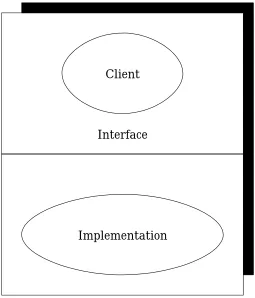
In general, software tools can be studied as interfaces between clients, which are usually humans or their programs, and lower-level facilities, such as files or operating systems.
Figure 1.1 Software
tools
Interface
Implementation
Client
Three questions arising from Figure 1.1 are worth discussing for any software tool:
1. What is the nature of the interface?
2. How can the interface be implemented by using the lower-level facili-ties?
3. How useful is the interface for humans or their agents?
[image:9.612.225.480.226.524.2]1. What is the structure (syntax) and meaning (semantics) of the program-ming language constructs? Usually, I will use informal methods to show what the constructs are and what they do. However, Chapter 10 pre-sents formal methods for describing the semantics of programming lan-guages.
2. How does the compiler writer deal with these constructs in order to translate them into assembler or machine language? The subject of compiler construction is large and fascinating, but is beyond the scope of this book. I will occasionally touch on this topic to assure you that the constructs can, in fact, be translated.
3. Is the programming language good for the programmer? More specifi-cally, is it easy to use, expressive, readable? Does it protect the pro-grammer from programming errors? Is it elegant? I spend a significant amount of effort trying to evaluate programming languages and their constructs in this way. This subject is both fascinating and difficult to be objective about. Many languages have their own fan clubs, and dis-cussions often revolve about an ill-defined sense of elegance.
Programming languages have a profound effect on the ways programmers formulate solutions to problems. You will see that different paradigms im-pose very different programming styles, but even more important, they change the way the programmer looks at algorithms. I hope that this book will expand your horizons in much the same way that your first exposure to recursion opened up a new way of thinking. People have invented an amaz-ing collection of elegant and expressive programmamaz-ing structures.
2
◆EVALUATING PROGRAMMING LANGUAGES
This book introduces you to some unusual languages and some unusual lan-guage features. As you read about them, you might wonder how to evaluate the quality of a feature or an entire language. Reasonable people disagree on what makes for a great language, which is why so many novel ideas abound in the arena of programming language design. At the risk of oversimplifica-tion, I would like to present a short list of desiderata for programming lan-guages [Butcher 91]. Feel free to disagree with them. Another excellent discussion of this topic is found in Louden [Louden 93].
• Simplicity. There should be as few basic concepts as possible. Often the job of the language designer is to discard elements that are superfluous, error-prone, hard to read, or hard to compile. Many people consider PL/I, for example, to be much too large a language. Some criticize Ada for the same reason.
• Orthogonality. Independent functions should be controlled by indepen-dent mechanisms. (In mathematics, indepenindepen-dent vectors are called ‘‘or-thogonal.’’)
• Abstraction. There should be a way to factor out recurring patterns. (Abstraction generally means hiding details by constructing a ‘‘box’’ around them and permitting only limited inspection of its contents.) • Clarity. Mechanisms should be well defined, and the outcome of code
should be easily predictable. People should be able to read programs in the language and be able to understand them readily. Many people have criticized C, for example, for the common confusion between the assign-ment operator (=) and the equality test operator (==).
• Information hiding. Program units should have access only to the in-formation they require. It is hard to write large programs without some control over the extent to which one part of the program can influence an-other part.
• Modularity. Interfaces between programming units should be stated ex-plicitly.
• Safety. Semantic errors should be detectable, preferably at compile time. An attempt to add values of dissimilar types usually indicates that the programmer is confused. Languages like Awk and SNOBOL that silently convert data types in order to apply operators tend to be error-prone. • Expressiveness. A wide variety of programs should be expressible.1
Languages with coroutines, for example, can express algorithms for test-ing complex structures for equality much better than languages without coroutines. (Coroutines are discussed in Chapter 2.)
• Efficiency. Efficient code should be producible from the language, possi-bly with the assistance of the programmer. Functional programming lan-guages that rely heavily on recursion face the danger of inefficiency, although there are compilation methods (such as eliminating tail recur-sion) that make such languages perfectly acceptable. However, languages that require interpretation instead of compilation (such as Tcl) tend to be slow, although in many applications, speed is of minor concern.
3
◆BACKGROUND MATERIAL ON
PROGRAMMING LANGUAGES
Before showing you anything out of the ordinary, I want to make sure that you are acquainted with the fundamental concepts that are covered in an un-dergraduate course in programming languages. This section is intentionally concise. If you need more details, you might profitably refer to the fine books by Pratt [Pratt 96] and Louden [Louden 93].
hhhhhhhhhhhhhhhhhhhhhhhhhhhhhhhhhhhh
3.1 Variables, Data Types, Literals, and
Expressions
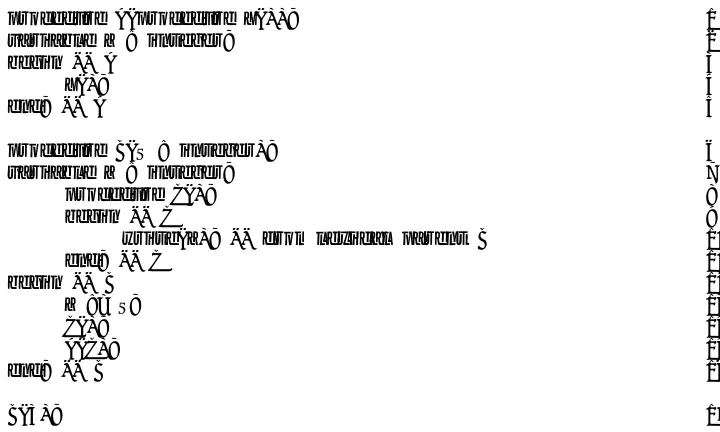
[image:12.612.174.529.142.352.2]I will repeatedly refer to the following example, which is designed to have a little bit of everything in the way of types. Atypeis a set of values on which the same operations are defined.
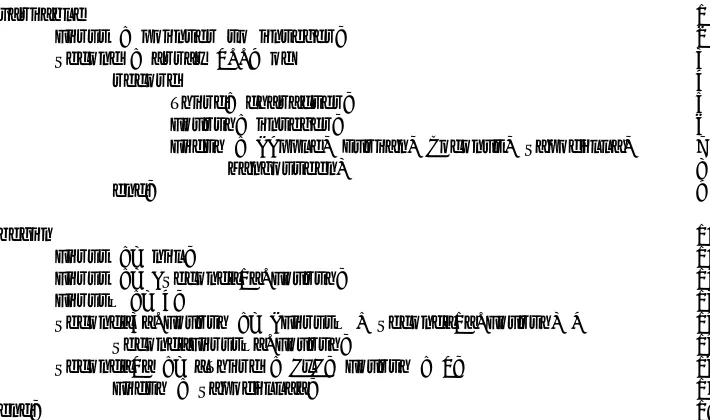
Figure 1.2 variable 1
First : pointer to integer; 2 Second : array 0..9 of 3
record 4
Third: character; 5
Fourth: integer; 6
Fifth : (Apple, Durian, Coconut, Sapodilla, 7
Mangosteen) 8
end; 9
begin 10
First := nil; 11
First := &Second[1].Fourth; 12
Firstˆ := 4; 13
Second[3].Fourth := (Firstˆ + Second[1].Fourth) * 14 Second[Firstˆ].Fourth; 15 Second[0] := [Third : ’x’; Fourth : 0; 16 Fifth : Sapodilla]; 17
end; 18
Imperative languages (such as Pascal and Ada) have variables, which are named memory locations. Figure 1.2 introduces two variables,First(line 2) andSecond(lines 3–9). Programming languages often restrict the values that may be placed in variables, both to ensure that compilers can generate accu-rate code for manipulating those values and to prevent common programming errors. The restrictions are generally in the form of type information. The type of a variable is a restriction on the values it can hold and what opera-tions may be applied to those values. For example, the typeinteger encom-passes numeric whole-number values between some language-dependent (or implementation-dependent) minimum and maximum value; values of this type may act as operands in arithmetic operations such as addition. The term integeris not set in bold monospace type, because in most languages, predefined types are not reserved words, but ordinary identifiers that can be given new meanings (although that is bad practice).
it makes no sense to consider one fruit greater than another.2
Structured types are built out of other types. Arrays, records, and pointers are structured types.3 Figure 1.2 shows all three kinds of standard structured types. The building blocks of a structured type are its compo-nents. The component types go into making the structured type; component values go into making the value of a structured type. The pointer type in line 2 of Figure 1.2 has one component type (integer); a pointer value has one component value. There are ten component values of the array type in lines 3–9, each of a record type. Arrays are usually required to be homogeneous; that is, all the component values must be of the same type. Arrays are in-dexed by elements of an index type, usually either a subrange of integers, characters, or an enumeration type. Therefore, an array has two component types (the base type and the index type); it has as many component values as there are members in the index type.
Flexible arrays do not have declared bounds; the bounds are set at run-time, based on which elements of the array have been assigned values. Dy-namic-sized arrays have declared bounds, but the bounds depend on the runtime value of the bounds expressions. Languages that provide dynamic-sized arrays provide syntax for discovering the lower and upper bounds in each dimension.
Array slices, such as Second[3..5], are also components for purposes of this discussion. Languages (like Ada) that allow array slices usually only al-low slices in the last dimension. (APL does not have such a restriction.)
The components of the record type in lines 4–9 are of typescharacterand
integer. Records are like arrays in that they have multiple component val-ues. However, the values are indexed not by members of an index type but rather by named fields. The component values need not be of the same type; records are not required to be homogeneous. Languages for systems pro-gramming sometimes allow the programmer to control exactly how many bits are allocated to each field and how fields are packed into memory.
The choice is a less common structured type. It is like a record in that it has component types, each selected by a field. However, it has only one com-ponent value, which corresponds to exactly one of the comcom-ponent types. Choices are often implemented by allocating as much space as the largest component type needs. Some languages (like Simula) let the programmer re-strict a variable to a particular component when the variable is declared. In this case, only enough space is allocated for that component, and the compiler disallows accesses to other components.
Which field is active in a choice value determines the operations that may be applied to that value. There is usually some way for a program to deter-mine at runtime which field is active in any value of the choice type; if not, there is a danger that a value will be accidentally (or intentionally) treated as belonging to a different field, which may have a different type. Often, lan-guages provide a tagcase statement with branches in which the particular variant is known both to the program and to the compiler. Pascal allows part
hhhhhhhhhhhhhhhhhhhhhhhhhhhhhhhhhhhh
2In Southeast Asia, the durian is considered the king of fruits. My personal favorite is the mangosteen.
of a record to be a choice and the other fields to be active in any variant. One of the latter fields indicates which variant is in use. It doesn’t make sense to modify the value of that field without modifying the variant part as well.
A literal is a value, usually of a primitive type, expressly denoted in a program. For example,243is an integer literal and Figure 1.2 has literals 0,
1,3, 4, 9, and’x’. Some values are provided as predeclared constants (that is, identifiers with predefined and unchangeable values), such as false
(Boolean) andnil(pointer).
A constructor expressly denotes a value of a structured type. Figure 1.2 has a record constructor in lines 16–17.
An expression is a literal, a constructor, a constant, a variable, an invo-cation of a value-returning procedure, a conditional expression, or an opera-tor with operands that are themselves expressions. Figure 1.2 has expressions in lines 11–17. An operator is a shorthand for an invocation of a value-returning procedure whose parameters are the operands. Each opera-tor has an arity, that is, the number of operands it expects. Common arities are unary (one operand) and binary (two operands). Unary operators are commonly written before their operand (such as-4or&myVariable), but some are traditionally written after the operand (such as ptrVariableˆ). Some-times it is helpful to consider literals and constants to be nullary (no-operand) operators. For example,trueis a nullary operator of type Boolean.
Operators do not necessarily take only numeric operands. The derefer-encing operator (ˆ), for example, produces the value pointed to by a pointer. This operator is unary and postfix, that is, it follows its expression. You can see it in Figure 1.2 in lines 13, 14, and 15. Some languages, such as Gedanken, Ada, and Oberon-2, coerce pointers (repeatedly, if needed) to the values they dereference if the context makes it clear which type is required. The unary prefix referencing operator (&) in line 12 generates a pointer to a value.
Common operators include those in the table on the next page. Many op-erators are overloaded; that is, their meaning depends on the number and types of the operands. It is easiest to understand overloaded operators as multiply defined procedures, from which the compiler chooses the one with the appropriate number and type of parameters.
Operator Left type Right type Result type Comments
+ - * integer integer integer + - * / real real real
/ integer integer real orinteger
div mod integer integer integer - numeric none same
** integer integer integer exponentiation
** numeric real real exponentiation
= any same Boolean < > >= <= numeric same Boolean
+ string string string concatenation
˜ string pattern Boolean string match
and Boolean Boolean Boolean
or Boolean Boolean Boolean
not Boolean none Boolean ˆ pointer none component & any none pointer
Expressions evaluate to R-values. Variables and components of variables of structured types also have an L-value, that is, an address where their R-value is stored. The assignment statement (lines 11–17 in Figure 1.2) re-quires an L-value on the left-hand side (L stands for “left”) and an R-value on the right-hand side (R stands for “right”). In Figure 1.2, lines 11 and 12 show a variable used for its L-value; the next lines show components used for their L-values.
The types of the left-hand side and the right-hand side must be assign-ment-compatible. If they are the same type, they are compatible. (What it means to have the same type is discussed in Chapter 3.) If they are of differ-ent types, the language may allow the value of the right-hand side to be im-plicitly converted to the type of the left-hand side. Implicit type conversions are called coercions. For example, Pascal will coerce integers to reals, but not the reverse. Coercions are error-prone, because the target type may not be able to represent all the values of the source type. For example, many computers can store some large numbers precisely as integers but only impre-cisely as reals.
Figure 1.3 type 1
FirstType = ... ; 2
SecondType = ... ; 3
SecondTypePtr = pointer to SecondType; 4
variable 5
F : FirstType; 6
S : SecondType; 7
begin 8
... 9
S := F qua SecondType; -- Wisconsin Modula 10 S := (SecondTypePtr(&F))ˆ; -- C 11
end; 12
Line 10 shows how F can be cast without conversion into the second type in Wisconsin Modula. Line 11 shows the same thing for C, where I use the type nameSecondTypePtras an explicit conversion routine. The referencing oper-ator & produces a pointer to F. In both cases, if the two types disagree on length of representation, chaos may ensue, because the number of bytes copied by the assignment is the appropriate number forSecondType.
The Boolean operators and and or may have short-circuit semantics; that is, the second operand is only evaluated if the first operand evaluates to
true(for and) or false (for or). This evaluation strategy is an example of lazy evaluation, discussed in Chapter 4. Short-circuit operators allow the programmer to combine tests, the second of which only makes sense if the first succeeds. For example, I may want to first test if a pointer isnil, and only if it is not, to test the value it points to.
Conditional expressions are built with an ifconstruct. To make sure that a conditional expression always has a value, eachifmust be matched by both athenand an else. The expressions in the thenandelseparts must have the same type. Here is an example:
Figure 1.4 write(if a > 0 then a else -a);
3.2 Control Constructs
Execution of imperative programming languages proceeds one statement at a time. Statements can be simple or compound. Simple statements include the assignment statement, procedure invocation, andgoto. Compound ments enclose other statements; they include conditional and iterative state-ments, such asif,case,while, andfor. Programming languages need some syntax for delimiting enclosed statements in a compound statement. Some languages, like Modula, provide closing syntax for each compound statement:
Figure 1.5 while Firstˆ < 10 do 1 Firstˆ := 2 * Firstˆ; 2 Second[0].Fourth := 1 + Second[0].Fourth; 3
end; 4
state-ment that encloses multiple statestate-ments surrounded bybeginandend.
Syntax for the if statement can be confusing if there is no trailing end syntax. If anifstatement encloses anotherif statement in itsthenclause, the else that follows might refer to either if. This problem is called the “dangling-else” problem. In the following example, theelsein line 4 could match either the one in line 1 or line 2. Pascal specifies that the closer if (line 2) is used.
Figure 1.6 if IntVar < 10 then 1
if IntVar < 20 then 2
IntVar := 0 3
else 4
IntVar := 1; 5
On the other hand, ififstatements require a closingend, the problem cannot arise:
Figure 1.7 if IntVar < 10 then 1
if IntVar < 20 then 2
IntVar := 0; 3
end 4
else 5
IntVar := 1; 6
end; 7
[image:17.612.171.333.400.542.2]Here, theelsein line 5 unambiguously matches theifin line 1. Closing syn-tax is ugly whenifstatements are deeply nested in theelseclause:
Figure 1.8 if IntVar < 10 then 1
IntVar := 0 2
else 3
if IntVar < 20 then 4
IntVar := 1 5
else 6
if IntVar < 30 then 7
IntVar := 2 8
else 9
IntVar := 3; 10
end; 11
end; 12
end; 13
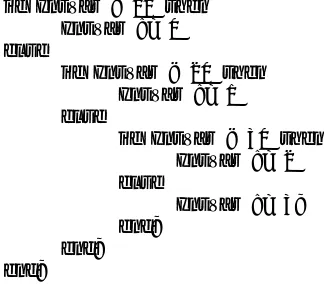
Figure 1.9 if IntVar < 10 then 1
IntVar := 0 2
elsif IntVar < 20 then 3
IntVar := 1 4
elsif IntVar < 30 then 5
IntVar := 2 6
else 7
IntVar := 3; 8
end; 9
All the examples in this book use a closingendfor compound statements. You don’t have to worry about language-specific syntax issues when you are try-ing to concentrate on semantics.
Some languages, like Russell and CSP, allow conditionals to have any number of branches, each with its own Boolean condition, called a guard. The guards may be evaluated in any order, and execution chooses any branch whose guard evaluates totrue. These conditionals are called nondetermin-istic, since running the program a second time with the same input may re-sult in a different branch being selected. In such languages, else means “when all the guards arefalse.”
A wide range of iterative statements (loops) is available. An iterative statement must indicate under what condition the iteration is to terminate and when that condition is tested. Thewhileloop tests an arbitrary Boolean expression before each iteration.
Whengotostatements became unpopular because they lead to unreadable and unmaintainable programs, languages tried to avoid all control jumps. But loops often need to exit from the middle or to abandon the current itera-tion and start the next one. Thebreakandnextstatements were invented to provide these facilities without reintroducing unconstrained control jumps. An example of exiting the loop from the middle is the “n-and-a-half-times loop”:
Figure 1.10 loop 1
read(input); 2
if input = 0 then break end; 3
if comment(input) then next end; 4
process(input); 5
end; 6
Thebreakin line 3 terminates the loop when a sentinel indicating the end of input is read. Thenextin line 4 abandons the current iteration if the input is not to be processed. A similar statement found in Perl isredo, which restarts the current iteration without updating any loop indices or checking termina-tion conditermina-tions. Thebreak,next, andredostatements can also take an inte-ger or a loop label to specify the number of levels of loop they are to terminate or iterate. In this case, they are called multilevel statements.
Figure 1.11 for a := 1; Ptr := Start -- initialization 1
while Ptr ≠ nil -- termination condition 2
updating a := a+1; Ptr := Ptrˆ.Next; -- after each iter. 3
do 4
... -- loop body 5
end; 6
Russell and CSP generalize the nondeterministicifstatement into a non-deterministic while loop with multiple branches. So long as any guard is
true, the loop is executed, and any branch whose guard istrueis arbitrarily selected and executed. The loop terminates when all guards arefalse. For example, the algorithm to compute the greatest common divisor of two inte-gersaandbcan be written as follows:
Figure 1.12 while 1
when a < b => b := b - a; 2
when b < a => a := a - b; 3
end; 4
Each guard starts with the reserved wordwhenand ends with the symbol =>. The loop terminates whena=b.
Thecasestatement is used to select one of a set of options on the basis of the value of some expression.4 Most languages require that the selection be
based on a criterion known at compile time (that is, the case labels must be constant or constant ranges); this restriction allows compilers to generate ef-ficient code. However, conditions that can only be evaluated at runtime also make sense, as in the following example:
Figure 1.13 case a of 1
when 0 => Something(1); -- static unique guard 2
when 1..10 => Something(2); -- static guard 3
when b+12 => Something(3); -- dynamic unique guard 4
when b+13..b+20 => Something(4); -- dynamic guard 5
otherwise Something(5); -- guard of last resort 6
end; 7
Each guard tests the value of a. Lines 2 and 4 test this value for equality with 0 and b+12; lines 3 and 5 test it for membership in a range. If the guards (the selectors for the branches) overlap, the casestatement is erro-neous; this situation can be detected at compile time for static guards and at runtime for dynamic guards. Most languages consider it to be a runtime er-ror if none of the branches is selected and there is nootherwiseclause.
hhhhhhhhhhhhhhhhhhhhhhhhhhhhhhhhhhhh
3.3 Procedures and Parameter Passing
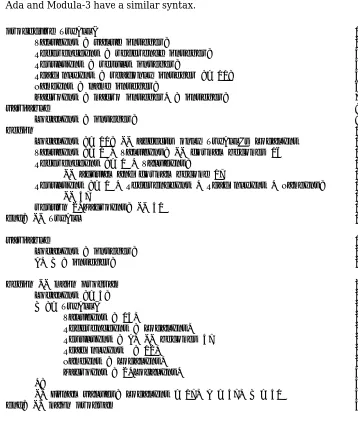
Figure 1.14 will be discussed in detail in this section. For clarity, I have cho-sen a syntax that names each formal parameter at the point of invocation; Ada and Modula-3 have a similar syntax.
Figure 1.14 procedure TryAll( 1 ValueInt : value integer; 2 ReferenceInt : reference integer; 3 ResultInt : result integer; 4 ReadOnlyInt : readonly integer := 10; 5 NameInt : name integer; 6 MacroInt : macro integer) : integer; 7
variable 8
LocalInt : integer; 9
begin 10
LocalInt := 10; -- affects only TryAll’s LocalInt 11 ValueInt := 1 + ValueInt; -- formal becomes 16 12 ReferenceInt := 1 + ValueInt; 13 -- actual and formal become 17 14 ResultInt := 1 + ReferenceInt + ReadOnlyInt + NameInt; 15
-- 47 16
return 2*MacroInt; -- 40 17
end; -- TryAll 18
variable 19
LocalInt : integer; 20
A, B : integer; 21
begin -- main program 22
LocalInt := 3; 23
B := TryAll( 24
ValueInt : 15, 25
ReferenceInt : LocalInt, 26 ResultInt : A, -- becomes 47 27
ReadOnlyInt : 12, 28
NameInt : LocalInt, 29 MacroInt : 2*LocalInt) 30
); 31
-- Final values: LocalInt = 17, A = 47, B = 40 32
end; -- main program 33
nonlo-cal referencing environment is more complicated, so I will discuss it later. The body of the procedure (lines 10–18) is composed of the statements that are to be executed when the procedure is invoked. The header need not be adjacent to the declarations and body; they may be separated for the pur-pose of modularization (discussed in Chapter 3). Most programming lan-guages allow recursion; that is, procedures may invoke themselves, either directly or indirectly.
Parameters are inputs and outputs to procedures. The identifiers associ-ated with parameters in the header are called formal parameters; the ex-pressions passed into those parameters at the point of invocation (lines 24–31) are the actual parameters. There are many parameter-passing modes, each with different semantics specifying how formal parameters are bound to actual parameters.
• Value. The value of the actual parameter is copied into the formal pa-rameter at invocation. In the example, the assignment in line 12 modifies the formal, but not the actual parameter; the expression in line 13 uses the modified value in the formal. Value mode is the most common param-eter-passing mode. Some languages, like C, provide only this mode. • Result. The value of the formal parameter is copied into the actual
pa-rameter (which must have an L-value) at procedure return. In the exam-ple, the assignment in line 15 gives the formal a value, which is copied into the actual parameterA(line 27) when the procedureTryAllreturns. It is usually invalid to provide actual parameters with the same L-value to two different result parameters, because the order of copying is unde-fined. However, this error cannot always be caught by the compiler, be-cause it cannot always tell with certainty that two identifiers will have different L-values at runtime.
• Value result. The parameter is treated as in value mode during invoca-tion and as in result mode during return.
• Reference. The L-value of the formal parameter is set to the L-value of the actual parameter. In other words, the address of the formal parame-ter is the same as the address of the actual parameparame-ter. Any assignment to the formal parameter immediately affects the actual parameter. In the example, the assignment in line 13 modifies both the formal parameter (ReferenceInt) and the actual parameter (LocalInt of the main pro-gram), because they have the same L-value. Reference mode can be emu-lated by value mode if the language has a referencing operator (I use &), which produces a pointer to an expression with an L-value, and a derefer-encing operator (I use ˆ), which takes a pointer and produces the value pointed to. The program passes the pointer in value mode and derefer-ences the formal parameter every time it is used. FORTRAN only has ref-erence mode; expressions, which have no L-value, are evaluated and placed in temporary locations in order to acquire an L-value for the dura-tion of the procedure.5 Large arrays are usually passed in reference mode instead of value mode to avoid the copying otherwise required.
hhhhhhhhhhhhhhhhhhhhhhhhhhhhhhhhhhhh
• Readonly. Either value or reference mode is actually used, but the com-piler ensures that the formal parameter is never used on the left-hand side of an assignment. The compiler typically uses value mode for small values (such as primitive types) and reference mode for larger values. In the example, it would be invalid for ReadOnlyInt to be used on the left-hand side of the assignment on line 15.
The following modes have been proposed and used in the past, but are no longer in favor due to their confusing semantics and difficult implementation.
• Name. Every use of the formal parameter causes the actual parameter to be freshly evaluated in the referencing environment of the invocation point. If the formal parameter’s L-value is needed (for example, the rameter appears on the left-hand side of an assignment), the actual pa-rameter’s L-value must be freshly evaluated. If the formal papa-rameter’s R-value is needed, the actual parameter’s R-R-value must be freshly evalu-ated. This mode is more complex than reference mode, because the actual parameter may be an expression, and the procedure may modify one of the variables that make up that expression. Such a modification affects the value of the formal parameter. In the example, NameInt in line 15 evaluates to LocalInt of the main program, which was modified by the assignment in line 13. Name mode was invented in Algol 60, caused a certain amount of consternation among compiler writers, who had to in-vent an implementation, and proved to be not very useful and fairly error-prone.6 Modern languages don’t usually provide name mode.
• Macro. Every use of the formal parameter causes the text of the actual parameter to be freshly evaluated in the referencing environment of the use point. That is, if the actual parameter is a variable,IntVar, and the procedure declares a new variable with the same name, then reference to the formal parameter is like reference to the new, not the old,IntVar. In the example, MacroIntin line 17 expands to 2*LocalInt, the actual pa-rameter (line 30), butLocalIntis interpreted as referring to the variable belonging toTryAll, not to the main program. Macro mode is extremely error-prone, not very useful, and almost never provided. It opens the pos-sibility of runtime parsing, because the actual parameter could be an ex-pression fragment, such as + LocalInt, which would need to be understood in the syntactic context of each use of the formal parameter.
Procedures themselves may be passed as parameters. In this case, we gener-ally don’t talk about the parameter-passing mode.7 The formal parameter declaration may indicate the number and types of the parameters to the passed procedure. The formal parameter may be used in any way that a pro-cedure can be used: it can be invoked or passed again as an actual parameter. Gotolabels may also be passed as parameters. The formal parameter may then be the target of agotoor may be passed again as an actual parameter. If it is the target of a goto, the referencing environment of the original
in-hhhhhhhhhhhhhhhhhhhhhhhhhhhhhhhhhhhh
6J. Jensen invented a clever use for name-mode parameters that is called “Jensen’s de-vice”, but its cleverness is outweighed by its lack of clarity.
voker is restored, and intervening referencing environments are closed. (I will discuss referencing environments shortly.) Implementing these seman-tics correctly is complex, and few languages with block structure allow labels to be passed as parameters.
Sometimes the programmer cannot predict how many parameters will be provided. This situation arises particularly for input and output routines. If there may be an arbitrary number of actual parameters of the same type, they may be packaged into an array (perhaps an anonymous dynamic-sized array built by a constructor). The formal parameter can be queried to dis-cover how many elements were passed.
Ada, C++, and Common LISP provide default values, so that formal pa-rameters that have no matching actuals can still have values; line 5 in Figure 1.14 provides a default value of 10 for parameterReadOnlyIntin case it is not provided by the call. A call can just omit an actual parameter to indicate that it is missing. Only trailing parameters (that is, the parameters at the end of the parameter list) may be omitted, so that the compiler can determine which ones are missing. Other syntax is possible. For example, the procedure call could still delimit missing parameters with commas (such as myProce-dure(paramA,,paramC)). Alternatively, the call may explicitly associate for-mal and actual parameters in any order. Lines 24–31 in Figure 1.14 use this keyword (as opposed to positional) parameter-passing syntax for specifying actuals. Keyword parameters make it easy to omit an actual parameter.
Languages differ in the syntax they use to return a value to the caller. Line 17 of Figure 1.14 shows explicit return, in which thereturnstatement includes the value. The compiler can check that all returns specify a value of the appropriate type and that the procedure does not terminate without re-turning a value. Often the programmer introduces a local variable to con-struct and manipulate the value before returning it; the actual return results in an extra copy step. Implicit return uses the procedure identifier as a write-only pseudovariable that is automatically returned when the procedure finishes. The compiler cannot check that all execution paths set this variable, and the programmer must be careful not to use the procedure identifier as an ordinary variable, because such use may be misunderstood as a recursive pro-cedure invocation. If the propro-cedure needs to manipulate the value before it is finalized, programmers usually introduce a local variable and copy it into the write-only variable. Finally, identifier return introduces a new identifier or identifiers in the procedure header to represent the returned values, as in the following example:
Figure 1.15 procedure Double( 1 ValueInt : value integer) : integer RetVal; 2
begin 3
RetVal := ValueInt * 2; 4
if RetVal < 0 then RetVal := 0; end; 5
end; -- Double 6
The new-identifier method makes it easy to describe procedures that re-turn multiple values. Such procedures are invoked in a context of multiple assignment, as in Figure 1.16. Here, procedureTwoValsreturns two results, which are assigned simultaneously to two variables in the multiple assign-ment of line 8.
Figure 1.16 procedure TwoVals : integer Answer1, Answer2; 1
begin 2
Answer1 := 3; 3
Answer2 := 9; 4
end; 5
variable a, b : integer; 6
begin 7
a, b := TwoVals; 8
end; 9
3.4 Block Structure
I will describe classic Algol block structure here; it has been adopted, with modification, in many programming languages. A program is divided into nested blocks, each of which introduces a new name scope. A name scope is a region of program in which particular declarations of identifiers are in ef-fect. A declaration maps an identifier to a meaning. We also say that it binds the meaning to the identifier. The meanings can be variables, types, constants, labels, procedures, or other concepts discussed elsewhere in the book, such as modules (Chapter 3), classes (Chapter 5), and monitors (Chap-ter 7). Traditionally, each nested name scope inherits all bindings from the surrounding scope, except that if the same identifier is redefined in the nested scope, the new declaration overrides the old declaration for the dura-tion of the nested scope. Some languages, such as Ada and C++, allow de-clared procedures to be overloaded; that is, the same name is bound to multiple declarations at the same time, and the compiler chooses which is meant by the number and types of the parameters.
The new declarations can be defined to take effect from the beginning of the block (so that an earlier declaration, say of a variable, can refer to a later declaration, perhaps of a type). More commonly, they take effect (are elabo-rated) from the point in the block where the declaration appears. In the fol-lowing example, I could define B in line 8 to be either real or integer, depending on whether the outer declaration ofTis hidden yet by the declara-tion in line 10. Usually, languages either disallow such references or let the new declaration take effect only after the point at which it appears. This de-cision makes one-pass compilers easier to write.
Figure 1.17 type -- introduces outer block 1
T : real; 2
variable -- continues outer block 3
begin -- statements start 5
A := 4; 6
variable -- introduces nested block 7 B : T; -- real or integer? 8
type 9
T : integer; -- overrides outer declaration of T 10
begin 11
B := 3; -- coercion needed? 12
end -- nested block ends 13
end -- block ends 14
I usetype,variable, orconstantto introduce a new block, which includes a new name scope (lines 1 and 7). After declarations introduce new identifiers (including multiple instances oftype,variable, orconstant), the statements in the name scope are delimited bybeginandend.
Variables may be initialized to the value of some expression at the same time they are declared. Pascal restricts initialization expressions to literals and constants. Some languages allow arbitrary initialization expressions to be evaluated at elaboration time; these expressions may even invoke proce-dures.
Entering a new block just to introduce temporary declarations can be helpful in structuring programs. More commonly, though, blocks are found as the bodies of procedures. The identifiers introduced in the new block are all the formal parameters and any types, constants, variables, labels, and proce-dures defined within the procedure. A language is considered block-structured if procedures introducing name scopes can nest. By this crite-rion, C is not block-structured, but Pascal is.
An identifier is considered local to a name scope if it is introduced in that name scope. Identifiers inherited from surrounding scopes are called nonlo-cal. An identifier is global if it belongs to the outermost block of the pro-gram. In FORTRAN, there are no global identifiers, and name scopes do not nest. These restrictions help make FORTRAN efficient at runtime.
Although the declaration of an identifier may be clear from its defining name scope, the instance of the identifier may not be. Every invocation of a procedure introduces not only a new name scope, but also new instances of variables themselves.8 A procedure may have many simultaneous instances,
because it may be invoked recursively. For local identifiers and global identi-fiers, it is always clear which instance to use. For nonlocal identiidenti-fiers, the nonlocal referencing environment refers to the set of identifier bindings dynamically in force during program execution. This set changes at every procedure invocation and return, as well as when the program enters and ex-its blocks, as illustrated in the following example.
hhhhhhhhhhhhhhhhhhhhhhhhhhhhhhhhhhhh
Figure 1.18 procedure ProcA(value AParam : integer); 1
type AType : array 1..AParam of integer; 2
variable AVar1, AVar2 : integer; 3
procedure ProcB(value BParam : integer); 4
variable BVar1 : AType; 5
begin -- ProcB 6
... -- some statements 7
end; -- ProcB 8
begin -- ProcA 9
... -- some statements 10
end; -- ProcA 11
WhenProcAis invoked, the new instance ofProcAelaborates a new set of for-mal parameters (AParam), types (AType), variables (AVar1andAVar2), and pro-cedures (ProcB), which are inherited by nested procedureProcB. WhenProcB
is invoked, its new instance elaborates a new formal parameter (BParam) and variable (BVar1), the latter of a type inherited fromProcA. ProcBmay be in-voked many times byProcAand ProcB; each time, its new instance inherits identifiers from theProcAinstance that elaborates the particularProcBthat is invoked.
The situation becomes surprisingly complex when procedures (and labels) are passed as parameters. They carry with them their nonlocal referencing environment, so that when they are invoked, they may access nonlocal vari-ables that are otherwise inaccessible in the program. A procedure in combi-nation with its nonlocal referencing environment is called a closure.
[image:26.612.169.529.398.614.2]Because this idea is unfamiliar to students who mainly use C (which has no nested procedures, and therefore no nonlocal referencing environments), I will present several examples.
Figure 1.19 procedure A(procedure X()); 1
variable Z : integer; 2
begin -- A 3
X(); 4
end; -- A 5
procedure B(S : integer); 6
variable Z : integer; 7
procedure C(); 8
begin -- C 9
write(Z); -- from lexical parent B 10
end; -- C 11
begin -- B 12
Z := S; 13
C(); 14
A(C); 15
end; -- B 16
B(3); 17
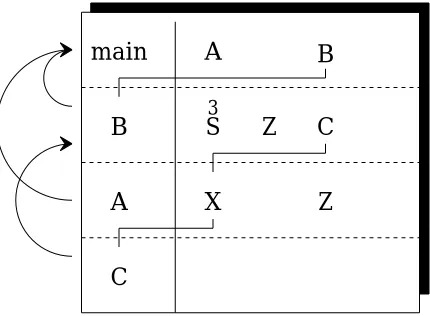
pro-cedure A, which just relays the call (lines 15 and 4). In both cases,B is still present, in the sense that its activation record is still on the central stack. Procedure CneedsB’s activation record, because Crefers to B’s local variable
Z, which is only to be found inB’s activation record. In fact,Cmust accessB’s copy of Z during the second call, even though the intermediate procedure A
[image:27.612.246.461.375.533.2]also has declared a local variableZ. In other words, C’s nonlocal referencing environment isB, which elaboratedC. WhenCis passed as an actual parame-ter toAin line 15, a closure must be passed, so that whenAinvokes its formal parameterX (which is actuallyC), the procedure it invokes can properly ac-cess its nonlocal variables.
Figure 1.20 shows the stack of invocations at the pointCis invoked viaA. The first row shows that the main program has declarations forAandB. The second row shows thatBhas been invoked, and that it has local identifiers S
(the formal parameter, with actual value3),Z(a locally declared integer), and
C(a locally declared procedure). The third row shows thatAhas been invoked (from line 15 of the program). It has a formal parameterX(bound to the ac-tual parameterC) and a local integer variableZ. The last row shows that A
has called its formal parameter, which we know is procedure C from row 2. The arrows to the left of the box indicate the nonlocal referencing environ-ment of each invocation. Rows 2 and 3 (BandA) both use the main program as their nonlocal referencing environment. Row 4, however, shows that C
usesB as its nonlocal referencing environment. This is becauseCwas elabo-rated first inB, as the connecting lines indicate. That is why when Cfinally refers toZin line 10, it accesses theZof the second row, the one belonging to
B.
Figure 1.20 Referencing
environments
3
Z
Z
C
X
C
S
B
B
A
A
main
Figure 1.21 procedure A( 1
readonly AParam : integer; 2
AProc : procedure() 3
); 4
procedure B(); 5
begin -- B 6
write(AParam); -- writes 2 7
end; -- B 8
begin -- A 9
case AParam of 10
when 2 => A(1, B); 11
when 1 => A(0, AProc); 12
when 0 => AProc(); 13
end; -- case 14
end; -- A 15
procedure Dummy(); begin end; 16
-- never called; same type as B 17
begin -- main program 18
A(2, Dummy); 19
end; 20
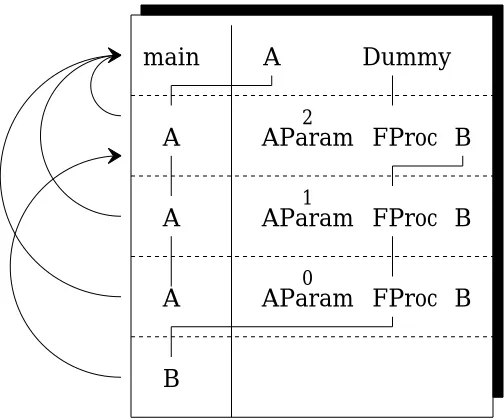
[image:28.612.227.479.355.565.2]The referencing environments of each instance of each procedure are shown in Figure 1.22.
Figure 1.22 Referencing
environments
0 1 2
AParam
AParam
AParam
B
A
A
B
B
B
FProc
FProc
FProc
A
Dummy
A
main
Each row again shows an invocation of some procedure, starting withmain. The entries on the row indicate the local referencing environment elaborated by that invocation. The arrows on the left indicate the nonlocal referencing environments. Here, main introduces A and Dummy. The instance of A that
maininvokes is the one it elaborated, as shown by the connecting line. Proce-dureAelaborates its parameters,AParamandAProc, and its nested procedure,
referencing environment, that is, the first row. It passes the closure of its own elaboratedBas an actual parameter. This closure ofBincludes the non-local referencing environment of the firstA, so when it is finally invoked, af-ter being passed once more as a parameaf-ter to the third instance ofA, it still owns the first A as its nonlocal referencing environment. When B prints
AParam, therefore, it prints2.
Binding the nonlocal referencing environment of a procedure at the time it is elaborated is called deep binding. Under deep binding, when a procedure is passed as a parameter, its closure is actually passed. The opposite, shal-low binding, is to bind the nonlocal referencing environment of a procedure at the time it is invoked. Shallow binding does not pass closures. Descen-dents of Algol use deep binding; original LISP used shallow binding, although it provided a way for the programmer to explicitly build a closure.
Another difference between the Algol family and original LISP is the scope rules they follow to determine which syntactic entity is bound to each identifier. Languages in the Algol family are statically scoped, whereas origi-nal LISP was dynamically scoped.9 Under static scope rules, the compiler can determine the declaration (although not necessarily the instance, as you have seen) associated with each identifier. The strict compile-time nesting of name scopes in Algol makes it a statically scoped language. In contrast, dy-namic scope rules make identifiers accessible in a procedure if they were accessible at the point of invocation; therefore, different invocations can lead to different sets of accessible identifiers. The compiler cannot tell which iden-tifiers are accessible to any procedure. The trend in programming language design has been away from dynamic scope rules, because they are often con-fusing to the programmer, who cannot tell at a glance which declaration is as-sociated with each use of a variable. However, some recent languages, such as Tcl, use dynamic scope rules.
3.5 Runtime Store Organization
Programmers usually don’t care how runtime store is organized. They expect the compiler or interpreter to arrange the program and data for efficient exe-cution. They are only interested if some language constructs are likely to use large amounts of space or time. However, language designers are definitely interested in runtime store organization because it affects the efficient imple-mentation of the language.
Runtime store is typically divided into several regions. The first region holds the compiled program instructions, which I will just call code. This re-gion contains each procedure in the program as well as runtime libraries. Under some operating systems, the libraries may be shared among processes and may be brought into store dynamically when they are first referenced.
A second region holds global variables. Because the compiler knows the identity, type, and size of these variables, it can allocate precise amounts of store and can generate code that accesses global variables very efficiently.
A third region is the central stack. It holds an activation record for each active procedure instance. Because procedures are invoked and return in
hhhhhhhhhhhhhhhhhhhhhhhhhhhhhhhhhhhh
last-in, first-out order, a stack is appropriate. Each activation record stores the return address, a pointer to the activation record of its invoker (forming the dynamic chain), a pointer to the activation record of its nonlo-cal referencing environment (forming the static chain), its parameters, its local variables, and temporary locations needed during expression evaluation. It is possible to represent the static chain in various ways; for simplicity, I will just assume that it is a linked list of activation records. Dynamic-sized arrays are typically represented by a fixed-size type descriptor (the size de-pends only on the number of dimensions of the array, which is known by the compiler) and a pointer to the value, which is placed in the activation record after all static-sized local variables.
The central stack allows the compiler to generate efficient access code for the variables stored there in a statically scoped language. Let me abbreviate the phrase “accessed at a statically known offset” by the simpler but less pre-cise “found.” Static-sized local variables are found in the current activation record. Nonlocal variables are found in an activation record a certain dis-tance from the front of the static chain; the compiler knows how many steps to take in that chain. Pointers to the values of dynamic-sized local variables are found in the current activation record; the values are interpreted accord-ing to type descriptors found either in the current record (if the type is de-clared locally) or in an activation record deeper on the static chain (for a nonlocal type).
The fourth region of runtime store, called the heap, is used for dynamic allocation of values accessed through pointers.10 These values do not follow a stack discipline. This region of store expands as needed, getting increments from the operating system when necessary. To avoid ever-increasing store re-quirements for long-running programs, values are deallocated when they are no longer needed. The space can later be reallocated to new values. Dealloca-tion can be triggered by explicit program requests (such as Pascal’sdispose
procedure) or by automatic methods such as reference counts and garbage collection. Reference counts indicate how many pointers are referencing each value. Each assignment and parameter binding modifies these counts, and each exit from a name scope reduces the counts for those variables that are disappearing. When a count is reduced to 0, the value may be deallocated and its space used for something else. Unfortunately, circular lists are never deallocated, even when they are no longer accessible. Garbage collection takes place when the store allocator notices that not much room is left. All accessible structures are recursively traversed and marked, and then all un-marked values are deallocated. The user often notices a distinct pause dur-ing garbage collection. There are incremental and concurrent garbage collection algorithms that reduce this interruption.
hhhhhhhhhhhhhhhhhhhhhhhhhhhhhhhhhhhh
4
◆FINAL COMMENTS
This chapter has attempted to introduce the study of programming languages by placing it in the context of software tools in general. The background ma-terial on programming languages is, of necessity, very concise. Its aim is to lay the foundation for the concepts developed in the rest of this book.
The language concepts introduced here are in some sense the classical Al-gol-like structures. They are developed in various directions in the following chapters, each of which concentrates first on one programming language and then shows ideas from a few others to flesh out the breadth of the topic. Where appropriate, they end with a more mathematical treatment of the sub-ject. Chapter 2 shows nonclassical control structures. Chapter 3 investigates the concept of data type. It presents a detailed discussion of ML, which shows how polymorphism can be incorporated in a statically typed language. Because ML is mostly a functional language, you may want to read Chapter 4 before the section on ML in Chapter 3.
The next chapters are devoted to nonclassical paradigms, that is, lan-guages not descended from Algol. Chapter 4 discusses functional program-ming, concentrating on LISP. The concept of abstract data type is generalized in several ways in the next three chapters. Chapter 5 introduces object-oriented programming, concentrating on Smalltalk and C++. Chapter 6 dis-cusses dataflow languages, concentrating on Val. Chapter 7 shows some of the wide range of development of languages for concurrent programming. A very different view of programming is presented in Chapter 8, which is is de-voted to logic programming, concentrating on Prolog. Languages dealing with special-purpose data aggregates, such as strings, arrays, databases, and mathematical formulas, are discussed in Chapter 9. Finally, Chapter 10 shows several mathematical approaches to formalizing the syntax and se-mantics of programming languages; although it uses imperative languages as its model, such approaches have been used for the other language paradigms as well.
EXERCISES
Review Exercises
1.1 In what ways does C (or pick another language) fall short of the criteria in Section 2 for excellence?
1.2 How would you define themodoperator?
1.3 Show a code fragment in which short-circuit semantics fororyield a dif-ferent result than complete-evaluation semantics.
1.5 Write a procedure that produces different results depending on whether its parameters are passed by value, reference, or name mode.
1.6 FORTRAN only passes parameters in reference mode. C only passes parameters in value mode. Pascal allows both modes. Show how you can get the effect of reference mode in C and how you can get the effect of value mode in FORTRAN by appropriate programming techniques. In particular, show in both FORTRAN and C how to get the effect of the following code.
Figure 1.23 variable X, Y : integer; 1
procedure Accept 2
(A : reference integer; B: value integer); 3
begin 4
A := B; 5
B := B+1; 6
end; -- Accept 7
X := 1; 8
Y := 2; 9
Accept(X, Y); 10
-- at this point, X should be 2, and Y should be 2 11
1.7 If a language does not allow recursion (FORTRAN II, for example, did not), is there any need for a central stack?
1.8 C does not allow a procedure to be declared inside another procedure, but Pascal does allow nested procedure declarations. What effect does this choice have on runtime storage organization?
Challenge Exercises
1.9 Why are array slices usually allowed only in the last dimension?
1.10 Write a program that prints the index of the first all-zero row of an n×n
integer matrixM[Rubin 88]. The program should access each element of the matrix at most once and should not access rows beyond the first all-zero row and columns within a row beyond the first non-all-zero element. It should have no variables except the matrixMand two loop indicesRow
andColumn. The program may not usegoto, but it may use multilevel breakandnext.
1.11 What is the meaning of agotofrom a procedure when the target is out-side the procedure?
1.12 Why dogotolabels passed as parameters require closures?
1.14 What rules would you make if you wanted to allow programmers to mix positional and keyword actual parameters?
1.15 The C language allows new name scopes to be introduced. However, C is not generally considered a block-structured language. Why not?